America Turns 250, but This Is Not the Twilight’s Last Gleaming
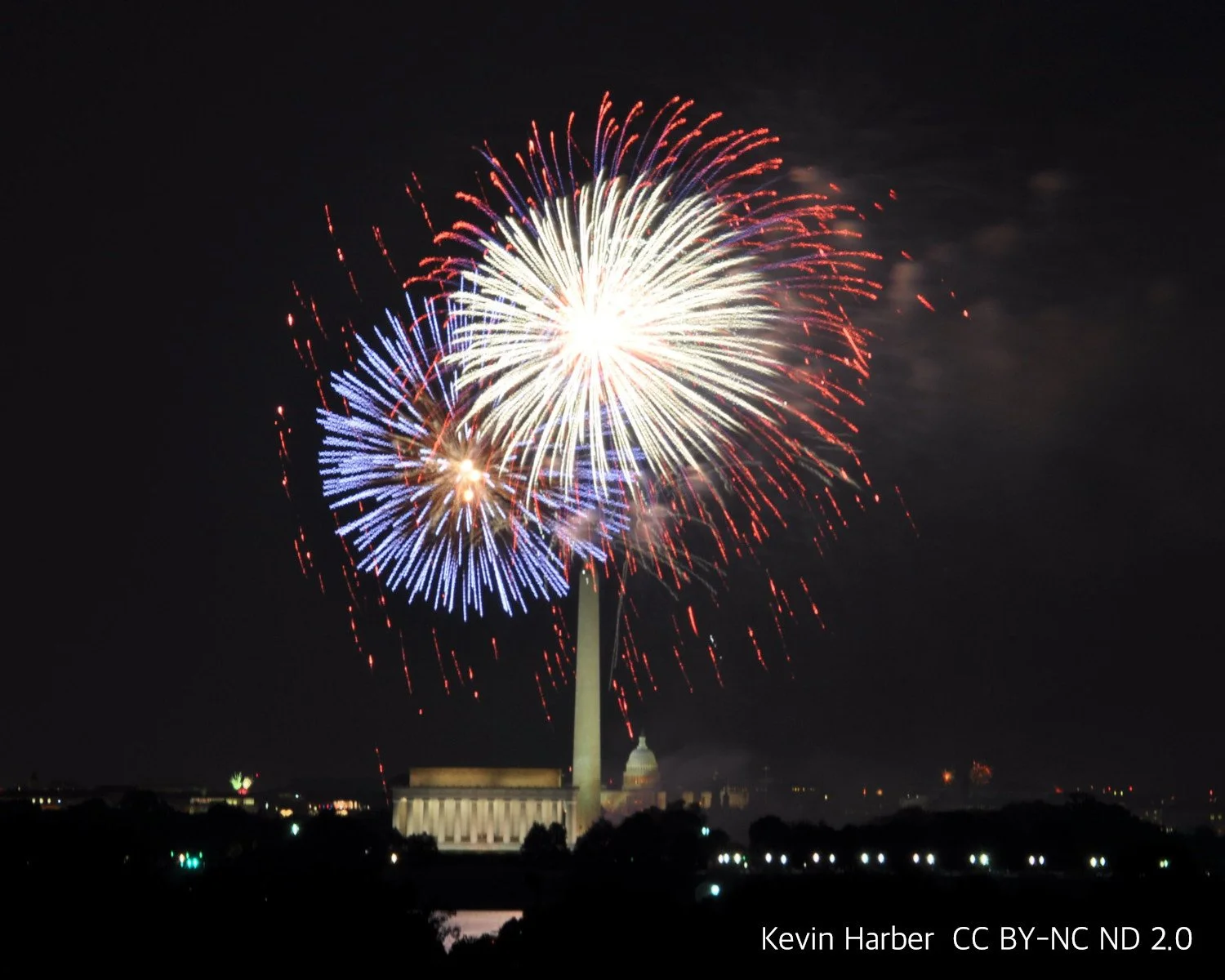
The United States of America was born on the Fourth of July in 1776. There is no greater tribute to this Land of the Free than the words of its National Anthem.
July 1, 2026 by Father Gordon MacRae
I have been pondering what to write as the nation in which I write marks 250 years in existence on the world stage. All thoughts kept bringing me back to our National Anthem and a reflection on it that I wrote in 2023. This nation and the entire free world were finally emerging then from the global Covid pandemic. Perhaps I needed more time to write of this then because our very freedom had been on the chopping block in both Church and State. We had surrendered far too much. So in this post I want to further examine the National Anthem, all four stanzas of it, three of which most of us do not even know. And then finally I want to add a reflection by Supreme Court Justice Neil Gorsuch, who gave us some very candid and pointed thoughts about the nature of freedom and what we stand to lose if we allow it to be set aside.
Readers in the United States may recognize the second part of my title this week as a line from the Star-Spangled Banner, our National Anthem: “Oh say can you see, by the dawn’s early light, what so proudly we hailed at the twilight’s last gleaming.” It was composed during a battle in the War of 1812. Thirty-six years after the American Revolution in 1776, the War of 1812 was called by some the Second War for American Independence.
In 1814, two years into the war, a British warship bombarded Fort McHenry in the Port of Baltimore. The part of the text of the famous poem that became our National Anthem was composed on the spot by American lawyer and poet, Francis Scott Key. He was aboard a British frigate under a flag of truce to negotiate the release of a prisoner. While aboard, a fierce battle broke out between British and American warships.
As the smoke of battle cleared at dawn, Francis Scott Key was so inspired by the sight of an American flag still intact aboard a battered U.S. ship that he wrote down what he saw. His “Star-Spangled Banner” appeared in a Baltimore newspaper. Then its first stanza was set to music to the tune of a popular pub drinking song, “To Anacreon in Heaven.” It became the National Anthem of the United States by an act of Congress only on March 3, 1931.
Few people seem to know that the famous poem that inspired the U.S. National Anthem had four stanzas. Only the first was set to music. Nonetheless, at age eight I was one of four fourth grade students required by our teacher, Miss McNeil, to each memorize a stanza for an Independence Day school assembly. I was fortunate enough to draw the first stanza which was the most familiar and easiest to memorize. I remember imagining at the time that Miss McNeil might actually have been present when Francis Scott Key composed the text in 1814:
“Oh, say can you see by the dawn’s early light
What so proudly we hailed at the twilight’s last gleaming?
Whose broad stripes and bright stars thru the perilous fight,
O’er the ramparts we watched were so gallantly streaming?
And the rockets’ red glare, the bombs bursting in air,
Gave proof through the night that our flag was still there .
Oh, say does that star-spangled banner yet wave
O’er the land of the free and the home of the brave?
“On the shore, dimly seen through the mists of the deep,
Where the foe’s haughty host in dread silence reposed,
What is that which the breeze, o’er the towering steep,
As it fitfully blows, half concealed, half disclosed?
Now it catches the gleam of the morning’s first beam,
In full glory reflected now shines in the stream:
’Tis the star-spangled banner! Oh long may it wave
O’er the land of the free and the home of the brave!
“And where is that band who so vauntingly swore
That the havoc of war and the battle’s confusion,
A home and a country should leave us no more!
Their blood has washed out their foul footsteps’ pollution.
No refuge could save the hireling and slave
From the terror of flight, or the gloom of the grave:
And the star-spangled banner in triumph doth wave
O'er the land of the free and the home of the brave!
“Oh! Thus be it ever, when free men shall stand
Between their beloved home and war’s desolation!
Blest with victory and peace, may the heav’n rescued land
Praise the Power that hath made and preserved us a nation.
Then conquer we must, when our cause it is just,
And this be our motto: ‘In God is our trust.’
And the star-spangled banner in triumph shall wave
O’er the land of the free and the home of the brave.”
— Francis Scott Key, 1814
Independence Day and the State of Our Freedom
Not to abruptly change the subject, but for this 250th Anniversary of Independence Day, I want to examine what the Land of the Free and the Home of the Brave has done with our cherished freedoms. When I first wrote of this in 2023, we were still frozen in place, despite it being summer, over the politics of a pandemic. Freedom was never free, so justice requires that we honor it.
In observance of our Nation’s 250th Anniversary, Catholic League President Bill Donohue published a brief but brilliant essay, “Religious Roots of American Freedoms.” It was a stark reminder of what we stood to lose, or lose sight of, during the dark days of the Covid pandemic. We went awry over those years when the threat was not so tangible a thing as bombs dropping, but rather the tiniest of things: a virus that emerged in China.
Lest someone take umbrage with that last thought, the evidence now seems much clearer that Covid originated from a laboratory, though likely by accident, in Wuhan, China. That said, I must remind myself and all of us that China is the Peoples’ Republic, but Covid was not the peoples’ pandemic. The good people of China live under the hammer of an oppressive communist regime. The people of China had nothing to do with the Covid-19 pandemic nor with their government’s response to it. I wrote of that response in “Covid: The Chinese Communist Party and the U.S. News Media.”
What I find so ironic, however, is not what China did with it, but with what America did, and by that I mean all of America. Perhaps the best commentary on the state of our post-pandemic freedom as we emerged from three-plus years of government Covid policy is a statement by U.S. Supreme Court Justice Neil Gorsuch. It was published on May 18, 2023 in a Supreme Court Order halting a lawsuit filed to continue Title 42. If you have not heard or read this before, it is because the free press suppressed it. The statement is a bold assessment of post-pandemic truth:
“Since March 2020, we may have experienced the greatest intrusions on civil liberties in the peacetime history of the United States. Executive officials across the country issued emergency decrees on a breathtaking scale. Governors and local leaders imposed lockdown orders forcing people to remain in their homes. They shuttered businesses and schools, public and private. They closed churches even as they allowed casinos and other favored businesses to carry on.
“They threatened violators not just with civil penalties, but with criminal sanctions as well. They surveilled church parking lots, recorded license plates, and issued notices warning that attendance at even outdoor services satisfying all state social-distancing and hygiene requirements could amount to criminal conduct. They divided cities and neighborhoods into color-coded zones, forced individuals to fight for their freedoms in court on emergency timetables, and then changed their color-coded schemes when defeat in court seemed imminent.
“Federal executive officials entered the act too, and not just with emergency immigration decrees. They deployed a public health agency to regulate landlord-tenant relations nationwide. They used a workplace safety agency to issue a vaccine mandate for working Americans. They threatened to fire non-compliant employees and warned that service members who refused to vaccinate might face dishonorable discharge and confinement. Along the way, it seems federal officials may have pressured social media companies to suppress information about pandemic policies with which they disagreed.
“At the very least, one can hope that the Judiciary will not soon again allow itself to be part of the problem by permitting litigants to manipulate our docket to perpetuate a decree designed for one emergency to address another.”
— Supreme Court Justice Neil Gorsuch, May 18, 2023

Churches, Casinos and Liquor Stores
At a time of intense public anxiety, churches were deemed “non-essential” by government officials in many states. Justice Gorsuch pointed out above that state government officials “closed churches even as they allowed casinos and other favored businesses to carry on.” In New Hampshire, where I am a guest of the State, churches were forced to remain closed even while all the liquor stores remained open — even on Sunday. No one pointed out that in New Hampshire, the State owns all the liquor stores.
But the saddest oppression came later. When constitutional civil rights lawsuits in various states succeeded through the courts in reopening churches with reasonable safeguards, some of our own Catholic bishops instantly replicated the heavy hand of government to keep them closed and inaccessible. On June 10, 2020, I posted “The Faithful Departed: Bishops Who Bar Catholics from Mass.” My own Bishop issued a chilling decree.
“As Bishop of the Diocese of Manchester understanding my responsibility to issue liturgical norms by which all are bound (Canon 838:3), I hereby decree the public celebration of Mass remains suspended ... until such time as I deem it prudent to modify [this] decree.”
In a state that led the nation in opioid overdose deaths among young people (and still does) deaths by overdose substantially outpaced deaths by Covid ten to one. The closure of churches never took into consideration the hopelessness to which it contributed. The year of the Bishop’s decree saw 250 deaths statewide from Covid. All but 65 of its victims succumbed in nursing homes where government failed to protect the elderly. In contrast, the same period saw 2,500 fatal overdoses from street drugs.
In some areas, Masses were relocated to online only and the reception of Communion became impossible. When court challenges opened up churches, some state governments — and later even some bishops — required Catholics who chose to attend Mass to register their name, address, and signature at the church door. This was not the Nazi occupation of Poland. This was the Land of the Free and the Home of the Brave.
Some priests were removed from ministry for openly defying these edicts. One priest friend famously challenged his bishop’s edict to “Just do it in the Parking Lot,” by responding “No. And … Hell no.”
In a Wall Street Journal / NORC poll published in April, 2023, 39-percent of Americans reported that religion was “very important” to them. This was down from 48-percent just four years earlier in 2019 before the pandemic. In 1998, this figure was 62-percent. Covid had the effect of accelerating a pre-pandemic trend in which Christians, and especially Catholics were slowly becoming disenfranchised from the practice of their faith. Even after Covid this trend continued as the Catholic hierarchy barred Catholics from the observance of Latin Mass, and even from kneeling to receive the Eucharist.
In March, 2023, the Pew Research Center released a study reporting that the percentage of U.S. adult Christians who participated in worship at least once per month was 43-percent. This was down from a pre-pandemic report of 49% in 2019. However, 22-percent of the respondents in 2023 reported that their “participation” was either online or on television. Of interest, Catholic parishes that kept congregations engaged throughout the pandemic using social media and streaming parish services to their own parishioners have retained more of their communicants than Catholic parishes that just rode the wave and remained closed.
The great downside to streaming Catholic Masses online is that it habituated the practice of many faithful to take part in worship without reception of the Eucharist which is central to the Mass and to the identity of Catholics.
An interesting story developed out of China while American Christians wrangled with our post-pandemic commitment to faith. All 63 members of an Evangelical Chinese Christian congregation escaped communist China, the first parish ever to do so en masse. In response to increasing oppression by the Chinese communist government, the entire parish community fled China, first to South Korea, then to Thailand, and then to the United States.
Aided by Freedom Seekers International, a Texas nonprofit that helps people flee religious persecution, the group submitted applications to the United Nations Refugee Agency in Bangkok. Having overstayed their Thai travel visas by one year, the group had to be deported, but Thai police worked with the U.S. State Department to deport them not back to China, but to Tyler, Texas.
The Chinese communist government viewed the church as illegal and threatened to shut it and its religious school down. Rather than risk the loss of their faith community, the 63 members of this small congregation decided unanimously to preserve their faith and flee their country. Here in America, we have never faced the forced choice between God and country.
“What we obtain too cheap, we esteem too lightly.”
— Thomas Paine, The American Crisis, 1776

+ + +
Note from Fr Gordon MacRae: Thank you for reading and sharing this post. You may also like these related posts about freedom:
Religious Roots of American Freedoms by William A. Donohue, PhD
The Faithful Departed: Bishops Who Bar Catholics from Mass
Covid: The Chinese Communist Party and the U.S. News Media
Latin Mass and Altar Rails Are Under Siege in North Carolina

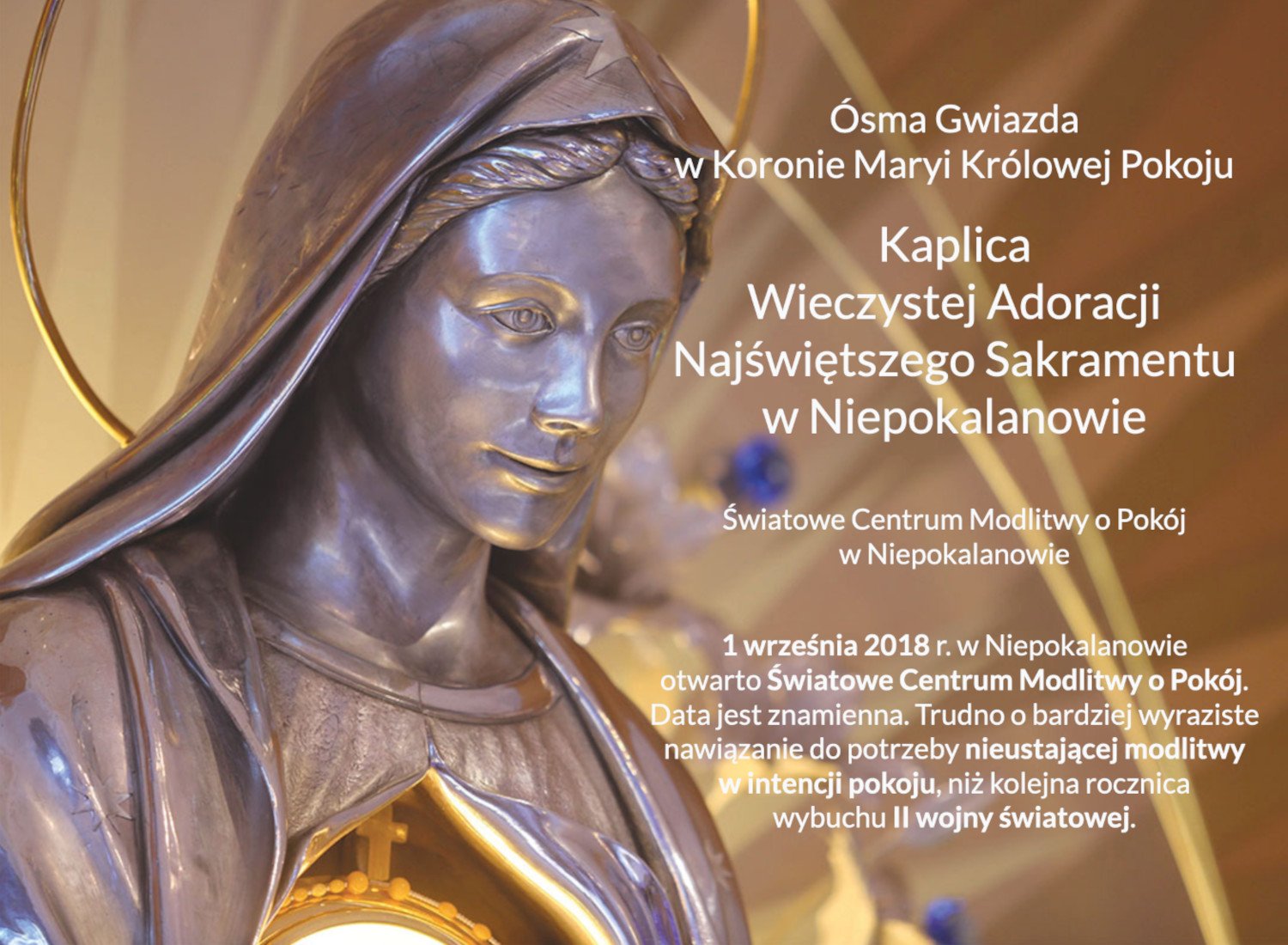

The Eucharistic Adoration Chapel established by Saint Maximilian Kolbe was inaugurated at the outbreak of World War II. It was restored as a Chapel of Adoration in September, 2018, the commemoration of the date that the war began. It is now part of the World Center of Prayer for Peace. The live internet feed of the Adoration Chapel at Niepokalanow — sponsored by EWTN — was established just a few weeks before we discovered it and began to include in at Beyond These Stone Walls. Click “Watch on YouTube” in the lower left corner to see how many people around the world are present there with you. The number appears below the symbol for EWTN.
Click or tap here to proceed to the Adoration Chapel.
The following is a translation from the Polish in the image above: “Eighth Star in the Crown of Mary Queen of Peace” “Chapel of Perpetual Adoration of the Blessed Sacrament at Niepokalanow. World Center of Prayer for Peace.” “On September 1, 2018, the World Center of Prayer for Peace in Niepokalanow was opened. It would be difficult to find a more expressive reference to the need for constant prayer for peace than the anniversary of the outbreak of World War II.”
For the Catholic theology behind this image, visit my post, “The Ark of the Covenant and the Mother of God.”