
Popular 1980s daytime television hosts like Oprah, Geraldo and others injected repressed memory into pop psychology bringing unjust harm to a multitude of innocents.
December 3, 2025 by Fr. Gordon MacRae and the False Memory Syndrome Foundation
Just as I was preparing to type this post, an alert reader informed me that my name is mentioned in a brief but brilliant article by William A. Donohue, PhD, President of the Catholic League for Religious and Civil Rights. The article, “What Happens When Truth Doesn’t Matter” appears in the November 2025 issue of the Catholic League Journal Catalyst. It tells a fascinating but disturbing story about a wealthy woman who had developed a best-selling memoir recounting her newly emerged memories of being raped by a middle school teacher 37 years earlier when she was 12. The story emerged with the help of a psychotherapist and the influence of a psychedelic drug called MDMA. The story propelled her memoir, promoted by Oprah Winfrey and other daytime TV luminaries. But it destroyed the life and career of the now elderly teacher, who had a spotless record and who vehemently denies the claims for which there is no other evidence beyond the memoir itself.
One well-known advocate of the use of the drug MDMA in therapy has gone on record to state that “whether or not repressed memories actually happened — from a therapeutic perspective — does not matter. People develop stories that help them make sense of their life … whether it is true or not, it has value because the emotion is real.” So is the irreparable harm done to an innocent man.
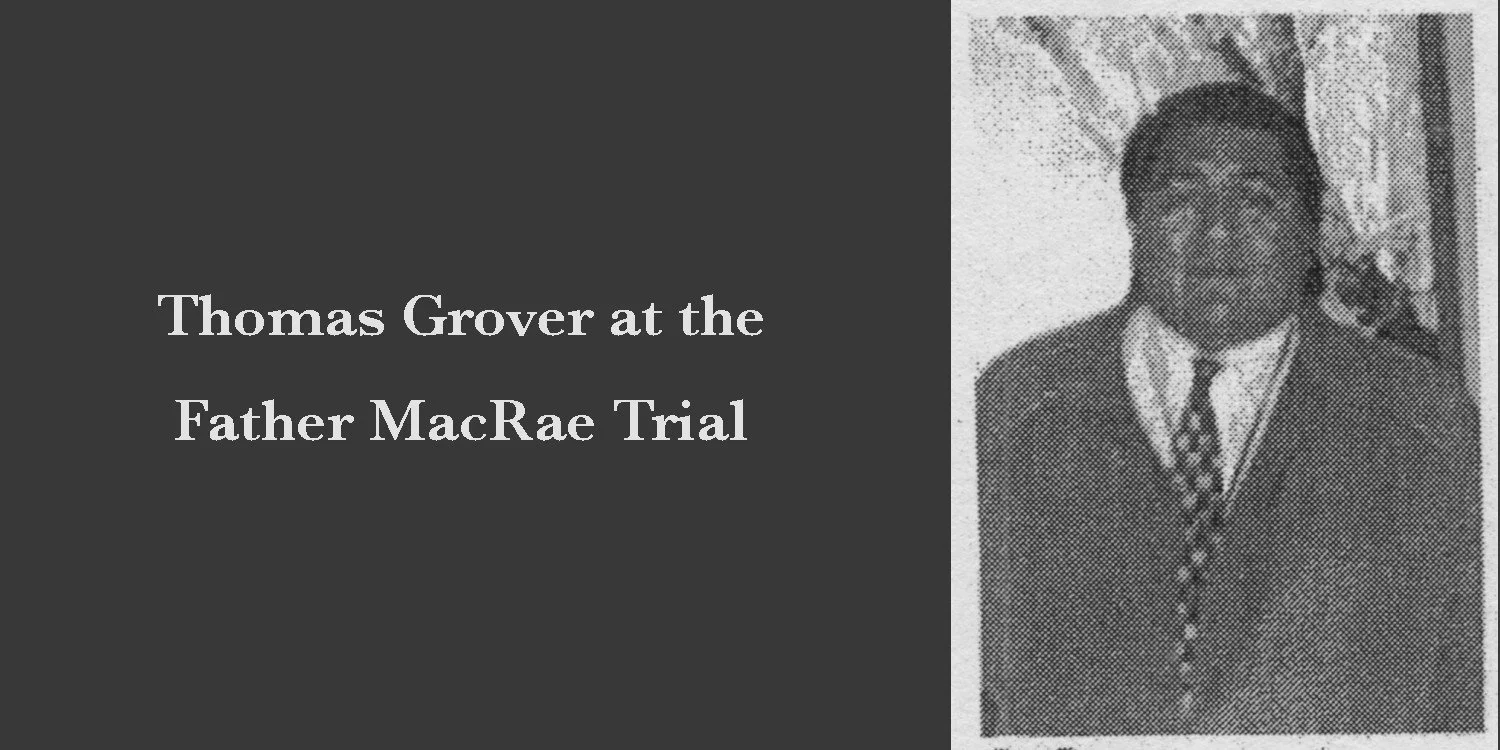
One of our readers sent this story to me because of a curious incident during my 1994 trial. As I sat before Judge Arthur Brennan, twelve jurors and a gaggle of prosecutors and news media in Cheshire County Superior Court in Keene, New Hampshire, the Court was listening intently to some wild testimony from 27-year-old Thomas Grover. He was describing how, a dozen years earlier at age 15, he came to me for five counseling sessions for his drug addiction while claiming to have been forcibly raped at the end of each session. When asked the obvious question of why, after that first horrific encounter he returned again and again, he stated simply, “I don’t know how I got there. I repressed it.”
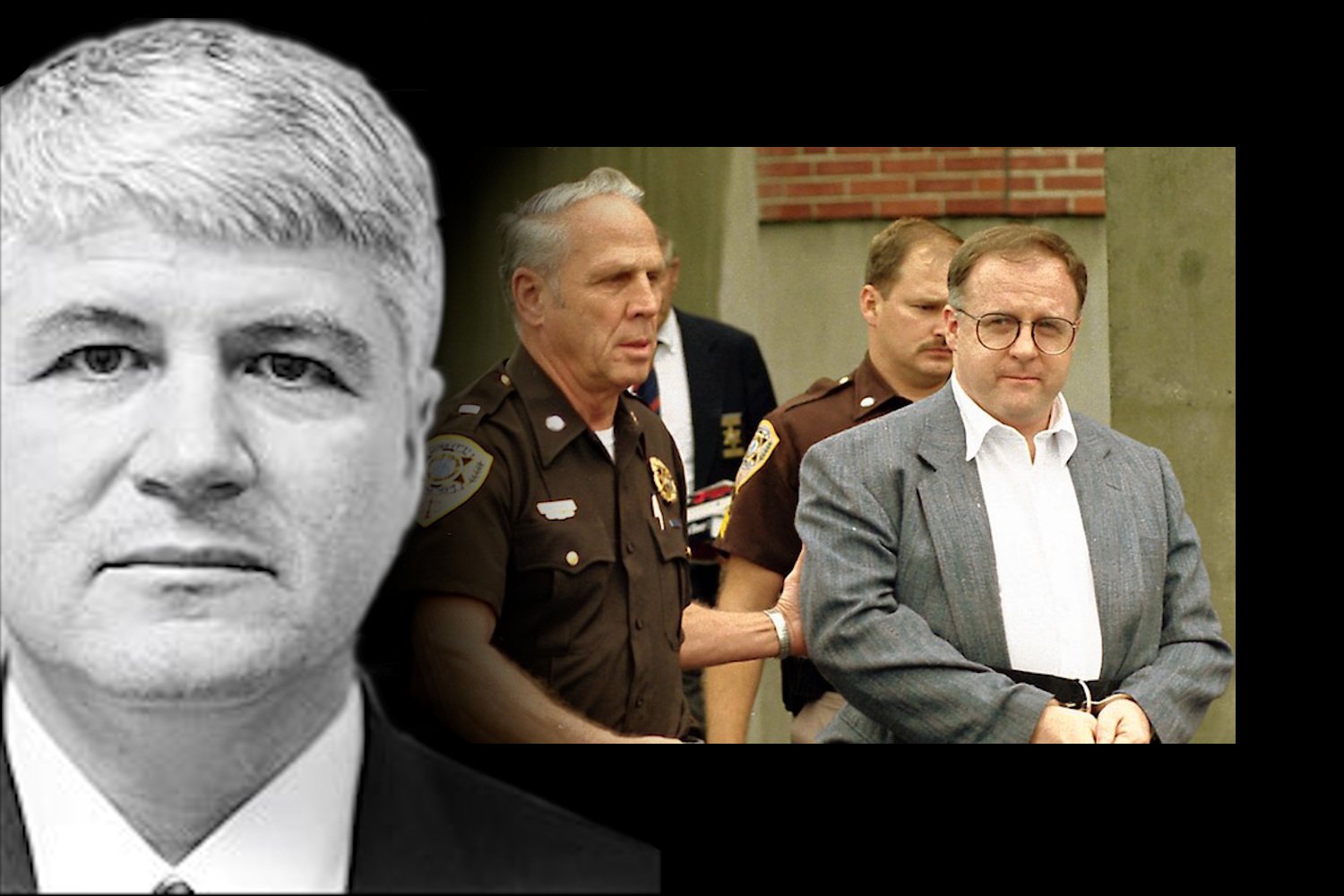
With pre-trial coaching from Detective James F. McLaughlin and psychotherapist Pauline Goupil, MA (now Pauline Goupil Vachon) — to whom Grover was referred by Robert Upton, his contingency lawyer — the details of a series of fictitious sexual assaults emerged from a dozen years earlier in the summer months of 1983. In earlier interviews between Grover and McLaughlin, the assaults were alleged to have occured in 1978 when Grover was 11, and then changed to 1980 when Grover was 13. Police reports indicate that Detective McLaughlin gave him a copy of my résumé “to help him with his dates.” The allegations were then updated to 1983, one year after my ordination to the Catholic priesthood, but the trial came twelve years later.
In the media-fueled background leading up to that trial was a lot of dishonest hype and consternation for which my Bishop and the Diocese of Manchester felt obliged to respond. Months before the trial began my Bishop issued a press release with the following pre-trial statement:
“The Church has been a victim of the actions of Gordon MacRae just as these individuals. It is clear that he will never again function as a priest.”
The die was cast. The verdict came first, and then the trial. From my perspective, this was never a story of so-called repressed and recovered memory, but rather a massive con perpetrated by a professional con man latching on to the rhetoric of the day for a quick-and-easy monetary settlement. He was given $200,000 by the Diocese of Manchester.
Alarmed at some point that Thomas Grover failed to show up for Ms. Goupil’s pre-trial coaching sessions, she sent him a letter which found its way into my trial, but not for the eyes and ears of the jury: “I have news,” Ms. Goupil wrote to Thomas Grover. “Jim” [Detective James F. McLaughlin] “told me that MacRae is being offered a plea deal his lawyers will want him to take so there likely won’t be a trial. We can just move on with the settlement.”
Unaware of that letter, and of the existence of Pauline Goupil and her pre-trial coaching of Grover, I was informed by my attorney that Prosecutor Bruce Elliott Reynolds presented a pre-trial deal to serve no more than one to three years in prison — later reduced to one to two — if I plead guilty. Because the alleged crimes never took place, I simply could not fathom doing this. I was repeatedly told, even by my own lawyer, that innocent defendants often have to take such deals to control a sentence if convicted. My lawyer reminded me that under New Hampshire law, no evidence beyond the accusation itself is required for a guilty verdict.
I was told that it all comes down to the credibility of a witness over the credibility of a defendant. Then I was reminded that I am a Catholic priest accused amid a barrage of accusations brought against other Catholic priests in New Hampshire and Massachusetts, all awaiting a lucrative payday. As our title suggests, it was a perfect storm.
Drug-Induced Courtroom Drama
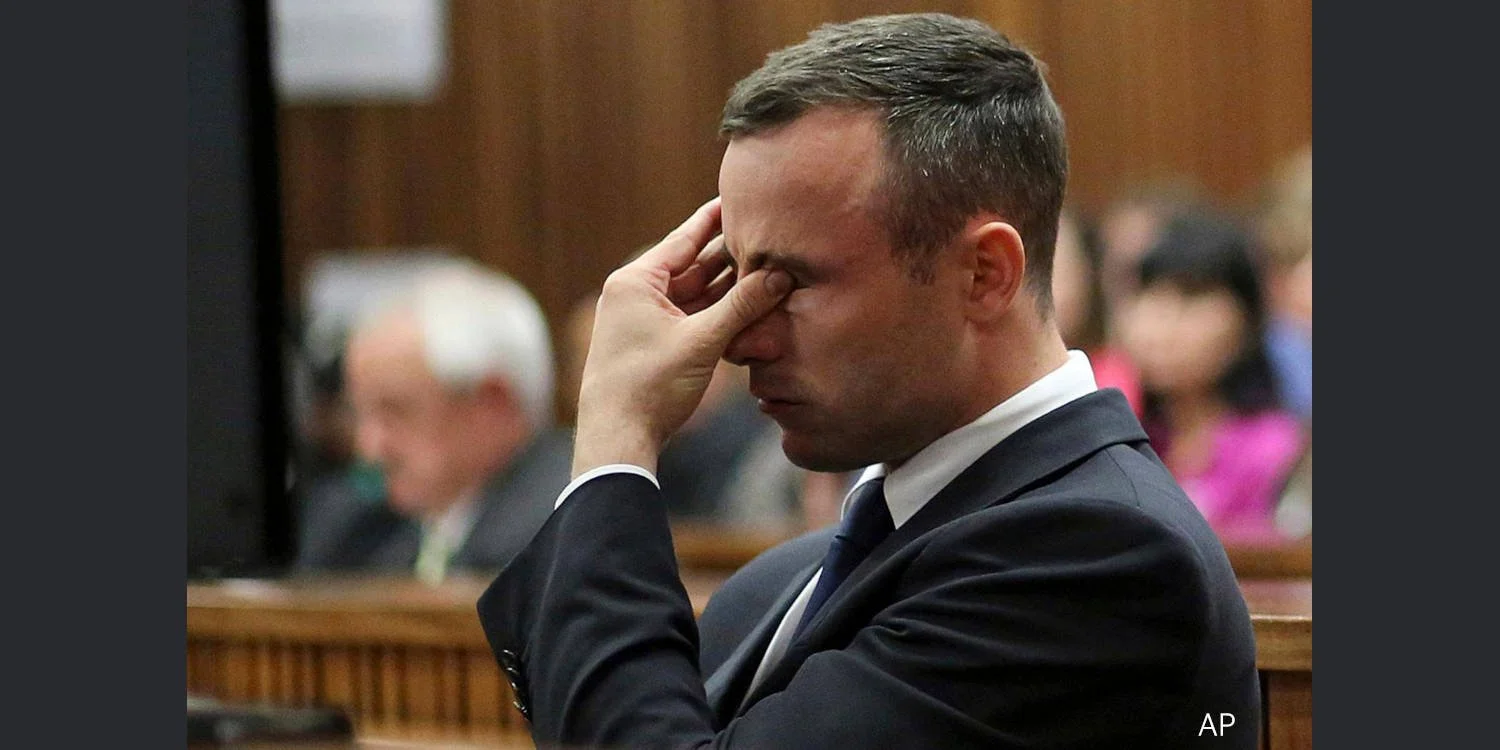
There were some moments of high drama in this trial. A woman seated in the courtroom gallery with line of site to the witness stand was observed to influence Thomas Grover’s testimony. During cross examination from my attorney, Grover protested to Judge Arthur Brennan that he cannot answer the attorney’s questions if he insists on standing near the defendant. So the judge instructed my lawyer to walk to the other side of the court to ask his questions. The question at hand was, “Who did you go to first with your claims, the police or a lawyer?” Instead of answering, Thomas Grover began to cry.
During a break in the trial, two persons who were present approached my attorney to report what they had just observed. The real issue was that while standing next to the defense table to pose his questions, my attorney was blocking the line of sight between Grover and that woman. The two court observers also reported to my attorney that the woman in question was giving Grover hand signals to influence and direct his testimony. This information was then reported to Judge Arthur Brennan, who apparently ignored it. Many years later one of these observers, Leo Demers, a PBS broadcasting official, wrote a letter to Judge Brennan, who again did not address the specific allegation:
“We saw something in your courtroom during the MacRae trial that I don’t think you ever saw. My wife nudged me and pointed to a woman, Ms. Pauline Goupil, who was engaged in what appeared to be clear witness tampering. During questioning by the defense attorney, Thomas Grover seemed to feel trapped a few times. On some of those ocassions, we witnessed Pauline Goupil make a distinct sad expression with a downturned mouth and gesturing with her finger from the corner of her eye down her cheek at which point Mr. Grover would begin to cry on the stand. I have been troubled about this for all these years. I know what I saw, and what I saw was a clear attempt to dupe the Court and the jury.”
In his brief response, retired Judge Brennan did not address any of the specific allegation of Leo Demers. Despite a pre-trial court order to turn over to the defense all records of Grover’s psychotherapy and counseling, the above incident was the first time my defense learned of therapist Pauline Goupil and her pre-trial coaching of Thomas Grover.
In a post-trial statement of Trina Ghedoni, who was Thomas Grover’s wife at the time of this trial, she reported that all information before and during trial passed through Pauline Goupil to Detective McLaughlin. Trina Ghedoni also reported that Pauline Goupil arranged for Mr. Grover to be drugged during the trial.
In “Repressed Memory Therapy: Lies of the Mind,” a foundational 1993 article in Time Magazine, author Leon Jaroff attributed the sensational emergence of repressed memory not to expert opinion, but to trends in popular culture “featured prominently on Geraldo, Oprah, Sally Jessy Raphael and other daytime TV talk shows.” The notion of repressed and recovered memory has never appeared in the Diagnostic and Statistical Manual of Mental Disorders published by the American Psychiatric Association.
Lies of the Mind or a Pathological Liar?
The famous Swiss psychologist, Jean Piaget, once penned an amazing account of false memory from his childhood. From early childhood on into adolescence, Piaget had a firm memory of an incident involving his nurse with himself as the potential victim of a kidnapping attempt. He had a clear memory of his nanny pushing him in a carriage when a man came up and tried to take him. He remembered in vivid detail the location of the event, the villain, the struggle, and the outcome. He recalled deep scratches on his nanny’s arms as she boldly fended off the attacker, and he remembered the police officer who came to their rescue.
However, when Piaget was 15 years old, his nanny decided to atone for her own past offenses. She publically admitted that she made up the entire kidnapping story including scratching her own arms to make it look as though an attacker had done it. Piaget was shocked to learn at age 15 that this story that haunted his early childhood, a story for which he had formed and retained vivid memories, never actually took place. In adulthood, Piaget concluded that his memories of the event arose and took shape solely from the nanny’s retelling of the false story in his childhood. Eventually the scene became rooted in Piaget’s memory as an actual event.
Another troubling story of memory reconstruction as evidence was reported by The Wall Street Journal’s Dorothy Rabinowitz in her myth-shattering book, No Crueler Tyrannies: Accusation, False Witness, and Other Terrors of Our Times. The terror this time was inflicted in Boston courts upon 61-year-old grandparents, Ray and Shirley Souza. No one could tell this with more succinctly existential terror than Dorothy Rabinowitz:
“Ray and Shirley Souza’s 24-year-old daughter had a dream one night. In the dream, her parents raped her. It was now the 1990s, the era of the repressed memory syndrome. Ray and Shirley’s grandchildren were taken to see therapists and interrogated. In court they testified that their grandparents tied them in a cage in the basement and raped them with elbows and feet and a big machine. Judge [Elizabeth] Dolan ruled [with no further evidence] that the children’s stories were credible and sentenced the Souza’s to a term of fifteen years in prison.”
— No Crueler Tyrannies, p. 90
Thus began the era of “Believe the Children” and the shame shrouded upon anyone who dared question a child’s account of abuse — even if the account emerged without evidence in the office of an agenda-driven therapist. It was also the era in which the case against me emerged.
And it was the era that gave birth to the False Memory Syndrome Foundation and its efforts to breathe sanity and reason into what can only be described as the emotional takeover of psychology and the justice system. The FMSF was established in 1992 and continued until 2019 to amass a database of false-memory claims and expertise in psychology and the legal system that refuted them. In 2008 the False Memory Syndrome Foundation published the following report on my 1994 trial and conviction:
From the quarterly journal of the False Memory Syndrome Foundation — Fall 2008, Vol. 17, No. 4, p. 8
FATHER MACRAE
A Reminder That There Are Still Many People in Prison Based Only on Accusations of Recovered Memories
Although there is no doubt of the Catholic Church’s irresponsible handling of thousands of reports of clergy abuse, there are also a growing number of cases in which priests appear to have been wrongly convicted. The case of Rev. Gordon MacRae, which was detailed by Dorothy Rabinowitz in 2005 in The Wall Street Journal, appears to be one of them.
In May 1993, Rev. Gordon MacRae was arrested for sexually assaulting three New Hampshire boys [all three came forward as adults at the same time, with the same claim of repressed memory, but only the claims of Thomas Grover went to trial], when he had been a priest there a decade earlier. The early 1990s were heydays for accusations of sexual abuse based on new-found memories and just about everything that could go wrong for the defense did go wrong.
Among the problems was a letter from Florida informing local police that MacRae was a suspect in a murder/sex crime there. This was the final bit of tinder for a hyper-zealous detective who then repeatedly interviewed many young people who knew MacRae and even attempted a series of “stings.” By the time that the Florida case was declared bogus, there was no stopping the effort to convict MacRae.
Prosecutors offered various plea arrangements to MacRae, who is serving a life term, but he refused them all, declaring his innocence. Indeed, Fr. MacRae would have been released after one to three years if he had taken a plea or would have been released on parole if he confessed. The “Catch-22” of prison is that those who do not admit guilt will not receive parole.
At the criminal trial, witness Thomas Grover’s testimony verged on the bizarre. He had accused MacRae of abusing him during counseling sessions. When asked why he continued to go to the sessions, Grover explained that he had ‘out of body’ experiences and completely forgot between sessions that he had ever been sodomized.
Even the judge’s rulings appeared biased. According to Rabinowitz:
“Throughout his testimony, [accuser] Thomas Grover repeatedly railed at the priest for forcing him to endure the torments of a trial. He would not have much to fear, in the end, in these proceedings, whose presiding judge, Arthur D. Brennan, refused to allow into evidence Thomas Grover’s long juvenile history of theft, assault, forgery and drug offenses. In New Hampshire, where juries need only find the accuser credible in sex abuse cases, with no proofs required, this was no insignificant restriction. The judge also took it upon himself to instruct jurors to “disregard inconsistencies in Mr. Grover’s testimony,” and said that they should not think him dishonest because of his failure to answer questions. The jury had much to disregard.”
To read more about this case: Beyond These Stone Walls/About
+ + +
Editor’s Note: Thank you for reading and sharing this troubling story, which should have had equal time in the influential daytime talk shows that contributed to it. You may also wish to read and share the following published statements of persons with first-hand knowledge of this case who have never been permitted by any New Hampshire judge to offer their testimony under oath.
Statement of Leo Demers, PBS Television executive
Statement of Dorothy Rabinowitz, The Wall Street Journal
Statement of Debra Collett, Thomas Grover’s former therapist



The Eucharistic Adoration Chapel established by Saint Maximilian Kolbe was inaugurated at the outbreak of World War II. It was restored as a Chapel of Adoration in September, 2018, the commemoration of the date that the war began. It is now part of the World Center of Prayer for Peace. The live internet feed of the Adoration Chapel at Niepokalanow — sponsored by EWTN — was established just a few weeks before we discovered it and began to include in at Beyond These Stone Walls. Click “Watch on YouTube” in the lower left corner to see how many people around the world are present there with you. The number appears below the symbol for EWTN.
Click or tap here to proceed to the Adoration Chapel.
The following is a translation from the Polish in the image above: “Eighth Star in the Crown of Mary Queen of Peace” “Chapel of Perpetual Adoration of the Blessed Sacrament at Niepokalanow. World Center of Prayer for Peace.” “On September 1, 2018, the World Center of Prayer for Peace in Niepokalanow was opened. It would be difficult to find a more expressive reference to the need for constant prayer for peace than the anniversary of the outbreak of World War II.”
For the Catholic theology behind this image, visit my post, “The Ark of the Covenant and the Mother of God.”