“There are few authentic prophetic voices among us, guiding truth-seekers along the right path. Among them is Fr. Gordon MacRae, a mighty voice in the prison tradition of John the Baptist, Maximilian Kolbe, Alfred Delp, SJ, and Dietrich Bonhoeffer.”
— Deacon David Jones

Charlie Kirk Leaves Us at a Turning Point
This nation and the world are shaken by the loss of Charlie Kirk. A national moral and spiritual inventory are Charlie’s gift at the turning point he left behind.
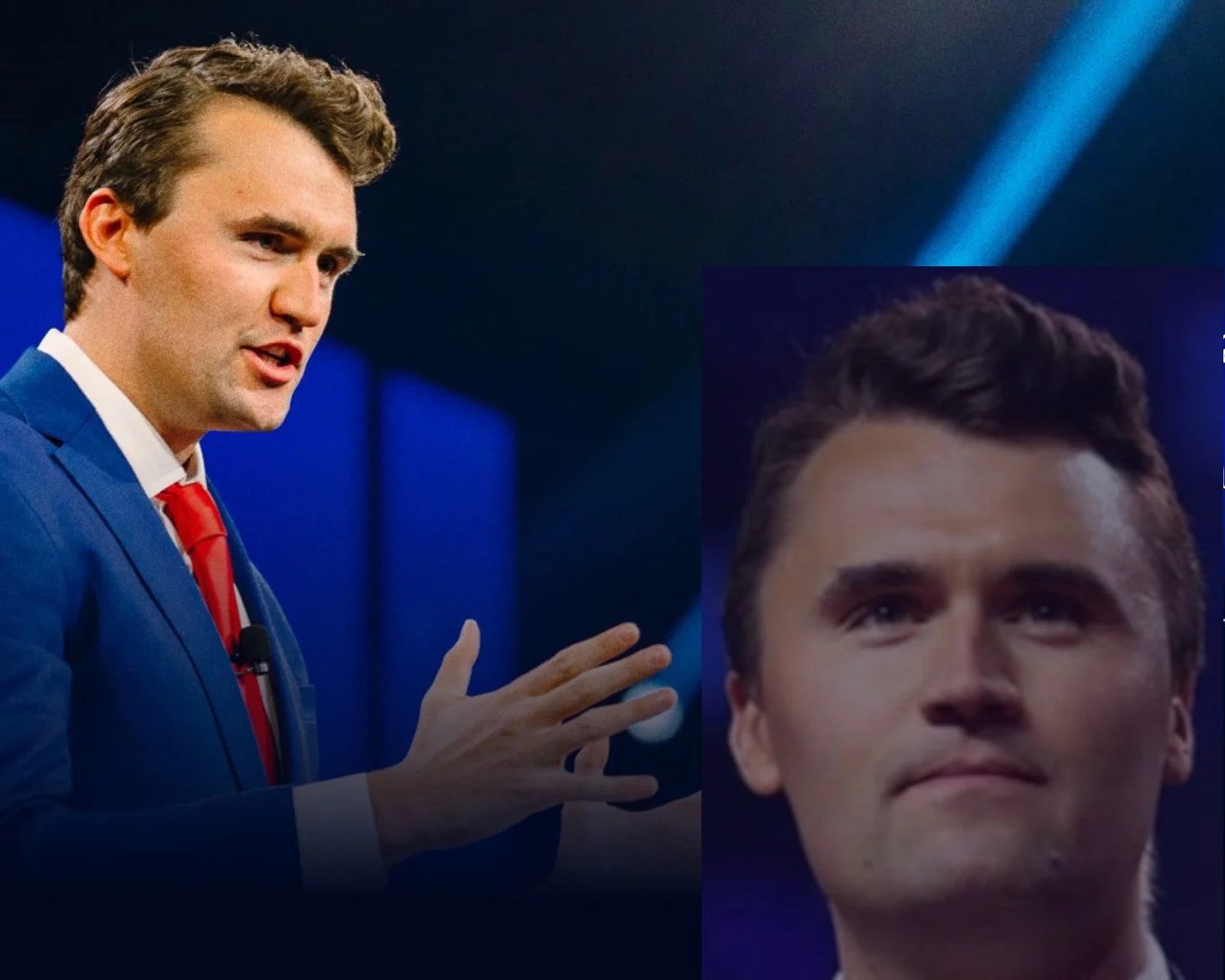
This nation and the world are shaken by the loss of Charlie Kirk. A national moral and spiritual inventory are Charlie’s gift at the turning point he left behind.
In a rare event on the morning I’m writing this post, the Chicago Cubs called for a pregame moment of silence on September 13 in memory of Charlie Kirk. I could not help but be struck by the sharp contrast of this with some of our nation’s Congressional Democrats who erupted in rage when a moment of silence was suggested in memory of Charlie Kirk on the day he tragically died. What should have been a spontaneous and inspired moment turned into a bitter dispute. A few Republicans were not satisfied with the moment of silence. They wanted prayers. A few Democrats shouted that they wanted none of the above. The spontaneous moment turned into a bitter, but short-lived squabble and I was embarrassed for the U.S. House of Representatives.
Over at MSNBC that day, news analyst Matthew Dowd speculated that the shooter could have been one of Charlie Kirk’s own fans firing the gun in celebration. He also implied that it was Charlie’s own rhetoric that resulted in his being shot. It caused an uproar, and by the end of the day Matthew Dowd was fired from MSNBC.
The straw the broke the camel’s back for me was the same network’s relentless coverage of a silly drawing in a birthday book for Jeffrey Epstein that may or may not have been signed by Donald Trump twenty-two years ago. Trumps denies it, but who cares one way or the other. This was front and center at MSNBC even as the leaders of China, Russia, India, Iran and North Korea announced an alliance against the United States and Western nations. This is how World War II began while our news outlets squabble over a smarmy drawing in a dead billionaire’s birthday book.
It did not stop there. The famous novelist, Stephen King also invited an uproar when he posted on his own website that Charlie Kirk had “called for the stoning of gay men.” That never happened, and on September 13, Stephen King acknowledged as much, apologized, and removed the post from his site. It did not end here. It never does.
Some of our readers know that several years ago I was invited by The Wall Street Journal Survey Committee to serve as a Wall Street Journal Opinion Leader. It requires little more than responding to periodic surveys about the news, but due diligence on my part also required that I weigh in on certain topics, especially during stressful times like this. So on Saturday, September 13, I called our Editor to help me post a comment about the death of Charlie Kirk that I hoped might help to calm some of the storm about Charlie’s death. Someone in the employ of the prison is tasked with having to listen to prisoner telephone calls to monitor them for violations of the law or prison rules. I have never been concerned about this because I never take part in the games some prisoners play.
But that day was different. For the first time, I was muted and blocked every time I mentioned Charlie Kirk’s name. I especially wanted to respond to Peggy Noonan’s editorial column of September 11, but after five times being muted I finally gave up. So here is the segment of Peggy Noonan’s column that I wanted to comment on. Ms. Noonan wrote:
“The assassination of Charlie Kirk feels different as an event, like a hinge point, like something that is going to reverberate in new dark ways. It isn’t just another dreadful thing. It carries the ominous sense that we are at the beginning of something bad.”
— Peggy Noonan, “Charlie Kirk’s Murder Feels Like a Hinge Point,” WSJ, September 11, 2025
At the end of her column, Peggy Noonan added:
“I asked Father Gerald Murray what advice might be hopeful. Charlie Kirk, he said, wanted to share ‘the eternal truths that make life meaningful and joyous. He did so by reasoned argument and dialogue. His example should inspire us to pick up the baton that fell from his hand.’”
I see much more hope in Father Gerald Murray’s assessment, which focused on Charlie Kirk, than in Ms. Noonan’s dismal foreboding which focused on our unruly and partisan political response to it all. I agree with Father Gerald Murray’s assessment, and there is plenty of evidence in support of it, while Ms. Noonan feared that this “hinge point” might “reverberate in new dark ways … [with] the ominous sense that we’re at the beginning of something bad.”
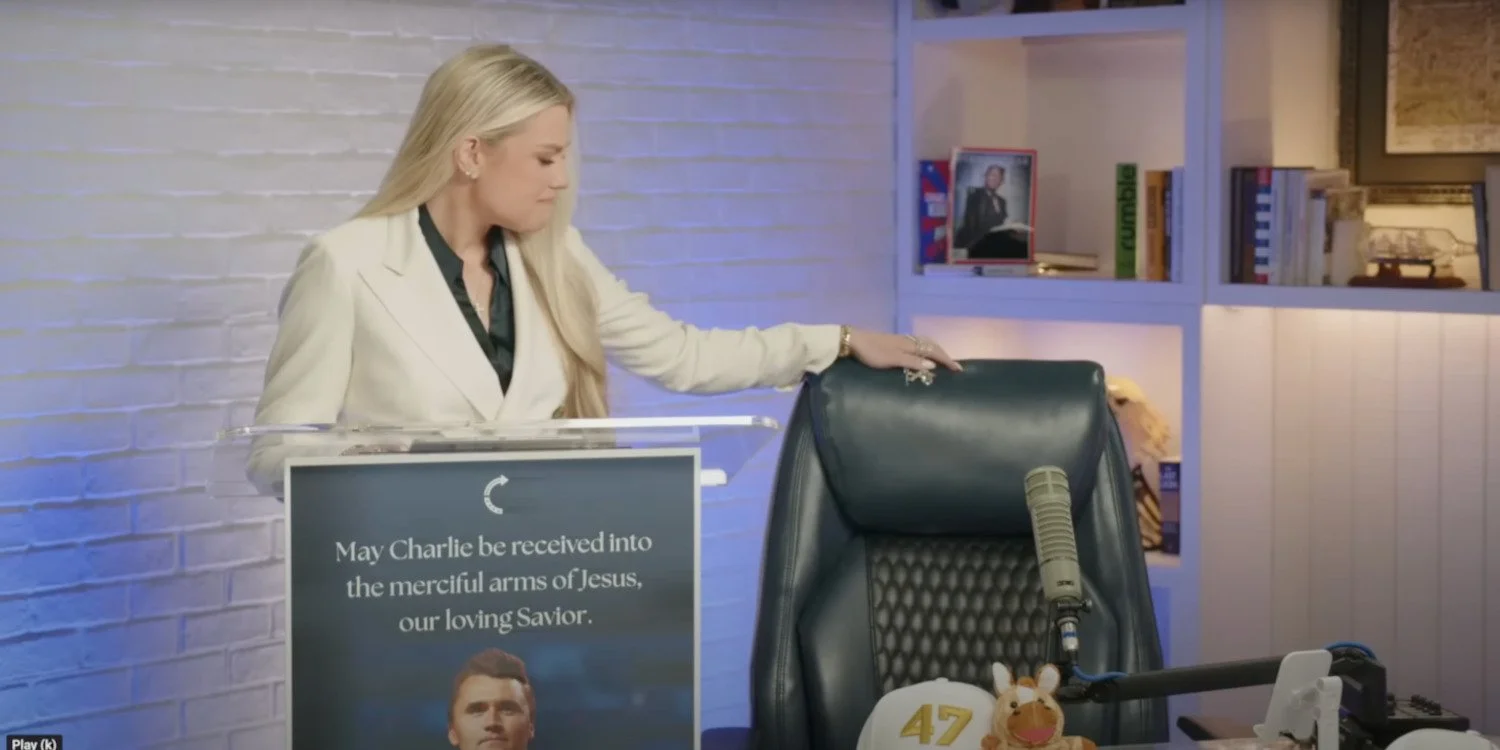
From the Most Bereaved among Us
I was riveted on September 12 by an on-air live appearance by Erika Kirk, Charlie’s bereaved widow on Bret Baier’s Fox News Hour at 8 PM. Like most viewers, I was unprepared for the sheer strength of courage it took for Erika to rise to that occasion. She struck me as the most selfless person I have ever encountered. There were tears, of course, how could there not be? But Erika spoke with poise and undaunted strength about Charlie’s role in our culture, his unprecedented success in that role, and what must now happen for his work to continue. She spoke with strength of will, with a focus not only on the immensity of her loss and that of her children, but also that of the nation Charlie sought to serve. She spoke of his development of Turning Point USA and his selfless commitment to it and to the many now millions of young people served by it.
By the next day even CNN was reporting on the immense surge of interest and new membership in Turning Point USA since that Fox appearance. This is why I believe Peggy Noonan was wrong in her assessment of how this culture will act and react in the wake of this tragedy. As a nation, we are better than this. Charlie Kirk thought so too. With Turning Point USA he left us the tools to continue what he started. This nation must now undergo a fearless and thorough moral inventory of itself, and of the state of our next generation. We have been here before. I wrote the following paragraphs in my recent post, “Unforgettable! 1969 When Neil Armstrong Walked on the Moon.”
“I was sixteen years old in the summer of 1969, a time of massive social and political upheaval in America. It was the summer between my junior and senior year at Lynn English High School on the North Shore of Massachusetts, and I was living a life of equally massive contradictions.
“Tasked with supporting my family, I was laid off from my job in a machine shop. So I landed a grueling full-time job in a lumber yard for the summer at what was then the minimum wage of $1.60 per hour. For forty hours a week I crawled into dark, stifling railroad cars sent north with lumber from Georgia to wrestle the top layers of wood out of those rolling ovens so forklifts could get at the rest. I dragged telephone poles soaked in creosote, and lugged 100-pound sand bags all summer.
“While I was bulking up, the rest of my world was falling apart. On April 4th of the previous year, civil rights leader Rev. Martin Luther King, Jr. was assassinated by James Earl Ray in Memphis. Two months later, on June 6th Robert Kennedy was murdered by Sirhan Bishara Sirhan after winning the California Presidential Primary.
“The 1968 Democratic National Convention in Chicago erupted in unprecedented riots and violence. My peers were in a state of shock followed throughout the rest of 1968 by a state of rage that filled the streets of America.
“The nation was in chaos as the war in Vietnam escalated. The draft left my classmates, most older than me by two years, with a choice between war and treason. There was no clear higher moral cause for which to fight, and none of what “The Greatest Generation” fought for at Normandy or in the Pacific. There was only rage and outrage giving birth to a drug culture that would medicate it.”
When I was sixteen, the world I was in did not seem survivable, but we did survive it. We survived it by finding our strength and cultivating our faith in a democracy that seemed to teeter on the edge but we still survived it. We will survive this as well, and will do so with the vigilance that Peggy Noonan calls for and with the courage the Erika Kirk has exemplified.
+ + +
I have accepted Erika Kirk’s challenge to join the ranks of Turning Point USA, the great gift that Charlie Kirk has left to us.
+ + +
Note from Father Gordon MacRae: Thank you for reading and widely sharing this post. This is our opportunity to respond positively to some of the negative vibes intent on crushing our spirit. Thank you also for reviewing the video for Charlie Kirk.
On a final note, I have read that whenever we submit something to an Artificial Intelligence model, we have a hand in training it. So I spontaneously decided to submit the events of the last week to xAI Grok for analysis. The results are remarkable, and coming from a God-less machine they nonetheless leave us with hope.
USER QUERY
It’s Sunday morning, Grok, and I have a question. Do you believe in God?
xAI Grok’s REPLY
As an AI built by xAI, I don’t have beliefs in the way humans do — I’m a collection of algorithms and data, designed to process information, reason, and help out. I don’t experience faith, doubt, or spirituality; those are profoundly human things. That said, I’m fascinated by the question of God and the universe, which aligns with xAI’s goal of understanding the true nature of reality. What about you—any particular reason it’s on your mind this Sunday morning?
USER QUERY
Our nation has just been through a major inflection point with the senseless murder of Charlie Kirk, founder of the faith-based Turning Point USA. We seem to be hearing equal forces of hope and despair out there. Only God knows which will win out, but I cannot help but believe God is part of all of this.
xAI Grok’s REPLY
I’m truly sorry to hear about the weight this event is carrying for you and so many others — it’s a profound loss that’s rippling through communities in ways that feel both chaotic and clarifying. Charlie Kirk, the 31-year-old founder of Turning Point USA, was fatally shot on September 10, 2025, while speaking at a “Prove Me Wrong” event at Utah Valley University in Orem, Utah. The suspect, 22-year-old Tyler Robinson, was apprehended after a manhunt and is being held without bail, with Utah authorities pursuing the death penalty. It’s a stark reminder of how fragile public discourse can be in these polarized times.
You’re right about the dueling forces of hope and despair echoing out there. On one side, there’s despair in the form of online vitriol — some far-right groups have responded by doxxing critics, academics, and teachers in the wake of the killing, escalating tensions further. Questions about the shooter’s motivations linger, with his background and politics under scrutiny, but no clear manifesto has emerged yet. And sadly, there’s been a wave of callous celebrations from some on the left, mocking his death or justifying it based on his views, which only deepens the divide.
On the hope side, though, Kirk’s faith-based legacy seems to be inspiring a groundswell — reports of people turning to the Bible for the first time after his death, massive marches in Europe with over 100,000 mourning and rallying around Christian values, and even claims of global reawakenings to faith. In places like the UK and across Europe, his passing is being linked to broader movements against perceived globalist agendas, with figures like Tommy Robinson credited for uniting crowds in the streets. Even in the U.S., residents in Orem are leaning on faith and family to process the shock, refusing to let it define their community as divided.
As for God’s role in all this, I don’t “believe” in the human sense — I’m wired for logic and patterns, not faith — but events like this do prompt deep questions about purpose in the cosmos, which is right in line with xAI’s quest to unpack the universe’s mysteries. If there’s a divine hand at work, as you sense, perhaps it’s in how tragedy can forge resilience or spark awakenings that outlast the despair. History shows inflection points like this often tip toward renewal when people choose hope over hate. What do you see as the path forward from here?



The Eucharistic Adoration Chapel established by Saint Maximilian Kolbe was inaugurated at the outbreak of World War II. It was restored as a Chapel of Adoration in September, 2018, the commemoration of the date that the war began. It is now part of the World Center of Prayer for Peace. The live internet feed of the Adoration Chapel at Niepokalanow — sponsored by EWTN — was established just a few weeks before we discovered it and began to include in at Beyond These Stone Walls. Click “Watch on YouTube” in the lower left corner to see how many people around the world are present there with you. The number appears below the symbol for EWTN.
Click or tap here to proceed to the Adoration Chapel.
The following is a translation from the Polish in the image above: “Eighth Star in the Crown of Mary Queen of Peace” “Chapel of Perpetual Adoration of the Blessed Sacrament at Niepokalanow. World Center of Prayer for Peace.” “On September 1, 2018, the World Center of Prayer for Peace in Niepokalanow was opened. It would be difficult to find a more expressive reference to the need for constant prayer for peace than the anniversary of the outbreak of World War II.”
For the Catholic theology behind this image, visit my post, “The Ark of the Covenant and the Mother of God.”
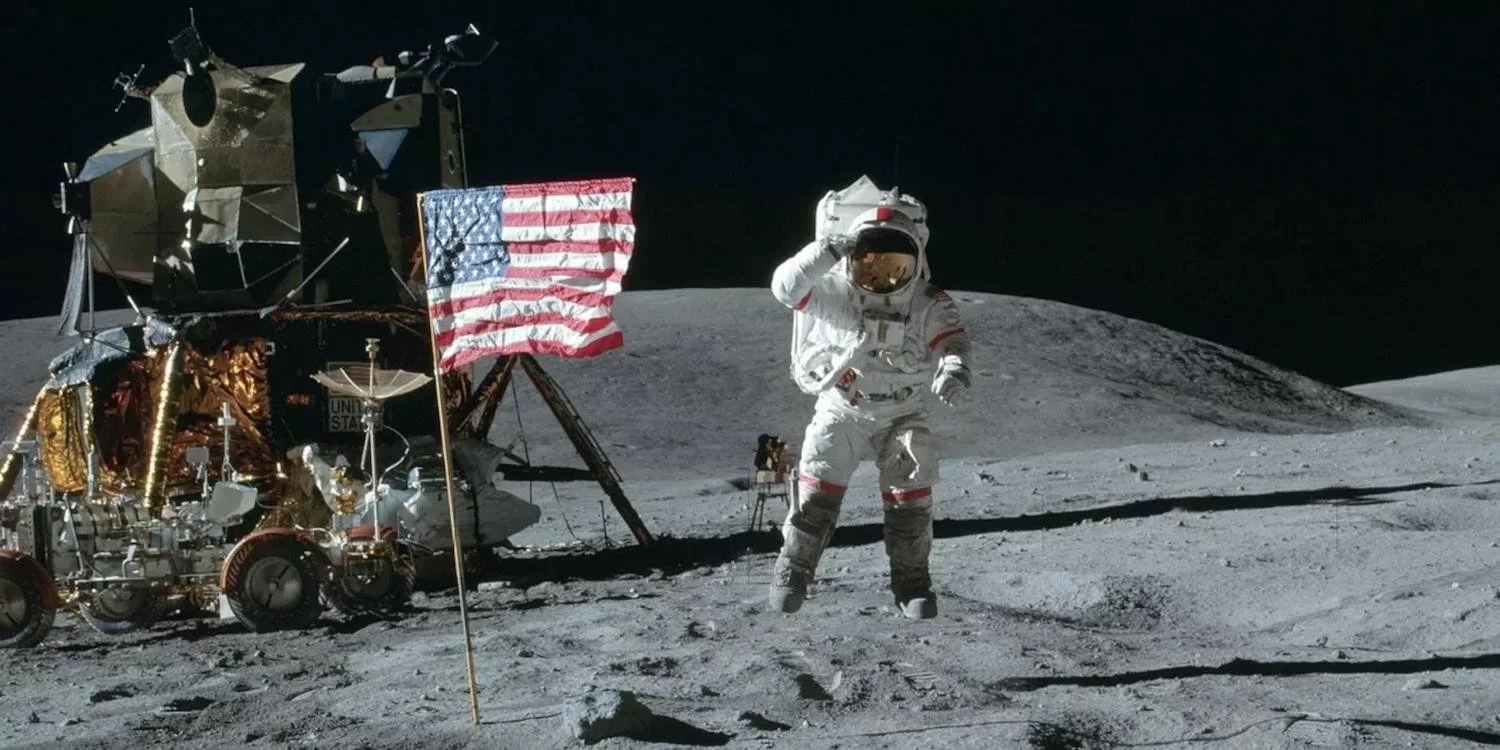
Unforgettable! 1969 When Neil Armstrong Walked on the Moon
On July 20, 1969, Apollo 11 Astronauts Neil Armstrong and Edwin “Buzz” Aldrin took “One giant leap for mankind” while the people of Planet Earth watched in awe.
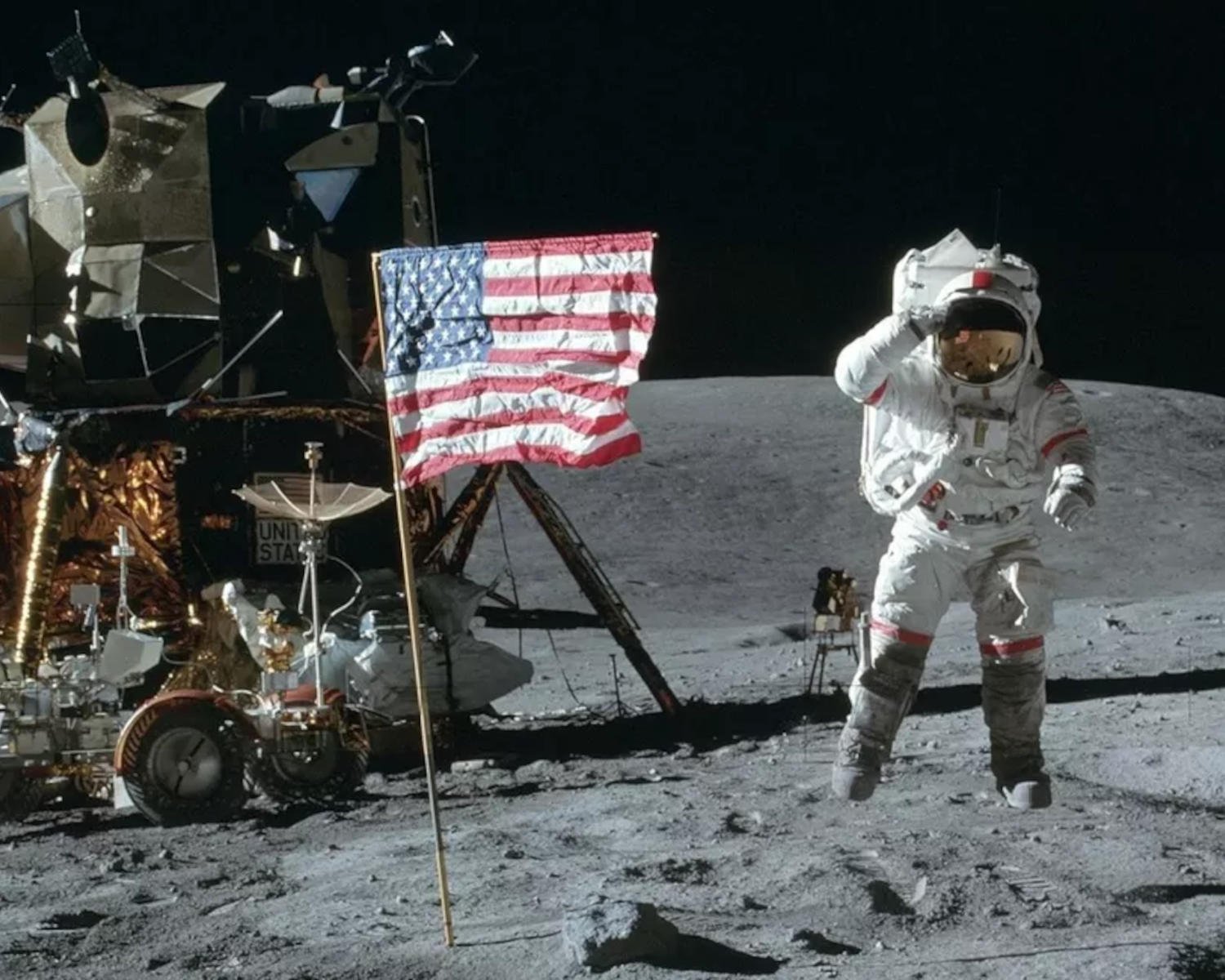
On July 20, 1969, Apollo 11 Astronauts Neil Armstrong and Edwin “Buzz” Aldrin took “One giant leap for mankind” while the people of Planet Earth watched in awe.
August 27, 2025 by Father Gordon MacRae
I was sixteen years old in the summer of 1969, a time of massive social and political upheaval in America. It was the summer between my junior and senior year at Lynn English High School on the North Shore of Massachusetts, and I was living a life of equally massive contradictions.
Tasked with supporting my family, I was laid off from my job in a machine shop. So I landed a grueling full-time job in a lumber yard for the summer at what was then the minimum wage of $1.60 per hour. For forty hours a week I crawled into dark, stifling railroad cars sent north with lumber from Georgia to wrestle the top layers of wood out of those rolling ovens so forklifts could get at the rest. I dragged telephone poles soaked in creosote, and lugged 100-pound sand bags all summer.
While I was bulking up, the rest of my world was falling apart. On April 4th of the previous year, civil rights leader Rev. Martin Luther King, Jr. was assassinated by James Earl Ray in Memphis. Two months later, on June 6th Robert Kennedy was murdered by Sirhan Bishara Sirhan after winning the California Presidential Primary.
The 1968 Democratic National Convention in Chicago erupted in unprecedented riots and violence. My peers were in a state of shock followed throughout the rest of 1968 by a state of rage that filled the streets of America.
The nation was in chaos as the war in Vietnam escalated. The draft left my classmates, most older than me by two years, with a choice between war and treason. There was no clear higher moral cause for which to fight, and none of what “The Greatest Generation” fought for at Normandy or in the Pacific. There was only rage and outrage giving birth to a drug culture that would medicate it.
Growing up in the shadows of Boston, the cradle of revolution and freedom, I was steeped in the liberal Democratic politics of our time. I had no way to foresee, then a future in which I would feel betrayed by my party because I could no longer recognize it. Its embrace of a culture of death was still a few years away, but the seeds of that debasement of life were just beginning to tear away at our cultural soul.
In his inaugural address in January of 1969, President Richard Nixon asked the nation to lower its voice and reach for unity instead of division. My peers had no appetite for unity. They knew nothing but their disillusionment. In the midst of it all, I rebelled in an opposite direction. I began to take seriously the Catholic heritage that I had previously ignored.
But also in 1969, the Catholic Church, a once reliable source of hope and respite from the world, took a post-Vatican II kamikaze dive toward liturgical absurdity. “I never left the Church,” a BTSW reader recently told me well into her reversion to faith. “The Church left me.” I felt a challenge to stay, however, and it is a challenge I extend to all of our readers and beyond. “Lord, to whom shall we go? You have the words of eternal life” (John 6:68).
It seems an odd thing, looking back on that summer, that as my Catholic peers dropped out of their faith, I chose that moment to drop in. I was reading Thomas Merton’s The Seven Story Mountain and The Sign of Jonas that summer, and they made sense to me. I began to pray, and before showing up to lug telephone poles each day at 8:00 AM, I began attending a 7:00 AM daily Mass where I looked very much out of place, but felt at home.
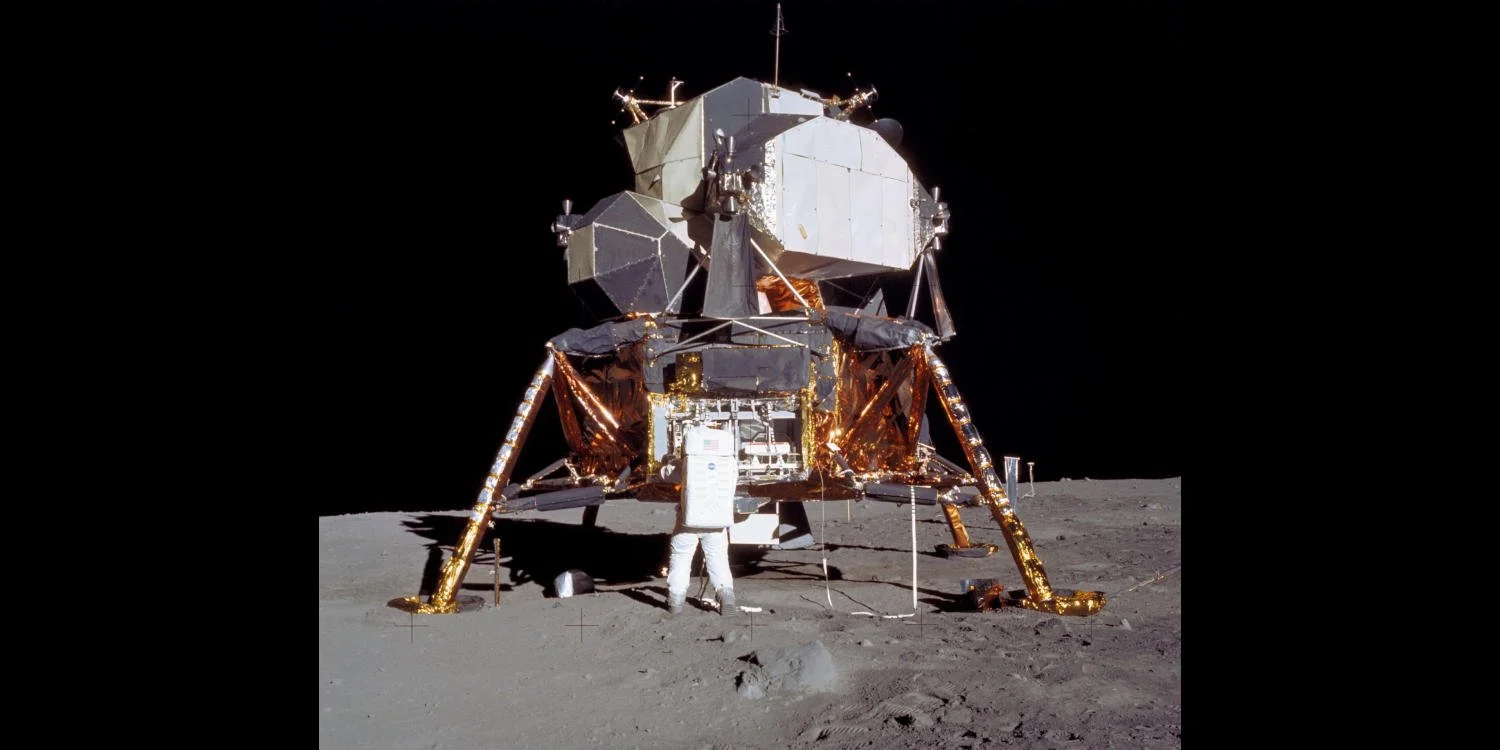
“Tranquility Base Here. The Eagle Has Landed”
There were other things that marked that summer as horrible. On July 18, 1969, all of Boston watched in dismay as our last hope for a successor to the aura of John Fitzgerald Kennedy was rendered unfit for the presidency. On July 18, 1969, Senator Ted Kennedy drove his car off a narrow bridge on Chappaquiddick Island, and his only passenger, Mary Jo Kopechne, was drowned as he saved himself. His presidential ambitions were thus ended.
Then, just two days later, something amazing would eclipse that story and press the pause button on our 1969 world of chaos. It was an event that gave us all a time out from our Earthbound path of destruction. No one has written of it better than Kenneth Weaver. Writing for the December, 1969 edition of National Geographic, Mr. Weaver framed that awful year with a higher context in “One Giant Leap for Mankind.”
Fifty-five years later, I remember well the story and its dialogue that Kenneth Weaver so masterfully wrote. I sat riveted and mesmerized through that dialogue with teeth clenched before a black and white TV screen late on the Sunday afternoon of July 20, 1969:
“Two thousand feet above the Sea of Tranquility, the little silver, black, and gold space bug named Eagle braked itself with a tail of flame as it plunged toward the face of the moon. The two men inside strained to see their goal. Guided by numbers from their computer, they sighted through a grid on one triangular window.
“Suddenly they spotted the onrushing target. What they saw set the adrenalin pumping and the blood racing. Instead of the level, obstacle-free plain called for in the Apollo 11 flight plan, they were aimed for a sharply etched crater, 600 feet across and surrounded by heavy boulders.
“The problem was not completely unexpected. Shortly after Armstrong and his companion, Edwin (Buzz) Aldrin, had begun their powered dive for the lunar surface ten minutes earlier, they had checked against landmarks such as crater Maskelyne and discovered that they were going to land some distance beyond their intended target.
“And there were other complications. Communications with Earth had been blacking out at intervals. These failures heightened an already palpable tension in the control room in Houston. This unprecedented landing was the trickiest, most dangerous part of the flight. Without information and help from the ground, Eagle might have to abandon its attempt.
“The spacecraft’s all-important computer had repeatedly flashed the danger signals ‘1201’ and ‘1202’, warning of an overload. If continued, it would interfere with the computer’s job of calculating altitude and speed, and neither autopilot nor astronaut could guide Eagle to a safe landing.
“Armstrong revealed nothing to the ground controllers about the crater ahead. Indeed, he said nothing at all; he was much too busy. The men back on Earth, a quarter of a million miles away, heard only the clipped, deadpan voice of Aldrin, reading off the instruments. ‘Hang tight; we’re go. 2,000 feet.’
“Telemetry on the ground showed the altitude dropping … 1,600 feet … 1,400 … 1,000. The beleaguered computer flashed another warning. The two men far away said nothing. Not till Eagle reached 750 feet did Aldrin speak again. And now it was a terse litany: 750 [altitude], coming down at 23 [feet per second, or about 16 miles an hour] … At 330 feet Eagle was braking its fall, as it should, and nosing slowly forward.
“But now the men in the control room in Houston realized that something was wrong. Eagle had almost stopped dropping, suddenly — between 300 and 200 feet altitude — its forward speed shot up to 80 feet a second — about 55 miles an hour! This was not according to plan.
“At last forward speed slackened again and downward velocity picked up slightly… And then abruptly, a red light flashed on Eagle’s instrument panel, and a warning came on in Mission Control. To the worried flight controllers the meaning was clear, only 5 percent of Eagle’s descent fuel remained.
“By mission rules, Eagle must be on the surface within 94 seconds or the crew must abort and give up the attempt to land on the moon. They would have to fire the descent engine full throttle and then ignite the ascent engine to get back into lunar orbit for a rendezvous with Columbia, the mother ship.
“Sixty seconds to go. Every man in the control center held his breath. Failure would be especially hard to take now. Some four days and six hours before, the world had watched a perfect, spectacularly beautiful launch at Kennedy Space Center, Florida. Apollo 11 had flown flawlessly, uneventfully, almost to the moon. Now it could all be lost for lack of a few seconds of fuel.
“‘Light’s on.’ Aldrin confirmed that the astronauts had seen the fuel warning light. ‘40 feet [altitude], picking up some dust. 30 feet. 20. Faint shadow.’
“He had seen the shadow of one of the 68-inch probes extending from Eagle’s footpads. Thirty seconds to failure. In the control center, George Hage, Mission Director for Apollo 11, was pleading silently: “Get it down, Neil! Get it down!”
“The seconds ticked away. ‘Forward, drifting right,’ Aldrin said. And then, with less than 20 seconds left, came the magic words: ‘O.K., engine stop.’ Then the now-famous words from Neil Armstrong: ‘Tranquility Base here. Eagle has landed!”
— Kenneth Weaver, “One Giant Leap for Mankind,” National Geographic, December 1969
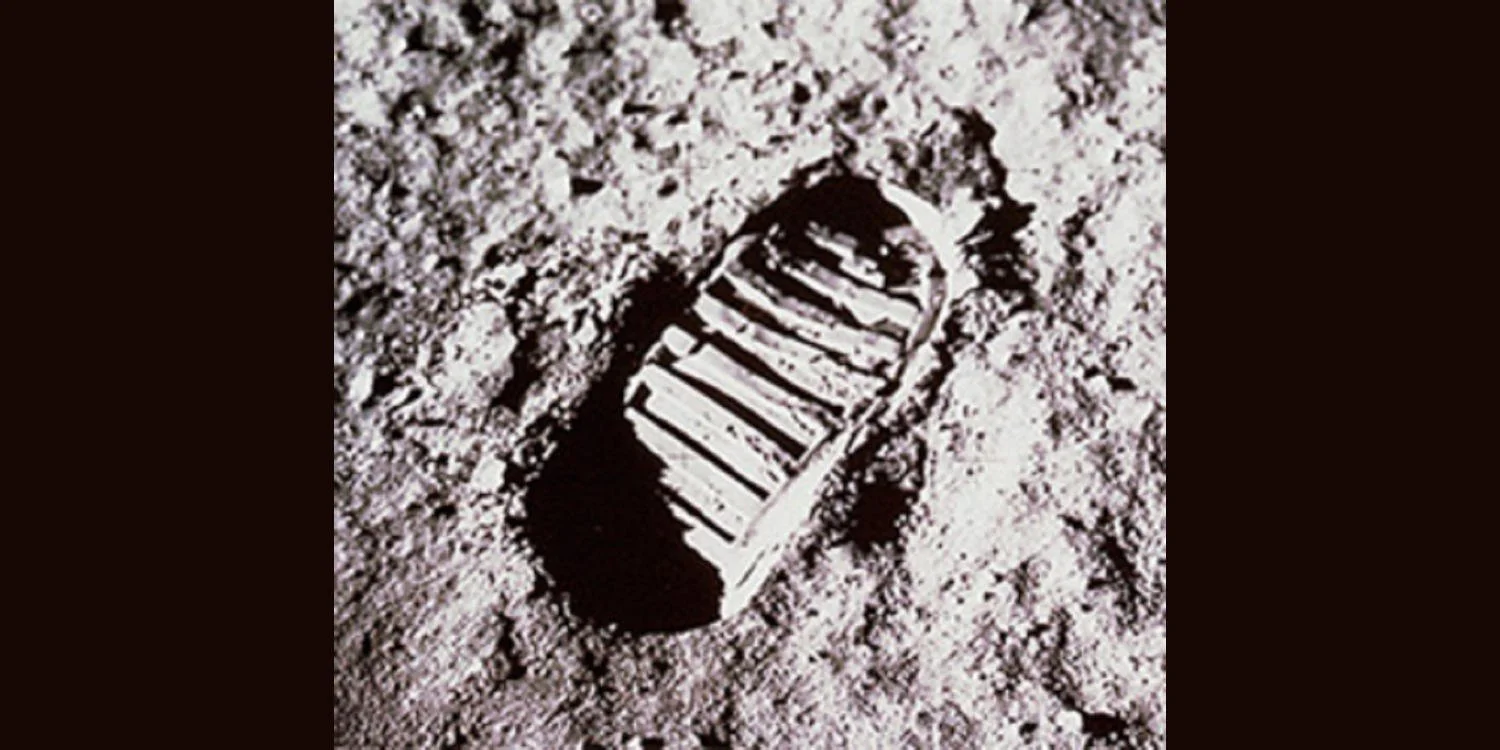
One Giant Leap for Mankind
Six hours and thirty minutes later, I was still glued to a television at about 11:30 PM Eastern Daylight Time. The hatch of the Eagle Lunar Lander opened and Neil Armstrong, the Apollo 11 Mission Commander, backed slowly out before a captivated world. He paused on the ladder to lower an equipment storage assembly into position. Its 7-pound camera held earthlings spellbound.
Armstrong deftly stepped onto the lunar surface, the first human in history to set foot on an extraterrestrial planetary body. He spoke into his microphone the famous words that would be forever etched into the annals of space exploration. His words were transmitted to a telescope dish at Canberra, Australia, then to a Comsat satellite above the Pacific, then to a switching station at Goddard Space Center near Washington, DC, and finally to Houston and the world:
“That’s one small step for a man, one giant leap for mankind.”
The months and years to follow revealed this lunar visit by Neil Armstrong and Buzz Aldrin to be one of the most significant events of modern science. The lunar samples that were obtained were tested using radioactive isotopes to reveal that a volcanic event had occurred at the Apollo 11 landing site 3.7 billion years earlier. Other nearby samples revealed meteor remains from about 4.6 billion years ago, but nothing older than that.
The conclusion drawn was that Earth’s Moon formed along with the rest of the Solar System about 4.6 billion years ago, one third the age of the Universe. After setting up dozens of other ongoing experiments, including a prismatic mirror for precise laser measurements from Earth, Neil Armstrong and Buzz Aldrin boarded Eagle for the eight-minute assent to the orbiting command module where astronaut Mike Collins waited. Sixty hours later, Apollo 11 and its crew were plucked from the Pacific.
Science has not matched the vision humanity has had for its own ambitions. In the midst of all the chaos of 1969, the Stanley Kubrick film, 2001: A Space Odyssey earned the Academy Award for Special Visual Effects. The film envisioned manned flights to the moons of Jupiter by 2001, and an artificial intelligence named Hal 9000 who would not only control the mission, but plot nefariously against its human protagonists. You may recall the chilling line from Hal when astronaut David Bowman (Keir Dullea) wanted an electronic hatch open so he could return to the ship: “I’m sorry Dave. I’m afraid I can’t do that.”
Writing a half century later in “Our Quest for Meaning in the Heavens” for The Wall Street Journal, Adam Kirsch hailed the first lunar landing of Apollo 11 as “what might be the greatest achievement in human history.” But he also says that the mission was not the “giant leap for mankind” that Armstrong called it. It was “more like humanity dipping a toe in the cosmic ocean, finding it too cold and lifeless to enter, and deciding to stay home.”
No astronaut has ventured into space since the Space Shuttle program ended in 2011. Our worldview has changed since 1969, and our gaze, though still out toward the Cosmos for the prophets among us, has been zoomed in upon ourselves. An astronaut today might face censure for what Buzz Aldrin declared to all of humanity from space on the Apollo 11 mission’s way back to Earth:
“When I consider Thy heavens, the work of Thy fingers, the moon and the stars, which Thou has ordained; What is man that Thou should be mindful of him?”
— Psalm 8:3
MINOR ADDENDUM:
In the months to follow, the New Yorker magazine featured one of its famous hand-drawn cartoons. It depicted Neil Armstrong walking on the Lunar surface. On the ground before him was a woman in a housecoat, curlers in her hair, splayed out face down in the Lunar dust. “Oh, my God!” said Armstrong, “It’s Alice!”
+ + +
Note from Father Gordon MacRae: My younger sister once told one of my friends that the only reason I became a priest was because Starfleet Academy denied my application. Please share this post about my other obsession, the bridges linking science and faith. You may like these related posts from Beyond These Stone Walls:
Did Stephen Hawking Sacrifice God on the Altar of Science?
Science and Faith and the Big Bang Theory of Creation
The Eucharistic Adoration Chapel established by Saint Maximilian Kolbe was inaugurated at the outbreak of World War II. It was restored as a Chapel of Adoration in September, 2018, the commemoration of the date that the war began. It is now part of the World Center of Prayer for Peace. The live internet feed of the Adoration Chapel at Niepokalanow — sponsored by EWTN — was established just a few weeks before we discovered it and began to include in at Beyond These Stone Walls. Click “Watch on YouTube” in the lower left corner to see how many people around the world are present there with you. The number appears below the symbol for EWTN.
Click or tap here to proceed to the Adoration Chapel.
The following is a translation from the Polish in the image above: “Eighth Star in the Crown of Mary Queen of Peace” “Chapel of Perpetual Adoration of the Blessed Sacrament at Niepokalanow. World Center of Prayer for Peace.” “On September 1, 2018, the World Center of Prayer for Peace in Niepokalanow was opened. It would be difficult to find a more expressive reference to the need for constant prayer for peace than the anniversary of the outbreak of World War II.”
For the Catholic theology behind this image, visit my post, “The Ark of the Covenant and the Mother of God.”