“There are few authentic prophetic voices among us, guiding truth-seekers along the right path. Among them is Fr. Gordon MacRae, a mighty voice in the prison tradition of John the Baptist, Maximilian Kolbe, Alfred Delp, SJ, and Dietrich Bonhoeffer.”
— Deacon David Jones
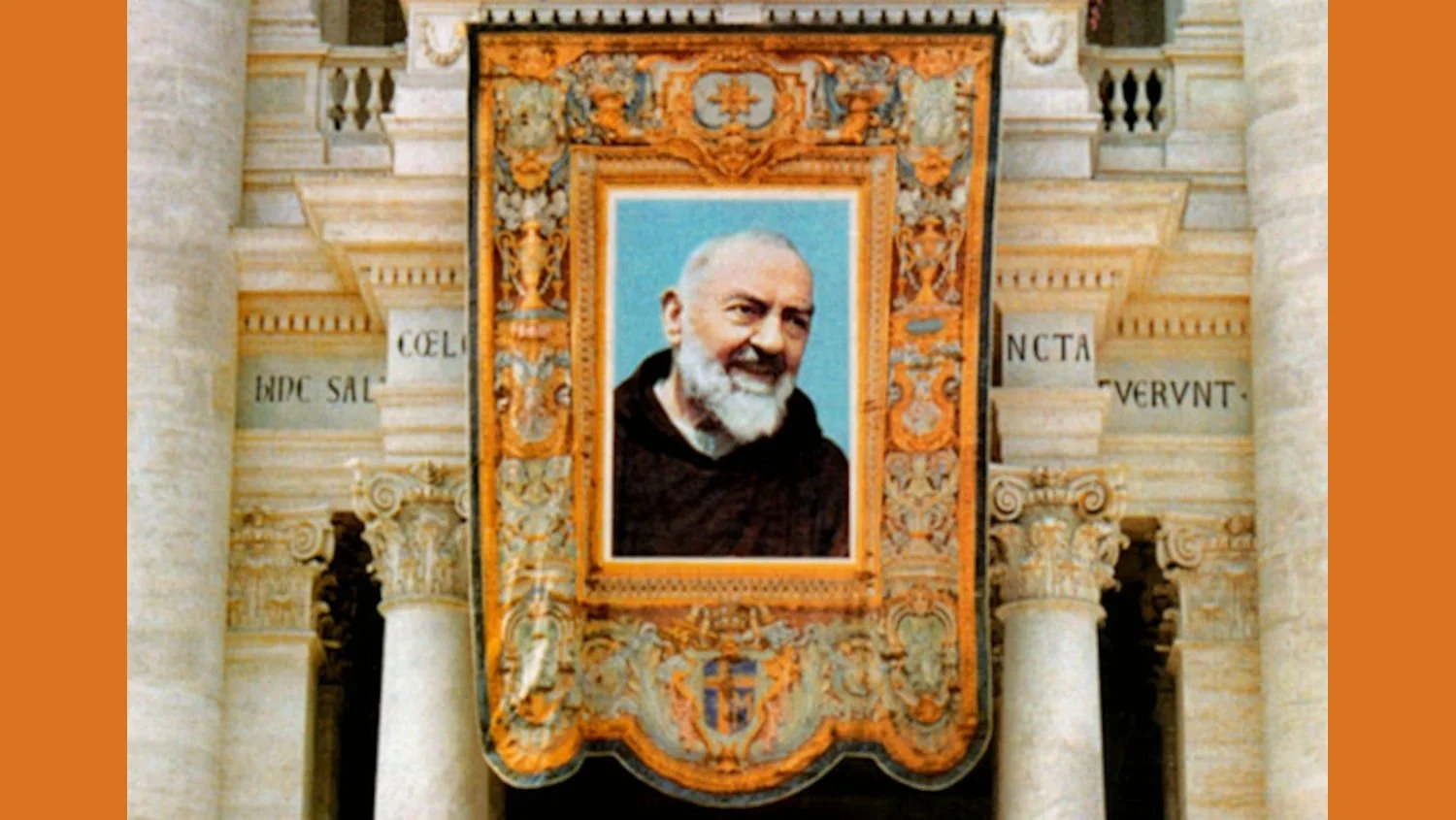
Padre Pio: Witness for the Defense of Wounded Souls
Padre Pio and Maximilian Kolbe, Patron Saints behind Fr Gordon MacRae’s blog, have an obscure thread of connection that magnifies witness, sacrifice, and fatherhood.
Padre Pio and Maximilian Kolbe, Patron Saints behind Fr Gordon MacRae’s blog, have an obscure thread of connection that magnifies witness, sacrifice, and fatherhood.
September 23, 2020 — Updated September 23, 2026 by Father Gordon MacRae
The months of August through October have always produced some special content for Beyond These Stone Walls. That three-month period in the Catholic calendar contains the feast days of all the prominent saints at work here. These include Saint Maximilian Kolbe (August 14), Saint Padre Pio (September 23), Saint Michael the Archangel (September 29), Saint Therese of Lisieux (October 1), and the Guardian Angels (October 2). Interspersed among them, seemingly framing them, are several observances of Marian feasts giving her a strong presence in their lives and our lives here at this blog.
Padre Pio and I share an important, but ominous date. He passed from this life on September 23, 1968. I passed from my life in freedom on September 23, 1994. The day this is posted, I mark 32 years of imprisonment after refusing a plea deal lie to serve only one year.
I have written twelve posts about Saint Padre Pio over the life of this blog, which began in 2009. There came a point at which there was simply nothing more to write about this great saint except for the impact he has had on our lives, which has been immense. My friend, Pornchai Maximilian Moontri, developed a powerful devotion to Saint Maximilian Kolbe, an identity even, because of me. In turn, I developed a powerful devotion to Saint Padre Pio, an identity even, because of Pornchai and the mystery of how his Godfather met and was blessed by Padre Pio. That story is told herein.
When I first wrote this post in 2020, it was just days after Pornchai was taken away for ICE detention to await deportation to Thailand. I was grasping for hope from Maximilian Kolbe and Padre Pio, and they both came through for us, but not in any way we might have expected. That story began on September 8, 2020, at 5 AM.
+ + +
There was an eerie sense about us as Pornchai Maximilian Moontri and I walked around the concrete prison yard at 0500 on September 8, 2020, the Feast of the Nativity of Mary. There was not yet any sign of the dawn, nor was there any moon in the sky. If there were stars, we were blinded to them by the blazing prison lights reflected from the high walls that surrounded us. I asked Pornchai to take a long last look at these walls, for he was about to enter the final stretch of his long road to freedom.
Just then, a sliver of bright light emerged above the building where we had lived in a 60-square-foot cell for the last three of our many years in prison — 28 then for Pornchai and 26 for me at that time, and counting. We stood still to watch as the bright half-moon emerged above the walls. I told Pornchai that he will gaze upon the same moon in Thailand that I will see from this very spot. There was a long silence as he considered this, and then it was followed by tears. I had been putting a brave face on things up to this point, but I could no longer contain it.
It is difficult for men to talk and sob at the same time. I do not suggest that women cry more than men. Perhaps men do not cry enough. It is just that there was so much to say, and so I choked back the tears until another time. If you have been reading this blog for any length of time, then you understand the gravity of what was transpiring that morning. It was expressed best by Pornchai himself in a guest post he wrote just after his arrival in Thailand: “On the Day of Padre Pio, My Best Friend Was Stigmatized.” We will link to it again at the end of this post.
Soon after, we had to end that walk. After fifteen years sharing and building faith, conversion, and redemption in a tiny prison cell, Pornchai was taken away, and we will never see each other again in this life.
Backing up a little, it was Pornchai who brought up the most urgent and necessary part of our conversation that morning. It goes back to one of the first conversations we ever had about Pornchai’s faith experience. It was back in 2006 just before we were moved into the same cell. He described this in his post. He walked into my cell, saw an image of St. Maximilian Kolbe on the mirror, and asked, “Is this you?” He described that as one of the most important questions of his life.
Fifteen years later, as we walked in the pre-dawn light of a half moon, he said through tears, “Now I have the answer. You have saved me, but no one is saving you.” We talked a lot about our patron saints, of the mystery of how they came into our lives, and of what their witness means for us. Maximilian went to prison because he was writing the truth. I went to prison on trumped up charges, and have been writing the truth ever since. Padre Pio bore the wounds of the Crucified Christ for fifty years, while also suffering under the assaults on his reputation and good name and priesthood. Much of his suffering came from within the Church. I told Pornchai that he is a very important and powerful witness to the truth we have lived and written about. I said that no matter what happens to me now, “you are a living witness to the truth that no past is lived at the expense of the present, that no wounds can prevent a soul in search of God from emerging above prison walls.”
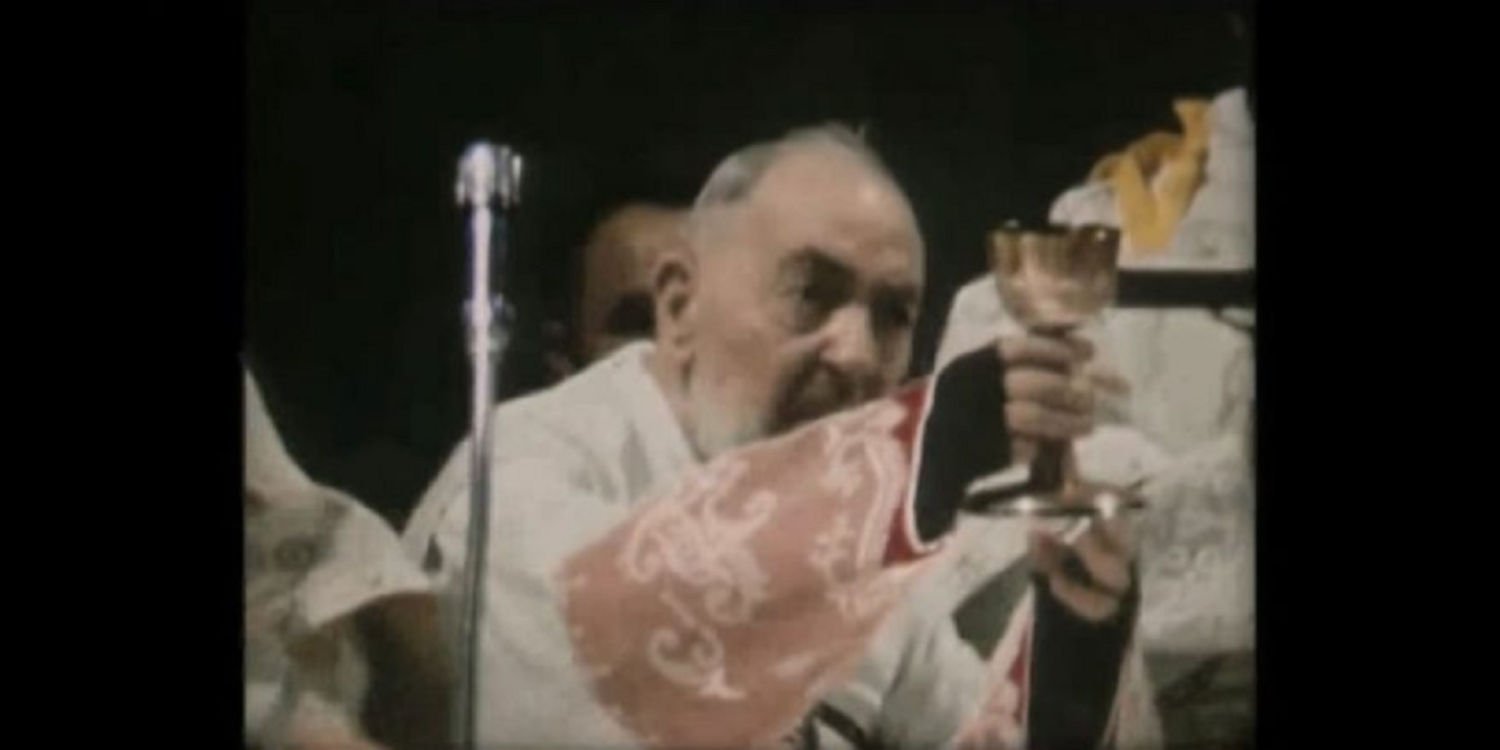
The Wounds of Padre Pio
I had been aware of Padre Pio for most of my life. As a young Capuchin, the Order that also formed Padre Pio, I earned a degree in psychology in the 1970s. I am ashamed to write today that I once denounced Padre Pio’s wounds as psychosomatic. I hope he forgives me for my ignorance back when I knew everything. I knew a lot about Padre Pio back then, but I did not know Padre Pio. I know him now. Pornchai knows him as well. He came to us from Beyond These Stone Walls in a personal and powerful way.
I had already been in prison on false witness for four years back in 1998. I had, for all of those years, been living in a horrible situation with eight men in each prison cell designed for only four. To “honor” the reverence of Catholics for Padre Pio then — six years before he was canonized by Saint John Paul II in 2002 — The New York Times ran an article alleging that Padre Pio was the subject of twelve Vatican investigations in his lifetime. The unjust and inflammatory article alleged that “Padre Pio had sex with female penitents twice a week.” Even for The New York Times, it was an egregious lie for which the “Paper of Record” broke the record. The lie originated from another priest who after his damage was wrought, admitted to the lie and to the envy that caused it.
This was the first inkling I ever had that Padre Pio suffered more than the visible wounds of Christ. He also suffered wounds upon his name, his integrity, his priesthood. Here we were, thirty years to the day since his death, and the “Scandal Sheet of Record” was still repeating an unfounded story for the sole purpose of deflating the faith of Catholics who reverenced him. It resonated with me in a most personal way.
Seven years passed. In April 2005, a newspaper of integrity, The Wall Street Journal, published a two-part account of false witness, wrongful prosecution, and public hysteria entitled “A Priest’s Story” by Pulitzer Prize-winning journalist Dorothy Rabinowitz. It was her first of several articles about the case against me. These articles were read all over the world. As a result of them, Bill Donohue at the Catholic League for Religious and Civil Rights asked me to submit an article about my own awareness of false witness. My article was published in the November 2005 issue of Catalyst under the title “Sex Abuse and Signs of Fraud.”
I was surprised to see then that I shared the cover of that issue of Catalyst with a story about how Padre Pio was similarly defamed throughout his life and even after his death. None of it was ever substantiated nor was it supported by evidence in any form. On the contrary, many witnesses had testified in Vatican investigations that the detractors were themselves discredited beyond any doubt. That did not stop The New York Times from slander.
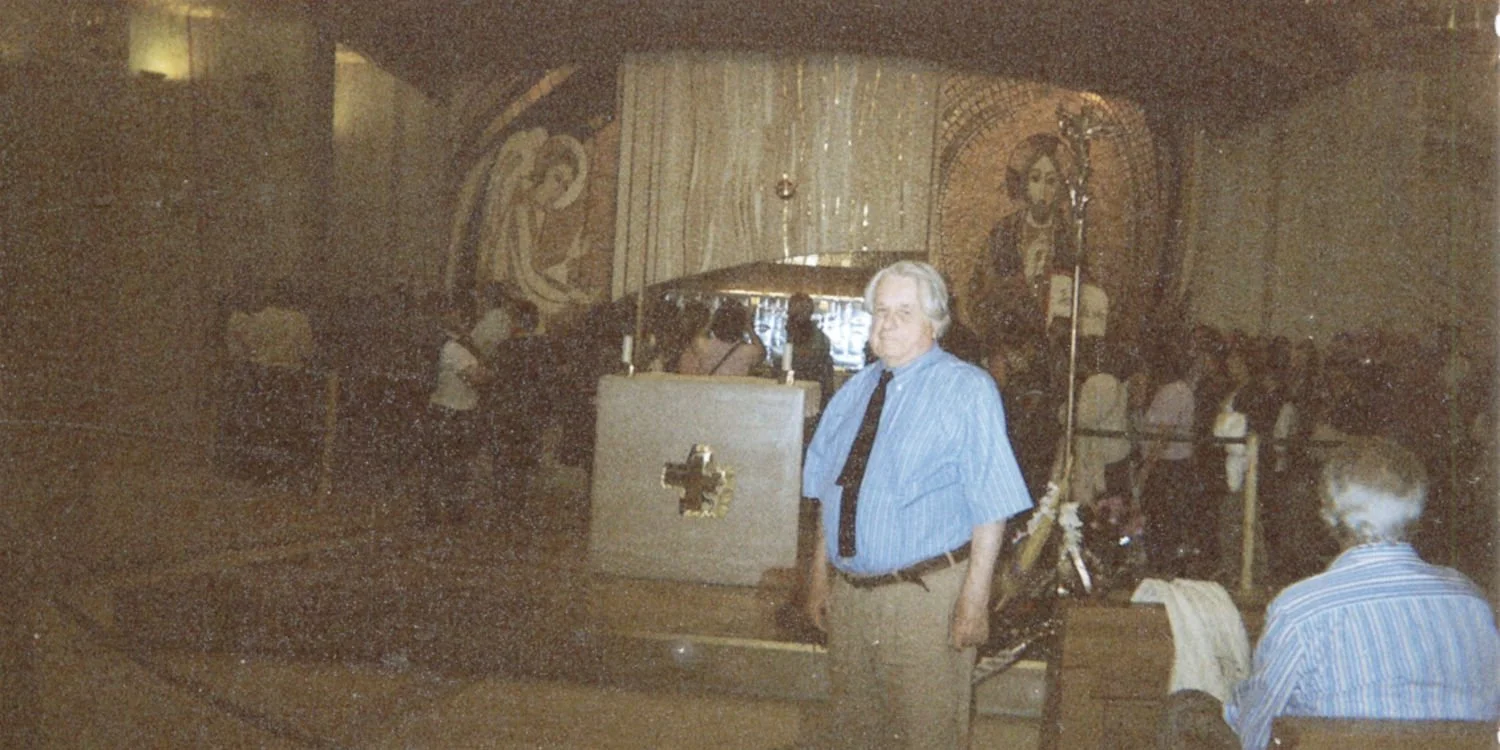
The Echoes of a Special Blessing
Among the readers of the WSJ series on my trial’s perversion of justice was Pierre Matthews, a Belgian with dual American citizenship who at the time was living in Chicago. The articles were his first realization — as they were for many — that the whole truth about the nature of Catholic scandal had not been told by the mainstream media. Pierre wrote to me months later. On a return trip from Belgium, he diverted his itinerary for a stop in Boston from where he drove up to Concord, NH to visit me in prison.
Later in 2005, Pornchai Moontri — who had spent the previous seven years in solitary confinement in Maine — was transferred to the Concord, NH prison where we met. In 2006 we became friends. In 2007 we became roommates. In 2010, on Divine Mercy Sunday, Pornchai renounced his troubled past to become Catholic. Later, in September 2010, I wrote “Saints Alive! Padre Pio and the Stigmata: Sanctity on Trial.”
That post told an amazing story. In an earlier visit with Pierre Matthews, I told him about Pornchai, about how our long and winding roads converged, and about Pornchai’s decision to renounce his past and become Catholic. Pierre told me a remarkable story. He said that when he was growing up in Belgium, his father sent him to a boarding school. In the 1950s, at just about the time I was born, Pierre’s school sponsored a trip to Italy. Pierre’s father wrote to him saying that his trip would take him near a place called San Giovanni Rotondo where there was a very famous priest and mystic who bears the wounds of Christ.
Pierre’s father instructed his skeptical 16-year-old son to take a train to San Giovanni Rotondo and ask to see Padre Pio. Being 16, Pierre did not want to go. But his father was insistent, so Pierre read his father’s account of Padre Pio’s mystical fame, which was at the time being suppressed by the Church, but was rising up globally from the sensus fidelium — the sense of the faithful across the world.
When Pierre Matthews learned that Pornchai was to become Catholic, he sent me a registered letter asking — no, insisting — that he be permitted to become Pornchai’s Godfather. Pierre asked me to submit a special request to the prison warden asking approval for Pierre to fly over from Belgium to visit both of us. In all the years that I had been here, such a thing was never allowed. No visitor can visit two prisoners at the same time. So I submitted the request with the intent of sending the denial back to Pierre. To my shock and awe, the request came back with a single word: “approved.”
During the special visit, Pierre told us that he indeed took a train to San Giovanni Rotondo at age 16 some 55 years earlier. He said he rang the monastery doorbell and asked a friar if he could see Padre Pio. “Impossible” came the curt reply. Pierre explained that his father had sent him from Belgium, so the friar invited him inside to be given a prayer card to show his father that he had been there. When Pierre stepped inside to be given the card, a strange man in a Capuchin habit, with hands heavily bandaged, was just then walking down a flight of stairs into the foyer. His eyes were fixed upon Pierre. Padre Pio approached Pierre, placed his bandaged hands upon his head, and blessed him.
Visiting us 55 years later, Pierre said he now knew this blessing was meant for us. He spoke of the long, winding journey from faith that led to his learning about me, then about Pornchai, and then, when Beyond These Stone Walls began in 2009, it was what drew Pierre back to faith. It was then, in 2010, that I added Saint Padre Pio as one of the Patron Saints of this blog. Through Pornchai’s Godfather, Padre Pio shared his wounds with us and became a witness for the defense against our own wounds. It was Pierre who first noted that I was condemned to prison on September 23, 1994, the feast day of Saint Padre Pio and the date he died in 1968.
Among the many letters of Padre Pio to the thousands of pilgrims and penitents who wrote to him was one dated in the year before he died on September 23, 1968. In that letter, Padre Pio advised a suffering soul to enroll in the Knights at the Foot of the Cross, a spiritual mission founded by Father Maximilian Kolbe for the offering of life’s wounds as a share in the suffering of Christ. I was amazed to read that Padre Pio had such an awareness of our other patron saint two decades before Saint Maximilian was canonized by Saint John Paul II in 1982, the year I was ordained. Pornchai and I are both members of the Militia Immaculata and the Knights at the Foot of the Cross.
Our beloved friend Pierre, Pornchai’s Godfather, passed from this life in Belgium on July 7, 2020. Pornchai and I were blessed to be able to talk with him by telephone in the weeks before his death. He never took redemption for granted, but I know with the certainty of faith that he and Padre Pio have since renewed their bond. In the picture atop this section of my post, Pierre returned to San Giovanni Rotondo in the last year of his life to present at the tomb of Saint Padre Pio his prayers for intercession and Blessing for us.
So Pornchai, my son, if you are reading this in Thailand then you must know that there is much more to our life’s wounds than the prison walls that surrounded us and surround me still. To be free of them is not just a matter of the body, but of the heart and soul. So be free! Be free enough to convey to others the great gifts imparted to us by these patron saints. You will no longer have a guest post at Beyond These Stone Walls. You will now be my partner in mission, writing from Divine Mercy Thailand about how God is inspiring hearts and souls through the transfiguration of your wounds.
+ + +
Note from Father Gordon MacRae: Thank you, dear readers, for sharing in this painful but remarkable faith journey. Please, pray for us as we do for you. You will learn a lot about the life of Padre Pio in these concluding posts that I have selected from the twelve I have written over the years (with one written by Pierre’s Godson, Pornchai):
On the Day of Padre Pio, My Best Friend Was Stigmatized
Saints Alive! When Padre Pio and the Stigmata Were on Trial
“I Am a Mystery to Myself.” The Last Days of Padre Pio
Pray, Hope and Don’t Worry: This Is Padre Pio’s Key to God’s Heart
+ + +
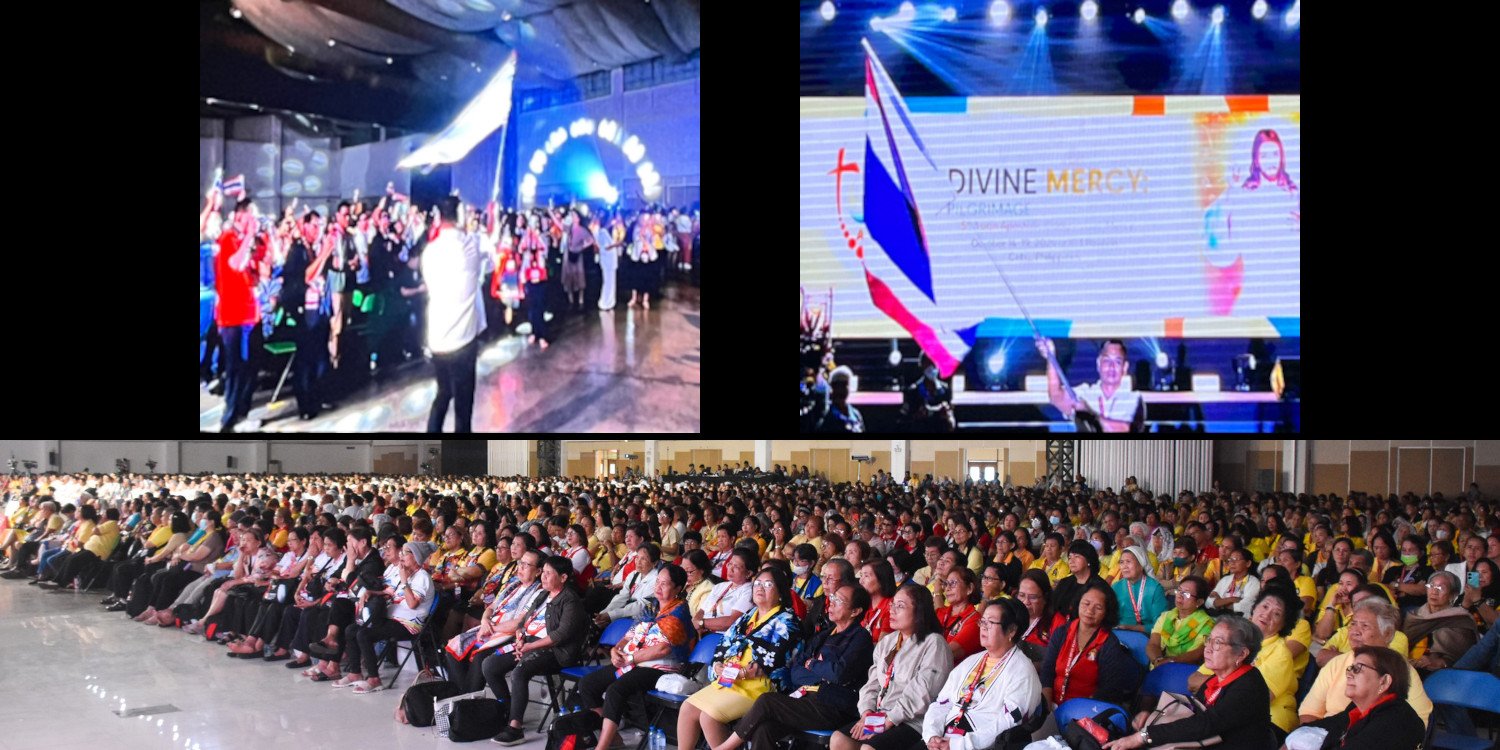
HOW TO HELP US: For nearly 20 years I have been committed to assisting Pornchai Moontri in navigating the trials and losses of his life, none of which were of his own making. I have done all in my power to promote an honest and thorough investigation into the unresolved, “cold-case” homicide of Pornchai’s mother, Wannee.
For six years since his arrival in Thailand, Max has been struggling in a nation in economic and political chaos. Promising developments are currently underway. Max will now be living in the house his mother set out to build 26 years ago. It is the house that cost her her life. Pornchai has the skills and will soon have the tools to finish it. He also has a solid plan to start a new agricultural business in Northern Thailand so he will not be dependent on the state of the local economy. This will be dependent upon my support, and I hope that can transition into “our” support.
Our BTSW Editor, Dilia E. Rodriguez, has established an account for my expenses in the support of this blog at Navy Federal Credit Union. Dilia also has the ability for direct funds transfers to assist both Pornchai Moontri in his new endeavor and Father John Hung Le, SVD, and his Refugee Assistance Project, which aids hundreds of Vietnamese refugee families in Thailand with basic food support.
If you wish to assist me, and you do so by check, make it out to Dilia E. Rodriguez and send it with your instructions to
Beyond These Stone Walls
PO Box 81
Fayetteville, NY 13066-0081
A few weeks ago, I received a hopeful message from Father John, who is awaiting a missionary visa to return to Thailand. It will take three to four months. The cost of the visa will be 15,000 Thai Baht, which translates to $500 USD. I have already provided it with the help from some readers.
I am deeply grateful for the goodness and generosity of our readers who have already responded to this plea. May the Lord Bless you a thousand-fold.
+ + +

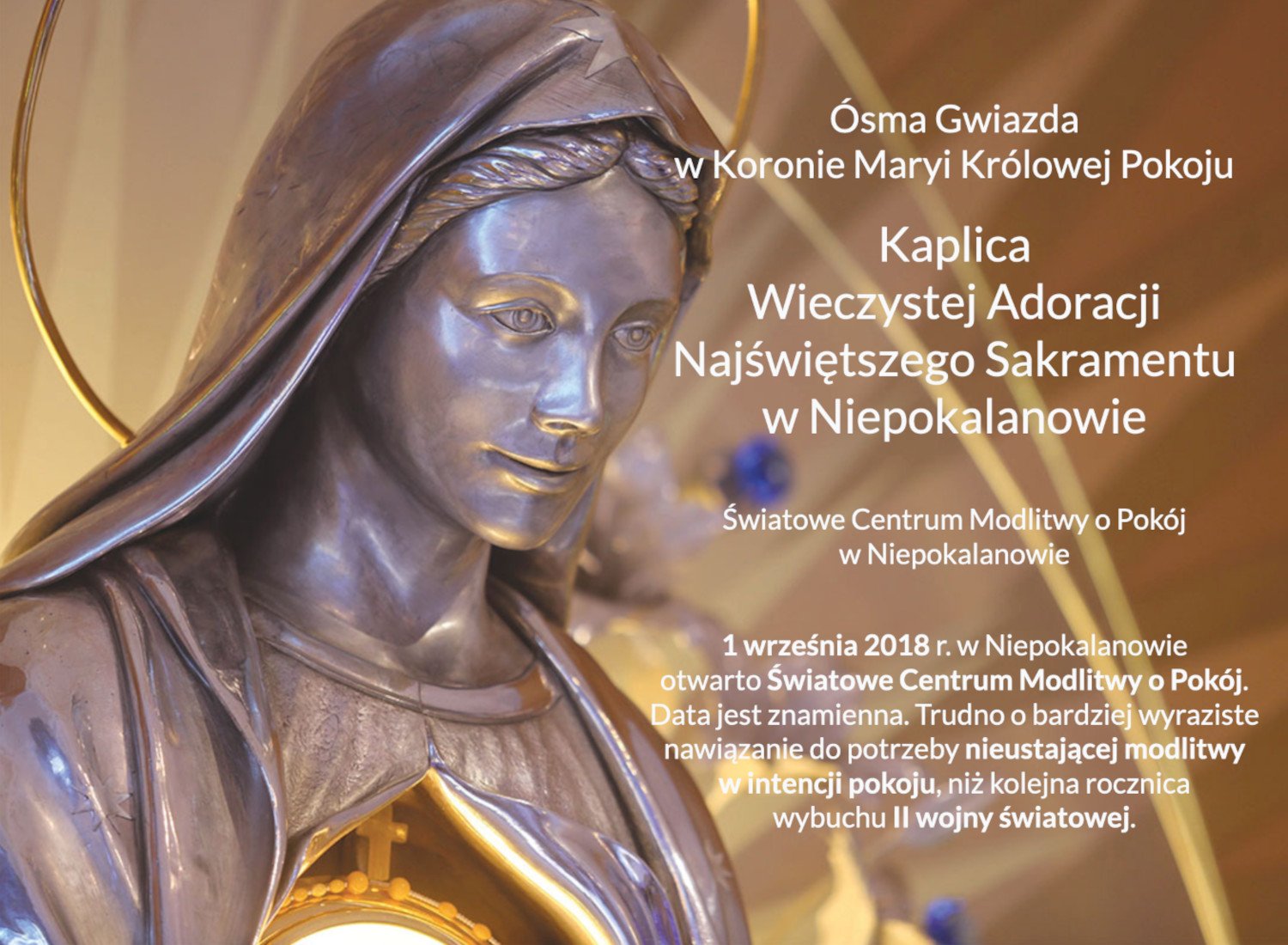

The Eucharistic Adoration Chapel established by Saint Maximilian Kolbe was inaugurated at the outbreak of World War II. It was restored as a Chapel of Adoration in September, 2018, the commemoration of the date that the war began. It is now part of the World Center of Prayer for Peace. The live internet feed of the Adoration Chapel at Niepokalanow — sponsored by EWTN — was established just a few weeks before we discovered it and began to include in at Beyond These Stone Walls. Click “Watch on YouTube” in the lower left corner to see how many people around the world are present there with you. The number appears below the symbol for EWTN.
Click or tap here to proceed to the Adoration Chapel.
The following is a translation from the Polish in the image above: “Eighth Star in the Crown of Mary Queen of Peace” “Chapel of Perpetual Adoration of the Blessed Sacrament at Niepokalanow. World Center of Prayer for Peace.” “On September 1, 2018, the World Center of Prayer for Peace in Niepokalanow was opened. It would be difficult to find a more expressive reference to the need for constant prayer for peace than the anniversary of the outbreak of World War II.”
For the Catholic theology behind this image, visit my post, “The Ark of the Covenant and the Mother of God.”

A Grievous Error in Judge Joseph Laplante’s Court
Federal Judge Joseph LaPlante dismissed without testimony Fr Gordon MacRae’s recent hope for justice. No U.S. court has allowed this defendant to utter a single word.

Federal Judge Joseph Laplante dismissed without testimony Fr Gordon MacRae’s recent hope for justice. No U.S. court has allowed this defendant to utter a single word.
June 22, 2016 by Ryan A. MacDonald
Editor’s Note: The following is a guest post by Ryan A. MacDonald, author of “The Trial of Father MacRae: A Conspiracy of Fraud.”
I am not here to cast Donald Trump-like aspersions upon a judge whose decision I simply do not like. I have no doubt that Father Gordon MacRae would bar me from publishing here if I did. I am simply here to describe a grievous error that occurred in United States District Court in Concord, New Hampshire, and other facts that continue to trouble me greatly a year after I published an important article on this site: “Judge Joseph Laplante Denies Priest’s Appeal.”
Many people have come to believe that the 1994 prosecution and trial of Father Gordon MacRae, and subsequent appeals, have left an innocent man in prison and a gaping wound on the integrity of the criminal justice system. One issue that I and others simply cannot comprehend is that no one in this system — absolutely no one — has allowed this accused priest to utter a single word in his own defense.
After the prosecution rested its case in 1994 — with lots of theatrics but no evidence — Judge Arthur Brennan addressed MacRae directly, outside the presence of the jury. He cautioned MacRae against testifying in his own defense. If he did so, the judge warned, the door would be opened to allow other claims from Thomas Grover, his brothers, and others to come before the jury and taint its view of this case.
The public defender who minimally handled MacRae’s direct appeal in 1996 said that he was surprised by Judge Brennan’s warning, but could find no legal precedent to cite it as an appeal issue. At one point in the trial, Judge Brennan instructed the jurors to “disregard inconsistencies in Thomas Grover’s testimony.” As Dorothy Rabinowitz wrote in The Wall Street Journal, “they had much to disregard” (WSJ, “A Priest’s Story,” April 28, 2005).
In a sentencing hearing weeks after the trial, Judge Arthur Brennan sentenced MacRae to a term of 67 years in prison — more than thirty times the two-year maximum sentence proposed to MacRae pre-trial, deals that the priest rejected citing his innocence of the charges. During the sentencing phase, he was not permitted to say a single word in his own defense while the Judge berated him for observing his Constitutional right to a jury trial.
When sentencing MacRae, Judge Arthur Brennan offered some evidence and testimony of his own: “This court has heard clear and convincing evidence that you created child pornography of your victims.” In the entire trial, not a single word about child pornography was ever raised. Eleven years later, the lead detective in the case admitted to Dorothy Rabinowitz of The Wall Street Journal, “There was never any evidence of pornography.”
MacRae, in prison after the trial, was neither present nor represented by counsel as Thomas Grover and his brothers continued the fraud in civil court seeking lucrative settlements from the Catholic Diocese of Manchester. Everyone had a voice and a lawyer except Gordon MacRae.
And he was silenced yet again, not even permitted to be present, in his direct state appeal in 1996 when judges dismissed as “harmless error” the egregious testimony of a psychological expert that should not have been admitted at trial while MacRae’s defense was allowed no expert. As Innocence Project founders, Attorneys Barry Scheck and Peter Neufeld described in their book, Actual Innocence (Random House 2000):
“For an innocent person, the two most dangerous words in the language of the law are ‘harmless error.’ These are the magic words that appellate courts use to absolve police officers and prosecutors of misconduct.”

“Especially a Catholic Priest”
There was a lot to absolve. As The Wall Street Journal’s Dorothy Rabinowitz described (see “The Trials of Father MacRae,” May 13, 2013): “Those aware of the facts of this case find it hard to imagine that any court today would ignore the perversion of justice it represents.” I exposed some concrete examples of those perversions of justice in “The Trial of Father MacRae: A Conspiracy of Fraud.”
It is an inescapable fact of injustice that from 2012 to 2015 three additional judges and courts heard motions to revisit this trial, but dismissed them without permitting a single word of testimony from defendant Gordon MacRae or any of the witnesses who have come forward, some quite courageously.
On March 17, 2015, Judge Joseph Laplante heard oral arguments from attorneys Robert Rosenthal and Cathy Green representing the imprisoned priest, and Assistant Attorney General Elizabeth Woodcock for the prosecution. Neither Father MacRae nor any of the newly presented witnesses in this case were present, nor was any of their testimony heard. The arguments took just under two hours, a flash in time compared to the twenty-two years MacRae has thus far spent in wrongful imprisonment. On March 25, 2015, Judge Laplante dismissed the habeas corpus petition from going forward. There was to be no further hearing on testimony, merits or evidence.
Additionally, Judge Laplante declined to grant a Certificate of Appealability to bring this matter to the First Circuit Court of Appeals. This had the effect of forcing MacRae to fund an added appeal of the denial of a Certificate of Appealability. One full year later, in April of 2016, the First Circuit Court of Appeals declined to reverse the decision not to allow a further appeal. I held my pen until that decision was rendered.
I do not want to use limited space here to rehash what I wrote in “Judge Joseph Laplante Denies Priest’s Appeal.” I hope that after reading this article, you will go back to read it for yourselves for it lays out all the reasons why I believe this outcome to be an abuse of judicial discretion. Denying the Certificate of Appeal had the effect of bankrupting the defense of a man who has spent twenty-two years in prison for crimes that most observers today conclude never took place.

The Grievous Error
However, none of that addresses the error that I am here today to address. I have spent considerable time reading a transcript of that hearing and Judge Laplante’s ruling. A significant part of both troubled me greatly, and I know that it troubled Father MacRae as well. It simply did not concur with MacRae’s memory of this case, and his memory, according to Dorothy Rabinowitz, is “encyclopedic.” The error involves a point that was heavily stressed by Judge Laplante in both the transcript and his dismissal order. I will begin with the transcript. The speaker is Judge Laplante:
“Now, leaving [Thomas] Grover’s credibility aside, nothing that [new witnesses] say undermines what seems to be a very important piece of evidence in the underlying criminal trial which is that when [James] McLaughlin, a detective from Keene, confronted MacRae with these accusations, he didn’t deny them. He had a very unusual response, basically quibbling with [Detective] McLaughlin over the proper terminology to apply to a person who is sexually attracted to children under 14 or 15. I don’t even remember the terms right now, but he basically corrected the detective for using the word pedophile. He came up with a more correct term — a more precise term. Whether that was even correct is debatable. But it was a very unusual response. It wasn’t a denial. It wasn’t the type of conduct that one would expect one to undertake when accused in that way. Especially a Catholic priest … MacRae did not react in a manner one would expect of an innocent person.”
Now, the excerpt above reflects just two paragraphs of a 70-page court transcript, but it was an extensive part of the reasoning behind Judge Laplante’s two-page decision dismissing the federal habeas petition. What Judge Laplante described above is a claim that Detective McLaughlin confronted Father MacRae about the charges involving Thomas Grover, referred to MacRae as a “pedophile,” and then instead of simply denying it, MacRae supposedly corrected McLaughlin by telling him that the correct term is “hebophile.”
There is just one major problem here. It never happened! Detective James McLaughlin never once “confronted MacRae with these accusations,” nor did any of what Judge Laplante refers to above have any connection with the case at hand. This is an egregious perversion of justice.
When I read this I was very troubled. Father MacRae has been confined in a 96-square-foot cell for twenty-two years with very limited access to documents in this case and no access to online research. As the above scenario surfaced, his lawyers sent him a statement to sign stating that he never made any such admission to Detective McLaughlin, but “told him that someone who might be attracted to someone Grover’s age would be an ‘phebophile,’ not a ‘pedophile.’ “
MacRae was troubled because he has no memory of McLaughlin ever discussing any aspect of the Thomas Grover case with him. He simply assumed that someone (his own lawyers? the prosecutors?) who have access to transcripts, must have found such a reference somewhere.
But they did not. No such reference exists. In the case for which Father MacRae was indicted and faced trial, McLaughlin and the prosecutors brought secret indictments. This priest first learned of the very existence of this case on the night of May 5, 1993, the night that police showed up at his door to arrest him on charges that were then over a decade old. He had no subsequent or even previous discussion about these charges with McLaughlin.
So what is going on here? When I got to the bottom of it, the truth was spine-chilling in its gross manipulation of this defendant, but it had no connection whatsoever with Thomas Grover’s charges or this trial or the appeal of this case. Bear with me, please, for this is indeed a complex account.

Whack-a-Mole Justice Holds Court
In 1988, a full five years before Thomas Grover and his brothers concocted their scheme to accuse Gordon MacRae, Keene, NH sex crimes Detective James McLaughlin targeted a number of Catholic priests who had lived and worked in the Keene area. One of them was Father MacRae who was assigned in Keene from 1983 to 1987. In 1987 and 1988, on a leave from parish ministry, MacRae was Executive Director of a regional chemical dependency treatment center near Keene, and in 1989 he became Director of Admissions for the Servants of the Paraclete facility for troubled priests in Albuquerque, NM.
No one had come to Detective McLaughlin with a complaint about MacRae. He launched an exhaustive investigation based on a letter from state social worker, Sylvia Gale, claiming that MacRae was once a priest in Florida where he “molested two boys, one of whom was murdered and his body mutilated.” Dorothy Rabinowitz wrote about that contrived and slanderous account in “A Priest’s Story” (WSJ, April 27, 2005). The Florida story had no basis in fact. MacRae had never been a priest in Florida nor had such a crime ever occurred there. The social worker’s claimed source was an official of the Diocese of Manchester who later denied it. For Detective McLaughlin, however, it became probable cause to launch a moral panic.
On September 19, 1989, Father MacRae received a telephone call from his sister in the Boston area. Upset and angry, she informed him that she received a call from Detective McLaughlin in Keene who told her that he was investigating MacRae for creating pornographic photographs of Keene youths. She gave her brother the number that McLaughlin left, and of course, knowing there was no truth to the claim, the priest called that number.
This was all set up in advance. That particular telephone line into the Keene Police Department was automatically recorded so McLaughlin was not required to obtain a warrant to call and record the priest. A warrant would require evidence, and there was none. This was a fishing expedition. In this telephone call, McLaughlin accused MacRae of taking pornographic photos of 15-year-old Jon Plankey who was later described by McLaughlin as an employee of his in “a family owned business.” It was also later discovered that McLaughlin and Plankey had made similar claims against three others, one of them Timothy Smith, a local Protestant church choir director who was charged and pled guilty.
MacRae vehemently denied the claim. He did not know he was being recorded, but at some point he invited McLaughlin to search his earthly possessions which were still stored in New Hampshire. McLaughlin declined to search anything, but stated that Plankey’s claims would become part of a lawsuit against the Diocese of Manchester. MacRae insisted that no such photographs were ever taken and do not exist. He asked McLaughlin why he isn’t even interested in searching for them. The detective reportedly replied, “Because I know there will be nothing there. You probably gave them to another priest.”
The detective wrote a report about this telephone conversation. It was report file number 89-12196 dated September 19, 1989. In that report, McLaughlin wrote that he recorded the conversation. His report claimed that he and Jon Plankey listened to the tape together, and that “a transcript will be made of this tape.” MacRae states (above) that McLaughlin said, “You probably gave [the photographs] to another priest.” If true, McLaughlin omitted this from his report, but it would have been present on the tape and transcript. So, where are they? And where are the condemning photographs?
Also in that report, McLaughlin wrote that he asked MacRae if he is a “pedophile.” His report claims that MacRae corrected him saying, “the correct term would be ‘hebophile.’” MacRae says he has never even heard of this word. I have found a reference to that word in only two places: McLaughlin’s 1989 report, and a transcript of a 1988 Geraldo Rivera Show faxed to McLaughlin (described below).
Among the many people McLaughlin approached in 1988-1989 looking for someone to accuse MacRae were members of the Grover family. Their mother, Patricia Grover, was then a social worker for the state agency that investigates child abuse cases, a position in which she interfaced often with Detective McLaughlin and with Sylvia Gale, author of the bogus Florida letter. His 1988 report indicated that Mrs. Grover would interview her three adopted sons, Thomas, David, and Jonathan Grover, all in their early twenties. None voiced a complaint about MacRae. Five years later, when the prospect of money loomed, all three changed their minds at the same time. Demonstrating the role that expectations of money played in this case, there is hard evidence that McLaughlin conducted some of his investigation from the office of Attorney Robert Upton, Thomas Grover’s contingency lawyer.
In 1993, as MacRae prepared for trial in the Thomas Grover case, state prosecutors were required to turn over all police reports related to the priest. MacRae was shocked to learn of a vast 72-page 1988 report and the 1989 report of the taped phone call with the “hebophile” claim.
When Thomas Grover accused MacRae five years later in 1993, prosecutors attempted to introduce into the trial the Plankey claim from 1989 as so-called “404-B” evidence of “other bad acts.” The defense filed a motion to obtain the recordings referred to in McLaughlin’s 1989 report. Judge Arthur Brennan ordered the state to turn over all recordings that McLaughlin claimed in reports to have made. McLaughlin wrote in a sworn statement that the tapes were lost due to having been “recycled.” Judge Brennan also ordered him to turn over the transcript of the 1989 recording. McLaughlin claimed that due to a clerical error the transcript was never made. The 1989 tape recorded conversation detailed herein is well documented (see USDC-NM 1504, §§ 28-32).
I can only conclude today that McLaughlin knew the recording contained his comment, “You probably gave [the lewd photos] to another priest,” a statement that would have unmasked a vile prejudice that would have weighed heavily in the trial. So the recordings disappeared. So did the so called “404-B” evidence.
Eleven years after this trial, after claiming repeatedly and under oath that all the tape recordings of MacRae that McLaughlin referenced in his reports were “recycled” and cannot be produced, the detective mailed one of them to Dorothy Rabinowitz at The Wall Street Journal. It contained 45 minutes of Father MacRae sounding bewildered by the lurid accusations aimed at him, and his reference that he should talk to a lawyer, a request McLaughlin claims the priest never made.
This issue of tape recordings is very suspicious and has never been explained. McLaughlin claimed to have taped three phone conversations with MacRae, without his knowledge, and though there was no evidence obtained, McLaughlin attributed remarks to MacRae that the priest says he never made. Then all the tape recordings disappeared. The only witnesses to their existence or content are the detective and the priest. So why do the courts believe one over the other? Further, it seems that it was McLaughlin’s practice to tape record all conversations with accusers, but in this one case he produced not a single tape recording of any interview with the Grover brothers. In every other case of this sort he meticulously created recordings and preserved them as evidence. In some cases, including a claimant against another priest, McLaughlin arranged a polygraph for the accuser. None of this happened in the MacRae case. It should be noted here that MacRae himself underwent two voluntary polygraph examinations and passed them both.
There is more. It seems that the source of the “hebophile” term for which Judge Joseph Laplante dismissed MacRae’s petition may have been McLaughlin himself. Among the discovery obtained from the 1989 report about Jon Plankey’s claims of pornographic photos was a transcript faxed from the Geraldo Rivera Show to the Keene Police Department on November 14, 1988. The pages of the transcript were labeled by prosecutors in the discovery material as E-326 through E-331.
The topic of the “Geraldo” transcript that became part of Detective McLaughlin’s file was “The Church’s Sexual Watergate.” It contains this passage that someone at either Keene Police or the prosecutor’s office underlined and marked with a bold asterisk before sending it in pre-trial discovery in 1994. The transcript has nothing to do with the MacRae case, nor was he ever a part of it. It details a conversation between Geraldo Rivera and “Roland Lewis, Attorney for Church sex abuse victims”:
Geraldo: “Did there come a time, sir, when this priest was recognized to be a pedophile by the church and was taken to St. Luke’s Institute to be treated?”
Mr. Lewis: “They sent him to St. Luke’s Institute. He was kept there 12 weeks. During that time it was determined, according to their medical records, that he was a homosexual. We finally were able to obtain copies of those medical records. We have had them evaluated. They establish without question that he is a pedophile and a hebophile.”
Geraldo: “What’s a hebophile?”
Mr. Lewis: “It’s an abuser of adolescent children.”
Geraldo: “I thought that’s what a pedophile was. Help me.”
Mr. Lewis: “The preadolescent is primarily a pedophile. The adolescent is a hebophile.”
I wrote of this same transcript, and the role it played in the MacRae case, in “Truth in Justice: Was the Wrong Catholic Priest Sent to Prison?” It seems that someone has lifted the supposed 1989 telephone conversation between Father MacRae and Detective McLaughlin — mired in suspicions of misconduct over missing tapes and transcripts — implanted it into the unrelated trial involving Thomas Grover, then used it twenty-two years later to deny access to justice in Father MacRae’s appeals. If this is the state of criminal justice, it is only half right. It is criminal. But it isn’t justice.

Saint Thomas More returning the Livery Collar of his office and fealty to King Henry VIII
What Would Saint Thomas More Do?
On September 13, 2012, a full year before MacRae’s habeas corpus petition came before Judge Laplante, the annual “Red Mass” for the legal and law enforcement community took place at Saint Joseph Cathedral up in the Diocese of Manchester, New Hampshire. It was officiated by The Most Reverend Peter A. Libasci, Bishop of Manchester. Following the Mass, Bishop Libasci was a guest of honor as the New Hampshire Catholic Lawyer’s Guild held its annual awards dinner at the Radisson Hotel to honor the 2012 recipient of the St. Thomas More Award.
According to the Catholic Lawyer’s Guild invitation, the award is bestowed upon a Catholic lawyer or judge “who embodies the spirit of St. Thomas More in courage, dedication, integrity, civility, and compassion toward others.” On September 13, 2012 the St. Thomas More Award was presented by Bishop Libasci and the Catholic Lawyer’s Guild to The Honorable Joseph N. Laplante.
Saint Thomas More would have heard all sides. He would not, as so many have done, simply assume a priest’s guilt. He would not have made comments like “especially a Catholic priest.” He would not have presumed the existence of evidence he had never seen nor heard for himself. He would have gotten to the truth of the matter before tossing the case off his desk. He would not have allowed the continued judicial railroading of an innocent man.
+ + +
ADDENDUM JANUARY 26, 2022:

Police Misconduct: A Crusader Cop Destroys a Catholic Priest
Keene New Hampshire sex crimes detective James McLaughlin developed claims against a Catholic priest while suppressing exculpatory evidence and coercing witnesses.
+ + +
For more information on this story, please read these other articles by Ryan A. MacDonald:
The Wall Street Journal on the Case of Fr Gordon MacRae
The Trial of Father MacRae: A Conspiracy of Fraud
The Prison of Father MacRae: A Conspiracy of Silence
The Post-Trial Extortion of Father Gordon MacRae
Justice and a Priest’s Right of Defense in the Diocese of Manchester