“There are few authentic prophetic voices among us, guiding truth-seekers along the right path. Among them is Fr. Gordon MacRae, a mighty voice in the prison tradition of John the Baptist, Maximilian Kolbe, Alfred Delp, SJ, and Dietrich Bonhoeffer.”
— Deacon David Jones

A Lesson From Saint Damien of Molokai, Leper Priest
Should the State’s flawed justice be mirrored in the Church? This must be asked and the truth written. But ask as well, “Can a leper priest also serve God?”

Should the State’s flawed justice be mirrored in the Church? This must be asked and the truth written. But ask as well, “Can a leper priest also serve God?”
May 10, 2026 by Father Gordon MacRae
This is a post I wrote on May 6, 2015, and everything in it is relative to that time frame. However, just about everything in it also impacts the current time frame. So I am posting it again.
+ + +
Pornchai Moontri and I and other friends are just beginning another retreat program in prison sponsored by the National Shrine of The Divine Mercy and the Marians of the Immaculate Conception. One of the texts used for the retreat is, You Did It to Me, one of many such books by Father Michael Gaitley, MIC.
Something happened over the last few weeks that cast yet another, but brighter light on recent events that have so overshadowed Beyond These Stone Walls. The text for the retreat is You Did It to Me by Father Michael Gaitley, MIC. The timing of it is by design, of course, but not by my design. I just nudged Pornchai Max and pointed out a photo of both of us in the middle of the book. “My, for prisoners, you guys get around,” wrote BTSW reader Mary Fran Cherry back then. She alerted me to our photo in the book. The retreat lifted a corner of the shroud that overshadowed my life behind these prison walls beginning on Wednesday of Holy Week.
Ryan A. MacDonald wrote of this in “For One Priest, A Fate Worse than Dying in Prison,” the second of his excellent two-part analysis of a recent court ruling that was a setback in my hope for justice and freedom. I have much gratitude for Ryan’s effort, and especially so because he left you with hope by telling you that I learned of this decision just as I was reading, You Did it to Me.
While reading that book, my eyes were opened a little, just enough to see what discouragement kept me from seeing. It reminded me so vividly of a story that took place on the road to Emmaus at another time of discouragement:
“That very day two of them were going to a village named Emmaus, about seven miles from Jerusalem, and talking with each other about all these things that had happened. While they were talking and discussing, Jesus himself drew near and went with them. But their eyes were kept from knowing him … Then one of them, named Cleopas, answered him, ‘Are you the only visitor to Jerusalem who does not know the things that have happened there in these days?”
— Luke 24:13-23
Someone might ask that same question of me if I lapse into writing about a Divine Mercy retreat without addressing “all these things that had happened” in the arena of justice and injustice. So I am also most grateful to New Jersey Attorney Vincent James Sanzone for his enlightened analysis of the legal precipice awaiting me and other falsely accused priests in both Church and State: “A Criminal Defense Expert Unfurls Father MacRae Case.” Prior to writing that guest post, Attorney Sanzone wrote a brilliant letter to Pope Francis about this matter, and to EWTN. I believe the EWTN letter may have been what prompted Brian Fraga and the National Catholic Register to publish “New Hampshire Priest Continues the Long Road to Clear His Name” (NCRegister.com, March 18, 2015).
Was I discouraged by the outcome revealed to me on Wednesday of Holy Week? Yes, I was. Was I devastated as some have suggested? I was, for a time. Have I given up? Not hardly. That is about all I have to offer about this. More important things have happened, and I have no time to descend into a litany of woe-is-me. Another day, perhaps. It is time now to step out of this arena of justice and all its flaws, and to step back onto that road to Emmaus.
Voice from Beyond
As I wrote at the beginning of this post, something happened that cast a brighter light — brighter than my discouragement, at least — on the events of recent days. Let me first tell you what happened.
On the evening of Divine Mercy Sunday as this retreat began, Pornchai Maximilian sat in a chair to my right and Michael Ciresi to my left. Along with seventeen other prisoners who joined us, we watched and listened to a DVD presentation by Father Michael Gaitley to introduce the retreat. It was excellent, of course, and Pornchai was riveted to the projection of Father Gaitley on the prison chapel wall.
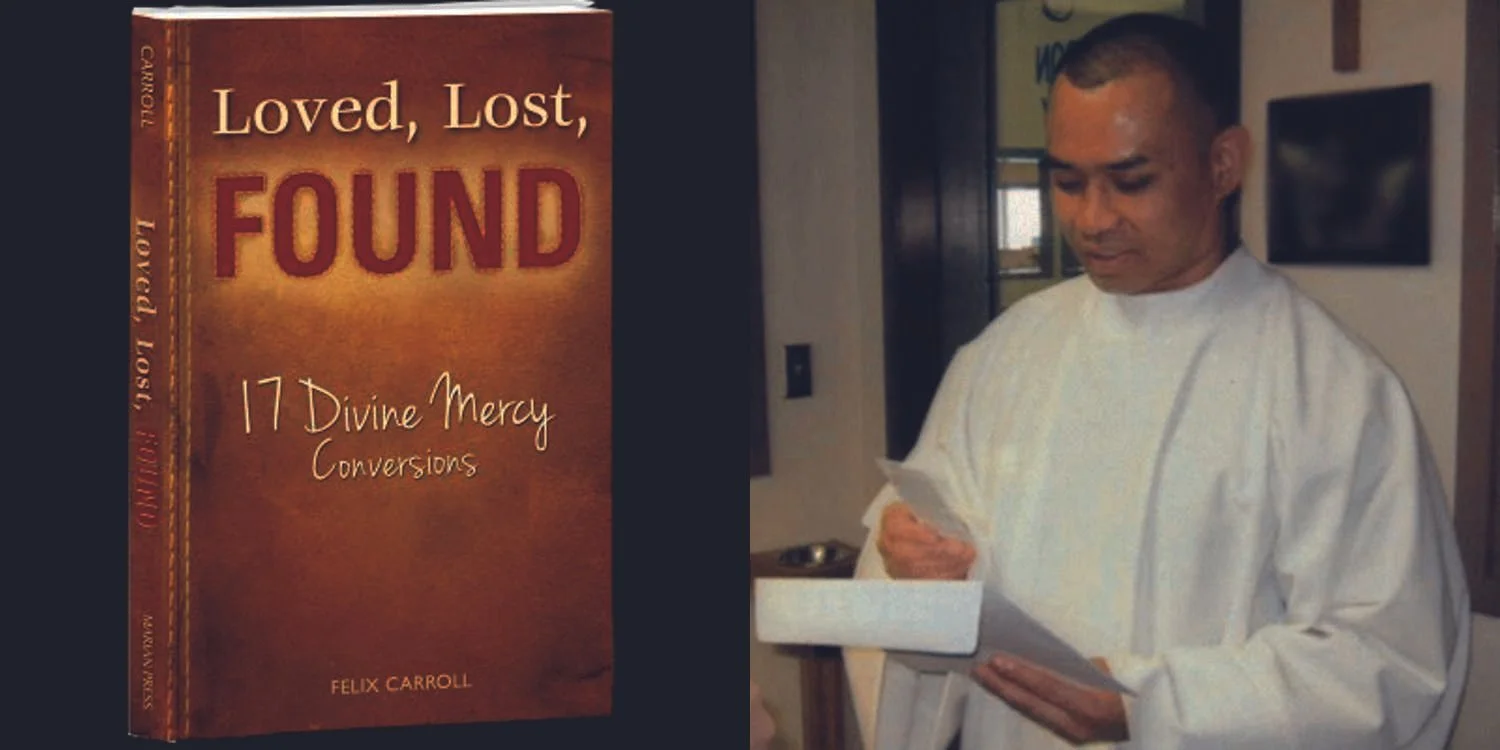
Every now and then the camera recording Father Gaitley swept over his audience, and there, seated near the back, I spotted a familiar face: Marian missionary Eric Mahl. You may recall that Pornchai and Eric Mahl both had chapters featuring them in Felix Carroll’s great Divine Mercy book, Loved, Lost, Found: 17 Divine Mercy Conversions. Later they met and became friends and brothers. I nudged Pornchai and pointed as Eric appeared on the wall. Just at that moment, Eric looked toward the camera and smiled. Pornchai smiled back.
The next day a letter arrived for Pornchai. As though right on cue, it was from Eric Mahl. It was a copy of a letter from Eric to some people who are helping Pornchai by organizing an effort to secure his future in Thailand when he is free from these stone walls. During his missionary outreach to prisons, Eric Mahl has had three meetings with Pornchai. On the last one, he was accompanied by Father Seraphim Michalenko who served as Vice-Postulator for the Cause of Canonization of Saint Maria Faustina. I wrote of that meeting in “Father Seraphim Michalenko on a Mission of Divine Mercy.” Eric also wrote of that meeting in his letter:
“This very holy priest had the opportunity to meet one-on-one with Pornchai in the Chapel, to talk to him and get to know him. When [Father Seraphim] and I were on our way home back to the Shrine in Massachusetts, he told me that the peace in that Chapel must be what Heaven is like and that Pornchai Moontri is a very holy and beautiful child of God. I write all of this to let you know how I desire to see this restored child of God out of prison and living free in Thailand where he could help the rest of society.”
— Letter of Eric Mahl
On April 19, the second Sunday evening of our retreat, we watched the second of Father Gaitley’s DVD presentations, and this time Pornchai listened intently while also looking for his friend Eric Mahl in the background. Later that evening, during a small group discussion led by Marian volunteer Jim Preisendorfer, I heard something astonishing. During Father Gaitley’s presentation, he spoke of the eight reasons why we do not appreciate the Trinity. One of them, Reason Number Seven, is “Because we listen to the voice of the enemy.” By way of example, I wrote in my notes:
“Part of Satan’s strategy is to keep us unfocused from our destiny. He lures us into being satisfied with this world so that so many of us just settle for what this life gives us, or despair over what this life denies us.”
When I read my own notes, I could not even remember writing that. It was as though my pen were on autopilot. Then table moderator Jim Preisendorfer asked for a comment on “Reason Number Seven.” No one spoke so I read my note above. Jim asked if I could give a concrete example. “I can,” Pornchai chimed in. He then spoke about a conversation he and I had seven years earlier. Hope seemed futile for him then. I had asked him back then if he had any hope at all for the future. I will never forget his answer, “I don’t have a future I only have a ‘Plan B.’ ”
Over time I came to understand what “Plan B” was, though, I had not heard Pornchai speak of it for a long time. At the table during our retreat that night, Pornchai explained that “Plan B” was his only plan, and it arose spontaneously within him. “Plan B” was to never leave prison. Having been cast into prison with a 45-year sentence at age 18, followed by years of solitary confinement in a dreaded “Supermax” prison, Pornchai had laid out in his mind the only future this life could promise him: to live out his life in prison. To die in prison. He had nothing else to look forward to.
On that night, however, Pornchai reflected what Eric Mahl described. He radiated the life of a restored child of God for whom that dismal “Plan B” was but a long forgotten memory. He spoke of it as a perfect example of how listening to the voice of the enemy can deny us our destiny. I sat there asking myself, “When did this happen. How did it happen?”
Then Pornchai jabbed a thumb in my direction at the table. “When this guy stepped into my life,” he said, “he released me from the grip of ‘Plan B.’ ” Pornchai described how he took a great risk to trust in some vague hope that was covered in a cloud and could not be seen, so he just took my word for it. “Now, seven years later,” he said that night, “ ‘Plan B’ is just an old memory with no power over me, and people all over the world have come together to replace it.”
While he spoke at that table, I looked down at my own thumbs as Pornchai jabbed his thumb in my direction. I could not look up. I knew that if I made eye contact with him at that moment, I would have fallen apart. My own plan for my life and my priesthood certainly never included life in prison for a crime that never took place. It never included being demonized and scapegoated to satisfy the demands of contingency lawyers and insurance companies as Ryan pointed out. It never included pleading for my Church to see the failures of American civil justice instead of just blindly declaring them final and fulfilled justice.
Ryan A. MacDonald charged in a comment a few weeks ago that the American hierarchy’s response to the priesthood crisis has been more like a housecleaning than a healing. My plan for my life never included a dread that my own bishop might echo in Rome the Twelfth Century plea of Henry II about Thomas Beckett “Will no one rid me of this turbulent priest?”
My plan for priesthood also never included Pornchai Moontri, nor could I have ever foreseen the notion that the tragedy that befell me could ever be anything other than a tragedy for someone else.
The Leper Priest
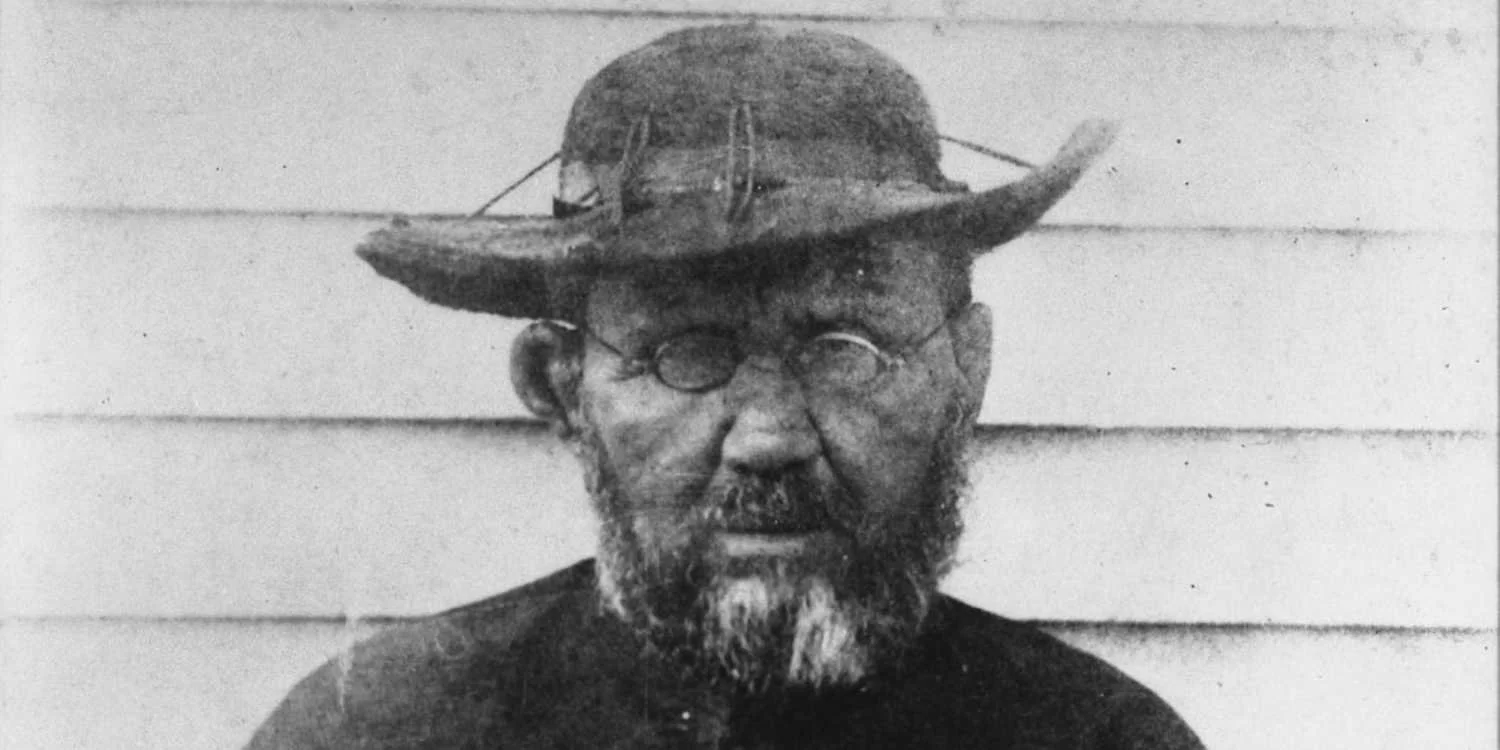
I vividly remember, as a young seminarian in the latter 1970s, watching a two-part PBS dramatization of the life of Father Damien de Veuster, the Belgian priest who in 2009 became Saint Damien of Molokai. I was fascinated by the PBS version. It remains in my psyche as one of the alluring things that drew me toward and kept me focused on a side of priesthood in danger of being lost today, the notion that priesthood is not a job, but an ontological state of being. To see priests “fired” and cast off seems like “Reason Number Seven,” like succumbing to the voice of the enemy as he lures priesthood from its destiny.
When Damien of Molokai was driven across that line between ministering to lepers and becoming a leper, it was seen as a tragedy to his friends, but hindsight sees it as a gift to the Church and the world. When he was canonized by Pope Benedict XVI in 2009, Emily Stimpson wrote of him in “Untamed Saint” in Our Sunday Visitor:
“Saints are made through trials and persecution. And Father Damien had more than his share of those. For most of the 16 years he served on Molokai, he served alone… He begged his superiors to send him help. Usually they ignored his requests. Twice, however, they did send someone. The first was a Dutch priest who complained incessantly. The second was a French priest who accused Father Damien of improper relations with the native women. His superiors and bishop grew tired of his constant demand for help. They considered him an obstinate, headstrong troublemaker. The government shared that opinion, and more than a few officials gave credence to false rumors circulated about him. His detractors heaped every sort of abuse and calumny upon Father Damien … Enduring his own dark night, he felt abandoned by God and unworthy of heaven.”
— Emily Stimpson, “Untamed Saint,” OSV, October 11, 2009



The Eucharistic Adoration Chapel established by Saint Maximilian Kolbe was inaugurated at the outbreak of World War II. It was restored as a Chapel of Adoration in September, 2018, the commemoration of the date that the war began. It is now part of the World Center of Prayer for Peace. The live internet feed of the Adoration Chapel at Niepokalanow — sponsored by EWTN — was established just a few weeks before we discovered it and began to include in at Beyond These Stone Walls. Click “Watch on YouTube” in the lower left corner to see how many people around the world are present there with you. The number appears below the symbol for EWTN.
Click or tap here to proceed to the Adoration Chapel.
The following is a translation from the Polish in the image above: “Eighth Star in the Crown of Mary Queen of Peace” “Chapel of Perpetual Adoration of the Blessed Sacrament at Niepokalanow. World Center of Prayer for Peace.” “On September 1, 2018, the World Center of Prayer for Peace in Niepokalanow was opened. It would be difficult to find a more expressive reference to the need for constant prayer for peace than the anniversary of the outbreak of World War II.”
For the Catholic theology behind this image, visit my post, “The Ark of the Covenant and the Mother of God.”