“There are few authentic prophetic voices among us, guiding truth-seekers along the right path. Among them is Fr. Gordon MacRae, a mighty voice in the prison tradition of John the Baptist, Maximilian Kolbe, Alfred Delp, SJ, and Dietrich Bonhoeffer.”
— Deacon David Jones

Knock and the Door Will Open: The Long Road to Bangkok Thailand
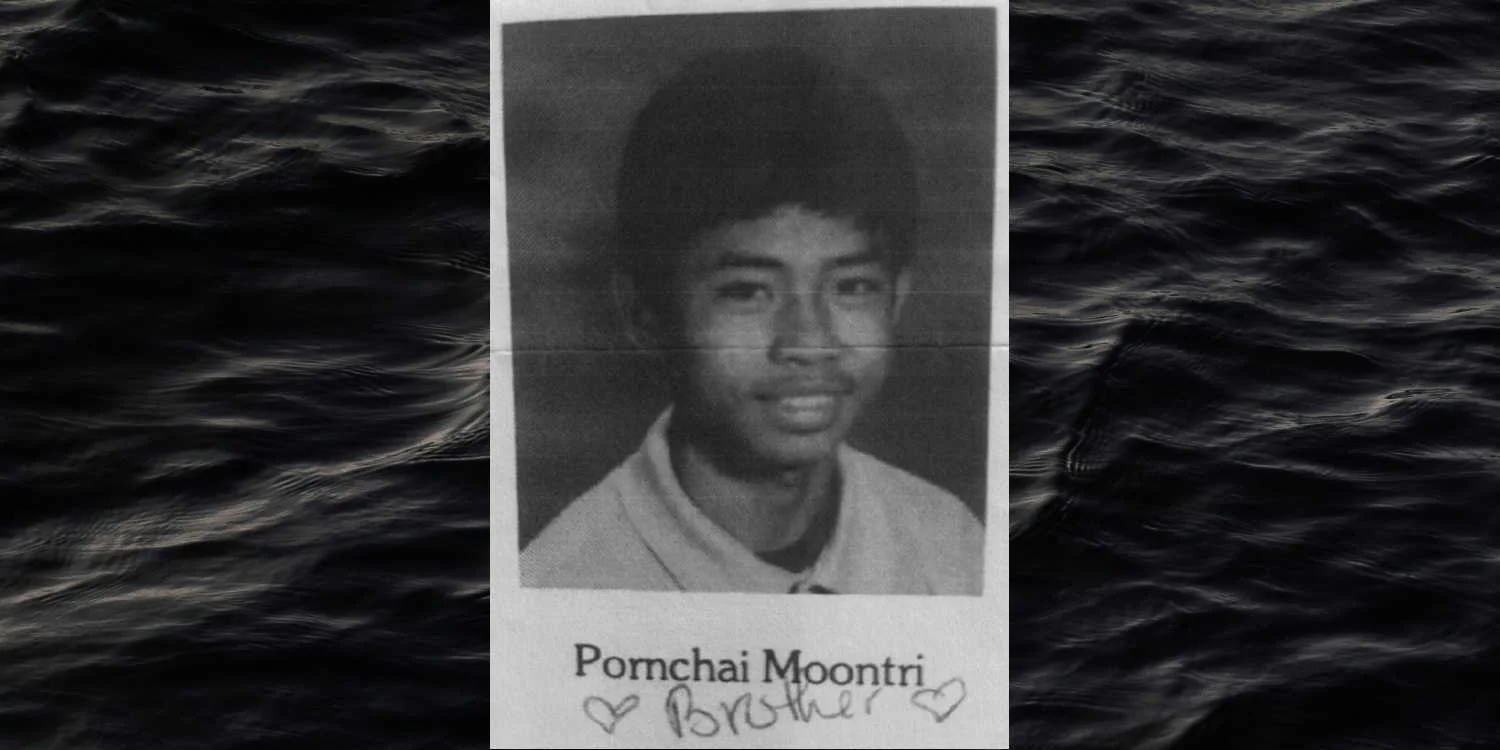
Thanks to Bill Donohue, “Pornchai’s Story” made its way around the world and was read to Catholics in Thailand. Pornchai’s Divine Mercy bridge to Thailand was built.
Thanks to Bill Donohue, “Pornchai’s Story” made its way around the world and was read to Catholics in Thailand. Pornchai’s Divine Mercy bridge to Thailand was built.
May 6, 2026 by Father Gordon MacRae
I wrote a post recently entitled “Book of Tobit: The Angel Raphael on the Road with Pornchai Moontri.” It was an allegory, like the Book of Tobit itself. An allegory is a sort of genre of Sacred Scripture in which a story is told more for its meaning than for its historical value. Every parable of Jesus falls into this same genre. A part of the story of Tobit, and his son Tobias and their interactions with the Archangel Raphael in disguise were all part of the allegory. That does not mean the allegory did not happen. It means only that the truth of the story does not depend upon someone believing it. There was one aspect of the Book of Tobit story that became a centerpiece of my blog linked above. At the beginning and the end of the Book of Tobit there is a mysterious dog whose presence, meaning and purpose remain a mystery.
My friend Pornchai Max and his grueling assimilation to his native Thailand after a forced absence of 36 years and all the torment he endured in that time, also included the presence of a mysterious dog named Hill. When that post was published on April 29 this year, a number of our readers wanted to know what became of Hill. So I went back this week and added an important addendum, which you can read for yourselves by clicking on it at the end of this post.
Now I want to back up about 19 years, in 2007 when Max learned that he would be deported to Thailand at the end of his sentence. He would be taken to Bangkok and left there. ICE would have no further responsibility for him.
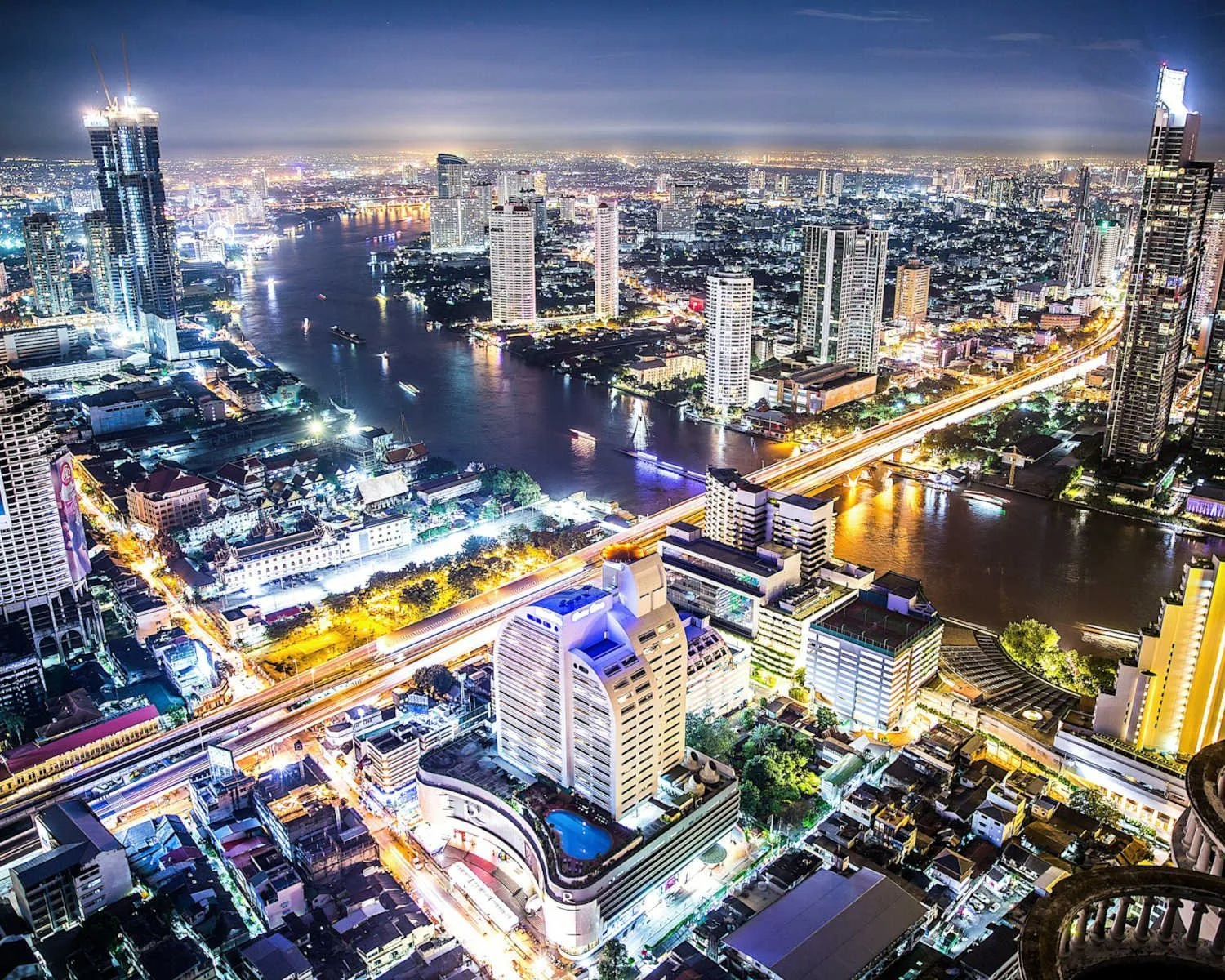
Bangkok, the Capitol of the Kingdom of Thailand, is a massive city of about 9.5 million people. In Thai, the great city’s name is almost unpronounceable to the Western World, and the longest name of any city on Earth at 156 characters. I don’t expect you to memorize it, but in the Thai language Bangkok’s name is: Krungthepmahanakorn Amornrattanakosin Mahintrayuthaya Mahadilokpob Noparat Rajataniburirom Udomrajanivej Mahasatharn Amornpimarn Awatarnsat Sakatadtiya Wisanukamprasit. For daily use in Thai, the name is simply abbreviated to “Bangkok Krung Thep” which in English means “City of Angels.” When Max first told me of this in a phone call, he said, “I’m not kidding. They called it that even before I got here!”
This is a complicated but amazing story that meanders down a long and winding road. Our presentation of it begins in 2006 in a New Hampshire prison cell and threads its mysterious connections all the way around the globe. I n the end you may find any lingering doubts about Divine Mercy falling away. Divine Mercy has opened impenetrable doors for Pornchai Moontri, many of them in otherwise unreachable places.
If you have read my post, “The Parable of a Priest and the Parable of a Prisoner” then you know that Max had been in prison for 29 years, more than half his life, for a crime committed as a teenager, a crime that was set in motion by someone else. You also know that Max was moved from a maximum security solitary confinement unit in Maine to the New Hampshire Prison where we met and became friends late in 2006. That story is told powerfully at the link above.
I had another friend in this prison from Cambodia whom I had helped with the deportation process. He was brought to this country as a child of two, and committed a petty crime at age 18. After a long failed process of appeals, he was deported at age 25 to Cambodia, but spoke not a word of Khmer. One year after his deportation, I received a note from his sister telling me that he disappeared in the capital city of Phenom Penh. He had never been seen or heard from again.
We learned an important but scary lesson from what happened to my Cambodian friend. Since Max was brought to the U.S. as a young child, and has no known family or contacts in Thailand other than distance cousins, the experience of our friend in Cambodia chilled me to the core. I became determined that Max would be ready to live and cope somehow in the immense City of Bangkok when the time came. We had a few years to prepare, but I did not even know where to begin.
How could two men living in a prison cell in New Hampshire with no resources, no online access, and a severely limited budget find and connect with people on the other side of the world? How could I interest anyone in Thailand with the plight of a young man taken from there at age 11, his mother murdered, only to come to the United States to end up homeless and in prison as a teenager? This was not a good place from which to start.
THE SILENCE
“I don’t even know where to begin,” Max told me dismally. “I don’t even know how to learn about Thailand.” I knew I had to start writing, but this was two years before even the idea of this blog was conceived. A day in the prison library produced some addresses. First, I wrote of Max’s situation to Catholic Charities in the Diocese of Manchester (NH). They are, after all, a global network. No response, but no real surprise there. Then I wrote to the national office of Catholic Charities. No response. Then I wrote to the Office of Immigration and Refugee Assistance sponsored by my Diocese. No response. Then I wrote to the Catholic Legal Immigration Network at Boston College. No response. I knocked at the door of every official Catholic agency I could find. No one answered. I knocked, and I waited, and I knocked some more.
I cannot convey in words the utter frustration of writing repeatedly only to have my overtures met with silence. I decided that the problem was not Pornchai’s plight, but rather mine. I told Max that we will have to write all these letters again, but coming directly from him. So we redrafted all the letters under his name. More knocking; more waiting. More silence.
When all of our letters from prison were relegated to the netherworld without responses, I took it personally. I knew we needed a different approach. I asked Max to candidly write his life story — which is an amazing story in and of itself — in as few pages as possible, and let me send it to the few Catholic contacts I had who did not ignore our plight. One of them was Bill Donohue, President of the Catholic League for Religious and Civil Rights. Once he read “Pornchai’s Story,” he wrote back immediately asking if he could publish it on the Catholic League website. From there, it slowly made its way around the world. We knocked and knocked, and waited some more.
The late Father Richard John Neuhaus — a courageous Catholic writer and editor of First Things magazine — sent Max a personal letter to tell him how very important his story is, not only for Max, but for the Church. Father Neuhaus promised to pass the story along to others. This was a year before Father Neuhaus faced his own untimely death from cancer in January, 2009. More knocking, and more waiting.
Max started receiving letters from other important figures in the Church. One came from His Eminence Cardinal Kitbunchu, Archbishop Emeritus of Bangkok. Max was bowled over by that letter. Another came from the Rome Office of Ambassador Mary Ann Glendon, who had been appointed by President George W. Bush as U.S. Ambassador to the Holy See.
Bill Donohue extending to Max honorary membership in the Catholic League and promised to promised to promote his story. My article for Catalyst appeared at the same time, in the July/August 2009 issue. It was “Due Process for Accused Priests.” As an unintended consequence, Pornchai’s story and mine became linked together.
Pornchai’s Story
Here is Pornchai’s Story:
[From Dr. Bill Donohue: ] As we begin the New Year, we’d like to share with you this moving account of one young man’s conversion story.
My name is Pornchai Moontri, and as I write this I am prisoner #77948 in the New Hampshire State Prison. I come to the Catholic faith after a painful journey in darkness that my friend, Father Gordon MacRae, has asked me to write candidly. This is not something I do easily, but I trust my friend.
I was born in Bua Nong Lamphu, in a small village in the north of Thailand near Khon Kaen on September 10, 1973. At the age of two, I was abandoned by my mother and a stranger tried to sell me. A distant teenaged relative rescued me. He walked many miles to carry me away to his family farm where I worked throughout my childhood raising water buffalo, rice, and sugar cane. I never attended school, however, and never learned to read and write in Thai. Though my childhood involved hard work, I was safe and happy.
When I was 11 years old, my mother re-emerged in Thailand with a new husband — an American air traffic controller from Bangor, Maine. I was taken from Thailand by them against my will, and brought to the United States. This transition was a trauma to be endured. A month after my arrival in Bangor, my new stepfather’s motive for importing a ready-made Thai family became clear. I was forcibly raped by him at age 11, an event that was to be repeated with regularity over the next three years. I was a prisoner in his house, and resistance was only met with violence against me and against my mother. I was all of 100 pounds. I cannot describe this further. Welcome to America!
Being one of only three Asians in 1985 Bangor, and speaking little English, I did not readily comprehend my new names. “Gook,” “V.C.” and “Charlie” meant nothing to me, but I could sense the scorn with which such names were delivered. Because my English was poor, I was treated as though I was stupid. Part of my humiliation was that I had to get a paper route at age 12, and my earnings were taken from me to pay for the “privilege” of living in my captor’s house. Stephen King’s home was on my paper route. Mr. King once gave me a Christmas bonus of 25¢ for delivering his newspaper all year. The horror stories he wrote about Maine are all true. Remember the one with the evil clown? It’s true.
When I was 14, my English was better. I was a little bigger, and a lot stronger — and nothing but angry. Anger was all I had. So with it I fled that house and became a homeless teenager in and around Bangor. One day the Bangor police actually picked me up and forced me to go “home.” I would rather have gone to one of the ones Stephen King wrote about. I just fled again and again, and ended up at the Good Will Hinckley School for people like me. I was there for a year and got kicked out for fighting. I was always fighting. I fought everyone.
Back on the streets of Bangor, I began to carry a knife. At 17 and 18, a lot of people were after me. I lived under a bridge for a while and sometimes my mother would bring me things. I tried to climb out of the deep hole I was in by signing up for night classes at age 18 to finish my high school diploma. I was kicked out of Bangor High School for punching the principal.
One night, at age 18, something that lived in me got out. I got very drunk with friends, and we walked into a Bangor Shop & Save supermarket to buy cigarettes. I barely remember this. In my drunken state, I opened a bottle of beer from a case and started to drink it. The manager confronted me and ordered me to leave. I tried to flee the store, but the manager and other employees then tried to keep me there. I tried to fight them off to flee. When I got outside, a manager from another Shop & Save had witnessed the incident and pounced on me. I was 130 pounds and was pinned to the ground by this 190-pound man. I think something snapped in my mind. IT was happening again. I fought, but his dead weight was suffocating me. The newspapers would later tell a different story, but this was the truth, and it is all I remember.
In jail that night, I was questioned for three hours. I was told that I had stabbed a man and was charged with attempted murder. I have no memory, to this day, of stabbing the man. The next morning, I awoke in a jail cell and was told that I was charged with Class A murder. The man had died during the night. I was told that I blew a .25 on the Breathalyzer, but the result was so high it was discarded as an error.
My stepfather could have hired expert counsel, but it was clearly not in his best interest that my life be evaluated, so I was left in the care of a public defender who wanted this high profile case off his desk. There was talk about the Breathalyzer, and “level of culpability,” and things like “defensive vs. offensive wounds,” but in the end there were no theories, no experts and no defense. I was terrified of being abandoned. My mother came to me in jail and pleaded with me to protect her and “the family” by not revealing what happened in my life. So I remained silent. I offered no defense at all. My co-defendant told the truth of my being pinned down, but he was not believed. I was convicted of “Class A murder with deliberate indifference” and sentenced, at age 18, to 45 years in a Maine Prison. Maine has no parole.
I was also sentenced with the soul of the innocent man whose life I took — despite my being unable to remember taking it. The mix of remorse and anger was toxic in prison, and I gave up. Prison became just an extension of where I had already been. My anger raged on and on, and I spent 13 of my 15 years in prison in Maine’s “supermax” facility for those who can’t be trusted in the light of day.
Five years into my imprisonment, I learned one night in my supermax cell that my mother and stepfather had relocated to the Island of Guam where my mother was murdered. She was pushed from a cliff. [The story that was told to Pornchai, but it was false.] The only suspect was her husband but there was no evidence. I was now alone in my rage.
After 14 years of this, the Maine prison decided to send me to an out-of-state prison. I had no idea where I was to be sent. I arrived in the New Hampshire State Prison on October 18, 2005 dragging behind me the Titanic in which I stored all my anger and hurt and loss and loss and loss — and guilt.
I started my time in a new prison by getting into a fight and ended up in the same old place — the hole. When some months went by, I was given another chance. I was sent to H-Building where I met my friend JJ, an Indonesian who was waiting to be deported. JJ introduced me one day to Gordon, who he said was helping him and some others with appealing their INS removal orders or with preparing themselves to be deported. He seemed to be the only person who even cared. JJ trusted Gordon, so I had several conversations with him. A few months later, I was moved to the same unit in which he lives in this prison. We became friends.
By patience and especially by example, Gordon helped me change the course of my life. He is my best friend, and the person I trust most in this world. It is the strangest irony that he has been in prison for 13 years accused fictionally of the same behaviors visited upon me in the real world by the man who took me from Thailand. I read the articles about Gordon in The Wall Street Journal last year. I know him better, I think, than just about anyone. I know only too well the person who does what Gordon is wrongly accused of. Gordon is not that person. Far from it. It is hard for me to accept that laws and public sentiment allow men to demand and receive huge financial settlements from the Catholic Church years or decades after claimed abuse while all that happened to me has gone without even casual notice by anyone — except, ironically, Gordon MacRae.
On September 10, I will be 34 years old. I have been in prison now for nearly half of my life, but in the last year I have begun to know what freedom is. My anger is still with me and it always lurks just below the surface, but my friend is also with me. We both recently signed up for an intense 15-week course in personal violence. He is doing this for me. I spend my days in school instead of in lock-up now, and I will soon complete my High School diploma. Gordon helped me obtain a scholarship for a series of non-credit courses in Catholic studies at Catholic Distance University. In the last year, with help and understanding, I have completed programs offered in the New Hampshire prison. One day I felt strangely light so I looked behind me, and the Titanic was not there. I parked it somewhere along the way. I have put my childhood aside. Now I am a man.
In March of this year, after 15 years in prison, I was ordered by an INS court to be removed from the United States and deported to Thailand at the end of my sentence in 17 to 20 years or so. Gordon hopes that I can seek a sentence reduction so that I can return to Thailand at an age at which I may still build a life. There are many obstacles. The largest is that I do not speak Thai any longer and I never had an opportunity to learn and to read and write in Thai. We are working hard to prepare me for this. Though years away, it is a very frightening thing to go to a country only vaguely familiar. I have not heard Thai spoken since age 11, 23 years ago. There is no one I know there and no place for me to go. I have no home anywhere.
Along this steep path, I have made a decision to become Catholic. The priest in my friend has not been extinguished by 13 years in prison. It is still the part of him that shines the brightest. Gordon never asked me to become Catholic. He never even brought it up. I t is the path he is on and I was pulled to it by the force of grace, and the hope that one day I could do good for others. Gordon showed me a book, Jesus of Nazareth, in which Pope Benedict wrote: “The true ‘exodus’…consists in this: Among all the paths of history, the path to God is the true direction that we must seek and find.”
I am taking a correspondence course in Catholic studies through the Knights of Columbus and I look forward to the studies through Catholic Distance University. I go to Mass with Gordon when it is offered in the prison, and our faith is always a part of every day. When I return to the place I haven’t seen since age 11, I want to go there as a committed Catholic open to God’s call to live a life in service to others. It is what someone very special to me has done for me, and I must do the same.
My friend asked me to sit down today and type the story of my life and where I am now. He asked me to let him send this to a few friends who he says may play some role — directly or indirectly — in my life some day. The account is my own. What Father Gordon added was hope, and somehow faith has also taken root. In prison, hope and faith are everything. Everything!
[Written by Pornchai Moontri in 2008 and published by the Catholic League.]
Thanks to Bill Donohue and the Catholic League, “Pornchai’s Story” made its way around the world and was read to Catholics in Thailand. Pornchai Moontri’s Divine Mercy Bridge to Thailand was built despite many obstacles.
Note from Father Gordon MacRae: Pornchai’s story does not end here. There were other miracles yet to be told, but they are told in other posts here:
Book of Tobit: The Angel Raphael on the Road with Pornchai Moontri
The Parable of a Priest and the Parable of a Prisoner
Getting Away with Murder on the Island of Guam
A Catholic League White House Plea Set Pornchai Moontri Free

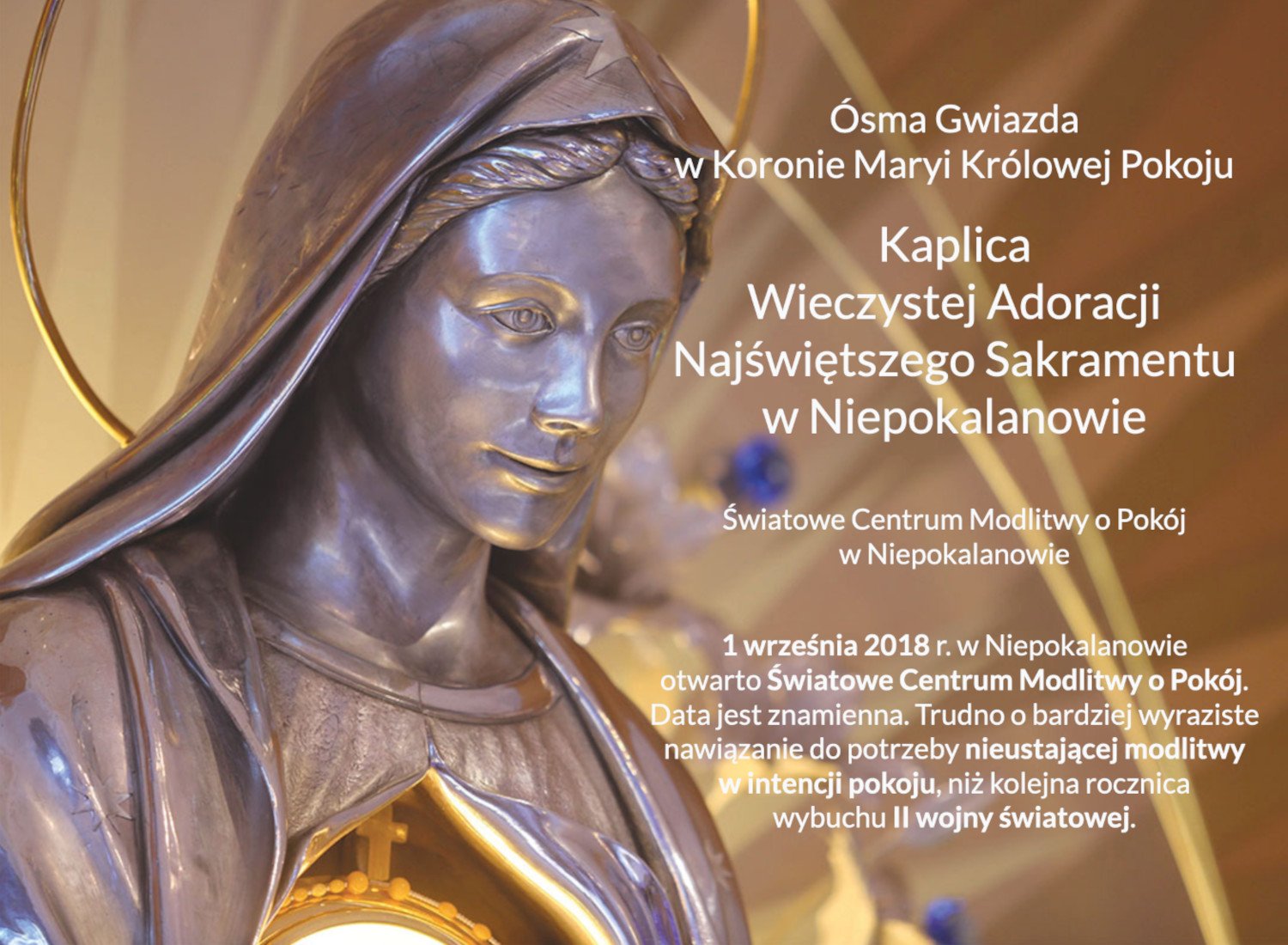

The Eucharistic Adoration Chapel established by Saint Maximilian Kolbe was inaugurated at the outbreak of World War II. It was restored as a Chapel of Adoration in September, 2018, the commemoration of the date that the war began. It is now part of the World Center of Prayer for Peace. The live internet feed of the Adoration Chapel at Niepokalanow — sponsored by EWTN — was established just a few weeks before we discovered it and began to include in at Beyond These Stone Walls. Click “Watch on YouTube” in the lower left corner to see how many people around the world are present there with you. The number appears below the symbol for EWTN.
Click or tap here to proceed to the Adoration Chapel.
The following is a translation from the Polish in the image above: “Eighth Star in the Crown of Mary Queen of Peace” “Chapel of Perpetual Adoration of the Blessed Sacrament at Niepokalanow. World Center of Prayer for Peace.” “On September 1, 2018, the World Center of Prayer for Peace in Niepokalanow was opened. It would be difficult to find a more expressive reference to the need for constant prayer for peace than the anniversary of the outbreak of World War II.”
For the Catholic theology behind this image, visit my post, “The Ark of the Covenant and the Mother of God.”

Pope Francis Suppresses the Prayers of the Faithful
Pope Francis is suppressing the Traditional Latin Mass at the same time the Chinese Communist Party is suppressing Tibetan Buddhism, and for the same stated reason.
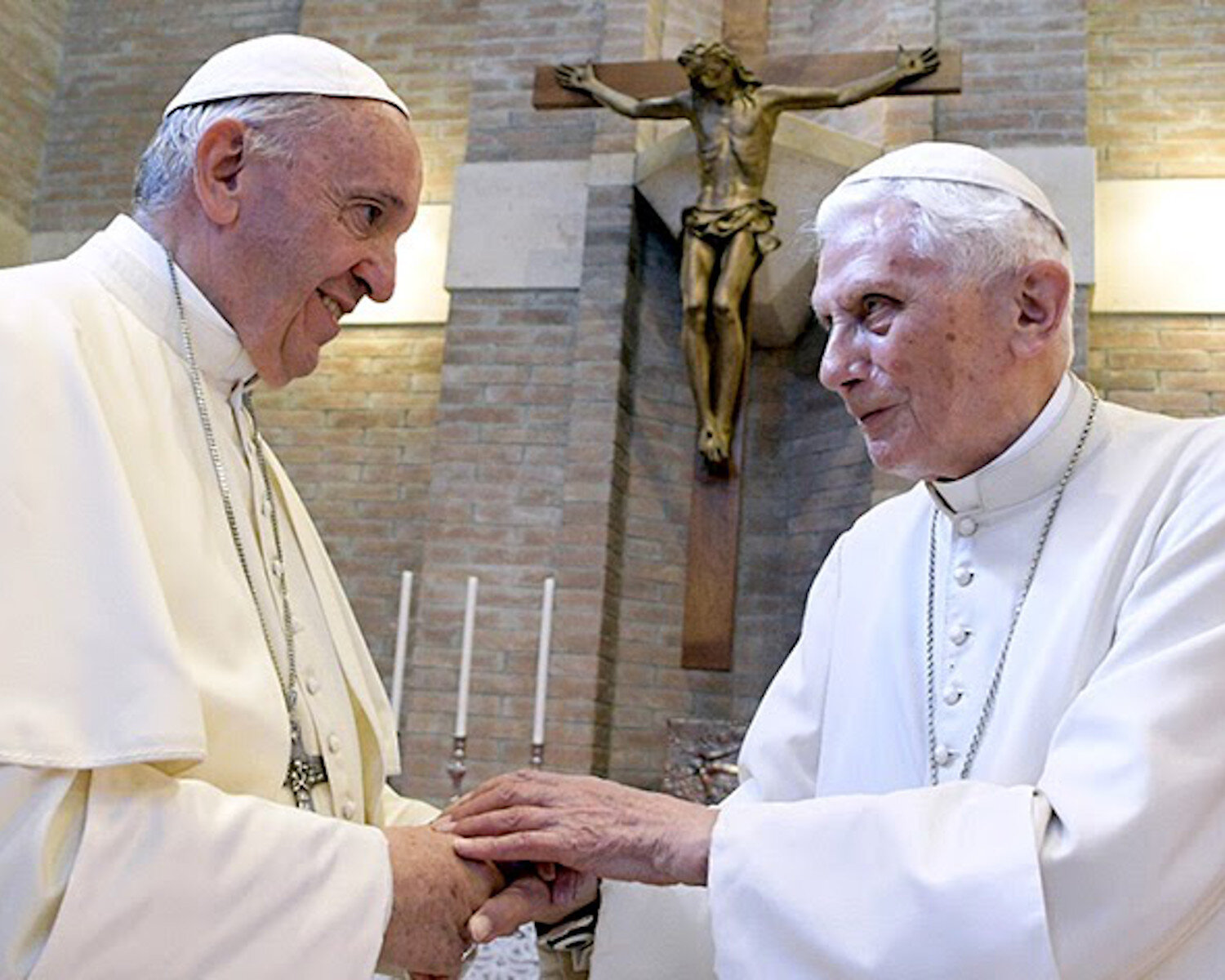
Pope Francis is suppressing the Traditional Latin Mass at the same time the Chinese Communist Party is suppressing Tibetan Buddhism, and for the same stated reason.
August 4, 2021
A lot of ink is now being spilled in Catholic circles about a new Motu Proprio — an Apostolic Letter — of Pope Francis announced on Friday, July 16, 2021, the Feast of Our Lady of Mount Carmel. Pope Francis has placed severe restrictions on celebration of the Traditional Latin Mass.
Effective immediately, his restrictions include a mandate barring newly organized celebrations of the TLM and its celebration in any parish church. Further, newly ordained priests will need the written consent of their bishops who in turn must consult the Holy See before approval is granted to celebrate the Traditional (Extraordinary) Form of the Mass.
Pope Francis has imposed these restrictions without explanation in open contradiction of a 2014 Motu Proprio of his predecessor, Benedict XVI, who permitted celebration of the Traditional Latin Mass without preconditions and without consent from a bishop. Some of the best early reaction to this new and draconian development has come from Father John Zuhlsdorf (Father Z’s Blog, “Reactions to Traditionis Custodes.”)
“Fathers ... change nothing, do nothing differently for now. It is not rational to leap around without mapping the mine field we are entering. Keep calm and carry on.
“Lay people ... be temperate. Set your faces like flint. When you are on fire, it avails you nothing to run around flapping your arms. Drop and roll and be calm.
“To those of you who have put your heart and goods and hopes into supporting and building the Traditional Latin Mass, thank you. Do not for a moment despair or wonder if what you did was worth the effort, time, cost and suffering. It was worth it. It still is.”
Father Z adds pointedly, “I am forced to remark that the vulgarity of this document is matched only by its cruelty.”
For my part, I cannot help but wonder what Pope Francis might have been thinking at Mass just two days later as he listened to the First Reading on the Sixteenth Sunday in Ordinary Time. Was he at all conscious that Catholics all over the world were hearing the same rebuke from the Prophet Jeremiah that he heard that Sunday?
“Woe to the shepherds who mislead and scatter the flock of my pasture, says the Lord. Therefore, thus says the Lord, the God of Israel, against the shepherds who shepherd my people: You have scattered my sheep and driven them away. You have not cared for them, but ... I myself will gather the remnant of my flock from all the lands and bring them back to their meadow ... I will appoint shepherds for them who will shepherd them so that they need no longer fear and tremble, and none shall be missing, says the Lord.”

A Catholic Unraveling in Germany
I have been searching for a more panoramic map of the mine field Father Z says we are now entering, and I think I may have found some of its initial rumblings. While reading Volume Two of the Prison Journal of George Cardinal Pell, I came upon his entry for 9 August 2019, the feast of Edith Stein, St Teresa Benedicta of the Cross. I wrote about her once in "Saints and Sacrifices: Maximilian Kolbe and Edith Stein at Auschwitz."
Edith Stein was German by birth. In his book, Cardinal Pell advises readers to seek her intercession for the Church in Germany. Cardinal Pell quoted Cardinal Gerhard Muller, former Prefect of the Congregation for the Doctrine of the Faith:
“The Catholic Church [in Germany] is going down. Leaders there are not aware of the real problems. [They are] self-centered and concerned primarily with sexual morality, celibacy, and women priests. They don’t speak about God, Jesus Christ, grace, the sacraments, and faith, hope, and love.”
It gets worse. Later in Prison Journal, in an entry dated 16 October 2019, Cardinal Pell wrote candidly about the German Catholic Church fears of the possibility of schism that have been raised there. If allowed to happen, such a break would sweep much of Europe. Cardinal Pell referred to a Catholic Culture article by Philip Lawler entitled, “Who Benefits from All This Talk of Schism?” (September 17, 2019):
“Lawler argues that the prospect of a schism is remote, but Pope Francis has spoken calmly about such a prospect, saying he is not frightened by it, something Lawler believes is frightening in itself.”
Cardinal Pell spoke of earlier confidence about the unlikelihood of a schism, but acknowledged that “the odds against it have shortened.” He added, while again citing Philip Lawler:
“Not surprisingly, the New York Times has been writing about the prospect of a schism by the John Paul and Benedict followers in the United States, the Gospel Catholics ... I believe Lawler’s diagnosis is correct when he points out that the topic of schism has been raised by the ‘busiest and most aggressive online defenders’ of Pope Francis who ‘recognize that they cannot engineer the radical changes they want without precipitating a split in the Church. So they want orthodox Catholics to break away first, leaving [progressives] free to enact their own revolutionary agenda.’”
It was that final sentence that caught my attention after hearing these new restrictions imposed by Pope Francis on the Traditional Latin Mass. Are we now witnessing the opening salvo of such a manipulated agenda? Is there a move under way to antagonize conservative and traditional Catholics into breaking away?

The Pope and the Chinese Communist Party
I am certain this was not by design, but on the day after this announcement by Pope Francis, the weekend edition of The Wall Street Journal carried a stunning pair of articles. If you are unable to view them without a subscription, I will summarize their major points here.
The first was entitled, “Beijing Targets Tibet for Assimilation” by Liza Lin, Eva Xaio, and Jonathan Cheng. The assimilation referred to is better described as suppression, and it needs a little historical background.
Twelve centuries had passed between the establishment of Tibetan Buddhism in AD 747 and the Chinese Communist Party (CCP) gaining control of China in 1949. By 1950, the CCP came into increasing conflict with Tenzin Gyatso, the 14th Dalai Lama. The Dalai Lama is believed to be a reincarnation of the Buddha. When he dies, his soul is thought to enter the body of a newborn boy, who, after being identified by traditional tests, becomes the new Dalai Lama.
As such, the Dalai Lama is spiritual leader of Tibetan Buddhism and the ex officio ruler of Tibet since the Eighth Century. In 1959, during the Chinese Communist oppression of Tibet, the Dalai Lama was forced into exile in India where he has remained since. He received the Nobel Peace Prize in 1989 for leading a nonviolent opposition to continued Chinese claims to rule Tibet.
Xi Jinping, President of China and Chairman of the Chinese Communist Party (CCP), has as his national priority the forging of a single Chinese identity centered on unity and Party loyalty. His agenda has placed new restrictions on Tibetan Buddhism and has launched an effort to replace the traditional Tibetan language with Mandarin Chinese while insisting on courses designed for indoctrination in socialism and the CCP.
The Dalai Lama, in exile in India, is now 86 years old. His eventual death is expected to trigger a clash with the Chinese government over control of Tibetan Buddhism. One of the major points of Chinese suppression is a CCP claim that it has the right to identify and choose the Dalai Lama’s “reincarnation,” and thus obtain full control over the heart of Tibetan religion and identity. In late 2020, President Xi Jinping demanded an effort to make Tibetan Buddhism “compatible with a socialist identity.”
This affront to Tibet’s religious freedom actually has a strange sort of precedent. In 2019, Pope Francis signed a concordat — the tenets of which are still secret — in which he agreed to a Chinese Communist Party demand to choose Catholic bishops in the State-approved Chinese Catholic church. This has since translated into increased harassment and suppression of the underground Catholic Church for which many have suffered for their loyalty to Rome.

Pope Francis and the Threat of Schism
A second major article, this one by Vatican correspondent Francis X. Rocca, appeared on the same day in The Wall Street Journal, again just two days after the announced suppression of the Latin Mass. Its title asks an ominous question: “Is Pope Francis Leading the Church to Schism?” The Pope has used some of the same reasoning and language in restricting the TLM that Xi Jinping uses while suppressing Tibetan Buddhism. Pope Francis cites “unity” as his principal reason and goal, but its effect seems the opposite.
Two years after Cardinal Pell wrote from his prison cell with dismal foreboding about the state of the Church in Germany, Francis X. Rocca quoted Cardinal Rainer Woelki, Archbishop of Cologne and leader of the conservative minority of German bishops. He warned that the current wave of dissent sweeping Germany could lead to schism and/or the formation of a German national church. Rocca reports that similar warnings have been echoed by cardinals and bishops of other European countries.
Recently, San Francisco Archbishop Salvatore Cordileone asked for prayers for the universal Church and the bishops of Germany “that they step back from this radical rupture.” Schism is more a threat to the Catholic Church than any other because, as Rocca points out, its “core identity [of being Catholic] is inextricably tied to its global unity under the pope.”
In my recent post, “Biden and the Bishops: Communion and the Care of a Soul,” I wrote briefly about the 2014 Synod on the Family and the controversial document penned by Pope Francis, “Amoris Laetitia.” During the Synod, the Catholic Bishops of Africa emerged as a bloc opposed to the liberalizing views on sexuality and divorce proposed by the Germans. In an Easter sermon this year, African Cardinal Philippe Ouedraogo urged African Christians to “rebel against the imperialism of certain lobbies and associations [in the Church] which advocate and want to impose same-sex marriage, socio-sexual debauchery, and divorce.”
Francis X. Rocca writes that Pope Francis has played down these concerns of the African bishops who, in my view, are the future of the Church’s moral integrity. For a glimpse of the mindset at work in the German church, consider this statement by Joachim Frank, a German journalist who is taking part in the synod there. He described the work of the synod:
“There was this sense of movement, of change, another spirit, another type of church after these boring and very painful years of John Paul II and Benedict XVI.”
In his 26-year papacy, Saint John Paul II is widely considered to have almost single-handedly brought down the Soviet Union and ended European communism. To dismiss his papacy and that of Benedict XVI as “boring and painful” is to break, not with Catholic tradition, but with reality.
The trending Catholic mindset of Germany and most of Europe should not steer the Barge of Peter and the moral authority and praxis of the Church. In Germany, before the 2019-2021 pandemic, only about nine-percent of Catholics attended Mass on a regular basis. Among African Catholics, regular Mass participation is the world’s highest. By 2050, there will be twice as many Catholics in Africa than in Europe.
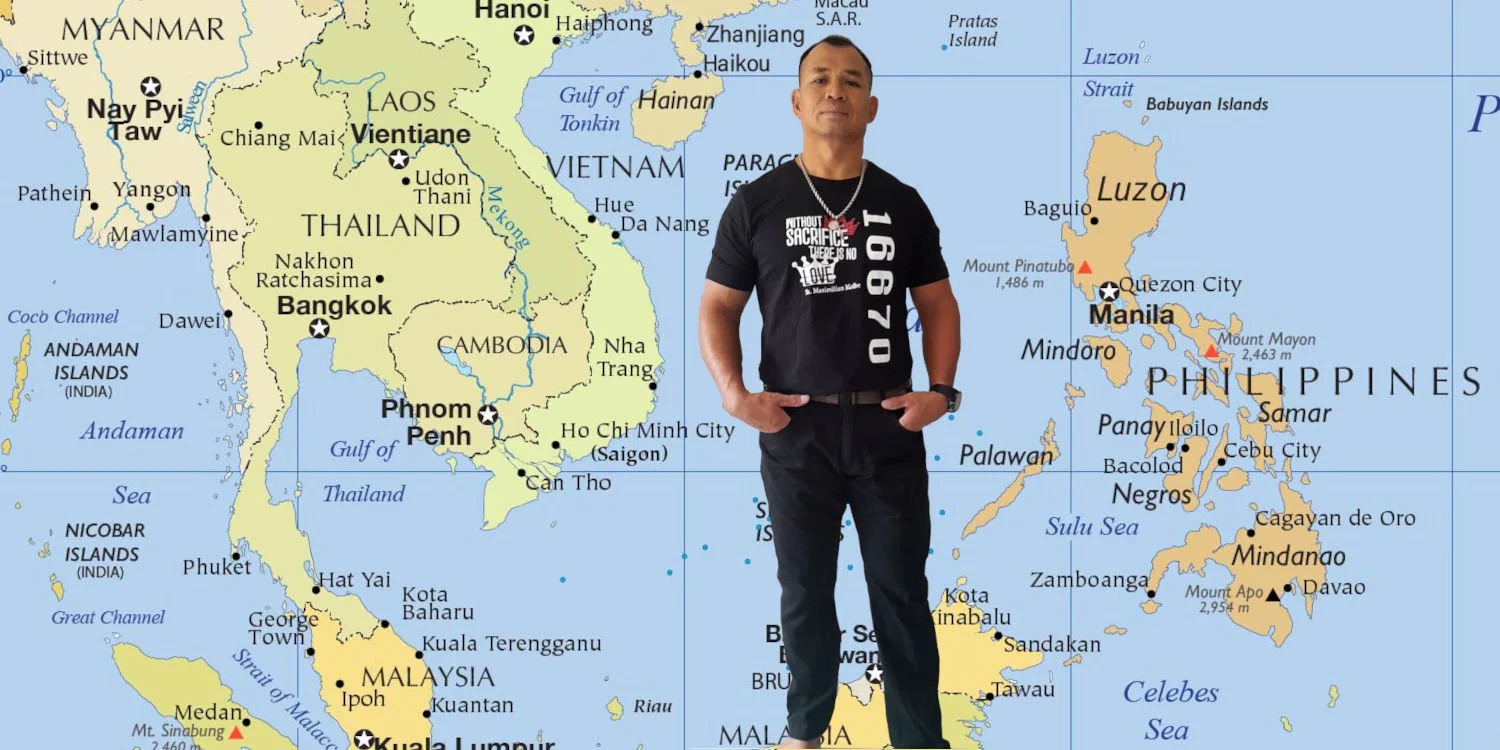
Throughout Asia, Catholicism is relatively small, but growing, and even though small it has a large footprint. In Thailand, Catholics account for only about one-percent of the population, but they leave a large footprint on the culture because of their orthodox commitment to living their faith, often heroically.
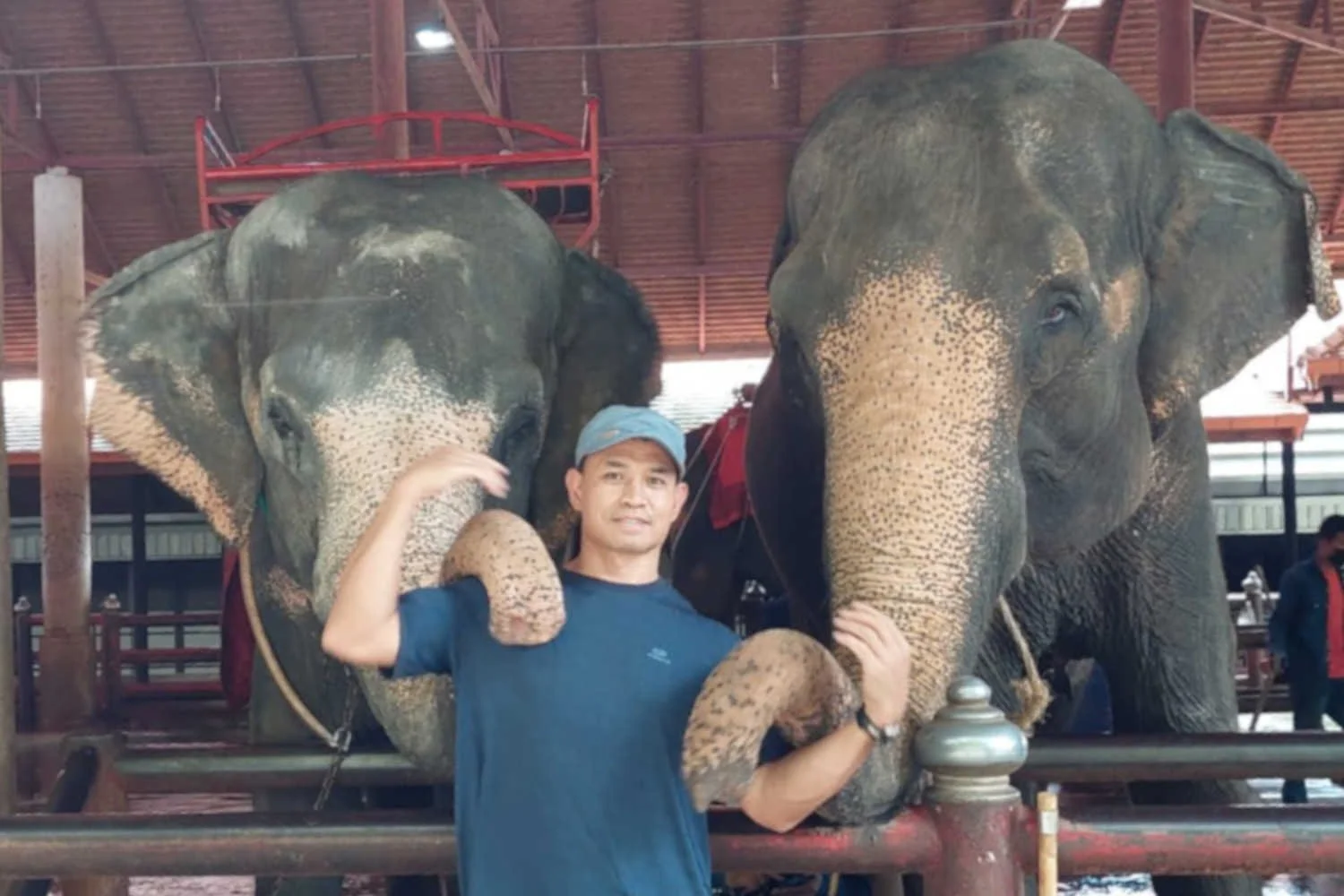
Our friend, Pornchai Moontri, told me that in the five months he has lived in Thailand, he has heard Masses in Thai, Vietnamese, and even Lao, but beyond the visible familiarity of the Mass, he has understood little of what he hears. “If the Church had kept Latin,” he recently said, “this would not happen.” He pointed out rather wisely that in the mobile culture this world has become, a universal language promotes unity instead of detracting from it.
There is one hope still for proponents of the Traditional Latin Mass. It is found in Canon 87 of the Code of Canon Law:
“A diocesan bishop, whenever he judges that it contributes to their spiritual good, is able to dispense the faithful from universal and particular disciplinary laws issued for his territory on his subjects by the Supreme Authority of the Church.”
In other words, approval for continued celebrations of Mass in the Extraordinary Form now falls to individual bishops. However, I remain concerned about one major point raised by Cardinal George Pell citing Catholic Culture’ s Phil Lawler. I mentioned it above, but it must be emphasized:
“I believe Lawler’s diagnosis is correct when he points out that the topic of schism has been raised by the ‘busiest and most aggressive online defenders’ of Pope Francis who ‘’ecognize that they cannot engineer the radical changes they want without precipitating a split in the Church. So they want orthodox Catholics to break away first, leaving [progressives] free to enact their own revolutionary agenda.’”
Conservative and traditional Catholics must not concede to this by schism. You are the Church, and Her most faithful manifestation. It is a quandary why Pope Francis now points to you as “divisive” while remaining silent about the rampant heresies arising out of the progressive German church. I can only conclude with the last two lines of a famous poem by Dylan Thomas written in the year I was born:
"Do not go gentle into that good night.
Rage, rage against the dying of the light."
+ + +
Please share this post. You may also like this recommended reading by Father Gordon MacRae:
The Once and Future Catholic Church
Pope Francis in a Time of Heresy
Biden and the Bishops: Communion and the Care of a Soul
Saints and Sacrifices: Maximilian Kolbe and Edith Stein at Auschwitz
