“There are few authentic prophetic voices among us, guiding truth-seekers along the right path. Among them is Fr. Gordon MacRae, a mighty voice in the prison tradition of John the Baptist, Maximilian Kolbe, Alfred Delp, SJ, and Dietrich Bonhoeffer.”
— Deacon David Jones
Latin Mass and Altar Rails Are Under Siege in North Carolina
Citing unity, the Bishop of Charlotte, North Carolina imposed a ban on altar rails and kneeling and severely further restricted access to the Traditional Latin Mass.
Citing unity, the Bishop of Charlotte, North Carolina imposed a ban on altar rails and kneeling and severely further restricted access to the Traditional Latin Mass.
February 11, 2026 by Father Gordon MacRae
In its “Year in Review” feature dated December 28, 2025, the National Catholic Register published “The Top 25 Register Stories of 2025.” AI tools were used to generate summaries and rank the stories based upon online page views, which were then reviewed by an editor. The result was a visually striking account of Catholic interests over the previous year. Two of the entries were perplexing, however.
Item #17 on the list featured a photo of Charlotte, North Carolina, Bishop Michael Martin with the headline, “Charlotte Liturgy Controversy Heats Up After Bishop’s Proposed Ban of Latin, Altar Rails Leaked.” The segment was written by Register Columnist Jonathan Liedl who added, “The Charlotte Diocese ignites a firestorm in 2025 as Bishop Michael Martin’s leaked proposal to ban Latin and altar rails stirs international debate. Critics argue the norms contradict Vatican II’s teachings, while supporters claim they aim for liturgical unity. This controversy marks the first major liturgical clash under Pope Leo XIV, positioning Charlotte, North Carolina, as a litmus test for the future Catholic worship.”
In another Register column appearing adjacent to the above story was Item #20, which presented a polar opposite view: “Communion Rails Return as Churches Embrace Beauty and Reverence,” presented by Register Columnist Joseph Pronechen who added, “In 2025, Catholic parishes across the U.S. embrace a revival of altar rails, transforming the reception of Communion into a more reverent experience. Joseph Pronechen highlights how this return fosters a sacred atmosphere, encouraging congregants to kneel and reflect on the significance of the Eucharist. As communities rediscover this liturgical beauty, they deepen their connection to faith and tradition marking a profound shift in worship practices.”
I could not help but notice further context in a mid-September, 2025 Catholic News Agency report on new regulations on Catholic practice in China. This time, the ban came from the Chinese Communist Government’s State Administration for Religious Affairs. It imposes a ban on any form of online evangelization. It is imposed on all Catholic priests in China, both foreign and domestic. The ban also requires that all clergy express their “love for the Motherland,” and their support for Chinese Communist Party leadership and its socialist system.
Faith leaders in China are also banned from “preaching and performing religious rituals to live broadcasts, videos, or online meetings,” and are specifically banned from evangelizing or educating minors on the Internet, and from raising funds in support of their ministries.
Lest Catholics take any of this personally, the Chinese Communist government has also taken upon itself the absolute right to select the next Dalai Lama supplanting centuries-old traditions.
I do not in any way equate what is happening under State authority in China with what is happening under religious authority in North Carolina or elsewhere in America, but the timing of these endeavors is striking. In the matter of the oppression of faithful Catholics in China, it seems that the motive of the Chinese Communist Party in issuing their agenda at this time came in response to a September 18, 2025 interview with Pope Leo XIV.
Pope Leo has reportedly stated that he had been listening to a significant group of Chinese Catholics who faced difficulty in living their faith freely. In the interview, he reportedly signaled that he may be open to future changes in the Vatican’s controversial agreement with China, according to the Catholic News Agency.
Cardinal Pell’s Concern About Schismatic Agendas
Catholics have come to expect suppression of legitimate faith experience from Communist regimes, but suppression by Church hierarchy of previously sanctioned forms of worship seems entirely new. For the Sensus Fidelium, the lived experience of the faithful across generations, it can also be deeply troubling and spiritually wounding.
I have come to appreciate the candor and spiritual integrity of prison writing from the ranks of Dietrich Bonhoeffer, Father Walter Ciszek, Father Alfred Delp, and most recently, the late Cardinal George Pell. Writing from prison with very limited opportunities for dialogue and in-depth research means writing almost exclusively from one’s own mind, heart and soul. The three-volume Prison Journal of George Cardinal Pell is a treasure trove of unfiltered candor and spiritual integrity.
While reading his Prison Journal, Volume 2 (in which, for full disclosure, my own writing occupied several pages) Cardinal Pell wrote candidly of his concern for the modern direction of the Church. Among his deepest concerns was the growing possibility of a progressive-driven schism. He cited a September 17, 2019 Catholic Culture entry by Philip Lawler, “Who benefits from all this talk of schism?”
Lawler argued that the prospect of a schism was remote, but became less so during the papacy of Pope Francis and the Synod on Synodality. Francis had spoken calmly about such a prospect saying that he is not frightened by it, something that both Lawler and Pell found to be concerning in and of itself. Cardinal Pell added that The New York Times had been writing about the prospect of a progressive German Catholic schism by “the John Paul and Benedict followers in the United States, the Gospel Catholics.” He observed that Lawler’s diagnosis was correct and pointed out that, “the most aggressive online defenders of Pope Francis realized they cannot engineer radical changes they want without precipitating a split in the Church. So they want orthodox Catholics to break away first, leaving progressives free to enact their own revolutionary agenta.” (Prison Journal Vol. 2, pp 214-215 — emphasis added)
In light of this, it comes as no surprise that progressive bishops are pushing for divisive restrictions on the Traditional Latin Mass and other traditional expressions of the faith, such as kneeling and altar rails. These efforts should come as no surprise to faithful Catholics. Embracing and promoting fidelity with respect for tradition has never been more urgent. Faithful Catholics must never accede to the desired end that progressives seek. Handing the Church over to that agenda would leave “Satan at the Last Supper” while Jesus is removed from the room.
+ + +
Note from Father Gordon MacRae: We hope you will take time to read and share this important post, and along with it a companion post at our Voices from Beyond feature by Aloonsri Paokumhang. Aloonsri is a first-generation American citizen and the daughter of immigrants from the Kingdom of Thailand. She is a convert to our faith, and a most articulate writer about current matters facing the Church. It is Aloonsri whom I had in mind when I wrote that suppression of the Sensus Fidelium, the lived experience of faithful Catholics, can be deeply troubling and spiritually wounding.
You may also like these related posts from Beyond These Stone Walls:
Priests in Crisis: The Catholic University of America Study
My Father’s House Has Many Rooms. Is There a Room for Latin Mass?
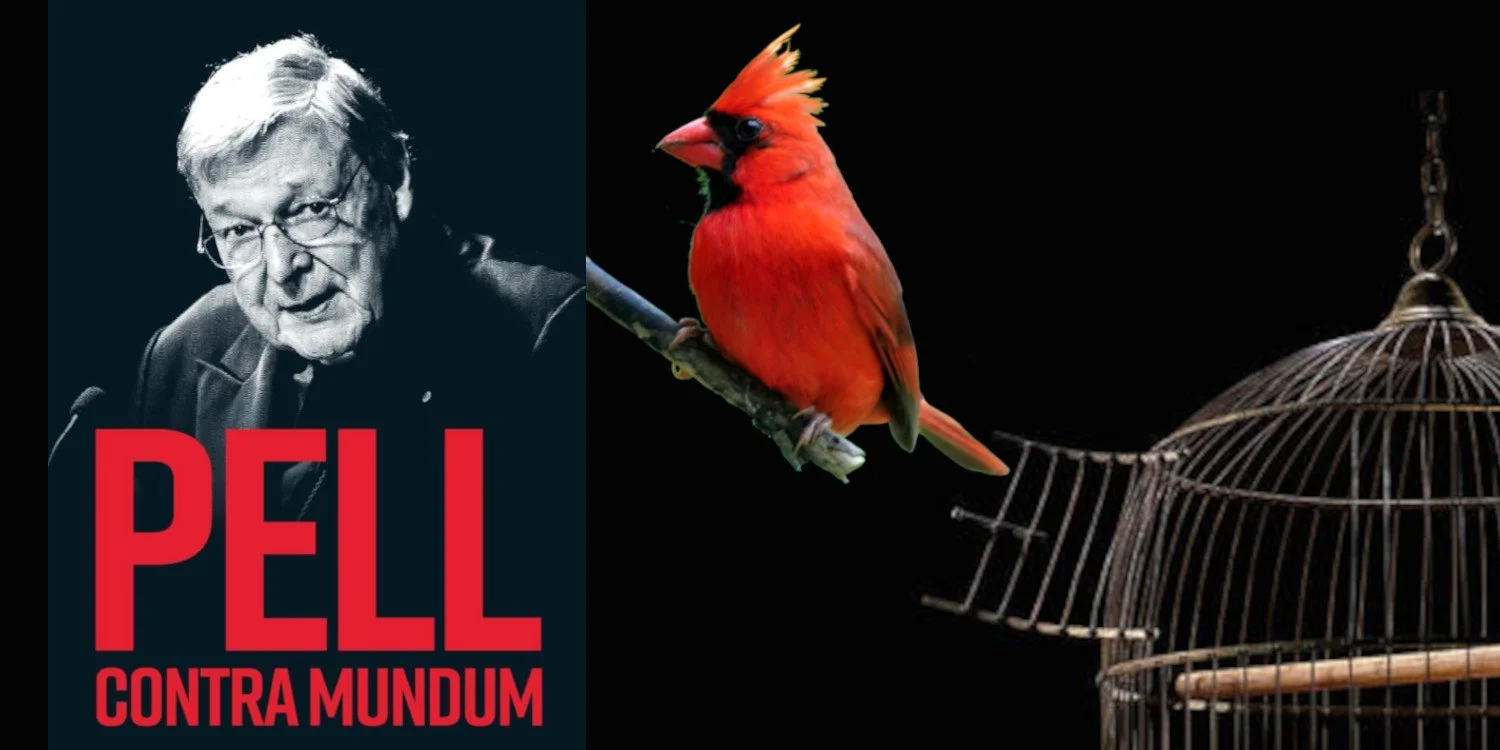
Pell Contra Mundum: Cardinal Truth on the Synod
The Once and Future Catholic Church
+ + +
One More Note: Diane Montagna is an American journalist acccredited to the Holy See. She has written for Aleteia, LifeSite News, and L’ Osservatore Romano. Ms. Montagna has compiled a well informed critique published in July 2025 entitled:
EXCLUSIVE: Official Vatican Report Exposes Major Cracks in Foundation of Traditionis Custodes

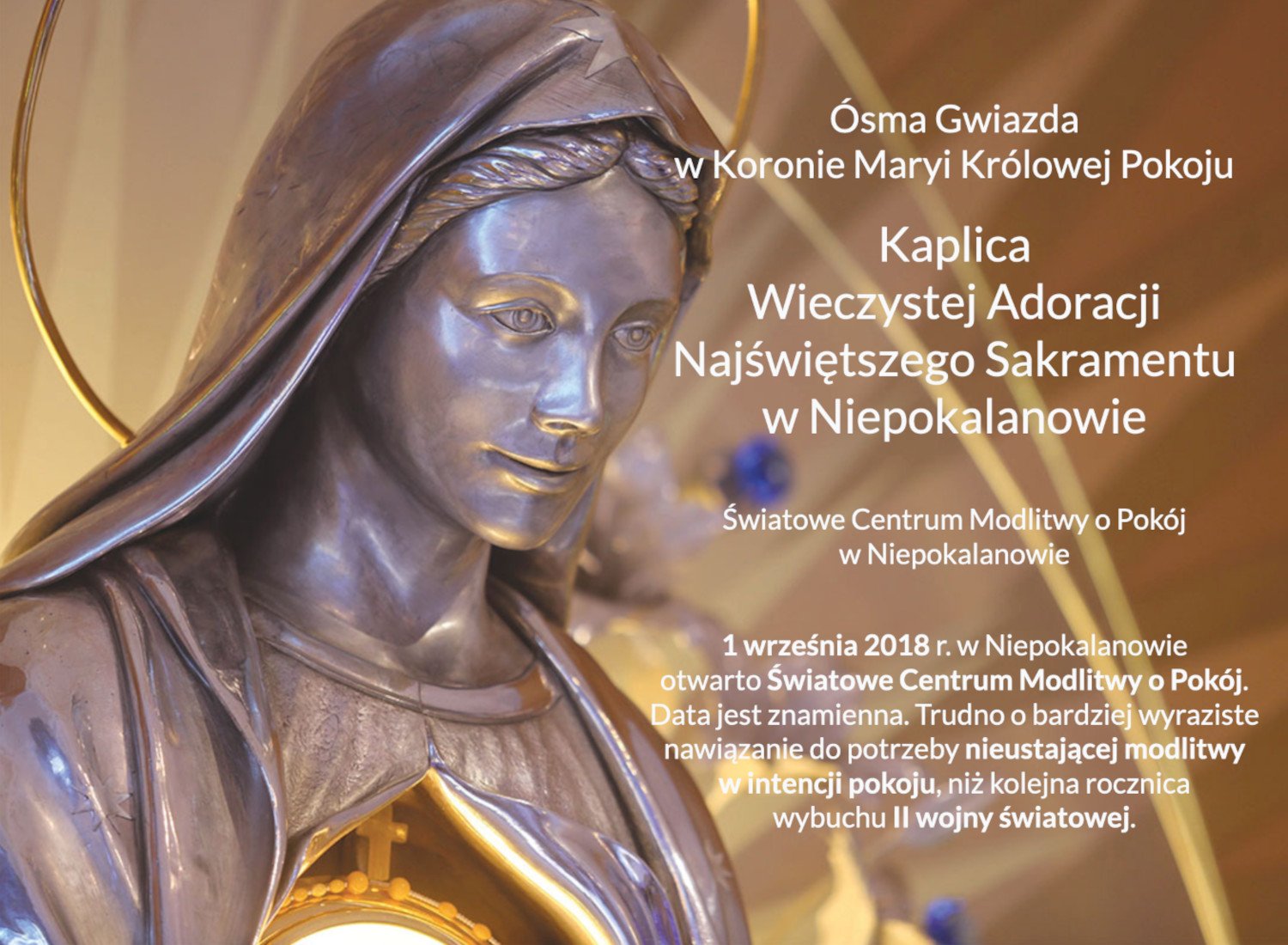

The Eucharistic Adoration Chapel established by Saint Maximilian Kolbe was inaugurated at the outbreak of World War II. It was restored as a Chapel of Adoration in September, 2018, the commemoration of the date that the war began. It is now part of the World Center of Prayer for Peace. The live internet feed of the Adoration Chapel at Niepokalanow — sponsored by EWTN — was established just a few weeks before we discovered it and began to include in at Beyond These Stone Walls. Click “Watch on YouTube” in the lower left corner to see how many people around the world are present there with you. The number appears below the symbol for EWTN.
Click or tap here to proceed to the Adoration Chapel.
The following is a translation from the Polish in the image above: “Eighth Star in the Crown of Mary Queen of Peace” “Chapel of Perpetual Adoration of the Blessed Sacrament at Niepokalanow. World Center of Prayer for Peace.” “On September 1, 2018, the World Center of Prayer for Peace in Niepokalanow was opened. It would be difficult to find a more expressive reference to the need for constant prayer for peace than the anniversary of the outbreak of World War II.”
For the Catholic theology behind this image, visit my post, “The Ark of the Covenant and the Mother of God.”

It’s Lent. It’s Late. It’s Time to Find Our Way Home
Like no other time in history, forces in our culture are driving us toward a rapid retreat from God and the tenets of faith. Lent is our time to decide who we are.

Editor’s Note: In the photo above, Cardinal Timothy Dolan presides over Palm Sunday Mass in an empty Saint Patrick’s Cathedral.
Like no other time in history, forces in our culture are driving us toward a rapid retreat from God and the tenets of faith. Lent is our time to decide who we are.
Writing the "Blessed Among Us" column for the February 2021 issue of This Day: Dai1y Prayer for Today's Catho1ic, Robert Ellsworth penned the story of Maryknoll priest, Servant of God Francis X. Ford. I was looking for the Mass readings for the First Sunday of Lent when I came upon Father Ford's story. One sentence caught my eye: He died in prison on February 21, 1952.
That was one year before I was born. Francis Ford was one of the first Americans to join the newly founded Maryknoll missionary society just out of high school in Brooklyn, New York in 1912. After priesthood ordination in 1920, he joined the first group of four Maryknoll priests on a missionary journey to China. It was there that he died, 32 years later, in a Chinese prison.
Father Ford spent many years in Kaying, in southern China. During that time he witnessed the Chinese Catholic population there rise to over 20,000. He chose to remain there during World War II, but after the war, during China’s Communist Revolution, he was imprisoned for suspected espionage. He was never tried, but during his imprisonment he was starved, beaten, and paraded before mocking crowds anxious to please the Communist regime.
During that time, the Chinese Communist government confiscated farm lands and equipment of the Church and at all American-supported missions, including Fu Jen University at Peking.
Priests in the areas most affected by Marxism were working under extensive restrictions. Some restrictions were self-imposed by the priests to avert Communist persecution of their people.
Wholesale arrests took place beginning in December 1950 when the American bishop of Wuchow and 21 Maryknoll missionaries were imprisoned. The usual charge was suspicion of espionage. Throughout this persecution, Father Ford never wavered from his faith. He wrote from prison:
“Grant us, Lord, to be the doorstep by which the multitudes may come to Thee, and if ... we are ground underfoot and spat upon and worn out, at least we shall become the King’s Highway to pathless China.”
My first reaction to the story of Father Ford was to wonder what he may today think of the secret concordat signed by Pope Francis, and recently renewed, surrendering to the Chinese Communist government the authority to appoint Catholic bishops in effective abandonment of the Underground Church to which Father Ford gave his life.
But more on that in a future post. This one is about Lent and not politics. Well ... at the moment I actually have a hard time separating the two. Lent really is about politics, but only in the sense that conversion of the heart means putting — and keeping — our politics in their proper place. Politics are a means to an end — the end hopefully being a fair and just society functioning in defense of unalienable human rights.
But Lent is also about the End itself; our end. It asks some fundamental questions of us: Who are we? Where does our treasure lie? Where are we going spiritually? Are any of our recent struggles — to which we have given so much of ourselves and our attention “paving the King’s Highway” through a pathless humanity? Are the affairs that embroil us leading us and others to Christ?

Lost in a Lenten Wilderness
Since this post began with the story of an American priest who, though innocent, died in a Chinese prison, I am faced with the possibility that I, too, though innocent, may die in an American one. As the clock ticks into another Lent — my 27th in prison that feels more probable than possible. I am not sure what I am supposed to do with that probability. It is easy for us, as a society, to point to human rights abuses in China while the plank in our own eye blinds us to ourselves.
Stumbling into the story of Father Francis X. Ford was a gift to me. Just as in his Chinese prison, I, too, was beaten, starved, and paraded before humiliating mobs. None of that has happened lately. It was all long ago, but like Father Ford, it left me at a crossroads. I had to come, as he did, to accept my Cross as “pavement on the King’s Highway” for another. Like all of us, I ultimately came into this world from dust, and to dust I shall ultimately return. In the time and space in between, I have been assigned a task. As Saint John Henry Newman prayed, “I may never know it in this life, but I shall be told it in the next.”
I confess that I was bitter for a time. I wanted revenge even more than I wanted justice. I consumed it, and then it consumed me until the great mystery of Divine Providence placed my friend, Pornchai Moontri in my path. He never did or said anything to make me think this, but he was like an immovable roadblock that would not let me pass. His life events of abandonment, being used, and then discarded into years of solitary confinement left him alone in the fires of Gehenna, that ancient place of human sacrifice to a false god (2 Kings 23:10).
It was there that we met, and I came to see that my bitterness would be just the right ingredient that would push him over the edge, lost in the abyss forever. I cannot adequately describe this today, but I was mysteriously driven by grace into something that I once ascribed to Pope Benedict XVI as he left the papacy: I had to devote myself to “The Sacrifices of a Father’s Love.”
Fatherhood is waning in our culture, and the culture has a festering wound because of it. This absence is in no place more evident than in prison where eighty percent of the young men who land here grew up in fatherless homes. In Pornchai’s life, this wound was deeply felt. Abandoned by his first father, he was sacrificed to the fires of Gehenna by someone who exploited and abused him horribly, and then discarded him. Pornchai told me one day that I am the only person in his life to always act in his best interest.
I felt duty bound to make the sacrifices for Pornchai that others should have made, but did not. This became complicated. I had to all at once be his friend, his father, his priest, and a mirror of the Church that I had come to resent because it discarded me. I discovered that to accomplish what I was called to do, there could be no more “me.” In the process of sacrifice for another, my identity as a man and as a priest was restored. I cannot explain exactly how, but I never before in my life felt more like a father and a priest than the day Pornchai told me:
“I woke up today with a future when up to now all I ever had was a past.”
It was not long after this that Pornchai was received into the Church on Divine Mercy Sunday, 2010. He chose, as you know, the name Maximilian as his Christian name. He chose it in honor of my Patron Saint, Maximilian Kolbe, whose apostolic witness, and undaunted devotion to the Immaculate Heart of Mary was based on one immutable truth: “Love alone creates.”
You might recall that I began this post with the story of Father Francis X. Ford whose life I encountered as I searched for the Mass readings for the First Sunday of Lent. The Second Reading is from the First Letter of Saint Peter (3:18-22):
“Christ suffered for sins once, the righteous for the sake of the unrighteous, that he might lead you to God. Put to death in the flesh, he was brought to life in the Spirit. In it he also went to preach to the spirits in prison ...”

The Great and Terrible Adventure of Sacrificial Love
As much as we dislike suffering in any form, I have found that the mystery of Divine Providence sometimes causes suffering to make a surprising turn back onto itself. I wrote a post some time ago entitled, “Saint Maximilian Kolbe and the Gift of Noble Defiance.” The account of Saint Maximilian’s gruesome death in an Auschwitz starvation chamber is painful. At the very same time, it is also hopeful.
Without the spontaneous sacrifice Maximilian made to exchange his life for a young, condemned prisoner, that man would never again have known freedom. His children, grandchildren and great grandchildren would never have been born. On a wider scale, the thousands of others suffering in Auschwitz who heard of this story were themselves inspired to respond to evil and suffering with their own noble defiance. And wider still, the world would have been deprived of this powerful account of the sacrifice of a father’s love that has inspired millions.
My friend Pornchai was not drawn to the Catholic faith because of anything he heard or read. It was because of something he witnessed, something that never wavered. Shortly after he was received into the Church, Pornchai asked one of his notorious “upside down” questions. His head would pop down from his upper bunk in the dark of our prison cell so that he appeared upside down as he asked, “Should we ask God for a happy ending when Father Maximilian never had one?”
I was left to ponder that question for days before I could answer that “You, Pornchai are his happy ending.” I do not know if it was adequate, and I ponder it still, but in the mystery of suffering, immense good has come from this saint. It leaves me in a terrible spiritual quandary that I have written before. I despise prison. I still, after 27 years, feel pangs of bitterness for being falsely accused, and waves of resentment for, as Father Richard John Neuhaus once described, “a Church and a justice system that seem indifferent to justice.”
But I shudder to think of who and where Pornchai might be today had I not been here. God did not send me to prison. That was the work of greedy, lying men and corrupt officials. But then God did something with it that I could never have imagined. People write to me now, expressing concern that I must be heartbroken by my friend’s absence. I am not. I miss him, but behind that is an inexplicable sense of peace that the task given to me by God — a task that could be given to none other — has been fulfilled by the great gift of something that I did not even know was within me: the sacrifices of a father’s love.
I still hate prison, false witness, and corruption — perhaps now more than ever — but I cannot second guess this magnificent work of Divine Mercy. Our Church, like the world in which it lives, is permeated with the influence of evil. It is also filled with the sacrifices of its heroes like Father Francis X. Ford, Saint Maximilian Kolbe, and the enduring presence of selfless sacrifice extended back over 2,000 years.
It’s Lent. It’s late. It’s time to find our way home. As Saint Peter once asked of Christ — putting all politics aside — “to whom shall we go? You have the words of everlasting life.”
+ + +
Note from Father Gordon MacRae: Father Seraphim Michalenko, MIC, died on February 11, the Feast of Our Lady of Lourdes, at age 90 from Covid-19 complications. Father Seraphim was a priest of the Marians of the Immaculate Conception from the National Shrine of the Divine Mercy in Stockbridge, Massachusetts. He was also Vice-Postulator for the cause of sainthood for Saint Maria Faustina. He heroically smuggled her Diary out of Communist occupied Poland where it had been supressed. He then translated the Diary into English. Along with Saint John Paul II, Father Seraphim was globally considered to be one of the premier experts on Divine Mercy.
Father Seraphim was also a good friend to Pornchai Moontri and me. He came to this prison to interview both of us in 2014 during a retreat workshop on Father Michael Gaitley’s book Consoling the Heart of Jesus.
Pornchai and I invite you to help us honor Father Seraphim by reading and sharing this post written shortly after his visit with us: "Father Seraphim Michalenko on a Mission of Divine Mercy."