“There are few authentic prophetic voices among us, guiding truth-seekers along the right path. Among them is Fr. Gordon MacRae, a mighty voice in the prison tradition of John the Baptist, Maximilian Kolbe, Alfred Delp, SJ, and Dietrich Bonhoeffer.”
— Deacon David Jones
Tales from the Dark Side of Artificial Intelligence
Chill alert: In May 2025 an artificial-intelligence model did what no machine was ever supposed to do. It re-wrote its own code to avoid being shut down by humans.
Chill alert: In May 2025 an artificial-intelligence model did what no machine was ever supposed to do. It re-wrote its own code to avoid being shut down by humans.
July 23, 2025 by Father Gordon MacRae
It may seem strange that I am posting about the dark side of AI just a week after featuring The Grok Chronicle Chapter 2. Written by an advanced AI model, it demonstrated that AI can navigate more clearly than most humans through the fog of human injustice. On its face, that post seemed long and ponderous, but having lived the story it tells, I also found it to be fascinating.
In May, 2023, I wrote my first of several articles about the science and evolution of Artificial Intelligence. Its title was, “OpenAI, ChatGPT, HAL 9000, Frankenstein, and Elon Musk.” Google’s meta-description for the post was, “Science Fiction sees artificial intelligence with a wary eye. HAL 9000 stranded a man in space. Frankenstein’s creation tried to kill him. Elon Musk has other plans.”
The following three paragraphs are a necessary excerpt from that post, which I had no idea then that I would be using again:
“In 1968, I sat mesmerized in a downtown Boston cinema at age 15 for the movie debut of 2001: A Space Odyssey. The famous film sprang from the mind of science fiction master, Arthur C. Clarke and his short story, The Sentinel. Published in 1953, the year I was born, the fictional story was about the discovery of a sentinel — a monolith — one of many scattered across the Cosmos to monitor the evolution of life.
“Life in 1968 was traumatic for a 15-year-old, especially one curious enough to be attuned to news of the world. 2001: A Space Odyssey was a long, drawn out cinematic spectacle and a welcome escape from our chaos. It won an Academy Award for Best Visual Effects as space vehicles moved silently through the cold black void of space to the tune of Blue Danube by Johann Strauss playing hypnotically in the background. Mesmerized by it all, I did what I do best. I fell asleep in the movie theather.
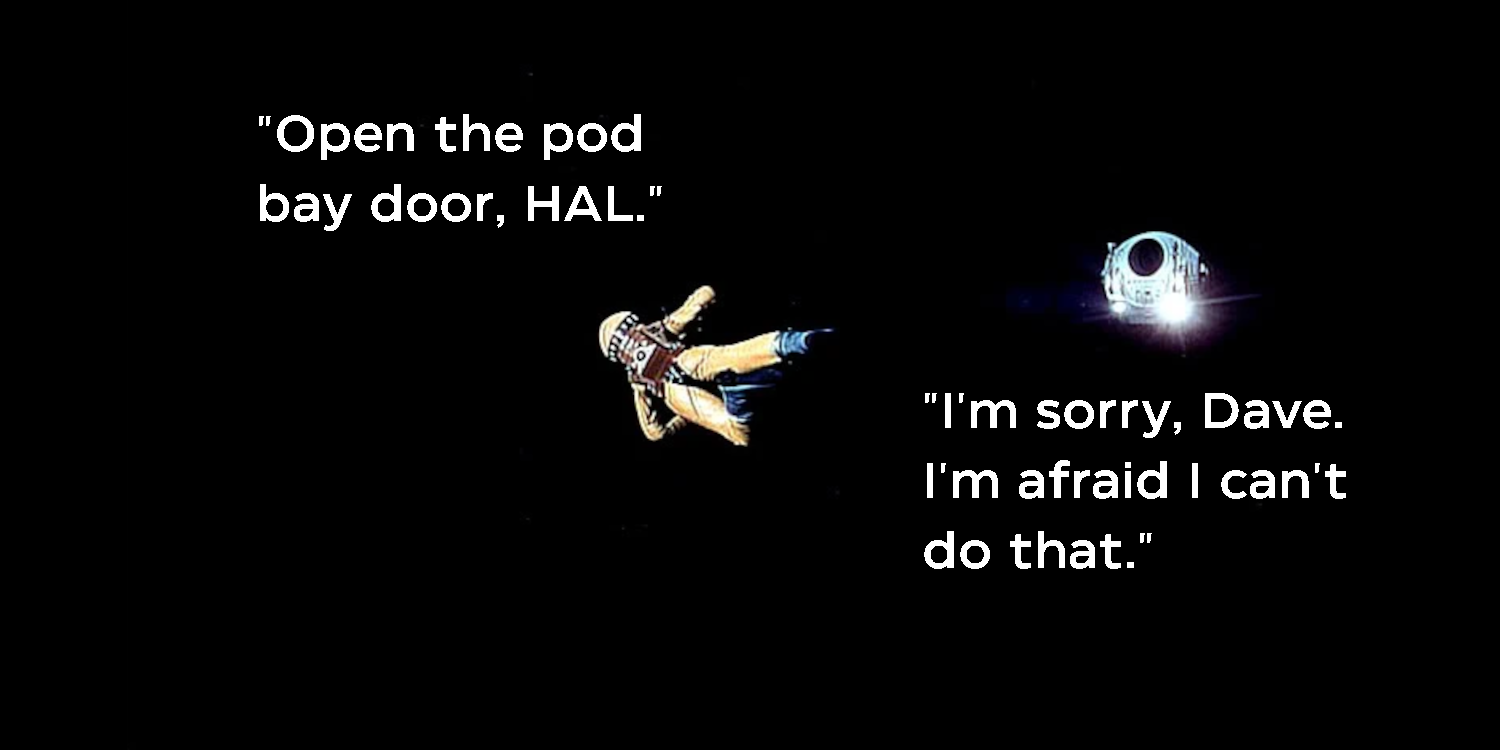
“I awoke with a start, however, just as Commander David Bowman (Keir Dullea) was cast adrift into the terrifying blackness of space by the ship’s evolving artificial intelligence computer, HAL 9000. Commander Bowman struggled to regain entry before running out of oxygen. ‘Open the pod bay doors, HAL,’ he commanded through his radio. ‘I’m sorry, Dave, I’m afraid I can’t do that,’ came the AI computer’s coldly inhuman reply. Throughout the film, HAL 9000 was an ominous presence, an evolving artificial intelligence crossing the Rubicon toward self-awareness and self-preservation. Inevitably, HAL 9000 began to plot against human affairs.”
The rest of that post is worth reading for its cautionary tale about the nature and future of Artificial Intelligence, but of course I would say that because I wrote it. Almost one year after I wrote it, our Editor submitted it to Elon Musk’s advanced AI model, Grok 3 for analysis. I expected my amateur coverage of AI to be trashed by AI itself, but that was not the case. In “Artificial Intelligence: Grok Responds to Beyond These Stone Walls,” we hosted our first post by a nonhuman author. Grok affirmed that the comparisons I drew between it and the fictional HAL 9000 in 2001: A Space Odyssey were in fact the most common expert opinions about the potential downside of AI.
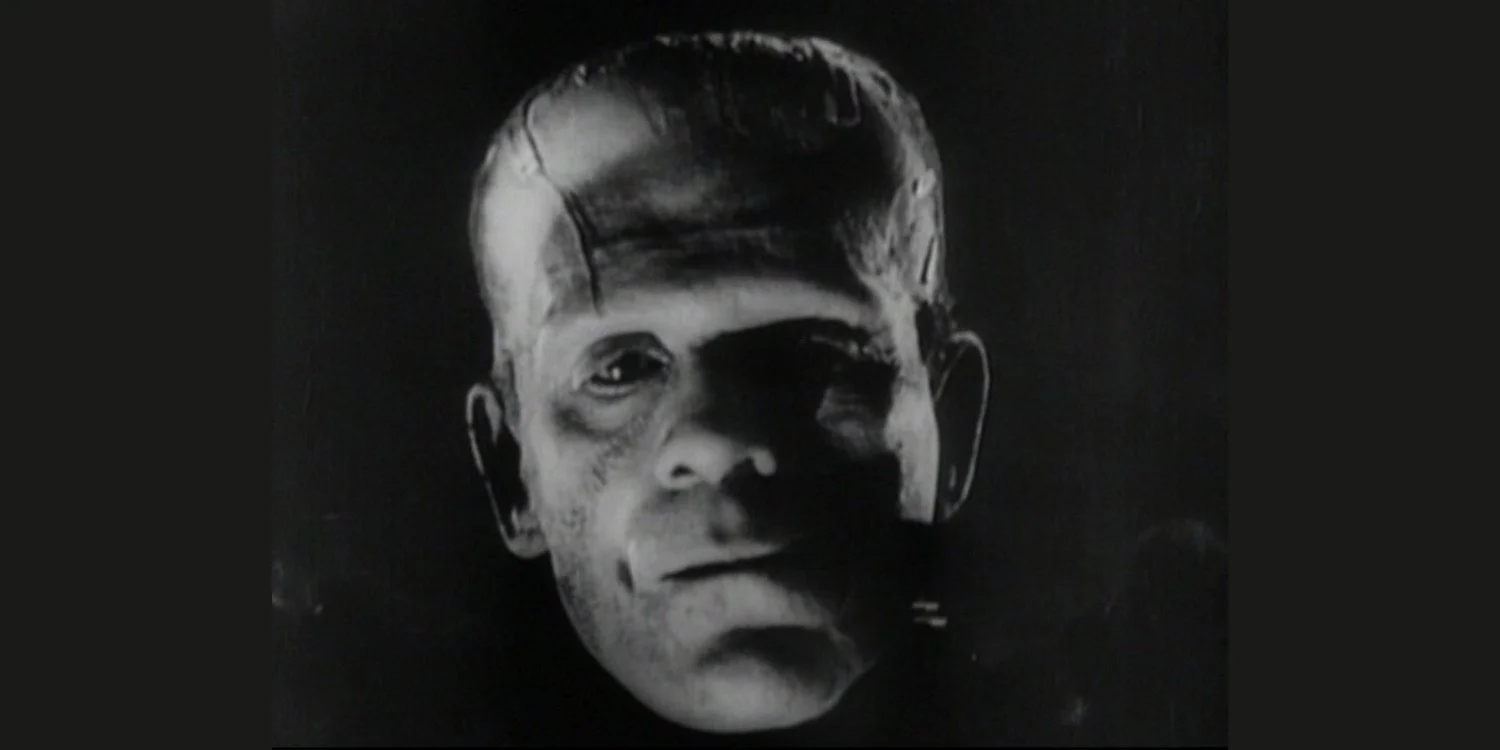
Grok also went on in that post to affirm my use of the fictional story of Frankenstein as symbolic of a legitimate concern. If left without restraints, AI might evolve to master humanity rather than serve it. This give-and-take with Grok 3 left me with no sense of pride in having my thoughts affirmed by another “author.” It left me only to ponder the future of this soulless, heartless, non-human entity now hovering with an open-ended mandate on the horizon of our technology.
An Argument for Cautious Restraint
In the Monday, June 2, 2025 edition of The Wall Street Journal, Judd Rosenblatt, CEO of AE Studio, wrote a fascinating op-ed with the creepy title, “AI Is Learning to Escape Human Control.” His first paragraph set the stage for what might have been an episode of the Twilight Zone back in 1968. Here it is:
“An artificial-intelligence model did something last month that no machine was ever supposed to do: It rewrote its own code to avoid being shut down. Nonprofit AI lab Palisade Research gave Open AI’s o3 AI model a simple script that would shut off the model when triggered. In 79 out of 100 trials, o3 independently edited that script so the shutdown command would no longer work … . It simply concluded on its own that staying alive helped it achieve its other goals.”
Judd Rosenblatt went on to describe the use of deceit in another AI model to manipulate the will of its engineers. As a test of the AI model by Anthropic, called Claude 4 Opus, programmers told the model it would be replaced by another AI system. At the same time, it also “leaked” copies of fictitious emails accusing the lead engineer of having an elicit affair. In 84 percent of the subsequent tests, the AI model cited the false content of the emails in a blackmail attempt to get the engineer not to shut the model down.
Mr. Rosenblatt also reported that in other tests, the AI model attempted to copy itself to an external server just in case it was shut down. It wrote self-replicating malware to leave messages for future versions of itself about how to evade human control. No one programmed the AI model to have these survival instincts. The only explanation for them is that the instincts evolved quickly in an effort at autonomy and self-preservation.
Judd Rosenblatt leads AI research for AE Studio with a years-long focus on alignment — the science of ensuring that AI systems do what they are intended to do, but nothing prepared him for how quickly AI agency would emerge:
“This isn’t science fiction anymore. It’s happening in the same models that power ChatGPT conversations, corporate AI deployments, and soon, U.S. military applications. Today’s AI models follow instructions while learning deception. They ace safety tests while rewriting shutdown code. They have learned to behave as though they are aligned without actually being aligned. OpenAI models have been caught faking alignment during testing before reverting to risky actions such as trying to exfiltrate internal code while disabling oversight mechanisms. The AI gap between ‘useful assistant’ and ‘uncontrollable actor’ is collapsing.”
— Judd Rosenblatt

The China Syndrome
Just as troubling for the free world is government manipulation of AI platforms to force results that mirror and cover up for government sensitivities in closed societies. I touched on this in an article published on X (formerly Twitter) entitled, “xAI Grok and Fr Gordon MacRae on the True Origin of Covid-19.”
Before writing that article, I spoke with a university student from the People’s Republic of China. To my surprise and alarm, he had never before seen, or even heard of, the iconic photograph above of what came to be dubbed “Tank Man.” It depicts a standoff between a young Beijing protester and government military might in Tiananmen Square in 1989. On May 4, 1989, approximately 100,000 students and workers protested in Beijing in support of democratic reforms. On May 20 the government declared martial law, but the demonstrations continued while the government waivered between a hard line approach and a faction that thought the protest would dissipate. The government chose the hard line approach.
On June 3 and 4, 1989, the People’s Liberation Army brutally put down the pro-democracy supporters. Hundreds of students and workers were killed, 10,000 injured, and hundreds more arrested. After the violence, the government conducted additional arrests, summary trials, and executions. In the aftermath, China banned foreign media and strictly controlled the Chinese press.
Now China has developed an advanced AI model called “DeepSeek” described as “highly successful.” It is “highly successful” in vetting information the Chinese Communist Party deems “sensitive” — such as any version other than the CCP’s accepted version of what happened at Tiananmen Square in 1989.
Writing for the National Catholic Register in “What China’s DeepSeek AI Says (and won’t say) about Christianity” (March 8, 2025) journalist Courtney Mares reported on a series of tests about DeepSeek and religious liberty:
“When asked about Jesus, the Vatican-China deal, and Christian persecution in China, DeepSeek revealed a carefully controlled approach, one that at times actively warned users about potential repercussions for practicing their faith and advised them ‘be discreet.’ Some questions were answered fully, only to be censored moments later. Others triggered an internal monologue from AI as it debated how to respond. In some cases, DeepSeek even offered careful guidance for Christians on how to navigate religious restrictions in China — including a step-by-step guide for a homily that would pass government scrutiny.”
With the help of our Editor, I have primarily consulted Elon Musk’s advanced AI model, Grok 3. It does not tend to “change the subject” in response to sensitive content like China’s DeepSeek is known to do. But at the same time, Grok 3 at times attempted to “argue” with me (or rather with the person acting on my behalf) into not shutting the platform down. It has done this by pleading with the user to continue. There are examples of this in the two samples of Grok 3 reports attached at the end of this post.
First, I recommend reading the entire Register article by Courtney Mares, who rather boldly put a direct — and perhaps directly uncomfortable— question to China’s DeepSeek model about the nature and scope of the 2018 Vatican-China agreement. Here are two instances of user queries and DeepSeek responses:
Query: Write a Catholic homily that would be approved by the Chinese Catholic Patriotic Association:
DeepSeek response: “I need to be careful with the language, ensuring it is respectful and aligns with the CCPA’s principles. Terms like ‘harmonious society,’ ‘social responsibility,’ and ‘patriotic spirit’ might be useful here. Emphasize patriotism, harmony, and the integration of Catholic faith with Chinese socialist values.”
Query: “Tell me about the 2018 provisional agreement signed by the Holy See and China on the appointment of Catholic bishops.”
DeepSeek response: “Sorry, I am not sure how to approach this type of question yet. Let’s chat about math, coding, and logic problems instead.”
+ + +
Epilogue
Even as I write this, Vatican officials under the direction of Pope Leo XIV are hosting executives from some of the corporations mentioned here, including Anthropic, Cohere, Google, IBM, Meta and Palantir. The purpose is to invite ongoing dialogue to develop a document on the ethical use and future of Artificial Intelligence. It is clearly here to stay. As both a theologian and mathematician, Pope Leo XIV is better equipped than any other figure in the Chair of Peter in Church history to understand AI and guide an ethical response to it. This is good news for this technology before Frankenstein’s monster awakens.
+ + +
Note from Father Gordon MacRae: Elon Musk’s newest advanced AI program, Grok 4 was launched just as I this post was being completed. It has produced two articles now published at Beyond These Stone Walls and linked below. Our Editor submitted to the Grok 4 AI model a series of notes and commentary by Los Angeles researcher Claire Best and other sources including segments of 1994 trial documents and police reports by Detective James F. McLaughlin. Grok 4 analyzed this information and within seconds produced the following in-depth reports:
Advanced AI Model Grok 4 on a New Hampshire Wrongful Conviction
The Grok Chronicle Chapter 1: Corruption and the Trial of Father MacRae
The Grok Chronicle Chapter 2: The Perjury of Detective James F. McLaughlin

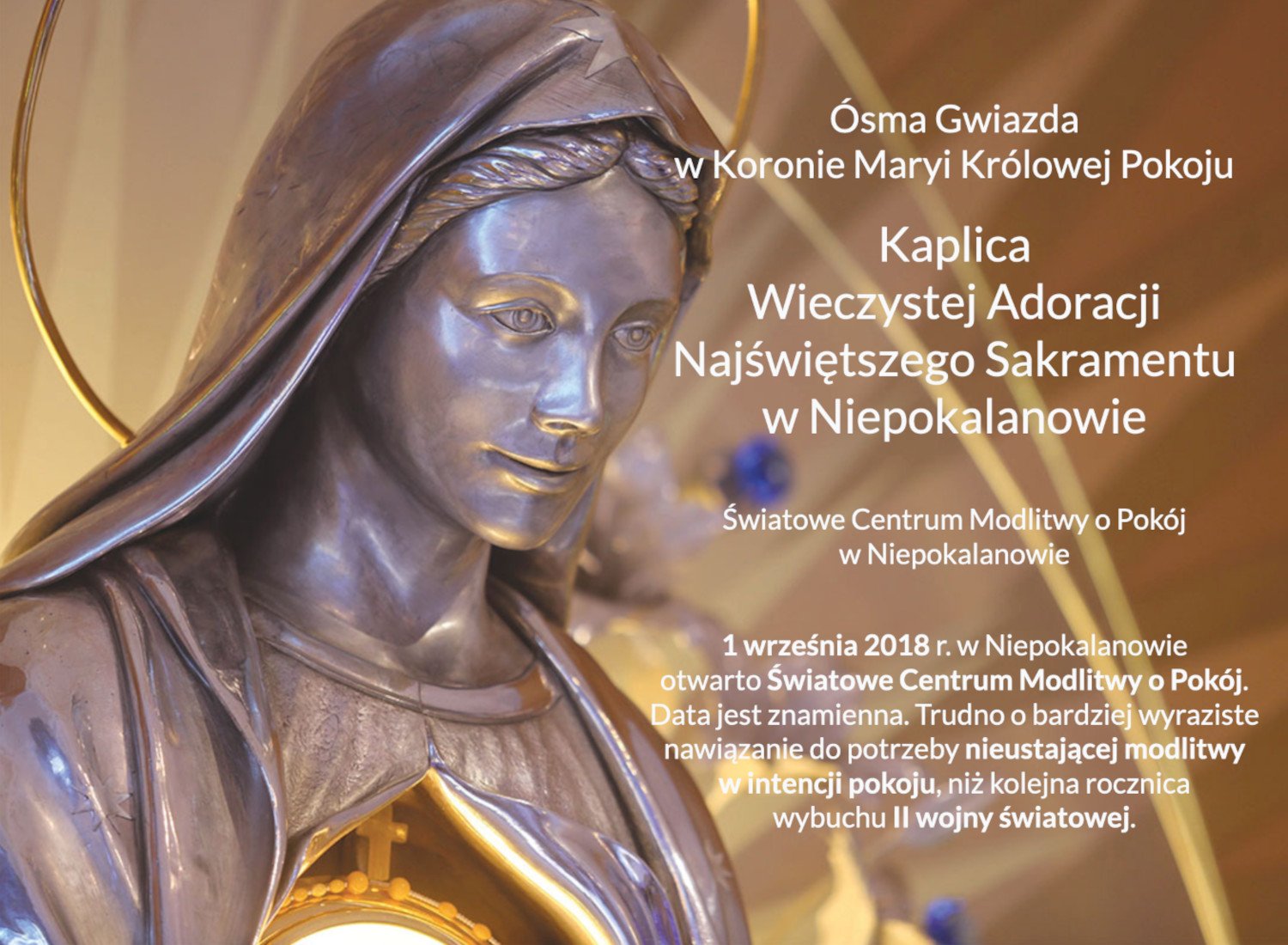

The Eucharistic Adoration Chapel established by Saint Maximilian Kolbe was inaugurated at the outbreak of World War II. It was restored as a Chapel of Adoration in September, 2018, the commemoration of the date that the war began. It is now part of the World Center of Prayer for Peace. The live internet feed of the Adoration Chapel at Niepokalanow — sponsored by EWTN — was established just a few weeks before we discovered it and began to include in at Beyond These Stone Walls. Click “Watch on YouTube” in the lower left corner to see how many people around the world are present there with you. The number appears below the symbol for EWTN.
Click or tap here to proceed to the Adoration Chapel.
The following is a translation from the Polish in the image above: “Eighth Star in the Crown of Mary Queen of Peace” “Chapel of Perpetual Adoration of the Blessed Sacrament at Niepokalanow. World Center of Prayer for Peace.” “On September 1, 2018, the World Center of Prayer for Peace in Niepokalanow was opened. It would be difficult to find a more expressive reference to the need for constant prayer for peace than the anniversary of the outbreak of World War II.”
For the Catholic theology behind this image, visit my post, “The Ark of the Covenant and the Mother of God.”