“There are few authentic prophetic voices among us, guiding truth-seekers along the right path. Among them is Fr. Gordon MacRae, a mighty voice in the prison tradition of John the Baptist, Maximilian Kolbe, Alfred Delp, SJ, and Dietrich Bonhoeffer.”
— Deacon David Jones
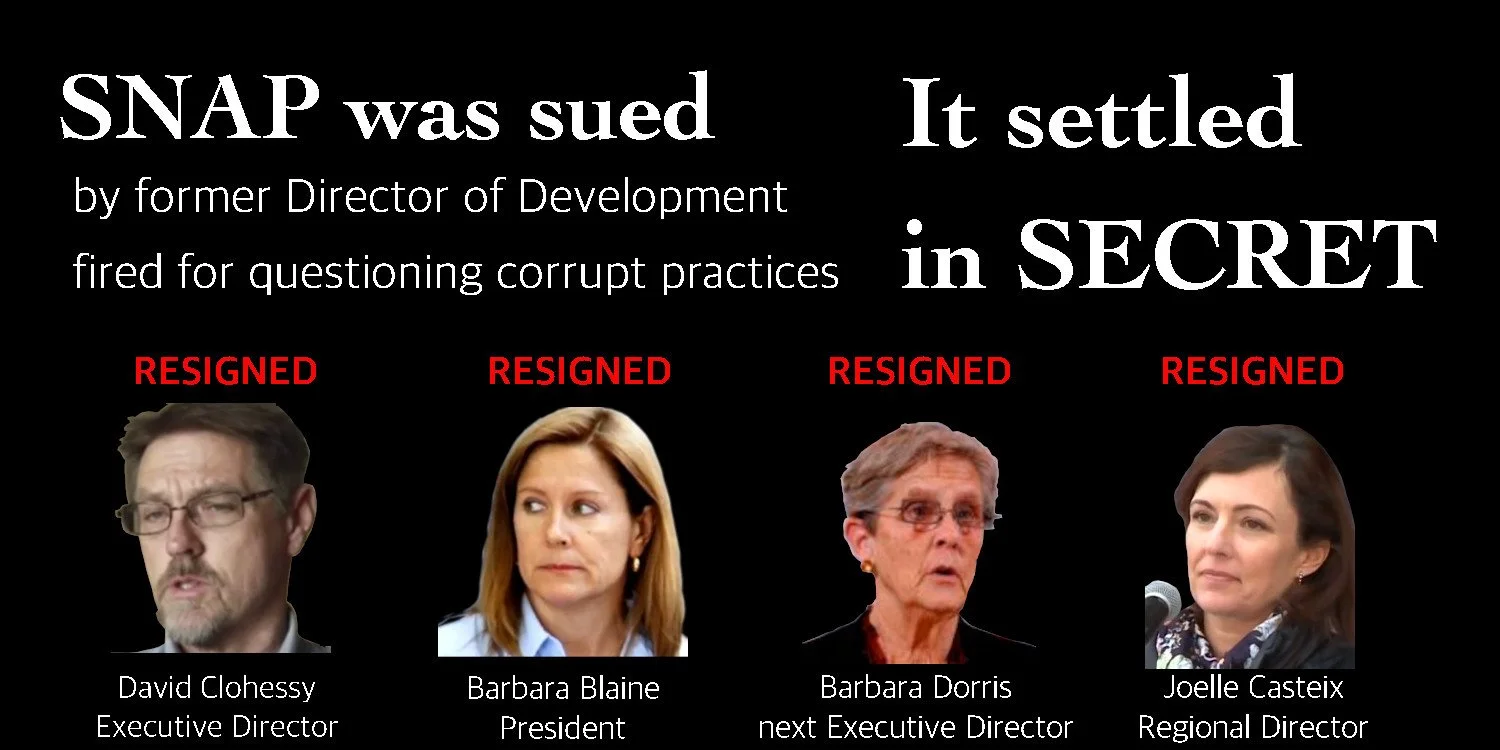
How SNAP Foisted McCarthyism Upon the Catholic Church
Generating fears, shameful to our ears, ruining careers; personal attacks, alternative facts, financial kickbacks: the rap of SNAP for a modern American witch hunt.
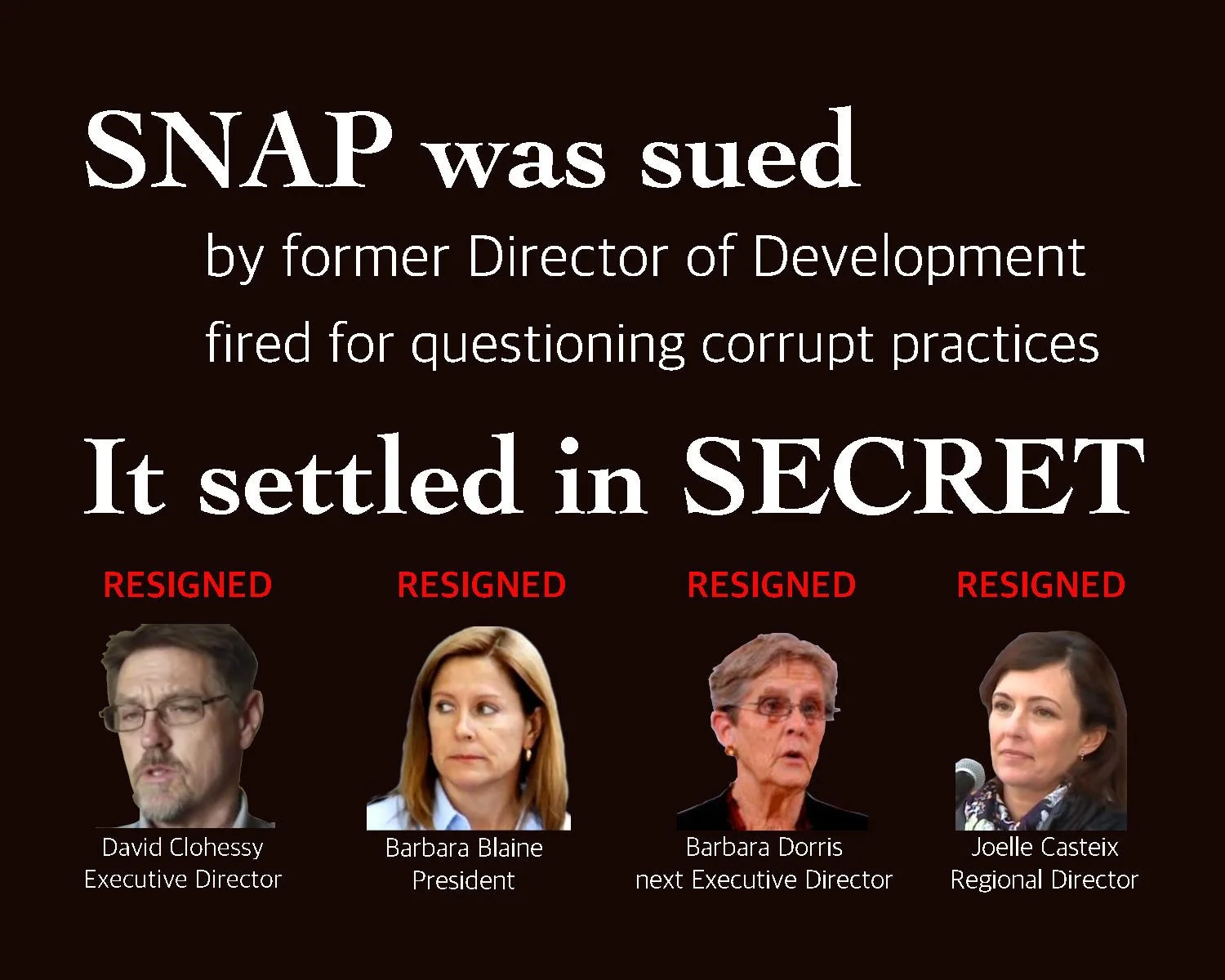
Generating fears, shameful to our ears, ruining careers; personal attacks, alternative facts, financial kickbacks: the rap of SNAP for a modern American witch hunt.
September 3, 2025 by Father Gordon MacRae
Ever so slowly awakening across America is a long-suppressed awareness of an ugly part of history that keeps repeating itself. There are prophets arising among us who are finding the courage to speak truth to power — in this case the power of mob justice. One of them is columnist Michelle Malkin whose article, “Fighting for the Falsely Accused” was sent to me some time ago.
Michelle Malkin tells the gruesomely familiar tale of former Fort Worth, Texas police officer, Brian Franklin. Convicted of the sexual assault of a 13-year-old girl in 1995, he spent the next twenty-one years in prison for a crime he had nothing to do with. As Ms. Malkin describes, “There were no witnesses. There was no DNA.” There was just one person’s word against another’s, and the jury — after lots of media hype — was conditioned to bring no skepticism to the heavily coached testimony of a distraught teen.
The sole evidence was a medical report of a physical examination concluding that the girl had in fact been sexually assaulted. That, and a claim that the assault occurred in the backyard of her biological father who was a friend of the police officer-suspect, was enough to satisfy prosecutors and a jury.
It was a prosecutorial perfect storm, and the fact that there was no other evidence, no DNA to test, no witnesses to the peripheral circumstances of the crime, left the defendant-turned-prisoner with nothing to satisfy the court’s demand for proof of actual innocence. So with no one having to “prove” Brian Franklin’s actual guilt, his imprisonment went on and on, passing two decades in the long, slow parade of lost time that struck home hard for me. “It’s the easiest crime to be falsely accused of,” Mr. Franklin says today.
Before reading any further, try to place yourself in Brian Franklin’s shoes for a moment. It’s easy to feel immune from the gravity of such injustice because we have no frame of reference for it happening to ourselves — or to a brother, a father, a son, a close friend, a parish priest — until it does. How would you defend yourself against such a charge when no evidence at all is needed to convict you?
After 21 years in prison — what Michelle Malkin described as “a harrowing 7,700 days of a life sentence” — Mr. Franklin had to fight for freedom even after newly discovered evidence emerged showing that the girl’s stepfather was the actual assailant. In a new trial 21 years after the first, Mr. Franklin was acquitted. He then had to fight again, that time for a declaration of actual innocence from a Texas court that would make him eligible for reparations for the 21 years of life stolen from him.
Over time, laws have been passed that make such exonerations very difficult to obtain. Judges in my own appeals have declined to even review newly discovered evidence because of laws that don’t require them to. Under current New Hampshire law, a convicted defendant has one year from the date of conviction to find and bring forward new evidence that might challenge it, an impossible task from prison.
In a majority opinion of the U.S. Supreme Court, Chief Justice William Rehnquist ruled that “actual innocence is not, in itself, a constitutional claim,” that would support a federal habeas corpus petition for a new trial. Rehnquist wrote for the majority court that innocent defendants in such cases can seek a political solution by asking for a pardon or sentence commutation from their governors. In the entire history of the State of New Hampshire, not a single such petition has ever been granted for a claimed sexual offense. As Brian Franklin said, “it’s the easiest crime to be falsely accused of,” and the most difficult from which to obtain justice once accused.
And as for reparations for the wrongly convicted, two decades ago, the New Hampshire Legislature, passed a law limiting reparations for wrongful imprisonment to a $20,000 cap regardless of how many years or decades a wrongfully convicted person spent in prison. It would cost more than that just to hire a lawyer to pursue such a claim for reparations.
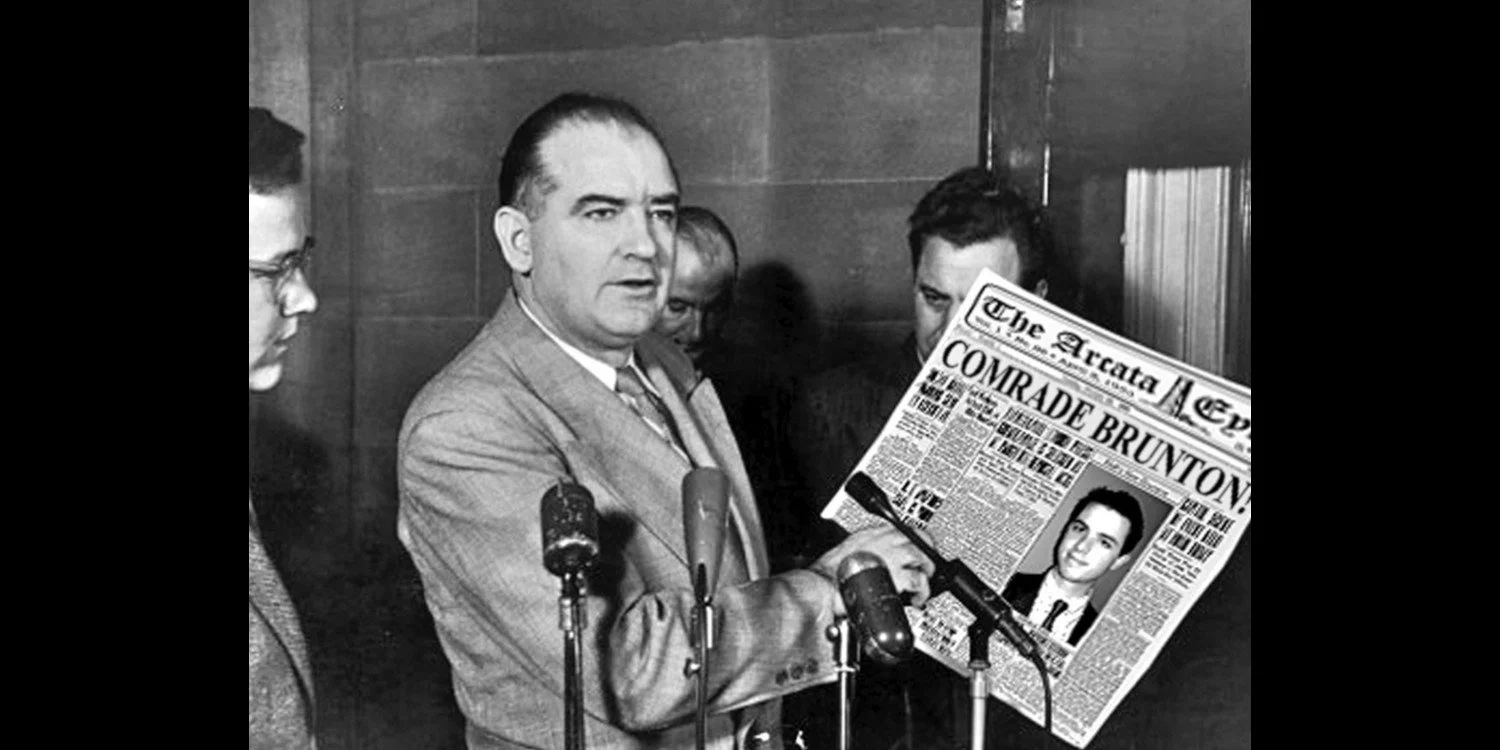
The Catholic Rise of McCarthyism
In the case of Brian Franklin, he reports that he was sustained throughout those 21 lost years by the fact that, as Michelle Malkin wrote, “his family and church stood by him.” On the day this is posted, I awaken to my 11,286th harrowing day of a life sentence in prison for crimes that never took place at all. The things that sustained Brian Franklin have been largely absent from my experience and that of any other American Catholic priest so accused.
When a Catholic priest is accused, the first line of defense for a bishop and diocese is driven by lawyers and insurance companies and it has one goal: to get as much distance as possible from the accused. When I was accused, my bishop and diocese issued a press release that pronounced me guilty before jury selection in my trial. My diocese added to the published pre-trial statement that I also victimized the entire Catholic Church.
I don’t think anyone in the Diocese of Manchester would stand by that today, but they don’t stand against it either. I think that today they have a hard time explaining it so they just don’t even try, but I know exactly what happened, and it’s time to say it out in the open. In the current climate, few accused Catholic priests could have a fair trial in America. No convicted Catholic priest could be heard justly by an American appellate court or judge. No one in the Church or judicial system wants to admit this, but it is true, and we can learn why from a 1950s moral panic called “McCarthyism”.
Church officials, after getting their distance from the accused, leave it to the civil courts to sort out guilt or innocence. Maintaining a pretense about the integrity of the outcome, they remain blind or silent, or both, about the role played by money and the practice of mediated settlements in generating accusations. I described how this played out in my own diocese in my post, “David Clohessy Resigned SNAP in Alleged Kickback Scheme.”
From 1990 to the present, activists from SNAP — the Survivors Network of those Abused by Priests — carried out a highly effective campaign modeled after the community activism of Saul Alinsky and the tactics of ACORN, the radical Association for Community Organization for Reform Now. The activist campaign used public demonstrations and the news media to shame anyone who challenged or dissented in any way from the moral panic they promoted. The nature of the forces at work in this were described by The Wall Street Journal’s Daniel Henninger in “McCarthyism at Middlebury” (March 9, 2017):
“America’s campuses have been in the grip of a creeping McCarthyism for years. McCarthyism, the word, stands for the extreme repression of ideas and silencing of speech. In the 1950s, Republican Senator Joseph McCarthy turned his name into a word of generalized disrepute by using the threat of communism, which was real, to ruin innocent individuals’ careers and reputations.”
Just substitute “campuses” with “Catholics,” “Republican Senator Joseph McCarthy” with “SNAP’s David Clohessy,” and “the threat of communism” with “sexual abuse,” and the McCarthyist aura around the abuse narrative in the American Catholic church is clear.
That aura was created by SNAP, and maintained by its director, David Clohessy. Like Communism in the 1950s, sexual abuse is real, a fact harnessed by David Clohessy at SNAP and Terence McKiernan at Bishop Accountability to fuel the moral panic they created. It thus became a weapon for an open assault on the Catholic Church. In every media venue that would have them, SNAP stood ready to pounce on any bishop or Church official who called for even the most basic due process and civil liberties for Catholic priests so accused.
In “SNAP Implodes” in the March 2017 issue of the Catholic League Journal, Catalyst, Bill Donohue described how SNAP manipulated the media with picket signs and feigned “Holy Childhood” photos, and harmed the Church through what he called “the conspiratorial savaging of innocent priests.” I am one of them, and I thank Bill Donohue for this truth, and for having the courage to write it when few others would. Now it’s on you, dear reader. Please share this post. Shout it from the rooftops in the public square of your social media.
SNAP obliterated the lives, reputations, and civil rights of hundreds of merely accused priests by publicly shaming them as “predators” and “pedophiles.” They knew well that these terms carried the same force of shock and moral panic as the political panic that ensued when a charge of “communist” or “communist sympathizer” was leveled in the 1950s. The manipulation of those terms, and of a news media hungry for scandal, characterized and empowered the shaming, blackballing, and ruined lives of the McCarthy Era, the widely accepted model for the modern American witch hunt.
For a stark example of the power of those words to shock even judges and deny priests the basic rights of American citizens, see our recent post, “Judge Joseph Laplante, President Trump, and the Case of Father MacRae.”
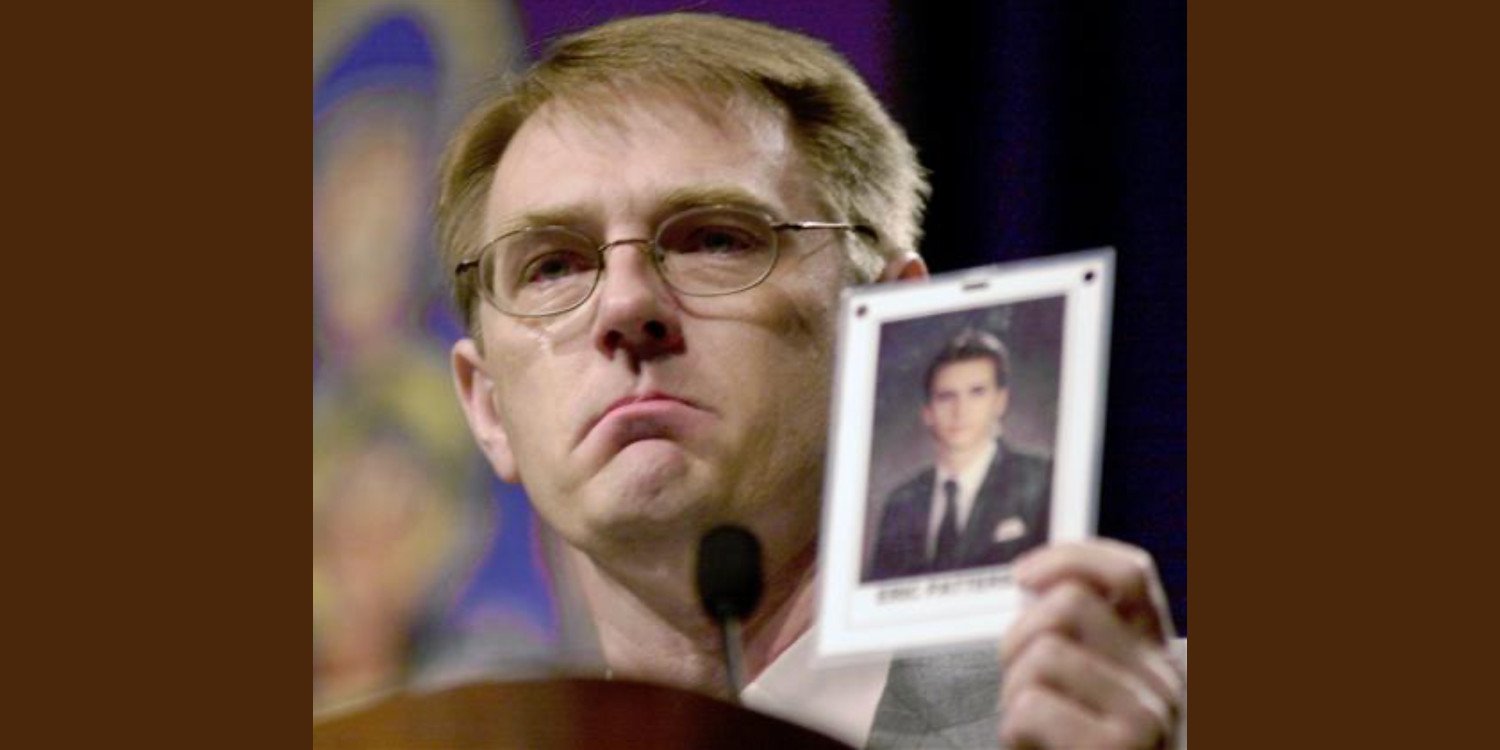
Be Wary of Crusaders
In the later 1980s and 1990s, SNAP had the terminology right. The scandal in the priesthood was first and foremost a story of homosexual predation and blackmail. But to maintain the moral panic, the language had to change to suit political correctness. The terminology did not sit well with the gay rights movement, so SNAP had to change its tactics and its language. Even the bishops went along with the new script, and to this day many Catholic commentators still stick to the “pedophile priest” story. I wrote about this in a 2011 post, “Be Wary of Crusaders The Devil Sigmund Freud Knew Only Too Well.” One sentence has often been quoted from it:
“It is a testament to the power of reaction formation [a classic Freudian defense mechanism] that an entire institution would now prefer the term ‘pedophile scandal’ to ‘homosexual scandal’ even when the facts say otherwise.”
David Clohessy was masterful at abusing the term and using its force of shock to manipulate the news media. SNAP activists labeled as “pedophile enablers” any person of conscience who called for the application of less outrage and more due process when a priest was accused.
Like an accusation of witchcraft in 1692 Massachusetts, or of being a Communist in 1955 Washington, “The P-Word” — pedophile — was fired like a bullet from an automatic weapon by SNAP activists with rancor and an intent to demean and disarm any skeptic asking for due process. The extent to which this one word was misused and manipulated was a key factor behind what writer, Ryan A. MacDonald wrote was “A Grievous Error in Judge Joseph Laplante’s Court,” another post that screams for justice and for both Church and State to take notice.
An example of the tactics of SNAP came from an activist writing under the name, “Neal Allen.” He seemed to stalk cyberspace for any positive comments or articles that called my own case into question, or presented a review of the facts. “Neal Allen” posted the same toxic comment everywhere, fired like a bullet calling me a “convicted pedophile,” and anyone writing in favor of my innocence a “pedophile enabler.”
Then it was discovered and exposed — by the heroic David F Pierre, of TheMediaReport.com — that “Neal Allen” does not even exist. It was a fake screen name used by a member of SNAP to give the impression that a mob was building to gang up on any dissenter from the attacks on me, on other priests, and the Church. Once “Neal Allen” was exposed as a fraud, he simply disappeared, but not before bullying lots of people into silent submission.
Now, from the recent lawsuits, resignations, and a kickback scandal within SNAP itself, it seems that none of this was ever about helping survivors or protecting children. It was just about money. In the name of nothing more redemptive than money, great, great harm has been brought upon the Church and priesthood.
The United States bishops going into their meeting in Dallas in 2002 were utterly terrified of Clohessy and SNAP, and the mesmerized news media that seemed to hang on their every word. When the USCCB invited David Clohessy and SNAP founder Barbara Blaine to address the 2002 U.S. Bishops Conference in Dallas in full view of the news media, the bishops had settled on a harsh reality that the best way to avoid being targeted by a witch hunt was to join it.
When it was over, and the “Zero Tolerance” language of the Dallas Charter was set in place, the late Father Richard John Neuhaus wrote in his masterful analysis, “Scandal Time,” that the bishops scrambled to the newspapers “to check their score.” Fr. Neuhaus was one of the few Catholic voices to speak out in conscience against this assault on the American priesthood, and in this he gets the posthumous last word from his essay, “Scandal Time”:
“Zero tolerance. One strike and you’re out. Boot them out of ministry. Of course, the victim activists are not satisfied, and, sadly, may never be satisfied. The bishops have succeeded in scandalizing the faithful anew by adopting a thoroughly unbiblical, untraditional, and unCatholic approach to sin and grace. They ended up adopting a policy that was sans repentance, sans conversion, sans forbearance, sans prudential judgment, sans forgiveness, sans almost everything one might have hoped for from the bishops of the Church of Jesus Christ.”
— Source: Richard John Neuhaus: A Life in the Public Square
+ + +
Editor’s Note: Please share this important post for the cause of justice for accused priests and the wrongfully imprisoned. This story needs greater exposure to take it out of the shadows for, sadly, most of our news media has avoided this aspect.
Don’t stop here. There is more to learn on this from Beyond These Stone Walls:
David Clohessy Resigned SNAP in Alleged Kickback Scheme
Be Wary of Crusaders! The Devil Sigmund Freud Knew Only Too Well
Judge Joseph Laplante, President Trump, and the Case of Father MacRae
A Grievous Error in Judge Joseph Laplante’s Court
From the Catholic League: Betrayed by Victims’ Advocates

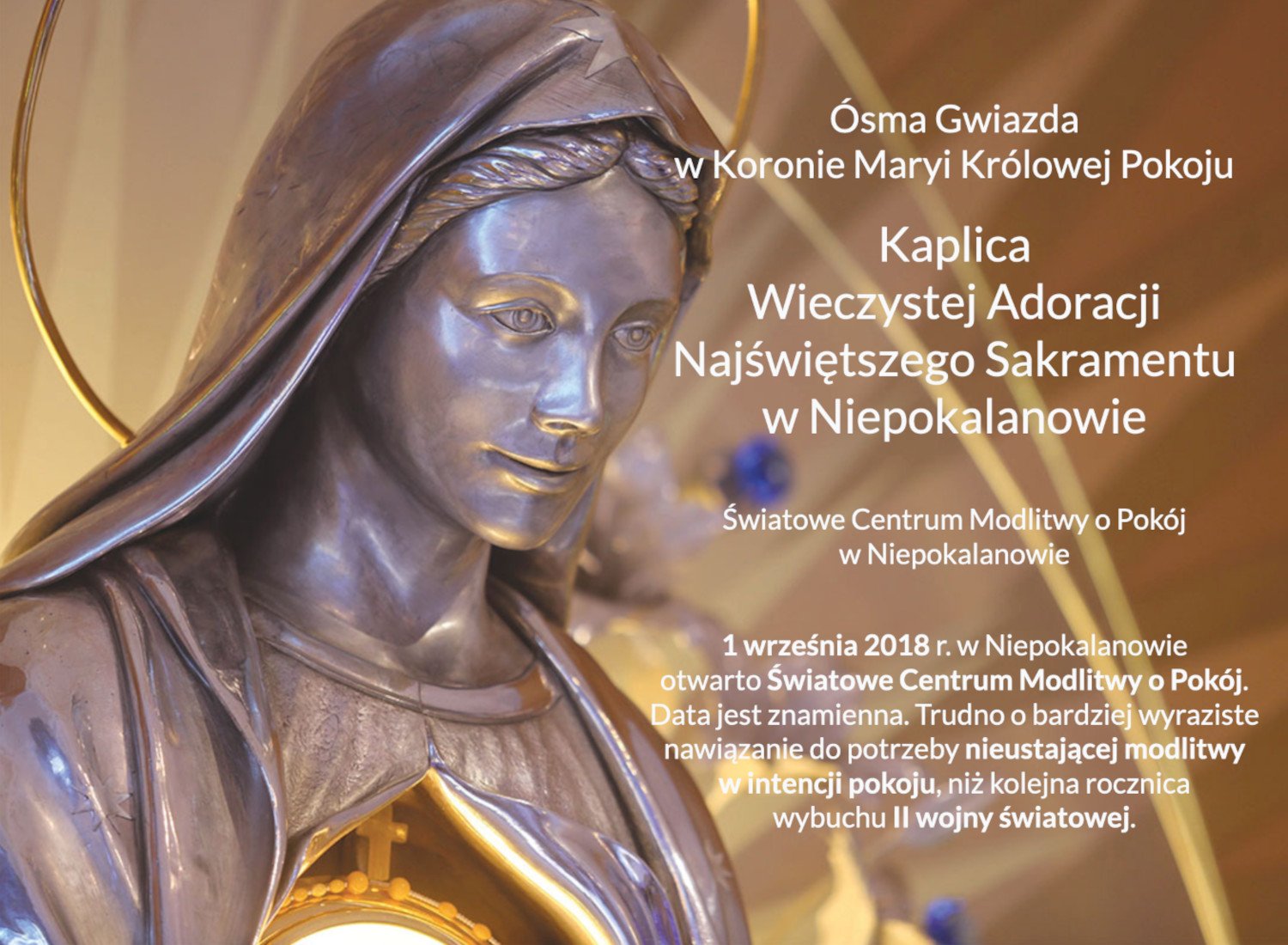

The Eucharistic Adoration Chapel established by Saint Maximilian Kolbe was inaugurated at the outbreak of World War II. It was restored as a Chapel of Adoration in September, 2018, the commemoration of the date that the war began. It is now part of the World Center of Prayer for Peace. The live internet feed of the Adoration Chapel at Niepokalanow — sponsored by EWTN — was established just a few weeks before we discovered it and began to include in at Beyond These Stone Walls. Click “Watch on YouTube” in the lower left corner to see how many people around the world are present there with you. The number appears below the symbol for EWTN.
Click or tap here to proceed to the Adoration Chapel.
The following is a translation from the Polish in the image above: “Eighth Star in the Crown of Mary Queen of Peace” “Chapel of Perpetual Adoration of the Blessed Sacrament at Niepokalanow. World Center of Prayer for Peace.” “On September 1, 2018, the World Center of Prayer for Peace in Niepokalanow was opened. It would be difficult to find a more expressive reference to the need for constant prayer for peace than the anniversary of the outbreak of World War II.”
For the Catholic theology behind this image, visit my post, “The Ark of the Covenant and the Mother of God.”

Pop Stars and Priests: Michael Jackson and the Credible Standard
The late Michael Jackson settled one abuse claim for $20 million but supporters maintain his innocence. A Catholic priest is ruined for life just for being accused.

The late Michael Jackson settled one abuse claim for $20 million but supporters maintain his innocence. A Catholic priest is ruined for life just for being accused.
April 24, 2024 by Fr Gordon MacRae
Daniel Kahneman died last month on March 27, 2024. Just as Beyond These Stone Walls was beginning, I was asked by Catholic League President Bill Donohue, to write an article for the Catholic League Journal, Catalyst. Published in July 2009, my article was “Due Process for Accused Priests.” It began with a revelation about the work of Daniel Kahneman, a noted psychologist who was awarded the Nobel Prize in Economics for his work in a phenomenon known as “availability bias.”
As a result of availability bias, humans tend to replace their beliefs with the crowd’s beliefs simply because a proposition has been repeated in the media and presented as widely believed. We are subjected to subtle cues of social pressure every day in marketing that convince many people to purchase things they don’t really need. We also face subtle cues and social pressure in the daily bombardment of news stories that cause many people to believe something based solely on its prevalence in the media. It is indeed possible that Michael Jackson and many Catholic priests became the subjects of classic, media-fueled availability bias.
In his 2011 bookThinking, Fast and Slow Daniel Kahneman laid out the foundations of what a stream of availability bias might look like:
“An availability cascade is a self-sustaining chain of events, which may lead up to public panic and large-scale government action. On some occasions, a media story about a risk catches the attention of a segment of the public, which becomes aroused and worried. This emotional reaction becomes a story in itself, prompting additional coverage in the media, which in turn produces greater concern and involvement. The cycle is sometimes sped along deliberately by ‘availability entrepreneurs,’ individuals or organizations who seek to ensure a continuous flow of worrying news. The danger is increasingly exaggerated as the media compete for attention-grabbing headlines. Anyone who claims that the danger is overstated is suspected of association with a ‘heinous cover-up’”
— Kahneman, Thinking, Fast and Slow, p.142
Does this not sound like exactly what has taken place in the early days of the priesthood crisis? In that arena, the “availability entrepreneurs” were composed largely of contingency lawyers and groups like SNAP, which I once exposed in “David Clohessy Resigned SNAP in Alleged Kickback Scheme.”
One of the conclusions of “availability bias” widely touted in the media is that statutes of limitation for lawsuits should be extended or discarded because it takes victims of sexual abuse many years or decades to come forward. The prison system in which I have spent the last 30 years houses nearly 3,000 prisoners. Estimates of those convicted of sexual offenses account for about 40 percent of them. This translates into a population of approximately 1,200 offenders in this one prison who stand convicted of sexual crimes, most true but some not. In addition to these 1,200 men, thousands more are currently on parole in New Hampshire as “registered” sexual offenders.
Only one among these thousands is a convicted Catholic priest, and if you have been paying attention at all, then you know that his conviction has been widely called into serious doubt. The thousands of other men convicted of sexual abuse are accused parents, grandparents, step-parents, foster parents, uncles, teachers, ministers, scout leaders, and so on, and for them the typical time lapse between abuse and the victim reporting it has been measured in weeks or months, not years — and certainly not decades.
My own diocese, the Diocese of Manchester, New Hampshire, in just the last month has provided a six-figure settlement to the accuser of a long deceased priest accused in a claim from 52 years ago. Even the lawyer involved admitted in a press report that “No lawsuit was filed because the alleged abuse happened outside the statute of limitations, but … it is important for survivors to come forward as part of the healing process,” which in this case involves a whole lot of money, forty percent of which goes to that attorney. In their own statement, Church officials said, “The Diocese of Manchester provides financial assistance to those who have been harmed, regardless of when the abuse occurred.” I live in a place with men some of whom have taken lives for far less money than that provided by my diocese to those who falsely took my reputation and freedom.
A simultaneous press release came under the title “Diocese of Manchester Adds to List of Clergy Accused of Sexual Abuse of a Minor.” Accuracy in language is important here. The press release continued, “The Diocese of Manchester added three priests to its list of clergy accused of sexual abuse.” Note that the usual term “credibly accused” is missing from these reports. Even that weakest of standards seems to have been discarded in favor of discarding priests who are merely “accused.” Ryan A. MacDonald wrote of the risks that such published lists pose to priests. His eye-opening article was, “In the Diocese of Manchester, Transparency and a Hit List.”

Pop Stars and Priests
I kicked a hornets’ nest some years ago when I wrote an article in response to a quote from actress Marlo Thomas who suggested in some published forum that the best American role model for middle school age boys might be singer Michael Jackson. I scoffed in my own response why the suggestion was ridiculous for many reasons, not least being the taint of sexual abuse claims against him.
Despite being acquitted in a criminal trial, Michael Jackson settled a single claim of sexual abuse for a reported $20 million, and untold millions settled other claims against him. When Michael Jackson died, he was celebrated as a cultural icon of the entertainment industry. In contrast, an American bishop, under pressure from a victims’ group, reportedly ordered the remains of a posthumously accused priest exhumed from a diocesan cemetery and reinterred elsewhere.
My point was not that I thought Michael Jackson was guilty. It was that for many fans the claims and sett1ements did not destroy his name. He was acquitted at trial, so if there was any evidence at all a jury did not find it persuasive. Some people conclude that, despite acquittal in a criminal trial, Michael Jackson’s multi-million dollar settlement of civil lawsuits was itself evidence of guilt. I’ll get back to that point.
Catherine Coy, a fan and advocate of Michael Jackson, sent a shot across my bow back then for suggesting any connection between settlements and credible accusations. I knew I was in for it when Ms. Coy began her message with “You, of all people …!” Actually, when Catherine Coy and I listened to each other, we came to a sort of detente if not agreement. In a 2005 article, “Sex Abuse and Signs of Fraud” (Catalyst, Nov. 2005), I detailed the relationship between mediated settlements and claims against Catholic priests. Did Michael Jackson become vulnerable to the same media-generated shroud under which claims against priests were seen as “credible?”
Catherine Coy insisted that in spite of monetary settlements, Jackson had never had a “credible” claim of sexual abuse lodged against him. That statement might evoke a dismissive “Yeah, right!” in some corners, but not in mine.
Why did so many people presume the worst of Mr. Jackson? It certainly wasn’t evidence. It is more of a spontaneous response, and one that is very similar to what happens when priests are accused and maintain their innocence. This is the point predicted by Nobel laureate Daniel Kahneman. The mere news media repetition of sordid stories about Michael Jackson and Catholic priests took on such prevalence in the news media that they became an unconscious bias against both. When the Catholic bishops of the United States refer to a 20-, or 30- or 40-year-old claim against a priest as “credible” they mean only that they have determined that both the priest and the accuser lived in the same community in the time period alleged.
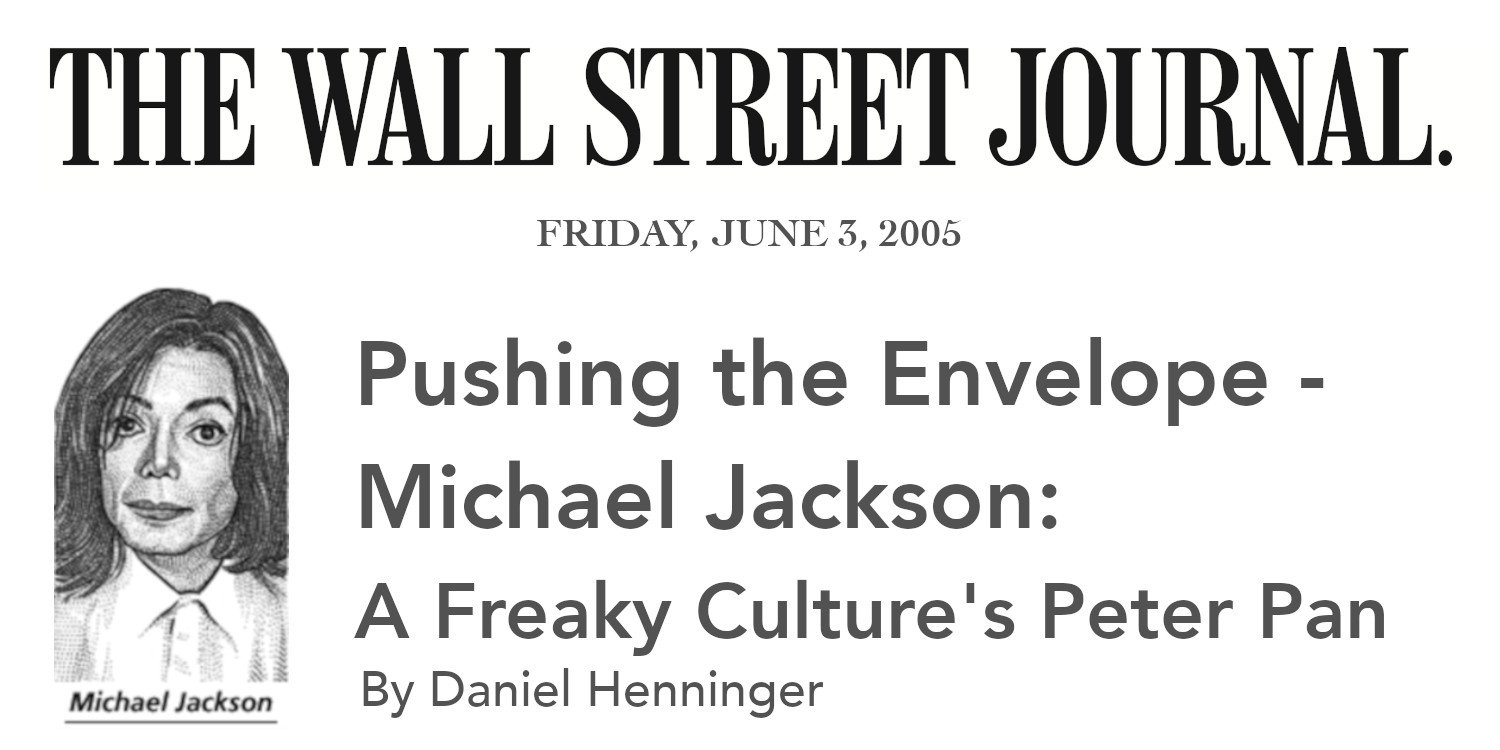
Michael and I in The Wall Street Journal
Catherine Coy was right. I, of all people, should have seen the analogy instantly. Ms. Coy wrote “There isn’t a person alive who could have withstood the onslaught of lies, innuendo and slander that was heaped on Jackson for well over 20 years.” On that score, I beg to differ, but I see her point.
The very association of Michael Jackson’s name with the bizarre proclivity attributed to him may in fact be the result of media-fueled availability bias and not evidence. There is no doubt in my mind that I and many other priests have faced this same phenomenon. With no personal experience of the behaviors attributed to some accused priests, many Catholics simply adopted the point of view given them by the news media.
This does not mean that all the claims of sexual abuse by priests are false. The U.S. Bishops commissioned a formal study of the matter conducted by the John Jay College of Criminal Justice. There were really two waves in the scandal. The first was the revelations that priests were accused at the time alleged abuse happened in the 1960’s to the 1980’s, and then were quietly moved around to other parishes to avoid a public scandal. This was scandalous enough, and tragic.
The John Jay Report also revealed that a full seventy percent of the claims faced by bishops and dioceses in 2002 and following also alleged claims from the 1960’s to 1980’s, but those claims were not brought forward until 2002 when it became clear that Church institutions would settle because of the bludgeoning they took in the media. Those claims were propelled by the widely held belief that it takes victims decades to realize they were abused and report it. Lots of people now believe that, and entire states have passed legislation to accommodate that belief. However, as demonstrated in “Due Process for Accused Priests,” the “delayed reporting” principle is classic availability bias.
In June, 2005, just three months after Dorothy Rabinowitz published an explosive two-part analysis of the case against me in The Wall Street Journal, Deputy Editorial Page Editor, Daniel Henninger wrote a most interesting commentary as Michael Jackson’s criminal trial got underway (“Pushing the Envelope – Michael Jackson: A Freaky Culture’s Peter Pan,” June 3, 2005).
It was Daniel Henninger who first put into print what I hoped someone out there might grasp:
“[Prosecutor] Tom Sneddon may lose this case. If so, it will be because Mr. Jackson, like Kobe Bryant [and O.J. Simpson], was able to mount a defense equal to the accusatory powers of the state. Not everyone can do that. If Michael walks, I’ll wonder if any of the many convicted Catholic priests similarly charged were in fact innocent but found guilty because they couldn’t push back against the state’s relentless steamroller.”
I do not at all begrudge Michael Jackson’s having had the means to mount a defense equal to the state’s prosecution of him. Whatever he spent defending himself, it was less than the state spent trying to put him in prison. At the same time, I thought Daniel Henninger’s comment about convicted priests was just and fair, but he missed an important point. I no longer have the letter, but I wrote to Mr. Henninger shortly after his 2005 editorial. This is the gist of what I wrote:
“As a priest without the means to push back in equal measure to Michael Jackson, I must point out some factors you overlooked:
“Imagine how steeply uphill Michael Jackson’s battle would have been if twenty years passed between the alleged crime and the state’s prosecutorial steamroller rumbling into action for a trial. Imagine the state having to prove nothing while Michael Jackson’s defense tried in vain to prove that something alleged to have happened two decades earlier never happened at all.
“Then imagine Michael Jackson struggling to proclaim his innocence while the institution he served denounced him and his attempts to defend himself, seeking only the path of least resistance to settle with his accusers and rid themselves of liability at the expense of due process.
“Imagine all of this, and you will have captured the scene faced by most similarly accused Catholic priests.”

The Wall Street Journal
The aftermath of those articles in April, 2005 was most interesting. The accusers in the case against me — anxious to talk to the news media before receiving settlements — suddenly had nothing to say. one of my prosecutors had nothing to say. The other took his own life. The judge was quoted in a local news article saying, vaguely, “Review is a positive thing.” Then he took early retirement from the bench. The police detective who choreographed the case, reportedly offering bribes to potential accusers, had nothing to say and has since been exposed on a previously secret list of ethically challenged police.
After those WSJ articles about me, I expected an onslaught of defensive rhetoric from victims’ groups, prosecutors, and contingency lawyers, but it never came. The sole protest came from the most unexpected source. Father Edward Arsenault, my Bishop’s delegate and the man most involved in settlement negotiations in these cases, declared that I was found guilty in a court of law by a jury of my peers, and nothing else needed to be said. Father Arsenault denounced The Wall Street Journal and its writer as biased. Incredible!
A few years later, Msgr. Edward Arsenault was convicted of multiple counts of embezzlement, including charges of forgery and fraud, and sentenced to prison. He was subsequently dismissed from the clerical state by Pope Francis but now inexplicably has a new life and a new name: Edward J. Bolognini.
In 2005 just as the Catholic scandal was building up steam to rumble full speed ahead for a national contingency lawyer windfall, I did not expect that the world’s largest secular newspaper would publish so openly against the tide — or tidal wave — of typical media coverage of claims against priests while most in the Catholic media remained silent. With the exception of Father Richard John Neuhaus in First Things and The Catholic League in Catalyst, and the Catholic World Report, the Catholic media — on both the left and the right — continued to remain silent about false claims against priests brought for money, or, worse, they have used the clergy scandal for some agenda of their own.
And of Michael Jackson, writing in The Nation, (“The Love We Lost”), JoAnn Wypijewski wrote that
“Ordinary rules of judgment have been suspended” in this sound-bite culture of news that shapes most peoples’ views on sex and the accused:
“[I]t cannot matter that Michael Jackson was acquitted of child molestation, since he was frequently remembered in death as a pedophile… just as it cannot matter whether others who plead guilty to a sex charge really did it, or whether evidence to convict was nonsense, or whether the guilty served their time. They can never ‘pay their debt to society.’ Guilt is the presumption, forever.”
JoAnn Wypijewski went on to describe the case of the priest convicted in a trial in which the sole “credible” evidence presented to the jury was the mere fact that he is a priest — that, and a claim of repressed and recovered memory, the legitimacy of which is always questioned when the accused is not a priest. In an all-too familiar twist, that priest’s bishop added his own sound bite by administratively dismissing the priest from the priesthood just before the sham of a trial.
JoAnn Wypijewski also bravely wrote about me just as the fiasco film, “Spotlight” was receiving its Academy Award for Public Service. Her ground-shaking article was “Oscar Hangover Special: Why "Spotlight" Is a Terrible Film.”
After what has now exceeded $4 billion in total mediated settlements nationwide, the matter of false claims is the elephant in the sacristy that no one wants to talk about. At the same time, our beleaguered Catholic bishops present case after case as “credible” despite knowing exactly what that term means and does not mean.
The “credible” standard Catherine Coy applied to Michael Jackson is admirable and hopeful. Ms. Coy’s fair-minded attitude about Michael Jackson is the polar opposite of what is now applied to Catholic priests.
There is no mechanism whatsoever beyond preserved DNA or an admission of guilt that would serve as evidence that a priest accused from decades ago is guilty. There is no investigation technique that could determine the credibility of such claims. What makes most claims against priests “credible” is the fact that someone — not them — has paid money to an accuser. Nothing else. Catholics should take note of the efforts by Michael Jackson fans to revisit credibility despite financial settlements which, in the secular world, are merely designed to make the claim go away with no statement of culpability.
For my part, I can only remember the famous scene early in Michael’s trial during which he danced on the hood of an SUV outside the court to the wild cheers of fans. Michael sure was a strange guy, but the dance gave me pause. Having been through such a trial, I know its oppression. That dance was surely the act of a delusional man …
… or perhaps an innocent one.

Note from Fr Gordon MacRae: Thank you for reading and sharing this post. Your comments are most welcome, but they are moderated, so they may not appear instantly. You may also like these related posts from Beyond These Stone Walls.
Due Process for Accused Priests, Catalyst, July 2009
In the Diocese of Manchester, Transparency and a Hit List
The Eucharistic Adoration Chapel established by Saint Maximilian Kolbe was inaugurated at the outbreak of World War II. It was restored as a Chapel of Adoration in September, 2018, the commemoration of the date that the war began. It is now part of the World Center of Prayer for Peace. The live internet feed of the Adoration Chapel at Niepokalanow — sponsored by EWTN — was established just a few weeks before we discovered it and began to include in at Beyond These Stone Walls. Click “Watch on YouTube” in the lower left corner to see how many people around the world are present there with you. The number appears below the symbol for EWTN.
Click or tap here to proceed to the Adoration Chapel.
The following is a translation from the Polish in the image above: “Eighth Star in the Crown of Mary Queen of Peace” “Chapel of Perpetual Adoration of the Blessed Sacrament at Niepokalanow. World Center of Prayer for Peace.” “On September 1, 2018, the World Center of Prayer for Peace in Niepokalanow was opened. It would be difficult to find a more expressive reference to the need for constant prayer for peace than the anniversary of the outbreak of World War II.”
For the Catholic theology behind this image, visit my post, “The Ark of the Covenant and the Mother of God.”

Saint John Paul the Great: A Light in a World in Crisis
Karol Wojtyla became a priest on All Saints Day 1946. On Divine Mercy Sunday 2014 the Church affirmed what the world already knew: he is Saint John Paul the Great.

Karol Wojtyla became a priest on All Saints Day 1946. On Divine Mercy Sunday 2014 the Church affirmed what the world already knew: he is Saint John Paul the Great.
November 1, 2023 by Fr Gordon MacRae
Two names were added to the Communion of Saints on Divine Mercy Sunday 2014, and midway through this third decade of the 21st Century, one of them still looms large in the living memory of billions, Catholics and not. I must write especially of Saint John Paul II because his Holy Father-hood is like a set of bookends framing my life as a priest. I have written of him before, and of the origin of his being dubbed “John Paul the Great” for his monumental impact on the state of world affairs.
That post, which we will link again at the end of this one, was “A Tale of Two Priests: Maximilian Kolbe and John Paul II.” It began, ironically enough, in the era in which Angelo Roncali became Pope John XXIII. It’s an ironic twist that John XXIII was beatified by John Paul II, but on Divine Mercy Sunday 2014 they were canonized together. So in a sense, this tribute to one is a profound bow to the sainthood of both.
I don’t want to begin with the negative, but sometimes it’s best to just get the detractors out of the way. The Media Report had an article about a 2014 PBS Frontline presentation entitled “Secrets of the Vatican.” The Frontline piece was co-produced for PBS by Jason Berry, and it was clear, for those who would see, that the agenda behind it had nothing to do with the Truths about the Catholic Church.
The triple crown PBS and Jason Berry aimed for was Holy Week, Easter, and the Divine Mercy Canonization of Pope John Paul II. One prisoner who watched it thinking it might be a tour of the Vatican Museum called it “Jason Berry’s hatchet job on the Catholic Church.” Had PBS settled on that more honest title, its ratings might have been higher. The timing of such productions is carefully choreographed, of course, to coincide with any big Catholic news coming out of Rome.
As the Canonization of these two 20th Century popes made headlines, so did the predictable efforts to defame them. I wrote of the timing of such ploys recently in “Benedict XVI Faced the Cruelty of a German Inquisition.” It has become a tradition of sorts in modern media to deck the halls with anti-Catholic slurs during the seasons of both Christmas and Easter. The strategy is that if enough mud can be thrown during times when Catholics on the fence assess their faith, some will ultimately abandon it.
It must be terribly frustrating for those behind such campaigns that at Easter every year, tens of thousands of adults thinking for themselves in the U.S. alone are received into the Catholic faith. Thousands more return after decades away. Our readers heard from one of them in the moving post, “Coming Home to the Catholic Faith I Left Behind.” Will such stories find their way into Jason Berry’s next PBS Holy Week special? Don’t count on it! But there is now a far more important story to tell.

A Pope’s 33 Days
The summer of 1978 was a strange one for me. I had graduated early that summer from Saint Anselm College in Manchester, New Hampshire. A life-changing discernment to leave the Capuchin order to become a diocesan priest had culminated in sweeping change for me that summer. I became a priesthood candidate for the Diocese of Manchester and was assigned to commence graduate studies toward M. Div. and S.T.M. degrees at St. Mary Seminary and University in Baltimore, Maryland, a Pontifical Institute and the nation’s oldest Roman Catholic seminary. It was a summer of transition, and in the background of its whirlwind of change for me was the death of Pope Paul VI and the election of Albino Luciani, Archbishop of Venice, who became Pope John Paul.
Thirty-three days later, on the morning of September 28, 1978, came a knock on my seminary room door. “The Pope has died,” said an unidentified voice on the other side. “Um . . . that was a month ago,” I responded. “No,” said the voice, “the NEW Pope has died.” I never knew who the voice was, but as I made my way through the cavernous corridors toward class that morning the shock of the story was everywhere.
Eighteen days later, on October 16, 1978, the same Conclave of papal electors, who chose the first Pope John Paul just 51 days before, elected a successor. Karol Jozef Wojtyla, Archbishop of Krakow, Poland, became the first non-Italian pope since 1522. He took the name, John Paul II in honor of the first whose reign was the shortest in Church history. The new pope was 58 years old, spoke 14 languages, and would reign for 27 years — one of the longest in Church history — until his death on April 2, 2005.
With my nose buried in a textbook when that knock came on my door in 1978, I had no way to know of the long, twisted road upon which priesthood would take me. I instantly remembered that day as though yesterday, however, when 27 years later on April 2, 2005, a knock came on my cell door as a prisoner’s voice reported the news: “The Pope has died.” In between these two events, Pope John Paul the Great visited 129 countries, beatified 1,342 souls, canonized 483 saints, declared one Doctor of the Church, promulgated 14 encyclicals, and in his spare time he dismantled the Soviet Union, tore down the Berlin Wall, and brought European Communism to its knees.
Is that last point an exaggeration? Not according to the KGB. When John Paul II and John XXIII were canonized in April 2014, Catholic press was filled with accounts of the legacies of both, but for John Paul II the secular media were also filled with tributes to him, and foremost among these was John Paul’s role in the collapse of the Soviet Union. I rely on some of these tributes more than I do the Catholic press for this post because we might expect all but chronically dissenting Catholics to hold John Paul in high regard. The key to his witness, however, is found elsewhere.
One such source is a superb book by Eric Metaxas entitled Seven Men and the Secret of their Greatness (Thomas Nelson, 2013). Seven Men is a profile in courage with subjects chosen by Eric Metaxas because they were exemplars of manhood, bravery, and public witness to the courage of their convictions. Among them, for this prolific and highly regarded non-Catholic writer, was Pope John Paul II:
“Of all the men in this book, there is only one who has come to be called ‘the Great.’ John Paul the Great . . . . The man whom the Polish authorities once regarded as harmless became one of the key figures in the collapse of communism across Europe.”
— Seven Men, pp. 141, 157
The threat this pope posed to the communist agenda did not go unnoticed by the KGB. In “The Enduring Legacy of John Paul II” (Catalyst, December 2010) Ronald Rychlak chronicled Soviet KGB involvement in the assassination attempts, first of John Paul’s reputation and character, and then of John Paul himself. Reviewing Witness to Hope (HarperCollins 1999), George Weigel’s magisterial biography of Pope John Paul II, Ronald Rychlak described the KGB anxiety about this pope:
“Within months of his election, John Paul II ignited a revolution of conscience in Poland and it ultimately led to the collapse of European Communism and the demise of the Soviet Union.”
— Ronald Rychlak, Catalyst
I also wrote of the story of KGB targeting of both Pope John Paul II and Pope Pius XII in “Hitler’s Pope, Nazi Crimes, and The New York Times.” I was not at all alone in seeing the great thorn in the side that Pope John Paul had courageously become for communism and its intent to dominate Europe, and then the world. In “Popes, Atheists and Freedom” (WSJ, December 30, 2010) Daniel Henninger wrote of Pope John Paul’s courageous confrontation with the Soviet Union:
“In 1984, after John Paul had completed two pastoral pilgrimages to Communist Poland, a conference was convened by members of the KGB, Warsaw Pact, and Cuban intelligence services. Its purpose: to discuss joint measures for combating the ‘subversive activities’ of the Vatican.”

Pope John Paul II and the Miracle of Fatima
I sometimes think that I am among the priesthood’s worst skeptics. I write of measurable things, after all: history and science, the Voyager Spacecraft among the stars, and “The James Webb Space Telescope.” If someone told me when I was ordained 41 years ago that I would one day be writing about a connection between Pope John Paul and the Miracle of Fatima, I would not have believed it.
It was Father Michael Gaitley, MIC, who opened my eyes. The great Marian author of 33 Days to Morning Glory wrote something about John Paul II that did more than open my eyes. It shook my world. What follows is a summary.
In 1917, during World War I, the Blessed Virgin Mary appeared to three shepherd children in Fatima, Portugal. I have always accepted this because the Church accepts it, but I have also always tried not to think too much about it. No, it’s much worse than that. I once, as a much younger priest, scoffed at it all. I kept my scoffing to myself, but the whole story of Fatima was reduced in my mind to a lot of pre-scientific nonsense.
It was Mary herself who straightened me out, aided somewhat by Father Michael Gaitley. I wrote about some of this in “Behold Your Son, Behold Your Mother,” a feature article at Marian.org. I wrote that Father Gaitley’s presentation on Pope John Paul II was powerful and compelling.
The first vision at Fatima took place at 5:00 PM on May 13, 1917. After the prophesies about the conversion of Russia, the child visionaries saw a “bishop dressed in white” who “would suffer much and then be shot and killed.” This became known as the last secret of Fatima, and was kept hidden, for a time, by the Church.
Exactly 64 years later, on May 13, 1981 at exactly 5:00 PM, Pope John Paul II was shot four times as he blessed the crowds in St. Peter’s Square. One of those bullets would have surely killed him had it not missed his abdominal artery by a tiny fraction of an inch. John Paul attributed the guidance of this bullet to the hand of Our Lady of Fatima whose first apparition shared that same date.
The Soviet Empire was created in the aftermath of the 1917 Russian Revolution, and it became the largest nation on Earth. In his 1948 book, The Gathering Storm, Winston Churchill wrote of a proposal to the ruthless Soviet leader, Joseph Stalin. The proposal was that the Soviet Union should not suppress Catholicism, but should rather encourage it in order to build a relationship with the Pope. “The Pope?” Stalin famously retorted. “How many divisions has he got?”
That conversation took place on May 13, 1935, 46 years to the day before the Soviet Union tried to eliminate Pope John Paul II because he became communism’s biggest obstacle in all of Europe. The Pope survived. Stalin’s successors in the Soviet Union learned the answers to his questions far too late for their own survival.
As a wise friend once said to me, “There are no coincidences, only signs.” My scientific mind could still have dismissed all this had I not witnessed what up to then I thought to be impossible: the 1989 fall of the Soviet Empire and the collapse of communism in Europe. On November 9, 1989, thousands danced upon the Berlin Wall before it finally crumbled. I scoffed no longer as I pondered “How Our Lady of Fatima Saved a World in Crisis.” As Communism swept Europe and threatened to engulf the world in Godless darkness, Pope John Paul II was her instrument of powerful resistance.
Karol Wojtyla was ordained a priest on All Saints Day, 1946, and is now in the company of the Communion of Saints, including the 483 saints who were canonized by a Saint. As a priest and bishop, he studied Sister Faustina’s Diary and promoted her devotion to Divine Mercy, and later her cause for sainthood. He once wrote that as a priest he always felt spiritually close to Sister Faustina. Karol Jozef Wojtyla surrendered his Earthly life on the Vigil of Divine Mercy Sunday, 2005.
Saint John Paul the Great, pray for us as we face, yet again, a world in crisis.

Note from Father Gordon MacRae: Thank you for reading and sharing this post. You may also like these related posts which we hope you will share with others:
A Tale of Two Priests: Maximilian Kolbe and John Paul II
Of Saints and Souls and Earthly Woes
The Eucharistic Adoration Chapel established by Saint Maximilian Kolbe was inaugurated at the outbreak of World War II. It was restored as a Chapel of Adoration in September, 2018, the commemoration of the date that the war began. It is now part of the World Center of Prayer for Peace. The live internet feed of the Adoration Chapel at Niepokalanow — sponsored by EWTN — was established just a few weeks before we discovered it and began to include in at Beyond These Stone Walls. Click “Watch on YouTube” in the lower left corner to see how many people around the world are present there with you. The number appears below the symbol for EWTN.
Click or tap here to proceed to the Adoration Chapel.
The following is a translation from the Polish in the image above: “Eighth Star in the Crown of Mary Queen of Peace” “Chapel of Perpetual Adoration of the Blessed Sacrament at Niepokalanow. World Center of Prayer for Peace.” “On September 1, 2018, the World Center of Prayer for Peace in Niepokalanow was opened. It would be difficult to find a more expressive reference to the need for constant prayer for peace than the anniversary of the outbreak of World War II.”
For the Catholic theology behind this image, visit my post, “The Ark of the Covenant and the Mother of God.”