“There are few authentic prophetic voices among us, guiding truth-seekers along the right path. Among them is Fr. Gordon MacRae, a mighty voice in the prison tradition of John the Baptist, Maximilian Kolbe, Alfred Delp, SJ, and Dietrich Bonhoeffer.”
— Deacon David Jones
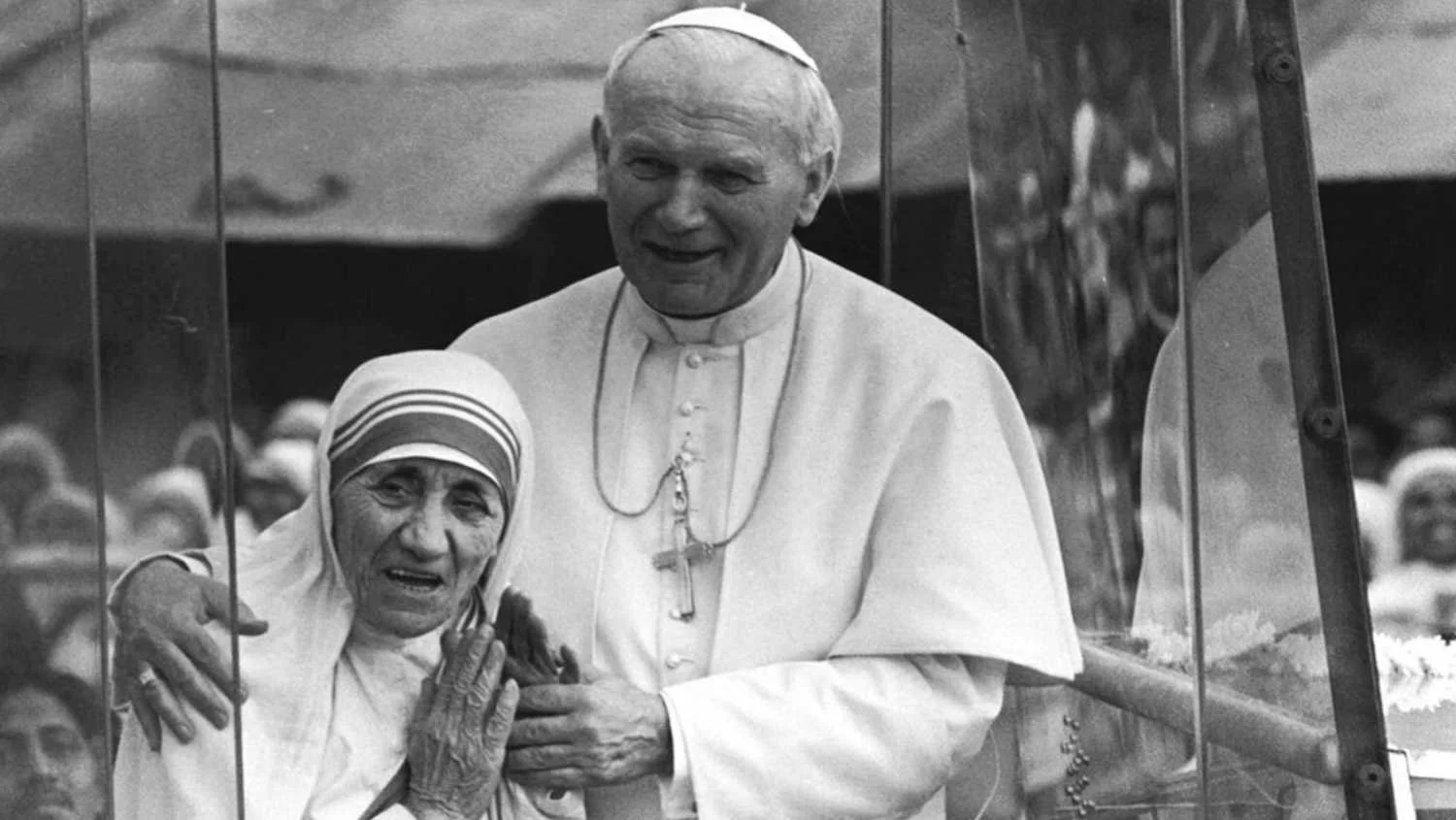
For Mother Teresa of Calcutta, Pentecost Illumined the Night
Discouragement is the deep spiritual valley of our age. For Mother Teresa of Calcutta, the Holy Spirit’s light came only at dawn in a long dark night of the soul.
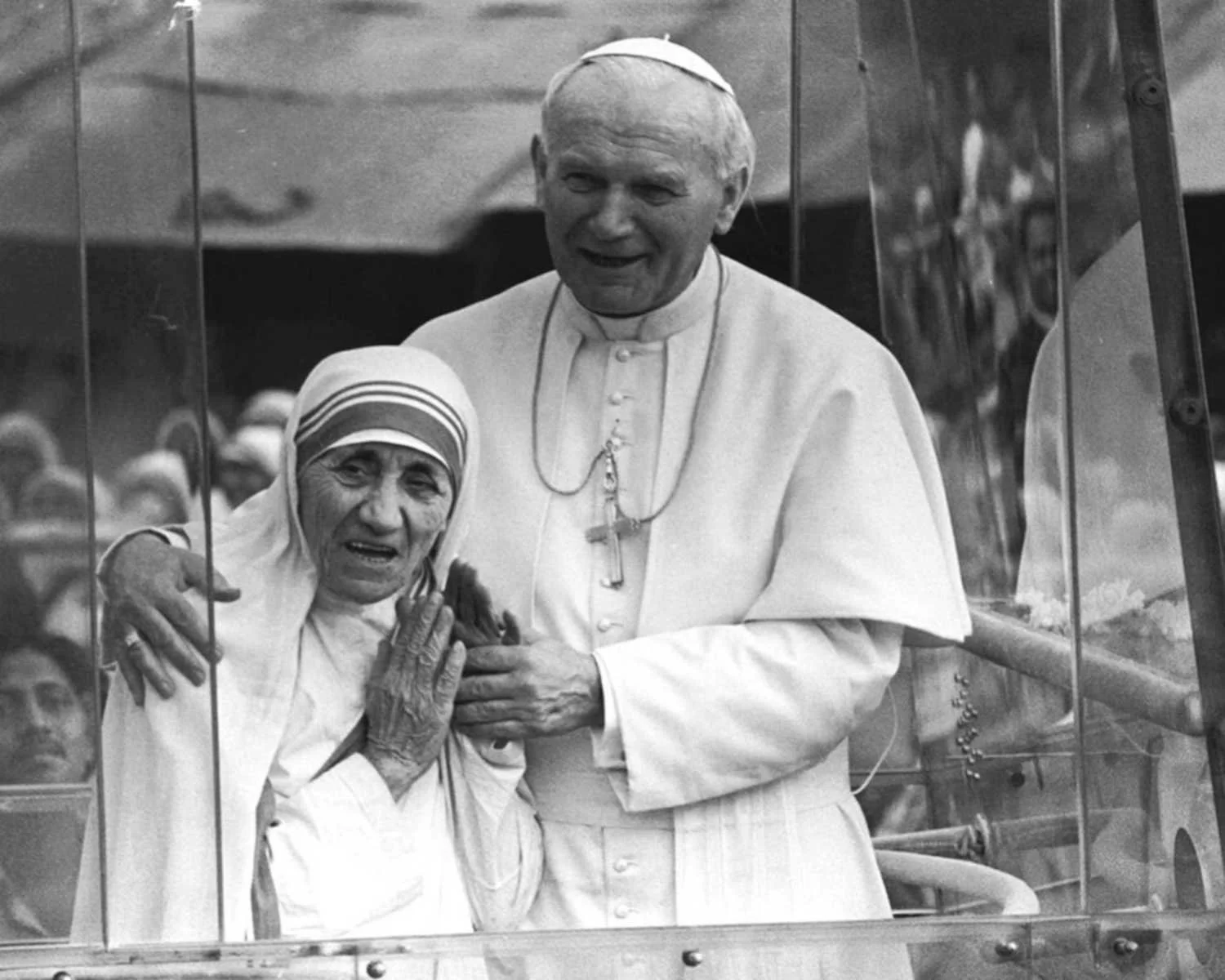
Discouragement is the deep spiritual valley of our age. For Mother Teresa of Calcutta, the Holy Spirit’s light came only at dawn in a long dark night of the soul.
May 13, 2026 by Father Gordon MacRae
I grew up a few miles north of Boston in an area known locally as the North Shore. Well, it is called that in print anyway. In conversation, it comes out something like, “the Noath Shoah.” I never knew that until I moved to another part of the country where people inexplicably pronounce the letter “R.” Anyway, I have lived in so many places since then that I have lost much of my Boston accent, but I can still translate it when I hear it.
There is an old North Shore saying, “Light finally dawns upon Marblehead.” I am not sure of its origin, but it makes logical sense. The seaside town of Marblehead is at the head of a deep harbor north of Boston, so the dawn’s early light is seen there a few seconds later than in other North Shore coastal towns. Its figurative meaning is that some reality that has been eluding us is now finally made clear.
Light finally dawned upon Marblehead today when I set out to write about Pentecost and ended up writing about Saint Mother Teresa of Calcutta. There is a connection that I had to spend some time ferreting out, and that is when the light finally dawned. I learned something important about her, and in the process, about myself.
But first, I know I am going to have a hard time dropping “Mother” from her name. “Saint” Teresa seems incomplete and already taken. So I guess that like Saint Padre Pio, she will be forever endowed with a title that has become a necessary part of her name. I am going to have to call her Saint Mother Teresa of Calcutta, and it has slowly caught on.
She was canonized on September 4, 2016, the eve of the date of her death in 1997. In life the person she was, the spirit she is, was eclipsed by the sorrowful mysteries of the poor to whom she devoted her life. The images of her presence among the poor, the disfigured, the utterly broken and rejected — even the despised — have always been part of the background landscape of my life as a priest, but to be honest I could never bring myself to linger on those scenes. They were just too painful. They always left me with a sense of inadequacy as a priest, afraid to look upon the broken too long lest I feel compelled to follow her lead.
I admired Mother Teresa’s presence at the peripheries of human suffering, but as a priest I admired it from too much of a safe distance. That troubles me today. I had to be compelled in priesthood to carry the cross of the outcast, a cross that brought me unwillingly to the scene of that post-resurrection appearance to Simon Peter in the Gospel of John.
“Truly, truly I say to you, when you were young, you fastened your own belt and walked where you would; but when you are old, you will stretch out your hands, and another will fasten your belt for you and carry you where you do not wish to go.”
— John 21:18
I have experienced those ominous words of John’s Gospel in a literal and terrifying way, but I found companions and some inner peace along the way as well. I wrote of one recently in “A Lesson From Saint Damien of Molokai, Leper Priest.” It was about how disappointment and discouragement have been part of my own dark night of the soul for thirty-two long years, and how Saint Damien of Molokai — whose feast day was observed on May 10 — taught me what my priorities must be in a life among prisoners.
And you know from many posts that I found other companions and mentors in Saint Maximilian Kolbe and Saint Padre Pio who have shown me by example that my life bound over by earthly powers must be lived out at the foot of Cross. In prison, others have joined me there, many others, but I remain in the dark.
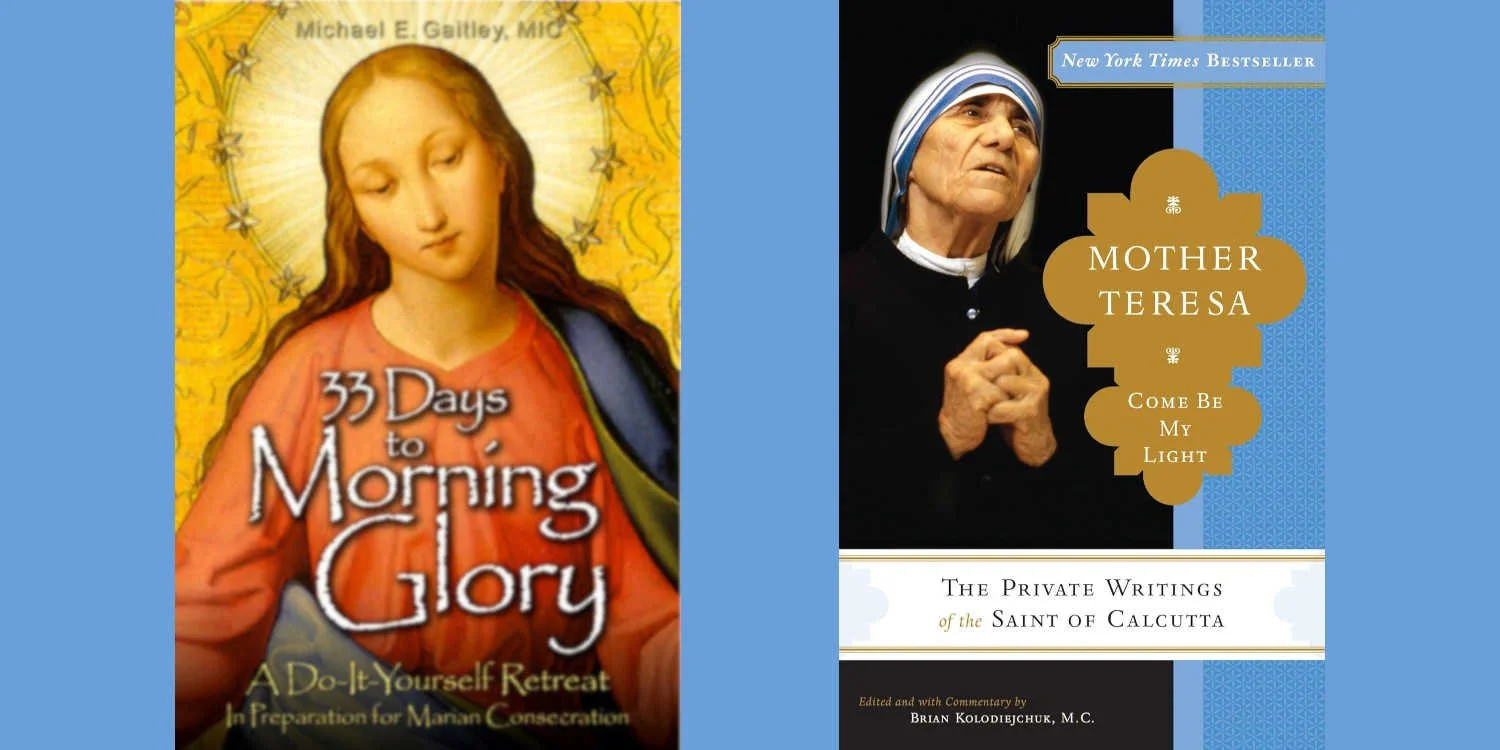
Come Be My Light
Now I present this new friend at the foot of the Cross in the life of Mother Teresa of Calcutta, but I had to first shed all my assumptions about her. It is a little intimidating that she was awarded the Nobel Peace Prize in 1979 for her witness to the world’s broken, abandoned and poor. In life Mother Teresa was revered as a living saint. I just assumed that for her to be that person, to do the work that she did, Mother Teresa must have been given a gift of daily awareness of the light of supernatural grace that flowed within her and shined through her. Otherwise, I thought, she would just sink into dark desolation just as I have been known to do with far less in the way of grace to count on.
And when I do sink into that desolation, I sometimes stay for days, weeks, months, at one point in my imprisonment before Beyond These Stone Walls began, even years. And if my mail is any indication, many of you have had that same experience. Please, do not come to Beyond These Stone Walls because misery loves company. It really does not. Come here because together we can manage crosses of discouragement that alone might only elude us and crush our spirits. You cannot just go to Home Depot to buy a weed whacker to wipe out desolation. It is best to have someone show you how to use it.
I was wrong about Mother Teresa, about my image of her basking in the reflected glow of the Holy Spirit. About a year after I started writing for this blog, I was given a copy of Mother Teresa’s Come Be My Light (Doubleday 2007) and my presumptions about her life in grace were quickly dispelled.
Some of the shallow secular media made a big deal of this book, presenting it as the latest Catholic scandal that the great Living Saint among us had long bouts of doubt and desolation. But for me she became human again, and an icon not so much of living grace, but of grace hard won through great spiritual struggle. Like Saint Maximilian Kolbe, she became someone I could let in, and learn from.
Centuries of Catholic art tend to depict the saints among us with halos, in a state of ecstatic pose before the True Presence. Mother Teresa’s own writings convey her struggle to survive spiritually in the present absence. In that, I can relate. In that, I find much hope. That sense of absence is something I have taken up in other posts (see “Priesthood in the Real Presence and the Present Absence”).
Through letters to her spiritual director, Come Be My Light is a guided tour of the interior life of this courageous woman whose heart “burned with the fire of charity” while at the same time experienced doubt and spiritual darkness in “a true dark night of the soul.” I began to do what she did, to pray not so much to be free of spiritual desolation, but to be free to serve even in the midst of it. Mother Teresa did that well. I get, at best, a C-minus, but I am still reading the book!
A part of it reminds me so much of something Canadian Catholic writer Michael Brandon wrote some time back in “All Things Turn to Good” at his Freedom Through Truth blog. While writing of the news of the failure of the justice system to pursue justice for me, Michael quoted another Saint Teresa, Saint Teresa of Avila, who once wrote, “God, if this is how You treat Your friends, it’s no wonder that you have so few.” When our friend, Pornchai Moontri, read that quote, it made him laugh. He had been having a hard time with discouragement over my plight, but the quote put it into perspective for him.
Do not read Come Be My Light in one sitting. Keep it on your night stand and read it prayerfully, a letter a day perhaps, or even reserved for moments in your own dark night. It has gotten me through many of my own. She is fast becoming the Patron Saint of “Get-off-your-priestly-arse-and-do-something-for-someone-instead-of-moping-about!”
The Advocate
There is a little side story to tell. While composing this post, I had left my copy of Come Be My Light in the prison library where I work, but I had only a Saturday afternoon to finish this post and get it into the mail. The library is closed on weekends so I had no way to retrieve the book. On Saturday morning, I remembered that Father Michael Gaitley had an entire section about the Marian consecration of Mother Teresa in his book, 33 Days to Morning Glory.
But I had left that book in the library as well! When I mentioned that to Pornchai, who was still here with me then, he said, “Well, there’s at least ten of them right here in this unit.” Then it struck me. How is it even possible that out of sixty prisoners in this one prison cell block, ten of them have completed 33 Days to Morning Glory and entered into Marian Consecration? That is one out of every six prisoners in our field of view. So all I had to do was walk to the cell next to mine and borrow the book. Duh!
When I did, I opened to the Table of Contents and was instantly reminded that three of my favorite saints comprise weeks two, three, and four of Father Gaitley’s 33 Days to Morning Glory, retreat. They are Saints Maximilian Kolbe, Mother Teresa, and John Paul II, and all are saints of the Twentieth Century.
I thought I had read this book cover to cover, but while looking at the Table of Contents to find the section on Mother Teresa, I unconsciously thumbed back two pages, and stopped on a name that jumped off the page at me. It was a short review of 33 Days by Father James McCurry, formerly Minister Provincial of the Conventual Franciscans, the order to which Saint Maximilian Kolbe belonged and the Vice Postulator for his cause for sainthood. How could I not have seen this before?
Many years ago, Father James McCurry came to visit me in prison. I had never previously met him, and today I cannot really explain what brought him here except a vague memory that he was passing through and heard of me through a friend of a friend. In the prison visiting room, Father McCurry asked, “What do you know of Saint Maximilian Kolbe?” It was a question that would change my life, and then change the life of Pornchai Moontri, and then others as well. I wrote of this first encounter with a Patron Saint in “The Parable of a Priest and the Parable of a Prisoner.”
So in searching for a section on Mother Teresa, she pointed me back to an old friend. The interconnections between everyone in this story are mind-boggling. Father McCurry wrote that the essence of Marian consecration is …
“St. Maximilian Kolbe’s mystical intuition about the interior life of Mary and the Holy Spirit in the life of a consecrant; Blessed Mother Teresa’s experience of Mary drawing us into her heart, where Jesus keeps repeating, ‘I thirst’; and St. John Paul’s understanding that consecration to Mary brings us to the source of merciful love — the Divine Mercy poised to transform the world.”
That is when the light finally dawned upon Marblehead! I realized that the world I am thrown into is in fact being transformed in spite of my protests about being here in the first place. Some around me — the poor, the outcasts, the discarded, the lepers, the criminals — are being transformed. How could it possibly have happened that one out of every six of these men around me in prison now lives a life consecrated to Jesus through Mary? How is it that the saints whose intercession I keep pursuing are already engaged in a work that has eluded me? Then I read in the Gospel:
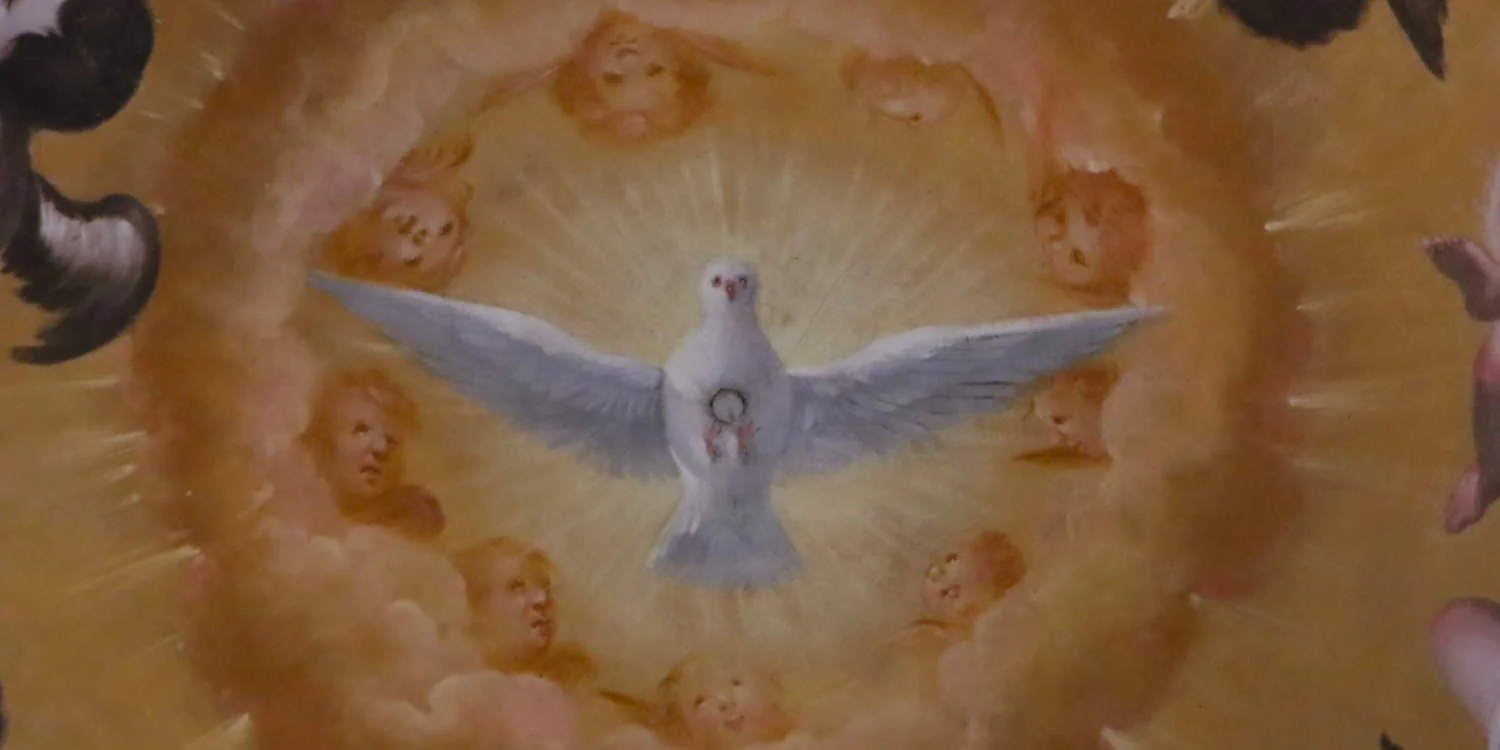
“I have told you this while I am with you. The Advocate, the Holy Spirit, whom the Father will send in my name, will teach you everything and remind you of all that I told you. Peace I leave with you; my peace I give you. Not as the world gives do I give it to you. Do not let your hearts be troubled or afraid.”
— John 14:25-28
This brings to light what Saint Mother Teresa of Calcutta learned in the dark. The Holy Spirit was her Advocate not in any obvious glory, but in desolation, and it was from there on the very edges of suffering humanity that she led countless souls to Christ, and witnessed to the world that the Lord hears the cry of the poor.
“It is beautiful to see the humility of Christ. This humility can be seen in the crib, in the exile in Egypt, in the hidden life, in the inability to make people understand him, in the desertion of his apostles, in the hatred of the Jews, and all the terrible suffering and death of his passion, and now in his permanent state of humility in the tabernacle, where he has rendered himself to such a small particle of bread that the priest can hold him with two fingers.”
— Mother Teresa of Calcutta
+ + +
Note from Father Gordon MacRae: We could extend the same invitation to Saint Mother Teresa that she extended to the Holy Spirit: Come Be My Light.
Thank you for reading and sharing this post about a great saint of our age. You may also like these related posts at Beyond These Stone Walls:
Lesson From Saint Damien of Molokai, Leper Priest
The Parable of a Priest and the Parable of a Prisoner

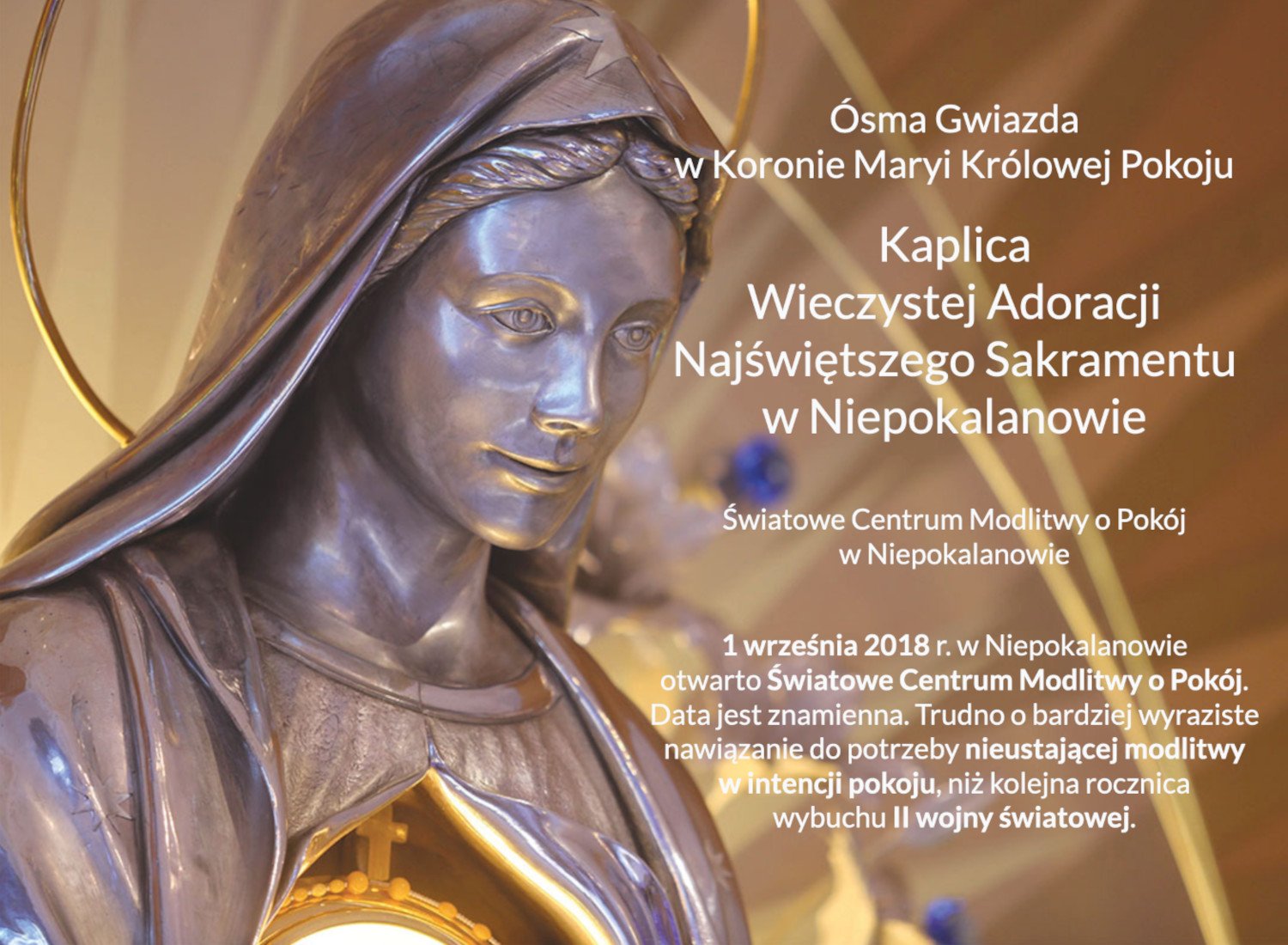

The Eucharistic Adoration Chapel established by Saint Maximilian Kolbe was inaugurated at the outbreak of World War II. It was restored as a Chapel of Adoration in September, 2018, the commemoration of the date that the war began. It is now part of the World Center of Prayer for Peace. The live internet feed of the Adoration Chapel at Niepokalanow — sponsored by EWTN — was established just a few weeks before we discovered it and began to include in at Beyond These Stone Walls. Click “Watch on YouTube” in the lower left corner to see how many people around the world are present there with you. The number appears below the symbol for EWTN.
Click or tap here to proceed to the Adoration Chapel.
The following is a translation from the Polish in the image above: “Eighth Star in the Crown of Mary Queen of Peace” “Chapel of Perpetual Adoration of the Blessed Sacrament at Niepokalanow. World Center of Prayer for Peace.” “On September 1, 2018, the World Center of Prayer for Peace in Niepokalanow was opened. It would be difficult to find a more expressive reference to the need for constant prayer for peace than the anniversary of the outbreak of World War II.”
For the Catholic theology behind this image, visit my post, “The Ark of the Covenant and the Mother of God.”

Saint John Paul the Great: A Light in a World in Crisis
Karol Wojtyla became a priest on All Saints Day 1946. On Divine Mercy Sunday 2014 the Church affirmed what the world already knew: he is Saint John Paul the Great.

Karol Wojtyla became a priest on All Saints Day 1946. On Divine Mercy Sunday 2014 the Church affirmed what the world already knew: he is Saint John Paul the Great.
November 1, 2023 by Fr Gordon MacRae
Two names were added to the Communion of Saints on Divine Mercy Sunday 2014, and midway through this third decade of the 21st Century, one of them still looms large in the living memory of billions, Catholics and not. I must write especially of Saint John Paul II because his Holy Father-hood is like a set of bookends framing my life as a priest. I have written of him before, and of the origin of his being dubbed “John Paul the Great” for his monumental impact on the state of world affairs.
That post, which we will link again at the end of this one, was “A Tale of Two Priests: Maximilian Kolbe and John Paul II.” It began, ironically enough, in the era in which Angelo Roncali became Pope John XXIII. It’s an ironic twist that John XXIII was beatified by John Paul II, but on Divine Mercy Sunday 2014 they were canonized together. So in a sense, this tribute to one is a profound bow to the sainthood of both.
I don’t want to begin with the negative, but sometimes it’s best to just get the detractors out of the way. The Media Report had an article about a 2014 PBS Frontline presentation entitled “Secrets of the Vatican.” The Frontline piece was co-produced for PBS by Jason Berry, and it was clear, for those who would see, that the agenda behind it had nothing to do with the Truths about the Catholic Church.
The triple crown PBS and Jason Berry aimed for was Holy Week, Easter, and the Divine Mercy Canonization of Pope John Paul II. One prisoner who watched it thinking it might be a tour of the Vatican Museum called it “Jason Berry’s hatchet job on the Catholic Church.” Had PBS settled on that more honest title, its ratings might have been higher. The timing of such productions is carefully choreographed, of course, to coincide with any big Catholic news coming out of Rome.
As the Canonization of these two 20th Century popes made headlines, so did the predictable efforts to defame them. I wrote of the timing of such ploys recently in “Benedict XVI Faced the Cruelty of a German Inquisition.” It has become a tradition of sorts in modern media to deck the halls with anti-Catholic slurs during the seasons of both Christmas and Easter. The strategy is that if enough mud can be thrown during times when Catholics on the fence assess their faith, some will ultimately abandon it.
It must be terribly frustrating for those behind such campaigns that at Easter every year, tens of thousands of adults thinking for themselves in the U.S. alone are received into the Catholic faith. Thousands more return after decades away. Our readers heard from one of them in the moving post, “Coming Home to the Catholic Faith I Left Behind.” Will such stories find their way into Jason Berry’s next PBS Holy Week special? Don’t count on it! But there is now a far more important story to tell.

A Pope’s 33 Days
The summer of 1978 was a strange one for me. I had graduated early that summer from Saint Anselm College in Manchester, New Hampshire. A life-changing discernment to leave the Capuchin order to become a diocesan priest had culminated in sweeping change for me that summer. I became a priesthood candidate for the Diocese of Manchester and was assigned to commence graduate studies toward M. Div. and S.T.M. degrees at St. Mary Seminary and University in Baltimore, Maryland, a Pontifical Institute and the nation’s oldest Roman Catholic seminary. It was a summer of transition, and in the background of its whirlwind of change for me was the death of Pope Paul VI and the election of Albino Luciani, Archbishop of Venice, who became Pope John Paul.
Thirty-three days later, on the morning of September 28, 1978, came a knock on my seminary room door. “The Pope has died,” said an unidentified voice on the other side. “Um . . . that was a month ago,” I responded. “No,” said the voice, “the NEW Pope has died.” I never knew who the voice was, but as I made my way through the cavernous corridors toward class that morning the shock of the story was everywhere.
Eighteen days later, on October 16, 1978, the same Conclave of papal electors, who chose the first Pope John Paul just 51 days before, elected a successor. Karol Jozef Wojtyla, Archbishop of Krakow, Poland, became the first non-Italian pope since 1522. He took the name, John Paul II in honor of the first whose reign was the shortest in Church history. The new pope was 58 years old, spoke 14 languages, and would reign for 27 years — one of the longest in Church history — until his death on April 2, 2005.
With my nose buried in a textbook when that knock came on my door in 1978, I had no way to know of the long, twisted road upon which priesthood would take me. I instantly remembered that day as though yesterday, however, when 27 years later on April 2, 2005, a knock came on my cell door as a prisoner’s voice reported the news: “The Pope has died.” In between these two events, Pope John Paul the Great visited 129 countries, beatified 1,342 souls, canonized 483 saints, declared one Doctor of the Church, promulgated 14 encyclicals, and in his spare time he dismantled the Soviet Union, tore down the Berlin Wall, and brought European Communism to its knees.
Is that last point an exaggeration? Not according to the KGB. When John Paul II and John XXIII were canonized in April 2014, Catholic press was filled with accounts of the legacies of both, but for John Paul II the secular media were also filled with tributes to him, and foremost among these was John Paul’s role in the collapse of the Soviet Union. I rely on some of these tributes more than I do the Catholic press for this post because we might expect all but chronically dissenting Catholics to hold John Paul in high regard. The key to his witness, however, is found elsewhere.
One such source is a superb book by Eric Metaxas entitled Seven Men and the Secret of their Greatness (Thomas Nelson, 2013). Seven Men is a profile in courage with subjects chosen by Eric Metaxas because they were exemplars of manhood, bravery, and public witness to the courage of their convictions. Among them, for this prolific and highly regarded non-Catholic writer, was Pope John Paul II:
“Of all the men in this book, there is only one who has come to be called ‘the Great.’ John Paul the Great . . . . The man whom the Polish authorities once regarded as harmless became one of the key figures in the collapse of communism across Europe.”
— Seven Men, pp. 141, 157
The threat this pope posed to the communist agenda did not go unnoticed by the KGB. In “The Enduring Legacy of John Paul II” (Catalyst, December 2010) Ronald Rychlak chronicled Soviet KGB involvement in the assassination attempts, first of John Paul’s reputation and character, and then of John Paul himself. Reviewing Witness to Hope (HarperCollins 1999), George Weigel’s magisterial biography of Pope John Paul II, Ronald Rychlak described the KGB anxiety about this pope:
“Within months of his election, John Paul II ignited a revolution of conscience in Poland and it ultimately led to the collapse of European Communism and the demise of the Soviet Union.”
— Ronald Rychlak, Catalyst
I also wrote of the story of KGB targeting of both Pope John Paul II and Pope Pius XII in “Hitler’s Pope, Nazi Crimes, and The New York Times.” I was not at all alone in seeing the great thorn in the side that Pope John Paul had courageously become for communism and its intent to dominate Europe, and then the world. In “Popes, Atheists and Freedom” (WSJ, December 30, 2010) Daniel Henninger wrote of Pope John Paul’s courageous confrontation with the Soviet Union:
“In 1984, after John Paul had completed two pastoral pilgrimages to Communist Poland, a conference was convened by members of the KGB, Warsaw Pact, and Cuban intelligence services. Its purpose: to discuss joint measures for combating the ‘subversive activities’ of the Vatican.”

Pope John Paul II and the Miracle of Fatima
I sometimes think that I am among the priesthood’s worst skeptics. I write of measurable things, after all: history and science, the Voyager Spacecraft among the stars, and “The James Webb Space Telescope.” If someone told me when I was ordained 41 years ago that I would one day be writing about a connection between Pope John Paul and the Miracle of Fatima, I would not have believed it.
It was Father Michael Gaitley, MIC, who opened my eyes. The great Marian author of 33 Days to Morning Glory wrote something about John Paul II that did more than open my eyes. It shook my world. What follows is a summary.
In 1917, during World War I, the Blessed Virgin Mary appeared to three shepherd children in Fatima, Portugal. I have always accepted this because the Church accepts it, but I have also always tried not to think too much about it. No, it’s much worse than that. I once, as a much younger priest, scoffed at it all. I kept my scoffing to myself, but the whole story of Fatima was reduced in my mind to a lot of pre-scientific nonsense.
It was Mary herself who straightened me out, aided somewhat by Father Michael Gaitley. I wrote about some of this in “Behold Your Son, Behold Your Mother,” a feature article at Marian.org. I wrote that Father Gaitley’s presentation on Pope John Paul II was powerful and compelling.
The first vision at Fatima took place at 5:00 PM on May 13, 1917. After the prophesies about the conversion of Russia, the child visionaries saw a “bishop dressed in white” who “would suffer much and then be shot and killed.” This became known as the last secret of Fatima, and was kept hidden, for a time, by the Church.
Exactly 64 years later, on May 13, 1981 at exactly 5:00 PM, Pope John Paul II was shot four times as he blessed the crowds in St. Peter’s Square. One of those bullets would have surely killed him had it not missed his abdominal artery by a tiny fraction of an inch. John Paul attributed the guidance of this bullet to the hand of Our Lady of Fatima whose first apparition shared that same date.
The Soviet Empire was created in the aftermath of the 1917 Russian Revolution, and it became the largest nation on Earth. In his 1948 book, The Gathering Storm, Winston Churchill wrote of a proposal to the ruthless Soviet leader, Joseph Stalin. The proposal was that the Soviet Union should not suppress Catholicism, but should rather encourage it in order to build a relationship with the Pope. “The Pope?” Stalin famously retorted. “How many divisions has he got?”
That conversation took place on May 13, 1935, 46 years to the day before the Soviet Union tried to eliminate Pope John Paul II because he became communism’s biggest obstacle in all of Europe. The Pope survived. Stalin’s successors in the Soviet Union learned the answers to his questions far too late for their own survival.
As a wise friend once said to me, “There are no coincidences, only signs.” My scientific mind could still have dismissed all this had I not witnessed what up to then I thought to be impossible: the 1989 fall of the Soviet Empire and the collapse of communism in Europe. On November 9, 1989, thousands danced upon the Berlin Wall before it finally crumbled. I scoffed no longer as I pondered “How Our Lady of Fatima Saved a World in Crisis.” As Communism swept Europe and threatened to engulf the world in Godless darkness, Pope John Paul II was her instrument of powerful resistance.
Karol Wojtyla was ordained a priest on All Saints Day, 1946, and is now in the company of the Communion of Saints, including the 483 saints who were canonized by a Saint. As a priest and bishop, he studied Sister Faustina’s Diary and promoted her devotion to Divine Mercy, and later her cause for sainthood. He once wrote that as a priest he always felt spiritually close to Sister Faustina. Karol Jozef Wojtyla surrendered his Earthly life on the Vigil of Divine Mercy Sunday, 2005.
Saint John Paul the Great, pray for us as we face, yet again, a world in crisis.

Note from Father Gordon MacRae: Thank you for reading and sharing this post. You may also like these related posts which we hope you will share with others:
A Tale of Two Priests: Maximilian Kolbe and John Paul II
Of Saints and Souls and Earthly Woes
The Eucharistic Adoration Chapel established by Saint Maximilian Kolbe was inaugurated at the outbreak of World War II. It was restored as a Chapel of Adoration in September, 2018, the commemoration of the date that the war began. It is now part of the World Center of Prayer for Peace. The live internet feed of the Adoration Chapel at Niepokalanow — sponsored by EWTN — was established just a few weeks before we discovered it and began to include in at Beyond These Stone Walls. Click “Watch on YouTube” in the lower left corner to see how many people around the world are present there with you. The number appears below the symbol for EWTN.
Click or tap here to proceed to the Adoration Chapel.
The following is a translation from the Polish in the image above: “Eighth Star in the Crown of Mary Queen of Peace” “Chapel of Perpetual Adoration of the Blessed Sacrament at Niepokalanow. World Center of Prayer for Peace.” “On September 1, 2018, the World Center of Prayer for Peace in Niepokalanow was opened. It would be difficult to find a more expressive reference to the need for constant prayer for peace than the anniversary of the outbreak of World War II.”
For the Catholic theology behind this image, visit my post, “The Ark of the Covenant and the Mother of God.”