“There are few authentic prophetic voices among us, guiding truth-seekers along the right path. Among them is Fr. Gordon MacRae, a mighty voice in the prison tradition of John the Baptist, Maximilian Kolbe, Alfred Delp, SJ, and Dietrich Bonhoeffer.”
— Deacon David Jones
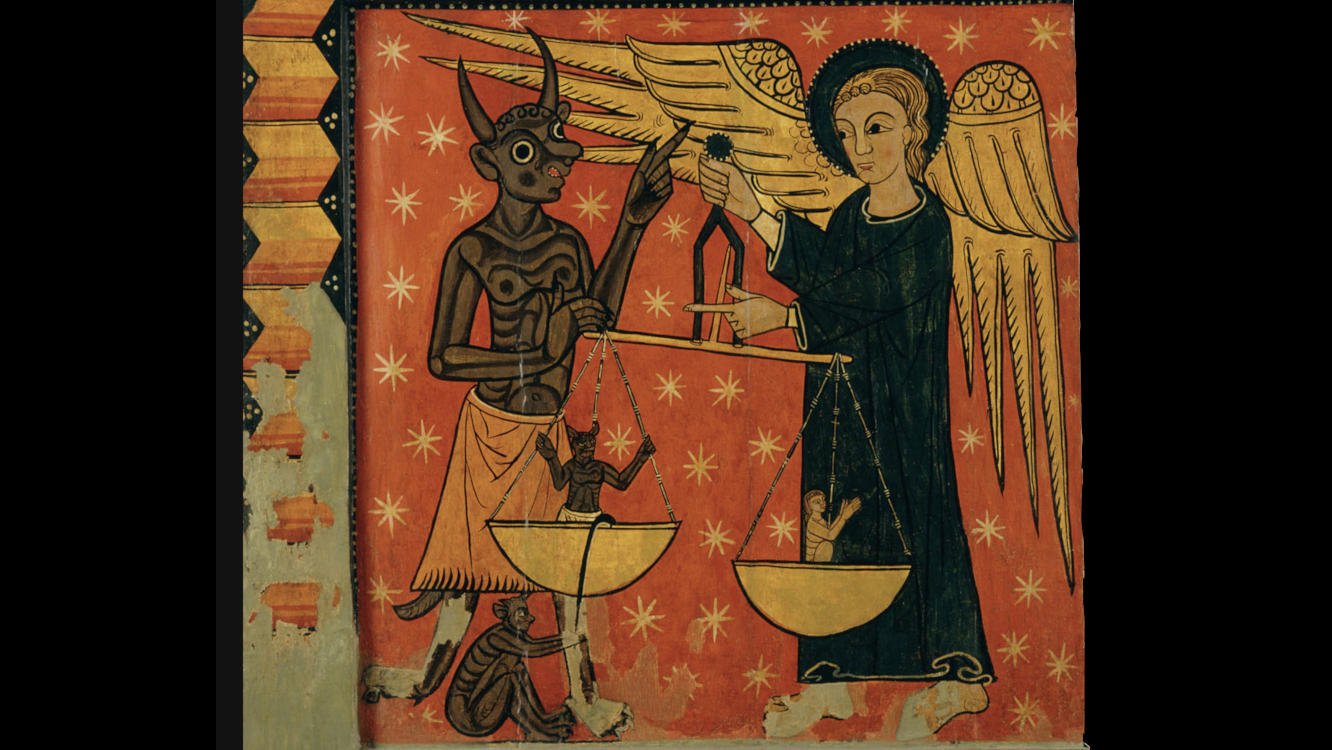
Don’t Let the Noonday Devil Tip the Scales
Anyone who has experienced the grip of depression knows it is a spiritual disease as much as it is mental and physical. Is there a spiritual path out of the dark night?
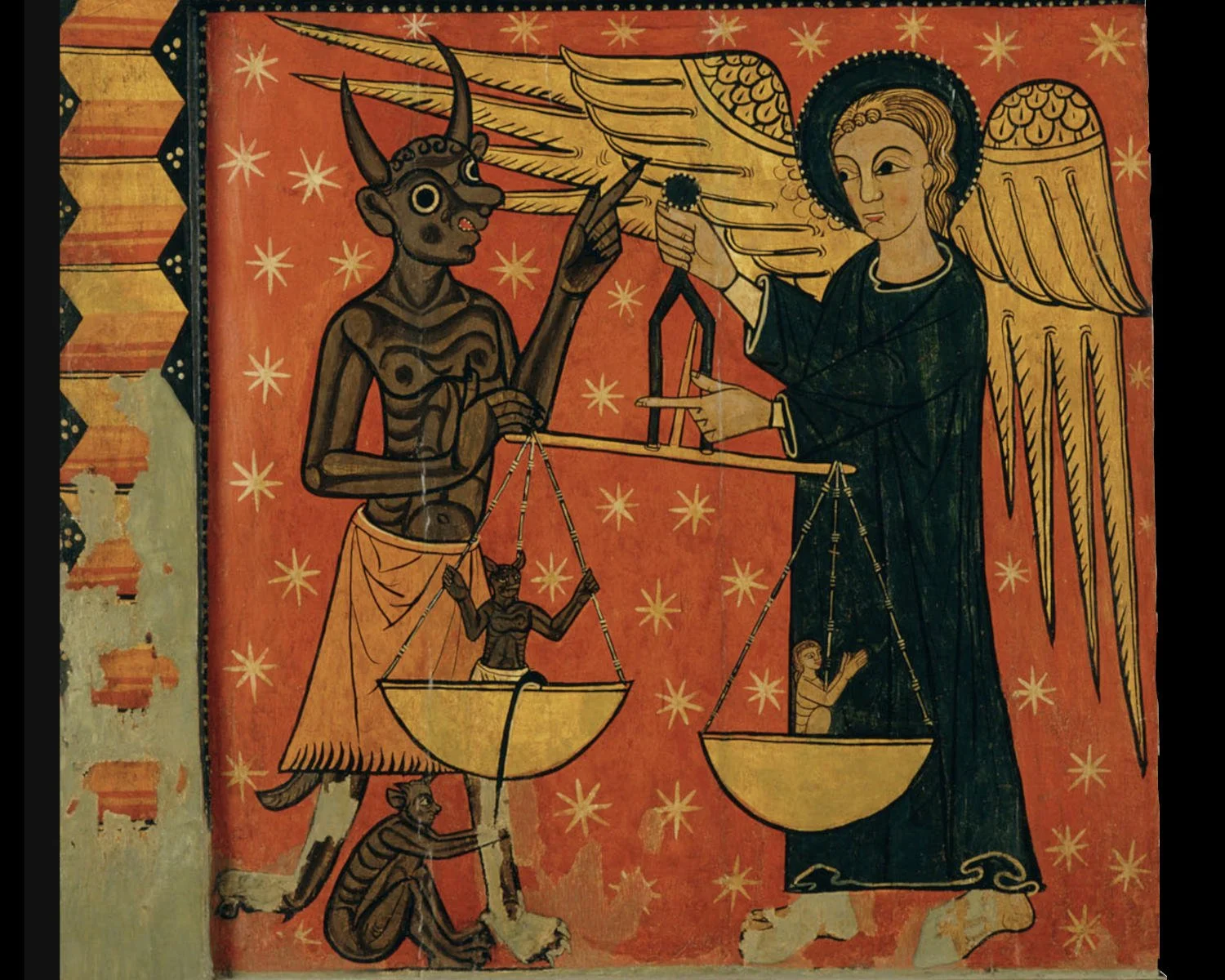
Anyone who has experienced the grip of depression knows it is a spiritual disease as much as it is mental and physical. Is there a spiritual path out of the dark night?
There is an old and wise foreboding in Catholic monastic traditions to “Beware the Noonday Devil.” That was also the title of an excellent 2007 post by Father Paul Scalia at Catholic Exchange. For monks who arose in the night for the Divine Office prayer of Matins, and then arose again early in the morning for Lauds, the noonday period sometimes induced lethargy and sloth that left monks in the grip of depression. Noonday with its exhaustion and malaise was seen as a spiritually vulnerable time. Thus in monastic life depression came to be known as “the noonday devil.”
Support for the monastic concern was also found in Sacred Scripture, notably in the Gospel: “Keep awake, therefore, for you do not know on what day your Lord is coming” (Matthew 24:42). An admonition of Saint Peter warns us to “Stay sober and alert for your opponent the devil is prowling like a roaring lion looking for someone to devour” (1 Peter 5:8). Psalm 91, my favorite of the Psalms, addressed the noonday dread more directly:
“You will not fear the terror of the night, nor the arrow that flies by day, or the pestilence that stalks in darkness, or the destruction that lays waste at noonday.”
— Psalm 91:5-6
For anyone who has ever suffered from chronic depression, Saint Peter’s characterization of “a roaring lion looking for someone to devour” pretty much captures it. So does the Psalmist’s “the destruction that lays waste at noon.” As Holy Week approached this year, I began to look at how I could challenge my own occasional depression. Then I decided to make a post of it, and invite others to join this battle.
First, however, if you are prescribed medication for depression, don’t give that up for Lent! I can offer no medical expertise for treating the insidious disease of depression, but I do have some hard-won experience on depression’s spiritual toll. I can also offer some of the spiritual guidance that, for me, at least, has proven effective in taming this roaring lion for it has devoured me too often. I’ve learned an important truth about coping with depression in my current milieu, but that lesson begins with a painful and depressing story.
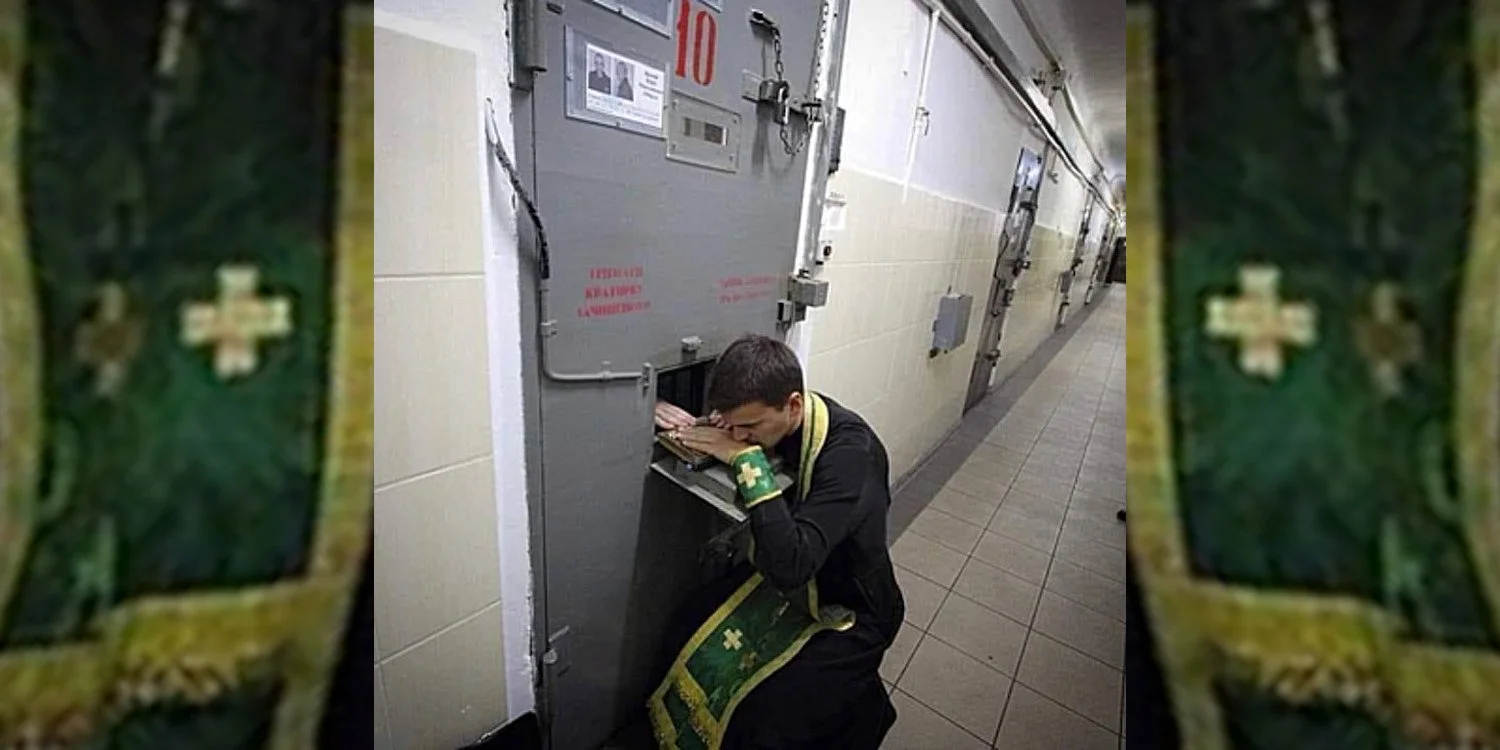
Solitary Confinement
Several years ago, when our friend Pornchai Max Moontri was still here with me, I was lying in my bunk one night at 10:00 PM. My little television was tuned to a PBS station. I was just about to turn it off when an episode of PBS Frontline began. “It’s like being buried alive,” I heard a shaky voice say. “It makes you mean; it makes you violent, it [expletive’s] up your head,” said another. Added a third, “If you don’t have a strong mind, this place can break you quick.”
Then a somber voice introduced Rodney Bouffard, Warden of Maine State Prison’s “supermax” unit who said, “You can have them do their whole time in segregation, but I don’t want him living next to me when you release him.”
I suddenly realized that I was about to see a Frontline production about the solitary confinement“supermax” unit of the Maine State Prison where Pornchai Moontri spent thirteen years before being transferred to the New Hampshire prison where we met and became unlikely friends. As Frontline introduced the story, Pornchai was fast asleep in his bunk just a few feet above me. I pondered for a moment whether to awaken him, and then decided against it.
Each night at 9:00 PM, Pornchai was given medication for a diagnosis of acute anxiety and Post Traumatic Stress Disorder. The meds generally sent him into a deep sleep by 10:00 PM on every night except Sunday when he struggled to remain awake for Mass in our cell. So I decided to brave Frontline’s “Solitary Nation” alone and then tell him about it the next day. By the time it was over, Pornchai remained fast asleep while I spent much of that night in a state of restless horror.
The Frontline cameras spent six months filming in a place rarely seen by the public. I followed the plight of a few Maine prisoners who spent months at a time in and out of solitary confinement, rendered, as the Warden predicted, socially disabled and emotionally broken because of their months in solitary. One prisoner who spent a year there in one stretch was the one quoted above who described how it made him mean, violent, and broken.
As the documentary unfolded, I saw prisoners covered in blood having cut themselves in their solitary madness. I saw fecal matter come flying out the food slots in the cell doors during fits of anger toward guards. I watched the horror of a screaming young man being placed for the first time in one of those bloodstained and horribly smelling tombs. I saw men so broken and mentally ill by the time they moved on that I knew they could not last long out among the living, only to land in solitary again.
Then I recalled that Pornchai spent a total of over thirteen years there, confined in one stretch of solitary confinement for three-and-a-half years in what had to be the longest any prisoner survived in Maine’s supermax. I could conceive of no modern horror more destructive to one’s humanity than what I witnessed on that small screen. The fact that I was seeing for the first time the conditions Pornchai lived in, and still lives with, made me unable to turn away or turn it off.
I remember reading Pornchai’s somber details in “Welcome to Supermax,” a courageous article he wrote years ago published by the prison reform organization, Solitary Watch. I knew Pornchai never exaggerated any of his experiences there, but articles can be easy to intellectualize. Now I had a visual to go along with it, and it woke me up to the bitter reality of what had happened to him.
It was important that I understand this. If you want to understand it as well, I recommend viewing “Solitary Nation” at PBS.org. In the morning when I told Pornchai about this he said simply, “Now you know.”
The human mind tends to store up its traumas. Because we do not know how to cope with them, we just shelve them away where they remain unaddressed, unresolved, and gradually inflated. We relive them again and again to inflict their suppression of all consolation and peace in our psyche.
When I look back over the years since Pornchai was moved from there to here with me, I can see more clearly now that he came back from the brink of total despair. Pornchai himself wrote about this. It was after our entire nation suffered trauma in Uvalde, Texas. In a mirror image version of that story in Thailand, a former police officer off the rails on drugs went into a Thai preschool and murdered 36 people including 24 preschool children. It was one year after Pornchai returned to Thailand after a 36-year absence. Nothing like this had ever happened in Thailand before, and it happened just a few kilometers from the village where Pornchai was born. As the Kingdom of Thailand struggled to find meaning in any of this, Pornchai boldly wrote about it and what he wrote helped to mend many hearts (including mine). His post was “Pornchai Moontri: Elephants and Men and Tragedy in Thailand.”
When Pornchai first arrived here after solitary confinement in the State of Maine, I met him for the first time in the prison dining hall. One of my friends, Jaclan Wawarunto, a young man from Indonesia whom I had helped to prepare for deportation, saw me enter the dining hall and shouted “Hey, G, sit over here with us. This is my new friend Pornchai. He just got here, and he wants to ask you a question.” So I sat across from them. The young man Jaclan wanted me to meet appeared hostile. He glared at me as he said, “I just want to know if you can help me get transferred to a prison in Bangkok.” Ironically, I had just finished reading 4,000 Days, a book about the horror of life in a Bangkok prison. I told him that I would not help him do anything that would only destroy him. He turned to Jaclan angrily and asked, “Who is this jerk?”
That was our first encounter.
When Pornchai and I first became friends in 2006, he had periods in which he sank into deep, hopeless depression. I remember one day that his cellmate at the time came to me and said, “I don’t know what to do. He hasn’t spoken or eaten or even gotten out of bed in days except to use the bathroom.” That was many years ago. I remember going to talk with Pornchai, and feeling very concerned about the lifeless expression and hopelessness in his face. It is a common look in prison, but Pornchai had perfected it. So I told him that I was not leaving his cell “until you get your butt out of that bunk and talk to me.” He obliged, but only to get rid of me. The anger in his eyes masked deep, deep chasms of pain and distrust born of betrayal and abuse.
Over the long run, as you know if you have been reading from Beyond These Stone Walls, friendship found a well of trust, and then a source of hope, and then the courage to have faith, and then the discovery of Divine Mercy and, finally, a radical conversion. All these years later, it seems impossible to reconcile the account above with the face of Pornchai Moontri at his 2012 high school graduation in prison, it radiates hope and promise and redemption.
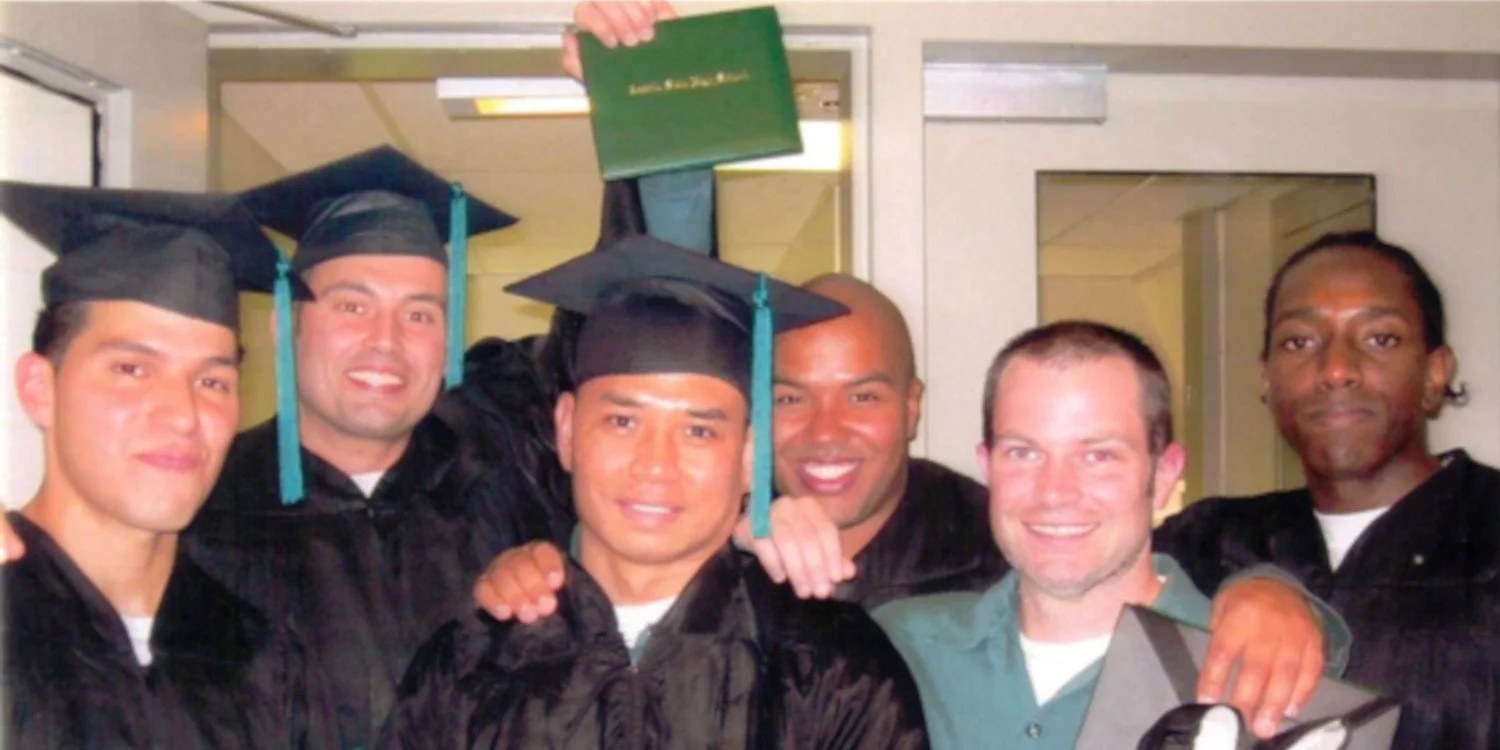
The Destruction That Lays Waste
How does one go from years of abuse, followed by years of brutal solitary confinement in a supermax prison to that? The question becomes ever more mysterious if you watch the Frontline video. As Pornchai himself described that transformation, “I woke up one day with a future when up to then all I ever had was a past.”
Some years ago, as seems inevitable in prison, I sank into a depression of my own. Actually, I have noticed that every time I have become depressed in prison, it was always a result of thinking myself into the depression. Feelings of hopelessness and futility crept in, and as I dwelled on them, I played their messages over and over in my mind, filling up all the empty moments with my inner language of injustice and resentment.
I always ended up on the slippery slope toward a bout of depression. Few of my episodes lasted long, but at some point, the destruction that laid waste came from inside my own mind, and left me unprepared to stand my ground. It was precipitated by a visit from my bishop, the first after many years of silence, and presumably the last.
The visit was far from transcendent. Every attempt I made to speak in my own defense was rebuffed and silenced with the raising of his hand to stop me from speaking. He was clearly not there to listen. It became clear to me that the script had already been written, and Church officials would continue to refuse to allow any defense, any due process. At the same time, an American cardinal assured writer, Ryan A. MacDonald that every accused American Catholic priest is afforded due process and a full canonical defense. The disconnect between rhetoric and reality is… well… depressing!
As I sank into my own depression, I became oblivious — as the noonday devil often demands — to its effect on others. Then one day I witnessed something I had not seen for a long time in the face of my friend, doubt, uncertainty, and grief. Pornchai’s own bouts of suffering from deeply felt discouragement and abandonment had diminished. Now he was suffering from mine. As my spirit slowly descended, I came to see that I could not afford to let it fall any further. I was losing my grip not only on my own cross, but also on someone else’s. Just imagine Simon of Cyrene letting that happen.
Our Editor at the time sent me a message that she had ordered a book for me. I doubted I would ever see it as most books sent to me require that I give one up to receive it, and that is sometimes difficult. Without a hitch, however, the book arrived, and it is a treasure. The book was The Catholic Guide to Depression by Aaron Kheriaty, MD, with Father John Cihak, STD (Sophia Press, 2012). I had a chuckle because our Editor at the time was in Australia from where she ordered the book, while Sophia Press its publisher was but 15 miles away from me in Manchester, New Hampshire. When I first opened the book, I landed immediately on a page I believe I was meant to read.
“The well-known psychiatrist Viktor Frankl observed that hope is essential if one is to go on living under difficult circumstances. Frankl was a Jew imprisoned in Auschwitz who years later wrote his most famous work, Man’s Search for Meaning… . Frankl argued that survival in such circumstances required that a person find some meaning, some noble end or purpose to his life.”
— The Catholic Guide to Depression, p. 210
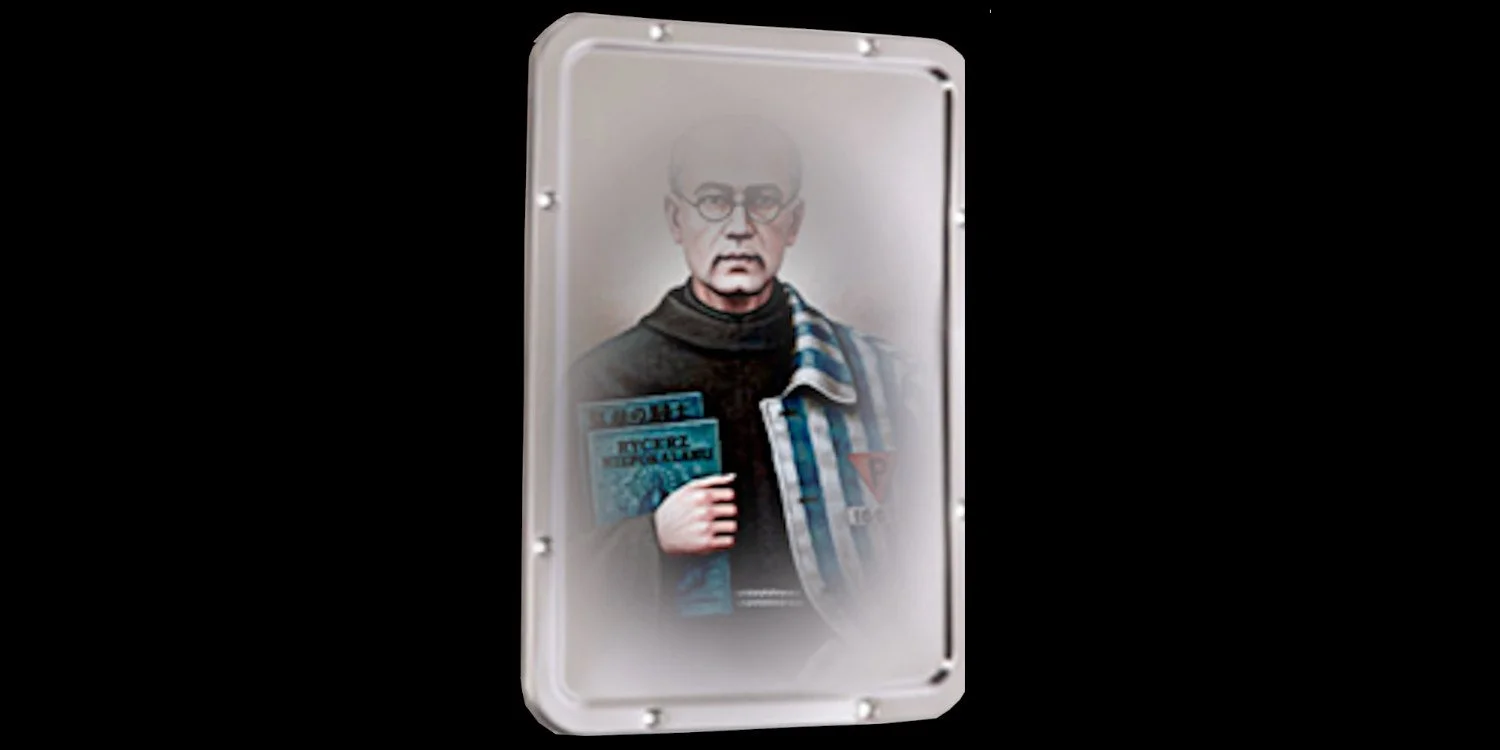
This blog began in 2009 with that same book, Viktor Frankl’s, Man’s Search for Meaning. In a subsequent post for this blog, I wrote back then of how it led me to this great modern Saint of Auschwitz, how it taught me to cope with the prison of depression and despair by placing the pain of others ahead of my own, and of how Pornchai, moved by Saint Maximilian’s sacrifice, took his name at the time of his Divine Mercy conversion in 2010. I wrote of how finding meaning in his suffering transformed Saint Maximilian Kolbe, and ultimately transformed us in my post, “Saint Maximilian Kolbe and the Gift of Noble Defiance.”
Saved by Hope
I found it astonishing that both Viktor Frankl and Aaron Kheriaty, MD went on in their respective books to cite Saint Maximilian Kolbe as an example of the virtue of hope lived for the good of others. “Hope is a virtue that changes everything,” Dr. Kheriaty wrote. He quoted Pope Benedict XVI in his magisterial encyclical, Spe Salvi, Saved by Hope: “The one who has hope lives differently.”
Around the time I was first encountering Dr. Kheriaty’s book, Pornchai Moontri and I were in the prison’s main dining hall for dinner. It was unusual that we were there at a time when it was especially crowded. We managed to find a table with two empty seats, but quickly other tables all filled up with several prisoners standing and holding their trays while looking for a seat. Suddenly one of the men sitting with us got up and left while one of the waiting inmates quickly moved into his empty seat. We did not know this person, and he did not speak at first. So Pornchai and I just continued our conversation. Suddenly this young man looked very interested. He said, “Excuse me, can I ask you guys a question?” I said, “Sure.” He asked, “Do you write for a blog?” And then to Pornchai he asked, “Are you from Thailand?” Most prisoners would find this very invasive, but we did not. The young man said that he had arrived in the prison only a few weeks earlier, but before his arrival, while being sentenced was still a looming threat, he was visited in a county jail by his grandmother. She told him that she had been reading about two guys in the New Hampshire Prison “who lived differently from everyone else.” The young man said, “You guys are famous! My grandmother won’t believe I met you.”
So Pornchai invited him to the Catholic Mass in the prison chapel. This was sadly in the days before Covid and before any sign of a Catholic Mass was extinguished. But our association with this young man gave him hope, something he expressed to us with gratitude as he was preparing to leave prison two years later.
Only by failing to instill hope in others can the roaring lion of depression ever devour you. Once such a thing takes place, there is no room for depression. It loses its will to feed itself, and ceases its descent. Saint Maximilian gave his life because he found a suffering greater than his own, and that became his cross, willingly borne.
The key to coping with depression is to become Maximilian Kolbe, to bear the cross of another, never putting it down long enough to make room for self-absorption. It gives birth to hope, and “the one who has hope lives differently.” It’s what places you, as Psalm 91 promises, “In the shelter, of the Most High, abiding in the shadow of the Almighty,” a worthy destination for a Lenten journey.
+ + +
Editor’s Note: Dr Aaron Kheriaty has a one-hour video about coping with depression. The setting was an interview at Franciscan University in which he discusses the major points of A Catholic Guide to Depression.
+ + +
Note From Father Gordon MacRae: Thank you for reading and sharing this post. Sharing it on social media may place it before someone who really needs to read it. You may also like these related posts from Beyond These Stone Walls:
Pornchai Moontri: Elephants and Men and Tragedy in Thailand
Saint Maximilian Kolbe and the Gift of Noble Defiance
The Measure By Which You Measure: Prisoners of a Captive Past



The Eucharistic Adoration Chapel established by Saint Maximilian Kolbe was inaugurated at the outbreak of World War II. It was restored as a Chapel of Adoration in September, 2018, the commemoration of the date that the war began. It is now part of the World Center of Prayer for Peace. The live internet feed of the Adoration Chapel at Niepokalanow — sponsored by EWTN — was established just a few weeks before we discovered it and began to include in at Beyond These Stone Walls. Click “Watch on YouTube” in the lower left corner to see how many people around the world are present there with you. The number appears below the symbol for EWTN.
Click or tap here to proceed to the Adoration Chapel.
The following is a translation from the Polish in the image above: “Eighth Star in the Crown of Mary Queen of Peace” “Chapel of Perpetual Adoration of the Blessed Sacrament at Niepokalanow. World Center of Prayer for Peace.” “On September 1, 2018, the World Center of Prayer for Peace in Niepokalanow was opened. It would be difficult to find a more expressive reference to the need for constant prayer for peace than the anniversary of the outbreak of World War II.”
For the Catholic theology behind this image, visit my post, “The Ark of the Covenant and the Mother of God.”