“There are few authentic prophetic voices among us, guiding truth-seekers along the right path. Among them is Fr. Gordon MacRae, a mighty voice in the prison tradition of John the Baptist, Maximilian Kolbe, Alfred Delp, SJ, and Dietrich Bonhoeffer.”
— Deacon David Jones
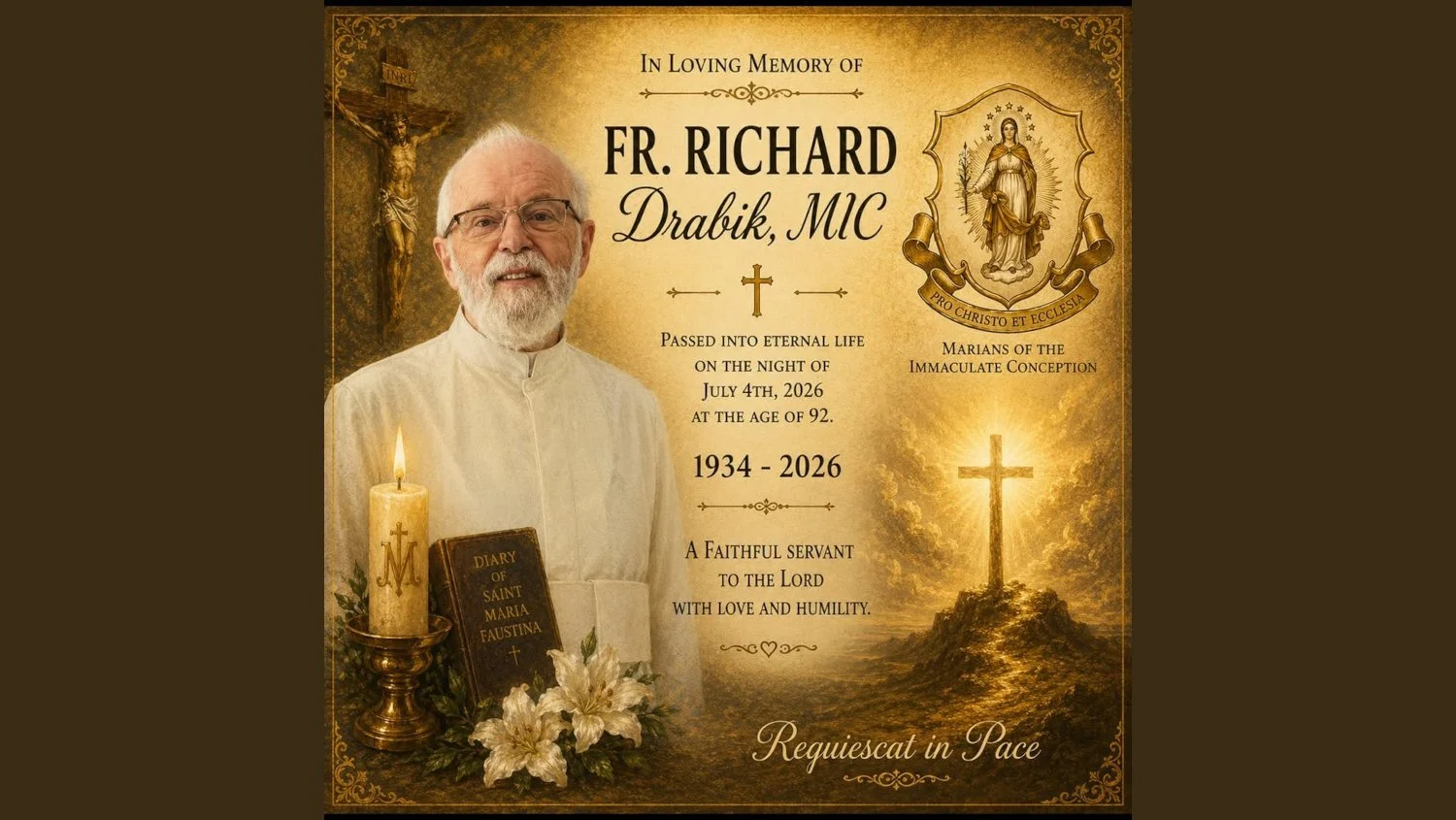
Fr Richard Drabik Introduced Divine Mercy to Saints and Villains
Fr Richard Drabik, MIC, my longtime spiritual director and friend who wrote the Preface to the Diary of Saint Faustina, passed into Divine Mercy on July 4, 2026.
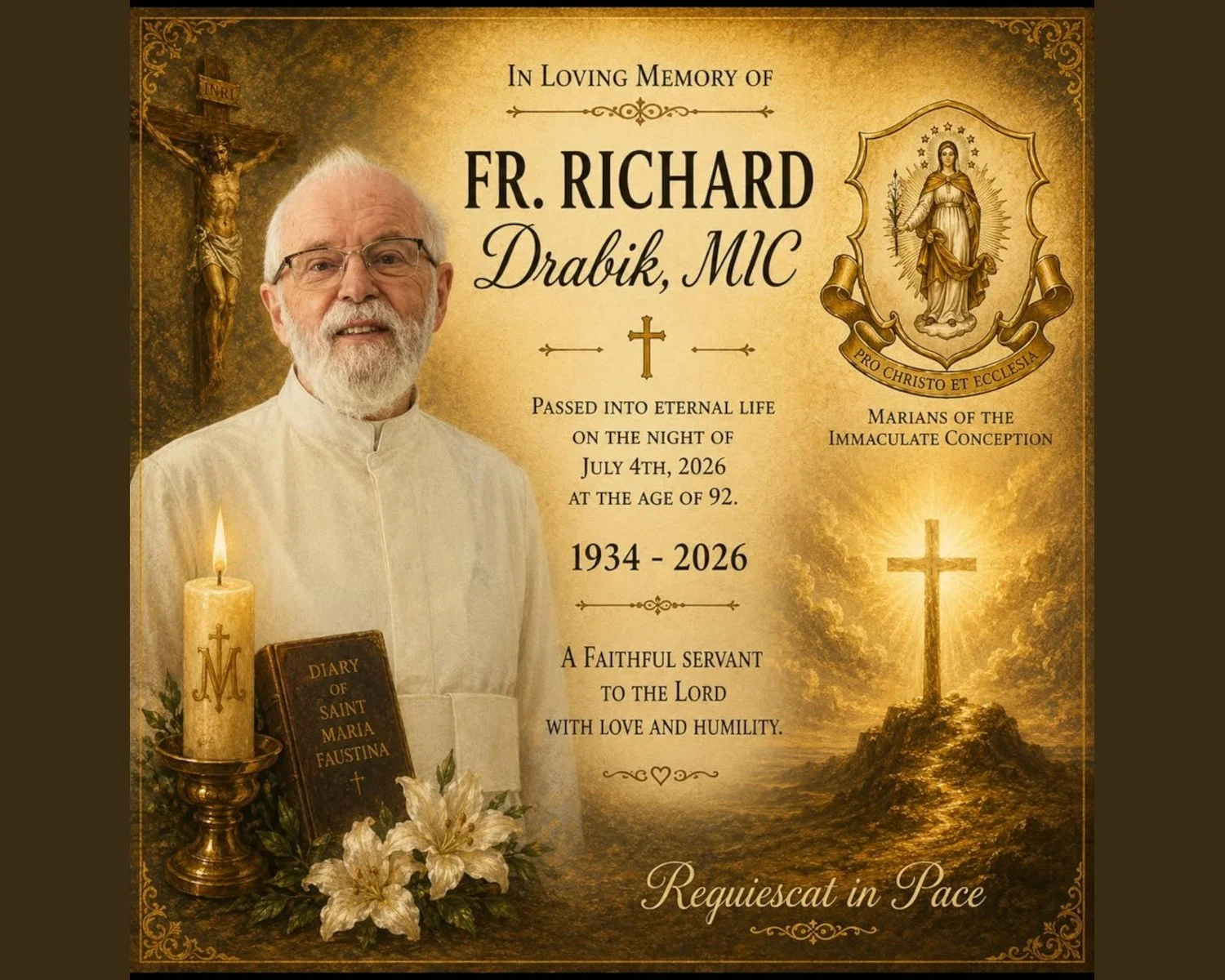
Fr Richard Drabik, MIC, my longtime spiritual director and friend who wrote the Preface to the Diary of Saint Faustina, passed into Divine Mercy on July 4, 2026.
July 8, 2026 by Father Gordon MacRae
“Let the greatest sinners place their trust in My mercy. They have the right before others to trust in the abyss of My mercy . . . To such souls I grant even more graces than they ask. I cannot punish even the greatest sinner if he makes an appeal to My compassion, but on the contrary, I justify him in my unfathomable and inscrutable mercy.”
— Diary of Saint Faustina, 1146
In April of 1993, my friend Father Richard Drabik and I both served on the staff of the Servants of the Paraclete Spiritual and Psychological Renewal Center for priests. Father Drabik was at the time preparing to go to Rome to concelebrate with Pope John Paul II the Mass of Beatification of Sister Maria Faustina Kowalska, now known as Saint Faustina, the Saint of Divine Mercy. Her Beatification took place on the Sunday after Easter that year, and Pope John Paul II decreed that henceforth that Sunday would be universally known in the Roman Calendar as Divine Mercy Sunday.
Father Richard Drabik was formerly Provincial Superior of the Marian Fathers of the Immaculate Conception. He wrote the Preface to the Diary of Saint Maria Faustina Kowalska that has become globally famous. Just before leaving for her Beatification in Rome in 1993, Father Drabik stopped by my office to invite me to write a brief prayer, which would be placed on the altar by Pope John Paul during the Offertory in the Mass for Beatification. I did not know what to write, so on the day of my friend’s departure I handed him a small scrap of paper to place with his intentions for the Mass. I folded it and sealed it in a small envelope that would fit easily in his breast pocket.
No one ever knew what I wrote. The note with my petition was simple: “I ask for the intercession of Blessed Faustina that I may have the courage to be the priest God calls me to be.” It was an odd petition, and today I have no idea what I was thinking about when I wrote it and handed it to Father Drabik on his way out the door.
Exactly two weeks after the Beatification of Sister Faustina, on May 3, 1993, police showed up at my door. They carried with them a secret indictment and a warrant for my arrest for claims alleged to have occurred sometime between 1978 and 1983, ten to fifteen years earlier. They were the claims for which I faced trial and was summarily sent to prison as Ryan A. MacDonald wrote in “Judge Arthur Brennan Sentenced Father Gordon MacRae to Die in Prison.”
Those claims of abuse never took place at all, but I will always remember the words of a police detective as the officers took me away despite my denials: “It doesn’t matter whether you’re guilty. Your Church is!” It was a scene reminiscent of another era I wrote of in “Catholic Scandal and the Third Reich: The Rise and Fall of a Moral Panic.”
The detective’s words could just as easily have been heard in Sister Faustina’s own World War II-era Poland as Father Maximilian Kolbe and many other priests were led off to prison on trumped up charges.
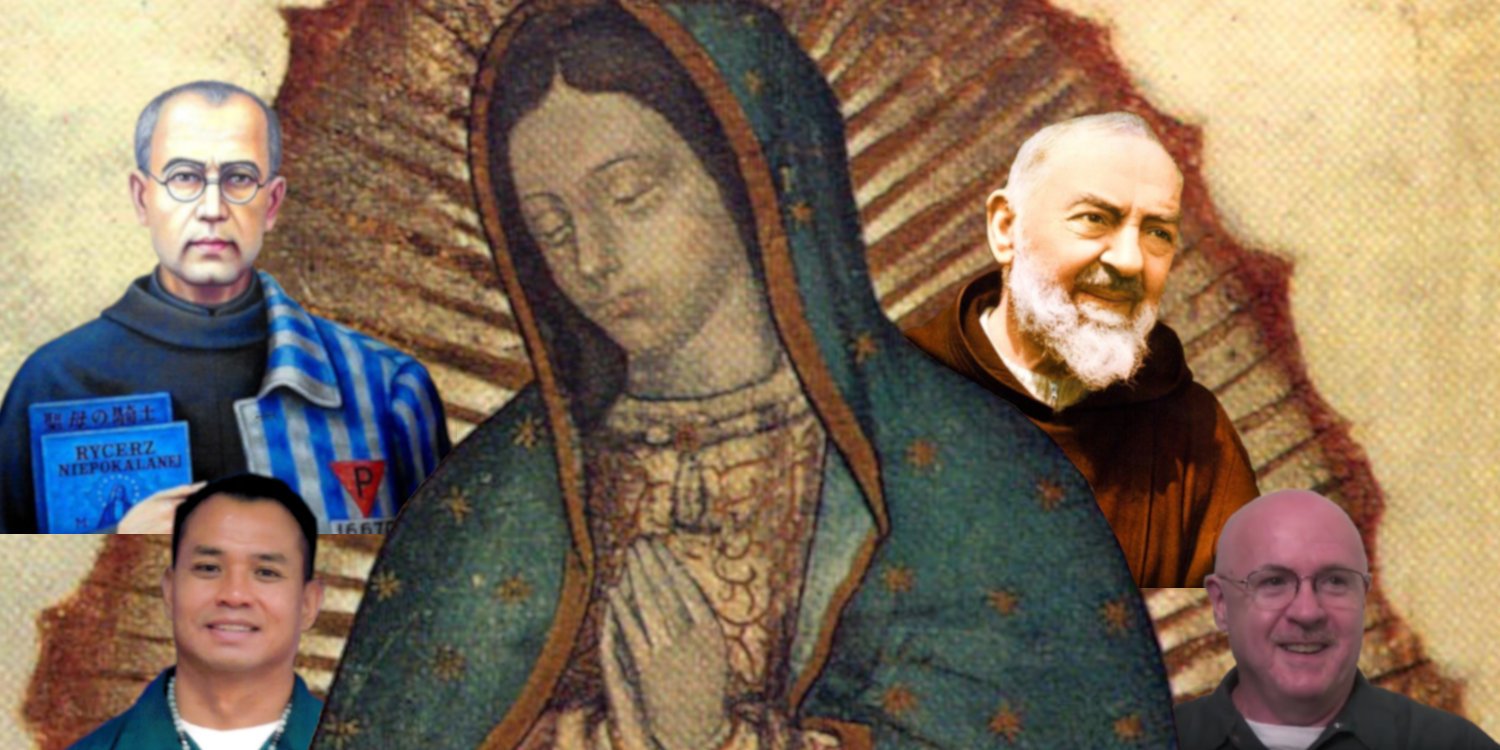
Divine Mercy Behind and Beyond These Stone Walls
Last April 9, I turned 73 years old in prison. I was 41 years old when I was sent to prison, and was in my twenties when my fictitious crimes were alleged to have been committed. I will be age 108 when I next see freedom. The process of reopening a case alleged to have occurred over 30 years ago, and which never contained any evidence to debunk or attack, is a grueling uphill battle. If there is any hope at all for freedom and justice, it is vague hope. It is a hope that exists on the other side of an abyss.
Astute readers remember that I was given several opportunities before my trial to plead guilty and serve only one year in prison. I simply could not fathom doing this. Many years later, Dorothy Rabinowitz, a Pulitzer Prize-winning writer for The Wall Street Journal, took up this case for investigation. She reported that she questioned the detective about the absolute lack of any corroborating evidence. The detective was reported to have said, “Why didn’t he just take the deal?” In a five-minute video interview years later, Ms. Rabinowitz summed up the true nature of this matter.
The readers of Beyond These Stone Walls have helped in so many ways to show us the face of Divine Mercy. Your reading BTSW has given me a global voice when having any voice at all is usually denied to any priest so accused. And having a voice is also often denied to prisoners, as a class of American citizens stripped of rights, including the right to vote. I do not use my access to this voice just to whine about prison conditions. That would be a waste. Instead, I try to employ this voice as an extension of my priesthood, one that is influenced and encapsulated, even defined, by Divine Mercy.
Earlier in my years in prison, my old friend and spiritual director, Father Richard Drabik, visited me. He did so until age and distance made such visits no longer possible. During one of his visits after my publishing began in 2009, I asked him if he had seen the blog that I write from prison, but have never seen. Being a prisoner, I also had no sense of its reach or impact. “It isn’t a blog,” Father Richard said. “It’s a bullhorn!”
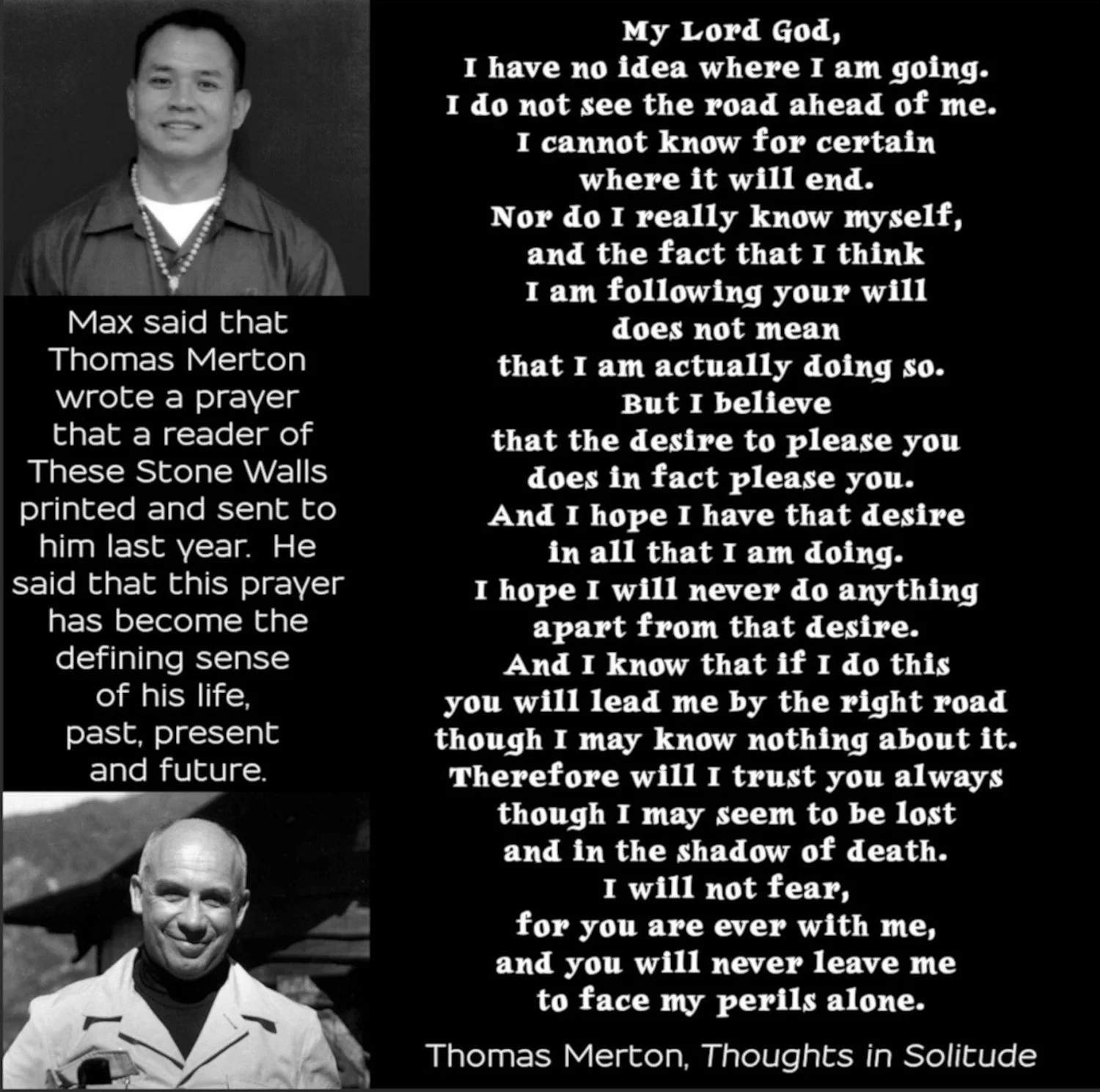
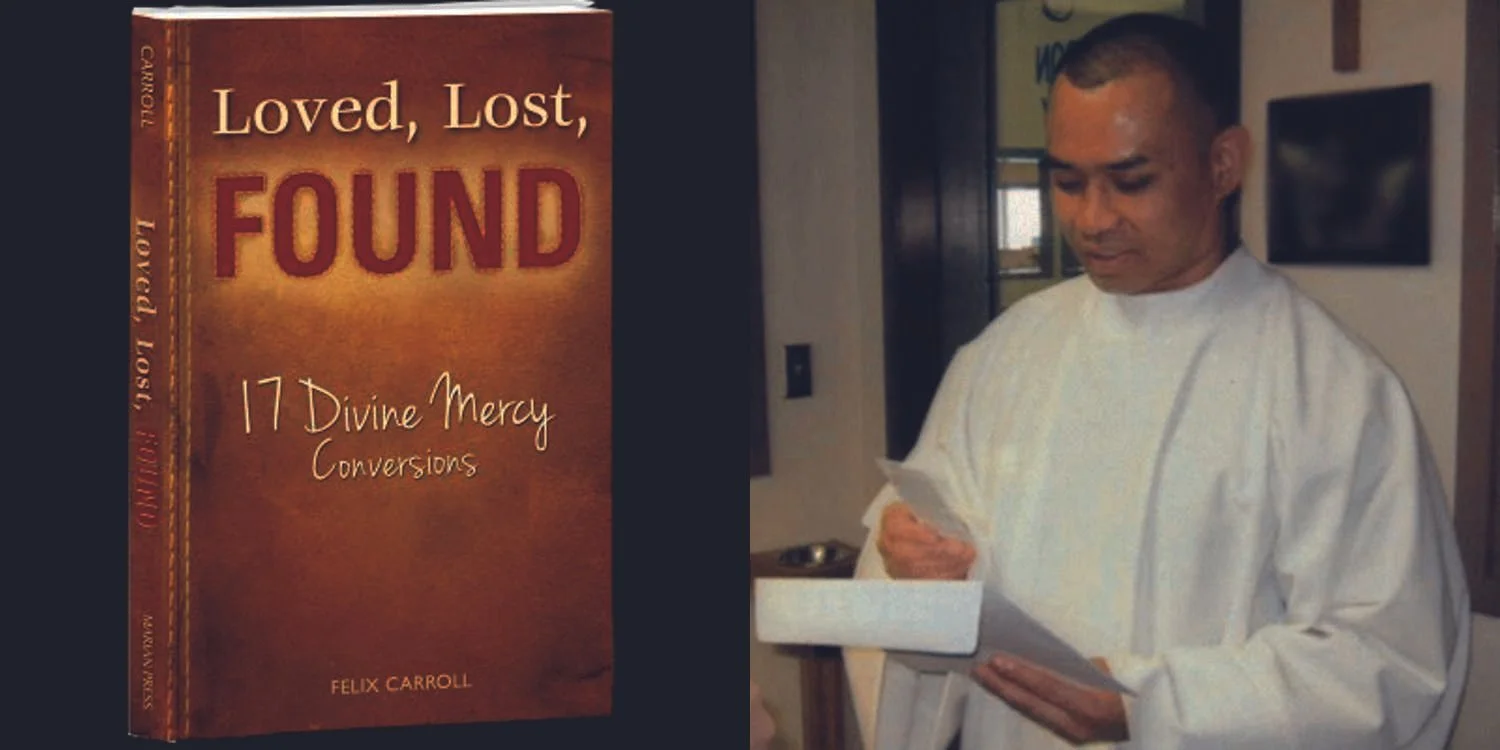
Later, the community of Marians of the Immaculate Conception at the National Shrine of The Divine Mercy took up the slack. They came with an invitation to me and other prisoners to take part in a great Divine Mercy adventure. For some, it became the most important part of our lives here. This was especially so for my friend Pornchai Maximilian Moontri, whose life story was captured by Felix Carroll in the book, Loved, Lost, Found: 17 Divine Mercy Conversions. Pornchai’s story is well known around the world now thanks to the efforts of Catholic League President Bill Donohue. Dr. Donohue invited Pornchai to write his story in his own words. The result was published by the Catholic League as “Pornchai’s Story.” In just four pages, it was powerful and phenomenal. Pornchai was oppressed by the thought that at the end of his own prison sentence he would be deported to Thailand where he no longer knew anyone or had any support at all. Pornchai had been taken from Thailand against his will at age 11, and now would be left there alone at age 47. It was a chilling thought for Pornchai, and also for me. I assured him that we would find a way to build a bridge to Thailand.
Divine Mercy, being what it is, created a roadmap for Pornchai. Father Richard, who was deeply moved by Pornchai’s Story, shared it with others who became links in a chain. One of them was the late Father Seraphim Michalenko, Vice Postulator for the cause of Sainthood for Saint Faustina. He ended up in Thailand meeting with a group called Divine Mercy Thailand. Father Seraphim went there armed with a copy of the Diary of Saint Faustina and a copy of Pornchai’s Story, which he read in English to the assembled group. Suddenly, our bridge to Thailand was built.
Felix Carroll also wrote a wonderful article for Marian Helper Magazine entitled, “Mary Is at Work Here.” The truth of that is today without question.
+ + +
Note from Father Gordon MacRae: Thank you for reading and sharing this post about my great good friend and mentor in the priesthood, Father Richard Drabik, MIC. Don’t misunderstand the opening quote here in this post. Only God knows whether Father Richard is a saint, but he was certainly no villain. He spent a lifetime reaching out to them, however, and reeling them in to show them the Light of Divine Mercy. That was what I liked most about my friend, and what I most try to emulate. You might find his enduring presence in these related posts from Beyond These Stone Walls:
A Priest and Prisoner in the Light of Divine Mercy
Divine Mercy in a Time of Spiritual Warfare
The Parable of a Priest and the Parable of a Prisoner
I greatly treasure the image atop this post. Father Richard’s smile is now engraved upon my heart.

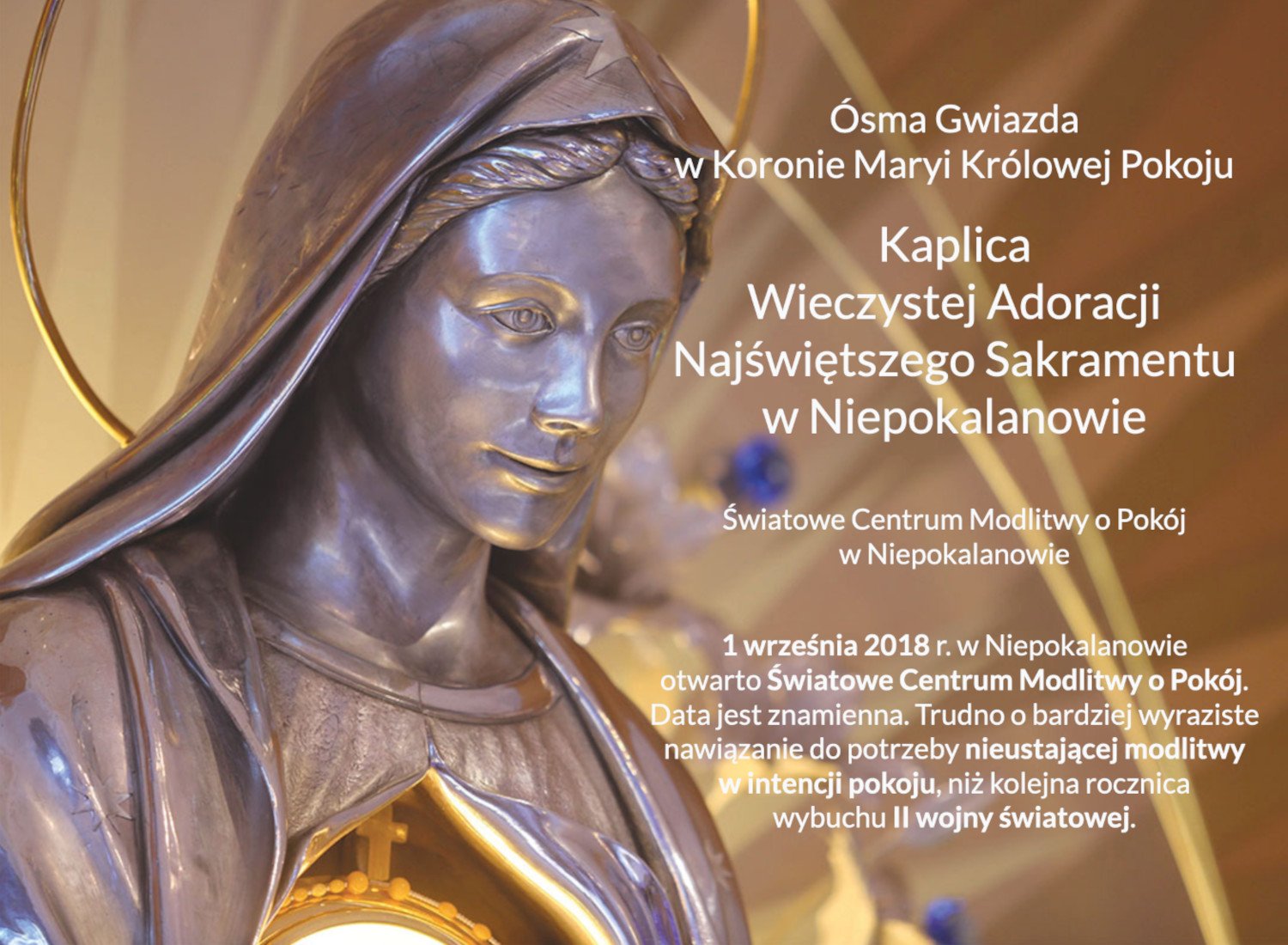

The Eucharistic Adoration Chapel established by Saint Maximilian Kolbe was inaugurated at the outbreak of World War II. It was restored as a Chapel of Adoration in September, 2018, the commemoration of the date that the war began. It is now part of the World Center of Prayer for Peace. The live internet feed of the Adoration Chapel at Niepokalanow — sponsored by EWTN — was established just a few weeks before we discovered it and began to include in at Beyond These Stone Walls. Click “Watch on YouTube” in the lower left corner to see how many people around the world are present there with you. The number appears below the symbol for EWTN.
Click or tap here to proceed to the Adoration Chapel.
The following is a translation from the Polish in the image above: “Eighth Star in the Crown of Mary Queen of Peace” “Chapel of Perpetual Adoration of the Blessed Sacrament at Niepokalanow. World Center of Prayer for Peace.” “On September 1, 2018, the World Center of Prayer for Peace in Niepokalanow was opened. It would be difficult to find a more expressive reference to the need for constant prayer for peace than the anniversary of the outbreak of World War II.”
For the Catholic theology behind this image, visit my post, “The Ark of the Covenant and the Mother of God.”
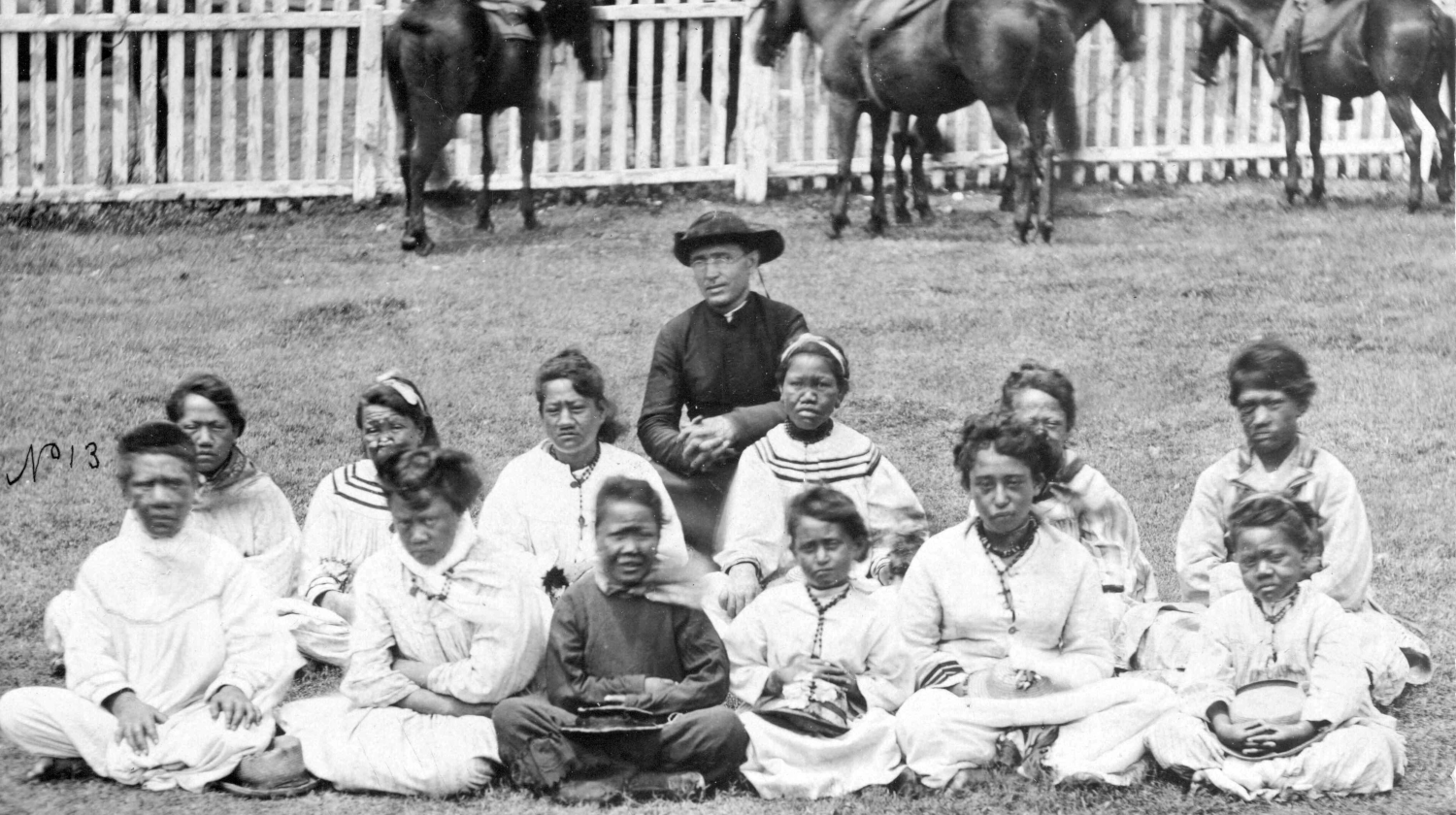
A Lesson From Saint Damien of Molokai, Leper Priest
Should the State’s flawed justice be mirrored in the Church? This must be asked and the truth written. But ask as well, “Can a leper priest also serve God?”
Should the State’s flawed justice be mirrored in the Church? This must be asked and the truth written. But ask as well, “Can a leper priest also serve God?”
May 10, 2026 by Father Gordon MacRae
This is a post I wrote on May 6, 2015, and everything in it is relative to that time frame. However, just about everything in it also impacts the current time frame. So I am posting it again.
+ + +
Pornchai Moontri and I and other friends are just beginning another retreat program in prison sponsored by the National Shrine of The Divine Mercy and the Marians of the Immaculate Conception. One of the texts used for the retreat is, You Did It to Me, one of many such books by Father Michael Gaitley, MIC.
Something happened over the last few weeks that cast yet another, but brighter light on recent events that have so overshadowed Beyond These Stone Walls. The text for the retreat is You Did It to Me by Father Michael Gaitley, MIC. The timing of it is by design, of course, but not by my design. I just nudged Pornchai Max and pointed out a photo of both of us in the middle of the book. “My, for prisoners, you guys get around,” wrote BTSW reader Mary Fran Cherry back then. She alerted me to our photo in the book. The retreat lifted a corner of the shroud that overshadowed my life behind these prison walls beginning on Wednesday of Holy Week.
Ryan A. MacDonald wrote of this in “For One Priest, A Fate Worse than Dying in Prison,” the second of his excellent two-part analysis of a recent court ruling that was a setback in my hope for justice and freedom. I have much gratitude for Ryan’s effort, and especially so because he left you with hope by telling you that I learned of this decision just as I was reading, You Did it to Me.
While reading that book, my eyes were opened a little, just enough to see what discouragement kept me from seeing. It reminded me so vividly of a story that took place on the road to Emmaus at another time of discouragement:
“That very day two of them were going to a village named Emmaus, about seven miles from Jerusalem, and talking with each other about all these things that had happened. While they were talking and discussing, Jesus himself drew near and went with them. But their eyes were kept from knowing him … Then one of them, named Cleopas, answered him, ‘Are you the only visitor to Jerusalem who does not know the things that have happened there in these days?”
— Luke 24:13-23
Someone might ask that same question of me if I lapse into writing about a Divine Mercy retreat without addressing “all these things that had happened” in the arena of justice and injustice. So I am also most grateful to New Jersey Attorney Vincent James Sanzone for his enlightened analysis of the legal precipice awaiting me and other falsely accused priests in both Church and State: “A Criminal Defense Expert Unfurls Father MacRae Case.” Prior to writing that guest post, Attorney Sanzone wrote a brilliant letter to Pope Francis about this matter, and to EWTN. I believe the EWTN letter may have been what prompted Brian Fraga and the National Catholic Register to publish “New Hampshire Priest Continues the Long Road to Clear His Name” (NCRegister.com, March 18, 2015).
Was I discouraged by the outcome revealed to me on Wednesday of Holy Week? Yes, I was. Was I devastated as some have suggested? I was, for a time. Have I given up? Not hardly. That is about all I have to offer about this. More important things have happened, and I have no time to descend into a litany of woe-is-me. Another day, perhaps. It is time now to step out of this arena of justice and all its flaws, and to step back onto that road to Emmaus.
Voice from Beyond
As I wrote at the beginning of this post, something happened that cast a brighter light — brighter than my discouragement, at least — on the events of recent days. Let me first tell you what happened.
On the evening of Divine Mercy Sunday as this retreat began, Pornchai Maximilian sat in a chair to my right and Michael Ciresi to my left. Along with seventeen other prisoners who joined us, we watched and listened to a DVD presentation by Father Michael Gaitley to introduce the retreat. It was excellent, of course, and Pornchai was riveted to the projection of Father Gaitley on the prison chapel wall.
Every now and then the camera recording Father Gaitley swept over his audience, and there, seated near the back, I spotted a familiar face: Marian missionary Eric Mahl. You may recall that Pornchai and Eric Mahl both had chapters featuring them in Felix Carroll’s great Divine Mercy book, Loved, Lost, Found: 17 Divine Mercy Conversions. Later they met and became friends and brothers. I nudged Pornchai and pointed as Eric appeared on the wall. Just at that moment, Eric looked toward the camera and smiled. Pornchai smiled back.
The next day a letter arrived for Pornchai. As though right on cue, it was from Eric Mahl. It was a copy of a letter from Eric to some people who are helping Pornchai by organizing an effort to secure his future in Thailand when he is free from these stone walls. During his missionary outreach to prisons, Eric Mahl has had three meetings with Pornchai. On the last one, he was accompanied by Father Seraphim Michalenko who served as Vice-Postulator for the Cause of Canonization of Saint Maria Faustina. I wrote of that meeting in “Father Seraphim Michalenko on a Mission of Divine Mercy.” Eric also wrote of that meeting in his letter:
“This very holy priest had the opportunity to meet one-on-one with Pornchai in the Chapel, to talk to him and get to know him. When [Father Seraphim] and I were on our way home back to the Shrine in Massachusetts, he told me that the peace in that Chapel must be what Heaven is like and that Pornchai Moontri is a very holy and beautiful child of God. I write all of this to let you know how I desire to see this restored child of God out of prison and living free in Thailand where he could help the rest of society.”
— Letter of Eric Mahl
On April 19, the second Sunday evening of our retreat, we watched the second of Father Gaitley’s DVD presentations, and this time Pornchai listened intently while also looking for his friend Eric Mahl in the background. Later that evening, during a small group discussion led by Marian volunteer Jim Preisendorfer, I heard something astonishing. During Father Gaitley’s presentation, he spoke of the eight reasons why we do not appreciate the Trinity. One of them, Reason Number Seven, is “Because we listen to the voice of the enemy.” By way of example, I wrote in my notes:
“Part of Satan’s strategy is to keep us unfocused from our destiny. He lures us into being satisfied with this world so that so many of us just settle for what this life gives us, or despair over what this life denies us.”
When I read my own notes, I could not even remember writing that. It was as though my pen were on autopilot. Then table moderator Jim Preisendorfer asked for a comment on “Reason Number Seven.” No one spoke so I read my note above. Jim asked if I could give a concrete example. “I can,” Pornchai chimed in. He then spoke about a conversation he and I had seven years earlier. Hope seemed futile for him then. I had asked him back then if he had any hope at all for the future. I will never forget his answer, “I don’t have a future I only have a ‘Plan B.’ ”
Over time I came to understand what “Plan B” was, though, I had not heard Pornchai speak of it for a long time. At the table during our retreat that night, Pornchai explained that “Plan B” was his only plan, and it arose spontaneously within him. “Plan B” was to never leave prison. Having been cast into prison with a 45-year sentence at age 18, followed by years of solitary confinement in a dreaded “Supermax” prison, Pornchai had laid out in his mind the only future this life could promise him: to live out his life in prison. To die in prison. He had nothing else to look forward to.
On that night, however, Pornchai reflected what Eric Mahl described. He radiated the life of a restored child of God for whom that dismal “Plan B” was but a long forgotten memory. He spoke of it as a perfect example of how listening to the voice of the enemy can deny us our destiny. I sat there asking myself, “When did this happen. How did it happen?”
Then Pornchai jabbed a thumb in my direction at the table. “When this guy stepped into my life,” he said, “he released me from the grip of ‘Plan B.’ ” Pornchai described how he took a great risk to trust in some vague hope that was covered in a cloud and could not be seen, so he just took my word for it. “Now, seven years later,” he said that night, “ ‘Plan B’ is just an old memory with no power over me, and people all over the world have come together to replace it.”
While he spoke at that table, I looked down at my own thumbs as Pornchai jabbed his thumb in my direction. I could not look up. I knew that if I made eye contact with him at that moment, I would have fallen apart. My own plan for my life and my priesthood certainly never included life in prison for a crime that never took place. It never included being demonized and scapegoated to satisfy the demands of contingency lawyers and insurance companies as Ryan pointed out. It never included pleading for my Church to see the failures of American civil justice instead of just blindly declaring them final and fulfilled justice.
Ryan A. MacDonald charged in a comment a few weeks ago that the American hierarchy’s response to the priesthood crisis has been more like a housecleaning than a healing. My plan for my life never included a dread that my own bishop might echo in Rome the Twelfth Century plea of Henry II about Thomas Beckett “Will no one rid me of this turbulent priest?”
My plan for priesthood also never included Pornchai Moontri, nor could I have ever foreseen the notion that the tragedy that befell me could ever be anything other than a tragedy for someone else.
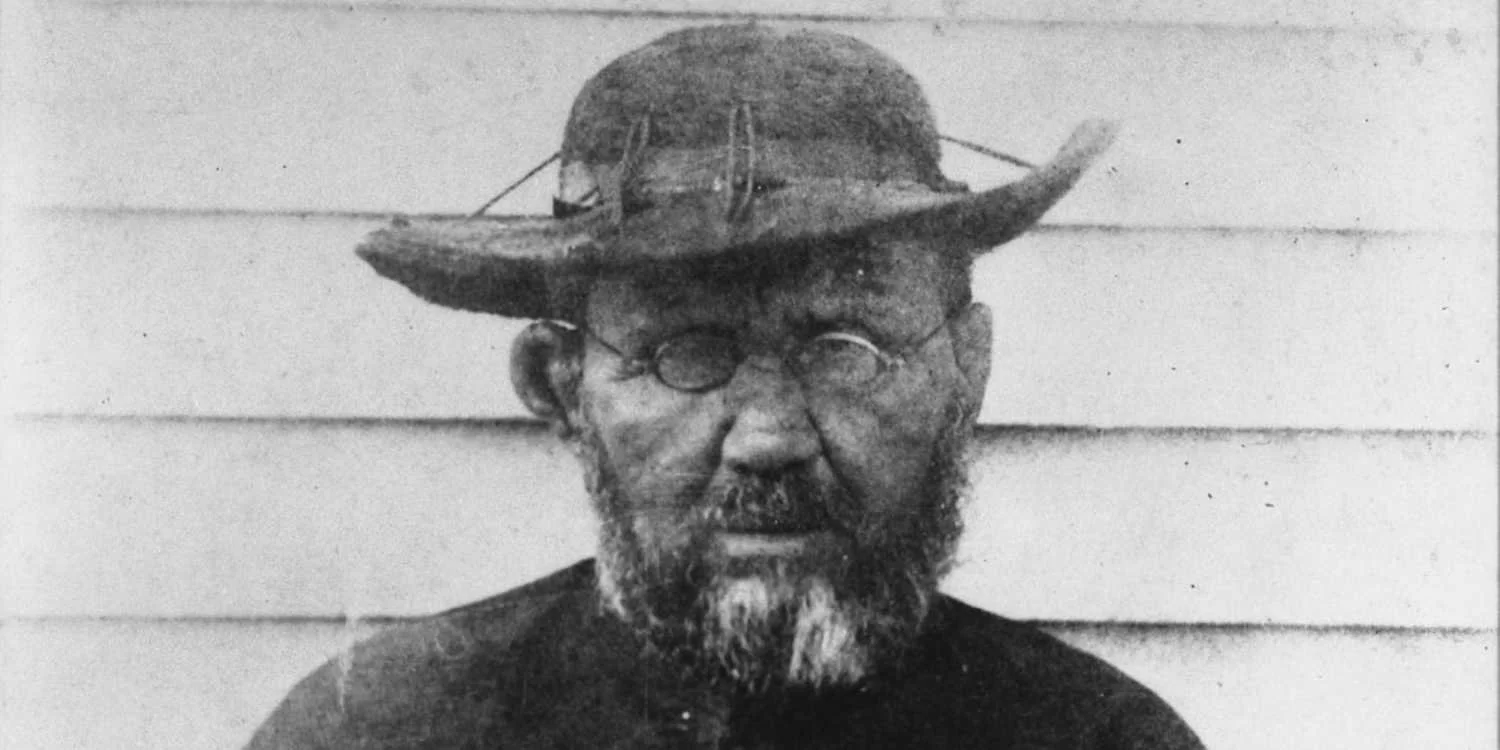
The Leper Priest
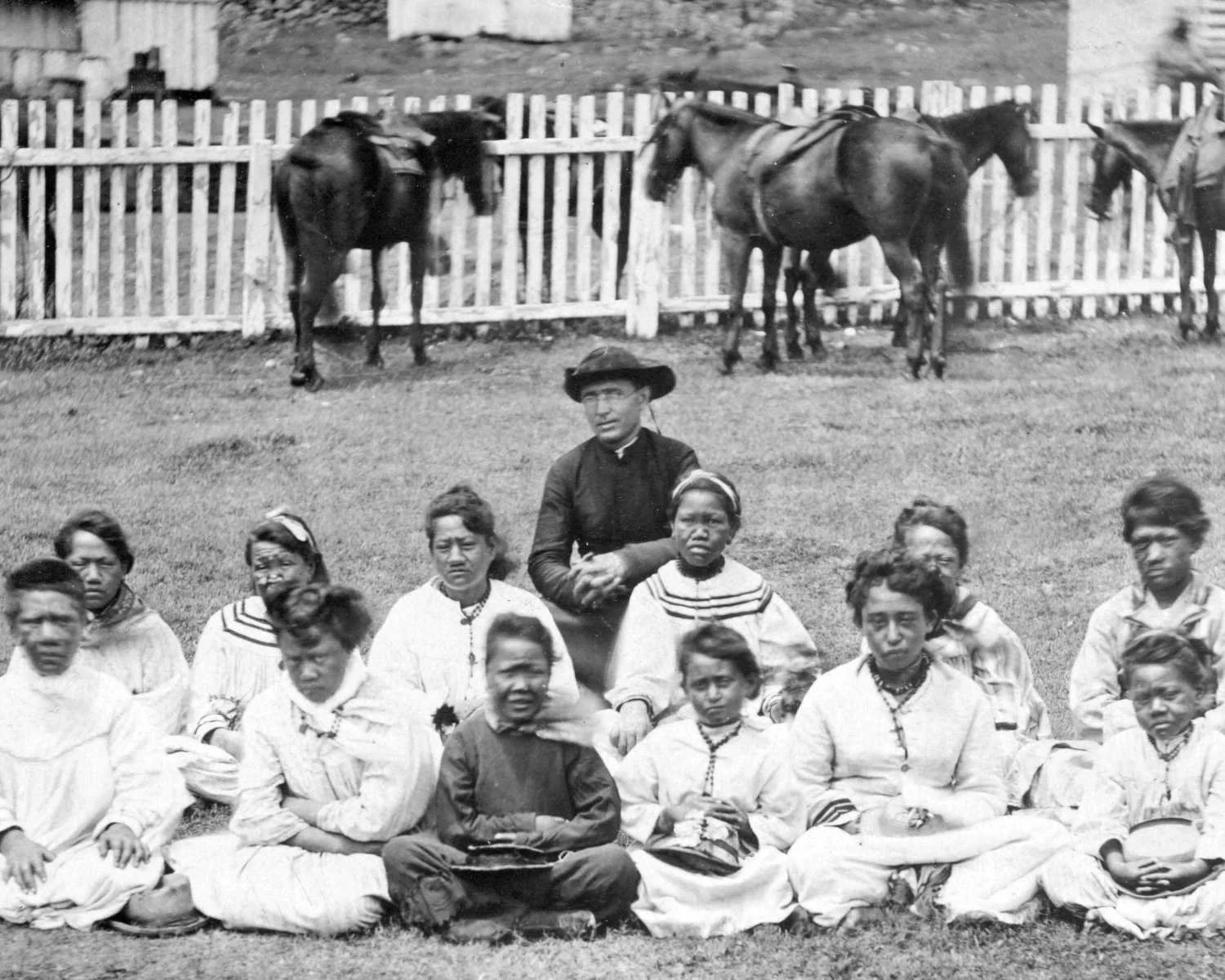
I vividly remember, as a young seminarian in the latter 1970s, watching a two-part PBS dramatization of the life of Father Damien de Veuster, the Belgian priest who in 2009 became Saint Damien of Molokai. I was fascinated by the PBS version. It remains in my psyche as one of the alluring things that drew me toward and kept me focused on a side of priesthood in danger of being lost today, the notion that priesthood is not a job, but an ontological state of being. To see priests “fired” and cast off seems like “Reason Number Seven,” like succumbing to the voice of the enemy as he lures priesthood from its destiny.
When Damien of Molokai was driven across that line between ministering to lepers and becoming a leper, it was seen as a tragedy to his friends, but hindsight sees it as a gift to the Church and the world. When he was canonized by Pope Benedict XVI in 2009, Emily Stimpson wrote of him in “Untamed Saint” in Our Sunday Visitor:
“Saints are made through trials and persecution. And Father Damien had more than his share of those. For most of the 16 years he served on Molokai, he served alone… He begged his superiors to send him help. Usually they ignored his requests. Twice, however, they did send someone. The first was a Dutch priest who complained incessantly. The second was a French priest who accused Father Damien of improper relations with the native women. His superiors and bishop grew tired of his constant demand for help. They considered him an obstinate, headstrong troublemaker. The government shared that opinion, and more than a few officials gave credence to false rumors circulated about him. His detractors heaped every sort of abuse and calumny upon Father Damien … Enduring his own dark night, he felt abandoned by God and unworthy of heaven.”
— Emily Stimpson, “Untamed Saint,” OSV, October 11, 2009
The Eucharistic Adoration Chapel established by Saint Maximilian Kolbe was inaugurated at the outbreak of World War II. It was restored as a Chapel of Adoration in September, 2018, the commemoration of the date that the war began. It is now part of the World Center of Prayer for Peace. The live internet feed of the Adoration Chapel at Niepokalanow — sponsored by EWTN — was established just a few weeks before we discovered it and began to include in at Beyond These Stone Walls. Click “Watch on YouTube” in the lower left corner to see how many people around the world are present there with you. The number appears below the symbol for EWTN.
Click or tap here to proceed to the Adoration Chapel.
The following is a translation from the Polish in the image above: “Eighth Star in the Crown of Mary Queen of Peace” “Chapel of Perpetual Adoration of the Blessed Sacrament at Niepokalanow. World Center of Prayer for Peace.” “On September 1, 2018, the World Center of Prayer for Peace in Niepokalanow was opened. It would be difficult to find a more expressive reference to the need for constant prayer for peace than the anniversary of the outbreak of World War II.”
For the Catholic theology behind this image, visit my post, “The Ark of the Covenant and the Mother of God.”

South Park’s Bill Donohue Disgrace Was This Convert’s Amazing Grace
If ever there is an award for a Catholic who heroically goes above and beyond for others, Pornchai Moontri’s Nominee would be Catholic League President Bill Donohue.

If ever there is an award for a Catholic who heroically goes above and beyond for others, Pornchai Moontri’s Nominee would be Catholic League President Bill Donohue.
April 30, 2025 by Fr Gordon MacRae and Pornchai Maximilian Moontri
Earlier in April 2025, the Catholic League for Religious and Civil Rights in New York City sent out the following Media Alert to all Catholic League members:
“April 10, 2025
South Park's “Fantastic Easter Special,” featuring the animated character of Bill Donohue, will air Friday morning, April 11, on Comedy Central at 4:00 a.m. ET. It can also be streamed on HBO’s streaming service for those who have a subscription.”
I had the Alert sent by email to our friend Max Moontri in Pak Chong, Thailand. For those who are newer readers to this blog, Pornchai Max Moontri was my roommate for almost 16 years. His story, amazing in its own right, was told in these pages just a week ago on Relevant Radio in an interview with The Drew Mariani Show.
Upon receipt of Bill Donohue’s Media Alert about South Park, Max wrote to me immediately to tell me that the date of the Catholic League Media Alert was also the anniversary of Max being received into the Catholic Church on Divine Mercy Sunday, 2010. It is difficult to hear this entire story and still cling to any doubt about the truth and power of Divine Mercy. Pornchai Max filled in a lot of blanks so I will now turn this story over to him.
“I was a teenager when I went to prison [in 1992]. Over the next 13 years, I was sent to solitary confinement over and over, for up to three-and-a-half years at a time, because I was so hostile. The longer I was there each time, the more inhuman I felt and became. Living for years on end in solitary confinement joined with the guilt I felt for the life I took during a struggle when I was 18 years old.
“So I just gave up on myself as a human being. I sank to the very bottom of the prison I was in, and stayed there. Then, in the spring of 2005, after almost fourteen years in and out of solitary confinement in Maine’s Supermax Prison, I was told that I was to be shipped to another prison in another state. I sat for months alone in my cell wondering about whatever hell was coming next. Then one day, guards in riot gear came and chained me up….”
[Editor: You can see the solitary confinement unit that held Pornchai in PBSFRONTLINE “Solitary Nation.” If you have not seen this, you cannot begin to know what Pornchai has been through.]
While I was writing the above, I had already lived in a prison cell with Father Gordon MacRae (“Father G”) for almost five years. I shudder when I think of my life before then. It is hard to put together this series of events that seem to be disconnected from each other. It only seems that way. Going from years in brutal solitary confinement to life in a cell with a Catholic priest is something I never imagined.
When I look back, and see all the small steps in which our Blessed Mother inserted herself into my life leading me to Jesus, it seems miraculous to me. If someone else told me this story twenty years ago, I would not believe it. But there is a lot more to my story.
Most people I knew in my earlier prison were afraid of me. Most expected me to erupt in violence any minute. I liked having that reputation then. I could not see it at the time, but it protected me from ever again feeling the terror I felt from the time I was taken from Thailand at age 11 to the time I ended up a homeless teenager living alone on the streets of Bangor, Maine at age 14.

A Black Hole from Which No Light Could Escape
What happened in those three years upon my arrival in America was like a black hole from which no light could escape without Divine assistance. I kept it bottled up within me for many years in a seething rage of trauma and hurt. It became my prison within a prison. But it served a purpose. It kept everyone else away, everyone except Father G.
I have read a little about exorcism since I became a Catholic on Divine Mercy Sunday in 2010. I understand it to be the spiritual casting out of evil. My exorcism at the hands of Jesus through His priest took a long time. It had to begin with my long, slow awakening to the fact that the evil within me was not planted there by me and it was not mine to keep. It was placed in my heart and soul by someone else.
On September 12, 2018, the Feast of the Most Holy Name of Mary, Richard Alan Bailey, the man who violently raped and tortured me more than forty times when I was taken to America, was brought to justice. It was Father G and Beyond These Stone Walls that ultimately accomplished this. Father G wrote some articles about what happened to me. They circled the globe and eventually they found the right persons who would be instrumental in my redemption. One of those persons was Dr. Bill Donohue, President of the Catholic League for Religious and Civil Rights of which I am now a member.
Backing up a little, in Fall, 2005, I was shackled, chained, thrown into a prison van, and driven from solitary confinement in Maine to Concord, New Hampshire. I was handled like a dangerous animal, and thrown into a familiar place: another stint in solitary confinement. But it was brief. It was also in 2005 that The Wall Street Journal wrote its first articles about the injustices that happened to Father G. Not long after I first met him by “chance” one day, I read those articles.
Later in 2006, Father G and I landed in the same place. Our cells were two doors apart. I remember the first time I walked into his cell. I saw a photo on a card attached to a battered mirror on the cell wall, and the man on the card looked sort of like Father G. So I said, “Is this you?” This turned out to be the most important question of my life. Father G then told me about St. Maximilian Kolbe, about what he did in prison at Auschwitz, and about how this card came to be on his mirror. Father G wrote this story in “The Parable of a Priest and the Parable of a Prisoner.”
Then one day came dreaded news. A U.S. Immigration Court ruled that I would be deported to Thailand at the end of my sentence. I never wanted to leave Thailand as a child. I was forcibly brought to America, and all I really knew in America was its prisons. In the meantime, my Mother — my only connection to Thailand — was murdered on the Island of Guam after she was brought there by Richard Alan Bailey. Her death remains classified there as a “cold case unsolved homicide.” It is not “unsolved” in the minds of either me or Father G.
When news of my eventual deportation came, I sank into deep depression. I knew that I had no future in Thailand. I had no future anywhere. Father G helped me appeal the deportation order, but like most such appeals, it was denied. So I just gave up again, and settled in my mind on my own “Plan B,” my eventual self-destruction. Father G confronted this setback with his own optimism that provided no hope or comfort at all. He said, “We are just going to have to build a bridge from here to Thailand.”
Who could take him seriously? I sure didn’t. We were in a prison cell thousands of miles away! All the things Father G tried to instill in me about hope and trust and surrender just felt empty again. But I had nothing else to hang onto. No hope at all. So I hung onto his.

Catholic League President Bill Donohue [l] and Pornchai Moontri at age 12 [r] just as he arrived in America and before the troubling events in this story took place.
Pornchai’s Story
Soon after this rejection from the Immigration Court, Father G came into our cell one day and told me that we have to get a summary of my life story on paper… So we talked for a long time. He asked me lots of questions and took notes. Then he helped me put it together in a four-page document. I could not see the point of it. I tried to type it on his typewriter, but my heart was not in it at all. Father G became impatient with my one-word-per-minute typing speed. So Father G took over and he typed it while I waited. He was not patient with my typing speed, but he was patient with me and my attitude of hopelessness and defeat.
After the story was typed, Father G said that he wanted my permission to send the short life story we typed to a few contacts in the outside world. He said that these were all people who had connections, and that he believed one of them would find connections for me in Thailand.
I thought this was hopeless, of course. No one is going to be interested in me. But I hate arguing so I just told him to go ahead. I believed it would come to nothing.

Dr Bill Donohue on South Park
I wrote that story with Father G’s help in 2007. When Father G said he wanted to send it out to others, I answered with a sarcastic “Whatever!” It was that word for which every parent of every adolescent wants to smack him for saying it. Father G sent my story to several people and he told me that it will come to good. Then I said it again, “Whatever!”
In coming weeks — to my shock and awe — I started receiving letters of support and encouragement. One was from Cardinal Kitbunchu, Archbishop Emeritus of Bangkok, Thailand. I nearly fell over when I saw the envelope with his return address and Thai stamps. Another came from Honorable Mary Ann Glendon, U.S. Ambassador to the Vatican. Another was from Father Richard John Neuhaus, Editor of First Things magazine. They encouraged me to cling to hope even when I saw none. And then finally one came from Dr. Bill Donohue, President of the Catholic League for Religious and Civil Rights. Dr. Donohue shocked me. He asked my permission for the Catholic League to publish my story.
At first, I was excited. Then the inevitable gloom within me crept back in. I did not dare to hope. Hope is not for the beaten down. It is just too painful. I told Father G I did not want others to know that I was victimized in America. I also was consumed with shame. I told Father G that I did not want to publish the story. But this gets really strange from here on.
I used to sometimes come across a horrible cartoon called South Park on the Comedy Central TV channel. South Park spared no one. They would often take famous people and create a cartoon satire to ridicule them. On April 5, 2007, I was watching an episode of South Park. It was their Easter Special. Suddenly, there on my screen was a cartoon version of Dr. Bill Donohue.
I stuck my head down from my top bunk and told Father G to turn it on. The cartoon was very disrespectful, but my first reaction was to shout, “WOW! DR DONOHUE IS REALLY FAMOUS!”
I thought he must be really good because only good people are ridiculed on South Park. Dr. Donohue was ridiculed along with Jesus and Pope Benedict in the same episode. At one point, Jesus punched Dr. Donohue. I was horrified! But this is also what changed my mind. I thought that if Dr. Donohue is brave enough to endure this ridicule, I can be too. So I asked Father G to help me write to Dr. Donohue with permission for the Catholic League to publish my story. It was because of South Park!
Two years later, in 2009, Beyond These Stone Walls began our long adventure in what Father G calls “The Great Tapestry of God.” He told me that in this life, we live only in the back of the tapestry, unable to see what all our tangled threads are producing.
Over the next decade, we together confronted evil. It was not all at once. It was in slow steps because at points along the way whenever I felt overwhelmed, I would retreat and then give up and quit. But Father G never quit. He stayed the course, patiently waiting for a better day to pull me back onto what he called “our road to Emmaus.” And staying the course meant writing about me. What he wrote started to become noticed.
Strange things began to happen. Just weeks after I was received into the Church on Divine Mercy Sunday in 2010, I read that South Park editors cancelled an episode that ridiculed Mohammed after freely ridiculing Jesus, Pope Benedict and Dr. Bill Donohue. I never watched South Park again.
But there are stranger things still. Because of what was being written about me, Clare and Malcolm Farr — husband and wife attorneys in Southwest Australia — offered to assist me pro bono. They are today among my dearest friends, but we have never actually even met in person. They performed miracles with contacts in Thailand, with an attempt to reopen the case of the murder of my Mother in Guam, and with helping Father G to bring my abuser to justice.
Then Father G received a letter from a group called Divine Mercy Thailand. The letter revealed that Marian Father Seraphim Michalenko had been in Thailand and he carried with him a copy of “Pornchai’s Story,” which he read from the Catholic League’s site to the Divine Mercy Thailand group. I learned only later from Father G that Father Seraphim Michalenko was the Vatican’s vicepostulator for the cause of sainthood of Maria Faustina Kowalska. It was Father Seraphim who smuggled Saint Faustina’s diary out of Communist Poland and assisted in its English translation. Father G wrote about this when Father Seraphim came to this prison to interview both of us. Father G’s post was “Divine Mercy in a Time of Spiritual Warfare.”
Father Seraphim’s interest, triggered by Dr. Bill Donohue, then inspired Felix Carroll, who was then Editor of Marian Helper magazine, to contact Father G. Felix Carroll said that he posted my story from the Catholic League’s site and “it lit up our website like never before.” Felix asked that we allow him to include a chapter about me in his book, Loved, Lost, Found: 17 Divine Mercy Conversions.
The miracles continued. I was visited in prison by a representative of the Royal Thai Consulate in New York who offered help in restoring my Thai citizenship and preparing me for repatriation. Then one day I was called to the prison library. The library had received a donated set of Thai language CDs which were set up on a computer for me to study. Then Divine Mercy Thailand wrote again and offered me a home. The bridge to Thailand Father G had once promised was built and I was utterly amazed. Then, in 2020, just before the pandemic took hold, Father G filed a petition on my behalf revealing all that had happened that never made its way into my trial in 1992. I was to be set free within the coming months.
I will never say “Whatever!” to Father G again. He and Bill Donohue, and even the disgraceful South Park, became the keys to the locks that held me bound. If there is ever a book called Divine Mercy Miracles, I expect to find this story in it. I am free!
+ + +
Eternal Father, I offer You the Body and Blood, Soul and Divinity of Your Dearly Beloved Son, Our Lord, Jesus Christ, in atonement for our sins and those of the whole world. For the sake of His sorrowful Passion, have mercy on us and on the whole world.
+ + +
Note from Fr Gordon MacRae: If you are not a member of the Catholic League, please consider lending your voice to this nation’s largest endeavor in protection of Religious Liberty: Catholic League Membership Subscription. Your membership fee also includes a one-year subscription to the Catholic League Journal Catalyst.
We also recommend these related posts:
Pornchai’s Story: The Catholic League Conversion Story for 2008
Divine Mercy in a Time of Spiritual Warfare
A Catholic League White House Plea Set Pornchai Moontri Free
The Parable of a Priest and the Parable of a Prisoner
Thailand’s Once-Lost Son Was Flag Bearer for the Asian Apostolic Congress

The Eucharistic Adoration Chapel established by Saint Maximilian Kolbe was inaugurated at the outbreak of World War II. It was restored as a Chapel of Adoration in September, 2018, the commemoration of the date that the war began. It is now part of the World Center of Prayer for Peace. The live internet feed of the Adoration Chapel at Niepokalanow — sponsored by EWTN — was established just a few weeks before we discovered it and began to include in at Beyond These Stone Walls. Click “Watch on YouTube” in the lower left corner to see how many people around the world are present there with you. The number appears below the symbol for EWTN.
Click or tap here to proceed to the Adoration Chapel.
The following is a translation from the Polish in the image above: “Eighth Star in the Crown of Mary Queen of Peace” “Chapel of Perpetual Adoration of the Blessed Sacrament at Niepokalanow. World Center of Prayer for Peace.” “On September 1, 2018, the World Center of Prayer for Peace in Niepokalanow was opened. It would be difficult to find a more expressive reference to the need for constant prayer for peace than the anniversary of the outbreak of World War II.”
For the Catholic theology behind this image, visit my post, “The Ark of the Covenant and the Mother of God.”