“There are few authentic prophetic voices among us, guiding truth-seekers along the right path. Among them is Fr. Gordon MacRae, a mighty voice in the prison tradition of John the Baptist, Maximilian Kolbe, Alfred Delp, SJ, and Dietrich Bonhoeffer.”
— Deacon David Jones
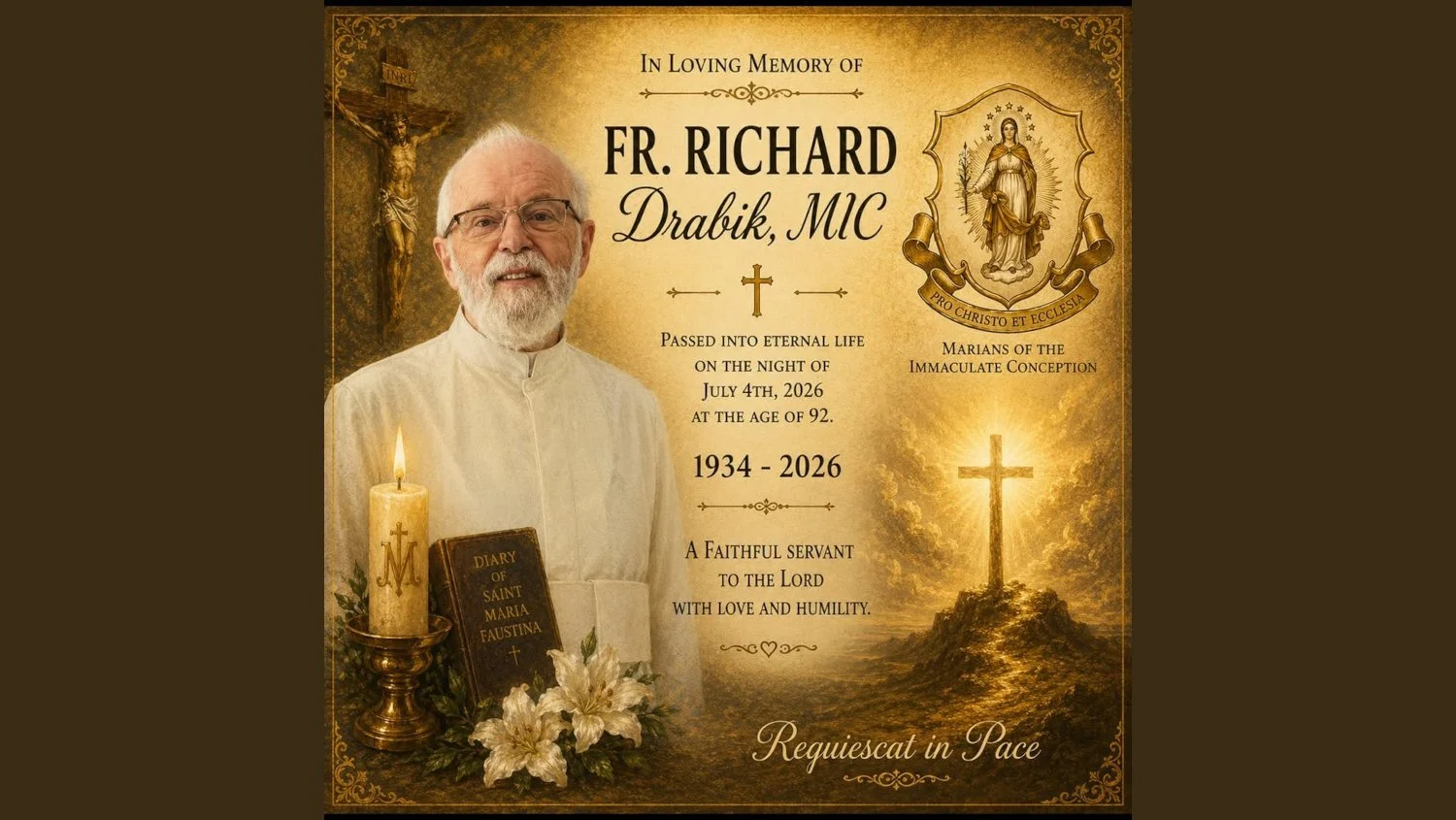
Fr Richard Drabik Introduced Divine Mercy to Saints and Villains
Fr Richard Drabik, MIC, my longtime spiritual director and friend who wrote the Preface to the Diary of Saint Faustina, passed into Divine Mercy on July 4, 2026.
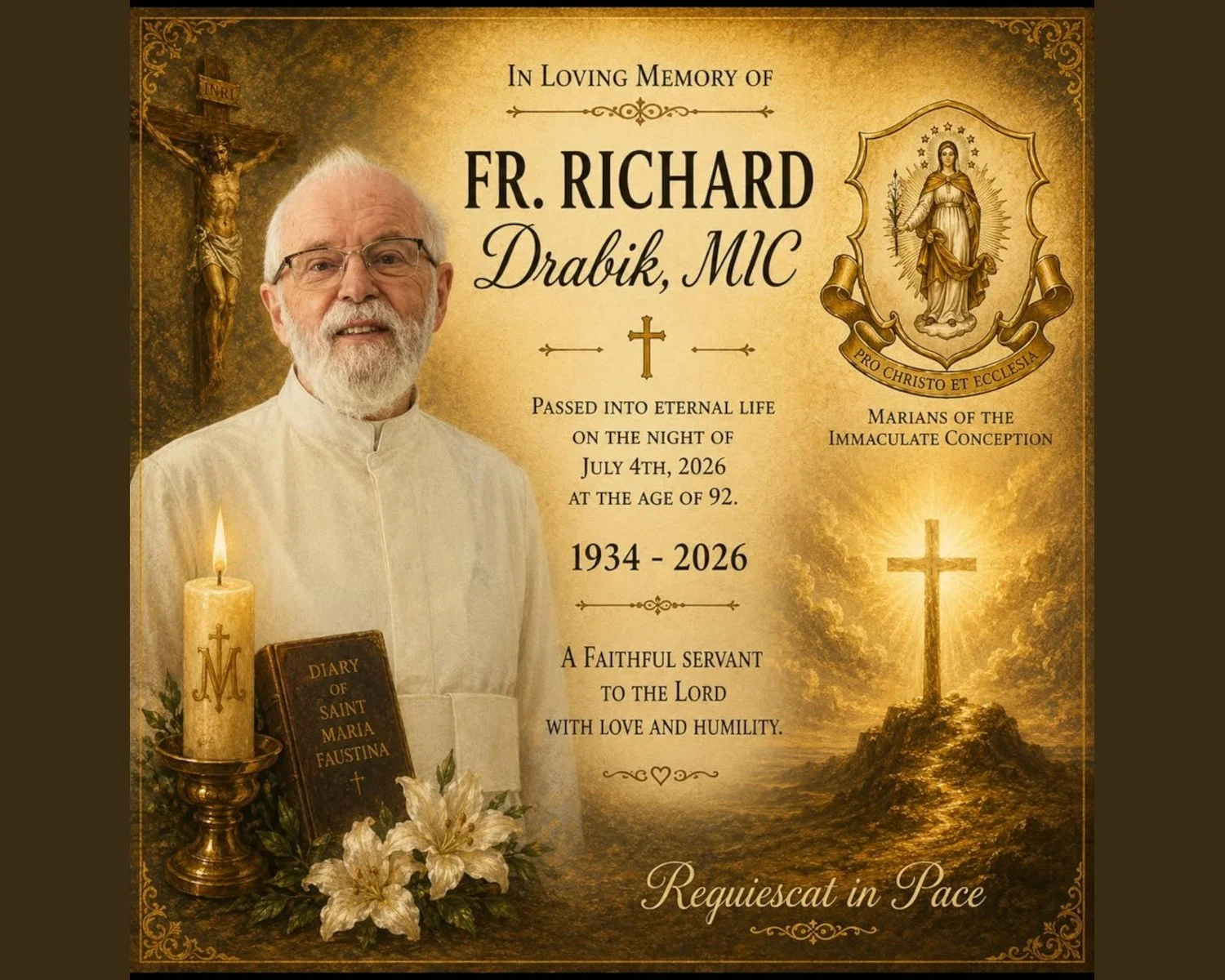
Fr Richard Drabik, MIC, my longtime spiritual director and friend who wrote the Preface to the Diary of Saint Faustina, passed into Divine Mercy on July 4, 2026.
July 8, 2026 by Father Gordon MacRae
“Let the greatest sinners place their trust in My mercy. They have the right before others to trust in the abyss of My mercy . . . To such souls I grant even more graces than they ask. I cannot punish even the greatest sinner if he makes an appeal to My compassion, but on the contrary, I justify him in my unfathomable and inscrutable mercy.”
— Diary of Saint Faustina, 1146
In April of 1993, my friend Father Richard Drabik and I both served on the staff of the Servants of the Paraclete Spiritual and Psychological Renewal Center for priests. Father Drabik was at the time preparing to go to Rome to concelebrate with Pope John Paul II the Mass of Beatification of Sister Maria Faustina Kowalska, now known as Saint Faustina, the Saint of Divine Mercy. Her Beatification took place on the Sunday after Easter that year, and Pope John Paul II decreed that henceforth that Sunday would be universally known in the Roman Calendar as Divine Mercy Sunday.
Father Richard Drabik was formerly Provincial Superior of the Marian Fathers of the Immaculate Conception. He wrote the Preface to the Diary of Saint Maria Faustina Kowalska that has become globally famous. Just before leaving for her Beatification in Rome in 1993, Father Drabik stopped by my office to invite me to write a brief prayer, which would be placed on the altar by Pope John Paul during the Offertory in the Mass for Beatification. I did not know what to write, so on the day of my friend’s departure I handed him a small scrap of paper to place with his intentions for the Mass. I folded it and sealed it in a small envelope that would fit easily in his breast pocket.
No one ever knew what I wrote. The note with my petition was simple: “I ask for the intercession of Blessed Faustina that I may have the courage to be the priest God calls me to be.” It was an odd petition, and today I have no idea what I was thinking about when I wrote it and handed it to Father Drabik on his way out the door.
Exactly two weeks after the Beatification of Sister Faustina, on May 3, 1993, police showed up at my door. They carried with them a secret indictment and a warrant for my arrest for claims alleged to have occurred sometime between 1978 and 1983, ten to fifteen years earlier. They were the claims for which I faced trial and was summarily sent to prison as Ryan A. MacDonald wrote in “Judge Arthur Brennan Sentenced Father Gordon MacRae to Die in Prison.”
Those claims of abuse never took place at all, but I will always remember the words of a police detective as the officers took me away despite my denials: “It doesn’t matter whether you’re guilty. Your Church is!” It was a scene reminiscent of another era I wrote of in “Catholic Scandal and the Third Reich: The Rise and Fall of a Moral Panic.”
The detective’s words could just as easily have been heard in Sister Faustina’s own World War II-era Poland as Father Maximilian Kolbe and many other priests were led off to prison on trumped up charges.
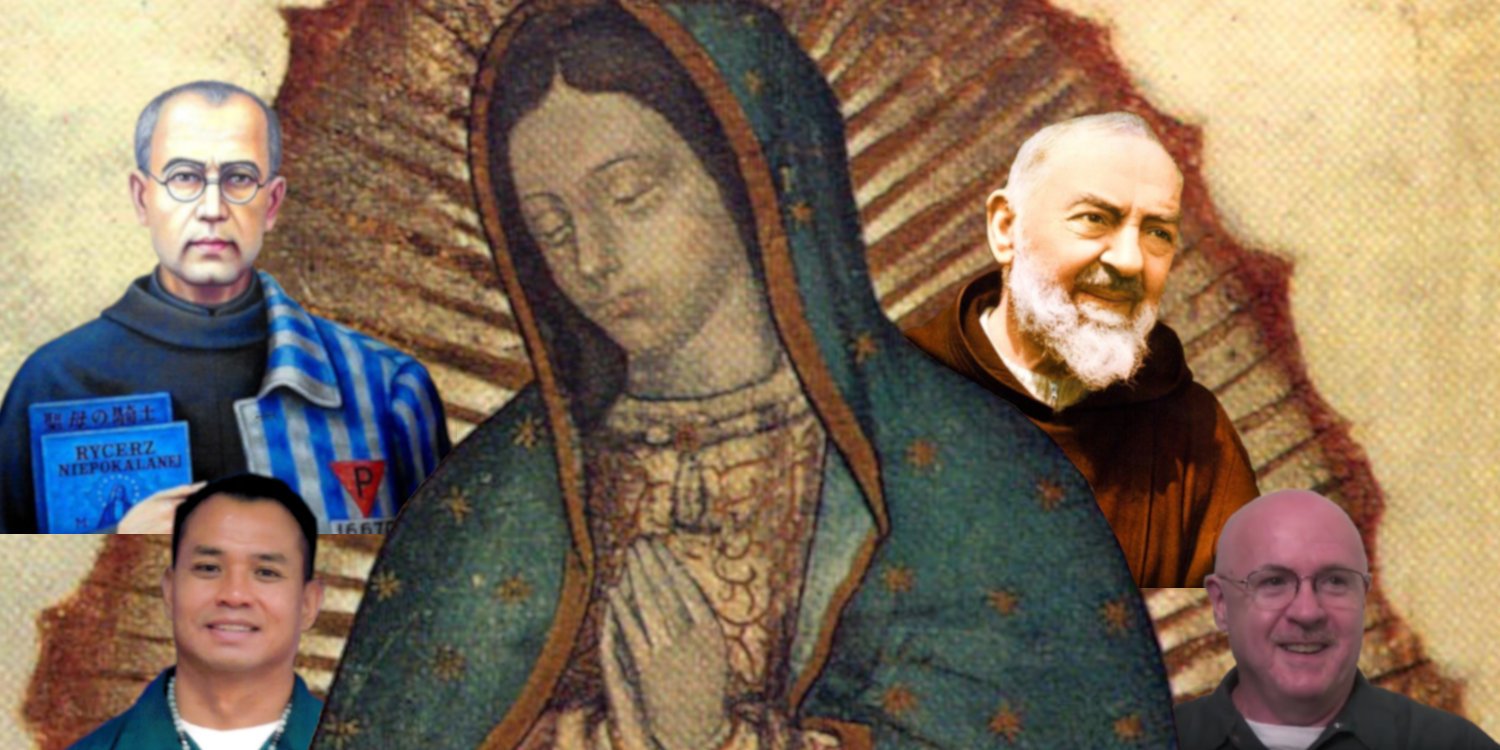
Divine Mercy Behind and Beyond These Stone Walls
Last April 9, I turned 73 years old in prison. I was 41 years old when I was sent to prison, and was in my twenties when my fictitious crimes were alleged to have been committed. I will be age 108 when I next see freedom. The process of reopening a case alleged to have occurred over 30 years ago, and which never contained any evidence to debunk or attack, is a grueling uphill battle. If there is any hope at all for freedom and justice, it is vague hope. It is a hope that exists on the other side of an abyss.
Astute readers remember that I was given several opportunities before my trial to plead guilty and serve only one year in prison. I simply could not fathom doing this. Many years later, Dorothy Rabinowitz, a Pulitzer Prize-winning writer for The Wall Street Journal, took up this case for investigation. She reported that she questioned the detective about the absolute lack of any corroborating evidence. The detective was reported to have said, “Why didn’t he just take the deal?” In a five-minute video interview years later, Ms. Rabinowitz summed up the true nature of this matter.
The readers of Beyond These Stone Walls have helped in so many ways to show us the face of Divine Mercy. Your reading BTSW has given me a global voice when having any voice at all is usually denied to any priest so accused. And having a voice is also often denied to prisoners, as a class of American citizens stripped of rights, including the right to vote. I do not use my access to this voice just to whine about prison conditions. That would be a waste. Instead, I try to employ this voice as an extension of my priesthood, one that is influenced and encapsulated, even defined, by Divine Mercy.
Earlier in my years in prison, my old friend and spiritual director, Father Richard Drabik, visited me. He did so until age and distance made such visits no longer possible. During one of his visits after my publishing began in 2009, I asked him if he had seen the blog that I write from prison, but have never seen. Being a prisoner, I also had no sense of its reach or impact. “It isn’t a blog,” Father Richard said. “It’s a bullhorn!”
Later, the community of Marians of the Immaculate Conception at the National Shrine of The Divine Mercy took up the slack. They came with an invitation to me and other prisoners to take part in a great Divine Mercy adventure. For some, it became the most important part of our lives here. This was especially so for my friend Pornchai Maximilian Moontri, whose life story was captured by Felix Carroll in the book, Loved, Lost, Found: 17 Divine Mercy Conversions. Pornchai’s story is well known around the world now thanks to the efforts of Catholic League President Bill Donohue. Dr. Donohue invited Pornchai to write his story in his own words. The result was published by the Catholic League as “Pornchai’s Story.” In just four pages, it was powerful and phenomenal. Pornchai was oppressed by the thought that at the end of his own prison sentence he would be deported to Thailand where he no longer knew anyone or had any support at all. Pornchai had been taken from Thailand against his will at age 11, and now would be left there alone at age 47. It was a chilling thought for Pornchai, and also for me. I assured him that we would find a way to build a bridge to Thailand.
Divine Mercy, being what it is, created a roadmap for Pornchai. Father Richard, who was deeply moved by Pornchai’s Story, shared it with others who became links in a chain. One of them was the late Father Seraphim Michalenko, Vice Postulator for the cause of Sainthood for Saint Faustina. He ended up in Thailand meeting with a group called Divine Mercy Thailand. Father Seraphim went there armed with a copy of the Diary of Saint Faustina and a copy of Pornchai’s Story, which he read in English to the assembled group. Suddenly, our bridge to Thailand was built.
Felix Carroll also wrote a wonderful article for Marian Helper Magazine entitled, “Mary Is at Work Here.” The truth of that is today without question.
+ + +
Note from Father Gordon MacRae: Thank you for reading and sharing this post about my great good friend and mentor in the priesthood, Father Richard Drabik, MIC. Don’t misunderstand the opening quote here in this post. Only God knows whether Father Richard is a saint, but he was certainly no villain. He spent a lifetime reaching out to them, however, and reeling them in to show them the Light of Divine Mercy. That was what I liked most about my friend, and what I most try to emulate. You might find his enduring presence in these related posts from Beyond These Stone Walls:
A Priest and Prisoner in the Light of Divine Mercy
Divine Mercy in a Time of Spiritual Warfare
The Parable of a Priest and the Parable of a Prisoner
I greatly treasure the image atop this post. Father Richard’s smile is now engraved upon my heart.

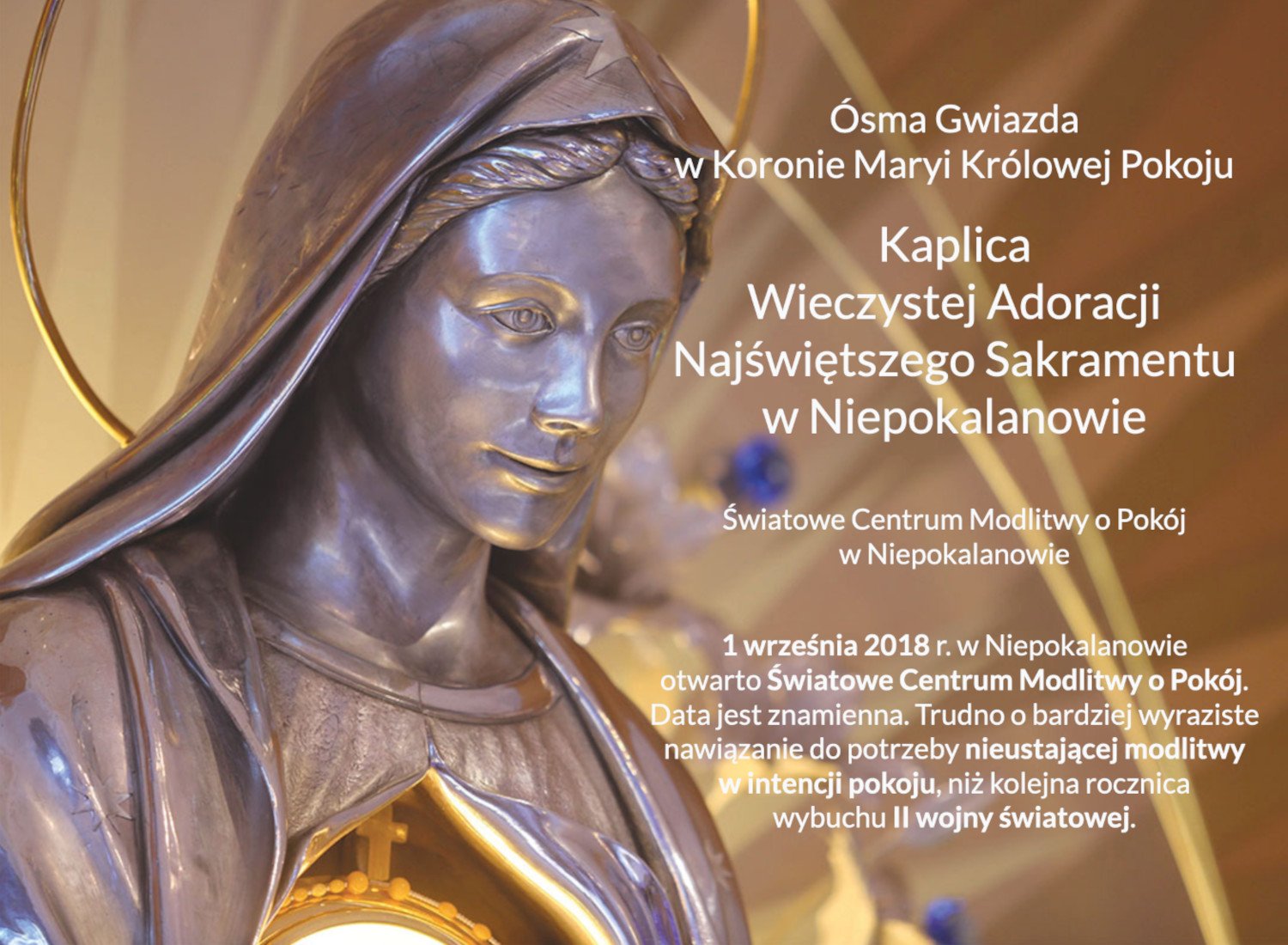

The Eucharistic Adoration Chapel established by Saint Maximilian Kolbe was inaugurated at the outbreak of World War II. It was restored as a Chapel of Adoration in September, 2018, the commemoration of the date that the war began. It is now part of the World Center of Prayer for Peace. The live internet feed of the Adoration Chapel at Niepokalanow — sponsored by EWTN — was established just a few weeks before we discovered it and began to include in at Beyond These Stone Walls. Click “Watch on YouTube” in the lower left corner to see how many people around the world are present there with you. The number appears below the symbol for EWTN.
Click or tap here to proceed to the Adoration Chapel.
The following is a translation from the Polish in the image above: “Eighth Star in the Crown of Mary Queen of Peace” “Chapel of Perpetual Adoration of the Blessed Sacrament at Niepokalanow. World Center of Prayer for Peace.” “On September 1, 2018, the World Center of Prayer for Peace in Niepokalanow was opened. It would be difficult to find a more expressive reference to the need for constant prayer for peace than the anniversary of the outbreak of World War II.”
For the Catholic theology behind this image, visit my post, “The Ark of the Covenant and the Mother of God.”

Thailand’s Once-Lost Son Was Flag Bearer for the Asian Apostolic Congress
In Cebu, Philippines Pornchai Max Moontri was flag bearer for the Kingdom of Thailand at the 5th Asian Apostolic Congress Pilgrimage of Hope in Divine Mercy.

In Cebu, Philippines Pornchai Max Moontri was flag bearer for the Kingdom of Thailand at the 5th Asian Apostolic Congress Pilgrimage of Hope in Divine Mercy.
November 13, 2024 by Fr Gordon MacRae
Many readers know that I earn $2.00 per day as the legal clerk in a prison law library. Among other tasks, I assist prisoners, many of whom are my friends, who faced deportation from the United States. Their destinations have so far included Brazil, Cambodia, China, Guatemala, Honduras, India, Indonesia, Japan, Laos, Mexico, Myanmar, Nepal, Thailand, and Vietnam. Despite the advice of Saint Padre Pio to “Pray, Hope, and Don’t Worry,” I have worried the most about my friend, Pornchai Max Moontri. He faced a nearly impossible assimilation to a country and culture he had neither seen nor been exposed to since he was taken from Thailand at age 11 in 1985.
Pornchai faced assimilation to Thailand after an absence of 36 years, 30 of them in a U.S. prison. I worried about his language barrier, about the absence of any family or material support, about the mountains of crushing discouragement that awaited him along this path. Readers of this blog may have seen a recent “Voices from Beyond” feature describing a project from an Arizona State University student who chose Beyond These Stone Walls as her thesis project in Ethnology, also known as Cultural Anthropology. Her project was motivated in part by interest, not so much in my story, but in Pornchai’s. It included an interview with Dilia E. Rodriguez, Ph.D., our editor who submitted her own perspective on Pornchai’s presence at this blog:
“Initially, I was struck by how many posts are about or mention Pornchai Moontri. After a while I came to think that their profound bond was like that of friends who endure the horrors of war together and survive. But now I think it is much more profound than that.
“God has inspired many truth seekers to investigate the case of Father MacRae, … but God wanted to reveal this with more than facts. He would reveal it with the powerful transformation of lives and souls. Pornchai had been viciously sexually and physically abused for years by a man who trafficked him from Thailand at the age of eleven and murdered his mother. Pornchai escaped and lived on the streets for all of his teen years. Then at age 18 he killed a man who tackled him and pinned him to the ground. After years of enduring violent sexual abuse this sent Pornchai into a rage.
“Having learned that Father Gordon MacRae had been convicted of sexual abuse, Pornchai should have wanted to stay as far away from him as possible. But Pornchai’s instinct told him otherwise. They became friends and Pornchai asked Father Gordon to be his cellmate for the next fifteen years until the time of his deportation to his native Thailand in 2020. In “Pornchai’s Story,” an article published by Catholic League President Bill Donohue, Pornchai described that Father Gordon ‘is my best friend and the person I trust most in this world.’
“While living with Father Gordon, Pornchai earned his high school diploma with honors and also pursued studies at Stratford Career Institute and in theology at Catholic Distance University. He was received into the Church on Divine Mercy Sunday in 2010, taking the name, ‘Maximilian’ as his Christian name in honor of Saint Maximilian Kolbe, a Patron Saint of Prisoners, Writers, Refugees, and Beyond These Stone Walls.” Back to Father Gordon ...

The 5th Asian Apostolic Congress on Mercy
From October 10 to 19, 2024, I was inspired to receive a steady stream of photos and videos sent to the tablet in the prison cell I once shared with Pornchai Max Moontri. From the far side of the world in Cagayan de Oro and Cebu City, Philippines the photos were sent to me by Max (he mostly goes by Max now) who was among the delegates from Divine Mercy Thailand at the 5th Asian Apostolic Congress on Mercy: Pilgrimage of Hope. The event drew some 5,000 pilgrims from ten Southeast Asian nations and others from around the world. As the photos came in, I was stunned at the sheer magnitude of this international event.
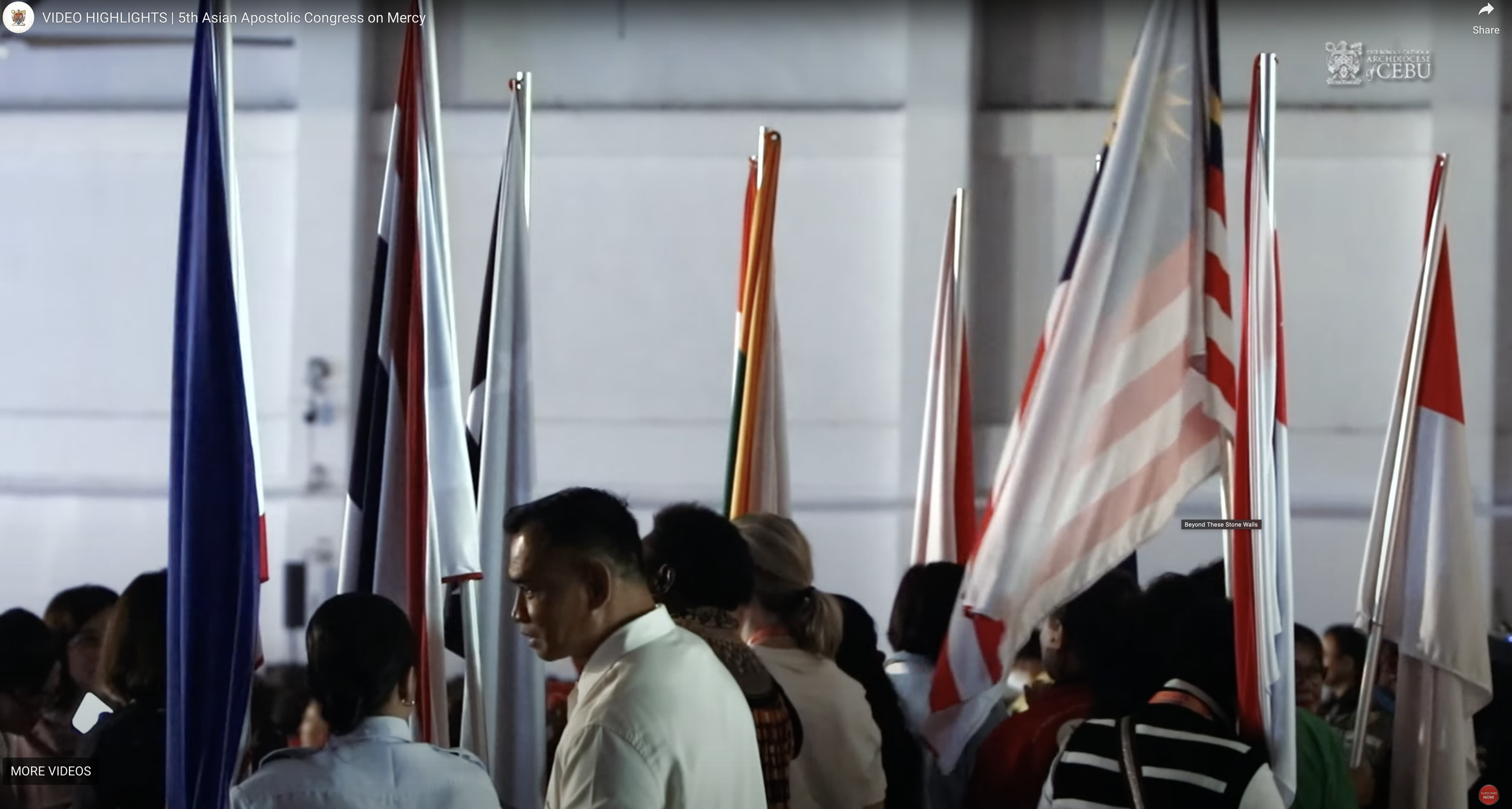
The first photos I received now form the collage above this section. They were taken when Max was chosen to present the flag of Thailand in procession at the opening ceremony of the Congress. Khun Yela Smit, Outreach Director of Divine Mercy Thailand, and Nithat Nawachartkosit its President asked Max to carry and present the flag of his homeland. The honor spoke volumes to my heart about how Divine Mercy can enter even the most wounded souls to connect with the mercy of God in hope for redemption and restorative justice.
The sight of Max standing before that immense crowd proudly holding the flag of his country brought tears to my eyes. In a photo from the AACOM website at the end of this post, you can see the face of Pornchai Max among delegates from other nations as he prepares for the procession to present his country’s flag.
Longtime readers of these pages already know the back story of Max’s life that our editor, Dilia E. Rodriguez summarized above. You can deduce from her words how steep a climb Pornchai’s path to Divine Mercy had been. Max says he was on this path because of me. I see signs that it was always the other way around. I have been on this path because God saw our lives long before we were even born. That is a difficult concept, but one magnified and embraced by Saint Maximilian Kolbe himself.
Just weeks before writing this, Jim Reilly, a reader from the Chicago area, sent me a series of newsletters from the National Shrine of St. Maximilian Kolbe. Among them was a profound message from our Patron Saint whose name Pornchai-Max chose as his own. St. Maximilian’s message quelled any lingering doubt I might have had about the Divine Mercy that binds us even from a world apart:
“For every human being on Earth, God has destined the fulfillment of a determined mission. Even from when He created the Universe, He directed causes so that the chain of effects would be unbroken, and conditions and circumstances for fulfillment of this mission would be most appropriate and fitting. Every individual is born with particular gifts and talents that are applicable to, and in keeping with, the assigned task. Throughout life the environment and circumstances so arrange themselves as to make possible the achievement of the goal and to facilitate its unfolding.”
— St. Maximilian Kolbe, “Prophet of the Civilization of Love”
I had to several times read that profound description of Actual Grace at work in our lives, across generations and even across millennia, before I could settle on the absolute truth of it. What Saint Maximilian wrote is mind-boggling, but now I live by it. Like Maximilian himself, I may even die by it.
I have been a priest for over 42 years, thirty of them in a Purgatory of unjust exile like Saint Maximilian himself. I call it “unjust” because, well, from every human standard it is. And yet I can see that it has not been without purpose — without God’s purpose, and I submit to it now with no further doubts. A few years ago, I was present at one of several Divine Mercy retreat programs offered in this prison by the Marian Fathers of the Immaculate Conception from the National Shrine of The Divine Mercy in Stockbridge, Massachusetts. I wrote several posts about these spiritual experiences, but one that stands out was in memory of the late Fr. Seraphim Michalenko. That post was “Divine Mercy in a Time of Spiritual Warfare.” What follows is an excerpt:
“In the 1970s, Fr. Seraphim Michalenko smuggled the Diary of St. Faustina out of Communist-occupied Poland. Over forty years later he smuggled Divine Mercy into a prison. Divine Mercy would one day become for me the framework of my very existence as a man, as a priest, as a prisoner.
“Fr Seraphim was appointed by the Vatican to be Vice-Postulator for the cause of canonization of Saint Faustina. Internationally known as an expert on her life and famous Diary, Father Seraphim was a catalyst for publishing it and documenting the miracles that became a basis for Faustina’s place among the Communion of Saints.
“Three years before his death in 2021, Father Seraphim was brought to this prison for a Mass. After Mass in the prison chapel, Max Moontri and I were both asked to remain because Father Seraphim wanted to speak with us. We both knew about him but had no idea that he knew about us. Max was nervous! ‘I don’t know what to say,’ he whispered to me. When Father Seraphim approached, he asked to speak with Max first. Fifteen minutes later, Max emerged smiling from a chapel office to tell me that I am next.
“As Father Seraphim and I spoke, he asked about our connection with St. Maximilian Kolbe, how he entered our lives, and how we came to Divine Mercy. In the telling, I mentioned my lifelong regard for a famous passage from St. John Henry Newman about how we are ‘links in a chain, bonds of connection between persons.’ I spoke of how this has guided me. I remember asking Father Seraphim how I could ever be certain of the 'definite service' God has committed to me that He has not committed to another. Father Seraphim leaned a little closer to me and whispered with quiet certainty as he pointed, ‘He is standing right over there.’ He was pointing to Pornchai-Max.”
— from “Divine Mercy in a Time of Spiritual Warfare”

In Cebu City : The Pilgrimage of Hope
On an Autumn evening back in 2014, my roommate, Max and I were summoned to the office of this prison’s chaplain, Catholic Deacon Jim Daly. He presented each of us with a book signed by its author, Felix Carroll from the National Shrine of The Divine Mercy. The book was a now well known Marian Press title, Loved , Lost, Found: 17 Divine Mercy Conversions. In Chapter 11, it contains the story of Max’s conversion. It being “Chapter 11” is itself highly symbolic.
Max suffered much in life, and he had to eventually come to terms with a hard truth. He had to accept his past life as bankrupt in order to start over on a path to seek and find God. Both our faces lit up as we turned that night to Chapter 11 in the book to see Max smiling while standing in the prison Chapel with Bishop John McCormack after having just been received into the Church. Bishop McCormack later told me that he had never before appeared in a photograph in any published book and was proud to now be so immortalized next to Max Moontri “whose sacred quest to learn trust stands as a monument to hope.” As we walked in the dark through the prison complex that night, Max turned to me holding up his book and asked, “How did this happen?”
When invited by Divine Mercy Thailand to the Philippines in October, Max arrived two days before the Asian Apostolic Congress on Mercy was scheduled to begin. The delegates from Divine Mercy Thailand who traveled together went first to the Diocese of Cagayan de Oro. There, in the city of El Salvador, Max was surprised to see in the sanctuary of the Basilica a mosaic of famous Divine Mercy saints. Some in the group asked Max to stand before the mosaic of Saint Maximilian Kolbe while others snapped his picture. If a picture speaks a thousand words, the one above speaks entire volumes.
Father Seraphim Michalenko once confirmed for me what I had already begun to suspect. Shortly after, the truth of it appeared in a 2014 issue of Marian Helper magazine in an article by Felix Carroll, “Mary Is at Work Here.” This is an excerpt:
“The Marians believe Mary chose this particular group of inmates to be the first [for Marian Consecration]. The reason eventually was revealed. It turns out that one of the participating inmates was Pornchai Moontri who was featured in last year’s Marian Press title, “Loved, Lost, Found:17 Divine Mercy Conversions.” Pornchai experienced a dramatic conversion in no small part due to a friendship he formed with fellow inmate — and now cellmate — Fr. Gordon MacRae who chronicles their lives in a celebrated website, BeyondTheseStoneWalls.com.”
That was when I began to pray. I do not just mean the recitation of the words of prayers. I mean “to pray,” from a heart opening to God its shades of darkness as well as its light. And it was for the first time in my life and priesthood. When (then) Blessed Faustina was to be beatified in 1993, one of the Marian priests who worked toward her canonization was Father Richard Drabik who was also my spiritual director in a spiritual renewal center for priests in which I worked in ministry. Fr. Richard’s Introduction to the Diary of Saint Faustina now graces its opening pages.
In my office one night, Father Drabik told me that he was leaving for Rome the next day for the Beatification of Saint Faustina. He asked me to write a personal petition that he would place on the altar at the Beatification Mass. I hastily wrote something spontaneous. I am told that the most efficacious prayer is that which wells up spontaneously from the heart and soul without forethought or rehearsal. My prayer, which I scribbled before sealing it in an envelope was, “I ask for the intercession of Saint Faustina that I may have the courage to be the priest God calls me to be.”
Be careful what you ask for! St. Faustina is now on the left of the Divine Mercy mosaic where Max Moontri stood, pictured above. Two weeks after writing that petition, I was arrested by the Gestapo and charged with the false claims that sent me to prison. Lawfare is outrageous, and it is also contagious. Wrongful imprisonment is the most arduous path I have ever been on. Over the next fifteen years, having been moved from one Purgatory to another, Pornchai Moontri showed up, a story we captured in “The Parable of a Priest and the Parable of a Prisoner.”
Four years before I began writing this, Pornchai-Max was deported to his native Thailand. In October 2024, he was invited by the group, Divine Mercy Thailand, to join them at the 5th Asian Apostolic Congress: Pilgrimage of Hope held in Cebu City, Philippines. Upon return from the Pilgrimage, Pornchai was also asked to take an active role in the group’s Thai apostolate beginning with the telling of his own powerful life story and conversion.
When I received the Pilgrimage brochure, I was surprised to see that among the presenters would be Father Joel de los Reyes from Barrigada in the Archdiocese of Agana, Guam, the very place where Pornchai’s mother was murdered, the most painful chapter in his life. Father Reyes’ address was entitled, “Mercy Shines in the Darkness of Our Life.” It was time for the healing of these memories. Other presenters from our more immediate past included Very Reverend Chris Alar, MIC, Provincial Superior of the Marians, and Fr Patrice Chocholski. Both are from the National Shrine of The Divine Mercy which played a major role in my priesthood, in Max’s conversion. Divine Mercy also became our summons to Consecration to Jesus through the Immaculate Heart of Mary which beats in our lives still.
+ + +
I invite you to visit a photo album from Pornchai’s pilgrimage by scrolling through the short videos and images below:



The Eucharistic Adoration Chapel established by Saint Maximilian Kolbe was inaugurated at the outbreak of World War II. It was restored as a Chapel of Adoration in September, 2018, the commemoration of the date that the war began. It is now part of the World Center of Prayer for Peace. The live internet feed of the Adoration Chapel at Niepokalanow — sponsored by EWTN — was established just a few weeks before we discovered it and began to include in at Beyond These Stone Walls. Click “Watch on YouTube” in the lower left corner to see how many people around the world are present there with you. The number appears below the symbol for EWTN.
Click or tap here to proceed to the Adoration Chapel.
The following is a translation from the Polish in the image above: “Eighth Star in the Crown of Mary Queen of Peace” “Chapel of Perpetual Adoration of the Blessed Sacrament at Niepokalanow. World Center of Prayer for Peace.” “On September 1, 2018, the World Center of Prayer for Peace in Niepokalanow was opened. It would be difficult to find a more expressive reference to the need for constant prayer for peace than the anniversary of the outbreak of World War II.”
For the Catholic theology behind this image, visit my post, “The Ark of the Covenant and the Mother of God.”