“There are few authentic prophetic voices among us, guiding truth-seekers along the right path. Among them is Fr. Gordon MacRae, a mighty voice in the prison tradition of John the Baptist, Maximilian Kolbe, Alfred Delp, SJ, and Dietrich Bonhoeffer.”
— Deacon David Jones
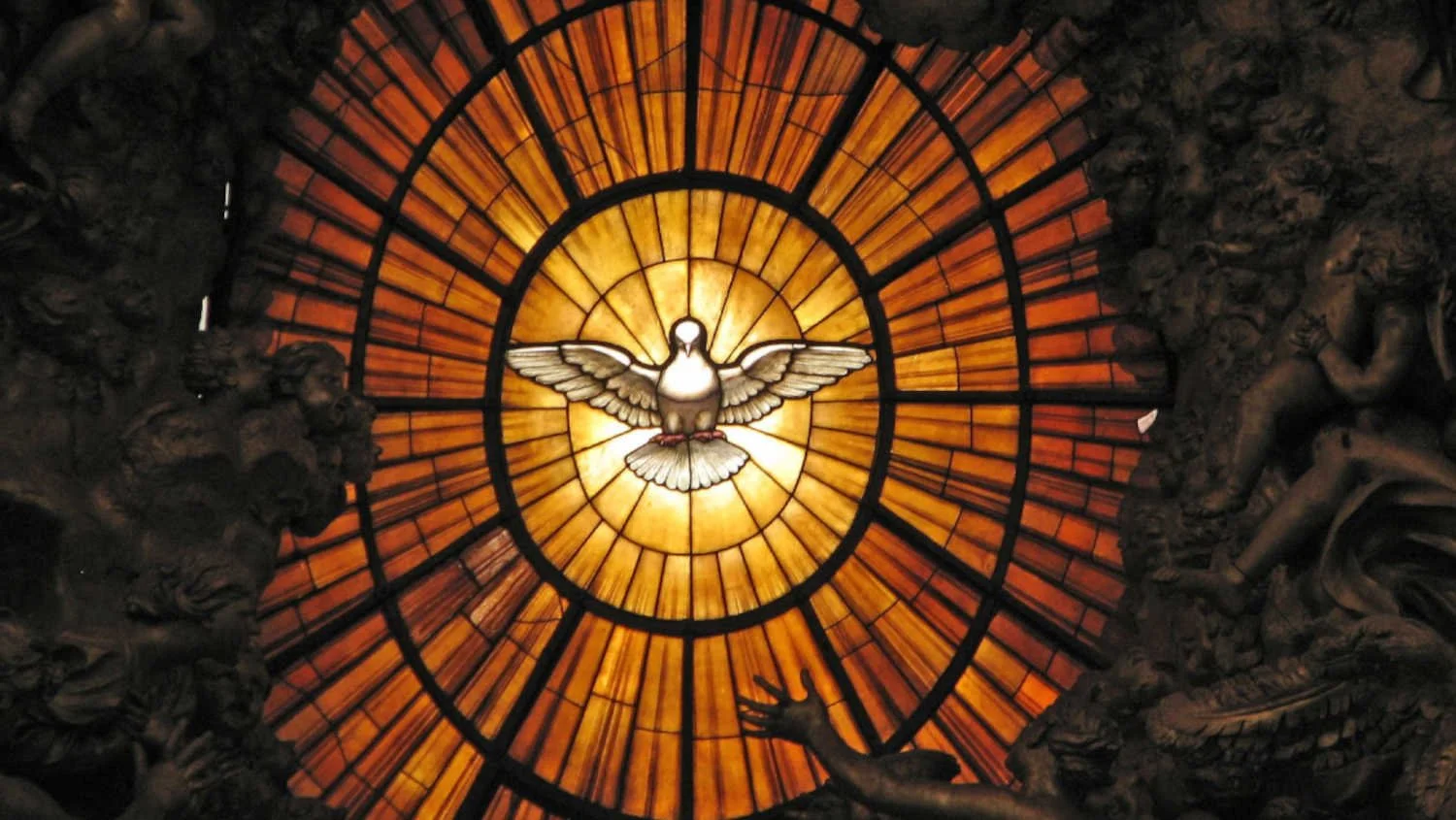
Inherit the Wind: Pentecost and the Breath of God
From Creation onward, Scripture often depicts the Holy Spirit as the wind or breath of God. When it swept through Jerusalem at Pentecost, all divisions ceased.
From Creation onward, Scripture often depicts the Holy Spirit as the wind or breath of God. When it swept through Jerusalem at Pentecost, all divisions ceased.
May 20, 2026 by Father Gordon MacRae
For a hot summer post years ago, I wrote “Hot Town: Summer in the Slammer.” My title was a spoof of “Summer in the City,” the famous 1969 hit single by “The Lovin’ Spoonful.” I was sixteen years old when that song hit the charts, but my post about it decades later was sparked by more current heat in my life: the long, hot summer days in prison.
The sealed and barred window in my prison cell then faced due west, so on the hottest summer days there was a build-up of heat in a sort of greenhouse effect within these stone walls, and it could feel very oppresive at times. The windows let in heat, but no air. There are no curtains or shades in prison, and covering cell windows is forbidden. By late in a typical summer day, that cell could feel like a crucible from which there is no escape. There is no air conditioning in prison, but I bought a little nine-inch fan, which was great at circulating the heat.
Underneath each cell window was a small security grate, a five-inch high double-grated steel slot venting through the stone wall to the outside world. By summer each year, the grates are so clogged with dust that not even a hint of moving air passed through them. Prisoners were always trying to devise new ways to clean the small vent.
On one of the hottest days that summer, I watched with great hope out my cell window as towering thunderclouds built in the west late in a stifling afternoon. They grew denser and darker, and then the rarest of things happened. A blast of cool wind flowed out of the west, through the security grate, and filled this cell with cool air. Then came thunder and a torrential rain that released all the day’s heat built up in these stone walls. Blast after blast, the cool wind kept coming. It felt like the very Breath of God.
This post is about the wind, but first I owe thanks to playwrights Jerome Lawrence and Robert E. Lee for my use of the title of their great 1955 American play, “Inherit the Wind.” The play was based on the so-called “Scopes Monkey Trial” of 1925 in which the famous defense lawyer, Clarence Darrow defended John Scopes in a Tennessee court. A high school biology teacher, John Scopes, was charged with violating state law by teaching Darwin’s theory of evolution in science class. In 1925 Tennessee, this violated a state-sanctioned fundamentalist view of the biblical account of Creation. I wrote about our culture’s conflict between science and religion in “Did Stephen Hawking Sacrifice God on the Altar of Science?” Religion is not a topic for scientific inquiry, and science should not be refuted in the name of religion. Those are human conflicts, not God’s.
Most people do not know that “Inherit the Wind,” — both the play and the classic 1960 Spencer Tracy film — first borrowed the title from the Book of Proverbs: “He who troubles his household will inherit the wind, and the fool will be a servant to the wise.” (Proverbs 11:29). It is just possible that the Book of Proverbs itself borrowed the phrase from an even more ancient source: the followers of Pazuzu, the Assyrian god of wind and pestilence. In some ancient Mesopotamian religions, “an ill wind” carried the spirits of demons, and so to inherit the wind could mean generations of suffering for one person’s sin.
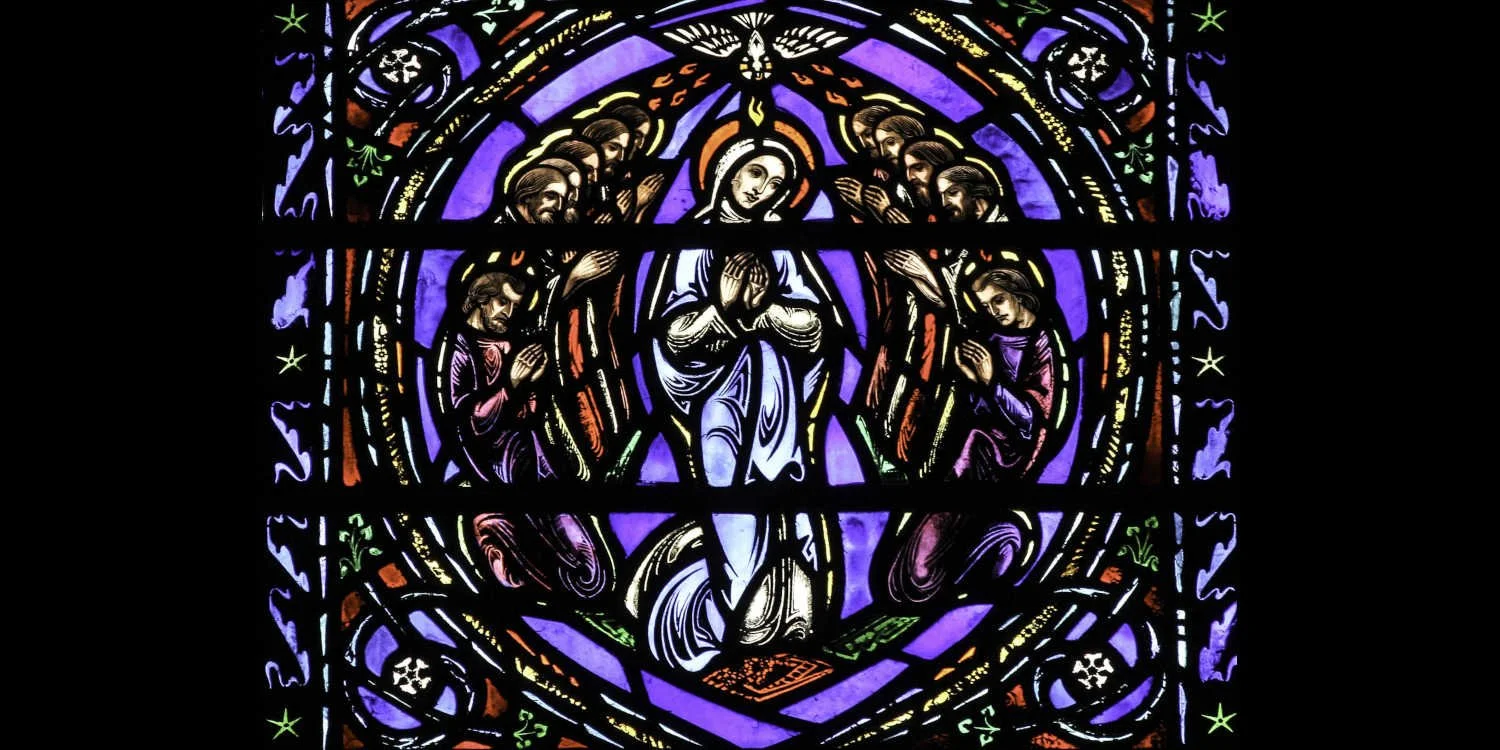
On the Day of Pentecost
I borrowed the title, Inherit the Wind, with a very different connotation. There are 181 references to wind in the Judeo-Christian Scriptures, and many of them are equated with a sacred wind or with the Breath of God. The Hebrew word for both “breath” and “wind” is “ruah,” and the Hebrew name for the Holy Spirit is “ruah ha-Qodesh,” simultaneously meaning the Spirit of God, the Wind of God, and the Breath of God.
The image of the Spirit of God rendered as a mightly wind is ancient. The very first time I picked up a Bible as a child, I was enthralled by a single image that begins the story of our existence in a created Universe with God. It was told in a few simple sentences that taught nothing about the science of cosmology except the most basic fact that I described in a science post, “A Day Without Yesterday.” It had to do with the fact of Creation, not the mechanics of it, and as a child it filled me with wonder:
“In the beginning, God created the heavens and the earth. The earth was without form and void, and darkness was upon the face of the deep; and the Spirit of God was moving over the face of the waters.”
— Genesis 1:1-2 RSV
Some biblical translations render that phrase, “a mighty wind from God was moving over the surface of the waters.” The image this raises is striking. If you have ever seen a film depicting raging winds at sea, the result is chaos.
The New Revised Standard Version of the Bible (NRSV Catholic Edition) translated this more literally: “A Wind of God swept over the face of the waters.” The only thing in existence in the Universe that God did not create is darkness. Darkness is the one reality that was already there at the moment of Creation. The darkness is not a description of something evil, but rather of something absent. The Wind of God moved above its unfathomable depth, and then, with a spoken word, “Let there be light,” there was light, and light overcame the darkness.
The Breath of God has stirred throughout human history ever since, and each time it does, we change dramatically. In the moment man became man, God “breathed into his nostrils the breath of life, and man became a living soul” (Genesis 2:7) in the image and likeness of God. That same image is reflected in the account of the Resurrection appearances of Jesus in the Gospel of John before Pentecost:
“He breathed on them and said, ‘Receive the Holy Spirit.’ ”
— John 20:22
I will forever think of that blast of cool wind through my cell as I read the story of Pentecost in the Acts of the Apostles:
“When the day of Pentecost had come, they were all together in one place. And suddenly a sound came from heaven like the rush of a mighty wind, and it filled the house where they were sitting. There appeared to them tongues as of fire, distributed and resting on each of them, and they were filled with the Holy Spirit.”
— Acts 2:2-4
Saint Luke was a great writer. In three matter-of-fact sentences, with no flourish whatsoever, he conveyed a meeting between God and humankind that would be told for thousands of years. Understanding its setting explains a lot about its meaning, and what happened next.
Some people mistakenly assume that the “Day of Pentecost” referred to is the coming of the Holy Spirit that Saint Luke goes on to describe, but it does not. The “Day of Pentecost” was the reason the Apostles were in Jerusalem in the first place, and “all together in one place,” and it is the reason why “devout men from every nation under heaven” (Acts 2:5) were there. They had all come because Shavuot required a pilgrimage to Jerusalem.
Shavuot is the second of three “pilgrimage festivals” in Jewish tradition. The other two are Passover itself, and “Sukkot,” the Feast of Booths (or “Tents”), which was the Jewish autumn festival marking the harvest of wheat. The Sukkot pilgrimage to Jerusalem was set down in the Book of Leviticus (23:42) and recalls the forty years of wandering and encampment in the desert after the Exodus (hence the “booths” or tents). Sukkot was the setting for the Gospel account of the Transfiguration of Jesus (eg., Mark 9:2-13). Each of the three pilgrimage festivals — as described in the Book of Deuteronomy (16:16) — required adult men of Israel to travel to Jerusalem to mark the feast.
The Shavuot festival, known in Greek as Pentecost (meaning “fifty days”), is also called the “Festival of Weeks” because it is celebrated on the day after the passage of seven full weeks from Passover. Shavuot originally marked the end of the barley season and the beginning of the wheat season. The pilgrimage required that the first fruits of wheat be brought to Jerusalem as an offering, as described in the Book of Leviticus (23:15-17). The feast fell on the Sixth day of the Hebrew month, Sivan. In Rabbinic legend, that was also the date marking the giving of the Torah to Moses on Mount Sinai described in Exodus 8, and that became the main reason for the pilgrimage feast. At Shavuot, specially baked twin loaves made from newly cut wheat were presented in the Jerusalem Temple with great ceremony to commemorate the Tablets of the Law given to Moses on Mount Sinai. In our Gregorian calendar, the Sixth day of Sivan falls on our Feast of Pentecost.
This is the setting for Pentecost in the Book of Acts, Chapter Two. As that driving wind filled the room where the Apostles were gathered, “men of every race and tongue, of every people and nation” emptied into the street at the strange and powerful noise. The mighty wind and tongues of fire described by Saint Luke were reminiscent of the loud wind and fiery descent of the Spirit of God on Mount Sinai at the time of the Exodus:
“On the morning of the third day there were thunders and lightning and a thick cloud upon the mountain, and a very loud trumpet blast, so that all the people who were in the camp trembled. Then Moses brought the people out of the camp to meet God, and they took their stand at the foot of the mountain. And Mount Sinai was wrapped in smoke, because the Lord descended upon it in a fire.”
— Exodus 19:16-19
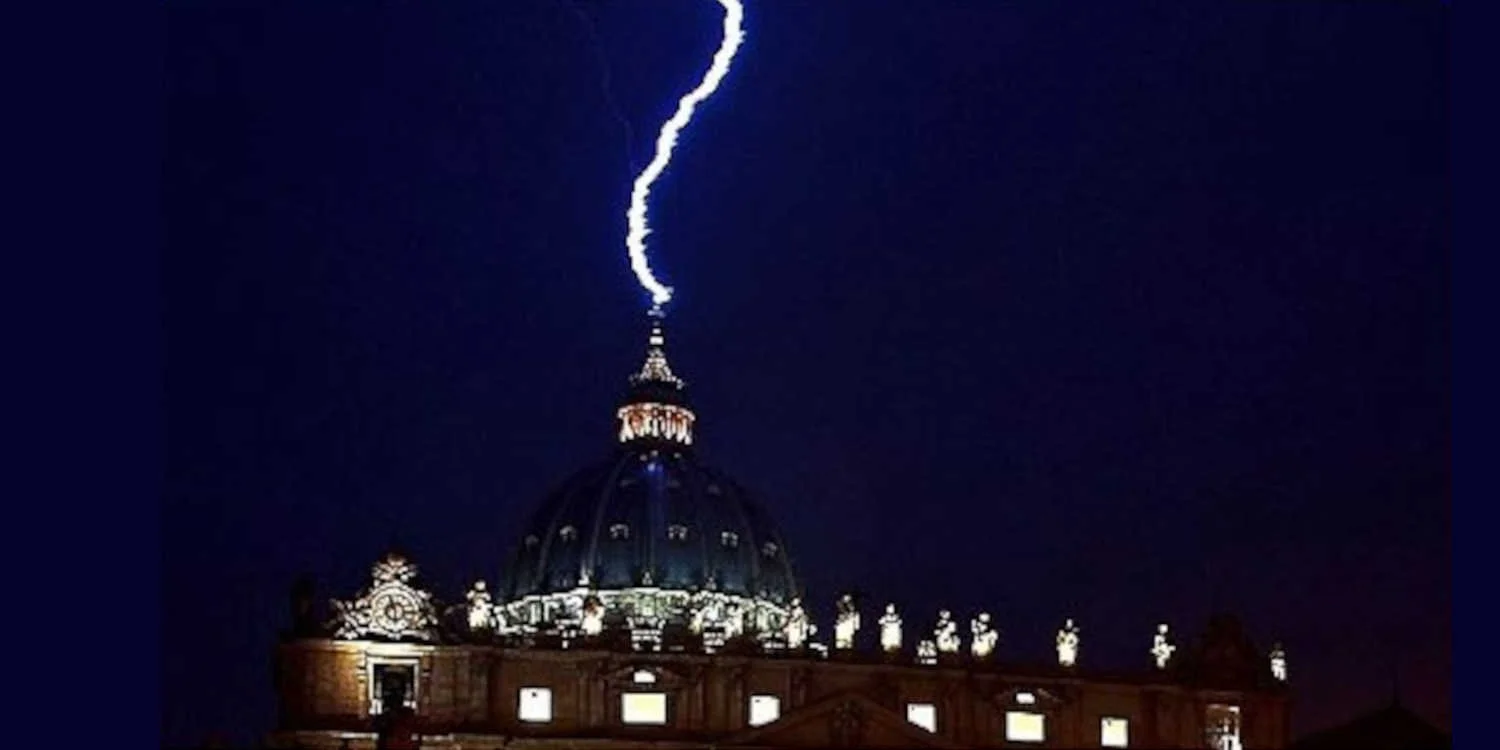
The First Catholic Scandal!
Filled with the Holy Spirit, the Apostles began to address the bewildered crowd gathered in Acts Chapter Two. Each person heard them speaking in his own native tongue, an event that in effect reversed the “tragedy of Babel” described in the Book of Genesis (11:1-9), in which men became divided by foreign languages. In Acts, the Holy Spirit filled not only the Apostles, but many of the crowd as well, “and there were added that day about three thousand souls.” (Acts 2:41).
It was on that day that the Church was born, and before it was even ten minutes old, scandal broke out. Those in the crowd who did not “inherit the wind” immediately accused the Apostles of being drunk at 9:00 in the morning on a major holy day that required a morning fast. Their claims forced Saint Peter into the first Papal defense of the Church:
“Men of Judea and all who dwell in Jerusalem, let this be known to you, and give ear to my words. For these men are not drunk, as you suppose, since it is only the third hour of the day.”
— Acts 2:14-15
Saint Peter went on to preach the Church’s first homily, relying on the Prophet Joel (2:28-32) to explain that God poured out His Spirit because the Messianic Age had begun. The meaning of The Passion of the Christ was revealed, and the Apostolic Succession that first preached Christ continues even today in Salvation History as expressed in Catholic Tradition. There is no human institution on earth that has endured for so long in human history. For me, this is the real evidence that the Church inherits the wind. There is no human language, culture, or government that has existed in linear succession for so long. It is safe to say that no human conflict can put asunder what God Himself has joined. To suggest that a 21st Century tabloid sex scandal can destroy the Church is pure folly.
The point is brought home often in the news headlines, and a great example was in a May 10, 2011 column by Mary Kissel in The Wall Street Journal (“A Cardinal’s Warning on China“). Mary Kissel wrote of China’s Communist regime and its interference in the selection and ordination of Catholic bishops. She summed up the state of affairs quite well:
“The Holy See is thousands of years old; the Chinese Communist Party has ruled for little over six decades, and it faces all kinds of internal instability and challenges to its illegitimate rule. When the regime eventually falls, China will be the holy grail of Catholic missions.”
— WSJ Editorial Page, May 10, 2011
I have a particular challenge as I mark this 32nd Pentecost in prison. As I wrote in “The Last Full Measure of Devotion,” more than the loss of freedom itself, I mourn the passing of the world beyond these stone walls. Sometimes my faith strains under the weight of an unjust imprisonment, but when something as simple as a blast of cool wind through my cell on a blistering summer day can remind me of Pentecost, I have hope. We who have inherited the wind do not measure the weight of our crosses, but rather the strength of our conversion and our identity as True Believers.
In the last words of the Resurrected Christ to the Apostles as they gathered in fear of his Crucifixion and the torment of pursuit, Christ never promised them a rose garden instead, “He breathed on them and said to them, ‘Receive the Holy Spirit.’ ” (John 20:22)
+ + +
Note from Father Gordon MacRae: “Receive the Holy Spirit.” Join us a three-minute meditation on the event of Pentecost as the Benedictine Monks of the Abbey of Santo Domingo de Silos chant the Pentecostal hymn “Veni Creator Spiritus.”
This post will be added to our Sacred Scripture collection, The Bible Speaks. You may also like these related links from Beyond These Stone Walls:
The Holy Spirit and the Book of Ruth at Pentecost
For Mother Teresa of Calcutta, Pentecost Illumined the Night
Forty Years of Priesthood in the Mighty Wind of Pentecost
+ + +
Veni Creator Spiritus

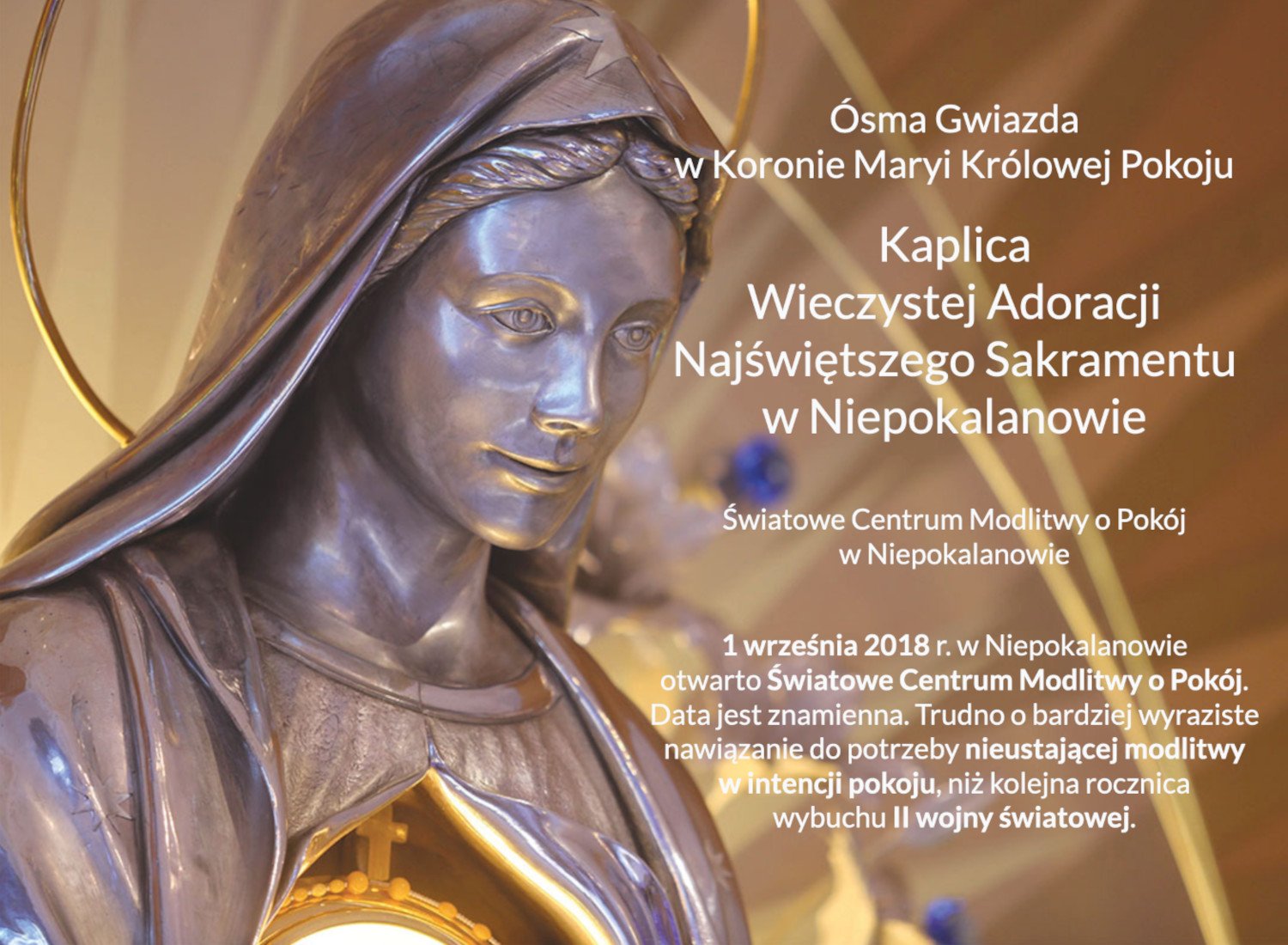

The Eucharistic Adoration Chapel established by Saint Maximilian Kolbe was inaugurated at the outbreak of World War II. It was restored as a Chapel of Adoration in September, 2018, the commemoration of the date that the war began. It is now part of the World Center of Prayer for Peace. The live internet feed of the Adoration Chapel at Niepokalanow — sponsored by EWTN — was established just a few weeks before we discovered it and began to include in at Beyond These Stone Walls. Click “Watch on YouTube” in the lower left corner to see how many people around the world are present there with you. The number appears below the symbol for EWTN.
Click or tap here to proceed to the Adoration Chapel.
The following is a translation from the Polish in the image above: “Eighth Star in the Crown of Mary Queen of Peace” “Chapel of Perpetual Adoration of the Blessed Sacrament at Niepokalanow. World Center of Prayer for Peace.” “On September 1, 2018, the World Center of Prayer for Peace in Niepokalanow was opened. It would be difficult to find a more expressive reference to the need for constant prayer for peace than the anniversary of the outbreak of World War II.”
For the Catholic theology behind this image, visit my post, “The Ark of the Covenant and the Mother of God.”
Covenants of God from Genesis to the Book of Revelation
A Covenant is a kinship bond between two parties. It is the master-theme of Salvation History in which God draws believers into a family relationship with Himself.
A Covenant is a kinship bond between two parties. It is the master-theme of Salvation History in which God draws believers into a family relationship with Himself.
January 28, 2026 by Father Gordon MacRae
“Testament” is the name given to the two principal divisions of the Christian Bible. It is derived from the Latin, “testamentum,” translated from the biblical Greek term, “diathēkē,” which is more properly translated as “Covenant.” In fact, the traditional designations of the biblical “Old Testament” and “New Testament” were inspired by Saint Paul’s distinction between the Old Covenant and the New Covenant in 2 Corinthians 3:6,14:
“Our sufficiency is from God who has qualified us to be ministers of a New Covenant, not in written code but in the Spirit; for the written code kills, but the Spirit gives life … not like Moses who put a veil over his face so that the Israelites might not see the end of the fading splendor.”
This cryptic verse from Saint Paul requires some deeper analysis. I touched on it once in my post, “A Vision on Mount Tabor: The Transfiguration of Christ.”
Peter had just declared at Caesarea Philippi that Jesus is the Christ (Luke 9:18-22). As though to demonstrate the truth of that declaration, the face of Jesus shone momentarily like the sun. The story recalled for Hebrew hearers of the Gospel the account of Moses at Mount Sinai as he received the Decalogue, the Ten Commandments (Exodus 20:1-17). Being in the presence of the Lord caused the face of Moses to shine brilliantly causing Aaron and other Israelites to fear approaching him. Moses then placed a veil over his face.
Some 3,000 years later, Saint Paul interpreted this as a sign that the Sinai Covenant is destined to fade so that the New Covenant in Christ may fulfill it. I will address this in the Sinai Covenant below. The point Saint Paul makes is that the glory of Jesus in the Transfiguration does not look back upon the Sinai Covenant for meaning, but rather the other way around. It is a statement from Saint Paul that the Old Covenant looks forward, and points us looking forward to the New. The Gospel of Matthew Transfiguration account gives symbolic witness to this (Matthew 17:8): On Mount Tabor, “When they lifted up their eyes, they saw no one but Jesus only.” Saint Augustine in the Fifth Century offered a summation of the meaning of this passage: “The New Testament lies hidden in the Old and the Old Testament is unveiled in the New.”
In his brilliant “Overview of Salvation History,” an introductory essay in the Ignatius Catholic Study Bible, John S. Bergsma, PhD, identifies something interesting and unique in Catholic spiritual tradition. It is the concept of “Divine filiation,” the notion, unique in religion, that elevates us as sons and daughters of God by adoption.
In Islam it is considered blasphemy to claim to be a child of God. In Judaism of the Old Covenant it is but a metaphor, not meant literally, but figuratively and symbolically. In Classical Buddhism it is simply irrelevant because individual personhood is itself an illusion remedied, for the Buddhist believer, by cycles of reincarnation.
Only Christianity holds that we become — literally become — sons and daughters of God the Creator, our Father and the source of all fatherhood. This is identified in Saint Paul’s Letter to the Ephesians (3:15):
“For this reason I bend my knees before the Father from whom every family in Heaven and on Earth is named.”
“Abba, Father” is an Aramaic and English term that occurs three times in the New Testament. The first time (Mark 14:36) quotes Jesus directly:
“Abba, Father, all things are possible to you; remove this chalice from me; yet not what I will, but what you will.”
The term was then reiterated by Saint Paul (Romans 8:15 and Galatians 4:6). “Abba” is an Aramaic term that reveals an especially familiar bond between father and child. Aramaic, closely related to Hebrew, was the common language in the Near East from about 700 BC to 600 AD. Each time “Abba” was used in the New Testament it was paired with the Greek equivalent of “Father.” This gave us the English translation, “Abba, Father” denoting the connection with Jesus as children of God.
After the fall of man, the only remedy for broken Covenants was for God to adopt us, and for us to strive to live up to that adoption. We strive still.
The Covenants of Adam, Noah, and Abraham
The people of Israel were also unique in ancient Near Eastern religion in their belief that God had established a Covenant relationship with them and with their ancestors. In the Catholic Bible Dictionary (Doubleday 2009) a companion volume to the Ignatius Catholic Study Bible, Dr. Scott Hahn identifies a sequence of Covenants found in the biblical text. There are six of them, each built upon the preceding one. Together they account for all of Salvation History. They are identified through the mediation of different individuals: Adam, Noah, Abraham, Moses, David, and then ultimately, in the Covenant that fulfills them all, Jesus Christ.
In the Creation Covenant mediated by Adam, creation culminates on the Sabath, which is the sign of a Covenant elsewhere in Scripture (Exodus 31:12-17). The term used for the making of the Covenant with Noah is not the usual one for Covenant initiation (in Hebrew, kārat), but rather a term indicating the renewal of a pre-existing Covenant (in Hebrew, hēqim).
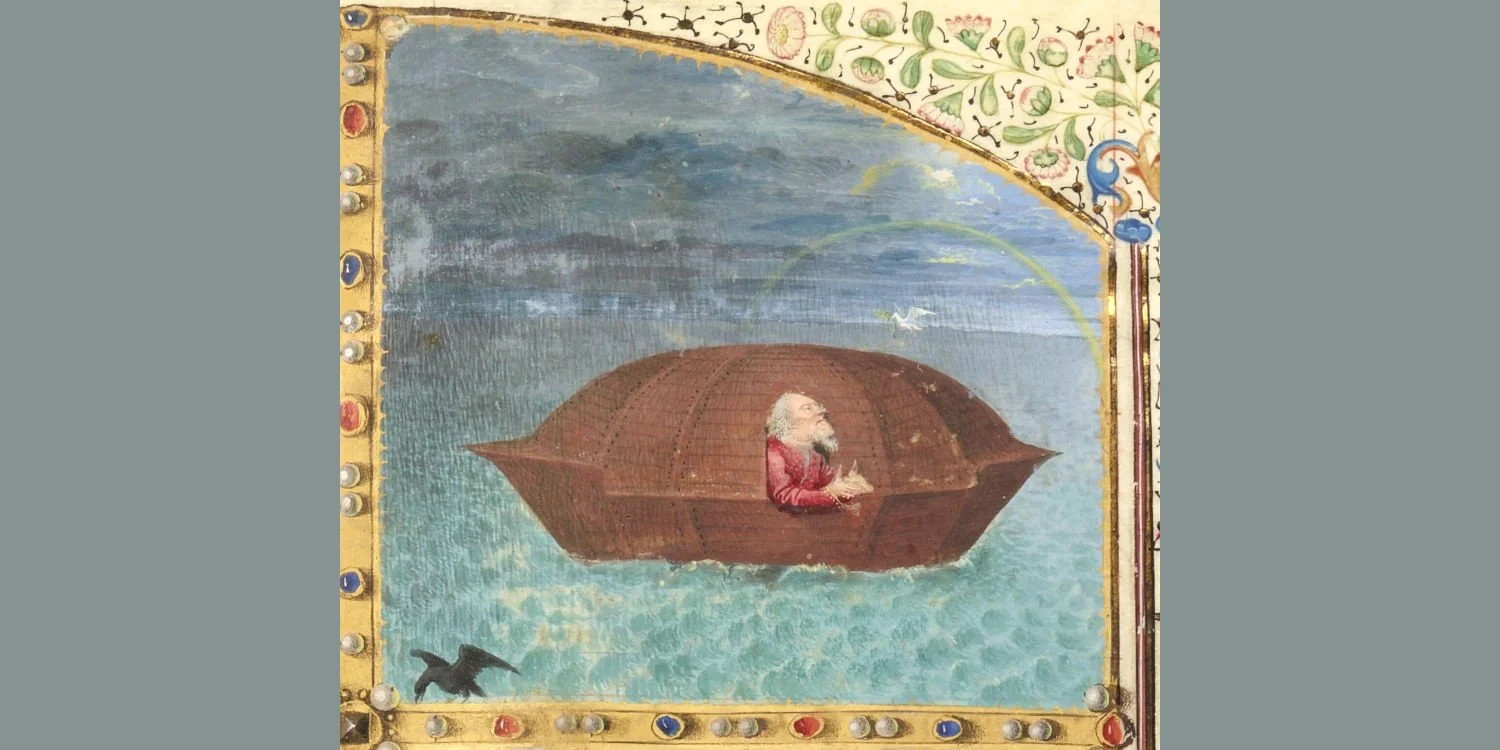
The five Covenants before Jesus end in varying degrees of failure or success. The Covenant with Adam collapses upon the revelation of his disobedience. Having eaten from the Tree of Knowledge of Good and Evil in disobedience to the directive of God, the Covenant collapses as Adam is cast out from Eden. Many generations later God establishes a new Covenant with Noah. In an act of both judgement and re-creation God again plunges the world under the primordial waters described in Genesis 1:2. God saves the righteous man, Noah and his family along with pairs of every animal and creature in an ark. As the water receded, the ark came to rest on Mount Ararat. Noah, a new Adam figure, emerges from the ark and performs the priestly act of offering sacrifice (Genesis 8:20). God renews the previous Covenant repeating the blessings originally given to Adam. According to John S. Bergsma, PhD, in his “Overview of Salvation History,” “sin has left a lasting wound,” and disharmony between man and nature. But the filial relationship of man in Covenant with God does not last long. Noah betrays his priestly-patriarcal role. He becomes drunk and lies naked in his tent (Genesis 9:21). His son Ham, in an enigmatic deed described in Genesis as seeing “the nakedness of his father” (Genesis 9:22) causes Noah to curse Ham’s descendents through his son Canaan (Genesis 9:25). The phrase, “seeing the nakedness of his father,” is widely seen as a euphemism for an incestuous encounter between Noah’s son Ham and the wife of Noah. So where the Covenant with Adam was marred by disobedience, the Covenant with Noah was marred by perversion.
Many generations pass through the next three chapters of Genesis when, in Genesis 12:3, God bestows upon Abram the promises of a great nation, a great name, and universal blessing upon mankind. God incorporated these promises into a formal Covenant. Then God bestowed upon Abram a greater name, “Abraham” (Genesis 17:5). This Covenant becomes subjected to the ultimate test of loyalty: that Abraham should offer his beloved son Isaac in sacrifice to God (Genesis 22:2). I explored this account in detail in “Behold the Lamb of God Upon the Altar of Mount Moriah.”
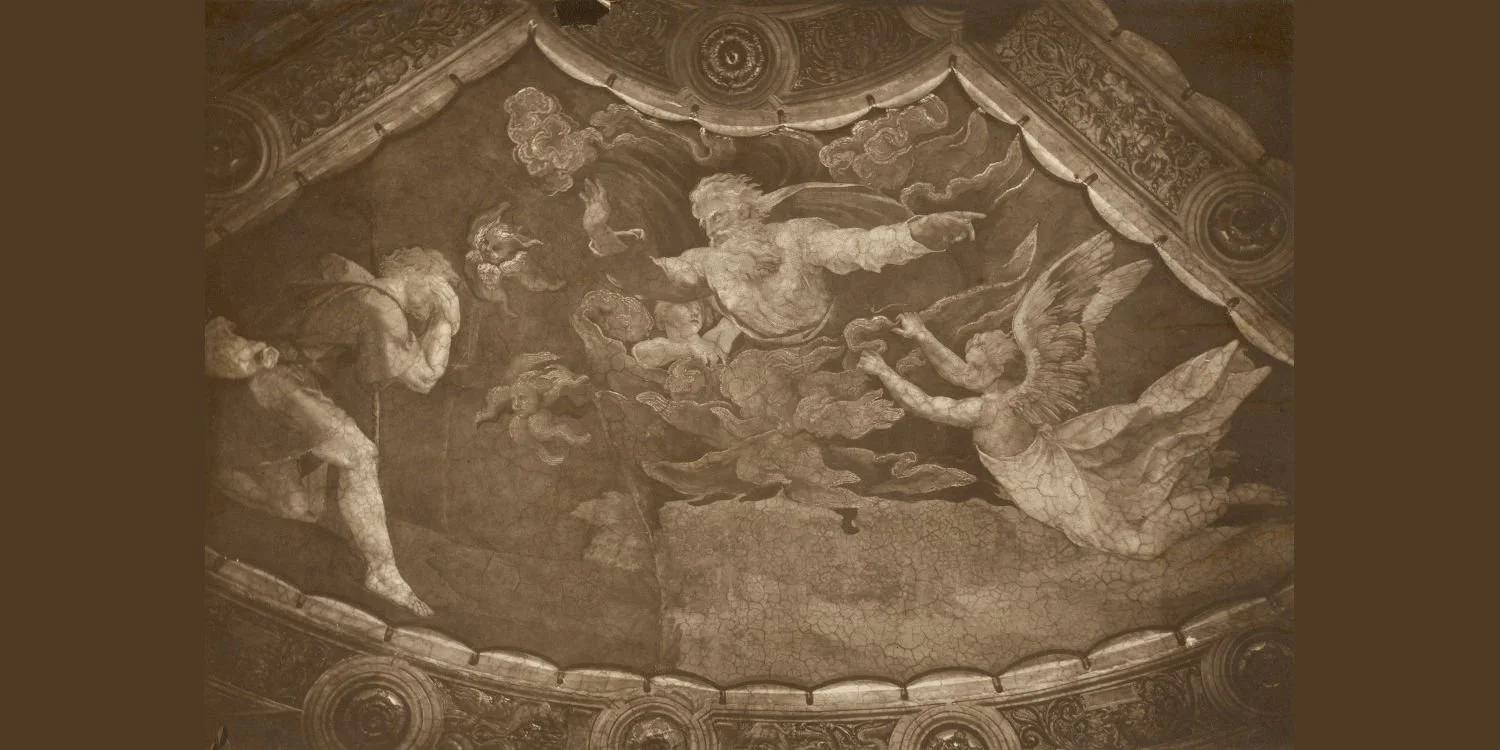
An Angel of the Lord stayed Abraham’s hand and pointed to a ram in the thicket, which became the substitute sacrifice for Isaac just as 2,000 years later, Jesus became the substitute sacrifice for us.
The Covenants of Moses, David, and Jesus
Unlike the aftermath of the Covenants with Adam and Noah, the Covenant with Abraham did not collapse under a catastrophic fall. Even though the Covenant is complicated by the sins of his descendants, God fulfills his promise to Abraham, but Abraham’s lineage ends up in Egypt.
Generations passed. Abraham’s descendant, Joseph, one of the sons of the Patriarch Jacob, was betrayed by his own brothers and sold into slavery in Egypt. Thus, centuries later, Israel became a nation in bondage in Egypt until Moses led the Israelites out of captivity to the Promised Land. God called upon Moses from a burning bush on Mount Horeb (Exodus 3:6, 10). God identified himself as “The God of your fathers, the God of Abraham, the God of Isaac, the God of Jacob. Come, I will send you to Pharaoh that you may bring forth my people, the sons of Israel, out of Egypt.”
Once the children of Israel were released from bondage, Moses led them to Mount Sinai where the Lord established a national Covenant — the Decalogue, the Ten Commandments. No sooner than the Sinai Covenant had been established, however, it was broken. Some Israelites were enticed at Mount Sinai into worship of a golden calf, an icon of an Egyptian deity. Moses expelled them and then Israel was subjected to wandering in the desert as penance. Moses is mentioned more in the New Covenant (the New Testament) than any other Old Testament figure.
Centuries later, around 1,000 BC, King David arose in Salvation History. He descended from the tribe of Judah and is introduced in Scripture as a young shepherd in Bethlehem, which came to be known in our Nativity accounts as the “City of David.” David was a gifted poet and musician. He composed many of the psalms in the Hebrew Bible setting some of them to music. He was also a warrior known to history as having slain the giant Philistine warrior, Goliath (1 Samuel 17:48).
The Prophet Samuel annointed David as King over Israel, “and the Spirit of the Lord came mightly upon David from that day forward (1 Samuel 16:13).” Like a New Adam, David also functioned as a priest and a prophet while Israel expanded to become an empire.
Under the reign of David’s son, Solomon, Israel became a great military power in the Ancient World. His greatest accomplishment was the building of the Temple in Jerusalem and the Ark of the Covenant, which I described in these pages in “The Ark of the Covenant and the Mother of God.”
The terms of Davidic Covenant are layed out in 2 Samuel 7. The elements of the Davidic Covenant include Nathan’s oracle (2 Samuel 7:8-16) about David’s intention to build a sanctuary for Yahweh.
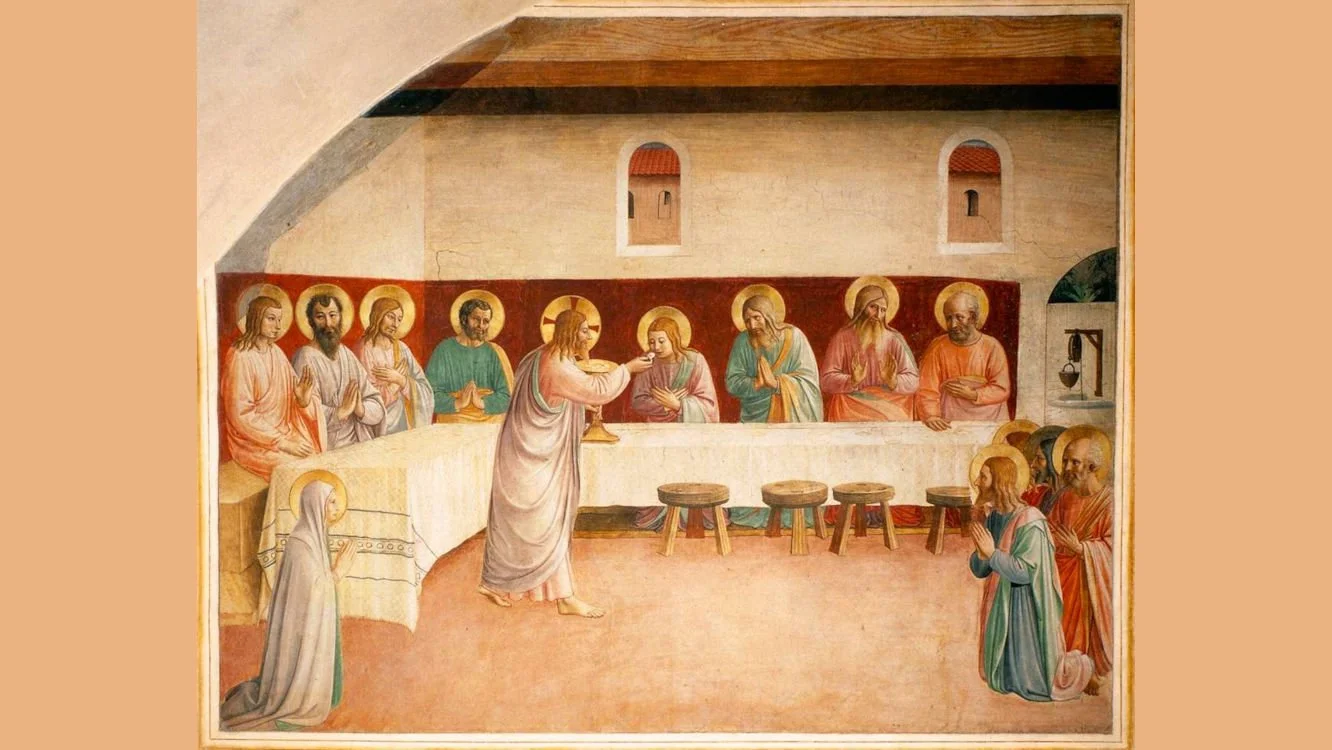
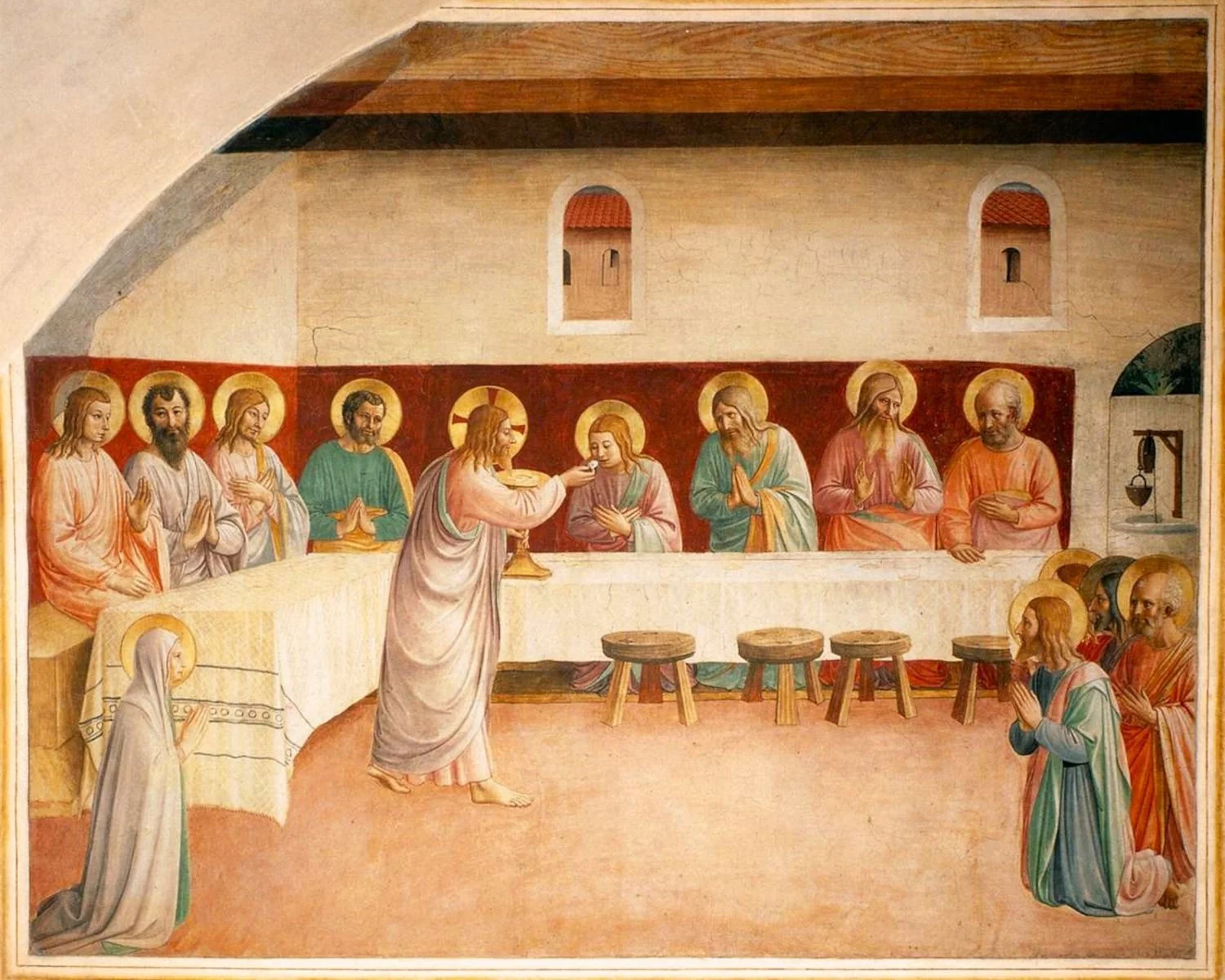
The New Covenant Gospels, especially Matthew and Luke, depict Jesus as the heir of David and the one to restore the Davidic Covenant. God’s Covenant with Jesus was the Institution of the Eucharist at the Last Supper. Jesus identifies his own body and blood as the sacrificial elements of this New Covenant.
This was something entirely new in the Bible and in Salvation History. Jesus did not simply make a Covenant, but rather “became” a Covenant, a living bridge linking us to God. It was, and is, the fulfillment of all of Salvation History.
+ + +
Note from Father Gordon MacRae: Thank you for reading and sharing this post. It will be added to our collection of special Scripture posts about Salvation History.
You may also like these related posts from Beyond These Stone Walls:
A Vision on Mount Tabor: The Transfiguration of Christ
Behold the Lamb of God Upon the Altar of Mount Moriah
The Ark of the Covenant and the Mother of God
On the Great Biblical Adventure, the Truth Will Make You Free
+ + +
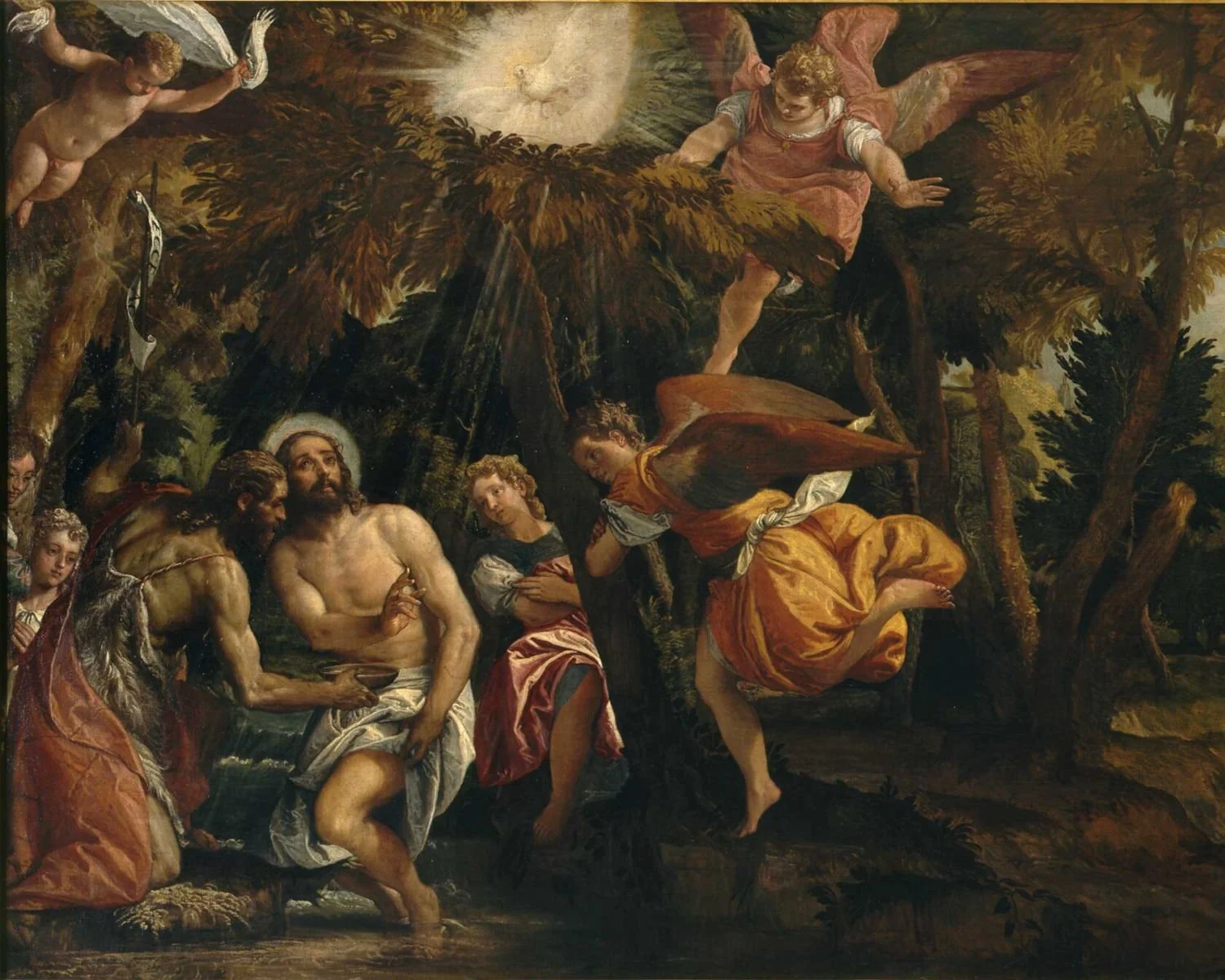
“This is my beloved Son on whom my favor rests.”
The Eucharistic Adoration Chapel established by Saint Maximilian Kolbe was inaugurated at the outbreak of World War II. It was restored as a Chapel of Adoration in September, 2018, the commemoration of the date that the war began. It is now part of the World Center of Prayer for Peace. The live internet feed of the Adoration Chapel at Niepokalanow — sponsored by EWTN — was established just a few weeks before we discovered it and began to include in at Beyond These Stone Walls. Click “Watch on YouTube” in the lower left corner to see how many people around the world are present there with you. The number appears below the symbol for EWTN.
Click or tap here to proceed to the Adoration Chapel.
The following is a translation from the Polish in the image above: “Eighth Star in the Crown of Mary Queen of Peace” “Chapel of Perpetual Adoration of the Blessed Sacrament at Niepokalanow. World Center of Prayer for Peace.” “On September 1, 2018, the World Center of Prayer for Peace in Niepokalanow was opened. It would be difficult to find a more expressive reference to the need for constant prayer for peace than the anniversary of the outbreak of World War II.”
For the Catholic theology behind this image, visit my post, “The Ark of the Covenant and the Mother of God.”

“A Day Without Yesterday:” Father Georges Lemaitre and The Big Bang
The Catholic Church in Belgium can take pride in the story of Georges Lemaitre, the priest and mathematician who changed the mind of Einstein on the creation of The Universe.

The Catholic Church in Belgium can take pride in the story of Georges Lemaitre, the priest and mathematician who changed the mind of Einstein on the creation of The Universe.
(This post needs a disclaimer, so here it is. It’s a post about science and one of its heroes. It’s a story I can’t tell without a heavy dose of science, so please bear with me. I read the post to my friends Pornchai, Joseph, and Skooter. Pornchai loved the math parts. Joseph said it was “very interesting,” and Skooter yawned and said, “You CAN’T print this.” When I told Charlene about the post, she said, “Well, people may never read your blog again.” Well, I sure hope that’s not the case. I happen to think this is a really cool story, so please indulge me these few minutes of science and history.)
The late Carl Sagan was a professor of astronomy at Cornell University when he wrote his 1980 book, Cosmos. It spent 77 weeks on the New York Times Best Seller List. Later in the 1980s, Dr. Sagan narrated a popular PBS series also called “Cosmos,” based on his book. Sagan was much imitated for his monotone intonation of “BILLions and BILLions of stars.” I taped all the installments of “Cosmos,” and watched each at least twice.

More than once, I fell asleep listening to Sagan’s monotone “BILLions and BILLions of stars.” I hope you’re not doing the same right now. Science was my first love as a geeky young man. Religion and faith eventually overtook it, but science never left me. Astronomy has been a lifelong fascination, and Carl Sagan was one of its icons. That’s why I was enthralled 25 years ago to walk out of a bookstore with my reserve copy of Sagan’s first and only novel, Contact (Simon & Shuster, 1985).
Contact was about radio astronomy and the SETI project — the Search for Extraterrestrial Intelligence. It wasn’t science fiction in the way “Star Trek” was science fiction. Contact was science AND fiction, a novel crafted with real science, and no one but Carl Sagan could have pulled it off. The sheer vastness of the Cosmos unfolded with crystal clarity in Sagan’s prose, a vastness the human mind can have difficulty fathoming. Anyone who thinks we are visited by aliens from other planets doesn’t understand the vastness of it all.
The central theme of Contact was the challenge astronomy poses to religion. In the story, SETI scientist Eleanor Arroway — a wonderful character portrayed in the film version by actress Jodie Foster — becomes the first radio astronomer to detect a signal emitting from another civilization. The signal came from a planet orbiting Vega, a star, not unlike our own, about 26 light years from Earth. The message of the book (and film) is clear: if another species like us exists, and we are ever to have contact, it will be in just this way — via radio waves moving through space at light speed.

Here comes the geeky part. For those who never caught the science bug, a “light year” is a unit of distance, not time. Light moves through space at a known rate of speed — about 186,000 miles per second. At that rate, light travels through space about 5.86 trillion miles in one year. That’s a “light year,” and in numbers it represents 5,860,000,000,000 miles. In the vacuum of space, radio waves also travel at the speed of light.
The galaxy in which we live — the one we call “The Milky Way” — is a more or less flat spiral disk comprised of about 100 billion stars. The Milky Way measures about 100,000 light years across. That’s a span of about 6,000,000,000,000,000,000 miles, give or take a few. Please don’t ask me to convert this to kilometers!
This means that light — or radio waves — from across our galaxy can take up to 100,000 years to reach Earth. One of The Milky Way Galaxy’s approximately 100 billion stars is shining in my cell window at this moment. Our galaxy is one of about fifty billion galaxies now known to comprise The Universe. The largest known to us is thirteen times larger than The Milky Way. You get the picture. The Universe is immense.

If E.T. Phones Home, Make Sure It’s Collect!
In a recent post I made a cynical comment about UFOs. I wrote, “The real proof of intelligent life in The Universe is that they don’t come here.” It was an attempt at humor, but the problem with searching for extraterrestrial intelligence is one of practical physics. The limit of our ability to “listen” is a mere few hundred light years from Earth, a tiny fraction of the galaxy — a mere survey of our own backyard. If there is another civilization out there, we may never know it.
Even if we hear from them some day, it will be a one-sided conversation. The signal we may one day receive might have been broadcast hundreds — perhaps thousands — of years earlier. If we respond, it will take hundreds or thousands of years for our response to be detected. We sure won’t be trading recipes, or asking, “What’s new?” If there’s anyone out there — and so far we know of no one else — we can forget about any exchange of ideas, let alone ambassadors.
Still, I devoured Contact twice in 1985, then I wrote Carl Sagan a letter at Cornell. I understood that Sagan was an atheist, but the central story line of Contact was the effect the discovery of life elsewhere might have on religion, especially on fundamentalist Protestant sects who seemed the most threatened by the discovery.
I thought Carl Sagan handled the controversy quite well, without judgments, and even with some respect for the religious figures among his characters. In my letter, I pointed out to Dr. Sagan that Catholicism, the largest denomination of Christians in America, would not necessarily share in the anxiety such a discovery would bring to some other faiths. I wrote that if our galactic neighbors were embodied souls, like us, then they would be in need of redemption in the same manner in which we have been redeemed.
Weeks later, when an envelope from Cornell University’s Department of Astronomy and Space Sciences arrived, I was so excited my heart was beating BILLions and BILLions of times! Carl Sagan was most gracious. He wrote that my comments were very meaningful to him, and he added, “You write in the spirit of Georges Lemaitre!”
I framed that letter and put it on my rectory office wall. I wanted everyone I knew to see that Carl Sagan compared me with Georges Lemaitre! I was profoundly moved. But no one I knew had a clue who Georges Lemaitre was. I must remedy that. He was one of the enduring heroes of my life and priesthood. He still is!

Father of the Big Bang
Georges Lemaitre died on June 20, 1966 when I was 13 years old. It was the year “Star Trek” debuted on network television and I was mesmerized by space and the prospect of space travel. Georges Lemaitre was a Belgian scientist and mathematician, a pioneer in astrophysics, and the originator of what became known in science as “The Big Bang” theory — which, by the way, is no longer considered in cosmology to be a theory.
But first and foremost, Father Lemaitre was a Catholic priest. He was ordained in 1923 after earning doctorates in mathematics and science. Father Lemaitre studied Einstein’s celebrated general theory of relativity at Cambridge University, but was troubled by Einstein’s model of an always-existing, never changing universe. It was that model, widely accepted in science, that developed a wide chasm between science and the Judeo-Christian understanding of Creation. Einstein and others came to hold that The Universe had no beginning and no end, and therefore the word “Creation” could not apply.
Father Lemaitre saw problems with Einstein’s “Steady State” theory, and what Einstein called “The Cosmological Constant” in which he maintained that The Universe was relatively unchanging over time. From his chair in science at Catholic University of Louvain in Belgium from 1925 to 1931, Father Lemaitre put his formidable mind to work.
He developed both a mathematical equation and a scientific basis for what he termed the “primeval atom,” a sort of cosmic egg from which The Universe was created. He also concluded that The Universe is not static, as Einstein believed, but expanding at an ever increasing rate, and he put forward a mathematical model to prove it. In 1998, Father Lemaitre was proven to be correct.
Einstein publicly disagreed with Lemaitre’s conclusions, and the priest was not taken seriously by mainstream science largely because of that. In his book, The Universe in a Nutshell (Bantam Books, 2001), mathematician and physicist Stephen Hawking addressed the controversy:
“If galaxies are moving apart now, it means they must have been closer together in the past. About fifteen billion years ago, they would have been on top of each other, and the density would have been very large. This state was called the “primeval atom” by the Catholic priest Georges Lemaitre, who was the first to investigate the origin of the universe that we call the big bang. Einstein seems never to have taken the big bang seriously”
Stephen Hawking actually calculated the density of Father Lemaitre’s “Primeval Atom” just prior to The Big Bang. It was 1,000,000,000,000,000,000,000,000,000,000,000,000,000,000,000,000,000,000,000,000,000,000,000,000, tons per square inch. I haven’t checked this math myself, so we’ll take Professor Hawking’s word for it.
Though Einstein disagreed with Father Lemaitre at first, he respected his brilliant mathematical mind. When Einstein presented his theories to a packed audience of scientists in Brussels in 1933, he was asked if he thought his ideas were understood by everyone present. “By Professor D, perhaps,” Einstein replied, “And certainly by Lemaitre, as for the rest, I don’t think so.”
When Father Lemaitre presented his concepts of the “primeval atom” and an expanding universe, Einstein told him, “Your mathematics is perfect, but your grasp of physics is abominable.”
They were words Einstein would one day have to take back. When Edwin Hubble and other astronomers read Father Lemaitre’s paper, they became convinced that it was Einstein’s physics that was flawed. They could only conclude that the priest and scientist was correct about the creation and expansion of The Universe from the “primeval atom,” and the fact that time, space and matter actually did begin at a moment of creation, and that The Universe will end.
It’s an ironic twist that science often accuses religion of holding back the truth about science. In the case of Father Lemaitre and The Big Bang, it was science that refused to believe the evident truth that a Catholic priest proposed to a mathematical certainty: that the true origin of The Universe, and of time and space, is its creation on “a day without yesterday.”

For his work, Father Lemaitre was inducted into the Royal Academy of Belgium, and was awarded the Franqui prize by an international commission of scientists. Pope Pius XI applauded Father Lemaitre’s view of the creation of the universe and appointed him to the Pontifical Academy of Science. Later, Pope Pius XII declared that Father Lemaitre’s work was a vindication of the Biblical account of creation.
The Pope saw in Father Lemaitre’s brilliance a scientific model of a created Universe that bridged science and faith and halted the growing sense that each must entirely reject the other.
Einstein finally came around to endorse, if not openly embrace Father Lemaitre’s conclusions. He admitted that his concept of an eternal, unchanging universe was an error. “The Cosmological Constant was my greatest mistake,” he said.
In January, 1933, Father Georges Lemaitre traveled to California to present a series of seminars. When Father Lemaitre finished his lecture on the nature and origin of The Universe, a man in the back stood and applauded, and said, “This is the most beautiful and satisfying explanation of creation to which I have ever listened.” Everyone present knew that voice. It was Albert Einstein, and he actually said the “C” word so disdained by the science of his time: “Creation!”
“I want to know how God created this world. I am not interested in this or that phenomenon, in the spectrum of this or that element. I want to know God’s thoughts; the rest are details.”
“The more we know of the universe, the more profoundly we are struck by a Reason whose ways we can only contemplate with astonishment” … Albert Einstein once said that in the laws of nature, ‘there is revealed such a superior Reason that everything significant which has arisen out of human thought and arrangement is, in comparison with it, the merest empty reflection.’ In what is most vast, in the world of heavenly bodies, we see revealed a powerful Reason that holds the world together.”
“In the Beginning, God created the heavens and the earth. The earth was without form and void, and darkness was upon the face of the deep; and the spirit of God was moving over the face of the waters.”
“Live long and prosper.”
For Further Reading:
