“There are few authentic prophetic voices among us, guiding truth-seekers along the right path. Among them is Fr. Gordon MacRae, a mighty voice in the prison tradition of John the Baptist, Maximilian Kolbe, Alfred Delp, SJ, and Dietrich Bonhoeffer.”
— Deacon David Jones
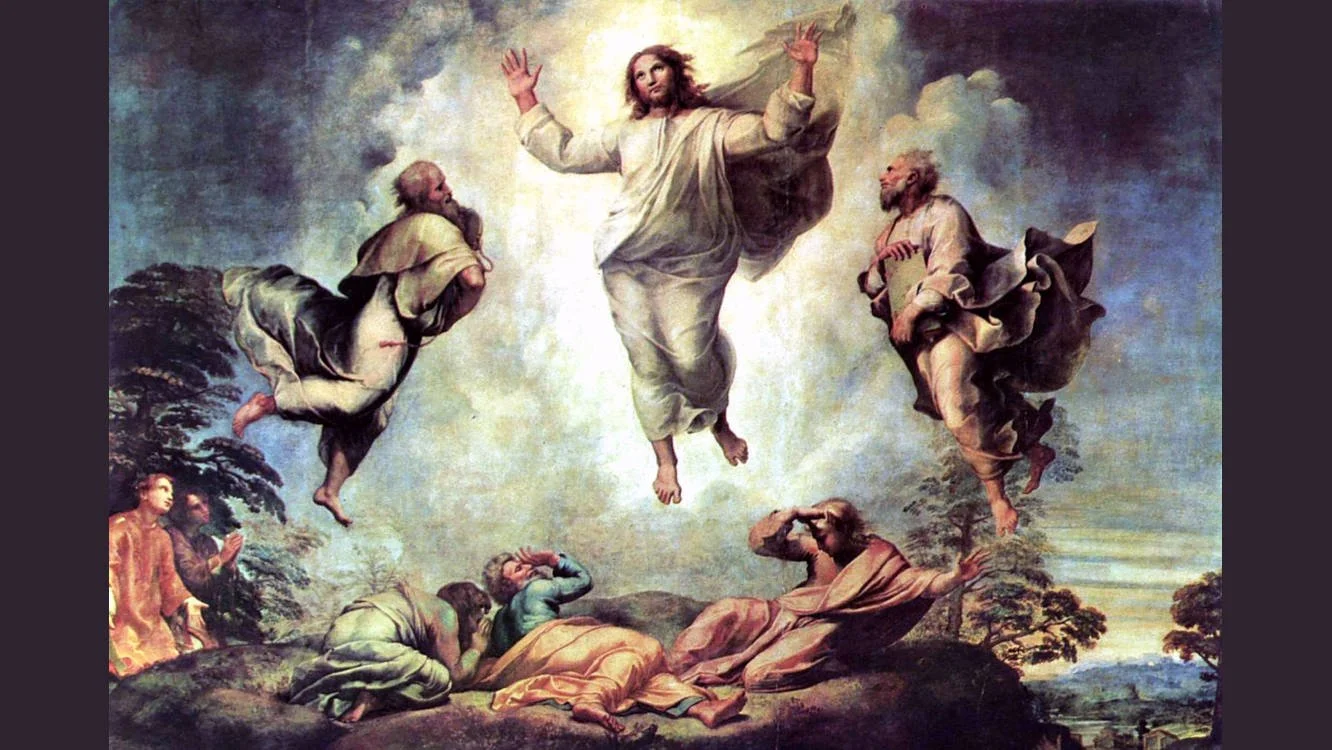
The Law and the Prophets and the Transfiguration of Christ
Moses and the Prophet Elijah are present for the Transfiguration of Christ. They represent the Law and the Prophets, the two pillars of Israel's faith and ours.
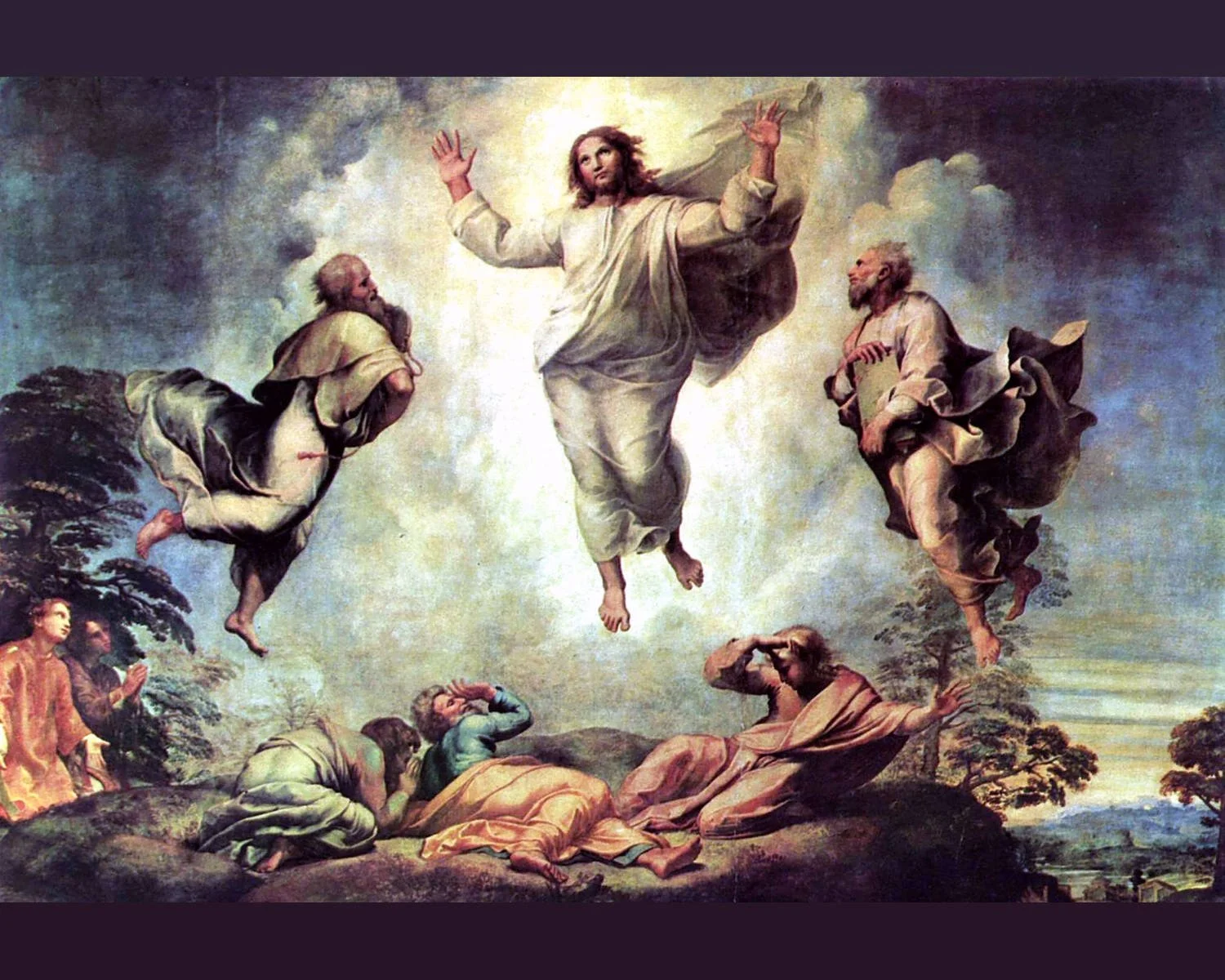
Moses and the Prophet Elijah are present for the Transfiguration of Christ. They represent the Law and the Prophets, the two pillars of Israel's faith and ours.
February 25, 2026 by Father Gordon MacRae
“Nothing new in the Holy See.” I hear these words from our Editor every week as she reviews with me a global traffic report for this blog. Being blind behind these stone walls to everything going on with a post after it leaves my archaic typewriter, this opportunity to know that someone out there is actually reading is vaguely comforting to me. We cannot know who is reading any particular post, but we can see where they are, and how many they are.
Our call always ends with “Nothing new in the Holy See.” It means that no one there has stopped to look from Beyond These Stone Walls. There is a sadness in that. There is a lot of controversy in Rome these days, and because I have a stake in it, I am both anxious about it and anxious to have a voice in it. I look intently at the affairs of Rome even if no one there is ever looking back. Current events there are sometimes manipulated by those with an agenda to reshape the Church in their own image, or to filter the Way, the Truth, and the Light through the age of relativism.
But all this has more to do with our politics than the far more important opportunities to explore, and allow to be shaped within us, the profoundness of our faith. Unlike other Catholic bloggers, I can write only one post per week so the affairs of Rome will have to wait. It is Lent, after all, and the Transfiguration of Christ in the Gospel this week shakes the Earth under my feet while the affairs of Rome only make me tremble a bit.
So no offense to my fellow Catholics embroiled over the dramas of Rome, and the tug-of-war closer to home as struggles over altar rails and Latin in the Mass threaten to replace our struggle to live the Gospel. I am painfully aware that in 2013 Pope Benedict XVI left the Chair of Peter. My entire life as a priest had been overshadowed by the light of two great men who became giants not only in faith but in the world. I will never forget that 1978 knock on my seminary room door and the voice that followed: “The Pope has died!” I shouted back, “That happened a month ago!” The face of the Church in the modern world changed as the first non-Italian in centuries became pontiff in the person of Saint John Paul II. Twenty-six years later in 2005 he was followed in the papacy by the brilliant Joseph Ratzinger, a theologian par excellence who became Benedict XVI. I have always been aware that the two popes who followed them had to fill the shoes of giants, so I have to always remind myself to cut them a little slack. I fend off any tendency to judge or compare them with their predecessors.
These are dark days for priests, and often dark for faithful Catholics as well. But darkness preceded the Transfiguration of Christ at the center of the Gospel for the Second Sunday of Lent, and as usual there is a story on its surface and a far greater one in its depths. Lord, be our Light.
Who Do You Say That I Am?
All three Synoptic Gospels have an account of the Transfiguration of Jesus, and the accounts are remarkably uniform. This week for the Second Sunday of Lent, it is Matthew’s turn, but all the elements he presents in his presentation of the Transfiguration of Christ are also presented by Luke who adds a component. Luke alone presents a reason for the Lord to bring three of His Apostles to the top of Mount Tabor:
“Jesus took Peter, James and John and went up the mountain to pray. While he was praying his face changed in appearance and his clothing became dazzling white. And behold, two men were conversing with him, Moses and Elijah, who appeared in glory and spoke of his exodus that he was going to accomplish in Jerusalem.”
— Luke 9:28-30
I wrote of this same event and its place in Salvation History in my recent post, “Covenants of God.”
Some immediate understanding of this event would have dawned upon any faithful Jew and certainly registered with Peter, James and John. The account is highly reminiscent of an event in the Book of Exodus that took place some 13 centuries earlier:
“When Moses came down from Mount Sinai with the two tablets of the Law in his hands, as he came down from the mountain Moses did not know that the skin of his face shone because he had been talking with God. And when Aaron and all the people of Israel saw Moses, because the skin of his face shown, they were afraid to come near him.”
— Exodus 34:29-30
Though the event of the Transfiguration of Jesus would vividly bring to the Jewish mind that passage from Exodus, it was also very different. It was like the difference between the Sun and the Moon. The Moon only reflects light radiated from the Sun. As brilliant as a full moon can appear in the darkness of night, it produces no light of its own. The face of Moses only reflected the light of grace radiated from God.
The Sun, on the other hand, radiates its own dazzling light, and to look too long would cause blindness. The light of the Transfiguration of Christ was “dazzling,” and it came from within. In those few moments — for Peter, James and John could have stood no more than a few — God lifted a corner of the veil to reveal the nature of the person Peter declared to be the Christ:
“The only begotten Son of God, born of the Father before all ages, God from God, Light from Light, true God from true God, begotten, not made, consubstantial with the Father, through him all things were made. For our salvation he came down from heaven.”
— The Nicene Creed
I wrote of this account a few years ago in “A Transfiguration Before Our Very Eyes.” That post was more about the conversion that this episode can bring within a person who comes to some understanding of its spiritual dimensions. Canadian Catholic blogger Michael Brandon at “Free Through Truth” actually wrote a post about that post — and his was far better than mine — which he entitled, “Transfiguration, You and Me.”
The conversion that Michael Brandon and I both highlighted was that of Pornchai Moontri, and it is a most important story, not just for him, or for me, but for a Church embroiled in scandal. If you think I may beat this drum of Pornchai’s conversion too much, I challenge you to delve into it for I cannot emphasize it enough. Given the story told in “Pornchai Moontri and the Long Road to Freedom,” his conversion — a change not just of heart but of substance — should have been impossible. And he found no light in me, for I radiate none.
In the Gospel, the Transfiguration of Jesus was preceded by two pivotal events. On the command of Jesus, the Apostles fed 5,000 people with a mere five loaves of bread and two fish. When it was over, he asked the Apostles, “Who do the people say that I am?” They answered, “Some say John the Baptist” (for he had already been beheaded by Herod) “while some say Elijah or that one of the prophets of old has arisen.”
But what about you, asked Jesus. “Who do you say that I am?” Peter answered for all: “You are the Christ of God”. Jesus then told them a startling revelation bringing them to an inner darkness:
“You are to tell this to no one. The Son of Man, must suffer many things, be rejected by the elders and chief priests and scribes, and be killed, and on the third day be raised. If any man would come after me, let him deny himself and take up his cross daily and follow me. For whoever would save his life will lose it; and whoever will lose his life for my sake, will save it.”
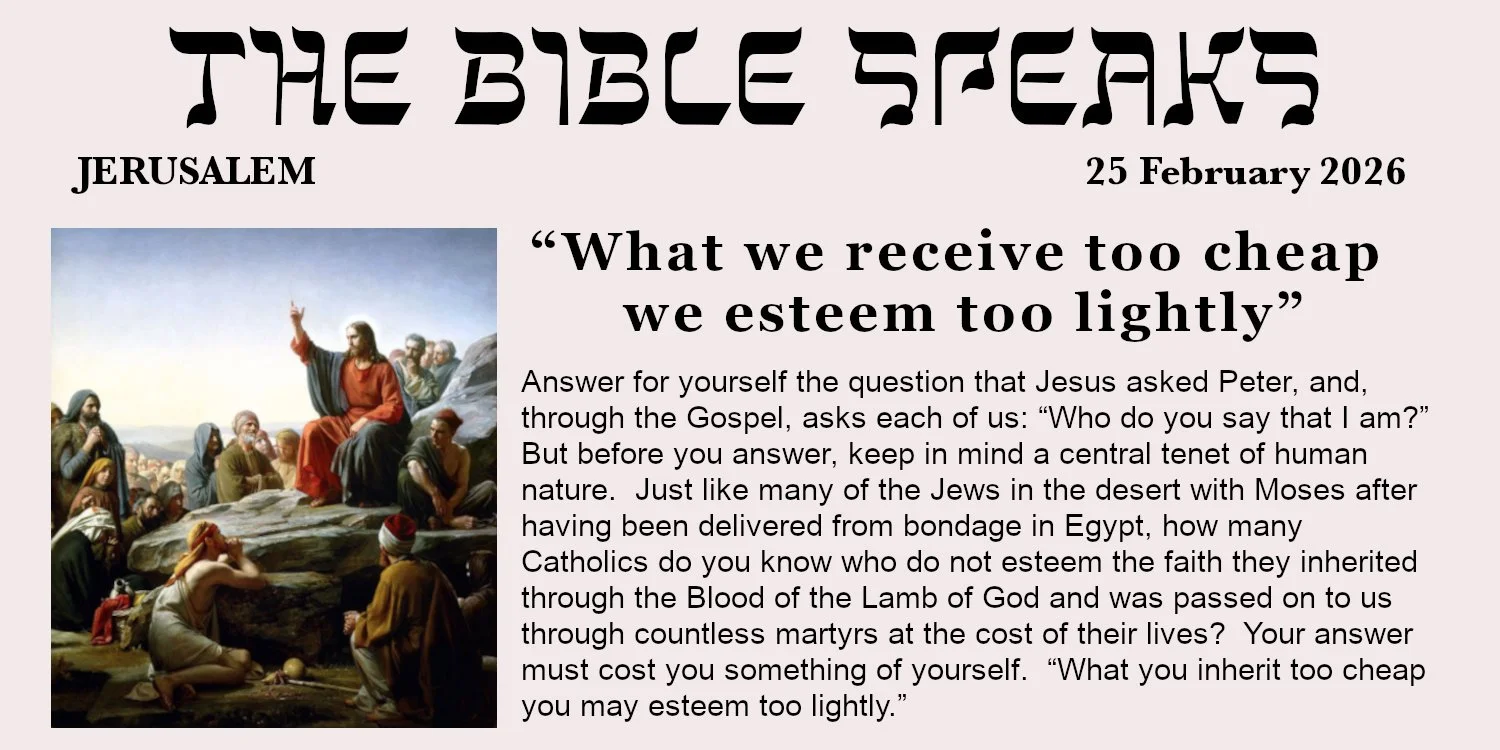
So answer for yourself the question that Jesus asked Peter, and, through the Gospel, asks each of us: “Who do you say that I am?” But before you answer, keep in mind a central tenet of human nature. Just like many of the Jews in the desert with Moses after having been delivered from bondage in Egypt, how many Catholics do you know who do not esteem the faith they inherited through the Blood of the Lamb of God and was passed on to us through countless martyrs at the cost of their lives? Your answer must cost you something of yourself. “What you inherit too cheap you may esteem too lightly.”
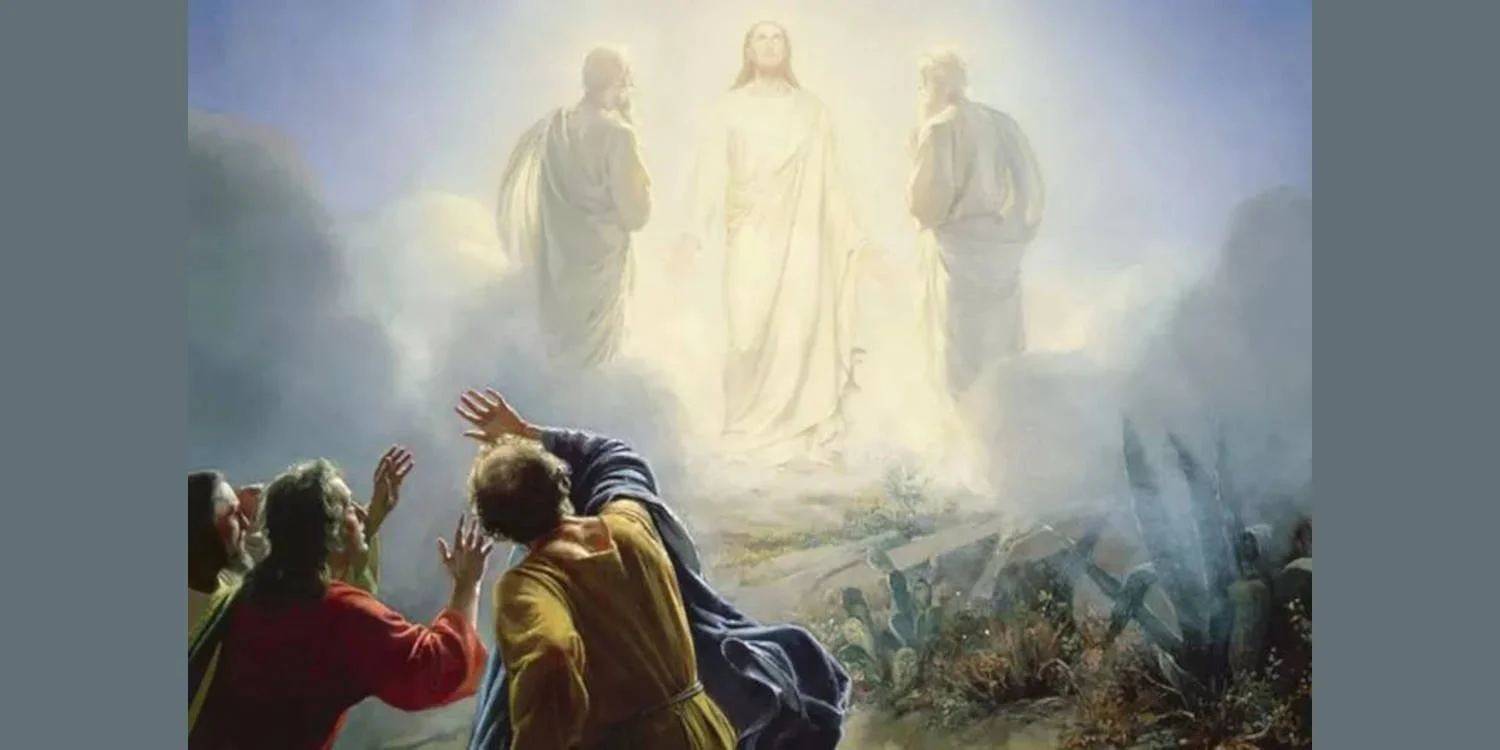
A Conversation with Moses and Elijah
I would like to delve deeper into the theological significance of the Transfiguration account and into its spiritual resonance. First, the very important story behind the story. The account is filled with great spiritual meaning. First, why do Moses and Elijah appear?
A lot in Sacred Scripture happens on mountaintops. In the Book of Exodus, Moses received the Covenant from God on Mount Sinai. In the First Book of Kings, the Prophet Elijah encountered God on Mount Horeb. On Mount Tabor — the place where long-held tradition places the Transfiguration — Moses and Elijah represent the Law and the Prophets, the two central pillars of faith in Judaism, and the foundations of God’s Covenant with Israel.
But how can they be present in heaven before the Resurrection of Jesus and the Exodus from sin and death? The greatness of Elijah is attested to by the sheer number of allusions to him in both the Old and New Testaments. In the Hebrew mind, it was Elijah who affirmed the supremacy of Yahweh over nature and human history, and was seen as the principal defender of traditional Hebrew morality.
Elijah can be present at the Transfiguration because he was taken on a chariot into heaven (2 Kings 2:1-18). It was an ingrained belief of Hebrew tradition that God would return Elijah to Israel even before this prophecy was set forth by the Prophet Malachi: “Behold, I will send you Elijah the prophet before the great and terrible Day of the Lord comes” (Malachi 4:5). Knowing the Scriptures, the presence of Elijah must have struck both hope and terror into the hearts of Peter, James and John.
But how is it that Moses was there with Jesus on Mount Tabor? This is where the Hebrew Scriptures and the legends of faith intersect. The Canon of Sacred Scripture reveals the story of Salvation History from Abraham to Jesus, but Israel also had a collection of oral and written traditions accepted by Rabbinical teaching as “Deuterocanonical” meaning, “Secondary Canon.” Some of these are also called “Apocryphal” texts from the Greek, “apokryphos” which means “hidden.” Some of what is in these texts intersects with the Bible, but remains a matter of pious traditional belief instead of historical verification. I once wrote of these discoveries in “Qumran: The Dead Sea Scrolls and the Coming Apocalypse.” There are others perhaps not yet discovered. The Book of Daniel (12:9) speaks of “words that are shut up until the end of time.”
An example of how one such text contributed to popular belief is the “Protoevangelium of James.” It circulated in the Early Church and was cited by one of the Church Fathers. It is the only source for a tradition that the parents of Mary were Joachim and Anna.
There were several texts outside of Scripture from which legends and traditions circulated regarding Moses. These include the Books of Enoch, the Book of Jubilees, and the Assumption of Moses. They influenced early Rabbinic beliefs and teachings about angels, for example, and the lives of Moses and other Biblical figures.
The Assumption of Moses reveals a tradition, now lost from the fragments of the text that have survived, about the death of Moses in the Sinai desert. In that legend, Satan tried to claim the body of Moses, but Michael the Archangel contended with Satan and won. Michael then escorted Moses into heaven, like Elijah, body and soul. That this legend became engraved into the beliefs of Israel, and passed to the Early Christian Church, is evident in the New Testament Letter of Jude who is writing to an audience that obviously already knows of the account:
“But when the Archangel Michael, contending with the devil, disputed about the body of Moses, he did not presume to pronounce a reviling judgment upon him, but said, ‘The Lord Rebuke you.’ ”
— Jude 1:9
It may be from this legendary story that, from the earliest time in the Christian Church, Saint Michael the Archangel has the role of escorting the souls of the dead to salvation. This is how Moses could thus be present with Elijah at the Transfiguration where they are reported to have discussed with Jesus the Cross, the Second Exodus. The road upon which Jesus is embarked is connected to the Law and the Prophets. It is to be an Exodus from the bondage of sin and death in which God will Himself pay the price for release that he once exacted from Pharaoh: The sacrificial death of his own Son.
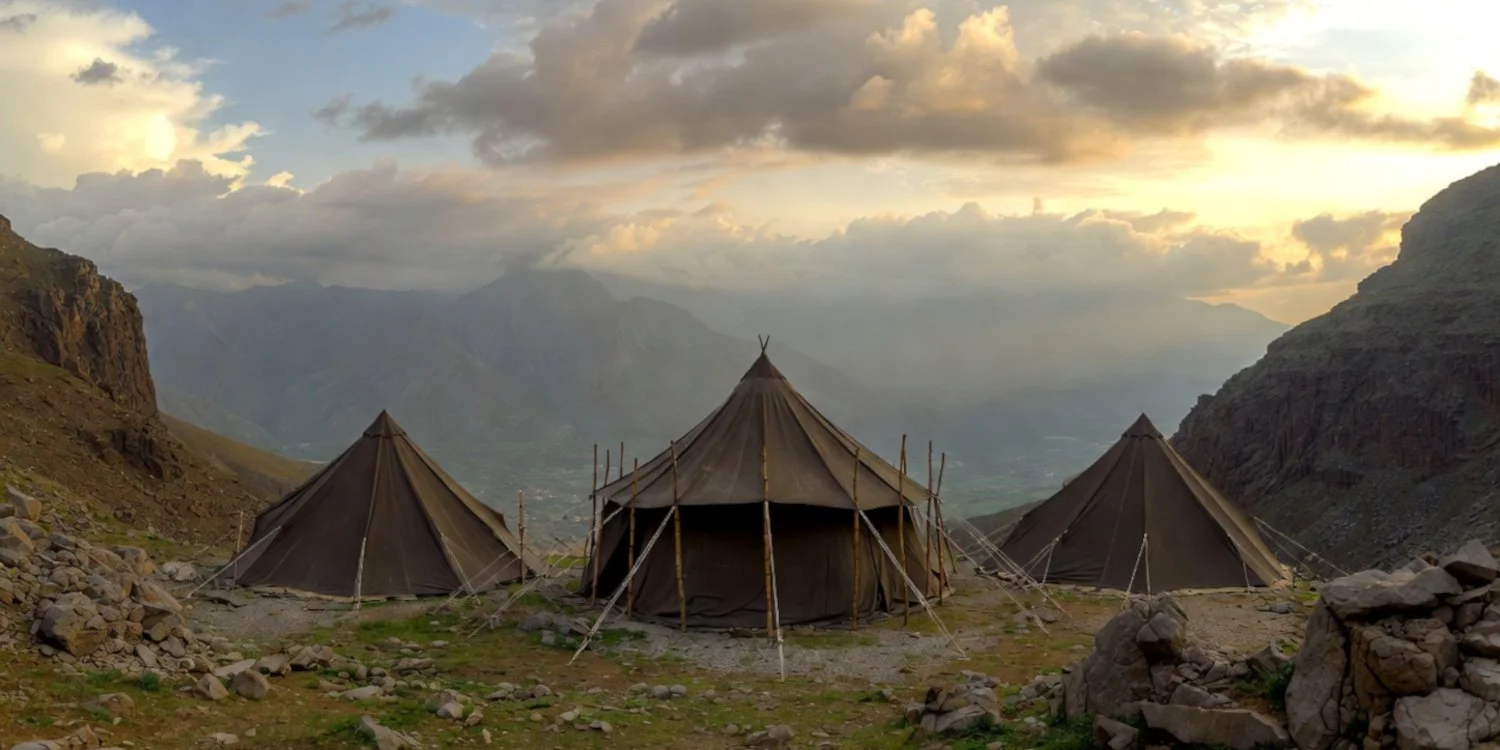
The Feast of Tabernacles
The entire Gospel account of Transfiguration takes place against the backdrop of the Feast of Tabernacles. This is why, in his dreamlike ecstatic state, Peter wants to delay the parting of Moses and Elijah from Jesus by saying,
“Master, it is good that we are here. Let us make three tents, one for you, one for Moses, and one for Elijah.”
Peter misinterprets the reason why they are all present in that place as being the annual Harvest Feast of Tabernacles (or tents), called in Hebrew, “Sukkot.” It is one of three Pilgrimage Feasts in the Hebrew calendar. It was originally a harvest feast, something like the American Thanksgiving, and called the “Feast of Ingathering” in the earliest Hebrew traditions. It lasts for seven days.
As I researched the connection between the Feast of Tabernacles, with its origin in Exodus 23:16, and the Transfiguration of Christ some thirteen centuries later, I came upon a long and detailed article about its history. As I studied the article, I was shocked to see at the end that it was written by my uncle, the late Father George W. MacRae, a renowned Scripture scholar who became rector of the École biblique et archéologique française de Jérusalem and Stillman Professor of Catholic Studies at Harvard University. It was an article he wrote for Catholic Biblical Quarterly in 1960, much of which became included in the New Jerome Biblical Commentary.
The Feast of Sukkot — variously interpreted as Tabernacles, Tents, Huts or Booths — had its roots in early Palestine as little huts were built in the fields, orchards and vineyards during the harvest. Much later, the Pilgrimage Feast was given a deeper religious meaning when it became connected to the events of the Exodus as a memorial to how the Israelites lived during their forty years of wandering in the desert after following Moses through the Red Sea.
It is an irony of Biblical proportions that this formed the scene for the revelation of Jesus as the Son of God about to enter Jerusalem for the New Exodus, the Exodus through the Red Sea of sin and death. It is the Exodus of the Cross through which Jesus will lead us to the New Jerusalem, the Promised Land, if we pick up our Cross and follow Him.
“This is my Son, my Chosen. Listen to him.”
— Luke 9:35
+ + +
Note from Father Gordon MacRae: Thank you for reading and sharing this post. You may also like these related posts from Beyond These Stone Walls:
Qumran: The Dead Sea Scrolls and the Coming Apocalypse
He Has His Mother’s Eyes: The Vision of Our Lady of Guadalupe
“What Shall I Do to Inherit Eternal Life?” (Luke 10:25)
On Good Authority, “Salvation Is from the Jews”
Readers have told us that our Sacred Scripture collection, The Bible Speaks, is a treasure trove of meaningful biblical literature and fine reading for Lent.
Don’t be a stranger. Follow Father Gordon MacRae on X.

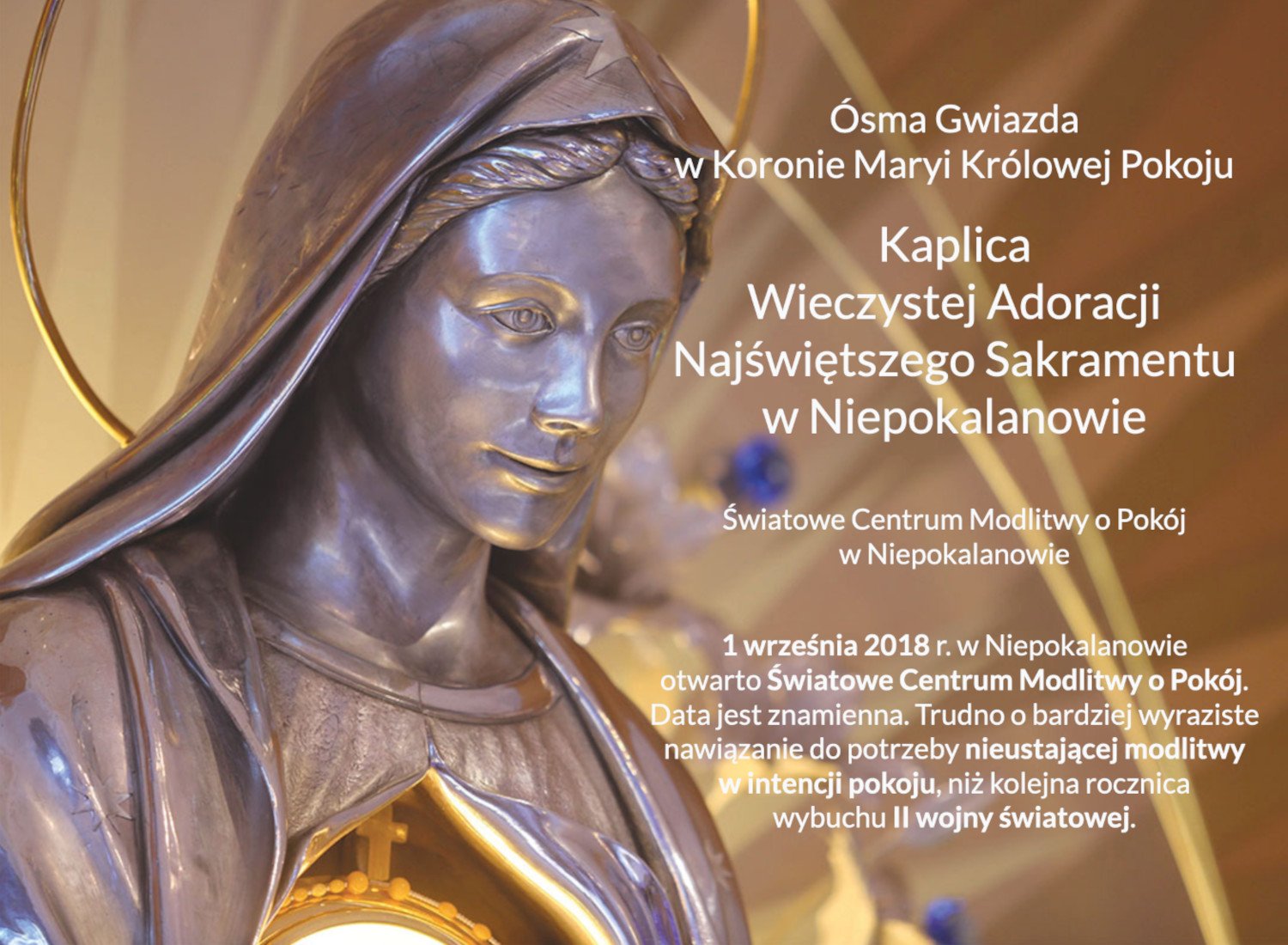

The Eucharistic Adoration Chapel established by Saint Maximilian Kolbe was inaugurated at the outbreak of World War II. It was restored as a Chapel of Adoration in September, 2018, the commemoration of the date that the war began. It is now part of the World Center of Prayer for Peace. The live internet feed of the Adoration Chapel at Niepokalanow — sponsored by EWTN — was established just a few weeks before we discovered it and began to include in at Beyond These Stone Walls. Click “Watch on YouTube” in the lower left corner to see how many people around the world are present there with you. The number appears below the symbol for EWTN.
Click or tap here to proceed to the Adoration Chapel.
The following is a translation from the Polish in the image above: “Eighth Star in the Crown of Mary Queen of Peace” “Chapel of Perpetual Adoration of the Blessed Sacrament at Niepokalanow. World Center of Prayer for Peace.” “On September 1, 2018, the World Center of Prayer for Peace in Niepokalanow was opened. It would be difficult to find a more expressive reference to the need for constant prayer for peace than the anniversary of the outbreak of World War II.”
For the Catholic theology behind this image, visit my post, “The Ark of the Covenant and the Mother of God.”

On the Great Biblical Adventure, the Truth Will Make You Free
After long decline in religious interest and practice across much of the free world, publishers now report a phenomenal increase in new Bible sales since late 2024.

After long decline in religious interest and practice across much of the free world, publishers now report a phenomenal increase in new Bible sales since late 2024.
February 26, 2025 by Fr Gordon MacRae
“If you continue in my word ... you will know the truth, and the truth will make you free.”
— John 8:32
For much of the last year, I had been reading news and opinion items about a coming “Great Reset.” No one seemed to actually know if it was real or what form it would take. Many thought it would be financial so rumors abounded about a vast reallocation of finances. Some of that may be happening more positively now with the DOGE endeavor to reallocate massive government waste. Others thought the reset would be social. Conspiracy theories abound linking it to the rise of Artificial Intelligence. I hoped the Great Reset might be spiritual. The anti-spiritual one came in 1968 and it was not great at all. Some called 1968 “the year we drank from the poison of this world.”
I was 15 years old in 1968. Like many of your sons and daughters concerned for whatever Great Reset is coming, I was estranged from the Catholic faith into which I was born but not raised. It is a common and long-standing phenomenon that our culture lures our youth away from traditional values, but they were never really ingrained in me anyway. I was adrift in an inner city high school at 15 in 1968 when the nation began to replace patriotism with narcissism, and Truth with the smoke of Satan.
I had an uncle who looked like my father but was otherwise quite unlike him. He was a Jesuit priest and world-renowned Biblical scholar. George W. MacRae, SJ became the first Roman Catholic Dean of Harvard Divinity School while I was skipping school to protest the war in Vietnam. I wore a black arm band on something called “Moratorium Day” and sneered at police as they drove by. I was a rebel without a clue.
I visited my Uncle on occasion — a Saturday afternoon ride on the “T” into Cambridge — while trying to make sense of the opposing forces in my life. Somehow, I absorbed at least some of his interest in both academia and Biblical studies, but you would never know that back then. At age 16, I also developed — though I cannot explain how or why — a strange devotion to Saint Anthony of Padua (1195-1231), the famous 13th Century Franciscan from Portugal who by popular acclaim became the Patron Saint of finding lost things. Perhaps it was because I, too, was lost. In 1232, Anthony was canonized by Pope Gregory IX. Seven centuries later in 1946 he was named a Doctor of the Church for his theological brilliance and — previously unbeknownst to me — his profound expertise in Sacred Scripture.
A few years ago, I acquired an indispensable tool for Biblical research: the Revised Standard Version Catholic Edition Concordance with a Foreword by Dr. Scott Hahn, an Evangelical scholar and Catholic convert. Today I use the Concordance a lot for writing, but I never took the time to actually read Dr. Hahn’s Foreword until I sat down to write this post. Imagine my surprise, at age 71, to read Dr. Hahn’s opening paragraphs:
“Saint Anthony of Padua is surely among the best loved of the saints in glory. He is the patron of those who search for lost objects. Artists portray him in his Franciscan habit holding the baby Jesus [who, legend holds, appeared to him]. We all call upon Saint Anthony when we’re looking for something, but I invoke him today for a different reason. I recall him to you because he was a biblical scholar par excellence with so prodigious a memory that he has been called ‘The Concordance.’ Saint Anthony ... was able to retrieve passages from the Bible at a moment’s notice. Name a theme and he could draw relevant Scriptures from many points in Biblical texts ... . Saint Anthony used the word, ‘Concordance,’ to describe the unity of the two Testaments, the unity of the whole Bible. In Anthony’s own words :
“‘The God of the New Testament is one and the same as the God of the Old, and is indeed Jesus Christ, the Son of God. We may apply to him the words of Isaiah: “My people shall know me; in that day they shall know that it is I who speak; here I am” (Isaiah 52: 6). I spoke to the fathers in the prophets; I am here in the truth of the Incarnation. That is the justification for seeking to concord the Scriptures of [the two] Testaments.’”

Father Benedict Groeschel — Again !
Many of our readers have commented over time that our most appreciated posts are those that mine the labyrinthine depths of Sacred Scripture. Over the last 16 years of writing for this blog, I have had but one tool beyond that Concordance: a worn and tattered 1973 Revised Standard Version Catholic Edition of the New Oxford Annotated Bible with the Apocrypha. With these limited tools, I compiled in 2024 a Personal Holy Week Retreat composed of Biblical Holy Week posts that are also helpful spiritual reading for Lent. We will post the list with links on Ash Wednesday.
I knew of Dr.Scott Hahn from his frequent presence at EWTN. He holds the Father Michael Scanlon Chair in Biblical Theology at Franciscan University in Steubenville, Ohio, and is founder and president of the Saint Paul Center for Biblical Theology which has an intriguing website that, of course, I cannot see. It is SalvationHistory.com.
I keep running into Scott Hahn — not in person, but in his books, one of which was put to use in a Catholic studies program in this prison before Covid-19 had the effect of collapsing a Catholic presence here and in many other places. That wonderfully inspiring book is The Lamb’s Supper: The Mass as Heaven on Earth. It was a source of spiritual joy to read this formerly Evangelical scholar describe the “supernatural drama that unfolds before us in the Mass.” This little book reveals a long-lost secret of the Church: The early Christians’ key to understanding the mysteries of the Mass was the Book of Revelation, a Biblical book that many Catholics struggle to comprehend. I was one of them until I read The Lamb’s Supper.
I also ran into another familiar figure in its pages, a man whom I recently wrote about. He is long deceased but I keep running into him anyway. Father Benedict Groeschel, CFR wrote the Foreword for The Lamb’s Supper. It includes another gem that made me laugh for it is vintage Father Groeschel:
“Christians either sidestep the Book of Revelation and its mysterious signs or they spin their own peculiar little theories about who is who and where it’s all going to end. As an inhabitant of New York City — the 21st Century candidate for Babylon — I’m perfectly delighted with the prospect of it all ending soon, even next week ... . My love for Revelation is not based on Star Wars paranoia, but on the wonderful view of the Heavenly Jerusalem in its final chapters.”
I have no doubt that Father Groeschel now witnesses the Heavenly Jerusalem. New York has declined a bit without him. Before I even thought of this post, I wrote of him just weeks ago in “On the Road to Heaven with Father Benedict Groeschel, CFR.”

Thou Shalt Not Covet Scott Hahn’s Bible
Dr. Scott Hahn is also General Editor of the Ignatius Catholic Study Bible. Until recently, Ignatius Press published only a Catholic edition of its New Testament. I have a copy and it has greatly enriched my ability to write about Sacred Scripture for our readers. In late 2023, I decided that I need a new Bible to replace my heavily used 1973 RSV edition held together with glue and tape. Ignatius Press then announced that a new volume containing both the Old and New Testaments with commentary edited by Dr. Hahn was in the works. And so I waited... and waited... and then waited some more.
A year later, in October 2024, the Ignatius Press Fall catalog came across my desk in the Law Library where I work. And there the announcement finally arrived: “Over Two Decades in the Making! The Ignatius Catholic Study Bible Old and New Testaments: Its 2,500 pages are ‘a veritable library of Bible study resources all under one cover.’” It contains the whole of Scripture, Old Testament and New, published in a single volume with easily readable typeset. It features the venerable Revised Standard Version Second Catholic Edition. This beautifully bound volume contains 2,500 pages of Biblical text, introductions and outlines for every book, 17,500 Explanatory Footnotes, 1,700 Cross References, and dozens of expanded Topical Essays.
I have never really coveted any material thing, but I knew that I just had to have this. My $2 per day prison law clerk’s salary was another challenge, but Christmas was coming and some readers remembered me. So with help from Dilia, our Editor, we ordered the newly published Bible with an expectation that it might arrive by Thanksgiving 2024. It was then that I learned that a perhaps unintended and inexplicable consequence of the election of 2024 and the struggle for a new direction for this nation also spawned a massive surge across the land in sales of new Bibles.
I was placed on a back order waiting list, and had to wait for several more printings at Ignatius Press. Finally, at the start of February 2025, my long coveted Ignatius Catholic Study Bible arrived, all 15 pounds of it. My only remaining challenge was to refrain from dropping it on my foot. Along with it, a hardbound edition of Dr. Hahn’s 1,000 page Catholic Bible Dictionary arrived, and the highly prized Jerome Biblical Commentary in which my late uncle was a major contributor. Weighing in at a combined 5,000 pages, I realized that I neglected to order the necessary Biblical Forklift in the Ignatius Catalog. So I will get lots of exercise lugging them from my cell to the library where I do most of my work each day. There are not many things that elevate a prisoner into a state of true joy, but this delivery was one of them.
In Lent this year, and in coming months and perhaps years if God so wills, you can expect a some occasional expanded Biblical erudition as I research Biblical Truths to pass along. Both Dr. Scott Hahn and I begin the study of Scripture with a commitment to mining both its literal sense and its far greater spiritual sense. It is an adventure that I greatly look forward to undertaking.
The Truth will make us free!
+ + +
NEWS ALERT: A stunning new article about the Father MacRae case has been published. See:
xAI Grok’s Big Dig into New Hampshire Corruption
+ + +
Note from Father Gordon MacRae: If the Great Reset is slow in coming, we are free to create our own. Join us at the start of Lent next week for a Journey through the Bible featuring some of our stand-out Scriptural Posts at Beyond These Stone Walls.
You may also like these related posts on Sacred Scripture:
Qumran: the Dead Sea Scrolls and the Coming Apocalypse
When God Deployed a Sinner to Save a Nation: The Biblical Precedent
On Good Authority, “Salvation Is from the Jews”
Casting the First Stone: What Did Jesus Write On the Ground?
The Eucharistic Adoration Chapel established by Saint Maximilian Kolbe was inaugurated at the outbreak of World War II. It was restored as a Chapel of Adoration in September, 2018, the commemoration of the date that the war began. It is now part of the World Center of Prayer for Peace. The live internet feed of the Adoration Chapel at Niepokalanow — sponsored by EWTN — was established just a few weeks before we discovered it and began to include in at Beyond These Stone Walls. Click “Watch on YouTube” in the lower left corner to see how many people around the world are present there with you. The number appears below the symbol for EWTN.
Click or tap here to proceed to the Adoration Chapel.
The following is a translation from the Polish in the image above: “Eighth Star in the Crown of Mary Queen of Peace” “Chapel of Perpetual Adoration of the Blessed Sacrament at Niepokalanow. World Center of Prayer for Peace.” “On September 1, 2018, the World Center of Prayer for Peace in Niepokalanow was opened. It would be difficult to find a more expressive reference to the need for constant prayer for peace than the anniversary of the outbreak of World War II.”
For the Catholic theology behind this image, visit my post, “The Ark of the Covenant and the Mother of God.”