“There are few authentic prophetic voices among us, guiding truth-seekers along the right path. Among them is Fr. Gordon MacRae, a mighty voice in the prison tradition of John the Baptist, Maximilian Kolbe, Alfred Delp, SJ, and Dietrich Bonhoeffer.”
— Deacon David Jones
Woe to You, Scribes and Pharisees, Hypocrites!
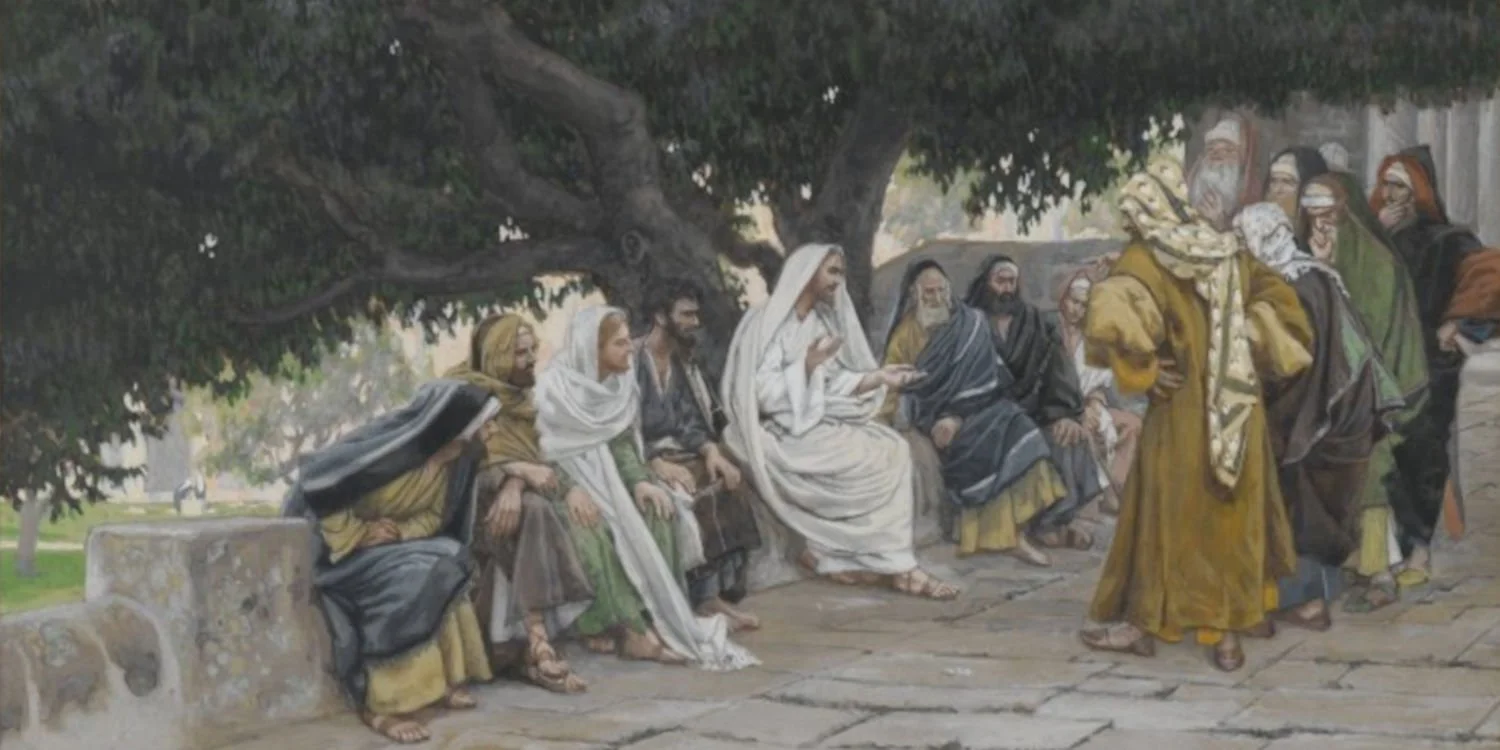
Pharisees and Sadducees appear in the Bible only in the period between the Old and New Testaments. Their only common ground was opposition to Jesus and each other.
Pharisees and Sadducees appear in the Bible only in the period between the Old and New Testaments. Their only common ground was opposition to Jesus and each other.
October 14, 2026 by Father Gordon MacRae
In Catholic liturgy, Scripture Readings follow a three-year cycle. Having a long-running blog means encountering the same Gospel passages every three years. The Gospel from Saint Matthew (22:15-21) for the Twenty-ninth Sunday in Ordinary Time describes one of the many encounters between Jesus and the Pharisees who “plotted how they might entrap Jesus in speech.” The question they posed to entrap him was “Is it lawful to pay the census tax to Caesar or not?”
Both the trap and the question turn out to be most important. I explored why this is so the last time this passage arose in our liturgy three years ago. It is a prelude to this post that has since been ensconced in our collection of Scripture posts called “The Bible Speaks.” We will link to the specific post again at the end of this one. For Salvation History to be fulfilled in our lives, we must answer the Pharisaic question for ourselves: “What Belongs to Caesar and What Belongs to God”
In Sacred Scripture, the arrival of the New Covenant in Christ signaled the end of Israel’s separation from the Gentiles and the beginning of a global family of God. We still struggle with our differences, and the Pharisees of the Gospel personify that struggle.
I have learned something about myself from them. In the United States, at least, we are in the midst of an election cycle in which our political differences take center stage. The divisions in the television ads are already getting on my nerves. Nonetheless, I find loathsome the political positions of one of those parties — the one I do not identify with, but did at one time in my life. I am learning, with a degree of humility, to loath the positions but not the persons within that party who promote them.
If I were to do so, I would cross the line between what I believe is righteous and what in effect becomes self-righteous. The Pharisees in the Gospel could not bring themselves to see through that distinction. So they faded from view in the Word of God.
In almost every instance, the Pharisees’ presence in the Gospel is beneath a dark cloud of suspicion and controversy. In the Gospel account of their question posed to Jesus about taxes and Caesar, for example, their motive was not to answer the question, but rather to expose Jesus as a false Messiah.
The Pharisees did not exist in the Old Testament. Their rise came with the Roman occupation of Palestine. In their determination to be rid of this foreign power, their agenda at every turn was at odds with the Gospel message of Jesus. Their goal was for Israel to separate itself from all gentile impurity and defilement. The very name, “Pharisee,” means “separated one.” Only in separation from all gentile influence, they believed, could God rescue his Chosen People from the political clutches of Roman occupation.
It was a tall order that the Pharisees took upon themselves, deciding in this or any outcome not with God but for God. If God had other plans, they were not immediately known to the Pharisees. The Crucifixion of Christ did not bring about the expulsion of Rome, but rather, ultimately, the conversion of Rome.
The Rise of the Sadducees
The next Sunday Gospel, for the Thirtieth Sunday in Ordinary Time (Matthew 22:34-40), begins with a statement, “When the Pharisees heard that Jesus had silenced the Sadducees, they gathered together, and one of them, a scholar of the law, tested him by asking, ‘Teacher, which commandment in the law is the greatest?’” The Sadducees accepted only the Pentateuch, the first five books of the Bible, called the Books of Moses, as authentic Scripture and the sum total of the biblical narrative. As usual the Pharisees did not ask this question to be instructed by Jesus but rather to trip him up and discredit him before the Sadducees. Jesus responded by strategically citing one of the books of Moses (Exodus 3:6),
“I am the God of your Fathers, the God of Abraham, the God of Isaac, and the God of Jacob, and Moses hid his face for he was afraid to look upon the face of God.”
The lawyer-Pharisee would discredit Jesus before the Sadducees if he cited any other Scripture.
This particular quote from Jesus is significant for both Sadducees and Pharisees. The Pharisees knew well that the Sadducees did not accept any Scripture beyond the five books of Moses. They also did not accept the Jewish belief in the immortality of the soul or life after death. What Jesus here proposed — that God is the God of the living, the God of Abraham, of Isaac and of Jacob — is theological evidence that though they were long gone from this world, they still lived in some form in another. This is a truth I wrote of in “The God of the Living and the Life of the Dead.”
For the Pharisees, the 613 commands of the Mosaic Law are distilled into two prescriptions: Love God (Deuteronomy 6:5) and your neighbor (Leviticus 19:18). These citations would have satisfied the Sadducees if the Pharisees had, as was typical, conveyed the response of Jesus to the Sadducees. They were all about promoting division, even within the Scriptures. And so Jesus answered the question of “which is the greatest commandment in the Law?” with
“You shall love the Lord your God with all your heart, and with all your soul, and with all your mind. This is the great and first commandment. And a second is like it, you shall love your neighbor as yourself. On these two commandments depend all the law and the prophets.”
The presence of the Sadducees in the Gospel is much more brief than that of the Pharisees. But, like the Pharisees, the Sadducees were also cast in a negative light, and not only by the Gospel narrative but by the Pharisees themselves. The two sects were in bitter opposition about the goals and agendas of an occupied Israel. The Sadducees emerged as a political and religious interest movement around the Second Century BC. Their name is derived from the High Priest, Zadok, who served under King Solomon (1 Kings 2:35). The Prophet Ezekiel (40:46) reports that their descendants were bestowed with exclusive rights to exercise ministry in Jerusalem. The Sadducees were closely associated with the Temple priesthood (Act 4:1, 5:17). They held official positions representing Old Covenant Judaism, and were charged with maintaining relations between Israel and the Roman occupation.
Most of the Sadducees were wealthy aristocrats. Unlike the majority of Jews, the Sadducees rejected many of the beliefs of Israel. They were notoriously opposed to the Pharisees, who were commonly respected by the masses. In addition to rejecting all Scripture except the Pentateuch, the Sadducees rejected belief in an afterlife, resurrection, angels, and the immortality of the human soul.
The Gospels reveal but a single direct dispute between the Sadducees and Pharisees, though there were likely many others. They were like a tag team, taking turns attempting to discredit Jesus while also discrediting each other. All three Synoptic Gospels report one dispute between the two factions (Matthew 22:23-33, Mark 12:18-27, Luke 20: 27-38). While Jesus was teaching in the Temple, the Sadducees posed what they contrived as a theological puzzle believing that it would implode his teaching. They presented the case of a woman who had several husbands during her life. “If all her husbands are raised, whose wife will she be in the afterlife? Knowing what they do not believe, Jesus deliberately cited the Pentateuch example of Exodus 3:6 demonstrating that souls live beyond death. This was the dispute that silenced the Sadducees and began this section of our post. The Sadducees then fade from view in the New Testament.
Scribes and the Woes of Being a Pharisee
In the Old Covenant Testament, a scribe was an officer of the King’s Court. It was a strictly political position in which the scribe would act as a secretary and ambassador of the king. The Prophet Ezra was a scribe of the Persian court before coming to Jerusalem. (See Esther 3:12.) But Ezra was also a scribe in the religious sense, becoming an expert in interpreting and applying the Laws of Moses in all the circumstances of Jewish life.
Over time these religious dimensions became the dominant identity and purpose of each scribe. By the time of the New Testament, a Jewish scribe was not a political figure at all. But the scribes became caught up in the religious dominance of Israeli life. They began to serve at the pleasure of the Pharisees.
Parallel to this development, the Pharisees’ own disciples began to reflect their masters’ dismay over the presence of Roman occupation in the lives of the Jews. Their disciples also went to extreme measures to eliminate the influence of Jesus.
And so both the Pharisees and their disciples became the objects of scorn within the Gospel narrative, which in nearly every instance presents them in a negative light.
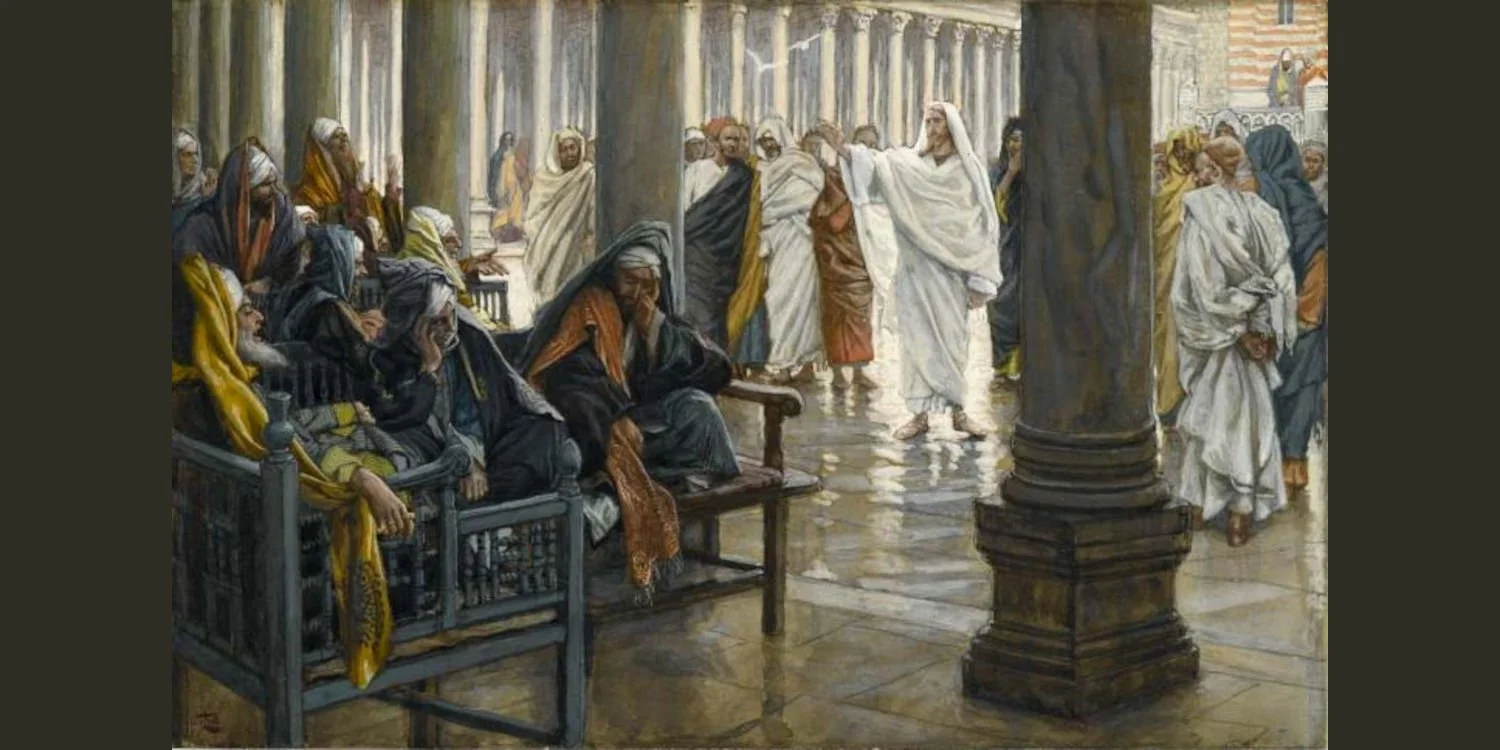
The Hebrew word, “Hoy” is translated as “Woe” in English. It is an interjection of anguish or lament offered by those who are mourning the dead (1 Kings 13:30), or an interjection of fear of a future prospect. When a person in the Bible utters a “Woe” for himself, he despairs for his life. Prophets uttered “Woe” as a warning of God’s judgement on sinful cities or nations. (Isaiah 10:5) Uttering “Woe” serves as a denunciation of evil, an oracle that one is on a path that leads to death or destruction. The Gospel of Saint Matthew, (Chapter 23) contains a litany of Woes against the scribes and Pharisees:
“Woe to you, scribes and Pharisees, hypocrites! You shut the Kingdom of Heaven against men; for you neither enter yourselves, nor allow those who would enter to go in.”
“Woe to you, scribes and Pharisees, hypocrites! For you traverse sea and land to make a single proselyte and when he becomes a proselyte, you make him twice as much a child of hell as yourselves.”
“Woe to you, blind guides, who say, ‘If anyone swears by the temple, it is nothing, but if anyone swears by the gold of the temple, he is bound by his oath. You blind fools! For which is greater, the gold or the temple that has made the gold sacred.”
“Woe to you, scribes and Pharisees, hypocrites! For you tithe mint and dill and cummin while neglecting the weightier matters of the law, such as justice and mercy and faith. … You blind guides strain out a gnat and swallow a camel!”
“Woe to you, scribes and Pharisees, hypocrites! For you cleanse the outside of the cup and the plate but inside are full of extortion and rapacity (avarice).”
“Woe to you, scribes and Pharisees, hypocrites! For you are like whitewashed tombs which outwardly appear beautiful but within are full of death and uncleanness. You, too, outwardly appear righteous to men, but within you are full of hypocrisy and iniquity.”
“Woe to you, scribes and Pharisees, hypocrites! For you build the tombs of the prophets and adorn the monuments of the righteous, saying, ‘If we had lived in the days of our fathers, we would not have taken part with them in shedding the blood of the prophets.’ Thus you witness against yourselves, but you are sons of those who murdered the prophets. Fill up then the measure of your fathers. You serpents, you brood of vipers, how are you to escape being sentenced to hell? Therefore I send you prophets and wise men and scribes, some of whom you will kill and crucify and scourge in your synagogues and persecute from town to town, that upon you may come all the righteous blood shed on earth, from the blood of innocent Abel to the blood of Zachariah, the son of Barachiah, whom you murdered between the sanctuary and the altar. Truly, I say to you, all this will come upon this generation.”
— Matthew 23:13-36
+ + +
Note from Father Gordon MacRae: We will add this post to our Sacred Scripture collection, “The Bible Speaks.”
Writing this post has caused me to undergo a good deal of self-reflection. Few of us in the priesthood can escape every facet of this stinging rebuke against the Pharisees. I do not indemnify myself, but I understand it as a summons to ongoing conversion that we must all undertake before we need the services of an undertaker. Life here is short and eternity is pressing upon us all with hope for a better future.
Please share this post. You may also like these related posts from Beyond These Stone Walls:
What Belongs to Caesar and What Belongs to God
Inherit the Wind: Pentecost and the Breath of God
The Resurrection of Christ: Further Along the Road to Emmaus
The Law and the Prophets and the Transfiguration of Christ
📢 📢 📢
To follow Beyond These Stone Walls in the public square, subscribe on this site or follow @TSWBeyond on X.
📢 📢 📢

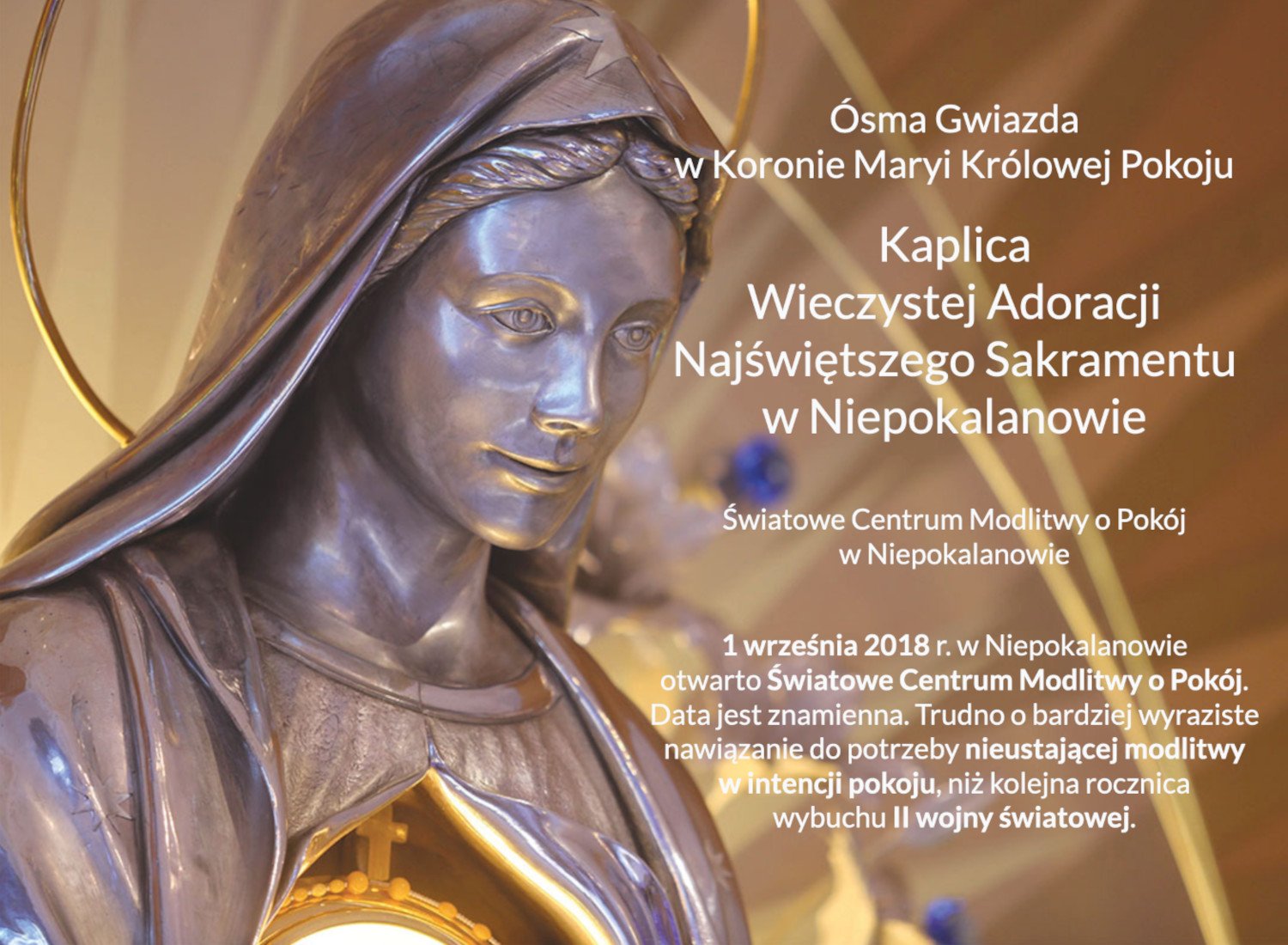

The Eucharistic Adoration Chapel established by Saint Maximilian Kolbe was inaugurated at the outbreak of World War II. It was restored as a Chapel of Adoration in September, 2018, the commemoration of the date that the war began. It is now part of the World Center of Prayer for Peace. The live internet feed of the Adoration Chapel at Niepokalanow — sponsored by EWTN — was established just a few weeks before we discovered it and began to include in at Beyond These Stone Walls. Click “Watch on YouTube” in the lower left corner to see how many people around the world are present there with you. The number appears below the symbol for EWTN.
Click or tap here to proceed to the Adoration Chapel.
The following is a translation from the Polish in the image above: “Eighth Star in the Crown of Mary Queen of Peace” “Chapel of Perpetual Adoration of the Blessed Sacrament at Niepokalanow. World Center of Prayer for Peace.” “On September 1, 2018, the World Center of Prayer for Peace in Niepokalanow was opened. It would be difficult to find a more expressive reference to the need for constant prayer for peace than the anniversary of the outbreak of World War II.”
For the Catholic theology behind this image, visit my post, “The Ark of the Covenant and the Mother of God.”

What Belongs to Caesar and What Belongs to God
Pharisees set a trap for Jesus with a query about paying tax to Caesar. Like much in the Gospel, this has a story on its surface and a far greater one in its depths.

Pharisees set a trap for Jesus with a query about paying tax to Caesar. Like much in the Gospel, this has a story on its surface and a far greater one in its depths.
Note from Father Gordon MacRae: One of the most frequent religious questions in the Google database of searches is also the Gospel at Mass for the 29th Sunday in Ordinary Time. With that question, the Pharisees laid out a trap for Jesus.
+ + +
Prisoners often come to my door with questions. Sometimes they simply don’t have the ability to search through the library for answers and sometimes they just assume that a guy my age must know at least something about almost everything. My friend, Pornchai Moontri, when he was here with me, used to sometimes chime in with answers of his own.
One day a prisoner asked me, “Do you know any Latin? Pornchai shot back, “Of course he does. Latin was his first language!” The implied meaning was that I am old enough to remember when Latin was spoken on the streets of the Roman Empire. The prisoner didn’t get the joke so he didn’t laugh. I got it, and I still look forward to my quid pro quo moment.
But Pornchai may not have been entirely wrong. I went to a public high school as a teen growing up on the North Shore of Massachusetts in the 1960s. (Yes, locals still call it the “Noath Shoah”). I graduated from Lynn English High School when I was only one month seventeen in 1970, and what I most remember about those years is Latin. At Lynn English I studied basic, intermediate, and advanced Classical Latin with Miss Ruggiero who also moderated the “Latin Club” of which I was a charter member.
Latin was not my first language, but I became proficient in my first language, English, only because I studied Latin. I owe a great debt to Miss Ruggiero because she was never satisfied with our merely learning the discipline of Latin declinations and conjugations. We also had to study in depth the setting in which it was spoken: the vast Roman Empire that had spread throughout the known world.

The Roman Empire
The Roman Empire lasted for only five centuries. One of them, the one we now call the First Century A.D. (Anno Domini, Latin for “the Year of the Lord”) includes the Roman occupation of Judea during the birth, life, death, and resurrection of Jesus, and the life of the Early Church.
The Empire began to spread from the city of Rome to the rest of Italy and neighboring regions to become the Roman Republic about 500 years before the birth of Jesus. In 49 B.C., Gaius Julius Caesar, a Roman military strategist and politician, prevailed in a civil war and became dictator of the Republic. He ruled for only five years when he was assassinated on the Ides of March (March 15). The month of July was named in his honor. Caesar’s longtime military deputy, Mark Antony, and Caesar’s grandnephew, Gaius Octavius, defeated Caesar’s assassins and rivals. Then they turned on each other. At the battle of Actium in 31 B.C., Octavius prevailed over a plot by Roman governor Mark Antony and the Egyptian princess, Cleopatra, Caesar’s former mistress who took up with Mark Antony. It’s one of the great soap operas of history.
In 27 B.C. the Roman Senate proclaimed Octavius to be the Roman Republic’s supreme leader giving him the title, “Augustus,” meaning “exalted or holy one.” Most historians cite 27 B.C. as the date the Roman Empire was born. Its first Emperor took his title and added “Caesar” in honor of his great-uncle, Julius.
Caesar Augustus thus meant, “Caesar the Exalted Holy Roman Emperor.” It was a title and not a name. Augustus was also given the titles, “Pontifex Maximus,” supreme head of the state religion, and “Pater Patriae,” Father of the Fatherland.
The month of August was named in the ancient Roman Calendar in honor of Caesar Augustus. It’s easy to see the Roman influence not only in the Latin language of the Church but in the religious titles later assigned by tradition to the papacy. It’s a crime against history to allow Latin to fade from Catholic Tradition, for Christianity transformed it from the language of Earthly powers to the language of the Church. I once wrote of the meaning of this loss in the life of the Church in “A House Divided: Cancel Culture and the Latin Mass.”
From 27 B.C. forward, “Caesar” became the title for a string of Roman rulers. Three are mentioned by name in our New Testament: Augustus, who reigned at the time of the birth of Jesus (see Luke 2:1); Tiberius, in whose fifteenth year as Emperor Jesus was baptized by John at the Jordan (Luke 3:1); and Claudius (Acts 18:2), who commanded that all Jews leave the city of Rome. Others, such as Caligula and Nero, are not mentioned by name but had a profound effect on early Christianity.
By the birth of Jesus, Augustus centralized power by turning to the Equestrian Order, Roman citizens with wealth, power, and property, and sustained their loyalty by appointing them governors over the various regions of Roman occupation. When Jesus was about 14 years of age, Tiberius succeeded Augustus as Emperor, and later appointed one of the Equestrian Order, Pontius Pilate, as governor of Judea.
In some ways in the early years of the advance of Rome into Palestine, the Jews saw it to their advantage. It was a chance to free themselves from the oppression of the Seleucids, the Greek dynasty under Antiochus IV Epiphanies who overtook the Jerusalem Temple in 167 B.C. and replaced the Torah in the Sanctuary with the cult of Zeus.
This is a story of great imperial oppression and Jewish resistance that is laid out in the First Book of Maccabees (1 Macc 8:1-6) which spoke positively of the advancing Romans and an alliance with the Jews to expel the Greek oppressors. It is the story of the Jewish Festival of Hanukkah. A century before the birth of Jesus, Rome became the dominant force in the Mediterranean region, having replaced the Hellenistic Greek influence that sought to destroy the Hebrew language and expression of faith.

Caesar and Christ
So when I came to the Gospel reading for the Twenty-ninth Sunday in Ordinary Time, I was struck by the answer Jesus gave to the religious scholars of his day, the Pharisees, who had set out to entrap him. Armed with a thorough knowledge of Hebrew Law, they asked Jesus if it is permissible for Jews to pay the census tax to Caesar.
The brief story that the Gospel tells in Matthew 22: 15-22 is a good story on its face, but if you are willing to venture a little deeper under into its depths, the result is fascinating. So sometime before or after you hear the Gospel for the 29th Sunday in Ordinary Time, invest a little of your own ordinary time for a careful reading of the rest of this post.
It is impossible to fully understand the dynamic in this account between Jesus and a group of Pharisees without some exploration of its setting. First, the story on the surface:
“The Pharisees went off and plotted how they might entrap Jesus in speech. They sent their disciples to him, with the Herodians, saying, ‘Teacher, we know that you are a truthful man and that you teach the way of God in accordance with the truth. And you are not concerned with anyone’s opinion, for you do not regard a person’s status. Tell us, then, what is your opinion: Is it lawful to pay the census tax to Caesar or not?’” The trap is set.
“Knowing their malice, Jesus said, ‘Why are you testing me, you hypocrites? Show me the coin that pays the census tax.’ Then they gave him the Roman coin. He said to them, ‘Whose image is this and whose inscription?’ They replied, ‘Caesar’s.’ At that he said to them, ‘Then repay to Caesar what belongs to Caesar, and to God what belongs to God.’ When they heard it, they marveled; and then they left him and went away.”
— Matthew 22: 15-22
Why were the Pharisees plotting against Jesus at all? It began in an earlier chapter of the Gospel, Matthew 12. The Pharisees challenged Jesus over his disciples plucking grain on the Sabbath because they were hungry. The chapter then culminates in his Sabbath Day healing of a man with a withered hand. Using the Pharisees’ own expertise in Hebrew Law and the Prophets, Jesus challenged them to consider the prophetic meaning of “I desire mercy, and not sacrifice” (quoting from the Prophet Hosea 6:6). Stymied by the challenge, “the Pharisees went out and took counsel against him on how to destroy him.” (Matthew 12:14).
The next encounter between Jesus and the Pharisees is the account of their question about whether the Hebrew Law permits Jews to pay a census tax to Caesar. When Jesus asked to see the coin that would be used, and then asks whose image is on this coin, he cut to the heart of their trap with one of his own.
The coin was a denarius stamped with the profile of the Emperor, Tiberius Caesar. The tax was deeply offensive to the Pharisees because of a law set forth in the Book of Exodus:
“You shall not make for yourself a graven image whether in the form of anything that is in heaven above, or that is on the earth beneath… You shall not bow down to them, or worship them.”
— Exodus 20:4-5
To pay a tax to Caesar using the coin of the realm, one engraved with Caesar’s image, was considered a direct affront to the Hebrew Law, and yet the Roman occupation required it and it was the price Jews paid for freedom from the oppression of the Greeks who committed a far more serious abomination: total desecration of their Temple. So paying it was an accommodation that the Jews begrudgingly obliged despite the Mosaic Law.
But what these Pharisees wanted to know from Jesus was not whether or not to pay the tax, but his opinion on whether it was in accord with the Law of Moses. The trap was set no matter how he answered. If his opinion was that it was lawful to pay, then it would be a public insult against the Law of Moses which could be used to discredit him. If he said it was not lawful to pay, then it would have been a public insult against Rome which could be used to accuse him of insurrection.
But in the end, Jesus trapped the entrappers by saying something that caused them first to marvel, and then to simply go away in silence. His trap had multiple tiers. The first was to play upon the word, “image.” The coin bore the image and likeness of Tiberius Caesar. Therefore, for Jesus, it belonged to him.
To pay the tax is simply to render to Caesar what belongs to Caesar. It would be a clearer violation of the law against graven images for a Jew to keep the coin. But the Pharisees would also see in this a subtle reference to a passage in Genesis with great authority:
“So God created man in his image; in the image of God he created him.”
— Genesis 1:27
Hence the second part of Jesus’ challenge: “Render to Caesar the things that are Caesar’s and to God the things that are God’s.”
This meant not just their obedience to the Law, but their very selves. The gist of the implication is even stronger. This higher duty, for Jesus, is incumbent not only upon these Pharisees, but even upon Caesar himself, and that was a revolutionary thought that put the Pharisee’s in a stupor.
For the Pharisees to challenge him in any way after this would have required their affirmation that Caesar is an ultimate authority that surpasses even the will of God. So they were left to marvel, and then they just left. This places an entirely new meaning on the accommodations to Caesar made by religious authorities of Jesus’ time — and perhaps even our own.
Somehow, between this scene in the Gospel of Matthew that is proclaimed at a Sunday Mass, and the Gospel of John that we will hear in Holy Week, came the final descent of faith and the cost of believing culminating in the scene before Pilate that became one of my most read Holy Week posts, “The Chief Priests Answered, ‘We Have No King but Caesar.’”
It was the ultimate accommodation to Caesar from which there is no return. As for the vast Roman Empire that tried to make its Emperor god, the successor of Peter remains in Rome to this day. The successor of Caesar is but a footnote on history.
+ + +
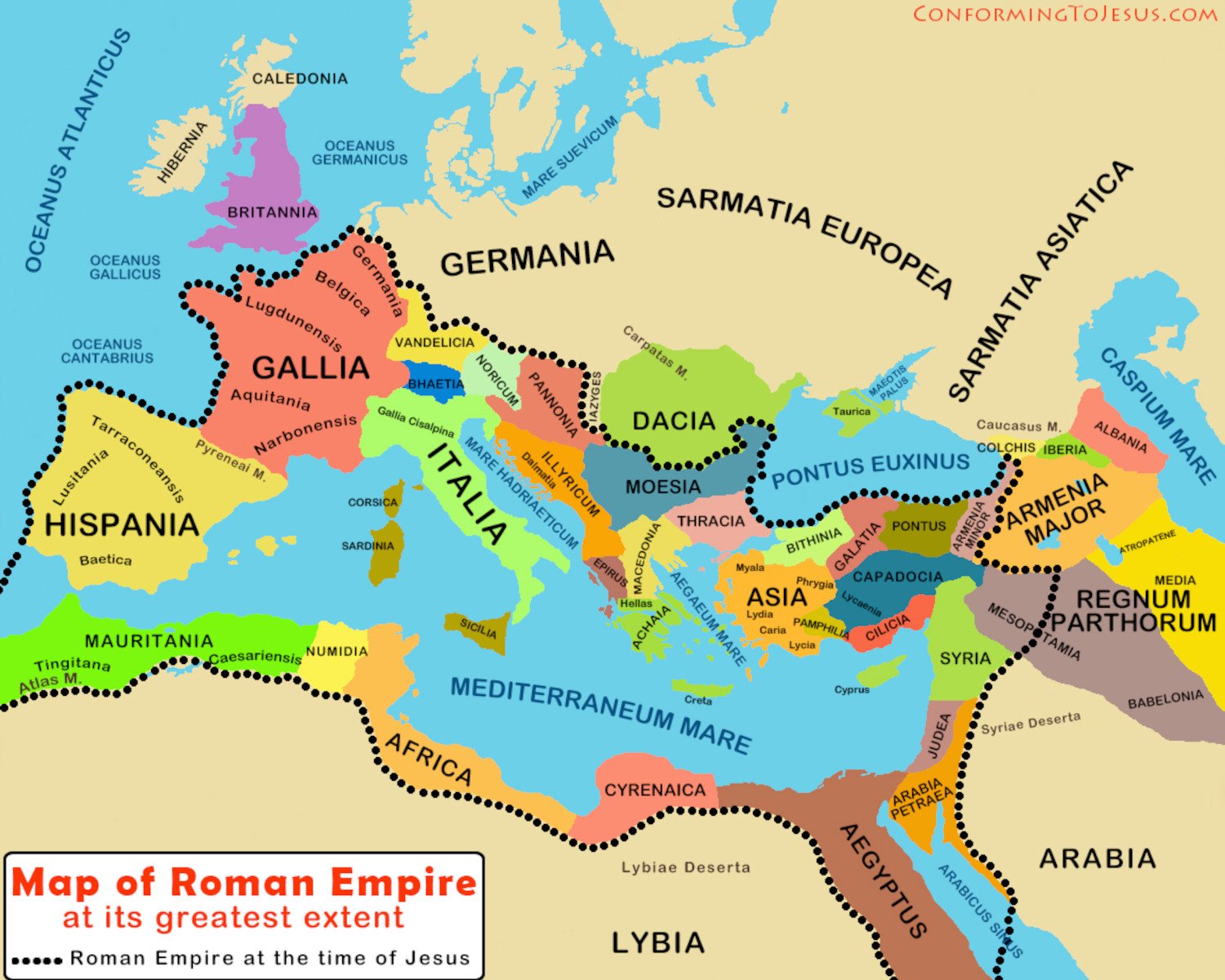
The dotted line in the map above marks the perimeter of the Roman Empire at the time of Jesus.
Note from Father Gordon MacRae: For more forays into the deeper wells of Scripture visit our collection of biblical posts, The Bible Speaks.
The Eucharistic Adoration Chapel established by Saint Maximilian Kolbe was inaugurated at the outbreak of World War II. It was restored as a Chapel of Adoration in September, 2018, the commemoration of the date that the war began. It is now part of the World Center of Prayer for Peace. The live internet feed of the Adoration Chapel at Niepokalanow — sponsored by EWTN — was established just a few weeks before we discovered it and began to include in at Beyond These Stone Walls. Click “Watch on YouTube” in the lower left corner to see how many people around the world are present there with you. The number appears below the symbol for EWTN.
Click or tap here to proceed to the Adoration Chapel.
The following is a translation from the Polish in the image above: “Eighth Star in the Crown of Mary Queen of Peace” “Chapel of Perpetual Adoration of the Blessed Sacrament at Niepokalanow. World Center of Prayer for Peace.” “On September 1, 2018, the World Center of Prayer for Peace in Niepokalanow was opened. It would be difficult to find a more expressive reference to the need for constant prayer for peace than the anniversary of the outbreak of World War II.”
For the Catholic theology behind this image, visit my post, “The Ark of the Covenant and the Mother of God.”