“There are few authentic prophetic voices among us, guiding truth-seekers along the right path. Among them is Fr. Gordon MacRae, a mighty voice in the prison tradition of John the Baptist, Maximilian Kolbe, Alfred Delp, SJ, and Dietrich Bonhoeffer.”
— Deacon David Jones

“What Shall I Do to Inherit Eternal Life?” (Luke 10:25)
The Gospel for the Fifteenth Sunday in Ordinary Time is the Parable of the Good Samaritan, a meaningful story on its face, but far more urgent in its depths.

The Gospel for the Fifteenth Sunday in Ordinary Time is the Parable of the Good Samaritan, a meaningful story on its face, but far more urgent in its depths.
Catholic writer Ryan A. MacDonald published a Letter to the Editor in Our Sunday Visitor some years ago (August 29, 2010) entitled “Priests Vulnerable to False Accusations.” His published letter included this paragraph:
“To paraphrase the Gospel parable, ‘this priest was beaten by robbers and left on the side of the road in our Church.’ A growing number of Catholics have been unwilling to pass him by no matter how sick we are of the sex abuse story.”
— OSV, August 29, 2010, p18
Ryan commended Our Sunday Visitor for its bold acknowledgment that Beyond These Stone Walls was selected as the “Best of the Catholic Web” in the category of Spirituality by OSV readers.
I was struck by the image Ryan conveyed. There is far more to the famous “Good Samaritan” parable of Luke 10:25-37 than meets the eye.
So I spent some time looking at its theological background and meaning because for some time I have wanted to add this famous parable to our collection of posts on Sacred Scripture under the heading From Abraham to Easter. I hope that you will visit this collection on occasion to mine the great theological depths of some of the best known passages of Sacred Scripture. I find in the Parable of the Good Samaritan an urgent summons to mercy. Every reader here knows this parable, but if you let me sift it a bit, it has layers that may surprise you.
A lawyer stood before Jesus “to put Him to the test” (Luke 10:25). The lawyer in this setting was an expert in the Mosaic Law handed down in the Pentateuch, the Five Books of Moses, and specifically in the Books of Numbers and Deuteronomy. The lawyer’s intent was not to query Jesus for answers, but to trap Him in contradiction in the presence of his disciples. There are actually three intended hearers in Jesus’ telling of this parable — the lawyer, the disciples, and us, the readers — all bringing different world views to the scene.
The lawyer opened the dialogue with a question the answer to which he already knows: “Teacher, what shall I do to inherit eternal life?” Note the word “inherit.” The lawyer did not expect to earn or gain eternal life, but rather to inherit it as something due to him as an heir. The lawyer-expert in the Mosaic law finds the source of his due inheritance in the law itself.
So Jesus returned the opening volley with a question on the lawyer’s own terms, “What is written in the law? What do you read there?” The lawyer then goes on to quote the two highest tenets of the Law of Moses, the first from Deuteronomy 6:5: “You shall love the Lord your God with all your heart, with all your soul, and with all your might.” Then the second, from Leviticus 19:18: “You shall love your neighbor as yourself.” In another setting (Matthew 22:36-40) Jesus told a Pharisee — perhaps even this same Pharisee — “On these two commandments depend all the law and the prophets.”
But back to Luke 10. Jesus commended the lawyer for his insight. “You have answered rightly. Do this and you will live.” The encounter could have ended there, but the lawyer had not finished laying his trap. “And who is my neighbor?” he asked.
After all, the Book of Leviticus (19:18), in citing the second half of what Jesus called the “Greatest Commandment,” has a preface that could have been cause for debate between Jesus and this lawyer. “You shall not take vengeance or bear any grudge against the Sons of your own people, but you shall love your neighbor as yourself.” So, for the Pharisee-lawyer, the identity of “neighbor” is arguably unclear. While laying his trap, the lawyer elicits from Jesus a parable that springs the trap, and cracks open a door to Eternal Life to be inserted into the lawyer’s sense of justice, and ours.
“A man was going down from Jerusalem to Jericho, and he fell among robbers who stripped him and beat him, and departed leaving him half dead. Now by chance a priest was going down that road; and when he saw him he passed by on the other side. So likewise a Levite, when he came to the place and saw him, passed by on the other side. But a Samaritan, as he journeyed came to where he was; and when he saw him, he had compassion, and went to him and bound up his wounds, pouring on oil and wine. Then he set him on his own beast and brought him to an inn, and took care of him. And the next day he took out two denarii and gave them to the innkeeper, saying, ‘Take care of him; and whatever more you spend, I will repay you when I come back.”
— Luke 10, 30-37
The Questionably “Good” Samaritan
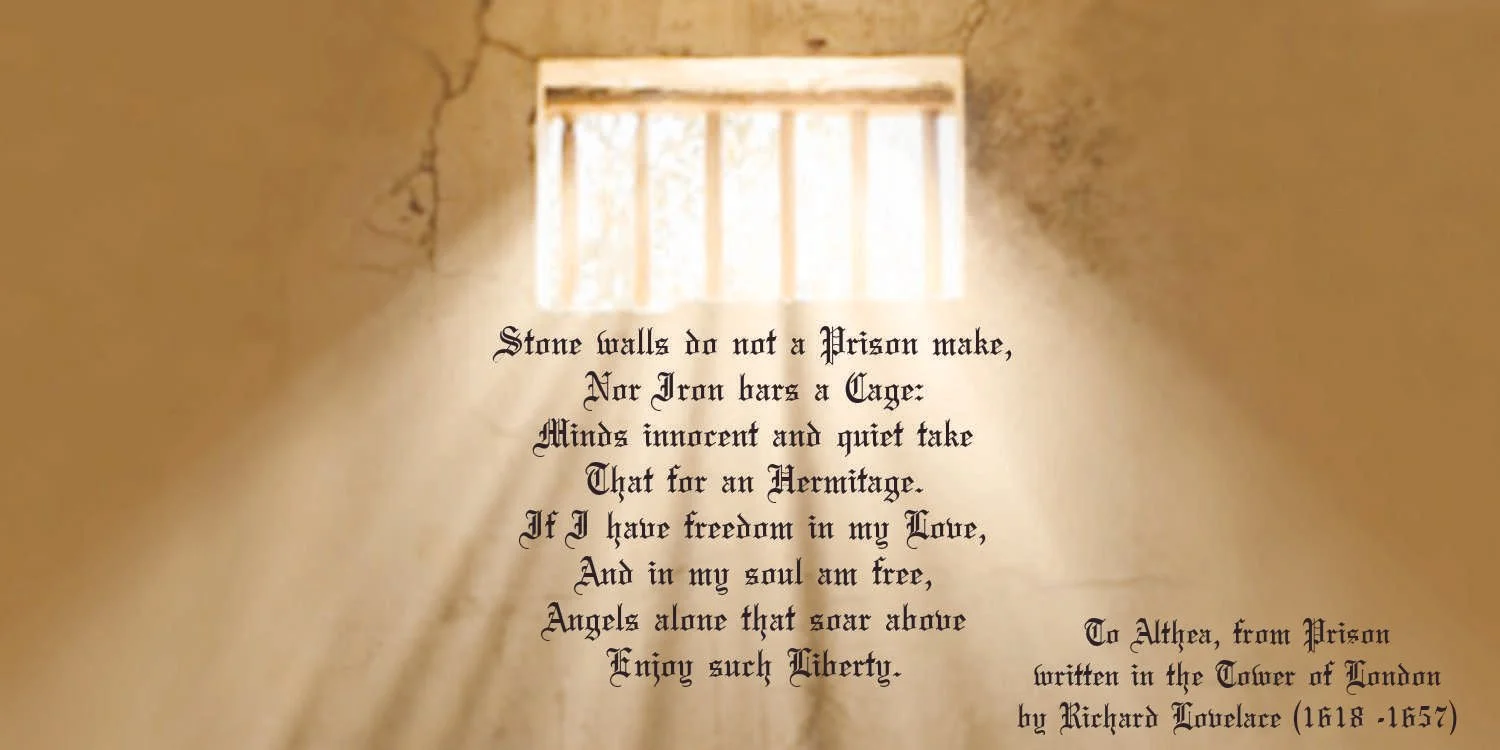
Note that the lawyer’s question is not “What shall I do to attain eternal life?” There is little we can do to attain it. The word “attain” implies merit. The lawyer’s question asks “What shall I do to inherit eternal life?” The key action term in the question is “inherit,” and the actor who will provide the inheritance is not the lawyer, but Jesus himself, the sole being who, through the will of the Father, has merited entry into Paradise. I described the scene in which that merit took place in “Dismas, Crucified to the Right: Paradise Lost and Found.”
The lawyer hearing the parable would form a spontaneous judgment about each of the three people who traveled that road to Jericho. The lawyer would be united in sympathy with the first two — the priest and the Levite — and not only with them but with their actions in the parable as well. The lawyer would readily see why the priest and the Levite who observe the beaten man left “half dead,” choose to pass by. They are simply observing the laws of ritual purity, in this case one set down in the Book of Leviticus 21:1-3, “None of them shall defile himself for the dead among his people except for his nearest of kin.”
The priest is descended from the priesthood of Aaron, a part of the priestly hierarchy that offers sacrifice on the peoples’ behalf according to the priestly code of Leviticus (Chapters 1-16). The lawyer would readily know that on his way to Jerusalem in the parable, the priest would risk defiling himself and his ritual sacrificial offering under the law if he touched the dying man. And the Levite is in the same boat. The Levitical priesthood was established when Moses, having received the Ten Commandments on Mount Sinai, returned to discover the Israelites worshiping a golden calf in the Book of Exodus (32). Moses summoned the tribe of Levi for ministerial service to exact punishment upon the idolaters (Exodus 32:27).
Thus, within the tribe of Levi, the descendants of Aaron received the priesthood, and men of the tribe of Levi who did not descend from Aaron comprised a second hierarchical tier of the Levitical priesthood. The priest offered sacrifice while the Levites guarded and transported the Tabernacle and assisted the Temple priest (Numbers 1:47-54). The lawyer would surmise, as do we, that the priest and the Levite were on that road from Jericho to Jerusalem to offer sacrifice on behalf of their communities as required by Levitical law. The parable has a quality of verisimilitude. The road passed through lots of rugged territory where brigands and robbers were known to hide and ambush.
In the parable of Luke 10, the lawyer readily knows, both the priest and the Levite risked becoming defiled under the ritual laws of sacrifice if either one stopped to help the “half dead” man. The third traveler, the one from Samaria, is a whole other story for the lawyer and for the disciple-hearers as well. The term, “Samaritan” appears for the first time in the Second Book of Kings (17:29) where the people of Samaria are described as idolaters, the very type that the tribe of Levi was called upon to extinguish from the Israelites at Mount Sinai.
Jews saw Samaritans as the descendants of foreign colonists planted by the Assyrians. For their part, Samaritans insisted they were descendants of the tribes of Benjamin and Manasseh who managed to survive the Assyrian destruction of Samaria. In the Gospel of John (4:9) a Samaritan woman was surprised that Jesus would even speak to her “How is it that you, a Jew, ask a drink of me, a woman of Samaria.” The Gospel text of John went on to explain the obvious, that “Jews have no dealings with Samaritans.” In John (4:27) even the Apostles were shocked that Jesus would speak to a Samaritan woman.
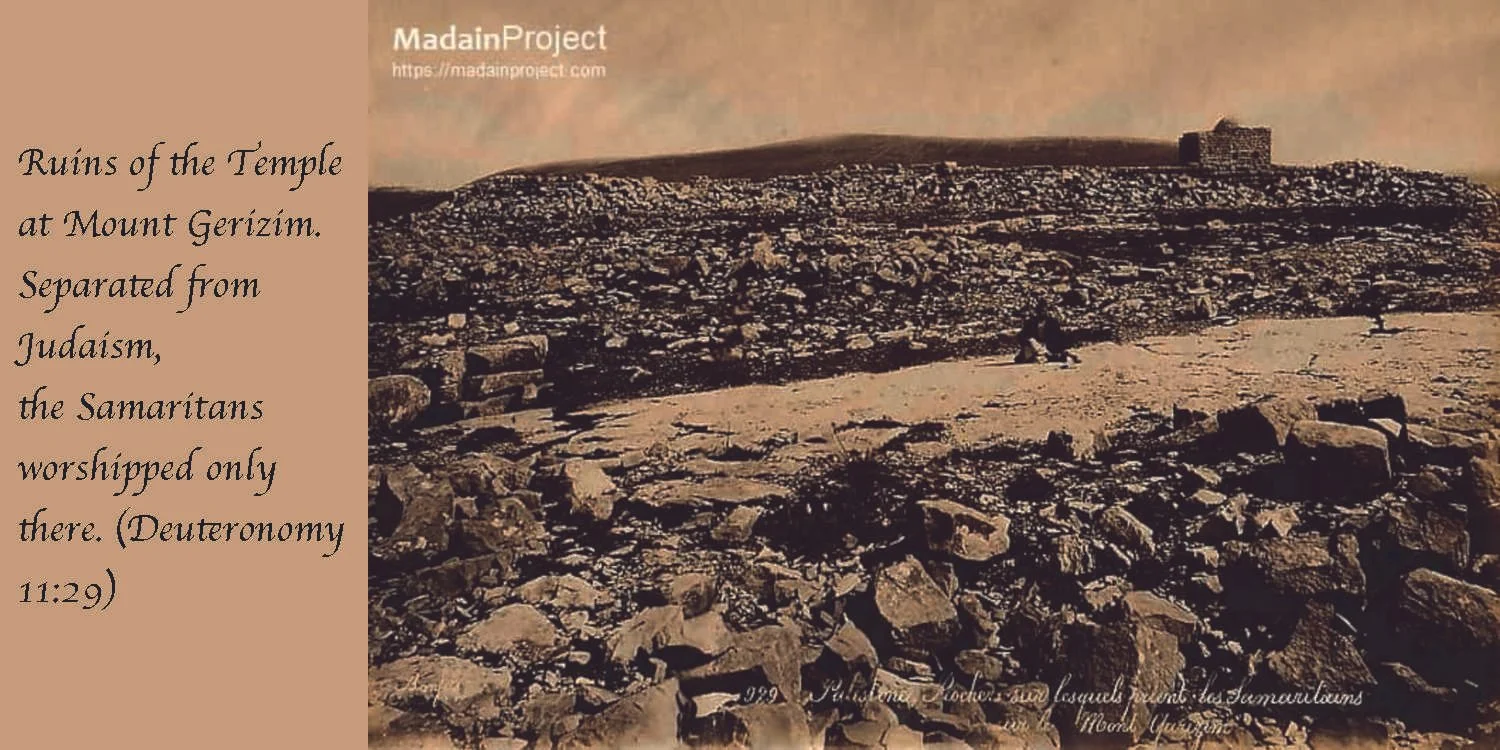
Samaritans figured that the more recently unfaithful Judea, whose population was itself exiled to Babylon because of gross unfaithfulness and whose temple in Jerusalem was utterly destroyed, were consummate liberals. The Jews, thinking they themselves were most exact in their observance of the Law, however many loopholes they thought they found, were incriminated by the very existence of the ultra-conservative Samaritans. The Samaritans closely observed the Torah, the Law, accepting the first five books of the Law alone, but rejecting all the prophets and the writings as distraction. What irked the Jews especially was that the Samaritans added an eleventh self-referential commandment that worship should take place in Samaria, on Mount Gerizim only, not in Jerusalem. The last place the Jews thought they might find mercy is with the Samaritans.
In the end, both justice and the lawyer’s trap were turned on their heads when Jesus asked, “Which of these three do you think proved neighbor to the man who fell among robbers?” The poor lawyer, his head spinning, could not even bring himself to say the word, “Samaritan.” He answered, “The one who showed mercy on him.”
Then, in final response to the lawyer’s original question, “What shall I do to inherit eternal life?” Jesus admonished him, “Go, and do likewise.” Be the one who shows mercy despite its cost to yourself, or your standing, or your Facebook “Like” score.
Inheritance
You might argue that unlike the Samaritan in this parable, you have never been given such an opportunity to be the instrument of the Mercy of God. The Gospel of Matthew (25:31-46) ends with this segment: “ ‘Truly I say to you, as you did it not to one of the least of these, you did it not to me.’ And they will go away into eternal punishment, but the righteous into eternal life.”
This Gospel lays out “The Judgment of the Nations” and along with it the fulfillment of the law of inheritance:
“Come, O blessed of my Father, inherit the kingdom prepared for you from the foundation of the world; for I was hungry and you gave me food, I was thirsty and you gave me drink, I was a stranger and you welcomed me, I was sick and you visited me, I was in prison and you came to me.”
— Matthew 25:31-36
On that last point, you might argue that you have never come to one in prison. If you are reading this, you just did!
+ + +
Note from Father Gordon MacRae: Thank you for reading and sharing this post about one of the most popular and important parables of Jesus. You will also find this post in our Sacred Scripture collection, “From Abraham to Easter.”
You may also like these related posts from Beyond These Stone Walls.
To the Kingdom of Heaven through a Narrow Gate
Behold the Lamb of God Upon the Altar of Mount Moriah

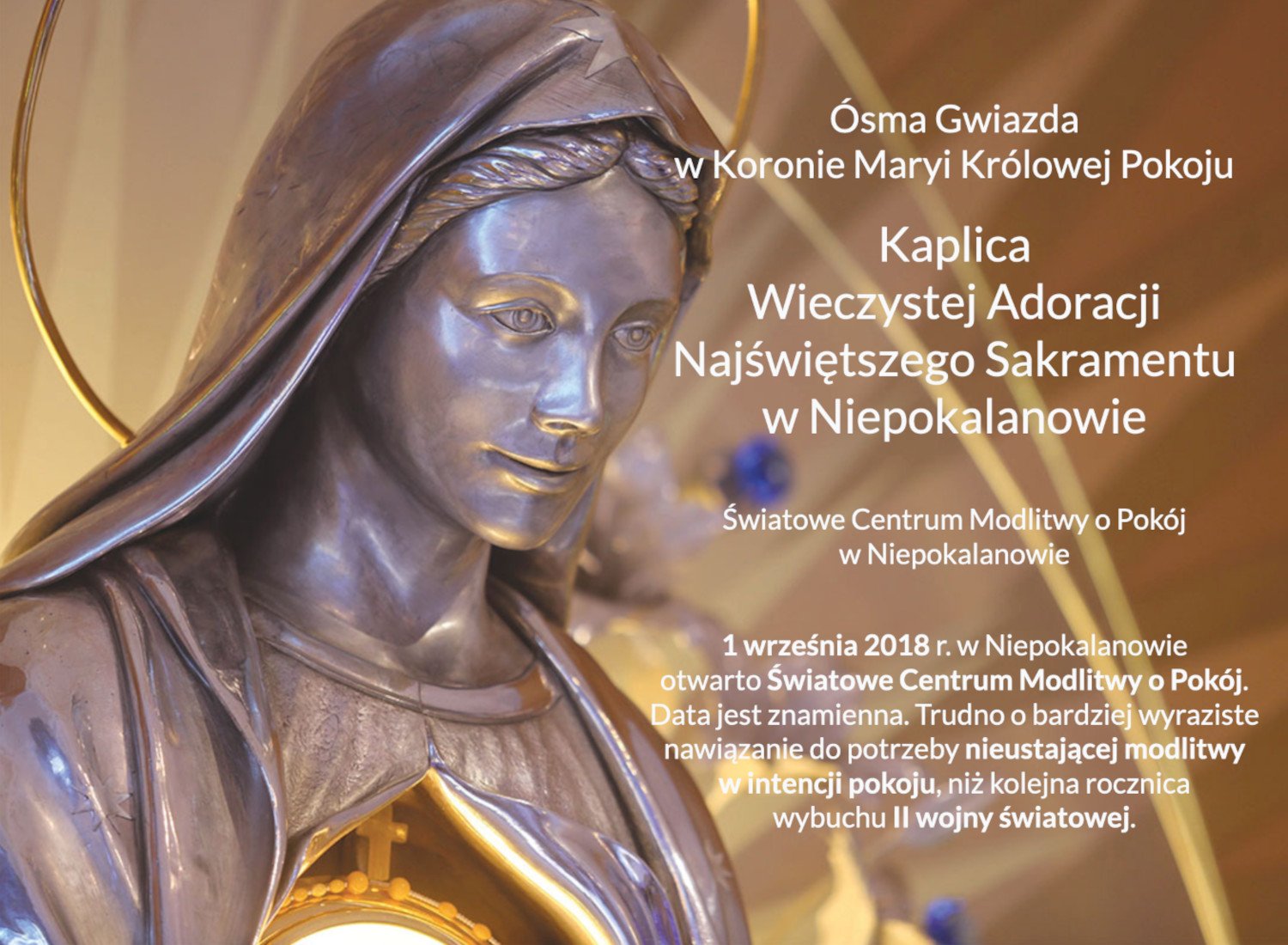

The Eucharistic Adoration Chapel established by Saint Maximilian Kolbe was inaugurated at the outbreak of World War II. It was restored as a Chapel of Adoration in September, 2018, the commemoration of the date that the war began. It is now part of the World Center of Prayer for Peace. The live internet feed of the Adoration Chapel at Niepokalanow — sponsored by EWTN — was established just a few weeks before we discovered it and began to include in at Beyond These Stone Walls. Click “Watch on YouTube” in the lower left corner to see how many people around the world are present there with you. The number appears below the symbol for EWTN.
Click or tap here to proceed to the Adoration Chapel.
The following is a translation from the Polish in the image above: “Eighth Star in the Crown of Mary Queen of Peace” “Chapel of Perpetual Adoration of the Blessed Sacrament at Niepokalanow. World Center of Prayer for Peace.” “On September 1, 2018, the World Center of Prayer for Peace in Niepokalanow was opened. It would be difficult to find a more expressive reference to the need for constant prayer for peace than the anniversary of the outbreak of World War II.”
For the Catholic theology behind this image, visit my post, “The Ark of the Covenant and the Mother of God.”

A Not-So-Subtle Wake-Up Call from Christ the King
The Gospel for the Solemnity of Christ the King is the Judgment of the Nations, an invitation to Glory and a road map on how to get there.

The Gospel for the Solemnity of Christ the King in 2023 was the Judgment of the Nations, an invitation to Glory and a map for how to get there.
November 18, 2020 by Fr. Gordon MacRae
“I consider that the sufferings of this present time are not worth comparing with the glory that is to be revealed to us.”
— Saint Paul, Romans 8:18
The image atop this post is one that we used at the end of my post, “The God of the Living and the Life of the Dead.” It was written for All Souls Day which just happened to fall in 2020 just days before the most contentious and bitterly divided U.S. election in decades. Its echoes of civil unrest reverberated out of America to circle the globe. So we are using the image again and reposting the link because in the heat of battle a lot of readers missed that post.
The image is a powerful one of Christ leading prisoners through the gates of Dachau — or is it Purgatory? It is a hopeful image, and one that reflects the Mind of God as revealed by the Prophet Ezekiel at Mass on the Solemnity of Christ the King:
“As a shepherd tends his flock when he finds himself among his scattered sheep, so will I tend my sheep. I will rescue them from every place where they were scattered when it was cloudy and dark... The lost I will seek out; The strayed I will recover; The injured I will bind up; The sick I will heal.”
— Ezekiel 34:15-17
That describes the Mission of the Church as well, or at least what it should be. I recently received a message from a lawyer who asked if I would be willing to talk with a young priest who has had a catastrophic and very public failure. His bishop’s only public comments were that the priest will be expelled from ministry and will never function as a priest again. The lawyer wants to find spiritual and psychological treatment for him. I am still stricken by this confusion of roles and expectations. The lawyer calls for healing while the shepherd calls only for vengeance.
There is a lot in the readings for Christ the King that should give us pause about our own roles and expectations — not our expectations of faith, but rather faith’s expectations of us.
The Gospel for Christ the King is from Matthew 25:31-46, a passage referred to as the “Judgement of the Nations.” It ends with a familiar condemnation, not of what some of us did in life, but of what we didn’t do:
“I was hungry and you gave me no food; I was thirsty and you gave me no drink; I was a stranger and you did not welcome me, naked and you did not clothe me; sick and in prison and you did not come to me... Truly I say to you, as you did it not to one of the least of these, you did it not to me.”
— Matthew 25:42-46
It is interesting that in the Gospel of Saint Matthew, the plot of the Pharisees and High Priest to kill Jesus unfolds just after the above passage. There are certain things that human nature is loathe to hear, and one of them is to have our hypocrisy mirrored and laid bare. I am no exception. Welcoming the stranger and the alienated requires the strength of will to resist some potent peer pressure.
Some years ago, at about the time I first began writing posts for publication from prison, a man was moved into the housing unit where I lived. He was horribly disfigured and everyone just avoided him. He was living out in the open in an overflow bunk with no place to retreat from the scowls and stares of other prisoners. I was disgusted by the way he was shunned.
And then I awoke in the middle of the night disgusted with myself. While passing judgment on the avoidance and shunning of the crowd I was oblivious to my own. This is called spiritual blindness, among the most self-righteous of our sins. So after a sleepless night I went to him, pulled a chair up to his bunk as he sat alone, and talked for awhile. After some days, he trusted me enough to tell me that his disfigurement was the result of a suicide attempt. My heart went out to this broken man, and we remained friends for the entire time he was in prison.

There but for the Grace of God
The fact that my own life had once spiraled into what the Prophet Ezekiel described above as a place “cloudy and dark,” became in that instance a tool for aiding that man. I wrote of my own venture into cloudy and dark in “How Father Benedict Groeschel Entered My Darkest Night.” Had I never experienced such darkness, I could not have imagined what my friend was enduring.
The image atop this segment of this post is one we have used before, but it is a perfect image for the Solemnity of Christ the King. “When I was in prison you came to me” is perhaps one of the Gospel’s most daunting challenges. The image depicts a priest hearing a confession through the food slot of a door in a supermax prison in solitary confinement. I like to think that this brave priest ministering to the darkness is someone who has come to terms with a hard truth. “If my life had veered even slightly from the path I was on, that could just as easily be me living behind that door. There but for the grace of God go I.”
Coming to terms with such a truth strips away all pretense of moral or spiritual superiority. As you know, my good friend, Pornchai spent many years behind such a door before he ended up here with me. It took some time for the demons he encountered to leave him, but they eventually did. He once described his coming to faith as the result of a long, slow exorcism. Now, as described here a week ago in “Life Goes On Behind and Beyond These Stone Walls,” his prison sentence is fully served. But he is not at all free. He now approaches ten weeks in ICE detention which his keepers keep reminding him is not a prison.
In reality, he says it is the worst prison he has ever been in. Packed forty to eighty in a room, he is surrounded by mostly young men awaiting forced, but horribly slow, deportation. If solitary confinement is the cruelest thing we do in America, ICE detention comes a close second. His travel documents that were valid for 90 days when they were issued by his Embassy three months ago have been negligently allowed to expire by indifferent ICE handlers.
He is fortunately able to reach out to me through some of those who help to publish these posts. The for-profit ICE detention center sells food to detainees at highly inflated prices and allows telephone calls at the rate of eleven cents per minute. What we all thought would be a two-week stay there has turned into ten, and I have had to sacrifice to get funds to him each week for food and phone calls, both of which are a necessity to ward off total discouragement.
The disappointment and discouragement in his voice when he calls are painful to hear. But in the midst of such suffering, Pornchai has done something remarkable. He has fulfilled the Gospel for Christ the King. There are a few young men around him who have been stranded there with nothing for many months with no funds, no food, and no way to call anyone. Their families impoverished in Honduras do not even know where they are and they have no way to reach out to them. I felt embarrassed when Pornchai asked me if it is okay for him to share his food with them.
Then he made a list of their names, ICE detention numbers, and countries of origin for our helpers to call their Consulate and begin the process of obtaining travel documents for them to move on. The irony is that, thanks to him, they have all left before him. This week he told me that he has a new friend, age 22, who speaks no English and has been stranded there for six months. They pray together and Pornchai shares his food with him. I asked how they communicate and Pornchai said, “by food and prayers.” The young man’s name — this floored me — is Maximilian.
“Come you who are blessed by My Father, inherit the Kingdom prepared for you from the foundation of the world. For I was hungry and you gave me food, I was thirsty and you gave me drink, a stranger and you welcomed me, naked and you clothed me, ill and you cared for me, in prison and you came to me.”
— Matthew 25:34-36

In a World Cloudy and Dark
One night some months ago while Pornchai was still in this cell with me, I stumbled upon EWTN in the middle of a talk by our friend, Father Michael Gaitley, MIC. I told Pornchai to leave his football game and turn his little TV to EWTN. At the moment he did so, he saw himself on the screen. Father Gaitley had put up a photograph of Pornchai and me reciting our Consecration to Jesus through Mary in the prison chapel on the Solemnity of Christ the King in 2013.
That seems so very long ago now. We had just completed Father Gaitley’s “33 Days to Morning Glory” retreat, and we felt as though we had just discovered a bright light in what was a very dark time for us. Marian Helper magazine published this account back then in “Mary Is at Work Here,” (Marian Helper, Spring 2014). The author, Felix Carroll, paid a special tribute to Pornchai:
“The Marians believe Mary chose this particular group of inmates to be the first. That reason eventually was revealed. It turns out that one of the participating inmates was Pornchai Moontri who was featured in last year’s Marian Press title, Loved, Lost, Found: 17 Divine Mercy Conversions... Fr. Gordon MacRae joined Pornchai in the consecration and called it a ‘great spiritual gift that opened a door to the rebirth of trust’ at a particularly dark time for both men.”

Inmates Pornchai Moontri (second from left) and Fr. Gordon MacRae (third from left) make their consecration to Jesus through Mary on Nov. 24 in New Hampshire State Prison for Men. They pray to become instruments in Mary's "immaculate and merciful hands for bringing the greatest possible glory to God."
Now for so many, Pornchai and I included, this seems like an even cloudier and darker time with tension and uncertainty part of our daily experience. I plan to read the above excerpt from Marian Helper to Pornchai when we speak on the night I am typing this. In the bleak setting in which he now finds himself, this reminder of the ray of light that beckoned to us is much needed.
The callousness of ICE handlers notwithstanding, the real culprit in all these delays extending Pornchai’s imprisonment has been the global pandemic. Thailand has closed its borders to all international travel and presently allows only repatriation flights for its own citizens to return to their country. Pornchai seems to be far down the list, but he must not forget who his Mother is.
Many people are hurting and anxious over the times that we are in and the perils that lie before us. Trust seems to have gone out of our world, and the reign of Christ the King feels for many like a vague notion of the past. It is not. The task before us is to look into the present darkness to reach out to souls worse off than ourselves. I am humbled by how much Pornchai just spontaneously does this in a place that offers little beyond anxiety and hopelessness.
Gospel for the Solemnity of Christ the King, don’t ask yourself how you could possibly be expected to go visit the imprisoned. If you read this far, you already have. Now open your heart to do the rest, and inherit the Kingdom prepared for you from the foundation of the world.

Editor’s Note: On April 29, 1995 — the fiftieth anniversary of the liberation of Dachau — the Russian Orthodox Memorial Chapel of Dachau was consecrated. Dedicated to the Resurrection of Christ, the chapel holds an icon depicting angels opening the gates of the concentration camp and Christ Himself leading the prisoners to freedom.
Dachau 1945: The Souls of All Are Aflame
Note from Fr. Gordon MacRae: Please visit our Special Events Page for information on how you can help us behind and Beyond These Stone Walls. Thank you and God Bless you.


The Eucharistic Adoration Chapel established by Saint Maximilian Kolbe was inaugurated at the outbreak of World War II. It was restored as a Chapel of Adoration in September, 2018, the commemoration of the date that the war began. It is now part of the World Center of Prayer for Peace. The live internet feed of the Adoration Chapel at Niepokalanow — sponsored by EWTN — was established just a few weeks before we discovered it and began to include in at Beyond These Stone Walls. Click “Watch on YouTube” in the lower left corner to see how many people around the world are present there with you. The number appears below the symbol for EWTN.
Click or tap here to proceed to the Adoration Chapel.
The following is a translation from the Polish in the image above: “Eighth Star in the Crown of Mary Queen of Peace” “Chapel of Perpetual Adoration of the Blessed Sacrament at Niepokalanow. World Center of Prayer for Peace.” “On September 1, 2018, the World Center of Prayer for Peace in Niepokalanow was opened. It would be difficult to find a more expressive reference to the need for constant prayer for peace than the anniversary of the outbreak of World War II.”
For the Catholic theology behind this image, visit my post, “The Ark of the Covenant and the Mother of God.”
You may also like these related posts:
The God of the Living and the Life of the Dead
