“There are few authentic prophetic voices among us, guiding truth-seekers along the right path. Among them is Fr. Gordon MacRae, a mighty voice in the prison tradition of John the Baptist, Maximilian Kolbe, Alfred Delp, SJ, and Dietrich Bonhoeffer.”
— Deacon David Jones
Justice and Due Process Support the Rights of Priests — But Not This One
A right of defense for accused priests is supported on paper in the Diocese of Manchester, but in this case it has been suppressed and obstructed at every turn.
A right of defense for accused priests is supported on paper in the Diocese of Manchester, but in this case it has been suppressed and obstructed at every turn.
October 21, 2013 by Ryan A. MacDonald [updated August 19, 2026]
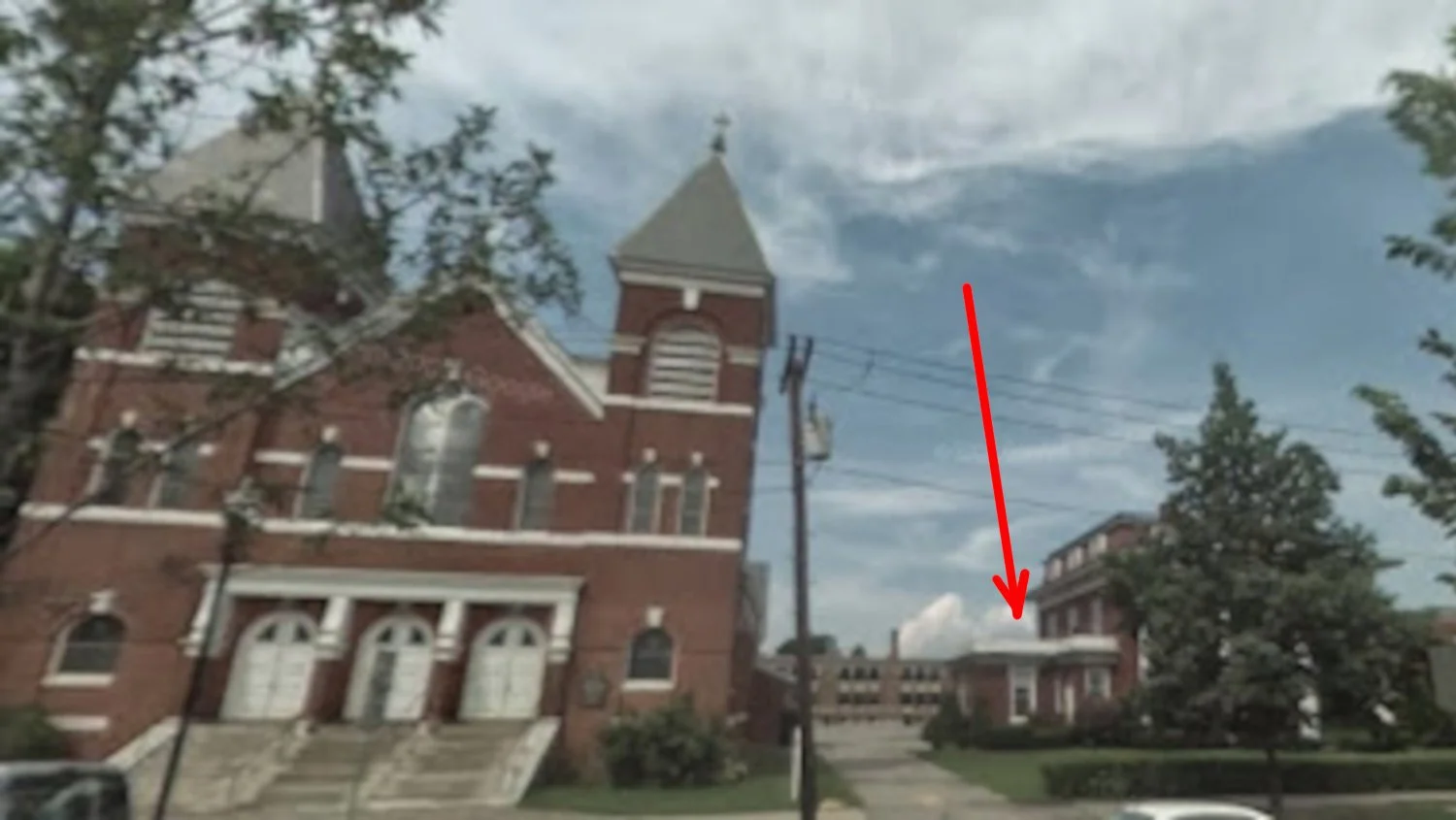
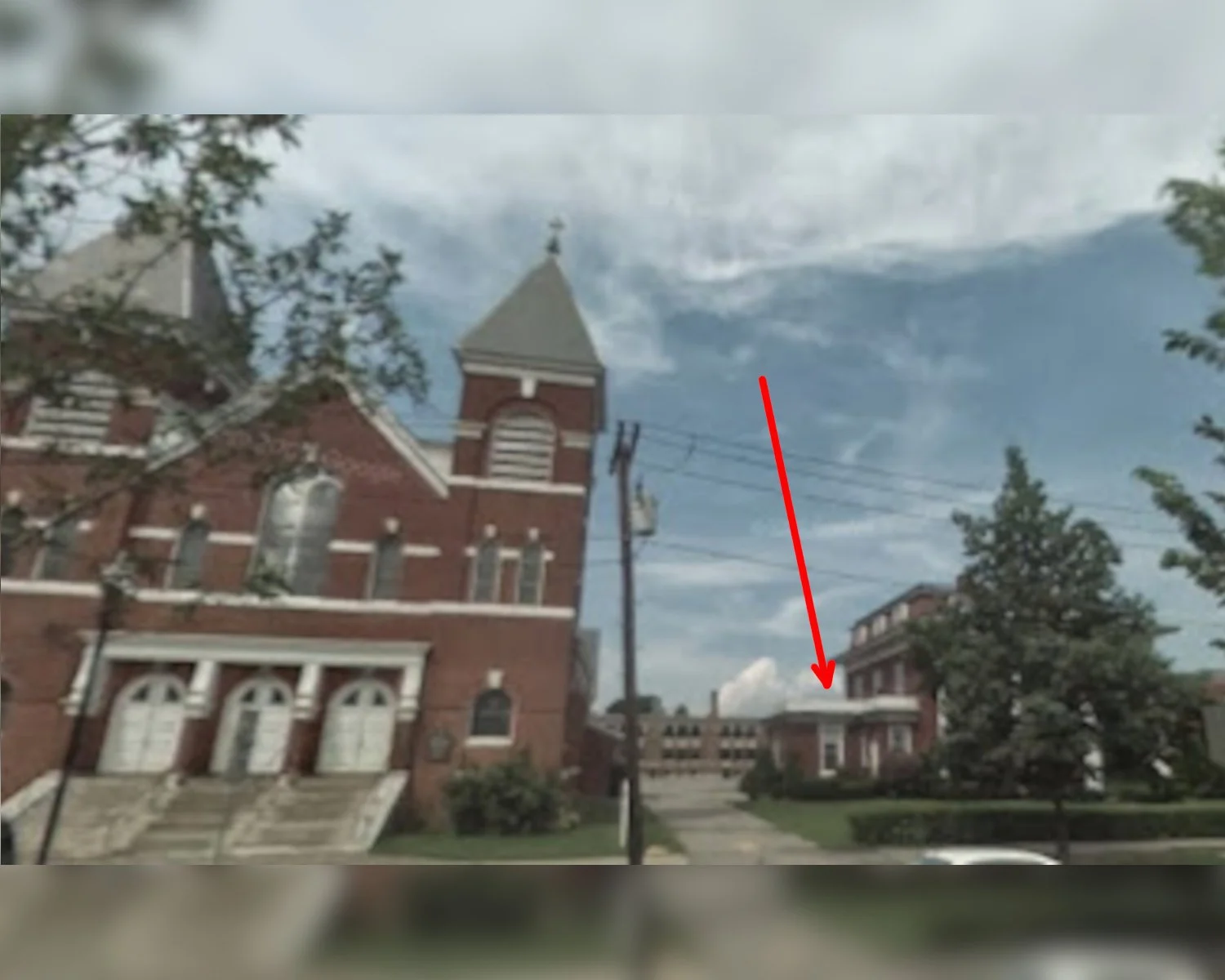
I became quite familiar with the scene above during a short trip one summer. A nice 4-hour drive from New York took me along Interstate 91 and the Connecticut River. From Brattleboro, Vermont (locals call it “Brat”) I drove east on Route 9 for 18 miles to the picturesque City of Keene, New Hampshire and its much admired downtown Main Street.
Keene is a small city with a population of about 23,500 — not counting the 5,000 students enrolled in Keene State College. The social and economic hub of southwest New Hampshire, Keene boasts the widest Main Street in the United States. Its bustling downtown collection of quaint and busy shops, restaurants, a theatre, offices, and concerts on the Keene Commons is the envy of many cities its size. Keene’s downtown begins at the doors of St. Bernard Church, today part of a three-parish community known as the Parish of the Holy Spirit.
Saint Bernard Church and Rectory are depicted above. The building in the background is Saint Joseph Regional Catholic School (grades K to 8). The entire complex is bordered on the left by the bustling campus of Keene State College, and on the right by busy downtown Keene. Directly across the wide, heavily traveled Main Street from the rectory is the region’s largest and busiest U.S. Post Office, a pizza take-out, and a convenience store conducting a brisk college town business 24/7.
THE ROOM WHERE IT DIDN’T HAPPEN
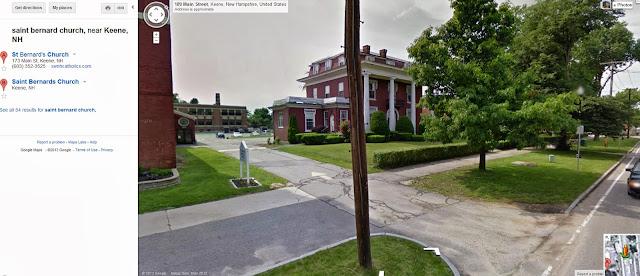
Just above is a closer view of the Main Street driveway between Saint Bernard Church and Rectory. It’s a scene I wanted to see for myself, and was the reason for my summer drive to Keene. Note the flat roofed adjunct just to the left of the building. It was added on at some point to the large old mansion that became St. Bernard Rectory.
The rounded doorway on the building’s left side was in 1983 the rectory’s main business entrance. Just to its left is a large window. In 1980, a closed circuit television camera was installed just above that door because the rectory had been the scene of a number of urban burglaries and an armed robbery or two. In the late 1970s, two priests and the pastor’s elderly mother were tied up in the rectory basement while the house was ransacked and robbed in the middle of the night.
On the other side of that door, when Father Gordon MacRae was assigned there in 1983, was the desk of a receptionist and secretary staffed in two shifts from 9:00 AM until 9:00 PM. There was also a waiting area for parishioners wanting to see one of the four priests assigned there in the early 1980s, and for daily clients of the region’s busy St. Vincent DePaul Society seeking assistance with food, clothing, and emergency shelter.
On the right of the church building just across the narrow driveway from the rectory was the most heavily used entrance and exit for parish activities. These doorways to the church and rectory were the busiest places in or around that parish church. The photos above and below was taken early in the morning. At virtually any other time, this scene was a hubbub of activity.

Note the large window just to the left of the rectory’s main entrance with its monitoring TV camera. It was just behind this highly visible office window — in full view of the daily hustle and bustle of Main Street traffic and the steady stream of visitors into and out of this busy rectory and church — that 27-year-old Thomas Grover claimed that he was four times sexually assaulted by Father Gordon MacRae at age 15 between April and November of 1983.
It was here behind this highly visible window where Grover claimed that in the months just prior to his 16th birthday he sought MacRae out for counseling for his drug addiction, but instead was threatened, berated, made to cry, and then raped. It was here that 200-pound Thomas Grover claimed to have returned four times from week to week unable to remember the sexual assaults he claimed to have occurred during previous visits.
Like so many who have looked at this case, I was aghast when I first became familiar with the details of the trial of Father MacRae. I wrote of this trial in an article entitled “Judge Arthur Brennan Sentenced Father Gordon MacRae to Die in Prison.” As The Wall Street Journal’s Dorothy Rabinowitz wrote in “The Trials of Father MacRae” (May 13, 2013):
"Those aware of the facts of this case find it hard to imagine that any court today would ignore the perversion of justice it represents."
Once I became aware of the facts of this case, I had to see for myself exactly where this was all claimed to have taken place. What I saw in the scenes depicted above is a compelling visual to accompany something Attorney Robert Rosenthal included in his failed appeal briefs to the New Hampshire courts:
“In what the petitioner asserts has been revealed as a scam to obtain a cash settlement from the Catholic church, Tom Grover, a drug addict alcoholic and criminal, accused Father Gordon MacRae of molesting him years before. Grover’s civil suit — featuring MacRae’s conviction — earned him nearly $200,000. No witnesses to the alleged acts could be found, despite that they were to have occurred in busy places. Grover’s claims were contradicted by objective facts (e.g. inoperable locks that he claimed worked, acts in an office to which MacRae did not have access, claims about a chess set that had not [yet] been purchased).”
Thomas Grover claimed that these assaults occurred in this office commencing in April 1983 and ending just as he turned 16 years old in mid-November 1983. Father Gordon MacRae did not arrive at St. Bernard Church until mid-June 1983, and did not have access to this particular office because it was occupied by another priest until the end of July 1983. Upon learning this pre-trial, Grover then vaguely moved one of his claimed assaults to an adjacent busy office to which MacRae also had no access that summer.
In the summer of 1983, St. Bernard Rectory employed a full and part-time staff of twelve, including the four priests who lived in this house, and a total staff of 25 parish and school employees all coming and going throughout the day and evening. And yet, the prosecution produced not a single witness to these acts. No one ever testified to seeing Thomas Grover there. No one ever opened the door to admit him, or saw him leave. No one ever claimed to have heard anything.
A lock Grover claimed that MacRae used to secure the office door had been dismantled and painted over years before the priest arrived. An ornate marble chess set Grover claimed was inside that office during the assaults was not purchased by the priest until three years later in 1986. Today, Grover’s former wife, Trina Ghedoni says that Grover admitted to her that he perjured himself throughout the MacRae trial, and said he offered perjured testimony about the chess set because “it was what he was told to say.”
The one person who could have helped to inform this appellate defense — Father Robert Biron, a prominent pastor in the Diocese of Manchester — refused to help. The above scene was his office several years before MacRae arrived, and again for several more years after MacRae left St. Bernard’s. Father Biron might have spoken to the improbability of much of what had been claimed. He might have described the painted over office door lock that didn’t work, the shade on the office window that wasn’t there in 1983, the absence of air conditioning requiring that this office window remain wide open to the scene overlooking the main entrance and busy Main Street throughout summer months.
Father Robert Biron might have attested to the traffic; to the noise of people coming and going, noise that easily penetrated that office door in both directions. He might have attested to the waiting area just outside that office door, and its steady stream of people. But he refused. In his answer to Father MacRae’s plea as the investigation for this appeal began, Father Biron wrote on his official Our Lady of Fatima Parish stationery,
“I can’t be of any help to you, and don’t see the necessity of entertaining any further correspondence from you.”
— Letter of Father Robert Biron, January 19, 2009
Father Biron’s cold letter was received by the imprisoned priest just after the Bishop of Manchester at the time, now deceased Bishop John McCormack, insisted to Vatican officials and others that he and the Diocese of Manchester fully support Father MacRae’s right of defense.
Earlier, Bishop McCormack offered Father MacRae $40,000 toward an appellate defense, but with conditions: he wanted the diocese to choose MacRae’s lawyers and wanted the priest to sever all contact with Dorothy Rabinowitz and The Wall Street Journal. The Bishop also wanted MacRae to agree not to review the history and merits of this case, appealing only his sentence and not the convictions. Bishop McCormack then reneged on his offer in a grueling and cruel “stringing along” of this imprisoned priest that another prominent writer described in detail in “A Code of Silence in the U.S. Catholic Church: Affidavits.”
When Father Gordon MacRae was on trial in 1994, and the prosecution finished presenting its case, which consisted of nothing more than Thomas Grover’s hysteria and evasiveness, Judge Arthur Brennan instructed Fr. MacRae not to take the stand in his own defense or else the judge would open the door for Thomas Grover’s brothers to testify to their own false claims brought in civil suits. Gordon MacRae was the only person never heard from in this trial.
When Judge Arthur Brennan sentenced Father MacRae to more than 30 times what had been offered in a plea deal, the judge never permitted the priest to speak. Now, today, both New Hampshire courts receiving this appeal have dismissed it without a hearing, without hearing from new witnesses, and without Fr. MacRae being allowed to utter a word. Even in the Diocese of Manchester, the Bishop presented Father MacRae’s case for dismissal to the Holy See without his ever even knowing what was put forward or having any opportunity to defend himself. This came after a sworn affidavit from a PBS official quoting Bishop McCormack as stating, “This must never leave this office, but I believe Father MacRae is not guilty and should not be in prison, but my hands are tied.”
Fortunately, to date, the Holy See has not seen fit to act solely on such unilateral information. The silence forced upon Father Gordon MacRae has been deeply unjust. This case must move forward and be fully heard.
What were they all afraid of?
+ + +
Note from Father Gordon MacRae: Thank you for reading and sharing this post. You may also like these related posts from Beyond These Stone Walls:
Judge Arthur Brennan Sentenced Father Gordon MacRae to Die in Prison
Bombshells and Black Ops Defeated Justice in New Hampshire
To Fleece the Flock: Meet the Trauma-Informed Consultants
In the Diocese of Manchester, Transparency and a Hit List

Tom Clancy, Jack Ryan, and The Hunt for Red October
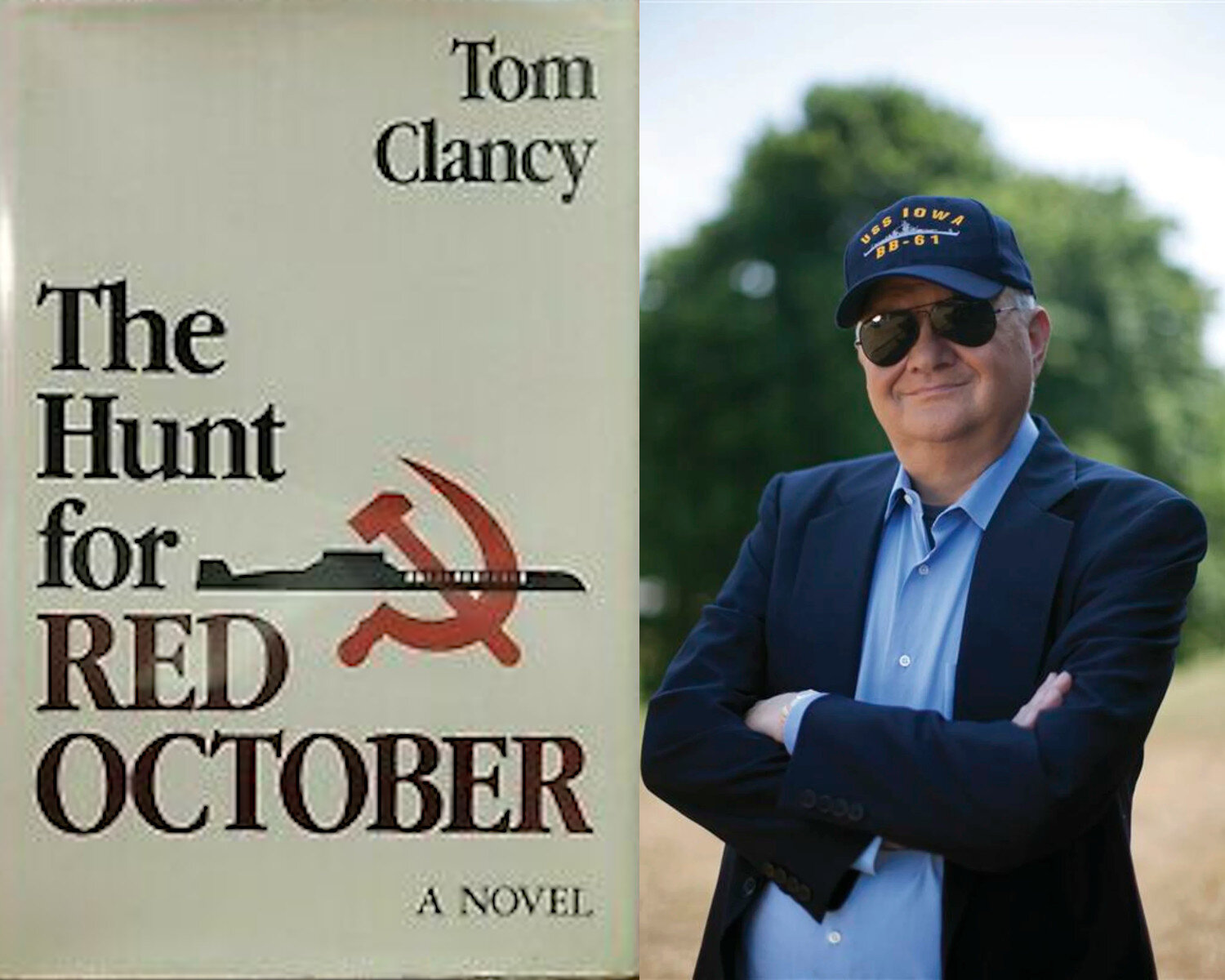
Novelist Tom Clancy, master of the techno-thriller, died on October 1st. His debut Cold War novel, The Hunt for Red October, was an American literary landmark
Novelist Tom Clancy, master of the techno-thriller, died on October 1st. His debut Cold War novel, The Hunt for Red October, was an American literary landmark.
In 2011 at Beyond These Stone Walls, I wrote a post for All Souls Day entitled “The Holy Longing: An All Souls Day Spark for Broken Hearts.” Some readers who have lost loved ones very dear to them found solace in its depiction of death as a continuation of all that binds human hearts and souls together in life. Like all of you, I have lost people whose departure left a great void in my life.
It’s rare that such a void is left by someone I knew only through books, but news of the death of writer, Tom Clancy at age 66 on October 1st left such a void. I cannot let All Souls Day pass without recalling the nearly three decades I’ve spent in the company of Tom Clancy.
I’ll never forget the day we “met.” It was Christmas Eve, 1984. Due to a sudden illness, I stood in for another priest at a 4:00 PM Christmas Eve Mass at Saint Bernard Parish in Keene, New Hampshire. I had no homily prepared, but the noise of a church filled with excited children and frazzled parents conspired against one anyway. So I decided in my impromptu homily to at least try to get a few points of order across.
Standing in the body of the church with a microphone in hand I began with a question: “Who can tell me why children should always be quiet and still during the homily at Mass?” One hand shot up in the front, so I held the microphone out to a little girl in the first pew. Proudly standing up, she put her finger to her lips and whispered loudly into the mic, “BECAUSE PEOPLE ARE SLEEPIN’!”
Of course, it brought the house down and earned that little girl — who today would be about 38 years old — a rousing round of applause from the parishioners of Saint Bernard’s. It lessened the tension a bit from what had been a tough year for me in that parish.
But that’s not really the moment I’ll never forget. After that Mass, a teenager from the parish walked into the Sacristy to hand me a hastily wrapped gift. In fact, it looked as though he wrapped it during the homily! “We’re not ALL sleeping,” he said about the little girl’s remark. I laughed, and when it was clear that he wasn’t leaving in any hurry, I asked whether he wanted me to open his gift. He did. I joked about needing bolt cutters to get through all the tape. It was a book. It was Tom Clancy’s The Hunt for Red October. “Oh, wow!” I said. “How did you know I’ve been wanting to read this?”
It was a lie. I admit it. But it was a white lie. It was the sort of lie one tells to spare the feelings of someone who gives you a book you’ve never heard of and had no plan to read. I remember hearing about a circa 1980 interview of Barbara Walters with “Miss Lillian,” a Grand Dame of the U.S. South and the mother of then President Jimmy Carter. Miss Lillian — to the chagrin of presidential handlers — declared that her son, the President, “has nevah told a lie.”
“Never?!” prodded Barbara Walters. “Well, perhaps just a white lie,” Miss Lillian hastily added. “Can you give us an example of a white lie?” asked Barbara Walters. After a thoughtful pause, Miss Lillian looked her in the eye and reportedly said in her pronounced Southern drawl, “Do you remembah backstage when Ah said you look really naace in thaat dress?” Barbara was speechless! First time ever!
Mine was that sort of lie. The young giver of that gift would be about 43 years old today, and if he is reading this I want to apologize for my white lie. Then I also want to tell him that his gift changed the course of my life with books. I had read somewhere that First Lady Nancy Reagan also gave that book as a gift that Christmas. True to his penchant for adding new words to the modern American English lexicon, President Ronald Reagan declared The Hunt for Red October to be “unputdownable!”
So after a few weeks collecting dust on my office bookshelf I took The Hunt for Red October down from the shelf and opened its pages late one winter night.

“Who the Hell Cleared This?”
After busy days I have a habit of reading late at night, a habit that began almost 30 years ago with this gift of Tom Clancy’s first novel. Parishioners commented that they drove down Keene’s Main Street at night to see the lights on in my office, and “poor Father burning midnight oil at his desk.” I was doing nothing of the sort. I was submersed in The Hunt for Red October, at sea in an astonishing story of courage and patriotism.
In the early 1980s, the Cold War was freezing over again. The race to develop a “Star Wars” defense against nuclear Armageddon dominated the news. President Ronald Reagan had thrown down the gauntlet, calling the Soviet Union an “Evil Empire.” Pope John Paul II was working diligently to dismantle the Soviet machine in Poland. The Soviet KGB was suspected of being behind an almost deadly attempt to assassinate the pope. It was an event that later formed yet another powerful and stunning — and ultimately true — Tom Clancy/Jack Ryan thriller, Red Rabbit.
In the midst of this glacial stand-off between superpowers that peaked in 1984, Tom Clancy published The Hunt for Red October. Its plot gripped me from page one. The Soviets launched the maiden voyage of their newest, coolest Cold War weapon, a massive, silent, and virtually undetectable ballistic nuclear missile submarine called “Red October.” Before embarking, the Red October’s Captain, the secretly renegade Marko Ramius, mailed a letter to his Kremlin superiors indicating his intent to defect and hand over the prized sub’s technology and nuclear arsenal to the government of the United States.
By the time the Red October departed the Barents Sea for the North Atlantic, the entire Soviet fleet had been deployed to hunt her down and destroy her. American military intelligence knew only that the Soviets had launched a massive Naval offensive. An alarmed U.S. Naval fleet deployed to meet them in the North Atlantic, bringing Cold War paranoia to the brink of World War III and nuclear annihilation.
Having few options in the book, the Soviets fabricated to U.S. intelligence a story that they were attempting to intercept a madman, a rogue captain intent on launching a nuclear strike against America. Captain Marko Ramius and the Red October were thus hunted across the Atlantic by the combined Naval forces of the world’s two great superpowers operating in tandem, and in panic mode, but for different reasons.
Then the world met Jack Ryan, a somewhat geeky, self-effacing Irish Catholic C.I.A. analyst and historian. Ryan, with an investigator’s eye for detail, had studied Soviet Naval policies and what files could be obtained on its personnel. Jack Ryan alone concluded that Captain Marko Ramius was not heading for the U.S. to launch nuclear missiles, but to defect. Ryan had to devise a plan to thwart his own country’s Navy, and simultaneously that of the Soviet Union, to bring the defector and his massive submarine into safe harbor undetected.
In the telling of this tale, Tom Clancy nearly got himself into a world of trouble. His understanding of U.S. Navy submarine tactics and weapons technology was so intricately detailed that he was suspected of dabbling in leaked and highly classified documents. When Navy Secretary, John Lehman read the book, he famously shouted, “WHO THE HELL CLEARED THIS?”
The truth is that Tom Clancy was an insurance salesman whose handicap — his acute nearsightedness — kept him out of the Navy. He wrote The Hunt for Red October on an IBM typewriter with notes he collected from his research in the public records of military technology and history available in public libraries and published manuals. His previous writing included only a brief article or two in technical publications.
The Hunt for Red October was so accurately detailed that its publishing rights were purchased by the Naval Institute Press for $5,000. Clancy hoped that it might sell enough copies to cover what he was paid for it. It became the Naval Institute’s first and only published novel, and then it became a phenomenal best seller — thanks in part to President Reagan’s declaration that it was “unputdownable.” And it was! It was also — at 387 pages — the smallest of 23 novels yet to come in a series about Clancy’s hero — and alter ego — Jack Ryan.

The World through the Eyes of Jack Ryan
After devouring The Hunt for Red October in 1984, for the next 25 years — and nearly 17,000 pages of a dozen techno-thrillers — I was privileged to see the world and its political history through the eyes of Tom Clancy’s great protagonist, Jack Ryan.
From that submarine hunt through the North Atlantic, Tom Clancy took us to the Soviet occupation of Afghanistan in The Cardinal of the Kremlin, the Irish Republican Army’s terrorist branches in Patriot Games, the drug cartels of Colombia in Clear and Present Danger, and the threat of domestic terrorism in The Sum of All Fears. This list goes on for another seven titles in the Jack Ryan series alone as the length of Tom Clancy’s stories grew book by book to the 1,028-page tome, The Bear and the Dragon, all published by Putnam. I wrote of Tom Clancy again, and of his gift for analyzing and predicting world events, in one of the most important posts on BTSW, “Hitler’s Pope, Nazi Crimes, and The New York Times.”
At the time of Tom Clancy’s death at age 66 on October 1st, he had amassed a literary franchise with 100 million books in print, seven titles that rose to number one on best seller lists, $787 million in box office revenues for film adaptations, and five films featuring his main character, Jack Ryan, successively portrayed by Alec Baldwin, Harrison Ford, Ben Affleck, and Chris Pine (the latter, and his final book, due out in December 2013).
I once made the chauvinistic mistake of calling Tom Clancy’s novels “guy books.” Mea culpa! It isn’t so, and I was divested of that view by several women I know who love his books. Writing in USA Today (“Tom Clancy wrote America well,” October 9) Laura Kenna wrote of Tom Clancy’s sure-footed patriotism as America stood firm against the multitude of clear and present dangers:
“We will miss Tom Clancy, his page-turning prose and the obsessive attention to detail that brought the texture of reality to his books. We have already been missing the political universe from which Clancy came and to which his books promised to transport us, a place never simple, but still certain, where clear convictions made flawed Americans into heroes.”
Tom Clancy was himself a flawed American hero whose nearsighted handicap was in stark contrast to the clarity and certainty of vision that he gave to Jack Ryan, and to America. I think, today, Clancy might write of a new Cold War, not the one about nuclear warheads pointing at America, but the one about Americans pointing at each other. He might today write of a nation grown heavy and weary with debt and entitlement.
As Tom Clancy slipped from this world on October 1, 2013, his country submerged itself into a sea of darker, murkier politics, those of a nation still naively singing the Blues while the Red October slips quietly away.