“There are few authentic prophetic voices among us, guiding truth-seekers along the right path. Among them is Fr. Gordon MacRae, a mighty voice in the prison tradition of John the Baptist, Maximilian Kolbe, Alfred Delp, SJ, and Dietrich Bonhoeffer.”
— Deacon David Jones

The Annunciation: When the Dawn from On High Broke Upon Us
The Gospel of Saint Luke opens with a news flash from the Archangel Gabriel for Zechariah the priest, and Mary — Theotokos — the new Ark of the Covenant.
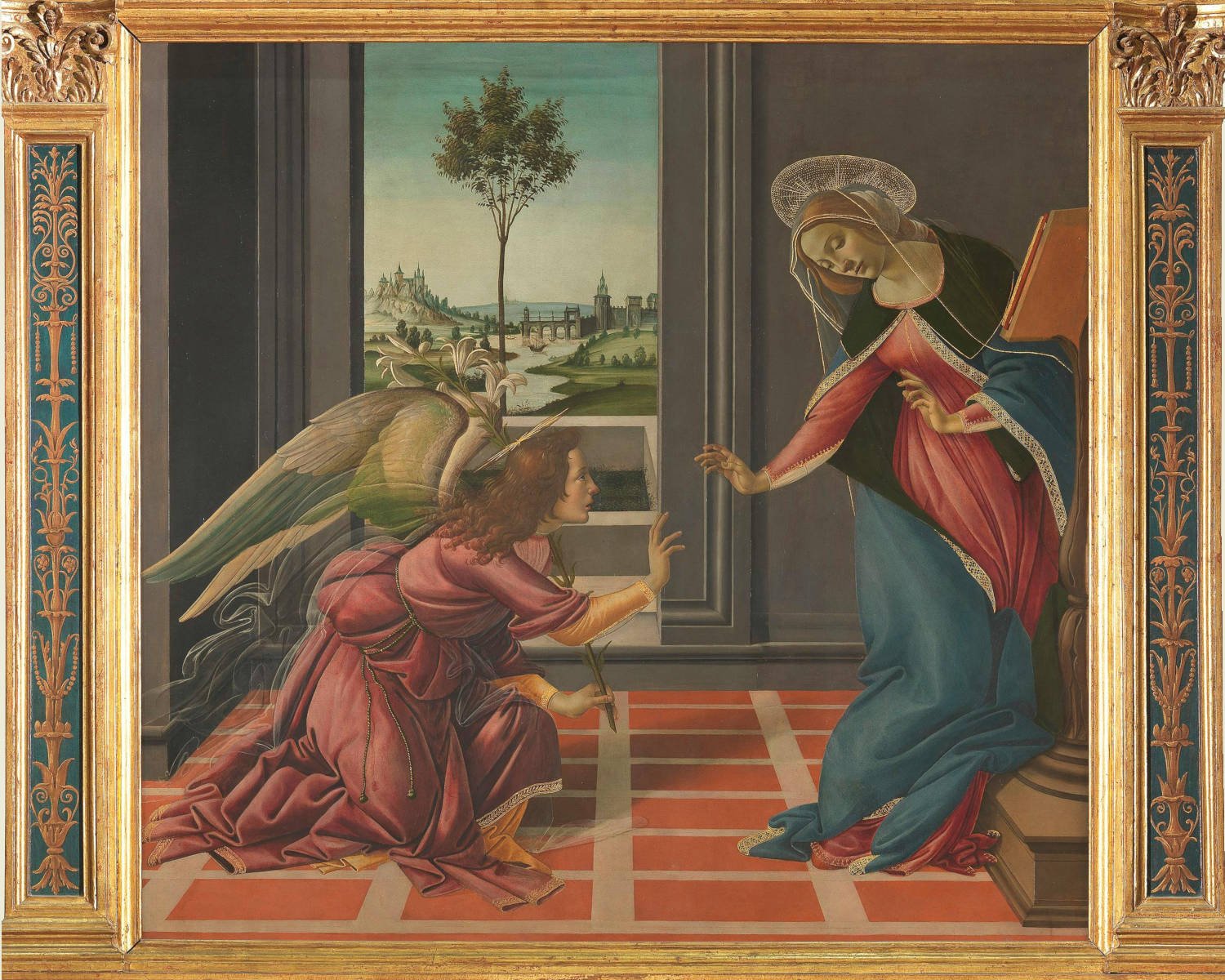
The Gospel of Saint Luke opens with a news flash from the Archangel Gabriel for Zechariah the priest, and Mary — Theotokos — the new Ark of the Covenant.
March 25, Solemnity of the Annunciation
On the 25th day of March, the Church remembers the Annunciation of the Angel Gabriel to Mary marking a pivotal event in Salvation History. The account is conveyed to us in the first chapter of the Gospel According to Saint Luke, a Gentile physician and a companion of the Apostle Paul. Several of the Fathers of the Early Church attribute the Third Gospel to Saint Luke and affirm his authorship of it. I once wrote of this unique Gospel in “Saint Luke the Evangelist, Dear and Glorious Physician.”
This Gospel reveals many facets of the life and mission of Jesus, but foremost among them is its universal message of Salvation. Luke, despite being a Gentile, anchors his Gospel in the traditions of the earlier Covenant, the Old Testament, portraying Jesus as the Savior and Redeemer of God’s Old Covenant people. He thus presents Jesus in history as one foretold by the Prophets (Isaiah 11:10-12, 49:6, and Ezekiel 39:25-29). Luke thus depicts Jesus as the Royal Messiah in the line and legacy of King David to reunite the scattered tribes of Israel and gather them into one nation. Given that he is the only Gentile Evangelist, that is an amazing feat through which Luke has prepared an artistic and spiritual masterpiece.
Saint Luke alone among the Evangelists recounts for us the Parable of the Good Samaritan (10:25-37), the Parable of the Prodigal Son (15:11-32), the Magnificat of Mary (1:46-55), the Benedictus of Zechariah (1:68-79), the Nunc Dimittis of Simeon (2:29-35), the Angelic Gloria (2:14) sung by the Angels on Christmas Night and in our liturgy to this day. And Luke is the sole source of the account that begins our story of Salvation: the Archangel Gabriel’s Annunciation to Mary.
No one really knows when or why tradition first places the Birth of Christ on December 25th, but the custom is ancient and it has a lot to do with the Annunciation, which also ties it into the events of Holy Week.
The first recorded mention of December 25 as the date of observance of the Feast of the Nativity was in a Roman document called the Philocalian Calendar dated as early as 336 A.D. Popular observance of the December 25 date of the Nativity, however, was at least a century older.
One obscure theory points to an early Roman Empire legend that great men are fated to die on the same date they were conceived. One tradition traced the date of Passover at or near March 25 in the year Jesus of Nazareth was crucified. If thus among some Romans it became popular belief that he was conceived on that date, then nine months to the day later would be December 25. However, it is impossible today to discern which came first, our belief in the December 25 date for the Birth of Jesus, or our belief in the March 25 date of his Crucifixion and therefore the Annunciation.

Spiritual Battle on a Cosmic Scale
The angels of TV-land usually worked out solutions to the drama of being human within each episode’s allotted sixty minutes. That’s not so with the angels of Scripture. Most came not with a quick fix to human madness, but with a message for coping, for giving hope, for assuring a believer, or, in the case of the Angel of the Annunciation, for announcing some really big news on a cosmic scale — like Salvation! What the angels of Scripture do and say has deep theological symbolism and significance, and in trying times interest in angels seems to thrive. The Archangel Gabriel dominates the Nativity Story of Saint Luke’s Gospel, but who is he and what is the meaning of his message?
We first meet Gabriel five centuries before the Birth of Christ in the Book of Daniel. The Hebrew name, “Gabri’El” has two meanings: “God is my strength,” and “God is my warrior.” As revealed in “Angelic Justice: Saint Michael the Archangel and the Scales of Hesed,” the Hebrew name Micha-El means “Who is like God?” The symbolic meaning of these names is portrayed vividly as Gabriel relates to Daniel the cosmic struggle in which he and Michael are engaged:
“Fear not, Daniel, for from the first day that you set your mind to understand, and humbled yourself before God, your words have been heard, and I have come because of your words. The prince of the kingdom of Persia withstood me twenty-one days, but Michael, one of the chief princes, came to help me. So I left him there with the prince of the kingdom of Persia, and came to make you understand what is to befall your people in the latter days . . . But I will tell you what is inscribed in the Book of Truth: there is none who contends at my side against these except Michael.”
— Daniel 10:12-14, 21
In the Talmud, the body of rabbinic teaching, Gabriel is understood to be one of the three angels who appeared to Abraham to begin Salvation History, and later led Abraham out of the fire into which Nimrod cast him. The Talmud also attributes to Gabriel the rescue of Lot from Sodom. In Christian apocalyptic tradition, Gabriel is the “Prince of Fire,” who will prevail in battle over Leviathan at the end of days. Centuries after the Canon of Old and New Testament Scripture was defined, Gabriel appears also in the Qu’ran as a noble messenger.
In Jewish folklore, Gabriel was in the role of best man at the marriage of Adam and Eve in the Garden of Eden. I found that a strange idea at first, but then it dawned on me: Who else were they going to ask? In later rabbinic Judaism, Gabriel watches over man at night during sleep, so he is invoked in the bedside “Shema” which observant Jews must recite at bedtime in a benediction called the Keri’at Shema al ha_Mitah:
“In the name of the God of Israel, may Michael be on my right hand, Gabriel on my left hand, Uriel before me, behind me Raphael, and above my head, the Divine Presence. Blessed is he who places webs of sleep upon my eyes and brings slumber to my eyelids. May it be your will to lay me down and awaken me in peace. Blessed are You, God, who illuminates the entire world with his glory.”
In an older issue of Word Among Us, Louise Perrotta described Gabriel’s central message to Daniel:
“History is not a haphazard series of events. Whatever the dark headlines — terrorist attacks, natural disasters, economic upheavals — we’re in the hands of a loving and all-powerful God. Earthly regimes will rise and fall, and good people will suffer. But . . . at an hour no one knows, God will bring evil to an end and establish His eternal kingdom.”
The way He accomplishes that is personified in the unusual graphic atop this section portraying Mary bearing the Christ Child in cosmic harmony with the Angelic realm.
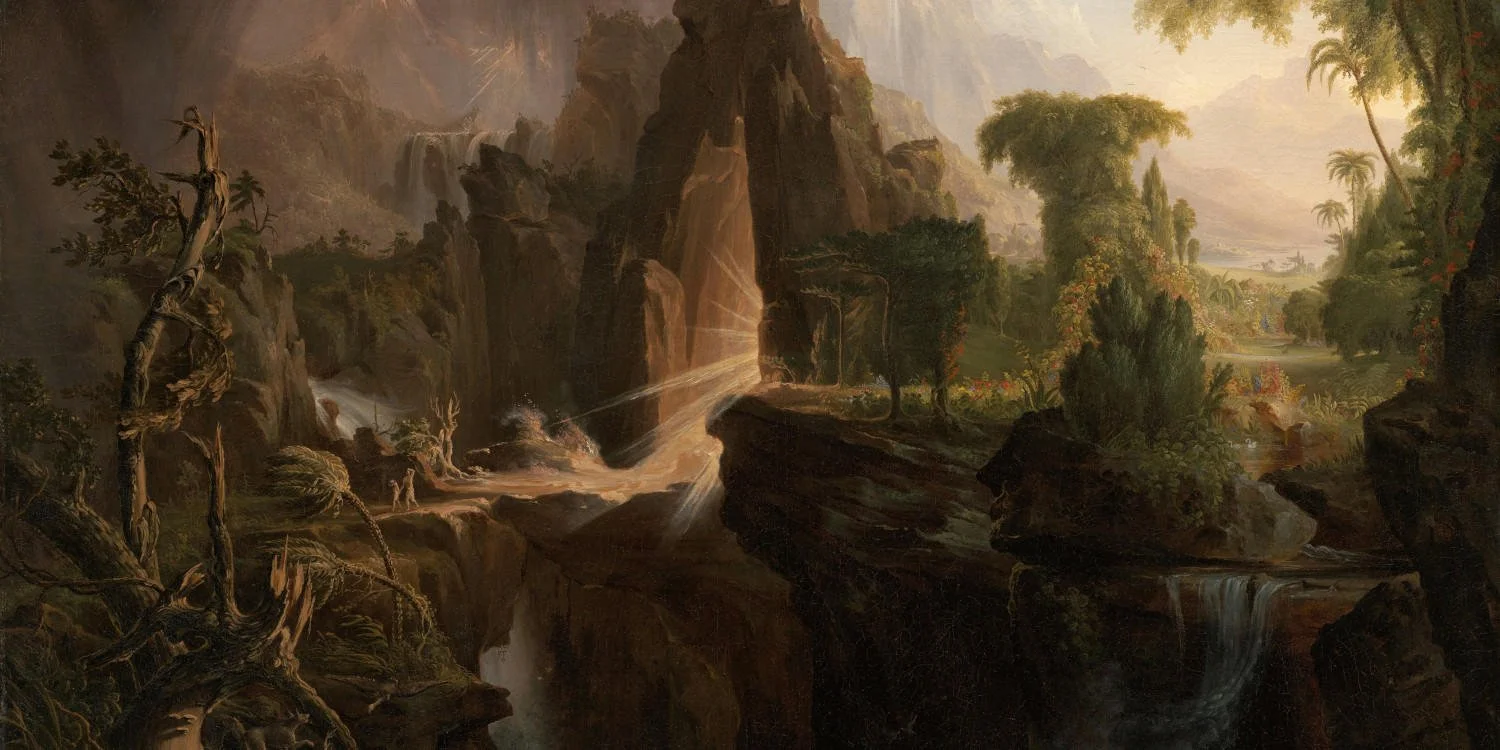
East of Eden; East of God
The Book of Tobit identifies the Archangel Raphael as one of seven angels who stand in the Presence of God. Scripture and the Hebrew Apocryphal books identify four by name: Michael, Gabriel, Raphael, and Uriel. The other three are not named for us. In rabbinic tradition, these four named angels stand at the Celestial Throne of God at the four compass points, and Gabriel stands to God’s left. From our perspective, this places Gabriel to the East of God, a position of great theological significance for the fall and redemption of man.
In a previous post I described the symbolism of “East of Eden,” a title made famous by the great American writer, John Steinbeck, who was awarded the Nobel Prize in Literature for it in 1962. I don’t mean to brag (well, maybe a little!) but a now-retired English professor at a very prestigious U.S. academy who knew Steinbeck left a comment on my post comparing it to Steinbeck’s work. This has absolutely nothing to do with the Archangel Gabriel, but I’ve been waiting for a subtle chance to mention it again! (ahem!) But seriously, in the Genesis account of the fall of man, Adam and Eve were cast out of Eden to the East (Genesis 3:24). It was both a punishment and a deterrent when they disobeyed God by eating from the Tree of Knowledge of Good and Evil:
“Behold, the man has become like one of us, knowing good from evil; and now, lest he put out his hand and take also from the Tree of Life, and eat, and live forever,’ therefore the Lord God sent him forth from the Garden of Eden to till the ground from which he was taken. He drove the man out, and to the east of the Garden of Eden he placed a Cherubim, and a flaming sword which turned every which way, to guard the way to the Tree of Life.”
— Genesis 3: 22-24
A generation later, after the murder of his brother Abel, Cain too “went away from the presence of the Lord and dwelt in the land of Nod, East of Eden.” (Genesis 4:16). The land of Nod seems to take its name from the Hebrew “nad” which means “to wander,” and Cain described his fate in just that way: “from thy face I shall be hidden; I shall be a fugitive and a wanderer on the earth” (Genesis 4:14). The entire subsequent history of Israel is the history of that wandering East of Eden. I wonder if it is also just coincidence that the Gospel of Saint Matthew, the only source of the story of the Magi, has the Magi seeing the Star of Bethlehem “in the east” and following it out of the east.
In rabbinic lore, Gabriel stands in the Presence of God to the left of God’s throne, a position of great significance for his role in the Annunciation to Mary. Gabriel thus stands in God’s Presence to the East, and from that perspective in St. Luke’s Nativity Story, Gabriel brings tidings of comfort and joy to a waiting world in spiritual exile East of Eden.
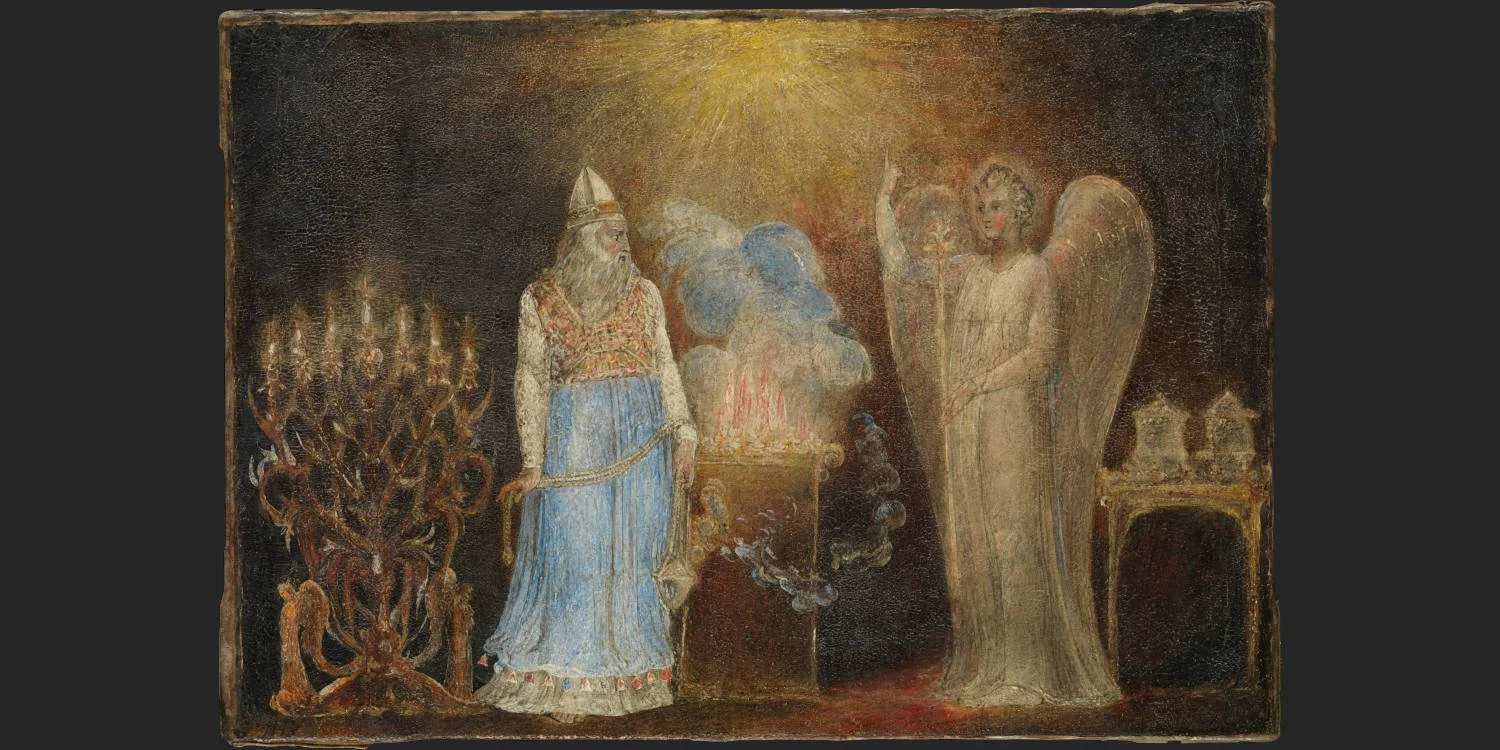
Gabriel Appears to Zechariah
The Archangel’s first appearance is to Zechariah, the husband of Mary’s cousin, Elizabeth. Zechariah is told that he and his wife are about to become the parents of the one who would become John the Baptist. The announcement does not sink in easily because, like Abraham and Sarah at the beginning of Salvation History, Zechariah and Elizabeth were rather on in years. Zechariah is about to burn incense in the Temple of Sacrifice, as close to the Holy of Holies as a human being can get, when the Archangel Gabriel appears with news:
“Fear fell upon him. But the angel said to him, ‘Do not be afraid, Zechariah, for your prayer is heard, and your wife, Elizabeth will bear you a son, and you shall call his name John . . . and he will be filled with the Holy Spirit even from his mother’s womb, and he will turn many of the sons of Israel to the Lord their God and will go before him in the spirit and power of Elijah . . .’”
— Luke 1:12-15
This news isn’t easily accepted by Zechariah, a man of deep spiritual awareness revered for his access to the Holy of Holies and his connection to God. Zechariah doubts the message, and questions the messenger. It would be a mistake to read the Archangel Gabriel’s response in a casual tone. Hear it with thunder in the background and the Temple’s stone floor trembling slightly under Zechariah’s feet:
“I am Gabriel who stand in the Presence of God . . . and behold, you will be silent and unable to speak until the day that these things come to pass.”
I’ve always felt great sympathy for Zechariah. I imagined him having to make an urgent visit to the Temple men’s room after this, followed by the shock of being unable to intone the Temple prayers.
Zechariah was accustomed to great deference from people of faith, and now he is scared speechless. I, too, would have asked for proof. For a cynic, and especially a sometimes arrogant one, good news is not easily taken at face value.
Then six months later “Gabriel was sent from God to a city of Galilee named Nazareth, to a virgin betrothed to a man whose name was Joseph, of the House of David, and the virgin’s name was Mary.” (Luke 1: 26-27). This encounter was far different from the previous one, and it opens with what has become one of the most common prayers of popular devotion.
Gabriel said, “Hail Mary, full of grace, the Lord is with thee.” His words became the Scriptural basis for the doctrine of the Immaculate Conception, that and centuries of “sensus fidelium,” the consensus of the faithful who revere her as “Theotokos,” the God-Bearer. Mary, like Zechariah, also questions Gabriel about the astonishing news. “How can this be since I have not known man?” There is none of the thunderous rebuke given to Zechariah, however. Saint Luke intends to place Gabriel in the presence of his greater, a position from which even the Archangel demonstrates great reverence and deference.
It has been a point of contention with non-Catholics and dissenters for centuries, but the matter seems so clear. There’s a difference between worship and reverence, and what the Church bears for Mary is the deepest form of reverence. It’s a reverence that came naturally even to the Archangel Gabriel who sees himself as being in her presence rather than the other way around. God and God alone is worshiped, but the reverence bestowed upon Mary was found in only one other place on Earth. That place was the Ark of the Covenant, in Hebrew, the “Aron Al-Berith,” the Holy of Holies which housed the Tablets of the Old Covenant. I wrote of Mary’s identification with the most sacred artifact in all of Israel in “The Ark of the Covenant and the Mother of God.”
But the story of Gabriel’s Annunciation to Mary draws on elements from the Second Book of Samuel. These elements are drawn by Saint Luke as he describes Mary’s haste to visit her cousin Elizabeth in the hill country of Judea. In 2 Samuel 6:2, David visits this very same place to retrieve the Ark of the Covenant. Upon Mary’s entry into Elizabeth’s room in Saint Luke’s account, the unborn John the Baptist leaps in Elizabeth’s womb. This is reminiscent of David leaping before the Ark of the Covenant in 2 Samuel 6:16.
For readers “with eyes to see and ears to hear,” Saint Luke presents an account of God entering into human history in terms quite familiar to the old friends of God. God himself expressed in the Genesis account of the fall of man that man has attempted to “become like one of us” through disobedience. Now the reverse has occurred. God has become one of us to lead us out of the East, and off the path to eternal darkness and death.
The Church honors with the deepest reverence Mary, Theotokos, the Bearer of God and the new Ark of the Covenant. Mary, whose response to the Archangel Gabriel was simple assent:
“Let it be done to me according to your word.”
“Then the Dawn from On High broke upon us, to shine on those who dwell in darkness and the shadow of death, and to guide our feet on the way to peace.”
— Luke 1:78-79
+ + +
Note from Father Gordon MacRae: Thank you for reading and sharing this post. It is also added to our collection of Scripture posts, The Bible Speaks.
You may also like these related posts:
Saint Luke the Evangelist, Dear and Glorious Physician
The Ark of the Covenant and the Mother of God
Holy Week begins this year on Palm Sunday, March 29. We have collected a list of seven Holy Week posts from Beyond These Stone Walls. Together, they form a sort of personal Holy Week Retreat. We invite you to take part in it by visiting or revisiting each of its linked posts throughout the course of this coming week. You may access here Our Beyond These Stone Walls Holy Week Retreat.

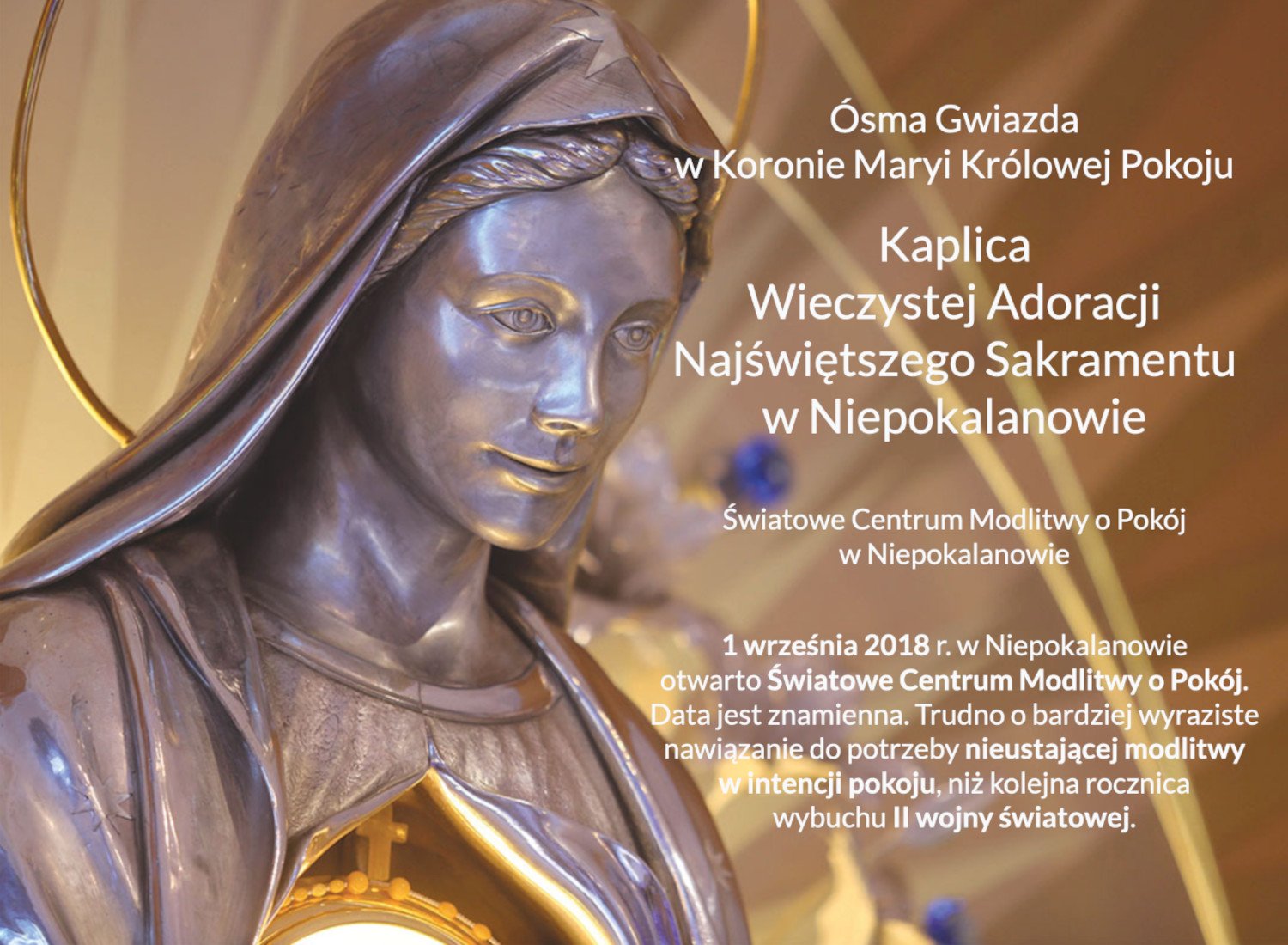

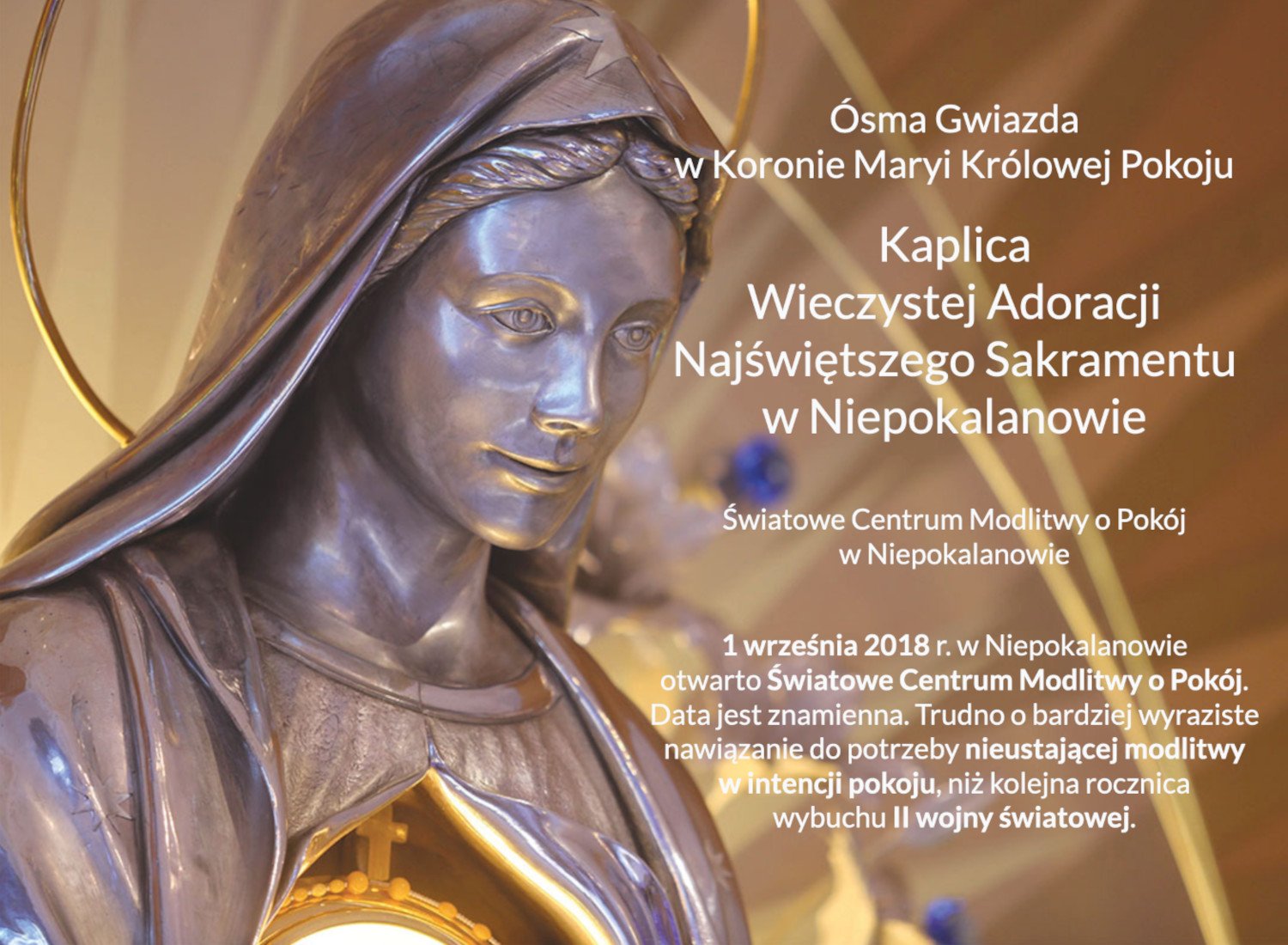
The Eucharistic Adoration Chapel established by Saint Maximilian Kolbe was inaugurated at the outbreak of World War II. It was restored as a Chapel of Adoration in September, 2018, the commemoration of the date that the war began. It is now part of the World Center of Prayer for Peace. The live internet feed of the Adoration Chapel at Niepokalanow — sponsored by EWTN — was established just a few weeks before we discovered it and began to include in at Beyond These Stone Walls. Click “Watch on YouTube” in the lower left corner to see how many people around the world are present there with you. The number appears below the symbol for EWTN.
Click or tap here to proceed to the Adoration Chapel.
The following is a translation from the Polish in the image above: “Eighth Star in the Crown of Mary Queen of Peace” “Chapel of Perpetual Adoration of the Blessed Sacrament at Niepokalanow. World Center of Prayer for Peace.” “On September 1, 2018, the World Center of Prayer for Peace in Niepokalanow was opened. It would be difficult to find a more expressive reference to the need for constant prayer for peace than the anniversary of the outbreak of World War II.”
For the Catholic theology behind this image, visit my post, “The Ark of the Covenant and the Mother of God.”

The Holy Spirit and the Book of Ruth at Pentecost
Events at the coming of the Holy Spirit in Acts of the Apostles have roots deep in Salvation History. In the traditional Hebrew Pentecost, the Book of Ruth is read.

Events at the coming of the Holy Spirit in Acts of the Apostles have roots deep in Salvation History. In the traditional Hebrew Pentecost, the Book of Ruth is read.
May 24 , 2023 by Fr Gordon MacRae
(Note: The graphic above depicts Ruth and Naomi preparing to depart Moab to venture down to Bethlehem.)
Shannon Bream, host of Fox News Sunday, is a lawyer by training having earned her Doctor of Law degree at a prestigious Florida law school. Prior to that, she graduated magna cum laude from Liberty University in Lynchburg, Virginia, a school founded in 1971 by evangelist Jerry Falwell. Not surprisingly, Ms. Bream has been well informed by her alma mater, and has written several books with an evangelical biblical perspective. Her titles to date include, The Women of the Bible Speak, The Mothers and Daughters of the Bible Speak, and The Love Stories of the Bible Speak.
One of the heroic women of the Biblical literature Ms. Bream wrote about in the first of those titles is Ruth, heroine of the Book of Ruth. It is a brief but remarkable story. In Jewish tradition, its author was the Hebrew judge Samuel. Although the book is descriptive of the period “when the judges ruled” (1:1), scholars have variously argued for its oral tradition in the time of the monarchy of King David (10th to 8th century BC), in the postexilic era (5th to 4th century BC), or somewhere in between the two.
The Book of Ruth tells of a family from the ancient town of Bethlehem in Judah that takes refuge in the country of Moab during a famine. While there, the sons of the Judean family marry Moabite women. When the father and the two sons die from unknown causes, the bereaved mother, Naomi, determines to return to her ancestral home in Bethlehem. She urges her daughters-in- law, Ruth and Orpah, to remain in Moab with their own people.
Orpah remains, but Ruth discerns that her duty of devotion to her deceased young husband also extends to his bereaved mother, Naomi, who is now widowed and alone. So Ruth insists on accompanying Naomi to Bethlehem. The story provides a moving quote of Ruth that over the centuries has found its way into the popular music of Christian liturgy:
“Wherever you go, I shall go. Wherever you dwell, I shall dwell there also. Your people will be my people, and your God shall be my God too. Wherever you die, I shall die, and there shall I be buried beside you.”
— Ruth 1:16-17
In Bethlehem, Ruth’s beauty, devotion and kindness soon attract the attention of Naomi’s near kinsman Boaz, (2:l-4:12). Despite the fact that Ruth is a foreigner, Boaz, a Jew, marries her, and by an act of Divine Providence she becomes the great grandmother of King David, of whose lineage Jesus was born. This is noted in the genealogy at the beginning of Saint Matthew’s Gospel. It’s an odd inclusion in the genealogy:
“... and Nahshon the father of Salmon, and Salmon the father of Boaz by Raihab, and Boaz the father of Obed by Ruth, and Obed the father of Jesse, and Jesse the father of David the King.”
— Matthew 1:4-6
It was highly unusual for any genealogy to add the name of the maternal line in Sacred Scripture, but both Ruth and the small and inconspicuous Book of Ruth have an outsized influence and footprint on the faith of Israel and Pentecost. It is evidence of the Spirit of God guiding Salvation History across millennia. I must remember that when I am bowed low by whatever cross I happen to carry in this time. The Great Tapestry of God has threads I can only see from the back in another life.

Pentecost and a Bigger Picture
As a story, the Book of Ruth provides an account of the series of events that led up to the inclusion of a Moabite in the ancestry of King David, and one thousand years later, of Joseph, spouse of Mary, and, by extension and adoption, Jesus. The story’s emphasis on the fact that Ruth is a foreigner, her acceptance by the people of Bethlehem despite this fact, her place in the genealogy of King David, and the acceptance of the book as part of the Hebrew canon all suggest a deeper and more complex purpose.
So it comes as no surprise that the Book of Ruth is read in the Hebrew observance of “Shavuot,” known in English as the Feast of Weeks or Pentecost. It is one of three pilgrimage festivals requiring a pilgrimage to Jerusalem for its observance. In the Hebrew calendar, Shavuot falls on the Sixth day of Sivan, the day after the conclusion of seven weeks — the fiftieth day after Passover. Hence the name, “Pentecost,” from Greek, “pentekoste” meaning fiftieth day.
In later Old Testament times, the Festival of the Harvest also became associated with the giving of the law to Moses upon Mount Sinai which, by tradition, also took place on the Sixth Day of Sivan. Because of the association with the giving of the Torah, a tradition evolved among Jews to honor Shavuot with an all-night vigil called the “Tikkun for Shavuot Eve.” It included readings from the first and last verses of each weekly Torah reading, a selection of Psalms, paragraphs from the six Orders of the Krishnah, a list of the 613 precepts of Moses, and the Book of Ruth.
It was for the observance of the Hebrew Pentecost that Mary, Mother of the Lord, and the Apostles were present in Jerusalem for the events that would become the Christian Pentecost (Acts 2: 1-47) the fiftieth day after the Resurrection of Jesus. It was the descent of the Holy Spirit among them. It was the birth of the Church.
When Beyond These Stone Walls began in the summer of 2009, I had no idea that I would still be writing posts from prison for it in 2023. I wrote about many things, but a priority for me was to write posts about Sacred Scripture with a focus on some of the Sunday Gospel readings which many readers seemed to like.
But I have run into an unforeseen problem. I have tried to research and write special posts at major feasts such as Christmas, Easter, and Pentecost but in 2023 I am faced with writing about the same Scriptures again and again. I do not have the luxury of looking out at a congregation gathered for Mass to adjust the length of my homily by the number of people I see yawning or dropping off.
Writing at Pentecost has been one of my biggest challenges. For one thing, Pentecost always comes at or near the anniversary of my priesthood ordination which I also feel obliged to mention in a post. It would be an insult to Catholics if I ignore my own ordination. In 2022, Pentecost fell on June 5th which was also my 40th anniversary of priesthood. So for the first time I combined the two subjects into one post. The next few paragraphs are an excerpt from “Forty Years of Priesthood in the Mighty Wind of Pentecost”:
It is interesting that the word for both wind and breath in Hebrew is ‘ruah,’ and the term in Hebrew for the Holy Spirit is ‘ruah ha-Qodesh.’ It simultaneously means the Spirit of God, the Wind of God, and the Breath of God. The same term is used in the story of Creation (Genesis 1:1-2) :
“In the beginning, God created the heavens and the earth. The earth was without form and void and darkness was upon the face of the deep; and the Spirit of God, ‘ruah ha-Qodesh,’ was moving over the waters.” (Genesis 1:1-2)
And the term was used again in Genesis 2:7 as God breathed the Spirit into the nostrils of Adam, and again in the Resurrection appearance of Jesus to the Apostles, “He breathed on them and said, ‘Receive the Holy Spirit.’” (John 20:22)
When I look back on forty years of priesthood, most of them in exile, imprisoned souls were reached through no merit of my own. In spite of myself, the Wind of God took me up in its vortex, and I am simply blown away by it.

The Great Gifts of the Spirit
“Lord, I am ready to go with you to prison and to death.”
— Peter at the Institution of the Eucharist, Luke 22:33
In Genesis 11:1-9 is related the story of a great tower erected in the land of Shinar in Babylon. The great Tower of Babel was left unfinished because Yahweh confounded the speech of the builders so they could not comprehend each other. The city was thenceforth called “Babel” which is the etymology of our word, “babble,” a term for incomprehensible speech. The story was an imaginative attempt to account for the origin of the diversity of languages.
The tower is today recognized as a “ziggurat,” a towering pyramid of successively recessed levels of stone. For the Babylonians, its purpose was ceremonial as a “cosmic mountain,” symbolic of the Earth itself. Its height was seen as a way to God as described in Genesis 11:4, a tower that “could reach to the heavens.”
As in many such stories, there is both a literal history behind it and an interpretation of it in the mind of the Ancient Near East. The tower became in time the story of God’s scattering of the human race into diverse languages. The story of Pentecost in Acts 2:5-12 has “men from every nation under heaven” in a multitude that came together and were bewildered as each heard the witness of the Apostles in their own languages.
They were “Parthians and Medes, Elamites and residents of Mesopotamia, Judea and Cappadocia, Pontus and Asia, Phrygia and Pamphylia, Egypt and Libya, and Cyrene, and parts of Rome, Jews and Greeks alike, Cretans and Arabs.” They were the known world of that time, all the nations of Northern Africa and the Middle East surrounding the Mediterranean Sea, literally the Sea of Middle Earth. Each heard of the mighty works of God in their own languages (Acts 2:5-12). For some, it was an answer to the divisions of our Babel-ing.
But others only mocked, accusing the Apostles of drunkenness: “they are filled with new wine.” Then came the great discourse of Peter (Acts 2:14-36) which began with a spirited defense of the Apostles:
“Men of Judea, and all who dwell in Jerusalem, let this be known to you and give ear to my words. These men are not drunk as you suppose for it is only the third hour of the day.” And then Peter spoke from the Prophet Joel, and in the end, a great multitude came to believe and were received into the Church.
This was Peter filled with the Spirit and fortitude, the same Peter who, just 54 days earlier at the Last Supper vowed to the Lord that he would go with him to prison and to death. It was the same Peter who just a day later fell to the lower depths of Golgotha to deny three times that he even knew Him.
In my life as a priest, the wind of Pentecost has been more like a Category Five storm than the gentle breeze of the Spirit I once envisioned priesthood to be. After graduation with a double major in psychology and philosophy from St Anselm College in New Hampshire in 1978, I enrolled in a four year post-graduate degree program in theological studies at St. Mary Seminary and University in Baltimore, Maryland from 1978 to 1982. Summers and between semesters were spent in a three-year counseling internship for the Baltimore County Police Crisis Intervention Unit. It was an education in human suffering.
One of my seminary professors was a young priest named Fr Ronald Rolheiser, OMI, a popular Catholic author who taught courses in Scripture and spirituality. Forty-one years later, just as I started this post, I discovered Father Rolheiser again in the pages of Give Us This Day, a monthly prayer and liturgical guide published by Liturgical Press in Collegeville, Minnesota. He had a brief reflection on Pentecost that I have been trying to decipher. Here is a segment:
“The Christian paschal cycle has five distinct moments: Good Friday, Easter Sunday, the Forty Days, the Ascension, and Pentecost. These were five moments in Jesus’ life as he moved through his death, his resurrection, his forty days of post-resurrection appearances, his ascension, and his sending of the Holy Spirit. ... The five interpenetrating moments in Jesus’ life that stretch from Good Friday to Pentecost invite us to always: Name your deaths; Claim your births; Mourn what you lost; Don’t cling to what you had but let it ascend. If we do this, Pentecost will happen in our lives. We will receive a new spirit for the life that we are, in fact, living.”
— Fr Ron Rolheiser, OMI, “Pentecost Will Happen”
+ + +
Note from Fr Gordon MacRae: Thank you for reading and sharing this Pentecost post with its challenges to let the Spirit of Truth and Grace dwell within us. You may also like these related posts:
Forty Years of Priesthood in the Mighty Wind of Pentecost
Priesthood, The Signs of the Times and The Sins of the Times
+ + +
Please note that Pentecost ends the Easter Season. We will be removing our Holy Week Retreat as a menu option, but we will include it from henceforth as a Library Category of posts. It was well received among readers, and I thank you.
+ + +
Personal Intention from Fr Gordon MacRae: May 24, 2023 marks one year since the tragic losses of life in Uvalde, Texas. Please pray for the people of this deeply wounded community and for the healing of this community's broken hearts.

+ + +
Our Adoration Chapel founded by Saint Maximilian Kolbe will remain at Beyond These Stone Walls. Jesus came to us through Mary, and now we may reciprocate. Thank you for spending time in Eucharistic Adoration. Please also offer a prayer for me because I am the only one among us unable to see the Chapel.


The Eucharistic Adoration Chapel established by Saint Maximilian Kolbe was inaugurated at the outbreak of World War II. It was restored as a Chapel of Adoration in September, 2018, the commemoration of the date that the war began. It is now part of the World Center of Prayer for Peace. The live internet feed of the Adoration Chapel at Niepokalanow — sponsored by EWTN — was established just a few weeks before we discovered it and began to include in at Beyond These Stone Walls. Click “Watch on YouTube” in the lower left corner to see how many people around the world are present there with you. The number appears below the symbol for EWTN.
The following is a translation from the Polish in the image above: “Eighth Star in the Crown of Mary Queen of Peace” “Chapel of Perpetual Adoration of the Blessed Sacrament at Niepokalanow. World Center of Prayer for Peace.” “On September 1, 2018, the World Center of Prayer for Peace in Niepokalanow was opened. It would be difficult to find a more expressive reference to the need for constant prayer for peace than the anniversary of the outbreak of World War II.”
For the Catholic theology behind this image, visit my post, “The Ark of the Covenant and the Mother of God.”
Click or tap here to proceed to the Adoration Chapel.

Waking Up in the Garden of Gethsemane
The Agony in the Garden, the First Sorrowful Mystery, is a painful scene in the Passion of Christ, but in each of the Synoptic Gospels the Apostles slept through it.

The Agony in the Garden, the First Sorrowful Mystery, is a painful scene in the Passion of Christ, but in each of the Synoptic Gospels the Apostles slept through it.
It seems so long ago now, but a few years back I wrote a post that stunned some TSW readers out of the doldrums of a long nap in the Garden of Gethsemane where, sooner or later, we will all spend some time. That post was “Pentecost, Priesthood, and Death in the Afternoon.”
It was about one of our friends, a middle-aged prisoner named Anthony, and his discovery of having terminal cancer. Anthony was one of the most irritating and obnoxious individuals I had ever met. He was the only prisoner I have ever thrown out of my cell with a demand that he never return. Very few people have had that kind of effect on me, but Anthony was masterful at it.
But then Anthony discovered that he was dying. As an unintended result of our “falling out” he believed that he could not come to me. He was Pornchai Moontri’s friend but the story of his impending doom was my comeuppance. I cannot forget the day that Pornchai told me, “You have to help Anthony. He is going to die and he doesn’t know how.” After a long sleep when the priest in me had succumbed too much to the prisoner, that was my awakening in the Garden of Gethsemane.
Over the next 18 months, Pornchai and I took care of Anthony for as long as we possibly could before handing him over to the prison version of hospice from where we would never see him again. But before that happened, Anthony became a Catholic, was received into the Church, and had a transformation of spirit that, in the midst of death, proclaimed an incomparable stress on life.
Pornchai and I were eyewitnesses to how all the things that once took priority in Anthony’s life just fell away. He became, in the end, like “Dismas, Crucified to the Right” of the Lamb of God. It seemed so ironic that it was his impending death that opened up for Anthony a world of faith, hope and trust that overcame all other forces at work in his life. In the end, I no longer, recognized the man I had once so disdained.
Not long after leaving us, Anthony died in the prison’s medical center where a small group of hospice volunteers took turns being with him around the clock. I once wrote of Anthony’s death, and of an event that shook our world back then, but it’s a story worth telling again. I told it at a brief memorial service for Anthony that was attended by about sixty prisoners, twice the normal for such things.
At the service in the prison chapel, those attending were invited to speak. So Pornchai nudged me and said, “Tell them about the book.” I told those in attendance that Anthony left this world having committed a second crime against the State of New Hampshire: an unreturned library book. The rest of the story generated a collective gasp.
The Library where I work has a computer system that tracks the 22,000 volumes from which prisoners can select and check out books. When a prisoner is released from prison without returning a book, an alert would come across the screen a week later to give us a last chance to find and retrieve a book left behind.
I had no knowledge that Anthony ever checked a book out of the Library. I never saw him there, and he never asked me for a book. But a week after he died, this appeared on my screen:
“Anthony Begin #76810 — Gone/Released — Heaven Is for Real”

The Agony in the Garden
Heaven is for real, but for it to be a reality for us required an Exodus from the slavery of sin and death. That second Exodus commenced in the Garden of Gethsemane, and in the course of it, God exacted from Himself the same price — the death of His Son — that he imposed upon Pharaoh to bring about the first Exodus.
The Biblical account of Jesus and His Agony in the Garden of Gethsemane opens the Passion Narrative of the Synoptic Gospels of Matthew, Mark, and Luke. In the Gospel of John (18:1), the place is simply referred to as “across the Kidron Valley where there is a garden.” John, writing from a different tradition, cites only the betrayal by Judas there whereas the other Gospels precede that betrayal with the agony of Jesus at prayer.
Almost immediately preceding this in each of the Synoptic Gospels was the Institution of the Eucharist at what has been famously depicted by Leonardo Da Vinci as The Last Supper. This was the decisive turning point in Salvation History:
“Drink of it, all of you, for this is the blood of the covenant, which is poured out for many for the forgiveness of sins. I tell you I shall not drink again of this fruit of the vine until that day when I drink of it anew with you in my Father’s Kingdom.”
— Matthew 26: 28-29
Following this in the account of Saint Luke, Jesus addresses Peter about the spiritual warfare that is to come:
“‘Simon, Simon, behold, Satan demanded to have you that he might sift you like wheat, but I have prayed for you that your faith may not fail; and when you have turned again, strengthen your brethren.’ And [Peter] said to him, ‘Lord, I am ready to go with you to prison and to death.’”
— Luke 22:31-34
Peter’s “readiness” for prison and for death will soon become an issue. From here the scene moves to the Mount of Olives where Jesus went to pray “as was His custom” (Luke 22:39).
Only the Gospels of Matthew and Mark name the place “Gethsemane.” Once there, Jesus withdrew from His disciples to pray. As you already know, the suffering and death he now faced would be set in motion by the betrayal of Judas who provided “the more opportune time” that Satan awaited when the Temptation of Christ in the desert failed (Luke 4:13), a scene depicted in “To Azazel: The Fate of a Church That Wanders in the Desert.”
Jesus, fully human in his suffering by God’s design, recoils not only from the image of suffering he knows to be upon Him, but also by the weight of the Apostolic betrayal just moments away. The betrayal by Judas is intensified by the dreadful weight of humanity’s sin for which Jesus is offered up as the Scapegoat — the Sacrificial Lamb of God — for the sins of all humanity.
For Hebrew ears, the account of Jesus at Gethsemane is a mirror image in reverse of a scene that occurred at this very same site 1,000 years earlier. It was a story not of a son obedient unto death, but of a son who betrayed his father. It was the agony of King David and his flight from his son, Absolom, and his traitorous revolt. As David learned that his trusted counselor, Ahithophel, had betrayed him in league with Absolom…
“David went up the ascent of the Mount of Olives, weeping as he went, with his head covered and walking barefoot, and all the people who were with him covered their heads and went up, weeping as they went. David was told that Ahithophel was one of the conspirators with Absolom.”
— 2 Samuel 15:30-31
And, as with Judas 1,000 years later, Ahithophel hanged himself when the consequences of his betrayal weighed upon him.
In Saint Matthew’s account of the Gethsemane scene (26:37), Jesus left His disciples and brought Peter, James and John with Him to the place of prayer. Note that Peter, James and John witnessed Jesus raise the daughter of Jairus from death (Mark 5:37) and they were also witnesses to His Transfiguration in the presence of Moses and Elijah that I wrote of during this Lent in “Turmoil in Rome and the Transfiguration of Christ.”
In the Gospel of Luke (22:31ff) Jesus is alone and apart from the others as He prays in agony in the face of death: “Father if you are willing, remove this chalice from me; nevertheless not my will but yours be done.” I cannot tell you how often I have prayed that same prayer in the last 25 years. I pray it still.
In the Gospel, God answers the prayer of Jesus, not by removing the suffering, for His suffering is to be our Exodus, but by strengthening Him to endure it. And He will endure it unto death:
“There appeared to him an angel from heaven to strengthen him. And being in agony, he prayed more earnestly; and his sweat became like great drops of blood falling down upon the ground.”
— Luke 22:43
In each of the Gospel accounts, Jesus returned to His disciples to discover that they have all slept through His agony. None were there to console Him except the angel sent from heaven while humanity slept.

Consoling the Heart of Jesus
The Gospel of Saint Mark presents a more vivid account of the inner suffering that betrayal and death brought to the heart of Jesus. Mark describes that Jesus “began to be greatly distressed and troubled” (Mark 14:33). The Greek of Mark’s Gospel used the terms έκθαμβεῖσθαι and άδημονεῖν which vividly express in Greek the depth of distress and anxiety that came upon Him. The comfort the angel brings is reminiscent of Psalm 42:
“Why are you cast down O my soul, and why are you disquieted within me? Hope in God; for I shall again praise him, my help and my God.”
— Psalm 42:12
The coming betrayal by Judas marks the climax of the ministry of Jesus who has left hints throughout the Gospel of Mark:
“And he began to teach them that the Son of man must suffer many things and be rejected by the elders and the chief priests and the scribes, and be killed, and after three days rise again. And he said this plainly.”
— Mark 8:31
“The Son of man will be delivered into the hands of men, and they will kill him, and when he is killed, after three days he will rise.”
— Mark 9:31
“Behold, we are going up to Jerusalem, and the Son of man will be delivered to the chief priests and the scribes, and they will condemn him to death, and deliver him to the Gentiles, and they will mock him, and spit on him, and scourge him, and kill him, and after three days he will rise.”
— Mark 10:33-34
So how do we, His disciples by Baptism and by the fidelity we claim, how do we console the heart of Jesus at Gethsemane? For the answer, I am indebted to Father Michael Gaitley, M.I.C. for his profound book, Consoling the Heart of Jesus which was the text for a six-week course offered here by the Marians of the National Shrine of The Divine Mercy.
Like many, I believe I learn the most from Sacred Scripture when the circumstances of my life force me to live it. So picking up this book for the first time, I asked myself, “How can I console Jesus, who is happy in Heaven, while I am stuck in this hellhole called prison?” That’s what Pornchai Moontri called it in these pages in his post, “Imprisoned by Walls, Set Free by Wood.”
Father Gaitley has an answer called “Retroactive Consolation” that comes from the theology of Pope Pius XI and the Dominican theologian, Réginald Marie Garrigou-Lagrange, O.P. whom Father Gaitley quotes:
“During his earthly life and particularly while in Gethsemane, Jesus suffered from all future acts of profanation and ingratitude. He knew them in detail with a superior intuition that governed all times… Thus his suffering encompassed the present instant and extended to future centuries. ‘This drop of blood I shed for you.’ So in the Garden of Olives, Jesus suffered for all, and for each of us in particular.”
— Consoling the Heart of Jesus, P. 394
So, if His suffering is projected into the future, how can our consolation of Him at Gethsemane become retroactive into the past? What will awaken us from our sleep in the Garden of Gethsemane? Jesus Himself provides that answer, and it has something to do with our story about Anthony that began this post. It is laid out powerfully in the Gospel of Matthew:
“Then the righteous will answer him, ‘Lord, when did we see you hungry and feed you, or thirsty and give you drink? And when did we see you a stranger and welcome you, or naked and clothe you? And when did we see you sick or in prison and care for you?’ And the King will answer them, ‘Truly I say to you, as you did it to one of the least of these, you did it to me.’”
— Matthew 25:37-40
Now
“Arise. Let us be going. See, my betrayer is at hand.”
— Matthew 26:46
+ + +
Editor’s Note: Please share this Holy Week post with your contacts on Facebook and other social media. To prepare for a meaningful Holy Week and Easter, you may also like these other posts from along the Way of the Cross at Beyond These Stone Walls :
A Personal Holy Week Retreat at Beyond These Stone Walls
The Chief Priests Answered, ‘We Have No King but Caesar’
Behold the Man, as Pilate Washes His Hands
Simon of Cyrene at Calvary: Compelled to Carry the Cross
