“There are few authentic prophetic voices among us, guiding truth-seekers along the right path. Among them is Fr. Gordon MacRae, a mighty voice in the prison tradition of John the Baptist, Maximilian Kolbe, Alfred Delp, SJ, and Dietrich Bonhoeffer.”
— Deacon David Jones
Latin Mass and Altar Rails Are Under Siege in North Carolina
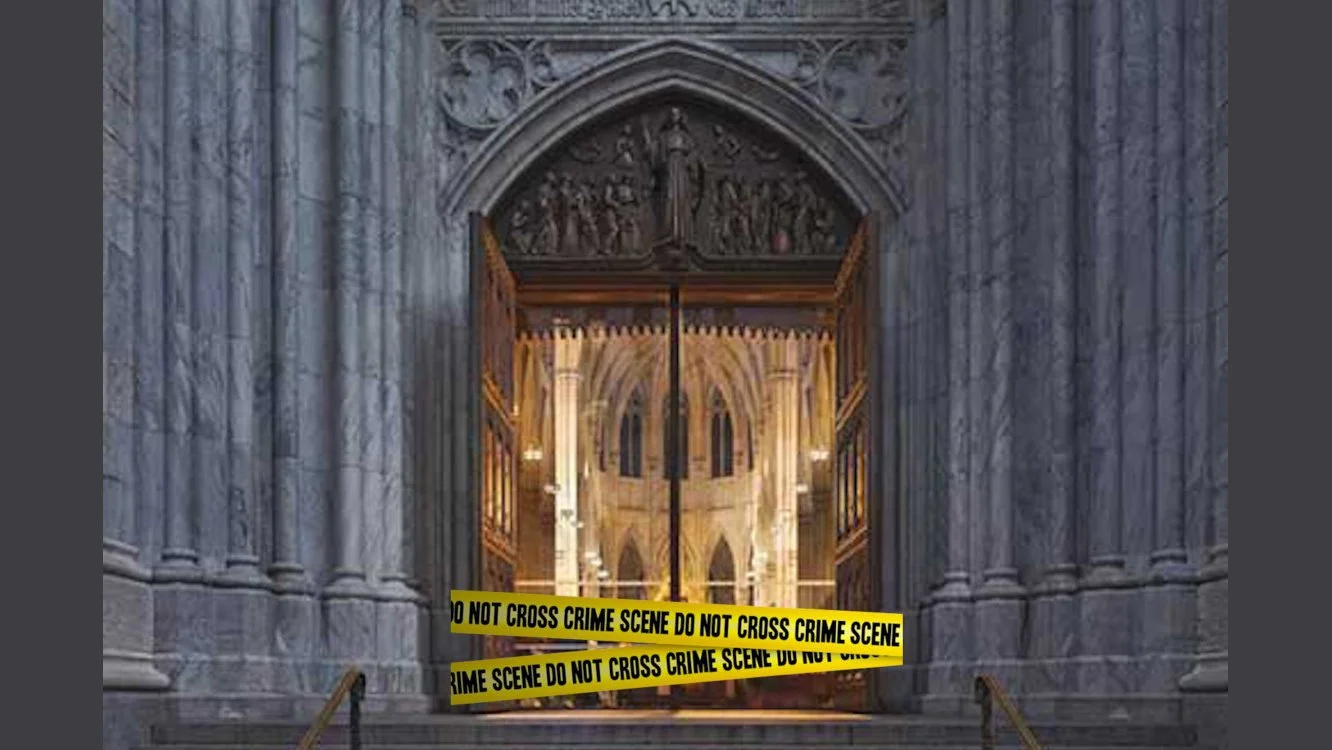
Citing unity, the Bishop of Charlotte, North Carolina imposed a ban on altar rails and kneeling and severely further restricted access to the Traditional Latin Mass.
Citing unity, the Bishop of Charlotte, North Carolina imposed a ban on altar rails and kneeling and severely further restricted access to the Traditional Latin Mass.
February 11, 2026 by Father Gordon MacRae
In its “Year in Review” feature dated December 28, 2025, the National Catholic Register published “The Top 25 Register Stories of 2025.” AI tools were used to generate summaries and rank the stories based upon online page views, which were then reviewed by an editor. The result was a visually striking account of Catholic interests over the previous year. Two of the entries were perplexing, however.
Item #17 on the list featured a photo of Charlotte, North Carolina, Bishop Michael Martin with the headline, “Charlotte Liturgy Controversy Heats Up After Bishop’s Proposed Ban of Latin, Altar Rails Leaked.” The segment was written by Register Columnist Jonathan Liedl who added, “The Charlotte Diocese ignites a firestorm in 2025 as Bishop Michael Martin’s leaked proposal to ban Latin and altar rails stirs international debate. Critics argue the norms contradict Vatican II’s teachings, while supporters claim they aim for liturgical unity. This controversy marks the first major liturgical clash under Pope Leo XIV, positioning Charlotte, North Carolina, as a litmus test for the future Catholic worship.”
In another Register column appearing adjacent to the above story was Item #20, which presented a polar opposite view: “Communion Rails Return as Churches Embrace Beauty and Reverence,” presented by Register Columnist Joseph Pronechen who added, “In 2025, Catholic parishes across the U.S. embrace a revival of altar rails, transforming the reception of Communion into a more reverent experience. Joseph Pronechen highlights how this return fosters a sacred atmosphere, encouraging congregants to kneel and reflect on the significance of the Eucharist. As communities rediscover this liturgical beauty, they deepen their connection to faith and tradition marking a profound shift in worship practices.”
I could not help but notice further context in a mid-September, 2025 Catholic News Agency report on new regulations on Catholic practice in China. This time, the ban came from the Chinese Communist Government’s State Administration for Religious Affairs. It imposes a ban on any form of online evangelization. It is imposed on all Catholic priests in China, both foreign and domestic. The ban also requires that all clergy express their “love for the Motherland,” and their support for Chinese Communist Party leadership and its socialist system.
Faith leaders in China are also banned from “preaching and performing religious rituals to live broadcasts, videos, or online meetings,” and are specifically banned from evangelizing or educating minors on the Internet, and from raising funds in support of their ministries.
Lest Catholics take any of this personally, the Chinese Communist government has also taken upon itself the absolute right to select the next Dalai Lama supplanting centuries-old traditions.
I do not in any way equate what is happening under State authority in China with what is happening under religious authority in North Carolina or elsewhere in America, but the timing of these endeavors is striking. In the matter of the oppression of faithful Catholics in China, it seems that the motive of the Chinese Communist Party in issuing their agenda at this time came in response to a September 18, 2025 interview with Pope Leo XIV.
Pope Leo has reportedly stated that he had been listening to a significant group of Chinese Catholics who faced difficulty in living their faith freely. In the interview, he reportedly signaled that he may be open to future changes in the Vatican’s controversial agreement with China, according to the Catholic News Agency.
Cardinal Pell’s Concern About Schismatic Agendas
Catholics have come to expect suppression of legitimate faith experience from Communist regimes, but suppression by Church hierarchy of previously sanctioned forms of worship seems entirely new. For the Sensus Fidelium, the lived experience of the faithful across generations, it can also be deeply troubling and spiritually wounding.
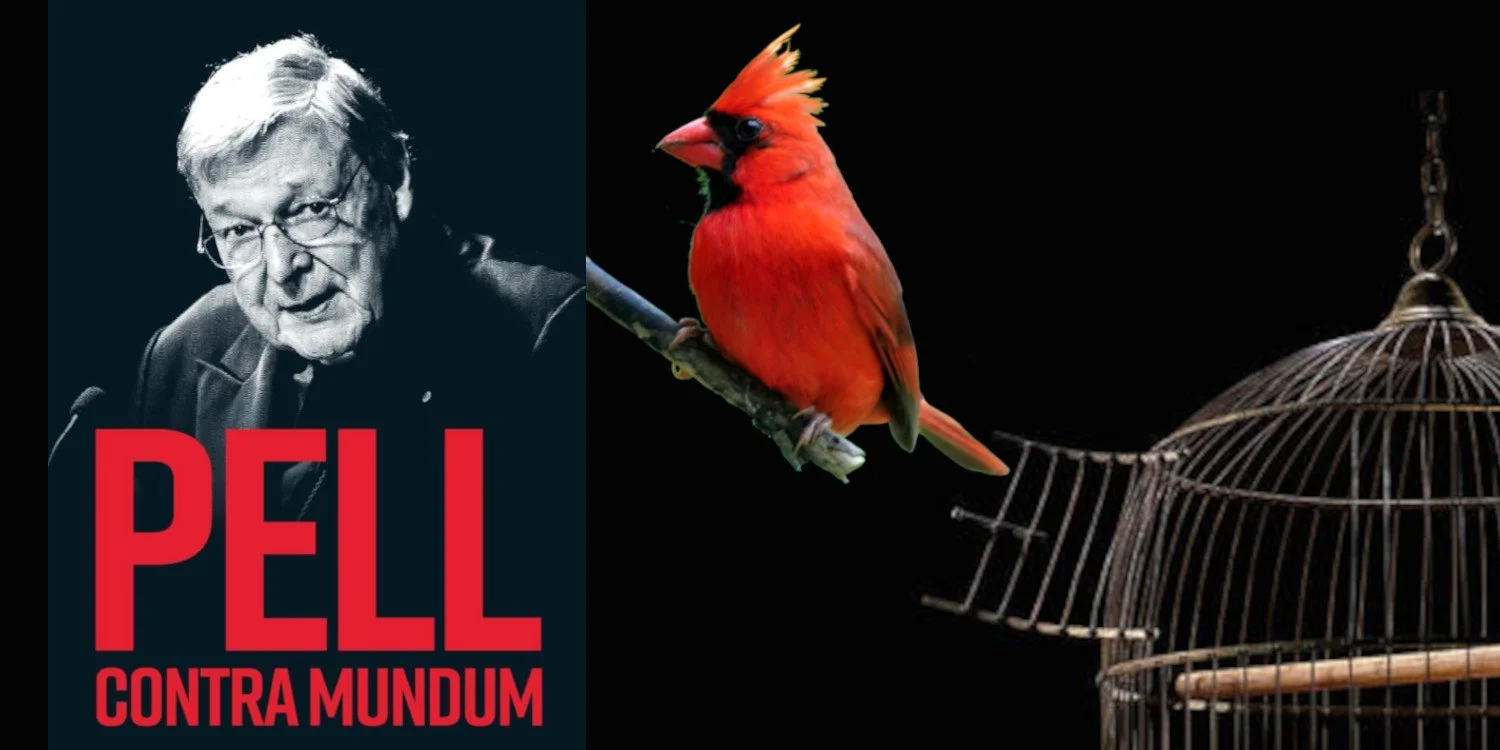
I have come to appreciate the candor and spiritual integrity of prison writing from the ranks of Dietrich Bonhoeffer, Father Walter Ciszek, Father Alfred Delp, and most recently, the late Cardinal George Pell. Writing from prison with very limited opportunities for dialogue and in-depth research means writing almost exclusively from one’s own mind, heart and soul. The three-volume Prison Journal of George Cardinal Pell is a treasure trove of unfiltered candor and spiritual integrity.
While reading his Prison Journal, Volume 2 (in which, for full disclosure, my own writing occupied several pages) Cardinal Pell wrote candidly of his concern for the modern direction of the Church. Among his deepest concerns was the growing possibility of a progressive-driven schism. He cited a September 17, 2019 Catholic Culture entry by Philip Lawler, “Who benefits from all this talk of schism?”
Lawler argued that the prospect of a schism was remote, but became less so during the papacy of Pope Francis and the Synod on Synodality. Francis had spoken calmly about such a prospect saying that he is not frightened by it, something that both Lawler and Pell found to be concerning in and of itself. Cardinal Pell added that The New York Times had been writing about the prospect of a progressive German Catholic schism by “the John Paul and Benedict followers in the United States, the Gospel Catholics.” He observed that Lawler’s diagnosis was correct and pointed out that, “the most aggressive online defenders of Pope Francis realized they cannot engineer radical changes they want without precipitating a split in the Church. So they want orthodox Catholics to break away first, leaving progressives free to enact their own revolutionary agenta.” (Prison Journal Vol. 2, pp 214-215 — emphasis added)
In light of this, it comes as no surprise that progressive bishops are pushing for divisive restrictions on the Traditional Latin Mass and other traditional expressions of the faith, such as kneeling and altar rails. These efforts should come as no surprise to faithful Catholics. Embracing and promoting fidelity with respect for tradition has never been more urgent. Faithful Catholics must never accede to the desired end that progressives seek. Handing the Church over to that agenda would leave “Satan at the Last Supper” while Jesus is removed from the room.
+ + +
Note from Father Gordon MacRae: We hope you will take time to read and share this important post, and along with it a companion post at our Voices from Beyond feature by Aloonsri Paokumhang. Aloonsri is a first-generation American citizen and the daughter of immigrants from the Kingdom of Thailand. She is a convert to our faith, and a most articulate writer about current matters facing the Church. It is Aloonsri whom I had in mind when I wrote that suppression of the Sensus Fidelium, the lived experience of faithful Catholics, can be deeply troubling and spiritually wounding.
You may also like these related posts from Beyond These Stone Walls:
Priests in Crisis: The Catholic University of America Study
My Father’s House Has Many Rooms. Is There a Room for Latin Mass?
Pell Contra Mundum: Cardinal Truth on the Synod
The Once and Future Catholic Church
+ + +
One More Note: Diane Montagna is an American journalist acccredited to the Holy See. She has written for Aleteia, LifeSite News, and L’ Osservatore Romano. Ms. Montagna has compiled a well informed critique published in July 2025 entitled:
EXCLUSIVE: Official Vatican Report Exposes Major Cracks in Foundation of Traditionis Custodes

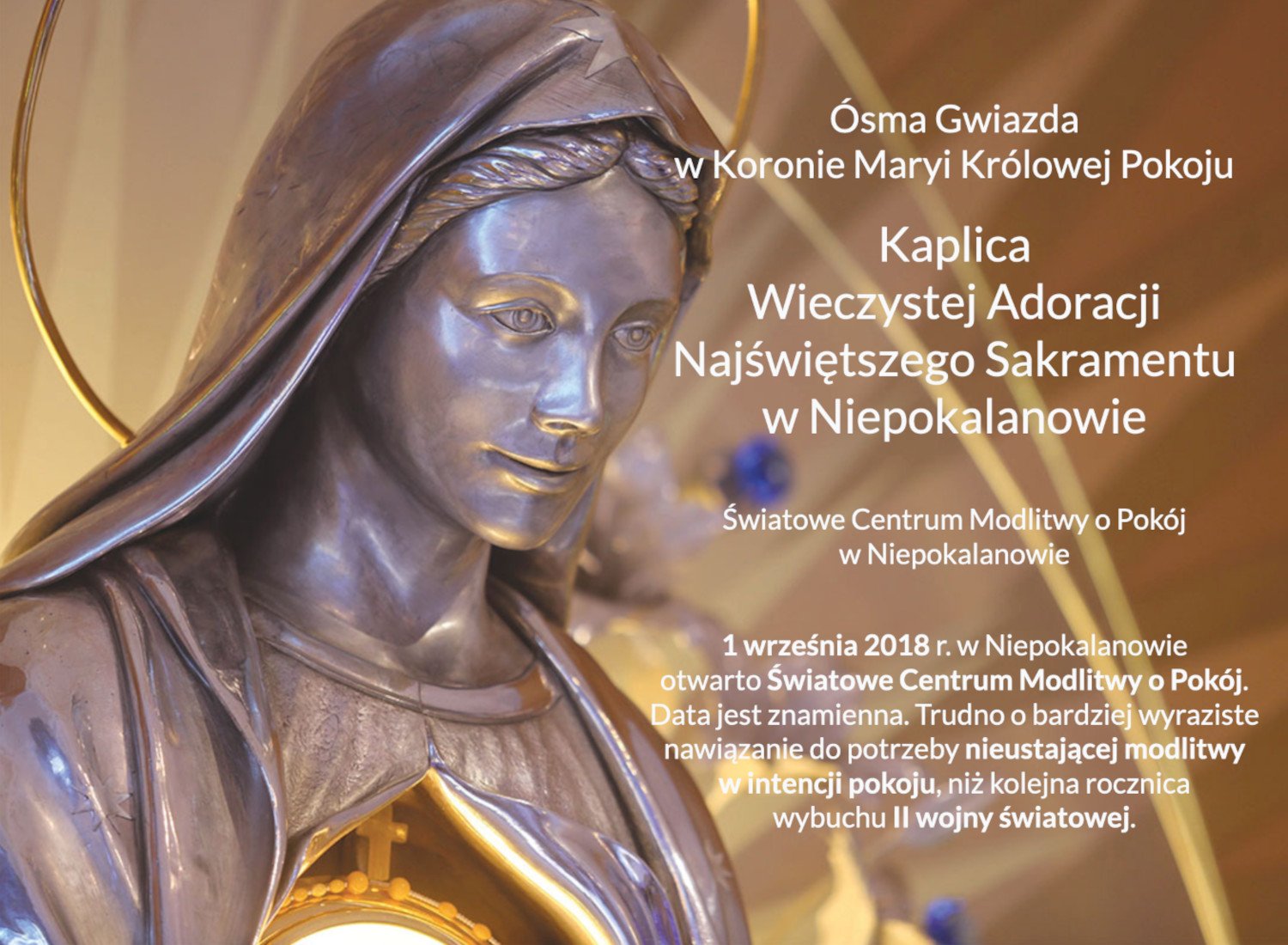

The Eucharistic Adoration Chapel established by Saint Maximilian Kolbe was inaugurated at the outbreak of World War II. It was restored as a Chapel of Adoration in September, 2018, the commemoration of the date that the war began. It is now part of the World Center of Prayer for Peace. The live internet feed of the Adoration Chapel at Niepokalanow — sponsored by EWTN — was established just a few weeks before we discovered it and began to include in at Beyond These Stone Walls. Click “Watch on YouTube” in the lower left corner to see how many people around the world are present there with you. The number appears below the symbol for EWTN.
Click or tap here to proceed to the Adoration Chapel.
The following is a translation from the Polish in the image above: “Eighth Star in the Crown of Mary Queen of Peace” “Chapel of Perpetual Adoration of the Blessed Sacrament at Niepokalanow. World Center of Prayer for Peace.” “On September 1, 2018, the World Center of Prayer for Peace in Niepokalanow was opened. It would be difficult to find a more expressive reference to the need for constant prayer for peace than the anniversary of the outbreak of World War II.”
For the Catholic theology behind this image, visit my post, “The Ark of the Covenant and the Mother of God.”
My Father’s House Has Many Rooms. Is There a Room for Latin Mass?
In Traditionis Custodes, Pope Francis dealt a sharp but not fatal blow to Catholics who treasure the TLM. I hear from many who hope and pray for reconsideration.
In Traditionis Custodes, Pope Francis dealt a sharp but not fatal blow to Catholics who treasure the TLM. I hear from many who hope and pray for reconsideration.
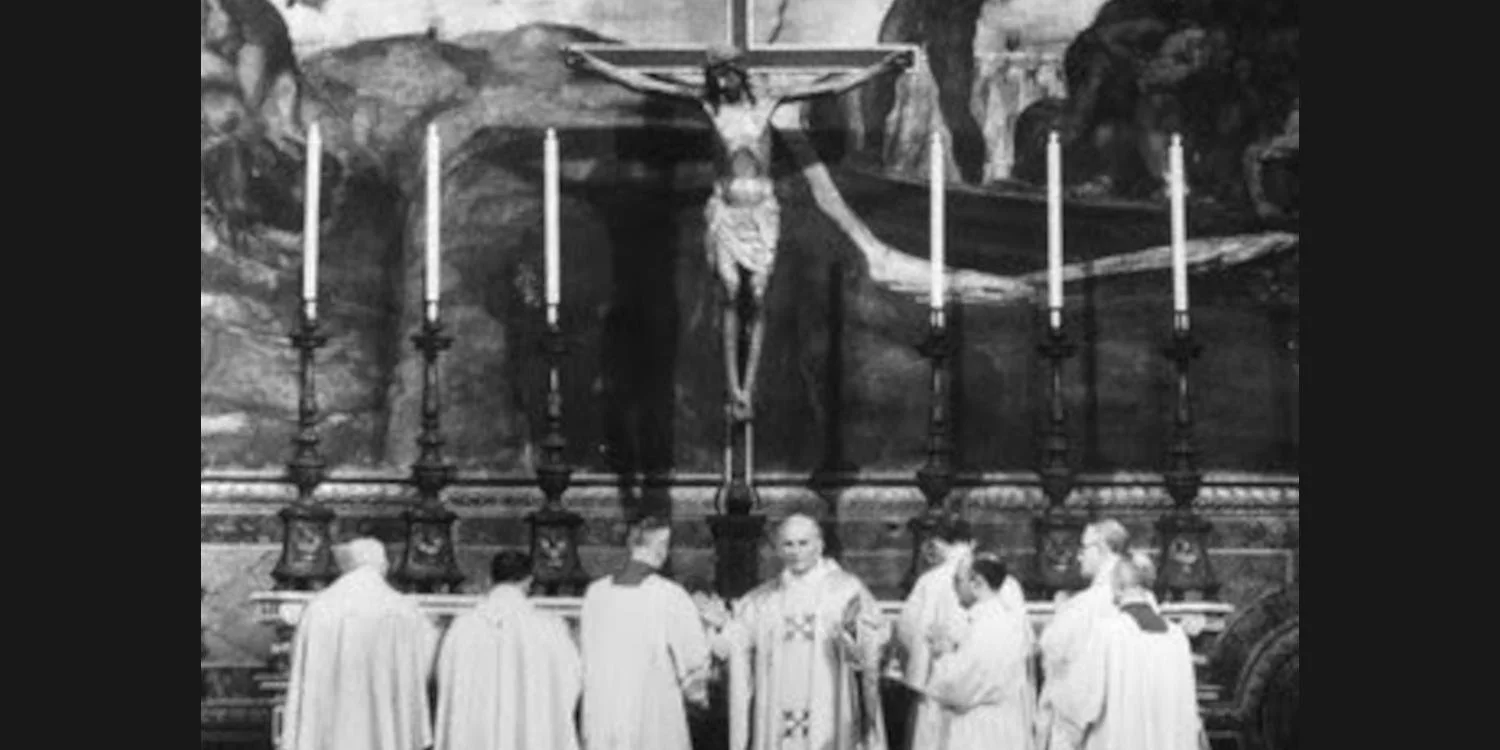
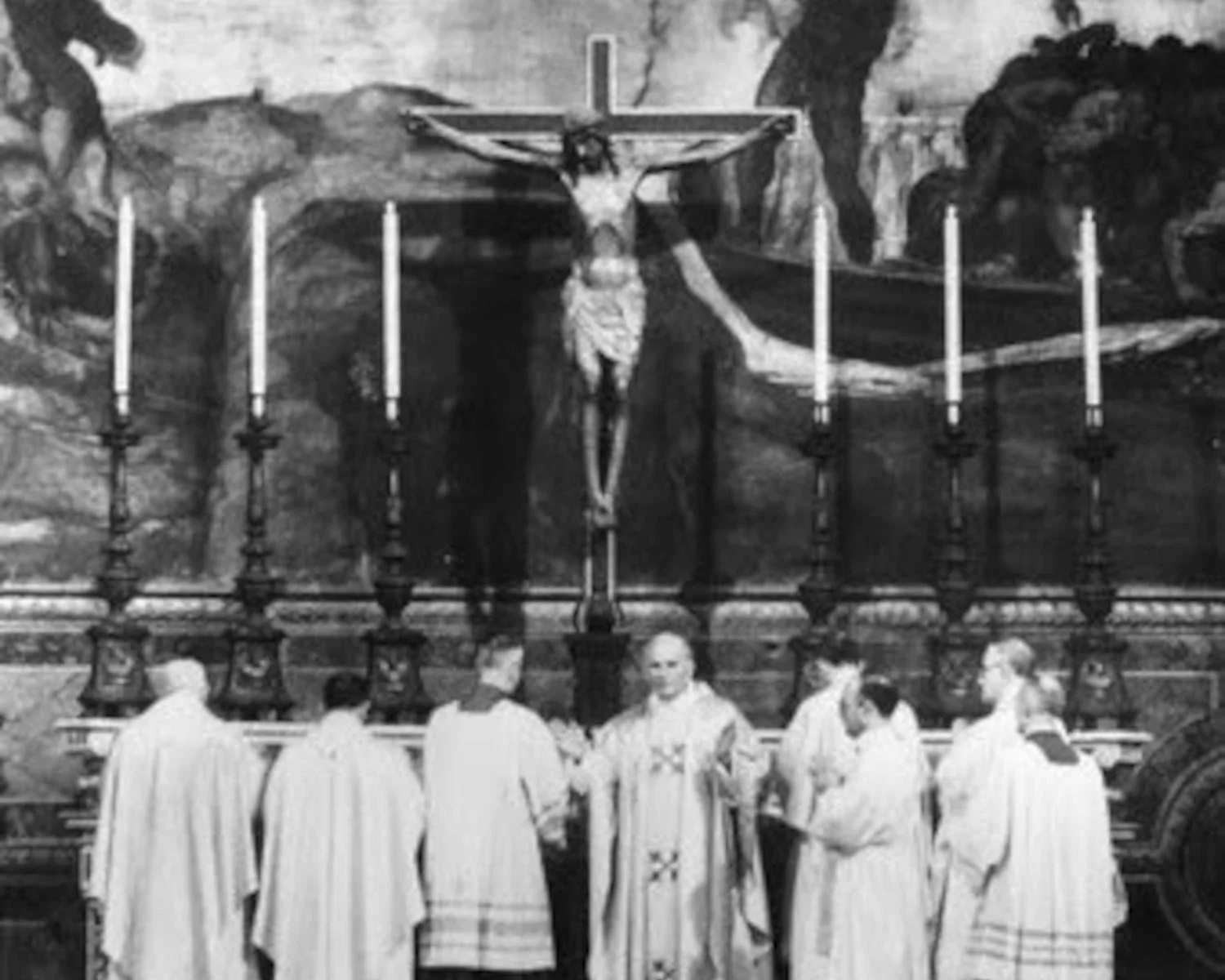
In the photo above His Holiness Pope John Paul II offers Mass in Latin, ad orientem, from the Sistine Chapel.
August 20, 2025 by Father Gordon MacRae
My title for this post is from the Gospel of John, Chapter 14, verse 2, “My Father’s House Has Many Rooms.” It is seen by scholars as a reference to the Jerusalem Temple, hinting of its heavenly sanctuary, the dwelling place of angels and saints who worship in eternal liturgy. The Letter to the Hebrews describes it:
“You have come to Mount Zion, to the City of the Living God in the heavenly Jerusalem, to choirs of angels in festal gathering and the assembly of the firstborn enrolled in heaven, to a judge who is God of all, and to the spirits of the just made perfect, and to Jesus, mediator of a new covenant, and to the sprinkled blood that speaks more graciously than the blood of Abel.”
— Hebrews 12:22-24
The Gospel passage from John 14:2 speaks of God’s House having many chambers. Could one of them accommodate the Latin Mass? In 1947, Pope Pius XII wrote in Mediator Dei, his encyclical on the liturgy, that “the mystery of the most Holy Eucharist which Christ, the High Priest, instituted and commands to be continually renewed, is the culmination and center of the Christian religion.” In the Mass the redemptive action of the death and Resurrection of Jesus is made actually present to the faithful across the centuries. This mystery of faith, the Mysterium Fidei, is found in the liturgy of the entire Church, both East and West.
The Catechism of the Catholic Church (CCC 889) tells us that “By a supernatural sense of faith” the whole People of God, under the guidance of the Church’s Magisterium, “unfailingly adheres to this faith.” To comprehend how the whole people of God is infallible in its sense of the faith — its sensus fidelium — it must be understood that the body of the faithful goes far beyond limits of space and time. The People of God always includes those of all past generations as well as those in the present. Those of the past are in fact the vast majority and it is easier to ascertain what they believed and practiced. It is that belief that marks the sensus fidelium pointing infallibly to truth.
I have never been a devotee of the Traditional Latin Mass. Growing up, I had nothing but the barest and most minimal exposure to our Catholic faith until my later adolescence. Then, in the 1960s, Latin in the Mass had receded and all manner of confusing experimentation took its place. I attended an inner city public high school then, and had begun to attend Mass just as Latin was disappearing. I wondered what all the agony in the garden of faith was about so I registered for Latin among my high school courses.
I took three successive years of Basic, Intermediate, and Advanced Classical Latin then. I developed a fascination with both the ancient language and the Roman Empire that flourished because of it. More than a half century later, I still recall my exposure to Latin. Endless declensions and conjugations still stream through my mind. My friend, Pornchai Moontri once suggested that I know Latin because it was my first language.
A House Divided Cannot Stand
On July 16, 2021, the Feast of Our Lady of Mount Carmel, the late Pope Francis published Traditionis Custodes, a Pastoral Letter that placed immediate and severe restrictions on a Catholic celebration of the Traditional Latin Mass. The wound this inflicted on the spirit of Traditional Catholics, some of the most faithful among us, was also severe. Despite my own lack of experience with the Latin Mass, I wrote, not so much in protest, but in support of those who felt cast adrift. My post was “A House Divided: Cancel Culture and the Latin Mass.”
The restrictions became effective immediately, including a mandate barring newly ordained priests from celebration of the TLM and barring its celebration in any parish church. Bishops were suddenly required to first consult the Holy See before granting any exceptions to the Traditional (Extraordinary) Form of the Mass.
For expressed reasons of “unity,” Pope Francis imposed these restrictions without explanation in open contradiction of a 2014 Motu Proprio of his predecessor, Benedict XVI, who permitted celebration of the Traditional Latin Mass without preconditions and without consent from any bishop. Some of the best early reaction to this new and draconian development came from Father John Zuhlsdorf (Father Z’s Blog) in “First Reactions to Traditionis Custodes.”
His reactions inspired me and many. Father Z’s bottom line was that Catholics with devotion to the TLM should pause, take a deep breath, and adopt a wait-and-see attitude. He wrote,
“Fathers... change nothing, do nothing differently for now. It is not rational to leap around without mapping the mine field we are entering. Keep calm and carry on.
“Lay people... be temperate. Set your faces like flint. When you are on fire, it avails you nothing to run around flapping your arms. Drop and roll and be calm.
“To those of you who have put your heart and goods and hopes into supporting and building the Traditional Latin Mass, thank you. Do not for a moment despair or wonder if what you did was worth the effort, time, cost and suffering. It was worth it. It still is.”
— Father John Zuhlsdorf, July 16, 2021
I found myself cheering inside for Father Z. I am not a rebel priest and neither is he, but I would have been a rebel without a clue had I taken this on. I have never even experienced the TLM. But human nature being what it is, this edict of Pope Francis had the opposite effect from unity. Telling people that they cannot have something drew worldwide attention to it.
So I wrote back then, not so much in defense of the TLM, but in defense of the many people who told me of their grief in having it taken summarily away and without apparent just cause or dialogue. I cannot help but wonder what Pope Francis might have been thinking at Mass just days later as he listened to the First Reading on the Sixteenth Sunday in Ordinary Time on July 18, 2021. Was he at all conscious that Catholics all over the world were hearing the same rebuke from the Prophet Jeremiah that we heard that Sunday?
“Woe to the shepherds who mislead and scatter the flock of my pasture, says the Lord. Therefore, thus says the Lord, the God of Israel, against the shepherds who shepherd my people: You have scattered my sheep and driven them away. You have not cared for them, but... I myself will gather the remnant of my flock from all the lands and bring them back to their meadow... I will appoint shepherds for them who will shepherd them so that they need no longer fear and tremble, and none shall be missing, says the Lord.”
— Jeremiah 23:1-6
A Catholic Unraveling in Germany
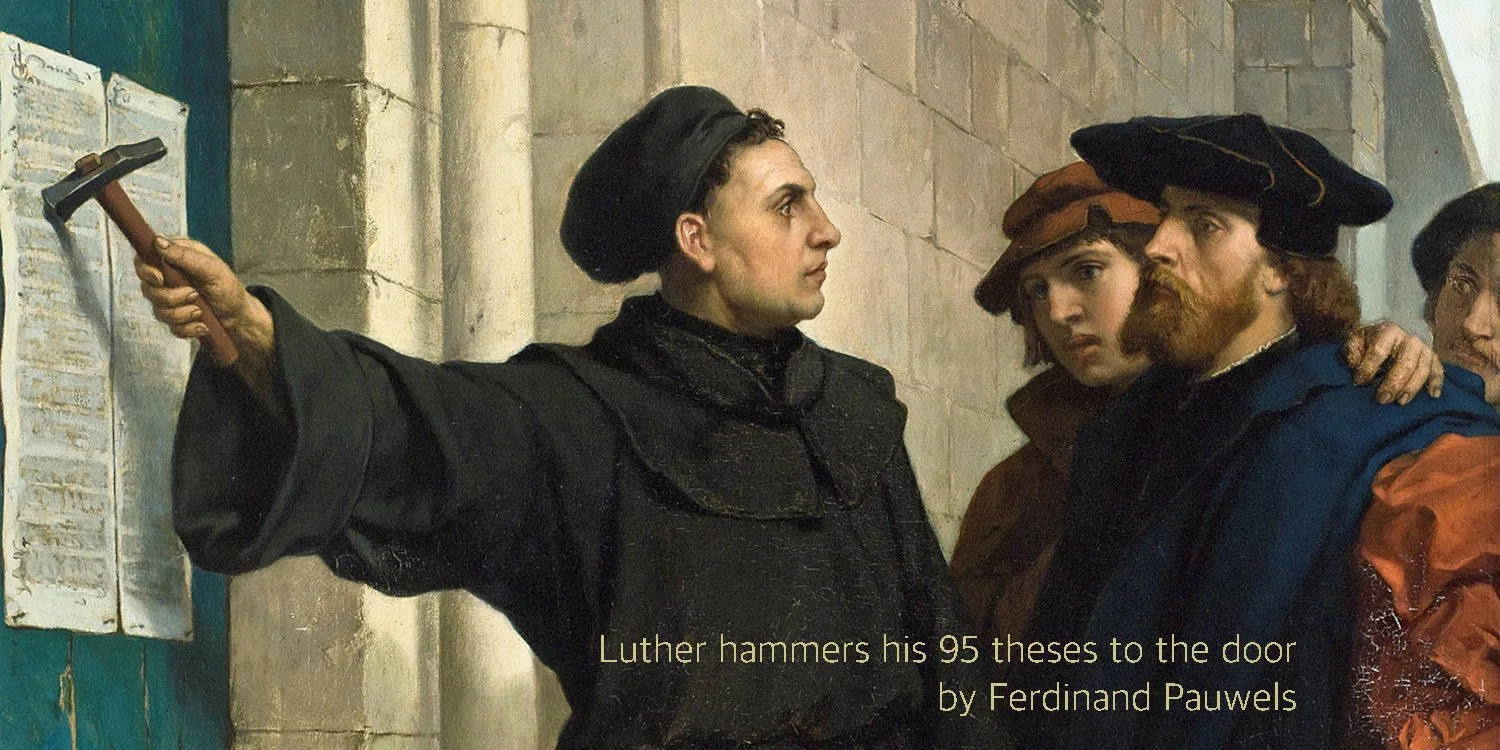
I have been searching for a more panoramic map of the minefield Father Zuhlsdorf suggested that we were entering then, and I think I found some of its rumblings. While reading from Volume Two of the Prison Journal of George Cardinal Pell (which, for full disclosure, included five pages quoting this blog) I came upon his entry for 9 August 2019, the feast of Edith Stein, Saint Teresa Benedicta of the Cross, that we observed this month. I wrote about her once in “Saints and Sacrifices: Maximilian Kolbe and Edith Stein at Auschwitz.”
Edith Stein was German by birth. In his book, Cardinal Pell advised readers to seek her intercession for the Church in Germany. Cardinal Pell quoted Cardinal Gerhard Muller, former Prefect of the Congregation for the Doctrine of the Faith:
“The Catholic Church [in Germany] is going down. Leaders there are not aware of the real problems. [They are] self-centered and concerned primarily with sexual morality, celibacy, and women priests. They don’t speak about God, Jesus Christ, grace, the sacraments, and faith, hope, and love.”
— Prison Journal, Volume 2, p.75
It gets worse. Later in Prison Journal, Volume 2, in an entry dated 16 October 2019, Cardinal Pell wrote candidly about German Catholic fears of the possibility of schism that had been raised there. If allowed to happen, such a break would sweep much of Europe. Cardinal Pell quoted from a Catholic Culture article by Philip Lawler entitled, “Who Benefits from All This Talk of Schism?” (September 19, 2019):
“Lawler argues that Pope Francis has spoken calmly about such a prospect, saying he is not frightened by it, something Lawler believes is frightening in itself.”
— Prison Journal, Volume 2, p. 214
Cardinal Pell wrote of earlier confidence about the unlikelihood of a schism, but acknowledged that “the odds against it have shortened.” He added,
“Not surprisingly, the New York Times has been writing about the prospect of a schism by the John Paul and Benedict followers in the United States, the Gospel Catholics... . I believe Lawler’s diagnosis is correct when he points out that the topic of schism has been raised by the busiest and most aggressive defenders of Pope Francis who recognize that they cannot engineer the radical changes they want without precipitating a split in the Church. So they want orthodox Catholics to break away first, leaving [progressives] free to enact their own revolutionary agenda.”
— Prison Journal, Volume 2, pp. 214-215
It was that final sentence that I vividly recalled and revisited after hearing these new restrictions imposed by Pope Francis on the Traditional Latin Mass. Were we then witnessing the opening salvo of such a manipulated schism? Was there a move under way to antagonize conservative and traditional Catholics into breaking away?
China, Catholics, and the Dalai Lama
I am certain this was not by design, but on the day after this announcement by Pope Francis, the weekend edition of The Wall Street Journal carried a stunning pair of articles. I will summarize their major points:
The first was entitled, “Beijing Targets Tibet for Assimilation” by Liza Lin, Eva Xaio, and Jonathan Cheng. The assimilation referred to is better described as suppression, and it needs a little historical background.
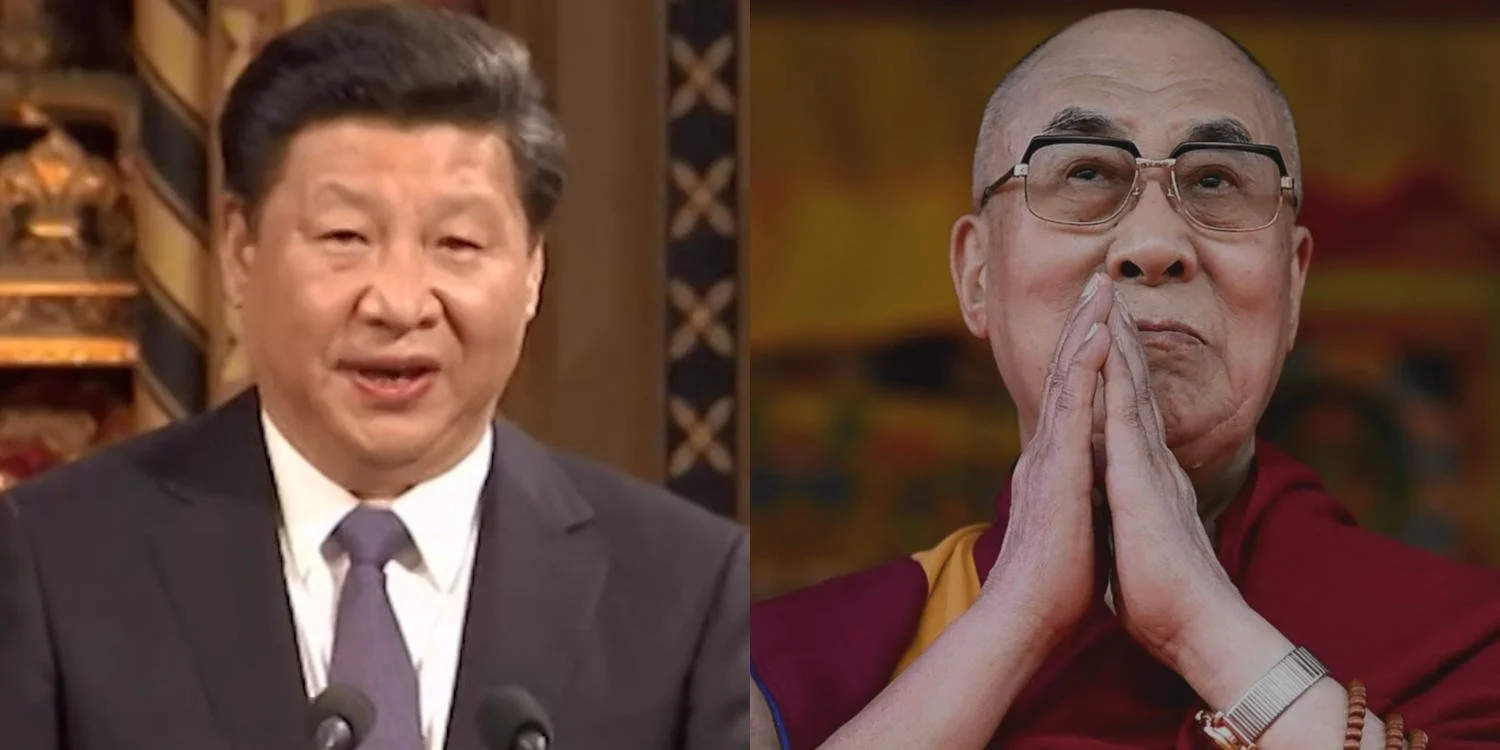
Twelve centuries had passed between the establishment of Tibetan Buddhism in AD 747 and the Chinese Communist Party (CCP) gaining control of China in 1949. By 1950, the CCP came into increasing conflict with Tenzin Gyatso, the 14th Dalai Lama. The Dalai Lama is believed by Buddhists to be a reincarnation of the Buddha. When he dies, his soul is thought to enter the body of a newborn boy, who, after being identified by traditional tests, becomes the new Dalai Lama.
As such, the Dalai Lama is spiritual leader of Tibetan Buddhism and the ex officio ruler of Tibet since the Eighth Century. In 1959, during the Chinese Communist absorption of Tibet (resistance was futile!) the Dalai Lama was forced into exile in India where he has remained since. He received the Nobel Peace Prize in 1989 for leading nonviolent opposition to continued Chinese claims to rule Tibet.
Xi Jinping, President of China and General Secretary of the Chinese Communist Party (CCP), has as his national priority the forging of a single Chinese identity centered on unity and Party loyalty. His agenda placed new restrictions on Tibetan Buddhism and launched an effort to replace traditional Tibetan language with Mandarin Chinese while insisting on courses designed for indoctrination in socialism and the CCP.
The Dalai Lama, in exile in India, will soon turn 90 years of age. His eventual death is expected to trigger a clash with the Chinese government over control of Tibetan Buddhism. One of the major points of Chinese suppression is a CCP claim that it has the right to choose the Dalai Lama’s “reincarnation,” and thus establish full control over the heart of Tibetan religion and identity. In late 2020, President Xi Jinping commanded an effort to make Tibetan Buddhism “compatible with a socialist identity.”
This affront to Tibet’s religious freedom actually had a strange sort of precedent. In 2019, Pope Francis signed a concordat — the tenets of which are still secret — in which he agreed to a Chinese Communist Party demand to select Catholic bishops in the State-approved Chinese Catholic church. This has translated into increased harassment and suppression of the underground Catholic Church for which many have suffered for their loyalty to Rome.
The Threat of Schism
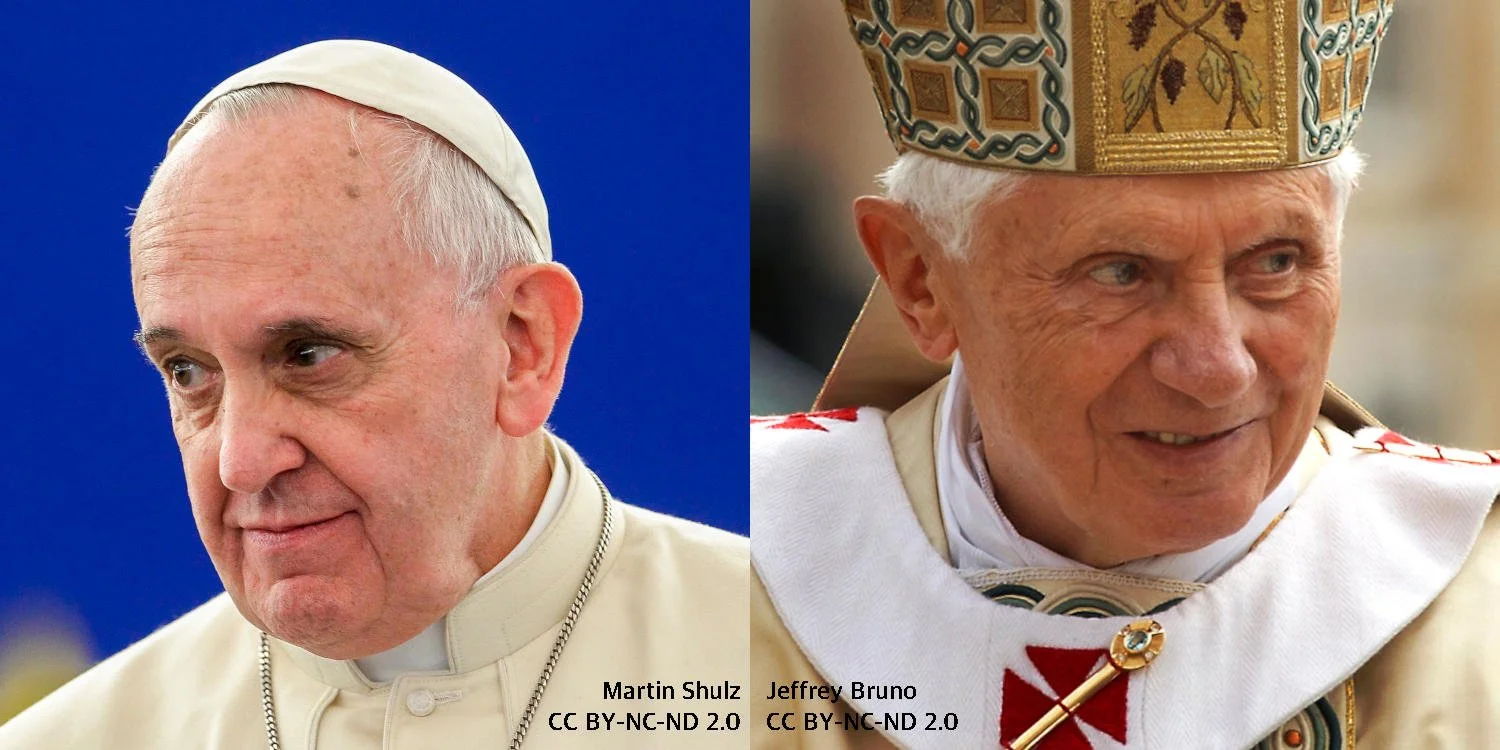
A second major article, this one by Vatican correspondent Francis X. Rocca, appeared on the same day in The Wall Street Journal, again just two days after the announced suppression of the Latin Mass. Its title asked an ominous question: “Is Pope Francis Leading the Church to a Schism?” Pope Francis had used some of the same reasoning and language in restricting the TLM that Xi Jinping used while suppressing Tibetan Buddhism. Pope Francis cited “unity” as his principal reason and goal, but its effect seemed to invite just the opposite.
Two years after Cardinal Pell wrote from his prison cell with dismal foreboding about the state of the Church in Germany, Francis X. Rocca quoted Cardinal Rainer Woelki, Archbishop of Cologne and leader of the conservative minority of German bishops. He warned that the current wave of dissent sweeping Germany could lead to schism and the formation of a German national church. Rocca reported that similar warnings have been echoed by cardinals and bishops of other European countries.
Subsequently, San Francisco Archbishop Salvatore Cordileone asked for prayers for the universal Church and the bishops of Germany “that they step back from this radical rupture.” Schism is more a threat to the Catholic Church than any other because, as Rocca points out, its “core identity is inextricably tied to its global unity under the pope.”
Francis X. Rocca wrote that Pope Francis has played down the concerns of more traditional African bishops who, in the view of many represent the future of the Church’s moral integrity. For a glimpse of the mindset at work in the German church, consider this statement by Joachim Frank, a German journalist who took part in the synod there, and described its work:
“There was this sense of movement, of change, another spirit, another type of church after these boring and very painful years of John Paul II and Benedict XVI.”
In his 26-year papacy, Saint John Paul II is widely considered to have almost single-handedly brought down the Soviet Union and ended European communism. To dismiss his papacy and that of Benedict XVI as "boring and painful" is to break, not just with Catholic tradition, but with reality.
The trending Catholic mindset of Germany and much of Europe should not steer the Barque of Peter and the moral authority and praxis of the Church. In Germany, before the 2019-2021 pandemic, only about nine-percent of Catholics attended Mass on a regular basis. Post-Covid, that is now down to two or three percent. Among African Catholics, regular Mass participation is the world’s highest. By 2050, there will be twice as many practicing Catholics in Africa than in all of Europe.
Throughout Asia, Catholicism is relatively small, but growing. In Thailand, Catholics account for less than one-percent of the population but they leave a large footprint on the culture because of an orthodox commitment to living their faith, often heroically. I was recently informed by an active Catholic in Thailand that many people in his village attend the Buddhist Temple to observe local tradition, and then attend Sunday Mass to observe faith.
Our friend, Pornchai Moontri, told me that in the years he has lived in Thailand, he has heard Masses in Thai, Vietnamese, Lao, Issan, and English, all of them filled to capacity. Few of the Thai, Vietnamese, or Lao converts understand each other, nor can they understand the Mass in any language but their own. “If the Church had kept Latin,” Pornchai recently offered, “this might not happen.” He pointed out rather wisely that in the mobile culture this world has become, an ancient but universal language in the Mass promotes unity instead of detracting from it. It overlooks national identity to establish a Catholic one.
This is not meant to be a critique of Pope Francis. He had his reasons for imposing Traditionis Custodes, but new information suggests that one of them may have been based on erroneous information conveyed to him. Newly emerging information paints another picture, and I hope to present that soon. Meanwhile, please keep the faith. The Body and Blood of Christ become manifest in every Mass. That Communion is the source and summit of all grace.
“Ad Altare Dei”
+ + +
Note from Fr Gordon MacRae: Thank you for reading and sharing this post. Sharing it helps to reach others who might benefit from these pages. You may also like these related posts:
Fr Gordon MacRae in the Prison Journal of George Cardinal Pell
A House Divided: Cancel Culture and the Latin Mass
Behold the Lamb of God Upon the Altar of Mount Moriah
The Vatican Today: Cardinal George Pell’s Last Gift to the Church
The Eucharistic Adoration Chapel established by Saint Maximilian Kolbe was inaugurated at the outbreak of World War II. It was restored as a Chapel of Adoration in September, 2018, the commemoration of the date that the war began. It is now part of the World Center of Prayer for Peace. The live internet feed of the Adoration Chapel at Niepokalanow — sponsored by EWTN — was established just a few weeks before we discovered it and began to include in at Beyond These Stone Walls. Click “Watch on YouTube” in the lower left corner to see how many people around the world are present there with you. The number appears below the symbol for EWTN.
Click or tap here to proceed to the Adoration Chapel.
The following is a translation from the Polish in the image above: “Eighth Star in the Crown of Mary Queen of Peace” “Chapel of Perpetual Adoration of the Blessed Sacrament at Niepokalanow. World Center of Prayer for Peace.” “On September 1, 2018, the World Center of Prayer for Peace in Niepokalanow was opened. It would be difficult to find a more expressive reference to the need for constant prayer for peace than the anniversary of the outbreak of World War II.”
For the Catholic theology behind this image, visit my post, “The Ark of the Covenant and the Mother of God.”

In 2022: Epiphany, Pro-Life Progress, Papal Paradox
If you are burdened by the affairs of Church and State in this age,take a knee and prepare for an epiphany. The Way of the Lord calls forth life and liberty.

If you are burdened by the affairs of Church and State in this age, take a knee and prepare for an epiphany. The Way of the Lord calls forth life and liberty.
January 5, 2022
Instead of yet another failed New Year resolution, I am planning on having another epiphany in 2022. I admit that I have had the same plan at the start of every New Year leading up to this one since about 1994, but my expectation that this will be “the” year of my epiphany is simply what we call “hope.” Despite the struggles all around us, there were little glimmers of that hope in recent years, but the politics of this age are oppressive and heavy. Like most of us who struggle today, my spirit is occupied with many heavy things.
The word, Epiphany comes from the Greek, “epiphaneia” meaning, “appearance” or “manifestation.” When used as a noun, it usually refers to a spiritual enlightenment, an understanding that comes about through a sudden intuitive realization. I once wrote of such an epiphany that was especially popular with Star Trek fans. You need not be one to appreciate it, and it might even surprise you. I wrote it as a Linkedin article entitled, “Gene Roddenberry and Captain Kirk’s Star Trek Epiphany.”
Used in the upper case, however, Epiphany refers to an event: the revelation to the Magi, led by a star to Bethlehem, that Jesus Christ is Savior. It is an event described in the Gospel According to Matthew (2:1-12). In the Eastern Church the event of Epiphany recalls instead the Baptism of Jesus and God’s revelation about Him (Matthew 3:13-17). Epiphany has been observed in the Roman Rite on the Sixth of January since A.D. 194. This year it has been dislodged by its proximity to the Sunday obligation. It marks the last of the Twelve Days of Christmas. I wrote of its history and meaning in “Upon a Midnight Not So Clear, Some Wise Men from the East Appear.”
The world we live in has changed dramatically since the dawn of the Twentieth Century. I was shocked to read recently that the average life span of a man in 1900 was between 35 and 40 years of age. In the decades to follow, despite two world wars and a number of plagues, the average life span has been slowly extending. I wonder if there is a corollary between our longer life span today and our tendency to drift away from God under the pressures of this culture.
In a recent post, I wrote of an event in my life that occurred in March of 1992. In that post, I called it my “Great Comeuppance.” In looking back over the three decades since, I realize that the event, though only a moment in time, had an enormous impact on my life and my priorities for living. The post was life-changing and important — important to me, anyway. I hope you will read it if you missed it. It was “To Christ the King through the Immaculate Heart of Mary.”
If and when you read that post, please read to the end. The 1992 event it describes connects to another chapter in my life decades later. It took me some time to put this together, but that event was an awakening of sorts and that is why I now refer to it as an epiphany. Over the ensuing years, I can see in hindsight how that event had a power that altered many things in my life, including my perception of my cross of unjust imprisonment which commenced just two years later. Those who read that post found the connection between its beginning and its end to be remarkable.

In Support of the Cause of Life
I had been a priest for ten years when the event described in that post took place in the back seat of a car. One of the most evident changes that came as a result was my activism in the Catholic pro-life cause. It was another epiphany, a Great Awakening that many are now seeing despite the narcissistic tendencies of our time.
During all of my seminary training, and in the first ten years of my priesthood, I had little regard for the pro-life cause. I was not antagonistic to it, but it never had a place on my inner radar. I remember blocking dedicated pro-life activists from placing their literature in my parish vestibule because I believed that it had nothing to do with what was happening in the liturgy of the Church. When I look back on that now, I cannot make sense of how I could not have seen the importance of their mission and message. It has everything to do with what is happening in the liturgy of the Church.
When the lights finally came on, I saw the truth stripped of all its politics and self-serving rhetoric about “reproductive rights.” I saw the folly of Roe v. Wade and it struck me like lightning. Our interference in the development of human life was captured in an eye-opening op-ed in The Wall Street Journal entitled “The Obsolete Science behind Roe v. Wade” by Dr. Grazie Pozo Christie, diagnostic radiologist and policy advisor for the Catholic Association.
Dr. Christie lent scientific justification to the conclusion of conscience which my epiphany had set in motion. She pointed out that the development of medical knowledge has reached a heightened awareness since Roe v. Wade was decided in 1973. Ultrasound technology was in its own infancy then.
“Today, three-dimensional ultrasound images have put a human face on the person once dehumanized as a mere clump of cells. Perfectly apparent now, to the justices sitting on today’s court as well as the public, are the liveliness and humanity of babies at 15 weeks of gestation. They have proportions of a newborn. The major organs are formed and functioning, and although the child receives nutrients and oxygen through the mother’s umbilical cord, the baby swallows and even breathes, filling the lungs with amniotic fluid and expelling it. The heart is fully formed, its four chambers working hard with the delicate valves opening and closing.”
— Dr. Grazie Pozo Christie, WSJ.com
No one can read Dr. Christie’s brief article and not also see the great spiritual decline that Roe v. Wade has set in motion in our culture. Several years ago, as a direct result of my own epiphany that opened my eyes to the truth, I wrote of how this decline has blinded us to the horror that Roe v. Wade produced.
That post, though only about five years old now, will seem a bit dated. It analyzed several television series that were most popular among young adults then. In each of these shows, the protection of life was a central theme while in reality abortion became disconnected from our personal and collective conscience.
In Support of Authentic Catholic Identity
As a Catholic priest, even one in the most difficult of trials, I never saw myself as being in rebellion with Rome, and I am not so now. But I am perplexed. Not long ago, I wrote a post entitled, “The Once and Future Catholic Church.” Its intention was to bring hope to faithful Catholics who feel alienated by the trends of today that seem to suppress what were once authentic and deeply held expressions of faith for many. Fidelity to the tenets of our faith, and to the Chair of Peter, is central to both faith and priesthood.
I am not “more Catholic than the Pope,” and do not presume to question him on orthodoxy. But sometimes timing is most important. I cannot help but wonder what was behind Pope Francis using the backdrop of Christmas to further alienate traditional Catholics with new and more divisive restrictions on an expression of faith that many hold dear, the Sacrifice of the Mass in the language that served the Church for two millennia: Latin.
In 1947, after two years of rebuilding following World War II, the Catholic population of the world was between 340 and 380 million. Today it stands at nearly 1.2 billion, and certainly the suppression of the Latin Mass is a concern for only a small percentage. But the largest percentage — upwards of seventy percent — is not concerned with the Mass at all because they are not at all practicing their faith. So why suppress what for centuries was seen as a valid expression of that faith?
In 1947, Pope Pius XII published the 15,000 word encyclical, Mediator Dei, in which he warned against false mysticism, quietism, naturalism, and adherence to exaggerated notions about the liturgy. He opposed using the vernacular in the Mass in place of Latin. In a 1947 radio address, he warned Catholics against “uniformity that seeks to regiment all apostolic works into one kind.”
In January, 1975, well after the Second Vatican Council concluded, the Congregation for Divine Worship sent notice to the world’s bishops that the celebration of the Mass, whether in the vernacular or in Latin, must adhere to the rites set forth in the New Order of Mass authorized by Pope Paul in 1969. Clearly, the point of Rome’s contention was not the use of Latin, but rather the extraordinary form of the Mass.
Today in Germany, a progressive expression of Catholicism has taken hold to the point of being virtually unrecognizable as Catholic. There has been much ink spilled on the necessity and hope of avoiding a liberal-progressive Catholic schism in Europe. I have read that this looming threat weighs heavily upon Pope Francis. I am not a rebel, but I am still perplexed. Despite this looming threat of a progressive schism in Europe, it seems that all the efforts of Pope Francis at suppressing rebellion and promoting conformity are aimed at Traditional Catholics.

A Great Schism v. A Great Awakening
This leaves many priests who care in a state of conflict. We are in solidarity, not only with the authority of the Pope, but also with the thousands of devout Catholics who feel wounded and alienated by this inexplicable suppression. A few priests have privately corrected me saying that Pope Francis has the authority to determine rubrics for the sacrifice of the Mass. Of that, I have no doubt nor do I have a challenge.
This is not about authority, however. It is about the Church’s need for a Chief Shepherd with the heart of a shepherd. Cardinal Joseph Ratzinger, prior to his pontificate taught us that the Holy Spirit does not choose the Pope so much as guides the conclave that makes that choice. Pope Francis began his pontificate with a summons to seek out the alienated along the periphery of the Church, not to create more of them. Where did that go?
There have been other periods of Church history in far worse sin and error pining. What is known as the “Great Schism” in the Western Church began with the contested election of Pope Urban VI in 1378. The cardinal electors, dismayed by his erratic behavior, withdrew their obedience and declared Urban’s election invalid because it was made under the duress of rioting in Rome. They then elected a new pope, Clement VII. Urban retaliated by excommunicating Clement and his followers and by creating a college of cardinals of his own. Now there were two popes.
Then Clement moved to Avignon under the protection of the King of France. This elevated the schism to a frenzy of political alliance determined by the political preferences of the secular rulers concerned. It was impossible to distinguish between the Church in the modern world and the modern world in the Church. During the half-century the schism lasted, a number of solutions were proposed including the resignations of both popes, but both refused. In 1409, Cardinals from both sides held a convocation at Pisa only to elect yet a third pope in contention with the other two.
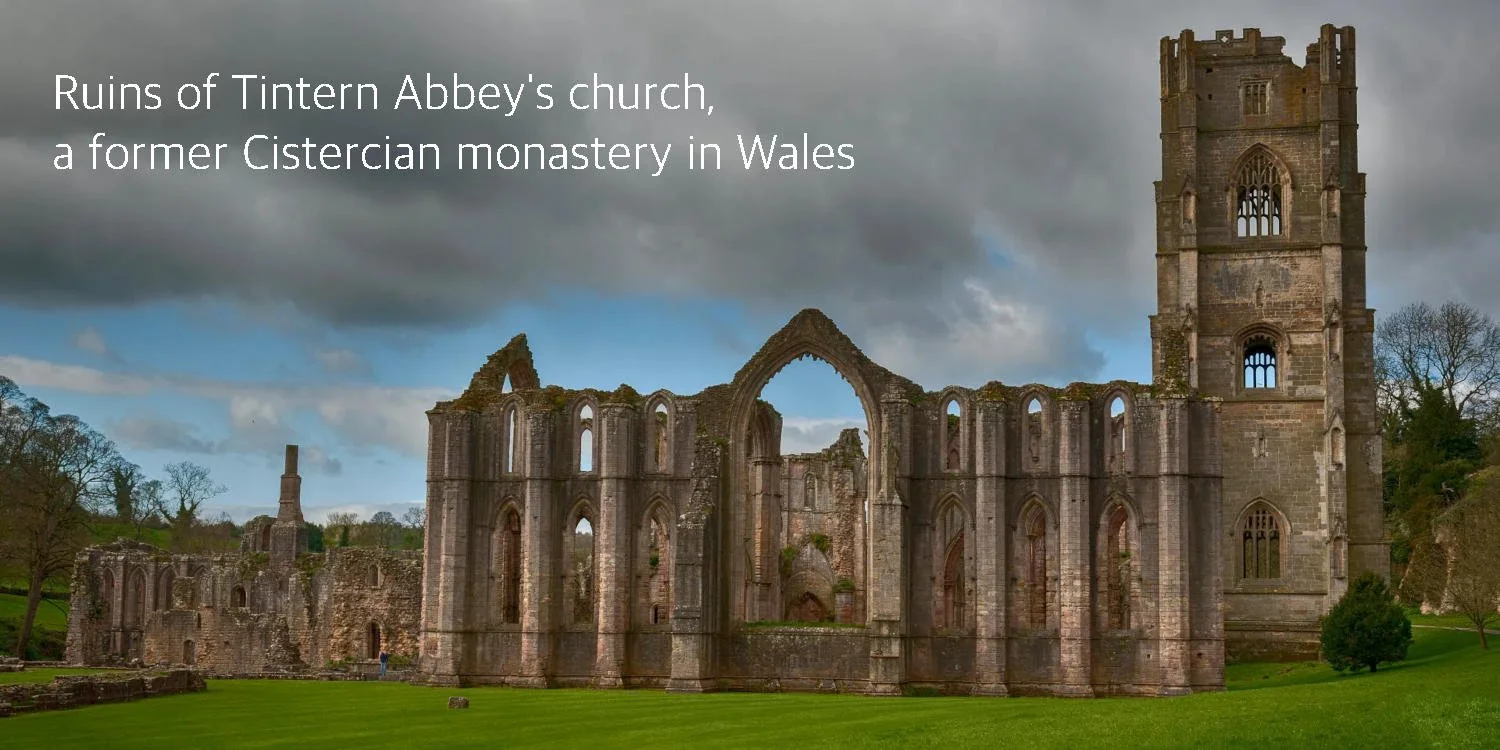
Finally, the Council of Constance (1414-18) resulted in the resignation or deposition of the three contending popes and the election of Pope Martin V — who reigned from 1417 to 1431 — receiving universal recognition. The scandal of the schism gave temporary impetus to a conciliar theory of church government based on consensus regarding the politics of the day. This intensified calls for reform that eventually led to the Protestant Reformation.
What does all this have to do with my hoped-for epiphany in 2022? It is pointless to allow the politics of our time to stand between us and the source and summit of faith — the true Presence of Christ in our midst. We have just passed through yet another Christmas season of alienation between opposing political factions, and it sometimes appears that governance in the Church embraces one faction over another.
When Christ returns will He find faith on Earth? The answer to that will have a lot more to do with our individual and collective epiphany than our politics.
+ + +
Announcements:
This post will be placed in our “Catholic Spiritual Life” and “Catholic Pro-Life” Categories in the BTSW Public Library. Please visit there for past titles of interest. We also invite you to visit our “Voices from Beyond” page for the latest addition.
You may be interested in reading and sharing some of the following titles linked in this week’s post:
Gene Roddenberry and Captain Kirk’s Star Trek Epiphany
Upon a Midnight Not So Clear, Some Wise Men from the East Appear