“There are few authentic prophetic voices among us, guiding truth-seekers along the right path. Among them is Fr. Gordon MacRae, a mighty voice in the prison tradition of John the Baptist, Maximilian Kolbe, Alfred Delp, SJ, and Dietrich Bonhoeffer.”
— Deacon David Jones
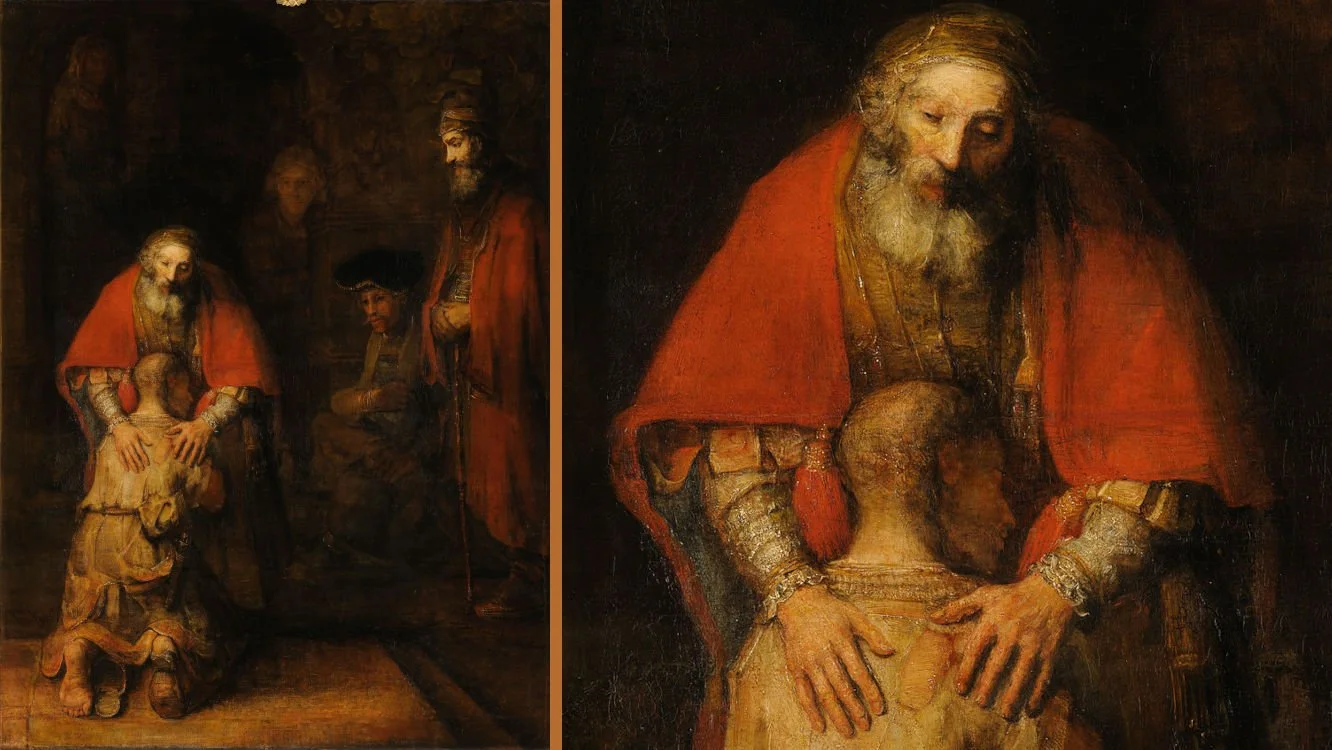
The Compassion of God: The Parable of the Prodigal Son
Saint Luke proclaims the Parable of the Prodigal Son as the Gospel for Saturday of the Second Week of Lent. Is there any sin that is beyond the compassion of God?
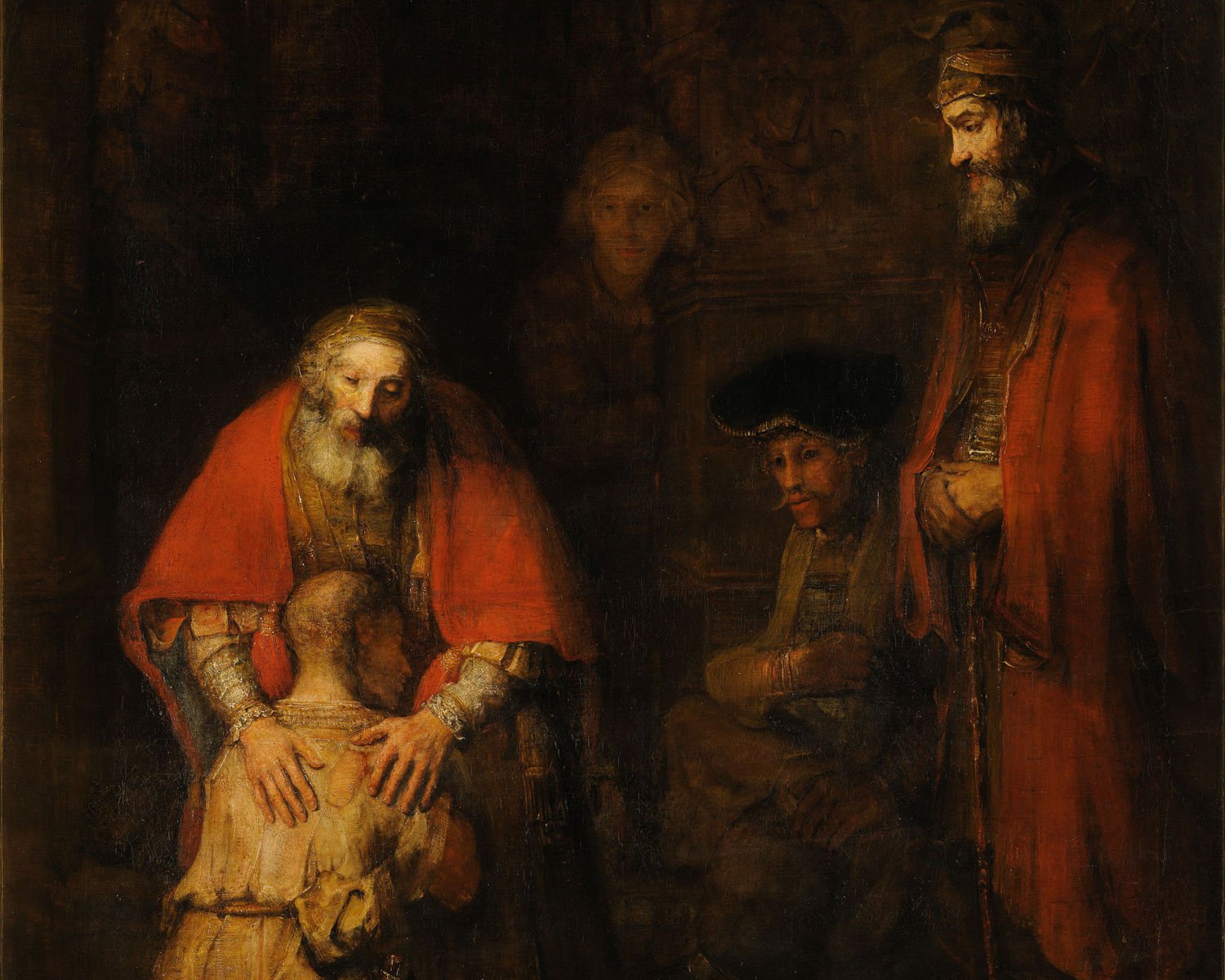
Saint Luke proclaims the Parable of the Prodigal Son as the Gospel for Saturday of the Second Week of Lent. Is there any sin that is beyond the compassion of God?
March 4, 2026 by Father Gordon MacRae
“Ecclesiastes calls you the All-Powerful; Maccabees calls you the Creator; the Epistle to the Ephesians calls you Liberty; Baruch calls you Immensity; the Psalms call you Wisdom and Truth; John calls you Light; the Book of Kings calls you Lord; Exodus calls you Providence; Leviticus, Sanctity; Esdras, Justice; Genesis calls you God; man calls you Father; Solomon calls you Compassion, and that is the most beautiful of all your names.”
— Bishop Bienvenu in Victor Hugo’s Les Misérables, 1887
During Lent a few years back, I wrote “A U.S. Marine Who Showed Me What to Give Up for Lent.” Among the multiple characters appearing in that post was my friend, Martin. At the time I wrote it, I had been living in a hellish environment in this prison. My dismay at living there grew deeper on the day Martin showed up because I knew he was going to be subjected to cruelty and ridicule, and I knew that I would have to intervene somehow.
Martin was well into his eighties when he was sent to prison for the first time in his life. He was missing a leg, a fact which confined him to a wheelchair. Because of prison overcrowding, he was living out in the open in an overflow bunk in a large prison dayroom where nearly a hundred bored and lost young men raised hell day and night. One night shortly after Martin arrived, one or two of those dumbasses thought it would be cool to take his wheelchair while he was asleep and put it in the shower with the water running. Martin’s books, letters, and other papers tucked into pockets in the chair were ruined.
But that was the least of his problems that day. When he awoke that Saturday morning, when his chair was nowhere in sight, Martin sat on the edge of his bunk wondering how he would get to the lavatory. A small group of smirking young prisoners skulked like hyenas from a distance to watch the show. This is a game prisoners play with the weak or vulnerable. They place bets to see how long it would take to get someone like Martin to “check in” to protective custody.
I stepped out of my cell that morning, cup of instant coffee in hand, and spotted Martin from a distance sitting on his bunk looking worried. A quick scan of the room told me what happened. So I went in search of his chair, found it in the shower, and brought it to him. I dried it off and took him to the bathroom.
Then I brought Martin some coffee and sat with him for awhile, something that became a daily event in the months to come. I learned that Martin is a Marine who served in Korea. He long ago had given up giving up and would never cave in to the antics of thugs.
I called a couple of them over one day and introduced them to Martin. Then I put them in charge of guarding his chair at night, not letting on that I knew they were the ones who took it in the first place. Longing for a sense of purpose even more than they sought to entertain themselves, they stepped up admirably. I came back from work a few times to see one or two of them, having now absconded with MY chair, sitting and talking with Martin. His life got a little better. So did theirs. So did mine. Martin is gone now, having been paroled to a nursing home for veterans. But one hard truth remains engraved upon my brain. Prison is no country for old men — not even old Marines.
I had Martin in mind when I again unwittingly became the priest who kicked the hornet’s nest a few years ago. I stumbled upon FOX News on the evening of March 8, 2019 just in time to hear EWTN’s Raymond Arroyo in an angry rant about the thoroughly disgraced former cardinal Theodore McCarrick, then age 90 and the first cardinal in a century to face the penalty of dismissal from the clerical state. “I don’t care if he’s 90” declared Mr. Arroyo. “He ought to be in jail.”
I have long respected Raymond Arroyo, but I was shocked by this and lapsed into a rant of my own. I called a friend and vented, and asked for help to post my own festering rant on social media about what I understood to be a lack of compassion for Theodore McCarrick. “Is mercilessness to be the face of the new Catholic Church?” I asked. The sins at hand were McCarrick’s, but were not his alone. He was known not only for his sins of the flesh, but even more so for his ability to raise money. Lots of money. And the eclessial benefactors of his largesse became complicit in his sin.
Over the next three days, I was roundly beaten up, on LinkedIn especially, by Catholics who agreed entirely with Raymond Arroyo on this. I had grossly underestimated the sense of betrayal and anger that American Catholics felt toward McCarrick, who died before any evident sign of remorse or repentance. But, to quote the late Pope Francis, “Who was I to judge?” I also overerestimated the capacity of some Catholics for compassion. Some of those who argued against me wrote that mercy requires repentance and there hadn’t been any. That is true. For God’s justice to be tempered with God’s mercy requires repentance.
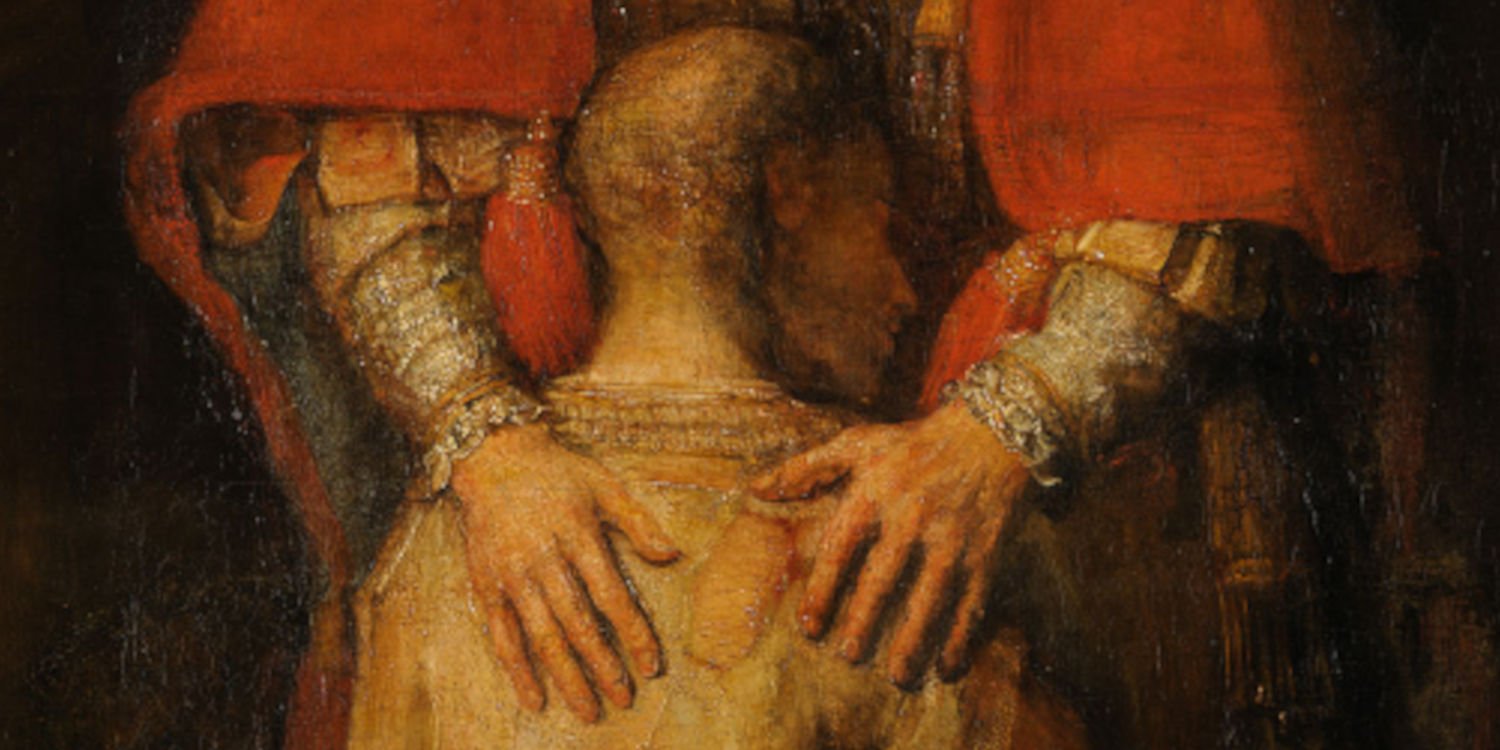
The Parable of the Prodigal Son
But compassion is different from mercy. And as Bishop Charles-François-Bienvenu Myriel points out in the moving quote from Victor Hugo’s Les Misérables atop this post, among all the names of God, “Compassion is the most beautiful.”
Compassion from us does not require repentance from those who trespass against us. It requires only humility, from us. It is the capacity that the Gospel of Luke presents as the most challenging portent of Jesus “The measure with which you measure will be measured out to you” (Luke 6:38).
Like so much of Sacred Scripture, the Parable of the Prodigal Son (Luke 15:11-32) is a story told with multiple levels of meaning. The first and most obvious is the story on its surface. Tax collectors and sinners were gathering around Jesus, and the Pharisees and scribes grumbled. The Pharisees were a loosely knit collection of groups within Judaism that came to prominence at the time of the Maccabean revolt against Hellenist invaders around 167 BC. The Pharisees were only numbered about 6,000 during the Earthly time of Jesus. They wanted Israel to be a theocracy, a religiously oriented society governed by a strict observance of the law.
Some of the scribes were numbered among the other grumblers against Jesus who triggered the Parable of the Prodigal Son and insisted on strict observance of the law. They were antagonistic to Jesus, and in the end these Pharisees and scribes together plotted with the chief priests for his betrayal and arrest.
On its face, the famous parable is a clash between mercy and compassion. The original listeners, the Pharisees and scribes, would have found quite familiar the story of a younger brother triumphing over the goals and objectives of an older brother. The parable has echoes of Esau and Jacob (Genesis 25:27-34) and Joseph and his brothers (Genesis 37:1-4). In the Parable of the Prodigal Son, Jesus cleverly reverses the triumph of the younger brother to portray the younger son as a dismal failure who abandons Judaism to adopt Gentile ways.
The most stinging of his offenses, to the ears of the Pharisees, was the fact that he was reduced to feeding the pigs for a Gentile farmer. Earlier in Luke’s Gospel, pigs take on another symbolism far beyond the ancient Mosaic law that holds them as unclean. In Luke (8:26-39) Jesus restores a demented and possessed Gentile to the human community. By casting the evil spirits out of the man and into a herd of pigs that then drive themselves into the sea, Jesus reveals himself as having authority not only over Judaism but also over pagan religion, demonic forces, and Roman rule, which is symbolized by the pigs. In the parable at hand, the younger son becomes a servant to the pigs, the lowest one could ever descend from the Law of Moses.
In the end of the Parable, the younger son comes to his senses and attempts a return to his Father who welcomes him with full restoration of the sonship he abandoned. The Parable directly confronts a position of the Pharisees: that there are sins that are beyond the capacity of even God to forgive.
Life After Death
There are signs that the leaders of our Church now dabble in this same distortion that there are sins that God should not forgive, and even if He does, the Church will not. This is heresy, and it is a heresy that I described in “Synodality Blues: Pope Francis in a Time of Heresy.” (But the heresy may not be what you think it is.)
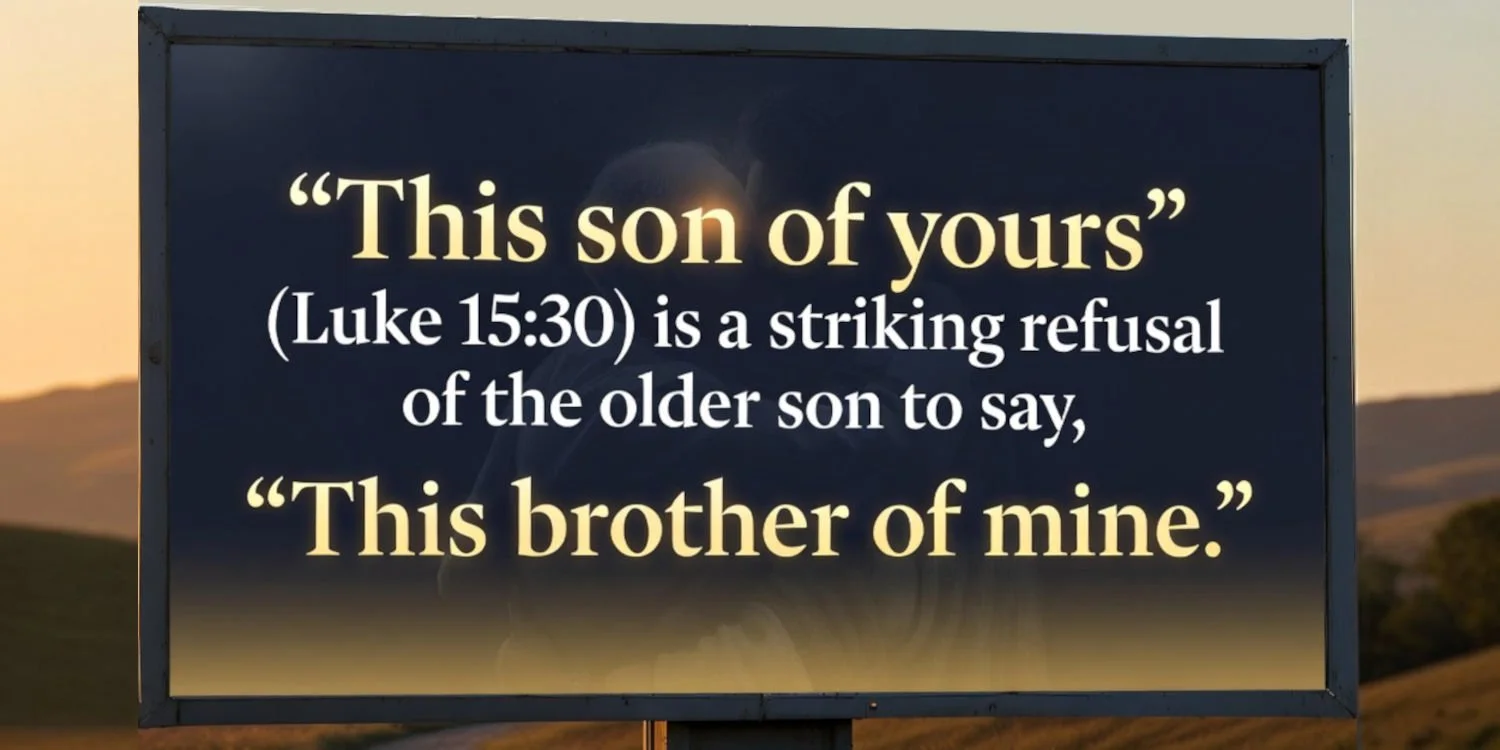
It is expressed in striking clarity in the second part of the Parable in the reaction of the Prodigal Son’s older brother. The triumph of a younger son over his older brother is seen in the Hebrew Scriptures in the stories of Esau and Jacob, and Joseph and his brothers. In the parable at hand it becomes not the triumph of the younger but the failure of the older. Once the Father’s mercy had been fulfilled in the Parable, the older son refused to acknowledge his return as his brother. “This son of yours” (Luke 15:30) is a striking refusal of the older son to say, “This brother of mine.”
Though the Father’s mercy has been fulfilled, the older son’s compassion has failed. The great challenge of this parable is the fact that it is left open-ended and without a resolution. It is left with the older son — the one who according to the law alone has always been faithful — standing outside the Father’s house with the Father trying to convince him to enter the banquet feast. The younger son is made righteous by grace and mercy while the older son is revealed as self-righteous. I wrote of this aspect of the parable in another post, “Pope Francis Had a Challenge for the Prodigal Son’s Older Brother.”
At another level, this Parable narrates to its original listeners — the Pharisees and scribes — the account of Israel’s history that they fear most. It is an allegory about what happened after the reign of King Solomon — the one who called God “Compassion.” Israel divided into Northern and Southern kingdoms, living as two brothers with one in exile. Then in the Eighth Century BC the Assyrians carried the Northern Tribes of Israel into “a far country” — just like the younger son in the parable — where they abandoned God and worshipped idols. It was a sin that the Prophets called “harlotry” (Jeremiah 3:6 and Hosea 4:15).
The Cardinal McCarrick story has made this ever more complicated. Please do not confuse my compassion as excusing him. As Cardinal McCarrick, he was one of the chief proponents of the Dallas Charter that cast priests into the desert as scapegoats, in many cases — and I am one of them — guilty only for being accused. It is not easy to hold onto any sense of compassion for him, but there are a lot of things that my conscience says I must do that are not easy.
I cannot speak to the Church’s application of mercy. There does not appear to be any justice as there does not appear to be much in the way of McCarrick’s public repentance as an acknowledgment of his need for mercy. I can only speak to compassion — my own and that of others. I fear that it is becoming an endangered species in our Church as we circle the wagons to declare who is inside and outside the house.
Let’s face this other scandal head-on. Stop wishing old men into prison. Some of us confuse righteous with self-righteous. If mercy fails, we are doomed in the hereafter. But if compassion fails, we are doomed in the here and now.

+ + +
Note from Father Gordon MacRae: Don’t be like that older brother. Please share this post and follow us on X.
You may also like these related posts from Beyond These Stone Walls
Pope Francis Has a Challenge for the Prodigal Son’s Older Brother
Les Miserables: The Bishop and the Redemption of Jean Valjean
Synodality Blues: Pope Francis in a time of Heresy
Cardinal Theodore McCarrick and the Homosexual Matrix
A Note About the Rembrandt Masterpiece Atop This Post:
One of the most inspiring artistic renderings of the Return of the Prodigal Son from Luke 15 is Rembrandt’s masterful oil painting, created between 1661 and 1669. Housed in the Hermitage Museum in Saint Petersburg, it captures the parable’s profound themes of repentance, forgiveness, and unconditional love through a deeply emotional scene: the ragged son kneeling in humility before his compassionate father, whose tender embrace symbolizes mercy and homecoming. The composition’s use of light and shadow, along with subtle psychological details — like the father’s hands evoking both strength and gentleness — creates a timeless sense of spiritual solace and human sympathy. Art historians praise it as a pinnacle of Baroque art, with some calling it one of the greatest paintings ever, serving as a spiritual testament to redemption that resonates across centuries.

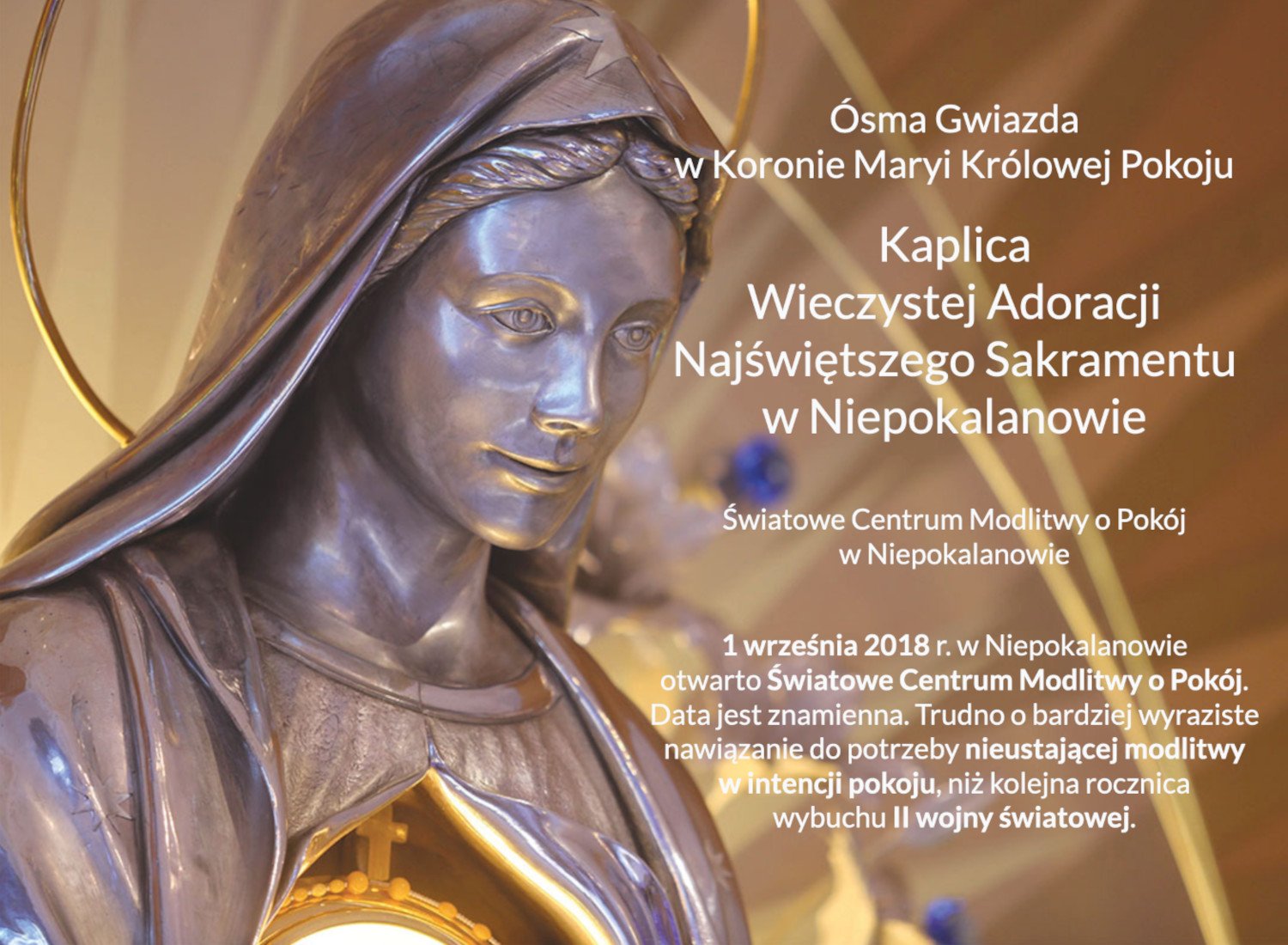

The Eucharistic Adoration Chapel established by Saint Maximilian Kolbe was inaugurated at the outbreak of World War II. It was restored as a Chapel of Adoration in September, 2018, the commemoration of the date that the war began. It is now part of the World Center of Prayer for Peace. The live internet feed of the Adoration Chapel at Niepokalanow — sponsored by EWTN — was established just a few weeks before we discovered it and began to include in at Beyond These Stone Walls. Click “Watch on YouTube” in the lower left corner to see how many people around the world are present there with you. The number appears below the symbol for EWTN.
Click or tap here to proceed to the Adoration Chapel.
The following is a translation from the Polish in the image above: “Eighth Star in the Crown of Mary Queen of Peace” “Chapel of Perpetual Adoration of the Blessed Sacrament at Niepokalanow. World Center of Prayer for Peace.” “On September 1, 2018, the World Center of Prayer for Peace in Niepokalanow was opened. It would be difficult to find a more expressive reference to the need for constant prayer for peace than the anniversary of the outbreak of World War II.”
For the Catholic theology behind this image, visit my post, “The Ark of the Covenant and the Mother of God.”