“There are few authentic prophetic voices among us, guiding truth-seekers along the right path. Among them is Fr. Gordon MacRae, a mighty voice in the prison tradition of John the Baptist, Maximilian Kolbe, Alfred Delp, SJ, and Dietrich Bonhoeffer.”
— Deacon David Jones
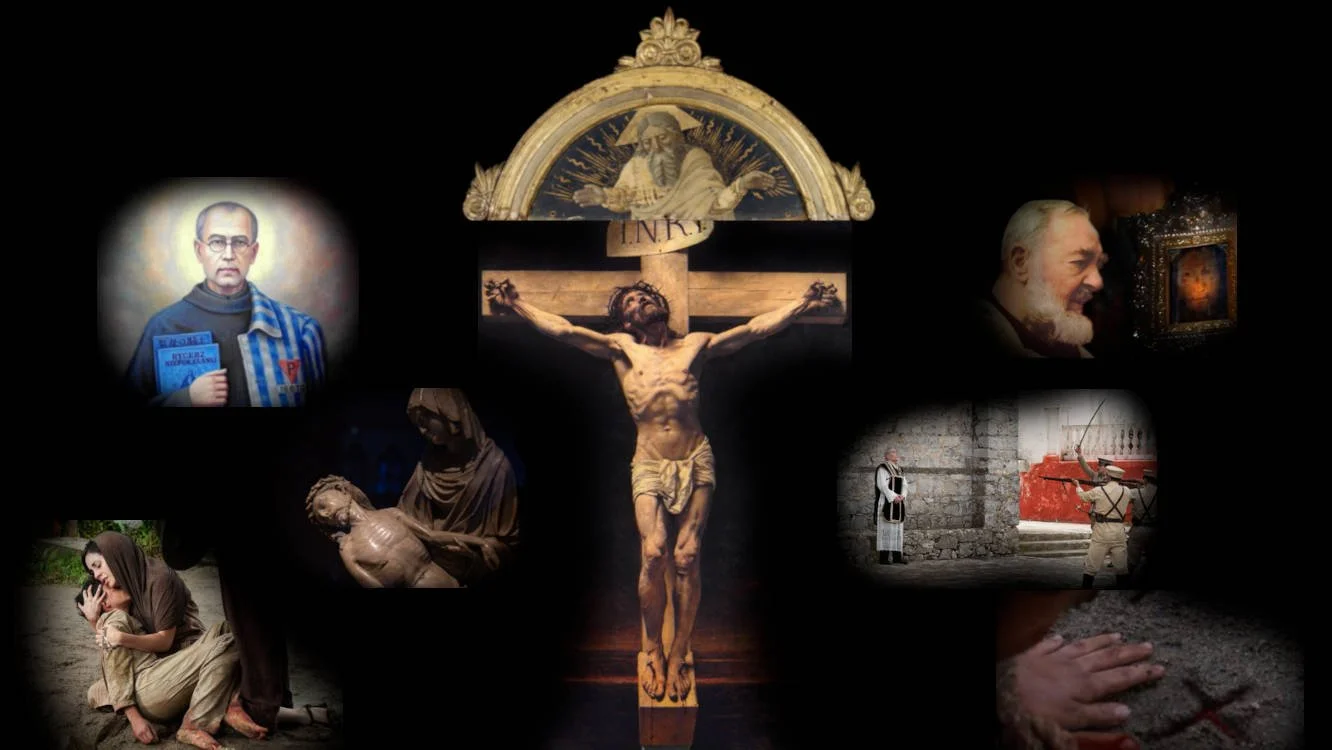
The Darkness of the Cross Enlightened on the Road to Emmaus
At Gethsemane Jesus of Nazareth agreed to bear the Cross to his own Crucifixion so that following him to Heaven’s Gate would not be a burden of impossibility for us.
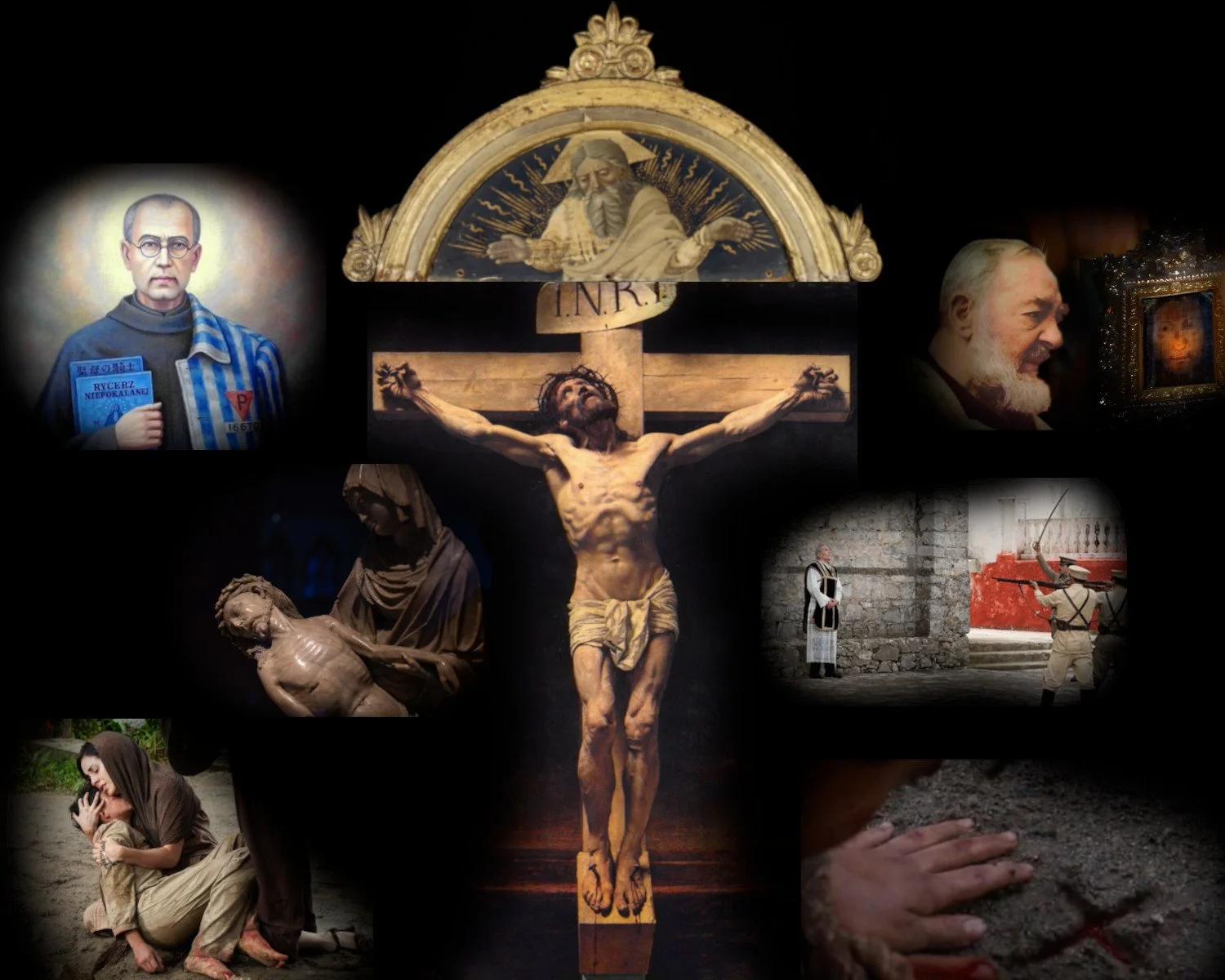
At Gethsemane Jesus of Nazareth agreed to bear the Cross to his own Crucifixion so that following him to Heaven’s Gate would not be a burden of impossibility for us.
Holy Week 2026 by Father Gordon MacRae
In all of human history, no method of execution has been devised more heinously, or delivered with more cruelty than crucifixion. In the Old Testament — no stranger to the cruel acts of men — crucifixion did not exist. It was first introduced to human history in the Sixth Century BC by the Persians, the ancestral empire of present-day Iran. I recently wrote of Iran and its place in history in “Iran, by Another Name, Was Once the Savior of Israel.”
My visual introduction to crucifixion was not so much biblical, but cinematic. Over many years I had pondered in depth its biblical presentation, but it was only when I watched the 2004 film, The Passion of the Christ directed by Mel Gibson, that I experienced and absorbed its visual impact. The brutality of the film was criticized for its excessive violence, but there was no such thing as a “gentle” crucifixion.
The Passion of the Christ contains all the elements ascribed to the event in the four Gospel accounts of the Crucifixion of Jesus in Sacred Scripture. I have read and studied those accounts many times, but I could watch that film only once and never again. It left me in a state of profound sorrow. That sorrow caused me to rethink some of the peripheral, but mysterious events that Sacred Scripture lends to the Crucifixion scene. One of them is the following excerpt from Psalm 22 attributed to King David. He never experienced crucifixion, but in Psalm 22 he wrote of it in the first person and in vivid prose 1,000 years before Jesus of Nazareth experienced it:
“My God, my God, why have you forsaken me? Why are you so far from helping me, from the words of my cry?
“O my God, I cry out by day, but you answer not, and by night, but I find no rest.
“Yet you are holy, enthroned upon the praises of Israel. In you our fathers trusted; they trusted and you delivered them. To you they cried and they were saved. In you they trusted, and were not disappointed.
“But I am worm and no man; scorned by men and despised by the people. All who see me scoff at me. They mock me with parted lips; they wag their heads. ‘He trusted in the Lord, let him deliver him. Let him rescue him if he delights in him.’
“I am poured out like water, and all my bones are wracked; my heart is like wax, it is melted within my breast. My strength is dried up like a potsherd, and my tongue cleaves to my jaws. You have laid me in the dust of death.
“Indeed, many dogs surround me; a pack of evildoers closes in upon me. They have pierced my hands and my feet. I can count all my bones; they stare and gloat over me. They divide my garments amongst them. For my clothing they cast lots.”
— Excerpted from Psalm 22, a Psalm of King David, circa 1000 BC
Most observant Jews would likely have recognized “My God, my God, why have you forsaken me?” as the opening line of Psalm 22. Mysteriously, those present for the Crucifixion of Jesus failed to do so. The Gospel quotes them as saying, “He is calling upon Elijah.” It was a distortion of the mixed Hebrew and Aramaic in the plea of Jesus from the Cross: “Eloi, Eloi, lema sabachthani.” In a magisterial treatise, Jesus of Nazareth: Part 2 Holy Week, Pope Benedict XVI wrote “Psalm 22 is Israel’s great cry of anguish, in the midst of its sufferings, addressed to the apparently silent God …. Now we hear the great anguish of the one suffering on account of God’s seeming absence.” Many of us have been here when simply calling out or pleading with God is not enough. In extreme anguish, prayer inevitably becomes a loud cry. Jesus prays this loud cry on behalf of all of us: “My God, my God, why have you forsaken me?”
What is remarkable about the four Gospel accounts of the Crucifixion is the multitude of Old Testament allusions and quotations they contain. In them, the Word of God and the events of the Gospel are deeply interwoven into the Passion Narrative. Two of these allusions, Psalm 22 and Isaiah 53, the “Suffering Servant” motif, shed light on the entire Passion event.
Isaiah begins with a direct reference to this saving act of God in a prophesy written hundreds of years before its fulfillment: “Behold, a virgin shall conceive and bear a son, and shall call his name ‘Emmanuel’” — a name which means “God with us.”
All of Sacred Scripture makes clear one consistent truth. If God is with us, we are not always with God. This becomes especially evident in the Passion Narrative of the Gospels, the arrest, interrogation, trial, scourging, and Crucifixion of Jesus. No one who followed him to this end, and who came to believe that he is the Messiah, the Christ of God, could ever have imagined that he would face humiliation, torture, Crucifixion and death. When it came, despite all promises to the contrary, most of his disciples shrank from their own promises and fled. None of us can stand in judgment of them. I wrote of one of history’s most vivid examples in “The Apostle Falls: Simon Peter Denies Christ.”
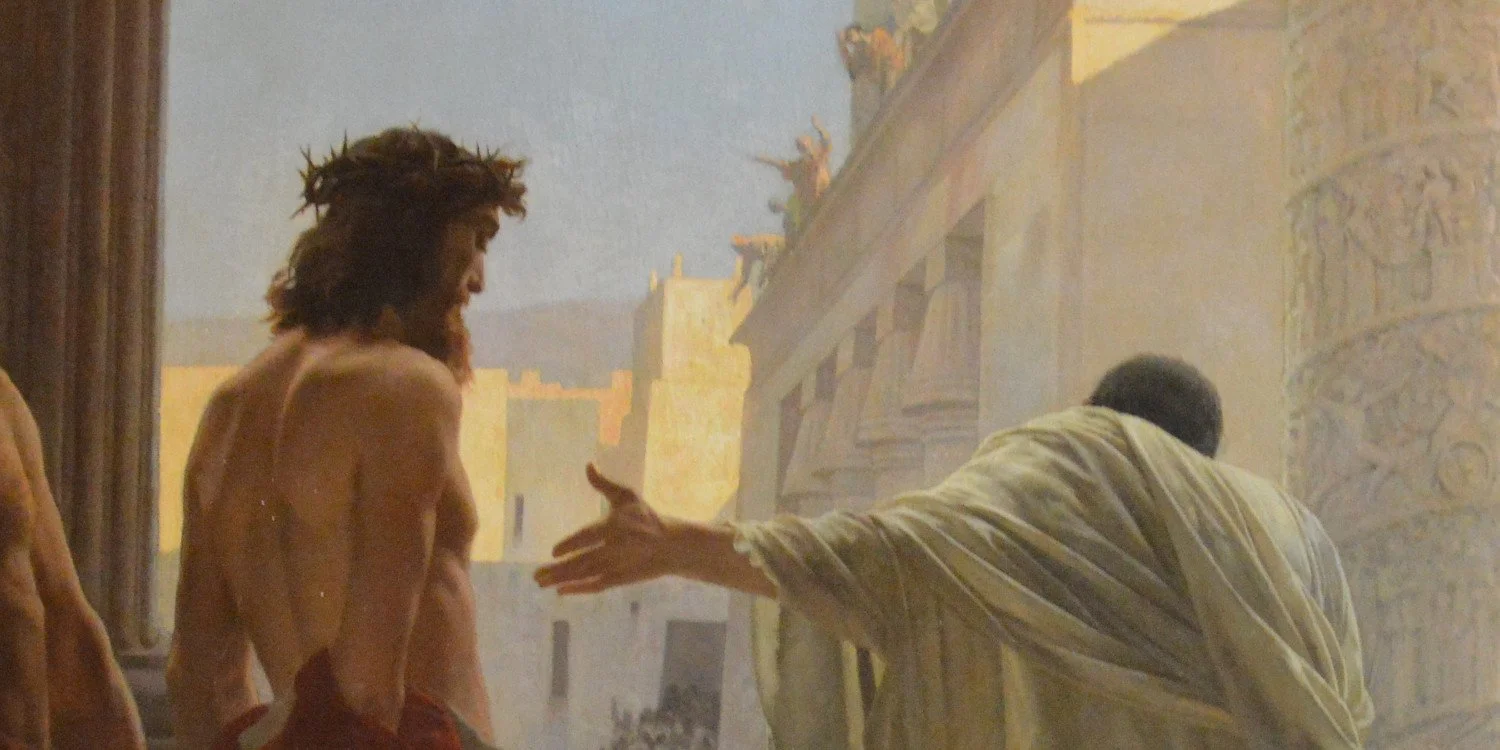
He Suffered under Pontius Pilate
But prior to all that, Jesus was interrogated by Pontius Pilate, the Roman military governor or procurator of the imperial province of Judea from 26 to 36 AD. The Jewish historian, Flavius Josephus, portrayed Pilate as a harsh administrator who failed to understand the religious convictions and national pride of the Jews. Pilate is known mainly for his connection with the trial and execution of Jesus. His culpability in the outcome has been the subject of debate ever since, and this conflicting view was implied even by Pope Benedict XVI, who wrote:
“After the interrogation, Pilate knew for certain what in principle he had already known beforehand: this Jesus was no political rebel; his message and his activity posed no threat for the Roman rulers. Whether Jesus had offended against the Torah was of no concern to Pilate as a Roman.”
— Jesus of Nazareth: Holy Week, p195
The Gospels of John and Mark present the custom of choosing a prisoner to be released on the Passover. The Gospels present a juxtaposition of the theological significance of choosing Jesus or Barabbas for release. John refers to Barabbas simply as a robber (18:40). In the political context of the time the Greek word that John used has also acquired the meaning of “terrorist,” or “rebel.” This is clear from Mark’s account: “And among the rebels in prison who had committed murder in the insurrection, there was a man called Barabbas” (Mark 15:7). It was clear that Pilate preferred to release Jesus, yet the crowd had different categories. Pilate came to understand their strong preference to release Barabbas, who had acquired the personna of a swashbuckling rebel.
The governor of Judea had complete judicial authority over all who were not Roman citizens, but many cases, especially those relating to religious matters, were decided by the Sanhedrin, the Jewish supreme council. According to the Gospel accounts, after the Sanhedrin found Jesus guilty of blasphemy it committed him to the Roman court because it lacked the authority to impose a death sentence. Pilate refused to approve their judgment without further investigation but the Sanhedrin threatened Pilate. When Pilate asked them, “Shall I crucify your king?” “The Chief Priests Answered, ‘We Have No King but Caesar’”
The Jewish priests then made other charges against Jesus, accusing him of blasphemy by calling himself a king (which he never actually did) and a son of God. Pilate appears to have been impressed with the dignity and honesty of Jesus, and tried to save him (John 18:38-39, 19:12-15). But fear of an uprising in Jerusalem and a resulting report to Roman authorities forced Pilate to accede to the Sanhedrin’s demand after the chief priests declared that freeing Jesus would mean that Pilate “is no friend of Caesar.” The false claim that Jesus was “King of the Jews,” was perceived as a threat to the Roman empire. It ended up on the inscription bearing the official nature of his offense to be affixed to his Cross.
Jesus was thus to be crucified and was handed over by Pilate for scourging, a brutal aspect of the punishment that often left the accused dead even before being crucified. Some have suggested that the scourging was intensified by Pilate to sway Jewish leaders away from crucifixion if the scourging was brutal enough. The guards saw to it that it was, but to no avail. It is very likely that Jesus carried only the crossbeam to which his hands were affixed first by ropes and then nails were added upon the height of Mount Calvary. His scourging had left his skin shredded so Simon of Cyrene was recruited to help carry the crossbeam. Only a few faithful women, including his Mother, his Mother’s sister, and Mary Magdalene remained with the beloved disciple John.
Each of the four Gospels presents a parallax view, the same scene but from a different perspective. In the Gospel according to John, the dying Jesus addressed his Mother: “Woman, behold your son” and to John, “Behold your Mother” (John 19:27). The Gospel instructs us that “from that hour the disciple took her into his own home.” Faithful Catholics have done the same ever since. Mary occupies a very special place in this scene and in our hearts.
As for Pontius Pilate, he was recalled to Rome in AD 36. According to the Roman historian, Eusebius, Pilate later committed suicide. Other traditions, however, report that Pilate secretly became a Christian and was condemned to death by the Roman Senate. Perhaps for this reason, Pilate is strangely revered by Coptic Christians as a martyr. They observe his feastday on June 25.
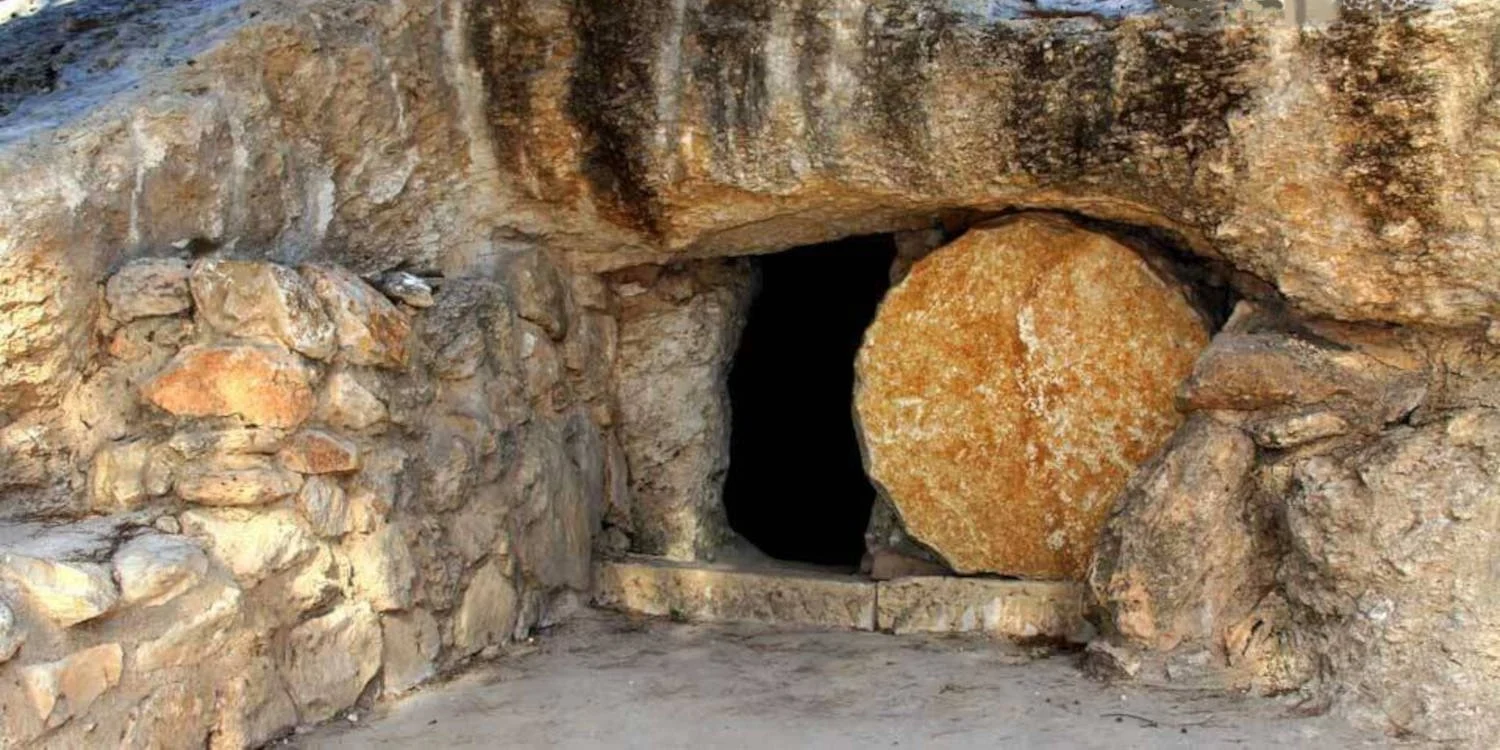
“Why Do You Seek the Living among the Dead?” (Luke 24:5)
The Resurrection of Jesus is the crowning event of the Passion Narratives of all four Gospels. Joseph of Arimathea, a member of the Sanhedrin who “was looking for the Kingdom of God” risked his standing in the Sanhedrin by asking Pilate for the body of Jesus, which was granted. Joseph interred the body in his own tomb hewn from rock (Luke 24:51). Some women went to the tomb as the Sabath was beginning. They saw the body of Jesus there then left to observe the Sabath.
On the next day, the first day of the week, these same women, now identified as Mary Magdalene, Joanna and Mary, mother of James, returned with spices to prepare the body according to the ritual law. They found the stone sealing the tomb to have been rolled away and two men in dazzling apparel frightened them asking,”Why do you seek the living among the dead?” When they told this to the disciples, they were not believed, but Peter ran to the tomb and found it just as they had said.
Later that same day, two of his disciples — one identified as Cleopas — were venturing about seven miles from Jerusalem along the road to Emmaus. They were speaking with great sorrow and trauma about the events of this and previous days. I have been where they were on that day. I do not mean that I have been on the road to Emmaus, except perhaps figuratively. I have been at a place at which all that I had ever worked for and hoped for just collapsed in irreparable ruin, and there was no justice in it. Reading about this encounter on the road to Emmaus, their deep sorrow and loss resonates with me on a personal level.
Then they encounter the Risen Christ along that road, but “Their eyes were kept from recognizing him.” (Luke 24:16) The visitor asked what their animated conversation was all about. The one named Cleopas was incredulous: “Are you the only visitor to Jerusalem who does not know the things that have happened there in these days?” “What things?” asked the stranger. Then came the outpouring of their grief:
“The things concerning Jesus of Nazareth who was a prophet might in word and deed before God and all the people, and how our chief priests and rulers delivered him up to be condemned to death, and crucified him. We had hoped that he was the one to redeem Israel. And besides all this, it is now the third day since this has happened. Now some women of our company have just amazed us. They were at the tomb early in the morning, but they did not find his body. They came back saying that they had even seen a vision of angels who said that he is alive. Some of those who were with us went to the tomb and found it just as the women said, but him they did not see.”
(To be continued.)
+ + +
Note from Father Gordon MacRae: Thank you for reading and sharing this post, which will now be added to both Our Holy Week Retreat and to our Collection called The Bible Speaks. You may also like these related posts leading up to the top of Mount Calvary:
Satan at the Last Supper: Hours of Darkness and Light
Waking Up in the Garden of Gethsemane

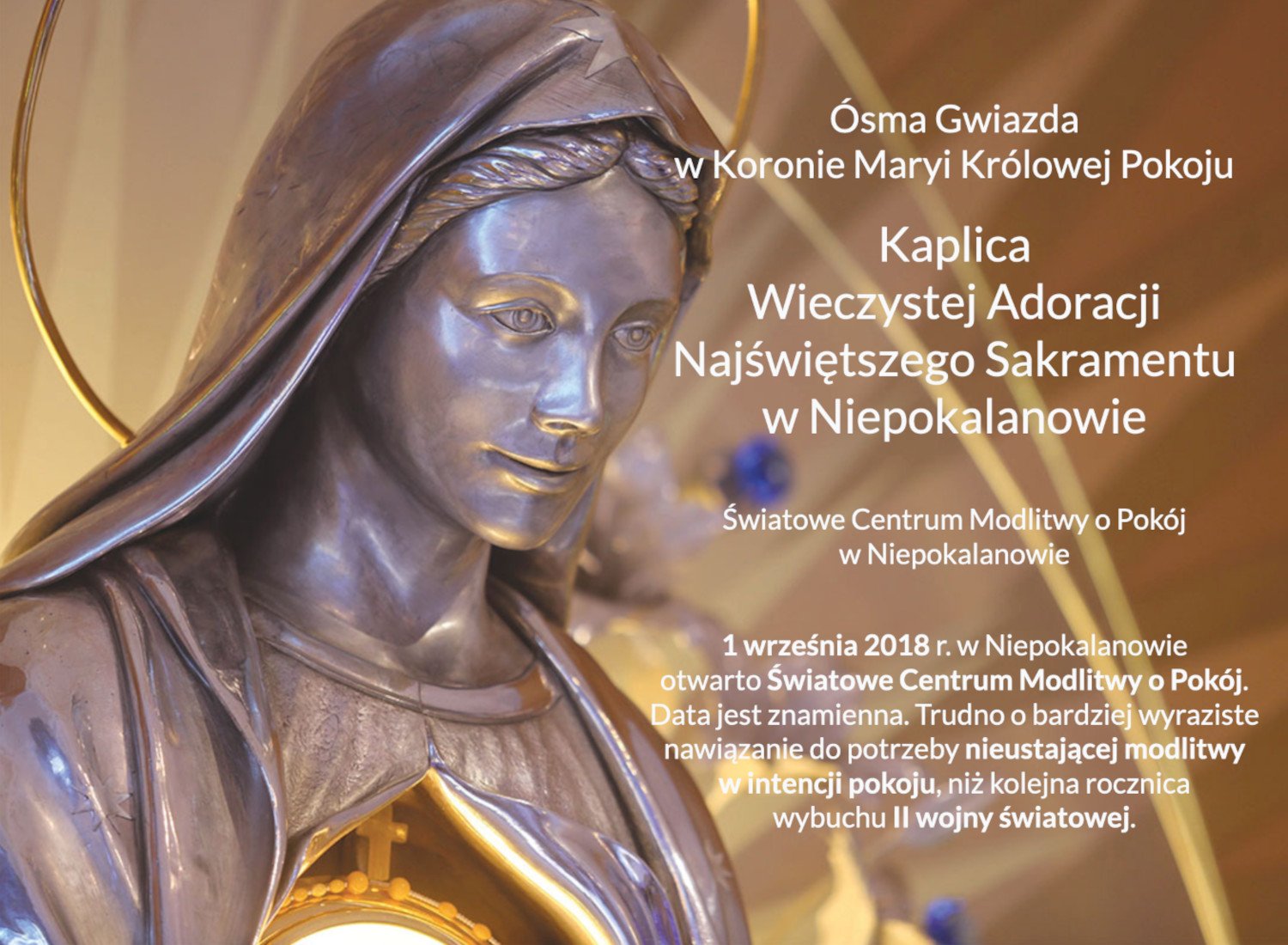

The Eucharistic Adoration Chapel established by Saint Maximilian Kolbe was inaugurated at the outbreak of World War II. It was restored as a Chapel of Adoration in September, 2018, the commemoration of the date that the war began. It is now part of the World Center of Prayer for Peace. The live internet feed of the Adoration Chapel at Niepokalanow — sponsored by EWTN — was established just a few weeks before we discovered it and began to include in at Beyond These Stone Walls. Click “Watch on YouTube” in the lower left corner to see how many people around the world are present there with you. The number appears below the symbol for EWTN.
Click or tap here to proceed to the Adoration Chapel.
The following is a translation from the Polish in the image above: “Eighth Star in the Crown of Mary Queen of Peace” “Chapel of Perpetual Adoration of the Blessed Sacrament at Niepokalanow. World Center of Prayer for Peace.” “On September 1, 2018, the World Center of Prayer for Peace in Niepokalanow was opened. It would be difficult to find a more expressive reference to the need for constant prayer for peace than the anniversary of the outbreak of World War II.”
For the Catholic theology behind this image, visit my post, “The Ark of the Covenant and the Mother of God.”
Our Holy Week Retreat for Beyond These Stone Walls
Each Holy Week since 2010 Fr Gordon MacRae has composed a special post based on the Scriptural events of the Way of the Cross. They now comprise a Holy Week retreat.
Each Holy Week since 2010 Fr Gordon MacRae has composed a special post based on the Scriptural events of the Way of the Cross. They now comprise a Holy Week retreat.
Holy Week for Beyond These Stone Walls
As many of our readers know, this blog began in controversy in 2009. Born out of a challenge from the late Cardinal Avery Dulles to rise above suffering and consider instead its legacy. Many posts in my long Prison Journal since 2010 have been about the injustices that I and other priests have faced. But in the weeks before his death in December 2008, Cardinal Dulles sent a series of letters to me in prison. He challenged me to dig deeper into my own passion narrative. Cardinal Dulles wrote:
“Someone might want to add a new chapter to the volume of Christian literature from those unjustly in prison. In the tradition of Dietrich Bonhoeffer, Fr Alfred Delp, Fr Walter Ciszek, and Saint Paul, your writing, which is clear, eloquent and spiritually sound, will be a monument to your trials.”
And so in preparation for Holy Week in 2010, I began to make a concerted effort to set aside my own unjust plight to write a post about the Passion of the Christ. I compose a new Holy Week post every year since to present a different scene in the Way of the Cross. For me, this has become a sacred obligation as a priest to take part in my own unique way in the events that led to Calvary and beyond. And, yes, there IS a beyond.
Many readers, especially those who have also suffered in ways large or small, have found these posts to be inspiring. No one has been more surprised by this than me. So we have collected our Holy Week posts in the order in which they appear in the Gospel narrative to become an invitation for a personal retreat. We invite you to make these posts a part of your Holy Week and Easter observance.
If any of them touches your heart and soul in some way, or gives you a deeper understanding of the Scriptures, then please also share a link to them with others. I hear from many newer readers who first came to this blog in just that way, and then found in these pages spiritual consolation and a path to peace.
We will add a new post on Wednesday of Holy Week this year and will make the title linked here, active at that time.
The Passion of the Christ in an Age of Outrage (2020)
Overshadowing Holy Week with forced pandemic restrictions and political outrage recalls the Bar Kochba revolt of AD 132 against the Roman occupation of Jerusalem.
Satan at the Last Supper: Hours of Darkness and Light (2020)
The central figures present before the Sacrament for the Life of the World are Jesus on the eve of sacrifice and Satan on the eve of battle to restore the darkness.
Waking Up in the Garden of Gethsemane (2019)
The Agony in the Garden, the First Sorrowful Mystery, is a painful scene in the Passion of the Christ, but in each of the Synoptic Gospels the Apostles slept through it.
The Apostle Falls: Simon Peter Denies Christ (2024)
The fall of Simon Peter was a scandal of biblical proportions. His three-time denial of Jesus is recounted in every Gospel, but all is not as it first seems to be.
Behold the Man, as Pilate Washes His Hands (2014)
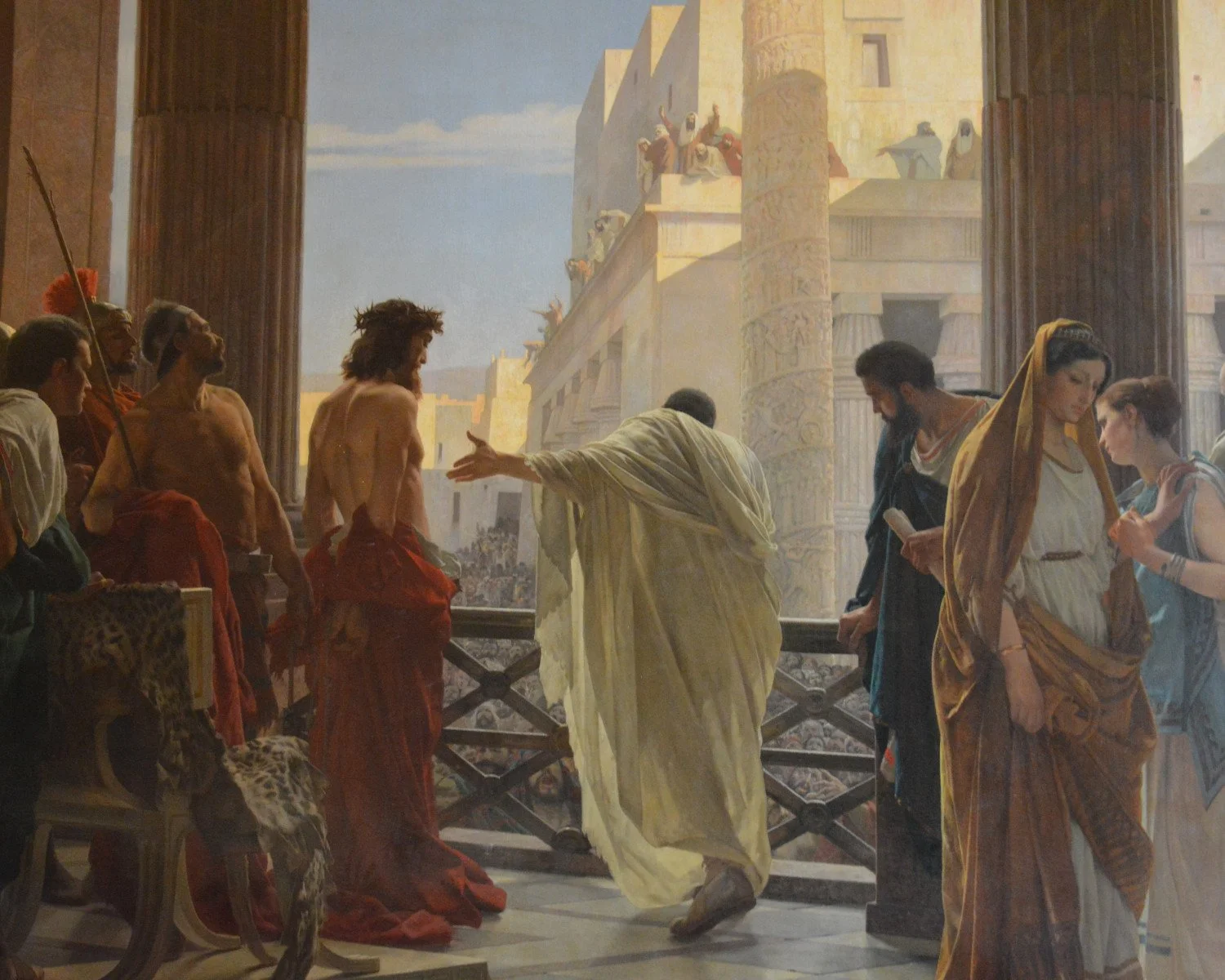
‘Ecce Homo,’ an 1871 painting of Christ before Pilate by Antonio Ciseri, depicts a moment woven into Salvation History and into our very souls. ‘Shall I crucify your king?’
The Chief Priests Answered, ‘We Have No King but Caesar’ (2017)
The Passion of the Christ has historical meaning on its face, but a far deeper story lies beneath where the threads of faith and history connect to awaken the soul.
Simon of Cyrene Compelled to Carry the Cross (2023)
Simon of Cyrene was just a man on his way to Jerusalem but the scourging of Jesus was so severe that Roman soldiers feared he may not live to carry his cross alone.
Dismas, the Good Thief Crucified Next to Christ the King (2025)
With Jesus before him, Pilate asked the chief priests, ‘Shall I crucify your king?’ They replied ‘We have no king but Caesar.’ Only a criminal saw Christ the King.
To the Spirits in Prison: When Jesus Descended into Hell (2022)
The Apostles Creed is the oldest statement of Catholic belief and apostolic witness. Its Fifth Article, what happened to Jesus between the Cross and the Resurrection, is a mystery to be unveiled.
Mary Magdalene: Faith, Courage, and an Empty Tomb (2015)
History unjustly sullied her name without evidence, but Mary Magdalene emerges from the Gospel a faithful, courageous, and noble woman, an Apostle to the Apostles.
The Darkness of the Cross Enlightened on the Road to Emmaus (2026)
At Gethsemane Jesus of Nazareth agreed to bear the Cross to his own Crucifixion so that following him to Heaven’s Gate would not be a burden of impossibility for us.
The Resurrection of Christ: Further Along the Road to Emmaus
What are we to understand when we speak of the Resurrection of Jesus? Ancient Scriptures and interpretations from a brilliant theologian-pope provide amazing clues.

Before the gates there sat, On either side a formidable Shape
One of Gustave Dore’s illustrations of the epic poem Paradise Lost by John Milton (Courtesy of University at Buffalo)

The Eucharistic Adoration Chapel established by Saint Maximilian Kolbe was inaugurated at the outbreak of World War II. It was restored as a Chapel of Adoration in September, 2018, the commemoration of the date that the war began. It is now part of the World Center of Prayer for Peace. The live internet feed of the Adoration Chapel at Niepokalanow — sponsored by EWTN — was established just a few weeks before we discovered it and began to include in at Beyond These Stone Walls. Click “Watch on YouTube” in the lower left corner to see how many people around the world are present there with you. The number appears below the symbol for EWTN.
Click or tap here to proceed to the Adoration Chapel.
The following is a translation from the Polish in the image above: “Eighth Star in the Crown of Mary Queen of Peace” “Chapel of Perpetual Adoration of the Blessed Sacrament at Niepokalanow. World Center of Prayer for Peace.” “On September 1, 2018, the World Center of Prayer for Peace in Niepokalanow was opened. It would be difficult to find a more expressive reference to the need for constant prayer for peace than the anniversary of the outbreak of World War II.”
For the Catholic theology behind this image, visit my post, “The Ark of the Covenant and the Mother of God.”

Divine Mercy for Doubting Thomas and Other Spiritually Wounded
The Gospel on Divine Mercy Sunday is St John’s account of the spiritually wounded Thomas who would not know peace until surrendering his wounds to the Risen Christ.

The Gospel on Divine Mercy Sunday is St John’s account of the spiritually wounded Thomas who would not know peace until surrendering his wounds to the Risen Christ.
April 23, 2025 by Fr Gordon MacRae
There is a scene in the great World War II prisoner of war film, Stalag 17, in which an American Air Force officer (played by actor William Holden) negotiates with the German Commandant over the treatment of a fellow prisoner. I was dragged into a similar role here several years ago when I protested an injustice aimed at a friend.
For a long time I had managed to avoid efforts to recruit me for an Inmate Communications Committee (ICC), a group of eight chosen from 1,500 prisoners here. The ICC advocated for better prison conditions and due process. After protesting over another prisoner, I no longer had a valid excuse, so I reluctantly accepted.
From the start, I was saddled with doing all the writing, which included detailed minutes of every meeting for distribution to prison officials, a monthly summary of progress, and a quarterly newsletter.
The job — which payed nothing — was in addition to my Law Library job which payed next to nothing. It also meant writing endless memos, proposals, clarifications, and requests that I fielded each week. We succeeded in only about ten percent of the concessions we set out to obtain, and that is more or less on par with William Holden’s success rate in Stalag 17.
About the only high point is that I was also required to be present at a Jobs and Education Fair in the prison gymnasium twice a year. It was an effort to get the other 1,500 prisoners here into jobs, educational classes and programs, and typically about 500 showed up. Among the dozens of display tables set up, the Law Library and ICC were side by side, so I manned both.
The Veterans Affairs table was set up next to the ICC table. It was a nice display with information on veteran groups here, an annual POW/MIA Remembrance, and other programs. The table was staffed by my friend, John, whom I did not get to see as often as I would like. John was a Navy veteran in his mid to later thirties. He lost his leg during active duty in the Middle East before coming to prison. John told me that when he arrived here, his prosthetic leg was taken from him because of an infection at the amputation site with the result of consigning him to a wheelchair. John was very anxious to get the prosthetic leg back and get back on his feet again, but because of the fear of infection, the prison medical officials were withholding it. It was John, by the way, who told me of the release of my friend Martin, the U.S. Marine veteran I wrote about in “A U.S. Marine Who Showed Me What to Give Up for Lent.”
I told John that I would do some research to see if there was a precedent here that John might use to restore his prosthetic leg. Then, without thinking, I thanked him for “stepping up” to take charge of the Veteran’s table. I quickly apologized for my faux pas, but John had a good laugh.
Then he told me that he spent half his day thanking people for all sorts of small things: an assist out of the chair, a push up a steep ramp, picking up a dropped item. He said that my thanks was the first time in a long time anyone had thanked him for his service to others. That small, awkward gesture had a profound effect on John. As I left, he was beaming. I made a decision that I would find a way to help restore what he lost and get him out of that dreaded wheelchair.
I can sometimes become so aware of the spiritual warfare that engulfs me here that it diminishes my awareness of the wounds of others. We are all, in one way or another, wounded by life physically, emotionally, spiritually, and it dulls our senses.
It drives us onto self-centered islands of emotional distance and spiritual isolation. The wounds we carry foster pessimism and doubt, erode faith, and turn the joy of living into a crucible of mere existence. Peace evades wounded warriors, even in spiritual warfare.

Doubting Thomas
This is the great plague of our age. I receive lots of mail from readers asking me to pray for a husband or wife, a son or daughter, who has lost their faith in response to the wounds of life and the sheer weight of living. In a war with one’s self, faith is often the first to go and the last to come back. If this describes you or someone in your life, then pay special attention to the Apostle Thomas in the Gospel from Saint John on Divine Mercy Sunday.
There are some remarkable elements in Saint John’s account of the death of Jesus and all that came after the Cross. The first witness to the “Seventh Sign,” the Resurrection of Jesus, was a woman whose own demons Jesus had once cast out. I wrote of her and the evidence for her first-hand witness in “Mary Magdalene: Faith, Courage, and an Empty Tomb.” I would like to reproduce a scene from that post that never took place, but it is one that I have long imagined.
“Mary came to the disciples, Peter and the others, hidden by fear behind locked doors, and said, ‘I have good news and not-so-good news.’ Peter asked, ‘What’s the good news?’ Mary replied, ‘The Lord has risen and I have seen him.’ Peter then asked, ‘What’s the not-so-good news?’ Mary said, ‘He’s on his way here, and He wants a word with you about last Friday.”
The focus is so intensely on Jesus in the Resurrection accounts that it is easy to forget the wounds of everyone else in this story. They are all living with the deeply felt trauma of loss, and not only loss, but with an overwhelming sense of utter discouragement. They are devastated and stripped of hope.
John, the Beloved Disciple, stood with the mother of Jesus at the foot of the Cross and watched Him die a most gruesome death at the hands of the Roman Empire, but at the behest of his own people, the Chief Priests who answered Pilate, “We have no king but Caesar.”
Mary Magdalene stood there as well, and watched. The others fled. Peter, their leader, denied three times that he even knew Jesus. All that had been promised and hoped for had been misunderstood, and now gone forever. The Chief Priests — emboldened when Pilate caved to their “We Have No King but Caesar” — sought only to round up the rest.
It was in this state of fear that Mary Magdalene showed up in the Upper Room where the Apostles were in hiding for fear of the mobs. She had news that defied belief. And when Jesus first appeared to them behind that locked door, His demeanor was the opposite of what I imagined above to be a human response to their abandonment of Him. “Peace be with you,” He said. It is not a reference to a state of peace between disputing parties or someone subject to Earthly powers. The word the Gospel used in Greek – Eiréné – has more to do with spiritual welfare than spiritual warfare.
It refers to a state of mind, heart and soul, the equivalent of the Hebrew “Shalom”, and its usage means harmony with God within one’s self. It is the same sense that the Prophet Isaiah used in his Messianic expectation of the Prince of Peace:
“For us a child is born, to us a son is given; and the government will be upon his shoulder and his name will be called ‘Wonder Counselor, Mighty God, Everlasting Father, Prince of Peace.’”
— Isaiah 9:6
It is what Saint Paul refers to in his letter to the Colossians, “Let the peace of Christ reign in your hearts” (Col. 3:15). Once you have it, it is far more contagious than any pandemic. This peace is the foundation and gift of Divine Mercy.
But Thomas missed the whole thing. When he arrived and found them stunned and exuberant, he retreated into his own deep wounds. Thomas did not stay to see Jesus crucified. Like the others, he could not bear it. He and they fled when Jesus appeared before Pilate mocked, beaten, broken, as the accusing mob grew beyond control to threaten even Pilate himself, “Crucify him! Crucify him!” But Thomas saw enough to know that it was over, that all was lost, and all hope had gone out of the world. So when faced with the great risk of trusting and hoping again, he said,
“Unless I see the mark of the nails in his hands, and put my finger into the nail marks, and place my hand in his side, I will not believe.”
— John 20:25

Trusting Divine Mercy
For this, the Apostle is forever called, “Doubting Thomas,” but I see something more painful than his doubt. I see him also as hurting, defeated, robbed of hope. He had to touch the wounds of the Risen Christ because the wounds of the Crucified Christ had already touched him, had broken his heart, and devastated his faith, and destroyed all hope. As so many of you know only all too well, coming to trust again after such hurt is a very risky business.
I find it fascinating that the story of Thomas and his struggle with trust and hope after the events of Holy Week is the Gospel for Divine Mercy Sunday. When Jesus presented Himself to Thomas, and invited him to probe the wounds in his living hands and side, Thomas did not oblige. Instead, he surrendered his own wounds, and responded in a leap of faith, “My Lord and my God.” Pope Benedict XVI wrote of this in his magisterial book, Jesus of Nazareth: Holy Week:
“In His two appearances to the Apostles gathered in the Upper Room, Jesus repeats several times the greeting, ‘Peace be with you’… It becomes the gift of peace that Jesus alone can give because it is the fruit of his radical victory over evil… For this reason Saint John Paul II chose to call this Sunday after Easter ‘Divine Mercy,’ with a very specific image: that of Jesus’ pierced side from which blood and water flowed.”
This image, revealed to Saint Maria Faustina Kowalska as the image of Divine Mercy, is that of the same wounds transfigured:
“I saw the Lord Jesus dying on the Cross amidst great suffering, and out of the Heart of Jesus came the two rays as are in the image.”
— Diary of Saint Faustina, 414
“The two rays denote blood and water. The pale ray stands for the Water which makes souls righteous. The red ray stands for the Blood which is the life of souls… Happy is the one who will dwell in their shelter…”
— Diary of Saint Faustina, 299
I recently wrote a post entitled “Thailand’s Once-Lost Son Was Flag Bearer for the Asian Apostolic Congress.” Most of our readers know the story of what led to Pornchai Maximilian Moontri’s Divine Mercy conversion. Starting at the age of two in rural Thailand, he knew only abandonment by the very people who should have taught him trust. Forced to forage in the streets for food, he was hospitalized for malnutrition. Then at age eleven he was taken from Thailand and forced into a life marked by violence, exploitation and abuse. At age 18, after several years of adolescent homelessness, he killed a man after being pinned to the ground in a struggle. Pornchai was sent to prison for life. While there, his mother, his only contact in the free world was murdered by the man who exploited him. After many years of solitary confinement, Pornchai was moved to another prison and spent the next 15 years as my roommate.
How does anyone emerge from such wounds? How does anyone ever trust again when all prior trust was broken? On Divine Mercy Sunday in 2010, Pornchai took on a new name, “Maximilian,” after Saint Maximilian Kolbe who walked this path with him and led him to Jesus through the Immaculate Heart of Mary.
In the course of this remarkable journey, Pornchai’s wounds never healed. They are with him for life, but they have been transformed. He is a powerful figure today in the realm of Divine Mercy because he has placed his wounds in the service of the Risen Lord. Back in October of 2024, Pornchai was invited to carry the flag of the Kingdom of Thailand in procession at the Fifth Asian Apostolic Congress on Divine Mercy held in the Philippines. In the scene atop this section, Pornchai Max proudly carries the flag of Thailand before a crowd of 5,000 pilgrims in honor of Divine Mercy.
If a picture speaks a thousand words, this one below speaks volumes. This is the Face of Divine Mercy.

+ + +


And to honor our late Holy Father: “Pope Francis Had a Challenge for the Prodigal Son’s Older Brother.”
The Eucharistic Adoration Chapel established by Saint Maximilian Kolbe was inaugurated at the outbreak of World War II. It was restored as a Chapel of Adoration in September, 2018, the commemoration of the date that the war began. It is now part of the World Center of Prayer for Peace. The live internet feed of the Adoration Chapel at Niepokalanow — sponsored by EWTN — was established just a few weeks before we discovered it and began to include in at Beyond These Stone Walls. Click “Watch on YouTube” in the lower left corner to see how many people around the world are present there with you. The number appears below the symbol for EWTN.
Click or tap here to proceed to the Adoration Chapel.
The following is a translation from the Polish in the image above: “Eighth Star in the Crown of Mary Queen of Peace” “Chapel of Perpetual Adoration of the Blessed Sacrament at Niepokalanow. World Center of Prayer for Peace.” “On September 1, 2018, the World Center of Prayer for Peace in Niepokalanow was opened. It would be difficult to find a more expressive reference to the need for constant prayer for peace than the anniversary of the outbreak of World War II.”
For the Catholic theology behind this image, visit my post, “The Ark of the Covenant and the Mother of God.”

Mary Magdalene: Faith, Courage, and an Empty Tomb
History unjustly sullied her name without evidence, but Mary Magdalene emerges from the Gospel a faithful, courageous and noble woman, an apostle to the Apostles.

History unjustly sullied her name without evidence, but Mary Magdalene emerges from the Gospel a faithful, courageous and noble woman, an apostle to the Apostles.
Within the Octave of Easter by Father Gordon MacRae
As an imprisoned priest, a communal celebration of the Easter Triduum is not available to me. My celebration of this week is for the most part limited to a private Mass using the Roman Missal. Still, over all the years in which I have been writing for this blog, I have always agonized about Holy Week posts. I feel a special duty to contribute what little I can to the Church’s volume of reflection on the meaning of this week.
Though I have little in the way of resources beyond what is in my own mind, I feel an obligation in this of all weeks to “get it right,” and leave something a reader might return to. So I have focused in past Holy Week posts not so much on the meaning of the events of the Passion of the Christ, but on the characters central to those events. In so doing, I have developed a rather special kinship with some of them.
I hope readers will spend some time with them this week by revisiting my Holy Week tributes to “Simon of Cyrene, Compelled to Carry the Cross,” and “Dismas, the Good Thief Crucified Next to Christ the King,” and others in a Collection of about 50 biblical posts that we call The Bible Speaks. Last year in Holy Week, I visited a haunting work of art fixed upon the wall of my prison cell in “Behold the Man, as Pilate Washes His Hands.”
Lifting these characters out of the lines of the Gospel into the light of my quest to know them has enhanced a sense of solidarity with them. This has never been truer than it is for the subject of this particular Holy Week post. Any believer whose reputation has been overshadowed by innuendos of a past, anyone who stands in possession of a truth that must be told, but is denied the social status to be believed will marvel, as I do, at the faith and courage of Mary Magdalene.

Her Demon-Haunted World
First, a word about language. You might note that I always use the Aramaic term, “Golgotha,” instead of the more familiar “Calvary” for the place where Jesus was crucified. Aramaic is closely related to Hebrew. It became the language of the Middle East sometime after the fall of Nineveh in 612 B.C., and was the language of Palestine at the time of Jesus. Jesus spoke in Aramaic, and so did his disciples.
The Aramaic word, “Golgotha” means “place of the skull.” When the Roman Empire occupied Palestine in 63 B.C., it used that place for crucifixions. It isn’t certain whether that is the origin of the name “Golgotha” or whether the hill resembles a skull from some vantage point. The Gospels were written in Greek, so the Aramaic “Golgotha” was translated “Kranion,” Greek for “skull.” Then in the Fourth and early Fifth Century, Saint Jerome translated the Greek Gospels into Latin using the term, “Calvoriae Locus” for “Place of the Skull.” That’s how the name “Calvary” entered Christian thought.
Mary Magdalene is one of only two figures in the Gospel to have been present with Jesus during his public ministry, at the foot of the Cross at Golgotha, and in his Resurrection appearances at and after the empty tomb. The sole other figure was John, the Beloved Disciple. Mary the Mother of Jesus was also present at the Cross, but there is no mention of her at the empty tomb. In the Gospel of Saint Luke, the Twelve were with Jesus during his public ministry …
“… also some women who had been healed of evil spirits and infirmities, Mary, called Magdalene, from whom seven demons had gone out, and Joanna the wife of Chuza, Herod’s steward, and Suzanna, and many others who provided for them out of their means.”
The presence of these women openly challenged Jewish customs and mores of the time which discouraged men from associating with women in public. Add to this the fact that these particular women “had been healed of evil spirits and infirmities” could have set the community abuzz with whispers at their presence with Jesus. In the Gospel of John (4:27), the Apostles came upon Jesus talking with a woman of Samaria at Jacob’s well, and they “marveled that he was talking with a woman.”
A revelation that seven demons had gone out of Mary Magdalene is in no way suppressed by the Gospel writer. On the contrary, it seems the basis of her undying fidelity to the Lord. The Gospel of Saint Mark adds that account in the most unlikely place — the one place where Mary’s credibility seems a necessity, the first Resurrection appearance:
“Now when he rose early on the first day of the week, he appeared first to Mary Magdalene from whom he had cast out seven demons. She went and told those who had been with him, as they mourned and wept. But when they heard he was alive and had been seen by her, they would not believe it.”
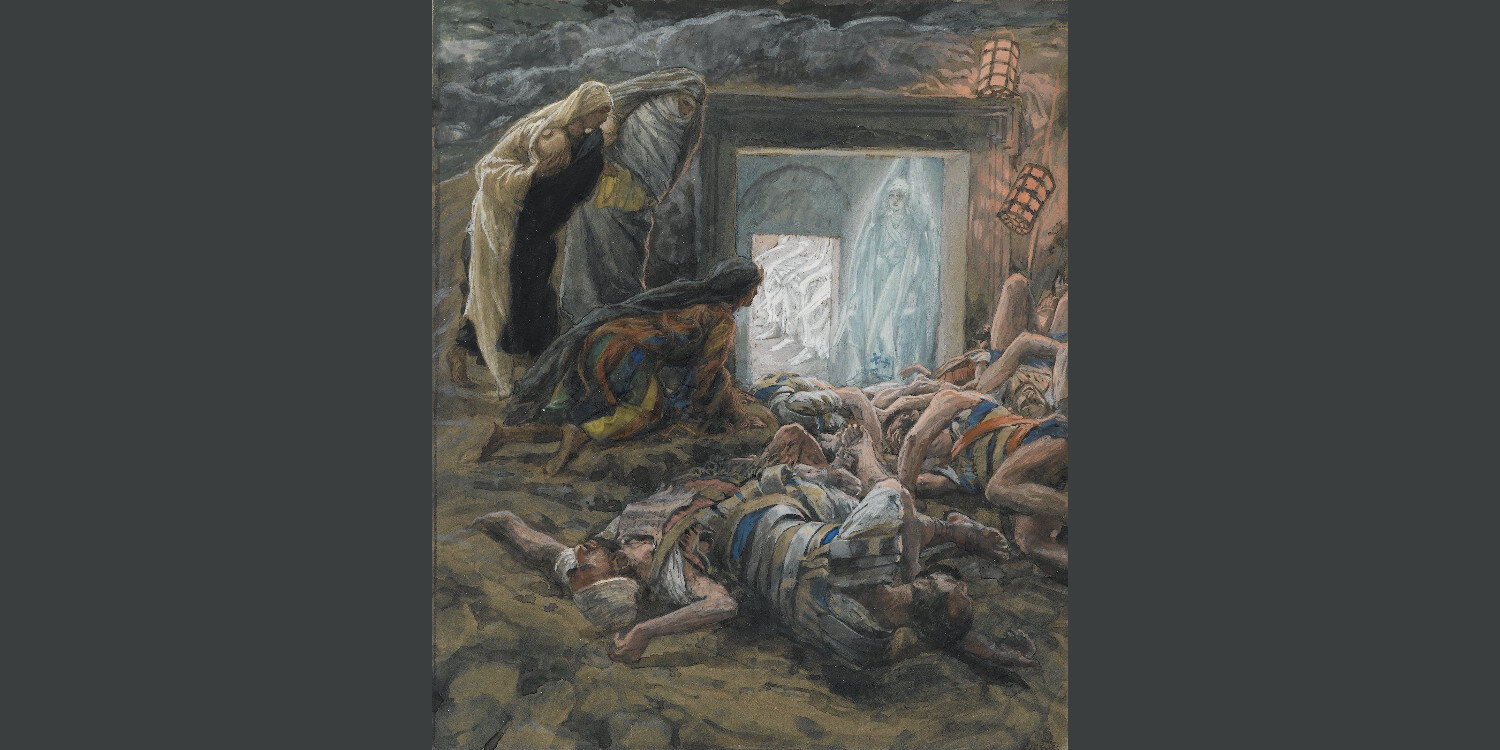
In all four of the Gospel accounts, it was Mary Magdalene who first discovered and announced the empty tomb, and in all four places the announcement sowed doubt, and even some propaganda. In the Gospel of Matthew (28:1-10), “Mary Magdalene and the other Mary went to the tomb … .” There they were met by an angel who instructed them, “Go quickly and tell his disciples that he has risen from the dead and behold, he is going before you to Galilee.”
Then, in Saint Matthew’s account, Jesus appeared to them on the road and said, “Do not be afraid. Go and tell my brethren to go to Galilee, and there they will see me.” Put yourself in Mary Magdalene’s shoes. She, from whom he cast out seven demons; she, who watched him die a gruesome death, is to find Peter, tell this story, and expect to be believed?
Immediately after in the Gospel of Matthew, the Roman guards went to Caiaphas the High Priest with their own story of what they witnessed at the tomb. Like the thirty pieces of silver used to bribe Judas, Caiaphas paid the guards to spread an alternate story:
“Go report to Pilate that Jesus’ disciples came and stole his body while the guards slept…’ This story has been spread among the Jews even to this day”
Apostle to the Apostles
It makes perfect sense. I, too, have seen “truth” reinvented when there is money involved. Remember that Mary Magdalene is a woman alone, with demons in her past, and she must convey her amazing account to men. So suspect is she as a source that even the early Church overlooked her witness. When Saint Paul related the Resurrection appearances to the Church at Corinth about twenty years later, he omitted Mary Magdalene entirely:
“He appeared to Cephas [the Greek name for Peter], then to the Twelve, then to more than 500 brethren at one time, most of whom are still alive, though some have fallen asleep. Then he appeared to James then to all the Apostles. Then last of all, as to one untimely born, he appeared to me, for I am the least of the Apostles.”
Saint Paul lists six appearances of Jesus during the forty days between the Resurrection and the Ascension. One of those appearances “to more than 500” appears in none of the Gospel accounts. Saint Paul likely omitted the fact that it was Mary Magdalene from whom news of the Resurrection first arose, and to whom the Risen Christ first appeared, because at that time in that culture, women could not give sworn testimony.
And remember that there was another matter Mary Magdalene had to reconcile before conveying her news. It is the elephant in the upper room. She must not only tell her story to men, but to men who fled Golgotha while she remained. Among all in that room, only Mary Magdalene and the Beloved Disciple John saw Christ die. Peter, their leader, denied knowing Jesus and remained below, listening to a cock crow.
I have imagined another version of Mary Magdalene’s empty tomb report to Peter. I imagined reading it between the lines, but of course it isn’t really there. Still, it’s the version that would have made the most human sense: Mary Magdalene burst into an upper room where the Apostles hid “for fear of the Jews.” She summoned the courage to look Peter in the eye.
Mary M.: “I have good news and not-so-good news.”
Peter: “What’s the good news?”
Mary M.: “The Lord has risen and I have seen him!”
Peter: “And the not-so-good good news?”
Mary M.: “He’s on his way here and he’d like a word with you about last Friday.”
Of course, nothing like that happened. The words of Jesus to Peter about “last Friday” correct his three-time denial with a three-time commission of the risen Christ to “feed my sheep.” The Gospel message is built upon values and principles that challenge all our basest instincts for retribution and justice. The Gospel presents God’s justice, not ours.
Of the four accounts of the Crucifixion and the Resurrection Appearances, the Gospel of John conveys perhaps the most painful, beautiful, and stunning portrait of Mary Magdalene, all written between the lines:
“Standing by the Cross of Jesus were his mother, his mother’s sister [possibly Salome, mother of James and John], Mary the wife of Clopas, and Mary Magdalene.”
Also standing there is John, the Beloved Disciple, and Mary Magdalene becomes a witness to one of the most profound scenes of Sacred Scripture. Jesus addressed his mother from the Cross, “Woman, behold your son.” Is it a reference to himself or to the young man standing next to his mother? Is it both? Standing just feet away, the woman from whom he once cast out seven demons is fixated by what is taking place here. “Behold your Mother!” he says among his last words from the Cross, bestowing upon John — and all of us by extension — the gifts of grace and the care of his mother.

“Woman, Why Are You Weeping?”
“From that point on, John took her into his home,” and we took her into the home of our hearts. Mary Magdalene could barely have dealt with this shattering scene as her Deliverer died before her eyes when, on the morning of the first day of the week, she stood weeping outside his empty tomb. “Woman, why are you weeping?” Pope Emeritus Benedict XVI wrote of this scene from the Gospel of John in his beautifully written book, Jesus of Nazareth: Holy Week (Ignatius Press, 2011):
“Now he calls her by name: ‘Mary!’ Once again she has to turn, and now she joyfully recognizes the risen Lord whom she addresses as ‘Rabboni,’ meaning ‘teacher.’ She wants to touch him, to hold him, but the Lord says to her, “Do not hold me, for I have not yet ascended to the Father” (John 20:17). This surprises us…. The earlier way of relating to the earthly Jesus is no longer possible.”
Hippolytus of Rome, a Third Century Father of the Church, called Mary Magdalene an “apostle to the Apostles.” Then in the Sixth Century, Pope Gregory the Great merged Mary Magdalene with the unnamed “sinful woman” who anointed Jesus in the Gospel of Luke (7:37), and with Mary of Bethany who anointed him in the Gospel of John (12:3). This set in motion any number of conspiracy theories and unfounded legends about Jesus and Mary Magdalene that had no basis in fact.
The revisionist history in popular books like The Da Vinci Code, and other novels by New Hampshire author Dan Brown, was contingent upon Mary Magdalene and these two other women being one and the same. The Gospel provides no evidence to support this, a fact the Church now accepts and promotes. This faithful and courageous woman at the Empty Tomb was rescued not only from her demons, but from the distortions of history.
“While up to the moment of Jesus’ death, the suffering Lord had been surrounded by nothing but mockery and cruelty, the Passion Narratives end on a conciliatory note, which leads into the burial and the Resurrection. The faithful women are there…. Gazing upon the Pierced One and suffering with him have now become a fount of purification. The transforming power of Jesus’ Passion has begun.”