“There are few authentic prophetic voices among us, guiding truth-seekers along the right path. Among them is Fr. Gordon MacRae, a mighty voice in the prison tradition of John the Baptist, Maximilian Kolbe, Alfred Delp, SJ, and Dietrich Bonhoeffer.”
— Deacon David Jones

Knock and the Door Will Open: The Long Road to Bangkok Thailand
Thanks to Bill Donohue, “Pornchai’s Story” made its way around the world and was read to Catholics in Thailand. Pornchai’s Divine Mercy bridge to Thailand was built.

Thanks to Bill Donohue, “Pornchai’s Story” made its way around the world and was read to Catholics in Thailand. Pornchai’s Divine Mercy bridge to Thailand was built.
May 6, 2026 by Father Gordon MacRae
I wrote a post recently entitled “Book of Tobit: The Angel Raphael on the Road with Pornchai Moontri.” It was an allegory, like the Book of Tobit itself. An allegory is a sort of genre of Sacred Scripture in which a story is told more for its meaning than for its historical value. Every parable of Jesus falls into this same genre. A part of the story of Tobit, and his son Tobias and their interactions with the Archangel Raphael in disguise were all part of the allegory. That does not mean the allegory did not happen. It means only that the truth of the story does not depend upon someone believing it. There was one aspect of the Book of Tobit story that became a centerpiece of my blog linked above. At the beginning and the end of the Book of Tobit there is a mysterious dog whose presence, meaning and purpose remain a mystery.
My friend Pornchai Max and his grueling assimilation to his native Thailand after a forced absence of 36 years and all the torment he endured in that time, also included the presence of a mysterious dog named Hill. When that post was published on April 29 this year, a number of our readers wanted to know what became of Hill. So I went back this week and added an important addendum, which you can read for yourselves by clicking on it at the end of this post.
Now I want to back up about 19 years, in 2007 when Max learned that he would be deported to Thailand at the end of his sentence. He would be taken to Bangkok and left there. ICE would have no further responsibility for him.
Bangkok, the Capitol of the Kingdom of Thailand, is a massive city of about 9.5 million people. In Thai, the great city’s name is almost unpronounceable to the Western World, and the longest name of any city on Earth at 156 characters. I don’t expect you to memorize it, but in the Thai language Bangkok’s name is: Krungthepmahanakorn Amornrattanakosin Mahintrayuthaya Mahadilokpob Noparat Rajataniburirom Udomrajanivej Mahasatharn Amornpimarn Awatarnsat Sakatadtiya Wisanukamprasit. For daily use in Thai, the name is simply abbreviated to “Bangkok Krung Thep” which in English means “City of Angels.” When Max first told me of this in a phone call, he said, “I’m not kidding. They called it that even before I got here!”
This is a complicated but amazing story that meanders down a long and winding road. Our presentation of it begins in 2006 in a New Hampshire prison cell and threads its mysterious connections all the way around the globe. I n the end you may find any lingering doubts about Divine Mercy falling away. Divine Mercy has opened impenetrable doors for Pornchai Moontri, many of them in otherwise unreachable places.
If you have read my post, “The Parable of a Priest and the Parable of a Prisoner” then you know that Max had been in prison for 29 years, more than half his life, for a crime committed as a teenager, a crime that was set in motion by someone else. You also know that Max was moved from a maximum security solitary confinement unit in Maine to the New Hampshire Prison where we met and became friends late in 2006. That story is told powerfully at the link above.
I had another friend in this prison from Cambodia whom I had helped with the deportation process. He was brought to this country as a child of two, and committed a petty crime at age 18. After a long failed process of appeals, he was deported at age 25 to Cambodia, but spoke not a word of Khmer. One year after his deportation, I received a note from his sister telling me that he disappeared in the capital city of Phenom Penh. He had never been seen or heard from again.
We learned an important but scary lesson from what happened to my Cambodian friend. Since Max was brought to the U.S. as a young child, and has no known family or contacts in Thailand other than distance cousins, the experience of our friend in Cambodia chilled me to the core. I became determined that Max would be ready to live and cope somehow in the immense City of Bangkok when the time came. We had a few years to prepare, but I did not even know where to begin.
How could two men living in a prison cell in New Hampshire with no resources, no online access, and a severely limited budget find and connect with people on the other side of the world? How could I interest anyone in Thailand with the plight of a young man taken from there at age 11, his mother murdered, only to come to the United States to end up homeless and in prison as a teenager? This was not a good place from which to start.
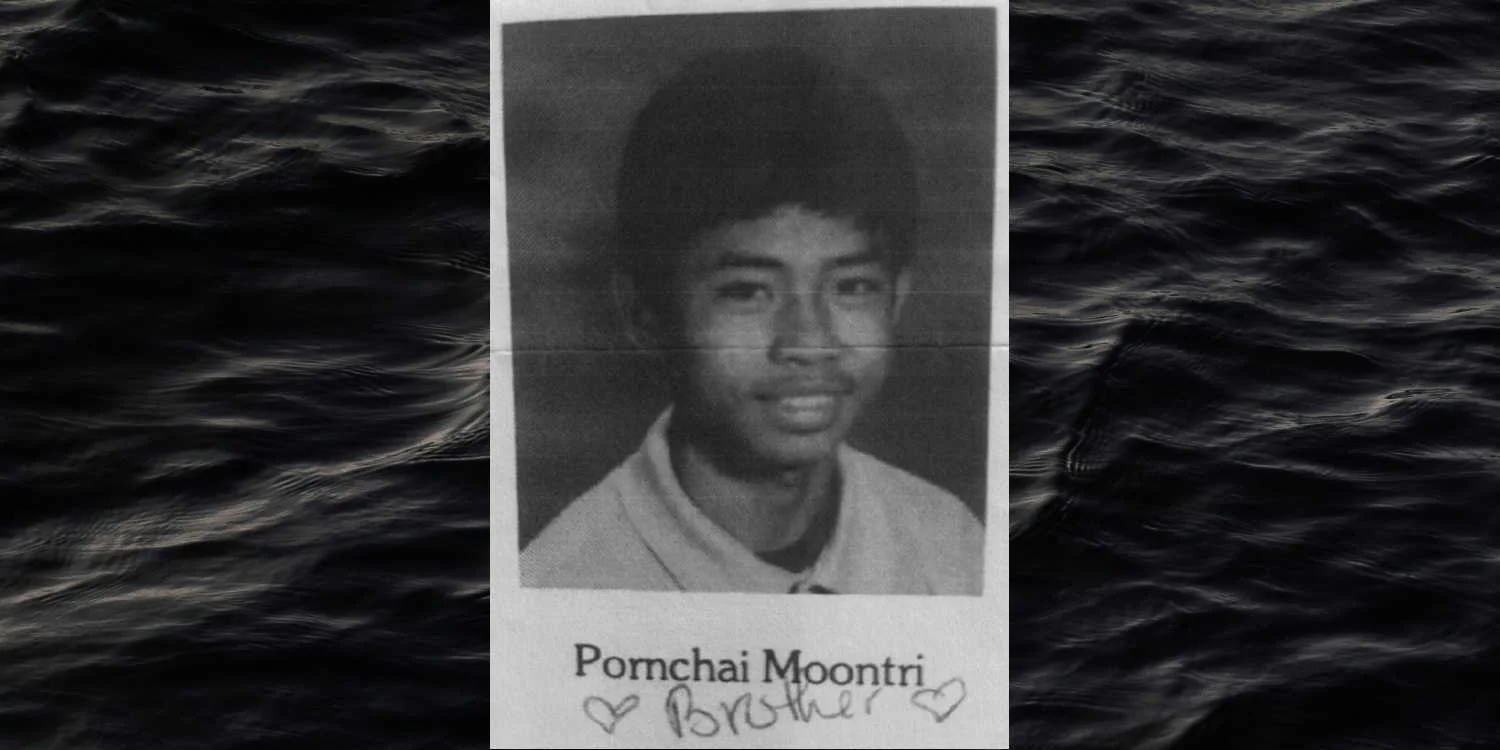
THE SILENCE
“I don’t even know where to begin,” Max told me dismally. “I don’t even know how to learn about Thailand.” I knew I had to start writing, but this was two years before even the idea of this blog was conceived. A day in the prison library produced some addresses. First, I wrote of Max’s situation to Catholic Charities in the Diocese of Manchester (NH). They are, after all, a global network. No response, but no real surprise there. Then I wrote to the national office of Catholic Charities. No response. Then I wrote to the Office of Immigration and Refugee Assistance sponsored by my Diocese. No response. Then I wrote to the Catholic Legal Immigration Network at Boston College. No response. I knocked at the door of every official Catholic agency I could find. No one answered. I knocked, and I waited, and I knocked some more.
I cannot convey in words the utter frustration of writing repeatedly only to have my overtures met with silence. I decided that the problem was not Pornchai’s plight, but rather mine. I told Max that we will have to write all these letters again, but coming directly from him. So we redrafted all the letters under his name. More knocking; more waiting. More silence.
When all of our letters from prison were relegated to the netherworld without responses, I took it personally. I knew we needed a different approach. I asked Max to candidly write his life story — which is an amazing story in and of itself — in as few pages as possible, and let me send it to the few Catholic contacts I had who did not ignore our plight. One of them was Bill Donohue, President of the Catholic League for Religious and Civil Rights. Once he read “Pornchai’s Story,” he wrote back immediately asking if he could publish it on the Catholic League website. From there, it slowly made its way around the world. We knocked and knocked, and waited some more.
The late Father Richard John Neuhaus — a courageous Catholic writer and editor of First Things magazine — sent Max a personal letter to tell him how very important his story is, not only for Max, but for the Church. Father Neuhaus promised to pass the story along to others. This was a year before Father Neuhaus faced his own untimely death from cancer in January, 2009. More knocking, and more waiting.
Max started receiving letters from other important figures in the Church. One came from His Eminence Cardinal Kitbunchu, Archbishop Emeritus of Bangkok. Max was bowled over by that letter. Another came from the Rome Office of Ambassador Mary Ann Glendon, who had been appointed by President George W. Bush as U.S. Ambassador to the Holy See.
Bill Donohue extending to Max honorary membership in the Catholic League and promised to promised to promote his story. My article for Catalyst appeared at the same time, in the July/August 2009 issue. It was “Due Process for Accused Priests.” As an unintended consequence, Pornchai’s story and mine became linked together.
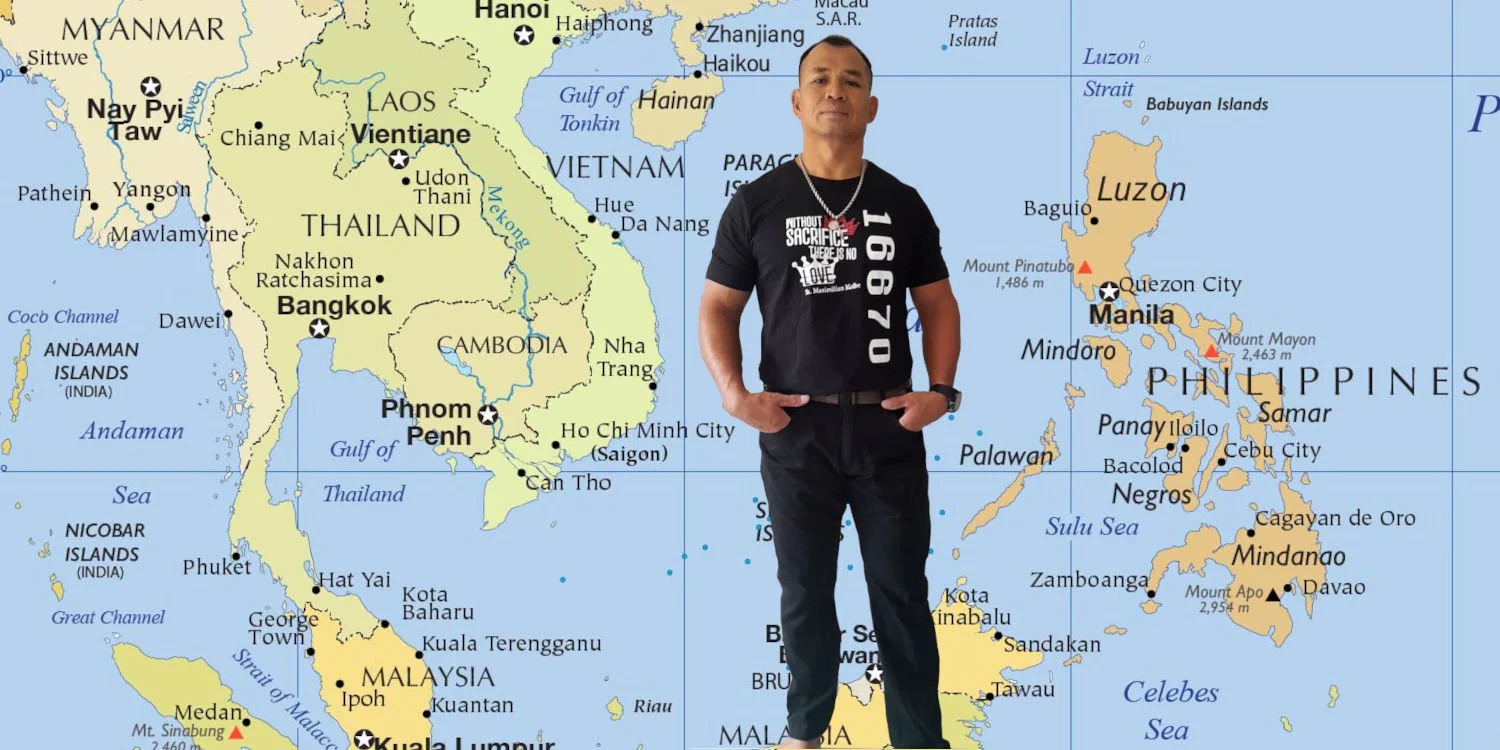
Pornchai’s Story
Here is Pornchai’s Story:
[From Dr. Bill Donohue: ] As we begin the New Year, we’d like to share with you this moving account of one young man’s conversion story.
My name is Pornchai Moontri, and as I write this I am prisoner #77948 in the New Hampshire State Prison. I come to the Catholic faith after a painful journey in darkness that my friend, Father Gordon MacRae, has asked me to write candidly. This is not something I do easily, but I trust my friend.
I was born in Bua Nong Lamphu, in a small village in the north of Thailand near Khon Kaen on September 10, 1973. At the age of two, I was abandoned by my mother and a stranger tried to sell me. A distant teenaged relative rescued me. He walked many miles to carry me away to his family farm where I worked throughout my childhood raising water buffalo, rice, and sugar cane. I never attended school, however, and never learned to read and write in Thai. Though my childhood involved hard work, I was safe and happy.
When I was 11 years old, my mother re-emerged in Thailand with a new husband — an American air traffic controller from Bangor, Maine. I was taken from Thailand by them against my will, and brought to the United States. This transition was a trauma to be endured. A month after my arrival in Bangor, my new stepfather’s motive for importing a ready-made Thai family became clear. I was forcibly raped by him at age 11, an event that was to be repeated with regularity over the next three years. I was a prisoner in his house, and resistance was only met with violence against me and against my mother. I was all of 100 pounds. I cannot describe this further. Welcome to America!
Being one of only three Asians in 1985 Bangor, and speaking little English, I did not readily comprehend my new names. “Gook,” “V.C.” and “Charlie” meant nothing to me, but I could sense the scorn with which such names were delivered. Because my English was poor, I was treated as though I was stupid. Part of my humiliation was that I had to get a paper route at age 12, and my earnings were taken from me to pay for the “privilege” of living in my captor’s house. Stephen King’s home was on my paper route. Mr. King once gave me a Christmas bonus of 25¢ for delivering his newspaper all year. The horror stories he wrote about Maine are all true. Remember the one with the evil clown? It’s true.
When I was 14, my English was better. I was a little bigger, and a lot stronger — and nothing but angry. Anger was all I had. So with it I fled that house and became a homeless teenager in and around Bangor. One day the Bangor police actually picked me up and forced me to go “home.” I would rather have gone to one of the ones Stephen King wrote about. I just fled again and again, and ended up at the Good Will Hinckley School for people like me. I was there for a year and got kicked out for fighting. I was always fighting. I fought everyone.
Back on the streets of Bangor, I began to carry a knife. At 17 and 18, a lot of people were after me. I lived under a bridge for a while and sometimes my mother would bring me things. I tried to climb out of the deep hole I was in by signing up for night classes at age 18 to finish my high school diploma. I was kicked out of Bangor High School for punching the principal.
One night, at age 18, something that lived in me got out. I got very drunk with friends, and we walked into a Bangor Shop & Save supermarket to buy cigarettes. I barely remember this. In my drunken state, I opened a bottle of beer from a case and started to drink it. The manager confronted me and ordered me to leave. I tried to flee the store, but the manager and other employees then tried to keep me there. I tried to fight them off to flee. When I got outside, a manager from another Shop & Save had witnessed the incident and pounced on me. I was 130 pounds and was pinned to the ground by this 190-pound man. I think something snapped in my mind. IT was happening again. I fought, but his dead weight was suffocating me. The newspapers would later tell a different story, but this was the truth, and it is all I remember.
In jail that night, I was questioned for three hours. I was told that I had stabbed a man and was charged with attempted murder. I have no memory, to this day, of stabbing the man. The next morning, I awoke in a jail cell and was told that I was charged with Class A murder. The man had died during the night. I was told that I blew a .25 on the Breathalyzer, but the result was so high it was discarded as an error.
My stepfather could have hired expert counsel, but it was clearly not in his best interest that my life be evaluated, so I was left in the care of a public defender who wanted this high profile case off his desk. There was talk about the Breathalyzer, and “level of culpability,” and things like “defensive vs. offensive wounds,” but in the end there were no theories, no experts and no defense. I was terrified of being abandoned. My mother came to me in jail and pleaded with me to protect her and “the family” by not revealing what happened in my life. So I remained silent. I offered no defense at all. My co-defendant told the truth of my being pinned down, but he was not believed. I was convicted of “Class A murder with deliberate indifference” and sentenced, at age 18, to 45 years in a Maine Prison. Maine has no parole.
I was also sentenced with the soul of the innocent man whose life I took — despite my being unable to remember taking it. The mix of remorse and anger was toxic in prison, and I gave up. Prison became just an extension of where I had already been. My anger raged on and on, and I spent 13 of my 15 years in prison in Maine’s “supermax” facility for those who can’t be trusted in the light of day.
Five years into my imprisonment, I learned one night in my supermax cell that my mother and stepfather had relocated to the Island of Guam where my mother was murdered. She was pushed from a cliff. [The story that was told to Pornchai, but it was false.] The only suspect was her husband but there was no evidence. I was now alone in my rage.
After 14 years of this, the Maine prison decided to send me to an out-of-state prison. I had no idea where I was to be sent. I arrived in the New Hampshire State Prison on October 18, 2005 dragging behind me the Titanic in which I stored all my anger and hurt and loss and loss and loss — and guilt.
I started my time in a new prison by getting into a fight and ended up in the same old place — the hole. When some months went by, I was given another chance. I was sent to H-Building where I met my friend JJ, an Indonesian who was waiting to be deported. JJ introduced me one day to Gordon, who he said was helping him and some others with appealing their INS removal orders or with preparing themselves to be deported. He seemed to be the only person who even cared. JJ trusted Gordon, so I had several conversations with him. A few months later, I was moved to the same unit in which he lives in this prison. We became friends.
By patience and especially by example, Gordon helped me change the course of my life. He is my best friend, and the person I trust most in this world. It is the strangest irony that he has been in prison for 13 years accused fictionally of the same behaviors visited upon me in the real world by the man who took me from Thailand. I read the articles about Gordon in The Wall Street Journal last year. I know him better, I think, than just about anyone. I know only too well the person who does what Gordon is wrongly accused of. Gordon is not that person. Far from it. It is hard for me to accept that laws and public sentiment allow men to demand and receive huge financial settlements from the Catholic Church years or decades after claimed abuse while all that happened to me has gone without even casual notice by anyone — except, ironically, Gordon MacRae.
On September 10, I will be 34 years old. I have been in prison now for nearly half of my life, but in the last year I have begun to know what freedom is. My anger is still with me and it always lurks just below the surface, but my friend is also with me. We both recently signed up for an intense 15-week course in personal violence. He is doing this for me. I spend my days in school instead of in lock-up now, and I will soon complete my High School diploma. Gordon helped me obtain a scholarship for a series of non-credit courses in Catholic studies at Catholic Distance University. In the last year, with help and understanding, I have completed programs offered in the New Hampshire prison. One day I felt strangely light so I looked behind me, and the Titanic was not there. I parked it somewhere along the way. I have put my childhood aside. Now I am a man.
In March of this year, after 15 years in prison, I was ordered by an INS court to be removed from the United States and deported to Thailand at the end of my sentence in 17 to 20 years or so. Gordon hopes that I can seek a sentence reduction so that I can return to Thailand at an age at which I may still build a life. There are many obstacles. The largest is that I do not speak Thai any longer and I never had an opportunity to learn and to read and write in Thai. We are working hard to prepare me for this. Though years away, it is a very frightening thing to go to a country only vaguely familiar. I have not heard Thai spoken since age 11, 23 years ago. There is no one I know there and no place for me to go. I have no home anywhere.
Along this steep path, I have made a decision to become Catholic. The priest in my friend has not been extinguished by 13 years in prison. It is still the part of him that shines the brightest. Gordon never asked me to become Catholic. He never even brought it up. I t is the path he is on and I was pulled to it by the force of grace, and the hope that one day I could do good for others. Gordon showed me a book, Jesus of Nazareth, in which Pope Benedict wrote: “The true ‘exodus’…consists in this: Among all the paths of history, the path to God is the true direction that we must seek and find.”
I am taking a correspondence course in Catholic studies through the Knights of Columbus and I look forward to the studies through Catholic Distance University. I go to Mass with Gordon when it is offered in the prison, and our faith is always a part of every day. When I return to the place I haven’t seen since age 11, I want to go there as a committed Catholic open to God’s call to live a life in service to others. It is what someone very special to me has done for me, and I must do the same.
My friend asked me to sit down today and type the story of my life and where I am now. He asked me to let him send this to a few friends who he says may play some role — directly or indirectly — in my life some day. The account is my own. What Father Gordon added was hope, and somehow faith has also taken root. In prison, hope and faith are everything. Everything!
[Written by Pornchai Moontri in 2008 and published by the Catholic League.]
Thanks to Bill Donohue and the Catholic League, “Pornchai’s Story” made its way around the world and was read to Catholics in Thailand. Pornchai Moontri’s Divine Mercy Bridge to Thailand was built despite many obstacles.
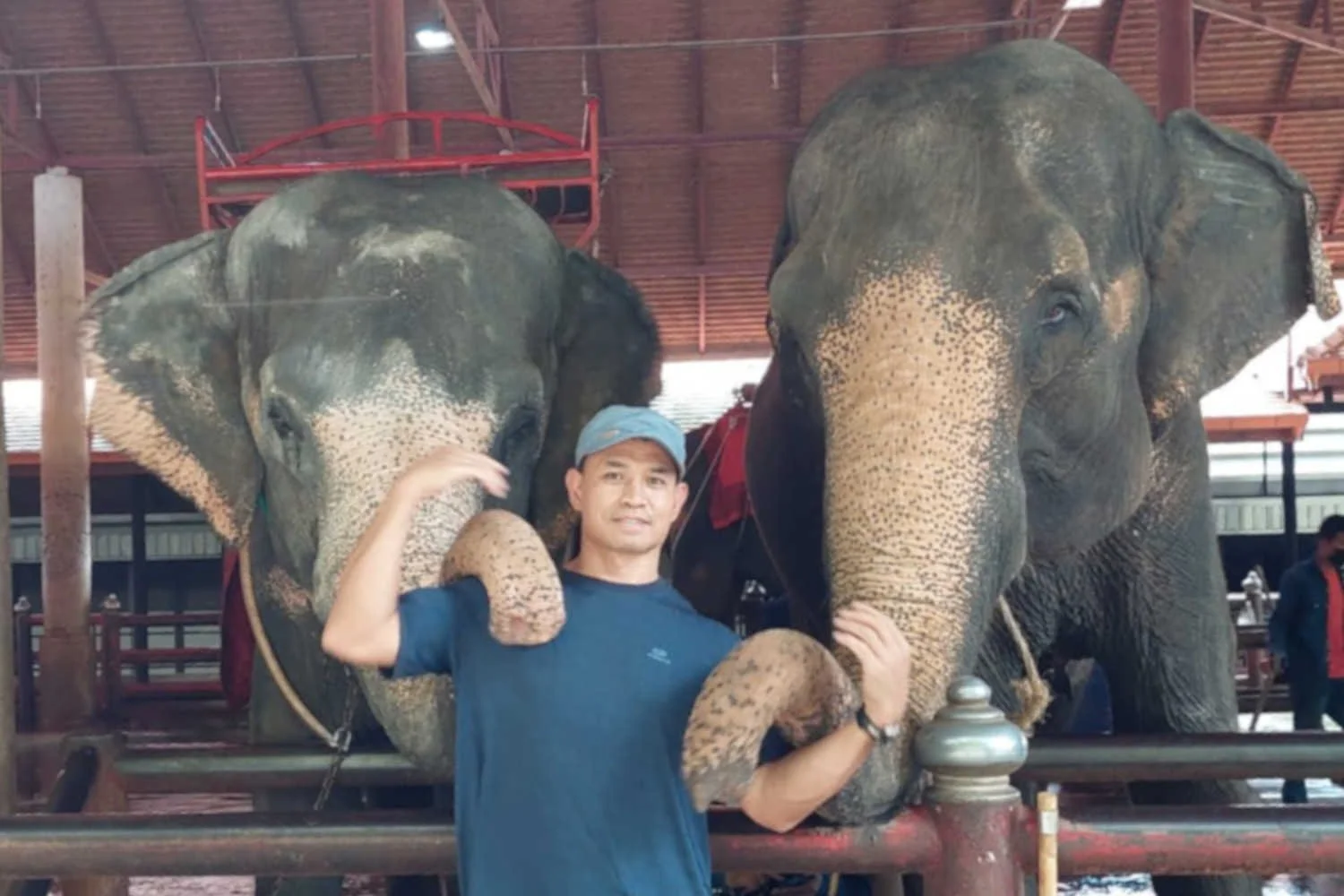
Note from Father Gordon MacRae: Pornchai’s story does not end here. There were other miracles yet to be told, but they are told in other posts here:
Book of Tobit: The Angel Raphael on the Road with Pornchai Moontri
The Parable of a Priest and the Parable of a Prisoner
Getting Away with Murder on the Island of Guam
A Catholic League White House Plea Set Pornchai Moontri Free

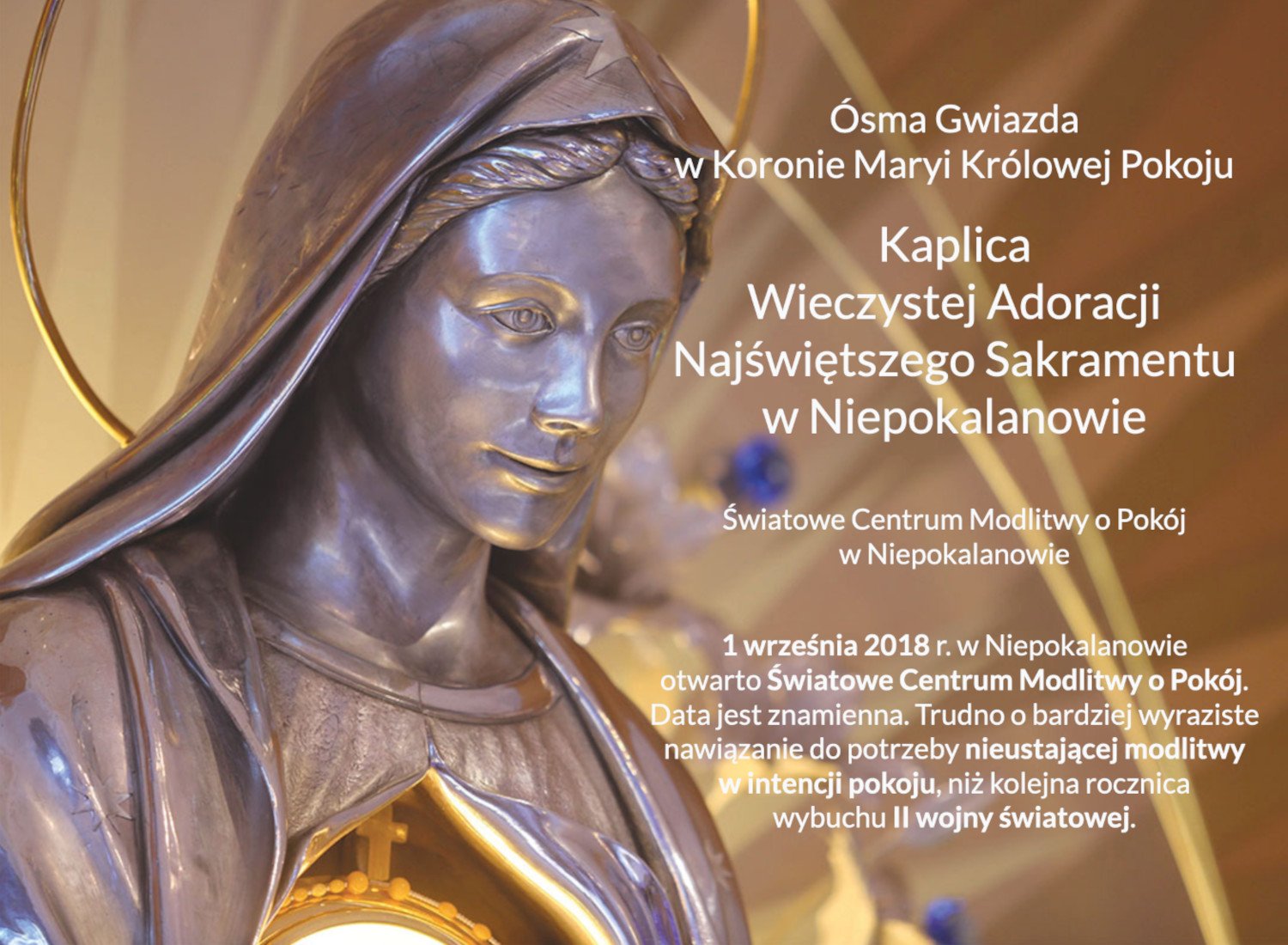

The Eucharistic Adoration Chapel established by Saint Maximilian Kolbe was inaugurated at the outbreak of World War II. It was restored as a Chapel of Adoration in September, 2018, the commemoration of the date that the war began. It is now part of the World Center of Prayer for Peace. The live internet feed of the Adoration Chapel at Niepokalanow — sponsored by EWTN — was established just a few weeks before we discovered it and began to include in at Beyond These Stone Walls. Click “Watch on YouTube” in the lower left corner to see how many people around the world are present there with you. The number appears below the symbol for EWTN.
Click or tap here to proceed to the Adoration Chapel.
The following is a translation from the Polish in the image above: “Eighth Star in the Crown of Mary Queen of Peace” “Chapel of Perpetual Adoration of the Blessed Sacrament at Niepokalanow. World Center of Prayer for Peace.” “On September 1, 2018, the World Center of Prayer for Peace in Niepokalanow was opened. It would be difficult to find a more expressive reference to the need for constant prayer for peace than the anniversary of the outbreak of World War II.”
For the Catholic theology behind this image, visit my post, “The Ark of the Covenant and the Mother of God.”

Old Max Moontri Had a Farm, EIEIO!
Having built with pick and shovel a 150 meter walkway on a property he landscaped, Pornchai Moontri spent his 50th Birthday plowing and planting an acre of farmland.

Having built with pick and shovel a 150 meter walkway on a property he landscaped, Pornchai Moontri spent his 50th Birthday plowing and planting an acre of farmland.
September 13, 2023 by Fr Gordon MacRae
I stumbled upon a late night TV movie recently — though I do not know the title — just as a young man was visiting his father in prison. I was late tuning into the film so the plot was not immediately clear. It seemed that the father was innocent of whatever crime sent him to prison and his son was very anxious to prove it. I was riveted to the scene. Through security glass where they conversed via monitored telephones, the father was urging his son to move on with his life and be free. The young man protested, “But I want YOU to be free!” His father replied, “My freedom is in witnessing yours.”
I pondered this for a few moments laying there in the dark of night in a prison cell. And then I began to cry. That was most unusual. In nearly 30 years of seeing my life implode from false witness, I can count on one hand the number of times I have shed even a single tear. It just isn’t in my nature to cry easily. I wrote once that women seem to cry much more easily than men. Perhaps men do not cry nearly enough.
That night I could not contain what was spilling out from within me. I realized with an emotional collision of joy and sadness that a part of me now compensates for my loss of freedom by witnessing it unfold in the life of Pornchai Moontri with whom I spent 15 years surviving in a prison cell. In that time, a bond of trust grew between us in a place where trust is the rarest of commodities. We became each other’s family, and the basis of our connection was always fatherhood. Pornchai never had a father. I spent the last forty one years being called one.
I was 20 when Pornchai was born, and on September 10 this week, he turned 50, so do the math. Fatherhood in this case was not an event, but a process. Over time, while learning the entire story of Pornchai’s tragic life, it gradually became my own life’s mission to secure his freedom even above my own.
Overtime, we encountered mystical connections in this bond. They include Divine Mercy and the intercessory graces of a Patron Saint who also surrendered his life in this life to save another. I do not fully understand these connections, but I know in my heart that they are there. Embracing fatherhood makes men see their lives differently. As I quoted in a recent post:
“When I was a child, I spoke like a child, I thought like a child, I reasoned like a child. When I became a man, I gave up childish ways. Now we see dimly as in a mirror, but then we shall see face to face. Now I understand only in part, but then I shall understand fully even as I am fully understood.”
— 1 Corinthians 13:10-12
Three years after Pornchai’s deportation to Thailand, I still find myself, as any true father would, reveling in his freedom as though revisiting an inspired work of art that I somehow had a hand in creating. This was perhaps evident in our recent post about the earliest days of this blog and the first posts I wrote back then. Some readers told me that it made them cry as well, but not just from sadness. I hope you did not miss “Maximilian Kolbe: The Other Prisoner Priest in My Cell.”

A Passage to India
The interconnectedness of our lives did not suddenly end because of time and distance. In his final years here, Pornchai and I were the sole figures offering assistance to other prisoners facing deportation. Regardless of what anyone thinks about whatever offense brought them to this pass, deportation is often an inhumane nightmare impacting bonds within entire families.
One of the persons we assisted in navigating deportation was a young Cambodian man who was brought to the United States at age two. At age 22, he pled guilty to a petty crime without ever being told that doing so would result in his forced deportation. He spoke not a word of Khmer, the language of Cambodia. He was left in the city of Phnom Penh, and since then has disappeared.
One of our good friends here, Abishek, a native of India, had been in the United States for much of his adult life before some out-of-character and out-of-culture domestic dispute and breakup landed him in prison. As with most such situations, Abishek lost not only his freedom, but the entire infrastructure of his life. His close-knit family in India kept in contact from a great distance, but he leaned on Pornchai and me for moral support when he most needed it as the time of deportation approached.
In 2020, Abishek was understandably interested in the process Pornchai was facing because he knew he would soon face the same thing. He was alarmed to learn that Pornchai remained in the dismal custody of Immigrations and Customs Enforcement (ICE) for over five months at the height of the global Covid pandemic. I wrote of this ordeal in 2020 in “ICE Finally Cracks: Pornchai Moontri Arrives in Thailand.”
We hoped this process would be easier for Abishek once the pandemic receded, but that was not the case. He ended up serving six months beyond his prison sentence, but could not seek release because of the ICE hold on him. After waiting six months for ICE to act, I helped Abishek write to Regional ICE Headquarters in Burlington, Massachusetts. Just two weeks later, he was suddenly gone in the night. That was six months ago, and for all that time we assumed that he was safely back in India adjusting to freedom, family and a new life. We thought no news was good news.
But we were wrong. A few weeks ago when I called Pornchai in Thailand, he told me that he received a call at 1 AM during the night before. ICE detainees without resources get one free five-minute call per week. Abishek used it to call Pornchai in Thailand. It turned out that for six months since leaving this prison, Abishek was stranded just 50 miles away in a jail where ICE rents space for detainees awaiting deportation. Abishek was now one year past his prison sentence.
Pornchai and I were powerless to do anything directly so I sent an email message from the tablet in my cell in Concord, New Hampshire prison to Clare Farr, a trademarks attorney in Western Australia who helped Pornchai immensely. She then called Pornchai in Thailand who gave what little information we knew about our friend’s plight. Clare contacted the Indian Embassy in Canberra, Australia and conveyed all that we told her. The Indian Embassy in Australia then contacted the Indian Government which in turn contacted the Indian Consulate. Two weeks later, just days before I type this, Abishek’s odyssey came to an end. Thanks to the intervention of Clare Farr in Australia, Abishek is now reunited with his family in India.
The bizarre thread of this story is worth repeating. Indigent ICE detainees get one free five-minute phone call per week. From ICE detention in New Hampshire, Abishek called Pornchai Moontri in Thailand at 1 AM. Pornchai then contacted me in New Hampshire. I contacted Pornchai’s advocate, Clare Farr in western Australia, who then contacted the Indian Embassy in Canberra. Then the Embassy contacted the Indian Government in New Delhi, who contacted the Indian Consulate in New York instructing them to prepare Abishek’s travel papers and fax them to ICE in Burlington, Massachusetts. ICE then booked a flight for Abishek to get him out of ICE detention in New Hampshire. After a six-month delay, Abishek arrived in India two weeks after his free five-minute phone call to Thailand. We could not make this story up!
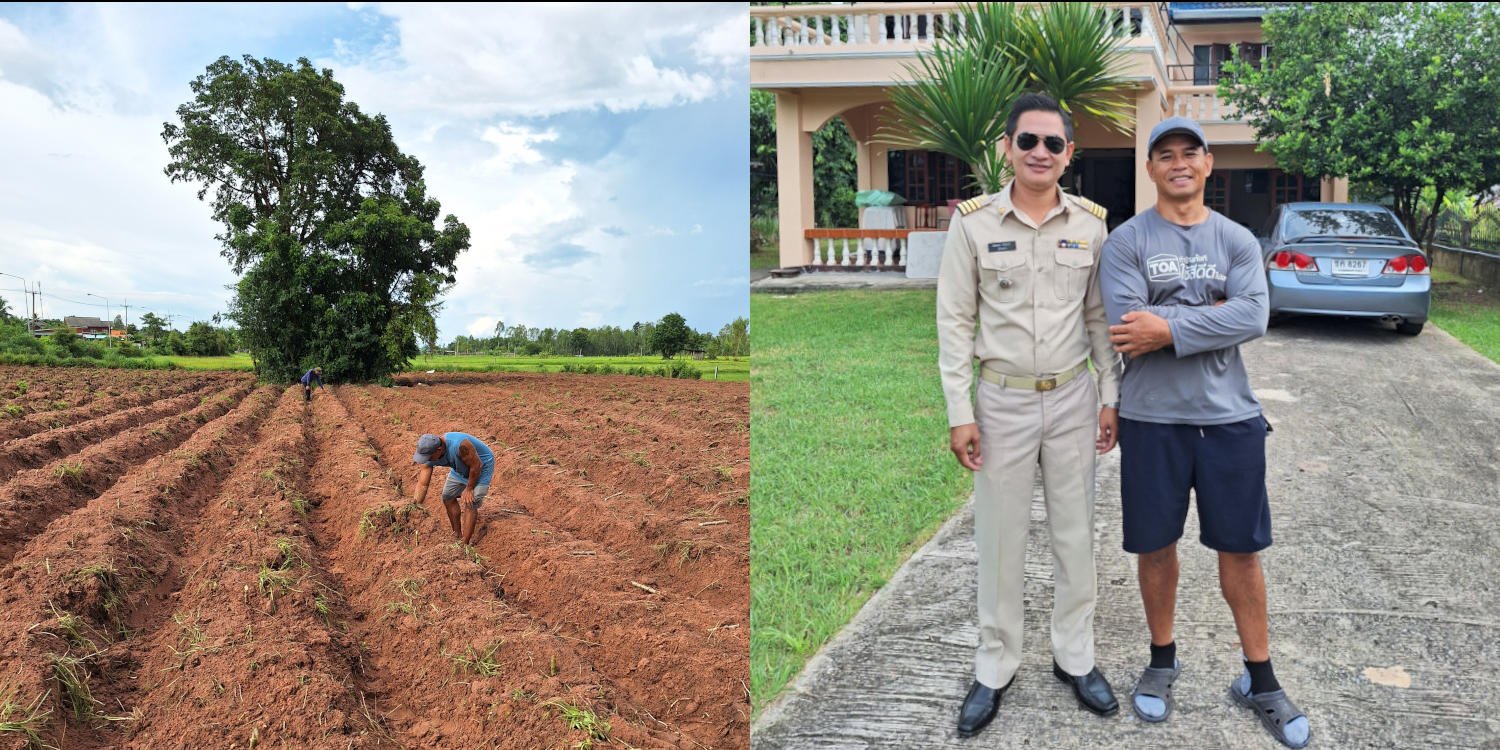
Chalermpon Srisuttor, Mayor of Phuviang, and Pornchai Moontri.
Pornchai Set His Heart on Plowing Furrows (Sirach 38:26)
As all of the above was going on, Pornchai sent me some photos of his finished, back-breaking work creating a 450-foot walkway on property he landscaped in Pak Chong, Thailand. I actually tried to talk him out of his next project, but as the quote from the Book of Sirach implies above, his mind was made up. Pornchai has not yet received any income from the work we described in “For Pornchai Moontri, Hope and Hard Work Build a Future.”
All his hard work is building hope for a future livelihood as Thailand builds a high-speed railroad with a depot in each of the places where Pornchai is working now. I have been sending him a small amount of money each month for food and expenses. It does not take a lot — $100 U.S. dollars equals about over 3,000 Thai baht at the current exchange rate. It helps Pornchai manage food and necessities for a month while waiting for the tourism season and rental housing customers.
Pornchai is no stranger to hard work so he decided to take on another project while waiting. About 250 miles north of Pak Chong, where Pornchai now lives in the District of Nakhon Ratchasima, is the village of Phuviang (Pu-vee-ANG) . It is the place where Pornchai was born, was orphaned, and then was taken from at age eleven. There is a lot of pain there. There is also a small house and piece of land that once belonged to his mother. The house was only half built when Pornchais Mother, Wannee, traveled to Guam to her death in 2000, an unforgettable story told in “Getting Away with Murder on the Island of Guam.”
Not far from that unfinished house is an acre or so of farmland that belonged to Wannee. Pornchai’s extended family cultivates rice nearby, so Pornchai decided to go up to Phuviang and plant a crop. It had to be something that he could plant and then leave alone. He chose to plant cassava, a crop that grows in Asian tropical zones and is self-sustaining until harvested.
The cassava plant grows up to about 8-feet in height and its edible roots are typically three inches in diameter and up to three feet long. The roots are akin to a sweet potato, and are a staple in some Asian countries. Ground into flour, cassava is also used to make sweet bread or cakes.
Growing cassava is easy, but planting it is an enormous amount of work. Cassava roots from a past crop have to be cut into smaller pieces and soaked in water for several days. The pieces are then planted along plowed furrows as in the photo atop this post. Pornchai is pictured there along with a local helper. The photo above was taken by Chalermpon Srisuttor, the Mayor and Town Manager of Phuviang who has become a friend to Pornchai — enough of a friend to help him plow and plant an acre of cassava!
The planting was finished just in time for Pornchai’s 50th birthday. I now want to remind him that when he arrived in Concord, NH from a long stint in solitary confinement in Maine in 2005, I had just turned age 52 while Pornchai was 32. He liked to circulate handmade birthday cards for our friends to sign for my birthday. They contained snarky little phrases like “Father G loves history so much because he was there for most of it!” and “Father G knows Latin because it was his first language!” Pornchai thought I was really old back then.
What goes around comes around! Happy Birthday, Max!
+ + +

Upper right: Chalathip Chiradomrong; Chalermpon Srisuttor, Mayor of Phuviang; and Pornchai Moontri. Lower left: Since Phuviang is very near to the Thailand headquarters of the Society of the Divine Word Order where Fr John Hung Le is local Superior, he stopped to spend an afternoon with Pornchai and even to pitch in a bit on the plowing and planting. Upper left and lower right: First signs of growth a few days apart.
+ + +
Note from Fr Gordon MacRae: Thank you for reading and sharing this post. You may also like these related posts from Beyond These Stone Walls:
Maximilian Kolbe: The Other Prisoner Priest in My Cell
ICE Finally Cracks: Pornchai Moontri Arrives in Thailand
For Pornchai Moontri, Hope and Hard Work Build a Future
Getting Away with Murder on the Island of Guam
The Eucharistic Adoration Chapel established by Saint Maximilian Kolbe was inaugurated at the outbreak of World War II. It was restored as a Chapel of Adoration in September, 2018, the commemoration of the date that the war began. It is now part of the World Center of Prayer for Peace. The live internet feed of the Adoration Chapel at Niepokalanow — sponsored by EWTN — was established just a few weeks before we discovered it and began to include in at Beyond These Stone Walls. Click “Watch on YouTube” in the lower left corner to see how many people around the world are present there with you. The number appears below the symbol for EWTN.
Click or tap here to proceed to the Adoration Chapel.
The following is a translation from the Polish in the image above: “Eighth Star in the Crown of Mary Queen of Peace” “Chapel of Perpetual Adoration of the Blessed Sacrament at Niepokalanow. World Center of Prayer for Peace.” “On September 1, 2018, the World Center of Prayer for Peace in Niepokalanow was opened. It would be difficult to find a more expressive reference to the need for constant prayer for peace than the anniversary of the outbreak of World War II.”
For the Catholic theology behind this image, visit my post, “The Ark of the Covenant and the Mother of God.”