“There are few authentic prophetic voices among us, guiding truth-seekers along the right path. Among them is Fr. Gordon MacRae, a mighty voice in the prison tradition of John the Baptist, Maximilian Kolbe, Alfred Delp, SJ, and Dietrich Bonhoeffer.”
— Deacon David Jones
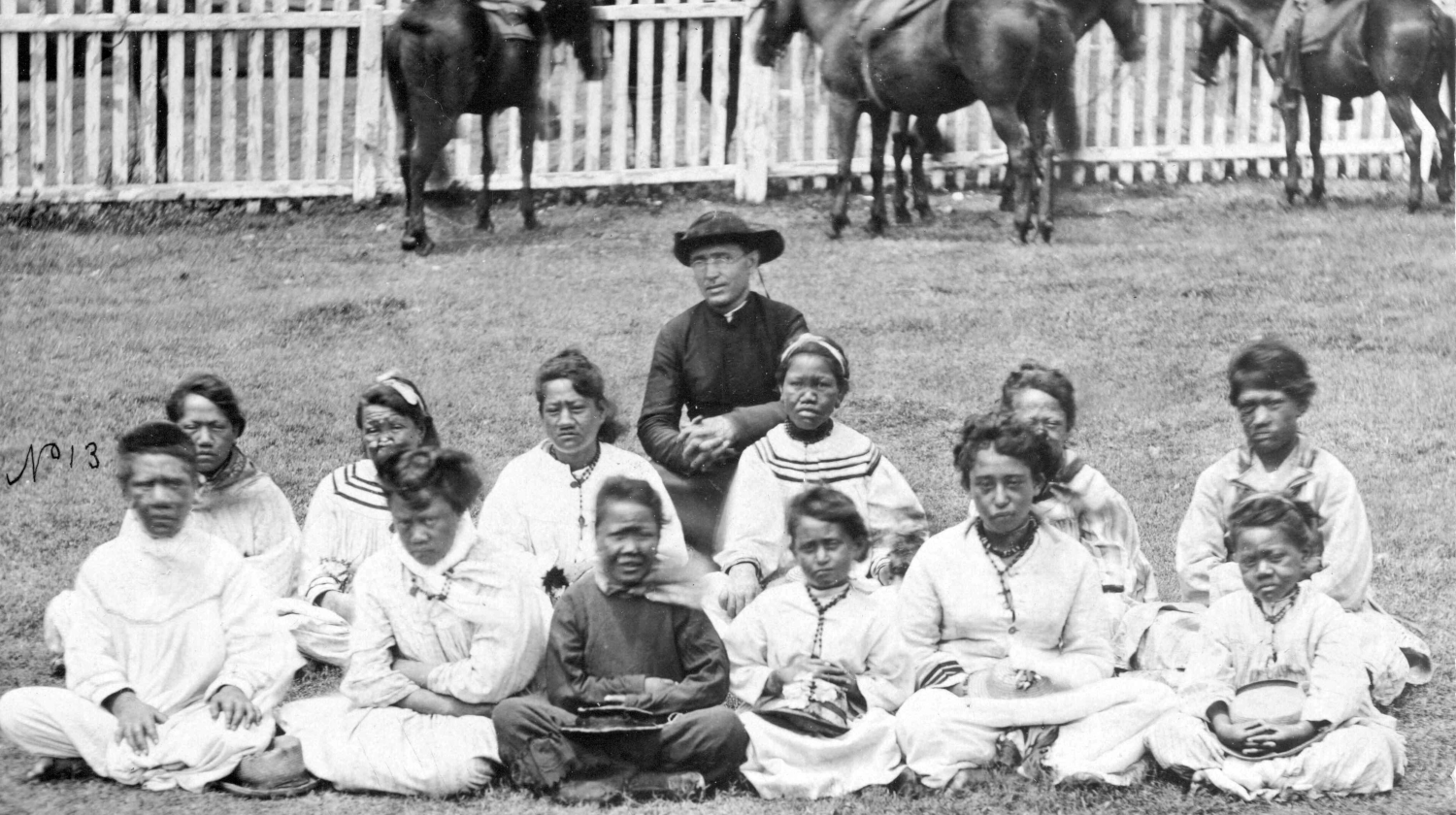
A Lesson From Saint Damien of Molokai, Leper Priest
Should the State’s flawed justice be mirrored in the Church? This must be asked and the truth written. But ask as well, “Can a leper priest also serve God?”
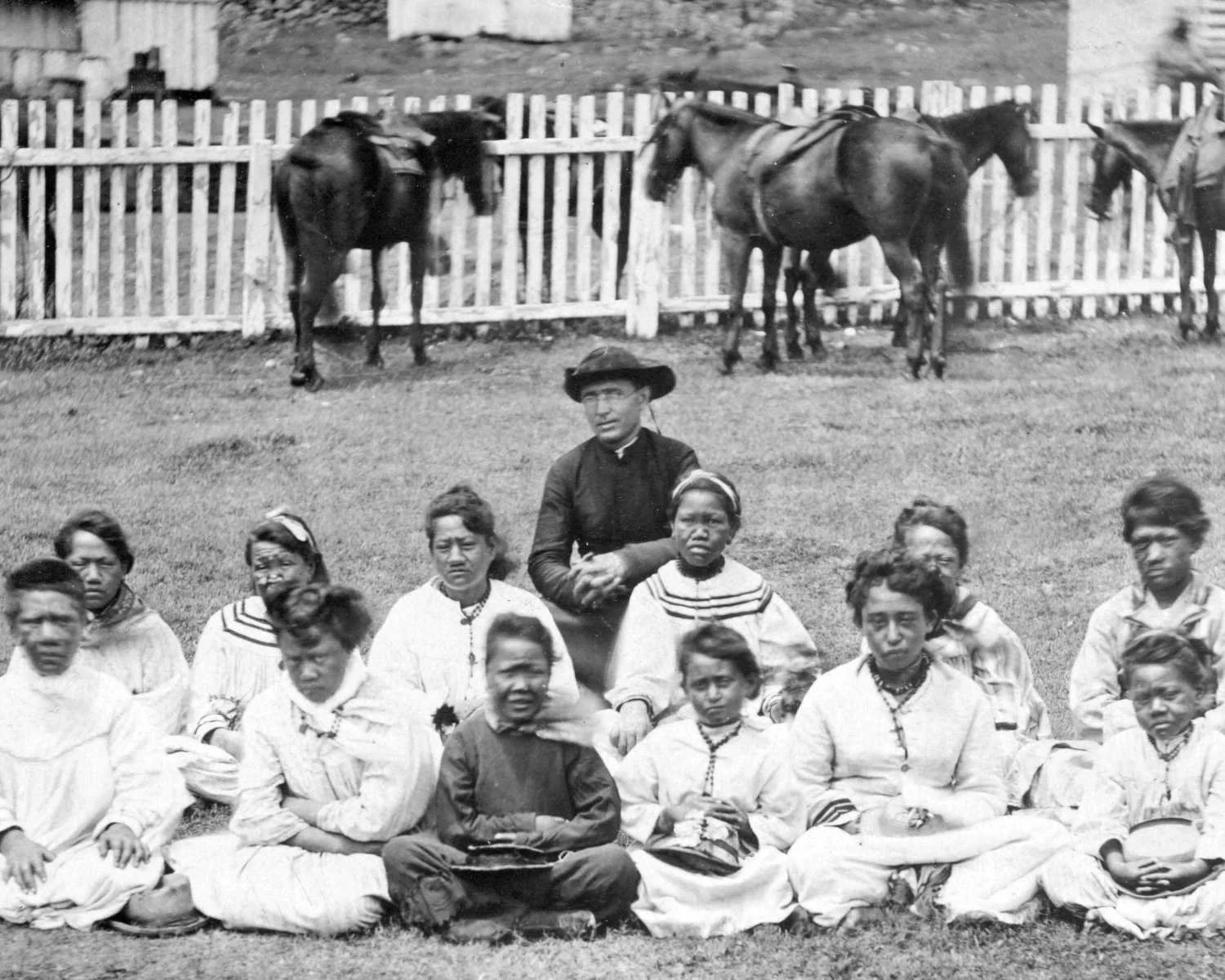
Should the State’s flawed justice be mirrored in the Church? This must be asked and the truth written. But ask as well, “Can a leper priest also serve God?”
May 10, 2026 by Father Gordon MacRae
This is a post I wrote on May 6, 2015, and everything in it is relative to that time frame. However, just about everything in it also impacts the current time frame. So I am posting it again.
+ + +
Pornchai Moontri and I and other friends are just beginning another retreat program in prison sponsored by the National Shrine of The Divine Mercy and the Marians of the Immaculate Conception. One of the texts used for the retreat is, You Did It to Me, one of many such books by Father Michael Gaitley, MIC.
Something happened over the last few weeks that cast yet another, but brighter light on recent events that have so overshadowed Beyond These Stone Walls. The text for the retreat is You Did It to Me by Father Michael Gaitley, MIC. The timing of it is by design, of course, but not by my design. I just nudged Pornchai Max and pointed out a photo of both of us in the middle of the book. “My, for prisoners, you guys get around,” wrote BTSW reader Mary Fran Cherry back then. She alerted me to our photo in the book. The retreat lifted a corner of the shroud that overshadowed my life behind these prison walls beginning on Wednesday of Holy Week.
Ryan A. MacDonald wrote of this in “For One Priest, A Fate Worse than Dying in Prison,” the second of his excellent two-part analysis of a recent court ruling that was a setback in my hope for justice and freedom. I have much gratitude for Ryan’s effort, and especially so because he left you with hope by telling you that I learned of this decision just as I was reading, You Did it to Me.
While reading that book, my eyes were opened a little, just enough to see what discouragement kept me from seeing. It reminded me so vividly of a story that took place on the road to Emmaus at another time of discouragement:
“That very day two of them were going to a village named Emmaus, about seven miles from Jerusalem, and talking with each other about all these things that had happened. While they were talking and discussing, Jesus himself drew near and went with them. But their eyes were kept from knowing him … Then one of them, named Cleopas, answered him, ‘Are you the only visitor to Jerusalem who does not know the things that have happened there in these days?”
— Luke 24:13-23
Someone might ask that same question of me if I lapse into writing about a Divine Mercy retreat without addressing “all these things that had happened” in the arena of justice and injustice. So I am also most grateful to New Jersey Attorney Vincent James Sanzone for his enlightened analysis of the legal precipice awaiting me and other falsely accused priests in both Church and State: “A Criminal Defense Expert Unfurls Father MacRae Case.” Prior to writing that guest post, Attorney Sanzone wrote a brilliant letter to Pope Francis about this matter, and to EWTN. I believe the EWTN letter may have been what prompted Brian Fraga and the National Catholic Register to publish “New Hampshire Priest Continues the Long Road to Clear His Name” (NCRegister.com, March 18, 2015).
Was I discouraged by the outcome revealed to me on Wednesday of Holy Week? Yes, I was. Was I devastated as some have suggested? I was, for a time. Have I given up? Not hardly. That is about all I have to offer about this. More important things have happened, and I have no time to descend into a litany of woe-is-me. Another day, perhaps. It is time now to step out of this arena of justice and all its flaws, and to step back onto that road to Emmaus.
Voice from Beyond
As I wrote at the beginning of this post, something happened that cast a brighter light — brighter than my discouragement, at least — on the events of recent days. Let me first tell you what happened.
On the evening of Divine Mercy Sunday as this retreat began, Pornchai Maximilian sat in a chair to my right and Michael Ciresi to my left. Along with seventeen other prisoners who joined us, we watched and listened to a DVD presentation by Father Michael Gaitley to introduce the retreat. It was excellent, of course, and Pornchai was riveted to the projection of Father Gaitley on the prison chapel wall.
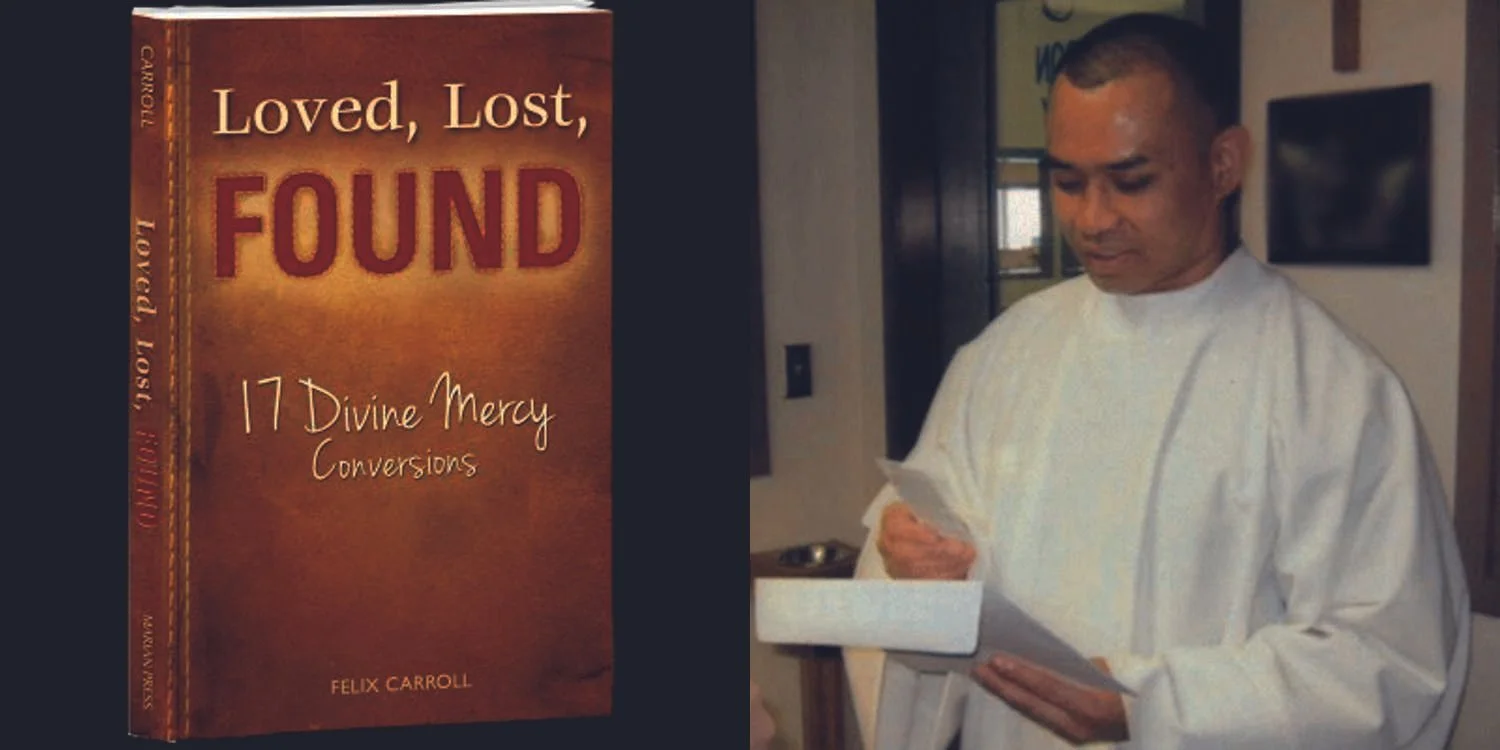
Every now and then the camera recording Father Gaitley swept over his audience, and there, seated near the back, I spotted a familiar face: Marian missionary Eric Mahl. You may recall that Pornchai and Eric Mahl both had chapters featuring them in Felix Carroll’s great Divine Mercy book, Loved, Lost, Found: 17 Divine Mercy Conversions. Later they met and became friends and brothers. I nudged Pornchai and pointed as Eric appeared on the wall. Just at that moment, Eric looked toward the camera and smiled. Pornchai smiled back.
The next day a letter arrived for Pornchai. As though right on cue, it was from Eric Mahl. It was a copy of a letter from Eric to some people who are helping Pornchai by organizing an effort to secure his future in Thailand when he is free from these stone walls. During his missionary outreach to prisons, Eric Mahl has had three meetings with Pornchai. On the last one, he was accompanied by Father Seraphim Michalenko who served as Vice-Postulator for the Cause of Canonization of Saint Maria Faustina. I wrote of that meeting in “Father Seraphim Michalenko on a Mission of Divine Mercy.” Eric also wrote of that meeting in his letter:
“This very holy priest had the opportunity to meet one-on-one with Pornchai in the Chapel, to talk to him and get to know him. When [Father Seraphim] and I were on our way home back to the Shrine in Massachusetts, he told me that the peace in that Chapel must be what Heaven is like and that Pornchai Moontri is a very holy and beautiful child of God. I write all of this to let you know how I desire to see this restored child of God out of prison and living free in Thailand where he could help the rest of society.”
— Letter of Eric Mahl
On April 19, the second Sunday evening of our retreat, we watched the second of Father Gaitley’s DVD presentations, and this time Pornchai listened intently while also looking for his friend Eric Mahl in the background. Later that evening, during a small group discussion led by Marian volunteer Jim Preisendorfer, I heard something astonishing. During Father Gaitley’s presentation, he spoke of the eight reasons why we do not appreciate the Trinity. One of them, Reason Number Seven, is “Because we listen to the voice of the enemy.” By way of example, I wrote in my notes:
“Part of Satan’s strategy is to keep us unfocused from our destiny. He lures us into being satisfied with this world so that so many of us just settle for what this life gives us, or despair over what this life denies us.”
When I read my own notes, I could not even remember writing that. It was as though my pen were on autopilot. Then table moderator Jim Preisendorfer asked for a comment on “Reason Number Seven.” No one spoke so I read my note above. Jim asked if I could give a concrete example. “I can,” Pornchai chimed in. He then spoke about a conversation he and I had seven years earlier. Hope seemed futile for him then. I had asked him back then if he had any hope at all for the future. I will never forget his answer, “I don’t have a future I only have a ‘Plan B.’ ”
Over time I came to understand what “Plan B” was, though, I had not heard Pornchai speak of it for a long time. At the table during our retreat that night, Pornchai explained that “Plan B” was his only plan, and it arose spontaneously within him. “Plan B” was to never leave prison. Having been cast into prison with a 45-year sentence at age 18, followed by years of solitary confinement in a dreaded “Supermax” prison, Pornchai had laid out in his mind the only future this life could promise him: to live out his life in prison. To die in prison. He had nothing else to look forward to.
On that night, however, Pornchai reflected what Eric Mahl described. He radiated the life of a restored child of God for whom that dismal “Plan B” was but a long forgotten memory. He spoke of it as a perfect example of how listening to the voice of the enemy can deny us our destiny. I sat there asking myself, “When did this happen. How did it happen?”
Then Pornchai jabbed a thumb in my direction at the table. “When this guy stepped into my life,” he said, “he released me from the grip of ‘Plan B.’ ” Pornchai described how he took a great risk to trust in some vague hope that was covered in a cloud and could not be seen, so he just took my word for it. “Now, seven years later,” he said that night, “ ‘Plan B’ is just an old memory with no power over me, and people all over the world have come together to replace it.”
While he spoke at that table, I looked down at my own thumbs as Pornchai jabbed his thumb in my direction. I could not look up. I knew that if I made eye contact with him at that moment, I would have fallen apart. My own plan for my life and my priesthood certainly never included life in prison for a crime that never took place. It never included being demonized and scapegoated to satisfy the demands of contingency lawyers and insurance companies as Ryan pointed out. It never included pleading for my Church to see the failures of American civil justice instead of just blindly declaring them final and fulfilled justice.
Ryan A. MacDonald charged in a comment a few weeks ago that the American hierarchy’s response to the priesthood crisis has been more like a housecleaning than a healing. My plan for my life never included a dread that my own bishop might echo in Rome the Twelfth Century plea of Henry II about Thomas Beckett “Will no one rid me of this turbulent priest?”
My plan for priesthood also never included Pornchai Moontri, nor could I have ever foreseen the notion that the tragedy that befell me could ever be anything other than a tragedy for someone else.
The Leper Priest
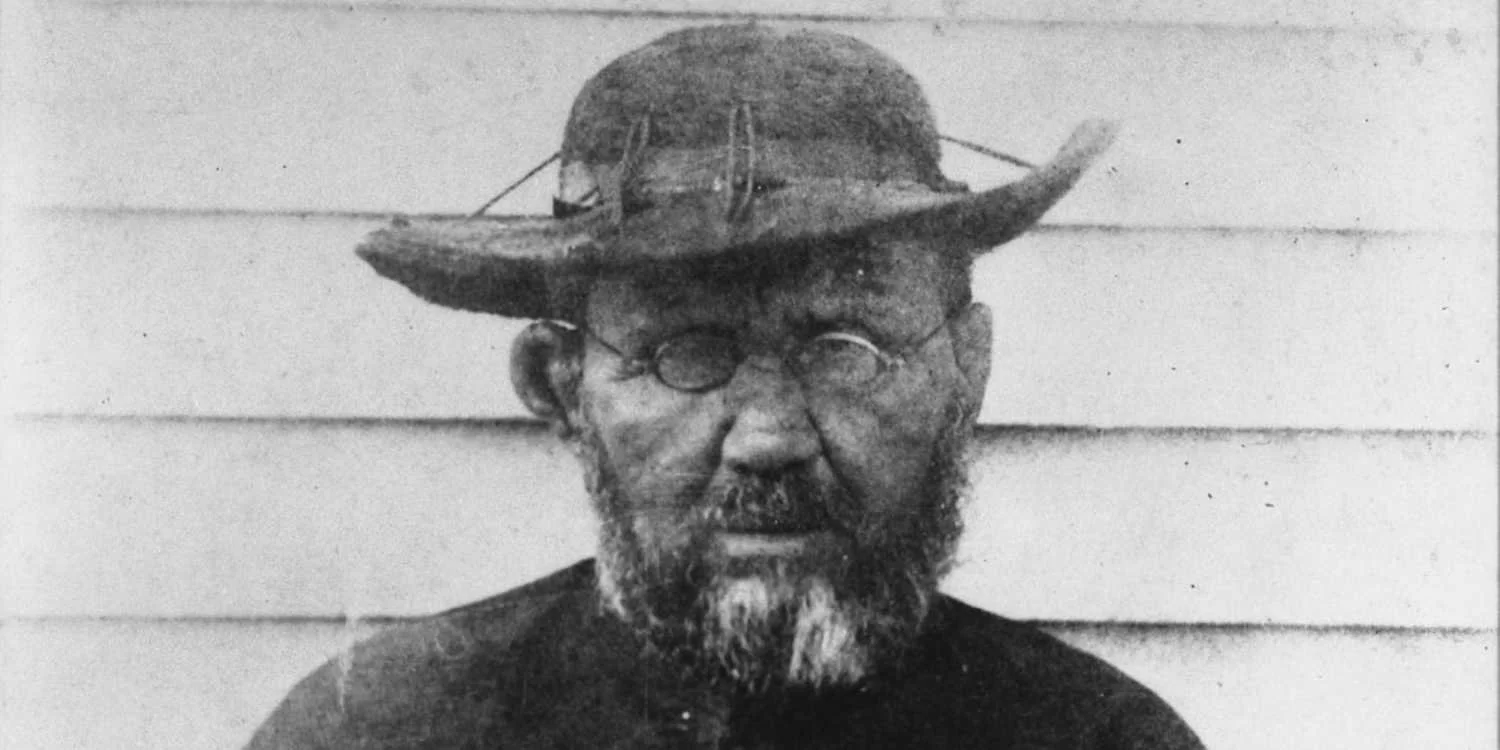
I vividly remember, as a young seminarian in the latter 1970s, watching a two-part PBS dramatization of the life of Father Damien de Veuster, the Belgian priest who in 2009 became Saint Damien of Molokai. I was fascinated by the PBS version. It remains in my psyche as one of the alluring things that drew me toward and kept me focused on a side of priesthood in danger of being lost today, the notion that priesthood is not a job, but an ontological state of being. To see priests “fired” and cast off seems like “Reason Number Seven,” like succumbing to the voice of the enemy as he lures priesthood from its destiny.
When Damien of Molokai was driven across that line between ministering to lepers and becoming a leper, it was seen as a tragedy to his friends, but hindsight sees it as a gift to the Church and the world. When he was canonized by Pope Benedict XVI in 2009, Emily Stimpson wrote of him in “Untamed Saint” in Our Sunday Visitor:
“Saints are made through trials and persecution. And Father Damien had more than his share of those. For most of the 16 years he served on Molokai, he served alone… He begged his superiors to send him help. Usually they ignored his requests. Twice, however, they did send someone. The first was a Dutch priest who complained incessantly. The second was a French priest who accused Father Damien of improper relations with the native women. His superiors and bishop grew tired of his constant demand for help. They considered him an obstinate, headstrong troublemaker. The government shared that opinion, and more than a few officials gave credence to false rumors circulated about him. His detractors heaped every sort of abuse and calumny upon Father Damien … Enduring his own dark night, he felt abandoned by God and unworthy of heaven.”
— Emily Stimpson, “Untamed Saint,” OSV, October 11, 2009

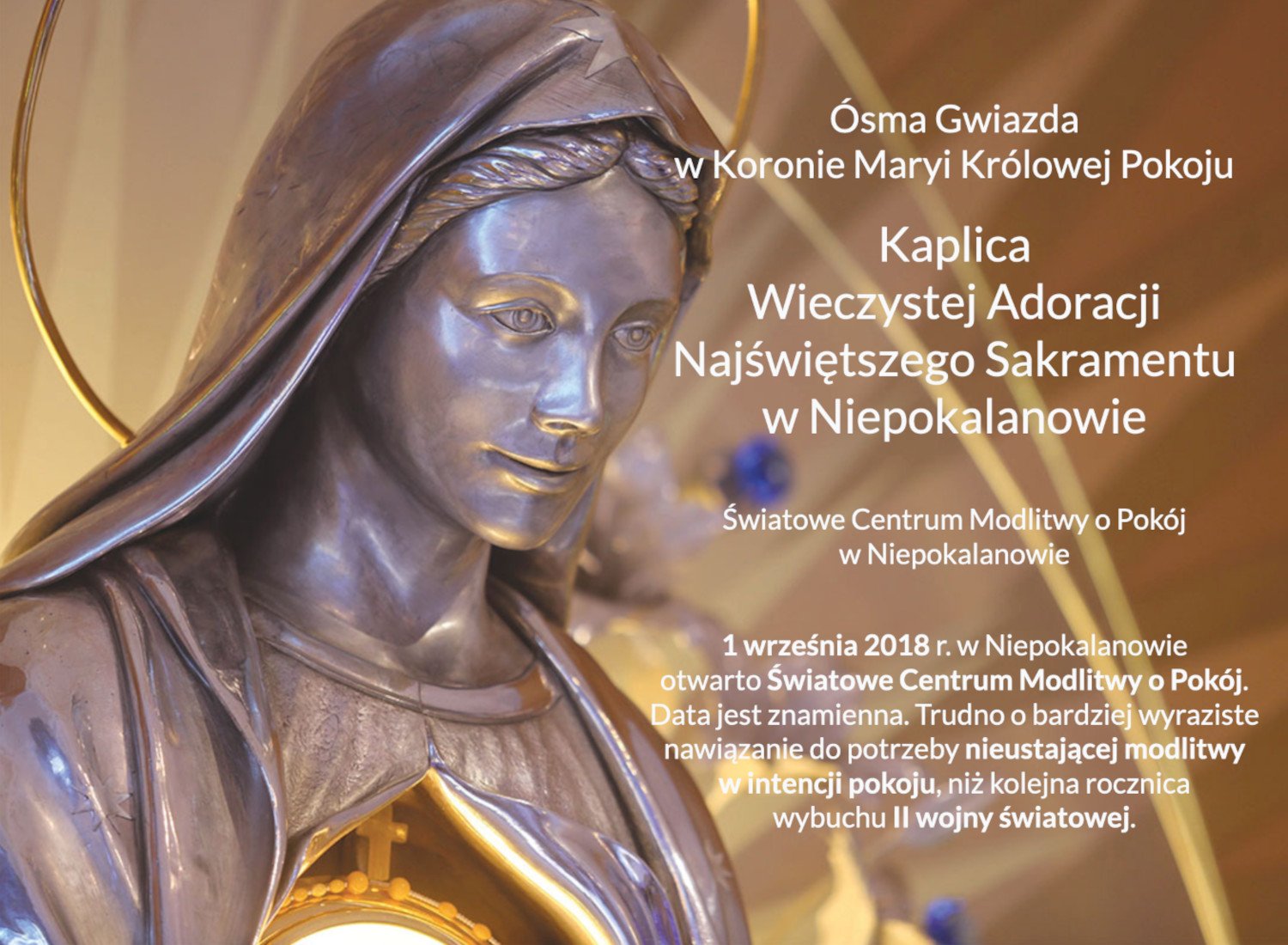

The Eucharistic Adoration Chapel established by Saint Maximilian Kolbe was inaugurated at the outbreak of World War II. It was restored as a Chapel of Adoration in September, 2018, the commemoration of the date that the war began. It is now part of the World Center of Prayer for Peace. The live internet feed of the Adoration Chapel at Niepokalanow — sponsored by EWTN — was established just a few weeks before we discovered it and began to include in at Beyond These Stone Walls. Click “Watch on YouTube” in the lower left corner to see how many people around the world are present there with you. The number appears below the symbol for EWTN.
Click or tap here to proceed to the Adoration Chapel.
The following is a translation from the Polish in the image above: “Eighth Star in the Crown of Mary Queen of Peace” “Chapel of Perpetual Adoration of the Blessed Sacrament at Niepokalanow. World Center of Prayer for Peace.” “On September 1, 2018, the World Center of Prayer for Peace in Niepokalanow was opened. It would be difficult to find a more expressive reference to the need for constant prayer for peace than the anniversary of the outbreak of World War II.”
For the Catholic theology behind this image, visit my post, “The Ark of the Covenant and the Mother of God.”

The Prodigal Son: Alexander’s Long Lent Toward Easter Sunrise
This account of a young man’s conversion to the Catholic faith is the Parable of the Prodigal Son told in prose; a story of pain and loss, of grace and freedom.

This account of a young man’s conversion to the Catholic faith is the Parable of the Prodigal Son told in prose; a story of pain and loss, of grace and freedom.
March 26, 2025 by Alexander
My name is Alex. I am 38 years old. Fourteen years ago I was prisoner number 96829 in the New Hampshire State Prison. One day back then I was standing in the doorway of Cell Number One having a conversation with two friends. I think you might know the ones I mean. Anyway, I went there a lot to talk about a very big decision I made back then that changed the course of my life. I didn’t know when I went to visit Cell One that I would one day be telling you this story, but here I am. It took a long time for this to come into print, and in the meantime all of our lives have changed.
I have become a Catholic. That might seem no big deal to the casual observer. Just about everywhere at this time of year, people are getting ready to enter the Catholic Church. If you knew me then, however, you might see that this decision was most unlikely, but, like I said, here I am.
It’s hard to pin down the point where I first thought of this. It isn’t something that I pursued. It’s more like it pursued me. Of all the places for a person to find faith for the first time in his life, prison seems the most unlikely. At least that’s what I always thought. Before I went there with my life in ruins, I had lots of misconceptions about prison and prisoners.
My memory of my life as a child is that it was fairly normal for today’s standards. I had loving parents and an older brother. Until I was 11 years old, everything was ordinary for me. Then came the fall. My father left. He didn’t just leave. He left my Mom alone to raise two sons. He moved to Kansas in search of himself and a new family. I was yesterday’s child, and I was angry about it.
Those years were rough for my family. My Mom struggled to keep our home, but couldn’t. My older brother worked as much as he could to lift the burden from my Mom, but couldn’t. At 12 I started smoking dope and drinking, trying hard to escape feeling like a burden and discarded. My best friend was going through a similar breakdown in his family and we escaped together into drugs and alcohol. There was just no one there to stop us.
So in the eighth grade we began skipping school. First, a day here and there, then it slowly became our way of life. Up to then I was an honor student, but by ninth grade I was drinking every day and all honor left me. It was a crushing source of shame that I stole money from my already struggling Mom and from my friend’s Mom. I was feeding a growing addiction to oxycodone. Today I see its grip on my 14-year-old self as demonic.
I was barely living, fighting every day with my Mom who fought hard to save my life and my soul from self-destruction. It was a losing battle, but still, as with everything else, she struggled. Then another life-changing event happened. My Mom and I were in a terrible accident in the fall of my ninth grade. She was hospitalized for a year. My brother had to leave school and work full time to support us.
By the tenth grade I told my Mom that I wanted to drop out of school and work full time as a roofer. She reluctantly agreed, but got me to at least agree to work on obtaining my G.E.D. high school equivalency. I signed the papers and went to work, but I hated my life and the powers that had stolen my will. I was yearning for something, though then I thought it was just drugs.
Some of my “friends” would offer me drugs for free when I had no money just to keep me in my habit. That’s when I learned that I had no real friends. My older brother even told me that there was nothing wrong with doing drugs, or as he put it, “living life.” I didn’t see it then, but I see it today. He had no more guidance than I did, and neither of us knew what “living life” meant.

California Dreaming
I was 17 years old when I had enough of the way I was living and sought a geographical cure. I talked with a friend in California who told me I would have a place to sleep if I came out there. So off I went. I wasn’t counting on the fact that my Mom was still struggling to save me, so in her eyes I was now a 17-year-old runaway. Eventually, she came to tolerate my latest bad decision, but reminded me of my promise to at least complete a G.E.D.
In California, I landed a job within five days. My glorious new life of freedom from myself and the past lasted all the way up to my first paycheck which, true to form, was handed over to alcohol and drugs. In California, nothing changed but the direction of the tides. The tides of my life, meanwhile, still flooded over me.
I think it’s important to note that up until this point in my life I had no real exposure to religion or faith. I did not believe in anything, least of all myself. I remember as a small child asking my Dad what religion we were. He said, “Well, if you had to put a label on it, I’d say we are Protestant.” I had no idea what a Protestant was. As I grew older, I learned that my Mom was a Methodist as a child, and I discovered that I had been baptized whatever that meant.
But here in California I was more lost than ever before. I stayed until I was almost 20 until the next geographical cure brought me home to New Hampshire where my downward spiral with drugs and alcohol continued until I was 24.
On July 6, 2010, my first and only son was born. When I saw him open his eyes for the first time and stare into mine, I cried. It was as though someone had turned a light on for the first time in my life, and I saw how very limited I was. I knew things had to change, for my son and for myself. I was determined not to bestow upon my son the legacy of absent fatherhood, the abyss I spent so much of my life trying to fill.
Over the next six months, I stopped drinking and using drugs. I began to think more about the miracle of life before me and less about all the searching I left behind. There had to be something more to life. I had seen it in my son’s eyes.
So I began to read about religion. I read about Buddhism, Islam, and Judaism. Then one day I was parked on a street waiting for a friend when I began to pray for the first time in my life. I asked God to show me the way. When I opened my eyes I saw two young men cross the road carrying a Bible and I started to laugh. I watched as the young men left, and thought I had missed my chance.
So I prayed again. I told God that if those young men ever again cross my path, I will get up the courage to talk with them. When I finished and looked up, they were standing, still holding their Bible, looking around and puzzled. They turned 180 degrees and started walking back toward my car. I jumped from the car, and I think I scared them. That day I received my first Bible and started reading.
The Debts of the Past
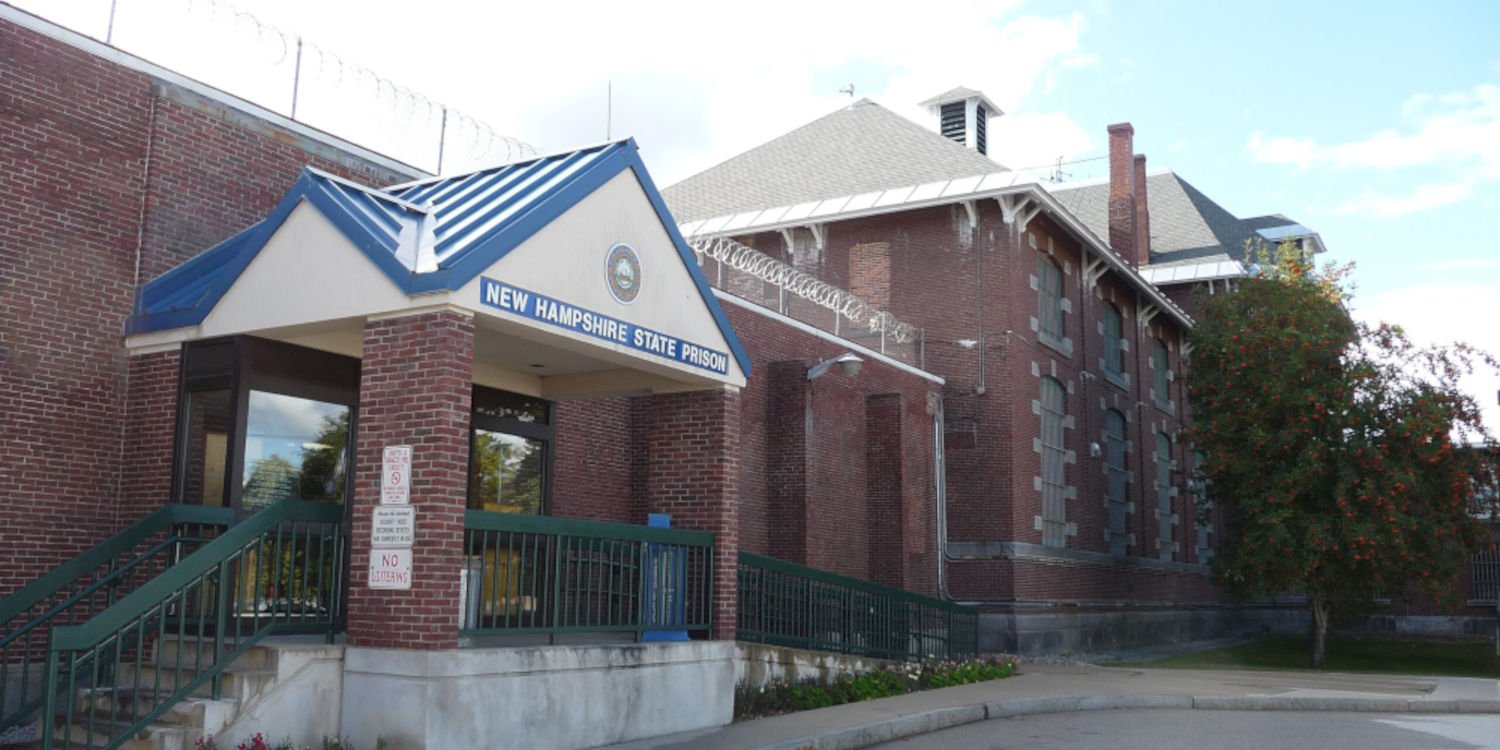
Then my life of wandering caught up with me. In 2014, I was sent to prison. I had never before been in jail or prison, and I was preparing for the worst. It’s not at all like what you see in the movies or on T.V. It was devastating and frightening. At the point at which I was just beginning to discover myself, I became prisoner 96829.
After three months of being classified, I was terrified. In the whole time I was there, all I heard were prisoner horror stories about this one unit called Hancock, or “H-Building” as it was called. Prisoners called it the “gladiator unit,” and I prayed to God that I wouldn’t be sent there. So when I was told to pack my things and move to H-Building, I was terrified.
When I arrived in Hancock, I was sent to Echo or “E-Pod” where there were eight prisoners per cell. I quickly began to learn the difference between T.V. prison and real prison. Day to day life was very difficult with fights breaking out all around me. It was always loud and dirty, and the arguments and fights were a daily occurrence. I tried to keep to myself, but the overcrowding made that impossible. I knew that sooner or later I would have to defend myself. It was filled with aimless young men all trying to prove themselves and not appear vulnerable.
I knew this place could destroy me so I started going to classes in the prison and to the prison chapel whenever I could. After all, I thought, it could be worse. I could be on Bravo or “B-Pod.” The rumor on the upper pods was that B-Pod had “lifers who will take what they want and kill you in a heartbeat.” I prayed to God not to let me be sent to B-Pod. Within days of that prayer, just after my birthday, I was told to pack my things because I was being moved. When I asked where, the dreaded words terrified me all over again. “You’re going to B-Pod.”
I was put on a top bunk on B-Pod out in the day room where the lights are kept on 24/7. I was at least glad to have a top bunk because I thought it would be harder for someone to jump me. I was terrified and knew everyone could see it. I also knew that prisoners would be true to form, and most would look to exploit my fear.
I unpacked my few things, most of which I expected to be stolen by morning, and climbed into my bunk to hide behind a book. It felt as though everyone was avoiding me, “the new guy,” like the plague. I was afraid to leave my bunk to go to the prison chow hall so I just stayed there behind my book. As the day moved on, prisoners started returning from work. This one bald guy with glasses walked past me and stopped. “Where did you come from?” he asked.
I recognized him as the guy who works behind the desk in the law library. He saw instantly that I was very intimidated by this place so he told me not to worry, that everything would be okay and no one would harm me. I only later learned that this man was Fr Gordon MacRae.
Then the next guy to come over to me was Donald Spinner. He asked me why I did not go to dinner, and I had no answer for him. So Donald came back and left some bread and peanut butter and jelly on my bunk and said “you’ll be hungry before the day is over.” I was starving!
Then the next guy to stop was an Asian man everyone called “Ponch.” He joked around and made me laugh, and then said he is G’s roommate, and to just come over if I need anything. Yeah right! I thought. I’m not going anywhere near these guys!
Later, a lot later, I would have the privilege of reading a post by Father G called “The True Story of Thanksgiving: Squanto, the Pilgrims and the Pope.” In it he wrote about a man named Squanto who was horribly lost in the odyssey of life. I thought this could have been my story. When I read it I thought back to that first day on that bunk out on the pod, and I realized that the discipleship that these guys believed in was very real. These guys didn’t just believe it. They lived it.

The Homecoming
One day I ventured over to the weight machine on the pod to look at it. Pornchai Moontri came over and asked me if I was interested in getting into shape. I thought it was a lost cause, but he encouraged me. For the next several months, Pornchai worked with me every day, teaching me weightlifting and how to get enough exercise to change the way I think and feel about myself.
Then he began to talk about faith and what I believe. I knew he had become Catholic. Another friend of Pornchai and Gordon, Michael Ciresi also worked out with us. One day I read Michael’s post that Father G invited him to write. It was “Coming Home to the Catholic Faith I left Behind” and it profoundly changed the way I see my past, my present, and my future. I could see these guys heading off to Mass every Sunday, but more importantly I could see the way they conducted themselves in a very difficult environment from Monday through Saturday. I could also see the way everyone else conducted themselves around them. It was best behavior all around! These guys were the real deal.
One day I was sitting on a bench near Donald Spinner’s cell. He asked if I was okay, and I asked him, “What do Catholics believe about Baptism?” I told him that I thought I needed to be baptized again, and he said that if I already am, it is for life. This led to many conversations about faith and about the Catholic Church’s place in history. I wasn’t being “won over” so much as “called home.” I began to see that I was changing not just physically, but spiritually.
When I began to go to Mass offered by Father Bernard Campbell — Father Bernie — I approached him and said that I needed to be forgiven. I asked if I could go to Confession, and Father Bernie didn’t even ask if I was Catholic. He smiled and said, “Of course,” and said he would meet me at the Chapel on the following Friday. I will never forget that day — the day of my first Confession when I walked away a new man.
That new man now has a new faith, and is on fire with it. I am clean, and sober, and free of the life long burdens of the past. I remember something that Father G showed me that Pornchai wrote:
“One day I woke up with a future when up to then all I ever had was a past.”
Today, miraculously born in the most unlikely place, I have an identity. I no longer wake up wondering who I am. I am a man! I am a father! I am strong! I am a Catholic! I am hopeful! I am free!
+ + +
Note from Fr Gordon MacRae: Thank you for reading and sharing this post. You may also like these other stories of Redemption from behind these stone walls.
Saint Joseph: Guardian of the Redeemer and Fatherhood Redeemed
In the Absence of Fathers: A Story of Elephants and Men
Elephants and Men and Tragedy in Thailand by Pornchai Moontri
Coming Home to the Catholic Faith I Left Behind by Michael Ciresi
We have added a new feature at this blog, a list of the Scriptural accounts of Salvation History, which I hope you will visit and share with others: From Ashes to Easter.
The Eucharistic Adoration Chapel established by Saint Maximilian Kolbe was inaugurated at the outbreak of World War II. It was restored as a Chapel of Adoration in September, 2018, the commemoration of the date that the war began. It is now part of the World Center of Prayer for Peace. The live internet feed of the Adoration Chapel at Niepokalanow — sponsored by EWTN — was established just a few weeks before we discovered it and began to include in at Beyond These Stone Walls. Click “Watch on YouTube” in the lower left corner to see how many people around the world are present there with you. The number appears below the symbol for EWTN.
Click or tap here to proceed to the Adoration Chapel.
The following is a translation from the Polish in the image above: “Eighth Star in the Crown of Mary Queen of Peace” “Chapel of Perpetual Adoration of the Blessed Sacrament at Niepokalanow. World Center of Prayer for Peace.” “On September 1, 2018, the World Center of Prayer for Peace in Niepokalanow was opened. It would be difficult to find a more expressive reference to the need for constant prayer for peace than the anniversary of the outbreak of World War II.”
For the Catholic theology behind this image, visit my post, “The Ark of the Covenant and the Mother of God.”

Evenor Pineda and the Late Mother’s Day Gift
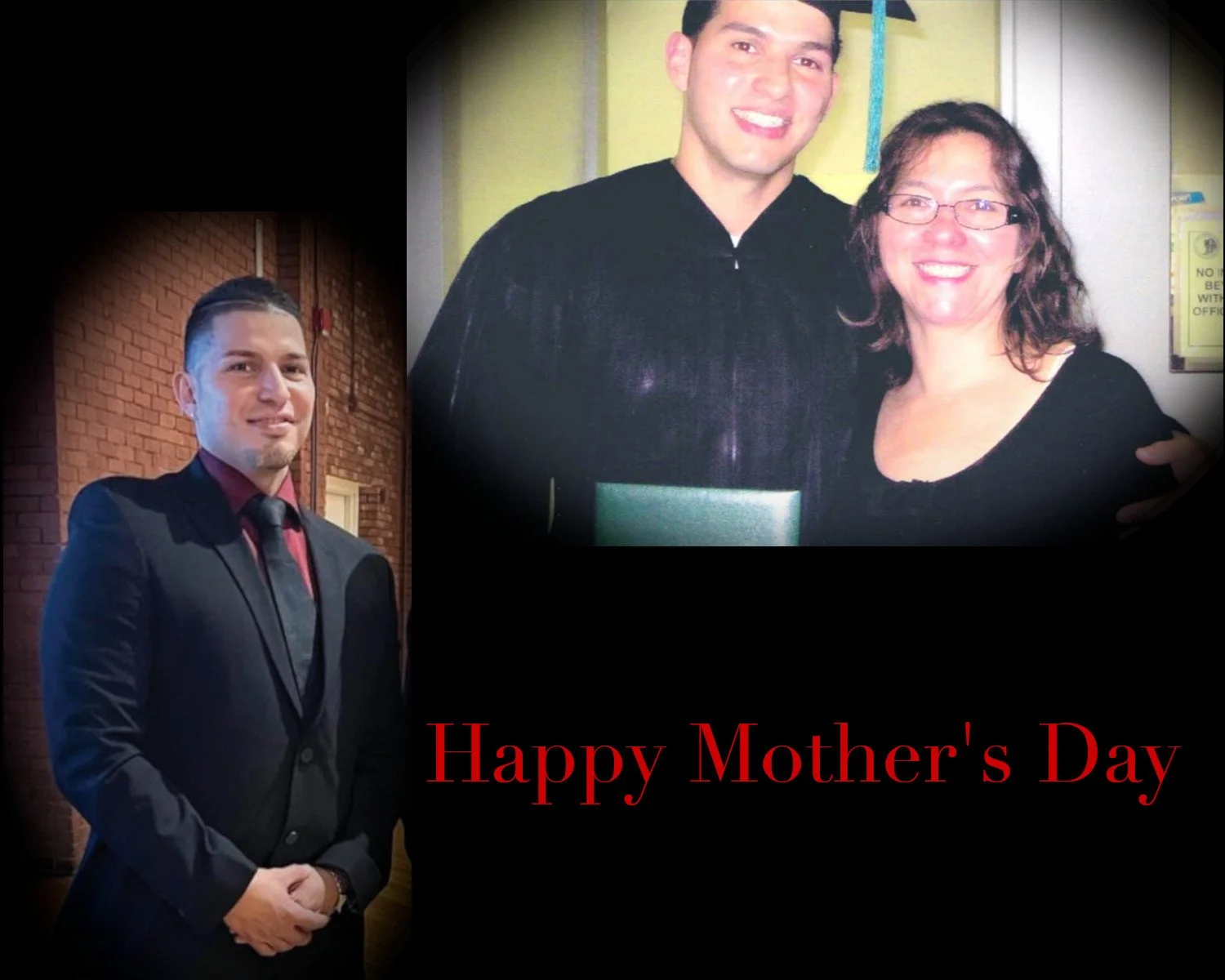
Like many single mothers of prodigal sons, Evenor Pineda’s Mom struggled against formidable forces — the streets, the gangs, jail, then prison — but never gave up.
Like many single mothers of prodigal sons, Evenor Pineda’s Mom struggled against formidable forces — the streets, the gangs, jail, then prison — but never gave up.
May 15, 2024 Fr Gordon MacRae
Toya Graham is not exactly a household name, but odds are you’ve seen her. Just about every cable and network news outlet in America carried a video clip of Mrs. Graham chasing her masked and hooded teenage son down a Baltimore street back in 2015. She searched for him, and found him in the middle of an urban protest surrounded by police in riot gear. Not long after she left with her prodigal son in tow, the crowd erupted into a rampaging mob that laid waste to one of the poorest neighborhoods of Baltimore.
As the news footage of a desperate mother chasing down her son went viral, Toya Graham quickly became a national icon of sorts, a single mother struggling to raise her son alone against the lure of the streets. My heart went out to this woman. The very scene she unwittingly brought to national attention was one I described in a post entitled, “In the Absence of Fathers: A Story of Elephants and Men.” Seven years after it was published, it was cited by the National Catholic Register as being among the best of Catholic blogs because it struck a very exposed nerve in our culture.
I hope you will read it and share it in these weeks between Mother’s Day and Father’s Day in America. That article has been the most widely read and shared post at Beyond These Stone Walls, having been republished in hundreds of venues and shared over 30,000 times on Facebook alone. It told a story that might be the real catalyst behind the looting, raging mobs that overtake inner city streets across America. It is a story about much more than race.
Toya Graham became an icon of the one thing necessary to keep a peaceful and legitimate protest from descending into a lawless mob: a loving, caring, responsible and available parent — preferably two of them in faithful partnership — willing to meet head-on the challenge of parenting. In the now epidemic absence of fathers in neighborhoods like that one in Baltimore — and in prisons all over America — Toya Graham met that challenge heroically, and alone.
A few days later, Mrs. Graham and her son, Michael Singleton, appeared on one of the morning network news shows. He presented as a remarkably articulate and respectful son, traits that no doubt spoke more of his Mom than himself, and he joked that running toward the police in riot gear on that street that day made more sense to him after seeing the look on his mother’s face.
For her part, Mrs. Graham apologized to the nation for a few foul words delivered before cameras in the heat of the moment, but she apologized to no one for the almost comical smack she delivered to the son who towered over her. “As long as I have breath in my body,” she said, “my son will not be down there doing that!” If this blog had a Mother-of-the-Year award, it would have gone to Toya Graham.
But she would have to share it with Rosa Levesque. Rosa is the mother of another young man I know, Evenor Pineda, and I have come to admire her very greatly even though we have never actually met. You have previously met Evenor Pineda however. He appears in a photograph that you will see again below.
Evenor's is a remarkable story of the undying love and urgent hope of a single mother struggling to redeem her prodigal son. It is best to tell it in Evenor’s own words:

Here Is Evenor Pineda:
“I was born on Wednesday, December 30, 1981 to immigrant parents in Nashua, New Hampshire. My father, Cosme, was a political refugee who fought on the losing side of a civil war in Nicaragua. My mother, Rosa, was an orphan adopted into an oppressive and abusive family that emmigrated to the United States. My sister, Lina, was born two years and a day after me, and by her second birthday our mother left our father, fleeing in an attempt to protect us from the drug dealing and growing addiction that was consuming his life and our family.
“As I grew into adolescence with the wonderful woman struggling to raise us alone, I betrayed her faith, hope, and trust by becoming the next male role model in our family to become an abuser and addict, and I added a new twist — a gang member.
“While my mother struggled to pay the bills I did everything to undermine her. Our home became a hangout for the gang. I brought alcohol and drugs into our home and police to our door, because there was no one there to stop me. Under my influence, even my younger sister began to stray into my world, but our mother took a much harder line with her, pulling her back from the brink upon which I lived.
“It wasn’t that my mother didn’t take that same hard line with me. She did. But she also knew that outside our home were the streets always luring her rebellious son from beyond her influence. She knew that she risked losing me forever, so my Mom did what she always did. She struggled as best she could.
“Between the ages of fifteen and eighteen I would drop out of school, be arrested a dozen times, incarcerated four times in both juvenile detention and then county jails, but my mother never gave up on me. Not even when I gave up on myself.
“On my eighteenth birthday, I maxed out of a county jail and was able to land a real job. I held it for five years, but the ties to my gang grew stronger and I simply became better at evading arrest. And my Mom still struggled against them.
“By the time I was twenty-two, I had two beautiful children of my own, my son, Tito and my daughter, Nati. Fatherhood was something I had to learn from scratch, having had no personal experience of it in my life. The relationship I was in with their mother collapsed, but my mother was, as always, right there to help me raise my children. She was an incredible grandmother.
“I was balancing two different lives, however, one as a young father and family man and the other as a gangster. Those two lives collided on April 17, 2005. My friend Kaleek and I had a falling out over drugs that escalated. We both fell victim to the street culture we had embraced, and that would not release us from its grip. It ultimately took Kaleek’s life, and my freedom.
“This marked the lowest point in my life. It was the point at which I learned who my true friends were — and were not — and it reinforced how much the adage is true — that blood is thicker than water. It was a selfish moment in my life where I thought of no one but myself. I knew I suffered, but I had no idea how much I made my family suffer. By this time, my sister, Lina was serving in Iraq, and at a time when I should have been a support to my family, I instead went to prison. I had been in this place for ten years, with eight more left to serve.
“My mother had become both grandmother and mother to my children, and the one mainstay of my life who never stopped struggling to save me. So when there came a time when I had to decide who I am, I looked to the one person who might know. My mother taught me by the sheer force of example the meaning of love and sacrifice, the meaning of parenthood.
“In 2010, I became a volunteer facilitator for the prison’s Alternatives to Violence Program. I trained for this alongside two men you know: Michael Ciresi and Pornchai Moontri. In 2012, Pornchai Moontri and I graduated together from Granite State High School, an accredited school in the Corrections Special School District. My friend, Alberto Ramos.
“One day, my friend, Gordon MacRae showed me an article he wrote about our graduation. It told my friend, Alberto’s story and was titled, “Why You Must Never Give Up Hope for Another Human Being.” It was then that I realized that I must never give up on myself. I know you have seen the photograph of us that I am told is now rather famous. That is Pornchai in the middle with Alberto just behind and to his right.
“I am on the left, and clearly in the very best of company. Gordon is not in the picture, but stood next to the photographer. We were all proudly showing him our diplomas.
“In the ensuing years I served with my friend Gordon on the Resident Communications Committee (RCC), a representative group of ten prisoners that met monthly with prison administration to keep open channels of communication and to try to make this a better and safer environment. After a year I was appointed co-chairman of the RCC having been nominated for that post by Gordon. I want to thank him. At least, I think I do!
“I also was a member of Hobby Craft and its woodworking department where I have learned the skill to produce furniture and other items that were then sold to the public. I used the funds I earned to help my mother and my children, and also to further my education. Through this effort, I was able to afford one or two courses per semester at New England College which had a presence in this prison.
“I formally renounced my gang membership. There was no longer any room for that past in my present. I remember something my friend, Pornchai Moontri wrote in an article I read. ‘One day I woke up with a future when up to then all I ever had was a past.’ Sometimes the truth just smacks you in the head. Today, I find reason to be proud, not only of my mother, but my sister, Staff Sergeant Lina Pineda of the New Hampshire National Guard, and of my children. I am their future, and it is an awesome responsibility from which I must not shrink.
“When we graduated from high school in 2012, Gordon MacRae was there to hear Pornchai’s great graduation speech. He wrote about this in an article I read. I gave a speech that day, too. My mother, Rosa, was there, and I wrote it for her. Gordon later asked me for a copy, and then asked me to let him reproduce it here.”

Evenor Pineda’s Commencement Speech:
“Not everyone is fortunate enough to have an opportunity to receive an education or to have parents to encourage their education. I, however, was one of those fortunate enough to have both an opportunity and someone who cared enough to show interest in my education.
“Yet I then took for granted what I now recognize was then a luxury and I squandered a wonderful opportunity to seize a controlling stake in my future. It was a future which up until high school was very promising. All I had to do was stay the course.
“It was a far cry from other children in the world not as fortunate as I was to have a parent who cared and who valued education, children whose future is bleak, at best. The most shameful part about this is that I knew how good I had it and how bad others did.
“I know of such a woman whose childhood was the polar opposite of mine. She was parentless at the age of three, placed in an orphanage with her six sisters all of whom were eventually placed with different families. At nine she found herself in a home where she was denied an education, robbed further of her childhood, forced into a life of servitude: cooking, cleaning, caring for that family’s biological children, and abused both physically and mentally. She was told that she would amount to nothing, would be nothing.
“Yet this woman did not allow circumstance to dictate her future, and as fate would have it, when the family she was living with emmigrated to the United States, the Land of Opportunity, she did just that. She seized an opportunity and a controlling stake in her future. At the age of just seventeen in a foreign land, she struck out on her own, started her own family, learned English, and with only a third grade education, earned her GED.
“Then she earned a college certificate in her field of work, earned her citizenship, earned a home, and earned the American dream. It was a dream this woman, my Mother, struggled to obtain, and I was a product of that American dream. I was born into an opportunity not afforded to my mother, yet she — unlike me — capitalized on her opportunities.
“I had to endure great loss and suffering to finally grasp and understand to what lengths my mother had to struggle and sacrifice to solidify her place in this country, and how much it must have pained her to see me throw away the opportunities bestowed upon me.
“Not everyone is fortunate enough to have an opportunity at an education, let alone a second chance. This is why this diploma has taken on a whole new meaning. It is a step toward redeeming myself to my mother and my family. It is a symbol of my commitment to follow in the steps of my mother in pursuing the American Dream.
“I’m sorry to be late this Mother’s Day, Mom, and all the Mother’s Days past. I love you, and I thank you. I am so very proud of you. Your struggle has not been in vain.”
+ + +
Editor’s Note: Evenor emerged from prison in 2017 and has never returned. He is today the Intervention Programming Coordinator for the Manchester Police Athletic League where he diverts many young people from the lure of the streets. He has also assisted other inmates emerging from prison by challenging them to employ the tools needed to move forward. He is today an outstanding father thanks to the support of an outstanding mother.
Thank you for reading and sharing Evenor’s profoundly moving story. You may also like these related posts from Beyond These Stone Walls:
In the Absence of Fathers: A Story of Elephants and Men
Why You Must Never Give Up Hope for Another Human Being
The Eucharistic Adoration Chapel established by Saint Maximilian Kolbe was inaugurated at the outbreak of World War II. It was restored as a Chapel of Adoration in September, 2018, the commemoration of the date that the war began. It is now part of the World Center of Prayer for Peace. The live internet feed of the Adoration Chapel at Niepokalanow — sponsored by EWTN — was established just a few weeks before we discovered it and began to include in at Beyond These Stone Walls. Click “Watch on YouTube” in the lower left corner to see how many people around the world are present there with you. The number appears below the symbol for EWTN.
Click or tap here to proceed to the Adoration Chapel.
The following is a translation from the Polish in the image above: “Eighth Star in the Crown of Mary Queen of Peace” “Chapel of Perpetual Adoration of the Blessed Sacrament at Niepokalanow. World Center of Prayer for Peace.” “On September 1, 2018, the World Center of Prayer for Peace in Niepokalanow was opened. It would be difficult to find a more expressive reference to the need for constant prayer for peace than the anniversary of the outbreak of World War II.”
For the Catholic theology behind this image, visit my post, “The Ark of the Covenant and the Mother of God.”