“There are few authentic prophetic voices among us, guiding truth-seekers along the right path. Among them is Fr. Gordon MacRae, a mighty voice in the prison tradition of John the Baptist, Maximilian Kolbe, Alfred Delp, SJ, and Dietrich Bonhoeffer.”
— Deacon David Jones

Vatican Bans Publishing Lists of ‘Credibly’ Accused Priests
The Vatican’s Dicastery for Legislative Texts, two other Vatican Dicasteries, and Pope Francis himself have banned publishing lists of priests ‘credibly’ accused.

The Vatican’s Dicastery for Legislative Texts, two other Vatican Dicasteries, and Pope Francis himself have banned publishing lists of priests ‘credibly’ accused.
April 2, 2025 by Fr Gordon MacRae and William A. Donohue, PhD
Note from Father Gordon MacRae: This post may not move hearts, but it should move minds and consciences. It is of utmost importance to me, to the priesthood and to the whole Church. So we should not be silent in the face of injustice. So please share this post.
+ + +
On February 22, 2025, the Dicastery for Legislative Texts, the Vatican office responsible for issuing authoritative legal interpretations and directives for the universal Church, published online a long awaited guidance to bishops impacting the due process rights of “credibly accused” Catholic priests.
The announcement underscores the Dicastery’s decision that bishops considering publication of lists of priests deemed credibly accused of sexual abuse are prohibited under Canon Law from doing so. This guidance is for a multitude of reasons connected to long established civil and canonical rights of due process. I will describe below some examples of how these rights have been impacted.
From the point of view of official Church positions, the problem is, and has always been, the bishops’ collective interpretation and use of the term “credible” in their response to the crisis. It is a standard applied nowhere else in the world of civil or criminal jurisprudence. It means only that a claim of abuse cannot be immediately dismissed on its face. If a claimant alleges abuse in a specific community 30 or 40 years ago, for example, and the named priest had once been assigned there, the claim is “credible” unless and until it is disproven.
There is no court in America that admits such a standard of evidence but it is routinely applied now to accused Catholic priests. Courts have long recognized that older memories are highly malleable, and misidentification of the accused is a frequent risk.
Before delving further into this, I want to present a reaction to the Vatican news from William A. Donohue, Ph.D., President of the Catholic League for Religious and Civil Rights, who has consistently defended the due process rights of priests.

From Catholic League President Bill Donohue
Vatican Finally Does Right by Accused Priests
Six years after Pope Francis rejected the practice of publishing the names of accused priests, the Vatican has finally codified his plea. Henceforth, dioceses are discouraged from publishing such a list. Among the reasons cited was the inability of deceased accused priests to defend themselves.
This should never have been an issue in the first place. But in the panic that ensued following the 2002 series in The Boston Globe detailing clergy sexual abuse, the bishops convened in Dallas in 2004 to adopt a charter that listed comprehensive reforms, some of which substantially weakened the rights of the accused.
At the time, I was highly critical of the way some bishops allowed a gay subculture to flourish, one that resulted in a massive cover-up of the sexual abuse of minors (homosexual priests — not pedophiles — were responsible for 8 in 10 cases of abuse). But I also said of the Dallas reforms, “There is a problem regarding the rights of the accused. It appears that the charter may short-circuit some due process rights.”
One of the problems was the desire to publish the names of accused priests. Egging the bishops on was Judge Anne Burke, the first person to head the National Review Board commissioned by the bishops to deal with the problem.
She made it clear that priests — and only priests — should be denied their constitutionally prescribed right to due process. “We understand that it is a violation of the priest’s due process rights — you’re innocent until proven guilty — but we’re talking about the most vulnerable people in our society and those are children,” she said. Such thinking allowed the bishops to make public the names of accused priests.
In an interview I had in my office with a female reporter from CNN, she became quite critical of the Church for not posting the names of accused priests on its diocesan websites. I picked up the phone and, holding it in my hand, asked her for the name and phone number of her boss. When she asked why, I said I was going to accuse her of sexual harassment. I added that I wanted to see if CNN would post her name on its website. She said, “I get it.” I put the phone down. (For more on this see my book, The Truth about Clergy Sexual Abuse).
No organization in the United States, religious or secular, publishes the names of accused employees. That there should be an exception for priests is obscene.
The rights of accused priests need to be safeguarded, and the penalties for those found guilty need to be severe. The Church failed on the latter, which is why the scandal took place, and it failed on the former, which is why Pope Francis, and now the entire Church, had to act.
The sexual abuse of minors in the Church in America has long been checked — almost all the cases in the media are about old cases, and most of the bad guys are dead or out of ministry. Now that the rights of the accused have been given a much needed shot in the arm, we can say with confidence that the problem has been ameliorated.
Now back to Father MacRae............

But My Diocese Employs “Trauma-Informed” Consultants
On July 31, 2019, Bishop Peter A. Libasci, Bishop of Manchester, New Hampshire proactively published a list of the names and assignment histories of 73 priests in his diocese who had been “credibly” accused of sexual abuse of minors and removed from ministry. Most of the claims deemed “credible” are decades old. The majority of the priests on Bishop Libasci’s list are long deceased. In most cases, the sole condition making the claims “credible” was the fact that money — lots of it — changed hands.
Bishop Libasci’s stated goal for publishing his list was “transparency.” In 2024, long after Pope Francis discouraged bishops from doing so, Bishop Libasci republished the list with the names of additional accused but deceased priests.
Weeks after Bishop Libasci’s original list was publicized in 2019, Ryan A. MacDonald penned and published a contentious objection: “In the Diocese of Manchester, Transparency and a Hit List.” It was contentious because it represented well my disagreement with this action of the bishop of my diocese, something I otherwise hoped to avoid. Plaintiff attorneys and activist groups like SNAP pressured bishops to publish such lists for the purpose of “assuring victims they are not alone and that they are heard.”
The real reason for pushing for published lists, however, was to provide a forum and online database for false “copycat” claims, a lucrative business for contingency lawyers and claimants alike with little or no court oversight. In May 2024, Ryan A. MacDonald published a report on how and why this happens in “To Fleece the Flock: Meet the Trauma-Informed Consultants.” Here is an excerpt from an official statement of my Diocese:
“The Diocese of Manchester provides financial assistance to those who have been harmed, regardless of when abuse occurred, through a process utilizing independent trauma-informed consultants.”
A basic problem with handling the matter of due process for the accused and outcomes for the Diocese by abdicating judgment to “trauma-informed consultants” is that the term is widely noted and critiqued by professionals as highly biased. It has a documented negative impact on judicial fairness and due process of law in claims of sexual abuse and assault.
The Center for Prosecutor Integrity (CPI ) is an organization that seeks to strengthen prosecutorial ethics, promote due process, and end wrongful convictions. Victim-centered investigations, also known in the sex abuse contingency lawyer industry as “trauma-informed,” presume the guilt of all accused and lead to wrongful convictions.
According to the Center’s website, “The most destructive types of victim-centered investigations are known as “Start by Believing,” and “Trauma-Informed.” The Center exhibits a professional bibliography documenting the “junk science” behind such investigations creating an epidemic of false witness and police and prosecutorial misconduct. Given the well-founded caution about false claims and financial scammers, it was alarming to read the following in a recent news article, “Diocese of Manchester Settles Sexual Abuse Claims from the 1970s.” Here’s an excerpt:
“No lawsuit was filed because the alleged abuse happened outside the statute of limitations, but the attorney representing the ‘John Doe’ who was involved said it’s important for survivors to come forward as part of the healing process, … thus announcing a six-figure settlement outside the Diocese of Manchester office.”
Has it never dawned on anyone in Church leadership that there are those in our midst who would find a “six-figure settlement” an enticement for false accusations? This is especially so when there is no court oversight for such claims. The process has been made very simple. A lawyer writes a letter and a bishop writes a check.
In addition to these trauma-informed consultants retained by the Diocese of Manchester and other dioceses,”it seems that civil lawyers and risk managers, not bishops, are often running the show.” So wrote prominent canon lawyer, Michael Mazza, JD, JCD, in a recent First Things article (February 24, 2025): “Who’s Really Calling the Shots at U.S. Diocesan Chanceries?” Mazza concludes:
“ln the wake of the clerical abuse crisis, church leaders may have surrendered too much authority to risk managers focused on eliminating every threat. Seasoned entrepreneurs understand that the moment lawyers run the show, adopting a zero-risk strategy as the business model, the company grinds to a halt. While the surest way for a car company to avoid getting sued is to stop making cars, that strategy is not an option for an institution that has received a divine call to preach the Gospel to all nations. Bishops must recognize this truth and seize the helm with the resolve their office demands.”

The Perspective of a Not-So-Credibly Convicted Priest
My name was on Bishop Libasci’s published list under the unique category, “convicted,” but that was not at all my point of contention with his list. Unlike most of the priests named on that ongoing list, I at least had public charges in a public forum — a 1994 criminal trial — no matter how jaded and unjust it was. The details of those charges and that trial have emerged over time and are also now in public view. They have raised awareness about the absence of truth and the aura of injustice in the forum in which I was condemned and sentenced.
As Ryan A. MacDonald’s article, “In the Diocese of Manchester, Transparency and a Hit List” points out, Bishop Libasci’s predecessor, the late Bishop John B. McCormack, went on record in an unpublished media interview in the aftermath of my trial stating his informed belief that I was falsely accused, wrongly convicted, and should not be in prison. He insisted, however, that this information should never leave his office. These details were exposed in a 2021 post, “Omertà in a Catholic Chancery — Affidavits Expanded.”
Going back even further in this history of neglected due process, Bishop McCormack’s predecessor, the late Bishop Leo O’Neil, chose not to wait for the outcome of a trial. Before my trial commenced, he published an official diocesan press release declaring that I victimized not only my accusers but the entire Catholic Church. After that, a trial seemed just a formality.
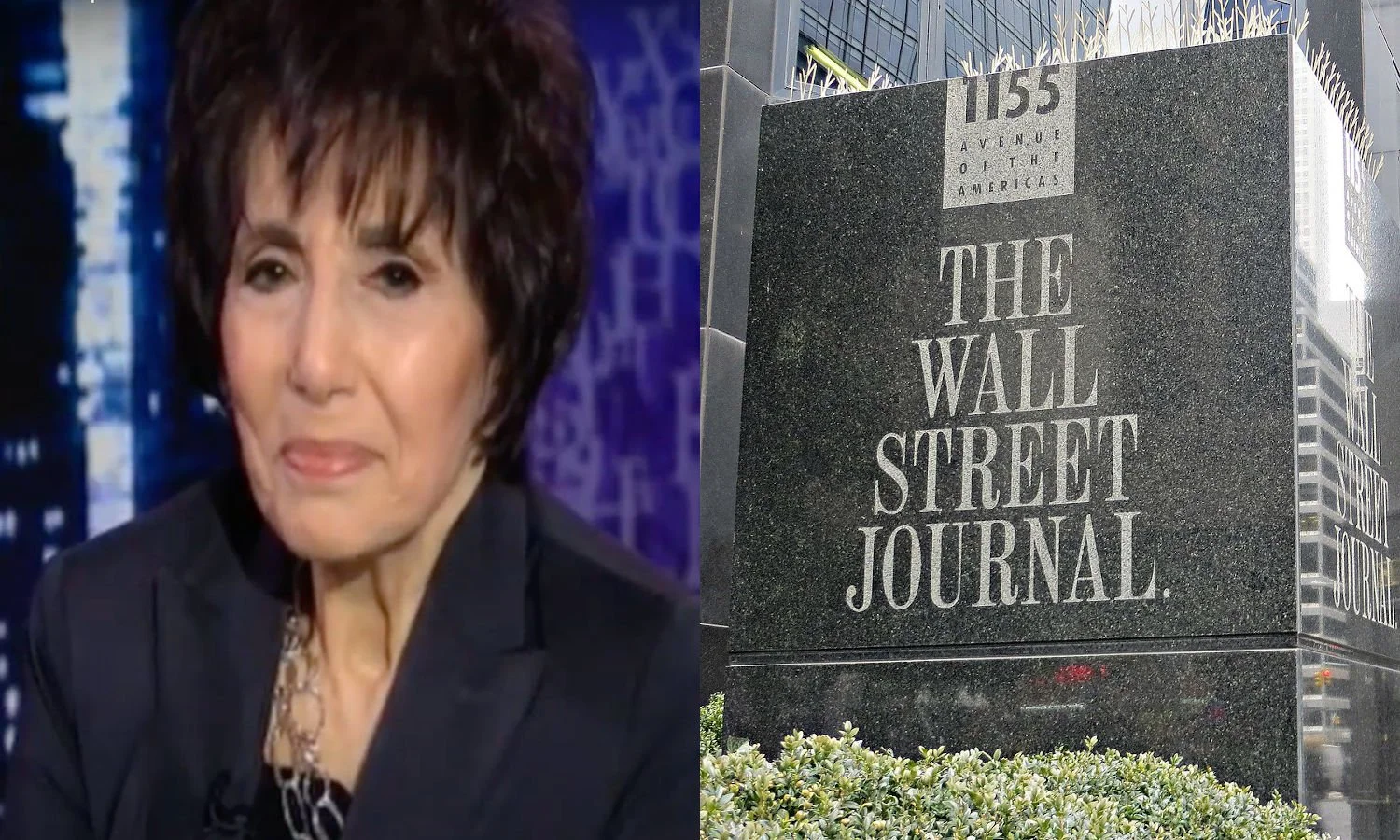
The most visible post-trial analysis of due process in the case, however, was that of Dorothy Rabinowitz, awarded a Pulitzer Prize for her courageous exposure of “accusation, false witness, and other terrors of our time.” Her series of articles in The Wall Street Journal culminated in “The Trials of Father MacRae” in 2013, six years before Bishop Libasci published his list.
In a compelling five-minute video interview produced by The Wall Street Journal, Dorothy Rabinowitz saw through all the smoke and mirrors and got to the heart of the matter. It is a brief but bold exposé of unassailable truth that ties the two-decade outbreak of clergy abuse claims to the very unquestioned settlements money promised by my Diocese in its statements above.
I give the last word to “A Video Interview with Dorothy Rabinowitz.”
+ + +
Note from Father Gordon Mac Rae: I thank Catholic League President Bill Donohue for his contribution to this post. His outstanding book on this subject is The Truth about Clergy Sexual Abuse (2021) published by Ignatius Press.
I also thank Michael J. Mazza, JD, JCD for letting us reprint a segment of an article that I highly recommend: Who’s Really Calling the Shots at U.S. Diocesan Chanceries? First Things, February 24, 2025.
During Lent this year I created a list of our Scriptural posts and published them together under the title “From Ashes to Easter.” We shared the list on several Facebook Catholic groups. In response, Facebook dismissed it as “SPAM,” and then froze our account. (Again!) So we cannot share this post on Facebook, but you can. Thank you for doing so.
You may also like these related and eye-opening posts from Beyond These Stone Walls:
In the Diocese of Manchester, Transparency and a Hit List
To Fleece the Flock: Meet the Trauma-Informed Consultants

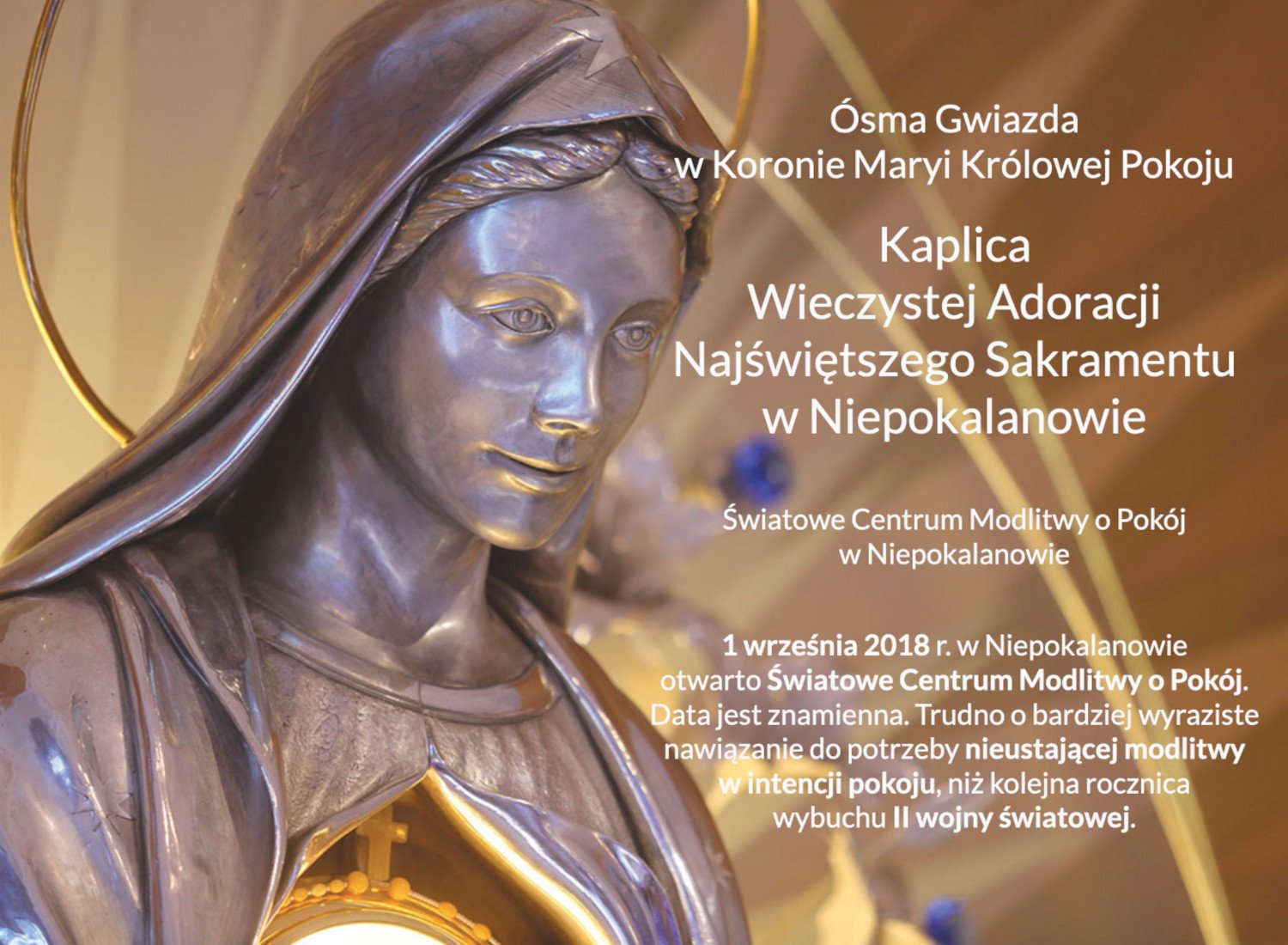

The Eucharistic Adoration Chapel established by Saint Maximilian Kolbe was inaugurated at the outbreak of World War II. It was restored as a Chapel of Adoration in September, 2018, the commemoration of the date that the war began. It is now part of the World Center of Prayer for Peace. The live internet feed of the Adoration Chapel at Niepokalanow — sponsored by EWTN — was established just a few weeks before we discovered it and began to include in at Beyond These Stone Walls. Click “Watch on YouTube” in the lower left corner to see how many people around the world are present there with you. The number appears below the symbol for EWTN.
Click or tap here to proceed to the Adoration Chapel.
The following is a translation from the Polish in the image above: “Eighth Star in the Crown of Mary Queen of Peace” “Chapel of Perpetual Adoration of the Blessed Sacrament at Niepokalanow. World Center of Prayer for Peace.” “On September 1, 2018, the World Center of Prayer for Peace in Niepokalanow was opened. It would be difficult to find a more expressive reference to the need for constant prayer for peace than the anniversary of the outbreak of World War II.”
For the Catholic theology behind this image, visit my post, “The Ark of the Covenant and the Mother of God.”

Canon Law Conundrum: When Moral Certainty Is Neither Moral Nor Certain
Convoluted moral justification is employed by Jesuits of the USA Central and Southern Province to publish a list of priests with ‘credible’ allegations of abuse.

The Stoning of Saint Stephen by Rembrandt
Convoluted moral justification is employed by Jesuits of the USA Central and Southern Province to publish a list of priests with ‘credible’ allegations of abuse.
May 3, 2023 by Michael J. Mazza, JD, JCD
Introduction by Fr. Gordon MacRae: It is an honor and a privilege to publish this important guest post by Michael J. Mazza, JD, JCD, (pictured below at the Vatican) a highly regarded canon lawyer, civil attorney, and law professor with broad experience in the canonical defense of Catholic priests. His post is a sequel of sorts to my post in these pages last week, “Follow the Money: Another Sinister Grand Jury Report.” His post introduces us to a newly articulated standard for removing priests from ministry adopted by a Jesuit Province in the United States. It is a standard that left me shuddering over the rapid decline of due process rights for priests. Like other such draconian standards, I fear its use will spread like a virus.
Back in August, 2019, Ryan A. MacDonald wrote a featured post for Beyond These Stone Walls entitled “In the Diocese of Manchester, Transparency and a Hit List.” It has been one of our most widely read posts of recent years and continues to be so. Ryan wrote about the injustice of publishing names of accused priests when the basis for deeming a claim to be ‘credible’ is a standard of justice not employed or even recognized in any other legal forum. It essentially means that an allegation of abuse is only “possible,” but not necessarily “probable.” It should be the beginning of a Church investigation, but it has widely become the end.
This is a standard that is now employed by nearly every bishop in every diocese, and it is rapidly spreading throughout the Church. Michael Mazza’s post to follow understandably has a bit more ‘legalese’ than usually comes from my typewriter, but it is a brilliant eye-opener.
There was a smoldering cloud just above my head as I three times read the Jesuits’ confounding justification for censuring and removing priests. In a word, it is mind-boggling.
This post shines a much needed light on the need for canonical justice and advocacy for accused priests. It is highly recommended to us by Fr. Stuart MacDonald, a frequent Beyond These Stone Walls contributor and a candidate for the Doctorate in Canon Law. Please share this post widely, especially among the priests you know.

When Moral Certainty Is Neither Moral Nor Certain
Two months ago the Jesuits USA Central and Southern Province released an updated registry of Jesuits with “credible allegations of sexual abuse of a minor.” As a canonical advocate representing priests accused of misconduct, I was involved in one of the cases referenced. Given the requirements of canon law and my professional duties, I am limited in what I can say about the case. What I can discuss — in fact, what I feel I must rectify — is the grievous error of law contained in the Jesuit Province’s published statement, a mistake that despite my best efforts has gravely damaged the reputation of a good priest and respect for the rule of law in the Church.
The most problematic part of the statement appears in its first paragraph:
“For the purposes of this list, a finding of credibility of an allegation of sexual abuse of a minor is based on a belief, with moral certitude, after careful investigation and review by professionals, that an incident of sexual abuse of a minor or vulnerable adult occurred, or probably occurred, with the possibility that it did not occur being highly unlikely. ‘Moral certitude’ in this context means a high degree of probability, but short of absolute certainty. As such, inclusion on this list does not imply the allegations are true and correct or that the accused individual has been found guilty of a crime or liable for civil claims.”
It is difficult to know where to begin with an analysis of this confounding passage. Did the event happen or not? We are told on the one hand that being included on the list “does not imply the allegations are true and correct.” At the same time, however, we are told that “after careful investigation” and “review by professionals,” the allegation has been determined “with moral certitude” to have “occurred or probably occurred.” In fact, the statement says the possibility that the events did not occur “is highly unlikely.”
While such a confusing statement may appear to have been crafted by two opposing camps of a drafting committee, the real world consequences of it were clear, especially because it was accompanied by the usual invitation for victims of abuse to come forward. The news was reported as a “shock” to the students at the university where the priest had been a popular professor, leaving some brokenhearted and in tears. A theology professor said the news had “shaken” him and his colleagues, with one priest colleague concluding thus: “It’s mind-boggling that anyone would do such a thing, period end of story.”
Conclusions like these are not surprising. What is surprising — and what ought to be profoundly disturbing to those who value the rule of law — is that they have no legal basis whatsoever. Like so many of his priestly brethren in the USA accused of canonical crimes these days, the priest at issue was never given the benefit of a trial during which he could have defended his innocence. Instead, the priest was on the receiving end of what is known in canon law as a “preliminary investigation,” a technique under canon 1718 of the 1983 Code of Canon Law that is designed solely to determine whether there is sufficient indicia to warrant the launching of a full-blown canonical process. Only after this formal process, whether judicial or administrative, may a penalty be inflicted or declared. And it is only through this formal process that “moral certainty” — the canonical equivalent of “beyond a reasonable doubt” — may be achieved under the law.
An analogy may prove helpful here. Suppose that Mary, a juror in a domestic abuse trial, learns of allegations that John abused Jane. Mary hears from Jane, the only witness at the trial, about the details of her charge. Mary knows only that John denies the accusation, but does not hear from him because John is not present at the trial. In fact, neither John nor his defense counsel is even invited to the trial. If Mary nevertheless arrives at John’s guilt “beyond a reasonable doubt,” in spite of the fact that John was not allowed to exercise his natural human right to self-defense, what would we say about Mary’s judgment?
All analogies limp, and several objections could immediately be raised with respect to this one. Just because there were no other witnesses does not mean that there was no abuse, a sin and a crime that is horrible and was often covered up in the past, especially in ecclesial circles. While these statements are certainly true, summarily dismissing valid concerns about violations of the due process rights of accused clerics is not a solution to the sex abuse crisis. On the contrary, it only perpetuates a continuing injustice and creates an atmosphere of fear, mistrust, and division within the ecclesial community. That is not a sustainable path forward.
It needs to be emphasized that a canonical preliminary investigation is typically performed by an individual (most often but not always a former law enforcement official) whose only job is to assemble indicia substantiating an allegation. The investigator then presents these indicia to a review board, generally constituted by lay people (at least some of whom are to have experience in law or psychology), who make a recommendation to the religious superior or bishop about whether a full-blown canonical investigation should be initiated.
In some ways, the work of a review board is similar to that of a grand jury. Grand juries, like review boards, are supposed to act as shields against arbitrary, unfounded, and malicious accusations of wrongdoing by ensuring that serious accusations are brought only upon the considered judgment of a representative body acting according to the rule of law. Grand juries, like review boards, do not decide whether the accused is guilty; they merely decide whether there is probable cause to believe that a crime occurred and probable cause to believe that the person accused committed that crime. In short, grand juries, like review boards, decide only whether there is enough evidence to proceed to the next stage in the judicial process.
This is because of the deliberately one-sided nature of grand jury proceedings. Only the prosecutor — not the defense — gets to address the grand jury. All of the important safeguards of justice are saved for the real trial that comes only after the grand jury has performed its important task. Nevertheless, all this means that in a very real way the life and reputation of a fellow citizen are in the hands of the grand jurors. Indictments, like recommendations from review boards, often receive press coverage in which these legal niceties are overlooked, meaning that the reputation of the person accused is harmed and his life thrown into turmoil.
Many accused priests never get a trial, “period end of story.” Nevertheless, their lives are thrown into turmoil, beyond any doubt. What do we make of subsequent decisions by accused clerics to abandon the fight, or to leave religious life and/or the active priesthood? One could certainly infer guilt from it, and many people do just that. But isn’t it also possible that there are other reasons for such momentous decisions? With no forum to clear their names, and in spite of repeated and consistent denials of the charge — and the lack of any criminal proceedings or any record from a related civil trial — isn’t it at least possible that some clerics simply despair of ever clearing their names and just decide to move on with their lives as best they can?
Catholics should be very wary of making judgments about their fellow human beings. We have been cautioned against it by Our Lord himself (see, e.g., Mt. 7:1-3). In fact, as legal scholar James Q. Whitman has shown in his 2016 book The Origins of Reasonable Doubt, the original basis for the “beyond a reasonable doubt” standard was to encourage reluctant jurors to reach guilty verdicts when the evidence pointed strongly in that direction. Why were they reluctant? Because they feared judging their neighbors, both because of the possible vengeance of the guilty person’s relatives in this world and because of their belief in being judged in the next world.
None of what has been stated in this article is unknown to the American bishops — or, even more importantly, to their lawyers. In fact, in November 2000 the United States Conference of Catholic Bishops issued an insightful commentary on the American criminal justice system entitled “Responsibility, Rehabilitation, and Restoration: A Catholic Perspective on Crime and Criminal Justice.” That statement, as of this writing, is still available on the USCCB website. Issued less than two years before the Dallas Charter, the document criticizes notions such as “zero tolerance” and “simplistic solutions such as ‘three strikes and you’re out,’” with the latter being labelled specifically as a “slogan of the moment.” The paper goes on to quite rightly assert that “crime, corrections, and the search for real community require far more than the policy clichés of conservatives and liberals.”
Notwithstanding such statements, real harm is happening to real men on a daily basis in this country in the name of “transparency.” Perhaps few priests in America know the pain that such sloganeering can inflict as Father Gordon MacRae. Incarcerated for almost three decades after a trial described as “Kafkaesque” by Fr. Richard John Neuhaus. Fr. MacRae not only steadfastly maintains his innocence, but from his prison cell faithfully maintains his website “BeyondTheseStoneWalls.com,” dedicated to drawing attention to the plight of his brother priests and the dangers wrought by violations of the right to due process. MacRae’s case stands as an especially stark example of how pre-trial public statements from his diocese prejudiced his cause, defamed him, and likely helped lead to his wrongful conviction.
In summary, it is essential to note that judging cases involving allegations of child sexual abuse is an enormously painful and difficult process for all involved: the accuser, the accused, and all those involved in the case. Decisions one way or the other can be life-altering. They are not made any easier by those who comment upon them without a firm understanding of both the facts and the applicable law. While legal processes do not come with a guarantee of infallibility, they are a time-tested tool used throughout the centuries for the determination of facts. Legal principles such as moral certainty, the presumption of innocence, and the duty to refrain from unfairly violating someone’s right to a good name are, likewise, bedrock principles of any society. We neglect these valuable tools at our peril.
+ + +
About the Author: Michael J. Mazza, JD, JCD graduated summa cum laude in 1999 from Marquette University Law School in Milwaukee where he was Editor in Chief of the Law Review. He subsequently clerked for the Hon. John L. Coffey on the 7th Circuit Court of Appeals in Chicago. After 20 years in civil law practice, Michael began studies in canon law at the Pontifical University of the Holy Cross in Rome from where he graduated magna cum laude in 2021 with a license in canon law (JCL)
In 2022, Michael successfully defended his thesis for the Doctorate in Canon Law (JCD). His topic was also the topic of an excellent article published in the Tulsa Law Review: “Defending a Cleric’s Right to Reputation and the Sexual Abuse Scandal in the Catholic Church.”
Michael is today an adjunct professor of canon law at Marquette University and at Sacred Heart Seminary and School of Theology outside of Milwaukee, Wisconsin. He also represents clients in need of canonical counsel, especially accused priests. If any priest needs canonical assistance Michael can be reached through his website at www.CanonicalAdvocacy.com or by email at mjmazzajdjcd@pm.me.
+ + +
Note from Fr. Gordon MacRae: I am most grateful to Professor Mazza for this alarming but important chapter in the cause of justice and due process for priests. You may also like to read and share these related posts from Beyond These Stone Walls :
Follow the Money: Another Sinister Sex Abuse Grand Jury Report by Fr. Gordon J. MacRae
Bishops, Priests and Weapons of Mass Destruction by Fr. Stuart MacDonald, JCL
In the Diocese of Manchester, Transparency and a Hit List by Ryan A. MacDonald
Priests in Crisis: The Catholic University of America Study by Fr. Gordon J. MacRae


The Eucharistic Adoration Chapel established by Saint Maximilian Kolbe was inaugurated at the outbreak of World War II. It was restored as a Chapel of Adoration in September, 2018, the commemoration of the date that the war began. It is now part of the World Center of Prayer for Peace. The live internet feed of the Adoration Chapel at Niepokalanow — sponsored by EWTN — was established just a few weeks before we discovered it and began to include in at Beyond These Stone Walls. Click “Watch on YouTube” in the lower left corner to see how many people around the world are present there with you. The number appears below the symbol for EWTN.
Click or tap here to proceed to the Adoration Chapel.
The following is a translation from the Polish in the image above: “Eighth Star in the Crown of Mary Queen of Peace” “Chapel of Perpetual Adoration of the Blessed Sacrament at Niepokalanow. World Center of Prayer for Peace.” “On September 1, 2018, the World Center of Prayer for Peace in Niepokalanow was opened. It would be difficult to find a more expressive reference to the need for constant prayer for peace than the anniversary of the outbreak of World War II.”
For the Catholic theology behind this image, visit my post, “The Ark of the Covenant and the Mother of God.”