“There are few authentic prophetic voices among us, guiding truth-seekers along the right path. Among them is Fr. Gordon MacRae, a mighty voice in the prison tradition of John the Baptist, Maximilian Kolbe, Alfred Delp, SJ, and Dietrich Bonhoeffer.”
— Deacon David Jones
Covenants of God from Genesis to the Book of Revelation
A Covenant is a kinship bond between two parties. It is the master-theme of Salvation History in which God draws believers into a family relationship with Himself.
A Covenant is a kinship bond between two parties. It is the master-theme of Salvation History in which God draws believers into a family relationship with Himself.
January 28, 2026 by Father Gordon MacRae
“Testament” is the name given to the two principal divisions of the Christian Bible. It is derived from the Latin, “testamentum,” translated from the biblical Greek term, “diathēkē,” which is more properly translated as “Covenant.” In fact, the traditional designations of the biblical “Old Testament” and “New Testament” were inspired by Saint Paul’s distinction between the Old Covenant and the New Covenant in 2 Corinthians 3:6,14:
“Our sufficiency is from God who has qualified us to be ministers of a New Covenant, not in written code but in the Spirit; for the written code kills, but the Spirit gives life … not like Moses who put a veil over his face so that the Israelites might not see the end of the fading splendor.”
This cryptic verse from Saint Paul requires some deeper analysis. I touched on it once in my post, “A Vision on Mount Tabor: The Transfiguration of Christ.”
Peter had just declared at Caesarea Philippi that Jesus is the Christ (Luke 9:18-22). As though to demonstrate the truth of that declaration, the face of Jesus shone momentarily like the sun. The story recalled for Hebrew hearers of the Gospel the account of Moses at Mount Sinai as he received the Decalogue, the Ten Commandments (Exodus 20:1-17). Being in the presence of the Lord caused the face of Moses to shine brilliantly causing Aaron and other Israelites to fear approaching him. Moses then placed a veil over his face.
Some 3,000 years later, Saint Paul interpreted this as a sign that the Sinai Covenant is destined to fade so that the New Covenant in Christ may fulfill it. I will address this in the Sinai Covenant below. The point Saint Paul makes is that the glory of Jesus in the Transfiguration does not look back upon the Sinai Covenant for meaning, but rather the other way around. It is a statement from Saint Paul that the Old Covenant looks forward, and points us looking forward to the New. The Gospel of Matthew Transfiguration account gives symbolic witness to this (Matthew 17:8): On Mount Tabor, “When they lifted up their eyes, they saw no one but Jesus only.” Saint Augustine in the Fifth Century offered a summation of the meaning of this passage: “The New Testament lies hidden in the Old and the Old Testament is unveiled in the New.”
In his brilliant “Overview of Salvation History,” an introductory essay in the Ignatius Catholic Study Bible, John S. Bergsma, PhD, identifies something interesting and unique in Catholic spiritual tradition. It is the concept of “Divine filiation,” the notion, unique in religion, that elevates us as sons and daughters of God by adoption.
In Islam it is considered blasphemy to claim to be a child of God. In Judaism of the Old Covenant it is but a metaphor, not meant literally, but figuratively and symbolically. In Classical Buddhism it is simply irrelevant because individual personhood is itself an illusion remedied, for the Buddhist believer, by cycles of reincarnation.
Only Christianity holds that we become — literally become — sons and daughters of God the Creator, our Father and the source of all fatherhood. This is identified in Saint Paul’s Letter to the Ephesians (3:15):
“For this reason I bend my knees before the Father from whom every family in Heaven and on Earth is named.”
“Abba, Father” is an Aramaic and English term that occurs three times in the New Testament. The first time (Mark 14:36) quotes Jesus directly:
“Abba, Father, all things are possible to you; remove this chalice from me; yet not what I will, but what you will.”
The term was then reiterated by Saint Paul (Romans 8:15 and Galatians 4:6). “Abba” is an Aramaic term that reveals an especially familiar bond between father and child. Aramaic, closely related to Hebrew, was the common language in the Near East from about 700 BC to 600 AD. Each time “Abba” was used in the New Testament it was paired with the Greek equivalent of “Father.” This gave us the English translation, “Abba, Father” denoting the connection with Jesus as children of God.
After the fall of man, the only remedy for broken Covenants was for God to adopt us, and for us to strive to live up to that adoption. We strive still.
The Covenants of Adam, Noah, and Abraham
The people of Israel were also unique in ancient Near Eastern religion in their belief that God had established a Covenant relationship with them and with their ancestors. In the Catholic Bible Dictionary (Doubleday 2009) a companion volume to the Ignatius Catholic Study Bible, Dr. Scott Hahn identifies a sequence of Covenants found in the biblical text. There are six of them, each built upon the preceding one. Together they account for all of Salvation History. They are identified through the mediation of different individuals: Adam, Noah, Abraham, Moses, David, and then ultimately, in the Covenant that fulfills them all, Jesus Christ.
In the Creation Covenant mediated by Adam, creation culminates on the Sabath, which is the sign of a Covenant elsewhere in Scripture (Exodus 31:12-17). The term used for the making of the Covenant with Noah is not the usual one for Covenant initiation (in Hebrew, kārat), but rather a term indicating the renewal of a pre-existing Covenant (in Hebrew, hēqim).
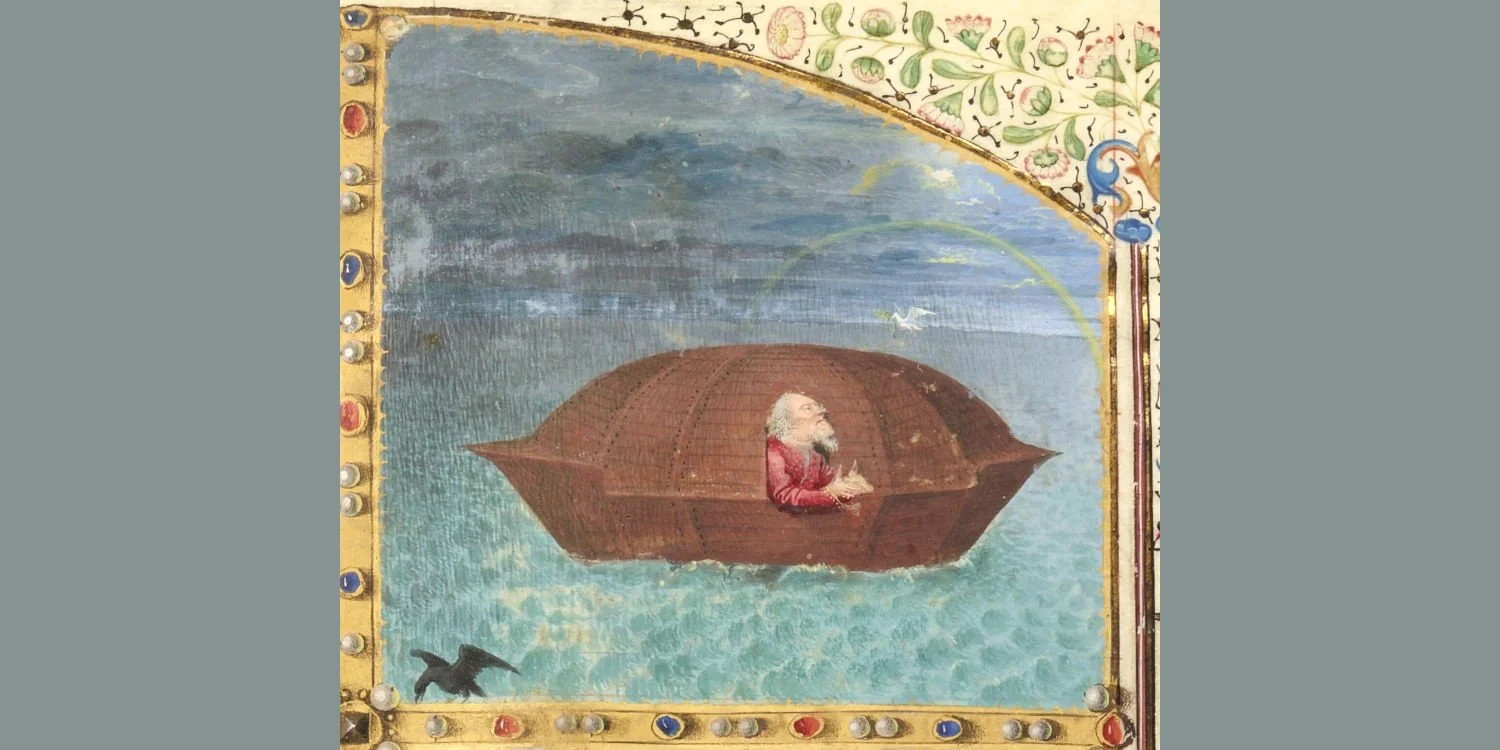
The five Covenants before Jesus end in varying degrees of failure or success. The Covenant with Adam collapses upon the revelation of his disobedience. Having eaten from the Tree of Knowledge of Good and Evil in disobedience to the directive of God, the Covenant collapses as Adam is cast out from Eden. Many generations later God establishes a new Covenant with Noah. In an act of both judgement and re-creation God again plunges the world under the primordial waters described in Genesis 1:2. God saves the righteous man, Noah and his family along with pairs of every animal and creature in an ark. As the water receded, the ark came to rest on Mount Ararat. Noah, a new Adam figure, emerges from the ark and performs the priestly act of offering sacrifice (Genesis 8:20). God renews the previous Covenant repeating the blessings originally given to Adam. According to John S. Bergsma, PhD, in his “Overview of Salvation History,” “sin has left a lasting wound,” and disharmony between man and nature. But the filial relationship of man in Covenant with God does not last long. Noah betrays his priestly-patriarcal role. He becomes drunk and lies naked in his tent (Genesis 9:21). His son Ham, in an enigmatic deed described in Genesis as seeing “the nakedness of his father” (Genesis 9:22) causes Noah to curse Ham’s descendents through his son Canaan (Genesis 9:25). The phrase, “seeing the nakedness of his father,” is widely seen as a euphemism for an incestuous encounter between Noah’s son Ham and the wife of Noah. So where the Covenant with Adam was marred by disobedience, the Covenant with Noah was marred by perversion.
Many generations pass through the next three chapters of Genesis when, in Genesis 12:3, God bestows upon Abram the promises of a great nation, a great name, and universal blessing upon mankind. God incorporated these promises into a formal Covenant. Then God bestowed upon Abram a greater name, “Abraham” (Genesis 17:5). This Covenant becomes subjected to the ultimate test of loyalty: that Abraham should offer his beloved son Isaac in sacrifice to God (Genesis 22:2). I explored this account in detail in “Behold the Lamb of God Upon the Altar of Mount Moriah.”
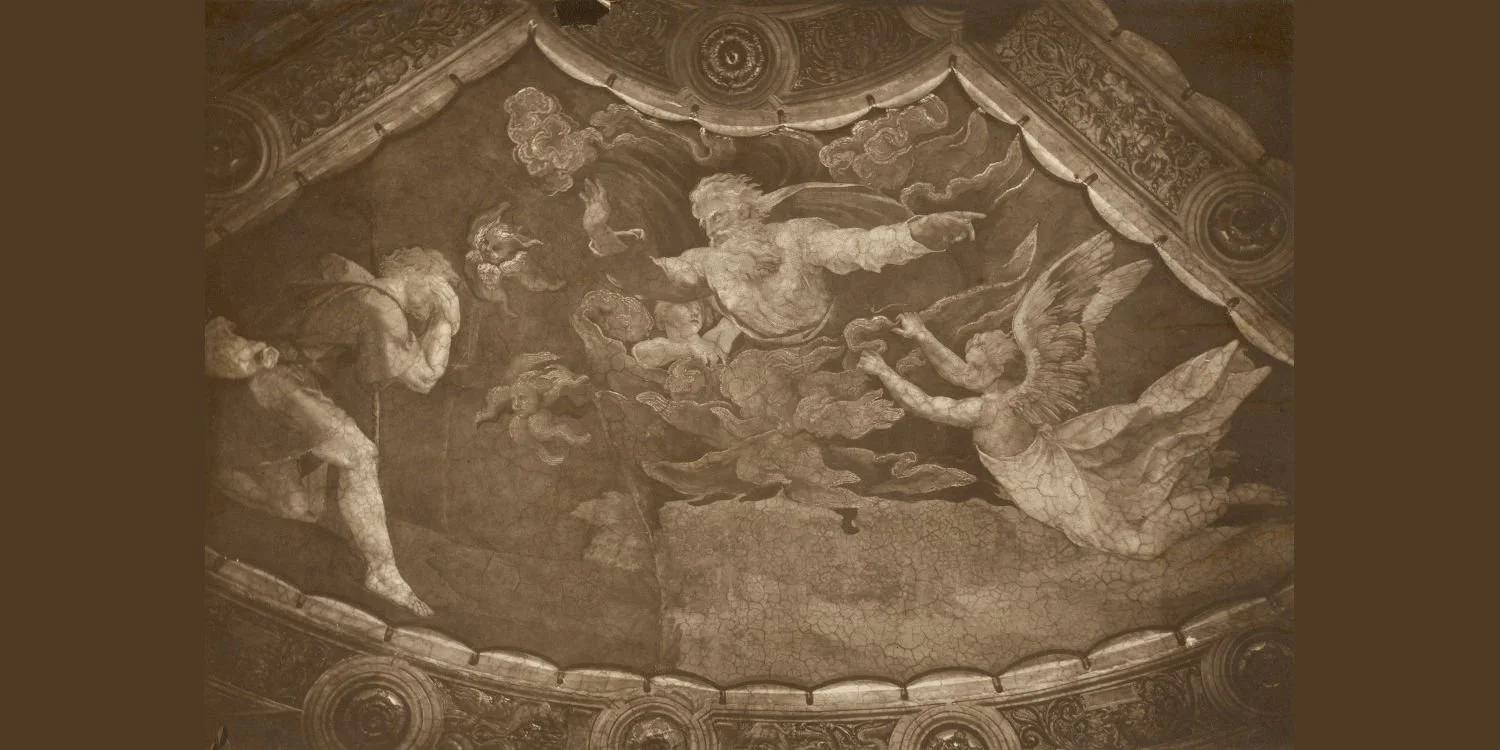
An Angel of the Lord stayed Abraham’s hand and pointed to a ram in the thicket, which became the substitute sacrifice for Isaac just as 2,000 years later, Jesus became the substitute sacrifice for us.
The Covenants of Moses, David, and Jesus
Unlike the aftermath of the Covenants with Adam and Noah, the Covenant with Abraham did not collapse under a catastrophic fall. Even though the Covenant is complicated by the sins of his descendants, God fulfills his promise to Abraham, but Abraham’s lineage ends up in Egypt.
Generations passed. Abraham’s descendant, Joseph, one of the sons of the Patriarch Jacob, was betrayed by his own brothers and sold into slavery in Egypt. Thus, centuries later, Israel became a nation in bondage in Egypt until Moses led the Israelites out of captivity to the Promised Land. God called upon Moses from a burning bush on Mount Horeb (Exodus 3:6, 10). God identified himself as “The God of your fathers, the God of Abraham, the God of Isaac, the God of Jacob. Come, I will send you to Pharaoh that you may bring forth my people, the sons of Israel, out of Egypt.”
Once the children of Israel were released from bondage, Moses led them to Mount Sinai where the Lord established a national Covenant — the Decalogue, the Ten Commandments. No sooner than the Sinai Covenant had been established, however, it was broken. Some Israelites were enticed at Mount Sinai into worship of a golden calf, an icon of an Egyptian deity. Moses expelled them and then Israel was subjected to wandering in the desert as penance. Moses is mentioned more in the New Covenant (the New Testament) than any other Old Testament figure.
Centuries later, around 1,000 BC, King David arose in Salvation History. He descended from the tribe of Judah and is introduced in Scripture as a young shepherd in Bethlehem, which came to be known in our Nativity accounts as the “City of David.” David was a gifted poet and musician. He composed many of the psalms in the Hebrew Bible setting some of them to music. He was also a warrior known to history as having slain the giant Philistine warrior, Goliath (1 Samuel 17:48).
The Prophet Samuel annointed David as King over Israel, “and the Spirit of the Lord came mightly upon David from that day forward (1 Samuel 16:13).” Like a New Adam, David also functioned as a priest and a prophet while Israel expanded to become an empire.
Under the reign of David’s son, Solomon, Israel became a great military power in the Ancient World. His greatest accomplishment was the building of the Temple in Jerusalem and the Ark of the Covenant, which I described in these pages in “The Ark of the Covenant and the Mother of God.”
The terms of Davidic Covenant are layed out in 2 Samuel 7. The elements of the Davidic Covenant include Nathan’s oracle (2 Samuel 7:8-16) about David’s intention to build a sanctuary for Yahweh.
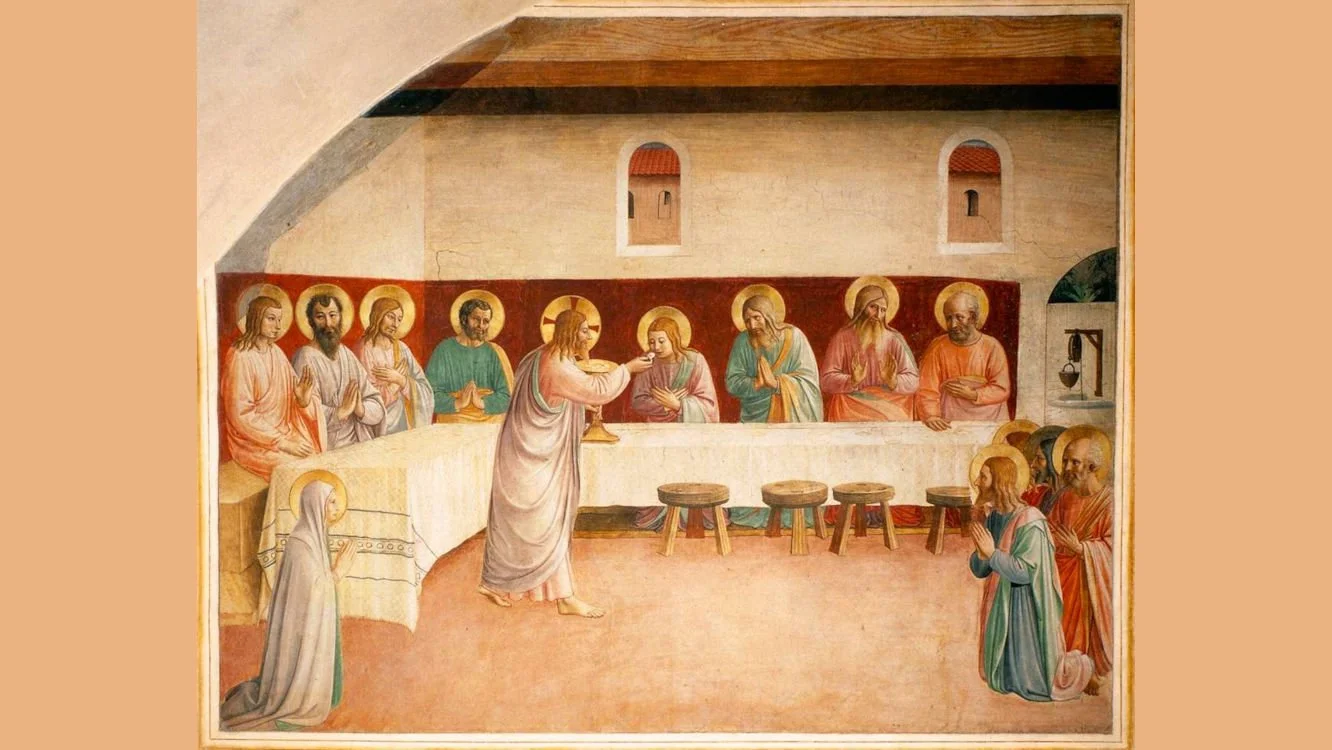
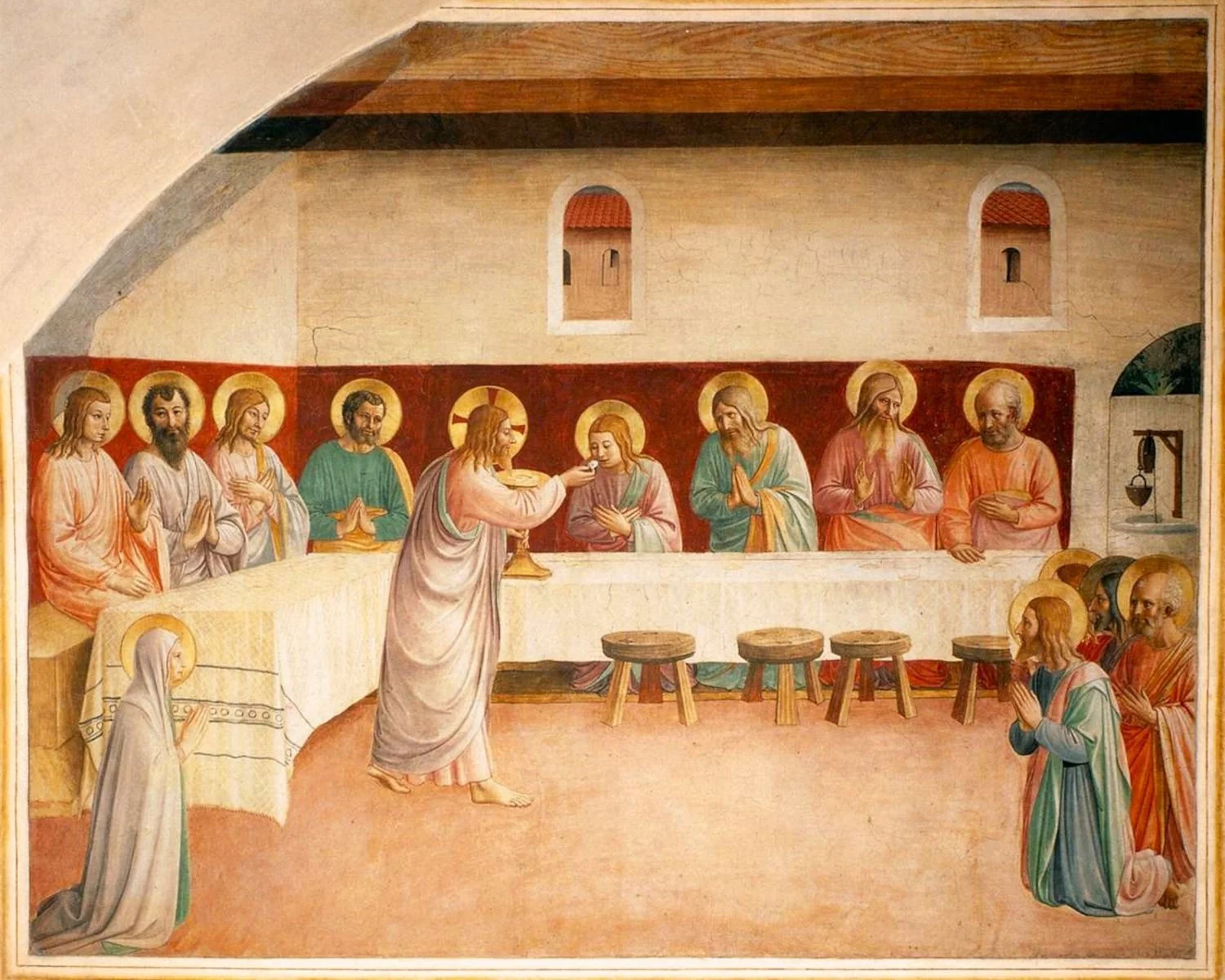
The New Covenant Gospels, especially Matthew and Luke, depict Jesus as the heir of David and the one to restore the Davidic Covenant. God’s Covenant with Jesus was the Institution of the Eucharist at the Last Supper. Jesus identifies his own body and blood as the sacrificial elements of this New Covenant.
This was something entirely new in the Bible and in Salvation History. Jesus did not simply make a Covenant, but rather “became” a Covenant, a living bridge linking us to God. It was, and is, the fulfillment of all of Salvation History.
+ + +
Note from Father Gordon MacRae: Thank you for reading and sharing this post. It will be added to our collection of special Scripture posts about Salvation History.
You may also like these related posts from Beyond These Stone Walls:
A Vision on Mount Tabor: The Transfiguration of Christ
Behold the Lamb of God Upon the Altar of Mount Moriah
The Ark of the Covenant and the Mother of God
On the Great Biblical Adventure, the Truth Will Make You Free
+ + +
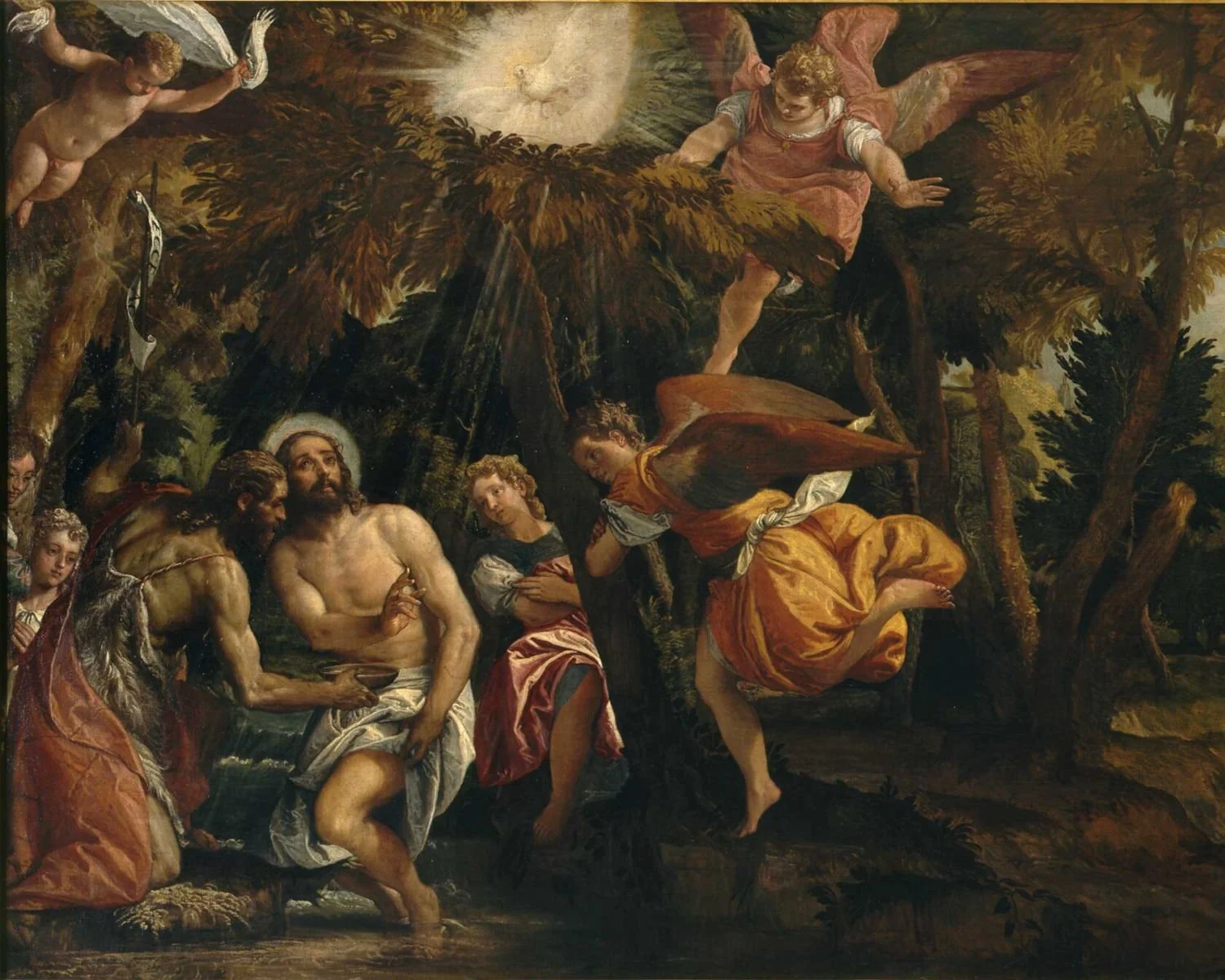
“This is my beloved Son on whom my favor rests.”

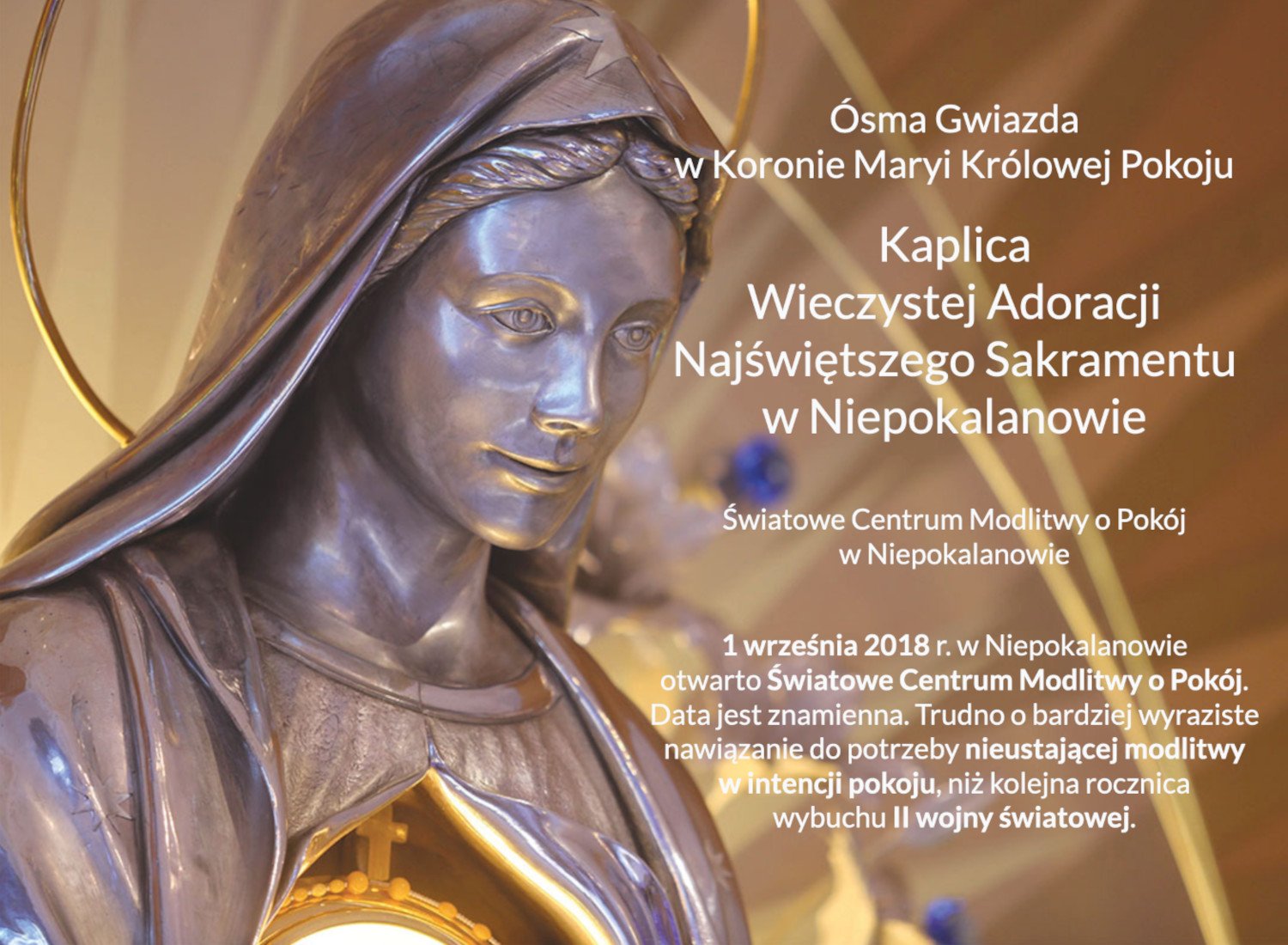

The Eucharistic Adoration Chapel established by Saint Maximilian Kolbe was inaugurated at the outbreak of World War II. It was restored as a Chapel of Adoration in September, 2018, the commemoration of the date that the war began. It is now part of the World Center of Prayer for Peace. The live internet feed of the Adoration Chapel at Niepokalanow — sponsored by EWTN — was established just a few weeks before we discovered it and began to include in at Beyond These Stone Walls. Click “Watch on YouTube” in the lower left corner to see how many people around the world are present there with you. The number appears below the symbol for EWTN.
Click or tap here to proceed to the Adoration Chapel.
The following is a translation from the Polish in the image above: “Eighth Star in the Crown of Mary Queen of Peace” “Chapel of Perpetual Adoration of the Blessed Sacrament at Niepokalanow. World Center of Prayer for Peace.” “On September 1, 2018, the World Center of Prayer for Peace in Niepokalanow was opened. It would be difficult to find a more expressive reference to the need for constant prayer for peace than the anniversary of the outbreak of World War II.”
For the Catholic theology behind this image, visit my post, “The Ark of the Covenant and the Mother of God.”

Apocalypse Now? Jesus and the Signs of the Times
The Gospel According to St Luke for the 33rd Sunday in Ordinary Time warns of destruction and persecution. Do we face the End Times or a summons to self-assessment?

The Gospel According to St Luke for the 33rd Sunday in Ordinary Time warns of destruction and persecution. Do we face the End Times or a summons to self-assessment?
You might remember Comet Shoemaker-Levy. The size of a major U.S. city, it was discovered and tracked by astronomers — for whom it was named — wandering through our solar system in the vicinity of Jupiter in March, 1993. A previous pass near the powerful gravity of Jupiter a year earlier broke the comet into a series of town-sized debris that ended up colliding with the giant planet.
It sent a thrill through the world of astronomy and a chill through just about everyone else. What gave Jupiter a mere black eye or two would have obliterated all life on Planet Earth. This was, for science, clear evidence that an extinction level event that wiped out the dinosaurs and most life on Earth 66 million years ago was more likely than not a comet or asteroid the size of a city.
Since 1993, the scientific evidence has become clearer. That asteroid exploded with the force of a million nuclear bombs in the sea near what is now, Mexico. The event triggered massive tidal waves, earthquakes, and a global rain of red-hot debris that blocked out all sunlight for decades. Most vegetation on the Planet was gone, and would take 700,000 years to regenerate.
On the outskirts of Colorado Springs recently, researchers uncovered thousands of fossils that show how the age of mammals arose from the dust and ashes of that event. The age of mammals was allowed to happen because the age of dinosaurs was put to an end by the collision. The fossil trove of mammalian species discovered near Colorado Springs demonstrates how life on Earth was reset through that event giving way, eventually, to us.
That, at least, is the analysis of geoscientists published in the Proceedings of the National Academy of Sciences on October 21, 2019. According to the fossil record, it took 40,000 years for life in the sea to even begin to recover from the event.
So when Jesus addressed the crowd in the Gospel of St. Luke, He may have been prophetic when He said, “When these things begin to take place, look up.” Today’s listeners have a frame of reference:
“And there will be signs in the sun and moon and stars, and upon the earth distress of nations in perplexity with the roaring of the sea and the waves, men fainting with fear and with foreboding of what is coming in the world, for the powers of the heavens will be shaken. And then they will see the Son of Man coming in a cloud with power and great glory. Now when these things begin to take place, look up and raise your heads, because your redemption is drawing near.”
The above passage is immediately preceded in Luke’s Gospel by the passages that constitute the Gospel proclamation for the 33rd Sunday in Ordinary Time, the penultimate Sunday liturgy of the Church’s Liturgical Year and the Sunday preceding the Solemnity of Christ the King. The Gospel verses immediately preceding the above passage — the one you will soon hear at Sunday Mass — are filled with the doomsday language about cosmic events:
“Nation will rise against nation, and kingdom against kingdom; there will be great earthquakes, famines, pestilences and great signs from heaven. But before this they will lay their hands on you and persecute you, delivering you up to the synagogues and prisons.”
Delivering us up to prisons? Lord, have mercy, not again!

Carlos Caso-Rosendi is an accomplished linguist, translator, writer and historian. Writing from Buenos Aires, Argentina, the home of Pope Francis, Carlos penned a moving and incisive summary of the state of justice in my regard awhile back. It was a brief but powerful article published simultaneously in Portuguese, Spanish, and English entitled, “Behold the Man.”
Carlos also writes periodically for other venues including The Lepanto Institute, a Catholic organization that takes its name from the Battle of Lepanto, a naval battle fought on October 7, 1571 in the Gulf of Lepanto (now called the Gulf of Corinth). The battle between the Ottoman Empire and the Holy League formed by Pope Julius II aligned the Papal States with Spain, Venice, and Genoa.
Though vastly outnumbered and outgunned, the Holy League was decisively victorious, but not without suffering the loss of many lives. The victory delivered thousands of Christian slaves and captured more than 100 ships. The battle was the first major victory of the Christians against the Ottoman Empire.
More recently, Carlos has been writing about “The Signs of the Times”, building a case for the emergence of the End Times that Jesus seems to be prophesying in the above Gospel passages. Many readers have been following his “End Time” posts. I would not even think of refuting Carlos in this. He could run circles around me with his knowledge of Prophetic literature, apocalyptic traditions, and original languages.
Several TSW readers have mentioned his posts with various levels of concern — and sometimes excitement — that Carlos might be entirely right. I do not know whether The End is near, but in a sense it is near for all of us and we should approach our days with an eye toward what may come, as Saint Paul warned, “like a thief in the night” (1 Thes. 5:2). It is folly to get caught up in the drama all around us when heaven awaits — or not, if nothing changes.
It is difficult to refute the End Time discourse raised by Carlos, but in this both science and our faith are on the same page. Life on Earth has ended before and the scientific odds are clear that it will happen again. It is generally agreed in science that the millions of similar comets and asteroids traveling randomly through space pose an existential threat to life on Earth. It is not a matter of whether Earth will again find itself in the crosshairs of a giant asteroid, but when.
And there are other doomsday scenarios set forth, not by Scripture, but by science. It is known today that the magnetic polarity of the Earth has shifted its positive and negative poles every few hundred thousand years. Magnetic North shifts its polarity to the South Pole. Earth is now about 100,000 years overdue for the next unpredictable shift. Our ancient ancestors may not have even noticed, but today our dependence on technology could leave us stranded in chaos for decades if global power grids and all computers suddenly became irreparably disabled by a global electromagnetic pulse.

The Temple and the Covenant
I am also always aware of the multiple layers of meaning in the parables and teachings of Jesus in the Gospels. I do not discount the literal interpretation of Prophetic and Apocalyptic Literature in Sacred Scripture, but there are other, parallel meanings in the end-of-all-things scenario that St Luke’s Gospel describes.
The above Gospel passages presented by St Luke take place on the Mount of Olives and collectively they are known as the “Olivet Discourse.” The Mount of Olives is an ancient hill to the East of Jerusalem that overlooks the city across the Kidron Valley (see 2 Samuel 15:30 and Zechariah 14:40). The Mount was famous for the large number of olive trees that grew there in the time of Jesus.
As I addressed in another post, “Waking up in the Garden of Gethsemane,” the Mount of Olives was the scene of the betrayal of Jesus in the Garden of Gethsemane, and it was the scene of His Ascension. A thousand years earlier, it was also the scene of the agony of King David after his betrayal by his son, Absalom. It is a scene of great Biblical importance for Hebrew and Christian ears.
The Gospel for the end of Ordinary Time begins with an observation by Jesus’ disciples about the “noble stones” that adorn the Temple in Jerusalem. They could be seen across the Kidron Valley from the Mount of Olives. Herod the Great began an expansion of the Temple in 19 BC. The Temple was immense, and its “noble stones” at its foundation are equally immense. Some measured forty feet in length.
Jesus tells his disciples that the indestructible appearance of the Temple is an illusion “As for these things that you see, the days will come when there shall not be left here one stone upon another” (Luke 21:6). A similar discourse also takes place in the Gospel of Matthew (24-25) and it too speaks of end times, cosmic catastrophes, heavenly signs, and the future judgment of God.
But looking at the words of Jesus in the context of his original hearers and the traditions of ancient Judaism provides a parallel meaning at the literal-historical level. Jesus was also speaking of the destruction of the Jerusalem Temple, symbolic of the Old Covenant. This places the entire “End Time” discourse in the context of His words about the Temple, the stones of which “shall not be left here one stone upon another.”
Hearing this at the Mount of Olives, the disciples of Jesus might recall something described in a recent post, “Pope Francis, President Trump, and the Rise of the Nones.” In 597 BC Babylonian invaders destroyed the Temple sending the Jews into exile.
As described in that post, King Cyrus gathered the Babylonians into an Empire and then ordered his army to restore what they had destroyed. In 538 BC, King Cyrus restored the Jews to their Promised Land and rebuilt the Temple of Solomon. It was from this period that Messianic expectations permeated Israel.
Cyrus is strikingly referred to by the Prophet Isaiah as “the Lord’s Anointed” (Isaiah 45:1), a title that Israel previously reserved only for its kings and for the expectation of a Messiah. The prophecy of Jesus at the Mount of Olives was confirmed when Roman soldiers sacked Jerusalem and destroyed the Temple in 70 AD claiming the lives of more than one million Jews.

The Image of the Invisible God
The End Times discourse of Jesus may also have referred to the future destruction of the Temple by the Roman Empire in 70 AD. The Jews regarded their Temple as a representation or microcosm of the world, an architectural model of the universe fashioned by God. The universe itself was seen by the Jews as a sort of “macrotemple,” the place where God presides and throughout which His Divine Presence permeates.
This is summarized in the Psalms “He built His sanctuary like the high heavens, like the earth which he founded forever” (Psalm 78:69). There are other Old Testament references to equating the Temple with the world. After the Genesis account of the creation of the world, God rested from all his work which he had done (Genesis 2:3). The Temple was seen as the sacred place of God’s rest. He commissioned the building of his Temple by Solomon as “his resting place forever” (Psalm 132:14 and 1 Chronicles 6:41).
The symbolism of the number “seven” also links the Temple with the Hebrew world view. In the Books of Job (38:4-6) and Amos (9:6) God’s creation of the world is described as a Temple completed and blessed on the seventh day. Solomon built the Jerusalem Temple in seven years (1 Kings 6:38) and dedicated it on the seventh month (1 Kings 8:2) during the seven day Feast of Booths — also known as the harvest Feast of the Ingathering (1 Kings 8:65).
The Prophet Isaiah’s vision of the Lord (Isaiah 6:1-7) makes a comparison that the Temple and the Cosmos are interchangeably filled with God’s glory. The train of God’s robe “fills the Temple” (Isaiah 6:1) and the angels cry out that “the whole earth is filled with his glory” (Isaiah 6:3). For the Prophet Isaiah, the Temple and the cosmos are both the house of God.
Other Jewish writers in the time of Jesus described in great detail the Temple as a model for the universe. The historians, Josephus and Philo, and the late rabbinic writings, described the Temple’s divisions, furnishings, and architecture as symbols of the cosmos, the celestial Temple.
The declarations of Jesus on the Mount of Olives in the Gospels of Saints Matthew and Luke may well portend the end of the world as Carlos Caso-Rosendi and others looking at End Time prophecy interpret them. I will not say they are wrong, for this world is most certainly turning its gaze away from God and back onto itself.
We are living in the age of humanity’s narcissism. The signs of the times certainly point to the possibility that we are witnessing the signs of an Apocalypse as large swaths of humanity desecrate the Covenant sealed with the Blood of Christ.
But the destruction of the Jerusalem Temple was also seen as an apocalypse. It was the symbolic termination of the Old Covenant and the rise of the New — in Jesus Himself. As I have written in some past posts, we live today in a spiritually very important time. Jesus is equidistant in time between us today and God’s First Covenant with Abraham.
The end may indeed be near, but regardless, life is too short to waste it in the folly of this world. Jesus is the epicenter of our time and is in Himself the Temple Covenant of Sacrifice with God. As the Second Reading for the upcoming Solemnity of Christ the King proclaims:
“He is the image of the Invisible God, the firstborn of all creation. For in him were created all things in heaven and on earth, the visible and the invisible.”
