“There are few authentic prophetic voices among us, guiding truth-seekers along the right path. Among them is Fr. Gordon MacRae, a mighty voice in the prison tradition of John the Baptist, Maximilian Kolbe, Alfred Delp, SJ, and Dietrich Bonhoeffer.”
— Deacon David Jones
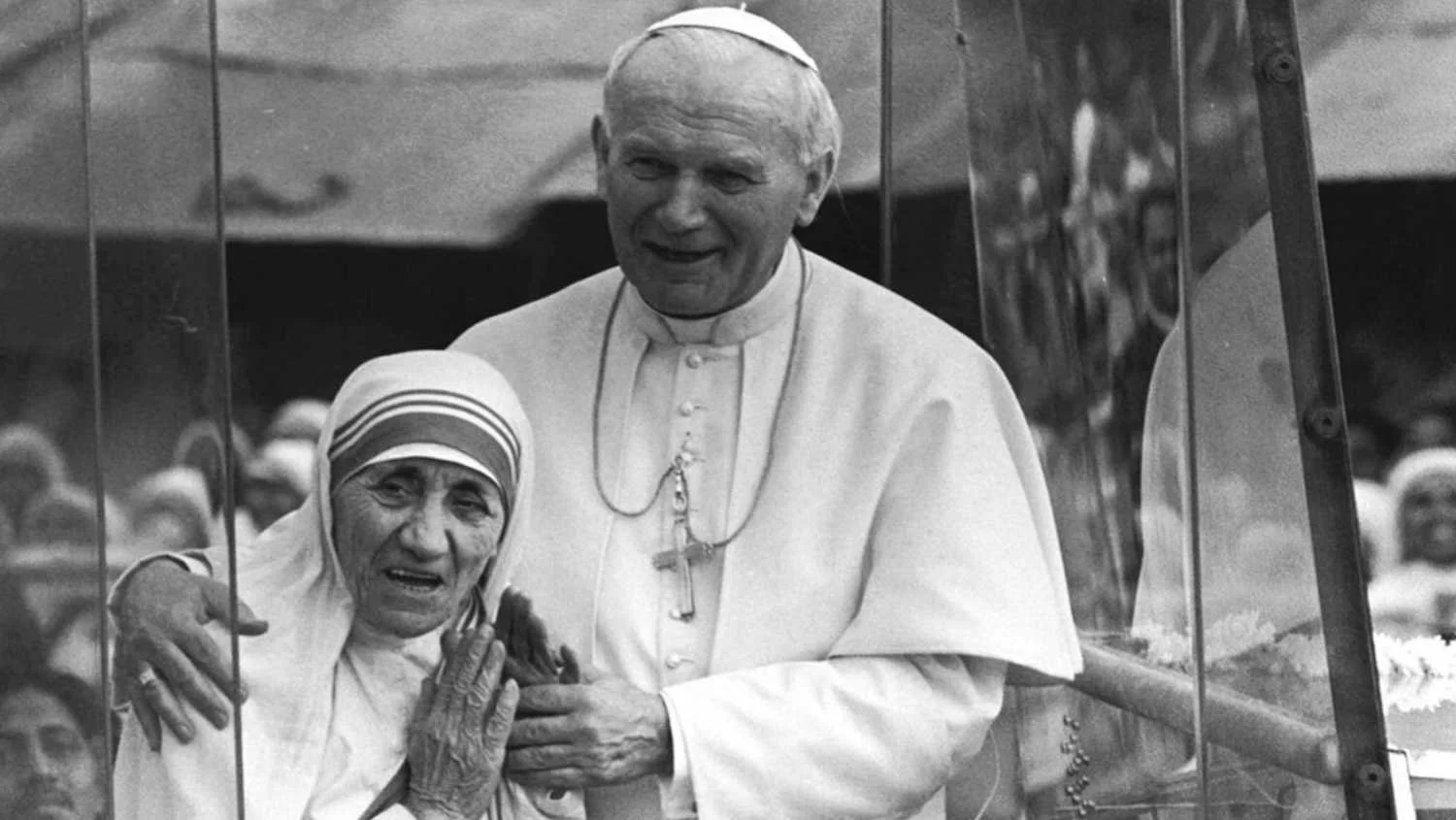
For Mother Teresa of Calcutta, Pentecost Illumined the Night
Discouragement is the deep spiritual valley of our age. For Mother Teresa of Calcutta, the Holy Spirit’s light came only at dawn in a long dark night of the soul.
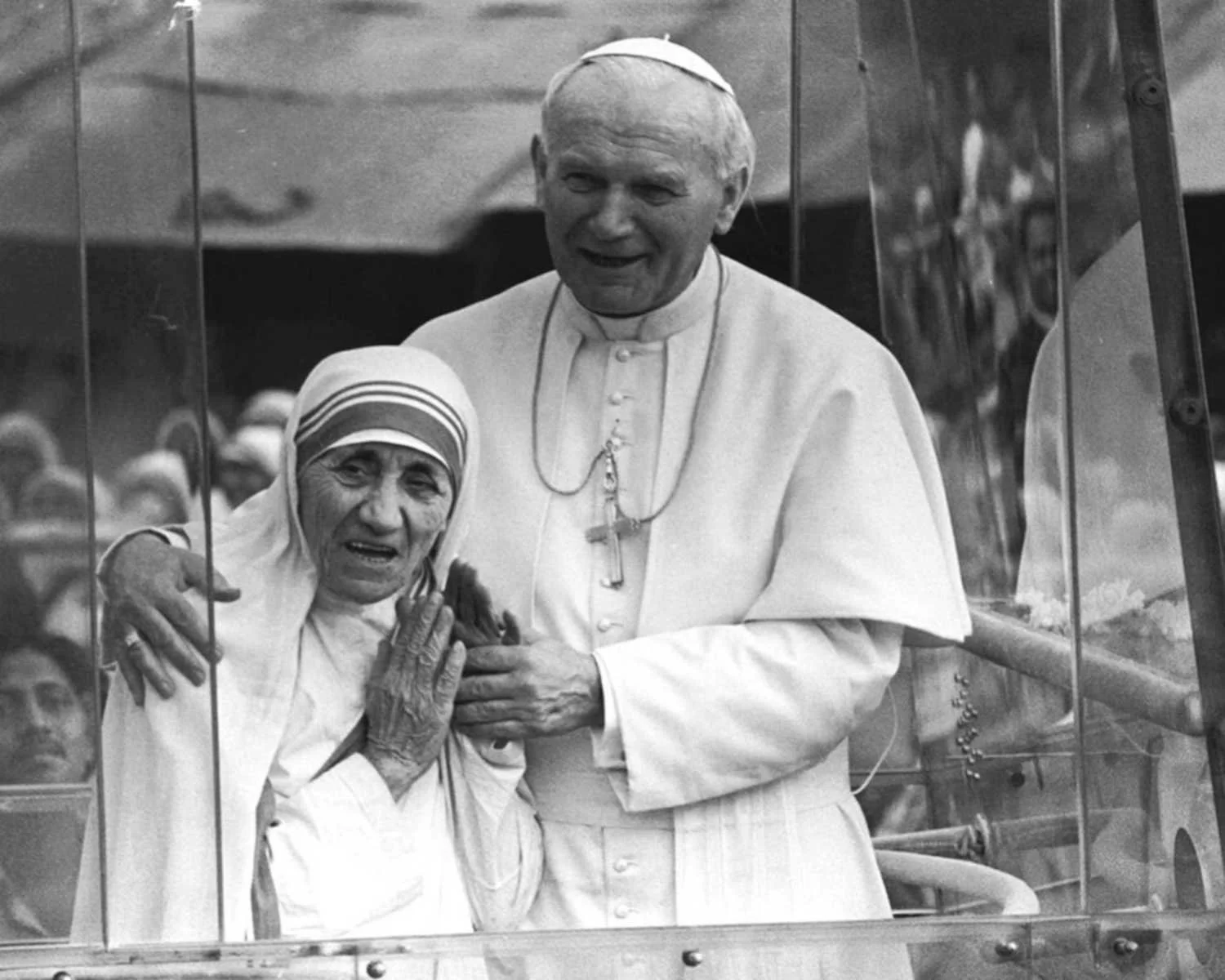
Discouragement is the deep spiritual valley of our age. For Mother Teresa of Calcutta, the Holy Spirit’s light came only at dawn in a long dark night of the soul.
May 13, 2026 by Father Gordon MacRae
I grew up a few miles north of Boston in an area known locally as the North Shore. Well, it is called that in print anyway. In conversation, it comes out something like, “the Noath Shoah.” I never knew that until I moved to another part of the country where people inexplicably pronounce the letter “R.” Anyway, I have lived in so many places since then that I have lost much of my Boston accent, but I can still translate it when I hear it.
There is an old North Shore saying, “Light finally dawns upon Marblehead.” I am not sure of its origin, but it makes logical sense. The seaside town of Marblehead is at the head of a deep harbor north of Boston, so the dawn’s early light is seen there a few seconds later than in other North Shore coastal towns. Its figurative meaning is that some reality that has been eluding us is now finally made clear.
Light finally dawned upon Marblehead today when I set out to write about Pentecost and ended up writing about Saint Mother Teresa of Calcutta. There is a connection that I had to spend some time ferreting out, and that is when the light finally dawned. I learned something important about her, and in the process, about myself.
But first, I know I am going to have a hard time dropping “Mother” from her name. “Saint” Teresa seems incomplete and already taken. So I guess that like Saint Padre Pio, she will be forever endowed with a title that has become a necessary part of her name. I am going to have to call her Saint Mother Teresa of Calcutta, and it has slowly caught on.
She was canonized on September 4, 2016, the eve of the date of her death in 1997. In life the person she was, the spirit she is, was eclipsed by the sorrowful mysteries of the poor to whom she devoted her life. The images of her presence among the poor, the disfigured, the utterly broken and rejected — even the despised — have always been part of the background landscape of my life as a priest, but to be honest I could never bring myself to linger on those scenes. They were just too painful. They always left me with a sense of inadequacy as a priest, afraid to look upon the broken too long lest I feel compelled to follow her lead.
I admired Mother Teresa’s presence at the peripheries of human suffering, but as a priest I admired it from too much of a safe distance. That troubles me today. I had to be compelled in priesthood to carry the cross of the outcast, a cross that brought me unwillingly to the scene of that post-resurrection appearance to Simon Peter in the Gospel of John.
“Truly, truly I say to you, when you were young, you fastened your own belt and walked where you would; but when you are old, you will stretch out your hands, and another will fasten your belt for you and carry you where you do not wish to go.”
— John 21:18
I have experienced those ominous words of John’s Gospel in a literal and terrifying way, but I found companions and some inner peace along the way as well. I wrote of one recently in “A Lesson From Saint Damien of Molokai, Leper Priest.” It was about how disappointment and discouragement have been part of my own dark night of the soul for thirty-two long years, and how Saint Damien of Molokai — whose feast day was observed on May 10 — taught me what my priorities must be in a life among prisoners.
And you know from many posts that I found other companions and mentors in Saint Maximilian Kolbe and Saint Padre Pio who have shown me by example that my life bound over by earthly powers must be lived out at the foot of Cross. In prison, others have joined me there, many others, but I remain in the dark.
Come Be My Light
Now I present this new friend at the foot of the Cross in the life of Mother Teresa of Calcutta, but I had to first shed all my assumptions about her. It is a little intimidating that she was awarded the Nobel Peace Prize in 1979 for her witness to the world’s broken, abandoned and poor. In life Mother Teresa was revered as a living saint. I just assumed that for her to be that person, to do the work that she did, Mother Teresa must have been given a gift of daily awareness of the light of supernatural grace that flowed within her and shined through her. Otherwise, I thought, she would just sink into dark desolation just as I have been known to do with far less in the way of grace to count on.
And when I do sink into that desolation, I sometimes stay for days, weeks, months, at one point in my imprisonment before Beyond These Stone Walls began, even years. And if my mail is any indication, many of you have had that same experience. Please, do not come to Beyond These Stone Walls because misery loves company. It really does not. Come here because together we can manage crosses of discouragement that alone might only elude us and crush our spirits. You cannot just go to Home Depot to buy a weed whacker to wipe out desolation. It is best to have someone show you how to use it.
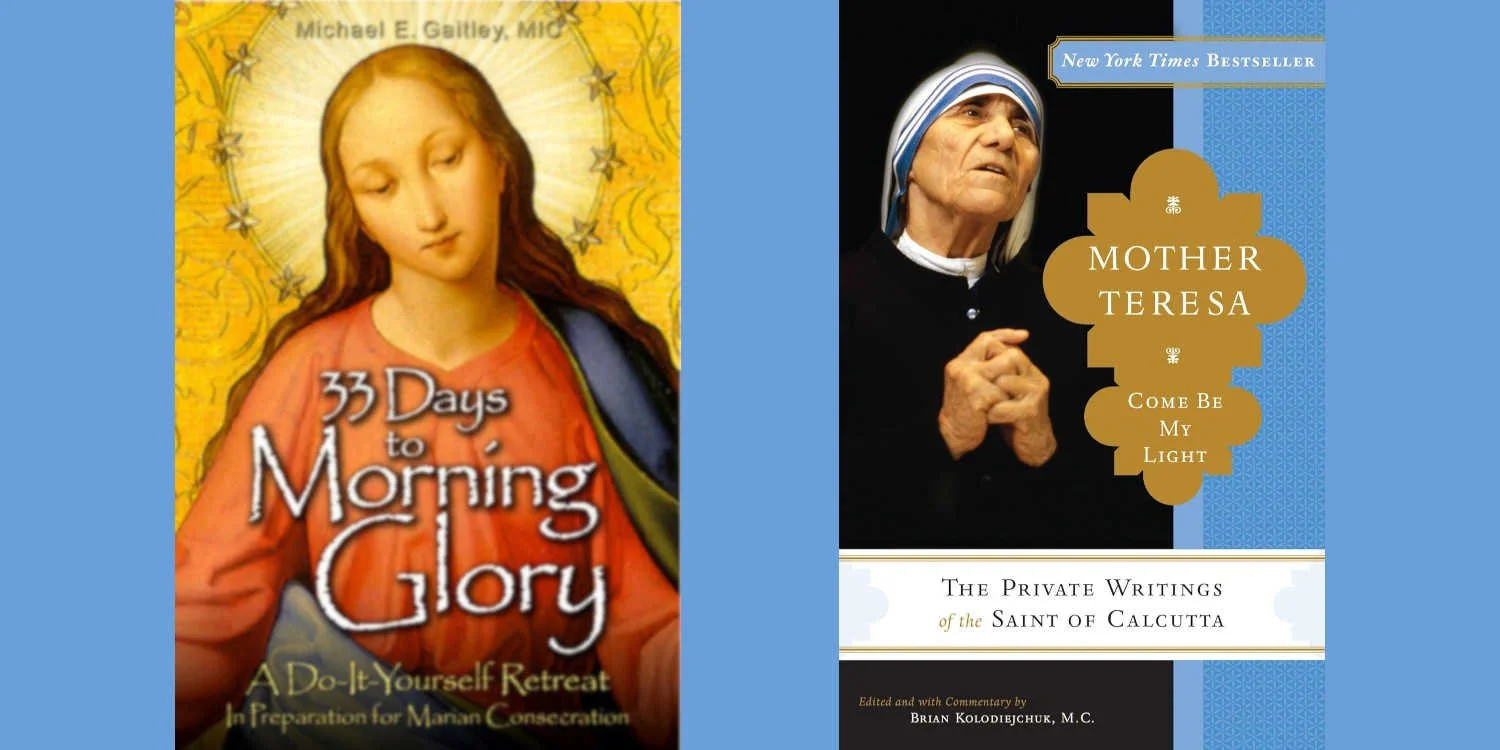
I was wrong about Mother Teresa, about my image of her basking in the reflected glow of the Holy Spirit. About a year after I started writing for this blog, I was given a copy of Mother Teresa’s Come Be My Light (Doubleday 2007) and my presumptions about her life in grace were quickly dispelled.
Some of the shallow secular media made a big deal of this book, presenting it as the latest Catholic scandal that the great Living Saint among us had long bouts of doubt and desolation. But for me she became human again, and an icon not so much of living grace, but of grace hard won through great spiritual struggle. Like Saint Maximilian Kolbe, she became someone I could let in, and learn from.
Centuries of Catholic art tend to depict the saints among us with halos, in a state of ecstatic pose before the True Presence. Mother Teresa’s own writings convey her struggle to survive spiritually in the present absence. In that, I can relate. In that, I find much hope. That sense of absence is something I have taken up in other posts (see “Priesthood in the Real Presence and the Present Absence”).
Through letters to her spiritual director, Come Be My Light is a guided tour of the interior life of this courageous woman whose heart “burned with the fire of charity” while at the same time experienced doubt and spiritual darkness in “a true dark night of the soul.” I began to do what she did, to pray not so much to be free of spiritual desolation, but to be free to serve even in the midst of it. Mother Teresa did that well. I get, at best, a C-minus, but I am still reading the book!
A part of it reminds me so much of something Canadian Catholic writer Michael Brandon wrote some time back in “All Things Turn to Good” at his Freedom Through Truth blog. While writing of the news of the failure of the justice system to pursue justice for me, Michael quoted another Saint Teresa, Saint Teresa of Avila, who once wrote, “God, if this is how You treat Your friends, it’s no wonder that you have so few.” When our friend, Pornchai Moontri, read that quote, it made him laugh. He had been having a hard time with discouragement over my plight, but the quote put it into perspective for him.
Do not read Come Be My Light in one sitting. Keep it on your night stand and read it prayerfully, a letter a day perhaps, or even reserved for moments in your own dark night. It has gotten me through many of my own. She is fast becoming the Patron Saint of “Get-off-your-priestly-arse-and-do-something-for-someone-instead-of-moping-about!”
The Advocate
There is a little side story to tell. While composing this post, I had left my copy of Come Be My Light in the prison library where I work, but I had only a Saturday afternoon to finish this post and get it into the mail. The library is closed on weekends so I had no way to retrieve the book. On Saturday morning, I remembered that Father Michael Gaitley had an entire section about the Marian consecration of Mother Teresa in his book, 33 Days to Morning Glory.
But I had left that book in the library as well! When I mentioned that to Pornchai, who was still here with me then, he said, “Well, there’s at least ten of them right here in this unit.” Then it struck me. How is it even possible that out of sixty prisoners in this one prison cell block, ten of them have completed 33 Days to Morning Glory and entered into Marian Consecration? That is one out of every six prisoners in our field of view. So all I had to do was walk to the cell next to mine and borrow the book. Duh!
When I did, I opened to the Table of Contents and was instantly reminded that three of my favorite saints comprise weeks two, three, and four of Father Gaitley’s 33 Days to Morning Glory, retreat. They are Saints Maximilian Kolbe, Mother Teresa, and John Paul II, and all are saints of the Twentieth Century.
I thought I had read this book cover to cover, but while looking at the Table of Contents to find the section on Mother Teresa, I unconsciously thumbed back two pages, and stopped on a name that jumped off the page at me. It was a short review of 33 Days by Father James McCurry, formerly Minister Provincial of the Conventual Franciscans, the order to which Saint Maximilian Kolbe belonged and the Vice Postulator for his cause for sainthood. How could I not have seen this before?
Many years ago, Father James McCurry came to visit me in prison. I had never previously met him, and today I cannot really explain what brought him here except a vague memory that he was passing through and heard of me through a friend of a friend. In the prison visiting room, Father McCurry asked, “What do you know of Saint Maximilian Kolbe?” It was a question that would change my life, and then change the life of Pornchai Moontri, and then others as well. I wrote of this first encounter with a Patron Saint in “The Parable of a Priest and the Parable of a Prisoner.”
So in searching for a section on Mother Teresa, she pointed me back to an old friend. The interconnections between everyone in this story are mind-boggling. Father McCurry wrote that the essence of Marian consecration is …
“St. Maximilian Kolbe’s mystical intuition about the interior life of Mary and the Holy Spirit in the life of a consecrant; Blessed Mother Teresa’s experience of Mary drawing us into her heart, where Jesus keeps repeating, ‘I thirst’; and St. John Paul’s understanding that consecration to Mary brings us to the source of merciful love — the Divine Mercy poised to transform the world.”
That is when the light finally dawned upon Marblehead! I realized that the world I am thrown into is in fact being transformed in spite of my protests about being here in the first place. Some around me — the poor, the outcasts, the discarded, the lepers, the criminals — are being transformed. How could it possibly have happened that one out of every six of these men around me in prison now lives a life consecrated to Jesus through Mary? How is it that the saints whose intercession I keep pursuing are already engaged in a work that has eluded me? Then I read in the Gospel:
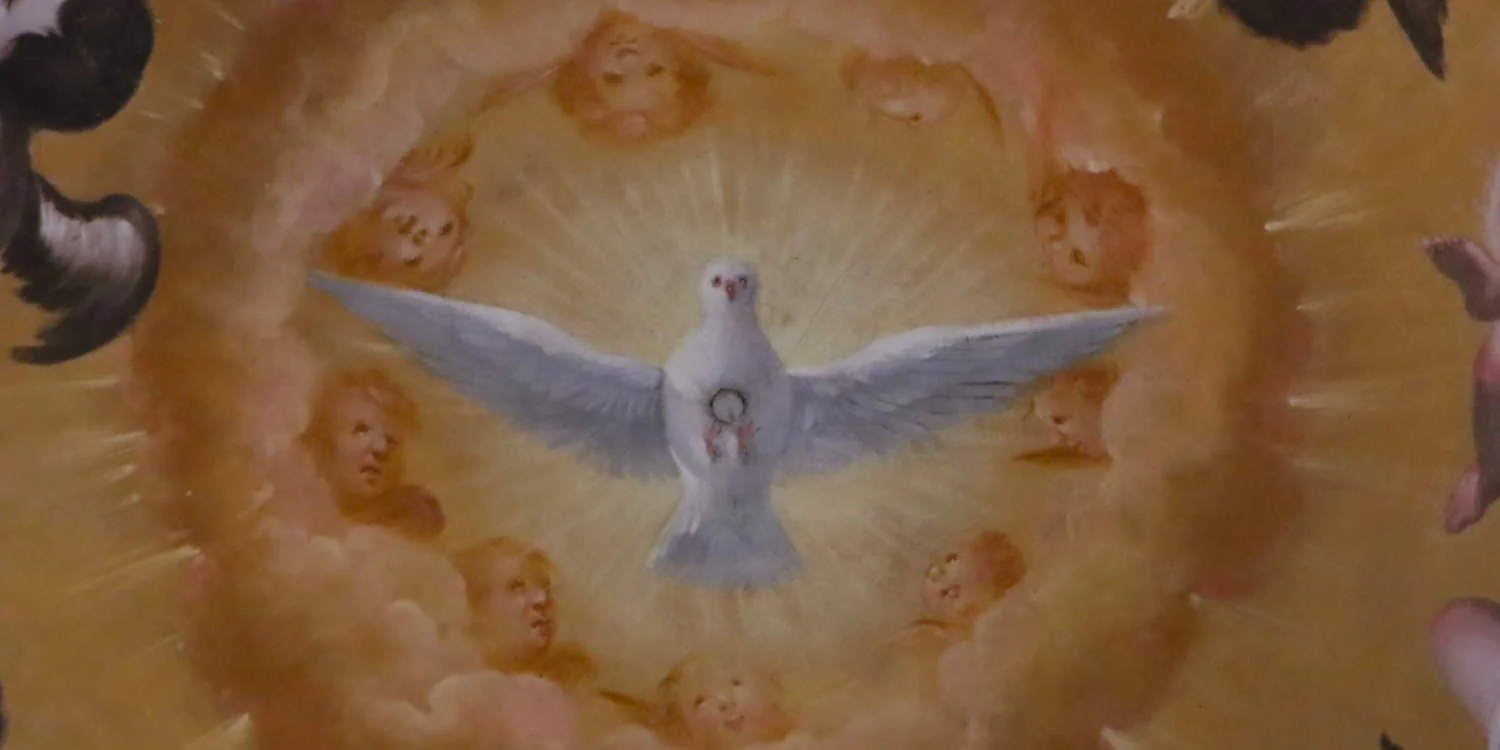
“I have told you this while I am with you. The Advocate, the Holy Spirit, whom the Father will send in my name, will teach you everything and remind you of all that I told you. Peace I leave with you; my peace I give you. Not as the world gives do I give it to you. Do not let your hearts be troubled or afraid.”
— John 14:25-28
This brings to light what Saint Mother Teresa of Calcutta learned in the dark. The Holy Spirit was her Advocate not in any obvious glory, but in desolation, and it was from there on the very edges of suffering humanity that she led countless souls to Christ, and witnessed to the world that the Lord hears the cry of the poor.
“It is beautiful to see the humility of Christ. This humility can be seen in the crib, in the exile in Egypt, in the hidden life, in the inability to make people understand him, in the desertion of his apostles, in the hatred of the Jews, and all the terrible suffering and death of his passion, and now in his permanent state of humility in the tabernacle, where he has rendered himself to such a small particle of bread that the priest can hold him with two fingers.”
— Mother Teresa of Calcutta
+ + +
Note from Father Gordon MacRae: We could extend the same invitation to Saint Mother Teresa that she extended to the Holy Spirit: Come Be My Light.
Thank you for reading and sharing this post about a great saint of our age. You may also like these related posts at Beyond These Stone Walls:
Lesson From Saint Damien of Molokai, Leper Priest
The Parable of a Priest and the Parable of a Prisoner

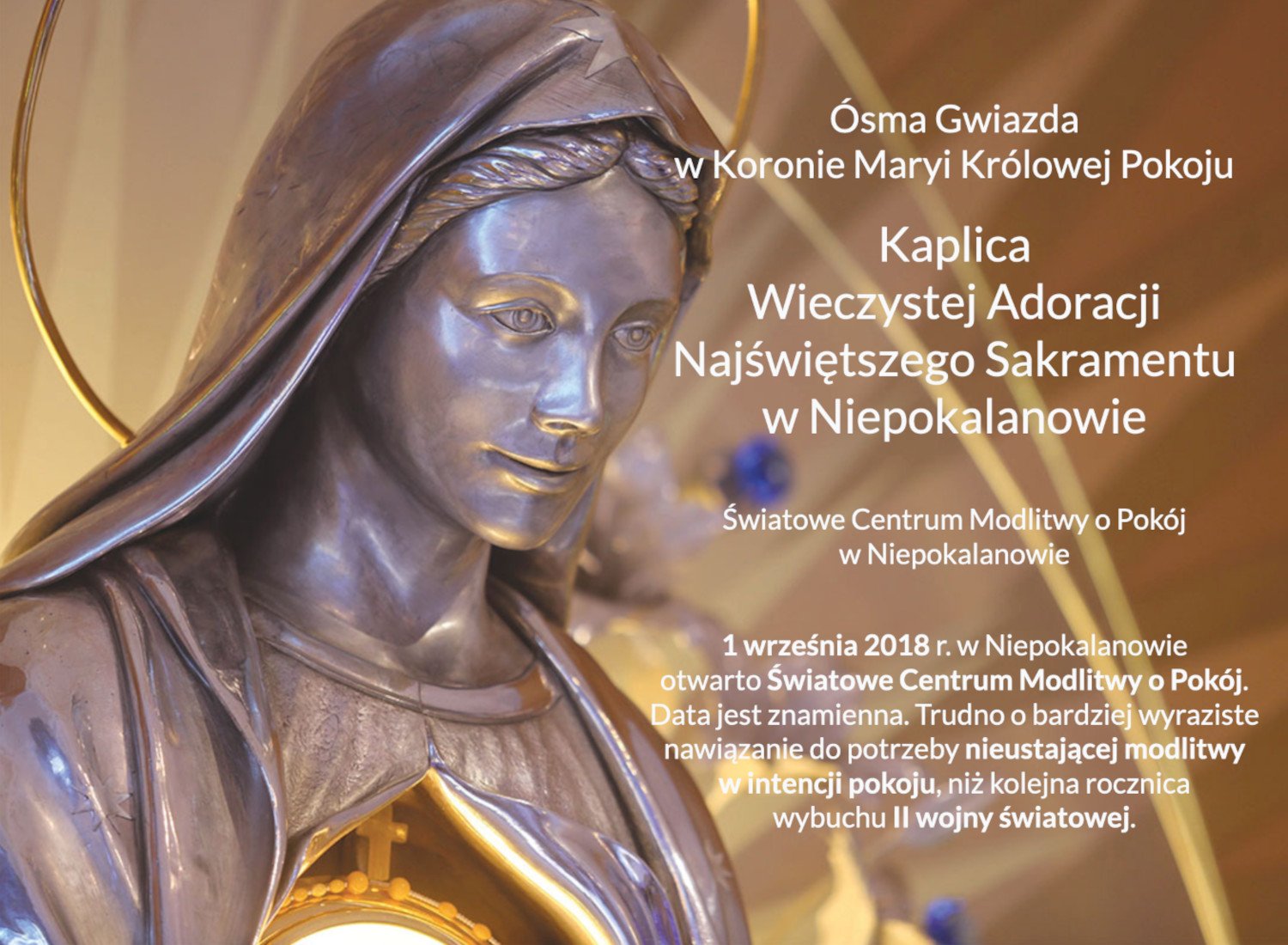

The Eucharistic Adoration Chapel established by Saint Maximilian Kolbe was inaugurated at the outbreak of World War II. It was restored as a Chapel of Adoration in September, 2018, the commemoration of the date that the war began. It is now part of the World Center of Prayer for Peace. The live internet feed of the Adoration Chapel at Niepokalanow — sponsored by EWTN — was established just a few weeks before we discovered it and began to include in at Beyond These Stone Walls. Click “Watch on YouTube” in the lower left corner to see how many people around the world are present there with you. The number appears below the symbol for EWTN.
Click or tap here to proceed to the Adoration Chapel.
The following is a translation from the Polish in the image above: “Eighth Star in the Crown of Mary Queen of Peace” “Chapel of Perpetual Adoration of the Blessed Sacrament at Niepokalanow. World Center of Prayer for Peace.” “On September 1, 2018, the World Center of Prayer for Peace in Niepokalanow was opened. It would be difficult to find a more expressive reference to the need for constant prayer for peace than the anniversary of the outbreak of World War II.”
For the Catholic theology behind this image, visit my post, “The Ark of the Covenant and the Mother of God.”

A Devastating Earthquake Shook Thailand, Myanmar, and Our Friends
On the day Pornchai Max and I debated who should write this post about important anniversaries, a 7.7 earthquake shook Myanmar and Thailand with devastating results.

On the day Pornchai Max and I debated who should write this post about important anniversaries, a 7.7 earthquake shook Myanmar and Thailand with devastating results.
April 9, 2025 by Fr. Gordon MacRae
I turn 72 years old on the day this is posted. That is not the earthquake referred to in my title, though sometimes aging does feel like one, especially in this place where I grow older. But I am not yet at the brink of falling apart. I still go to work every day, and just in the process of getting there and back, I climb a few hundred stairs daily, sometimes carrying loads besides myself. I am no worse for the wear, and holding up well.
I never really thought much about birthdays, at least not my own. The last time I mentioned it was in a 2022 post about a personal hero and role model of mine. I hope you might read that one if you haven’t already. It was “Resistance: A Birthday in the Shadow of Dietrich Bonhoeffer.” He was a man I could never forget and the world should not forget him either.
More importantly, on April 10 this year, Pornchai Max Moontri and I celebrate his 15 years as a Catholic, a transformation that we also should not forget. Becoming Catholic on Divine Mercy Sunday in 2010 was a major inflection point in his life, and in a way, in my life as well. An inflection point is a geometry term. It refers to the point at which a convex arc becomes a concave arc radically changing its perspective. I wrote of how Pornchai’s conversion, and the Heavenly influencers that brought it about, became a major inflection point in both our lives in “The Parable of a Priest and the Parable of a Prisoner.”
But this year, Max and I both face these hopeful events with some sorrow. I have to start with the earthquake and all that was lost in recent days. Well, actually, I guess I have to start with Aung. As most readers know, every denizen of this overcrowded prison is assigned a prisoner-roommate. At the time Max was deported to Thailand in 2020, he and I had shared a cell for 15 years. Some amazing grace — though none of it of my making — happened during those years. Many of our longer-term readers have been witnesses to that grace. The transition to a new roommate after 15 years was uncomfortable at first. The experience can be anywhere from an anxious one to an absolute nightmare. For every prisoner everywhere, the nature and demeanor of his or her roommate is the single most important factor in coping.
It was Max who selected my next roommate four and a half years ago. On his way out the prison door for ICE detention on September 8, 2020, Max stopped and asked the unit sargeant to consider his proposal for my next roommate. One hour later that person was living in my cell. Still, it was a jarring adjustment. Now, four and a half years later, that person has left and I was the sole occupant of this cell for the next week. Then, just a week before writing this, Aung showed up carrying two trashbags containing the sum total of his evidence of a life.
Aung is 49 years old and he had been living for almost a year in an open recreation area due to a lack of available cells. Because of his language barrier, no one had requested him as a roommate. We actually knew each other. Months earlier, Aung came to the prison law library where I work. He was a traumatized man of 49 displaced from his family and from a country engulfed in a four-year-long civil war with no end in sight.
On the evening after Aung had been placed with me, I spoke with Max in Thailand and he was glad to hear of this development. Max did not know Aung, but he knew a lot about Myanmar, the country from whence Aung came. Max told me about the nation of Myanmar which shares a long troubled border with Thailand. This set me upon a resolve to do some research on its government and history.
Aung grasp of English is limited, but he speaks some Thai, and over the preceding 15 years I picked up enough Thai to communicate with Aung. When I addressed him with the traditional Thai greeting —‟Sawasdee Kup, Khun Aung” — he was shocked. Aung is a refugee from the rogue nation of Myanmar, formerly called Burma. He knows that he will one day be deported there, a future mired in anxiety and dense fog. As the legal clerk for this prison’s law library, it will fall to me to help prepare Aung for that nightmare. He was forced to flee Myanmar coming to the United States as a religious refugee from a nation ruled by the iron fist of an oppressive military junta.

The Southeast Asia Earthquake
Just a week after Aung’s arrival in my cell, the earthquake happened on March 28. I was very moved by the large number of BTSW readers and our friends who sent comments and messages with prayers and concerns for Pornchai-Max. I was unable to get a call through to Thailand for much of that first day after the quake. I knew that Max had been in Bangkok which was severely jolted by a 6.2 magnitude earthquake and several aftershocks. When I finally got through, I was relieved to learn that he left Bangkok the day before the quake and returned to the central Thailand city of Pak Chong where he had been living. That area, called the Korat Plateau is mountainous so all the expended energy of the earthquake was absorbed that far north. Max told me that he learned about the disaster that morning when a young cousin called him from Bangkok where she was applying for a job. She was terrified and crying, and could not reach her parents. The earthquake was happening just then and the city was in chaos. Max told her to go outside away from buildings and to stay outside. The later scene of a collapsed skyscraper under construction in Bangkok was terrifying. The death toll reached over 100 there. Earthquakes are relatively rare in Thailand, but nonetheless Thailand had updated its earthquake building codes in 2007 and published new regulations on seismic-resistant building design in 2021. As a result many other buildings in Bangkok shook violently but stood.
In neighboring Myanmar in the city of Mandalay, the epicenter of the quake 600 miles north and west of Bangkok, the scene was very different. Mandalay, with a population of 1.5 million was struck on March 28 with a powerful 7.7 magnitude earthquake on the Richter scale. It was the same force of the quake that leveled the city of San Francisco in 1906 destroying scores of buildings and claiming over 3,000 lives. The Mandalay quake caused the second earthquake across the border in Bangkok. Both quakes were followed by several nerve-wracking aftershocks. The scene of a collapsed 30-story high rise in Bangkok was the first to appear in news media.
The difference between these neighboring nations became most evident during this time of tragedy. The military junta ruling Myanmar prohibits foreign journalists and tightly controls information coming into or leaving the country. News of Thailand’s earthquake spread quickly around the world while the tragedy for Myanmar and its people remained in the dark.
At this writing, some 3,500 people have perished in the Myanmar disaster, and 5,000 more were seriously injured. These numbers are expected to rise. Most of the dead, injured and missing were crushed under collapsing buildings. Five days after the quake victims were still pulled alive, though barely, from the rubble. Hope for the remaining victims dissipated by the hour. Myanmar’s military junta declared a state of emergency, but it was not at all equipped to respond adequately. In an extremely rare public plea the military governor, Min Aung Hlaing, televised an appeal for international support which was slow in coming because Myanmar had no history of allowing or receiving international aid.
This devastation struck one of Asia’s poorest countries already ripped apart by a civil war boiling over since 2021, and with a government regime resolved to keep its people in the dark while remaining ill-equipped to respond to such a human tragedy.

Aung San Suu Kyi
Myanmar and its People
The Union of Myanmar, formerly called Burma, in Southeast Asia is bordered on the west by Bangladesh, on the northwest by India, on the northeast by China, and on the east by Laos and Thailand. Myanmar’s longest international border is with Thailand and historic hostility has long existed between the two nations. The unelected military regime assumed control of Myanmar by force in 1988. Yangon (formerly known as Rangoon) is the commercial capital and largest city. The administrative capital is Naypyidaw.
Dawaung San Suu Kyi, pictured above, is the internationally recognized elected leader of the nonviolent movement for human rights and the restoration of democracy in Myanmar. Born in 1945, she received an honorary doctor of laws degree from the American University in Washington, DC in 1997. Her father, U Aung San, is known as the founder of modern Myanmar for negotiating Myanmar’s independence from British rule in 1947.
After living abroad for most of her life, Aung San Suu Kyi returned to Myanmar in 1988 and immediately became involved in the country’s growing movement for democracy. She and other prodemocracy leaders founded the National League for Democracy (NLD). General Ne Win, the self-appointed military dictator of Myanmar since 1962 retired in 1988 plunging the country into a political vacuum. Suu Kyi’s nonviolent strategy of peaceful rallies and pacifism in the face of threats from the military junta effectively diffused the military’s sustained attempt to obstruct free elections.
In July 1989 Aung San Suu Kyi was placed under house arrest by the junta and the National League for Democracy was declared illegal in Myanmar. Despite her house arrest, Suu Kyi led the NLD to a landslide victory in a May 1990 election, winning 80 percent of the parliamentary seats. However, the military junta refused to allow the elected parliament to convene. Suu Kyi’s arrest and confinement, which ended after six years in July 1995, drew national and international attention to the situation in Myanmar. Suu Kyi refused military offers that would allow her to safely leave the country. She refused them because she knew she would not be allowed to return.
While under house arrest, Suu Kyi was awarded the Sakharov Prize for Freedom of Thought and the Nobel Peace Prize in 1991. However, she was barred from travel to receive the latter. She was able to travel to Oslo, Norway in 2012 to receive the Nobel Prize after the National League for Democracy won 43 of 45 parliamentary seats. Despite her ongoing house arrest, the NLD swept the 2020 parliamentary elections. In February 2021, another military coup ousted the civilian government. Aung San Suu Kyi and other prodemocracy leaders were arrested and the election results were nullified. Protests against the regime were met with deadly violence. Hundreds of protesters were killed and many others tortured. In July 2022 executions of prodemocracy activists took place. One of the executed was Aung’s cousin who had been elected to parliament and then hanged.

EPILOGUE
The earthquake of March 28 was a great setback for the people of Myanmar, but it also further weakened the government. The coverage of the earthquake and resulting thousands of deaths has at least the potential to open a window on this suffering Asian nation that exists only to serve a repressive regime. Complicating the response to this human tragedy is the government’s pursuit of civil war against an organized rebel resistance .
Meanwhile, our two friends are surviving for the moment. Pornchai-Max spent the days after the quake assisting an elderly couple on a small farm east of Bangkok near the Cambodian border. A support beam was badly damaged in their home and Pornchai saved the home by replacing the beam.
Aung has been grieving this devastation of his homeland. Though he does not read English well, he has been engrossed in my copies of The Wall Street Journal, which carries rare images of the disaster unfolding in Myanmar even as I write. On Monday of this week I sat on a bench awaiting movement to the prison law library. Aung came and sat next to me. With sadness in his eyes he spoke one English word pulled from the wreckage in the pages of the WSJ: “devastating,” he whispered.
+ + +
Note from Father Gordon MacRae: Thank you for reading. You could help open the world’s windows onto the nation of Myanmar by sharing this post. Also, I recently put together our “From Ashes to Easter” collection of Scriptural posts. When we tried to share it, Facebook described it as “Spam” and froze my account, again! I cannot share this post on Facebook, but you can.
You may also like these related posts from Beyond These Stone Walls:
Resistance: A Birthday in the Shadow of Dietrich Bonhoeffer
The Parable of a Priest and the Parable of a Prisoner
Thailand’s Once-Lost Son Was Flag Bearer for the Asian Apostolic Congress
Elephants and Men and Tragedy in Thailand by Pornchai Moontri
For the moment we have given up on Facebook, which has given up on posting Catholic content. We have begun a new X account (formerly Twitter) under BeyondTheseStoneWalls. I invite you to follow us there where we have posted some articles and other content.
In the coming days leading to Holy Week I also invite you to spend some time with “From Ashes to Easter,” my expanded collection of Holy Week Scriptural posts.
The Eucharistic Adoration Chapel established by Saint Maximilian Kolbe was inaugurated at the outbreak of World War II. It was restored as a Chapel of Adoration in September, 2018, the commemoration of the date that the war began. It is now part of the World Center of Prayer for Peace. The live internet feed of the Adoration Chapel at Niepokalanow — sponsored by EWTN — was established just a few weeks before we discovered it and began to include in at Beyond These Stone Walls. Click “Watch on YouTube” in the lower left corner to see how many people around the world are present there with you. The number appears below the symbol for EWTN.
Click or tap here to proceed to the Adoration Chapel.
The following is a translation from the Polish in the image above: “Eighth Star in the Crown of Mary Queen of Peace” “Chapel of Perpetual Adoration of the Blessed Sacrament at Niepokalanow. World Center of Prayer for Peace.” “On September 1, 2018, the World Center of Prayer for Peace in Niepokalanow was opened. It would be difficult to find a more expressive reference to the need for constant prayer for peace than the anniversary of the outbreak of World War II.”
For the Catholic theology behind this image, visit my post, “The Ark of the Covenant and the Mother of God.”