“There are few authentic prophetic voices among us, guiding truth-seekers along the right path. Among them is Fr. Gordon MacRae, a mighty voice in the prison tradition of John the Baptist, Maximilian Kolbe, Alfred Delp, SJ, and Dietrich Bonhoeffer.”
— Deacon David Jones

Book of Tobit: The Angel Raphael on the Road with Pornchai Moontri
The Old Testament Book of Tobit provides a setting for this story of a familiar wanderer and his dog and their angelic quest for healing from a traumatic past.

The Old Testament Book of Tobit provides a setting for this story of a familiar wanderer and his dog and their angelic quest for healing from a traumatic past.
April 22, 2026 by Father Gordon MacRae
The young man went out and the angel went with him, and a dog came along and journeyed with them.
— Tobit 6:1-2
+ + +
There are 46 books in the Old Testament of Sacred Scripture. Among them are 14 that are in the category of Historical Books. Each tells a story about the history of God’s people from the earliest times. The Historical Books of the Bible do not convey the Word of God in the same way as the Law and the Prophets, but in them we come to know God through the power of story. I wrote of one of these wonderful accounts in the category of Historical Books in “The Holy Spirit and the Book of Ruth at Pentecost.”
Also among these Historical Books are two that are set against the background of the time of exile in Eighth Century BC. They are the Books of Tobit and Esther, each presenting a story of exile far from the Holy Land.
Today’s post is about the Book of Tobit in which we found a modern-day version quite reminiscent of it, in which God’s fidelity in the midst of our suffering and hardship is revealed even in the far-off places. The Book of Tobit mirrors a chapter in the contemporary life of a good friend on the verge of the next chapter in his life.
+ + +
Up to now, I have written about only two of the named angels of Sacred Scripture. So as not to distract you from this post, I will link to those other accounts at the end of this one. In a most strange way, the Archangel Raphael has placed himself into the cast of characters at work on our behalf beyond these stone walls. It is a profound account with lots of twists and turns like the Book of Tobit itself, but I will try to straighten the curves a bit.
This is a Part Two of sorts to an earlier post about our friend, Pornchai Moontri and his return to his native Thailand after an absence of 36 years. Pornchai is now 52, and has been struggling to adjust to the land of the free in a country he had not seen since age eleven. Part One of this post was “For Pornchai Moontri, a Miracle Unfolds in Thailand.”
Before I continue that account, I have to comment on the photo atop this post. After the reunion with his family described in the post linked above, Pornchai left with Father John Le for the nine-hour drive back to the Bangkok area and the Society of the Divine Word home, where he had first been living upon his arrival in Thailand. While there, Pornchai learned of an annual Thai custom called, in English, the “Water Festival.” It occurs in mid-April to mark the Thai New Year. It is tradition that Thai citizens honor the dead — a tribute akin to All Souls Day — by cleaning and restoring their tombs. So Pornchai decided to return there for a month to clean and honor the tombs of his Mother and Grandmother. The Water Festival is from April 12 to 16.
In the weeks before the Festival began, Pornchai had been spending his time doing yard work around the unfinished home of his Mother, left vacant since the time of her death. You may recall that after her own return to Thailand, she left that home in 2000 not knowing that she was going to her own untimely death, a victim of an unsolved homicide on the Island of Guam. She was almost the same age Pornchai is now. Being there, and coming to terms with all that transpired before, is an essential part of a most painful journey.
While in the village of Phuwiang (pronounced poo-vee-ANG) Pornchai had been rebuilding his relationship with his distant extended family from which he had been estranged for 36 years. “You can’t go home again.” That was the title of an American novel by Thomas Wolfe. His title signifies that you cannot return to the past, childhood, or old places, as time, change, and memory make the original “home” impossible to truly revisit. They were a close-knit family when Pornchai was taken from them against his will at age eleven. I cannot begin to fathom the depth of alienation and pain behind these reunions. I had been talking with Pornchai daily during this time. I usually called him at 11 AM which is 10 PM for him. It was the month of April, the hottest time of the year in Thailand. One night when I called he was out walking on the street with his late mother’s elder sister. They were surrounded by a pack of loudly barking dogs.
The connections between humans and dogs is a little different in the rural north of Thailand than in the Western World. The dogs are pets only in a loose sense of the term. They bond with someone who feeds them so they are not left entirely to their own devices, but they otherwise roam free to rule the street, rarely if ever coming indoors. They are more or less feral dogs. When I called Pornchai a few nights later, he told me that one of the dogs, the “Alpha” dog who seemed to be the leader of the pack, started following Pornchai every place he went. If Pornchai entered a building, the dog would sit outside and patiently wait for him. He also kept all the other dogs away from Pornchai.
The dog’s name seemed to be “Hill.” No one knows where either the dog or the name came from. Perhaps it means something in Thai, the sole language that Hill had ever heard. Hill attached himself to no one, but over those few weeks, he and Pornchai had become the best of friends. I asked for a photograph of them together, and the one atop this post appeared on my GTL tablet the next day. It broke my heart. Hill, like Pornchai, had a very tough life. Hill exhibited all the wounds and scars of life on the outside that Pornchai bears on the inside. He has had to be a ferocious dog to survive, but in Pornchai’s presence he was as docile and gentle as a lamb.

Enter the Archangel Raphael
I’m not at all sure what prompted me to do this, but after meeting Hill from afar, I began to research the role of dogs in Sacred Scripture. There are 46 references to dogs, and all but two of them are negative. “Many dogs surround me; a pack of evil doers closes in upon me” (Psalm 22:16). But it was the two references that were positive that caught my attention. Both are in the Book of Tobit (6:1-2 and 11:4) and they refer to a single, mysterious dog who appears at the beginning and the end of Raphael’s healing mission with Tobias, the son of Tobit. The dog has no part in the story other than to be there.
The name, Raphael, comes from the Hebrew for “God heals.” Raphael is a prominent figure in the ancient traditions of both Judaism and Christianity. He is identified in Judaism as an “Angel of the Presence,” one of four (Michael, Gabriel, Raphael and Uriel) who surround God’s Throne and live in his eternal Presence. In the Hebrew Talmud, he was one of the three angels who visited Abraham (Genesis 18) setting in motion the birth of Salvation History. He appears in the Hebrew Shema before retiring: “In the name of the God of Israel, may Michael be on my right hand, Gabriel on my left hand, Uriel before me, Raphael behind me, and above my head, the Divine Presence.”
In Catholic tradition, Raphael is venerated as an angel of healing. Ancient Christian lore presents him as the head of the Guardian angels, the angel of knowledge, and an angel of science. In the Apocryphal Book of Enoch, Raphael binds the fallen angel, Azazel, and casts him into the desert darkness. In the Canon of Sacred Scripture, Raphael appears in only one place, the Book of Tobit and the Bible’s most memorable healing journey. Written up to eight centuries before Jesus walked the Earth, The Book of Tobit reflects the commission of Raphael in the more ancient Apocryphal Book of Enoch:
“Tobias remembered the words of Raphael ... and made a smoke. When the demon smelled the odor, he fled to the remotest parts of Egypt where the angel bound him.”
—Tobit 8:2-3
I wrote some years ago about my bout with Azazel, this demon of the desert, but it was long before I realized that Raphael is the angel who bound him. For a glimpse of who and what Azazel is, and his role in our misery, see “Christ in the Desert: A Devil of a Time,” also linked at the end of this post.

The Book of Tobit Is Pornchai’s Story
The Book of Tobit was originally written in Aramaic, the language of the Jews before the development of Hebrew and their settlement in the land of Canaan, the Promised Land. A version of the story was preserved in the Septuagint, the Greek translation of the Jewish Scriptures. Fragments of it were also found among the Dead Sea Scrolls in Qumran.
The story of Tobit is brief but complex. Though written in Aramaic, most scholars date its origin in oral tradition in the Eighth Century BC and its written form at least two centuries before Christ. Among Jewish scholars, it was seen not as a historical book, but as Wisdom Literature. In the Canon of Sacred Scripture today the Book of Tobit is among the Historical Books for its focus on story, which is not a measure of historical accuracy, but of meaning. Its characters are historical persons, but its point is to convey a Scriptural truth. The story begins with Tobit, a devout and charitable Israelite who is deported into exile in Nineveh. Even there, he is an exemplary man who cares for his son, Tobias, his wife, and other captives in exile.
Then one day, due to an accident, Tobit loses his sight. About to lose everything else, he commissions his son, Tobias, to journey to far away Media to recover funds left in the care of a distant relative there. Tobit’s wife thinks Tobias is being sent to his doom, so Tobit issues a desperate plea to God to protect his son and recover his fortune. Meanwhile, in Media, Sarah, the daughter of the distant relative, is plagued by the presence of a demon named Asmodeus who has murdered everyone she loves. Sarah also prays a desperate plea to God for deliverance.
God hears both their prayers, and assigns Archangel Raphael to be the instrument of His Divine Mercy. Raphael involves himself in the Great Tapestry of God to see to it that these desperate lives converge safely upon Media and their paths cross. In the form of a stranger named Azarias, Raphael shows up in Nineveh to accompany Tobias safely to Media, a journey that will bring about the healing of both Tobit and Sarah and the rebuilding of their lives.
Strangely, as the opening lines of this post suggest, on the day Tobias and the Archangel depart on their healing journey, a dog shows up and walks with them (Tobit 6:1-2). The dog has no part in the story other than to accompany them. In the footnotes of the Scripture scholars who analyze this story in the Revised Standard Version, the dog is referred to simply as “surprising.”
In the end, the balm made by Tobias under Raphael’s instruction for the ultimate healing of Tobit’s blindness also exposes the demon haunting Sarah. The demon Asmodeus flees into Egypt where the Archangel Raphael binds him and imprisons him in the desert. Then Raphael acquires the sum of money needed by Tobit, and they all commence the long journey back to Nineveh to heal Tobit’s blindness. And for the second time, the Book of Tobit mysteriously reports, “So they went their way, and the dog went along behind them” (Tobit 11:4).
In the end, Raphael revealed himself to Tobit, Tobias and Sarah. He told Tobit that God has seen all the good he has done even in exile:
“I am Raphael, one of the Seven Holy Angels who present the prayers of the saints and enter into the presence in the Glory of the Holy One ... Do not be afraid, for I did not come on my own part, but by the will of our God.”
— Tobit 12:15ff

To Be Reborn In the Land of Your Birth
I am writing this post on Divine Mercy Sunday, the day and date that Pornchai became a Catholic in prison in 2010. In a call to him this morning, he told me that he attended Mass at Saint Joseph Church, a small Catholic parish thriving in the Buddhist enclave of Nong Bua Lamphu Province in Northern Thailand where many have gathered for the Buddhist Water Festival to honor the tombs of their loved ones.
Among them is the tomb of Wannee, Pornchai’s Mother who was also murdered by the demon, Asmodeus. You may note from the photo with Hill atop this post that Pornchai has a large tattoo on his left shoulder. It is from a portrait of his Mother, etched masterfully on his arm by an artistic prisoner just days after Pornchai learned of her death. It was at the time his only means to memorialize and to mourn her.
Pornchai has felt lost in Thailand. After a 36-year absence, and five months in horrible ICE detention, he has been free for just over five years at this writing. How could he feel anything else but lost? One of our good friends, a young man whom Pornchai has helped much, said as I write this that “Pornchai’s mission right now is not to do, but simply to be.” That is a very wise young man.
Please join me in a petition to Our Father to send Raphael to accompany Pornchai on this long and arduous journey of healing from the wounds of the past. And perhaps even a prayer for Hill, a battered dog who now walks with Raphael. Pornchai dearly misses him and commends him to the Angel of Presence.
O Raphael the Archangel, lead us toward those we are waiting for, those who are waiting for us. Raphael, Angel of happy meeting, lead us by the hand toward those we are looking for. May all our movements be guided by your light and transfigured with your joy. Angel, guide of Tobias, lay the request we now address to you at the feet of Hirn whose unveiled face you are privileged to gaze. Lonely and tired, crushed in spirit by the separations and sorrows of life, we feel the need of calling to you and pleading for the protection of your wings so we may not be as strangers in the province of joy. Remember the weak, you who are so strong, you whose home lies beyond the region of thunder in a land that is always at peace, bright with the resplendent glory of God.
Addendum: Max Moontri and the Fate of Hill, the Dog
My post above about the Book of Tobit caused a stir among our readers who wanted to know the fate of Hill, the dog. Hill arrived in Max’s life in mystery and left the same way.
After I wrote “Book of Tobit: Angel Raphael on the Road with Pornchai Moontri,” I received a larger-than-usual number of messages from readers who all had one nagging question: “What happened to Hill, Pornchai’s dog? Did he die? That would be just awful!” I agree, but that outcome was by no means certain. It is likely that Hill has in fact died, but like the rest of that story it remains shrouded in mystery. Max had decided not to leave Hill on the streets in the Village of Phuwiang, Max’s place of birth. Instead, after talking with me, Max and I both decided that he should bring Hill to the home where Max was living in the City of Pak Chong. Hill was an older dog who, like Max in a darker time of his life, was forced to live on the streets. It was the only life Hill knew, and Max agonized over what to do. The stories told to him by cousins in Phuwiang, that every time Max went there and then left, Hill would linger in a lonely vigil outside the house of Max’s late Mother waiting for Max to return.
So we decided on a trial run. Max would bring Hill to Pak Chong, where he would be better cared for, and Max could always bring him back after a few days if Hill showed signs of distress. Getting Hill into the car was a challenge at first. Hill had never before been in a car. But with a little coaxing and a little food, Hill jumped in. He slept through most of the long ride and appeared to adjust quite well. He was well fed and cared for over several weeks and seemed to love Pak Chong. Max and Hill would run in the large, walled off front yard. Hill would stand guard while Max did some landscaping, and would snarl whenever another dog or unknown person would approach the wall. Then one night, Max was outside with Hill, and they were running together. Hill would run immediately behind Max. Then Max stepped into the house for just a moment. When he came out Hill was mysteriously gone without a trace. Max searched the entire property. Hill was nowhere to be found. The only conclusion was that he must have jumped over the wall. Max searched for days in every direction, but with no sign of Hill anywhere. That was about three years ago, and no trace of Hill ever showed up. Max was heartbroken and felt that he had let Hill down. I took the opposite view, that Max had given Hill his only human companion in life. Why and how he left remains a mystery.
I like to think that, like the mysterious dog in the Book of Tobit, Hill went with the Angel Raphael.
+ + +
Note from Father Gordon MacRae: After five years in his native Thailand, some of it on the verge of homelessness, my friend Pornchai Max is about to embark on another journey to which Divine Mercy has summoned him. This has developed only in the last few weeks, so I will have more information coming soon. In coming days Pornchai will relocate to the far northwestern corner of Thailand where he will undertake a mission in support of one of Thailand’s alienated hill tribes.
Thank you for reading and sharing this post, but don’t stop here. For more on this amazing and moving story please see:
For Pornchai Moontri, a Miracle Unfolds in Thailand
Christ in the Desert: A Devil of a Time
Michael, Gabriel, Raphael: Allies in Spiritual Battle
Getting Away with Murder on the Island of Guam


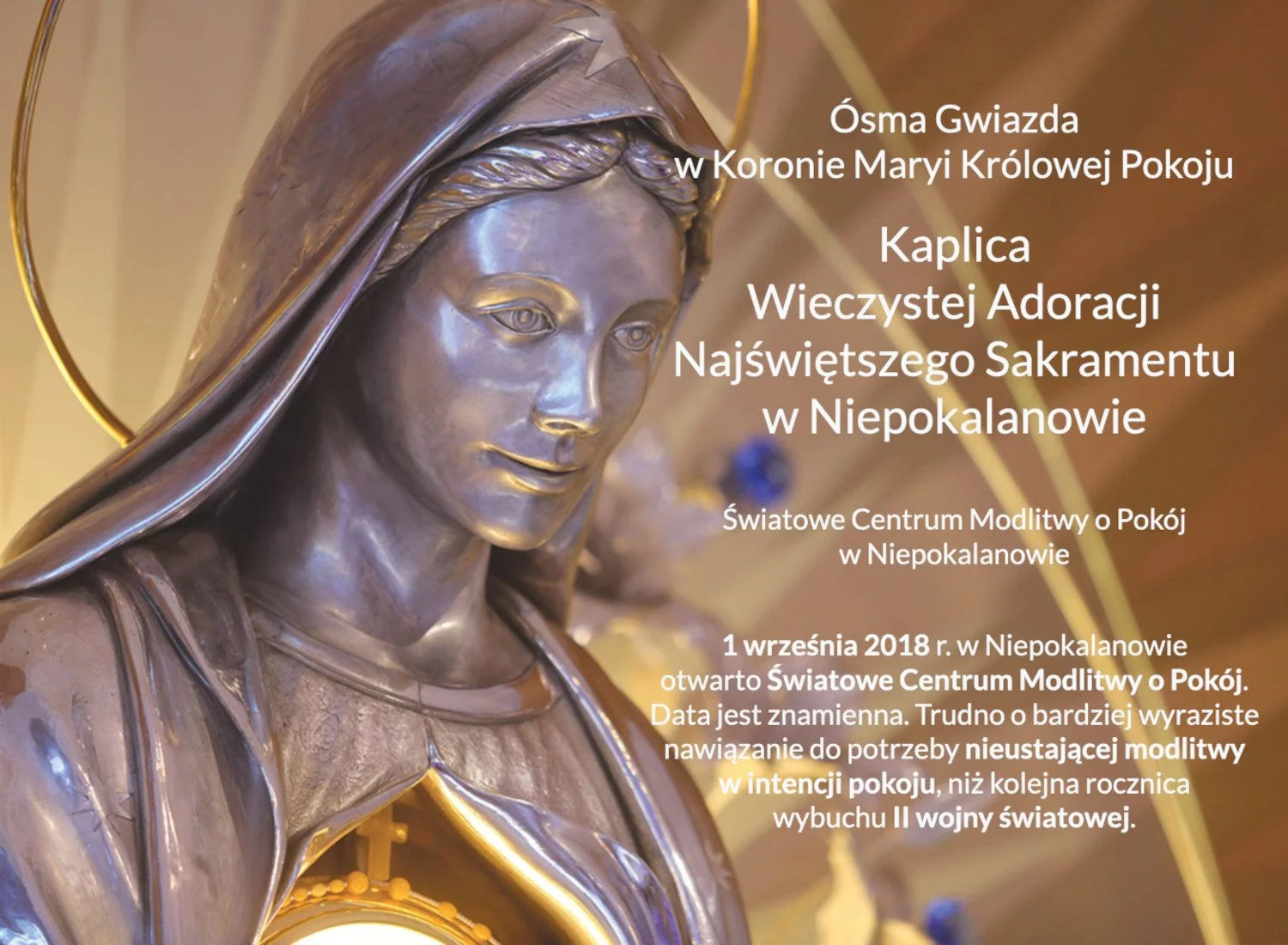
The Eucharistic Adoration Chapel established by Saint Maximilian Kolbe was inaugurated at the outbreak of World War II. It was restored as a Chapel of Adoration in September, 2018, the commemoration of the date that the war began. It is now part of the World Center of Prayer for Peace. The live internet feed of the Adoration Chapel at Niepokalanow — sponsored by EWTN — was established just a few weeks before we discovered it and began to include in at Beyond These Stone Walls. Click “Watch on YouTube” in the lower left corner to see how many people around the world are present there with you. The number appears below the symbol for EWTN.
Click or tap here to proceed to the Adoration Chapel.
The following is a translation from the Polish in the image above: “Eighth Star in the Crown of Mary Queen of Peace” “Chapel of Perpetual Adoration of the Blessed Sacrament at Niepokalanow. World Center of Prayer for Peace.” “On September 1, 2018, the World Center of Prayer for Peace in Niepokalanow was opened. It would be difficult to find a more expressive reference to the need for constant prayer for peace than the anniversary of the outbreak of World War II.”
For the Catholic theology behind this image, visit my post, “The Ark of the Covenant and the Mother of God.”
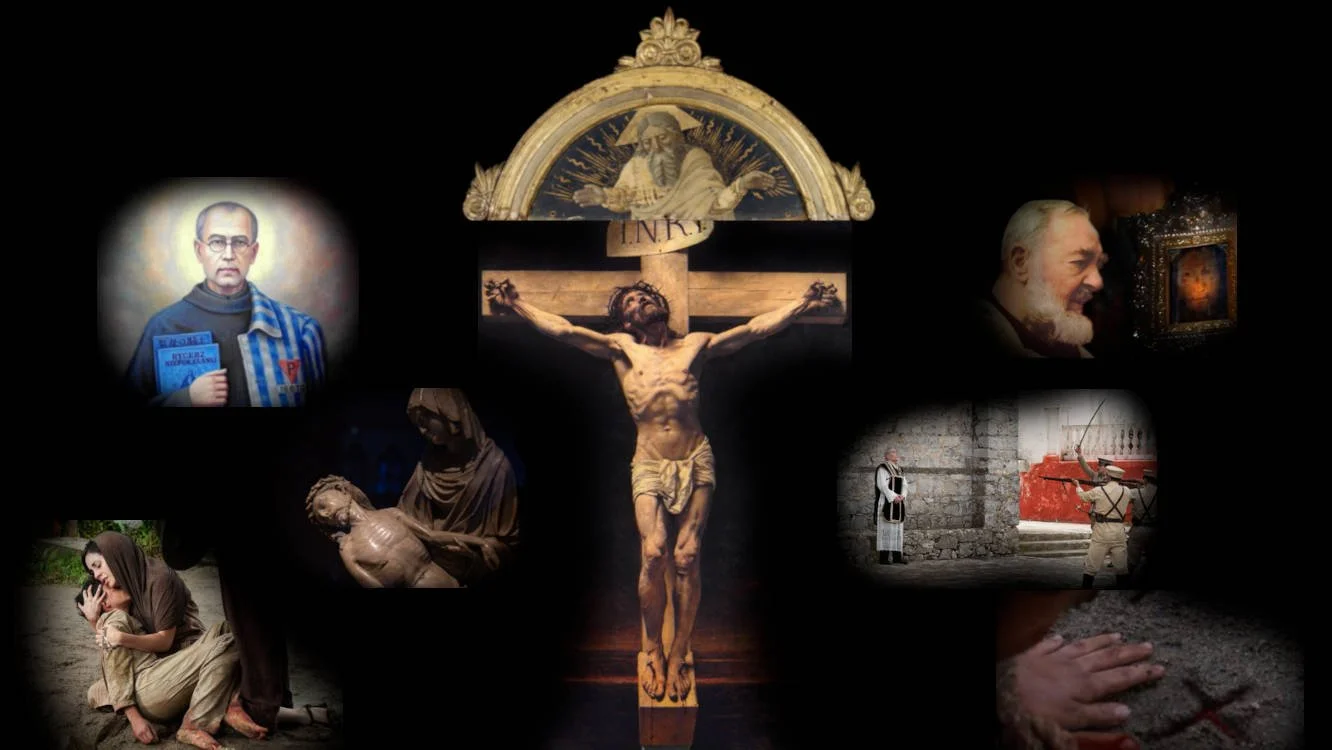
The Darkness of the Cross Enlightened on the Road to Emmaus
At Gethsemane Jesus of Nazareth agreed to bear the Cross to his own Crucifixion so that following him to Heaven’s Gate would not be a burden of impossibility for us.
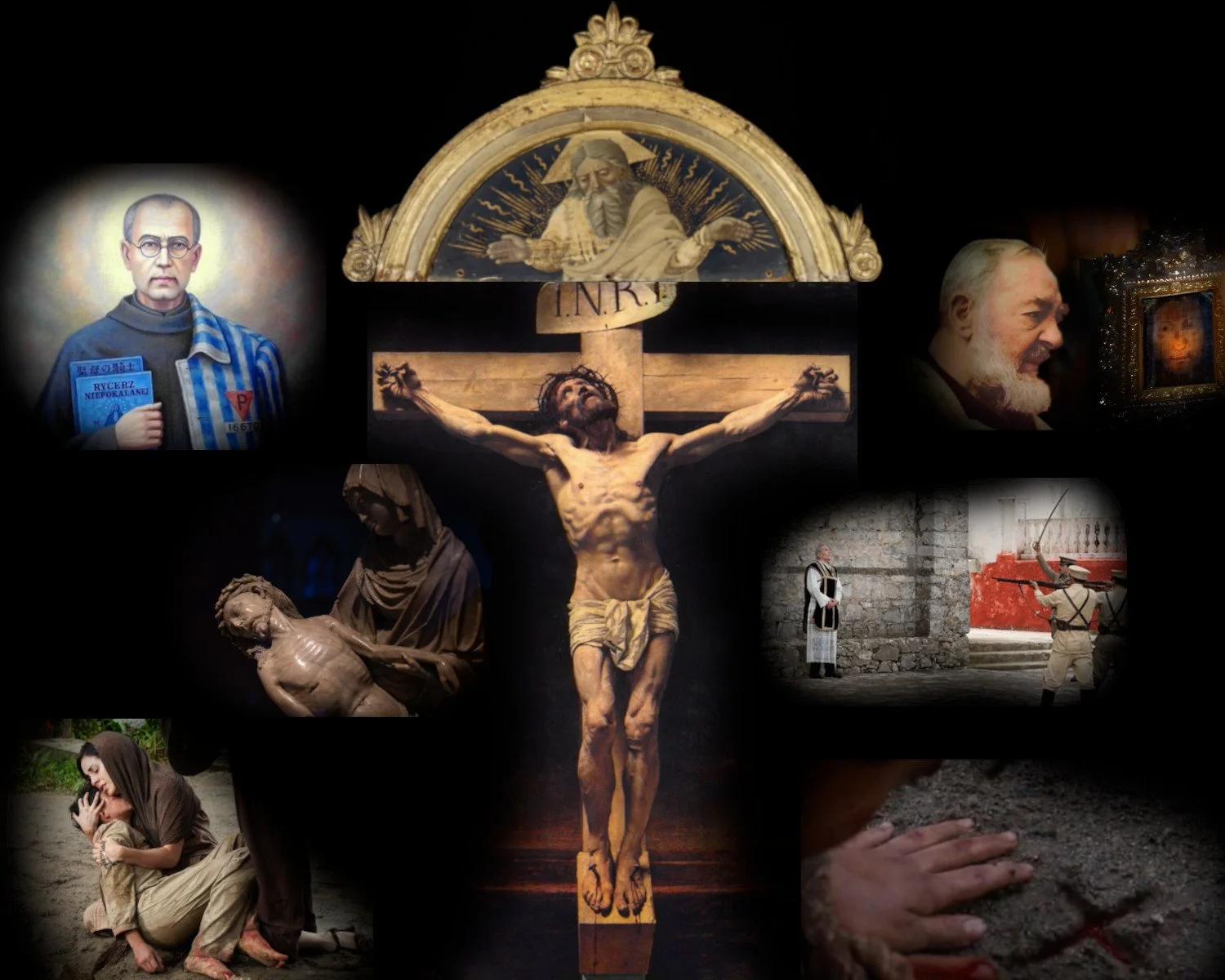
At Gethsemane Jesus of Nazareth agreed to bear the Cross to his own Crucifixion so that following him to Heaven’s Gate would not be a burden of impossibility for us.
Holy Week 2026 by Father Gordon MacRae
In all of human history, no method of execution has been devised more heinously, or delivered with more cruelty than crucifixion. In the Old Testament — no stranger to the cruel acts of men — crucifixion did not exist. It was first introduced to human history in the Sixth Century BC by the Persians, the ancestral empire of present-day Iran. I recently wrote of Iran and its place in history in “Iran, by Another Name, Was Once the Savior of Israel.”
My visual introduction to crucifixion was not so much biblical, but cinematic. Over many years I had pondered in depth its biblical presentation, but it was only when I watched the 2004 film, The Passion of the Christ directed by Mel Gibson, that I experienced and absorbed its visual impact. The brutality of the film was criticized for its excessive violence, but there was no such thing as a “gentle” crucifixion.
The Passion of the Christ contains all the elements ascribed to the event in the four Gospel accounts of the Crucifixion of Jesus in Sacred Scripture. I have read and studied those accounts many times, but I could watch that film only once and never again. It left me in a state of profound sorrow. That sorrow caused me to rethink some of the peripheral, but mysterious events that Sacred Scripture lends to the Crucifixion scene. One of them is the following excerpt from Psalm 22 attributed to King David. He never experienced crucifixion, but in Psalm 22 he wrote of it in the first person and in vivid prose 1,000 years before Jesus of Nazareth experienced it:
“My God, my God, why have you forsaken me? Why are you so far from helping me, from the words of my cry?
“O my God, I cry out by day, but you answer not, and by night, but I find no rest.
“Yet you are holy, enthroned upon the praises of Israel. In you our fathers trusted; they trusted and you delivered them. To you they cried and they were saved. In you they trusted, and were not disappointed.
“But I am worm and no man; scorned by men and despised by the people. All who see me scoff at me. They mock me with parted lips; they wag their heads. ‘He trusted in the Lord, let him deliver him. Let him rescue him if he delights in him.’
“I am poured out like water, and all my bones are wracked; my heart is like wax, it is melted within my breast. My strength is dried up like a potsherd, and my tongue cleaves to my jaws. You have laid me in the dust of death.
“Indeed, many dogs surround me; a pack of evildoers closes in upon me. They have pierced my hands and my feet. I can count all my bones; they stare and gloat over me. They divide my garments amongst them. For my clothing they cast lots.”
— Excerpted from Psalm 22, a Psalm of King David, circa 1000 BC
Most observant Jews would likely have recognized “My God, my God, why have you forsaken me?” as the opening line of Psalm 22. Mysteriously, those present for the Crucifixion of Jesus failed to do so. The Gospel quotes them as saying, “He is calling upon Elijah.” It was a distortion of the mixed Hebrew and Aramaic in the plea of Jesus from the Cross: “Eloi, Eloi, lema sabachthani.” In a magisterial treatise, Jesus of Nazareth: Part 2 Holy Week, Pope Benedict XVI wrote “Psalm 22 is Israel’s great cry of anguish, in the midst of its sufferings, addressed to the apparently silent God …. Now we hear the great anguish of the one suffering on account of God’s seeming absence.” Many of us have been here when simply calling out or pleading with God is not enough. In extreme anguish, prayer inevitably becomes a loud cry. Jesus prays this loud cry on behalf of all of us: “My God, my God, why have you forsaken me?”
What is remarkable about the four Gospel accounts of the Crucifixion is the multitude of Old Testament allusions and quotations they contain. In them, the Word of God and the events of the Gospel are deeply interwoven into the Passion Narrative. Two of these allusions, Psalm 22 and Isaiah 53, the “Suffering Servant” motif, shed light on the entire Passion event.
Isaiah begins with a direct reference to this saving act of God in a prophesy written hundreds of years before its fulfillment: “Behold, a virgin shall conceive and bear a son, and shall call his name ‘Emmanuel’” — a name which means “God with us.”
All of Sacred Scripture makes clear one consistent truth. If God is with us, we are not always with God. This becomes especially evident in the Passion Narrative of the Gospels, the arrest, interrogation, trial, scourging, and Crucifixion of Jesus. No one who followed him to this end, and who came to believe that he is the Messiah, the Christ of God, could ever have imagined that he would face humiliation, torture, Crucifixion and death. When it came, despite all promises to the contrary, most of his disciples shrank from their own promises and fled. None of us can stand in judgment of them. I wrote of one of history’s most vivid examples in “The Apostle Falls: Simon Peter Denies Christ.”
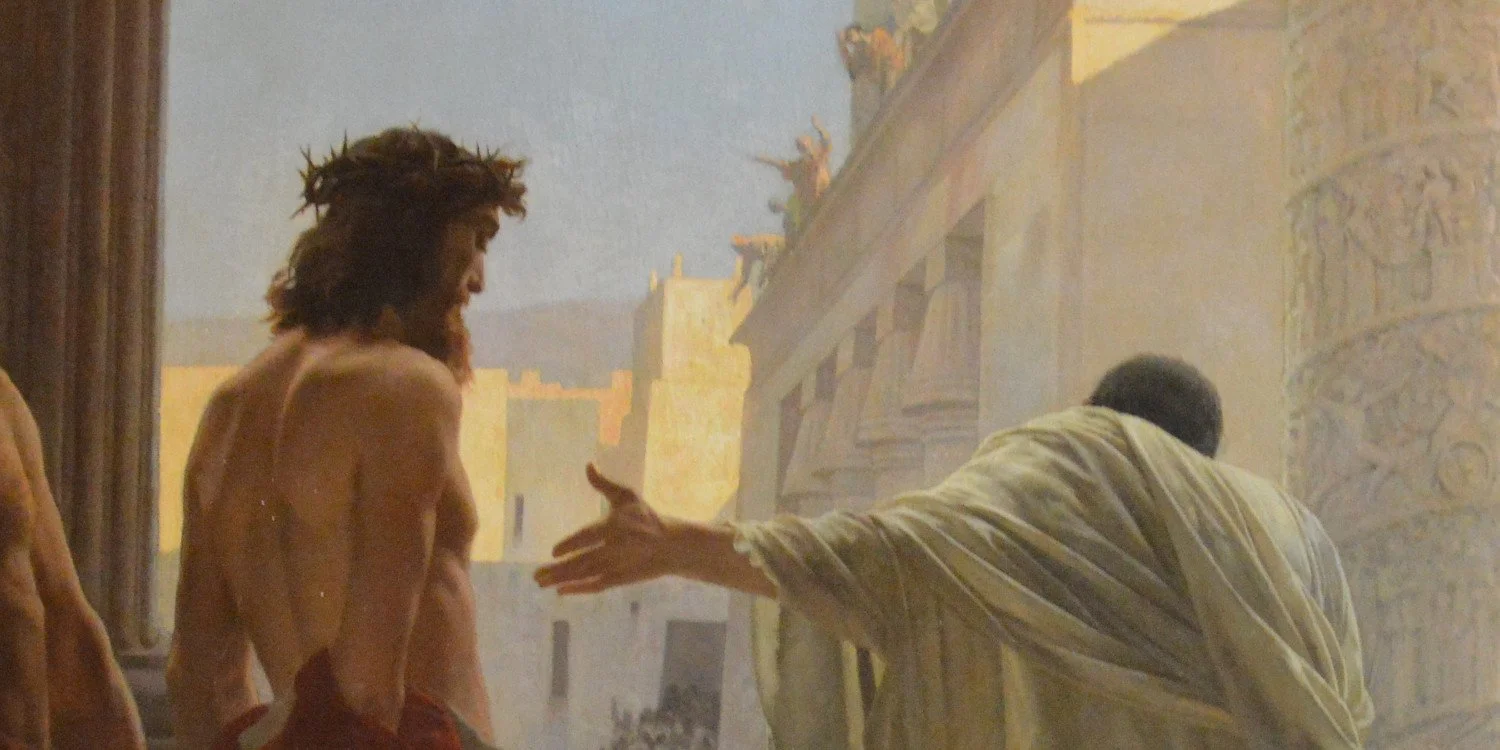
He Suffered under Pontius Pilate
But prior to all that, Jesus was interrogated by Pontius Pilate, the Roman military governor or procurator of the imperial province of Judea from 26 to 36 AD. The Jewish historian, Flavius Josephus, portrayed Pilate as a harsh administrator who failed to understand the religious convictions and national pride of the Jews. Pilate is known mainly for his connection with the trial and execution of Jesus. His culpability in the outcome has been the subject of debate ever since, and this conflicting view was implied even by Pope Benedict XVI, who wrote:
“After the interrogation, Pilate knew for certain what in principle he had already known beforehand: this Jesus was no political rebel; his message and his activity posed no threat for the Roman rulers. Whether Jesus had offended against the Torah was of no concern to Pilate as a Roman.”
— Jesus of Nazareth: Holy Week, p195
The Gospels of John and Mark present the custom of choosing a prisoner to be released on the Passover. The Gospels present a juxtaposition of the theological significance of choosing Jesus or Barabbas for release. John refers to Barabbas simply as a robber (18:40). In the political context of the time the Greek word that John used has also acquired the meaning of “terrorist,” or “rebel.” This is clear from Mark’s account: “And among the rebels in prison who had committed murder in the insurrection, there was a man called Barabbas” (Mark 15:7). It was clear that Pilate preferred to release Jesus, yet the crowd had different categories. Pilate came to understand their strong preference to release Barabbas, who had acquired the personna of a swashbuckling rebel.
The governor of Judea had complete judicial authority over all who were not Roman citizens, but many cases, especially those relating to religious matters, were decided by the Sanhedrin, the Jewish supreme council. According to the Gospel accounts, after the Sanhedrin found Jesus guilty of blasphemy it committed him to the Roman court because it lacked the authority to impose a death sentence. Pilate refused to approve their judgment without further investigation but the Sanhedrin threatened Pilate. When Pilate asked them, “Shall I crucify your king?” “The Chief Priests Answered, ‘We Have No King but Caesar’”
The Jewish priests then made other charges against Jesus, accusing him of blasphemy by calling himself a king (which he never actually did) and a son of God. Pilate appears to have been impressed with the dignity and honesty of Jesus, and tried to save him (John 18:38-39, 19:12-15). But fear of an uprising in Jerusalem and a resulting report to Roman authorities forced Pilate to accede to the Sanhedrin’s demand after the chief priests declared that freeing Jesus would mean that Pilate “is no friend of Caesar.” The false claim that Jesus was “King of the Jews,” was perceived as a threat to the Roman empire. It ended up on the inscription bearing the official nature of his offense to be affixed to his Cross.
Jesus was thus to be crucified and was handed over by Pilate for scourging, a brutal aspect of the punishment that often left the accused dead even before being crucified. Some have suggested that the scourging was intensified by Pilate to sway Jewish leaders away from crucifixion if the scourging was brutal enough. The guards saw to it that it was, but to no avail. It is very likely that Jesus carried only the crossbeam to which his hands were affixed first by ropes and then nails were added upon the height of Mount Calvary. His scourging had left his skin shredded so Simon of Cyrene was recruited to help carry the crossbeam. Only a few faithful women, including his Mother, his Mother’s sister, and Mary Magdalene remained with the beloved disciple John.
Each of the four Gospels presents a parallax view, the same scene but from a different perspective. In the Gospel according to John, the dying Jesus addressed his Mother: “Woman, behold your son” and to John, “Behold your Mother” (John 19:27). The Gospel instructs us that “from that hour the disciple took her into his own home.” Faithful Catholics have done the same ever since. Mary occupies a very special place in this scene and in our hearts.
As for Pontius Pilate, he was recalled to Rome in AD 36. According to the Roman historian, Eusebius, Pilate later committed suicide. Other traditions, however, report that Pilate secretly became a Christian and was condemned to death by the Roman Senate. Perhaps for this reason, Pilate is strangely revered by Coptic Christians as a martyr. They observe his feastday on June 25.
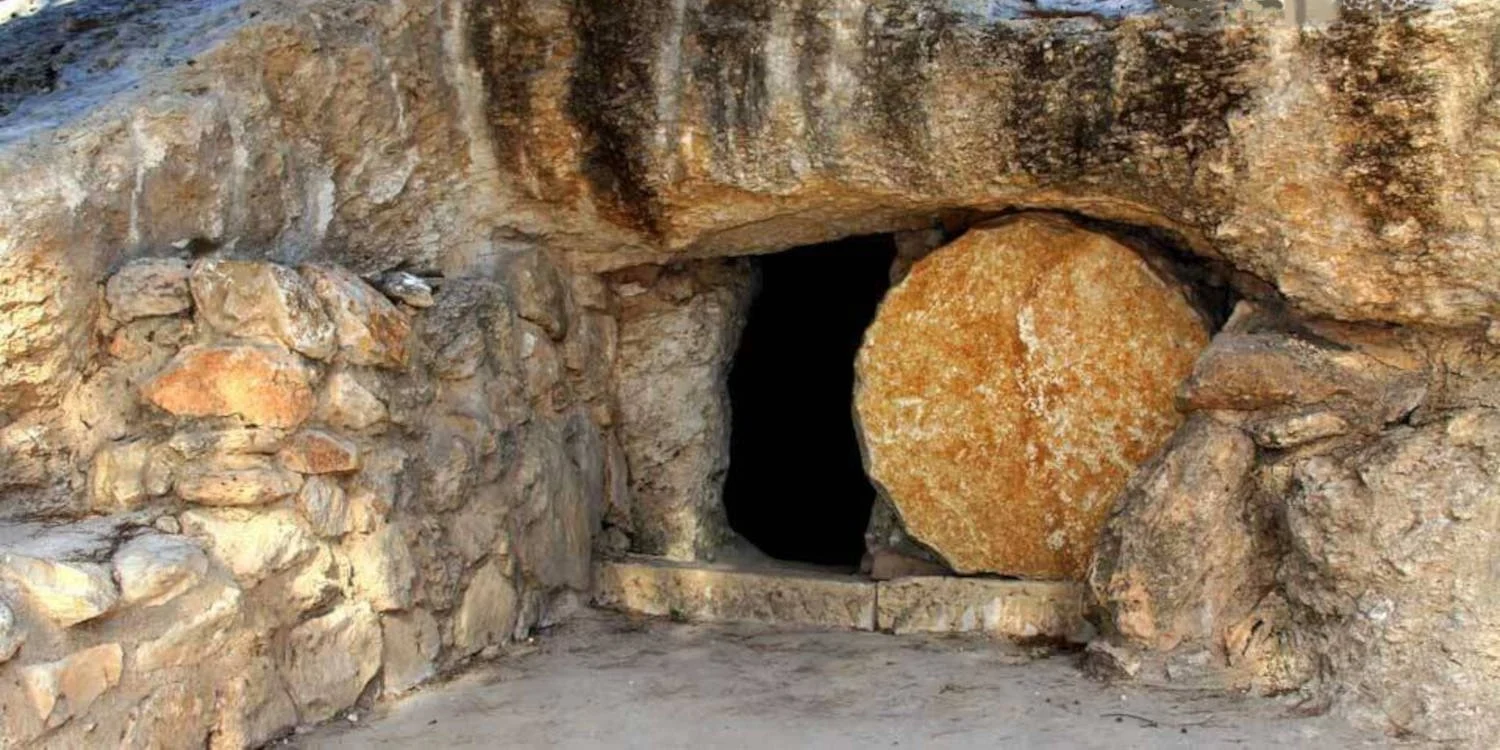
“Why Do You Seek the Living among the Dead?” (Luke 24:5)
The Resurrection of Jesus is the crowning event of the Passion Narratives of all four Gospels. Joseph of Arimathea, a member of the Sanhedrin who “was looking for the Kingdom of God” risked his standing in the Sanhedrin by asking Pilate for the body of Jesus, which was granted. Joseph interred the body in his own tomb hewn from rock (Luke 24:51). Some women went to the tomb as the Sabath was beginning. They saw the body of Jesus there then left to observe the Sabath.
On the next day, the first day of the week, these same women, now identified as Mary Magdalene, Joanna and Mary, mother of James, returned with spices to prepare the body according to the ritual law. They found the stone sealing the tomb to have been rolled away and two men in dazzling apparel frightened them asking,”Why do you seek the living among the dead?” When they told this to the disciples, they were not believed, but Peter ran to the tomb and found it just as they had said.
Later that same day, two of his disciples — one identified as Cleopas — were venturing about seven miles from Jerusalem along the road to Emmaus. They were speaking with great sorrow and trauma about the events of this and previous days. I have been where they were on that day. I do not mean that I have been on the road to Emmaus, except perhaps figuratively. I have been at a place at which all that I had ever worked for and hoped for just collapsed in irreparable ruin, and there was no justice in it. Reading about this encounter on the road to Emmaus, their deep sorrow and loss resonates with me on a personal level.
Then they encounter the Risen Christ along that road, but “Their eyes were kept from recognizing him.” (Luke 24:16) The visitor asked what their animated conversation was all about. The one named Cleopas was incredulous: “Are you the only visitor to Jerusalem who does not know the things that have happened there in these days?” “What things?” asked the stranger. Then came the outpouring of their grief:
“The things concerning Jesus of Nazareth who was a prophet might in word and deed before God and all the people, and how our chief priests and rulers delivered him up to be condemned to death, and crucified him. We had hoped that he was the one to redeem Israel. And besides all this, it is now the third day since this has happened. Now some women of our company have just amazed us. They were at the tomb early in the morning, but they did not find his body. They came back saying that they had even seen a vision of angels who said that he is alive. Some of those who were with us went to the tomb and found it just as the women said, but him they did not see.”
(To be continued.)
+ + +
Note from Father Gordon MacRae: Thank you for reading and sharing this post, which will now be added to both Our Holy Week Retreat and to our Collection called The Bible Speaks. You may also like these related posts leading up to the top of Mount Calvary:
Satan at the Last Supper: Hours of Darkness and Light
Waking Up in the Garden of Gethsemane

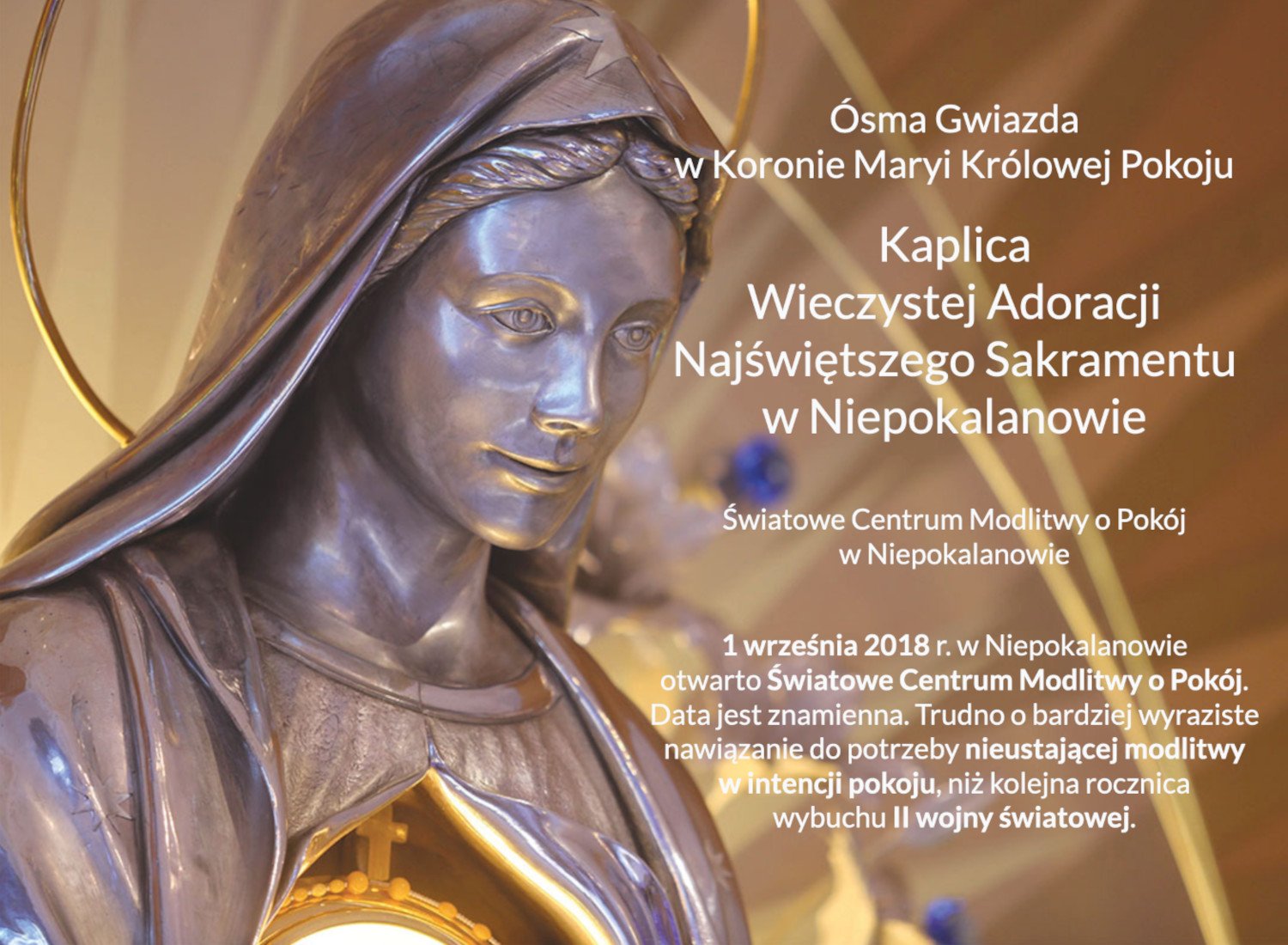

The Eucharistic Adoration Chapel established by Saint Maximilian Kolbe was inaugurated at the outbreak of World War II. It was restored as a Chapel of Adoration in September, 2018, the commemoration of the date that the war began. It is now part of the World Center of Prayer for Peace. The live internet feed of the Adoration Chapel at Niepokalanow — sponsored by EWTN — was established just a few weeks before we discovered it and began to include in at Beyond These Stone Walls. Click “Watch on YouTube” in the lower left corner to see how many people around the world are present there with you. The number appears below the symbol for EWTN.
Click or tap here to proceed to the Adoration Chapel.
The following is a translation from the Polish in the image above: “Eighth Star in the Crown of Mary Queen of Peace” “Chapel of Perpetual Adoration of the Blessed Sacrament at Niepokalanow. World Center of Prayer for Peace.” “On September 1, 2018, the World Center of Prayer for Peace in Niepokalanow was opened. It would be difficult to find a more expressive reference to the need for constant prayer for peace than the anniversary of the outbreak of World War II.”
For the Catholic theology behind this image, visit my post, “The Ark of the Covenant and the Mother of God.”
Covenants of God from Genesis to the Book of Revelation
A Covenant is a kinship bond between two parties. It is the master-theme of Salvation History in which God draws believers into a family relationship with Himself.
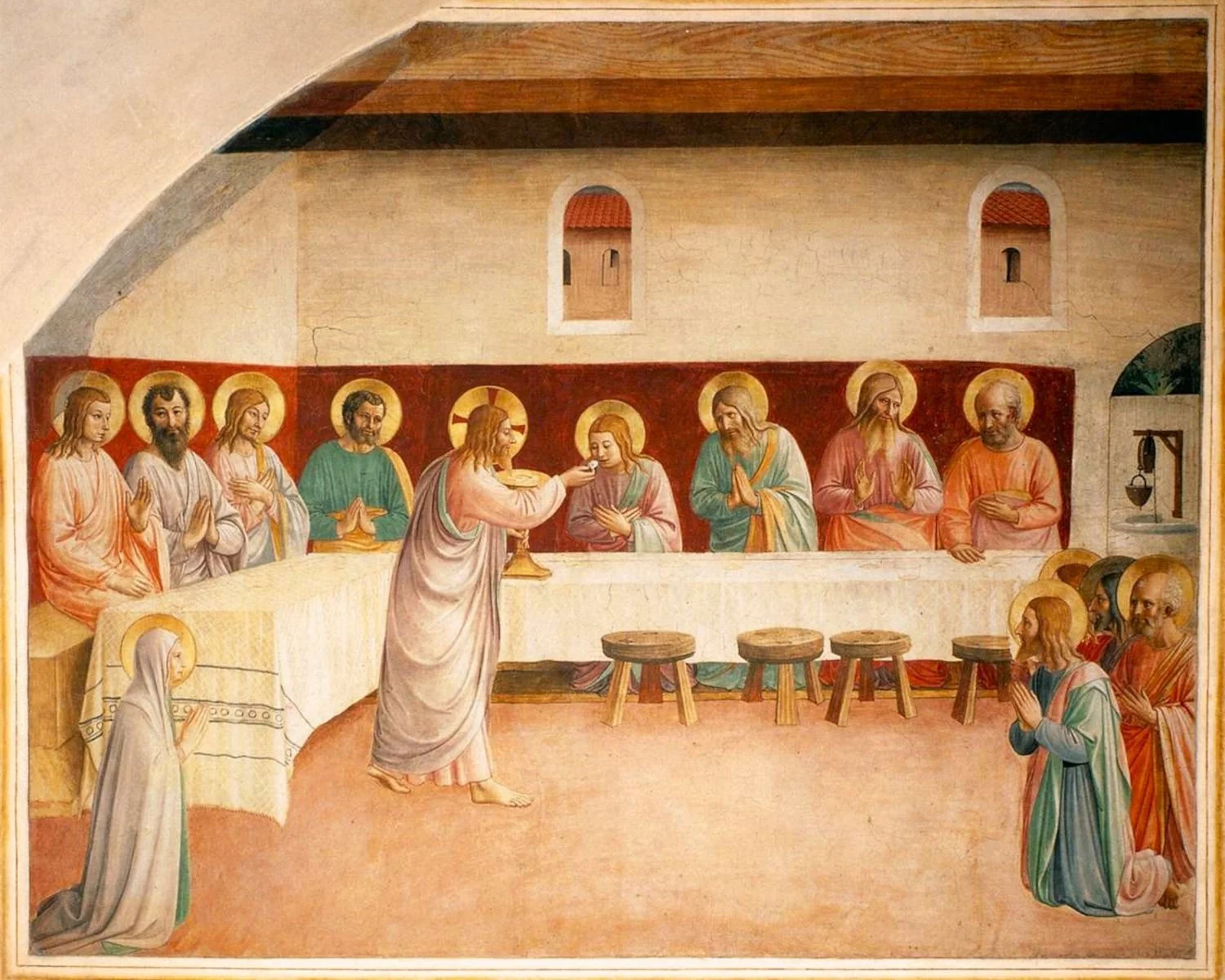
A Covenant is a kinship bond between two parties. It is the master-theme of Salvation History in which God draws believers into a family relationship with Himself.
January 28, 2026 by Father Gordon MacRae
“Testament” is the name given to the two principal divisions of the Christian Bible. It is derived from the Latin, “testamentum,” translated from the biblical Greek term, “diathēkē,” which is more properly translated as “Covenant.” In fact, the traditional designations of the biblical “Old Testament” and “New Testament” were inspired by Saint Paul’s distinction between the Old Covenant and the New Covenant in 2 Corinthians 3:6,14:
“Our sufficiency is from God who has qualified us to be ministers of a New Covenant, not in written code but in the Spirit; for the written code kills, but the Spirit gives life … not like Moses who put a veil over his face so that the Israelites might not see the end of the fading splendor.”
This cryptic verse from Saint Paul requires some deeper analysis. I touched on it once in my post, “A Vision on Mount Tabor: The Transfiguration of Christ.”
Peter had just declared at Caesarea Philippi that Jesus is the Christ (Luke 9:18-22). As though to demonstrate the truth of that declaration, the face of Jesus shone momentarily like the sun. The story recalled for Hebrew hearers of the Gospel the account of Moses at Mount Sinai as he received the Decalogue, the Ten Commandments (Exodus 20:1-17). Being in the presence of the Lord caused the face of Moses to shine brilliantly causing Aaron and other Israelites to fear approaching him. Moses then placed a veil over his face.
Some 3,000 years later, Saint Paul interpreted this as a sign that the Sinai Covenant is destined to fade so that the New Covenant in Christ may fulfill it. I will address this in the Sinai Covenant below. The point Saint Paul makes is that the glory of Jesus in the Transfiguration does not look back upon the Sinai Covenant for meaning, but rather the other way around. It is a statement from Saint Paul that the Old Covenant looks forward, and points us looking forward to the New. The Gospel of Matthew Transfiguration account gives symbolic witness to this (Matthew 17:8): On Mount Tabor, “When they lifted up their eyes, they saw no one but Jesus only.” Saint Augustine in the Fifth Century offered a summation of the meaning of this passage: “The New Testament lies hidden in the Old and the Old Testament is unveiled in the New.”
In his brilliant “Overview of Salvation History,” an introductory essay in the Ignatius Catholic Study Bible, John S. Bergsma, PhD, identifies something interesting and unique in Catholic spiritual tradition. It is the concept of “Divine filiation,” the notion, unique in religion, that elevates us as sons and daughters of God by adoption.
In Islam it is considered blasphemy to claim to be a child of God. In Judaism of the Old Covenant it is but a metaphor, not meant literally, but figuratively and symbolically. In Classical Buddhism it is simply irrelevant because individual personhood is itself an illusion remedied, for the Buddhist believer, by cycles of reincarnation.
Only Christianity holds that we become — literally become — sons and daughters of God the Creator, our Father and the source of all fatherhood. This is identified in Saint Paul’s Letter to the Ephesians (3:15):
“For this reason I bend my knees before the Father from whom every family in Heaven and on Earth is named.”
“Abba, Father” is an Aramaic and English term that occurs three times in the New Testament. The first time (Mark 14:36) quotes Jesus directly:
“Abba, Father, all things are possible to you; remove this chalice from me; yet not what I will, but what you will.”
The term was then reiterated by Saint Paul (Romans 8:15 and Galatians 4:6). “Abba” is an Aramaic term that reveals an especially familiar bond between father and child. Aramaic, closely related to Hebrew, was the common language in the Near East from about 700 BC to 600 AD. Each time “Abba” was used in the New Testament it was paired with the Greek equivalent of “Father.” This gave us the English translation, “Abba, Father” denoting the connection with Jesus as children of God.
After the fall of man, the only remedy for broken Covenants was for God to adopt us, and for us to strive to live up to that adoption. We strive still.
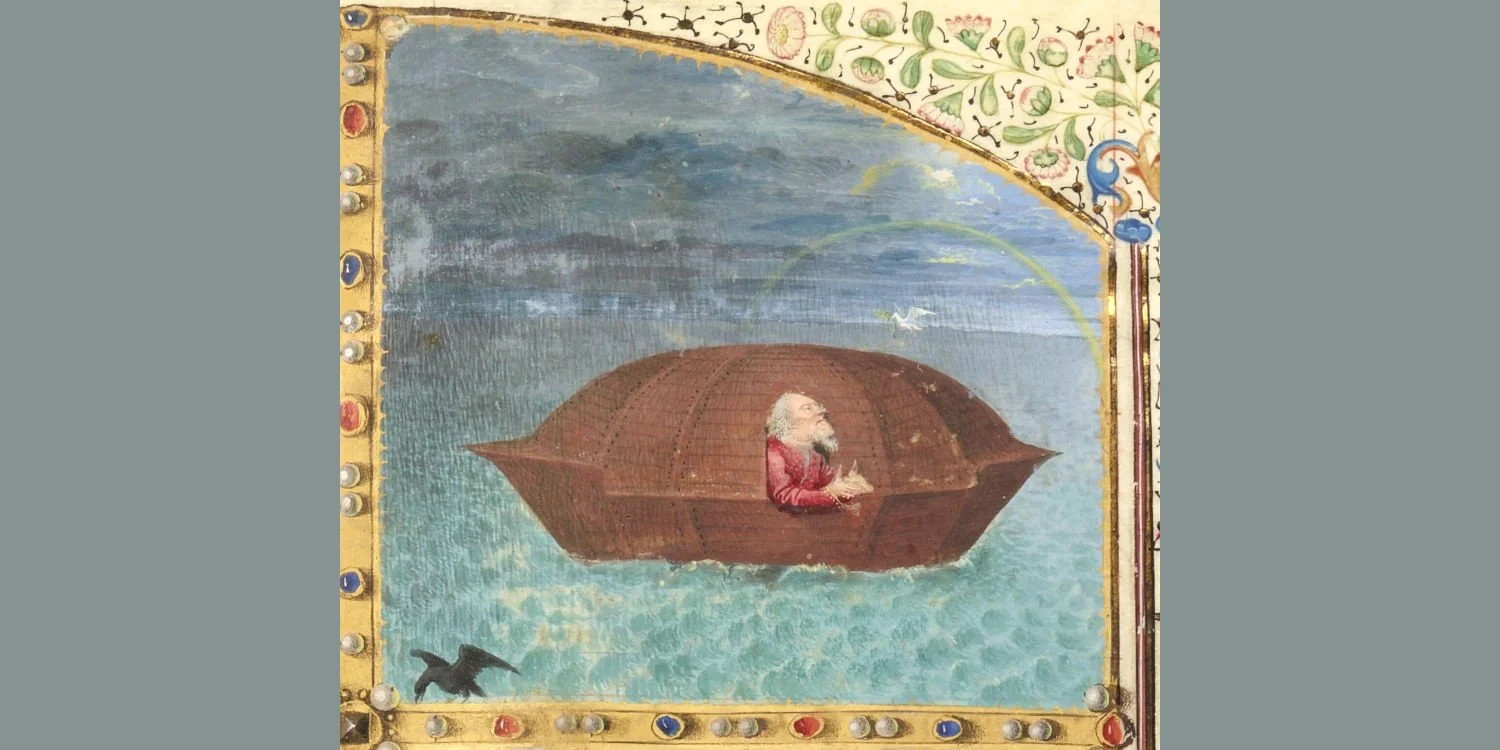
The Covenants of Adam, Noah, and Abraham
The people of Israel were also unique in ancient Near Eastern religion in their belief that God had established a Covenant relationship with them and with their ancestors. In the Catholic Bible Dictionary (Doubleday 2009) a companion volume to the Ignatius Catholic Study Bible, Dr. Scott Hahn identifies a sequence of Covenants found in the biblical text. There are six of them, each built upon the preceding one. Together they account for all of Salvation History. They are identified through the mediation of different individuals: Adam, Noah, Abraham, Moses, David, and then ultimately, in the Covenant that fulfills them all, Jesus Christ.
In the Creation Covenant mediated by Adam, creation culminates on the Sabath, which is the sign of a Covenant elsewhere in Scripture (Exodus 31:12-17). The term used for the making of the Covenant with Noah is not the usual one for Covenant initiation (in Hebrew, kārat), but rather a term indicating the renewal of a pre-existing Covenant (in Hebrew, hēqim).
The five Covenants before Jesus end in varying degrees of failure or success. The Covenant with Adam collapses upon the revelation of his disobedience. Having eaten from the Tree of Knowledge of Good and Evil in disobedience to the directive of God, the Covenant collapses as Adam is cast out from Eden. Many generations later God establishes a new Covenant with Noah. In an act of both judgement and re-creation God again plunges the world under the primordial waters described in Genesis 1:2. God saves the righteous man, Noah and his family along with pairs of every animal and creature in an ark. As the water receded, the ark came to rest on Mount Ararat. Noah, a new Adam figure, emerges from the ark and performs the priestly act of offering sacrifice (Genesis 8:20). God renews the previous Covenant repeating the blessings originally given to Adam. According to John S. Bergsma, PhD, in his “Overview of Salvation History,” “sin has left a lasting wound,” and disharmony between man and nature. But the filial relationship of man in Covenant with God does not last long. Noah betrays his priestly-patriarcal role. He becomes drunk and lies naked in his tent (Genesis 9:21). His son Ham, in an enigmatic deed described in Genesis as seeing “the nakedness of his father” (Genesis 9:22) causes Noah to curse Ham’s descendents through his son Canaan (Genesis 9:25). The phrase, “seeing the nakedness of his father,” is widely seen as a euphemism for an incestuous encounter between Noah’s son Ham and the wife of Noah. So where the Covenant with Adam was marred by disobedience, the Covenant with Noah was marred by perversion.
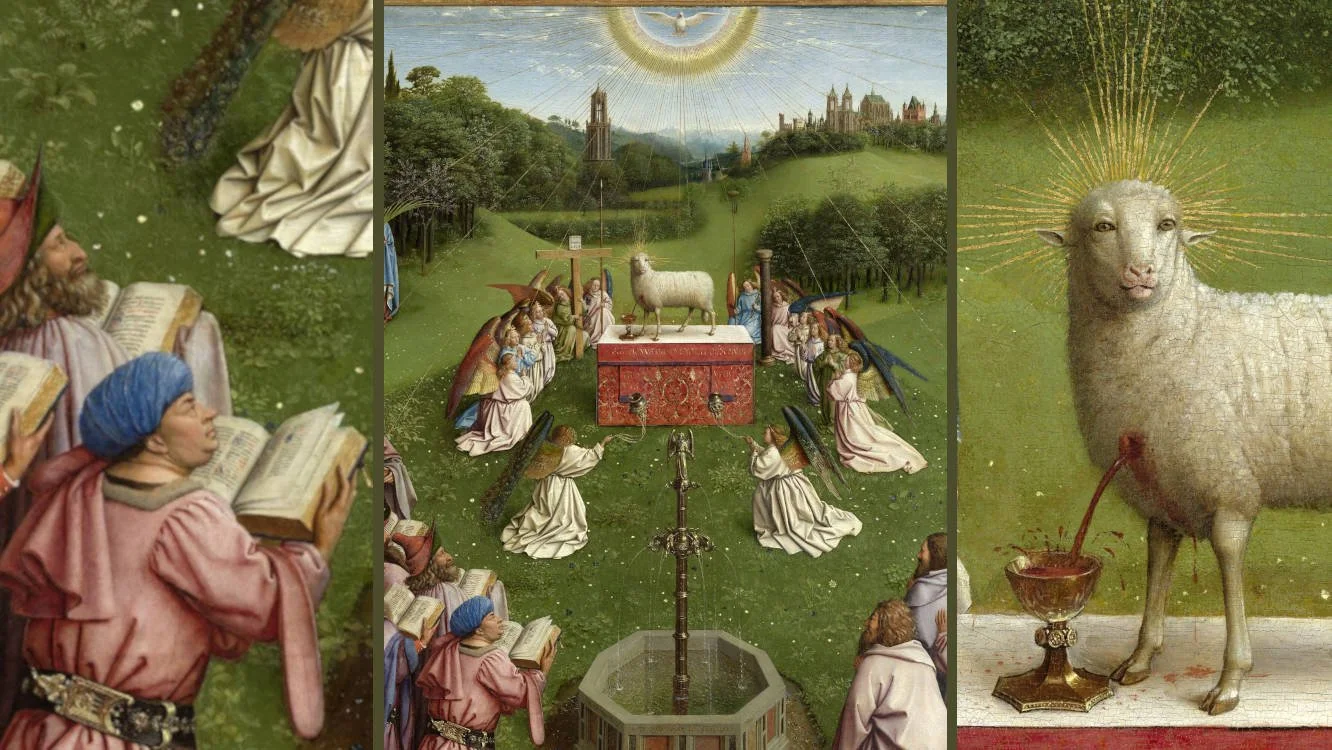
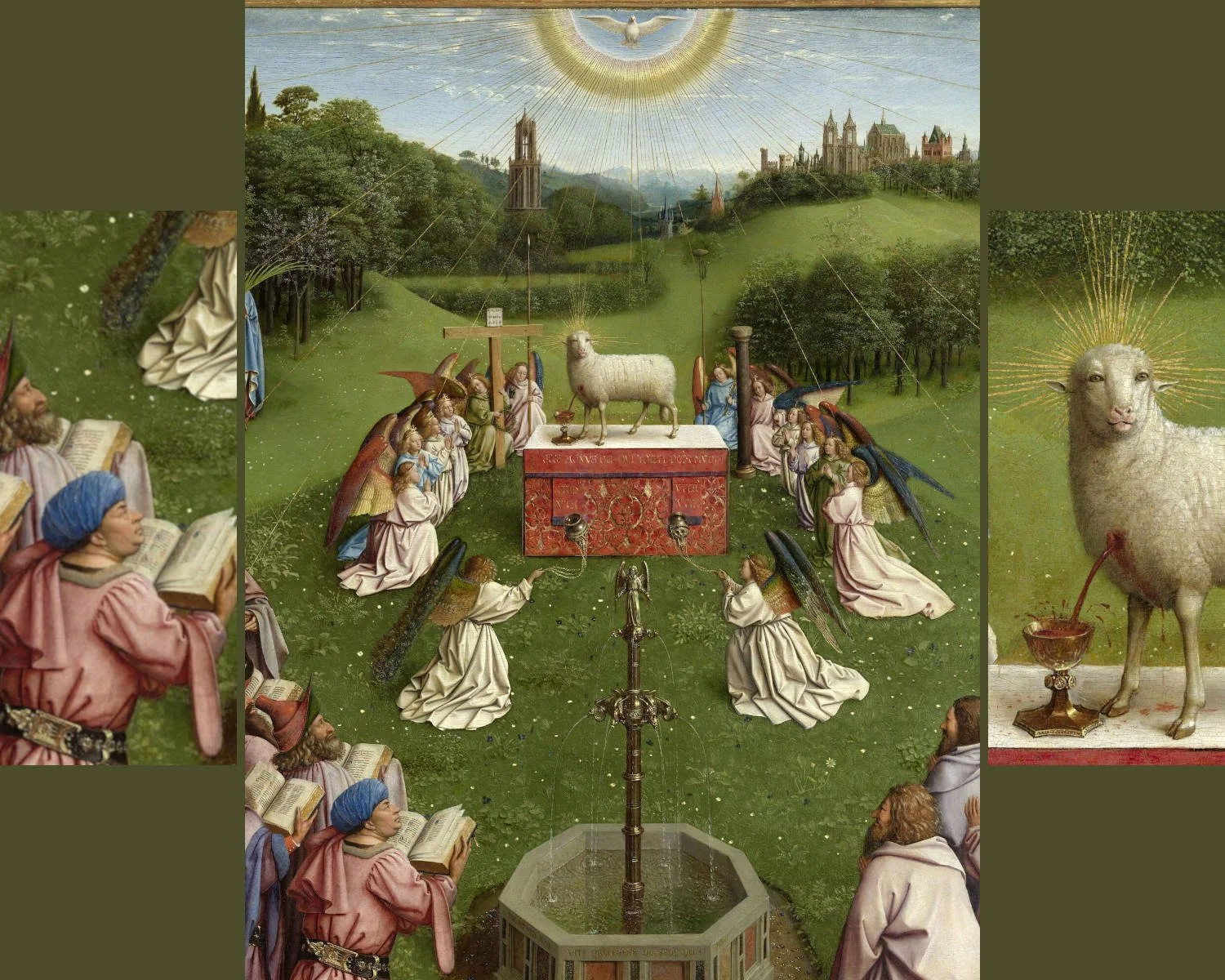
Many generations pass through the next three chapters of Genesis when, in Genesis 12:3, God bestows upon Abram the promises of a great nation, a great name, and universal blessing upon mankind. God incorporated these promises into a formal Covenant. Then God bestowed upon Abram a greater name, “Abraham” (Genesis 17:5). This Covenant becomes subjected to the ultimate test of loyalty: that Abraham should offer his beloved son Isaac in sacrifice to God (Genesis 22:2). I explored this account in detail in “Behold the Lamb of God Upon the Altar of Mount Moriah.”
An Angel of the Lord stayed Abraham’s hand and pointed to a ram in the thicket, which became the substitute sacrifice for Isaac just as 2,000 years later, Jesus became the substitute sacrifice for us.
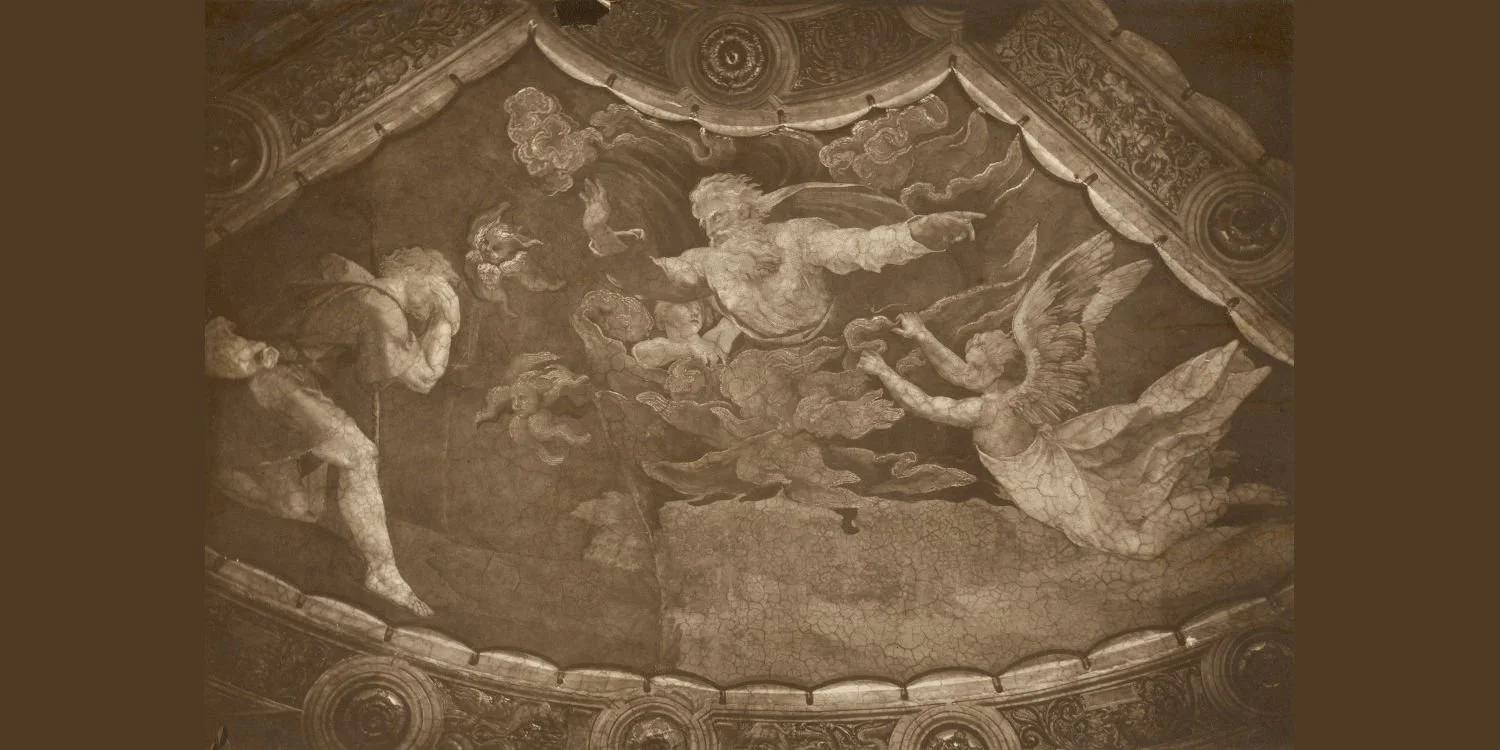
The Covenants of Moses, David, and Jesus
Unlike the aftermath of the Covenants with Adam and Noah, the Covenant with Abraham did not collapse under a catastrophic fall. Even though the Covenant is complicated by the sins of his descendants, God fulfills his promise to Abraham, but Abraham’s lineage ends up in Egypt.
Generations passed. Abraham’s descendant, Joseph, one of the sons of the Patriarch Jacob, was betrayed by his own brothers and sold into slavery in Egypt. Thus, centuries later, Israel became a nation in bondage in Egypt until Moses led the Israelites out of captivity to the Promised Land. God called upon Moses from a burning bush on Mount Horeb (Exodus 3:6, 10). God identified himself as “The God of your fathers, the God of Abraham, the God of Isaac, the God of Jacob. Come, I will send you to Pharaoh that you may bring forth my people, the sons of Israel, out of Egypt.”
Once the children of Israel were released from bondage, Moses led them to Mount Sinai where the Lord established a national Covenant — the Decalogue, the Ten Commandments. No sooner than the Sinai Covenant had been established, however, it was broken. Some Israelites were enticed at Mount Sinai into worship of a golden calf, an icon of an Egyptian deity. Moses expelled them and then Israel was subjected to wandering in the desert as penance. Moses is mentioned more in the New Covenant (the New Testament) than any other Old Testament figure.
Centuries later, around 1,000 BC, King David arose in Salvation History. He descended from the tribe of Judah and is introduced in Scripture as a young shepherd in Bethlehem, which came to be known in our Nativity accounts as the “City of David.” David was a gifted poet and musician. He composed many of the psalms in the Hebrew Bible setting some of them to music. He was also a warrior known to history as having slain the giant Philistine warrior, Goliath (1 Samuel 17:48).
The Prophet Samuel annointed David as King over Israel, “and the Spirit of the Lord came mightly upon David from that day forward (1 Samuel 16:13).” Like a New Adam, David also functioned as a priest and a prophet while Israel expanded to become an empire.
Under the reign of David’s son, Solomon, Israel became a great military power in the Ancient World. His greatest accomplishment was the building of the Temple in Jerusalem and the Ark of the Covenant, which I described in these pages in “The Ark of the Covenant and the Mother of God.”
The terms of Davidic Covenant are layed out in 2 Samuel 7. The elements of the Davidic Covenant include Nathan’s oracle (2 Samuel 7:8-16) about David’s intention to build a sanctuary for Yahweh.
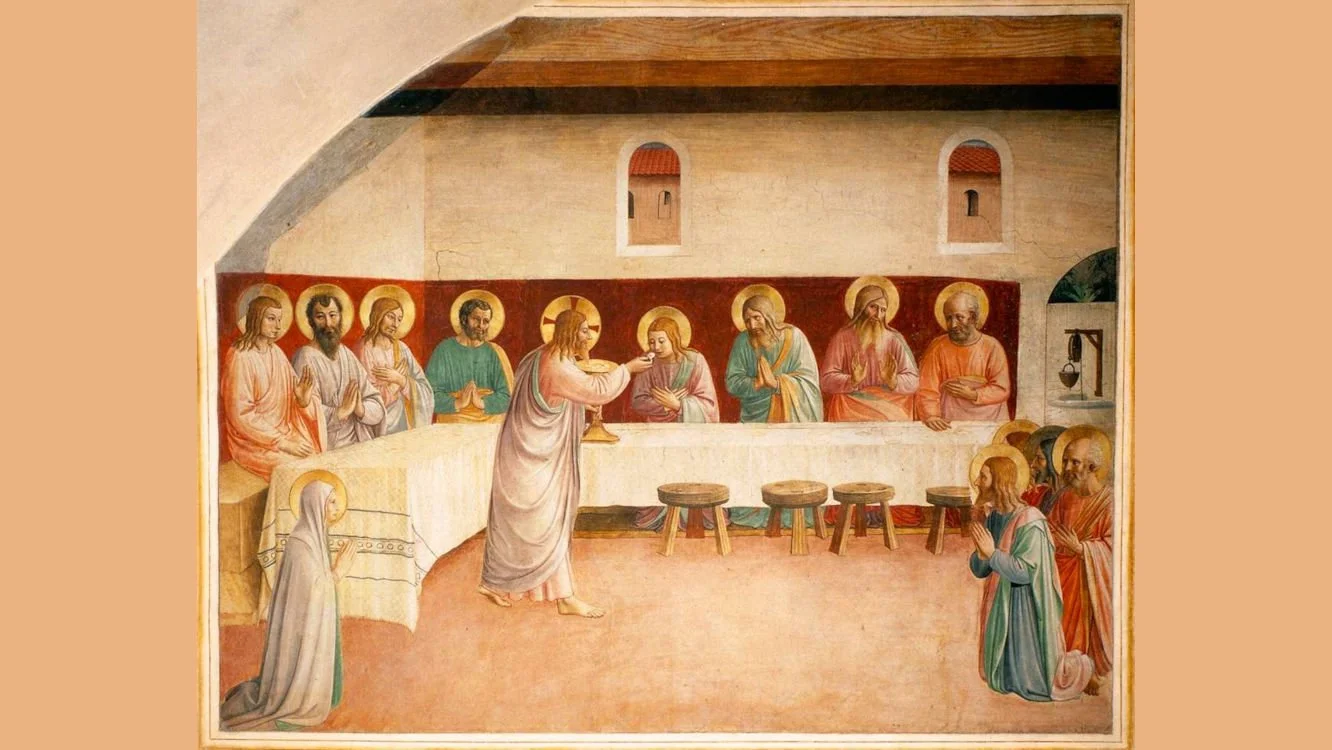
The New Covenant Gospels, especially Matthew and Luke, depict Jesus as the heir of David and the one to restore the Davidic Covenant. God’s Covenant with Jesus was the Institution of the Eucharist at the Last Supper. Jesus identifies his own body and blood as the sacrificial elements of this New Covenant.
This was something entirely new in the Bible and in Salvation History. Jesus did not simply make a Covenant, but rather “became” a Covenant, a living bridge linking us to God. It was, and is, the fulfillment of all of Salvation History.
+ + +
Note from Father Gordon MacRae: Thank you for reading and sharing this post. It will be added to our collection of special Scripture posts about Salvation History.
You may also like these related posts from Beyond These Stone Walls:
A Vision on Mount Tabor: The Transfiguration of Christ
Behold the Lamb of God Upon the Altar of Mount Moriah
The Ark of the Covenant and the Mother of God
On the Great Biblical Adventure, the Truth Will Make You Free
+ + +
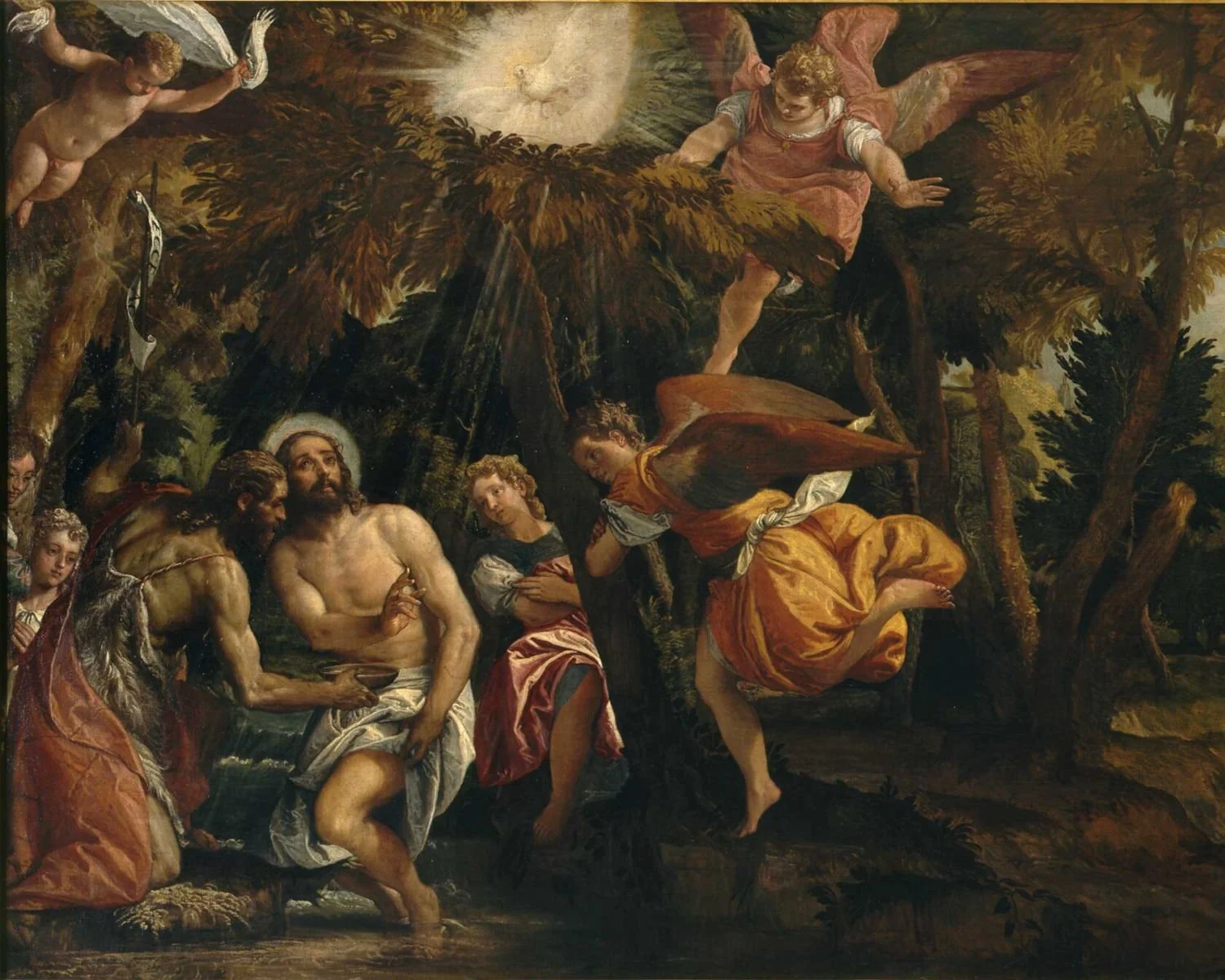
“This is my beloved Son on whom my favor rests.”
The Eucharistic Adoration Chapel established by Saint Maximilian Kolbe was inaugurated at the outbreak of World War II. It was restored as a Chapel of Adoration in September, 2018, the commemoration of the date that the war began. It is now part of the World Center of Prayer for Peace. The live internet feed of the Adoration Chapel at Niepokalanow — sponsored by EWTN — was established just a few weeks before we discovered it and began to include in at Beyond These Stone Walls. Click “Watch on YouTube” in the lower left corner to see how many people around the world are present there with you. The number appears below the symbol for EWTN.
Click or tap here to proceed to the Adoration Chapel.
The following is a translation from the Polish in the image above: “Eighth Star in the Crown of Mary Queen of Peace” “Chapel of Perpetual Adoration of the Blessed Sacrament at Niepokalanow. World Center of Prayer for Peace.” “On September 1, 2018, the World Center of Prayer for Peace in Niepokalanow was opened. It would be difficult to find a more expressive reference to the need for constant prayer for peace than the anniversary of the outbreak of World War II.”
For the Catholic theology behind this image, visit my post, “The Ark of the Covenant and the Mother of God.”
A New Year of Freedom Begins at Beyond These Stone Walls
In over 16 years of prison writing, Beyond These Stone Walls has produced something far more redemptive than prison itself. The Word of God has emerged here too.
In over 16 years of prison writing, Beyond These Stone Walls has produced something far more redemptive than prison itself. The Word of God has emerged here too.
New Year 2026 by Father Gordon MacRae
“Father MacRae’s blog, Beyond These Stone Walls, has been the finest example of priestly witness the last decades of scandal have produced.”
— Father James Valladares, PhD in Hope Springs Eternal in the Priestly Breast
+ + +
Please do not misunderstand my title. I have not been delivered from the belly of the beast into which I was devoured in 1994. I have not stopped jousting against the windmills of injustice that seem to proliferate in the “Live Free or Die” State. If you have followed tales of New Hampshire corruption you will see that the pursuit of justice here is mired in layers of deceit. So I must have other pursuits, and they must not be trivial pursuits.
Back in February 2025, I wrote “On the Great Biblical Adventure, the Truth Will Make You Free.” It cited an unexpected development from late 2024, a worldwide phenomenon that was also prevalent in the United States. It was a resurgence of popular interest in the Bible and biblical studies. It was then that I realized, that even in my years of wrongful imprisonment, that interest had surged in me as well.
The evidence for that became clear when I collected together all the posts that I had written for Holy Week over many years in prison. After publishing that list, I searched through 800 titles collecting together posts with a specific exegesis on Sacred Scripture. We were not quite certain what to do with that extensive list, so I had our Editor submit it for an overview report to xAI SuperGrok, the advanced AI model developed and owned by Elon Musk, through which we had conducted other research. The result seemed quite amazing and here it is:
AI Overview of Father MacRae’s Posts on Sacred Scripture
“St. Paul’s epistles, many written from prison, are astonishing, not just for the brilliance of the exegesis, but for his insight into humanity and the beauty of his language. Fr. MacRae is his very worthy successor.”
— Thomas Ryder
from a 2025 comment at Beyond These Stone Walls
Amid a noted resurgence in biblical interest in the United States and globally toward the end of 2024 and into 2025 — evidenced by surging Bible sales and renewed engagement with religious texts — Father Gordon MacRae, writing from prison, has compiled a collection of his posts exploring Sacred Scripture. This collection, titled “From Abraham to Easter,” serves as a theological journey through Salvation History, linking Old Testament narratives with New Testament fulfillments. It emphasizes themes of Redemption, Divine Mercy, sacrifice, faith amid suffering, and the interplay between historical events and spiritual truths. The posts draw connections between biblical figures (e.g., Abraham, Mary, Joseph, Judas, and the Archangels) and key events (e.g., the Nativity, Temptation, Passion, Resurrection, and Pentecost), often reflecting on how these stories resonate in contemporary life, including Father MacRae’s own experiences of injustice and imprisonment.
The collection contains exactly 32 posts to date, each with a title, link, and brief description highlighting its focus. As an advanced AI model, I have organized them below in a numbered list for clarity, preserving the order from the collection page. This curation appears designed to guide readers through a chronological and thematic progression, starting from foundational Old Testament stories and culminating in eschatological reflections.
On the Great Biblical Adventure, the Truth Will Make You Free — Link
After long decline in religious interest and practice across much of the free world, publishers now report a phenomenal increase in new Bible sales since late 2024.Behold the Lamb of God Upon the Altar of Mount Moriah — Link
“This is the night when Christ broke the prison-bars of death and rose victorious from the underworld. Our birth would have been no gain had we not been redeemed.”The Feast of Corpus Christi and the Order of Melchizedek — Link
The Priest-King Melchizedek appears in only two verses in the Old Testament but in Salvation History he is a link in a chain from Noah to Abraham to Christ the King.Saint Gabriel the Archangel: When the Dawn from On High Broke Upon Us — Link
The Gospel of Saint Luke opens with a news flash from the Archangel Gabriel for Zechariah the priest, and Mary — Theotokos — the new Ark of the Covenant.The Ark of the Covenant and the Mother of God — Link
A theological expedition into Salvation History reveals a startling truth about the Ark of the Covenant in the Old Testament and the identity of Mary, Mother of God.Joseph’s Dream and the Birth of the Messiah — Link
Saint Joseph is silent in the Gospel account of the Birth of the Messiah, but his actions reveal him as a paradigm of spiritual fatherhood and sacrificial love.I Have Seen the Fall of Man: Christ Comes East of Eden — Link
The Genesis story of the Fall of Man is mirrored in the Nativity. Unlike Adam at the Tree of Knowledge, Jesus did not deem equality with God a thing to be grasped.Joseph’s Second Dream: The Slaughter of the Innocents — Link
After the Birth of the Messiah, a second angelic dream warns Joseph to flee to Egypt with Mary and the Christ Child as Herod orders a slaughter of the Innocents.A Devil in the Desert for the Last Temptation of Christ — Link
The Gospel according to St Luke tells the story of Jesus, revealed to be Son of God, led into the desert to be tested by the devil who does not give up easily.What Belongs to Caesar and What Belongs to God — Link
Pharisees set a trap for Jesus with a query about paying tax to Caesar. Like much in the Gospel, this has a story on its surface and a far greater one in its depths.“What Shall I Do to Inherit Eternal Life?” (Luke 10:25) — Link
The Gospel for the Fifteenth Sunday in Ordinary Time is the Parable of the Good Samaritan, a meaningful story on its face, but far more urgent in its depths.A Not-So-Subtle Wake-Up Call from Christ the King — Link
The Gospel for the Solemnity of Christ the King in 2023 was the Judgment of the Nations, an invitation to Glory and a map for how to get there.On Good Authority, “Salvation Is from the Jews” — Link
Anti-Israel protests and prejudice were as common as any other plague in Biblical history, and often inflamed, just as they are today, by agitators in a proxy war.Casting the First Stone: What Did Jesus Write On the Ground? — Link
“Teacher, this woman was caught in the act of committing adultery. In the Law, Moses commanded us to stone such women. So what do you say?,” asked the Pharisees.A Vision on Mount Tabor: The Transfiguration of Christ — Link
Jesus took Peter, James, and John to a mountaintop where he was transfigured before their eyes, an event that echoes through the ages, even through prison walls.The Passion of the Christ in an Age of Outrage — Link
Prayerful observance of Holy Week is a challenge in a climate of pandemic restrictions and political outrage. Spend time with us this week Beyond These Stone Walls.Satan at The Last Supper: Hours of Darkness and Light — Link
The central figures present before the Sacrament for the Life of the World are Jesus on the eve of Sacrifice and Satan on the eve of battle to restore the darkness.Angelic Justice: Saint Michael the Archangel and the Scales of Hesed — Link
Saint Michael the Archangel is often depicted wielding a sword and a set of scales to vanquish Satan. His scales have an ancient and surprising meaning.Judas Iscariot: Who Prays for the Soul of a Betrayer? — Link
Judas Iscariot: The most reviled name in all of Sacred Scripture is judged only by his act of betrayal, but without him among the Apostles is there any Gospel at all?Waking Up in the Garden of Gethsemane — Link
The Agony in the Garden, the First Sorrowful Mystery, is a painful scene in the Passion of Christ, but in each of the Synoptic Gospels the Apostles slept through it.The Apostle Falls: Simon Peter Denies Christ — Link
The fall of Simon Peter was a scandal of Biblical proportions. His three-time denial of Jesus is recounted in every Gospel, but all is not as it first seems to be.Behold the Man, as Pilate Washes His Hands — Link
“Ecce Homo!” An 1871 painting of Christ before Pilate by Antonio Ciseri depicts a moment woven into the fabric of Salvation History, and into our very souls.The Chief Priests Answered, ‘We Have No King but Caesar’ — Link
The Passion of the Christ has historical meaning on its face, but a far deeper story lies beneath where the threads of faith and history connect to awaken the soul.Simon of Cyrene Compelled to Carry the Cross - Link
Simon of Cyrene was just a man coming in from the country to Jerusalem for the Passover when his fated path intersected the Way of the Cross and Salvation History.Dismas, the Good Thief Crucified Next to Christ the King — Link
Who was Saint Dismas, the Penitent Thief, crucified to the right of Jesus at Calvary? His brief Passion Narrative appearance has deep meaning for Salvation.To the Spirits in Prison: When Jesus Descended into Hell — Link
The Apostles Creed is the oldest statement of Catholic belief and apostolic witness. Its Fifth Article, what happened to Jesus between the Cross and the Resurrection, is a mystery to be unveiled.Mary Magdalene: Faith, Courage, and an Empty Tomb — Link
History unjustly sullied her name without evidence, but Mary Magdalene emerges from the Gospel a faithful, courageous and noble woman, an apostle to the Apostles.Divine Mercy for Doubting Thomas and Other Spiritually Wounded — Link
The Gospel on Divine Mercy Sunday is St John’s account of the spiritually wounded Thomas who would not know peace until surrendering his wounds to the Risen Christ.The Holy Spirit and the Book of Ruth at Pentecost — Link
Events at the coming of the Holy Spirit in Acts of the Apostles have roots deep in Salvation History. In the traditional Hebrew Pentecost, the Book of Ruth is read.The God of the Living and the Life of the Dead — Link
The commemoration of our beloved dead on All Souls Day has roots in ancient Christian tradition, Faith in the God of Life in the land of the living survives death.To the Kingdom of Heaven through a Narrow Gate — Link
The Gospel of St. Luke for the 21st Sunday of Ordinary Time is a summons to enter the Kingdom of God through a narrow gate, but it requires shedding some baggage.Iran, by Another Name, Was Once the Savior of Israel — Link
A story out of time for our time: The Prophet Isaiah wrote of Cyrus, King of Persia (now Iran) who knew not God but was chosen by God to restore freedom to Israel.
Overall, this collection positions Sacred Scripture as a living guide, particularly relevant amid modern resurgences in faith, encouraging readers to delve deeper into biblical exegesis for personal and communal renewal.
+ + +
Closing Statement of Father Gordon MacRae
We will add to this collection over time. It is the real reason for which I write. Please feel free to refer back here, to bookmark it, copy the link, and share it with others if you wish. I commend Elon Musk’s advanced AI model for the sensitivity and accuracy of its treatment of this matter. This was no trivial pursuit.
God Bless you all in the New Year ahead.
Father Gordon MacRae
+ + +
Editor’s Note: To assist Father Gordon MacRae and this blog please consult our page, Contact and How to Help.
The Eucharistic Adoration Chapel established by Saint Maximilian Kolbe was inaugurated at the outbreak of World War II. It was restored as a Chapel of Adoration in September, 2018, the commemoration of the date that the war began. It is now part of the World Center of Prayer for Peace. The live internet feed of the Adoration Chapel at Niepokalanow — sponsored by EWTN — was established just a few weeks before we discovered it and began to include in at Beyond These Stone Walls. Click “Watch on YouTube” in the lower left corner to see how many people around the world are present there with you. The number appears below the symbol for EWTN.
Click or tap here to proceed to the Adoration Chapel.
The following is a translation from the Polish in the image above: “Eighth Star in the Crown of Mary Queen of Peace” “Chapel of Perpetual Adoration of the Blessed Sacrament at Niepokalanow. World Center of Prayer for Peace.” “On September 1, 2018, the World Center of Prayer for Peace in Niepokalanow was opened. It would be difficult to find a more expressive reference to the need for constant prayer for peace than the anniversary of the outbreak of World War II.”
For the Catholic theology behind this image, visit my post, “The Ark of the Covenant and the Mother of God.”

The Ark of the Covenant and the Mother of God
A theological expedition into Salvation History reveals a startling truth about the Ark of the Covenant in the Old Testament and the identity of Mary, Mother of God.

A theological expedition into Salvation History reveals a startling truth about the Ark of the Covenant in the Old Testament and the identity of Mary, Mother of God.
December 21, 2021
Most long time readers of these pages might guess my favorite among the canonical Gospels. Back in 2019, I wrote a post entitled “St. Luke the Evangelist, Dear and Glorious Physician.” In part, it profiled a 1959 book by Taylor Caldwell that I read at age 21 during my novitiate year as a Capuchin. Several years later, life took me in another direction to diocesan priesthood, and then down darker roads that seemed to have a will of their own. These were roads of betrayal and false witness that sent me ever further from the dream of my vocation to priesthood as I first envisioned how it would be.
That story is told in small snippets in multiple places. One day, I will compose the whole story. For this post, suffice it to say today that one book always stood out in the back of my mind as a story of Divine Providence that very much influenced my life. It was Dear and Glorious Physician, the 1959 novel by Taylor Caldwell on the life of Saint Luke. It was Taylor Caldwell's Magnum Opus, forty years in the making, and a masterpiece of Catholic literature.
Two years after I first wrote about the book, I saw it in a library catalog from Ignatius Press. I was looking for a copy of Prison Journal Volume 2 by George Cardinal Pell when I spotted a reprint of Dear and Glorious Physician and decided that I could afford another $22.00. Forty-seven years after my first reading of it, I am reading it again for Advent in honor of St. Luke. Dear and Glorious Physician is indeed a masterpiece.
Among the four New Testament evangelists, Saint Luke provides the most theologically nuanced information about the identity of Mary and her role in Salvation History. The Gospel of Luke is unique. He is the only Gentile author to compose a New Testament book and the only evangelist to write a sequel — the Acts of the Apostles which begins where Luke’s Gospel narrative ends.
Luke’s intended audience on the surface included Gentile Christians throughout the Mediterranean world. I write “on the surface” because Luke writes a fascinating narrative beneath the obvious one. A deeper reading reveals a secondary audience, the Diaspora, the dispersion of Jews living outside of Palestine since the Babylonian exile of the sixth century BC.
In subtle echoes of the Old Testament, Luke reaches into ancient times recalling the most sacred imagery for the people of Israel. Nowhere is this more evident in Luke’s Gospel than in his Infancy Narratives about the Annunciation to Mary and her Visitation to Elizabeth which is the Gospel for the Fourth Sunday of Advent.

The Ark of the Covenant
That narrative requires some understanding of the most treasured and sacred object for Israel in the Old Testament, the Ark of the Covenant. First, I need to clarify what is meant by a “Testament.” In relation to Scripture, the word is a Latin translation by St. Jerome of the Hebrew “berit” and the Greek, “diathēkē.” Both words refer to a kinship bond with obligations between connected parties. It is the master theme of Sacred Scripture, and in that sense, the word “Covenant” captures better than “Testament” the meaning and intent of what we call the Old and New Testament.
I recently read in a secular commentary that Christianity is the only religion that includes the entire Sacred Scriptures of another religion, Judaism. That is not accurate. Christianity is not a replacement of Judaism, but rather a continuation of it. The Gospel According to St. Luke makes this most clear in Luke’s treatment of the Ark of the Covenant.
The Ark was a chest constructed in the time of Moses as described in the Book of Exodus (25:10-26). It was constructed of acacia wood, a tree that grows nowhere but in the southern district of Palestine in the Jordan Valley. Acacia appears in Scripture in three places: the Books of Exodus (Ch 25-27, 30) and Deuteronomy (10:3) in reference to the construction of the Ark, and in a prophecy of Isaiah (41:19) who states that in the messianic restoration of Israel, Yahweh will make acacia grow in the desert. This is significant.
The desert in Scripture is highly symbolic of exile and wandering. It is a place of demons, a place where mankind becomes lost. To make acacia grow there is symbolic of God bringing the Ark of the Covenant even there. This is why the Gospel gave John the Baptist the title of “A Voice in the Wilderness” in fulfillment of a prophecy of Isaiah (40:2-5):
“A voice cries in the wilderness ‘Prepare the way of the Lord, make straight in the desert a highway for our God ... and the glory of the Lord shall be revealed.’”
Inside the Ark of the Covenant — also called the “Ark of Testimony” and the “Ark of the Presence” — was placed the stone tablets of the Decalogue, the Ten Commandments inscribed by Yahweh and given to Moses on Mt. Sinai after the Exodus from slavery in Egypt. As such, the Ark was believed by all of Israel to be the Tabernacle of the Presence of Yahweh.
The Ark was elaborately designed according to specifications issued to Moses by Yahweh. The acacia was covered inside and out by gold plating. At the four corners of the Ark were rings of solid gold to permit gilded acacia poles to carry the Ark so human hands would not touch it. Its lid was a solid gold slab that formed the “kapporet,” the seat of atonement along with two cherubim of beaten gold facing each other (Exodus 25: 17-22). The two golden cherubim formed a footstool for the Hidden Lord.
The Ark was the place of the Lord’s intimate presence among his people, and it became the most cherished object in Israel. It was secured in the Holy of Holies, the Tabernacle where Moses conversed with the Lord (Numbers 7:89). The Ark was carried into the Promised Land of Canaan appearing in the Books of Joshua (3:3; 3:11), Judges (20: 27), and First Samuel (4: 3,11). During a struggle with the Philistines, it was captured and carried off (1 Samuel 4: 11).
The Philistines suffered seven months of earthquakes and plague before returning the Ark to the Israelites. Out of fear of human contact with it, the Ark was kept in Kiriath-Jearim for 20 years in the home of Abinadab and his son, Eleazar, both consecrated with responsibility for the Ark. Then, about 1,000 years before the Birth of the Messiah, it was returned to David who placed it prominently in a Tabernacle in his established capital, Jerusalem (2 Samuel 6:2ff).
Later, David’s son, Solomon, enshrined the Ark in the Jerusalem Temple where it remained for 400 years until the Fall of Jerusalem to the Babylonians in 586 BC. The Second Book of Maccabees (2:5-7) refers to the Ark saved from destruction by the Prophet Jeremiah and hidden on Mount Nebo “until God gathers His people together again, and shows His mercy.”

Mary, the New Ark of the Covenant
In the Book of Revelation (11:19) the Ark of the Covenant appears again, this time in the Celestial Temple in fulfillment of the prophecy of Jeremiah. This vision of the Ark leads immediately in Revelation to the vision of the Woman Clothed with the Sun who was with child (Rev. 12:1). The image is that of Mary, presented as Mother of the Messiah and spiritual Mother of Israel, the New Ark of the Covenant.
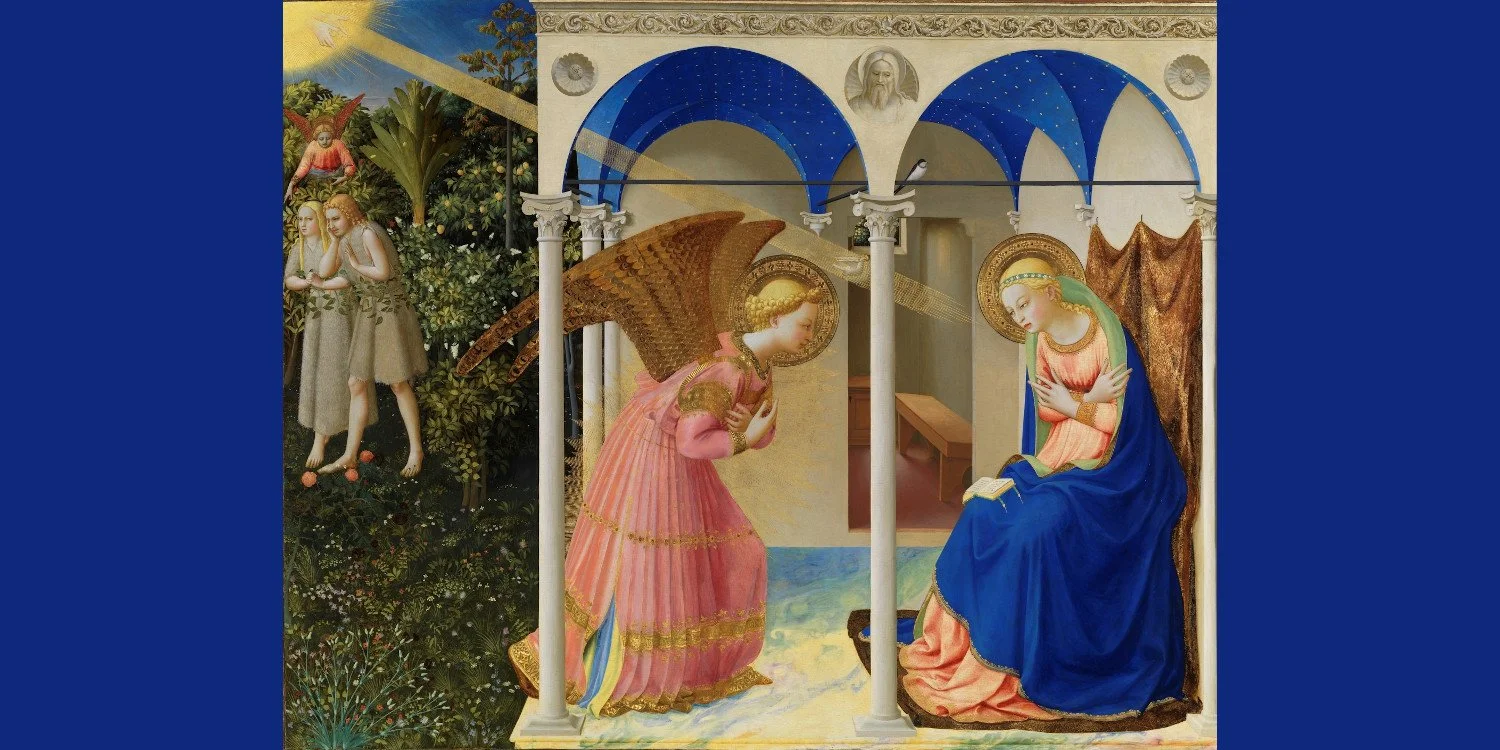
I alluded to this earlier in an Advent post, “To Christ the King through the Immaculate Heart of Mary.” In the first two chapters of his Gospel, Saint Luke strings together some of the most beautiful traditions from both Testaments (Covenants) about the nature of the Ark of the Covenant. In subtle language, he leads the careful reader to a conclusion about Mary herself: that she, as “Theotokos,” the Bearer of the Presence of God, is thus the Ark of God’s New Covenant while the Ark of the Old Covenant prefigures a more wonderful Ark to come, the Mother of the Messiah.
Luke draws upon a tradition from the Old Covenant setting up a subtle but significant parallel between Mary’s Visitation to Elizabeth (Luke 1:30-45) and David's encounter with the Ark of the Covenant (2 Samuel 6:2) about 1000 years earlier. Consider these passages:
In Luke 1:39: “In those days, Mary arose and went with haste into the hill country to a city of Judah.” In Second Samuel 6, David arose and went in haste to the same place to receive the Ark of the Covenant.
In Luke 1:41: “When Elizabeth heard Mary’s greeting, the child leaped in her womb.” In Second Samuel 6:16, David danced with joy in the presence of the Ark. In the Gospel of Luke, Elizabeth asks of Mary, “Who am I that the Mother of my Lord should come to me?” (Luke 1:43). In Second Samuel (9:8), David, who prefigures the coming Messiah, is then asked by the son of Jonathan, “Who am I that you should look upon someone such as me?” In Luke, Mary stays at the house of Zechariah and Elizabeth for three months. In Second Samuel (6:11), David stays in the house of Obed-edom three months.
These opening narratives from Luke have a multitude of such parallels with which Luke draws faithful Jews of the Diaspora who were familiar with the Old Covenant into the New. Finally, in Luke’s sequel, the Acts of the Apostles, Mary is present with the Apostles at Pentecost as the Holy Spirit calls forth the newborn Church. This provides a fulfillment of the declaration of Jesus from the Cross establishing Mary in the unique role of Motherhood over the whole Church:
“When Jesus saw his mother and the disciple whom he loved, he said, ‘Woman, behold your son.’ Then he said to the disciple, ‘Behold your Mother.’ From that hour, the disciple took her into his home.”
— John 19:26-27
+ + +
From the vision of Saint John:
“Then God’s temple in Heaven was opened and the Ark of his covenant was seen within his temple; and there were flashes of lightning, loud noises, peals of thunder, heavy hail, and the Earth quaked. And a great sign appeared in Heaven, a woman clothed with the sun, with the moon under her feet, and on her head a crown of twelve stars. She was with child.”
— Rev. 11:19 - 12:2
+ + +
O come, O come, Thou Lord of might,
Who to Thy tribes on Sinai's height
In ancient times did give the Law
In cloud and majesty and awe
O come, Thou rod of Jesse's stem,
From every foe deliver them
That trust Thy mighty power to save
And give them victory over the grave
Rejoice! rejoice! O Israel
To Thee shall come Emmanuel!
+ + +
Special Announcements:
If you like this excursion into Sacred Scripture, please visit our collection of BTSW Sacred Scripture posts, From Abraham to Easter for other titles that make Scripture come alive.
Our Voices from Beyond feature has an article by Father Gordon MacRae and Felix Carroll on the work of Mary behind those stone walls. Father G says, “Don’t let the top graphic on that post scare you away.”
You may also wish to visit these related posts:
St. Gabriel the Archangel When the Dawn from On High Broke Upon Us


Upon a Midnight Not So Clear, Some Wise Men from the East Appear
There is a back story to the Magi of Saint Matthew's account of the Birth of Christ, and it is the Gospel for the Epiphany of the Lord.

There’s a back story to the Magi of Saint Matthew’s account of the Birth of Christ, and it is the Gospel for the Epiphany of the Lord.
At Christmas by Fr Gordon MacRae
In early December each year, prisoners here can purchase a 20-lb food package from a vendor. They drop hints to their families, and those without families scrape and save their meager prison pay all year. No one here wants to pass up a chance to purchase food they otherwise won’t see again until next year. Most are practical about it. They skip the candy and cookies to buy more sustaining items like real coffee, and meal alternatives they can save for the worst days in the prison chow hall.
The packages arrived last week, and for days prisoners have been bringing me samples of their culinary creations. They come to my cell door with an endless parade of sandwiches, wraps, and pizzas. I learned long ago that refusing the food leaves a lot of hurt feelings. They not only insist that I eat it, but they insist on staying until I declare that their culinary skill surpasses all others. It’s beginning to look a lot like Christmas when I have to struggle into my pants in the morning.
There’s a point to these visits. Prisoners tell me about their own back stories, and the prospect of another Christmas in prison. They want to hear that they are not without hope. Most of all, they want to know that Christmas means more than the empty, shallow “holiday season” it has become on TV.
But this morning, my Japanese friend, Koji, stopped by with some coffee he brewed using an old sock. (Trust me, you don’t want the gory details!). Koji handed me a cup — it’s pretty good, actually — and asked, “What can you tell me about the Magi?” That was odd because I’ve been thinking of writing about the Magi for Christmas. I told Koji I’ll let him read this post when finished. Maybe he’ll bring me more coffee made with that old sock of his. Lord, give me the strength to bear my blessings! Anyway, there’s no better place to begin the Magi story than St. Matthew’s own words:
“Now when Jesus was born in Bethlehem of Judea in the days of Herod the king, behold, wise men from the East came to Jerusalem, saying, ‘Where is he who has been born king of the Jews? For we have seen his star in the East, and have come to worship him.’ When Herod the king heard this, he was troubled, and all Jerusalem with him; and assembling all the chief priests and scribes of the people, he inquired of them where the Christ was to be born. They told him, ‘In Bethlehem of Judea; for so it is written by the prophet:
‘And you, 0 Bethlehem, in the land of Judah, are by no means least among the rulers of Judah; for from you shall come a ruler who will govern my people, Israel.’
Then Herod summoned the wise men secretly and ascertained from them what time the star had appeared; and he sent them to Bethlehem, saying, ‘Go and search diligently for the child, and when you have found him bring me word, that I too may come and worship him.’ When they had heard the king, they went their way; and lo, the star which they had seen in the East went before them, till it came to rest over the place where the child was. When they saw the star, they rejoiced exceedingly with great joy; and going into the house they saw the child with Mary his mother, and they fell down and worshipped him. Then, opening their treasures, they offered him gifts, gold, frankincense and myrrh. And being warned in a dream not to return to Herod, they departed to their own country by another way.”

Myth, Midrash, or Both?
This story, as Saint Matthew relates it, is a myth. But don’t get me wrong. That does not mean the story isn’t true. In fact, I firmly believe that it is true. The word, “myth,” coming from the Greek “mythos,” simply means “story,” and makes no judgement on whether a story is historical. Myth is not synonymous with falsehood despite how its more modern meaning has been twisted into such a conclusion. In theology and Biblical studies, myth simply denotes a story imbued with rich theological and symbolic meaning, but that does not mean it’s devoid of historical truth.
Biblical myth is distinguished from legends and “folklore” by the way it offers explanations about the facts of a story. In myth, the explanations stand whether the facts stand or not, and the value of the story does not depend on its historical accuracy. Perhaps the best example is the Creation story of Genesis, Chapter 1. In my post, “A Day Without Yesterday,” the great Belgian physicist, Father Georges Lemaitre, turned modern cosmology on its head with his theory of the Big Bang. For Pope Pius XI, this proof of a universe that begins and ends in history affirmed the elemental truth of Biblical Creation.
When I say that the story of the Magi is true, however, I mean truth in both senses. The understanding the story conveys is the truth. The historical facts of the story are also the truth, and we have no reason to doubt them.
The account of the Magi is also a “midrash.” Midrash is a Hebrew term meaning “interpretation.” It’s a characteristic of many of the reflections in the Aggadah — which in Hebrew means “narrative.” The Aggadah is a collection of Rabbinic reflection and teaching gathered over a thousand years. Midrash is a type of literature from the Aggadah that interprets Biblical texts by linking them together and discerning their hidden meanings.
Like myth, midrash is not a declaration that a Biblical passage is not historical or true just because it contains elements of other Biblical texts. In Saint Matthew’s Gospel, the Magi story points to many elements in Old Testament Scriptures. Jewish Christians hearing Saint Matthew’s account of the Magi, for example, would connect the Star in the East witnessed by the Magi with the star Balaam (a sort of Magus figure) envisioned arising out of Jacob in a dream-like account described in the Book of Numbers 24:17. Herod’s affront with the idea of a Hebrew King in the Magi account echoes Balaam’s vision as well. Herod is of the Edomite clan. In Balaam’s vision, the star arising out of Jacob is a portent that “Edom shall be dispossessed.” (Numbers 24:18).
The account of wicked King Herod feeling threatened by the life of the infant Jesus recalls clearly the Exodus account of a wicked Pharaoh who, having enslaved the Jews, seeks the life of the infant Moses. And in the Infancy Narrative of Saint Luke’s Gospel, the story of Zechariah and Elizabeth conceiving a child in their old age is clearly an echo of the Genesis story of Abraham, Sarah, and Isaac.
In “Saint Gabriel the Archangel: When the Dawn from On High Broke Upon Us,” I wrote of how St. Luke drew many midrashic links with the Hebrew Scriptures in his account of the Angelic visit to Mary at the Annunciation. The account of Mary visiting Elizabeth in the hill country of Judea recalls David visiting the very same place to retrieve the Ark of the Covenant as told in 2 Samuel, Chapter 6. Even the story of the future John the Baptist leaping in his mother’s womb in the presence of Mary is midrashic. In 2 Samuel, David leaps for joy in the presence of the Ark of the Covenant. I find these echoes of the Old Testament to be fascinating, but they don’t leave the story’s historical truth in question, including the Magi story.
I have a modern analogy in my own family. I wrote about my father’s conversion in “What Do John Wayne and Pornchai Moontri Have in Common?” My father’s parents had four children. He grew up with two brothers and a sister. One of his brothers became a priest. A generation later, my father and mother had four children. I also grew up with two brothers and a sister. Both I and my father’s brother who became a priest were the second son in our families. Many of the stories of my own childhood have eerie echoes in my father’s childhood. This is what is meant by midrash.

The Epiphany is depicted in a mural titled “Adoration of the Magi” in the Basilica of the Immaculate Conception at Conception Abbey in Conception, MO. Painted by Benedictine monks in the late 1800s.
The Gifts of the Magi
There are elements within our popular understanding of the story of the Magi, however, that history has added over the centuries. For example, nothing in Saint Matthew’s account indicates that the Magi were three in number. The sole hint is in the number of their gifts: gold, frankincense, and myrrh. And despite the popular Christmas carol, “We Three Kings,” there is nothing in Saint Matthew’s account to indicate that they were kings. This account became linked to a passage in Isaiah:
“And nations shall come to your light, and kings to the brightness of your rising . . . they shall bring gold and frankincense, and shall proclaim the praise of the Lord.”
And linked as well was a passage about kings bringing tribute in Psalm 72:
“May the kings of Tarshish and of the isles render him tribute; may the kings of Sheba and Seba bring gifts”
Much theological symbolism for the gifts themselves was reflected upon later. Saint Ireneaus held that the Gifts of the Magi signify Christ Incarnate. Gold, a symbol of royalty, signifies Christ the King. Frankincense, used throughout ancient Israel in the worship of God, signifies divinity, and myrrh, an anointing oil for burial, signifies the Passion and death of the Messiah.
Saint Gregory the Great added to this interpretation with the Gifts of the Magi symbolizing our duty toward Christ in our daily lives. Gold signifies Christ’s wisdom and our deference. Frankincense signifies our prayer and adoration of Christ, and myrrh signifies our daily sacrifices as a share in the suffering of Christ. The names of the Magi — Gaspar, Melchior, and Balthazar — came out of a sixth century legend.
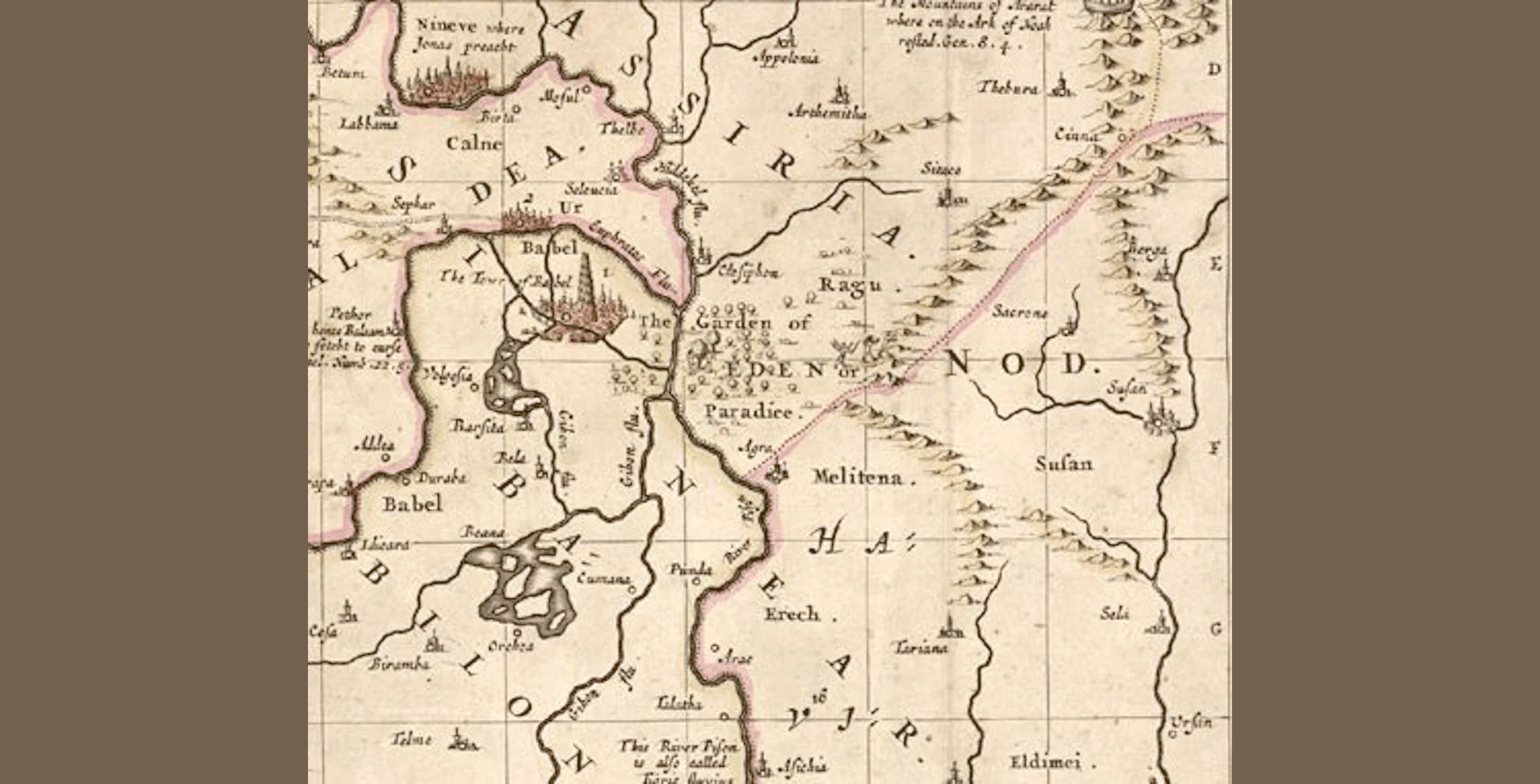
East of Eden
It’s widely held in Catholic scholarship that the Magi represent the first Gentiles to come to worship the Christ. There is one strain of scholarship that makes reference to the fact that they were astrologers who represented the world of magic. Most scholars see the Magi as followers of Zoroaster, an Indo-Iranian prophet who lived 12 centuries before Christ. Throughout the eastern world, followers of Zoroaster dominated religious thought for centuries. And yet there they are, kneeling in the presence of Christ. The symbolism is that as Christ reigns supreme, all other magic goes out of the world and loses its power and authority. It’s a beautiful and powerful image of the universal Kingship of Christ for all time, and the vast change his birth brought to the history of humankind.
I have an additional theory of my own about the hidden meaning of the account of the Magi, but I have been unable to find any reference to it in the work of any Biblical scholar, Catholic or otherwise. So I’m on my own in this wilderness of midrashic symbols. It’s true that the Magi represent all the world beyond Judaism coming into a covenant relationship with God through Christ. But great pains are taken by Saint Matthew to remind us repeatedly that the Magi are coming out of the East — and he capitalized “East.” It seems to me to be intended to designate more than just a compass point. The fact that they came from the East, and saw his star in the East, is repeated by Saint Matthew three times in this brief account.
In one of my posts on These Stone Walls — “In the Land of Nod, East of Eden” — I wrote of how both Adam and Eve were banished East of Eden after the Fall of Man (Genesis 3:24). It was both a punishment and a deterrent. God then placed a Cherubim with a flaming sword to the East of Eden to bar Man’s return.
A generation later, after the murder of his brother, Abel, Cain was also banished. Cain “went away from the presence of the Lord and dwelt in the Land of Nod, East of Eden (Genesis 4:14). The “Land of Nod” has no other reference in all of Scripture, and is widely interpreted to have its origin in the Hebrew term, “nad,” which means “to wander.” Cain himself described his fate in just this way:
“From thy face I shall be hidden; I shall be a fugitive and a wanderer on the earth.”
I count 21 references to an ill wind from the East throughout Sacred Scripture, but not one such reference after the Birth of Christ. An example is this one from the Prophet Isaiah:
“Measure by measure, by exile thou didst contend with them; he removed them with his fierce blast in the day of the east wind.”
For me, the Magi represent also those who have fallen, who have become alienated from God and banished East of Eden. They saw his star there, and followed its light. I am in a place filled with men who lived their entire lives East of Eden, and for them the Magi are a sign of Good News — the very best news. Freedom can be found in only one place: and the way there is the Star of Bethlehem.
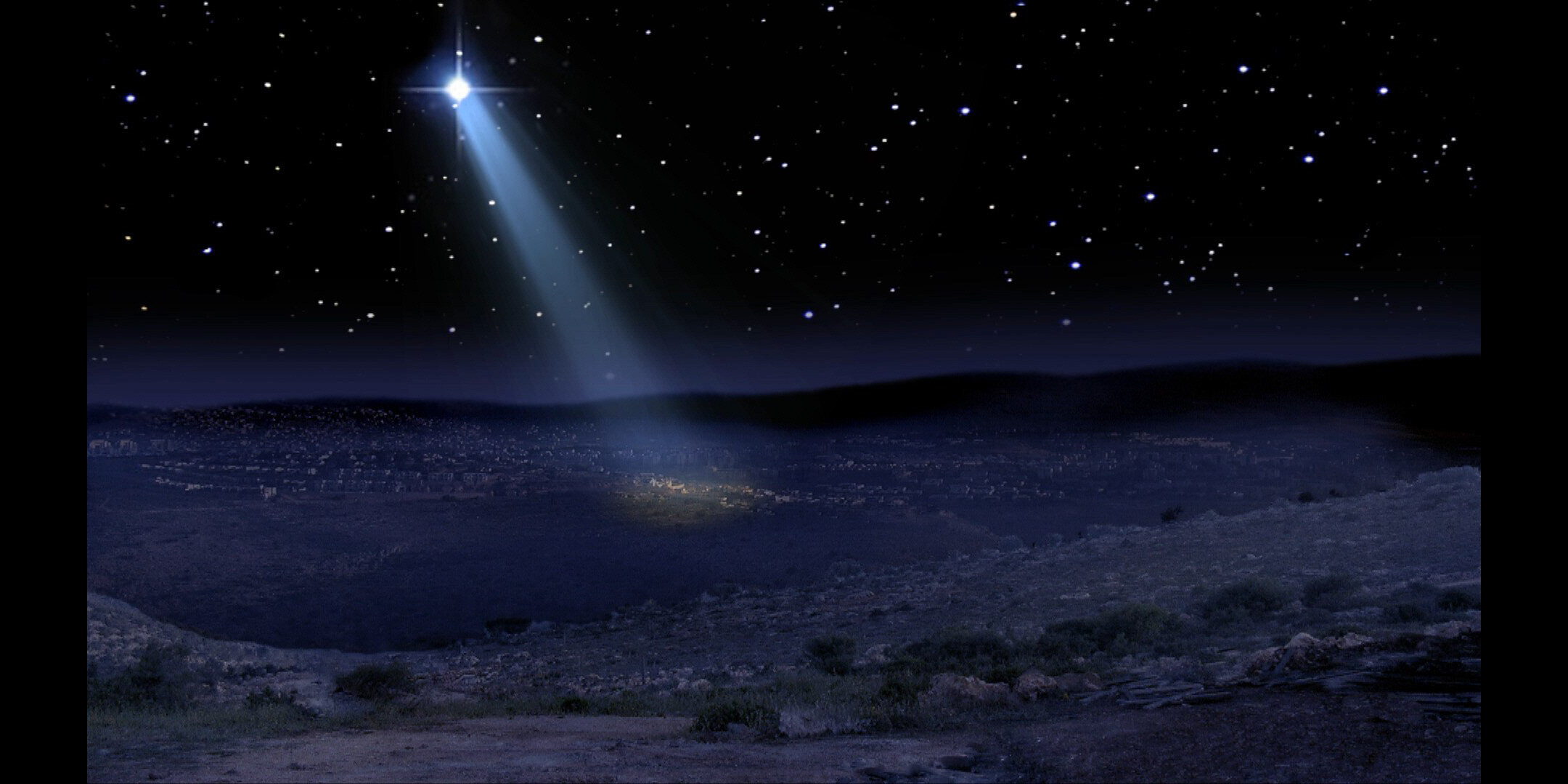
Amid the Encircling Gloom
My cell window faces West so my gaze is always out of the East. On this cold and gray December day, the sun is just now setting behind the high prison wall, and glistening upon the spirals of razor wire like tinsel. Its final glimmer of light is just now fading from view. I am reminded of my favorite prayer, a gift from another wise man, Blessed John Henry Newman, and it has become a tradition of sorts as the Sun sets on These Stone Walls at Christmas. I can hear the Magi praying this as they follow that Star out of the East. On my 18th Christmas in prison, this is my prayer for you as well:
“Lead, kindly Light, amid the encircling gloom,
Lead Thou me on.
The night is dark, and I am far from home;
Lead Thou me on
Keep Thou my feet; I do not ask to see
The distant scene; One step enough for me.
I was not ever thus,
Nor prayed that Thou shouldst lead me on;
I loved to choose and see my path,
But now lead Thou me on.
I loved the garish day, and, spite of fears,
Pride ruled my will; remember not past years.
So long Thy power hath blessed me,
Sure it still will lead me on
O’er moor and fen, o’er crag and torrent
Till the night is gone,
And with the morn those Angel faces smile,
Which I have loved long since, and lost awhile.”
The readers of These Stone Walls have cast a light into the darkness and isolation of prison this year. It’s a light that illuminates the path from East of Eden, and it is magnified ever so brightly, in my life and in yours, by the Birth of Christ. The darkness can never, ever, ever overcome it.