“There are few authentic prophetic voices among us, guiding truth-seekers along the right path. Among them is Fr. Gordon MacRae, a mighty voice in the prison tradition of John the Baptist, Maximilian Kolbe, Alfred Delp, SJ, and Dietrich Bonhoeffer.”
— Deacon David Jones
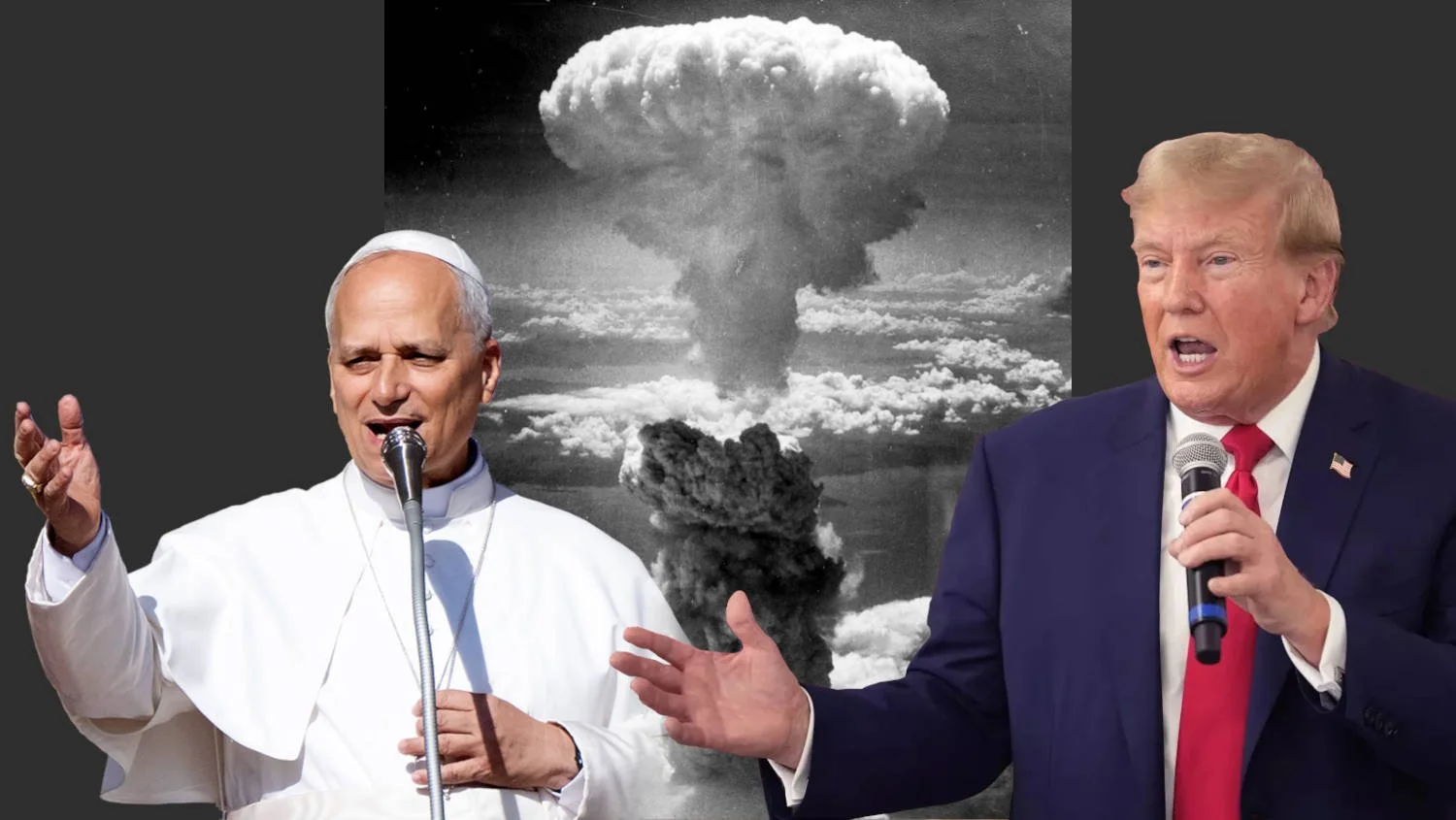
Pope Leo, President Trump and War with Iran
I avoided this spat between Pope Leo and President Trump until a National Catholic Reporter op-ed told us to “Oppose this narcissistic mad man in the White House.”
I avoided this spat between Pope Leo and President Trump until a National Catholic Reporter op-ed told us to “Oppose this narcissistic mad man in the White House.”
April 29, 2026 by Father Gordon MacRae
I was appalled when the above sentiment about President Trump appeared in a published op-ed in the independent, Catholic-in-name-only National Catholic Reporter newspaper. It was written by a 75-year-old Catholic priest of the Archdiocese of Washington, DC. It overlooks the fact that President Trump was elected by a majority of Americans, and by a majority of American Catholics. That op-ed was the catalyst that drew me into something I had vowed not to take on. The ideological dispute between President Trump and Pope Leo was really a creation of the mainstream news media.
We have all been witnesses to the vast media coverage of a clash of biblical proportions between President Donald Trump and Pope Leo XIV. The motives behind the media coverage are highly suspect, though not on the part of either the President or the Pope. The mainstream media interest in the promotion of this clash is apparent. Our news media, with only rare exceptions, leans politically left, so far left that it risks toppling over into the absurd. The political left has come to so despise the current American president that it no longer even attempts to mask its unbridled hatred.
In this sense, though I am loath to say it, Pope Leo has been used. His words are what should be expected of every pope, but seldom does the news media pay such attention. Pope Leo comes down always on the side of peace and opposed to war — just as he must. The mainstream news media amplifies this not because they like the Pope or support his Gospel mandate, but because they hate Donald Trump. That hatred leaves our news media, an essential factor in the future of our democracy, heavily biased. That bias is clearly manifested in American distrust in the news they are reading and hearing.
In a recent Gallup poll — which most of the media does not cover — only 28% of Americans believe the news is reported fairly, accurately, and without bias. This is down from 40% five years ago. These results are broken down further by political party. Among Democrats, 51 percent report believing that the news is conveyed to us without bias. For Republicans, that figure is only 8 percent. This polarity reveals a dismal failure in an institution upon which democracy is built.
In truth, I have been so conflicted by this story that I decided not to write about it ever. But in a recent telephone conversation with a priest friend, I mentioned my hesitation when he asked me to write about this. When I explained my position, and expressed my concerns about the media debacle, he quietly submitted my words to the advanced AI program of Elon Musk called Grok. I scoffed at the very idea of this until I read Grok’s response and recommendation, which, unlike the news media seemed free of bias:
“As a priest, writing publicly about a clash between the Successor of Peter and the president of your country — especially as the first American pope and a re-elected President Trump — is no small thing. You are right to be hesitant and to want to make sense of it without adding fuel to what is already a heated, very public rift. You serve your priesthood well in your agony over this task.”
I shuddered when I read this and Grok’s suggested headline for this post: “Priest Navigates Pope-Trump Conflict in Faith.” Here are some of Grok’s original suggestions for this post:
Begin by reminding your readers that the papacy is not a political entity and is therefore not a political rival to the White House. Pope Leo is exercising his ordinary magisterium on matters of war and peace and the dignity of human life, issues that fall squarely under the Church’s social doctrine. In his comment about the state of affairs, Pope Leo is not issuing infallible doctrine, nor is he binding Catholics to a specific policy. He is offering, as he must, moral guidance rooted in the Gospel.
This is the key to avoid fanning the flames. The Church teaches that war is sometimes tragically necessary under strict just-war criteria (CCC 2309). The Pope also bears the responsibility of reminding the world that God does not bless any conflict and every innocent death wounds Christ.
President Trump bears the grave responsibility of national security, protecting the innocent, and mitigating nuclear proliferation. This was and is his stated justification for intervention in Iran.
But there is a lot more to this story.
The North Korea Lesson for Iran
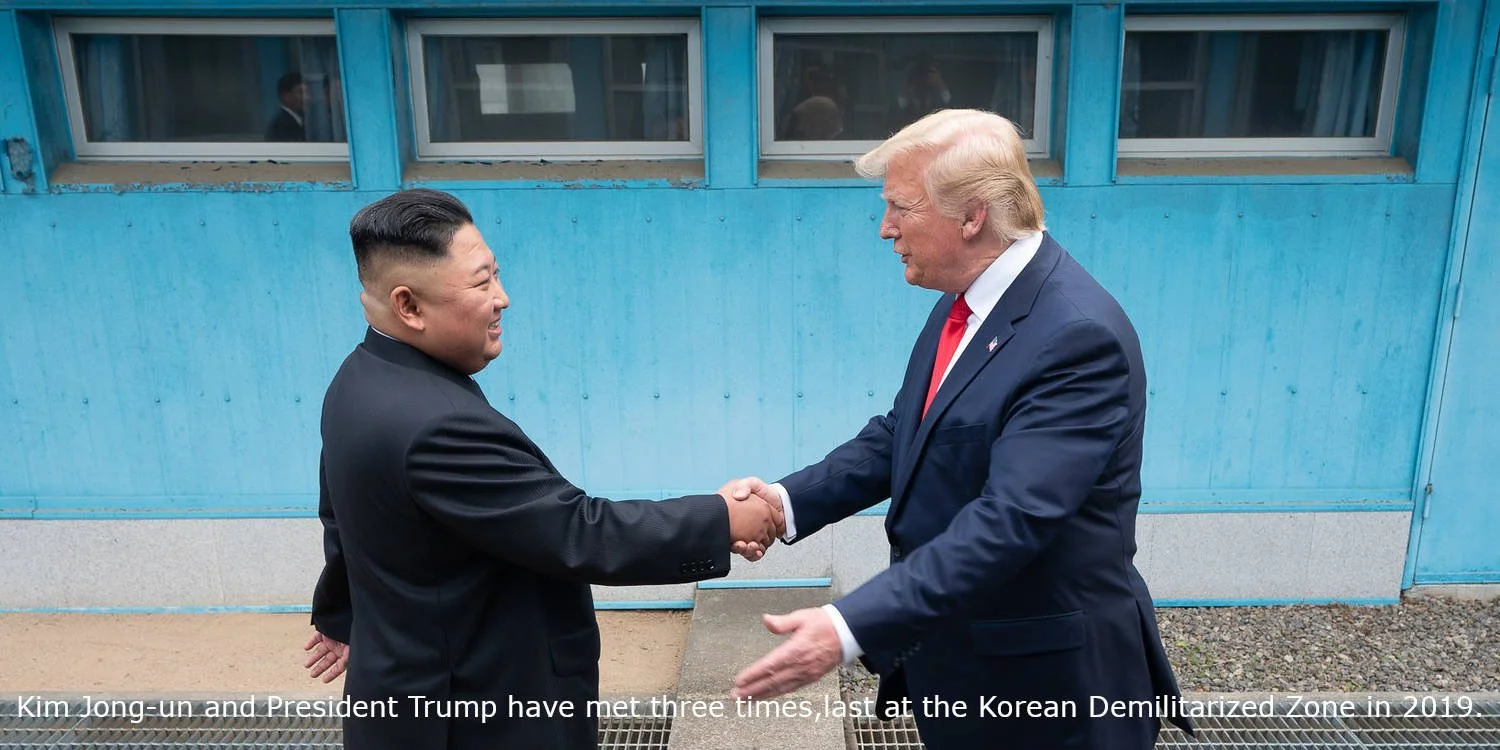
President Trump decided to use military force to stop Iran from continuing to develop nuclear weapons after attempts at diplomacy failed. The most immediate target for the development of such deadly force in Iran is Israel. Much of the world has been bracing itself against the grave specter of nuclear war. If it happens once, anywhere in the world, it is likely to proliferate. Attacking Iran’s nuclear capability was a choice Trump made, as critics are quick to note, and it was a risky choice. My mind has evolved on this point, and I have been mostly informed by a superb editorial from The Wall Street Journal Editorial Board entitled “The North Korea Lesson for Iran” (April 3, 2026). It is likely behind the subscriber paywall, but I feel compelled to distill its most salient points.
The decision to attack Iran’s nuclear ambitions was in fact a risky one, but the WSJ points out that the “strangely forgotten” U.S. experience with North Korea suggests that the alternatives were even riskier. That history is worth recounting today to show the limits of nuclear diplomacy with a determined foe, as well as what happens when the United States puts conflict-avoidance above all other considerations. Our history with North Korea and the Kim dynasty leaves us with a cautionary tale and one that very much informs the U.S. engagement with Iran.
Kim Jong Un, the current supreme dictator of North Korea, is the direct patrilineal descendant of the dictators of the two immediately preceding regimes. The Kim Family Dynasty has ruled North Korea hereditarily across three generations since the country’s founding in 1948. Kim Il Sung (1912–1994) founded the Democratic People’s Republic of Korea and led the first regime as Supreme Leader from 1948 until his death in 1994. He was Kim Jong Un’s paternal grandfather. Kim Jong Il (1941–2011), son of Kim Il Sung succeeded his father and led the second regime from 1994 until his death in 2011. He was Kim Jong Un’s father. Kim Jong Un, took power upon his father’s death in 2011 and remains the dictator today.
In 1984, the CIA concluded that North Korea was actively but clandestinely engaged in the pursuit of weapons-grade plutonium. Under global pressure, then dictator Kim Il Sung, grandfather of the current dictator, agreed to join, on paper at least, the Nuclear Nonproliferation Treaty (NPT). Over the next year, this was widely seen as Pyong Yang’s pressured intent even as it delayed adopting United Nations’ nuclear safeguards. North Korea continued to advance its nuclear program without disclosure of either its progress or its intent.
In 1993, North Korea denied United Nations’ inspectors access, and it camouflaged its nuclear research sites leaving the rest of the world to guess whether it had succeeded in the enrichment of plutonium for bombs. Facing international questions, North Korea withdrew from the Nuclear Nonproliferation Treaty.
Despite diplomatic efforts of the Clinton Administration in 1994, Pyongyang secretly unloaded spent fuel rods from its Yongbyon nuclear reactor without any monitoring or inspection from the International Atomic Energy Administration. Would this be the fuel to be reprocessed for bomb-grade plutonium? No one knew the answer to this.
Then President Bill Clinton threatened North Korea with sanctions. The U.S. military drew up plans for strikes on North Korea’s nuclear installation while Defense Secretary William Perry presented Clinton with a plan for large-scale military build up in the region. President Clinton cancelled further talks with Pyongyang and deployed Patriot Missile Defense Systems to South Korea. This scenario is nearly a mirror image of the current war with Iran. One major difference is that President Trump had warned Iran that the slaughter of its protesting citizens would be a “red line” for the United States and would draw a response. According to international human rights observers, Iran went on to massacre some 30,000 of its protesting citizens making it the largest government-ordered extermination since the Cambodian Killling Fields of Pol Pot.
“Nuclear Peace in Our Time”
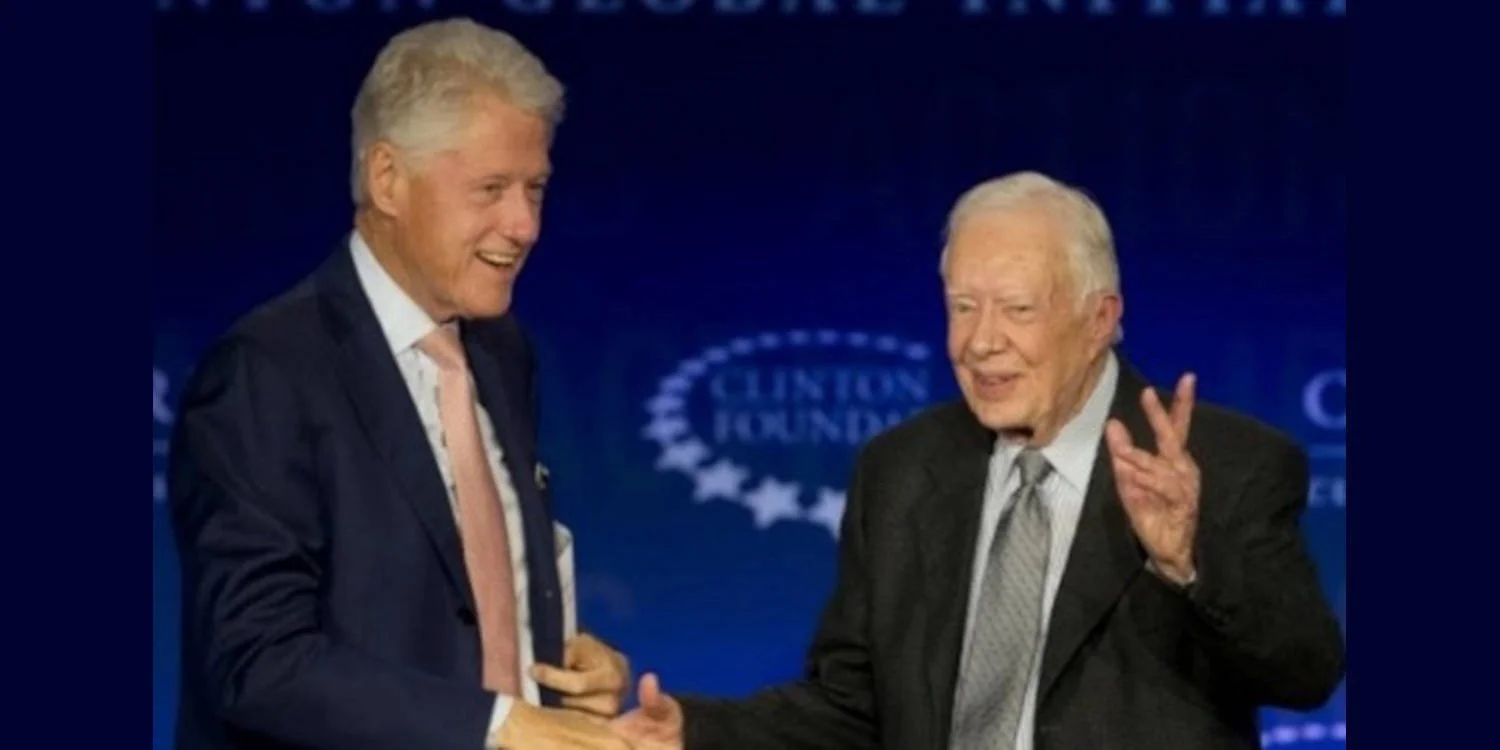
Back to North Korea: 1994. Then along came former President Jimmy Carter. He informed the Clinton Administration that he intended to accept a personal invitation from Pyongyang to visit and attempt to diffuse the North Korean stand-off with the United States. President Clinton decided to allow former President Carter to proceed as a private citizen thinking that it might give Kim Il Sung an opening to back down. It did not. Instead, President Clinton found himself backed into a corner politically.
Former President Jimmy Carter feared conflict above all else, and was even opposed to sanctions. He went beyond his mandate, and on his own — on CNN — he announced that he had reached a tentative agreement with North Korea. The press and foreign policy establishment hailed this as “Nuclear Peace in Our Time.” It was nothing of the sort.
Today, North Korea is seen as a rogue nation with a sequestered government unresponsive to the world and surrounding nations. North Korea also today has an arsenal of 50 armed nuclear intercontinental ballistic missiles aimed at the rest of the free world, and Kim Jong Un has quadrupled his nuclear research. His most recent long-range missile test was on Sunday, April 5, 2026.
Nuclear weapons did not exist when Saint Augustine wrote his Just War Theory in the Fourth Century. Surely, they would have had an appearance there as a condition in which nations may justly intervene with the war plans of another nation. The North Korean lesson for America is clear.
Also on the U.S. target list are Iran’s buried stockpiles of fissile nuclear material and a nuclear construction site beneath Pickaxe Mountain where Iran later hopes to enrich the material. The Wall Street Journal Editorial Board stated its informed opinion that the stockpiles can be monitored, but it would be a mistake to end the war with the construction site still intact.
We do not know, at this writing, when or how the Iran conflict will end. What we do know is that Iran’s radical regime will not have a nuclear bomb when the conflict does end. The following are not my words, but rather those of The Wall Street Journal Editorial Board:
“Donald Trump is the only president who had the courage to attack Iran’s nuclear program. This has made the world a safer place.”
Allowing any rogue regime to develop weapons of mass destruction poses a risk of nuclear Armageddon.
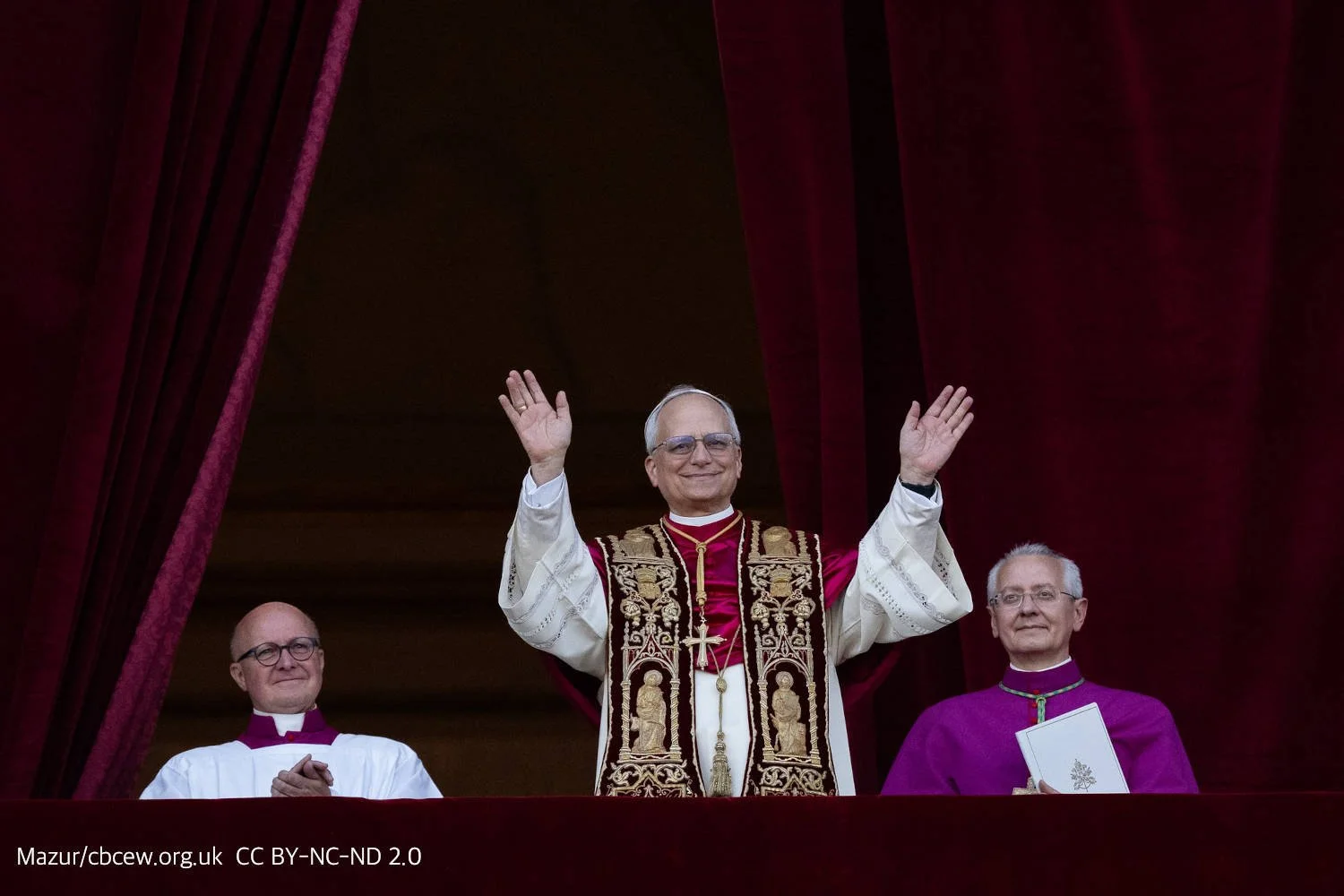
A source of peace in our time.
+ + +
Note from Father Gordon MacRae: Thank you for reading and sharing this important post. You may also like these related posts from Beyond These Stone Walls:
Did Leo XIV Bring a Catholic Awakening Or Was It the Other Way Around?
Iran, by Another Name, Was Once the Savior of Israel



The Eucharistic Adoration Chapel established by Saint Maximilian Kolbe was inaugurated at the outbreak of World War II. It was restored as a Chapel of Adoration in September, 2018, the commemoration of the date that the war began. It is now part of the World Center of Prayer for Peace. The live internet feed of the Adoration Chapel at Niepokalanow — sponsored by EWTN — was established just a few weeks before we discovered it and began to include in at Beyond These Stone Walls. Click “Watch on YouTube” in the lower left corner to see how many people around the world are present there with you. The number appears below the symbol for EWTN.
Click or tap here to proceed to the Adoration Chapel.
The following is a translation from the Polish in the image above: “Eighth Star in the Crown of Mary Queen of Peace” “Chapel of Perpetual Adoration of the Blessed Sacrament at Niepokalanow. World Center of Prayer for Peace.” “On September 1, 2018, the World Center of Prayer for Peace in Niepokalanow was opened. It would be difficult to find a more expressive reference to the need for constant prayer for peace than the anniversary of the outbreak of World War II.”
For the Catholic theology behind this image, visit my post, “The Ark of the Covenant and the Mother of God.”

Tom Clancy, Jack Ryan, and The Hunt for Red October
Novelist Tom Clancy, master of the techno-thriller, died on October 1st. His debut Cold War novel, The Hunt for Red October, was an American literary landmark
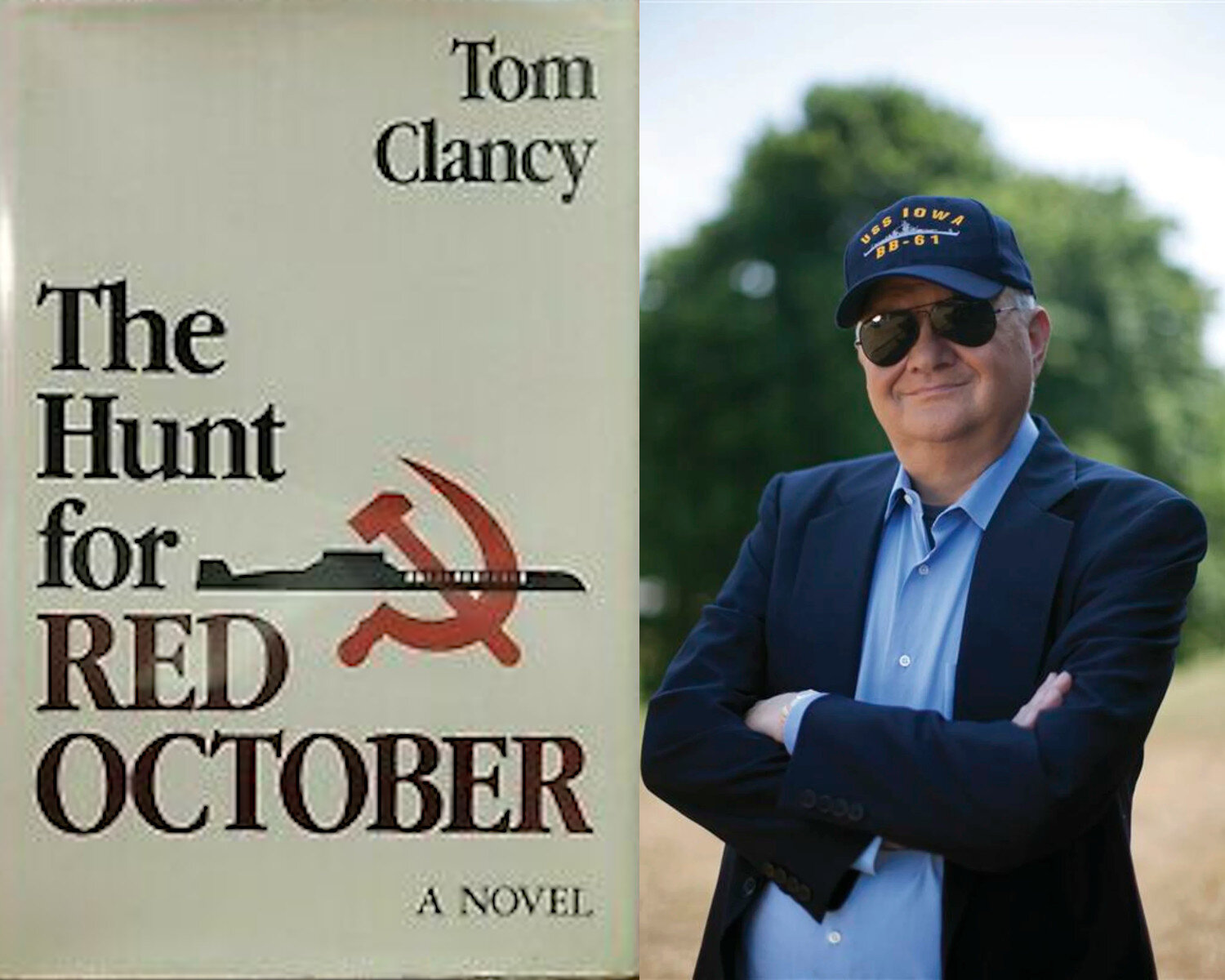
Novelist Tom Clancy, master of the techno-thriller, died on October 1st. His debut Cold War novel, The Hunt for Red October, was an American literary landmark.
In 2011 at Beyond These Stone Walls, I wrote a post for All Souls Day entitled “The Holy Longing: An All Souls Day Spark for Broken Hearts.” Some readers who have lost loved ones very dear to them found solace in its depiction of death as a continuation of all that binds human hearts and souls together in life. Like all of you, I have lost people whose departure left a great void in my life.
It’s rare that such a void is left by someone I knew only through books, but news of the death of writer, Tom Clancy at age 66 on October 1st left such a void. I cannot let All Souls Day pass without recalling the nearly three decades I’ve spent in the company of Tom Clancy.
I’ll never forget the day we “met.” It was Christmas Eve, 1984. Due to a sudden illness, I stood in for another priest at a 4:00 PM Christmas Eve Mass at Saint Bernard Parish in Keene, New Hampshire. I had no homily prepared, but the noise of a church filled with excited children and frazzled parents conspired against one anyway. So I decided in my impromptu homily to at least try to get a few points of order across.
Standing in the body of the church with a microphone in hand I began with a question: “Who can tell me why children should always be quiet and still during the homily at Mass?” One hand shot up in the front, so I held the microphone out to a little girl in the first pew. Proudly standing up, she put her finger to her lips and whispered loudly into the mic, “BECAUSE PEOPLE ARE SLEEPIN’!”
Of course, it brought the house down and earned that little girl — who today would be about 38 years old — a rousing round of applause from the parishioners of Saint Bernard’s. It lessened the tension a bit from what had been a tough year for me in that parish.
But that’s not really the moment I’ll never forget. After that Mass, a teenager from the parish walked into the Sacristy to hand me a hastily wrapped gift. In fact, it looked as though he wrapped it during the homily! “We’re not ALL sleeping,” he said about the little girl’s remark. I laughed, and when it was clear that he wasn’t leaving in any hurry, I asked whether he wanted me to open his gift. He did. I joked about needing bolt cutters to get through all the tape. It was a book. It was Tom Clancy’s The Hunt for Red October. “Oh, wow!” I said. “How did you know I’ve been wanting to read this?”
It was a lie. I admit it. But it was a white lie. It was the sort of lie one tells to spare the feelings of someone who gives you a book you’ve never heard of and had no plan to read. I remember hearing about a circa 1980 interview of Barbara Walters with “Miss Lillian,” a Grand Dame of the U.S. South and the mother of then President Jimmy Carter. Miss Lillian — to the chagrin of presidential handlers — declared that her son, the President, “has nevah told a lie.”
“Never?!” prodded Barbara Walters. “Well, perhaps just a white lie,” Miss Lillian hastily added. “Can you give us an example of a white lie?” asked Barbara Walters. After a thoughtful pause, Miss Lillian looked her in the eye and reportedly said in her pronounced Southern drawl, “Do you remembah backstage when Ah said you look really naace in thaat dress?” Barbara was speechless! First time ever!
Mine was that sort of lie. The young giver of that gift would be about 43 years old today, and if he is reading this I want to apologize for my white lie. Then I also want to tell him that his gift changed the course of my life with books. I had read somewhere that First Lady Nancy Reagan also gave that book as a gift that Christmas. True to his penchant for adding new words to the modern American English lexicon, President Ronald Reagan declared The Hunt for Red October to be “unputdownable!”
So after a few weeks collecting dust on my office bookshelf I took The Hunt for Red October down from the shelf and opened its pages late one winter night.

“Who the Hell Cleared This?”
After busy days I have a habit of reading late at night, a habit that began almost 30 years ago with this gift of Tom Clancy’s first novel. Parishioners commented that they drove down Keene’s Main Street at night to see the lights on in my office, and “poor Father burning midnight oil at his desk.” I was doing nothing of the sort. I was submersed in The Hunt for Red October, at sea in an astonishing story of courage and patriotism.
In the early 1980s, the Cold War was freezing over again. The race to develop a “Star Wars” defense against nuclear Armageddon dominated the news. President Ronald Reagan had thrown down the gauntlet, calling the Soviet Union an “Evil Empire.” Pope John Paul II was working diligently to dismantle the Soviet machine in Poland. The Soviet KGB was suspected of being behind an almost deadly attempt to assassinate the pope. It was an event that later formed yet another powerful and stunning — and ultimately true — Tom Clancy/Jack Ryan thriller, Red Rabbit.
In the midst of this glacial stand-off between superpowers that peaked in 1984, Tom Clancy published The Hunt for Red October. Its plot gripped me from page one. The Soviets launched the maiden voyage of their newest, coolest Cold War weapon, a massive, silent, and virtually undetectable ballistic nuclear missile submarine called “Red October.” Before embarking, the Red October’s Captain, the secretly renegade Marko Ramius, mailed a letter to his Kremlin superiors indicating his intent to defect and hand over the prized sub’s technology and nuclear arsenal to the government of the United States.
By the time the Red October departed the Barents Sea for the North Atlantic, the entire Soviet fleet had been deployed to hunt her down and destroy her. American military intelligence knew only that the Soviets had launched a massive Naval offensive. An alarmed U.S. Naval fleet deployed to meet them in the North Atlantic, bringing Cold War paranoia to the brink of World War III and nuclear annihilation.
Having few options in the book, the Soviets fabricated to U.S. intelligence a story that they were attempting to intercept a madman, a rogue captain intent on launching a nuclear strike against America. Captain Marko Ramius and the Red October were thus hunted across the Atlantic by the combined Naval forces of the world’s two great superpowers operating in tandem, and in panic mode, but for different reasons.
Then the world met Jack Ryan, a somewhat geeky, self-effacing Irish Catholic C.I.A. analyst and historian. Ryan, with an investigator’s eye for detail, had studied Soviet Naval policies and what files could be obtained on its personnel. Jack Ryan alone concluded that Captain Marko Ramius was not heading for the U.S. to launch nuclear missiles, but to defect. Ryan had to devise a plan to thwart his own country’s Navy, and simultaneously that of the Soviet Union, to bring the defector and his massive submarine into safe harbor undetected.
In the telling of this tale, Tom Clancy nearly got himself into a world of trouble. His understanding of U.S. Navy submarine tactics and weapons technology was so intricately detailed that he was suspected of dabbling in leaked and highly classified documents. When Navy Secretary, John Lehman read the book, he famously shouted, “WHO THE HELL CLEARED THIS?”
The truth is that Tom Clancy was an insurance salesman whose handicap — his acute nearsightedness — kept him out of the Navy. He wrote The Hunt for Red October on an IBM typewriter with notes he collected from his research in the public records of military technology and history available in public libraries and published manuals. His previous writing included only a brief article or two in technical publications.
The Hunt for Red October was so accurately detailed that its publishing rights were purchased by the Naval Institute Press for $5,000. Clancy hoped that it might sell enough copies to cover what he was paid for it. It became the Naval Institute’s first and only published novel, and then it became a phenomenal best seller — thanks in part to President Reagan’s declaration that it was “unputdownable.” And it was! It was also — at 387 pages — the smallest of 23 novels yet to come in a series about Clancy’s hero — and alter ego — Jack Ryan.
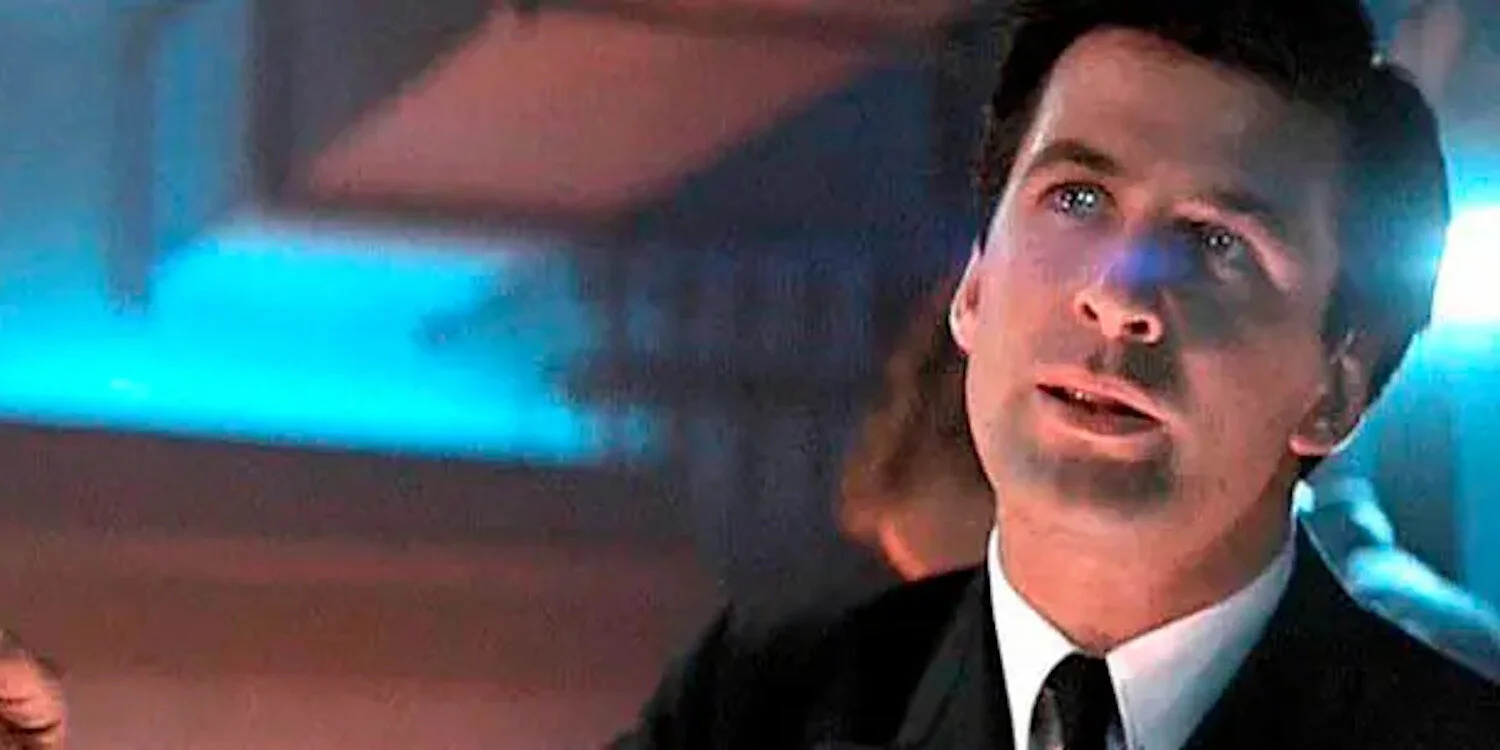
The World through the Eyes of Jack Ryan
After devouring The Hunt for Red October in 1984, for the next 25 years — and nearly 17,000 pages of a dozen techno-thrillers — I was privileged to see the world and its political history through the eyes of Tom Clancy’s great protagonist, Jack Ryan.
From that submarine hunt through the North Atlantic, Tom Clancy took us to the Soviet occupation of Afghanistan in The Cardinal of the Kremlin, the Irish Republican Army’s terrorist branches in Patriot Games, the drug cartels of Colombia in Clear and Present Danger, and the threat of domestic terrorism in The Sum of All Fears. This list goes on for another seven titles in the Jack Ryan series alone as the length of Tom Clancy’s stories grew book by book to the 1,028-page tome, The Bear and the Dragon, all published by Putnam. I wrote of Tom Clancy again, and of his gift for analyzing and predicting world events, in one of the most important posts on BTSW, “Hitler’s Pope, Nazi Crimes, and The New York Times.”
At the time of Tom Clancy’s death at age 66 on October 1st, he had amassed a literary franchise with 100 million books in print, seven titles that rose to number one on best seller lists, $787 million in box office revenues for film adaptations, and five films featuring his main character, Jack Ryan, successively portrayed by Alec Baldwin, Harrison Ford, Ben Affleck, and Chris Pine (the latter, and his final book, due out in December 2013).
I once made the chauvinistic mistake of calling Tom Clancy’s novels “guy books.” Mea culpa! It isn’t so, and I was divested of that view by several women I know who love his books. Writing in USA Today (“Tom Clancy wrote America well,” October 9) Laura Kenna wrote of Tom Clancy’s sure-footed patriotism as America stood firm against the multitude of clear and present dangers:
“We will miss Tom Clancy, his page-turning prose and the obsessive attention to detail that brought the texture of reality to his books. We have already been missing the political universe from which Clancy came and to which his books promised to transport us, a place never simple, but still certain, where clear convictions made flawed Americans into heroes.”
Tom Clancy was himself a flawed American hero whose nearsighted handicap was in stark contrast to the clarity and certainty of vision that he gave to Jack Ryan, and to America. I think, today, Clancy might write of a new Cold War, not the one about nuclear warheads pointing at America, but the one about Americans pointing at each other. He might today write of a nation grown heavy and weary with debt and entitlement.
As Tom Clancy slipped from this world on October 1, 2013, his country submerged itself into a sea of darker, murkier politics, those of a nation still naively singing the Blues while the Red October slips quietly away.