“There are few authentic prophetic voices among us, guiding truth-seekers along the right path. Among them is Fr. Gordon MacRae, a mighty voice in the prison tradition of John the Baptist, Maximilian Kolbe, Alfred Delp, SJ, and Dietrich Bonhoeffer.”
— Deacon David Jones
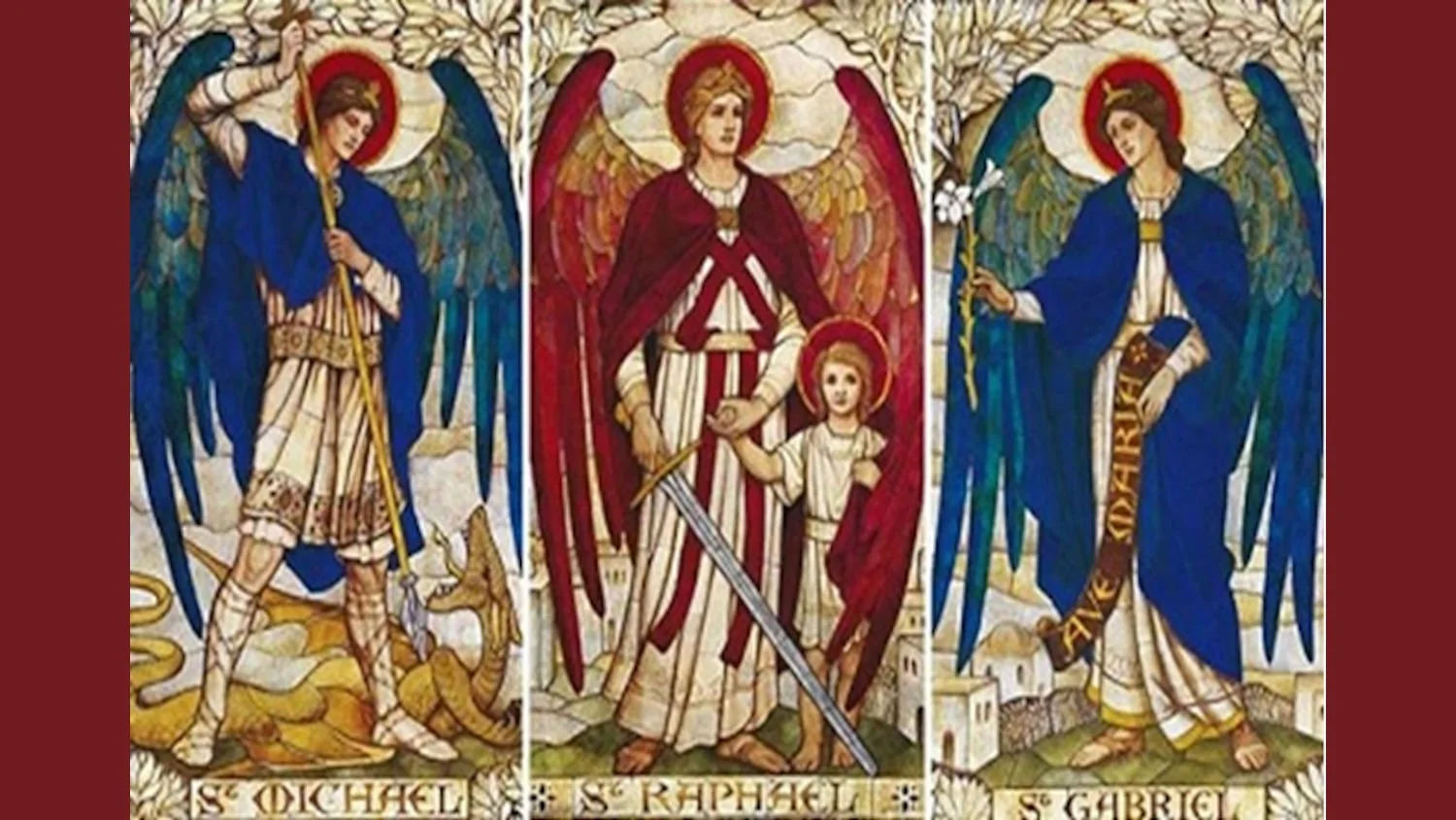
Michael, Gabriel, Raphael: Allies in Spiritual Battle
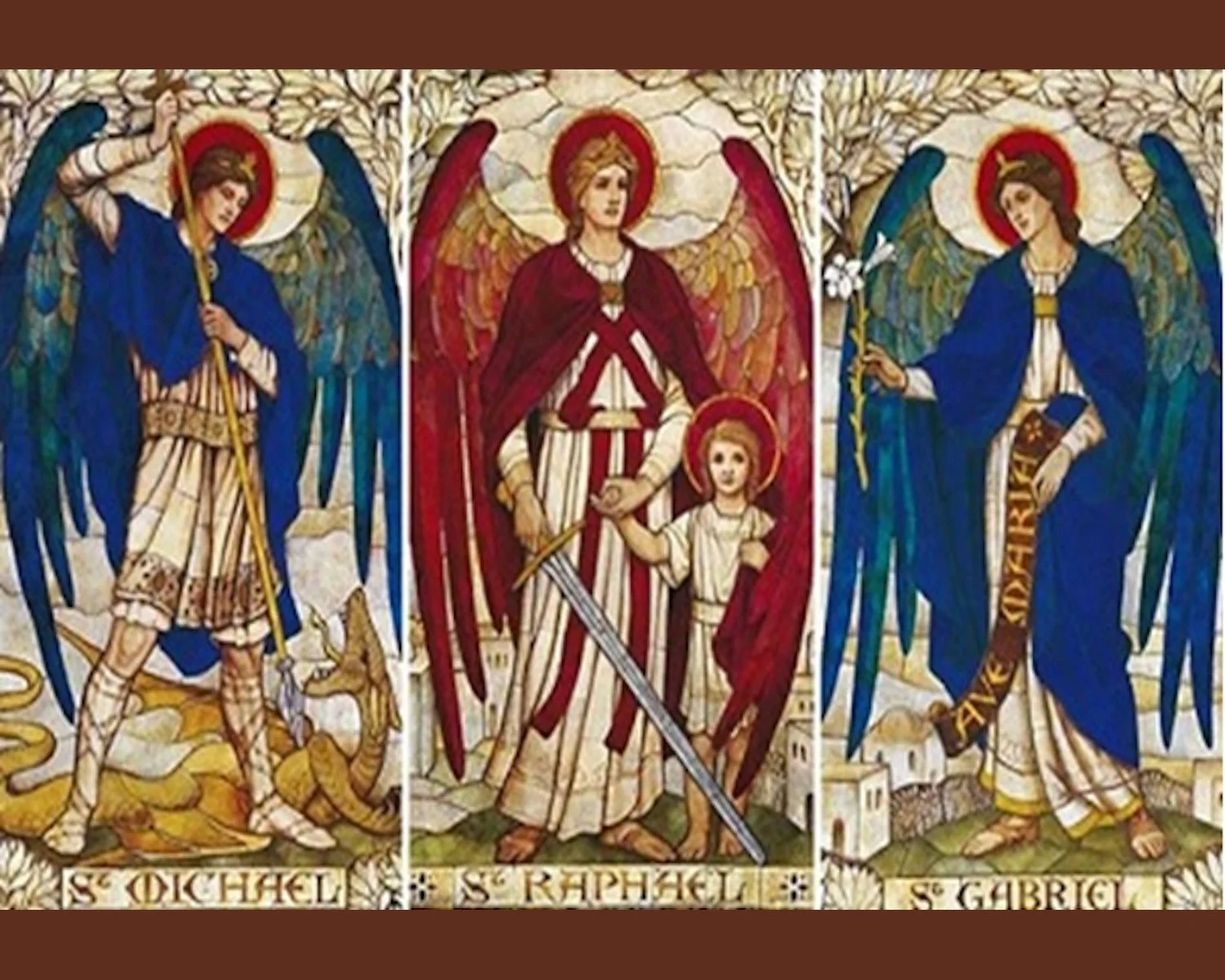
On September 29, the Church honors the three named angels of Sacred Scripture, the Archangels Michael, Gabriel, and Raphael, and on October 2, the Guardian Angels.
September 29, 2026 by Father Gordon MacRae
“He will command his angels concerning you to guard you in all your ways.”
— Psalm 91:11
The September 29 Feast Day of the Archangels of Sacred Scripture has been an important event in the life of this blog and in my life as a priest and prisoner excluded from justice among earthly powers. To honor that sacred day we are posting a day early this week. Our post extends from this date until October 2, a date reserved in 1670 by Pope Clement X to honor our Guardian Angels in close proximity to Michaelmas.
+ + +
The Japanese novelist, Shusaku Endo, was a Catholic convert best known for his acclaimed novel, Silence, which I read in my early years in prison. It had an enormous impact on me. It is a small book, about 200 pages, first published in Japanese in 1969. The focus of much of Endo’s writing reflected his struggles, as one translator described it, “with the anguish of faith and the mercy of God.”
I read it at a time when I, too, was struggling with both. It is sometimes less of a struggle, and therefore a temptation, to simply not believe. There is a scene in this powerful book that left me spellbound. The story is about a Portuguese Jesuit priest, Father Sebastian Rodrigues, who entered Japan in the 16th Century at the height of Christian persecution at the hands of the Shogun. That is the Japanese name for the military dictatorship that ruled Japan over seven centuries from 1192 to 1867. The name “Shogun” is a contraction of the Japanese “seii tai shogun” (barbarian-hunting warriors).
Father Rodrigues was among the “barbarians” hunted by the Shogun military, the samurai, under a constant threat of public torture and death. The scene that made me shudder most was a description of how Father Rodrigues entered Japan. Foreign ships were barred from its ports so the ship that bore him secretly approached a remote part of the 16th Century Japanese coast in the dark of night. The priest jumped ship and swam to shore in the pitch blackness with nothing but the clothes on his back and no idea of where, or to whom, he would go. The fear of the dark unknown and the courage it took to overcome it was vivid and staggering.
Darkness is itself a character in this highly symbolic novel. Father Rodrigues spent a good deal of time in a brutal Shogun prison in a constant state of darkness and near starvation. At one point, in an intense scene of fear and despair, he asked — and it is from this that the book takes its title — “Lord, why are you silent? Why are you always silent?”
I have asked that same question many times in the dark of prison. For the character of Father Rodrigues, however, the silence of God was finally broken. He was tortured by the Shogun in order to force him into publicly trampling on the “fumie,” the Japanese term for a sacred icon. It was a crucifix. Despite the torture, Father Rodrigues refused and endured. Then he was forced to watch while 30 Christian converts were lined up one by one to take his place for torture unless he trampled on the crucifix. An inner voice came to him:
“Trample! Trample! I more than anyone know the pain of your foot. Trample! It was to be trampled on by men that I was born into this world. It was to share men's pain that I carried my cross!”
— Silence, p.171
Father Rodrigues trampled upon the crucifix.
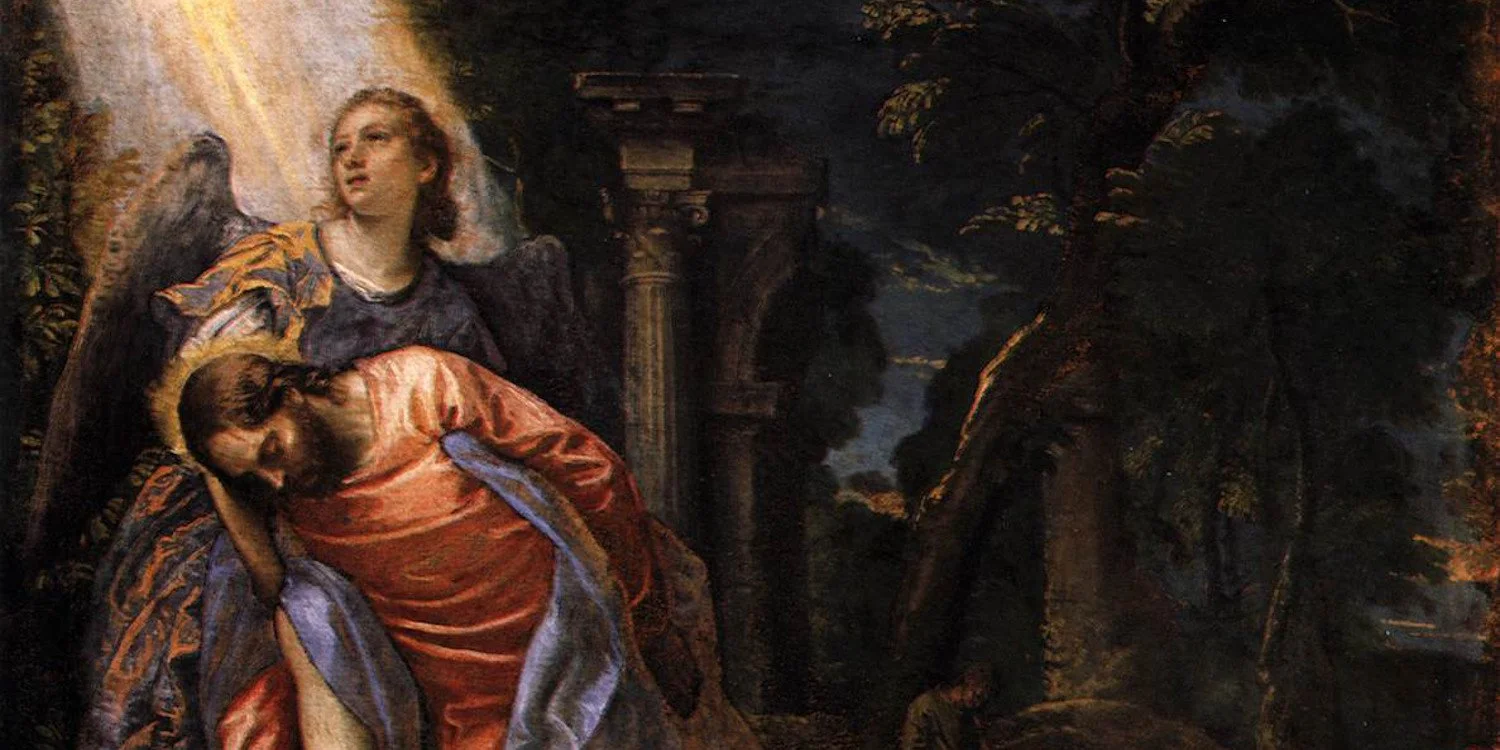
Spiritual Battle
Upon first reading, that excerpt may seem a betrayal. However, digging a little deeper into the words that came to the priest unveils a profound soteriology, the theology of salvation. The priest bore his own suffering, but by his actions he redirected the suffering destined for his converts onto Christ. “It was to share men’s pain that I carried my cross.”
I was surprised to learn that Shusaku Endo left this life leaving behind the life of his fictional tormented priest, Sebastian Rodrigues — on the Feast of Michaelmas. That was the old English name for the feast day of what was once called Saint Michael and All Angels on September 29. In the Catholic calendar it is now the Feast Day of Michael, Gabriel, and Raphael, the only angels in the biblical record whose personal names are revealed.
The September 29 date was established in the Sixth Century when on that same date the Church of Saint Michael and All Angels was dedicated on the Salarian Way in Rome. The feast day was called “Michaelmas,” meaning “the Mass of St. Michael.” In British custom, it was one of the “quarter days,” traditionally marked by the election of magistrates and the beginning of the legal and university terms. This may have been because — or the cause of — the designation of Saint Michael as the Patron of Justice.
It was on another date — the Feast Day of the Guardian Angels on October 2 — that I discovered in prison that the silence of God is but an illusion. God has spoken volumes throughout all of human history, and His megaphones are Scripture, Tradition, and the ongoing revelation of grace in our lives. Justice is also not just an elusive and singular event, but a cosmic guarantee, and Saint Michael is its manifestation.
This is a difficult concept that I will try to convey to whatever extent I understand it myself. Scripture suggests to us that the conflicts we face and the struggles we endure in our lives on Earth have an unseen spiritual dimension. The Catholic Biblical scholar, Scott Hahn, also a convert, expressed this in his terrific little book, Angels and Saints: A Biblical Guide to Friendship with God’s Holy Ones (Image Books, 2014):
“St. Michael is mighty among the angels. The Book of Revelation (12:7ff) depicts him as the commander of the heavenly host of angels as they battle Satan and the rebellious spirits .... We know how the battle ends, and we know Michael is victorious (12:10). Still, the war will rage on until the final consummation of history.”
— Angels and Saints, p. 84
From the earliest days of the Church, Christians have invoked Michael as a guardian, patron, and leader in spiritual warfare. Our troubles and struggles in this world are not always simple anxieties over material discomforts, painful relationships, or the tragedies that occur in our lives. They are also manifestations of spiritual battle, and should be seen and resisted as such. People of deep faith recognize the spiritual battles within themselves and their environments, and they rely on faith and spiritual allies to defend against them.
I have suggested previously that priests especially are targets of spiritual warfare, inundated by constant temptation in a culture locked in spiritual combat between Heaven and hell. I have cited a Holy Week post of mine that exemplifies the most active goal of Satan: to prevent our reception of the Eucharist and undermine its truth. Every time I write about this, it is followed by days or weeks of spiritual struggle and painful events all around me. This is clearly a story “someone” does not want exposed. The post in which I first exposed this is “Satan at the Last Supper: Hours of Darkness and Light.”
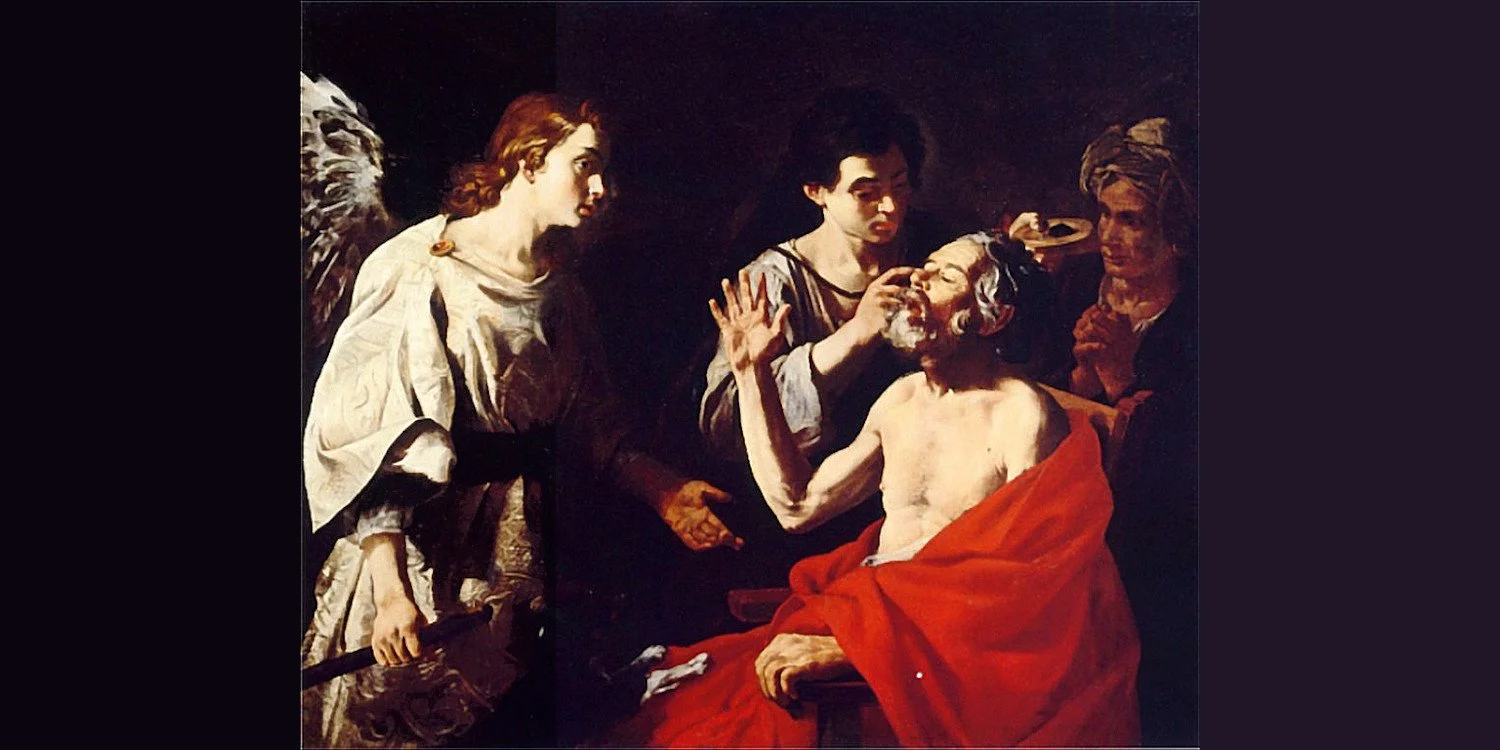
The Art of War Requires Allies
For 23 years, I had been living in the Hancock Building in this prison complex. For the first six, though I had done nothing to warrant it, I was forced to live in a place with eight men per cell. Words cannot express the assault on the psyche and spirit that life in such a constant environment produced. Just about everyone living there was given an opportunity to move to better housing within a year. I was there for six years.
In that same six years, my friend, Pornchai Moontri, was in the neighboring state of Maine living in the spiritual madness of endless solitary confinement. We lived with polar opposite prison anxieties, and each was in its own way devastating mentally and spiritually.
In 2000, I was finally moved to a saner place with two prisoners per cell. In 2006, Pornchai Moontri arrived. For the next 11 years we lived in the same cell. Then, in 2016, both of us, along with 94 others, were forced in a mass migration back into the place with eight prisoners to a cell. It was because of a development in the prison that had nothing to do with us. We were promised a return to a better housing situation in a matter of weeks. One year later, we were both still there.
In mid-July, 2017, I was summoned from my job as the legal clerk in the prison law library and handed a few trash bags. After 23 years in the dreaded Hancock Building, I was given one hour to unravel from it and move to another unit on the opposite end of this prison complex. I was told that Pornchai would be joining me there on the next day. After my arrival in the new unit, another officer told me that Pornchai was supposed to come with me, but some unseen and nefarious hand changed that order and Pornchai was to be sent somewhere else.
The next day, from a top floor stairwell outside the prison law library where I work, I saw Pornchai in the distance looking forlorn as he wheeled a cart in the opposite direction from where I now lived. I thought I would never see him again. It was a crushing blow for us both. I knew he would be facing deportation in a few years and now would face it alone. I cannot make sense of what happened next.
The outcome of this spiritual battle was stunning, but became so only when I sought help from our allies in spiritual warfare. I knew in my heart that I was called to bring some justice and hope to the burdens Pornchai carried. I described them recently in “Pornchai Moontri and the Things We Carry.”
Three weeks after our parting, I returned from work one day to find the person living in the bunk above me gone, and in his place was Pornchai Moontri. This never happens here. We were shocked, perplexed and overjoyed.
There were later signs that our allies summoned other allies behind the scenes who had come to know of us. On the day we were reunited, they were in just the right place at just the right time saying just the right things to just the right people. It was the most unlikely symphony of actual grace. It was incredible!
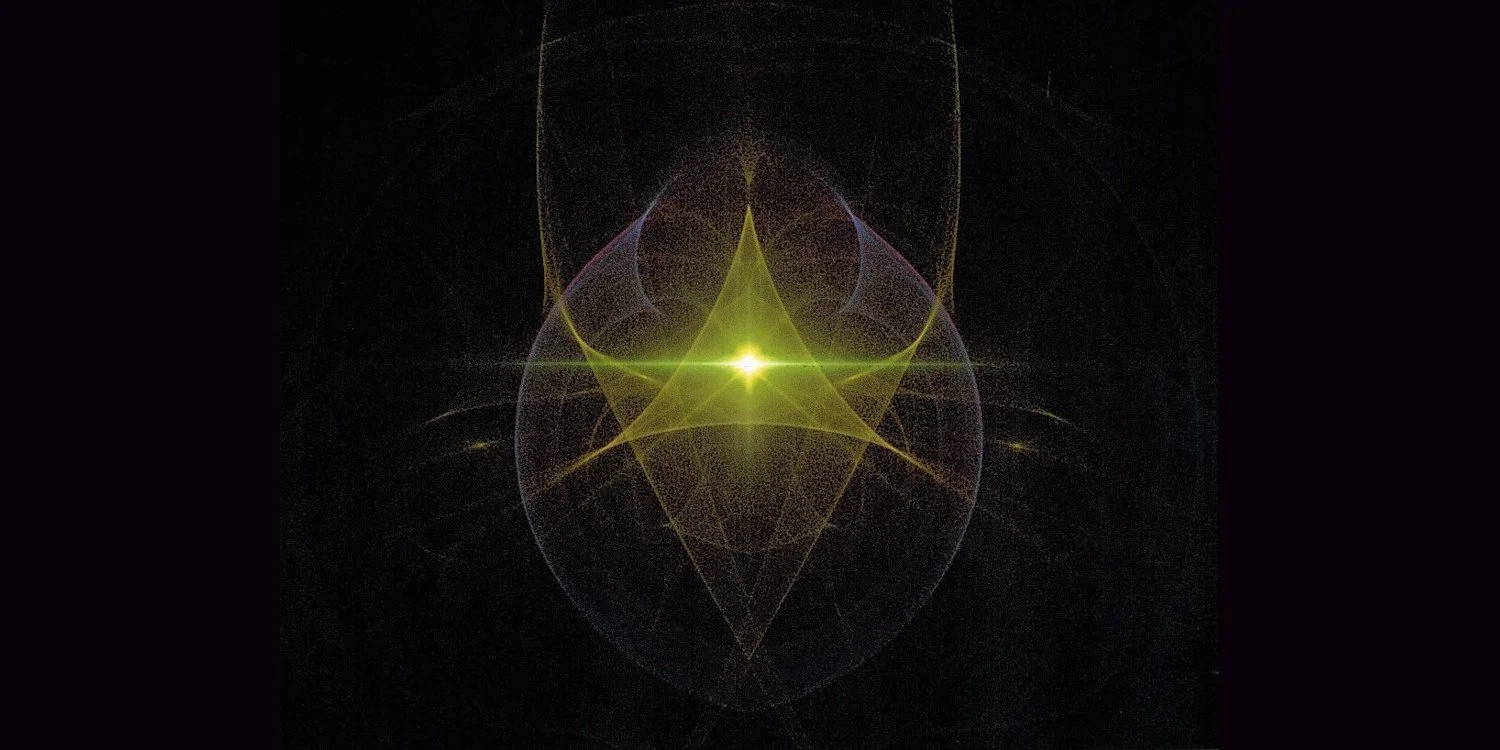
This computer generated image depicts the constellation Triangulum and galaxy RD1, 12.2 light-years billion from Earth, formed in the early period of the Universe after the Big Bang.
3:00 AM in a Dark Prison Cell
I apologize if this gets a little strange. Just before all these clouds gathered on the horizon and our chaotic upheavals took place, I had a mysterious dream. It was early in the morning of October 2, 2016, the day the Church honors our Guardian Angels. Had I ever really believed in them? I do now.
I found myself at 3:00 AM standing and staring into a small stretch of sky that I could see beyond my barred cell window. There was an older man standing with me. I could see Pornchai fast asleep in his upper bunk. The older man was very familiar and someone I felt I implicitly trusted, but I cannot remember what he looked like. That part of the dream was erased when I awakened. He pointed to the sky and asked, “What do you see?”
I said, “I only see the prison lights.” “Look beyond the prison lights,” said the mysterious man. Then in the dream my vision suddenly changed. I was able to see far, far away into the vast darkness, and there in the center of my field of view I saw a constellation, a triangle of three stars. Within the triangle, the stars were joined by streams of glowing light. “It looks like neon,” I said stupidly in the dream. As I have stated elsewhere, we do not own the stupid things we say in dreams. Then the companion said, “Michael dwells within the light.”
It seemed that I stood for a long time, mesmerized by this vision. Then I awakened in my bunk. It was very dark. I got up and walked to the window wondering whether it was a dream or real. I saw only prison lights, but I have since learned to look beyond them. I could not forget the simple statement that “Michael dwells within the light.” I get chills even now thinking about it. Later that morning, I called a friend to search an astronomy database to see if such a triangular constellation even exists. This was what was sent to me:
“1998 — The Most Distant Object Yet Discovered: Astronomers have stumbled upon the most distant galaxy ever found, an object 12.2 billion light-years from Earth. It was announced on March 12, 1998. A light-year is the distance that light travels in a year. The speed of light is 186,000 miles per second. So a light-year is a distance of 5.88 trillion miles. The distance of this object in miles is that times 12.2 billion. [Good luck with the math! And please don’t ask me to convert this to the metric system.]
“A team of scientists led by astrophysicist Arjun Dey of Johns Hopkins University, was analyzing the light from a distant galaxy inside the Constellation Triangulum when they noticed the spectral signature of a faint and far more distant galaxy at its center. By taking longer exposures with the Keck-II telescope they were able to identify the new galaxy which is 90 million light-years farther away than the previous most distant galaxy ever discovered.” [They called it RD1.]
“Based on knowledge that the universe is approximately 13 billion years old, “RD1” was formed soon after the Big Bang gave birth to the universe. By studying it, astronomers hope to learn how and when the earliest galaxies formed. Little is currently known about these early galaxies. A report on the discovery was accepted for publication in the Astrophysical Journal Letters.”
This, of course, rocked my world. You might recall from my recent post, “Fr Georges Lemaître, the Priest Who Discovered the Big Bang,” cowritten by me and priest and physicist Father Andrew Pinsent, that the Church and science are on the same page about the origin of the Universe in an instant, “out of nothing.”
I have recently undertaken a study of Saint Agustin’s 1,200-page treatise The City of God. A major feature in it is Saint Agustin’s revelation of Creation and the Angelic Realm. In the Fifth Century, Saint Augustine proposed that in the Genesis story of Creation, God’s declaration of “Let there be light” (Genesis 1:3) was the moment the angels were created. In the next verse (Genesis 1:4), God separated the light from the darkness. For Augustine, this was the moment the fallen angels were driven from Heaven by Saint Michael in the battle of the Heavenly Hosts.
This all left me with a profound sense that our stories are not just our own, nor are our struggles or pain. We are a collective part of an immense fabric God has woven toward a specific end. And we have allies who connect with us within the threads:
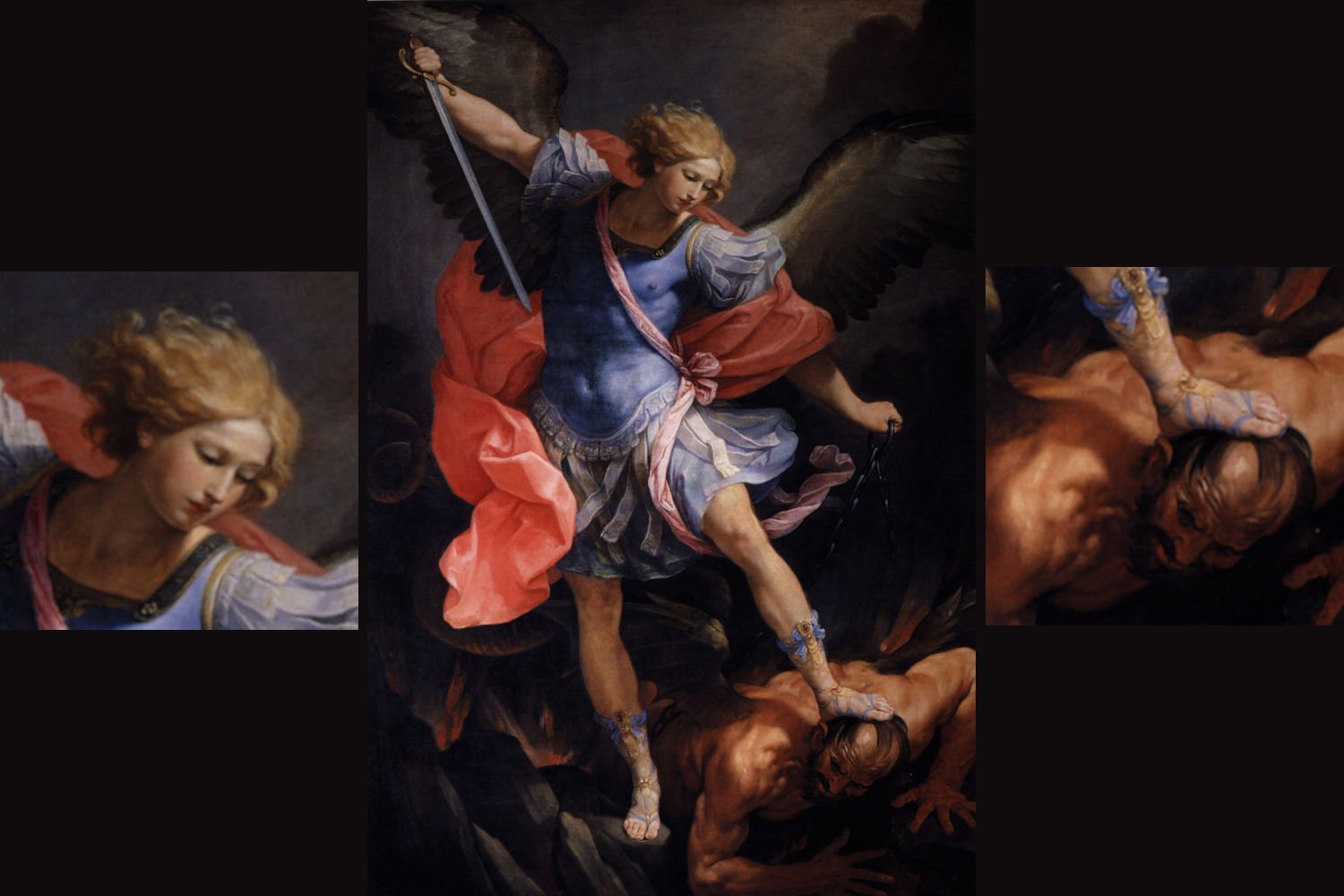
Prayers to the Archangels in Times of Spiritual Battle
🙏 🙏 🙏
TO MICHAEL
Most glorious prince of the heavenly armies, Saint Michael the Archangel, defend us in our battle against principalities and powers, against the rulers of this world of darkness, against the spirits of wickedness. Corne to the assistance of man whom God has created to His likeness, and whom He has redeemed at a great price from the tyranny of the devil. Holy Church venerates you as her guardian and protector. To you the Lord has entrusted the souls of the redeemed to be led into heaven. Pray therefore the God of peace to crush Satan beneath our feet, that he may no longer hold us captive and do injury to the Church. Offer our prayers to the Most High, that without delay they may draw His mercy down upon us. Take hold of the dragon, that ancient serpent which is the devil and Satan. Bind him and cast him into the abyss so that he may no longer seduce the nations.
🙏 🙏 🙏
TO GABRIEL
Saint Gabriel the Archangel, we beseech you to intercede for us at the throne of Divine Mercy. As you announced the mystery of the Incarnation to Mary, so through your prayers may we receive strength of faith and courage of spirit and thus find favor with God and redemption through Christ our Lord. May we sing with the angels and saints in Heaven forever the praise of God our Savior through your Annunciation: “The Word was made flesh, and dwelt among us.”
🙏 🙏 🙏
TO RAPHAEL
O Raphael the Archangel, lead us toward those we are waiting for, those who are waiting for us. Raphael, Angel of happy meeting, lead us by the hand toward those we are looking for. May all our movements be guided by your light and transfigured with your joy. Angel, guide of Tobias, lay the request we now address to you at the feet of Him whose unveiled face you are privileged to gaze. Lonely and tired, crushed in spirit by the separations and sorrows of life, we feel the need of calling to you and pleading for the protection of your wings so we may not be as strangers in the province of joy. Remember the weak, you who are so strong, you whose home lies beyond the region of thunder in a land that is always at peace, bright with the resplendent glory of God.
+ + +
To learn more about the Angelic Realm Beyond These Stone Walls please visit these related posts:
Angelic Justice: Saint Michael the Archangel and the Scales of Hesed
St. Michael the Archangel and the Scales of Our Salvation
The Annunciation: When the Dawn from On High Broke Upon Us
Book of Tobit: The Angel Raphael on the Road with Pornchai Moontri
Saint Michael the Archangel Contends with Satan Still
📢 📢 📢
To follow Beyond These Stone Walls in the public square, subscribe on this site or follow @TSWBeyond on X.
📢 📢 📢

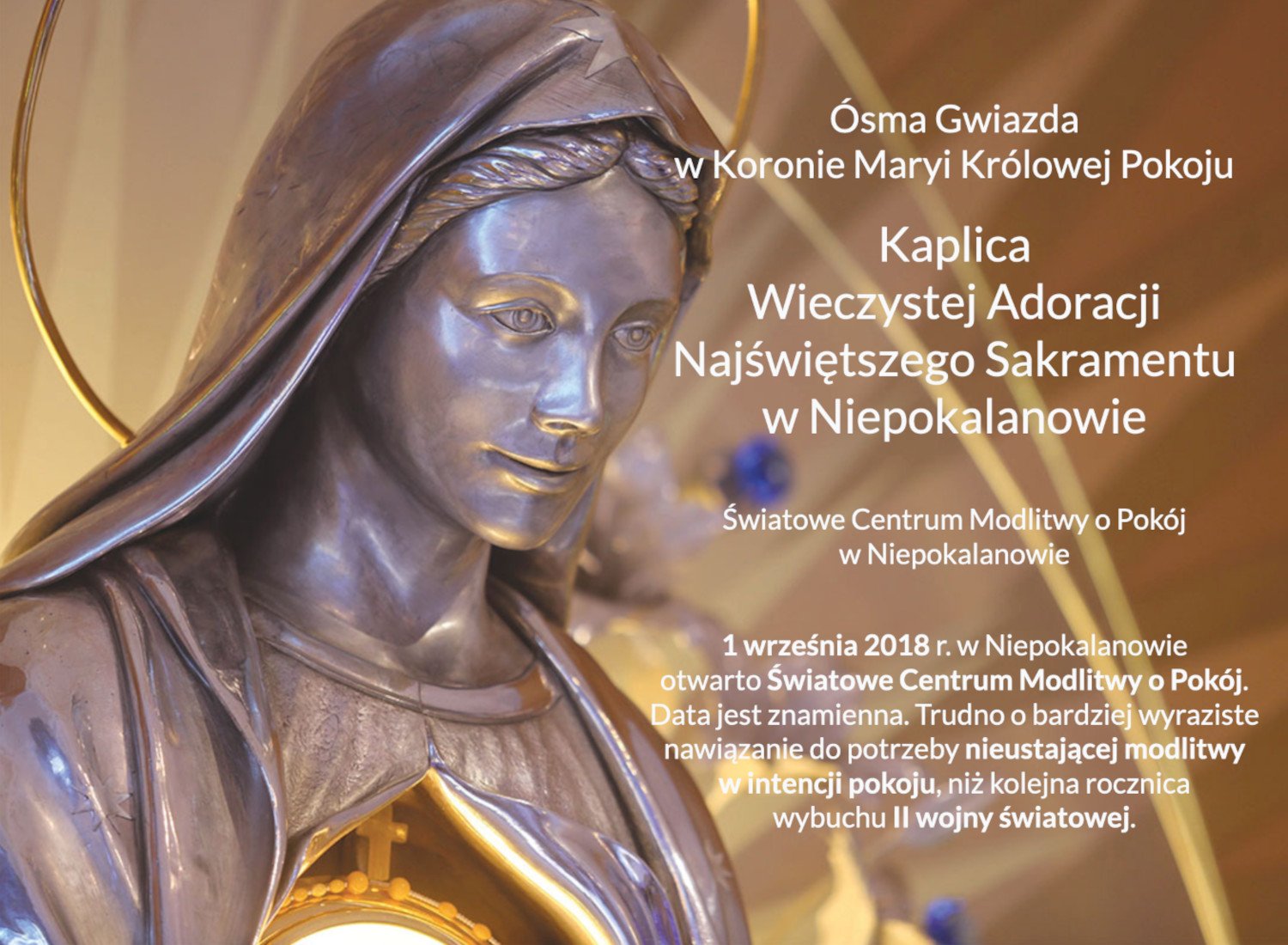

The Eucharistic Adoration Chapel established by Saint Maximilian Kolbe was inaugurated at the outbreak of World War II. It was restored as a Chapel of Adoration in September, 2018, the commemoration of the date that the war began. It is now part of the World Center of Prayer for Peace. The live internet feed of the Adoration Chapel at Niepokalanow — sponsored by EWTN — was established just a few weeks before we discovered it and began to include in at Beyond These Stone Walls. Click “Watch on YouTube” in the lower left corner to see how many people around the world are present there with you. The number appears below the symbol for EWTN.
Click or tap here to proceed to the Adoration Chapel.
The following is a translation from the Polish in the image above: “Eighth Star in the Crown of Mary Queen of Peace” “Chapel of Perpetual Adoration of the Blessed Sacrament at Niepokalanow. World Center of Prayer for Peace.” “On September 1, 2018, the World Center of Prayer for Peace in Niepokalanow was opened. It would be difficult to find a more expressive reference to the need for constant prayer for peace than the anniversary of the outbreak of World War II.”
For the Catholic theology behind this image, visit my post, “The Ark of the Covenant and the Mother of God.”
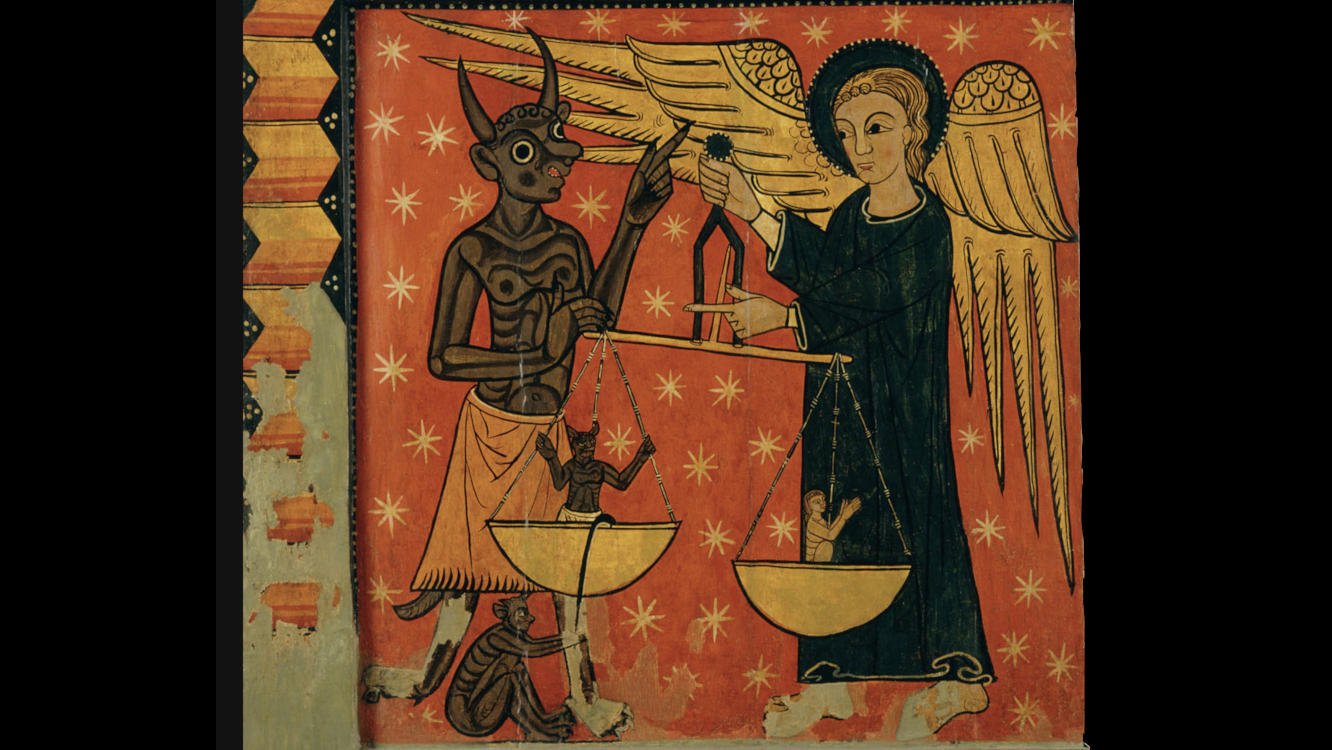
Don’t Let the Noonday Devil Tip the Scales
Anyone who has experienced the grip of depression knows it is a spiritual disease as much as it is mental and physical. Is there a spiritual path out of the dark night?
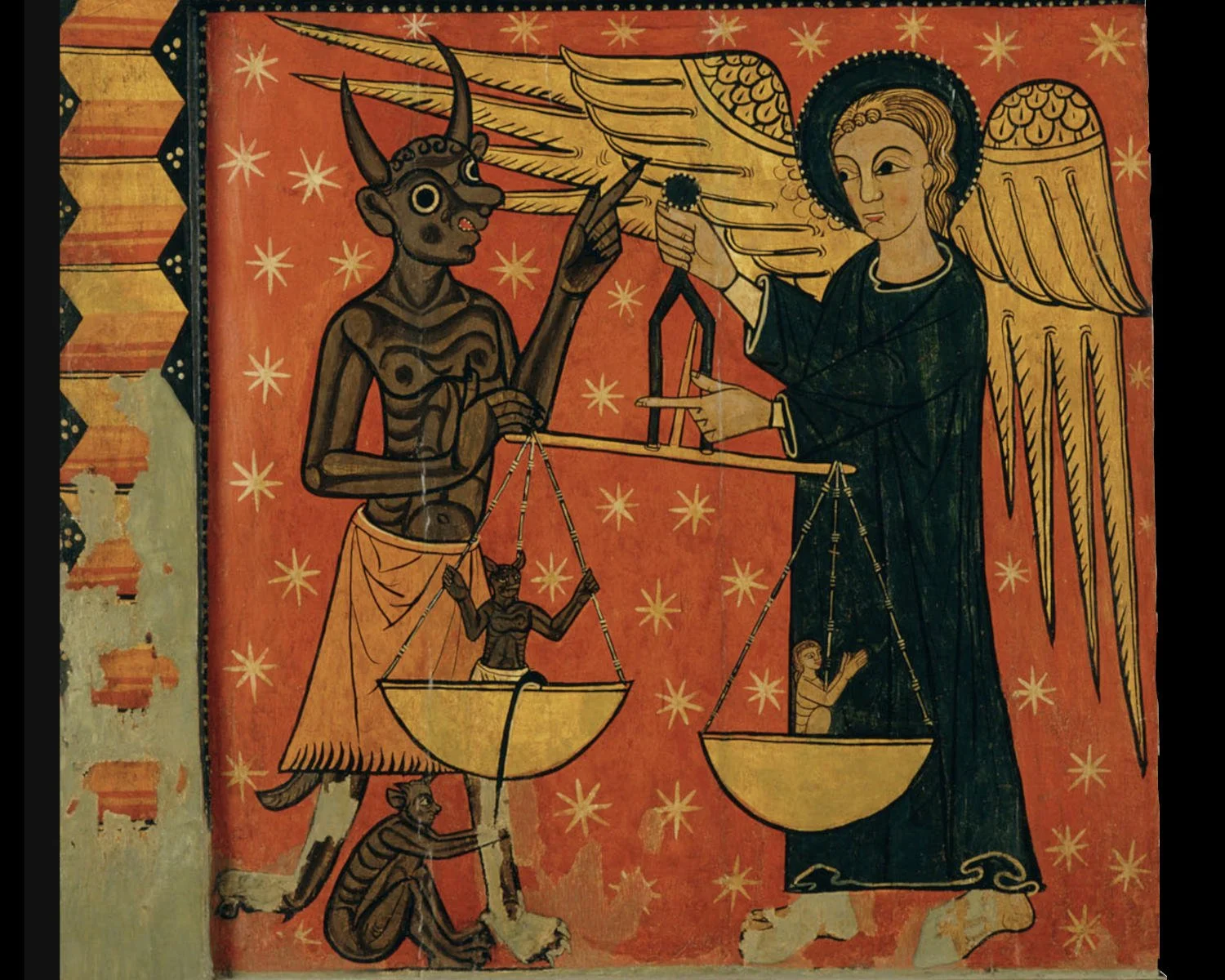
Anyone who has experienced the grip of depression knows it is a spiritual disease as much as it is mental and physical. Is there a spiritual path out of the dark night?
There is an old and wise foreboding in Catholic monastic traditions to “Beware the Noonday Devil.” That was also the title of an excellent 2007 post by Father Paul Scalia at Catholic Exchange. For monks who arose in the night for the Divine Office prayer of Matins, and then arose again early in the morning for Lauds, the noonday period sometimes induced lethargy and sloth that left monks in the grip of depression. Noonday with its exhaustion and malaise was seen as a spiritually vulnerable time. Thus in monastic life depression came to be known as “the noonday devil.”
Support for the monastic concern was also found in Sacred Scripture, notably in the Gospel: “Keep awake, therefore, for you do not know on what day your Lord is coming” (Matthew 24:42). An admonition of Saint Peter warns us to “Stay sober and alert for your opponent the devil is prowling like a roaring lion looking for someone to devour” (1 Peter 5:8). Psalm 91, my favorite of the Psalms, addressed the noonday dread more directly:
“You will not fear the terror of the night, nor the arrow that flies by day, or the pestilence that stalks in darkness, or the destruction that lays waste at noonday.”
— Psalm 91:5-6
For anyone who has ever suffered from chronic depression, Saint Peter’s characterization of “a roaring lion looking for someone to devour” pretty much captures it. So does the Psalmist’s “the destruction that lays waste at noon.” As Holy Week approached this year, I began to look at how I could challenge my own occasional depression. Then I decided to make a post of it, and invite others to join this battle.
First, however, if you are prescribed medication for depression, don’t give that up for Lent! I can offer no medical expertise for treating the insidious disease of depression, but I do have some hard-won experience on depression’s spiritual toll. I can also offer some of the spiritual guidance that, for me, at least, has proven effective in taming this roaring lion for it has devoured me too often. I’ve learned an important truth about coping with depression in my current milieu, but that lesson begins with a painful and depressing story.
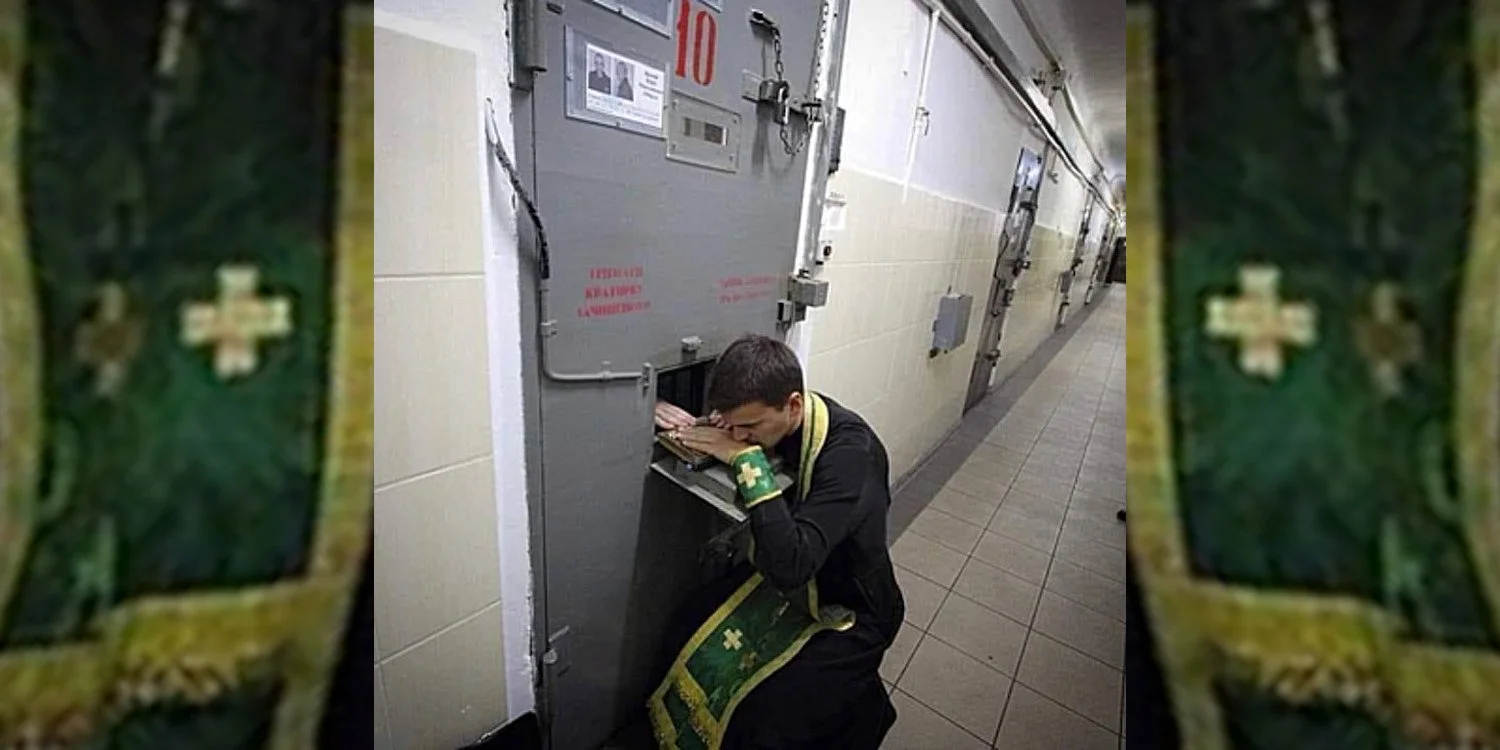
Solitary Confinement
Several years ago, when our friend Pornchai Max Moontri was still here with me, I was lying in my bunk one night at 10:00 PM. My little television was tuned to a PBS station. I was just about to turn it off when an episode of PBS Frontline began. “It’s like being buried alive,” I heard a shaky voice say. “It makes you mean; it makes you violent, it [expletive’s] up your head,” said another. Added a third, “If you don’t have a strong mind, this place can break you quick.”
Then a somber voice introduced Rodney Bouffard, Warden of Maine State Prison’s “supermax” unit who said, “You can have them do their whole time in segregation, but I don’t want him living next to me when you release him.”
I suddenly realized that I was about to see a Frontline production about the solitary confinement“supermax” unit of the Maine State Prison where Pornchai Moontri spent thirteen years before being transferred to the New Hampshire prison where we met and became unlikely friends. As Frontline introduced the story, Pornchai was fast asleep in his bunk just a few feet above me. I pondered for a moment whether to awaken him, and then decided against it.
Each night at 9:00 PM, Pornchai was given medication for a diagnosis of acute anxiety and Post Traumatic Stress Disorder. The meds generally sent him into a deep sleep by 10:00 PM on every night except Sunday when he struggled to remain awake for Mass in our cell. So I decided to brave Frontline’s “Solitary Nation” alone and then tell him about it the next day. By the time it was over, Pornchai remained fast asleep while I spent much of that night in a state of restless horror.
The Frontline cameras spent six months filming in a place rarely seen by the public. I followed the plight of a few Maine prisoners who spent months at a time in and out of solitary confinement, rendered, as the Warden predicted, socially disabled and emotionally broken because of their months in solitary. One prisoner who spent a year there in one stretch was the one quoted above who described how it made him mean, violent, and broken.
As the documentary unfolded, I saw prisoners covered in blood having cut themselves in their solitary madness. I saw fecal matter come flying out the food slots in the cell doors during fits of anger toward guards. I watched the horror of a screaming young man being placed for the first time in one of those bloodstained and horribly smelling tombs. I saw men so broken and mentally ill by the time they moved on that I knew they could not last long out among the living, only to land in solitary again.
Then I recalled that Pornchai spent a total of over thirteen years there, confined in one stretch of solitary confinement for three-and-a-half years in what had to be the longest any prisoner survived in Maine’s supermax. I could conceive of no modern horror more destructive to one’s humanity than what I witnessed on that small screen. The fact that I was seeing for the first time the conditions Pornchai lived in, and still lives with, made me unable to turn away or turn it off.
I remember reading Pornchai’s somber details in “Welcome to Supermax,” a courageous article he wrote years ago published by the prison reform organization, Solitary Watch. I knew Pornchai never exaggerated any of his experiences there, but articles can be easy to intellectualize. Now I had a visual to go along with it, and it woke me up to the bitter reality of what had happened to him.
It was important that I understand this. If you want to understand it as well, I recommend viewing “Solitary Nation” at PBS.org. In the morning when I told Pornchai about this he said simply, “Now you know.”
The human mind tends to store up its traumas. Because we do not know how to cope with them, we just shelve them away where they remain unaddressed, unresolved, and gradually inflated. We relive them again and again to inflict their suppression of all consolation and peace in our psyche.
When I look back over the years since Pornchai was moved from there to here with me, I can see more clearly now that he came back from the brink of total despair. Pornchai himself wrote about this. It was after our entire nation suffered trauma in Uvalde, Texas. In a mirror image version of that story in Thailand, a former police officer off the rails on drugs went into a Thai preschool and murdered 36 people including 24 preschool children. It was one year after Pornchai returned to Thailand after a 36-year absence. Nothing like this had ever happened in Thailand before, and it happened just a few kilometers from the village where Pornchai was born. As the Kingdom of Thailand struggled to find meaning in any of this, Pornchai boldly wrote about it and what he wrote helped to mend many hearts (including mine). His post was “Pornchai Moontri: Elephants and Men and Tragedy in Thailand.”
When Pornchai first arrived here after solitary confinement in the State of Maine, I met him for the first time in the prison dining hall. One of my friends, Jaclan Wawarunto, a young man from Indonesia whom I had helped to prepare for deportation, saw me enter the dining hall and shouted “Hey, G, sit over here with us. This is my new friend Pornchai. He just got here, and he wants to ask you a question.” So I sat across from them. The young man Jaclan wanted me to meet appeared hostile. He glared at me as he said, “I just want to know if you can help me get transferred to a prison in Bangkok.” Ironically, I had just finished reading 4,000 Days, a book about the horror of life in a Bangkok prison. I told him that I would not help him do anything that would only destroy him. He turned to Jaclan angrily and asked, “Who is this jerk?”
That was our first encounter.
When Pornchai and I first became friends in 2006, he had periods in which he sank into deep, hopeless depression. I remember one day that his cellmate at the time came to me and said, “I don’t know what to do. He hasn’t spoken or eaten or even gotten out of bed in days except to use the bathroom.” That was many years ago. I remember going to talk with Pornchai, and feeling very concerned about the lifeless expression and hopelessness in his face. It is a common look in prison, but Pornchai had perfected it. So I told him that I was not leaving his cell “until you get your butt out of that bunk and talk to me.” He obliged, but only to get rid of me. The anger in his eyes masked deep, deep chasms of pain and distrust born of betrayal and abuse.
Over the long run, as you know if you have been reading from Beyond These Stone Walls, friendship found a well of trust, and then a source of hope, and then the courage to have faith, and then the discovery of Divine Mercy and, finally, a radical conversion. All these years later, it seems impossible to reconcile the account above with the face of Pornchai Moontri at his 2012 high school graduation in prison, it radiates hope and promise and redemption.
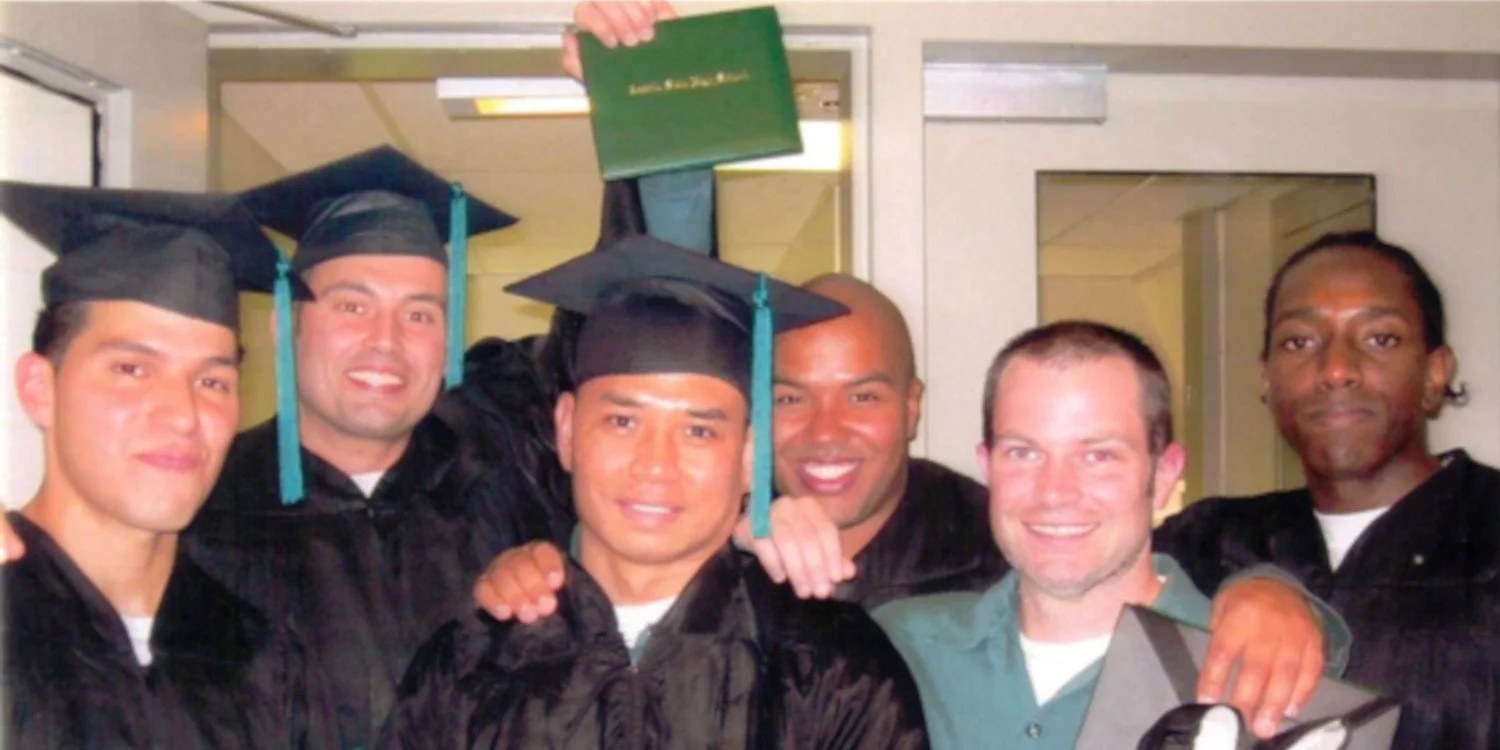
The Destruction That Lays Waste
How does one go from years of abuse, followed by years of brutal solitary confinement in a supermax prison to that? The question becomes ever more mysterious if you watch the Frontline video. As Pornchai himself described that transformation, “I woke up one day with a future when up to then all I ever had was a past.”
Some years ago, as seems inevitable in prison, I sank into a depression of my own. Actually, I have noticed that every time I have become depressed in prison, it was always a result of thinking myself into the depression. Feelings of hopelessness and futility crept in, and as I dwelled on them, I played their messages over and over in my mind, filling up all the empty moments with my inner language of injustice and resentment.
I always ended up on the slippery slope toward a bout of depression. Few of my episodes lasted long, but at some point, the destruction that laid waste came from inside my own mind, and left me unprepared to stand my ground. It was precipitated by a visit from my bishop, the first after many years of silence, and presumably the last.
The visit was far from transcendent. Every attempt I made to speak in my own defense was rebuffed and silenced with the raising of his hand to stop me from speaking. He was clearly not there to listen. It became clear to me that the script had already been written, and Church officials would continue to refuse to allow any defense, any due process. At the same time, an American cardinal assured writer, Ryan A. MacDonald that every accused American Catholic priest is afforded due process and a full canonical defense. The disconnect between rhetoric and reality is… well… depressing!
As I sank into my own depression, I became oblivious — as the noonday devil often demands — to its effect on others. Then one day I witnessed something I had not seen for a long time in the face of my friend, doubt, uncertainty, and grief. Pornchai’s own bouts of suffering from deeply felt discouragement and abandonment had diminished. Now he was suffering from mine. As my spirit slowly descended, I came to see that I could not afford to let it fall any further. I was losing my grip not only on my own cross, but also on someone else’s. Just imagine Simon of Cyrene letting that happen.
Our Editor at the time sent me a message that she had ordered a book for me. I doubted I would ever see it as most books sent to me require that I give one up to receive it, and that is sometimes difficult. Without a hitch, however, the book arrived, and it is a treasure. The book was The Catholic Guide to Depression by Aaron Kheriaty, MD, with Father John Cihak, STD (Sophia Press, 2012). I had a chuckle because our Editor at the time was in Australia from where she ordered the book, while Sophia Press its publisher was but 15 miles away from me in Manchester, New Hampshire. When I first opened the book, I landed immediately on a page I believe I was meant to read.
“The well-known psychiatrist Viktor Frankl observed that hope is essential if one is to go on living under difficult circumstances. Frankl was a Jew imprisoned in Auschwitz who years later wrote his most famous work, Man’s Search for Meaning… . Frankl argued that survival in such circumstances required that a person find some meaning, some noble end or purpose to his life.”
— The Catholic Guide to Depression, p. 210
This blog began in 2009 with that same book, Viktor Frankl’s, Man’s Search for Meaning. In a subsequent post for this blog, I wrote back then of how it led me to this great modern Saint of Auschwitz, how it taught me to cope with the prison of depression and despair by placing the pain of others ahead of my own, and of how Pornchai, moved by Saint Maximilian’s sacrifice, took his name at the time of his Divine Mercy conversion in 2010. I wrote of how finding meaning in his suffering transformed Saint Maximilian Kolbe, and ultimately transformed us in my post, “Saint Maximilian Kolbe and the Gift of Noble Defiance.”
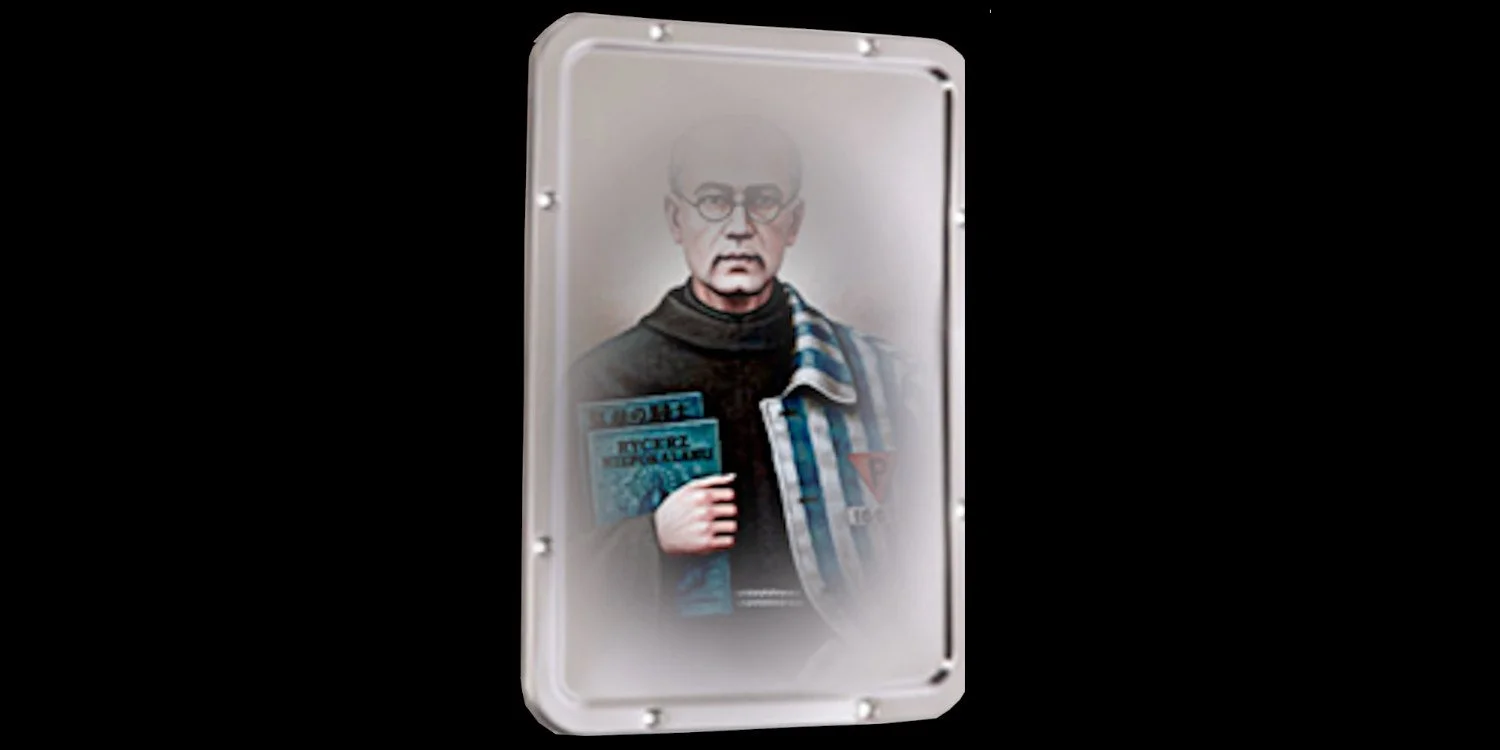
Saved by Hope
I found it astonishing that both Viktor Frankl and Aaron Kheriaty, MD went on in their respective books to cite Saint Maximilian Kolbe as an example of the virtue of hope lived for the good of others. “Hope is a virtue that changes everything,” Dr. Kheriaty wrote. He quoted Pope Benedict XVI in his magisterial encyclical, Spe Salvi, Saved by Hope: “The one who has hope lives differently.”
Around the time I was first encountering Dr. Kheriaty’s book, Pornchai Moontri and I were in the prison’s main dining hall for dinner. It was unusual that we were there at a time when it was especially crowded. We managed to find a table with two empty seats, but quickly other tables all filled up with several prisoners standing and holding their trays while looking for a seat. Suddenly one of the men sitting with us got up and left while one of the waiting inmates quickly moved into his empty seat. We did not know this person, and he did not speak at first. So Pornchai and I just continued our conversation. Suddenly this young man looked very interested. He said, “Excuse me, can I ask you guys a question?” I said, “Sure.” He asked, “Do you write for a blog?” And then to Pornchai he asked, “Are you from Thailand?” Most prisoners would find this very invasive, but we did not. The young man said that he had arrived in the prison only a few weeks earlier, but before his arrival, while being sentenced was still a looming threat, he was visited in a county jail by his grandmother. She told him that she had been reading about two guys in the New Hampshire Prison “who lived differently from everyone else.” The young man said, “You guys are famous! My grandmother won’t believe I met you.”
So Pornchai invited him to the Catholic Mass in the prison chapel. This was sadly in the days before Covid and before any sign of a Catholic Mass was extinguished. But our association with this young man gave him hope, something he expressed to us with gratitude as he was preparing to leave prison two years later.
Only by failing to instill hope in others can the roaring lion of depression ever devour you. Once such a thing takes place, there is no room for depression. It loses its will to feed itself, and ceases its descent. Saint Maximilian gave his life because he found a suffering greater than his own, and that became his cross, willingly borne.
The key to coping with depression is to become Maximilian Kolbe, to bear the cross of another, never putting it down long enough to make room for self-absorption. It gives birth to hope, and “the one who has hope lives differently.” It’s what places you, as Psalm 91 promises, “In the shelter, of the Most High, abiding in the shadow of the Almighty,” a worthy destination for a Lenten journey.
+ + +
Editor’s Note: Dr Aaron Kheriaty has a one-hour video about coping with depression. The setting was an interview at Franciscan University in which he discusses the major points of A Catholic Guide to Depression.
+ + +
Note From Father Gordon MacRae: Thank you for reading and sharing this post. Sharing it on social media may place it before someone who really needs to read it. You may also like these related posts from Beyond These Stone Walls:
Pornchai Moontri: Elephants and Men and Tragedy in Thailand
Saint Maximilian Kolbe and the Gift of Noble Defiance
The Measure By Which You Measure: Prisoners of a Captive Past
The Eucharistic Adoration Chapel established by Saint Maximilian Kolbe was inaugurated at the outbreak of World War II. It was restored as a Chapel of Adoration in September, 2018, the commemoration of the date that the war began. It is now part of the World Center of Prayer for Peace. The live internet feed of the Adoration Chapel at Niepokalanow — sponsored by EWTN — was established just a few weeks before we discovered it and began to include in at Beyond These Stone Walls. Click “Watch on YouTube” in the lower left corner to see how many people around the world are present there with you. The number appears below the symbol for EWTN.
Click or tap here to proceed to the Adoration Chapel.
The following is a translation from the Polish in the image above: “Eighth Star in the Crown of Mary Queen of Peace” “Chapel of Perpetual Adoration of the Blessed Sacrament at Niepokalanow. World Center of Prayer for Peace.” “On September 1, 2018, the World Center of Prayer for Peace in Niepokalanow was opened. It would be difficult to find a more expressive reference to the need for constant prayer for peace than the anniversary of the outbreak of World War II.”
For the Catholic theology behind this image, visit my post, “The Ark of the Covenant and the Mother of God.”