“There are few authentic prophetic voices among us, guiding truth-seekers along the right path. Among them is Fr. Gordon MacRae, a mighty voice in the prison tradition of John the Baptist, Maximilian Kolbe, Alfred Delp, SJ, and Dietrich Bonhoeffer.”
— Deacon David Jones
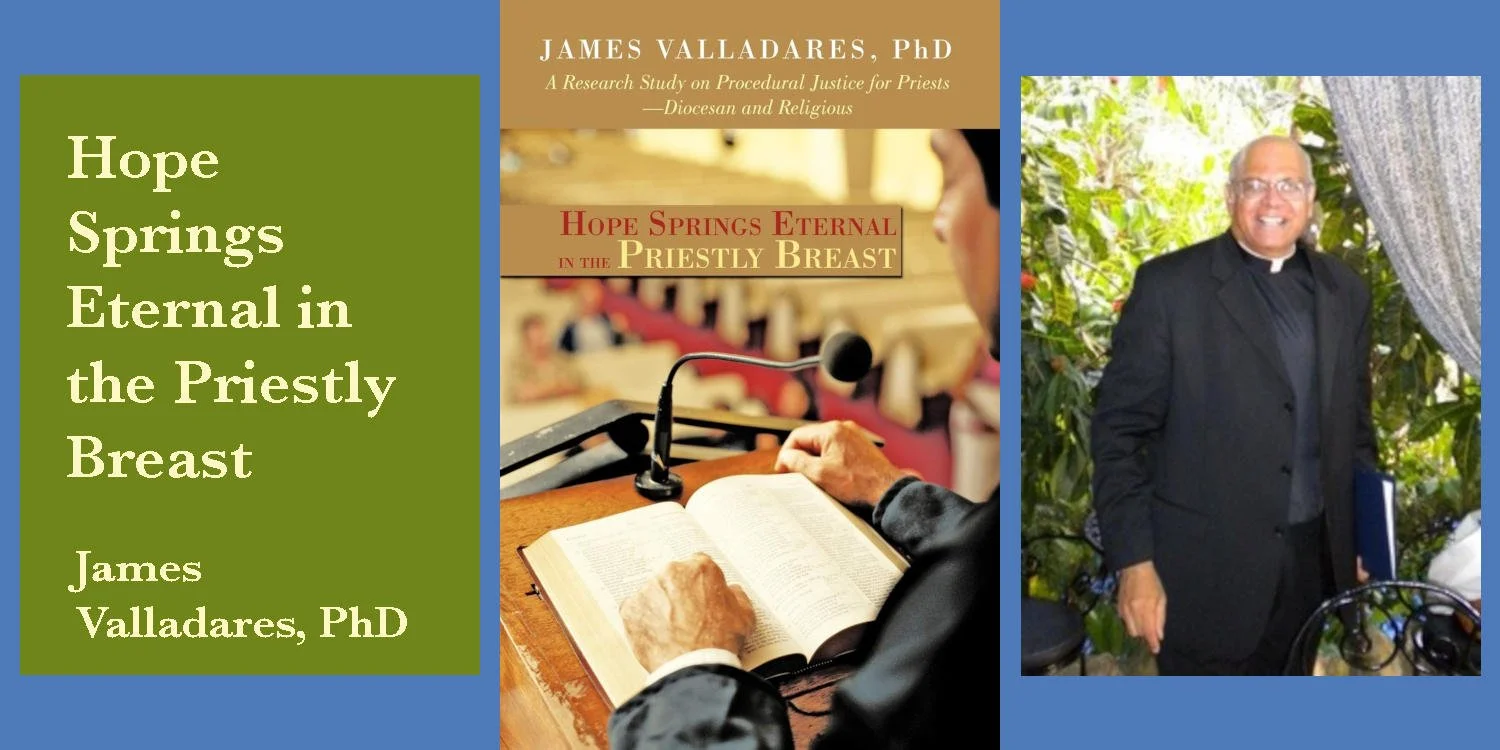
Illumination from Down Under: Hope Springs Eternal in the Priestly Breast
A well researched book by Fr. James Valladares casts light on the case of Fr. Gordon MacRae and the state of due process for Catholic priests falsely accused.
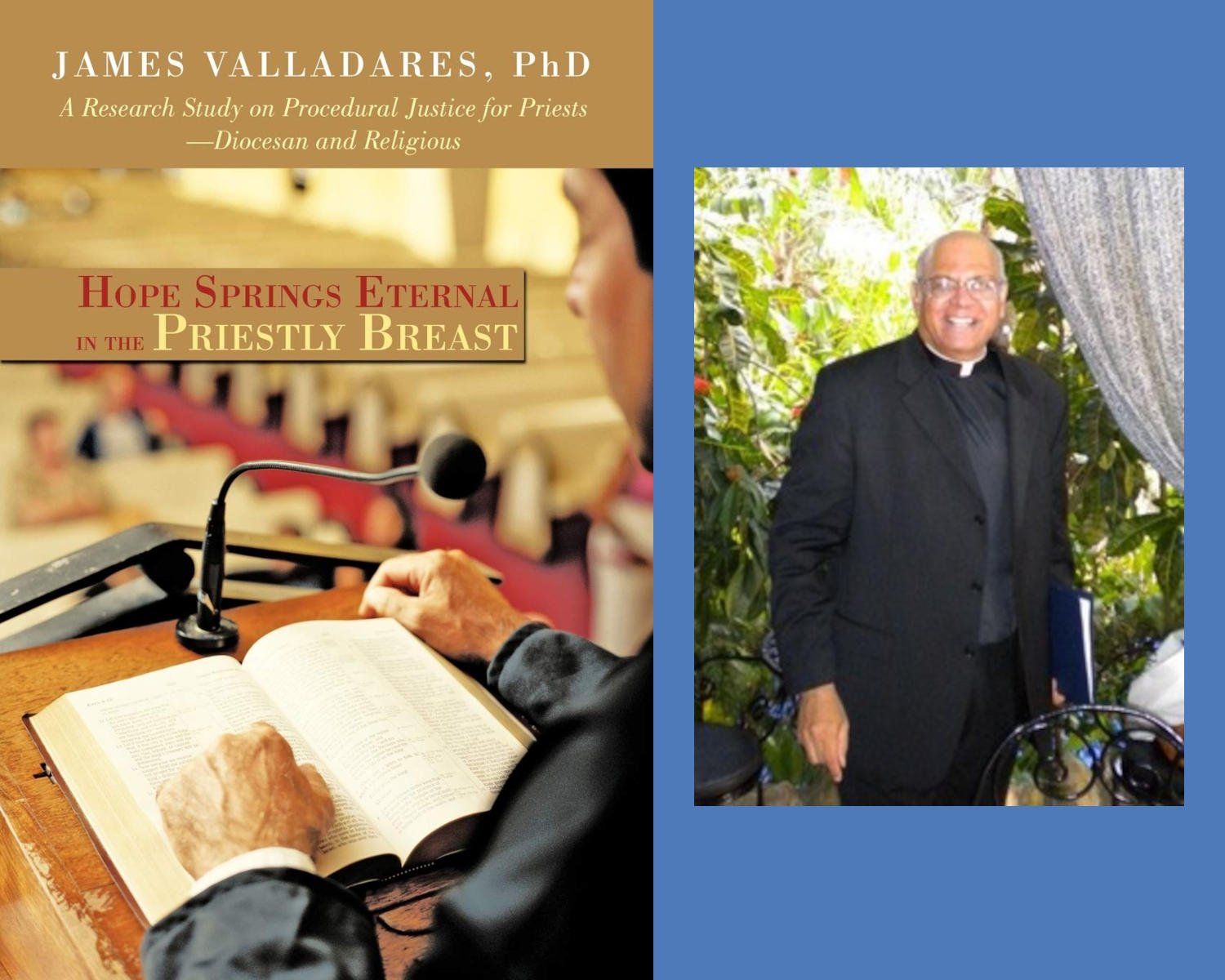
A well researched book by Fr. James Valladares casts light on the case of Fr. Gordon MacRae and the state of due process for Catholic priests falsely accused.
October 8, 2025 by Father Gordon MacRae
Abraham Lincoln once told a story about a man who traveled along a backwoods road on a dark and stormy night. After several claps of earth-shaking thunder in the blackness, with just the occasional flash of lightning to show him he was still on his path, the man issued a plea: “Lord, if it’s all the same to Thee, a little less noise and a little more light, please.”
I have been making that very same plea for over three decade now. It resonates clearly in my post, “When Priests Are Falsely Accused: The Mirror of Justice Cracked” and other more recent posts such as, “Unjustly in Prison for 30 Years: A Collision of Fury and Faith.” Those two posts are separated by twenty years, and their litany of woe has not evolved so much. When I wrote back in 2010, I felt very much alone on that dark and noisy path hoping that someone might come along with some light amid all the hype.
The sexual abuse crisis in the Catholic priesthood has generated so much pointless, noisy emotional rhetoric that light has become a precious and rare commodity. The “zero tolerance” policy of the U.S. Bishops’ panic-driven 2002 Dallas Charter added no light at all, but only turned up the volume on corrupt voices like the ones I described in “David Clohessy Resigned SNAP in Alleged Kickback Scheme.” In these decades of scandal, many Catholics have been duped. The crisis has been used by some very noisy people to silence a Catholic voice in the public square. And there are still no shortage of voices trying to silence Catholic justice in the public square.
In all times of moral panic, however, no amount of noise will dissuade a few courageous voices from the truth, no matter how much that truth is suppressed. One of these voices to emerge with full and reasoned Catholic courage is David F. Pierre, Jr., publisher of TheMediaReport.com and author of several landmark books including Catholic Priests Falsely Accussed: The Facts, The Fraud, The Stories.” We profiled this and several other of David Pierre’s work and his exposure of corruption in coverage of the Catholic scandal in “Hidden Evil: The Anti-Catholic Agenda of BishopAccountability.org.”
There is another, and his voice of priestly courage and fidelity rose up on the opposite side of the world in Australia, a land not unfamiliar to scapegoating a falsely accused and wrongly imprisoned priest, this time in the person of the late Cardinal George Pell. Father James Valladares, a priest, psychologist and noted author in Australia, published the compelling book, Hope Springs Eternal in the Priestly Breast (iUniverse 2012). Catholics concerned about the downward spiral of justice and public discourse in the Catholic Church would do well to read this book. (Twelve years after its first publication it is available as an e-book for $3.99, less than the price of a BigMac, and much more nourishing.) I recommend it for priests, bishops, and all Catholics who have felt demoralized by the contentious and confrontational tone constantly aimed at the Church and priesthood in the last three decades. I received my copy some years ago, and have recently been re-reading it for the moral and spiritual boost it brings. I was stunned by this courageous book.
Before I describe it further, however, we need some full disclosure. I am in this book. In fact, I am in this book extensively, and so is Beyond These Stone Walls. I find it very difficult to write about a book that I am in. Father James Valladares did his homework, and he did it well. His book exposes aspects of my story that made me tremble. I read it through two consecutive sleepless nights that left me spiritually and emotionally propelled in my priesthood, even in unjust imprisonment. It helped me to understand that I did not become a priest 43 years ago just to start thinking of myself when the world fell under my feet. It was not because the author framed my case as a justice crisis for the courts, but rather as a greater and more crucial justice crisis for the Church.
Father Valladares is the very first writer to accomplish this nebulous task, and he did it with amazing clarity and courage. In the end, I am not certain whether it should encourage me or frighten me. Not even I — after living in this nightmare for three decades — had a full understanding of the implications for the Church and priesthood that Father Valladares laid out so masterfully.
In Hope Springs Eternal in the Priestly Breast, Father James Valladares has excised these wounds upon the Church and priesthood with impeccable credentials in developmental, educational, and counseling psychology. Having served as a lecturer in psychology at Saint Andrew’s College in Mumbai, India, he has completed extensive post-doctoral research in religion, healing, and parenting. Father Valladares serves in the Archdiocese of Adelaide, Australia.
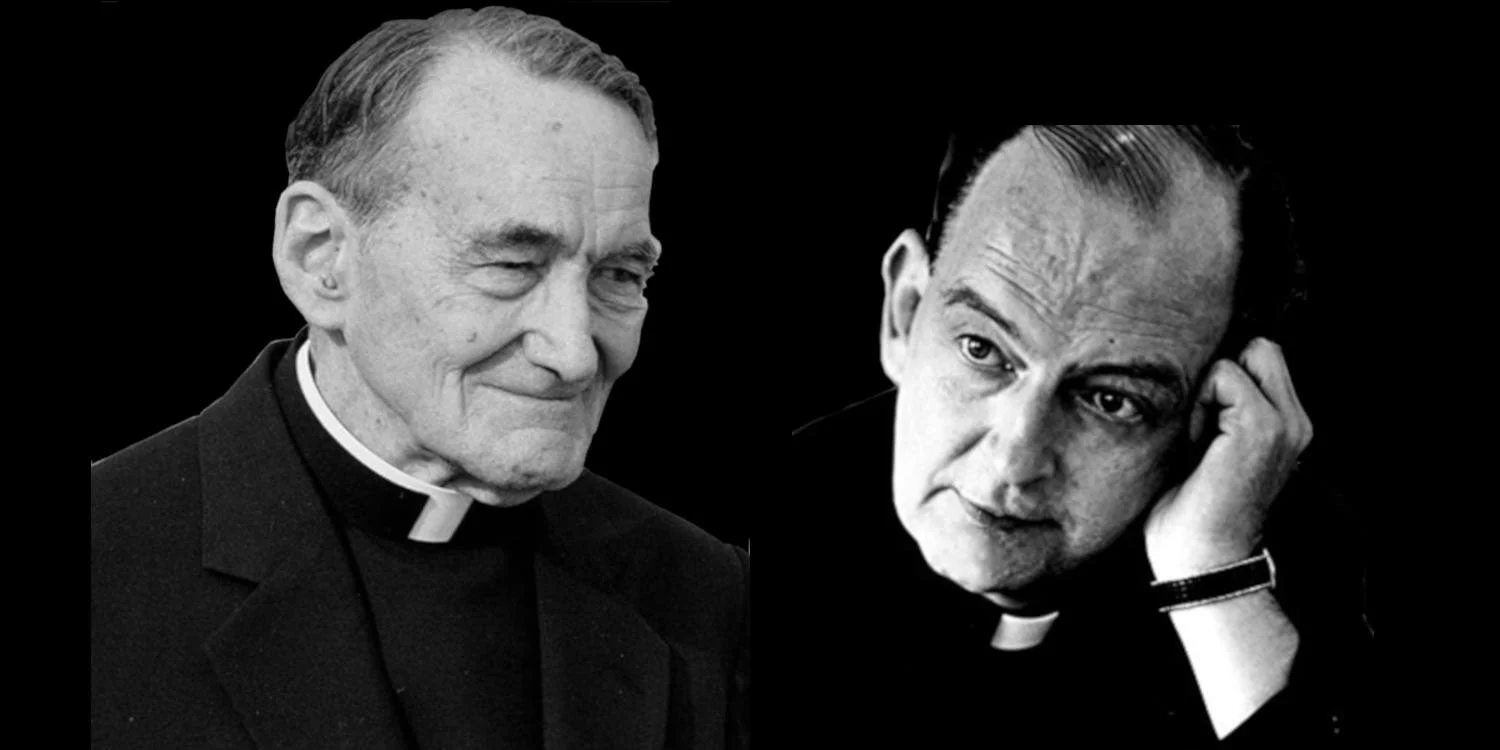
Channeling Father Neuhaus and Cardinal Dulles
As I have written many times before, I am no strong believer in random coincidence. I picked up for the second time Hope Springs Eternal on May 14, the Feast of Saint Matthias, the man chosen by the Apostles to replace Judas, the Betrayer (Acts 1:26). I also was aware that May 14 was the birthday of my late great good friend Father Richard John Neuhaus, one of the inspirations behind Beyond These Stone Walls and forever remembered as a priest who served the Catholic Church in North America with exceptional light, clarity and fidelity. Another is Cardinal Avery Dulles, to whom I owe the idea of Beyond These Stone Walls’ existence. Both are cited and quoted repeatedly by Father James Valladares in Hope Springs Eternal in the Priestly Breast.
I had been reviewing excerpts of Father Neuhaus’ prophetic collection of essays, “Scandal Time,” about the priesthood crisis published in First Things magazine. On May 14, I had been reading an essay by Fr. Neuhaus entitled “In the Aftermath of Scandal,” (First Things, February 2004). When I opened Father Valladares’ book I spotted the excerpt from the same essay:
“The niceties of Canon Law, due process, and elementary decency have in many instances taken a beating. As one cardinal archbishop said after Dallas (2002), it may be necessary for some priests to suffer injustice for the good of the Church. In the course of history, Caiaphas has not been without his defenders.”
— Hope Springs Eternal in the Priestly Breast, p.25
Some readers might find it odd that I agree, at least in part, with that unnamed cardinal quoted by Father Neuhaus. It has always been necessary for some to suffer for the good of the Church. I hope that was clear in Pornchai Moontri’s prophetic post, “On the Day of Padre Pio, My Best Friend Was Stigmatized.”
My greatest suffering is not wrongful imprisonment, however, as horrible as that actually is. I hope readers know by now that I have not been languishing in prison beating my own priestly breast in a litany of woe for thirty-one years. My far greater suffering is that the Dallas Charter considers prison, even to be wrongfully imprisoned, to be the end of priesthood forever. Any Church bureaucrat who thinks that prison by its very nature marks the end of my priesthood seriously underestimates both me and priesthood. No consistent reader of Beyond These Stone Walls could ever draw such a flawed conclusion.
Father James Valladares most certainly has not drawn that conclusion. After reading his book, I was in awe of the extent to which he has been listening to me from the far side of the world through his reading of Beyond These Stone Walls. I cannot speak for him, but I think I can safely write that he has not listened to me because I am a priest or because I am a prisoner. He has listened to me because, to date at least, I remain both. I face every day as both. If I was not a priest in these extraordinary circumstances, not much of what I have had to say would have landed in this, or any, book.
So why would I conclude that at the time of my ordination in 1982, if I knew then what I know now, I would still be ordained a priest? We are a Church built upon the blood of the martyrs. To conclude today that their lives should never have been lost to bloodshed, and that their suffering has no meaning, is to discard the meaning of the very foundations of the Church, and even the Cross of Christ.
On the day I offered my First Mass, on June 6, 1982, I remember standing at the altar with great joy and profound peace surrounded by hundreds of my friends and brother priests who came to celebrate that First Mass with me. If elevating the Body of Christ for the very first time would have given me a glimpse of where priesthood would have me more than forty years in the future, would I have ever dared to elevate that Host again? I have to answer not with a resounding “yes,” but with a sacrificial one, and for the very reasons Father Valladares describes:
“In June of 2002, during the height of the media’s focus on Catholic bishops and priests, the Los Angeles Times [no friend of the priesthood] sent surveys to 5,000 priests in the United States . . . The survey found that 91 percent of respondents were satisfied with their life as a priest; 90 percent of respondents would choose to be a priest again if they had the opportunity; and 91 percent of respondents thought it was unlikely that they would ever leave the priesthood.”
— Hope Springs Eternal in the Priestly Breast, p.97
It was upon reading this that I understood why Father Valladares would dare to name his book about facing and cleansing the darkest wounds of the Church and Priesthood, Hope Springs Eternal in the Priestly Breast. It is because it does. In spite of all the noise and name calling, in spite of all the challenges and chastisement, in spite of all the suffering and sacrifice, priesthood in the Catholic Church is like that famous image of a flower forcing its way through cracks in the urban concrete to reach the light of day. Priesthood, if centered on sacrifice, will survive all that is thrown at it.
You will not read about this in The New York Times or the National Catholic Distorter – umm, Reporter. You will not read about this at the toxic landfill websites of SNAP or Bishop Accountability. Writer, Ryan A. MacDonald made this clear in his essay, “Why Did SNAP and VOTF Fear the Case of Father Gordon MacRae?” The toxic sites of SNAP and Bishop Accountability exist to promote agendas that have nothing to do with protecting children or serving the Church. They exist to restore the dissent of 1968, the year we drank from the poison of this world.
The wounds of the priesthood must be healed, but they cannot be healed as long as only one side of the story is told. It is a fact that vulnerable people were once harmed at the hands of a small number of Catholic priests several decades ago. It is a fact that child sexual abuse in our society was and still is a reality of epidemic proportions. It is also a fact that scapegoating the Catholic Church does little to cast light on this topic and does nothing — absolutely nothing — to protect children in our broken and narcissistic culture.
It is also a fact that many Catholic priests have been falsely accused despite the unfounded and poorly informed rhetoric of commentators such as Monsignor Stephen Rossetti. The former Director of Saint Luke Institute spoke at a symposium for Vatican officials tasked with exploring the truth. They were not well served by his uncorroborated claim that in his experience, false accusations against priests are very rare. From my experience, and that of David F. Pierre, Jr. at TheMediaReport.com, false allegations thrive and proliferate in direct proportion to the unquestioned money thrown at them by Church insurers and scandal-weary bishops. To date, the extorted settlements have exceeded $5 Billion nationwide.
Msgr. Rossetti’s baseless assertion may have been true in 1980. It is not true today. He would do well to spend some time at the Innocence Project website to examine the stories of hundreds of men exonerated after being wrongfully imprisoned for decades falsely accused of sexual assault. I can only respond to Monsignor Rossetti with something quoted in Father James Valladares’ book:
“Justice has turned on its head when men who stand to gain hundreds of thousands of dollars for making a false claim are automatically called ‘victims’ by Church leaders now, while priests accused without evidence from decades ago are just as quickly called ‘priest-offenders’ and ‘slayers of souls.’”
— Hope Springs Eternal in the Priestly Breast, p. 207
At the Turning of the Tide
Over recent years, some prophetic and courageous voices have emerged in the Catholic public square to stem the tide of unjust vilification of the priesthood. Let’s hope these voices reverberate throughout this time of crisis and conflicting agendas to inspire others. Father Michael P. Orsi, while Research Director of Ave Maria University School of Law, wrote “Bogus Charges Against Priests Abound.” So has David F. Pierre, host of The Media Report, with his “Bombshell Report” about false accusations and his “Alarming New Exclusive Report” about new evidence in my own case.
These writers of just and merciful Catholic conscience have made me proud to be a priest, and have given meaning to the suffering inherent in 31 years of wrongful imprisonment. Our reluctant Catholic press would do well to put aside its “Father Maciel Syndrome,” and follow their lead to cover this story.
In “The Prisoner-Priest Behind These Stone Walls,” Ryan A. MacDonald described Beyond These Stone Walls as “the finest example of priestly witness the last decades of scandal have produced.” If you are reading these pages you have lent to your Church and faith a courageous ear, and the tools for spreading the rest of the story. If you have been reading this story then you have demonstrated for me and the whole Body of Christ something that has been sorely lacking in this decades of scandal: hearts of courage and justice open to the whole truth, and not just the one-sided scarlet letter with which our scandal-driven news media and special interest groups have labeled your Church. Fr. James Valladares and David F. Pierre, Jr. have told the rest of the story.
I believe it is told here as well, but spreading the truth relies not just on their courage, but on yours. I have no doubt that you have such courage for I have seen it. Help us tell the rest of the story by sharing this post in the Catholic online world, among your social networking, and by sharing a link.
In his Foreword to Hope Springs Eternal in the Priestly Breast, Father Michael P. Orsi wrote:
“The present scenario reported by Fr. Valladares is dark. Yet, he has surprisingly chosen a title for his book that speaks of hope. For sure, it is a hope based on Jesus’ words to his disciples, ‘I will be with you always.’ Therefore, far from being pessimistic, Fr. Valladares presents the facts with confidence that ‘the truth will set us free.’ For his hard work, born out of a love for the priesthood and his brother priests, Fr. [James] Valladares is to be commended.”
+ + +
Note from Father Gordon MacRae: Thank you for reading and sharing this post. Don’t stop here. You might also like these related posts from Beyond These Stone Walls:
Fr Gordon MacRae in the Prison Journal of George Cardinal Pell
Unjustly in Prison for 30 Years: A Collision of Fury and Faith
Hidden Evil: The Anti-Catholic Agenda of BishopAccountability.org
On the Day of Padre Pio My Best Friend Was Stigmatized
About Beyond These Stone Walls
This fine book by Father Valladares is available at Amazon and Barnes and Noble as an e-book for $3.99, and at Amazon as softcover for $21.34.

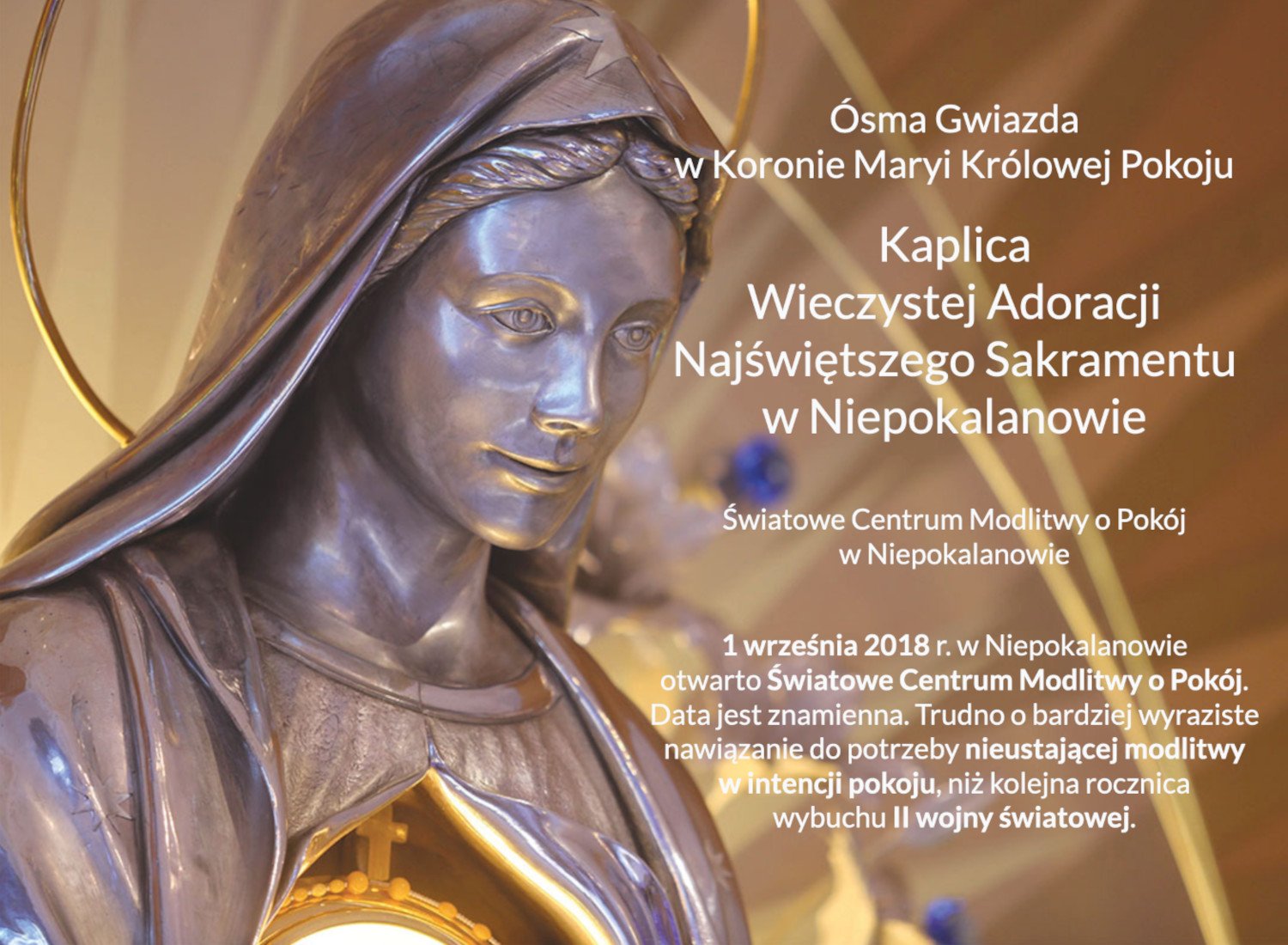

The Eucharistic Adoration Chapel established by Saint Maximilian Kolbe was inaugurated at the outbreak of World War II. It was restored as a Chapel of Adoration in September, 2018, the commemoration of the date that the war began. It is now part of the World Center of Prayer for Peace. The live internet feed of the Adoration Chapel at Niepokalanow — sponsored by EWTN — was established just a few weeks before we discovered it and began to include in at Beyond These Stone Walls. Click “Watch on YouTube” in the lower left corner to see how many people around the world are present there with you. The number appears below the symbol for EWTN.
Click or tap here to proceed to the Adoration Chapel.
The following is a translation from the Polish in the image above: “Eighth Star in the Crown of Mary Queen of Peace” “Chapel of Perpetual Adoration of the Blessed Sacrament at Niepokalanow. World Center of Prayer for Peace.” “On September 1, 2018, the World Center of Prayer for Peace in Niepokalanow was opened. It would be difficult to find a more expressive reference to the need for constant prayer for peace than the anniversary of the outbreak of World War II.”
For the Catholic theology behind this image, visit my post, “The Ark of the Covenant and the Mother of God.”

The Prison of Father MacRae: A Conspiracy of Silence
The Diocese of Manchester demonstrates the difference between the stated rights of accused Catholic priests in Church law and actual observance of those rights.

The Diocese of Manchester demonstrates the difference between the stated rights of accused Catholic priests in Church law and actual observance of those rights.
February 26, 2014 by Ryan A. MacDonald (updated June 14, 2025)
Editor’s Note: This is Part Two of a guest post by Ryan A. MacDonald. Part One was “The Trial of Father MacRae: A Conspiracy of Fraud.”
“I don’t share your belief in Father MacRae’s innocence. I just don’t believe a judge and jury would sentence a priest to life in prison with anything less than clear and compelling evidence.”
The above quote was the reply of a prominent American Catholic writer when I challenged him to take a closer look at the trial and imprisonment of Father Gordon MacRae. There is nothing to be gained by publishing the writer’s name. I still hope he might accept my challenge to study this matter with more depth than the New Hampshire news media and priests of the Diocese of Manchester have given it. I have asked the writer to show me the evidence he feels so certain must exist. He is wrong about this. There is simply no factual evidence to support this conviction.
But for some, the absence of evidence is evidence of evidence. That Catholic writer’s presumption about evenhanded justice and due process reflects the naiveté of the innocent and just. I once shared such naiveté, but I have since learned that ignorance is not bliss. I know too much about this case to cling to any delusions that everyone in prison must be guilty, or that a Catholic priest, while actually innocent, could not be railroaded into prison based on false witness.
So does The Wall Street Journal’s Dorothy Rabinowitz, one of the most just and courageous journalists I know. She has a talent for enabling readers to place themselves in the shoes of the falsely accused, and it’s a terrifying place to be. A recent article, “On Woody Allen and Echoes of the Past” (WSJ.com, February 9, 2014), had that same effect. It isn’t long, but it’s compelling and powerful.
Despite its title, the article’s great power is in its depiction of falsely accused men and women — such as Violet, Cheryl, and Gerald Amirault of Massachusetts and Kelly Michaels of New Jersey — who were ripped from ordinary lives to be tried and sent to prison because of trumped up charges, lots of media hype, and the ambitions of prosecutors.

These same people were profiled in No Crueler Tyrannies (WSJ Books, 2005), a book by Dorothy Rabinowitz that has opened many eyes, including mine. She found a common denominator among those falsely accused and betrayed by the justice system during the “child terror” prosecutions of the 1980s and 1990s, the same era, and the same terror, that convicted Father MacRae. Rabinowitz wrote,
“Those who are falsely accused often naively believe that their innocence is obvious, that the allegations will be dropped.”
In “Judge Arthur Brennan Sentenced Fr Gordon MacRae to Die in Prison,” I wrote that plea deals work well for the guilty but not for the innocent. The guilty come before the justice system prepared to limit punishment by accepting any reasonable plea deal offered. The innocent cannot fathom such twisted justice, and therefore often spend far more time in prison than the guilty.
For preserving his right to a presumption of innocence and a fair trial — though he got neither, as you will see, from either Church or State — Father Gordon MacRae was sentenced by Judge Arthur Brennan to more than 30 times the sentence offered by prosecutors in the plea deal he refused. As I wrote in part one of this article last week, it is a perversion of justice that, had he been actually guilty, this priest would have been released from prison 17 years ago.

The Lie Detector Disaster
In the above article, Dorothy Rabinowitz cited that some of the innocent accused were anxious to take lie detector tests (aka polygraphs). Those who passed them, however, did so to no avail as prosecutors refused to consider, or even hear, the results. Father MacRae also voluntarily submitted to two lie detector tests conducted by an expert who reviewed the claims of Thomas Grover and his brothers, Jonathan and David Grover, who also accused the priest for settlement money from his diocese. I have repeatedly called upon MacRae’s accusers to agree to lie detector tests, a challenge met only with silence.
Had Father MacRae failed the polygraphs administered before his trial, you can be certain that fact would have found its way into court, or at least into the newspapers. He passed them conclusively, but the results were ignored, and not only by state prosecutors. The most difficult act of suppression to comprehend came from his bishop and diocese.
Defense attorney Ron Koch (pronounced “Coke”) often appeared to be as naive and trusting as his client. He seemed to believe that the Diocese of Manchester might be more inclined to defend its priest if clarity about his innocence could be established. However passing pre-trial lie detector tests, and making that fact known, actually proved disastrous for the defense of Father MacRae.
Within weeks of the defense lawyer’s effort to have polygraph results reviewed by Church lawyers, the Diocese of Manchester issued a press release that inflicted a mortal wound to MacRae’s civil and canonical rights. Plastered in the news media throughout New England before jury selection in his trial, this press release destroyed his defense in the court of public opinion, and influenced jurors in the court of law:
“The Bishop and the Church are saddened by and grieve with the victims of Gordon MacRae…and he was ultimately removed from his status as one who could ever function as a priest again…The Church is a victim of the actions of Gordon MacRae as well as the individuals… [The Diocese] will defend its officials who have been falsely accused [and] it will continue to cooperate in bringing those who have harmed others to light.”
— Bishop of Manchester Press Release, Sept. 11, 1993
Canonical Advocate, Father David Deibel, J.C.L., J.D., protested this gross violation of Church law and civil liberties. He was reportedly told that the press release “was a carefully crafted statement meant to respond to media concerns” about the MacRae case. When defense attorney Ron Koch called to protest, he was told that Father MacRae was the sole priest to have been so accused in the Diocese of Manchester.
Nine years later, officials for the Manchester Diocese worked out a plea deal of their own to avoid a misdemeanor charge based on a theory of law the state’s Attorney General admitted was “novel.” The published files as a result of that deal revealed that 62 New Hampshire priests had been accused, and some $23 million changed hands in mediated settlements. For his first six years in prison, 17 miles from the Chancery Office of the Diocese of Manchester, Father MacRae was summarily abandoned. The company line was that it was MacRae himself who refused to be visited in prison by any priest. The bitter refusal was reportedly issued through unnamed third parties who have never been identified. However, the prison’s Catholic chaplain during Father MacRae’s first years in prison saw this differently:
“I have been told by priests that Diocesan officials claimed that Father MacRae refused, through unnamed third parties, to be visited by a priest … During my tenure as chaplain, no one representing the diocese ever asked me to arrange a visit with Father MacRae [who] indicated to me he would welcome such contacts … . It remains my belief that Father MacRae is for some reason viewed differently from other priests that are, or have been, incarcerated.”
— Prison Chaplain John R. Sweeney, Sept. 20, 2004

Bishop’s Delegate Monsignor Edward Arsenault
Two years ago, I wrote an article entitled “To Azazel: Father Gordon MacRae and the Gospel of Mercy.” It was about some shockingly uncharitable conduct toward this imprisoned priest, but the offenders were not other prisoners trying to make names for themselves in the brutal prison culture. They were priests of the Diocese of Manchester.
In the year 2000, however, Diocesan interest in Father MacRae was radically altered when it became known that two media giants, Dorothy Rabinowitz at The Wall Street Journal, and PBS Frontline, expressed interest in the facts of this case. You may read for yourselves the manipulation aimed at this imprisoned priest, and the devastation of his rights in an article by Father George David Byers entitled, “Omertà in a Catholic Chancery — Affidavits Expanded.”
Throughout this period, the official Delegate (2000 until 2009) for the Bishop of Manchester was Monsignor Edward Arsenault. His published resume reveals that he personally negotiated mediated settlements in 250 claims against Diocese of Manchester priests. At the same time, Monsignor Arsenault was wearing another hat — some might say a highly conflicting one.
While negotiating settlements in the MacRae case and hundreds of others on behalf of the Diocese of Manchester, Arsenault was also Chairman of the Board of the National Catholic Risk Retention Group, an organization underwriting insurers of Catholic institutions and dioceses across the U.S. It is unclear which of these hats Monsignor Arsenault was wearing when he negotiated this typical round of mediated settlements described in David F. Pierre’s 2012 book, Catholic Priests Falsely Accused:
“In 2002, the Diocese of Manchester, New Hampshire, faced accusations of abuse from 62 individuals. Rather than spending the time and resources looking into the merits of the accusations, ‘Diocesan officials did not even ask for specifics such as the dates and specific allegations for the claims,’ New Hampshire’s Union Leader Reported. ‘Some victims made claims in just the past month and because of the timing of negotiations, gained closure in just a matter of days,’ reported the Nashua Telegraph. ‘I’ve never seen anything like it!’ a pleased and much richer plaintiff attorney admitted.”
— Catholic Priests Falsely Accused, p. 80
In 2001, Monsignor Edward Arsenault developed a policy statement for the Diocese of Manchester. As Bishop John McCormack’s Delegate, Monsignor Arsenault published the “Diocese of Manchester Statement of Rights and Obligations of Persons Accused of Sexual Misconduct.” The document was straightforward, and listed, in accord with Canon law and Diocesan policy, the rights of the accused and the obligations of the Diocese:
The Delegate (Monsignor Edward Arsenault) will:
Inform the person being interviewed of the process to be used;
Inform the person being interviewed what information will be shared with whom;
Inform the person being interviewed that he [the Delegate] is acting in the external forum on behalf of the Bishop of Manchester;
Inform the person being interviewed that any and all information disclosed will be treated with discretion, but not subject to confidentiality…
Rights of the Person Accused: The accused cleric or religious has:
The right not to implicate oneself;
The right to counsel, civil and canonical;
The right to review the results of one’s own psychological evaluations;
The right to know what has been alleged and to offer a defense against the allegations;
The right to know and understand the review process;
The right to discretion in the conduct of the investigation and to have his/her good name protected.
Over the next three years as the Diocese of Manchester submitted individual cases to the Vatican’s Congregation for the Doctrine of the Faith, every tenet of the above statement of rights was silently ignored or outright violated by Monsignor Arsenault and officials of the Diocese of Manchester in regard to the case of Father MacRae.
No investigations took place. No interviews took place. The imprisoned priest’s repeated requests for details of what has been represented in Rome in regard to this case have been ignored, and no right of defense has been honored. The promised assistance of legal counsel was never acted upon. Repeated and documented requests from Father MacRae that Bishop John McCormack and Monsignor Arsenault agree to confer with his Canonical Advocate to assure his rights under Church law were refused.
In the ultimate insult, when Monsignor Arsenault finally did agree to consult Father Deibel, the canonical advocate, he reportedly told the priest that, should Father MacRae be involuntarily laicized, “I’m sure Bishop McCormack will still send him $100 a month” to survive in prison. The suggestion that this was MacRae’s sole concern for the future of his priesthood left him feeling humiliated and violated.
A promise by Bishop McCormack to set aside $40,000 for Father MacRae’s appellate defense — on the condition that he set aside contacts with Dorothy Rabinowitz and The Wall Street Journal — was instead used to hire counsel to bypass MacRae’s lawyers and investigators, and to conduct a secret review of his trial and any chance of overturning the convictions. To this day, Monsignor Arsenault and the Bishop of Manchester have ignored requests to share that review with the wrongly imprisoned priest’s defense team struggling to afford his day in court.

Remember Those in Prison as Though in Prison with Them (Heb. 13:3)
In 2009, Monsignor Edward Arsenault was appointed Executive Director of Saint Luke Institute, a nationally known facility in Maryland for the psychological treatment of priests. Bishop John McCormack was the sole U.S. bishop on the Saint Luke Institute Board of Directors at the time. Monsignor Arsenault took leave from the diocese to assume the post with an annual salary of $170,000.
Earlier this month, on February 4, 2014, the news media announced that Monsignor Edward Arsenault has accepted a plea deal to plead guilty to three felony charges. He was indicted on multiple counts, and has agreed to plead guilty to the theft of thousands of dollars from the Diocese of Manchester while serving as Chancellor and Bishop’s Delegate, from Catholic Medical Center Hospital where he served on its Board of Directors, and from the estate of a deceased priest of the Manchester Diocese for which he served as Executor. According to news reports, the theft of funds from the Diocese of Manchester continued until 2013, four years after Monsignor Arsenault began his $170,000 a year post at Saint Luke Institute.
The plea deal Monsignor Arsenault has entered into forgoes trial and any testimony under oath. The exact number of felony charges and the exact amounts of stolen funds involved have not been made public, and possibly never will be. The New Hampshire Attorney General stated that the plea deal, and the minimum four year prison sentence Monsignor Arsenault has agreed to, are in “recognition of the extensive cooperation of the defendant,” and in anticipation of his continued cooperation in the ongoing investigation of “improper financial transactions.”
The investigation into financial wrongdoing was launched, according to news sources, when the Diocese began investigating a “potentially inappropriate adult relationship.”
For at least the next four years, Monsignor Edward Arsenault will share the same prison as Father Gordon MacRae, a priest who — armed only with the truth and his faith — refused plea bargains to face the cruelest of tyrannies, wrongful imprisonment. This is the priest against whom Monsignor Edward Arsenault and his prosecutorial friends have worked so arduously, and in secret, to undo and discard.
UPDATE:
Monsignor Arsenault served only a few weeks of his sentence in the New Hampshire State Prison. He was moved early one morning to serve out his sentence in the Cheshire County House of Corrections. This, we are told, was highly unusual. A State Senator who asked not to be named said that Monsignor Arsenault received “very special treatment” in the judicial and corrections systems. Special treatment did not end here. After serving only two years of the four-to-twenty year sentence, Arsenault’s sentence was commuted to house arrest. While serving that sentence his $300,000 restitution was paid by unnamed third parties. His entire twenty year sentence was then commuted by Judge Diane Nicolosi. Subsequently, Arsenault was dismissed from the clerical state by Pope Francis. In April of 2021 he legally changed his name to Edward J. Bolognini.
Under this new name, with his $300,000 restitution paid by unnamed third parties and his sentence for multiple financial felonies suddenly commuted Edward J. Bolognini was awarded with management of a multimillion dollar contract with the City of New York.
In 2018, sixteen years after Fr. MacRae and his advocates were told that MacRae was the only of the Manchester Diocese ever to be accused, current Bishop Peter A. Libasci proactively published a list of 73 priests of the Diocese of Manchester accused of sexual abuse. He cited “transparency” as his motive for publishing the list. Subsequently, Bishop Peter A. Libasci was himself accused of sexual abuse dating from his years as a priest in the Diocese of Rockville Center, New York. The charges were alleged to have occurred in 1983, the same year as the charges against Fr. MacRae.
Bishop Libasci maintains his innocence and remains Bishop of Manchester, and all transparency ceased.
In October 2022, The Wall Street Journal published its fourth article on this matter entitled, “Justice Delayed for Father MacRae.”