“There are few authentic prophetic voices among us, guiding truth-seekers along the right path. Among them is Fr. Gordon MacRae, a mighty voice in the prison tradition of John the Baptist, Maximilian Kolbe, Alfred Delp, SJ, and Dietrich Bonhoeffer.”
— Deacon David Jones
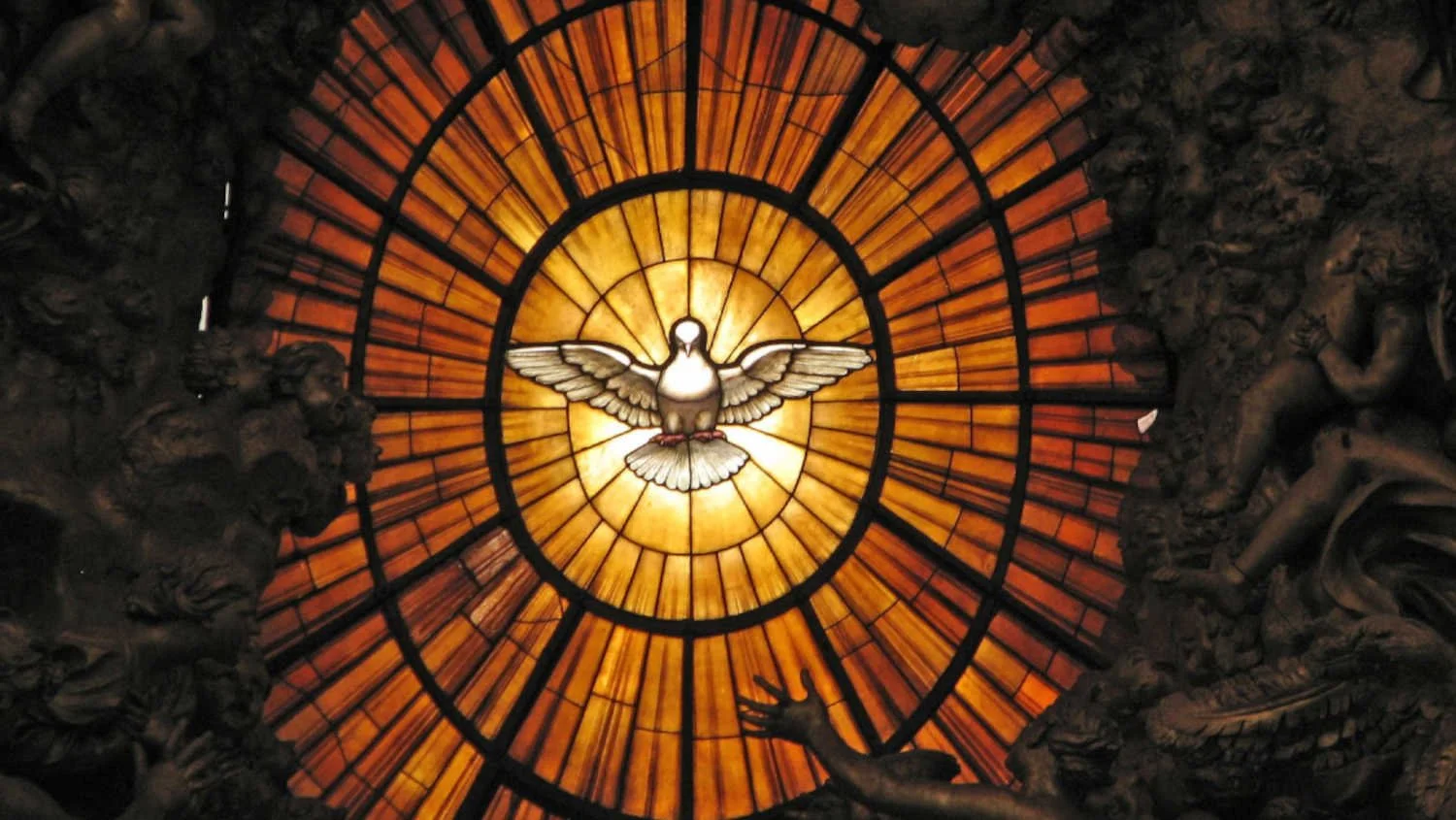
Inherit the Wind: Pentecost and the Breath of God
From Creation onward, Scripture often depicts the Holy Spirit as the wind or breath of God. When it swept through Jerusalem at Pentecost, all divisions ceased.
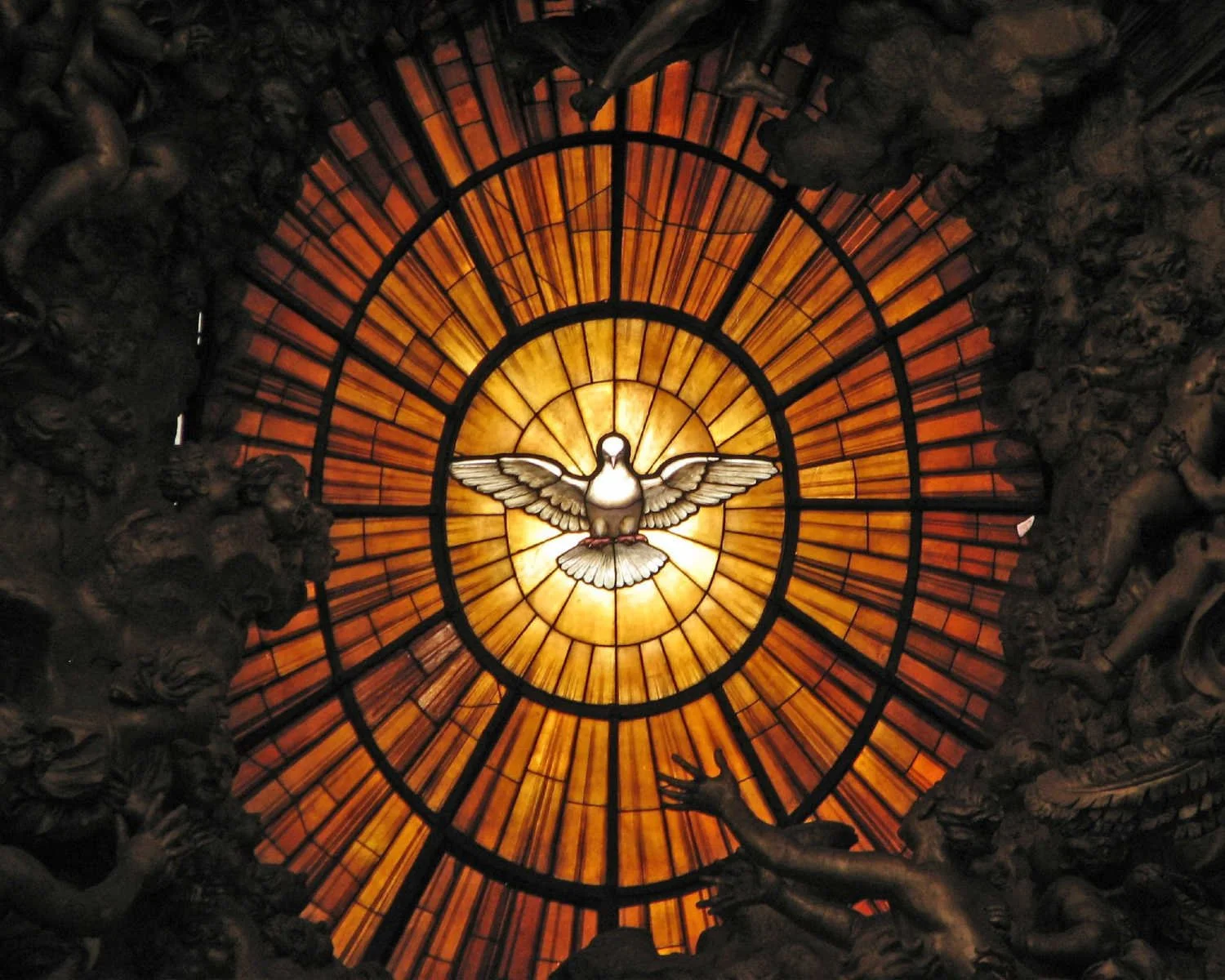
From Creation onward, Scripture often depicts the Holy Spirit as the wind or breath of God. When it swept through Jerusalem at Pentecost, all divisions ceased.
May 20, 2026 by Father Gordon MacRae
For a hot summer post years ago, I wrote “Hot Town: Summer in the Slammer.” My title was a spoof of “Summer in the City,” the famous 1969 hit single by “The Lovin’ Spoonful.” I was sixteen years old when that song hit the charts, but my post about it decades later was sparked by more current heat in my life: the long, hot summer days in prison.
The sealed and barred window in my prison cell then faced due west, so on the hottest summer days there was a build-up of heat in a sort of greenhouse effect within these stone walls, and it could feel very oppresive at times. The windows let in heat, but no air. There are no curtains or shades in prison, and covering cell windows is forbidden. By late in a typical summer day, that cell could feel like a crucible from which there is no escape. There is no air conditioning in prison, but I bought a little nine-inch fan, which was great at circulating the heat.
Underneath each cell window was a small security grate, a five-inch high double-grated steel slot venting through the stone wall to the outside world. By summer each year, the grates are so clogged with dust that not even a hint of moving air passed through them. Prisoners were always trying to devise new ways to clean the small vent.
On one of the hottest days that summer, I watched with great hope out my cell window as towering thunderclouds built in the west late in a stifling afternoon. They grew denser and darker, and then the rarest of things happened. A blast of cool wind flowed out of the west, through the security grate, and filled this cell with cool air. Then came thunder and a torrential rain that released all the day’s heat built up in these stone walls. Blast after blast, the cool wind kept coming. It felt like the very Breath of God.
This post is about the wind, but first I owe thanks to playwrights Jerome Lawrence and Robert E. Lee for my use of the title of their great 1955 American play, “Inherit the Wind.” The play was based on the so-called “Scopes Monkey Trial” of 1925 in which the famous defense lawyer, Clarence Darrow defended John Scopes in a Tennessee court. A high school biology teacher, John Scopes, was charged with violating state law by teaching Darwin’s theory of evolution in science class. In 1925 Tennessee, this violated a state-sanctioned fundamentalist view of the biblical account of Creation. I wrote about our culture’s conflict between science and religion in “Did Stephen Hawking Sacrifice God on the Altar of Science?” Religion is not a topic for scientific inquiry, and science should not be refuted in the name of religion. Those are human conflicts, not God’s.
Most people do not know that “Inherit the Wind,” — both the play and the classic 1960 Spencer Tracy film — first borrowed the title from the Book of Proverbs: “He who troubles his household will inherit the wind, and the fool will be a servant to the wise.” (Proverbs 11:29). It is just possible that the Book of Proverbs itself borrowed the phrase from an even more ancient source: the followers of Pazuzu, the Assyrian god of wind and pestilence. In some ancient Mesopotamian religions, “an ill wind” carried the spirits of demons, and so to inherit the wind could mean generations of suffering for one person’s sin.
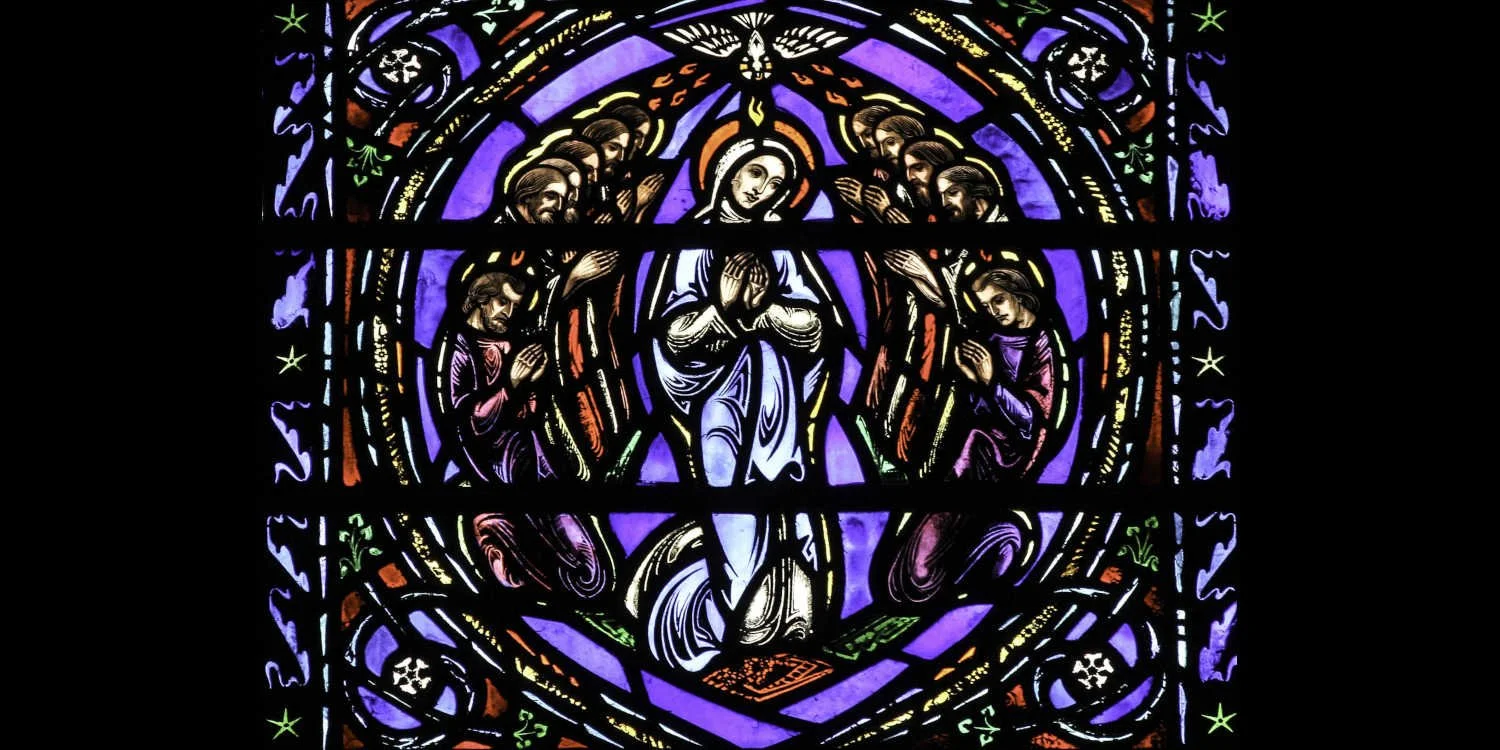
On the Day of Pentecost
I borrowed the title, Inherit the Wind, with a very different connotation. There are 181 references to wind in the Judeo-Christian Scriptures, and many of them are equated with a sacred wind or with the Breath of God. The Hebrew word for both “breath” and “wind” is “ruah,” and the Hebrew name for the Holy Spirit is “ruah ha-Qodesh,” simultaneously meaning the Spirit of God, the Wind of God, and the Breath of God.
The image of the Spirit of God rendered as a mightly wind is ancient. The very first time I picked up a Bible as a child, I was enthralled by a single image that begins the story of our existence in a created Universe with God. It was told in a few simple sentences that taught nothing about the science of cosmology except the most basic fact that I described in a science post, “A Day Without Yesterday.” It had to do with the fact of Creation, not the mechanics of it, and as a child it filled me with wonder:
“In the beginning, God created the heavens and the earth. The earth was without form and void, and darkness was upon the face of the deep; and the Spirit of God was moving over the face of the waters.”
— Genesis 1:1-2 RSV
Some biblical translations render that phrase, “a mighty wind from God was moving over the surface of the waters.” The image this raises is striking. If you have ever seen a film depicting raging winds at sea, the result is chaos.
The New Revised Standard Version of the Bible (NRSV Catholic Edition) translated this more literally: “A Wind of God swept over the face of the waters.” The only thing in existence in the Universe that God did not create is darkness. Darkness is the one reality that was already there at the moment of Creation. The darkness is not a description of something evil, but rather of something absent. The Wind of God moved above its unfathomable depth, and then, with a spoken word, “Let there be light,” there was light, and light overcame the darkness.
The Breath of God has stirred throughout human history ever since, and each time it does, we change dramatically. In the moment man became man, God “breathed into his nostrils the breath of life, and man became a living soul” (Genesis 2:7) in the image and likeness of God. That same image is reflected in the account of the Resurrection appearances of Jesus in the Gospel of John before Pentecost:
“He breathed on them and said, ‘Receive the Holy Spirit.’ ”
— John 20:22
I will forever think of that blast of cool wind through my cell as I read the story of Pentecost in the Acts of the Apostles:
“When the day of Pentecost had come, they were all together in one place. And suddenly a sound came from heaven like the rush of a mighty wind, and it filled the house where they were sitting. There appeared to them tongues as of fire, distributed and resting on each of them, and they were filled with the Holy Spirit.”
— Acts 2:2-4
Saint Luke was a great writer. In three matter-of-fact sentences, with no flourish whatsoever, he conveyed a meeting between God and humankind that would be told for thousands of years. Understanding its setting explains a lot about its meaning, and what happened next.
Some people mistakenly assume that the “Day of Pentecost” referred to is the coming of the Holy Spirit that Saint Luke goes on to describe, but it does not. The “Day of Pentecost” was the reason the Apostles were in Jerusalem in the first place, and “all together in one place,” and it is the reason why “devout men from every nation under heaven” (Acts 2:5) were there. They had all come because Shavuot required a pilgrimage to Jerusalem.
Shavuot is the second of three “pilgrimage festivals” in Jewish tradition. The other two are Passover itself, and “Sukkot,” the Feast of Booths (or “Tents”), which was the Jewish autumn festival marking the harvest of wheat. The Sukkot pilgrimage to Jerusalem was set down in the Book of Leviticus (23:42) and recalls the forty years of wandering and encampment in the desert after the Exodus (hence the “booths” or tents). Sukkot was the setting for the Gospel account of the Transfiguration of Jesus (eg., Mark 9:2-13). Each of the three pilgrimage festivals — as described in the Book of Deuteronomy (16:16) — required adult men of Israel to travel to Jerusalem to mark the feast.
The Shavuot festival, known in Greek as Pentecost (meaning “fifty days”), is also called the “Festival of Weeks” because it is celebrated on the day after the passage of seven full weeks from Passover. Shavuot originally marked the end of the barley season and the beginning of the wheat season. The pilgrimage required that the first fruits of wheat be brought to Jerusalem as an offering, as described in the Book of Leviticus (23:15-17). The feast fell on the Sixth day of the Hebrew month, Sivan. In Rabbinic legend, that was also the date marking the giving of the Torah to Moses on Mount Sinai described in Exodus 8, and that became the main reason for the pilgrimage feast. At Shavuot, specially baked twin loaves made from newly cut wheat were presented in the Jerusalem Temple with great ceremony to commemorate the Tablets of the Law given to Moses on Mount Sinai. In our Gregorian calendar, the Sixth day of Sivan falls on our Feast of Pentecost.
This is the setting for Pentecost in the Book of Acts, Chapter Two. As that driving wind filled the room where the Apostles were gathered, “men of every race and tongue, of every people and nation” emptied into the street at the strange and powerful noise. The mighty wind and tongues of fire described by Saint Luke were reminiscent of the loud wind and fiery descent of the Spirit of God on Mount Sinai at the time of the Exodus:
“On the morning of the third day there were thunders and lightning and a thick cloud upon the mountain, and a very loud trumpet blast, so that all the people who were in the camp trembled. Then Moses brought the people out of the camp to meet God, and they took their stand at the foot of the mountain. And Mount Sinai was wrapped in smoke, because the Lord descended upon it in a fire.”
— Exodus 19:16-19
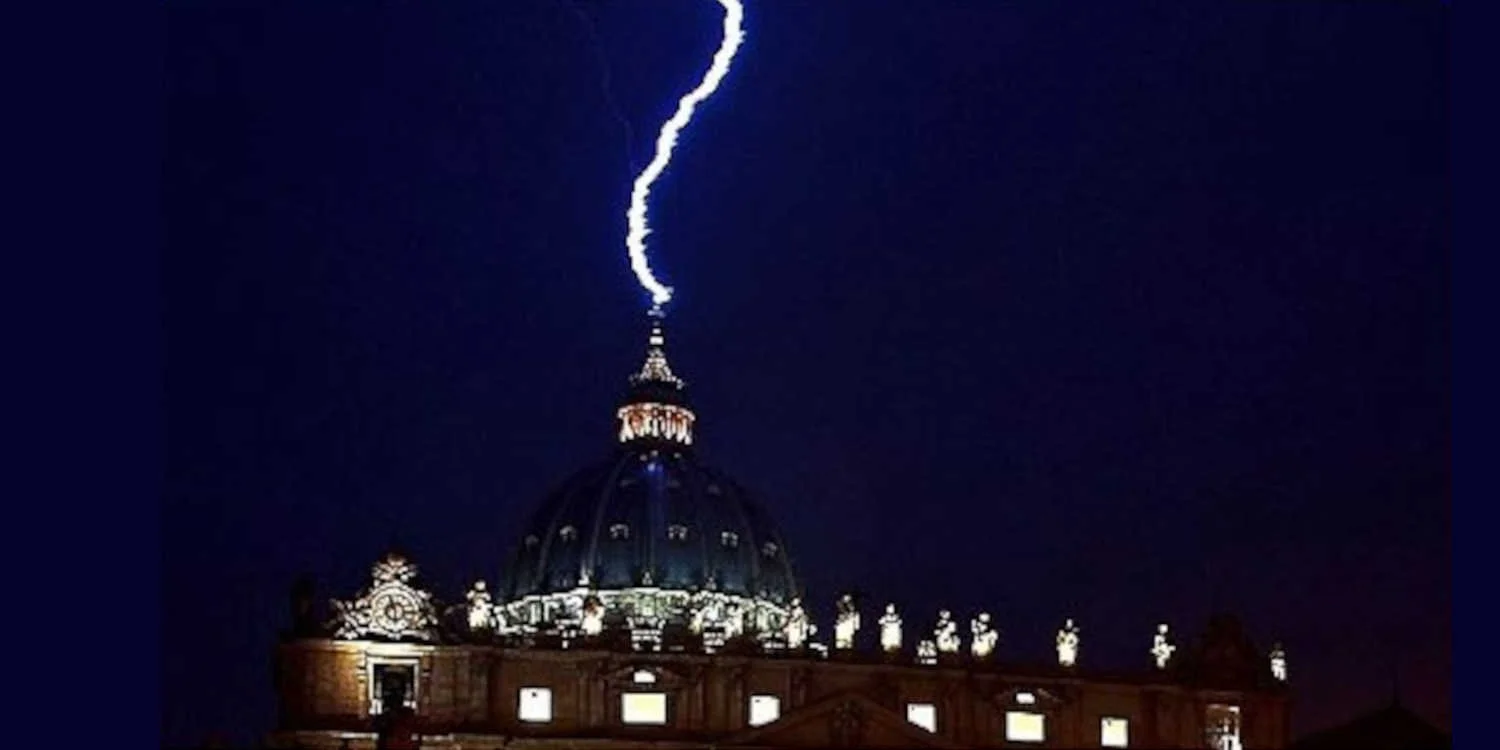
The First Catholic Scandal!
Filled with the Holy Spirit, the Apostles began to address the bewildered crowd gathered in Acts Chapter Two. Each person heard them speaking in his own native tongue, an event that in effect reversed the “tragedy of Babel” described in the Book of Genesis (11:1-9), in which men became divided by foreign languages. In Acts, the Holy Spirit filled not only the Apostles, but many of the crowd as well, “and there were added that day about three thousand souls.” (Acts 2:41).
It was on that day that the Church was born, and before it was even ten minutes old, scandal broke out. Those in the crowd who did not “inherit the wind” immediately accused the Apostles of being drunk at 9:00 in the morning on a major holy day that required a morning fast. Their claims forced Saint Peter into the first Papal defense of the Church:
“Men of Judea and all who dwell in Jerusalem, let this be known to you, and give ear to my words. For these men are not drunk, as you suppose, since it is only the third hour of the day.”
— Acts 2:14-15
Saint Peter went on to preach the Church’s first homily, relying on the Prophet Joel (2:28-32) to explain that God poured out His Spirit because the Messianic Age had begun. The meaning of The Passion of the Christ was revealed, and the Apostolic Succession that first preached Christ continues even today in Salvation History as expressed in Catholic Tradition. There is no human institution on earth that has endured for so long in human history. For me, this is the real evidence that the Church inherits the wind. There is no human language, culture, or government that has existed in linear succession for so long. It is safe to say that no human conflict can put asunder what God Himself has joined. To suggest that a 21st Century tabloid sex scandal can destroy the Church is pure folly.
The point is brought home often in the news headlines, and a great example was in a May 10, 2011 column by Mary Kissel in The Wall Street Journal (“A Cardinal’s Warning on China“). Mary Kissel wrote of China’s Communist regime and its interference in the selection and ordination of Catholic bishops. She summed up the state of affairs quite well:
“The Holy See is thousands of years old; the Chinese Communist Party has ruled for little over six decades, and it faces all kinds of internal instability and challenges to its illegitimate rule. When the regime eventually falls, China will be the holy grail of Catholic missions.”
— WSJ Editorial Page, May 10, 2011
I have a particular challenge as I mark this 32nd Pentecost in prison. As I wrote in “The Last Full Measure of Devotion,” more than the loss of freedom itself, I mourn the passing of the world beyond these stone walls. Sometimes my faith strains under the weight of an unjust imprisonment, but when something as simple as a blast of cool wind through my cell on a blistering summer day can remind me of Pentecost, I have hope. We who have inherited the wind do not measure the weight of our crosses, but rather the strength of our conversion and our identity as True Believers.
In the last words of the Resurrected Christ to the Apostles as they gathered in fear of his Crucifixion and the torment of pursuit, Christ never promised them a rose garden instead, “He breathed on them and said to them, ‘Receive the Holy Spirit.’ ” (John 20:22)
+ + +
Note from Father Gordon MacRae: “Receive the Holy Spirit.” Join us a three-minute meditation on the event of Pentecost as the Benedictine Monks of the Abbey of Santo Domingo de Silos chant the Pentecostal hymn “Veni Creator Spiritus.”
This post will be added to our Sacred Scripture collection, The Bible Speaks. You may also like these related links from Beyond These Stone Walls:
The Holy Spirit and the Book of Ruth at Pentecost
For Mother Teresa of Calcutta, Pentecost Illumined the Night
Forty Years of Priesthood in the Mighty Wind of Pentecost
+ + +
Veni Creator Spiritus

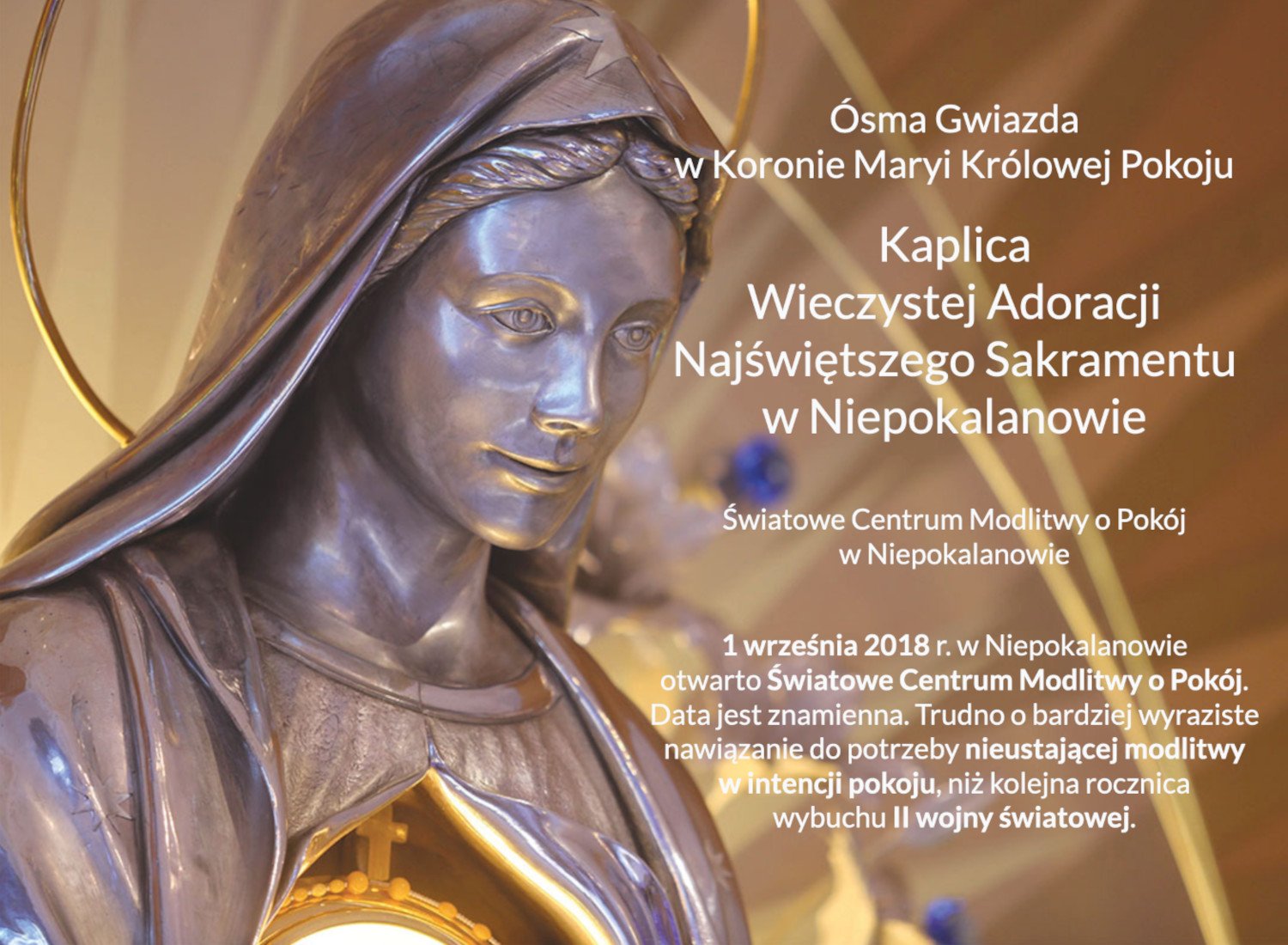

The Eucharistic Adoration Chapel established by Saint Maximilian Kolbe was inaugurated at the outbreak of World War II. It was restored as a Chapel of Adoration in September, 2018, the commemoration of the date that the war began. It is now part of the World Center of Prayer for Peace. The live internet feed of the Adoration Chapel at Niepokalanow — sponsored by EWTN — was established just a few weeks before we discovered it and began to include in at Beyond These Stone Walls. Click “Watch on YouTube” in the lower left corner to see how many people around the world are present there with you. The number appears below the symbol for EWTN.
Click or tap here to proceed to the Adoration Chapel.
The following is a translation from the Polish in the image above: “Eighth Star in the Crown of Mary Queen of Peace” “Chapel of Perpetual Adoration of the Blessed Sacrament at Niepokalanow. World Center of Prayer for Peace.” “On September 1, 2018, the World Center of Prayer for Peace in Niepokalanow was opened. It would be difficult to find a more expressive reference to the need for constant prayer for peace than the anniversary of the outbreak of World War II.”
For the Catholic theology behind this image, visit my post, “The Ark of the Covenant and the Mother of God.”

The Holy Spirit and the Book of Ruth at Pentecost
Events at the coming of the Holy Spirit in Acts of the Apostles have roots deep in Salvation History. In the traditional Hebrew Pentecost, the Book of Ruth is read.

Events at the coming of the Holy Spirit in Acts of the Apostles have roots deep in Salvation History. In the traditional Hebrew Pentecost, the Book of Ruth is read.
May 24 , 2023 by Fr Gordon MacRae
(Note: The graphic above depicts Ruth and Naomi preparing to depart Moab to venture down to Bethlehem.)
Shannon Bream, host of Fox News Sunday, is a lawyer by training having earned her Doctor of Law degree at a prestigious Florida law school. Prior to that, she graduated magna cum laude from Liberty University in Lynchburg, Virginia, a school founded in 1971 by evangelist Jerry Falwell. Not surprisingly, Ms. Bream has been well informed by her alma mater, and has written several books with an evangelical biblical perspective. Her titles to date include, The Women of the Bible Speak, The Mothers and Daughters of the Bible Speak, and The Love Stories of the Bible Speak.
One of the heroic women of the Biblical literature Ms. Bream wrote about in the first of those titles is Ruth, heroine of the Book of Ruth. It is a brief but remarkable story. In Jewish tradition, its author was the Hebrew judge Samuel. Although the book is descriptive of the period “when the judges ruled” (1:1), scholars have variously argued for its oral tradition in the time of the monarchy of King David (10th to 8th century BC), in the postexilic era (5th to 4th century BC), or somewhere in between the two.
The Book of Ruth tells of a family from the ancient town of Bethlehem in Judah that takes refuge in the country of Moab during a famine. While there, the sons of the Judean family marry Moabite women. When the father and the two sons die from unknown causes, the bereaved mother, Naomi, determines to return to her ancestral home in Bethlehem. She urges her daughters-in- law, Ruth and Orpah, to remain in Moab with their own people.
Orpah remains, but Ruth discerns that her duty of devotion to her deceased young husband also extends to his bereaved mother, Naomi, who is now widowed and alone. So Ruth insists on accompanying Naomi to Bethlehem. The story provides a moving quote of Ruth that over the centuries has found its way into the popular music of Christian liturgy:
“Wherever you go, I shall go. Wherever you dwell, I shall dwell there also. Your people will be my people, and your God shall be my God too. Wherever you die, I shall die, and there shall I be buried beside you.”
— Ruth 1:16-17
In Bethlehem, Ruth’s beauty, devotion and kindness soon attract the attention of Naomi’s near kinsman Boaz, (2:l-4:12). Despite the fact that Ruth is a foreigner, Boaz, a Jew, marries her, and by an act of Divine Providence she becomes the great grandmother of King David, of whose lineage Jesus was born. This is noted in the genealogy at the beginning of Saint Matthew’s Gospel. It’s an odd inclusion in the genealogy:
“... and Nahshon the father of Salmon, and Salmon the father of Boaz by Raihab, and Boaz the father of Obed by Ruth, and Obed the father of Jesse, and Jesse the father of David the King.”
— Matthew 1:4-6
It was highly unusual for any genealogy to add the name of the maternal line in Sacred Scripture, but both Ruth and the small and inconspicuous Book of Ruth have an outsized influence and footprint on the faith of Israel and Pentecost. It is evidence of the Spirit of God guiding Salvation History across millennia. I must remember that when I am bowed low by whatever cross I happen to carry in this time. The Great Tapestry of God has threads I can only see from the back in another life.

Pentecost and a Bigger Picture
As a story, the Book of Ruth provides an account of the series of events that led up to the inclusion of a Moabite in the ancestry of King David, and one thousand years later, of Joseph, spouse of Mary, and, by extension and adoption, Jesus. The story’s emphasis on the fact that Ruth is a foreigner, her acceptance by the people of Bethlehem despite this fact, her place in the genealogy of King David, and the acceptance of the book as part of the Hebrew canon all suggest a deeper and more complex purpose.
So it comes as no surprise that the Book of Ruth is read in the Hebrew observance of “Shavuot,” known in English as the Feast of Weeks or Pentecost. It is one of three pilgrimage festivals requiring a pilgrimage to Jerusalem for its observance. In the Hebrew calendar, Shavuot falls on the Sixth day of Sivan, the day after the conclusion of seven weeks — the fiftieth day after Passover. Hence the name, “Pentecost,” from Greek, “pentekoste” meaning fiftieth day.
In later Old Testament times, the Festival of the Harvest also became associated with the giving of the law to Moses upon Mount Sinai which, by tradition, also took place on the Sixth Day of Sivan. Because of the association with the giving of the Torah, a tradition evolved among Jews to honor Shavuot with an all-night vigil called the “Tikkun for Shavuot Eve.” It included readings from the first and last verses of each weekly Torah reading, a selection of Psalms, paragraphs from the six Orders of the Krishnah, a list of the 613 precepts of Moses, and the Book of Ruth.
It was for the observance of the Hebrew Pentecost that Mary, Mother of the Lord, and the Apostles were present in Jerusalem for the events that would become the Christian Pentecost (Acts 2: 1-47) the fiftieth day after the Resurrection of Jesus. It was the descent of the Holy Spirit among them. It was the birth of the Church.
When Beyond These Stone Walls began in the summer of 2009, I had no idea that I would still be writing posts from prison for it in 2023. I wrote about many things, but a priority for me was to write posts about Sacred Scripture with a focus on some of the Sunday Gospel readings which many readers seemed to like.
But I have run into an unforeseen problem. I have tried to research and write special posts at major feasts such as Christmas, Easter, and Pentecost but in 2023 I am faced with writing about the same Scriptures again and again. I do not have the luxury of looking out at a congregation gathered for Mass to adjust the length of my homily by the number of people I see yawning or dropping off.
Writing at Pentecost has been one of my biggest challenges. For one thing, Pentecost always comes at or near the anniversary of my priesthood ordination which I also feel obliged to mention in a post. It would be an insult to Catholics if I ignore my own ordination. In 2022, Pentecost fell on June 5th which was also my 40th anniversary of priesthood. So for the first time I combined the two subjects into one post. The next few paragraphs are an excerpt from “Forty Years of Priesthood in the Mighty Wind of Pentecost”:
It is interesting that the word for both wind and breath in Hebrew is ‘ruah,’ and the term in Hebrew for the Holy Spirit is ‘ruah ha-Qodesh.’ It simultaneously means the Spirit of God, the Wind of God, and the Breath of God. The same term is used in the story of Creation (Genesis 1:1-2) :
“In the beginning, God created the heavens and the earth. The earth was without form and void and darkness was upon the face of the deep; and the Spirit of God, ‘ruah ha-Qodesh,’ was moving over the waters.” (Genesis 1:1-2)
And the term was used again in Genesis 2:7 as God breathed the Spirit into the nostrils of Adam, and again in the Resurrection appearance of Jesus to the Apostles, “He breathed on them and said, ‘Receive the Holy Spirit.’” (John 20:22)
When I look back on forty years of priesthood, most of them in exile, imprisoned souls were reached through no merit of my own. In spite of myself, the Wind of God took me up in its vortex, and I am simply blown away by it.

The Great Gifts of the Spirit
“Lord, I am ready to go with you to prison and to death.”
— Peter at the Institution of the Eucharist, Luke 22:33
In Genesis 11:1-9 is related the story of a great tower erected in the land of Shinar in Babylon. The great Tower of Babel was left unfinished because Yahweh confounded the speech of the builders so they could not comprehend each other. The city was thenceforth called “Babel” which is the etymology of our word, “babble,” a term for incomprehensible speech. The story was an imaginative attempt to account for the origin of the diversity of languages.
The tower is today recognized as a “ziggurat,” a towering pyramid of successively recessed levels of stone. For the Babylonians, its purpose was ceremonial as a “cosmic mountain,” symbolic of the Earth itself. Its height was seen as a way to God as described in Genesis 11:4, a tower that “could reach to the heavens.”
As in many such stories, there is both a literal history behind it and an interpretation of it in the mind of the Ancient Near East. The tower became in time the story of God’s scattering of the human race into diverse languages. The story of Pentecost in Acts 2:5-12 has “men from every nation under heaven” in a multitude that came together and were bewildered as each heard the witness of the Apostles in their own languages.
They were “Parthians and Medes, Elamites and residents of Mesopotamia, Judea and Cappadocia, Pontus and Asia, Phrygia and Pamphylia, Egypt and Libya, and Cyrene, and parts of Rome, Jews and Greeks alike, Cretans and Arabs.” They were the known world of that time, all the nations of Northern Africa and the Middle East surrounding the Mediterranean Sea, literally the Sea of Middle Earth. Each heard of the mighty works of God in their own languages (Acts 2:5-12). For some, it was an answer to the divisions of our Babel-ing.
But others only mocked, accusing the Apostles of drunkenness: “they are filled with new wine.” Then came the great discourse of Peter (Acts 2:14-36) which began with a spirited defense of the Apostles:
“Men of Judea, and all who dwell in Jerusalem, let this be known to you and give ear to my words. These men are not drunk as you suppose for it is only the third hour of the day.” And then Peter spoke from the Prophet Joel, and in the end, a great multitude came to believe and were received into the Church.
This was Peter filled with the Spirit and fortitude, the same Peter who, just 54 days earlier at the Last Supper vowed to the Lord that he would go with him to prison and to death. It was the same Peter who just a day later fell to the lower depths of Golgotha to deny three times that he even knew Him.
In my life as a priest, the wind of Pentecost has been more like a Category Five storm than the gentle breeze of the Spirit I once envisioned priesthood to be. After graduation with a double major in psychology and philosophy from St Anselm College in New Hampshire in 1978, I enrolled in a four year post-graduate degree program in theological studies at St. Mary Seminary and University in Baltimore, Maryland from 1978 to 1982. Summers and between semesters were spent in a three-year counseling internship for the Baltimore County Police Crisis Intervention Unit. It was an education in human suffering.
One of my seminary professors was a young priest named Fr Ronald Rolheiser, OMI, a popular Catholic author who taught courses in Scripture and spirituality. Forty-one years later, just as I started this post, I discovered Father Rolheiser again in the pages of Give Us This Day, a monthly prayer and liturgical guide published by Liturgical Press in Collegeville, Minnesota. He had a brief reflection on Pentecost that I have been trying to decipher. Here is a segment:
“The Christian paschal cycle has five distinct moments: Good Friday, Easter Sunday, the Forty Days, the Ascension, and Pentecost. These were five moments in Jesus’ life as he moved through his death, his resurrection, his forty days of post-resurrection appearances, his ascension, and his sending of the Holy Spirit. ... The five interpenetrating moments in Jesus’ life that stretch from Good Friday to Pentecost invite us to always: Name your deaths; Claim your births; Mourn what you lost; Don’t cling to what you had but let it ascend. If we do this, Pentecost will happen in our lives. We will receive a new spirit for the life that we are, in fact, living.”
— Fr Ron Rolheiser, OMI, “Pentecost Will Happen”
+ + +
Note from Fr Gordon MacRae: Thank you for reading and sharing this Pentecost post with its challenges to let the Spirit of Truth and Grace dwell within us. You may also like these related posts:
Forty Years of Priesthood in the Mighty Wind of Pentecost
Priesthood, The Signs of the Times and The Sins of the Times
+ + +
Please note that Pentecost ends the Easter Season. We will be removing our Holy Week Retreat as a menu option, but we will include it from henceforth as a Library Category of posts. It was well received among readers, and I thank you.
+ + +
Personal Intention from Fr Gordon MacRae: May 24, 2023 marks one year since the tragic losses of life in Uvalde, Texas. Please pray for the people of this deeply wounded community and for the healing of this community's broken hearts.

+ + +
Our Adoration Chapel founded by Saint Maximilian Kolbe will remain at Beyond These Stone Walls. Jesus came to us through Mary, and now we may reciprocate. Thank you for spending time in Eucharistic Adoration. Please also offer a prayer for me because I am the only one among us unable to see the Chapel.
The Eucharistic Adoration Chapel established by Saint Maximilian Kolbe was inaugurated at the outbreak of World War II. It was restored as a Chapel of Adoration in September, 2018, the commemoration of the date that the war began. It is now part of the World Center of Prayer for Peace. The live internet feed of the Adoration Chapel at Niepokalanow — sponsored by EWTN — was established just a few weeks before we discovered it and began to include in at Beyond These Stone Walls. Click “Watch on YouTube” in the lower left corner to see how many people around the world are present there with you. The number appears below the symbol for EWTN.
The following is a translation from the Polish in the image above: “Eighth Star in the Crown of Mary Queen of Peace” “Chapel of Perpetual Adoration of the Blessed Sacrament at Niepokalanow. World Center of Prayer for Peace.” “On September 1, 2018, the World Center of Prayer for Peace in Niepokalanow was opened. It would be difficult to find a more expressive reference to the need for constant prayer for peace than the anniversary of the outbreak of World War II.”
For the Catholic theology behind this image, visit my post, “The Ark of the Covenant and the Mother of God.”