“There are few authentic prophetic voices among us, guiding truth-seekers along the right path. Among them is Fr. Gordon MacRae, a mighty voice in the prison tradition of John the Baptist, Maximilian Kolbe, Alfred Delp, SJ, and Dietrich Bonhoeffer.”
— Deacon David Jones
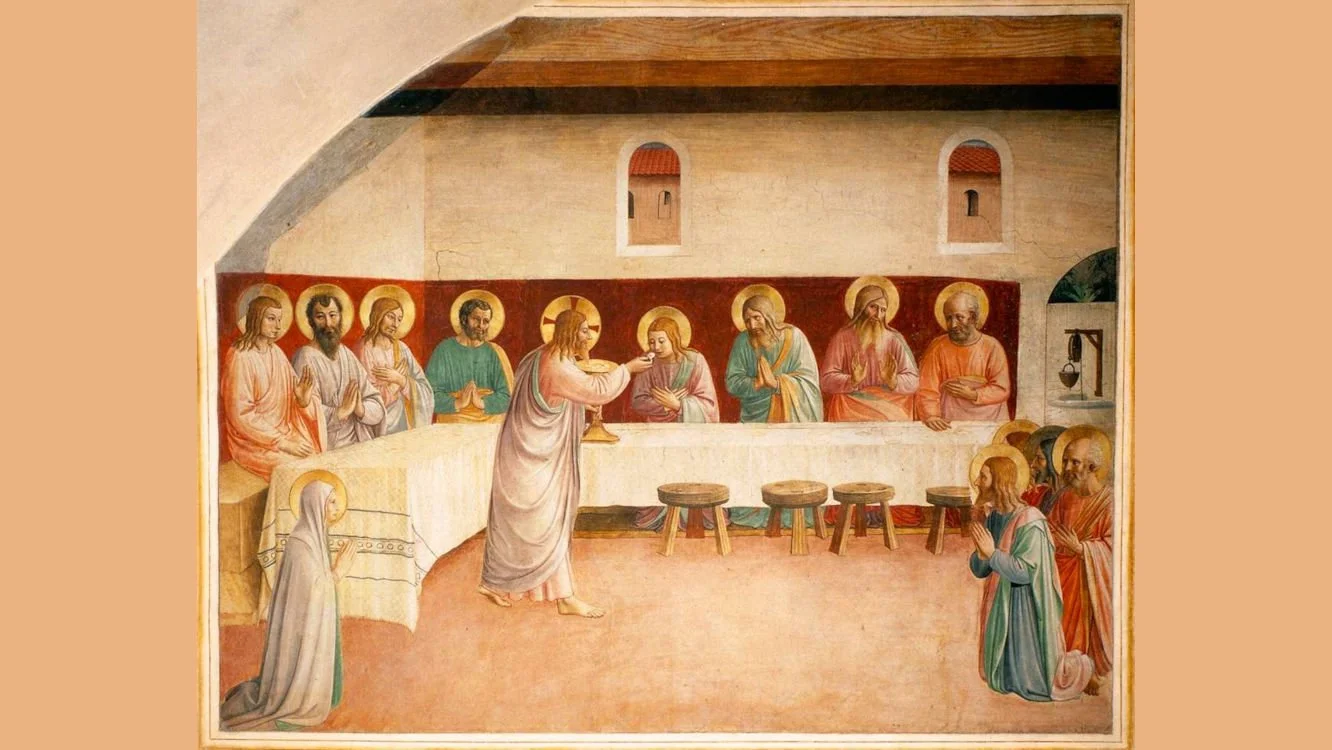
Covenants of God from Genesis to the Book of Revelation
A Covenant is a kinship bond between two parties. It is the master-theme of Salvation History in which God draws believers into a family relationship with Himself.
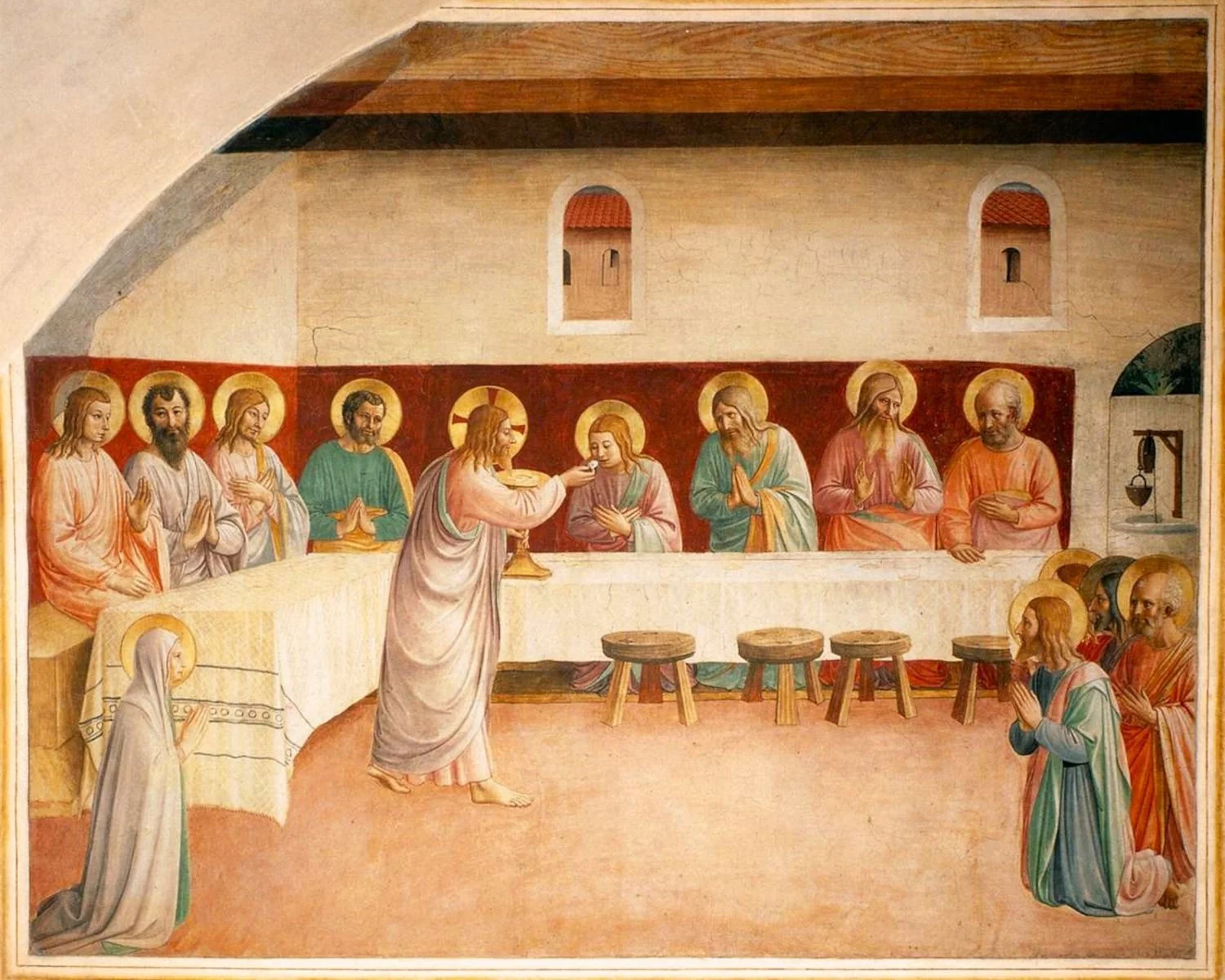
A Covenant is a kinship bond between two parties. It is the master-theme of Salvation History in which God draws believers into a family relationship with Himself.
January 28, 2026 by Father Gordon MacRae
“Testament” is the name given to the two principal divisions of the Christian Bible. It is derived from the Latin, “testamentum,” translated from the biblical Greek term, “diathēkē,” which is more properly translated as “Covenant.” In fact, the traditional designations of the biblical “Old Testament” and “New Testament” were inspired by Saint Paul’s distinction between the Old Covenant and the New Covenant in 2 Corinthians 3:6,14:
“Our sufficiency is from God who has qualified us to be ministers of a New Covenant, not in written code but in the Spirit; for the written code kills, but the Spirit gives life … not like Moses who put a veil over his face so that the Israelites might not see the end of the fading splendor.”
This cryptic verse from Saint Paul requires some deeper analysis. I touched on it once in my post, “A Vision on Mount Tabor: The Transfiguration of Christ.”
Peter had just declared at Caesarea Philippi that Jesus is the Christ (Luke 9:18-22). As though to demonstrate the truth of that declaration, the face of Jesus shone momentarily like the sun. The story recalled for Hebrew hearers of the Gospel the account of Moses at Mount Sinai as he received the Decalogue, the Ten Commandments (Exodus 20:1-17). Being in the presence of the Lord caused the face of Moses to shine brilliantly causing Aaron and other Israelites to fear approaching him. Moses then placed a veil over his face.
Some 3,000 years later, Saint Paul interpreted this as a sign that the Sinai Covenant is destined to fade so that the New Covenant in Christ may fulfill it. I will address this in the Sinai Covenant below. The point Saint Paul makes is that the glory of Jesus in the Transfiguration does not look back upon the Sinai Covenant for meaning, but rather the other way around. It is a statement from Saint Paul that the Old Covenant looks forward, and points us looking forward to the New. The Gospel of Matthew Transfiguration account gives symbolic witness to this (Matthew 17:8): On Mount Tabor, “When they lifted up their eyes, they saw no one but Jesus only.” Saint Augustine in the Fifth Century offered a summation of the meaning of this passage: “The New Testament lies hidden in the Old and the Old Testament is unveiled in the New.”
In his brilliant “Overview of Salvation History,” an introductory essay in the Ignatius Catholic Study Bible, John S. Bergsma, PhD, identifies something interesting and unique in Catholic spiritual tradition. It is the concept of “Divine filiation,” the notion, unique in religion, that elevates us as sons and daughters of God by adoption.
In Islam it is considered blasphemy to claim to be a child of God. In Judaism of the Old Covenant it is but a metaphor, not meant literally, but figuratively and symbolically. In Classical Buddhism it is simply irrelevant because individual personhood is itself an illusion remedied, for the Buddhist believer, by cycles of reincarnation.
Only Christianity holds that we become — literally become — sons and daughters of God the Creator, our Father and the source of all fatherhood. This is identified in Saint Paul’s Letter to the Ephesians (3:15):
“For this reason I bend my knees before the Father from whom every family in Heaven and on Earth is named.”
“Abba, Father” is an Aramaic and English term that occurs three times in the New Testament. The first time (Mark 14:36) quotes Jesus directly:
“Abba, Father, all things are possible to you; remove this chalice from me; yet not what I will, but what you will.”
The term was then reiterated by Saint Paul (Romans 8:15 and Galatians 4:6). “Abba” is an Aramaic term that reveals an especially familiar bond between father and child. Aramaic, closely related to Hebrew, was the common language in the Near East from about 700 BC to 600 AD. Each time “Abba” was used in the New Testament it was paired with the Greek equivalent of “Father.” This gave us the English translation, “Abba, Father” denoting the connection with Jesus as children of God.
After the fall of man, the only remedy for broken Covenants was for God to adopt us, and for us to strive to live up to that adoption. We strive still.
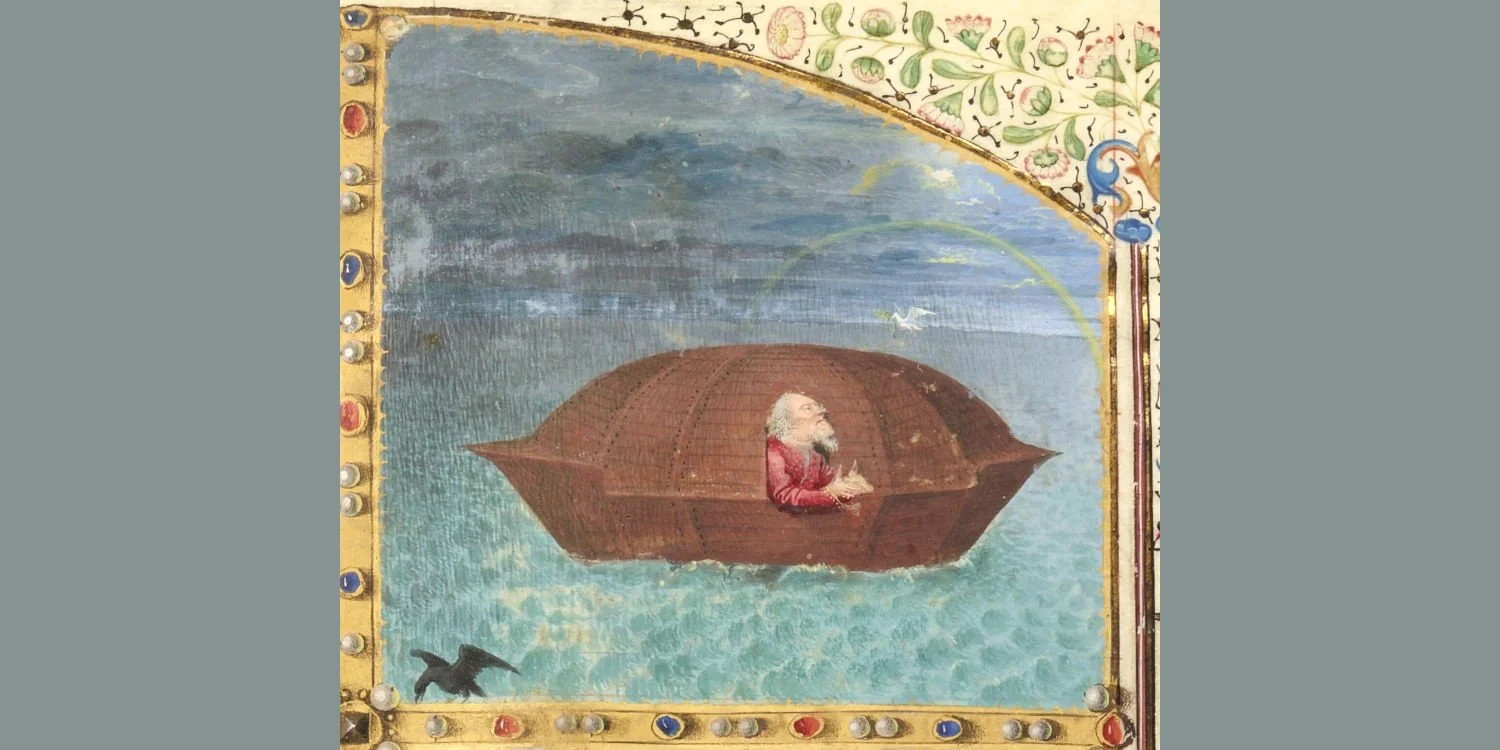
The Covenants of Adam, Noah, and Abraham
The people of Israel were also unique in ancient Near Eastern religion in their belief that God had established a Covenant relationship with them and with their ancestors. In the Catholic Bible Dictionary (Doubleday 2009) a companion volume to the Ignatius Catholic Study Bible, Dr. Scott Hahn identifies a sequence of Covenants found in the biblical text. There are six of them, each built upon the preceding one. Together they account for all of Salvation History. They are identified through the mediation of different individuals: Adam, Noah, Abraham, Moses, David, and then ultimately, in the Covenant that fulfills them all, Jesus Christ.
In the Creation Covenant mediated by Adam, creation culminates on the Sabath, which is the sign of a Covenant elsewhere in Scripture (Exodus 31:12-17). The term used for the making of the Covenant with Noah is not the usual one for Covenant initiation (in Hebrew, kārat), but rather a term indicating the renewal of a pre-existing Covenant (in Hebrew, hēqim).
The five Covenants before Jesus end in varying degrees of failure or success. The Covenant with Adam collapses upon the revelation of his disobedience. Having eaten from the Tree of Knowledge of Good and Evil in disobedience to the directive of God, the Covenant collapses as Adam is cast out from Eden. Many generations later God establishes a new Covenant with Noah. In an act of both judgement and re-creation God again plunges the world under the primordial waters described in Genesis 1:2. God saves the righteous man, Noah and his family along with pairs of every animal and creature in an ark. As the water receded, the ark came to rest on Mount Ararat. Noah, a new Adam figure, emerges from the ark and performs the priestly act of offering sacrifice (Genesis 8:20). God renews the previous Covenant repeating the blessings originally given to Adam. According to John S. Bergsma, PhD, in his “Overview of Salvation History,” “sin has left a lasting wound,” and disharmony between man and nature. But the filial relationship of man in Covenant with God does not last long. Noah betrays his priestly-patriarcal role. He becomes drunk and lies naked in his tent (Genesis 9:21). His son Ham, in an enigmatic deed described in Genesis as seeing “the nakedness of his father” (Genesis 9:22) causes Noah to curse Ham’s descendents through his son Canaan (Genesis 9:25). The phrase, “seeing the nakedness of his father,” is widely seen as a euphemism for an incestuous encounter between Noah’s son Ham and the wife of Noah. So where the Covenant with Adam was marred by disobedience, the Covenant with Noah was marred by perversion.
Many generations pass through the next three chapters of Genesis when, in Genesis 12:3, God bestows upon Abram the promises of a great nation, a great name, and universal blessing upon mankind. God incorporated these promises into a formal Covenant. Then God bestowed upon Abram a greater name, “Abraham” (Genesis 17:5). This Covenant becomes subjected to the ultimate test of loyalty: that Abraham should offer his beloved son Isaac in sacrifice to God (Genesis 22:2). I explored this account in detail in “Behold the Lamb of God Upon the Altar of Mount Moriah.”
An Angel of the Lord stayed Abraham’s hand and pointed to a ram in the thicket, which became the substitute sacrifice for Isaac just as 2,000 years later, Jesus became the substitute sacrifice for us.
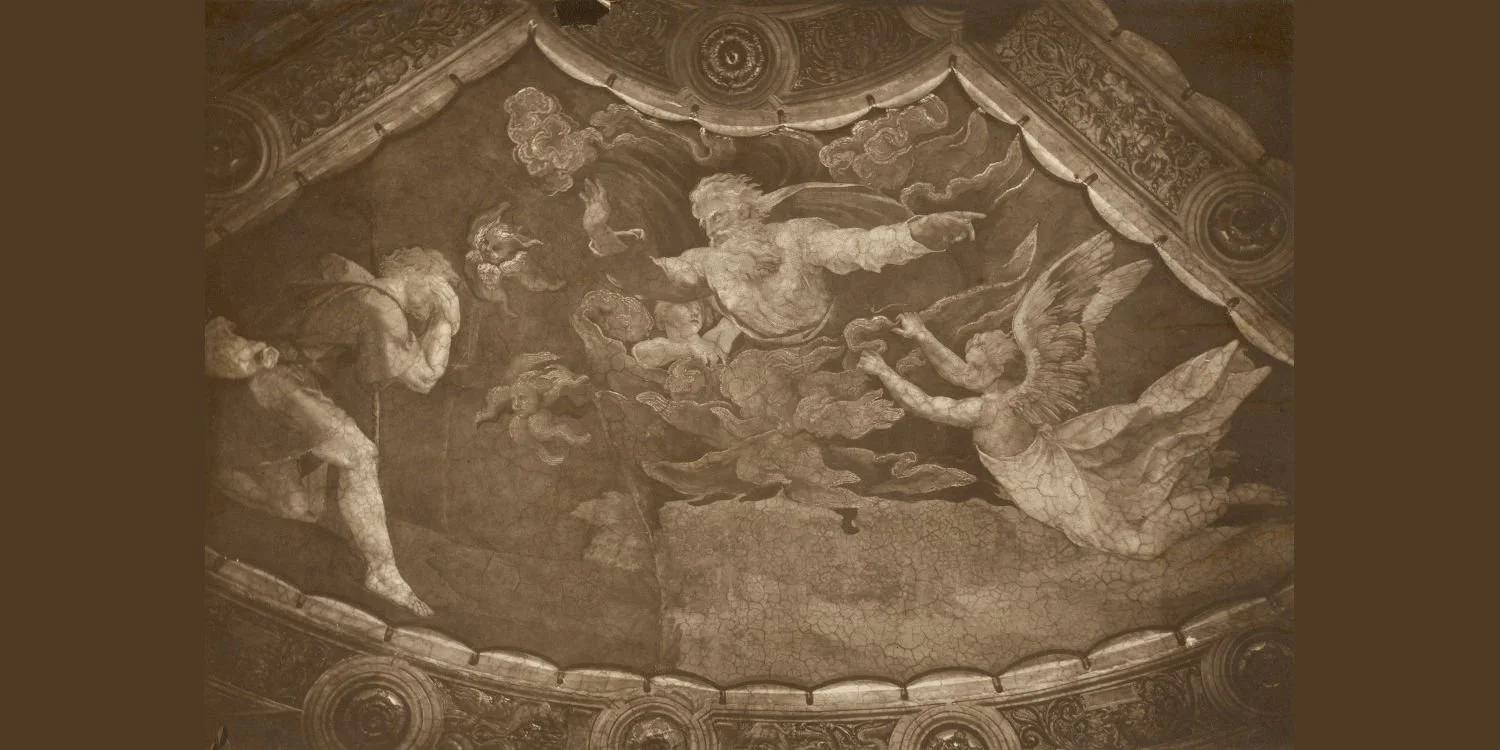
The Covenants of Moses, David, and Jesus
Unlike the aftermath of the Covenants with Adam and Noah, the Covenant with Abraham did not collapse under a catastrophic fall. Even though the Covenant is complicated by the sins of his descendants, God fulfills his promise to Abraham, but Abraham’s lineage ends up in Egypt.
Generations passed. Abraham’s descendant, Joseph, one of the sons of the Patriarch Jacob, was betrayed by his own brothers and sold into slavery in Egypt. Thus, centuries later, Israel became a nation in bondage in Egypt until Moses led the Israelites out of captivity to the Promised Land. God called upon Moses from a burning bush on Mount Horeb (Exodus 3:6, 10). God identified himself as “The God of your fathers, the God of Abraham, the God of Isaac, the God of Jacob. Come, I will send you to Pharaoh that you may bring forth my people, the sons of Israel, out of Egypt.”
Once the children of Israel were released from bondage, Moses led them to Mount Sinai where the Lord established a national Covenant — the Decalogue, the Ten Commandments. No sooner than the Sinai Covenant had been established, however, it was broken. Some Israelites were enticed at Mount Sinai into worship of a golden calf, an icon of an Egyptian deity. Moses expelled them and then Israel was subjected to wandering in the desert as penance. Moses is mentioned more in the New Covenant (the New Testament) than any other Old Testament figure.
Centuries later, around 1,000 BC, King David arose in Salvation History. He descended from the tribe of Judah and is introduced in Scripture as a young shepherd in Bethlehem, which came to be known in our Nativity accounts as the “City of David.” David was a gifted poet and musician. He composed many of the psalms in the Hebrew Bible setting some of them to music. He was also a warrior known to history as having slain the giant Philistine warrior, Goliath (1 Samuel 17:48).
The Prophet Samuel annointed David as King over Israel, “and the Spirit of the Lord came mightly upon David from that day forward (1 Samuel 16:13).” Like a New Adam, David also functioned as a priest and a prophet while Israel expanded to become an empire.
Under the reign of David’s son, Solomon, Israel became a great military power in the Ancient World. His greatest accomplishment was the building of the Temple in Jerusalem and the Ark of the Covenant, which I described in these pages in “The Ark of the Covenant and the Mother of God.”
The terms of Davidic Covenant are layed out in 2 Samuel 7. The elements of the Davidic Covenant include Nathan’s oracle (2 Samuel 7:8-16) about David’s intention to build a sanctuary for Yahweh.
The New Covenant Gospels, especially Matthew and Luke, depict Jesus as the heir of David and the one to restore the Davidic Covenant. God’s Covenant with Jesus was the Institution of the Eucharist at the Last Supper. Jesus identifies his own body and blood as the sacrificial elements of this New Covenant.
This was something entirely new in the Bible and in Salvation History. Jesus did not simply make a Covenant, but rather “became” a Covenant, a living bridge linking us to God. It was, and is, the fulfillment of all of Salvation History.
+ + +
Note from Father Gordon MacRae: Thank you for reading and sharing this post. It will be added to our collection of special Scripture posts about Salvation History.
You may also like these related posts from Beyond These Stone Walls:
A Vision on Mount Tabor: The Transfiguration of Christ
Behold the Lamb of God Upon the Altar of Mount Moriah
The Ark of the Covenant and the Mother of God
On the Great Biblical Adventure, the Truth Will Make You Free
+ + +
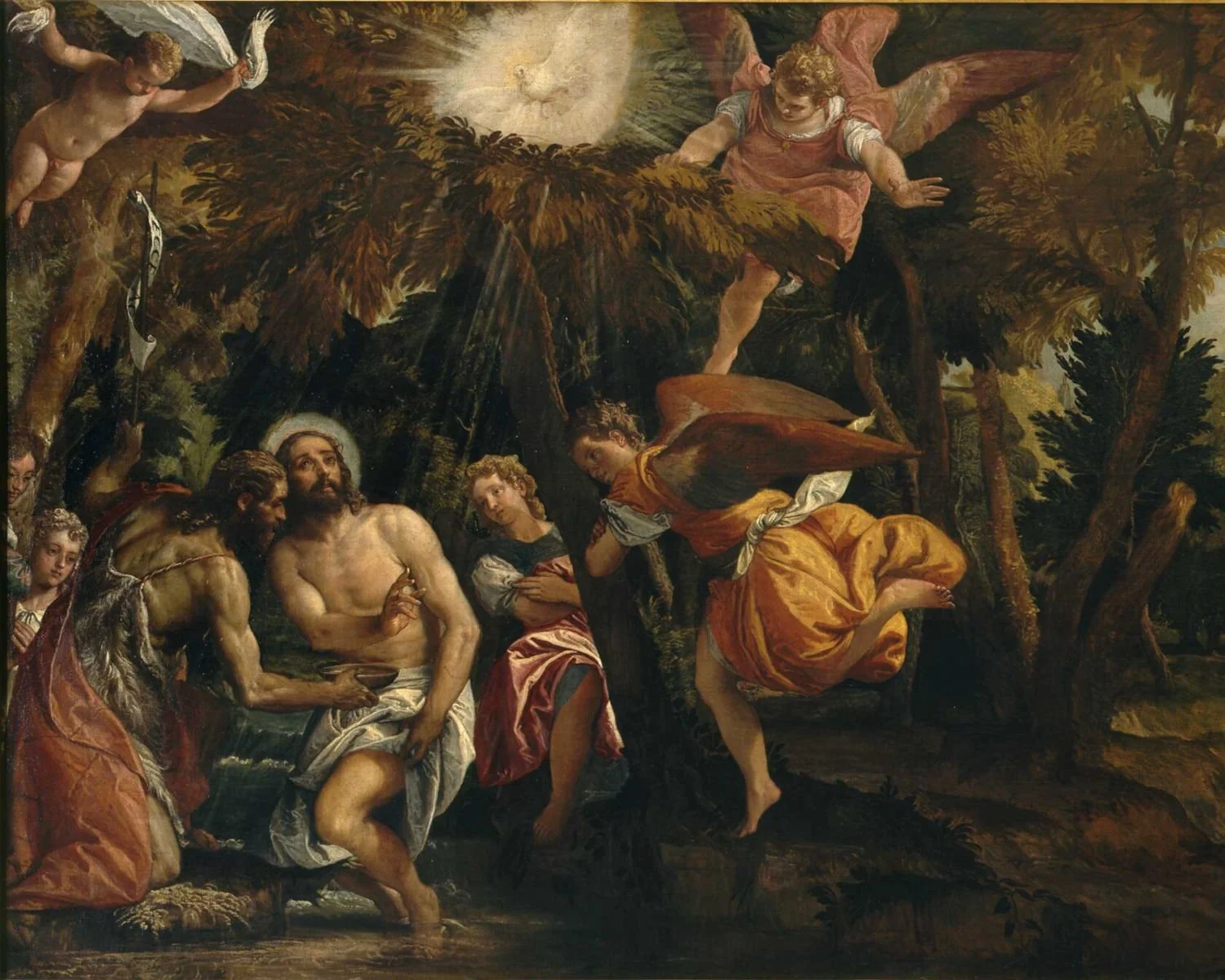
“This is my beloved Son on whom my favor rests.”

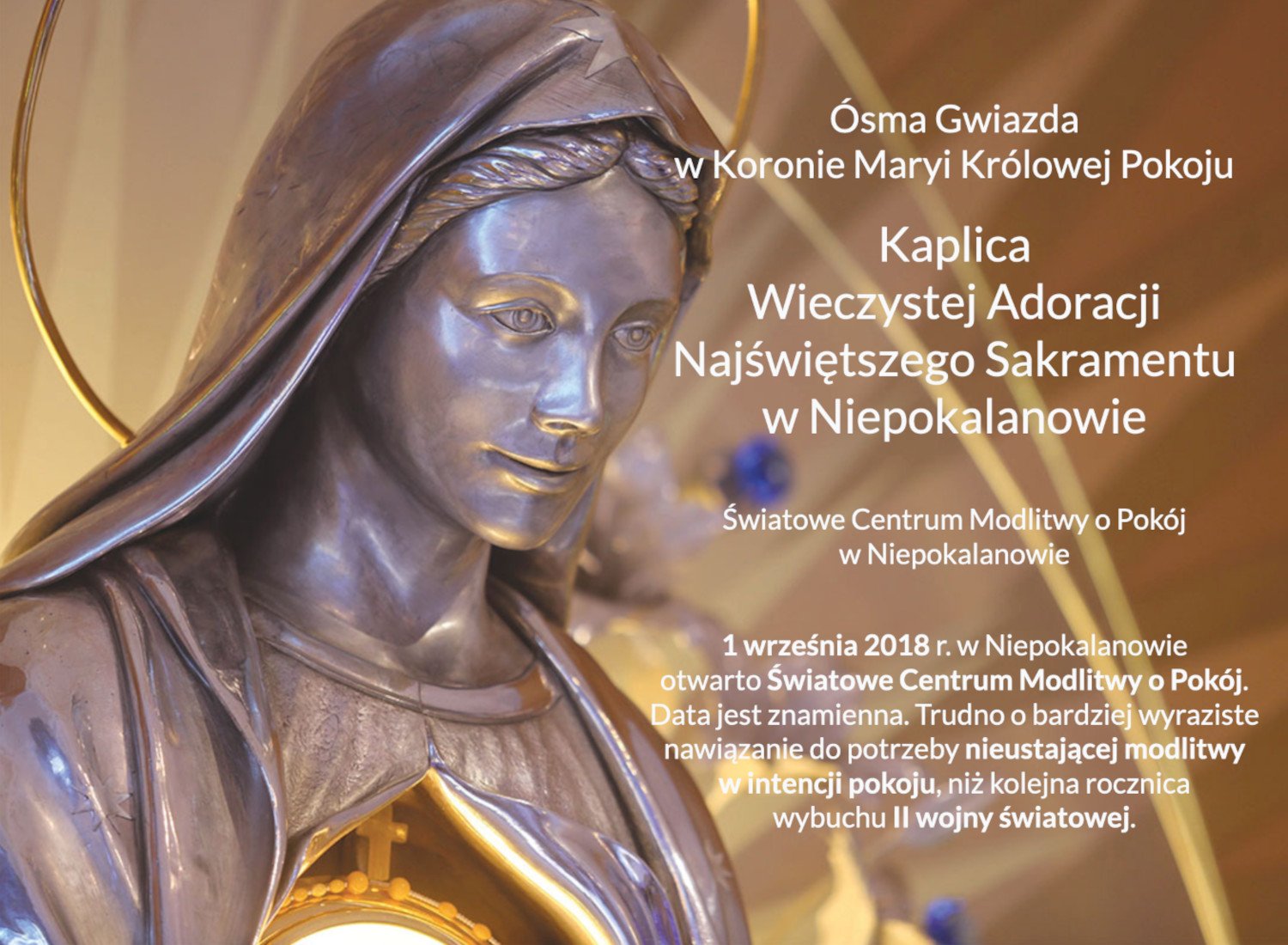

The Eucharistic Adoration Chapel established by Saint Maximilian Kolbe was inaugurated at the outbreak of World War II. It was restored as a Chapel of Adoration in September, 2018, the commemoration of the date that the war began. It is now part of the World Center of Prayer for Peace. The live internet feed of the Adoration Chapel at Niepokalanow — sponsored by EWTN — was established just a few weeks before we discovered it and began to include in at Beyond These Stone Walls. Click “Watch on YouTube” in the lower left corner to see how many people around the world are present there with you. The number appears below the symbol for EWTN.
Click or tap here to proceed to the Adoration Chapel.
The following is a translation from the Polish in the image above: “Eighth Star in the Crown of Mary Queen of Peace” “Chapel of Perpetual Adoration of the Blessed Sacrament at Niepokalanow. World Center of Prayer for Peace.” “On September 1, 2018, the World Center of Prayer for Peace in Niepokalanow was opened. It would be difficult to find a more expressive reference to the need for constant prayer for peace than the anniversary of the outbreak of World War II.”
For the Catholic theology behind this image, visit my post, “The Ark of the Covenant and the Mother of God.”

The Ark of the Covenant and the Mother of God
A theological expedition into Salvation History reveals a startling truth about the Ark of the Covenant in the Old Testament and the identity of Mary, Mother of God.

A theological expedition into Salvation History reveals a startling truth about the Ark of the Covenant in the Old Testament and the identity of Mary, Mother of God.
December 21, 2021
Most long time readers of these pages might guess my favorite among the canonical Gospels. Back in 2019, I wrote a post entitled “St. Luke the Evangelist, Dear and Glorious Physician.” In part, it profiled a 1959 book by Taylor Caldwell that I read at age 21 during my novitiate year as a Capuchin. Several years later, life took me in another direction to diocesan priesthood, and then down darker roads that seemed to have a will of their own. These were roads of betrayal and false witness that sent me ever further from the dream of my vocation to priesthood as I first envisioned how it would be.
That story is told in small snippets in multiple places. One day, I will compose the whole story. For this post, suffice it to say today that one book always stood out in the back of my mind as a story of Divine Providence that very much influenced my life. It was Dear and Glorious Physician, the 1959 novel by Taylor Caldwell on the life of Saint Luke. It was Taylor Caldwell's Magnum Opus, forty years in the making, and a masterpiece of Catholic literature.
Two years after I first wrote about the book, I saw it in a library catalog from Ignatius Press. I was looking for a copy of Prison Journal Volume 2 by George Cardinal Pell when I spotted a reprint of Dear and Glorious Physician and decided that I could afford another $22.00. Forty-seven years after my first reading of it, I am reading it again for Advent in honor of St. Luke. Dear and Glorious Physician is indeed a masterpiece.
Among the four New Testament evangelists, Saint Luke provides the most theologically nuanced information about the identity of Mary and her role in Salvation History. The Gospel of Luke is unique. He is the only Gentile author to compose a New Testament book and the only evangelist to write a sequel — the Acts of the Apostles which begins where Luke’s Gospel narrative ends.
Luke’s intended audience on the surface included Gentile Christians throughout the Mediterranean world. I write “on the surface” because Luke writes a fascinating narrative beneath the obvious one. A deeper reading reveals a secondary audience, the Diaspora, the dispersion of Jews living outside of Palestine since the Babylonian exile of the sixth century BC.
In subtle echoes of the Old Testament, Luke reaches into ancient times recalling the most sacred imagery for the people of Israel. Nowhere is this more evident in Luke’s Gospel than in his Infancy Narratives about the Annunciation to Mary and her Visitation to Elizabeth which is the Gospel for the Fourth Sunday of Advent.

The Ark of the Covenant
That narrative requires some understanding of the most treasured and sacred object for Israel in the Old Testament, the Ark of the Covenant. First, I need to clarify what is meant by a “Testament.” In relation to Scripture, the word is a Latin translation by St. Jerome of the Hebrew “berit” and the Greek, “diathēkē.” Both words refer to a kinship bond with obligations between connected parties. It is the master theme of Sacred Scripture, and in that sense, the word “Covenant” captures better than “Testament” the meaning and intent of what we call the Old and New Testament.
I recently read in a secular commentary that Christianity is the only religion that includes the entire Sacred Scriptures of another religion, Judaism. That is not accurate. Christianity is not a replacement of Judaism, but rather a continuation of it. The Gospel According to St. Luke makes this most clear in Luke’s treatment of the Ark of the Covenant.
The Ark was a chest constructed in the time of Moses as described in the Book of Exodus (25:10-26). It was constructed of acacia wood, a tree that grows nowhere but in the southern district of Palestine in the Jordan Valley. Acacia appears in Scripture in three places: the Books of Exodus (Ch 25-27, 30) and Deuteronomy (10:3) in reference to the construction of the Ark, and in a prophecy of Isaiah (41:19) who states that in the messianic restoration of Israel, Yahweh will make acacia grow in the desert. This is significant.
The desert in Scripture is highly symbolic of exile and wandering. It is a place of demons, a place where mankind becomes lost. To make acacia grow there is symbolic of God bringing the Ark of the Covenant even there. This is why the Gospel gave John the Baptist the title of “A Voice in the Wilderness” in fulfillment of a prophecy of Isaiah (40:2-5):
“A voice cries in the wilderness ‘Prepare the way of the Lord, make straight in the desert a highway for our God ... and the glory of the Lord shall be revealed.’”
Inside the Ark of the Covenant — also called the “Ark of Testimony” and the “Ark of the Presence” — was placed the stone tablets of the Decalogue, the Ten Commandments inscribed by Yahweh and given to Moses on Mt. Sinai after the Exodus from slavery in Egypt. As such, the Ark was believed by all of Israel to be the Tabernacle of the Presence of Yahweh.
The Ark was elaborately designed according to specifications issued to Moses by Yahweh. The acacia was covered inside and out by gold plating. At the four corners of the Ark were rings of solid gold to permit gilded acacia poles to carry the Ark so human hands would not touch it. Its lid was a solid gold slab that formed the “kapporet,” the seat of atonement along with two cherubim of beaten gold facing each other (Exodus 25: 17-22). The two golden cherubim formed a footstool for the Hidden Lord.
The Ark was the place of the Lord’s intimate presence among his people, and it became the most cherished object in Israel. It was secured in the Holy of Holies, the Tabernacle where Moses conversed with the Lord (Numbers 7:89). The Ark was carried into the Promised Land of Canaan appearing in the Books of Joshua (3:3; 3:11), Judges (20: 27), and First Samuel (4: 3,11). During a struggle with the Philistines, it was captured and carried off (1 Samuel 4: 11).
The Philistines suffered seven months of earthquakes and plague before returning the Ark to the Israelites. Out of fear of human contact with it, the Ark was kept in Kiriath-Jearim for 20 years in the home of Abinadab and his son, Eleazar, both consecrated with responsibility for the Ark. Then, about 1,000 years before the Birth of the Messiah, it was returned to David who placed it prominently in a Tabernacle in his established capital, Jerusalem (2 Samuel 6:2ff).
Later, David’s son, Solomon, enshrined the Ark in the Jerusalem Temple where it remained for 400 years until the Fall of Jerusalem to the Babylonians in 586 BC. The Second Book of Maccabees (2:5-7) refers to the Ark saved from destruction by the Prophet Jeremiah and hidden on Mount Nebo “until God gathers His people together again, and shows His mercy.”

Mary, the New Ark of the Covenant
In the Book of Revelation (11:19) the Ark of the Covenant appears again, this time in the Celestial Temple in fulfillment of the prophecy of Jeremiah. This vision of the Ark leads immediately in Revelation to the vision of the Woman Clothed with the Sun who was with child (Rev. 12:1). The image is that of Mary, presented as Mother of the Messiah and spiritual Mother of Israel, the New Ark of the Covenant.
I alluded to this earlier in an Advent post, “To Christ the King through the Immaculate Heart of Mary.” In the first two chapters of his Gospel, Saint Luke strings together some of the most beautiful traditions from both Testaments (Covenants) about the nature of the Ark of the Covenant. In subtle language, he leads the careful reader to a conclusion about Mary herself: that she, as “Theotokos,” the Bearer of the Presence of God, is thus the Ark of God’s New Covenant while the Ark of the Old Covenant prefigures a more wonderful Ark to come, the Mother of the Messiah.
Luke draws upon a tradition from the Old Covenant setting up a subtle but significant parallel between Mary’s Visitation to Elizabeth (Luke 1:30-45) and David's encounter with the Ark of the Covenant (2 Samuel 6:2) about 1000 years earlier. Consider these passages:
In Luke 1:39: “In those days, Mary arose and went with haste into the hill country to a city of Judah.” In Second Samuel 6, David arose and went in haste to the same place to receive the Ark of the Covenant.
In Luke 1:41: “When Elizabeth heard Mary’s greeting, the child leaped in her womb.” In Second Samuel 6:16, David danced with joy in the presence of the Ark. In the Gospel of Luke, Elizabeth asks of Mary, “Who am I that the Mother of my Lord should come to me?” (Luke 1:43). In Second Samuel (9:8), David, who prefigures the coming Messiah, is then asked by the son of Jonathan, “Who am I that you should look upon someone such as me?” In Luke, Mary stays at the house of Zechariah and Elizabeth for three months. In Second Samuel (6:11), David stays in the house of Obed-edom three months.
These opening narratives from Luke have a multitude of such parallels with which Luke draws faithful Jews of the Diaspora who were familiar with the Old Covenant into the New. Finally, in Luke’s sequel, the Acts of the Apostles, Mary is present with the Apostles at Pentecost as the Holy Spirit calls forth the newborn Church. This provides a fulfillment of the declaration of Jesus from the Cross establishing Mary in the unique role of Motherhood over the whole Church:
“When Jesus saw his mother and the disciple whom he loved, he said, ‘Woman, behold your son.’ Then he said to the disciple, ‘Behold your Mother.’ From that hour, the disciple took her into his home.”
— John 19:26-27
+ + +
From the vision of Saint John:
“Then God’s temple in Heaven was opened and the Ark of his covenant was seen within his temple; and there were flashes of lightning, loud noises, peals of thunder, heavy hail, and the Earth quaked. And a great sign appeared in Heaven, a woman clothed with the sun, with the moon under her feet, and on her head a crown of twelve stars. She was with child.”
— Rev. 11:19 - 12:2
+ + +
O come, O come, Thou Lord of might,
Who to Thy tribes on Sinai's height
In ancient times did give the Law
In cloud and majesty and awe
O come, Thou rod of Jesse's stem,
From every foe deliver them
That trust Thy mighty power to save
And give them victory over the grave
Rejoice! rejoice! O Israel
To Thee shall come Emmanuel!
+ + +
Special Announcements:
If you like this excursion into Sacred Scripture, please visit our collection of BTSW Sacred Scripture posts, From Abraham to Easter for other titles that make Scripture come alive.
Our Voices from Beyond feature has an article by Father Gordon MacRae and Felix Carroll on the work of Mary behind those stone walls. Father G says, “Don’t let the top graphic on that post scare you away.”
You may also wish to visit these related posts:
St. Gabriel the Archangel When the Dawn from On High Broke Upon Us
