“There are few authentic prophetic voices among us, guiding truth-seekers along the right path. Among them is Fr. Gordon MacRae, a mighty voice in the prison tradition of John the Baptist, Maximilian Kolbe, Alfred Delp, SJ, and Dietrich Bonhoeffer.”
— Deacon David Jones

Holidays in the Hoosegow: Thanksgiving with Some Not-So-Just Desserts!
Thanksgiving is a state of mind, not place. Even prisoners can be thankful, if not for being prisoners, then perhaps just for the art of being itself.

Thanksgiving is a state of mind, not place. Even prisoners can be thankful, if not for being prisoners, then perhaps just for the art of being itself.
November 12, 2025 by Father Gordon MacRae
I have been hindered from writing a new post this month. This gets a little creepy, so bear with me. On the night of October 31, I was visited in my cell by two brown recluse spiders who were apparently hiding in a shirt that I put on that night because I was cold. Well, so were the spiders and unbeknownst to me they claimed squaters rights to the shirt. Sometime during the night leading to the Solemnity of All Saints, I was bitten twice in the back by two poisonous spiders.
It was a few days before I sought treatment being the stubbornly independent person that I am. Finally the bites evolved into a serious blood infection that now requires all-out war. I now have daily visits to the Medical Unit for wound treatment and new bandaging. I am also on a potent antibiotic. There is some tissue damage. I lost the battle with the spiders, but I am told that I am winning the war thanks to the medical care I am receiving.
The worst part of this whole story was when I told it in a phone call to Pornchai Max Moontri in Thailand, he launched into singing “Itsy, Bitsy Spider.”
+ + +
I hope you will read “The True Story of Thanksgiving” posted here every year in late November, this year included. I figure that, in America at least, we eat the same meal every year at Thanksgiving. It is a holiday bound up in traditions. Every year I grimace as the U.S. President pardons a turkey on national television, then gobbles up an already preplucked Butterball in its place for Thanksgiving Dinner. So we added a tradition of our own several years ago, which you will find repeated again this year on the day before Thanksgiving.
Even The Wall Street Journal honors its own Thanksgiving tradition by repeating, on the day before Thanksgiving, the same two editorials at the top of its opinion page. So the message is that repetition is not a bad thing and the story we tell at Thanksgiving is both historically true and spiritually wondrous. Since I first wrote it back in 2010, references to it have appeared in two published history books about the Mayflower Pilgrims. We expect to publish it anew here on Wednesday, November 26.
I hope you will plan to read “The True Story of Thanksgiving: Squanto, the Pilgrims, and the Pope.”
Thanksgiving is a tough sell for most prisoners. It often involves only a litany of losses and discouragement. But I have advocated among other prisoners a more positive approach with some mixed success.
I am not quite ready to give thanks just yet for my 31st Thanksgiving holiday in the hoosegow. But writing this post did make me wonder about the origin of “hoosegow.” The local cable system here carries American Movie Classics (AMC) which broadcasts old westerns on most Saturday mornings. I love John Wayne movies, especially the later ones. It might have been in one of those that I heard Walter Brennan (who, by the way, is from my hometown!) playing a cranky old deputy sheriff.
I can even now hear Walter Brennan threatening to throw someone in the “hoosegow.” Hoosegow has an interesting origin. It comes from the phonetic pronunciation of a Spanish word, “Juzgado,” meaning “courtroom.” It is the past participle of “juzgar,” which in turn came from the Latin “iudicare,” (pronounced, “you-dee-CAR-eh) meaning “judge.” Since judges send people to jail, “juzgado” came to refer to jails and prisons. Then, in the slang of border towns in the American Old West, it became “hoosegow.” So now you know the origin of the word, hoosegow. Don’t thank me just yet!
Here in the hoosegow, like everywhere else in the U.S., we are about to mark Thanksgiving. I would not use “celebrate” to describe how prisoners observe this, or any, holiday. On the whole, prisoners do not really celebrate much. But even here most can find something to be thankful for. I found such a moment several years ago when Pornchai Max and other friends were still here with me. I will even go so far as to say I celebrated it.
The Earth’s journey around our Sun brings about the inevitable changing seasons beyond these stone walls. I have journeyed in life 72 times around our Sun, but most of the fallen citizens around me barely notice the changing world. We venture outside each day among asphalt and steel and high concrete walls with little evidence of the march of time and the changing seasons. The “Field of Dreams” — the prison ball field and the one place with trees in sight — closed for the year two months ago. The only leaves I see now are the very few that the wind carries over the high prison walls which consume my view of the outside world.
One day in autumn some years ago, I turned a corner outside on the long, concrete ramp winding its way up to the prison mess halls. I looked up to discover a spot I never noticed before.
It was a place amid the concrete and steel that afforded a momentary glimpse of a tree-covered hill in the distance beyond the walls, and the rays of the setting sun had fallen upon that very spot. For a moment, the hill was clothed in a blaze of glory with an explosion of fall color. It was magnificent! I felt a bit like Dorothy Gale, stepping for the first time out of the gray gloom of her Kansas home into the startling glory of the Land of Oz.
Prisoners are not permitted to stop and gawk while moving from Point A to Point B, but in two more steps, or a few more seconds, the view would be gone. So I nudged Pornchai and Joseph who were walking with me, and we all stared for a moment in awe. We froze in our tracks for those seconds, risking a guttural shout of “KEEP MOVING!” from one of the guards posted along this via dolorosa.
There was a guard right at that spot, poised to bellow, but then he followed our gaze and he, too, gawked for a moment, keeping his shout to himself. We moved on up the ramp amid all the downcast eyes around us, but saw no evidence that anyone else noticed that scene of radiant beauty beyond these stone walls. I thanked God in silence for nudging me to look up just then. It was proof that a moment for giving thanks presents itself every day, even in this awful place. Those moments will be passed by unnoticed if I am so consumed with grief that I fail to look up and out beyond these stone walls. I have to look up to see. I have to keep my eyes opened, and focus somewhere beyond just me.
I look up at that spot every day now, but the color has faded to a barren gloom, just like life here — or anywhere else — can if I let it. I have learned from Squanto of The Dawn Land that even the worst plight affords an opportunity for thanksgiving. We must not let those moments pass by unnoticed for our very souls depend on them.
I despise this place of captivity where so many of the days given to me have been spent. Really spent! Yet on past Thanksgiving Days, Pornchai, and Joseph, and other friends who walked with us each day, all found a few seats together in the prison chow hall. There we gave thanks for turkey, for an annual piece of pumpkin pie, for friendship found even in the ruins of lives broken and dreams delayed, for laughter in the face of pain, and especially for the gift of bearing one another’s burdens with thanks for the graces given to us.
In a sea of downcast eyes, furtive glances, and foul speech seldom rising above talk of gangs, and drugs, and the exploitation of others, Pornchai showed off his Saint Maximilian medal, and spoke of salvation and sacrifice and the privilege of being Catholic in a truly destitute public square.
In the end, I had been left with no choice and no other prayer to utter: Thank you, Lord, for this day!
+ + +
Note from the BTSW Editor: There are simple ways in which you may help magnify this Voice in the Wilderness.
It helps much to subscribe to Father Gordon’s posts. Note that you will receive an email asking you to confirm your subscription.
Though we have given up sharing Father Gordon’s posts on Facebook, Pornchai Maximilian Moontri has a Facebook Page in Thailand, which he uses to share our posts in Southeast Asia communities. You may send your “Friend Requests” to Pornchai Maximilian Moontri.
It would also help Father Gordon substantially if you follow him on X, formerly Twitter.
Both Father Gordon and Pornchai Moontri have a strong following at LinkedIn.
And lastly, Father Gordon’s page at gloria.tv is always worth a visit.
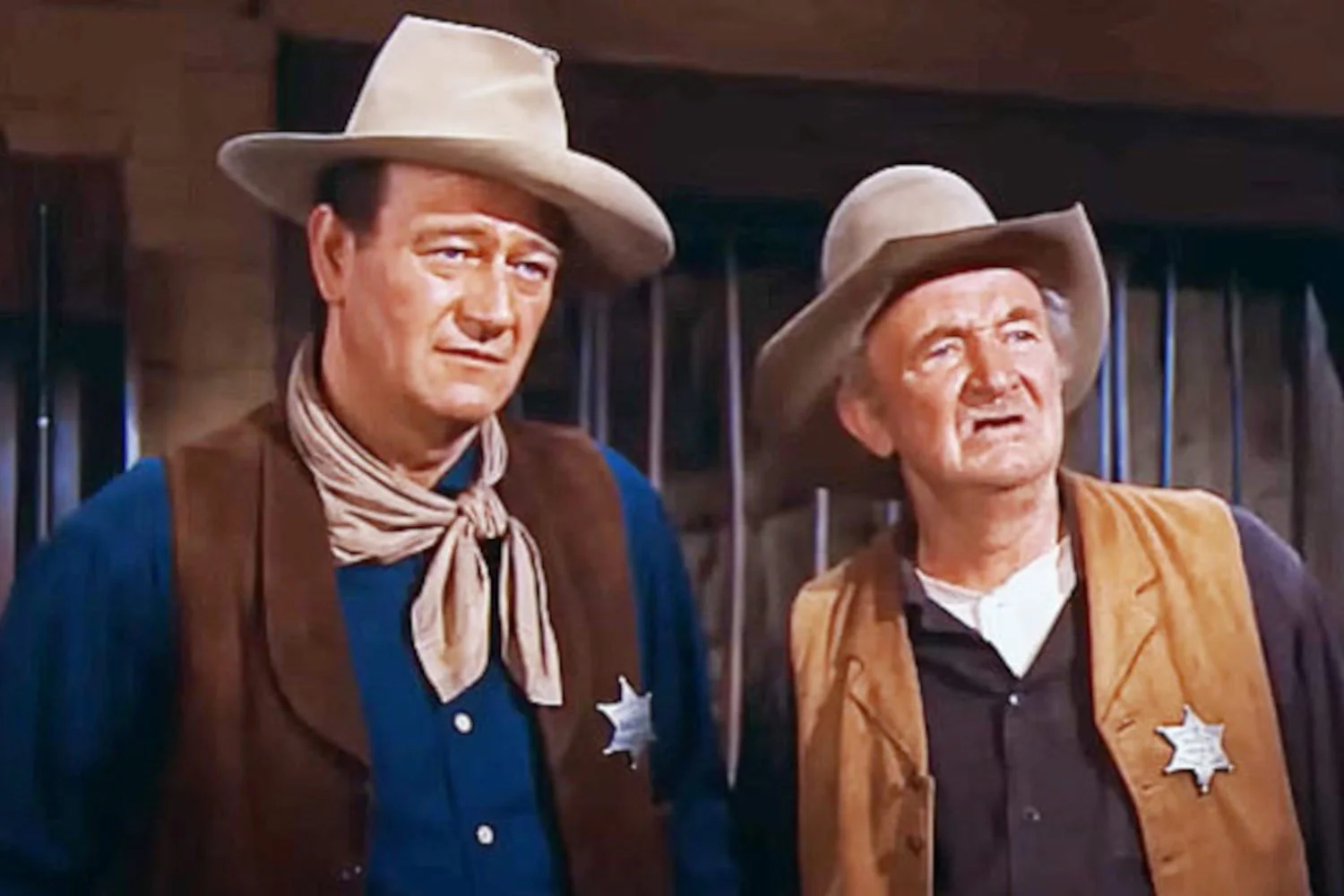
John Wayne and Walter Brennan in Rio Bravo.

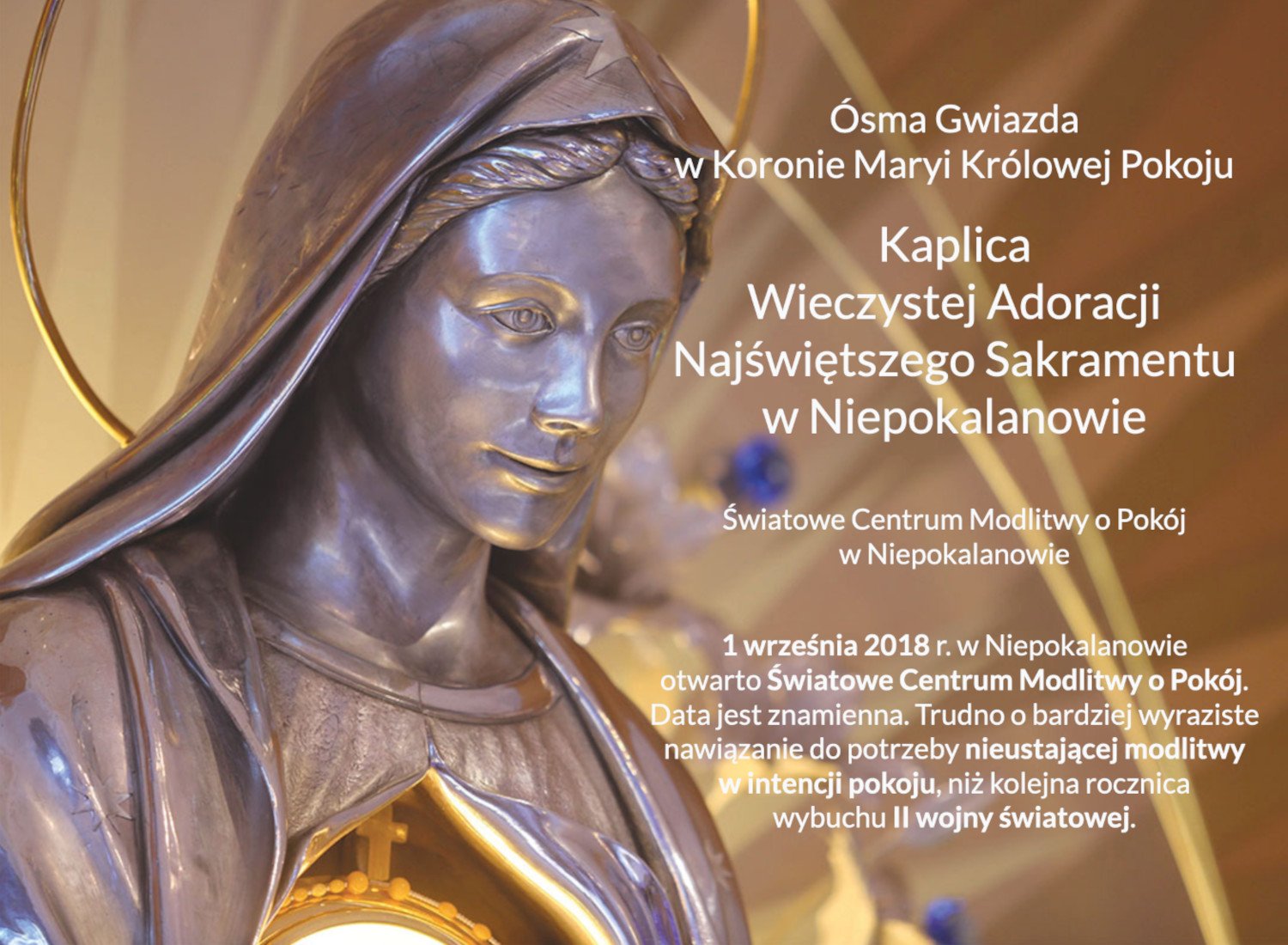

The Eucharistic Adoration Chapel established by Saint Maximilian Kolbe was inaugurated at the outbreak of World War II. It was restored as a Chapel of Adoration in September, 2018, the commemoration of the date that the war began. It is now part of the World Center of Prayer for Peace. The live internet feed of the Adoration Chapel at Niepokalanow — sponsored by EWTN — was established just a few weeks before we discovered it and began to include in at Beyond These Stone Walls. Click “Watch on YouTube” in the lower left corner to see how many people around the world are present there with you. The number appears below the symbol for EWTN.
Click or tap here to proceed to the Adoration Chapel.
The following is a translation from the Polish in the image above: “Eighth Star in the Crown of Mary Queen of Peace” “Chapel of Perpetual Adoration of the Blessed Sacrament at Niepokalanow. World Center of Prayer for Peace.” “On September 1, 2018, the World Center of Prayer for Peace in Niepokalanow was opened. It would be difficult to find a more expressive reference to the need for constant prayer for peace than the anniversary of the outbreak of World War II.”
For the Catholic theology behind this image, visit my post, “The Ark of the Covenant and the Mother of God.”
Dragged Into Thanksgiving Kicking and Screaming
Even when inflation deepens our need, even when politics rage around us, even when unjustly in prison at Thanksgiving for 29 years, there is cause for gratitude.

Even when inflation deepens our need, even when politics rage around us, even when unjustly in prison at Thanksgiving for 30 years, there is cause for gratitude.
Thanksgiving by Fr. Gordon MacRae
One year ago, I wrote a post entitled, “A Struggling Parish Builds an Advent Bridge to Thailand.” It was about a selfless decision of Father Tim Moyle and the people of St. Anne Parish in rural Mattawa, Ontario. They set aside their own parish needs during Advent 2021 to raise funds to assist Father John Hung Le, a friend and Society of the Divine Word Missionary and the sole provider for the Vietnamese Refugees of Thailand. He serves some of the poorest of the world’s poor.
Father Tim and his parish got the idea for the project from reading Beyond These Stone Walls. The Advent project was a wonderful success, not only for the refugees, but also for the parish and for us, and in more ways than we yet even know.
Several months later, I wrote about the end result of this great endeavor in a post entitled, “February Tales and a Corporal Work of Mercy in Thailand.” Each event in this story carved out a path to other events which, on their surface, seemed not to be connected at all, but underneath we found profound meaning. In that post, I recalled a book that I read over a half century ago. It set in motion many paths which still make connections today. The book was The Once and Future King. Here is an excerpt from what I wrote of it in 2021:
I was sixteen years old for most of my senior year in high school growing up on the North Shore of Boston in 1969. I was a full year younger than most of my class. There are many events that stand out about that year, but one that I remember most was an adventure in British literature that I found in The Once and Future King, the classic novel of the Arthurian legend by T.H. White first published in 1939.
In my inner city public high school, The Once and Future King was required senior year reading. Most of my older peers groaned at its 640 pages, but I devoured it. The famed novel is the story of King Arthur, the Sword in the Stone, the Knights of the Round Table, and the quest for the Holy Grail — all based on the medieval Morte d’Arthur by Sir Thomas Mallory in the 16th Century. By the time I was half way through it at 16, I had completely forgotten that I was forced to read it and obliged to resent it.
I found a worn and tattered copy some 50 years later in a prison law library where I am the legal clerk. I took it back to my cell for a weekend to see if it held up against the test of time. It did so admirably, and I devoured it for the second time in my life. I was astonished by how well I remembered the plot and every character. I was reunited with my favorites, the Scottish knights and brothers Sirs Gawain, Agravaine, Gareth and Gaheris. A few days after I began to read it anew, I came upon one of the popular Marvel X-Men movies and noted with surprise that the character, Magneto, was reading The Once and Future King in his prison cell.

The backdrop of my first reading of the book at age 16 in 1969 was the chaos of my teenage life in a troubled inner city high school. Protests and riots against the Vietnam war were daily fare. I was just then beginning to take seriously the Catholic heritage to which I previously gave only Christmas and Easter acknowledgment, and I was tasked with restoring my newly recovered faith in the heat of division following the Second Vatican Council.
The Once and Future King was set in a time when the Church and the agrarian society of our roots lived in rhythmic harmony. The Church’s liturgical year is itself a character always in the background of the story. Too many of its signs and wonders have since been sadly set aside. I don’t think we are better off for that experiment and I remember wondering at age 16 whether we might one day regret it. That day is today.
It was on the Feast of Candlemas that Arthur drew the sword from the stone to become King Arthur. We don’t call it Candlemas any longer, but the day has a fascinating history. The Mass of Blessing of Candles takes place on the 2nd of February. Today we call it the Presentation of the Lord recalling the Purification of Mary forty days after Christmas as she brought the newborn Christ to Simeon in the Gospel (Luke 2: 22-35). It was the fulfillment of a ritual law set down in the Book of Leviticus (12:1-8). The purification was strictly a faithful fulfillment of the law and had no connection to moral failures or guilt.
“And his father and mother marveled at what was said about him; and Simeon blessed them and said to Mary his mother, ‘Behold, this child is set for the falling and rising of many in Israel, and for a sign that is spoken against (and a sword will pierce through your own soul also), that thoughts out of many hearts may be revealed.’”
— Luke 2:33-35
+ + +

A Tale of Thanksgiving
“Sometimes, life seems to be unfair.” That was what Merlyn said to Young Arthur in The Once and Future King. This quote was the introduction to a story within the story that I read long ago. For over half a century, the details of the story were always with me, engraved verbatim in my memory, but for the life of me, I could not recall exactly where and when I first read it. I stumbled upon it a half century later when I was writing the post described above. It was in The Once and Future King. It’s a story about Divine Providence, and it’s a perfect allegory for Thanksgiving.
The brief story within the story impacted me deeply at age 16, perhaps mostly because I thought then that sometimes life really is unfair. That fact has been reaffirmed for me countless times since. Here is the story just as Merlyn told it to young Arthur who, prior to extracting the Sword in the Stone, was known simply and humbly as “the Wart”:
“Sometimes,” Merlyn said, “life does seem to be unfair. Do you know the story of Elijah and the Rabbi Jachanan?” “No,” said the Wart.” He sat down resignedly upon the most comfortable part of the floor, perceiving that he was in for something like the parable of the looking glass.
“This Rabbi,” said Merlyn, “went on a journey with the Prophet Elijah. They walked all day and at nightfall they came to the humble cottage of a poor man whose only treasure was a cow. The poor man ran out of his cottage, and his wife ran too, to welcome the strangers for the night and to offer them the simple hospitality which they were able to give in straightened circumstances.
“Elijah and the Rabbi were entertained with plenty of cow’s milk, sustained by homemade bread and butter, and they were put to sleep in the best bed while their kindly hosts lay down before the kitchen fire. But in the morning, the poor man’s cow was dead.
“As they walked later, the Rabbi was unable to keep silent any longer. He begged the Prophet Elijah to explain the meaning of his dealings with human beings.
“In regard to the poor man who received us so hospitably,” said the Prophet, “it was decreed that his wife was to die that night but in reward for his goodness, God took his cow instead. I repaired the wall of the rich miser because a chest of gold was concealed at the place where it was crumbling. If the miser had repaired the wall himself, he would have discovered the treasure. So say not therefore to the Lord, ‘What doest Thou?’ but instead say in your heart, ‘Must not the Lord of all the Earth do right?’”
— T.H. White, The Once and Future King, pp 88-89
+ + +
Sometimes things are just not as they seem. Profound meaning and purpose can be found even in the greatest disappointments and suffering. God gives us the grace to bear these for a Divine End known only to Him, but sometimes also revealed in time to us. Divine Providence is exemplified with power and grace in a post that has become our Thanksgiving classic, and I hope it gives you perspective in whatever you suffer in life. I will post it here tomorrow.
+ + +
Note from Fr. Gordon MacRae:
Please visit our SPECIAL EVENTS Page for news on how to help us. Thank you for reading and sharing this post. I have recently received several letters from newer readers who thank me for adding links to related posts at the end of newer ones. The BTSW Public Library is open 24 hours a day, seven days a week for perusal of dozens of older posts.
I especially recommend the following categories:

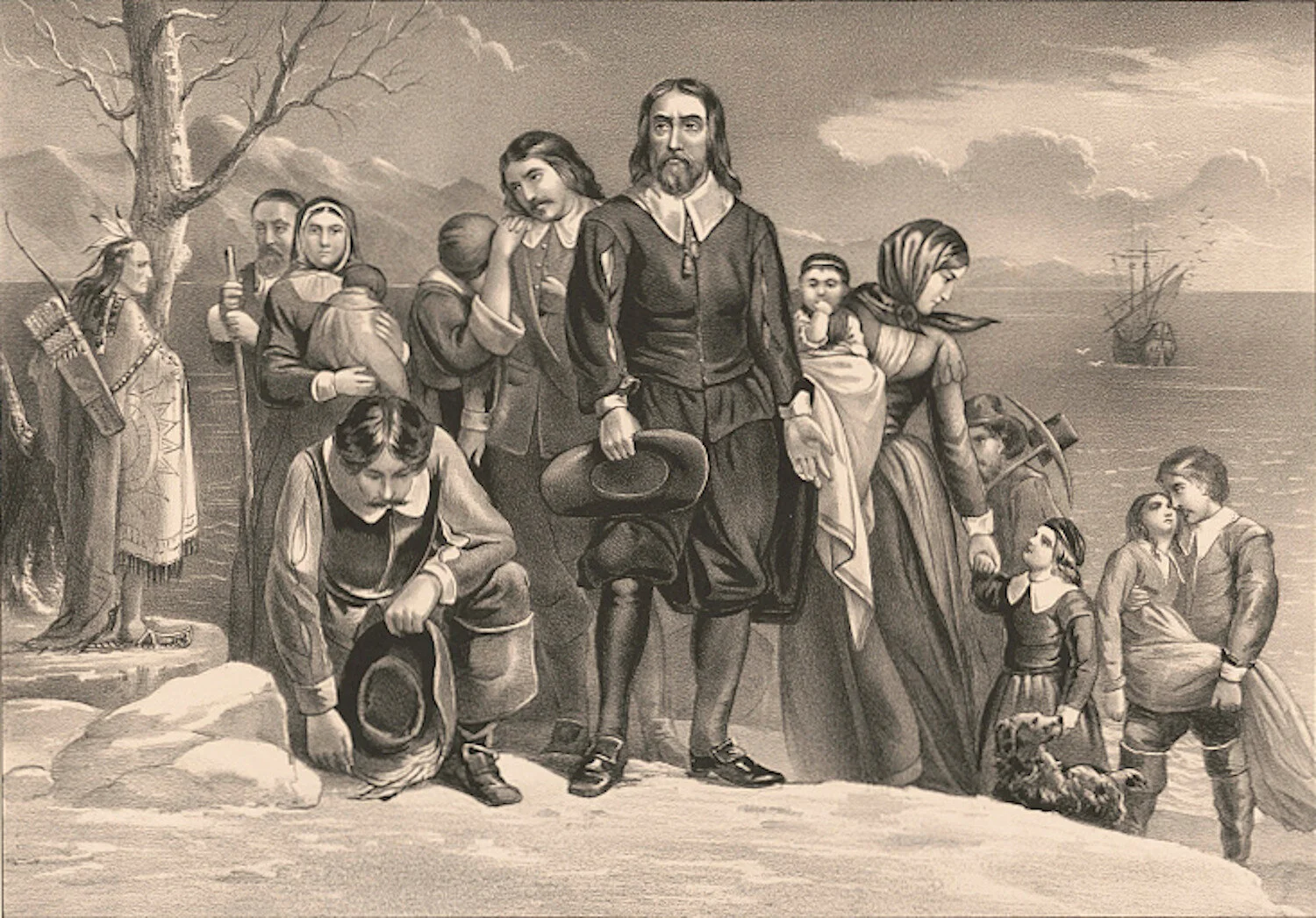
The Challenge of Thanksgiving in the Midst of the Fall
The Mayflower pilgrims arrived in America on November 21, 1620. Squanto, the real hero of our Thanksgiving, has a 400 year-old tale of survival in a pandemic.
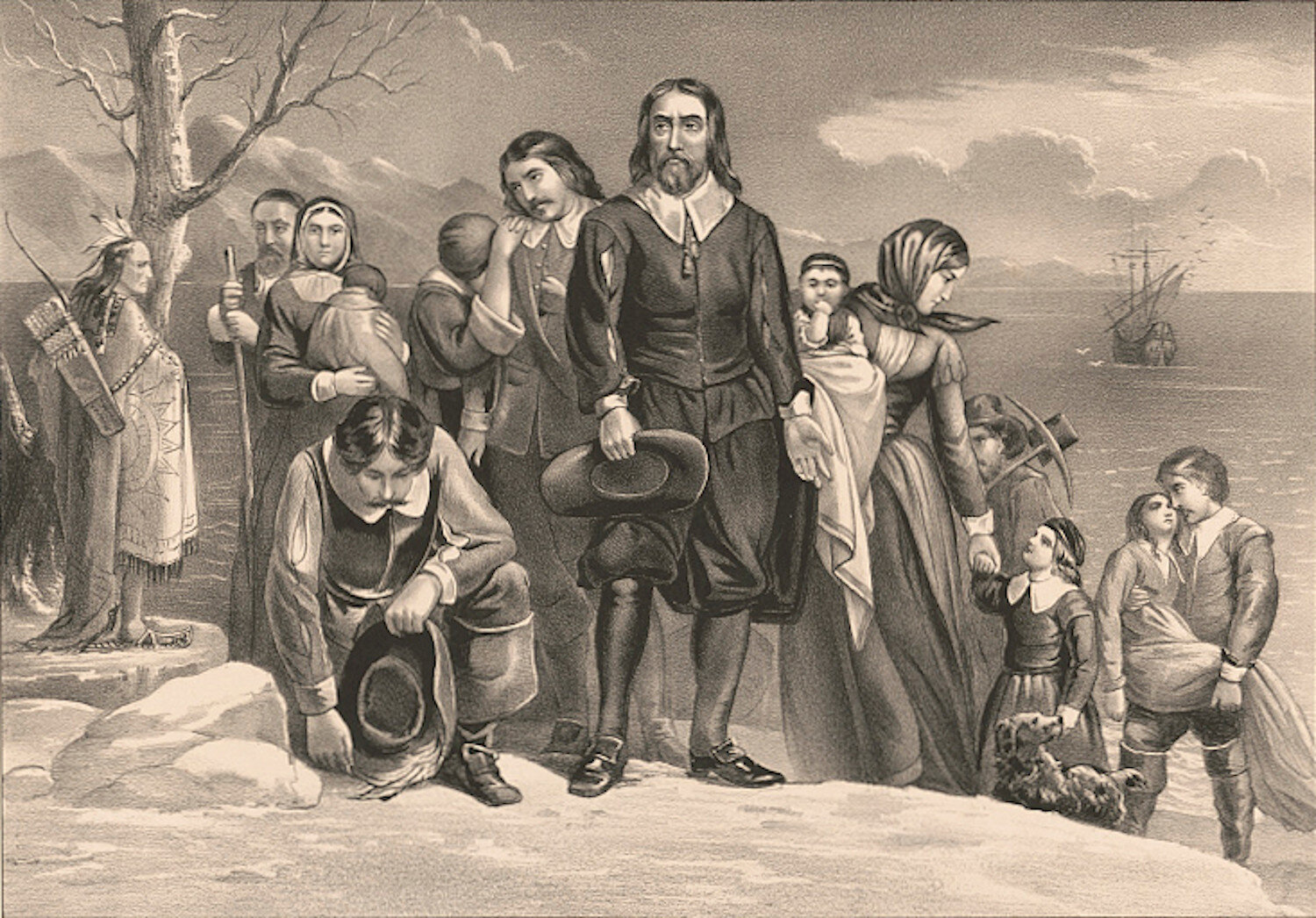
The Mayflower pilgrims arrived in America on November 21, 1620. Squanto, the real hero of our Thanksgiving, has a 400 year-old tale of survival in a pandemic.
Thanksgiving by Fr Gordon MacRae
Editor’s Note: The following post was written by Father Gordon MacRae in November 2020, a time when all Thanksgiving became a challenge under the weight of a global pandemic. Nonetheless, there is cause for Thanksgiving here.
+ + +
The autumnal equinox brought trial after trial to us behind these stone walls. My litany of woes will follow, but if you have been reading my posts you know I cannot let “autumnal equinox” pass by without comment. The equinox occurs twice each year when the Sun crosses the celestial equator resulting in equal day and night on Earth. In the Northern Hemisphere, this happened on September 22 marking the autumnal equinox. The term comes from the Latin, “aequinoctium” for “equal night.”
But for me, the equinox brought forth more night than day. I’ll get to the point in a moment. My friend, Father George David Byers often chides me for being too subtle when I write. He says that most people want to get right to the point without being led to it through the labyrinthine ways of one of my posts. That’s another really cool word. It refers to a maze. The word was first used in Greek mythology to refer to a maze built by Daedalus for Minos, King of Crete. In the Greek myth, Daedalus and his son, Icarus were imprisoned there, but escaped with wings made of wax. Icarus flew too close to the Sun and perished.
The word was also used by Francis Thompson in the first verses of one of my favorite epic poems, “The Hound of Heaven,”
I fled Him, down the nights and down the days;
I fled Him, down the arches of the years;
I fled Him down the labyrinthine ways of my own mind;
And in the midst of tears, I hid from Him.
And under running laughter, up vistaed hopes I sped;
And shot, precipitated, adown Titanic glooms
Of chasmed fears, from those strong Feet.
That followed, followed after.
I never tire of reading these verses, but the rest seems a chore, a stark reminder of where I have spent the last 30 American Thanksgivings. The next verse reminds me too much of prison:
I stand amid dust of the mounded years —
My mangled youth lies dead beneath the heap.
My days have crackled, and gone up in smoke,
Have puffed and burst as sunstarts on a stream.
Yea, faileth now even to dream.
But I have thwarted Francis Thompson on one point. I still dream, even when I wish I did not. Like what Fr. Byers says of my writing, my dreams are too subtle, and leave me pondering them for days to come. I shared a strange one with you a few years ago, a time that now seems far older. That post was, “Prison Journal: A Midsummer Night’s Midlife Crisis.” It was a haunting dream in which I returned to where I started religious life some 48 years ago as a Capuchin. Strangely, Pornchai Moontri, my friend of the present, was with me there. I realized only days later that the dream took place early in the morning of August 17, the day I professed first vows as a Capuchin.
And I realize only now that at the time I was professing my first vows, Pornchai was two years old and had just been abandoned by both his parents whose lives had fallen apart. Pornchai was left to find food in streets, and was treated for severe malnutrition. The echoes of our lives resonate through these dreams. That one ended when Pornchai and I left Mass to start down a long winding path. “Where are we going?” he asked.
I bring this up again because I more recently suffered through a sequel to that same dream. It was a continuation of it. Pornchai was gone and I walked alone on that same path. I was back in my Capuchin habit with the large wooden rosary we once wore hanging from my cincture. I was troubled that the rosary was too long. The crucifix at the end of it was dragging along the ground as I walked. When I bent down to pick it up, I was startled to see that the Body of Christ was gone. I had to go back to find Him, but I was frozen in place not knowing how far back I would have to go. I decided that I will just have to carry the cross for the rest of the way.

Trials That Came with the Fall
With the autumnal equinox, all the trials came at once. Father George David Byers wrote of some of them recently in his post, “Censoring the Already Censored: That Hurts Bad.” A BTSW reader kindly sent me a printed copy. I was grateful for the effort, but his title was not subtle enough. Nonetheless, it was all true, and even a little cryptic where it needed to be.
My writing over the years helped to develop a wonderful team from the United States, Thailand, and Australia that came together to assist my friend, Pornchai. His story is seen as one of the most amazing accounts of grace, conversion, and redemption ever to appear in print. Our team worked hard to prepare for his repatriation to Thailand. “Repatriation” is the nice word that we use to cover up the hard truth of it. He is being expelled from the United States as a criminal alien. “Send me your tired, and your poor, and your huddled masses yearning to be free,” and we will put them in cages until we can throw them out.
It was not long before the American disdain for the stranger and alien in our midst developed into a profitable business for some. “Profit” means that some private enterprise has taken over a task of government, and then stretched it out to strengthen the bottom line. After leaving me on this path on September 8, 2020, Pornchai was told by his ICE detention handlers that he would be in Thailand by the end of September. Then they misplaced his travel documents and he would leave by the end of October.
Then nothing — absolutely nothing — was done to arrange travel for him. He had seven different ICE handlers in seven weeks, each one starting from scratch, seemingly clueless about what came before or what comes next. The final one seemed at least professional and sympathetic, but the 90-day travel documents issued by his Consulate were left to expire on November 10, and we were left to start over. Meanwhile, Pornchai was living eight to a room, then forty to a room, and then eighty to a room. He was held in captivity a full five months after his prison sentence was served in full.
Funds I was saving for Pornchai’s future were rerouted to pay for his survival. Food is sold to detainees at hugely inflated prices. Telephone calls are eleven cents per minute. All the hopes Pornchai left here with began to fade. Our daily phone call, so necessary for his survival, became a daily pep talk while I struggled to really believe all that I was telling him, and he struggled to believe as well. ICE detention is a one-size-fits-all American horror story.
No nation can survive with open borders through which anyone can enter at will. Only the most clueless radical would advocate for such a thing. But ICE and the for-profit concentration camps that feed off it are not the American way. This is not a nightmare of four years in the making. This is a nightmare that has evolved since September 11, 2001. Justice Sonia Sotomayor, President Barack Obama’s appointee to the Supreme Court, went on record with a majority opinion that any foreign national who commits a crime on U.S. soil is subject to rapid removal. I hope that what happened to Pornchai is not what she meant by “rapid.”
But there is also cause for Thanksgiving here — at least for me, and for Pornchai as well. The grace of Divine Mercy gave us in advance both the helpers and the means necessary to get us through this. Pornchai has never starved, and we were able to help a few around him as well. And we have been able to walk with him, and encourage him in the belief that there is some meaning and purpose in this odyssey. I am most thankful for that.

The Cracks in These Stone Walls
All during the above, as Father Byers wrote with no subtlety at all, we were also facing the collapse of These Stone Walls after eleven years of writing. I was faced with a very difficult choice, and the outcome seemed dismal. Then someone else appeared on the scene with the willingness and ability to salvage everything, and maybe even improve on it a bit. There is cause for much Thanksgiving in that, and in all that now awaits us Beyond These Stone Walls.
And at the same time all of that was going on, Covid-19 renewed and tightened its squeeze on this prison resulting in heightened confinement, even fewer resources for writing, almost no access to a library, and the complete shutdown of any access to Catholic Mass or even a Catholic presence here. All the progress Divine Mercy made in this prison was then in a three-year hibernation. With help from the prison chaplain, a Catholic deacon, I have been able to obtain the elements necessary for Mass once per week.
With Pornchai gone after fifteen years as my roommate, I have had to change the opportunity for Mass. I now begin it on Sundays at 11:30 PM Eastern Time. This is after my new assigned roommate falls asleep and all the prison counts and other security measures end for the day. It is the only time I will not be interrupted. From ICE detention in Jena, Louisiana, it was at 10:30 PM and Pornchai used the Spiritual Communion prayers from his United States Grace Force Prayer Book to join me. There is cause for Thanksgiving in all of this.
And right on cue about three weeks before Pornchai was taken away, I tore the rotator cuff in my right shoulder making normal daily things like writing, even subtle writing, a painful ordeal. This prison has an excellent physical therapist, however, and three-times-weekly treatment over the previous three months had resulted in remarkable recovery without surgery. There is cause for thanksgiving in this, as well.
Enter Squanto of the Dawn Land
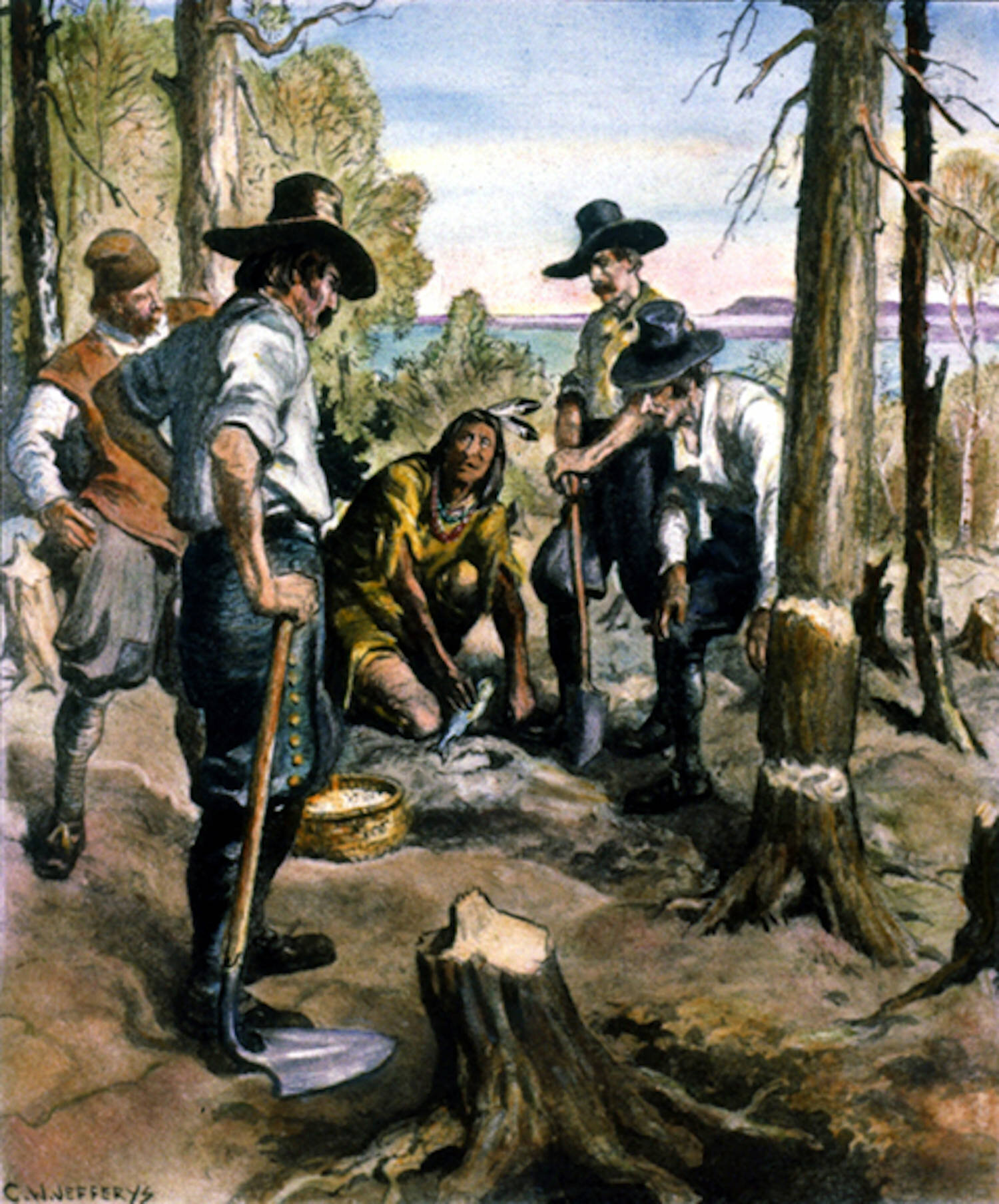
Back then, I wrote a post that was to become one of the most read and cited from behind these stone walls. It was the story of the real unsung hero behind the account of the first Thanksgiving that you thought you knew. It is a story that was kept hidden in plain sight for centuries while the story of the bravery and resourcefulness of the Mayflower Pilgrims of 1620 prevailed. Don’t miss, “The True Story of Thanksgiving: Squanto, the Pi1grims, and the Pope.”
This story became a Thanksgiving tradition for our readers over the last decade. It is a remarkable story of human crisis and redemption told in the odyssey of Squanto, a Native American who, like our friend, Pornchai, was stolen from his home, taken to a foreign land, rescued from slavery by a Catholic priest, and then, in the end, restored to his homeland only to find it nearly devastated from a global pandemic. He arrived just before the Mayflower pilgrims did 400 years ago this week. Squanto became one of history’s great emissaries of Divine Mercy. It will be our special Thanksgiving Week post this year.
My version of the story has appeared in numerous sources including a pair of history books. One of them is 1620: The True Story of Thanksgiving by Rick Gregory (2015) and an essay, “A Eucharistic Thanksgiving” by Adam N. Crawford.
I hope you will read and share that story anew to mark Thanksgiving 400 years later as the Pilgrims did, in uncertain times and surrounded in darkness. And please pray for us as we do for you. There is cause for Thanksgiving here!
You may also like these related links:
The True Story of Thanksgiving: Squanto, the Pilgrims, and the Pope
