“There are few authentic prophetic voices among us, guiding truth-seekers along the right path. Among them is Fr. Gordon MacRae, a mighty voice in the prison tradition of John the Baptist, Maximilian Kolbe, Alfred Delp, SJ, and Dietrich Bonhoeffer.”
— Deacon David Jones
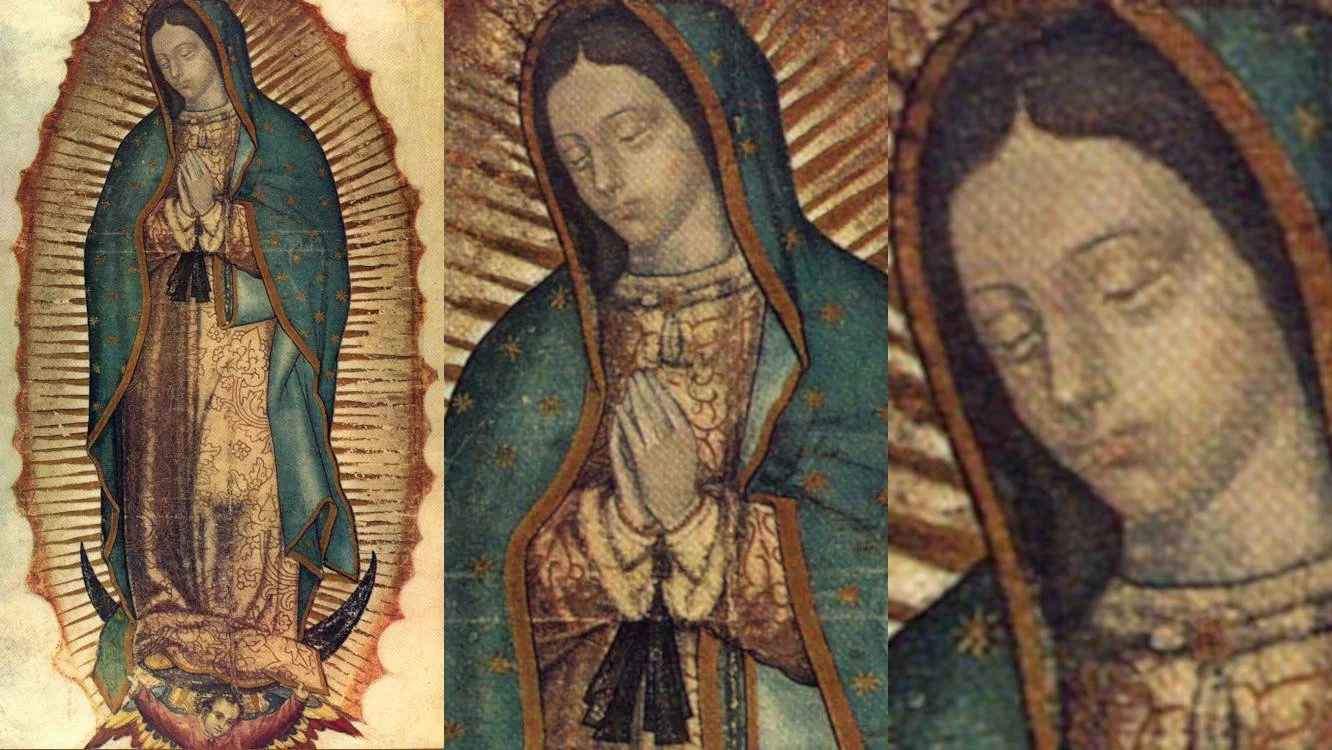
He Has His Mother’s Eyes: The Vision of Our Lady of Guadalupe
The Church now steers us from titles for Mary such a Co-Redemptrix and Mediatrix. Our Lady of Guadalupe presents us with another: “The Very Pathway to Eternity.”
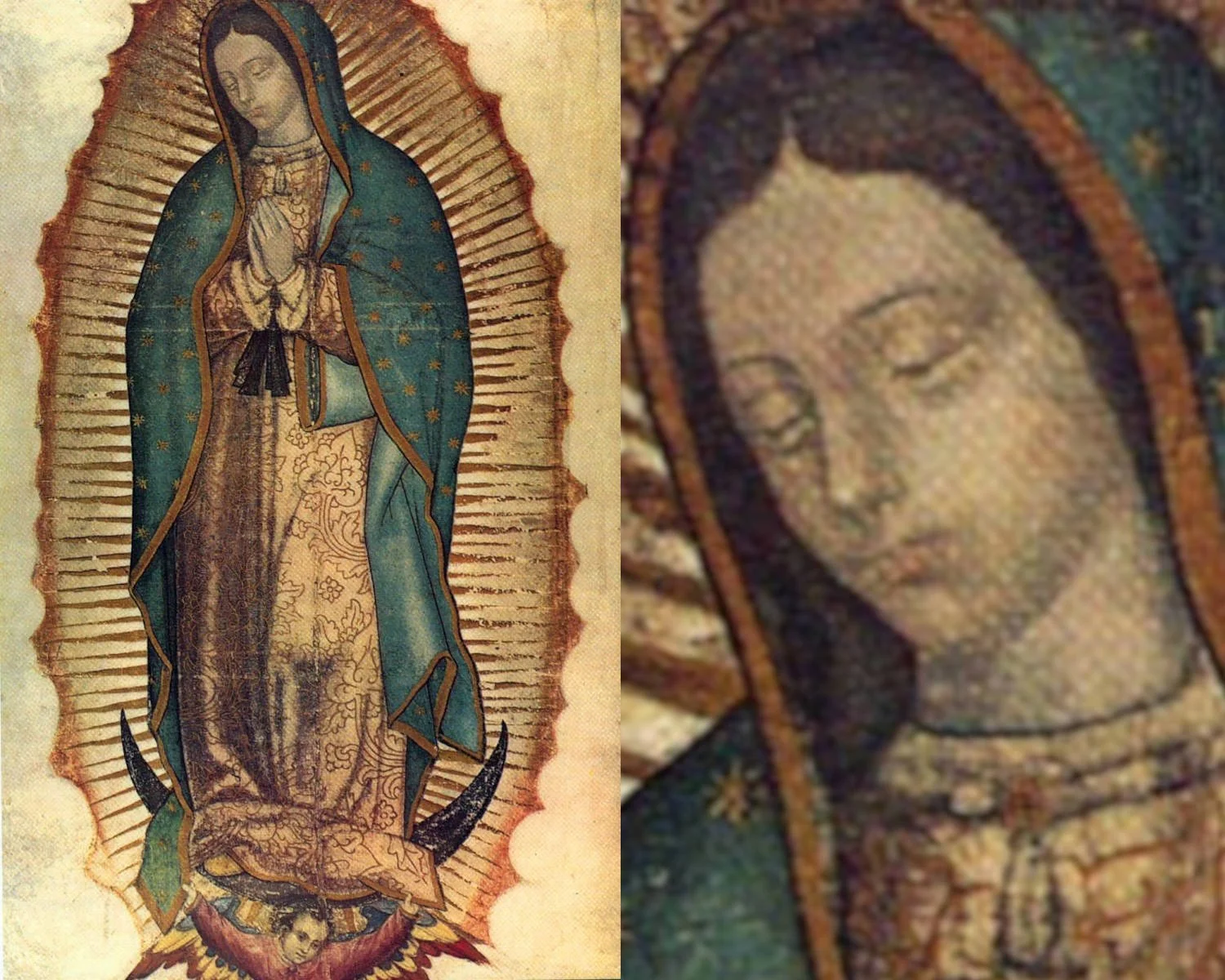
The Church now steers us from titles for Mary such a Co-Redemptrix and Mediatrix. Our Lady of Guadalupe presents us with another: “The Very Pathway to Eternity.”
December 10, 2025 by Father Gordon MacRae
“The Blessed Mother is not only beyond the Earth, but also beyond the stars. She is not only Mother of the world, but Mother of the heavens — or as we might say today, Mother of the Universe. The child that she bears would therefore be not only the Savior of the world, but also the Savior of the heavens — and the Universe. In view of this, we can rely on Him and her not only for help but for the teaching that transcends all time — the very pathway to eternity.”
— Father Robert Spitzer, S.J., Ph.D.,
Christ, Science and Reason, Ignatius Press, 2024
I want to revisit something I wrote about at this time a few years ago. Late in the afternoon of December 11, 2018, I was at my desk in the prison Law Library where I use two computer systems side by side. Neither can be used for my own work. I still write posts on an old typewriter.
One computer at my work desk connects directly to Lexis Nexus, a legal database that all law libraries have. The other connects to the prison library system database. As I was shutting down the computers before leaving for the day, I decided to change the background screen on that second computer. I have written of this before, but the event seems so profoundly impossible that I still struggle to comprehend it. For the previous 10 years the desktop image on the screen was a depiction of the Milky Way Galaxy with a little “You Are Here” arrow pointing to a tiny dot in the cosmos that depicts our solar system. It made me feel very insignificant.
I had but moments left before rushing out the door at 3:00 PM. I called up a list of background screens which displayed only hundreds of numbered graphic files with no way to view them. So I decided to just pick a random number — there were pages of them — and get what I get. Then I shut down the system without seeing it.
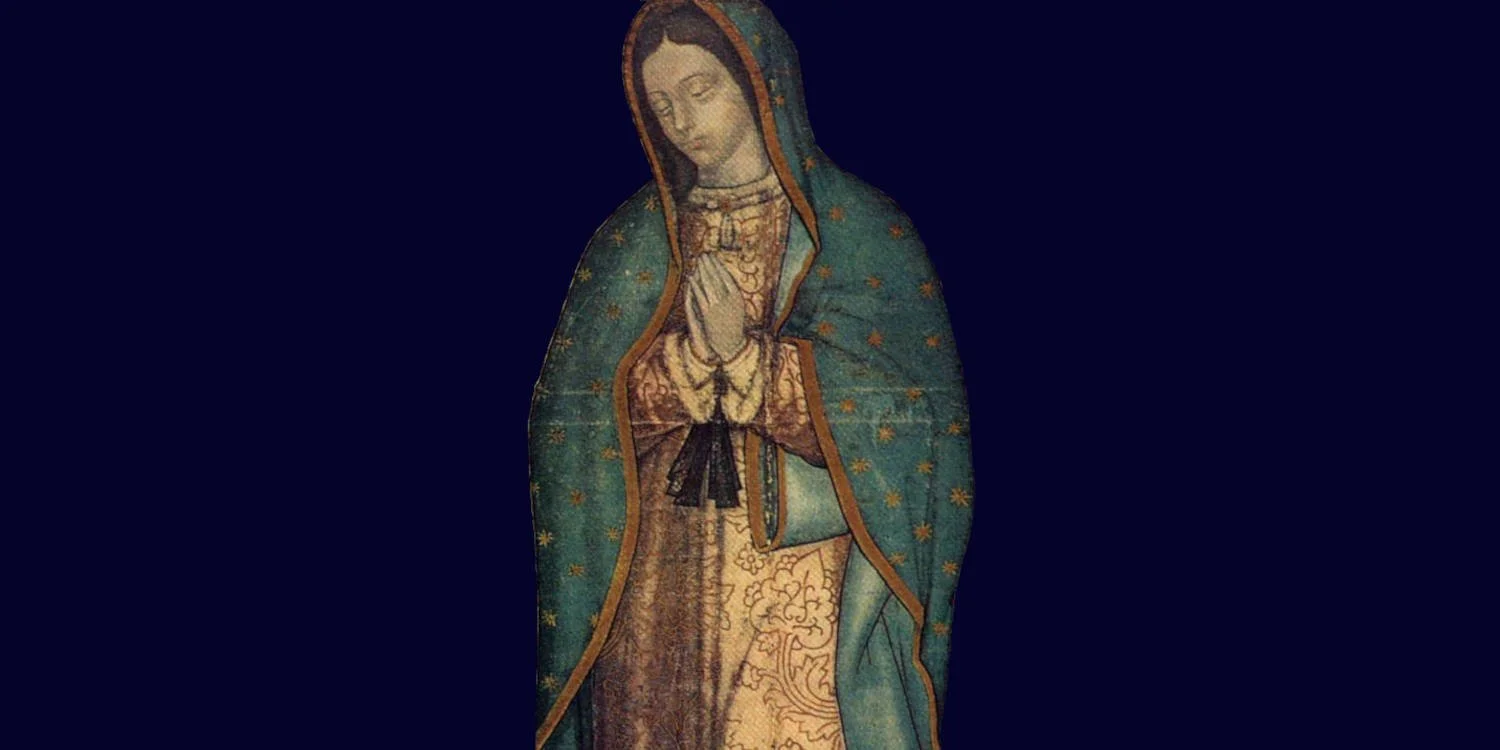
The next morning, December 12, I arrived at my desk and booted up the computer for work. The image that filled my screen left me breathless. It is the one you see here below. It’s a magnificent mural in Mexico City. The image was grainy because it was expanded from something only slightly larger than a postage stamp. I was not yet even conscious of the date. On the Feast Day of Our Lady of Guadalupe, from a thousand random numbers, she appeared on my screen and has been there since.

I was not always conscious of any spiritual connection with Mary. Many years ago when this blog first began, I wrote about an incident involving a sort of apparition of Mary. It wasn’t so much visual, but rather a mental phenomenon that deeply affected me. In 1989 I was in the back seat of a car in New Mexico with two other priests in the front seat. We were driving to Chimayó in the north of New Mexico to an obscure Catholic shrine that one of the priests wanted to see. The legend behind the shrine is this:
This Catholic shrine known as El Santuario de Chimayó located in Chimayó, New Mexico is renowned for a legendary miraculous event in its founding. According to the traditional story, in 1810, a local landowner named Don Bernardo Abeyta was performing penance in the area when he saw a bright light emanating from the ground. Upon digging, he discovered a wooden crucifix depicting Our Lord of Esquipulas (a revered Guatemalan image of Christ). Attempts to relocate the crucifix to a nearby church in Santa Cruz failed, as it mysteriously returned to the original spot each time. Interpreting this as a divine sign, Abeyta built a small chapel on the site around 1813-1816. The shrine became famous for "tierra bendita" (holy dirt) from a small pit ("el pocito") at the discovery site, which pilgrims believe possesses healing properties for physical, emotional, and spiritual ailments.
Learning of this in the back seat of the car, I scoffed in disbelief. This sparked an argument about the legitimacy of such events. I scoffed a lot back then in the ignorance of my youth (which sadly extended up until about the age of 40). In the car, we argued about other miraculous events including the apparitions of Our Lady of Fatima and Our Lady of Guadalupe. I was not a believer, something which the other two priests found offensive. I simply could not understand the purpose for an appearance of the Blessed Virgin Mary to Juan Diego, an Aztec convert, in 1531. “How does this impact anyone’s faith?” I scoffed.
Then IT happened. Sitting in the back seat of that car, I had a sudden, indescribable but overwhelming image in my mind’s eye appearing to me. It was mercifully brief for I could not have withstood it for long. It was an experience of immense power. Then the car pulled to the side of the road and stopped. “Are you alright?” I was pale and in shock and pressed up against the back door of the vehicle as though I were trying to flee. I did not tell my friends what had happened. I had no frame of reference for it, but I have been in awe of Her ever since, and I never scoffed again.
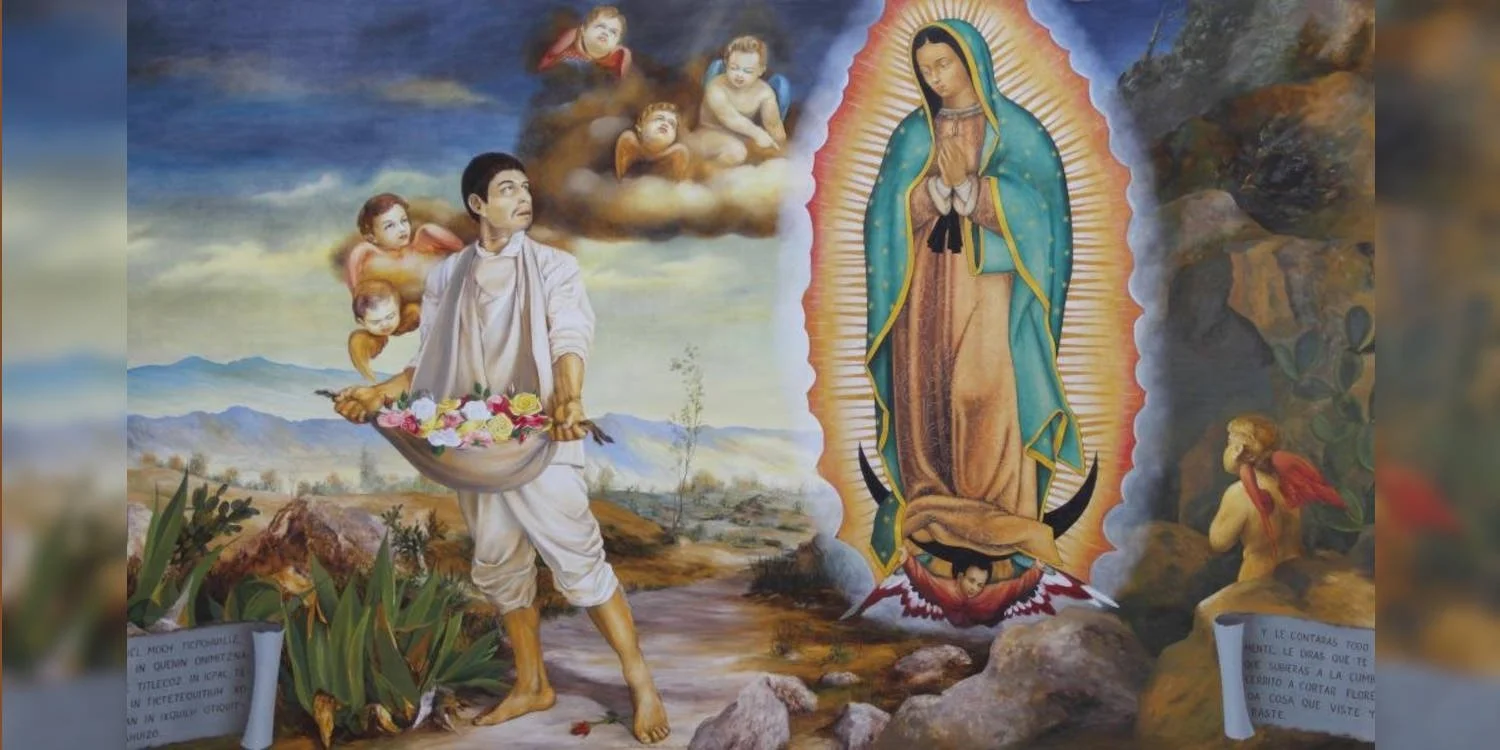
The Mystery of the Tilma
Our Lady of Guadalupe became my favorite among all the Marian images I have since come to reverence. Its origin is fascinating. Nearly five centuries ago, on the morning of December 9, 1531, young Juan Diego, an early Aztec convert to Catholicism in the New World, was walking at the foot of Tepayac Hill outside Mexico City.
Days earlier in the same location, Juan Diego heard the beautiful voice of a Lady, but saw no one. On this day, she appeared. She instructed Juan Diego to build a church on this site. Unlike me, Juan Diego did not scoff. He, too, was in awe. So he went to the home of Bishop Juan de Zumárraga and told him of what he had seen and heard. The bishop did not believe him, of course. I would not have believed him either, and certainly not before my own “event.” So the bishop asked Juan Diego to return to Tepayac Hill and, if the Lady appears to him again, he is to request a sign that he can bring to the bishop.
So Juan Diego returned to Tepeyac Hill. He was wearing a tilma, a cloak made of coarse, uncomfortable fiber that was the typical garment of the poor in Mexico at that time. The Lady told him to gather up some flowers in his tilma. Juan Diego then noticed that he and the Lady were surrounded by beautiful Castilian roses in full bloom. Castilian roses did not grow anywhere near Mexico City, and even if they did they were certainly not in bloom in December.
The date was December 12, 1531 three days after her first appearance to Juan Diego. So Juan Diego gathered as many of the Castillian roses as he could and stuffed them into his tilma. He returned to the home of Bishop Zumárraga.
When he removed his tilma in the presence of the bishop and a group of people with him, he and they were surprised to see the beautiful Castilian roses pouring from his open tilma onto the floor. But they were stunned to also see imprinted on the tilma an amazing image of a beautiful young woman surrounded by the rays of the Sun with the crescent moon under her feet, surrounded by roses and with angels attending her. No one was more shocked and surprised by that image than Juan Diego himself. In describing this scene, I used the word “imprinted.” It was for lack of any other suitable word. There was no printing involved, no painting, no evidence of any brush stroke. In all her magnificence, she was simply inexplicably there.
At Tepeyac Hill that day, the Lady had asked Juan Diego to tell the bishop that she is “Coatloxopeuh,” which in Nahuati, the language of the Aztecs, means “The One Who Crushed the Serpent.”
Juan Diego’s tilma was made of coarse fiber completely unsuitable for painting. Since 1666, the tilma image has been studied by artists and scientists who have been unable to explain how the image became incorporated into the very fibers of the tilma. The shawl is the only one of its kind still in existence after nearly 500 years. It is enshrined in the Basilica of Our Lady of Guadalupe in Mexico City, which now incorporates the region of Tepeyac Hill.
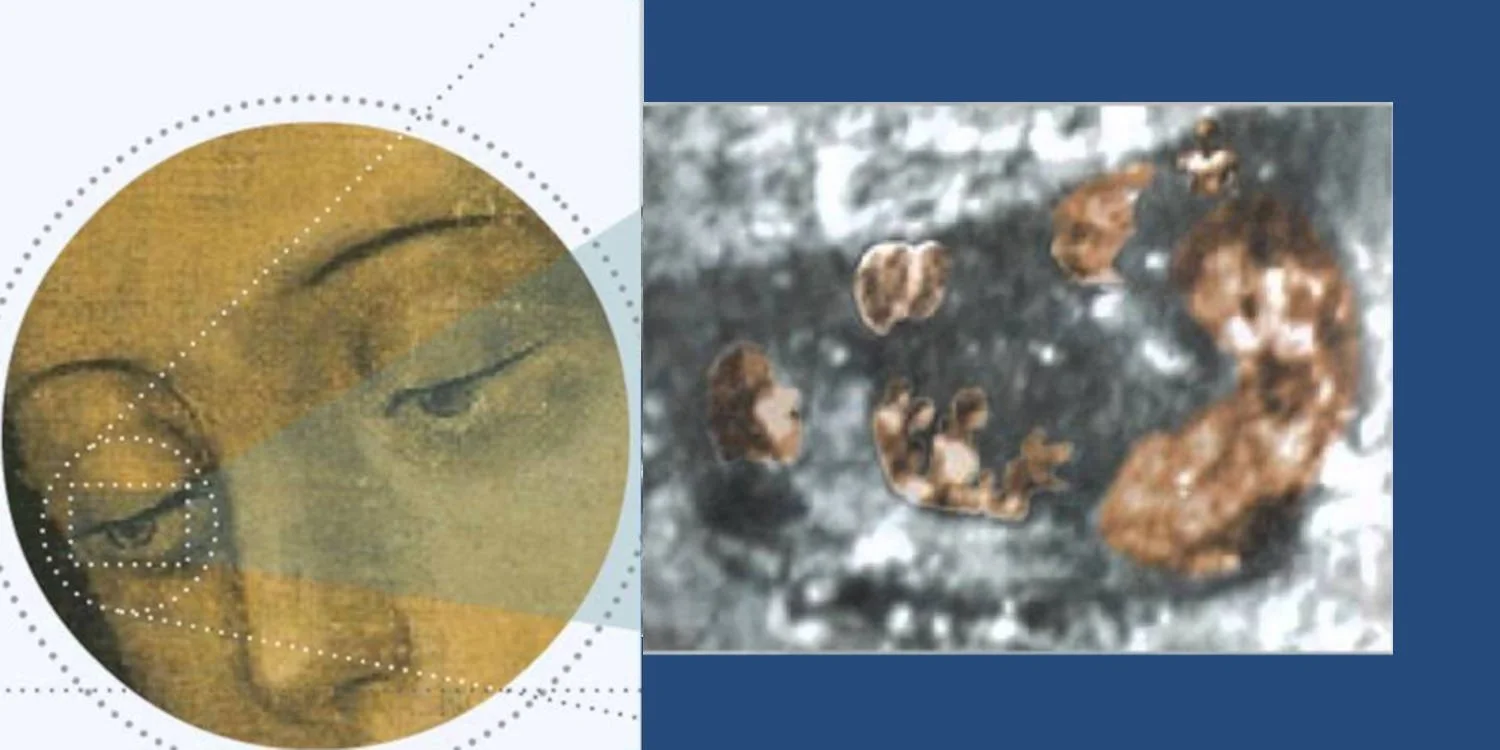
The Miracle in Her Eyes
Four hundreds of years later, in 1929, a photographer revealed that when he enlarged photographs of the Lady’s face on the tilma, other tiny images appeared to be in her eyes. He was instructed to say nothing of this until the phenomenon could be studied. In his magnificent book, Christ, Science, and Reason (Ignatius Press 2024) Father Robert Spitzer, SJ, PhD described this phenomenon at length, quoting the ophthalmologist, Dr. Lavoignet:
“It is impossible to attribute to chance, to a textile accident, or to pictorial matter this extraordinary coincidence between the localization of the reflections in the Virgin’s eyes and the most elaborate and up-to-date laws of optical physiology, especially as it seems these reflections code a different focal distance. It is their most amazing property. If the light of an ophthalmoscope set with a suitable lens, is directed on to the reflection, the reflection fills with light and shines like a little diamond … her eye lights up and the iris becomes brilliant.”
— Christ, Science and Reason, p 202
Father Spitzer went on to explain that “this is naturalistically and humanly inexplicable. How does a flat image contain depth of field and encode the proper focal length to obtain luminosity?” It is what scientists would expect to find within the cornea only of a living human being. There was no technology in 1531, nor is there today, that can explain this other-worldly image.
After filtering and processing the images using computers, it was discovered that the Lady’s two eyes contain another imprint — the image of the bishop and several other people staring at the tilma apparently at the moment Juan Diego presented it in 1531. It was a permanent imprint equally appearing upon the retinas of both eyes in stereoscopic vision. It appeared to be what Our Lady of Guadalupe saw when Juan Diego first presented his mysterious tilma to the bishop.
Father Spitzer also described the research into the tilma conducted by Dr. José Aste Tonsmann, a renowned ophthalmologist. He enlarged the area of the Madonna’s corneas 2500 times and identified 13 figures, six in the peripheral iris area under the cornea (including the man thought to be Juan Diego), and seven in the central pupil area under the cornea. Dr. Aste Tonsmann described the result of his research as follows:
“In the eyes of Our Lady of Guadalupe is reflected the entire scene of Juan Diego opening his tilma in front of Bishop Juan de Zumárraga and the other witnesses of the miracle.”
This implies that what is imprinted on Juan Diego’s tilma is the scene taking place, from the perspective of someone looking on at the moment Juan Diego opened his tilma and the roses poured out.
The characters in the scene, in the eyes of Mary, are far too small to be seen by human eyes. It was only when modern ophthalmological equipment greatly enlarged the corneas that the imprint upon them could be seen.
Giulio Dante Guerra, from the Italian National Council of Research summed up Dr. Aste Tonsmann’s discovery as follows:
“In this scene it is possible to identify, from left to right looking at the eye: a seated Indian looking up; the profile of an elderly man with a white beard and head marked by advanced baldness, very similar to depictions of Bishop Juan de Zumárraga; a younger man, almost certainly the interpreter Juan Gonzalez; an Indian with marked features, with a beard and mustache, certainly Juan Diego, who opens his cloak, still without the image, in front of the Bishop; and several other figures … . In short, within the eyes of the image of Our Lady of Guadalupe there is a ‘snapshot’ of what happened in the home of the Bishop of Mexico City at the time in which the image itself was formed on the tilma.”
Mary Among the Stars
I can only describe this last phenomenon by using the words of Father Robert Spitzer borrowed from his book Christ, Science, and Reason:
“There is another remarkable characteristic on the image of the Madonna that cannot be ascertained with certainty though it should be briefly mentioned: the stars on the Madonna’s mantle. These stars have a remarkable characteristic that heightens the Madonna’s message — not only to 16th Century culture, but also to our contemporary scientific culture. Father Mario Rojas Sanchez discovered this about their placement: he was able to ascertain, thanks to collaboration with astronomers at the Laplace Observatory in Mexico City, that the stars correspond to the placement of constellations visible from Mexico City at the winter solstice of 1531. Given the Julian calendar in use at the time, the winter solstice in 1531 fell on December 12. The stars do not appear according to the normal ‘geocentric’ perspective, but rather according to a ‘cosmocentric’ perspective, that is, as an observer placed ‘above the vault of heaven’ would see them.”
— Christ, Science, and Reason, p 211
Father Spitzer goes on to point out that there are maps available on the Internet of constellations that would have been present in the sky viewed from Mexico City on December 12, 1531. These maps convert the geocentric reference frame (an observer looking at the stars from the Earth) into a cosmocentric reference frame (an observer looking at the stars from beyond those stars toward the Earth). This cosmocentric reference frame requires rotating the cardinal axis 90 degrees counterclockwise. This reference frame corresponds to the placement of the stars on the Madonna’s mantle.
This is truly extraordinary. No 16th Century Indian or European would have such knowledge, nor would anyone else. This knowledge became available to science only in the 20th Century.
Father Spitzer concludes with a profound statement about something the world will honor and celebrate in just two weeks:
“She is not only Mother of world, but Mother of the heavens — or as we might say today, Mother of the Universe. The child that she bears would therefore be not only the Savior of the world, but also the Savior of the heavens — and the Universe.”
— Christ, Science, and Reason, p. 212
+ + +
Note from Father Gordon MacRae: Thank you for reading and sharing this post about the miraculous vision of Our Lady of Guadalupe. I am grateful to Father Robert Spitzer, S.J., Ph.D. and his marvelous book Christ, Science, and Reason available at Ignatius Press.
You may also like these related posts from Beyond These Stone Walls:
The Ark of the Covenant and the Mother of God
Listen to Our Mother: Mary and the Fatima Century
How Our Lady of Fatima Saved a World in Crisis
Saint Joseph: Guardian of the Redeemer and Fatherhood Redeemed


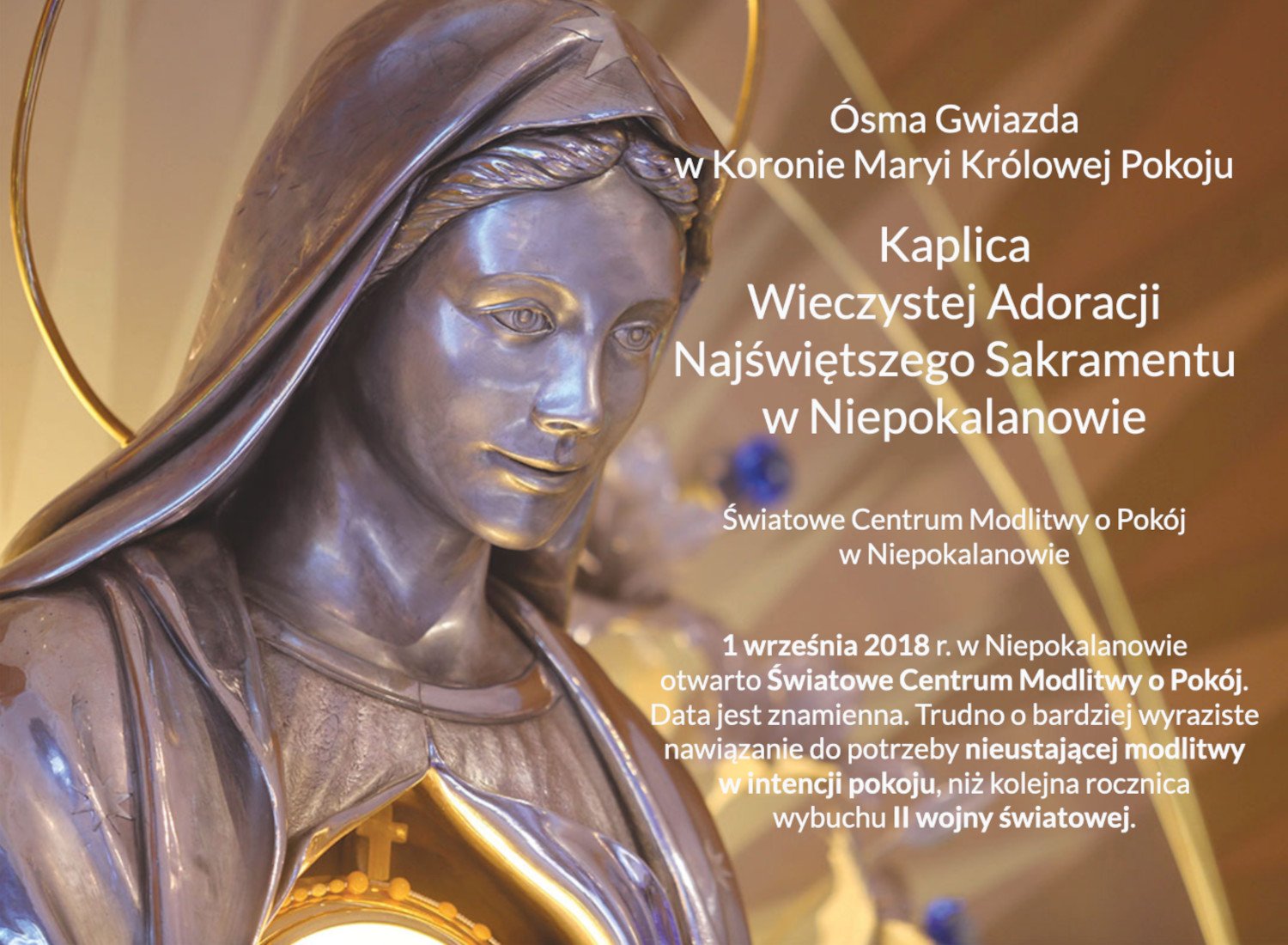

The Eucharistic Adoration Chapel established by Saint Maximilian Kolbe was inaugurated at the outbreak of World War II. It was restored as a Chapel of Adoration in September, 2018, the commemoration of the date that the war began. It is now part of the World Center of Prayer for Peace. The live internet feed of the Adoration Chapel at Niepokalanow — sponsored by EWTN — was established just a few weeks before we discovered it and began to include in at Beyond These Stone Walls. Click “Watch on YouTube” in the lower left corner to see how many people around the world are present there with you. The number appears below the symbol for EWTN.
Click or tap here to proceed to the Adoration Chapel.
The following is a translation from the Polish in the image above: “Eighth Star in the Crown of Mary Queen of Peace” “Chapel of Perpetual Adoration of the Blessed Sacrament at Niepokalanow. World Center of Prayer for Peace.” “On September 1, 2018, the World Center of Prayer for Peace in Niepokalanow was opened. It would be difficult to find a more expressive reference to the need for constant prayer for peace than the anniversary of the outbreak of World War II.”
For the Catholic theology behind this image, visit my post, “The Ark of the Covenant and the Mother of God.”