“There are few authentic prophetic voices among us, guiding truth-seekers along the right path. Among them is Fr. Gordon MacRae, a mighty voice in the prison tradition of John the Baptist, Maximilian Kolbe, Alfred Delp, SJ, and Dietrich Bonhoeffer.”
— Deacon David Jones
Saint Maximilian Kolbe’s Gift of Noble Defiance
At the end of July, 85 years ago in 1941, Father Maximilian Kolbe stepped out of line at Auschwitz. His gift of noble defiance has spread throughout the known world.

At the end of July, 85 years ago in 1941, Father Maximilian Kolbe stepped out of line at Auschwitz. His gift of noble defiance has spread throughout the known world.
July 30, 2026 by Father Gordon MacRae
Auschwitz 1941:
After the so-called dinner, I was invited between Blocks 18 and 19 where some prisoners had gathered among whom were several priests … Our colleague, Kolbe, spoke of the Feast of Corpus Christi, of the great omnipresent God, and of our sufferings by which He was trying to make us ready for a better life.
— A priest at Auschwitz, from Depositions of Fellow Prisoners, 1970, p. 34
+ + +
Pornchai Moontri once looked at the death chamber of Maximilian Kolbe and saw devouring jaws of evil. I saw that evil too, but choking on a brave soul’s noble defiance.
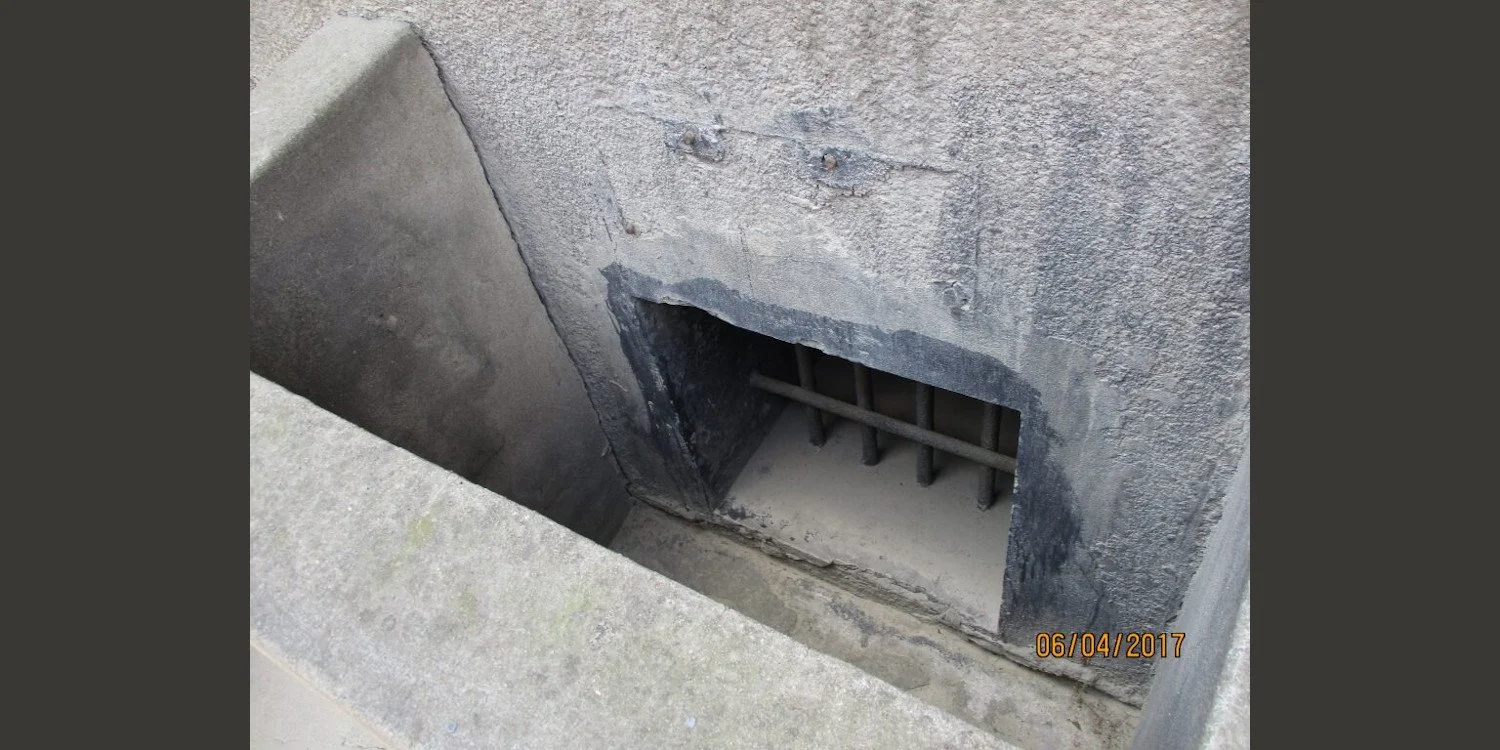
The photograph in this post has deep meaning and significance for us. BTSW reader Lupe Gwiazdowski, on a tour of the Auschwitz Concentration Camp, stood with her camera before the gaping maw of a prison window. She photographed the window of the death chamber that consumed the life of our Patron Saint but could not extinguish the light of his sacrificial priesthood.
When Lupe’s letter with the photograph arrived in early July, 2017, when Pornchai “Max” Moontri was still here with me, he and I were standing with 100 other prisoners for Mail Call. The mail handlers here reversed the pages before stuffing the letter back in its envelope so the page with this photo was on top when I unfolded the letter.
I did not know what the photo was, but right off Pornchai pointed to it. “It’s a face!” he said. “An evil face!” Study the photograph above for a moment. Once I saw what Pornchai saw, I could not look at the photo again without instantly seeing that same demonic face. You will see it too.
But what Pornchai saw as the gaping jaws of evil ready to devour, I saw those same jaws choking on whatever was inside. When I suggested this to Pornchai, he saw it too. Stare at the photo for another moment, and you may see what I mean.
Then I read the letter that accompanied Lupe’s photo, and realized with a jolt that it was behind these gaping jaws that our Patron Saint, Maximilian Kolbe, surrendered his life in defiance of the great evil that manifested itself at Auschwitz.
Over two weeks of forced starvation followed his choice to die in place of an innocent young man. When Father Kolbe did not die in a timely manner that suited his captors, his life was taken by lethal injection on August 14, 1941. After a lifetime of devotion to “The Immaculata,” death came on the Vigil of the Solemnity of the Assumption. Lupe tells the story of the photo in her letter of June 29, 2017 that touched our hearts deeply:
“Hi Father G: I wanted to send you this photo and I hope you get it. I went to Poland this month, and I made a mental note to pray for you and Pornchai “Max” Moontri at the Auschwitz cell of St Maximilian Kolbe.
“As is often the case with my mental notes, when I got to the cell I was so overwhelmed that I forgot it. As soon as we exited the block of cells I remembered. I left the group and tried to push my way back to the cell, but Polish tour guides are not to be pushed against! I didn’t make it.
“I was downcast as I caught up with the group, and then realized that the guide was pointing to the bars of the Saint’s cell window from the outside. I didn’t even hear what she was saying as I looked upon this sacred spot. I thought of how this priest and his companion prisoners died giving such powerful witness through those same bars to so many whose hope was perishing. I lifted you and Pornchai up right there, and then snapped this photo for you. Father, I do not know what else to say.
“When I got back to a computer, I saw your post, “Thoughts Upon My 35th Anniversary of Priesthood Ordination,” and realized that your anniversary was on the same day I prayed for you and Pornchai-Max at Auschwitz. Father, thank you for your priesthood.”

In Noble Defiance of Evil
Today, virtually everyone knows the story of Saint Maximilian Kolbe. His Earthly remains were reduced to smoke and ash in the ovens of Hitler to drift in the skies above Auschwitz. But what he wrote and said and did, the glow of his soul, still moves mountains and the hearts of millions.
In Father Maximilian Kolbe, evil did not destroy what it set out to destroy. It imprisoned and killed the body of a man, but the priest lived on in noble sacrifice and love. The jaws of that window choked on the goodness of the soul contained therein.
Of all the thousands of accounts about the witness and strength of Father Maximilian Kolbe, for me the most powerful account comes from Herrmann Langbein, who was a prisoner at Dachau and then at Auschwitz. He is best known for his book, Against All Hope: Resistance in the Nazi Concentration Camps, 1938-1945. He singles out one man’s defiance that I have cited in other posts about our Patron Saint:
“The best-known act of resistance was that of Maximilian Rajmund Kolbe, who deprived the camp administration of the power to make arbitrary decisions about life and death.”
— People in Auschwitz, p. 241
Langbein went on to write powerfully of the witness, not only of Father Kolbe’s sacrifice by volunteering to take upon himself the death sentence of a fellow prisoner, but of his demeanor in prison:
“Kolbe and his companions in misfortune had to spend almost three weeks [in starvation] in an unlit cell. On August 14 (1941) a lethal injection ended the suffering of the man whose bearing elicited the respect of the supervising SS men to the very end.”
— People in Auschwitz, p. 241
I pray for the gift of this brave priest’s noble defiance of evil. It is easier to just succumb to it, enduring it for as long as we can until it starts to bring about subtle changes in our resolve. My favorite passage in The Screwtape Letters by C. S. Lewis (Harper, 1942) is Letter 12. You have seen this passage before in these pages. The demonic “Uncle Screwtape” describes perfectly the slippery slope that suffering and sin conspire to spread the contagion of evil. Their cumulative effect …
“… is to edge the man away from the Light and out into the Nothing … . Indeed the safest road to Hell is the gradual one — the gentle slope, soft underfoot, without sudden turnings, without milestones, without signposts.”
— The Screwtape Letters by C. S. Lewis, Letter 12
In no place is a man or woman without defiance “edged away from the Light out into the Nothing” more than in prison. Like all prisons — whether they be prisons of iron, or fear, or trauma, or loneliness, or sickness, or pain — year upon year of it can set us upon the subtle turnings C. S. Lewis describes. For some, no doubt, resistance to the evils of our prisons seems futile.
Something happened recently — something profoundly humbling — that I thought about when I read the short passage at the top of this post from a priest-prisoner in Auschwitz with Maximilian Kolbe. The passage is from a published collection, Depositions of Fellow Prisoners, in the investigation of Maximilian Kolbe’s cause for sainthood.
More than 12,000 priests died in Auschwitz and the other camps of Germany and Poland, but the priest who wrote the passage atop this post survived. I wonder about those who perished there, those whose hope was siphoned off by the evil in their midst.
But for Maximilian Kolbe, resistance to evil was the one charism of a sacrificial priesthood available to him in a place where priesthood and sacrifice were deemed meaningless by worldly powers. Prison can quickly descend into “every man for himself,” but Maximilian lived and died on life’s road less traveled.

Priesthood Lost in Translation
Over the many years that I have been in this prison unjustly, there was another priest here. He was a priest of my Diocese, but I never knew him outside of prison. In fact, I barely knew him here. He was convicted of a sexual abuse charge in 1997, one alleged to have taken place long before then, and had been here ever since.
I know that in 2001, this priest acquiesced to a demand that he be voluntarily laicized (dismissed from the clerical state). Over the ensuing years, after 25 years of priesthood, he never again heard from our Bishop or Diocese. He was discarded. The prisoner-priest lost his faith. He became unable to be present at Mass for the next sixteen years. He was in a different prison unit than I, and I saw him only in rare passing.
However, when printed copies of some BTSW posts were mailed to me, the sender would often send two. So, with the clandestine help of friends here, I started to send the other copy to this priest. I did not send him every post, just the ones about priesthood. One post reached an untapped well of faith and hope.
It was “Saint Maximilian Kolbe: A Knight at My Own Armageddon.” It was the middle of an important three-part post, and was the only post for which the priest sent back — via the same circuitous prison channels — a request to see more. These posts were the limits of our contact.
The same week that Lupe’s letter and photo arrived, Pornchai Max and I were climbing the multiple tiers of stairs on a Sunday morning for Mass in the prison chapel. As we passed the second floor landing, the priest mentioned above was just then emerging from the prison medical unit. I greeted him and shook his hand (another act of resistance as shaking someone’s hand is forbidden here) and then something strange happened.
Pornchai did not even know who he was and I did not want to put the priest on the spot so we parted company and proceeded up the next flight of stairs. Then Pornchai turned and said, “Do you want to come with us?” The priest paused for a moment looking puzzled, and then quietly followed us up the stairs. Before we entered the chapel, I asked Pornchai to go find us some seats while the prisoner-priest told me that this was his first time at Mass in 16 years. He became reconciled, and we sat with him.
The next week — being an idiot sometimes — I took our usual seats and Pornchai stood glaring at me. “What are you doing?” he asked, and then pointed to that other priest still standing outside the door. “Go get him and bring him in to sit with us,” said Pornchai. God bless Pornchai!
In early July back in 2017, I spotted that prisoner-priest on the local news. He was appearing before the New Hampshire Parole Board with a request for medical parole because he was dying of cancer.
A physician who spoke at the hearing reported that he had no more than six months to live, and his care would be a burdensome expense for the state. After some callous remarks from a victim advocate on the State’s payroll about whether he “looks sick enough,” and whether twenty years in prison exacts sufficient reckoning, the Parole Board granted his medical parole.

On the Move
A week later, Max and I were suddenly moved — he to one place and I to another. Apart for the first time in over ten years, this had been a great hardship for us both. We were trying to reunite, but once anything like this is done here, it resists being undone. Max was trying to be moved to the same place I was in. We saw each other only once in the prison law library where I work. I invited Max to pray with me the Memorare:
“Remember, O Most Gracious Virgin Mary, that never was it known that anyone who fled to your protection, implored your help, or sought your intercession, was left unaided. Inspired with this confidence, we flee unto you, O Virgin of virgins, our Mother; to you do we come, before you we stand, sinful and sorrowful. O Mother of Word Incarnate, despise not our petitions, but in your mercy hear and answer us. Amen.”
The place I was sent to is the unit the other priest had been living in for the previous twenty years. My first week there was his last week there, and we were able to walk each morning and talk. He was restored to faith and hope that our sufferings will make us ready for a better life.
I was with him early on the morning he left prison, and went home to his sister to die. I like to think that we managed to fill in some of the cold abyss in which our Church let him wander alone in exile for twenty years. I cannot imagine, even in my most vengeful thoughts, that such alienation and abandonment are what Christ summons forth from the Apostolic witness of His Church.
Most of all, I like to think we helped to prepare my brother-priest for something essential imparted to us by a Patron Saint who guides us on a right path through prison: the gift of a noble defiance of evil with the living witness of sacrificial priesthood.
On the day after that priest left prison, one week after Max and I prayed the Memorare, I returned from work to see him living once again in the bunk above me. He remained there until he entered ICE detention to prepare for his return to Thailand in 2020.

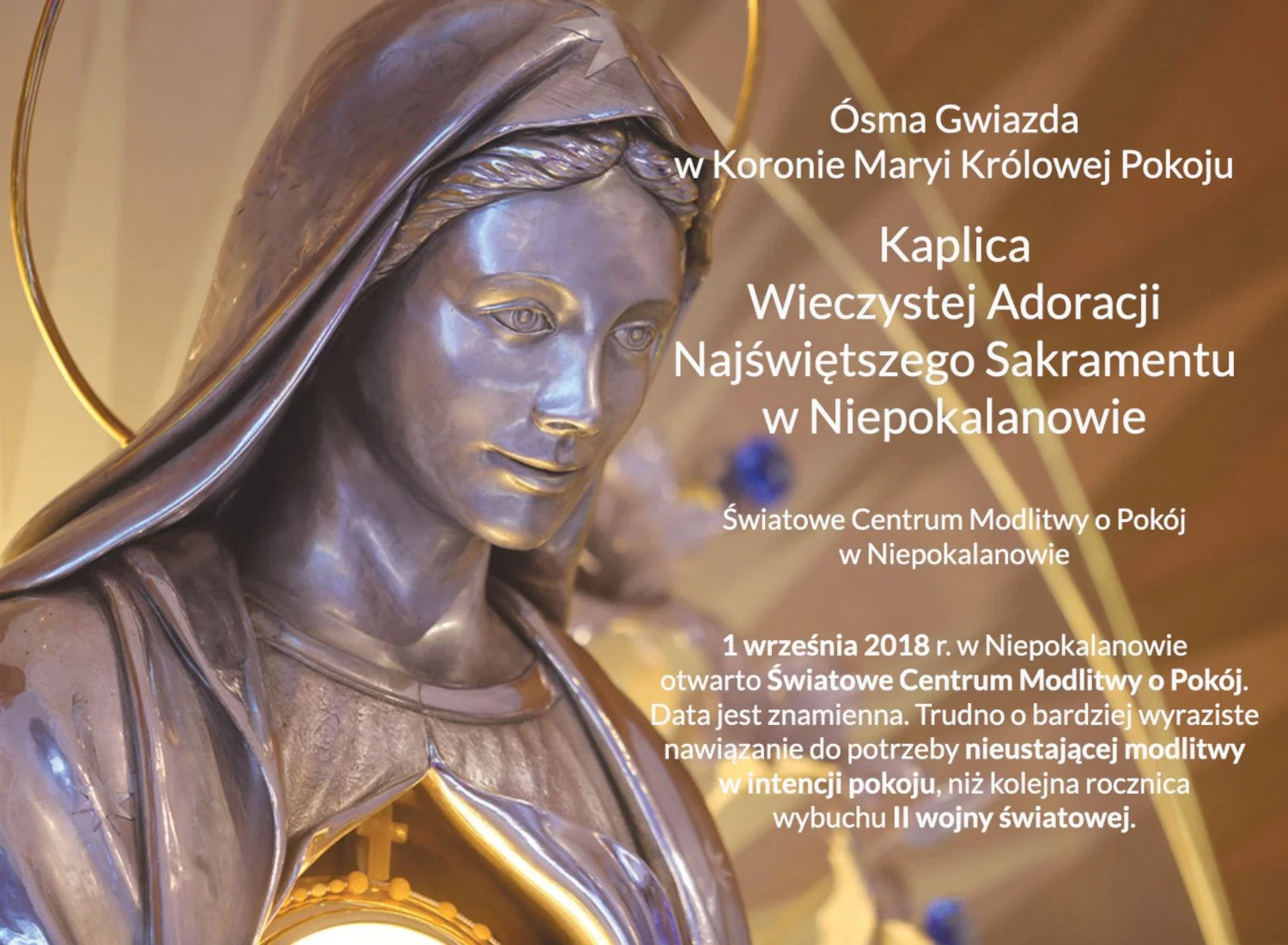
The Eucharistic Adoration Chapel established by Saint Maximilian Kolbe was inaugurated at the outbreak of World War II. It was restored as a Chapel of Adoration in September, 2018, the commemoration of the date that the war began. It is now part of the World Center of Prayer for Peace. The live internet feed of the Adoration Chapel at Niepokalanow — sponsored by EWTN — was established just a few weeks before we discovered it and began to include in at Beyond These Stone Walls. Click “Watch on YouTube” in the lower left corner to see how many people around the world are present there with you. The number appears below the symbol for EWTN.
Click or tap here to proceed to the Adoration Chapel.
The following is a translation from the Polish in the image above: “Eighth Star in the Crown of Mary Queen of Peace” “Chapel of Perpetual Adoration of the Blessed Sacrament at Niepokalanow. World Center of Prayer for Peace.” “On September 1, 2018, the World Center of Prayer for Peace in Niepokalanow was opened. It would be difficult to find a more expressive reference to the need for constant prayer for peace than the anniversary of the outbreak of World War II.”
For the Catholic theology behind this image, visit my post, “The Ark of the Covenant and the Mother of God.”

The Passion of the Christ in an Age of Outrage
Prayerful observance of Holy Week is a challenge in a climate of pandemic restrictions and political outrage. Spend time with us this week Beyond These Stone Walls.

Prayerful observance of Holy Week is a challenge in a climate of woke ideology and political outrage. Spend time with us this week Beyond These Stone Walls.
Something timely and fascinating was unearthed in the days just before Holy Week in 2021. It actually began in 1960 near the Dead Sea in Qumran, an ancient Hebrew settlement in Jordan. Archeologists discovered fragments showing that caves there were used as a hide-out by Bar Kochba’s rebel army which staged a three-year revolt against the Roman occupation of Jerusalem from AD 132-135.
The 1960 discovery included Roman coins, arrows, and a fragment of parchment bearing sixteen verses in Hebrew from the Book of Exodus. In a deep cave in Wadi Haver, archeologists also discovered several of Bar Kochba’s letters on papyri and wood.
Sixty-one years later, on March 16, 2021 the Israeli government announced the discovery of dozens of Dead Sea Scroll fragments of Hebrew texts from the Prophets Zechariah and Nahum from an adjacent cave. The “Cave of Horrors,” as it is called, contained other evidence that it was used by followers of Bar Kochba to evade the Roman armies. The cave is located in the Judean desert about 262 feet (80 meters) below a cliff top.
The Bar Kochba rebellion took place about 60 years after the destruction of the Jerusalem Temple, an event predicted by Jesus during his triumphant entry into Jerusalem (Luke 19:28ff). In AD 70, Romans destroyed the Temple. The revolt of Bar Kochba was triggered 60 years later when Roman emperor Hadrian decided to erect a shrine to the mythological Roman god, Jupiter, upon the site of the Temple.
Emperor Hadrian came personally to Judea to put down the Bar Kochba revolt which ultimately cost the lives of over a half million Jews. The revolt was called the “Liberation of Jerusalem” by its adherents. It was led by Simon Ben Kosibah, known to the documents of the early Christian Church as Bar Kochba.
Hadrian and his General, Sextus Julius Severus, crushed the revolt by a long, slow starvation of the Jewish revolutionaries and their families who had been driven into the desert to take refuge in the desert caves. When it was all over, Hadrian destroyed what was left of Jerusalem. He then decreed that the whole Jewish nation should be barred, from that day forward, from entering the City of Jerusalem and its surrounding area so that “they may not even view from afar their ancestral home.”
Little is known today about the state of Christianity at the time of the Bar Kochba revolt. It was a time in which a break between synagogue and church was taking place for Jewish Christians. A succession of thirteen Jewish-Christian bishops ruled Jerusalem until the time of Hadrian. At the time of the first destruction of the Jerusalem Temple in AD 70, Simeon, son of Clopas, was Bishop of Jerusalem and was martyred there. The Second Century historian Eusebius, reported that between the martyrdom of Simeon and the Bar Kochba revolt, “many thousands of Jews had come to believe in Christ.”

A Revolution in the Soul
These remnants of a revolution seem an almost fitting discovery just before Holy Week in this of all years. I believe that the bones of Bar Kochba’s faithful Jewish and Jewish-Christian revolutionaries are calling to us from those caves. I have never written a Holy Week post like this before because we have never had a Holy Week like this before in our lifetimes. For the second year in a row, many Catholics face a drastic reduction in their ability to participate in the liturgy and Sacraments of their Faith.
The first time Holy Week was limited by fears of a pandemic — in Holy Week 2020 — Christianity was caught off guard on a global scale. We never imagined that the restrictions set in place by both civil and religious authorities would further impede our faith as we approach another Holy Week a year later. We never imagined that many of our spiritual leaders would continue their passive acceptance of the severe limits placed on our practice of faith. I wrote of this at the turn of the year in “A Year in the Grip of Earthly Powers.”
On what we today call “Passion Sunday,” Jesus entered Jerusalem as the triumphant Son of David, a title given to him by Sacred Scripture. As he entered the Holy City, he wept. It is notable that he did not weep over his knowledge that he enters Jerusalem to commence the Passion of the Christ. Saint Luke’s Passion Narrative makes clear that Jesus wept over Jerusalem and what he knew to be the coming destruction of the Temple and Holy City by Earthly Powers. He knew that many would lose their lives in revolt against it.
Many people in our era are just now awakening to a revolution in the soul as clarity dawns that demonic forces behind so-called “cancel culture” are using a pandemic to suppress our churches, our liturgy, our voices, and our communal values and expressions of faith. Many are also awakening to the reality that some — but certainly not all — of our religious leaders have acquiesced to this suppression, most by their silence, but some by outright endorsement of government-imposed shutdowns.
I have written of at least two instances in which the courts have overruled political impositions on Mass attendance and Catholic practice only to have the local Catholic bishop re-impose the same restrictions the courts had declared unconstitutional. I feel indebted to the many priests — and, in fairness, some bishops too — who have found courage in their fidelity to reject the modern version of one of my most memorable Holy Week posts: “The Chief Priests Answered, ‘We Have No King but Caesar’.”
That Whisper in the Ear of Judas
There is another force, also seemingly demonic in its origin, that has impinged upon our expressions of fidelity in the public square. I could sense it all around us throughout the last year and it has not abated. It has just festered and grown deeper within many of us as persons and as communities. I had a hard time putting a name on it until I saw it spelled out by one of my favorite columnists in The Wall Street Journal.
On March 9, 2021, political columnist Gerald F. Seib published a masterful analysis entitled “The Perpetual Outrage Machine Churns On.” You may not be able to read it without a subscription but I will give a brief summary of its evidence.
Two months after the January 6 events at the U.S. Capitol, prison-like fencing still surrounded the area. In Minneapolis, the trial of former police officer Derek Chauvin over the death of George Floyd — seemingly every horrid moment of it caught on national television — has commenced amid another round of protests. Innocent Asian Americans have suddenly become targets of physical and verbal assault across the nation. Four women at a Bed and Body Works store in Arizona erupted into a wild brawl. Eight persons were killed by a single gunman in a spa in Atlanta. Ten more were murdered while shopping in a Colorado supermarket.
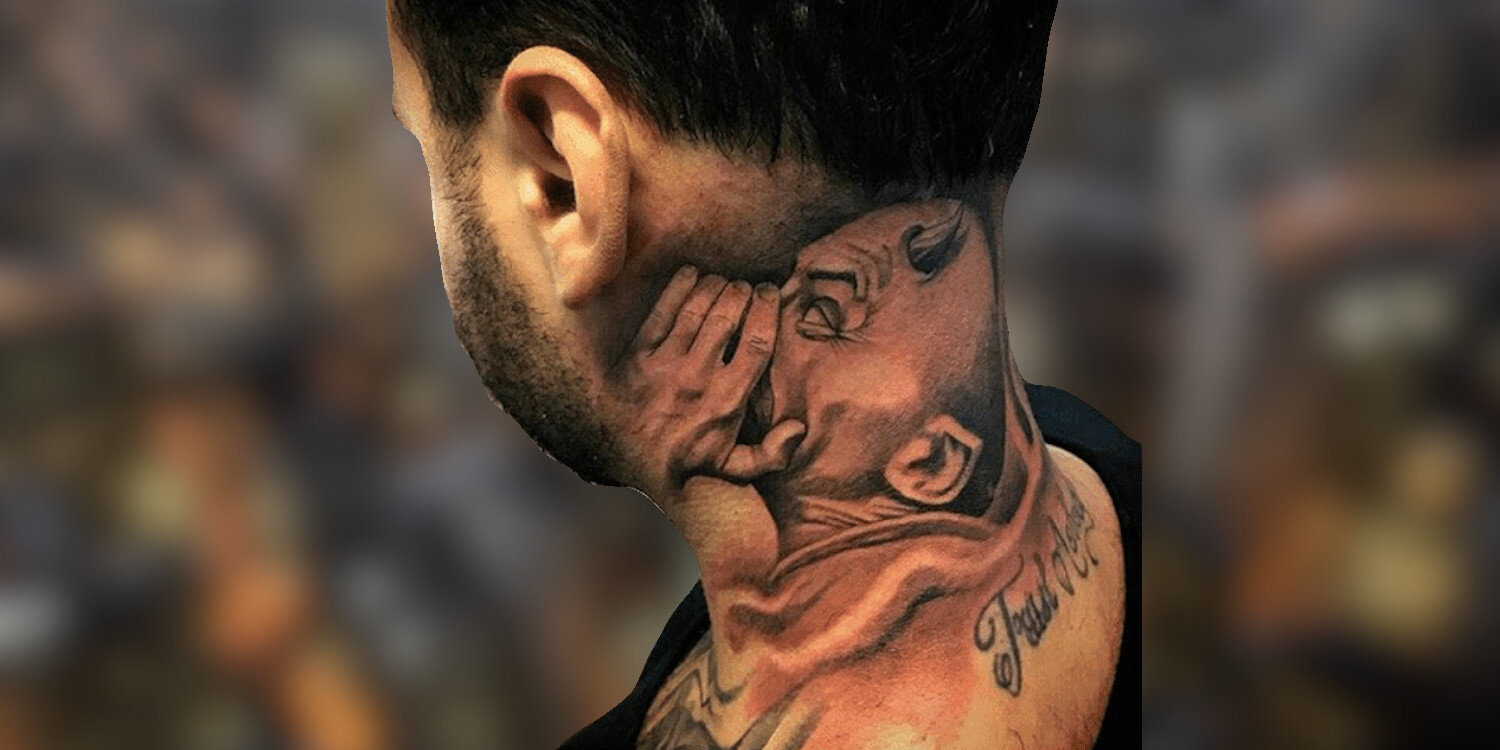
This list of present day atrocities spawned by rage could go on for pages. There is an influence behind it. A master opportunist has been doing what he does best. In Holy Week 2020, I wrote “Satan at the Last Supper: Hours of Darkness & Light.” Its point was that the whisper into the ear of Judas at the Last Supper was preceded by other events. Before it happened, Satan entered into Judas (Luke 22:3) as Judas entered into a deal with the chief priests to betray Christ. His sin of greed left him vulnerable to the exploitation of Satan and his minions. That is always the case. The mere whisper in the dark is never enough. Through a long, slow, barely noticeable descent toward ever greater darkness, Satan finds an opportunity just as he found one in Judas Iscariot.
Our rage against the affairs of this world can also be a point of vulnerability. The great Christian writer, C. S. Lewis, described that path to spiritual destruction in his allegorical story, The Screwtape Letters (1940). He captures Satan instructing his nephew in the ways of spiritual warfare: “It is the cumulative effect of sin that draws the Man away from the Light and out into the Nothing ... The safest road to Hell is the gradual one, the gentle curves, soft underfoot, without turns, without signposts, without a roadmap. (The Screwtape Letters, p. 61)
Satan exploits fear, rage, even political contention and a pandemic to drive a wedge not only between persons, but within them. If your life of faith has been assailed by the world, the flesh, and the devil in this past year, we invite you to walk the Way of the Cross Beyond These Stone Walls this week.
We are posting on Monday of Holy Week instead of our usual Wednesday post day to present this special Holy Week post and a short list of six others for you to read and share in each day of Holy Week. The list begins in an hour of darkness and ends in the glory of Salvation.
+ + +
Satan at The Last Supper: Hours of Darkness & Light
Waking Up in the Garden of Gethsemane
The Chief Priests Answered, ‘We Have No King but Caesar’
Behold the Man, as Pilate Washes His Hands
