“There are few authentic prophetic voices among us, guiding truth-seekers along the right path. Among them is Fr. Gordon MacRae, a mighty voice in the prison tradition of John the Baptist, Maximilian Kolbe, Alfred Delp, SJ, and Dietrich Bonhoeffer.”
— Deacon David Jones
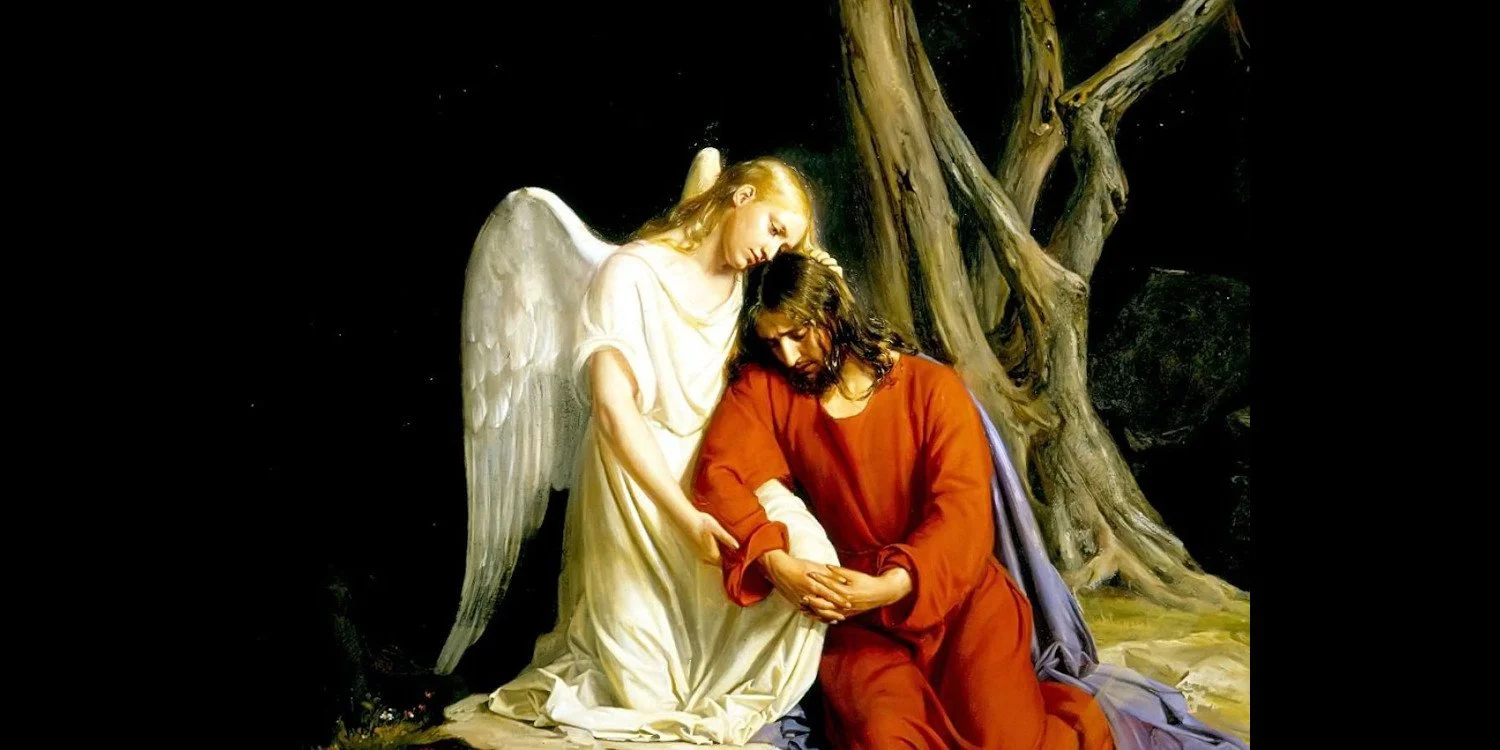
Optimism: When Hope Springs Eternal
A decade after the priesthood scandal broke the hearts of many Catholics and the optimism of many priests, Fr. James Valladares reminded us all of the gift of Hope.
A decade after the priesthood scandal broke the hearts of many Catholics and the optimism of many priests, Fr. James Valladares reminded us all of the gift of Hope.
July 29, 2026 by Father Michael P. Orsi with an Introduction by Father Gordon MacRae
Introduction
As most of the readers of this blog know, I was sent to prison with a life sentence in 1994 after refusing multiple plea deal offers to plead guilty in exchange for a one-to-two-year prison sentence. I would have been released from prison over 30 years ago had I actually been guilty, or at least willing to pretend so. It is the way more than 90 percent of trials in the United States are resolved in court. Those who gain their sense of Law and Order from the popular TV show of the same name are oblivious to the reality of this. I used to also be oblivious to what is today called “The Trial Penalty,” the implied threat that if you do not plead guilty you will spend the rest of your life in prison.
The first decade of my life in prison was the most painful, but not the only one that was painful. All hope had gone out of my world. The Church had gone out of my world, and took the priesthood with it. By some unknown mercy, I was spared the loss of my priesthood. I was never dismissed from the clerical state, a factor that I clung to as I grasped for any semblance of hope. Toward the end of that first decade, around 2003-2004, it got even worse. What had been a crisis in Boston and New Hampshire exploded onto the national stage and became a cause célèbre for contingency lawyers by the hundreds and scam artists by the thousands to bilk the Church out of more than $4 billion dollars in settlement of claims that never even saw the inside of a court room or heard the gavel of a judge. I wrote of this trend most recently in “Ten Years After The Boston Globe Spotlight Prostituted Journalism.”
As the news footage and newsprint dominated the scandal, I heard from some brother priests of my Diocese, but what I heard was merely condemnation. My Bishop’s office spokesperson, a monsignor who years later would serve his own prison sentence for financial crimes, filled in all the blanks in the public narrative with content about me and the case against me, which was entirely contrived and untrue, and for which he thought with surety that I would never actually see. Further down that deep well of hopelessness, I was alone in my grief.
Around 2000 or so, a celebrated Pulitzer Prize-wining journalist stepped on to the national media stage after quietly performing a forensic analysis of the case against me and its motives and aftermath. Suddenly there was an explosion of hope within me that no matter the outcome, the truth would finally be told on the most potent national stage, The Wall Street Journal.
But then, on September 11, 2001 — in the least of the tragedies of that day — came news that the offices of The Wall Street Journal were destroyed as the Twin Towers in the World Trade Center fell in New York City. Any optimism I had left fell along with them. All the research and content, electronic and otherwise, that had been amassed by Dorothy Rabinowitz, a member of The Wall Street Journal Editorial Board, was demolished. In January of 2002 came word that we would have to start over. I was not certain that I could.
What was supposed to have been written around 2001 became postponed indefinitely. The corrupt monsignor in my Diocese, who wore a second hat as the head of an organization representing insurance companies that moderated settlements, continued his campaign of misinformation, inflating the file of record with falsehood. Then, finally, in 2005 the hammer fell. The Wall Street Journal published its first of several articles under the broad heading, “The Trials of Father MacRae.” Other publications, such as The Media Report, picked up that story and ran with it. Our “Monsignor” fell into silence. A few years later Cardinal Avery Dulles and Father Richard John Neuhaus, along with the Catholic League for Religious and Civil Rights, urged me to write giving birth to Beyond These Stone Walls. My stifled optimism was undergoing a breakout appearance in my heart and soul.
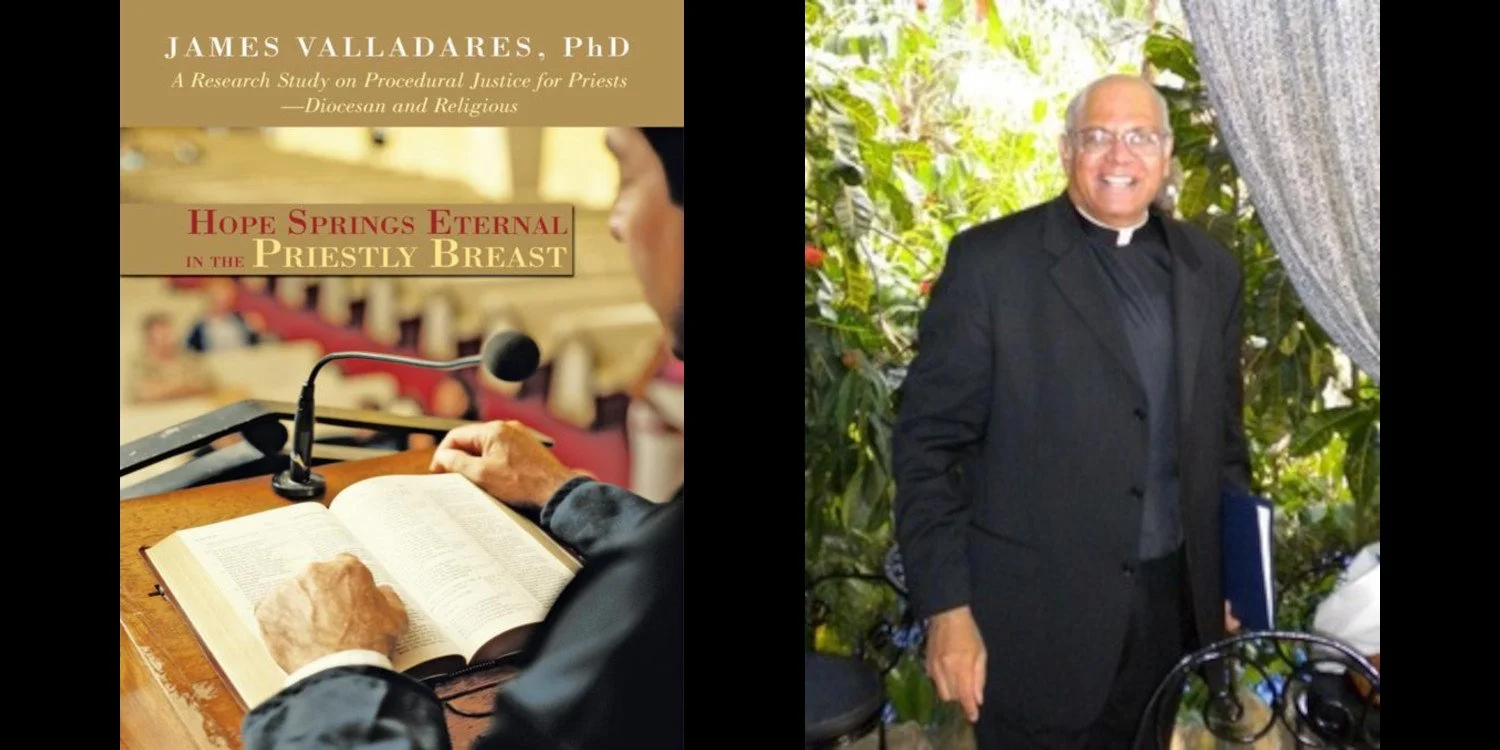
Then the unthinkable happened. A priest and psychologist, a celebrated author in Australia, also took up this story in a magnificent book, Hope Springs Eternal in the Priestly Breast. Father James Valladares, PhD is one of the most courageous and honorable priests I know.
While I was busy writing in prison for a blog the audience of which I could not see, Father Valladares was in Australia reading every word. When his book was published in 2012, I learned with a shock that he had been taking copious notes about my sacrificial priesthood, and he filled a significant number of his pages and chapters with the thoughts of my heart which he revealed. I was stunned, and I knew instantly that all those years of hopelessness were dedicated to the exposition of truth that will long outlive both Father Valladares and me. He gave his book a most hopeful title:
Hope Springs Eternal in the Priestly Breast.
+ + +
Note from Father Gordon MacRae: This book is very special. It was not a gift to me, but to the priesthood. I recently wrote to Father Valladares about the status of his research and his book. He very generously gave me the entire book in electronic format so that we could publish his chapters one by one as an occasional post at Beyond These Stone Walls. And so we begin this week with the Foreword to Hope Springs Eternal in the Priestly Breast. The Foreword is brilliant. It was written by Father Michael P. Orsi, then of Ave Maria School of Law in Naples, Florida. It contains the most hope I have seen or heard in a very long time.
+ + +
Foreword by Reverend Michael P. Orsi, Ave Maria School of Law
The clergy abuse scandal has posed the greatest threat to the traditional understanding of the Catholic priesthood since the Protestant Reformation. Now, as then, the deadliest attacks are coming from within the Church. In an attempt to ameliorate a system that allowed a small minority of the clergy to violate children and the gross negligence of some bishops who recycled these predators, the American bishops instituted the Charter for the Protection of Children and Young People in 2002. It is, unfortunately, doing the Church more harm than good.
By adhering to the Charter’s provisions, the American hierarchy has unwittingly undermined the Church’s sacramental theology regarding Holy Orders and her ecclesiology, which depends on a priest’s relationship with his bishop. This breakdown has encouraged present-day Modernists, who believe the truth is culturally conditioned and that the Faith is based merely on sentimentality, to try to remake the Church according to their own lights. Intra-ecclesial groups like Future Church, Voice of the Faithful (VOTF), and the Survivors Network of those Abused by Priests (SNAP) have subsequently formed, challenging the hierarchical nature of the Church, her infallible teaching on the male-only priesthood, and the Western tradition of priestly celibacy.
A major factor responsible for a large number of the sex abuse cases, according to the 2011 John Jay College of Criminology Report to the bishops, is attributed to the sexual confusion which reigned in society and the Church in the 1960s and 1970s. The teaching of moral relativism and the acceptance of popular psychological theories over traditional theological principles led to the excess of bad behavior during this period. No doubt bad thinking led to bad actions. The lesson is that orthodoxy is necessary for orthopraxis.
The Dallas Charter was a response to the deep regret felt by the bishops for the perverse crimes that had occurred against minors and a recognition that strong safeguards must be in place to protect them. But the remedies that they enacted were influenced by the secular solutions of lawyers and public relations experts, which compromised the Gospel. They do not reflect justice, charity, and forgiveness toward priests. Dangerous procedural measures, such as administrative leave, zero tolerance, and one-size-fits-all policy for accused priests and for punishing malefactors have lent themselves to violations of canonical due process and a mockery of time-tested principles of jurisprudence. This is especially evident when dioceses publish the names of defenseless deceased priests as sex abusers on their websites. But most egregious is the forced laicization imposed on those deemed to be guilty. This action clouds in the popular mind the permanency of the indelible character of Holy Orders conferred at ordination.
The present state of affairs has caused mistrust and fear in priest-bishop relationship. The collaboration of a priest with his bishop is vital since he participates in the bishop’s priesthood. Bishops, who are supposed to be fathers, brothers, and friends to their priests, have instead become mere managers with institutional damage control as their top priority. Many priests have dubbed this the Caiaphas Principle. A recent survey in an unpublished dissertation found that most priests do not believe that they can count on the support of their fellow priests in the event of a false accusation, presumably out of fear of retribution from their bishop or from victims’ advocacy groups. This too is extremely dangerous because priests of the diocese form a presbyterate in union with their bishop. It has devastating pastoral consequences.
“Credible evidence,” the nebulous standard used by diocesan review boards, has effectively made priests guilty until proven innocent. This has forced priests to shy away from human interactions, especially expressions of pastoral warmth and concern, which were the hallmarks of Jesus’s public ministry. Now a fatherly touch may be interpreted as a sexual advance or an act of kindness toward a young person misconstrued as “grooming.” As one priest so poignantly stated, “If I meet a woman, I’m having an affair; if I meet a man, I’m gay; and, God forbid, if I’m with a child, I’m an abuser.” In the current climate, any human action of a priest is suspect. Naturally, this has had a devastating toll on the effectiveness of the ordained ministry.
In Hope Springs Eternal in the Priestly Breast, Fr. James Valladares shows how justice and charity have been violated by some bishops in dealing with accused priests. He examines the pertinent canons that guide the Church’s justice system and finds that these are often ignored or wrongly applied. He provides true cases that highlight the injustice of the process and the agony of priests who have been subjected to the Charter’s draconian mandates.
The Church has incurred tremendous financial losses because of settlements rising from both legitimate and false claims. Her image has been marred by the secular media, which has taken advantage of the crisis. However, we often fail to understand how trivial these are in comparison to the damage done to the priesthood by the enactment of the Charter’s policies. This is the pressing issue that the bishops need to address.
The present scenario reported by Fr. Valladares is dark. Yet, he has surprisingly chosen a title for his book that speaks of hope. For sure, it is a hope based on Jesus’ words to his disciples, “I will be with you always.” Therefore, far from being pessimistic, Fr. Valladares presents the facts with confidence that “the truth will set us free.”
For his hard work, born out of a love for the priesthood and his brother-priests, Fr. James Valladares is to be commended.
Reverend Michael P. Orsi
Ave Maria School of Law
Naples, Florida
Fall 2011
+ + +
Related Links
Bogus Charges Against Priests Abound by Rev. Michael P. Orsi for the Catholic League for Religious and Civil Rights
David Clohessy Resigned SNAP in Alleged Kickback Scheme
Ten Years After The Boston Globe Spotlight Prostituted Journalism Years
Due Process for Accused Priests by Father Gordon MacRae for the Catholic League for Religious and Civil Rights

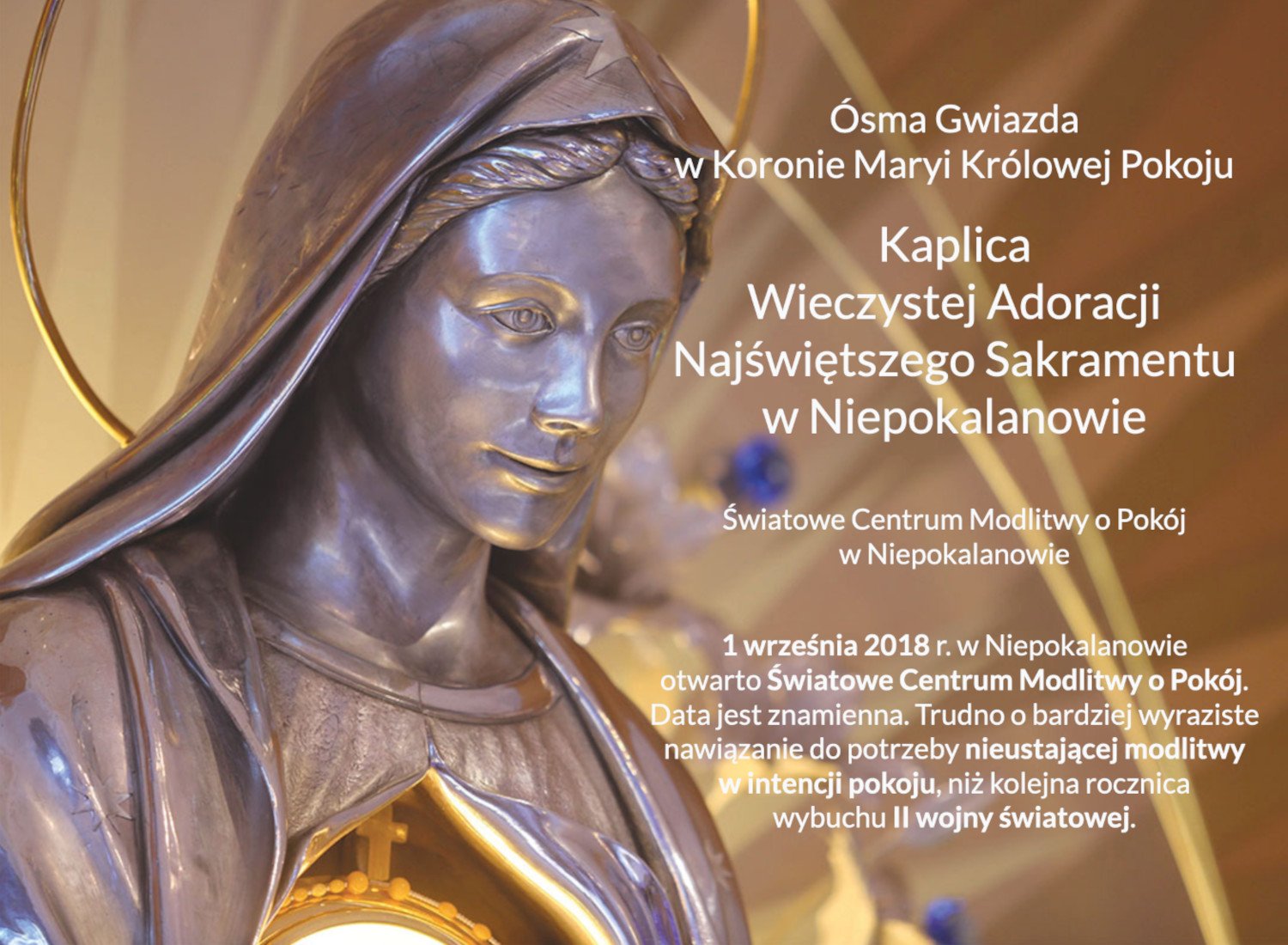

The Eucharistic Adoration Chapel established by Saint Maximilian Kolbe was inaugurated at the outbreak of World War II. It was restored as a Chapel of Adoration in September, 2018, the commemoration of the date that the war began. It is now part of the World Center of Prayer for Peace. The live internet feed of the Adoration Chapel at Niepokalanow — sponsored by EWTN — was established just a few weeks before we discovered it and began to include in at Beyond These Stone Walls. Click “Watch on YouTube” in the lower left corner to see how many people around the world are present there with you. The number appears below the symbol for EWTN.
Click or tap here to proceed to the Adoration Chapel.
The following is a translation from the Polish in the image above: “Eighth Star in the Crown of Mary Queen of Peace” “Chapel of Perpetual Adoration of the Blessed Sacrament at Niepokalanow. World Center of Prayer for Peace.” “On September 1, 2018, the World Center of Prayer for Peace in Niepokalanow was opened. It would be difficult to find a more expressive reference to the need for constant prayer for peace than the anniversary of the outbreak of World War II.”
For the Catholic theology behind this image, visit my post, “The Ark of the Covenant and the Mother of God.”