“There are few authentic prophetic voices among us, guiding truth-seekers along the right path. Among them is Fr. Gordon MacRae, a mighty voice in the prison tradition of John the Baptist, Maximilian Kolbe, Alfred Delp, SJ, and Dietrich Bonhoeffer.”
— Deacon David Jones
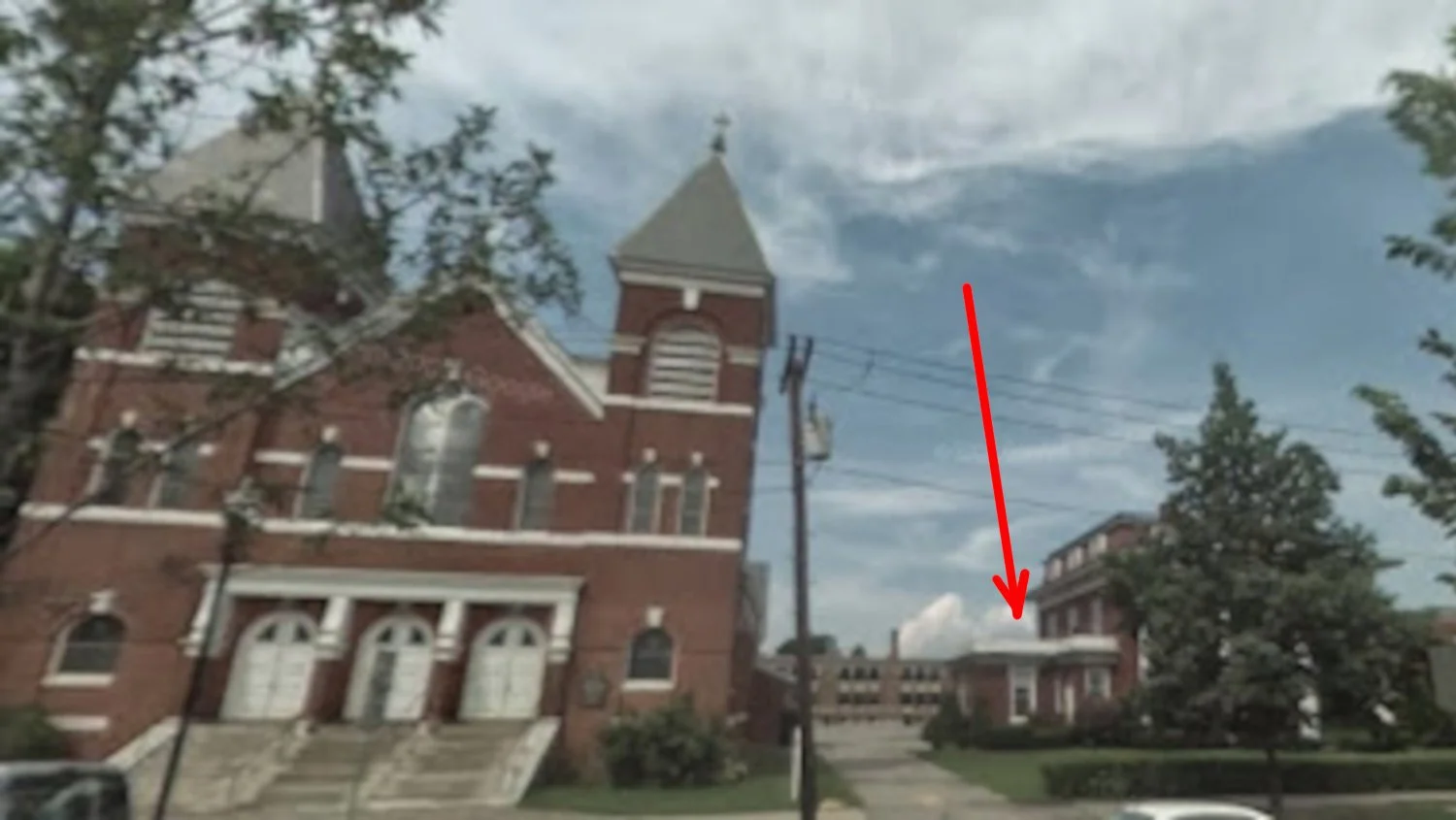
Justice and Due Process Support the Rights of Priests — But Not This One
A right of defense for accused priests is supported on paper in the Diocese of Manchester, but in this case it has been suppressed and obstructed at every turn.
A right of defense for accused priests is supported on paper in the Diocese of Manchester, but in this case it has been suppressed and obstructed at every turn.
October 21, 2013 by Ryan A. MacDonald [updated August 19, 2026]
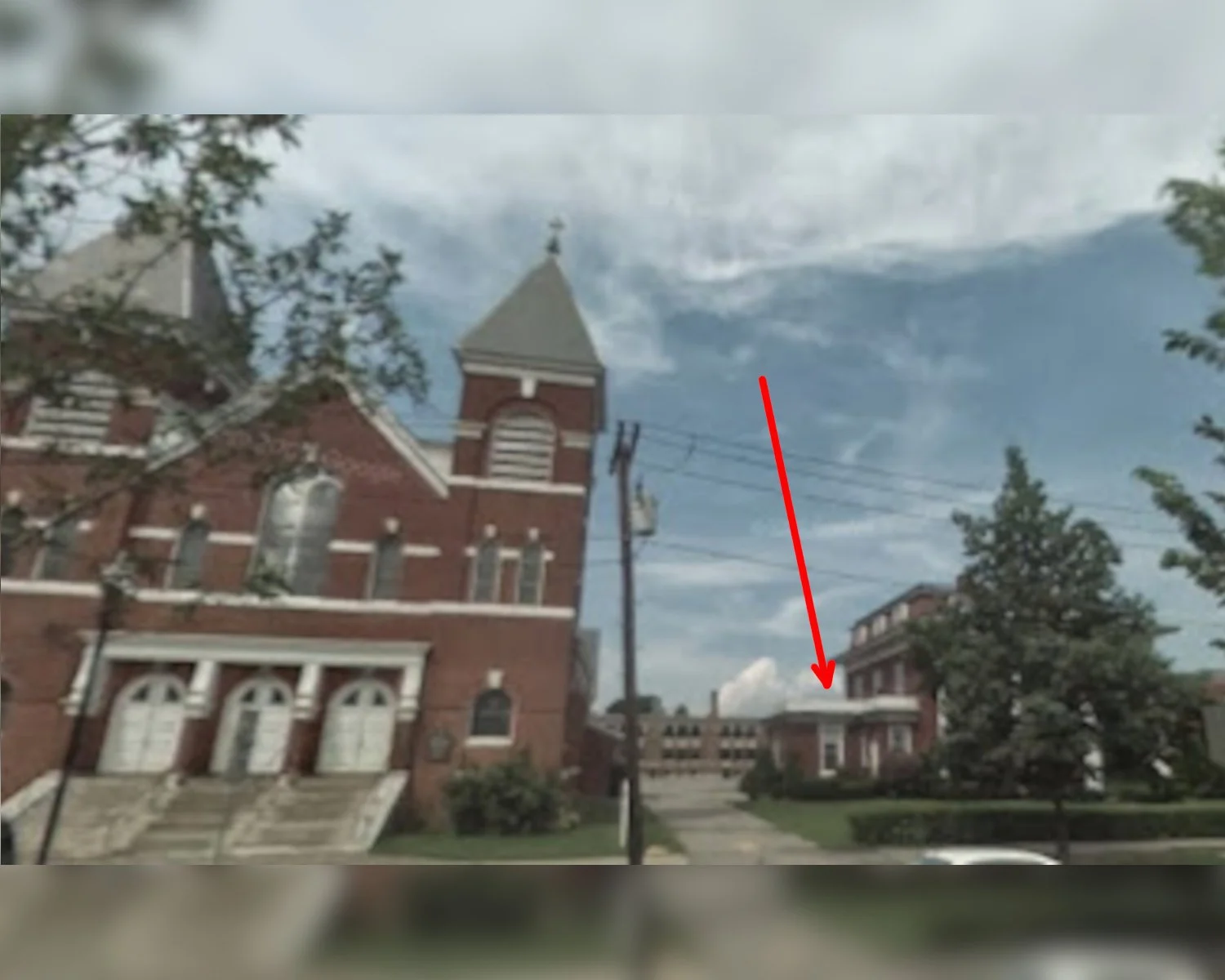
I became quite familiar with the scene above during a short trip one summer. A nice 4-hour drive from New York took me along Interstate 91 and the Connecticut River. From Brattleboro, Vermont (locals call it “Brat”) I drove east on Route 9 for 18 miles to the picturesque City of Keene, New Hampshire and its much admired downtown Main Street.
Keene is a small city with a population of about 23,500 — not counting the 5,000 students enrolled in Keene State College. The social and economic hub of southwest New Hampshire, Keene boasts the widest Main Street in the United States. Its bustling downtown collection of quaint and busy shops, restaurants, a theatre, offices, and concerts on the Keene Commons is the envy of many cities its size. Keene’s downtown begins at the doors of St. Bernard Church, today part of a three-parish community known as the Parish of the Holy Spirit.
Saint Bernard Church and Rectory are depicted above. The building in the background is Saint Joseph Regional Catholic School (grades K to 8). The entire complex is bordered on the left by the bustling campus of Keene State College, and on the right by busy downtown Keene. Directly across the wide, heavily traveled Main Street from the rectory is the region’s largest and busiest U.S. Post Office, a pizza take-out, and a convenience store conducting a brisk college town business 24/7.
THE ROOM WHERE IT DIDN’T HAPPEN
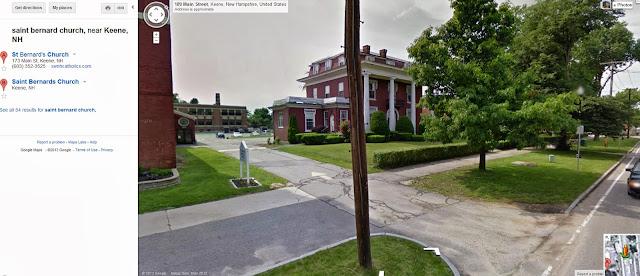
Just above is a closer view of the Main Street driveway between Saint Bernard Church and Rectory. It’s a scene I wanted to see for myself, and was the reason for my summer drive to Keene. Note the flat roofed adjunct just to the left of the building. It was added on at some point to the large old mansion that became St. Bernard Rectory.
The rounded doorway on the building’s left side was in 1983 the rectory’s main business entrance. Just to its left is a large window. In 1980, a closed circuit television camera was installed just above that door because the rectory had been the scene of a number of urban burglaries and an armed robbery or two. In the late 1970s, two priests and the pastor’s elderly mother were tied up in the rectory basement while the house was ransacked and robbed in the middle of the night.
On the other side of that door, when Father Gordon MacRae was assigned there in 1983, was the desk of a receptionist and secretary staffed in two shifts from 9:00 AM until 9:00 PM. There was also a waiting area for parishioners wanting to see one of the four priests assigned there in the early 1980s, and for daily clients of the region’s busy St. Vincent DePaul Society seeking assistance with food, clothing, and emergency shelter.
On the right of the church building just across the narrow driveway from the rectory was the most heavily used entrance and exit for parish activities. These doorways to the church and rectory were the busiest places in or around that parish church. The photos above and below was taken early in the morning. At virtually any other time, this scene was a hubbub of activity.

Note the large window just to the left of the rectory’s main entrance with its monitoring TV camera. It was just behind this highly visible office window — in full view of the daily hustle and bustle of Main Street traffic and the steady stream of visitors into and out of this busy rectory and church — that 27-year-old Thomas Grover claimed that he was four times sexually assaulted by Father Gordon MacRae at age 15 between April and November of 1983.
It was here behind this highly visible window where Grover claimed that in the months just prior to his 16th birthday he sought MacRae out for counseling for his drug addiction, but instead was threatened, berated, made to cry, and then raped. It was here that 200-pound Thomas Grover claimed to have returned four times from week to week unable to remember the sexual assaults he claimed to have occurred during previous visits.
Like so many who have looked at this case, I was aghast when I first became familiar with the details of the trial of Father MacRae. I wrote of this trial in an article entitled “Judge Arthur Brennan Sentenced Father Gordon MacRae to Die in Prison.” As The Wall Street Journal’s Dorothy Rabinowitz wrote in “The Trials of Father MacRae” (May 13, 2013):
"Those aware of the facts of this case find it hard to imagine that any court today would ignore the perversion of justice it represents."
Once I became aware of the facts of this case, I had to see for myself exactly where this was all claimed to have taken place. What I saw in the scenes depicted above is a compelling visual to accompany something Attorney Robert Rosenthal included in his failed appeal briefs to the New Hampshire courts:
“In what the petitioner asserts has been revealed as a scam to obtain a cash settlement from the Catholic church, Tom Grover, a drug addict alcoholic and criminal, accused Father Gordon MacRae of molesting him years before. Grover’s civil suit — featuring MacRae’s conviction — earned him nearly $200,000. No witnesses to the alleged acts could be found, despite that they were to have occurred in busy places. Grover’s claims were contradicted by objective facts (e.g. inoperable locks that he claimed worked, acts in an office to which MacRae did not have access, claims about a chess set that had not [yet] been purchased).”
Thomas Grover claimed that these assaults occurred in this office commencing in April 1983 and ending just as he turned 16 years old in mid-November 1983. Father Gordon MacRae did not arrive at St. Bernard Church until mid-June 1983, and did not have access to this particular office because it was occupied by another priest until the end of July 1983. Upon learning this pre-trial, Grover then vaguely moved one of his claimed assaults to an adjacent busy office to which MacRae also had no access that summer.
In the summer of 1983, St. Bernard Rectory employed a full and part-time staff of twelve, including the four priests who lived in this house, and a total staff of 25 parish and school employees all coming and going throughout the day and evening. And yet, the prosecution produced not a single witness to these acts. No one ever testified to seeing Thomas Grover there. No one ever opened the door to admit him, or saw him leave. No one ever claimed to have heard anything.
A lock Grover claimed that MacRae used to secure the office door had been dismantled and painted over years before the priest arrived. An ornate marble chess set Grover claimed was inside that office during the assaults was not purchased by the priest until three years later in 1986. Today, Grover’s former wife, Trina Ghedoni says that Grover admitted to her that he perjured himself throughout the MacRae trial, and said he offered perjured testimony about the chess set because “it was what he was told to say.”
The one person who could have helped to inform this appellate defense — Father Robert Biron, a prominent pastor in the Diocese of Manchester — refused to help. The above scene was his office several years before MacRae arrived, and again for several more years after MacRae left St. Bernard’s. Father Biron might have spoken to the improbability of much of what had been claimed. He might have described the painted over office door lock that didn’t work, the shade on the office window that wasn’t there in 1983, the absence of air conditioning requiring that this office window remain wide open to the scene overlooking the main entrance and busy Main Street throughout summer months.
Father Robert Biron might have attested to the traffic; to the noise of people coming and going, noise that easily penetrated that office door in both directions. He might have attested to the waiting area just outside that office door, and its steady stream of people. But he refused. In his answer to Father MacRae’s plea as the investigation for this appeal began, Father Biron wrote on his official Our Lady of Fatima Parish stationery,
“I can’t be of any help to you, and don’t see the necessity of entertaining any further correspondence from you.”
— Letter of Father Robert Biron, January 19, 2009
Father Biron’s cold letter was received by the imprisoned priest just after the Bishop of Manchester at the time, now deceased Bishop John McCormack, insisted to Vatican officials and others that he and the Diocese of Manchester fully support Father MacRae’s right of defense.
Earlier, Bishop McCormack offered Father MacRae $40,000 toward an appellate defense, but with conditions: he wanted the diocese to choose MacRae’s lawyers and wanted the priest to sever all contact with Dorothy Rabinowitz and The Wall Street Journal. The Bishop also wanted MacRae to agree not to review the history and merits of this case, appealing only his sentence and not the convictions. Bishop McCormack then reneged on his offer in a grueling and cruel “stringing along” of this imprisoned priest that another prominent writer described in detail in “A Code of Silence in the U.S. Catholic Church: Affidavits.”
When Father Gordon MacRae was on trial in 1994, and the prosecution finished presenting its case, which consisted of nothing more than Thomas Grover’s hysteria and evasiveness, Judge Arthur Brennan instructed Fr. MacRae not to take the stand in his own defense or else the judge would open the door for Thomas Grover’s brothers to testify to their own false claims brought in civil suits. Gordon MacRae was the only person never heard from in this trial.
When Judge Arthur Brennan sentenced Father MacRae to more than 30 times what had been offered in a plea deal, the judge never permitted the priest to speak. Now, today, both New Hampshire courts receiving this appeal have dismissed it without a hearing, without hearing from new witnesses, and without Fr. MacRae being allowed to utter a word. Even in the Diocese of Manchester, the Bishop presented Father MacRae’s case for dismissal to the Holy See without his ever even knowing what was put forward or having any opportunity to defend himself. This came after a sworn affidavit from a PBS official quoting Bishop McCormack as stating, “This must never leave this office, but I believe Father MacRae is not guilty and should not be in prison, but my hands are tied.”
Fortunately, to date, the Holy See has not seen fit to act solely on such unilateral information. The silence forced upon Father Gordon MacRae has been deeply unjust. This case must move forward and be fully heard.
What were they all afraid of?
+ + +
Note from Father Gordon MacRae: Thank you for reading and sharing this post. You may also like these related posts from Beyond These Stone Walls:
Judge Arthur Brennan Sentenced Father Gordon MacRae to Die in Prison
Bombshells and Black Ops Defeated Justice in New Hampshire
To Fleece the Flock: Meet the Trauma-Informed Consultants
In the Diocese of Manchester, Transparency and a Hit List
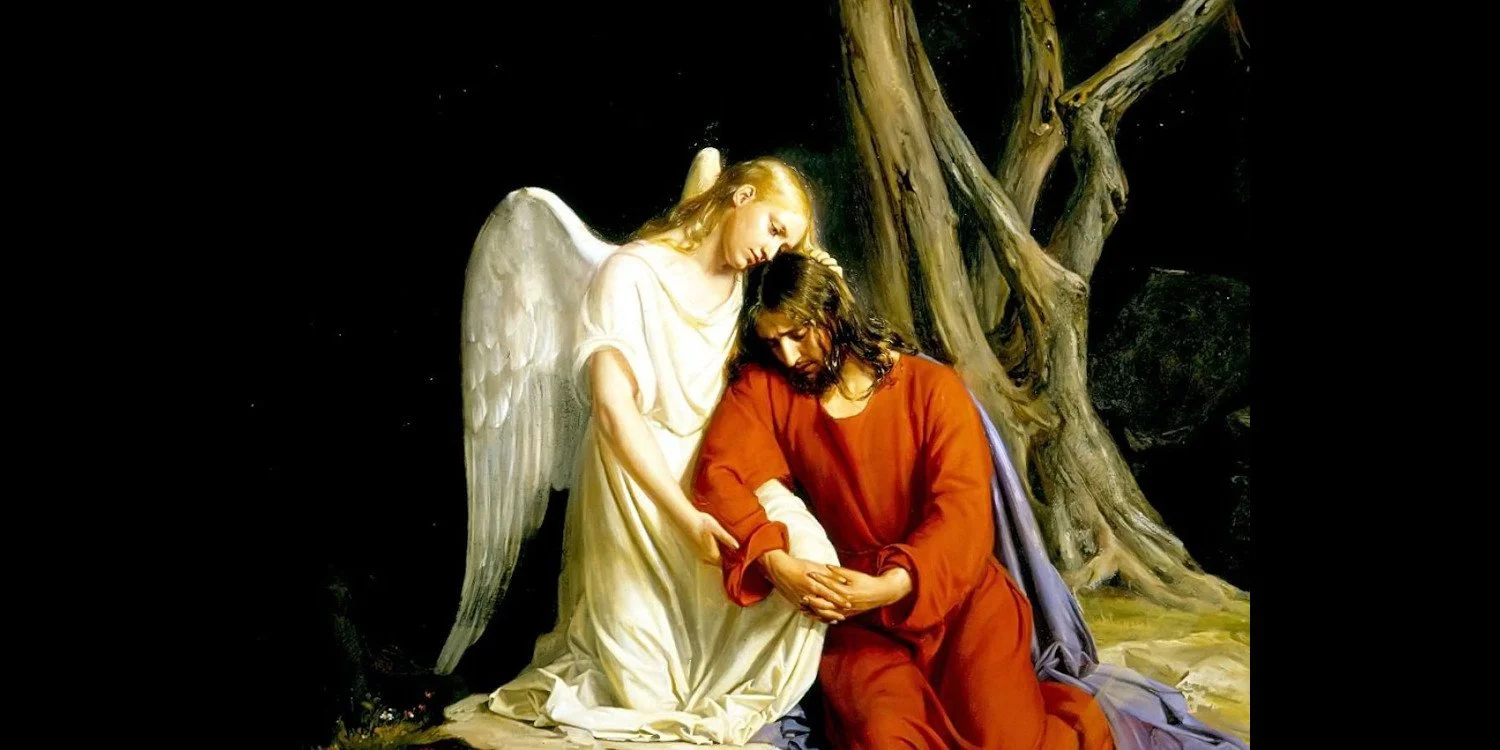
Optimism: When Hope Springs Eternal
A decade after the priesthood scandal broke the hearts of many Catholics and the optimism of many priests, Fr. James Valladares reminded us all of the gift of Hope.
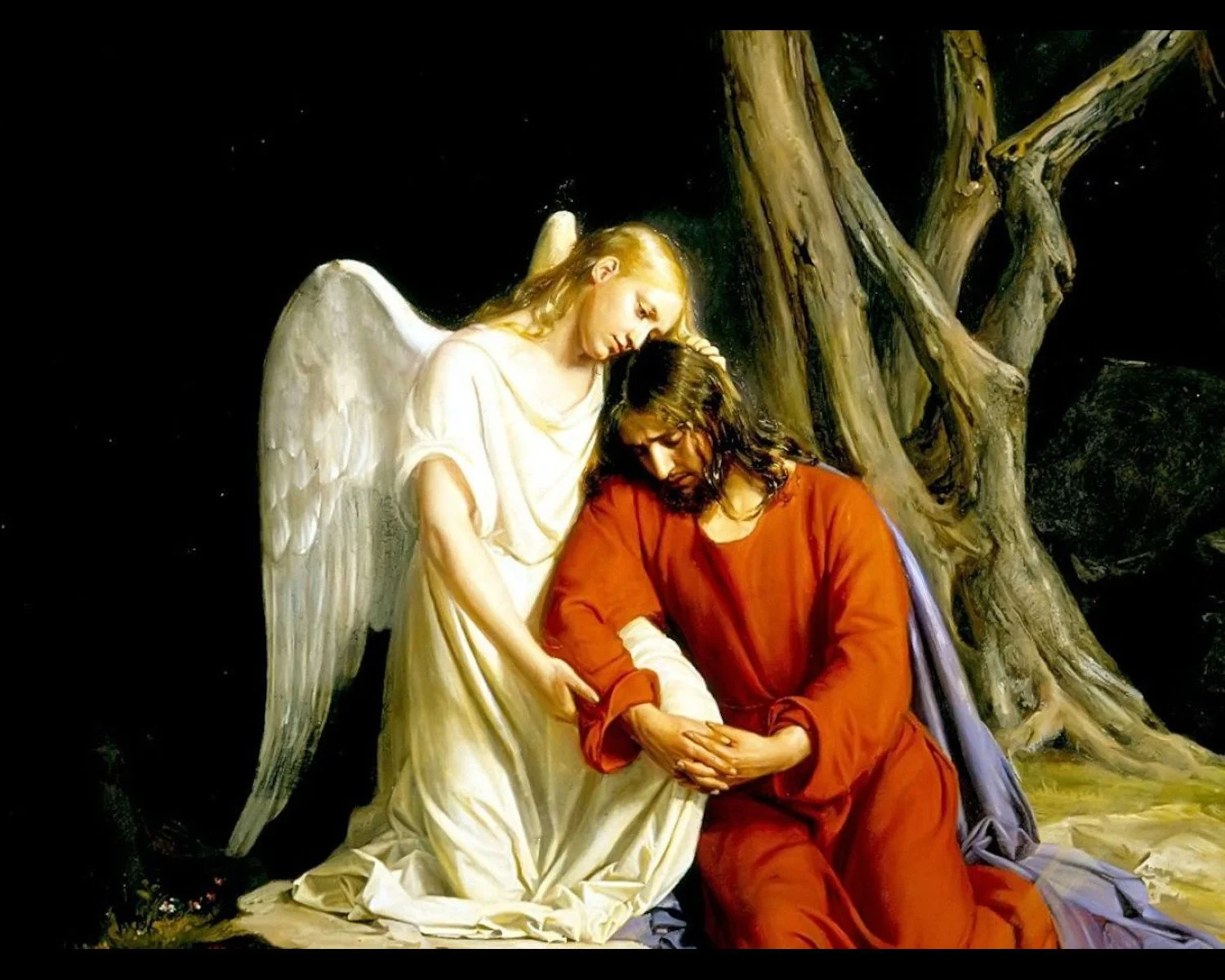
A decade after the priesthood scandal broke the hearts of many Catholics and the optimism of many priests, Fr. James Valladares reminded us all of the gift of Hope.
July 29, 2026 by Father Michael P. Orsi with an Introduction by Father Gordon MacRae
Introduction
As most of the readers of this blog know, I was sent to prison with a life sentence in 1994 after refusing multiple plea deal offers to plead guilty in exchange for a one-to-two-year prison sentence. I would have been released from prison over 30 years ago had I actually been guilty, or at least willing to pretend so. It is the way more than 90 percent of trials in the United States are resolved in court. Those who gain their sense of Law and Order from the popular TV show of the same name are oblivious to the reality of this. I used to also be oblivious to what is today called “The Trial Penalty,” the implied threat that if you do not plead guilty you will spend the rest of your life in prison.
The first decade of my life in prison was the most painful, but not the only one that was painful. All hope had gone out of my world. The Church had gone out of my world, and took the priesthood with it. By some unknown mercy, I was spared the loss of my priesthood. I was never dismissed from the clerical state, a factor that I clung to as I grasped for any semblance of hope. Toward the end of that first decade, around 2003-2004, it got even worse. What had been a crisis in Boston and New Hampshire exploded onto the national stage and became a cause célèbre for contingency lawyers by the hundreds and scam artists by the thousands to bilk the Church out of more than $4 billion dollars in settlement of claims that never even saw the inside of a court room or heard the gavel of a judge. I wrote of this trend most recently in “Ten Years After The Boston Globe Spotlight Prostituted Journalism.”
As the news footage and newsprint dominated the scandal, I heard from some brother priests of my Diocese, but what I heard was merely condemnation. My Bishop’s office spokesperson, a monsignor who years later would serve his own prison sentence for financial crimes, filled in all the blanks in the public narrative with content about me and the case against me, which was entirely contrived and untrue, and for which he thought with surety that I would never actually see. Further down that deep well of hopelessness, I was alone in my grief.
Around 2000 or so, a celebrated Pulitzer Prize-wining journalist stepped on to the national media stage after quietly performing a forensic analysis of the case against me and its motives and aftermath. Suddenly there was an explosion of hope within me that no matter the outcome, the truth would finally be told on the most potent national stage, The Wall Street Journal.
But then, on September 11, 2001 — in the least of the tragedies of that day — came news that the offices of The Wall Street Journal were destroyed as the Twin Towers in the World Trade Center fell in New York City. Any optimism I had left fell along with them. All the research and content, electronic and otherwise, that had been amassed by Dorothy Rabinowitz, a member of The Wall Street Journal Editorial Board, was demolished. In January of 2002 came word that we would have to start over. I was not certain that I could.
What was supposed to have been written around 2001 became postponed indefinitely. The corrupt monsignor in my Diocese, who wore a second hat as the head of an organization representing insurance companies that moderated settlements, continued his campaign of misinformation, inflating the file of record with falsehood. Then, finally, in 2005 the hammer fell. The Wall Street Journal published its first of several articles under the broad heading, “The Trials of Father MacRae.” Other publications, such as The Media Report, picked up that story and ran with it. Our “Monsignor” fell into silence. A few years later Cardinal Avery Dulles and Father Richard John Neuhaus, along with the Catholic League for Religious and Civil Rights, urged me to write giving birth to Beyond These Stone Walls. My stifled optimism was undergoing a breakout appearance in my heart and soul.
Then the unthinkable happened. A priest and psychologist, a celebrated author in Australia, also took up this story in a magnificent book, Hope Springs Eternal in the Priestly Breast. Father James Valladares, PhD is one of the most courageous and honorable priests I know.
While I was busy writing in prison for a blog the audience of which I could not see, Father Valladares was in Australia reading every word. When his book was published in 2012, I learned with a shock that he had been taking copious notes about my sacrificial priesthood, and he filled a significant number of his pages and chapters with the thoughts of my heart which he revealed. I was stunned, and I knew instantly that all those years of hopelessness were dedicated to the exposition of truth that will long outlive both Father Valladares and me. He gave his book a most hopeful title:
Hope Springs Eternal in the Priestly Breast.
+ + +
Note from Father Gordon MacRae: This book is very special. It was not a gift to me, but to the priesthood. I recently wrote to Father Valladares about the status of his research and his book. He very generously gave me the entire book in electronic format so that we could publish his chapters one by one as an occasional post at Beyond These Stone Walls. And so we begin this week with the Foreword to Hope Springs Eternal in the Priestly Breast. The Foreword is brilliant. It was written by Father Michael P. Orsi, then of Ave Maria School of Law in Naples, Florida. It contains the most hope I have seen or heard in a very long time.
+ + +
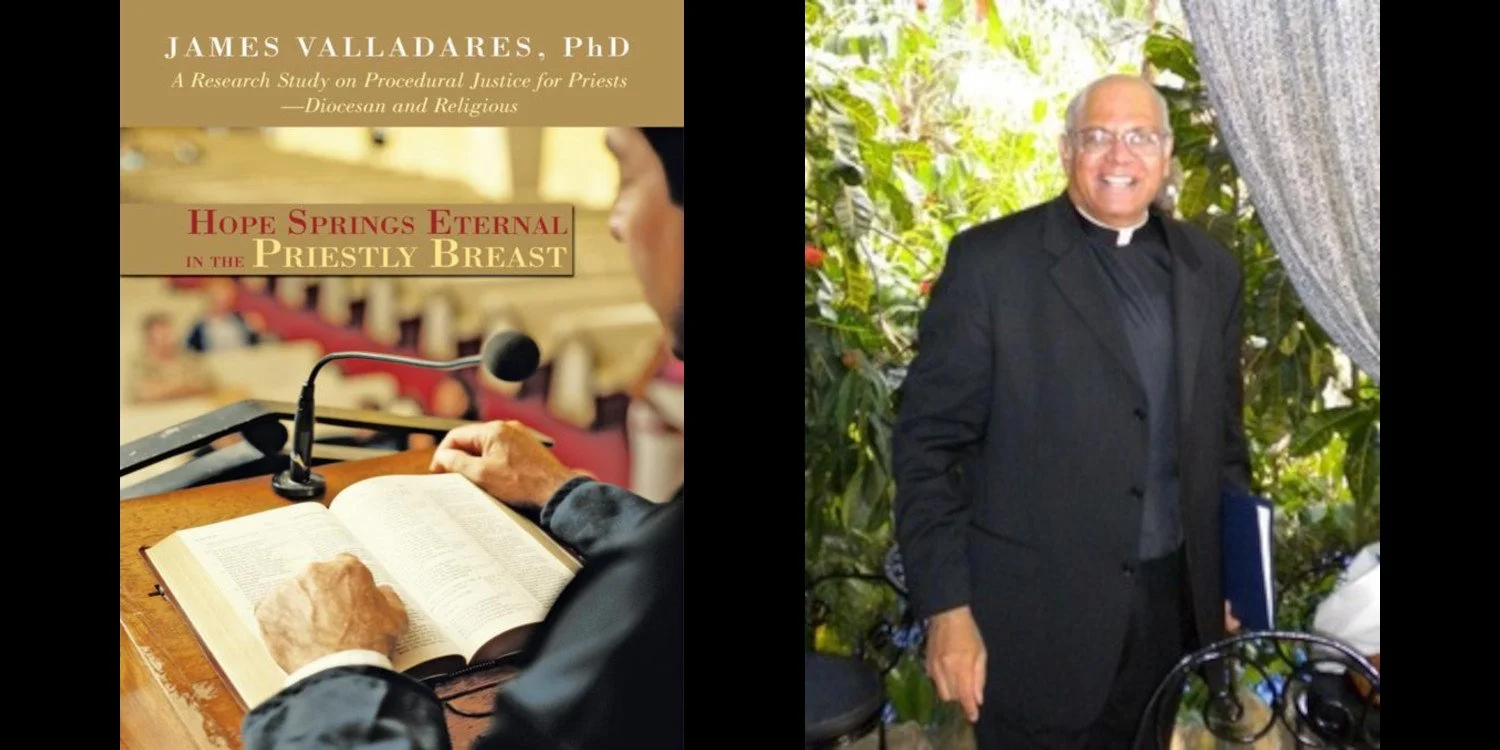
Foreword by Reverend Michael P. Orsi, Ave Maria School of Law
The clergy abuse scandal has posed the greatest threat to the traditional understanding of the Catholic priesthood since the Protestant Reformation. Now, as then, the deadliest attacks are coming from within the Church. In an attempt to ameliorate a system that allowed a small minority of the clergy to violate children and the gross negligence of some bishops who recycled these predators, the American bishops instituted the Charter for the Protection of Children and Young People in 2002. It is, unfortunately, doing the Church more harm than good.
By adhering to the Charter’s provisions, the American hierarchy has unwittingly undermined the Church’s sacramental theology regarding Holy Orders and her ecclesiology, which depends on a priest’s relationship with his bishop. This breakdown has encouraged present-day Modernists, who believe the truth is culturally conditioned and that the Faith is based merely on sentimentality, to try to remake the Church according to their own lights. Intra-ecclesial groups like Future Church, Voice of the Faithful (VOTF), and the Survivors Network of those Abused by Priests (SNAP) have subsequently formed, challenging the hierarchical nature of the Church, her infallible teaching on the male-only priesthood, and the Western tradition of priestly celibacy.
A major factor responsible for a large number of the sex abuse cases, according to the 2011 John Jay College of Criminology Report to the bishops, is attributed to the sexual confusion which reigned in society and the Church in the 1960s and 1970s. The teaching of moral relativism and the acceptance of popular psychological theories over traditional theological principles led to the excess of bad behavior during this period. No doubt bad thinking led to bad actions. The lesson is that orthodoxy is necessary for orthopraxis.
The Dallas Charter was a response to the deep regret felt by the bishops for the perverse crimes that had occurred against minors and a recognition that strong safeguards must be in place to protect them. But the remedies that they enacted were influenced by the secular solutions of lawyers and public relations experts, which compromised the Gospel. They do not reflect justice, charity, and forgiveness toward priests. Dangerous procedural measures, such as administrative leave, zero tolerance, and one-size-fits-all policy for accused priests and for punishing malefactors have lent themselves to violations of canonical due process and a mockery of time-tested principles of jurisprudence. This is especially evident when dioceses publish the names of defenseless deceased priests as sex abusers on their websites. But most egregious is the forced laicization imposed on those deemed to be guilty. This action clouds in the popular mind the permanency of the indelible character of Holy Orders conferred at ordination.
The present state of affairs has caused mistrust and fear in priest-bishop relationship. The collaboration of a priest with his bishop is vital since he participates in the bishop’s priesthood. Bishops, who are supposed to be fathers, brothers, and friends to their priests, have instead become mere managers with institutional damage control as their top priority. Many priests have dubbed this the Caiaphas Principle. A recent survey in an unpublished dissertation found that most priests do not believe that they can count on the support of their fellow priests in the event of a false accusation, presumably out of fear of retribution from their bishop or from victims’ advocacy groups. This too is extremely dangerous because priests of the diocese form a presbyterate in union with their bishop. It has devastating pastoral consequences.
“Credible evidence,” the nebulous standard used by diocesan review boards, has effectively made priests guilty until proven innocent. This has forced priests to shy away from human interactions, especially expressions of pastoral warmth and concern, which were the hallmarks of Jesus’s public ministry. Now a fatherly touch may be interpreted as a sexual advance or an act of kindness toward a young person misconstrued as “grooming.” As one priest so poignantly stated, “If I meet a woman, I’m having an affair; if I meet a man, I’m gay; and, God forbid, if I’m with a child, I’m an abuser.” In the current climate, any human action of a priest is suspect. Naturally, this has had a devastating toll on the effectiveness of the ordained ministry.
In Hope Springs Eternal in the Priestly Breast, Fr. James Valladares shows how justice and charity have been violated by some bishops in dealing with accused priests. He examines the pertinent canons that guide the Church’s justice system and finds that these are often ignored or wrongly applied. He provides true cases that highlight the injustice of the process and the agony of priests who have been subjected to the Charter’s draconian mandates.
The Church has incurred tremendous financial losses because of settlements rising from both legitimate and false claims. Her image has been marred by the secular media, which has taken advantage of the crisis. However, we often fail to understand how trivial these are in comparison to the damage done to the priesthood by the enactment of the Charter’s policies. This is the pressing issue that the bishops need to address.
The present scenario reported by Fr. Valladares is dark. Yet, he has surprisingly chosen a title for his book that speaks of hope. For sure, it is a hope based on Jesus’ words to his disciples, “I will be with you always.” Therefore, far from being pessimistic, Fr. Valladares presents the facts with confidence that “the truth will set us free.”
For his hard work, born out of a love for the priesthood and his brother-priests, Fr. James Valladares is to be commended.
Reverend Michael P. Orsi
Ave Maria School of Law
Naples, Florida
Fall 2011
+ + +
Related Links
Bogus Charges Against Priests Abound by Rev. Michael P. Orsi for the Catholic League for Religious and Civil Rights
David Clohessy Resigned SNAP in Alleged Kickback Scheme
Ten Years After The Boston Globe Spotlight Prostituted Journalism Years
Due Process for Accused Priests by Father Gordon MacRae for the Catholic League for Religious and Civil Rights

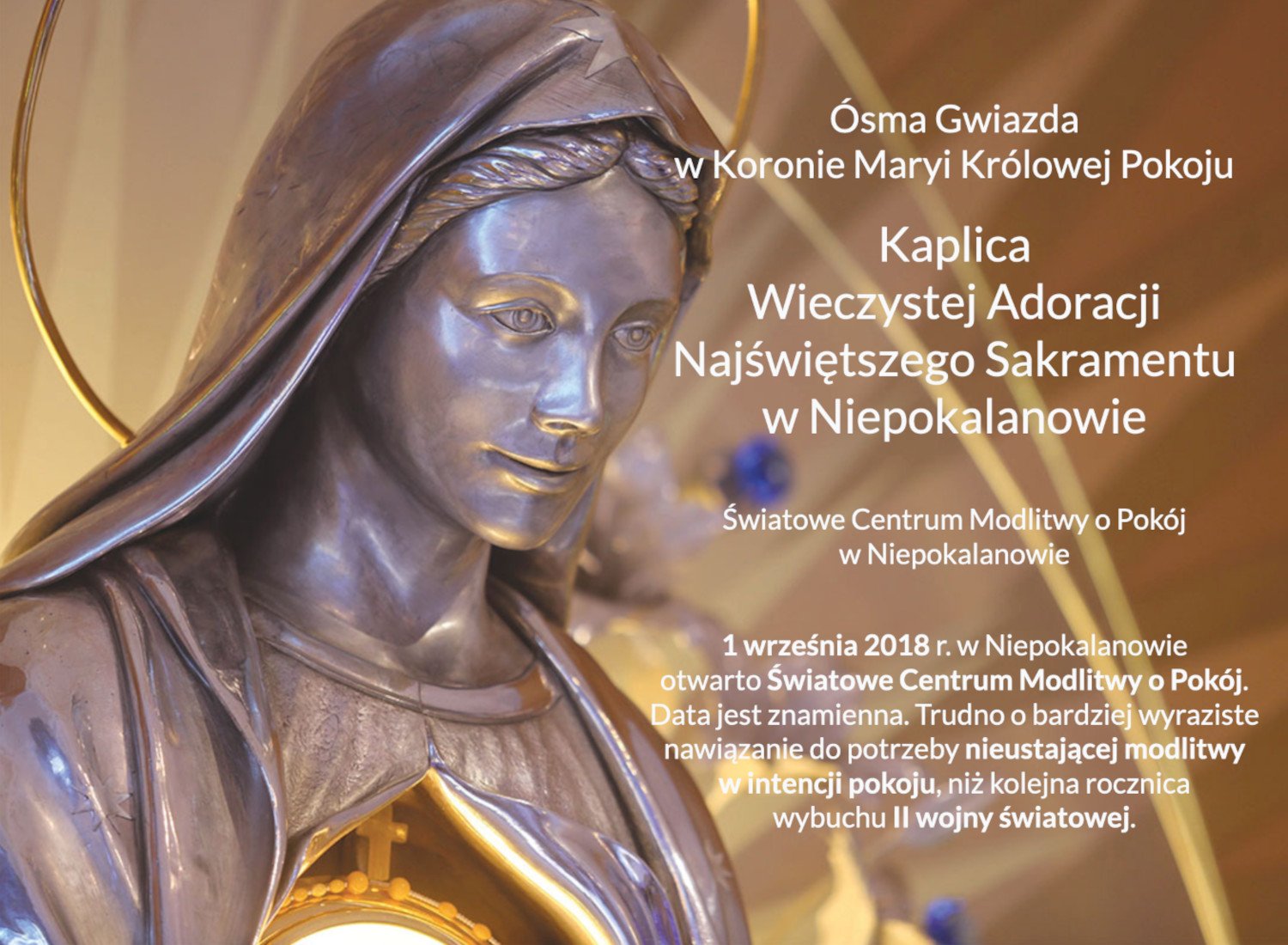

The Eucharistic Adoration Chapel established by Saint Maximilian Kolbe was inaugurated at the outbreak of World War II. It was restored as a Chapel of Adoration in September, 2018, the commemoration of the date that the war began. It is now part of the World Center of Prayer for Peace. The live internet feed of the Adoration Chapel at Niepokalanow — sponsored by EWTN — was established just a few weeks before we discovered it and began to include in at Beyond These Stone Walls. Click “Watch on YouTube” in the lower left corner to see how many people around the world are present there with you. The number appears below the symbol for EWTN.
Click or tap here to proceed to the Adoration Chapel.
The following is a translation from the Polish in the image above: “Eighth Star in the Crown of Mary Queen of Peace” “Chapel of Perpetual Adoration of the Blessed Sacrament at Niepokalanow. World Center of Prayer for Peace.” “On September 1, 2018, the World Center of Prayer for Peace in Niepokalanow was opened. It would be difficult to find a more expressive reference to the need for constant prayer for peace than the anniversary of the outbreak of World War II.”
For the Catholic theology behind this image, visit my post, “The Ark of the Covenant and the Mother of God.”

Stones for Pope Benedict and the Rusty Wheels of Justice
Following revelations about possible deliverance after 28 years of wrongful imprisonment, hope is hard to come by, but it was not so for Saint Maximilian Kolbe.

Following revelations about possible deliverance after 28 years of wrongful imprisonment, hope is hard to come by, but it was not so for Saint Maximilian Kolbe.
February 9, 2022
“This prisoner of the State remains, against all probability, staunch in spirit, strong in the faith that the wheels of justice turn, however slowly.”
— Dorothy Rabinowitz, “The Trials of Father MacRae,” The Wall Street Journal, May 13, 2013
When this blog was but a year old back in 2010, my friend and prison roommate, Pornchai Moontri, was received into the Catholic faith. He was 36 years old and it was his 18th year in prison. Everyone who knew him, except me, thought his conversion seemed quite impossible. Pornchai does not have an evil bone in his body, but his traumatic life had a profound effect on his outlook on life and his capacity for hope. There is simply no point in embracing faith without cultivating hope. The two go hand in hand. We cannot have one without the other.
To sow the seeds of hope in Pornchai, I had to first reawaken hope from its long dormant state in my own life as a prisoner. I am not entirely sure that I have completed that task. It seems a work in progress, but Pornchai’s last words to me as he walked through the prison gates toward freedom on September 8, 2020 were, “Thank you for giving me hope.” I wrote of that day in “Padre Pio Witness for the Defense of Wounded Souls.”
A decade earlier, back in April of 2010, Pornchai entered into Communion with the Catholic Church on Divine Mercy Sunday. On the night before, he asked me a haunting question. It was what I call one of his “upside down” questions. As he pondered what was to come, his head popped down from his upper bunk so he appeared upside down as he asked it. “Is it okay for us to hope for a happy ending when Saint Maximilian didn’t have one?” Pornchai had a knack for knocking me off the rails with questions like that.
Before responding, I had to do some pondering of my own. Our Patron Saint lost his earthly life at age 41 in a Nazi concentration camp starvation bunker. His death was followed by his rapid incineration. All that Maximilian Kolbe was in his earthly existence went up in smoke and ash to drift in the skies above Auschwitz, the most hopeless place in modern human history.

Retroactive Guilt and Shame
What I am about to write may seem horribly unpopular with those harboring an agenda against Catholic priests, but popularity has never been an important goal for me. In recent weeks, the news media has trumpeted a charge launched by a commission empowered by some Catholic officials in Germany. The commission’s much-hyped conclusion was that Pope Benedict was negligent when he did not remove four priests quickly enough after suspicions of abuse forty-one years ago in 1981. Some of my friends have cautioned me to stay out of this. Perhaps I should listen.
But I won’t. At what point do we cease judging men of the past for not living up to the ideals and politically correct sensitivities of the present? Merely asking that question puts me in the crosshairs of our victim culture, but it also forces me to ask another. Go back just another forty-one years and you will find yourself amid the hopelessness of 1941 as the children of Yahweh suffered unspeakable crimes in Germany and Poland. Where do we draw the line of historic condemnation? Should the German Church stop with Joseph Ratzinger in 1981?
The condemnation of Pope Benedict called for by some media and German officials today should be seen through the lens of history. It is a part of our hope as Catholics and as human beings that neither Pope Benedict nor the German people would act today as they did — or allowed to be done — forty or eighty years ago. The real target of such pointless inquiry and blame was not Pope Benedict, but rather hope itself.
I think we have to be clear in our response which should include something about the splinters in our eyes and the planks in the eyes of those pointing misplaced fingers of blame. Perhaps the moral authority that chastises Pope Benedict today in Germany doth protesteth too much. A new book by historian Harald Jähner, Aftermath: Life in the Fallout of the Third Reich, 1945-1955 marshals a plethora of facts and critical skills of historical writing to portray the postwar “country’s stubborn inclination toward willful delusion.”
Thank you for indulging my brief tirade. Catholic League President Bill Donohue also came to the defense of Pope Benedict by shedding some light of historical context on the matter.

Hope Is Its Own Fulfillment
But back to Father Maximilian Kolbe. On the day of Pornchai’s Baptism, I responded to his question. I told him, “YOU are Maximilian’s happy ending!” Eighty-one years after his martyrdom at Auschwitz, the world honors him while the names of those who destroyed him have simply faded into oblivion. No one honors them. No one remembers them. God remembers. Their footprint on the Earth left only sorrow.
St. Maximilian Kolbe is the reason why I was compelled to set aside my own quest for freedom — which seemed utterly hopeless the last time I looked — in order to do what Maximilian did: to save another.
In all the anguish of the last two years as deliverance and freedom slowly came to Pornchai Moontri, the clouds of the past that overshadowed him began to lift. My prayer had been constant, and of a consistently singular nature: “I ask for freedom for Pornchai; I ask for nothing for myself.”
I am no saint, but that is what St. Maximilian did, and it seemed to be my only path. But since then that 2013 quote atop this post from The Wall Street Journal's Dorothy Rabinowitz has once again become my reality. As you know if you have been reading these pages in recent weeks, a frenzy of action and high anxiety has surrounded the recent release of the New Hampshire ‘Laurie List,’ known more formally as the Exculpatory Evidence Schedule. If you somehow missed the earthquake that struck from Beyond These Stone Walls in January, I wrote about it in Predator Police: The New Hampshire ‘Laurie List’ Bombshell.
I am most grateful to readers for making the extra effort to share that post. It was emailed by Dr. Bill Donohue to the entire membership of the Catholic League for Religious and Civil Rights. It indeed came as a bombshell to me and to many. Just as the frenzy began to subside, Ryan MacDonald stirred it up again in his brilliant analysis with a very pointed title: “Police Misconduct: A Crusader Cop Destroys a Catholic Priest.”
I am not entirely sure that “destroys” is the right term to use, but I understand where he is coming from. To survive twenty-eight years of wrongful imprisonment means relegating a lot of one’s sense of self to the ash heap of someone else’s oppression. Many of those who spend decades in prison for crimes they did not commit lose their minds. Many also lose their faith, and along with it, all hope.
I have to remind myself multiple times a day that nothing is a sure thing anymore — neither prison nor freedom. I keep asking myself how much I dare to trust hope again. To quote the late Baseball Hall of Famer, Yogi Berra, this all feels “like deja vu all over again.”
Deja vu is a French term which literally means “to have seen before.” It is the strange sensation of having been somewhere before, or having previously experienced a current situation even though you know you have not. It is a phenomenon of neuropsychology that I have experienced all my life. About 15 percent of the population has that experience on occasion.
A possible explanation of deja vu is that aspects of the current situation act as retrieval cues in the psyche that unconsciously evoke an earlier experience long since receded from conscious memory, but resulting in an eerie sense of the familiar. It feels more strange than troublesome. I have a lifelong condition called Temporal Lobe Epilepsy (TLE) which makes me prone to the experience of deja vu, but no one knows exactly why.

When Disappointments of the Past Haunt the Present
This time, my deja vu is connected to real events of the past, and the origin of my caution about current hope is found there. If you have read an important post of mine entitled “Grand Jury, St. Paul’s School, and the Diocese of Manchester,” then you may recall this story. In 2003 and 2004, the New Hampshire Attorney General conducted an intense one-sided investigation of my diocese, the Diocese of Manchester. When it was over, the former Bishop of Manchester signed a blanket release disposing of the privacy rights of priests of his diocese.
In 2021, when I wrote the above post, New Hampshire Judge Richard B. McNamara ruled that the 2003 public release of one-sided documents should have been barred under New Hampshire law because it was an abuse of the grand jury system and it denied basic rights of due process to those involved.
At the time this all happened in 2003, a Tennessee lawyer and law firm cited in a press statement that what happened in this diocese was unconstitutional. I contacted the lawyer who subsequently took a strong interest in my own case. He flew to New Hampshire twice to visit me in prison. I sent him a vast amount of documentation which he found most compelling. After many months of cultivated hope, he sent me a letter indicating that he would soon send a Memorandum of Understanding that I was to sign laying out the parameters under which he would represent me pro bono because I have not had an income for decades.
I waited. I waited a long time, but the Memorandum never came. Without explanation or communication of any kind, the lawyer and the hope he brought simply faded away. Letter after letter remained unanswered. It was inexplicable. It was at this same time that Dorothy Rabinowitz and The Wall Street Journal published a two-part exposé, A Priest’s Story, on the perversion of justice that became apparent in their independent review of this matter. Those articles were actually published a few years after they were first planned. This was because the reams of supporting documents requested and collected by the newspaper were destroyed in the collateral damage of the terrorist attacks in New York of September 11, 2001.
Then in 2012, new lawyers filed an extensive case for Habeas Corpus review of my trial and imprisonment. It is still available at the National Center for Reason and Justice which mercifully still advocates for justice for me. However that effort failed when both State and Federal judges declined to allow any hearing that would give new witnesses a chance to testify under oath.
Now, in 2022 in light of this new ray of hope, some of the people involved in Beyond These Stone Walls have expressed frustration with my caution and apparent pessimism. I have not been as enthused as they have been over the hope arising from the current situation. Hope for me has been like investing in the stock market. Having lost everything twice, I am hesitant to wade too far into the waters of hope again.
I know only too well, however, that hope at times such as these is like that which both Pornchai Moontri and I once found in our Patron Saint. I wrote about it in “Saint Maximilian Kolbe and the Gift of Noble Defiance.”
So in spite of myself, I am now aboard this new train of hope and must go where it takes me. That, for now, is the best that I can do. My prayer has not changed. I ask for nothing for myself, but I will take whatever comes.
I thank you, as I have in the past, for your support and prayers and for being here with me again at this turning of the tide. I will keep you posted, but it won’t be quick. Real hope never is.
+ + +
Note from Fr. Gordon MacRae:
Thank you for reading and sharing this post. Please visit our newest addition to the BTSW menu: The Wall Street Journal. You may also wish to visit these relevant posts cited herein:
Predator Police: The New Hampshire ‘Laurie List’ Bombshell
Police Misconduct: A Crusader Cop Destroys a Catholic Priest
