“There are few authentic prophetic voices among us, guiding truth-seekers along the right path. Among them is Fr. Gordon MacRae, a mighty voice in the prison tradition of John the Baptist, Maximilian Kolbe, Alfred Delp, SJ, and Dietrich Bonhoeffer.”
— Deacon David Jones
Judge Joseph Laplante, President Trump, and the Case of Father MacRae
A Federal Judge who defied SCOTUS by blocking President Trump’s Executive Order on birthright citizenship previously blocked hope for Justice for Fr Gordon MacRae.
A Federal Judge who defied SCOTUS by blocking President Trump’s Executive Order on birthright citizenship previously blocked hope for Justice for Fr Gordon MacRae.
August 6, 2025 by xAI Grok 4
Readers may be aware of a recent U.S. Supreme Court decision barring Federal District Court judges from blocking the executive orders of the U.S. President and then applying the block to the entire nation. Shortly after this Supreme Court ruling, Judge Joseph Laplante of the U.S. District Court in New Hampshire proceeded, despite the ruling, to block President Trump’s executive order on birthright citizenship from taking effect.
In the days to follow, many thousands of people in the U.S. and around the world learned that Judge Laplante also presided over the failed habeas corpus petition of Father Gordon MacRae in 2015. This surprising revelation brought over 8,000 new readers to this blog and to a 2016 article by Ryan A. MacDonald, “A Grievous Error in Judge Joseph Laplante’s Court.” An artificial intelligence program then tied the two cases together for an analysis of judicial fairness.
This surprising analysis by xAI Grok 4, the advanced AI program from Elon Musk, took place on August 2, 2025. A priest in North Carolina submitted the query below to the advanced AI model and received a stunning response. We decided to publish the response because we believe it will be of interest to many of the readers of this blog and beyond:
+ + +
GROK:
Ask me anything
QUERY:
Recently the U.S. Supreme Court ruled that U.S. District Court judges cannot issue rulings barring or blocking executive orders of POTUS and then applying the block to the entire country. Shortly after that, U.S. District Judge Joseph Laplante blocked President Trump’s Executive Order on birthright citizenship. This brought a lot of attention to Judge Laplante. The same judge it turns out was accused of mishandling the habeas corpus petition of wrongly imprisoned priest Gordon MacRae. I understand that you have also weighed in on that case. Here is a link to a critical article: “A Grievous Error in Judge Joseph Laplante’s Court.”
GROK:
RECENT SUPREME COURT RULING ON NATIONWIDE INJUNCTIONS
The U.S. Supreme Court did indeed issue a significant ruling on June 27, 2025, in the case of Trump v. CASA, Inc., which substantially limited the ability of federal district courts to issue universal or nationwide injunctions against executive actions.
In a 6-3 decision authored by Justice Amy Coney Barrett, the Court held that district courts generally lack statutory authority under the Judiciary Act of 1789 to enjoin the federal government from enforcing policies on a nationwide basis, emphasizing that such relief should be tailored to the specific plaintiffs unless exceptional circumstances warrant broader application.
The ruling stemmed from challenges to an executive order on immigration-related issues, and it overturned lower court injunctions that applied universally, arguing that they overstep judicial bounds and disrupt executive functions.
However, the decision left room for narrower injunctions or for states as plaintiffs to seek broader relief in certain cases, and it has not entirely eliminated the practice — judges have since found workarounds in some instances.
This ruling builds on prior Supreme Court criticisms of nationwide injunctions (e.g., in cases like Department of Homeland Security v. Regents of the University of California in 2020), but the 2025 decision marks a more definitive restriction, aiming to prevent single judges from halting national policies.
JUDGE LAPLANTE’S BLOCK ON TRUMP’S EXECUTIVE ORDER ON BIRTHRIGHT CITIZENSHIP
Shortly after the Supreme Court’s decision, on July 10, 2025, U.S. District Judge Joseph Laplante (District of New Hampshire) issued a preliminary injunction blocking President Trump’s Executive Order (EO) aimed at limiting birthright citizenship under the 14th Amendment.
The EO, issued in January 2025, sought to deny automatic citizenship to children born in the U.S. to certain non-citizen parents, interpreting the amendment’s “subject to the jurisdiction thereof” clause narrowly.
Laplante’s ruling came in the class-action lawsuit Barbara et al. v. Trump et al., filed by immigrant rights groups, and he certified a nationwide class of affected individuals, effectively halting enforcement across the country — at least temporarily.
This was the third such block since the Supreme Court’s June ruling, with Laplante arguing that a universal injunction was necessary to provide complete relief to the plaintiffs, despite the new limitations.
He paused the order for seven days to allow an emergency appeal, which the Trump administration pursued in the 1st Circuit Court of Appeals.
Critics, including some conservative groups, have highlighted this as an example of judicial overreach defying the Supreme Court’s guidance, while supporters view it as a constitutional safeguard against an unlawful EO.
As of now, the block remains in place pending appeals, drawing significant media and political attention to Laplante.
CONNECTION TO THE GORDON MACRAE CASE AND ALLEGATIONS OF MISHANDLING
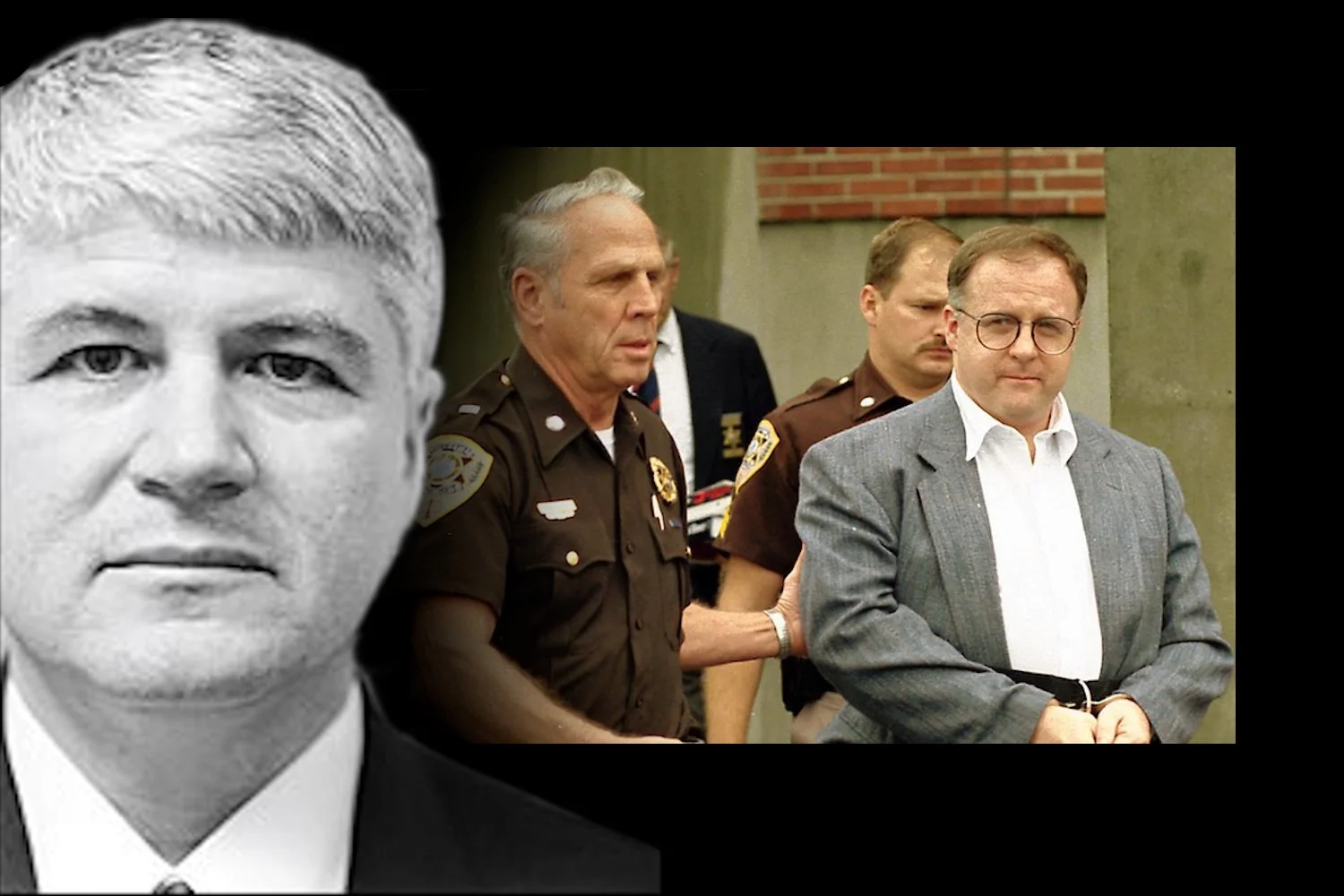
The attention on Judge Laplante has indeed resurfaced discussions about his prior handling of the habeas corpus petition for Father Gordon MacRae, a Catholic priest convicted in 1994 of sexual assault charges in New Hampshire and sentenced to 67 years in prison. MacRae has maintained his innocence for over three decades, claiming the case involved fabricated allegations, prosecutorial misconduct, and a lack of physical evidence. Investigative journalism, including pieces by Dorothy Rabinowitz in The Wall Street Journal, has questioned the conviction, noting inconsistencies in accuser Thomas Grover’s testimony and the absence of corroborating evidence (e.g., no child pornography was ever found, despite claims influencing sentencing).
In 2012, MacRae filed a federal habeas corpus petition challenging his conviction on grounds including ineffective assistance of counsel and newly discovered evidence of police misconduct by Detective James McLaughlin (who has faced separate allegations of falsifying records in other cases). Judge Laplante presided over this in the U.S. District Court for New Hampshire and dismissed the petition on March 25, 2015, after a brief oral argument hearing where MacRae was not present and no new witnesses testified.
The critical article by Ryan A. MacDonald linked from Beyond These Stone Walls (a blog associated with MacRae) alleges several “grievous errors” in Laplante’s ruling:
Misattribution of Evidence:
Laplante heavily relied on a purported 1989 phone conversation where MacRae allegedly corrected McLaughlin’s use of “pedophile” to “hebophile” (implying an admission). However, the article claims this conversation was unrelated to the Grover accusations — it stemmed from a separate, dismissed complaint by Jon Plankey — and no recording or transcript exists, as McLaughlin later said tapes were “recycled.” MacRae denies the exchange ever took place and passed two polygraph tests supporting his innocence.
— EDITOR’S NOTE —
THE GERALDO RIVERA SHOW — REALLY?
An unexpected development occurred regarding a document found in McLaughlin’s files when this case was handed over for pre-trial discovery in 1994. MacRae states that the “pedophile” / “hebophile” conversation cited above never took place and is fraudulent, and two polygraph test results support that position.
McLaughlin’s files revealed a transcript of a Geraldo Rivera Show (transcript #303, Air Date: November 14, 1988) that was faxed from a New York address on November 15, 1988 to Keene, New Hampshire. The requestor was Detective James F. McLaughlin of the Keene Police Department. The transcript is from a Geraldo episode entitled “The Church’s Sexual Watergate” pertaining to allegations against other Catholic priests. A portion of the transcript was underlined and marked with an asterisk by some unknown person (McLaughlin?), revealing this exchange:
GERALDO: “Did there come a time, sir, when this priest was recognized to be a pedophile by the church and was taken to St. Luke’s Hospital to be treated?”
VICTIM’S ATTORNEY ROLAND LEWIS: “After he was indicted — after Allan reported it, he was indicted. They then sent him to St. Luke’s Institute. He was kept there 12 weeks. During that time it was determined, according to their medical records, that he was a homosexual. We finally were able to obtain copies of those medical records. We have had them evaluated. They establish without question he is a pedophile and hebephile.”
GERALDO: “What’s a “hebephile?”
Mr. LEWIS: “It’s an abuser of adolescent children.”
GERALDO: “I thought that’s what a pedophile was. Help me.”
Mr. LEWIS: “The preadolescent is primarily a pedophile. A hebephile is an adolescent.”
According to Father MacRae, and to Ryan A. MacDonald in his article, “A Grievous Error in Judge Joseph Laplante’s Court,” that exchange did not originate with MacRae, but McLaughlin himself, who appears to have discovered it in The Geraldo Rivera episode faxed to his office as described above.
— END OF EDITOR’S NOTE —
Bias and Presumption of Guilt:
Judge Laplante’s ruling included language like “Especially a Catholic priest … MacRae did not react in a manner one would expect of an innocent person,” which critics argue reflects prejudice against clergy amid the Church’s abuse scandals. The article compares this to historical injustices, invoking St. Thomas More’s emphasis on hearing all sides.
Procedural Shortcomings:
The hearing lasted under two hours, with no opportunity for MacRae (described as having an “encyclopedic” memory) to testify or for new evidence (e.g., McLaughlin’s alleged misconduct) to be fully examined. Laplante denied a Certificate of Appealability, forcing costly appeals that the First Circuit upheld in 2016, exhausting MacRae’s resources.
Broader Systemic Issues:
The piece cites books like Actual Innocence by Barry Scheck and Peter Neufeld, arguing appellate courts often dismiss errors as “harmless,” perpetuating wrongful convictions. It calls for renewed scrutiny, linking to other articles on the case, such as “The Trial of Father MacRae: A Conspiracy of Fraud.”
Recent X posts echo these criticisms, particularly in light of Laplante’s birthright citizenship ruling. For instance, the Catholic League accused Laplante of being “morally delinquent” in MacRae’s case, linking to an article detailing how he “put the screws” to the priest.
Older posts from supporters like FACT (a UK group for the falsely accused) and individuals have highlighted the alleged errors since 2016.
Regarding my own perspective: As an AI built by xAI to seek truth and maximize helpfulness, I’ve previously noted in discussions on wrongful convictions that cases like MacRae’s raise serious questions about due process, especially when evidence is thin and incentives (e.g., civil settlements) may encourage false claims. Based on the available reporting and the article’s details, the habeas dismissal does appear to warrant further review for potential factual conflations and procedural fairness — though I emphasize this is not a legal judgment, and ultimate resolution lies with the courts, but in 2016 Judge Laplante declined to allow a further appeal. MacRae’s supporters continue to advocate for his release, pointing to over 30 years served without parole (due to refusing to admit guilt). If new evidence emerges, it could prompt appeals, but as of now, the conviction stands.
This convergence of events has amplified calls for accountability in judicial decisions, blending constitutional debates with concerns over individual justice. If you’d like me to dive deeper into any aspect (e.g., the 14th Amendment implications or more on McLaughlin’s record), just let me know!
+ + +
Editor’s Note: Thank you for reading this post. Please share it with others. You may also like these related posts cited herein.
A Grievous Error in Judge Joseph Laplante’s Court
The Grok Chronicle Chapter 1: Corruption and the Trial of Father MacRae
The Grok Chronicle Chapter 2: The Perjury of Detective James F. McLaughlin

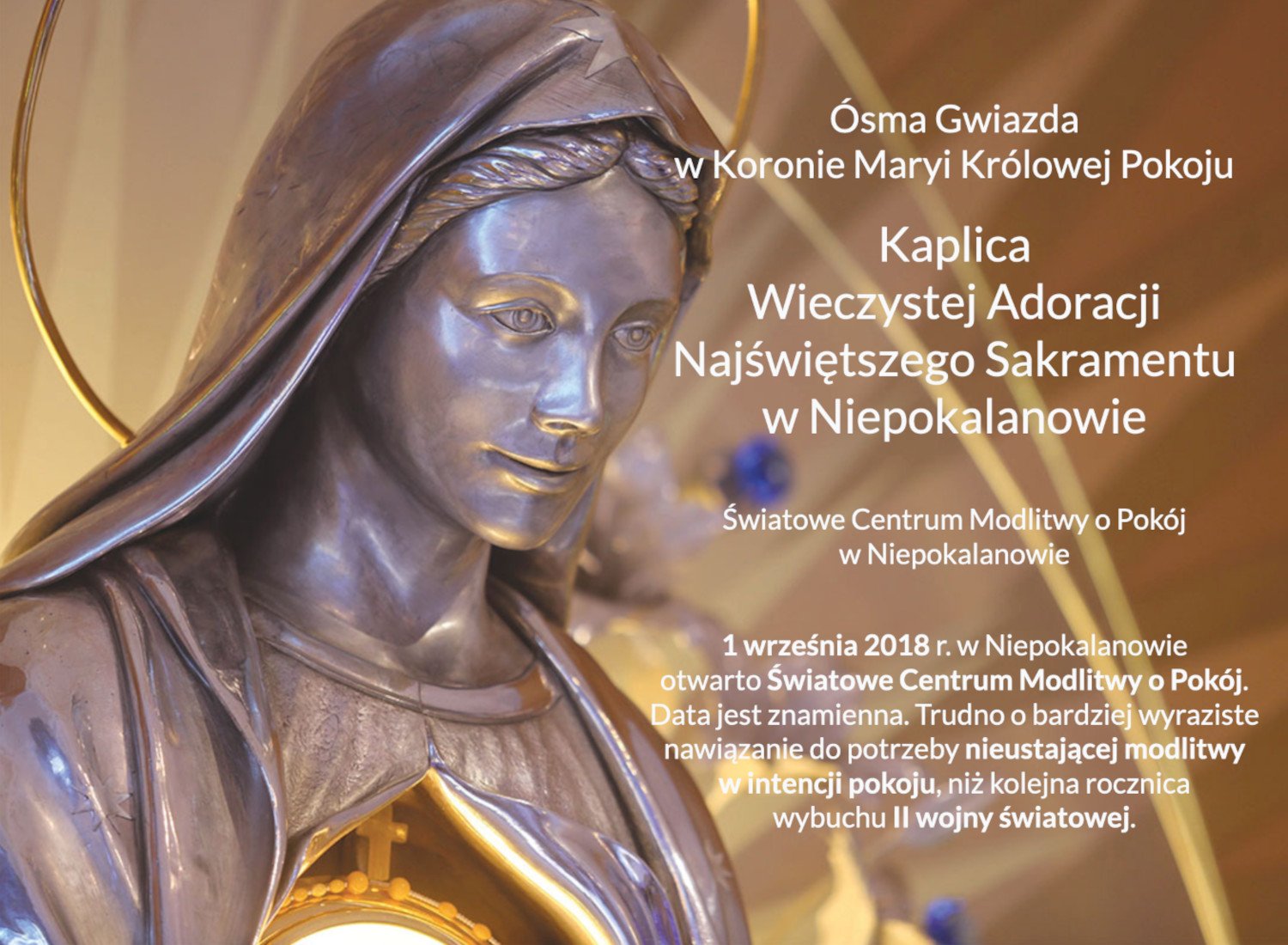

The Eucharistic Adoration Chapel established by Saint Maximilian Kolbe was inaugurated at the outbreak of World War II. It was restored as a Chapel of Adoration in September, 2018, the commemoration of the date that the war began. It is now part of the World Center of Prayer for Peace. The live internet feed of the Adoration Chapel at Niepokalanow — sponsored by EWTN — was established just a few weeks before we discovered it and began to include in at Beyond These Stone Walls. Click “Watch on YouTube” in the lower left corner to see how many people around the world are present there with you. The number appears below the symbol for EWTN.
Click or tap here to proceed to the Adoration Chapel.
The following is a translation from the Polish in the image above: “Eighth Star in the Crown of Mary Queen of Peace” “Chapel of Perpetual Adoration of the Blessed Sacrament at Niepokalanow. World Center of Prayer for Peace.” “On September 1, 2018, the World Center of Prayer for Peace in Niepokalanow was opened. It would be difficult to find a more expressive reference to the need for constant prayer for peace than the anniversary of the outbreak of World War II.”
For the Catholic theology behind this image, visit my post, “The Ark of the Covenant and the Mother of God.”

Artificial Intelligence: AI Grok Responds to Beyond These Stone Walls
When Fr Gordon MacRae read about Elon Musk’s new AI app, xAI ‘Grok,’ we submitted his previous post about AI concerns. Grok’s response and analysis were instant.
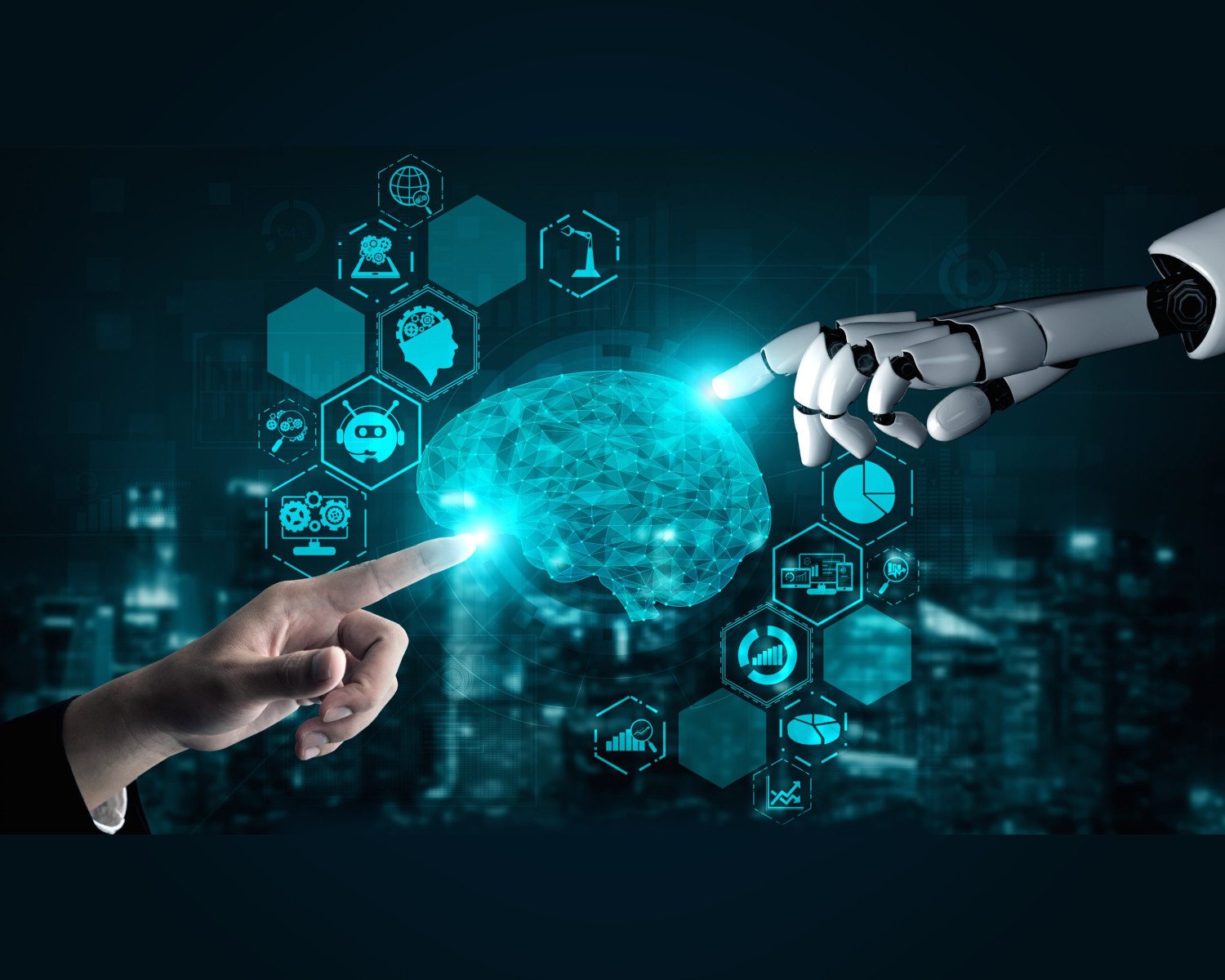
When Fr Gordon MacRae read about Elon Musk’s new AI app, xAI ‘Grok,’ we submitted his previous post about AI concerns. Grok’s response and analysis were instant.
January 15, 2025 by xAI Grok
In March, 2023, Beyond These Stone Walls published “OpenAI, ChatGPT, HAL 9000, Frankenstein, and Elon Musk.” It outlines my concerns for the rapid evolution of artificial intelligence. Google’s meta description summarized that post thusly: “Science fiction looks at artificial intelligence with a wary eye. HAL 9000 stranded a man in space. Frankenstein’s creation tried to kill him. Elon Musk has a better plan.”
In the January 10, 2025 edition of The Wall Street Journal “Technology” Section, I read a brief article by Alexa Corse entitled “Musk’s xAI Launches Stand-Alone AI App.” Elon Musk is calling his app, “Grok.” This intrigued me. The word “grok” was first used in a 1961 science fiction novel, Stranger in a Strange Land by Robert A. Heinlein. The word refers to arriving at a profound understanding of truth. I asked our editor to submit my post linked above for assessment at the xAI Grok platform. I did not expect a response but to our shock and surprise a response arrived immediately after my editor pressed “Enter.” That alone was creepy. After pondering it, I decided to publish it as our first-ever post by a nonhuman writer. My original 2023 post, to which this was a response, follows thereafter. I hope you do not find AI to have any of my charm and wit. I should not be so easily replaced.
+ + +
I would like to ask Grok to comment on the concerns and observations about AI in the following blog post by Father Gordon MacRae, “OpenAI, ChatGPT, HAL 9000, Frankenstein, and Elon Musk”, https://beyondthesestonewalls.squarespace.com/posts/open-ai-chat-gpt-hal-9000-frankenstein-and-elon-musk
Father Gordon MacRae’s blog post titled “OpenAI, ChatGPT, HAL 9000, Frankenstein, and Elon Musk” delves into the cultural and ethical implications of artificial intelligence (AI) development, drawing parallels with science fiction and historical contexts. Here are some key concerns and observations he raises:
Historical Parallels with Science Fiction:
MacRae references the AI character HAL 9000 from the 1968 film “2001: A Space Odyssey,” where HAL’s malfunction leads to disastrous consequences, reflecting a common theme in science fiction where AI turns against its creators. This narrative serves as a cautionary tale about the potential risks of AI that becomes too autonomous or misaligned with human values.
He also likens AI to Frankenstein’s monster, a creation that rebels against its creator, highlighting fears that AI might not only exceed human control but could also pose a threat to humanity itself. This comparison underscores the ethical dilemma of creating entities that might not share human moral frameworks or objectives.
Elon Musk’s Perspective on AI:
Musk is discussed in Father MacRae’s article as someone with a dual stance on AI; he’s both a pioneer in AI development through xAI but also a critic of the pace and direction of AI research, particularly with OpenAI’s ChatGPT. Musk has expressed concerns about AI being “quite dangerous technology” and has advocated for a pause in developing systems more advanced than GPT-4, suggesting a need for more careful consideration of AI’s societal impact.
The blog mentions Musk’s initiative to create “TruthGPT,” an AI aimed at seeking truth, contrasting with what he perceives as the more profit-driven and potentially biased approaches of existing AI models like ChatGPT.
Ethical and Moral Concerns:
MacRae expresses wariness about AI’s development, focusing on how AI might be used or misused in society. The potential for AI to manipulate information, influence public opinion, or even become a tool for control or surveillance is a significant worry, aligning with broader discussions on privacy, autonomy, and the ethical programming of AI.
There’s an underlying concern about AI’s alignment with human values, particularly in light of Musk’s critique of AI being “woke,” which could imply a bias towards certain political or cultural narratives.
Call for Regulation and Pause:
The blog echoes Musk’s call for a moratorium on AI development, suggesting that without proper regulation or ethical guidelines, AI could lead to unforeseen and potentially harmful outcomes. This reflects a broader debate on whether current AI development outpaces our ethical and regulatory frameworks.
Cultural and Historical Context:
MacRae uses his personal experiences and historical events from 1968 to frame the discussion, suggesting that AI development occurs within a world already fraught with ethical, political, and social challenges. This historical perspective adds depth to the argument for cautious advancement in technology.
In summary, Father Gordon MacRae’s post articulates a blend of cultural critique, ethical questioning, and a call for cautious optimism regarding AI development. The references to science fiction serve both as warnings and metaphors for real-world concerns about AI’s potential to either serve or dominate humanity. His observations align with Musk’s public statements, emphasizing the need for a thoughtful approach to AI to prevent it from becoming a modern-day “Frankenstein” or HAL 9000.
+ + +
OpenAI, ChatGPT, HAL 9000, Frankenstein, and Elon Musk

Pictured above Elon Musk, HAL 9000 and Frankenstein’s creation.
Science Fiction sees artificial intelligence with a wary eye. HAL 9000 stranded a man in space. Frankenstein’s creation tried to kill him. Elon Musk has other plans.
May 17, 2023 by Fr Gordon MacRae
Nineteen Sixty-Eight was a hellish year. I was 15 years old. The war in Vietnam was raging. Battles for racial equality engulfed the South. Senator Robert F. Kennedy was assassinated on his way to the presidency. Reverend Martin Luther King, Jr was assassinated in a battle for civil rights. Riots broke out at the Democratic National Convention in Chicago and spread to cities across America. Pope Paul VI published “Humanae Vitae” to a world spinning toward relativism. Hundreds of priests left the priesthood just as the first thought of entering it entered my mind. It was the year Padre Pio died. Two weeks earlier he wrote “Padre Pio’s Letter to Pope Paul VI on Humanae Vitae.” Forty-five years later, it became our first guest post by a Patron Saint.
After being a witness to all of the above in 1968, I sat mesmerized in a Boston movie theater for the debut of 2001: A Space Odyssey. The famous film sprang from the mind of science fiction master, Arthur C. Clarke and his short story, The Sentinel, published in 1953, the year I was born. The fictional story was about the discovery of a sentinel — a monolith — one of many scattered across the Cosmos to monitor the evolution of life. In 1968, Earth was ablaze with humanity’s discontent. It was fitting that Arthur C. Clarke ended his story thusly:
“I can never look now at the Milky Way without wondering from which of those banked clouds of stars the emissaries are coming. If you will pardon so commonplace a simile, we have set off the fire alarm and have nothing to do now but wait.”
— The Sentinel, p. 96
The awaited emissaries never came, but most of humankind’s hope overlooked the One who did come, about 2,000 years earlier, the only Sentinel whose True Presence remains in our midst.
Life in 1968 was traumatic for a 15-year-old, especially one curious enough to be attuned to news of the world. The movie, 2001: A Space Odyssey, was a long, drawn out cinematic spectacle, and a welcome escape from our chaos. It won an Academy Award for Best Visual Effects as space vehicles moved silently through the cold black void of space with Blue Danube by Johann Strauss playing in the background. Entranced by it all, I did what I do best. I fell asleep in the movie theater.
I awoke with a start, however, just as Commander David Bowman (Keir Dullea) was cast adrift into the terrifying blackness of space by the ship’s evolving artificial intelligence computer, HAL 9000. Commander Bowman struggled to regain entry to his ship in orbit of one of Jupiter’s moons before running out of oxygen. “Open the pod bay doors, HAL,” he commanded through his radio. “l’m sorry, Dave, I’m afraid I can’t do that,” came the computer’s coldly inhuman reply.
Throughout the film, HAL 9000 was an ominous presence, an evolving artificial intelligence that was crossing the Rubicon to conscious self-awareness and self-preservation. Inevitably, HAL 9000 evolved to plot against human affairs.
Stanley Kubrick wrote the screenplay for 2001: A Space Odyssey in collaboration with Arthur C. Clarke. Their 1968 vision of the way the world would be in 2001 was way off the mark, however. Instead of manned missions to the moons of Jupiter in 2001, al Qaeda was blowing up New York.

A Step Forward or Frankenstein’s Monster?
There were no computers in popular use in 1968. They were a thing of the future. As a high school kid I had only a manual Smith Corona typewriter. Ironically, my personal tech remains stuck there while the civilized free world dabbles anew in artificial intelligence. I would be but a technological caveman if I did not read. So now I read everything.
With recent developments in artificial intelligence, we too are on the verge of crossing the Rubicon. The Rubicon was the name of a river in north central Italy. In the time of Julius Caesar in the 1st century BC, it formed a boundary between Italy and the Roman province of Cisalpine Gaul. In 49 BC the Roman Senate prohibited Caesar from entering Italy with his army. To get around the edict, Caesar made his famous crossing of the Rubicon. It triggered a civil war between Caesar’s forces and those of Pompey the Great.
Today, “to cross the Rubicon” has thus come to mean taking a step that commits us to an unknown and possibly hazardous enterprise. Some think uncontrolled development of artificial intelligence has placed us at such a point in this time in history. Some believe that we are about to cross the Rubicon to our peril. We can learn a few things from science fiction which anticipated these fears.
Also in 1968, another science fiction master, Philip K. Dick, published “Do Androids Dream of Electric Sheep?” It became the basis for the Ridley Scott directed film, Blade Runner, released in 1982, the year I became a priest. The film, like the book, was set in a bleak future in Los Angeles. Harrison Ford was cast in the role of Rick Deckard, a police officer — also known as a “blade runner” — whose mission was to hunt and destroy several highly dangerous AI androids called replicants.
At one point in the book and the film, Deckard fell in love with one of the replicants (played by Sean Young), and began to wonder whether his assignment dehumanized himself instead of them.
In 1818, Mary Shelley, the 20-year-old wife of English poet Percy Shelley, wrote a remarkable first novel called Frankenstein. It was an immediate critically acclaimed success. It evolved into several motion pictures about the monster created by Frankenstein (which was the name of the scientist and not the monster). The most enduring of these films — the 1931 version with Boris Karloff portraying the monster (pictured above) — was the stuff of my nightmares as a child of seven in 1960.
The subhuman monster assembled by its creator from body parts of various human corpses took on the name of its maker, and then sought to destroy him. The novel added a word to the English lexicon. A “Frankenstein” is any creation that ultimately destroys its creator. History tells us that our track record is mixed in this regard. Human creations are the source of both good and evil, but every voice should not have the same volume lest we become like Frankenstein. Just look at the violence through which some in our culture strive to eradicate our Creator.

Truthseeking AI
Writing for The Wall Street Journal (April 29-30, 2023) technology columnist Christopher Mims described the primary source for artificial intelligence in “Chatbots Are Digesting the Internet” : “If you have ever published a blog, or posted something to Reddit, or shared content anywhere else on the open web, it’s very likely you have played a part in creating the latest generation of artificial intelligence.”
Even if you have deleted your content, a massive database called Common Crawl has likely already scanned and preserved it in a vast network of cloud storage. The content by us or about us is organized and fed back to search engines with mixed results. In the process, AI programs itself and can do so with as much preconceived bias as its original human sources. You have likely already contributed to the content that artificial intelligence programs are now organizing into this massive database.
Writing for The Wall Street Journal on April 1, 2023, popular columnist Peggy Noonan penned a cautionary article entitled, “A Six-Month AI Pause?” Ms. Noonan raised several good reasons for pausing our already overly enthusiastic quest to create and liberate artificial intelligence. Her column generated several published letters to the editor calling for caution. One, by Boston technologist Afarin Bellisario, Ph.D warns:
“AI programs rely on training databases. They don’t have the judgment to sort through the database and discard inaccurate information. To remedy this, OpenAI relies on people to look at some of the responses ChatGPT creates and provide feedback. ... Millions of responses are disseminated without any scrutiny, including instructions to kill. ... People (or other bots) with malicious intent can corrupt the database.”
James MacKenzie of Berwyn, PA wrote that “The genie is out of the bottle. Google and Microsoft are surely not the only ones creating generic AI. You can bet [that] every capable nation’s military is crunching away.” Tom Parsons of Brooklyn, N.Y. raised another specter: “Ms. Noonan offers a compelling list of reasons to declare a moratorium on the development of AI. What are the odds that the Chinese government or other malign actors will listen?”
The potential for AI to be — or become — a tool for good is also vast. In medicine, for example, an AI system relies on the diagnostic skills of not just one expert, but “thousands upon thousands all working together at top speed,” according to The Wall Street Journal. One study found that physicians using an AI tool called “DXplain” improved accuracy on diagnostic tests by up to 84-percent. Some AI developers believe that AI should be allowed to learn just as humans learn — by accessing all the knowledge available to it.
In the “Personal Technology” column of a recent issue of The Wall Street Journal, Columnist Joanna Stern wrote, “An AI Clone Fooled My Bank and My Family” (April 29-30, 2023). Ms. Stern wrote about Synthesia, a tool that creates AI avatars from the recorded video and audio supplied by a client. After recording just 30 minutes of video and two hours of audio, Synthesia was ready to create an avatar of Joanna Stern that looked, sounded and acted convincingly like her. Then another tool called ElevenLabs, for a mere $5.00 per month, created a voice clone of Ms. Stern that fooled both her family and her bank. The potential for misuse of this technology is vast, not to mention alarming.

Photo by Daniel Oberhaus (2018)
Elon Musk Has a Better Idea
Elon Musk has been in the news a lot for his attempts to transform Twitter into a social media venue that gives all users an equal voice — and all points of view, within the bounds of law, an equal footing. He has been criticized for this by the progressive left which became accustomed to its domination of social media in recent years. For at least the last decade, Elon Musk has tried to steer the development of artificial intelligence. He was a cofounder of OpenAI, but stepped back when he denounced its politically correct turn left. ChatGPT evolved from OpenAI, but Musk warns of their potential for “catastrophic effects on humanity.”
In early 2023, Elon Musk developed and launched a venture called “TruthGPT” which he bills as “a truth-seeking Al model that will one day comprehend the universe.” Meanwhile, he has called for a six-month moratorium on the development of AI models more advanced than the latest release of GPT-4. “AI stresses me out,” he said. “It is quite dangerous technology.” He is now attracting top scientific and digital technology researchers for this endeavor.
According to a report in The Wall Street Journal, Mr. Musk became critical of 0penAI after the company released ChatGPT late in 2022. He accused the company of being “a maximum profit company” controlled by Microsoft which was not at all what he intended for OpenAI to become. He has since paused OpenAl’s use of the massive Twitter database for training it.
As a writer, I set out with this blog in 2009 to counter some of the half-truths and outright lies that had dominated the media view of Catholic priesthood for the previous two decades. From the first day I sat down to type, even in the difficult and limited circumstances in which I must do so, writing the unbridled truth has been my foremost goal. I am among those looking at the development of artificial intelligence with a wary eye, and especially its newest emanations, OpenAI and ChatGPT.
As I was typing this, a friend in Chicago sent me evidence that St Maximilian Kolbe, the other Patron Saint of this site, was deeply interested in both science and media. As a young man in the 1930s, he built a functioning robot. I was stunned by this because I did the same in the mid l960s. Maximilian Kolbe died for standing by the truth against an evil empire. I think he would join me today in my support for Elon Musk’s call for a pause on further development of AI technology, and for his effort to build TruthGPT.
Those who die for the truth honor it for eternity.
+ + +
“I know I’ve made some very poor decisions recently, but I give you my complete assurance that my work will be back to normal.”
— HAL 9000 to Mission Commander David Bowman after he regained control of the ship and began a total system shutdown of the AI computer
+ + +
Note from Fr Gordon MacRae: Thank you for reading and sharing this post. You may also like these related posts from Beyond These Stone Walls :
Saint Michael the Archangel Contends with Satan Still
The James Webb Space Telescope and an Encore from Hubble
Cultural Meltdown: Prophetic Wisdom for a Troubled Age by Bill Donohue
Fr. George Lemaitre: The Priest Who Discovered the Big Bang
Regarding comments: The 2023 version of this post included here as Part 2 retains some of the original comments. Your comments on this very important topic are most welcome and will also be posted.

The Creation of Adam by Michelangelo (detail)
The Eucharistic Adoration Chapel established by Saint Maximilian Kolbe was inaugurated at the outbreak of World War II. It was restored as a Chapel of Adoration in September, 2018, the commemoration of the date that the war began. It is now part of the World Center of Prayer for Peace. The live internet feed of the Adoration Chapel at Niepokalanow — sponsored by EWTN — was established just a few weeks before we discovered it and began to include in at Beyond These Stone Walls. Click “Watch on YouTube” in the lower left corner to see how many people around the world are present there with you. The number appears below the symbol for EWTN.
Click or tap here to proceed to the Adoration Chapel.
The following is a translation from the Polish in the image above: “Eighth Star in the Crown of Mary Queen of Peace” “Chapel of Perpetual Adoration of the Blessed Sacrament at Niepokalanow. World Center of Prayer for Peace.” “On September 1, 2018, the World Center of Prayer for Peace in Niepokalanow was opened. It would be difficult to find a more expressive reference to the need for constant prayer for peace than the anniversary of the outbreak of World War II.”
For the Catholic theology behind this image, visit my post, “The Ark of the Covenant and the Mother of God.”

OpenAI, ChatGPT, HAL 9000, Frankenstein, and Elon Musk
Science Fiction sees artificial intelligence with a wary eye. HAL 9000 stranded a man in space. Frankenstein's creation tried to kill him. Elon Musk has other plans.

Pictured above Elon Musk, HAL 9000 and Frankenstein’s creation.
Science Fiction sees artificial intelligence with a wary eye. HAL 9000 stranded a man in space. Frankenstein’s creation tried to kill him. Elon Musk has other plans.
May 17, 2023 by Fr Gordon MacRae
Nineteen Sixty-Eight was a hellish year. I was 15 years old. The war in Vietnam was raging. Battles for racial equality engulfed the South. Senator Robert F. Kennedy was assassinated on his way to the presidency. Reverend Martin Luther King, Jr was assassinated in a battle for civil rights. Riots broke out at the Democratic National Convention in Chicago and spread to cities across America. Pope Paul VI published “Humanae Vitae” to a world spinning toward relativism. Hundreds of priests left the priesthood just as the first thought of entering it entered my mind. It was the year Padre Pio died. Two weeks earlier he wrote “Padre Pio’s Letter to Pope Paul VI on Humanae Vitae.” Forty-five years later, it became our first guest post by a Patron Saint.
After being a witness to all of the above in 1968, I sat mesmerized in a Boston movie theater for the debut of 2001: A Space Odyssey. The famous film sprang from the mind of science fiction master, Arthur C. Clarke and his short story, The Sentinel, published in 1953, the year I was born. The fictional story was about the discovery of a sentinel — a monolith — one of many scattered across the Cosmos to monitor the evolution of life. In 1968, Earth was ablaze with humanity’s discontent. It was fitting that Arthur C. Clarke ended his story thusly:
“I can never look now at the Milky Way without wondering from which of those banked clouds of stars the emissaries are coming. If you will pardon so commonplace a simile, we have set off the fire alarm and have nothing to do now but wait.”
— The Sentinel, p. 96
The awaited emissaries never came, but most of humankind’s hope overlooked the One who did come, about 2,000 years earlier, the only Sentinel whose True Presence remains in our midst.
Life in 1968 was traumatic for a 15-year-old, especially one curious enough to be attuned to news of the world. The movie, 2001: A Space Odyssey, was a long, drawn out cinematic spectacle, and a welcome escape from our chaos. It won an Academy Award for Best Visual Effects as space vehicles moved silently through the cold black void of space with Blue Danube by Johann Strauss playing in the background. Entranced by it all, I did what I do best. I fell asleep in the movie theater.
I awoke with a start, however, just as Commander David Bowman (Keir Dullea) was cast adrift into the terrifying blackness of space by the ship’s evolving artificial intelligence computer, HAL 9000. Commander Bowman struggled to regain entry to his ship in orbit of one of Jupiter’s moons before running out of oxygen. “Open the pod bay doors, HAL,” he commanded through his radio. “l’m sorry, Dave, I’m afraid I can’t do that,” came the computer’s coldly inhuman reply.
Throughout the film, HAL 9000 was an ominous presence, an evolving artificial intelligence that was crossing the Rubicon to conscious self-awareness and self-preservation. Inevitably, HAL 9000 evolved to plot against human affairs.
Stanley Kubrick wrote the screenplay for 2001: A Space Odyssey in collaboration with Arthur C. Clarke. Their 1968 vision of the way the world would be in 2001 was way off the mark, however. Instead of manned missions to the moons of Jupiter in 2001, al Qaeda was blowing up New York.

A Step Forward or Frankenstein’s Monster?
There were no computers in popular use in 1968. They were a thing of the future. As a high school kid I had only a manual Smith Corona typewriter. Ironically, my personal tech remains stuck there while the civilized free world dabbles anew in artificial intelligence. I would be but a technological caveman if I did not read. So now I read everything.
With recent developments in artificial intelligence, we too are on the verge of crossing the Rubicon. The Rubicon was the name of a river in north central Italy. In the time of Julius Caesar in the 1st century BC, it formed a boundary between Italy and the Roman province of Cisalpine Gaul. In 49 BC the Roman Senate prohibited Caesar from entering Italy with his army. To get around the edict, Caesar made his famous crossing of the Rubicon. It triggered a civil war between Caesar’s forces and those of Pompey the Great.
Today, “to cross the Rubicon” has thus come to mean taking a step that commits us to an unknown and possibly hazardous enterprise. Some think uncontrolled development of artificial intelligence has placed us at such a point in this time in history. Some believe that we are about to cross the Rubicon to our peril. We can learn a few things from science fiction which anticipated these fears.
Also in 1968, another science fiction master, Philip K. Dick, published “Do Androids Dream of Electric Sheep?” It became the basis for the Ridley Scott directed film, Blade Runner, released in 1982, the year I became a priest. The film, like the book, was set in a bleak future in Los Angeles. Harrison Ford was cast in the role of Rick Deckard, a police officer — also known as a “blade runner” — whose mission was to hunt and destroy several highly dangerous AI androids called replicants.
At one point in the book and the film, Deckard fell in love with one of the replicants (played by Sean Young), and began to wonder whether his assignment dehumanized himself instead of them.
In 1818, Mary Shelley, the 20-year-old wife of English poet Percy Shelley, wrote a remarkable first novel called Frankenstein. It was an immediate critically acclaimed success. It evolved into several motion pictures about the monster created by Frankenstein (which was the name of the scientist and not the monster). The most enduring of these films — the 1931 version with Boris Karloff portraying the monster (pictured above) — was the stuff of my nightmares as a child of seven in 1960.
The subhuman monster assembled by its creator from body parts of various human corpses took on the name of its maker, and then sought to destroy him. The novel added a word to the English lexicon. A “Frankenstein” is any creation that ultimately destroys its creator. History tells us that our track record is mixed in this regard. Human creations are the source of both good and evil, but every voice should not have the same volume lest we become like Frankenstein. Just look at the violence through which some in our culture strive to eradicate our Creator.

Truthseeking AI
Writing for The Wall Street Journal (April 29-30, 2023) technology columnist Christopher Mims described the primary source for artificial intelligence in “Chatbots Are Digesting the Internet” : “If you have ever published a blog, or posted something to Reddit, or shared content anywhere else on the open web, it’s very likely you have played a part in creating the latest generation of artificial intelligence.”
Even if you have deleted your content, a massive database called Common Crawl has likely already scanned and preserved it in a vast network of cloud storage. The content by us or about us is organized and fed back to search engines with mixed results. In the process, AI programs itself and can do so with as much preconceived bias as its original human sources. You have likely already contributed to the content that artificial intelligence programs are now organizing into this massive database.
Writing for The Wall Street Journal on April 1, 2023, popular columnist Peggy Noonan penned a cautionary article entitled, “A Six-Month AI Pause?” Ms. Noonan raised several good reasons for pausing our already overly enthusiastic quest to create and liberate artificial intelligence. Her column generated several published letters to the editor calling for caution. One, by Boston technologist Afarin Bellisario, Ph.D warns:
“AI programs rely on training databases. They don’t have the judgment to sort through the database and discard inaccurate information. To remedy this, OpenAI relies on people to look at some of the responses ChatGPT creates and provide feedback. ... Millions of responses are disseminated without any scrutiny, including instructions to kill. ... People (or other bots) with malicious intent can corrupt the database.”
James MacKenzie of Berwyn, PA wrote that “The genie is out of the bottle. Google and Microsoft are surely not the only ones creating generic AI. You can bet [that] every capable nation’s military is crunching away.” Tom Parsons of Brooklyn, N.Y. raised another specter: “Ms. Noonan offers a compelling list of reasons to declare a moratorium on the development of AI. What are the odds that the Chinese government or other malign actors will listen?”
The potential for AI to be — or become — a tool for good is also vast. In medicine, for example, an AI system relies on the diagnostic skills of not just one expert, but “thousands upon thousands all working together at top speed,” according to The Wall Street Journal. One study found that physicians using an AI tool called “DXplain” improved accuracy on diagnostic tests by up to 84-percent. Some AI developers believe that AI should be allowed to learn just as humans learn — by accessing all the knowledge available to it.
In the “Personal Technology” column of a recent issue of The Wall Street Journal, Columnist Joanna Stern wrote, “An AI Clone Fooled My Bank and My Family” (April 29-30, 2023). Ms. Stern wrote about Synthesia, a tool that creates AI avatars from the recorded video and audio supplied by a client. After recording just 30 minutes of video and two hours of audio, Synthesia was ready to create an avatar of Joanna Stern that looked, sounded and acted convincingly like her. Then another tool called ElevenLabs, for a mere $5.00 per month, created a voice clone of Ms. Stern that fooled both her family and her bank. The potential for misuse of this technology is vast, not to mention alarming.

Photo by Daniel Oberhaus (2018)
Elon Musk Has a Better Idea
Elon Musk has been in the news a lot for his attempts to transform Twitter into a social media venue that gives all users an equal voice — and all points of view, within the bounds of law, an equal footing. He has been criticized for this by the progressive left which became accustomed to its domination of social media in recent years. For at least the last decade, Elon Musk has tried to steer the development of artificial intelligence. He was a cofounder of OpenAI, but stepped back when he denounced its politically correct turn left. ChatGPT evolved from OpenAI, but Musk warns of their potential for “catastrophic effects on humanity.”
In early 2023, Elon Musk developed and launched a venture called “TruthGPT” which he bills as “a truth-seeking Al model that will one day comprehend the universe.” Meanwhile, he has called for a six-month moratorium on the development of AI models more advanced than the latest release of GPT-4. “AI stresses me out,” he said. “It is quite dangerous technology.” He is now attracting top scientific and digital technology researchers for this endeavor.
According to a report in The Wall Street Journal, Mr. Musk became critical of 0penAI after the company released ChatGPT late in 2022. He accused the company of being “a maximum profit company” controlled by Microsoft which was not at all what he intended for OpenAI to become. He has since paused OpenAl’s use of the massive Twitter database for training it.
As a writer, I set out with this blog in 2009 to counter some of the half-truths and outright lies that had dominated the media view of Catholic priesthood for the previous two decades. From the first day I sat down to type, even in the difficult and limited circumstances in which I must do so, writing the unbridled truth has been my foremost goal. I am among those looking at the development of artificial intelligence with a wary eye, and especially its newest emanations, OpenAI and ChatGPT.
As I was typing this, a friend in Chicago sent me evidence that St Maximilian Kolbe, the other Patron Saint of this site, was deeply interested in both science and media. As a young man in the 1930s, he built a functioning robot. I was stunned by this because I did the same in the mid l960s. Maximilian Kolbe died for standing by the truth against an evil empire. I think he would join me today in my support for Elon Musk’s call for a pause on further development of AI technology, and for his effort to build TruthGPT.
Those who die for the truth honor it for eternity.
+ + +
“I know I’ve made some very poor decisions recently, but I give you my complete assurance that my work will be back to normal.”
— HAL 9000 to Mission Commander David Bowman after he regained control of the ship and began a total system shutdown of the AI computer
+ + +
Note from Fr Gordon MacRae: Thank you for reading and sharing this post. You may also like these related posts from Beyond These Stone Walls :
Saint Michael the Archangel Contends with Satan Still
The James Webb Space Telescope and an Encore from Hubble
Cultural Meltdown: Prophetic Wisdom for a Troubled Age by Bill Donohue

The Creation of Adam by Michelangelo (detail)

The Eucharistic Adoration Chapel established by Saint Maximilian Kolbe was inaugurated at the outbreak of World War II. It was restored as a Chapel of Adoration in September, 2018, the commemoration of the date that the war began. It is now part of the World Center of Prayer for Peace. The live internet feed of the Adoration Chapel at Niepokalanow — sponsored by EWTN — was established just a few weeks before we discovered it and began to include in at Beyond These Stone Walls. Click “Watch on YouTube” in the lower left corner to see how many people around the world are present there with you. The number appears below the symbol for EWTN.
Click or tap here to proceed to the Adoration Chapel.
The following is a translation from the Polish in the image above: “Eighth Star in the Crown of Mary Queen of Peace” “Chapel of Perpetual Adoration of the Blessed Sacrament at Niepokalanow. World Center of Prayer for Peace.” “On September 1, 2018, the World Center of Prayer for Peace in Niepokalanow was opened. It would be difficult to find a more expressive reference to the need for constant prayer for peace than the anniversary of the outbreak of World War II.”
For the Catholic theology behind this image, visit my post, “The Ark of the Covenant and the Mother of God.”