“There are few authentic prophetic voices among us, guiding truth-seekers along the right path. Among them is Fr. Gordon MacRae, a mighty voice in the prison tradition of John the Baptist, Maximilian Kolbe, Alfred Delp, SJ, and Dietrich Bonhoeffer.”
— Deacon David Jones
Woe to You, Scribes and Pharisees, Hypocrites!
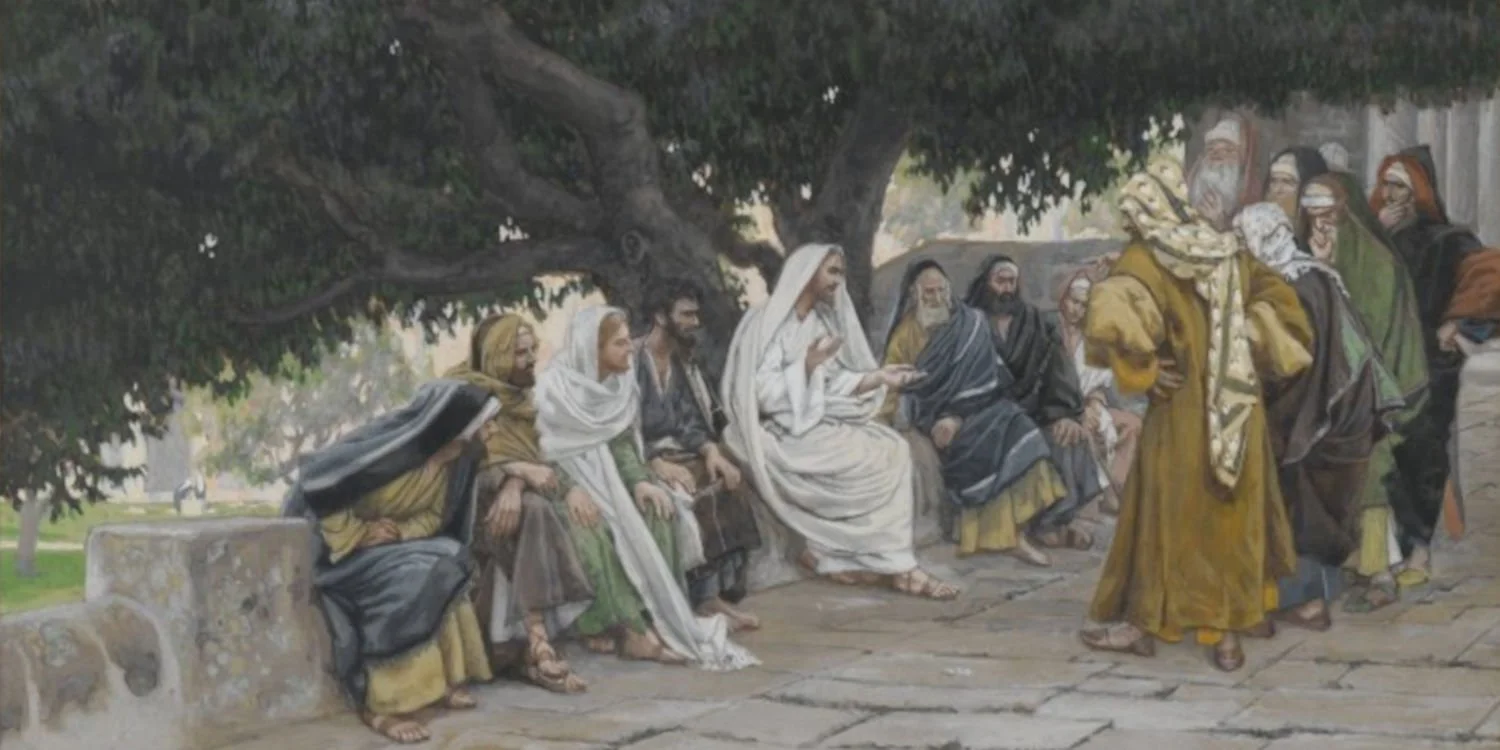
Pharisees and Sadducees appear in the Bible only in the period between the Old and New Testaments. Their only common ground was opposition to Jesus and each other.
Pharisees and Sadducees appear in the Bible only in the period between the Old and New Testaments. Their only common ground was opposition to Jesus and each other.
October 14, 2026 by Father Gordon MacRae
In Catholic liturgy, Scripture Readings follow a three-year cycle. Having a long-running blog means encountering the same Gospel passages every three years. The Gospel from Saint Matthew (22:15-21) for the Twenty-ninth Sunday in Ordinary Time describes one of the many encounters between Jesus and the Pharisees who “plotted how they might entrap Jesus in speech.” The question they posed to entrap him was “Is it lawful to pay the census tax to Caesar or not?”
Both the trap and the question turn out to be most important. I explored why this is so the last time this passage arose in our liturgy three years ago. It is a prelude to this post that has since been ensconced in our collection of Scripture posts called “The Bible Speaks.” We will link to the specific post again at the end of this one. For Salvation History to be fulfilled in our lives, we must answer the Pharisaic question for ourselves: “What Belongs to Caesar and What Belongs to God”
In Sacred Scripture, the arrival of the New Covenant in Christ signaled the end of Israel’s separation from the Gentiles and the beginning of a global family of God. We still struggle with our differences, and the Pharisees of the Gospel personify that struggle.
I have learned something about myself from them. In the United States, at least, we are in the midst of an election cycle in which our political differences take center stage. The divisions in the television ads are already getting on my nerves. Nonetheless, I find loathsome the political positions of one of those parties — the one I do not identify with, but did at one time in my life. I am learning, with a degree of humility, to loath the positions but not the persons within that party who promote them.
If I were to do so, I would cross the line between what I believe is righteous and what in effect becomes self-righteous. The Pharisees in the Gospel could not bring themselves to see through that distinction. So they faded from view in the Word of God.
In almost every instance, the Pharisees’ presence in the Gospel is beneath a dark cloud of suspicion and controversy. In the Gospel account of their question posed to Jesus about taxes and Caesar, for example, their motive was not to answer the question, but rather to expose Jesus as a false Messiah.
The Pharisees did not exist in the Old Testament. Their rise came with the Roman occupation of Palestine. In their determination to be rid of this foreign power, their agenda at every turn was at odds with the Gospel message of Jesus. Their goal was for Israel to separate itself from all gentile impurity and defilement. The very name, “Pharisee,” means “separated one.” Only in separation from all gentile influence, they believed, could God rescue his Chosen People from the political clutches of Roman occupation.
It was a tall order that the Pharisees took upon themselves, deciding in this or any outcome not with God but for God. If God had other plans, they were not immediately known to the Pharisees. The Crucifixion of Christ did not bring about the expulsion of Rome, but rather, ultimately, the conversion of Rome.
The Rise of the Sadducees
The next Sunday Gospel, for the Thirtieth Sunday in Ordinary Time (Matthew 22:34-40), begins with a statement, “When the Pharisees heard that Jesus had silenced the Sadducees, they gathered together, and one of them, a scholar of the law, tested him by asking, ‘Teacher, which commandment in the law is the greatest?’” The Sadducees accepted only the Pentateuch, the first five books of the Bible, called the Books of Moses, as authentic Scripture and the sum total of the biblical narrative. As usual the Pharisees did not ask this question to be instructed by Jesus but rather to trip him up and discredit him before the Sadducees. Jesus responded by strategically citing one of the books of Moses (Exodus 3:6),
“I am the God of your Fathers, the God of Abraham, the God of Isaac, and the God of Jacob, and Moses hid his face for he was afraid to look upon the face of God.”
The lawyer-Pharisee would discredit Jesus before the Sadducees if he cited any other Scripture.
This particular quote from Jesus is significant for both Sadducees and Pharisees. The Pharisees knew well that the Sadducees did not accept any Scripture beyond the five books of Moses. They also did not accept the Jewish belief in the immortality of the soul or life after death. What Jesus here proposed — that God is the God of the living, the God of Abraham, of Isaac and of Jacob — is theological evidence that though they were long gone from this world, they still lived in some form in another. This is a truth I wrote of in “The God of the Living and the Life of the Dead.”
For the Pharisees, the 613 commands of the Mosaic Law are distilled into two prescriptions: Love God (Deuteronomy 6:5) and your neighbor (Leviticus 19:18). These citations would have satisfied the Sadducees if the Pharisees had, as was typical, conveyed the response of Jesus to the Sadducees. They were all about promoting division, even within the Scriptures. And so Jesus answered the question of “which is the greatest commandment in the Law?” with
“You shall love the Lord your God with all your heart, and with all your soul, and with all your mind. This is the great and first commandment. And a second is like it, you shall love your neighbor as yourself. On these two commandments depend all the law and the prophets.”
The presence of the Sadducees in the Gospel is much more brief than that of the Pharisees. But, like the Pharisees, the Sadducees were also cast in a negative light, and not only by the Gospel narrative but by the Pharisees themselves. The two sects were in bitter opposition about the goals and agendas of an occupied Israel. The Sadducees emerged as a political and religious interest movement around the Second Century BC. Their name is derived from the High Priest, Zadok, who served under King Solomon (1 Kings 2:35). The Prophet Ezekiel (40:46) reports that their descendants were bestowed with exclusive rights to exercise ministry in Jerusalem. The Sadducees were closely associated with the Temple priesthood (Act 4:1, 5:17). They held official positions representing Old Covenant Judaism, and were charged with maintaining relations between Israel and the Roman occupation.
Most of the Sadducees were wealthy aristocrats. Unlike the majority of Jews, the Sadducees rejected many of the beliefs of Israel. They were notoriously opposed to the Pharisees, who were commonly respected by the masses. In addition to rejecting all Scripture except the Pentateuch, the Sadducees rejected belief in an afterlife, resurrection, angels, and the immortality of the human soul.
The Gospels reveal but a single direct dispute between the Sadducees and Pharisees, though there were likely many others. They were like a tag team, taking turns attempting to discredit Jesus while also discrediting each other. All three Synoptic Gospels report one dispute between the two factions (Matthew 22:23-33, Mark 12:18-27, Luke 20: 27-38). While Jesus was teaching in the Temple, the Sadducees posed what they contrived as a theological puzzle believing that it would implode his teaching. They presented the case of a woman who had several husbands during her life. “If all her husbands are raised, whose wife will she be in the afterlife? Knowing what they do not believe, Jesus deliberately cited the Pentateuch example of Exodus 3:6 demonstrating that souls live beyond death. This was the dispute that silenced the Sadducees and began this section of our post. The Sadducees then fade from view in the New Testament.
Scribes and the Woes of Being a Pharisee
In the Old Covenant Testament, a scribe was an officer of the King’s Court. It was a strictly political position in which the scribe would act as a secretary and ambassador of the king. The Prophet Ezra was a scribe of the Persian court before coming to Jerusalem. (See Esther 3:12.) But Ezra was also a scribe in the religious sense, becoming an expert in interpreting and applying the Laws of Moses in all the circumstances of Jewish life.
Over time these religious dimensions became the dominant identity and purpose of each scribe. By the time of the New Testament, a Jewish scribe was not a political figure at all. But the scribes became caught up in the religious dominance of Israeli life. They began to serve at the pleasure of the Pharisees.
Parallel to this development, the Pharisees’ own disciples began to reflect their masters’ dismay over the presence of Roman occupation in the lives of the Jews. Their disciples also went to extreme measures to eliminate the influence of Jesus.
And so both the Pharisees and their disciples became the objects of scorn within the Gospel narrative, which in nearly every instance presents them in a negative light.
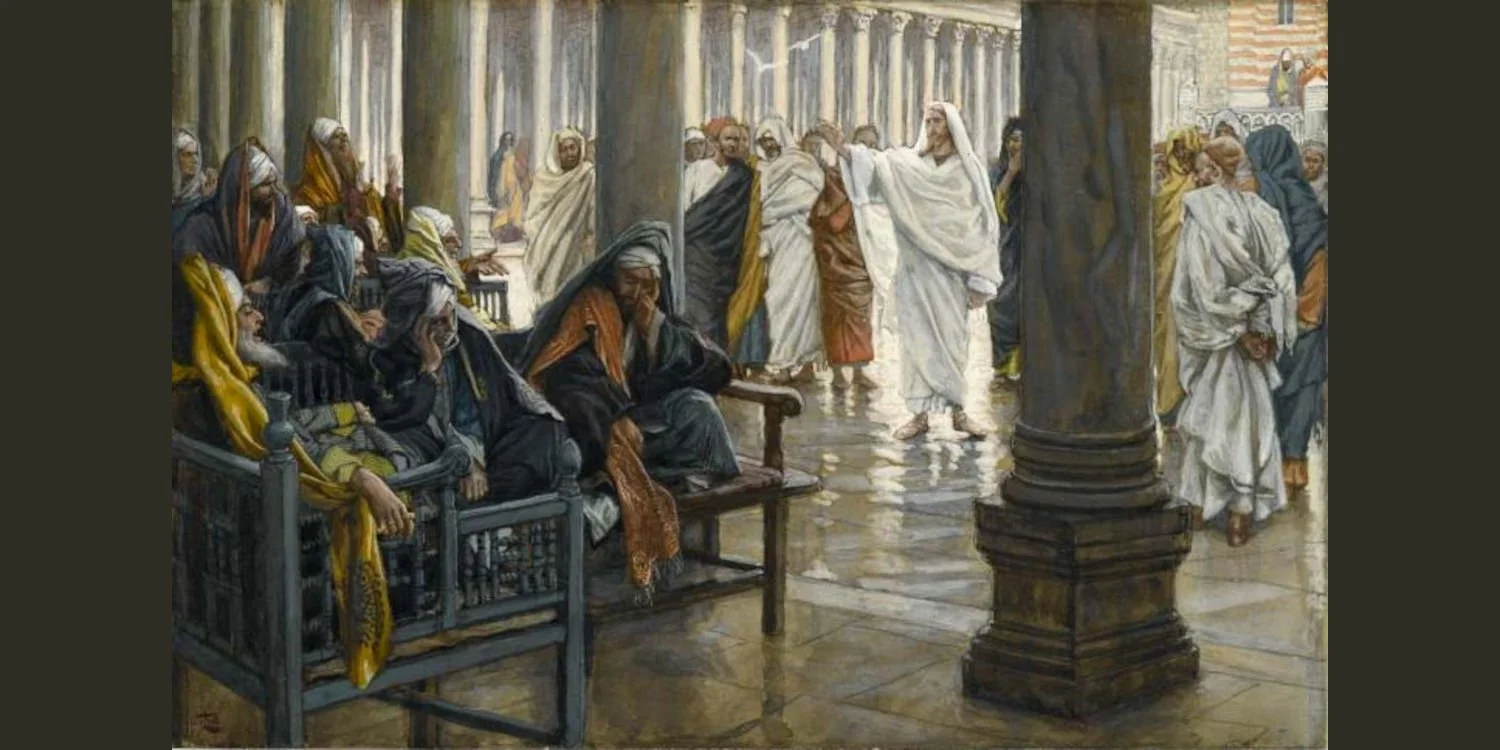
The Hebrew word, “Hoy” is translated as “Woe” in English. It is an interjection of anguish or lament offered by those who are mourning the dead (1 Kings 13:30), or an interjection of fear of a future prospect. When a person in the Bible utters a “Woe” for himself, he despairs for his life. Prophets uttered “Woe” as a warning of God’s judgement on sinful cities or nations. (Isaiah 10:5) Uttering “Woe” serves as a denunciation of evil, an oracle that one is on a path that leads to death or destruction. The Gospel of Saint Matthew, (Chapter 23) contains a litany of Woes against the scribes and Pharisees:
“Woe to you, scribes and Pharisees, hypocrites! You shut the Kingdom of Heaven against men; for you neither enter yourselves, nor allow those who would enter to go in.”
“Woe to you, scribes and Pharisees, hypocrites! For you traverse sea and land to make a single proselyte and when he becomes a proselyte, you make him twice as much a child of hell as yourselves.”
“Woe to you, blind guides, who say, ‘If anyone swears by the temple, it is nothing, but if anyone swears by the gold of the temple, he is bound by his oath. You blind fools! For which is greater, the gold or the temple that has made the gold sacred.”
“Woe to you, scribes and Pharisees, hypocrites! For you tithe mint and dill and cummin while neglecting the weightier matters of the law, such as justice and mercy and faith. … You blind guides strain out a gnat and swallow a camel!”
“Woe to you, scribes and Pharisees, hypocrites! For you cleanse the outside of the cup and the plate but inside are full of extortion and rapacity (avarice).”
“Woe to you, scribes and Pharisees, hypocrites! For you are like whitewashed tombs which outwardly appear beautiful but within are full of death and uncleanness. You, too, outwardly appear righteous to men, but within you are full of hypocrisy and iniquity.”
“Woe to you, scribes and Pharisees, hypocrites! For you build the tombs of the prophets and adorn the monuments of the righteous, saying, ‘If we had lived in the days of our fathers, we would not have taken part with them in shedding the blood of the prophets.’ Thus you witness against yourselves, but you are sons of those who murdered the prophets. Fill up then the measure of your fathers. You serpents, you brood of vipers, how are you to escape being sentenced to hell? Therefore I send you prophets and wise men and scribes, some of whom you will kill and crucify and scourge in your synagogues and persecute from town to town, that upon you may come all the righteous blood shed on earth, from the blood of innocent Abel to the blood of Zachariah, the son of Barachiah, whom you murdered between the sanctuary and the altar. Truly, I say to you, all this will come upon this generation.”
— Matthew 23:13-36
+ + +
Note from Father Gordon MacRae: Writing this post has caused me to undergo a good deal of self-reflection. Few of us in the priesthood can escape every facet of this stinging rebuke against the Pharisees. I do not indemnify myself, but I understand it as a summons to ongoing conversion that we must all undertake before we need the services of an undertaker. Life here is short and eternity is pressing upon us all with hope for a better future.
Please share this post. You may also like these related posts from Beyond These Stone Walls:
What Belongs to Caesar and What Belongs to God
Inherit the Wind: Pentecost and the Breath of God
The Resurrection of Christ: Further Along the Road to Emmaus
The Law and the Prophets and the Transfiguration of Christ
📢 📢 📢
To follow Beyond These Stone Walls in the public square, subscribe on this site or follow @TSWBeyond on X.
📢 📢 📢

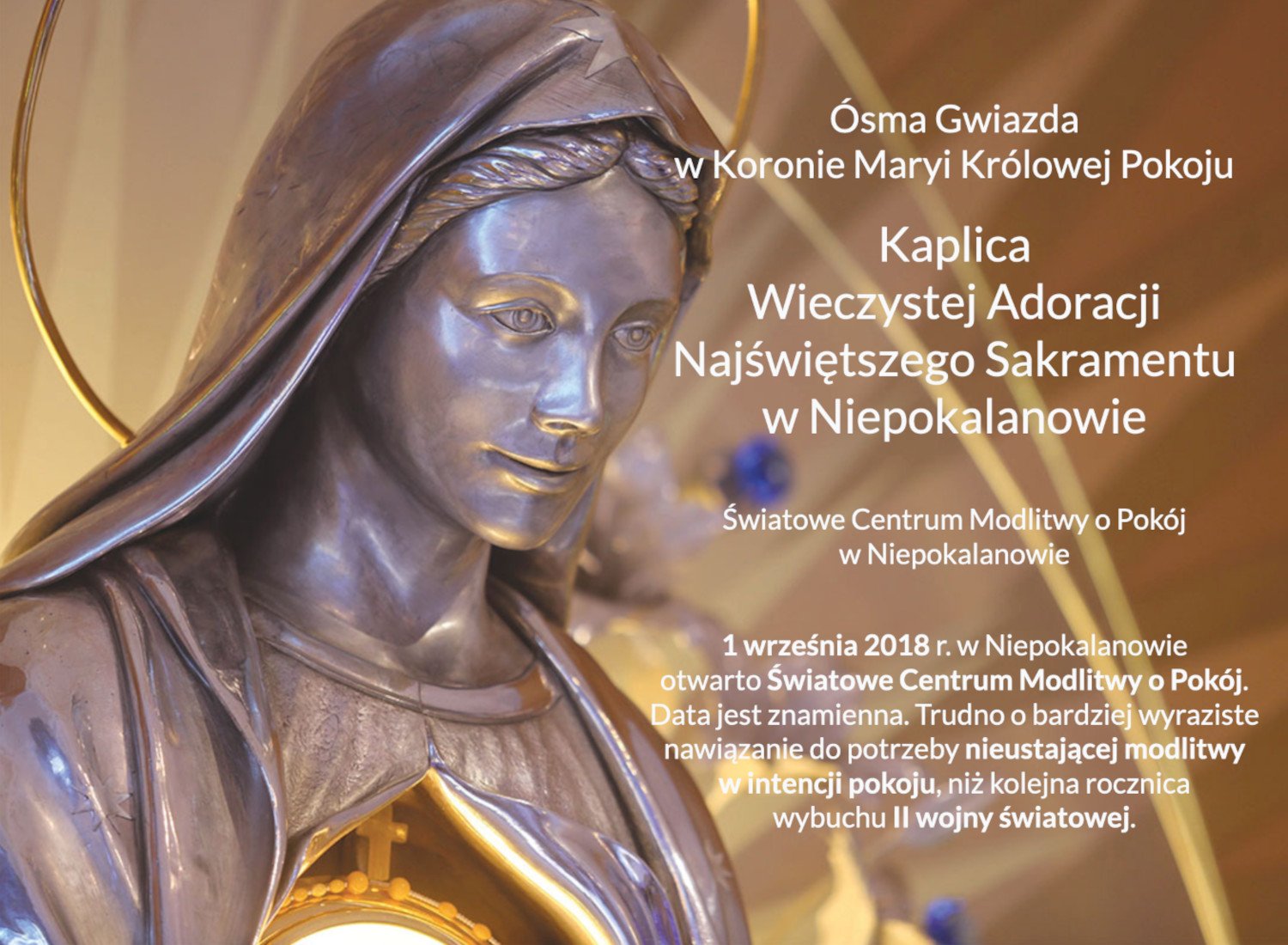

The Eucharistic Adoration Chapel established by Saint Maximilian Kolbe was inaugurated at the outbreak of World War II. It was restored as a Chapel of Adoration in September, 2018, the commemoration of the date that the war began. It is now part of the World Center of Prayer for Peace. The live internet feed of the Adoration Chapel at Niepokalanow — sponsored by EWTN — was established just a few weeks before we discovered it and began to include in at Beyond These Stone Walls. Click “Watch on YouTube” in the lower left corner to see how many people around the world are present there with you. The number appears below the symbol for EWTN.
Click or tap here to proceed to the Adoration Chapel.
The following is a translation from the Polish in the image above: “Eighth Star in the Crown of Mary Queen of Peace” “Chapel of Perpetual Adoration of the Blessed Sacrament at Niepokalanow. World Center of Prayer for Peace.” “On September 1, 2018, the World Center of Prayer for Peace in Niepokalanow was opened. It would be difficult to find a more expressive reference to the need for constant prayer for peace than the anniversary of the outbreak of World War II.”
For the Catholic theology behind this image, visit my post, “The Ark of the Covenant and the Mother of God.”