“There are few authentic prophetic voices among us, guiding truth-seekers along the right path. Among them is Fr. Gordon MacRae, a mighty voice in the prison tradition of John the Baptist, Maximilian Kolbe, Alfred Delp, SJ, and Dietrich Bonhoeffer.”
— Deacon David Jones
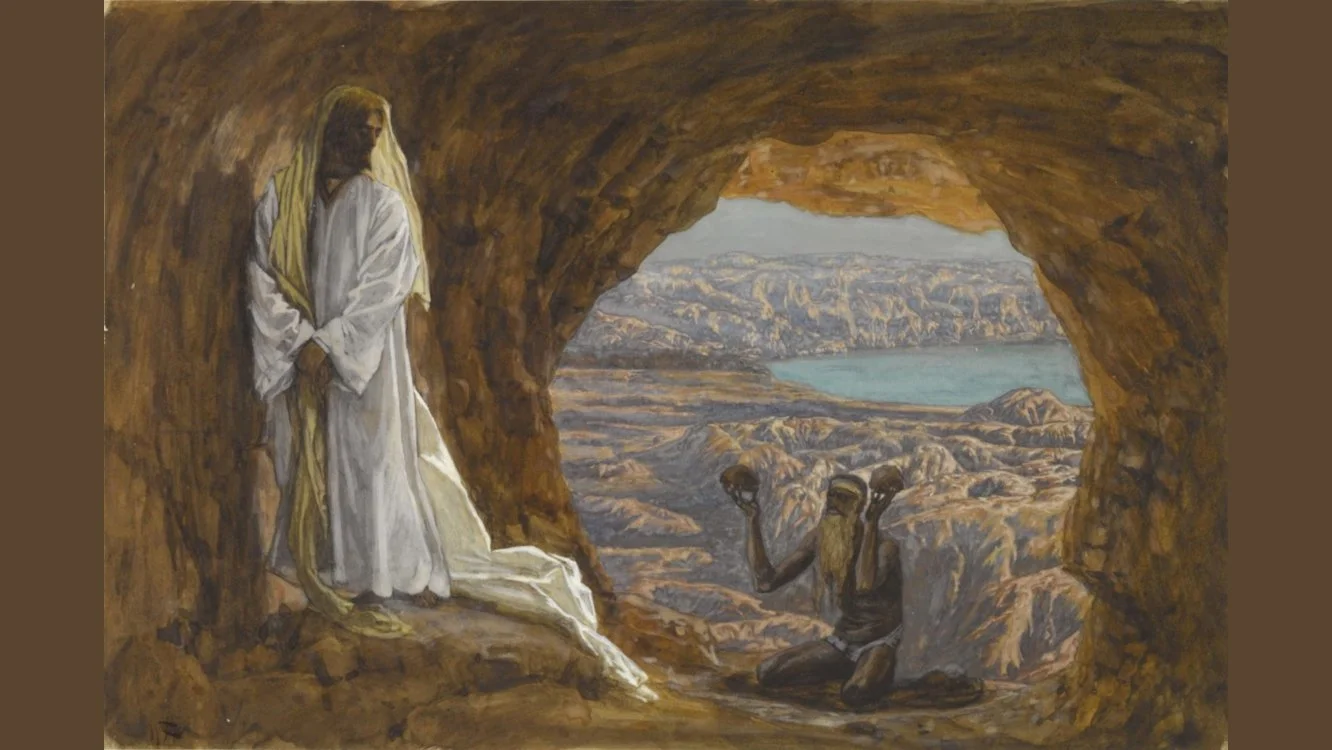
Christ in the Desert: A Devil of a Time
The Gospel according to St Luke tells the story of Jesus, revealed to be Son of God, led into the desert to be tested by the devil who does not give up easily.
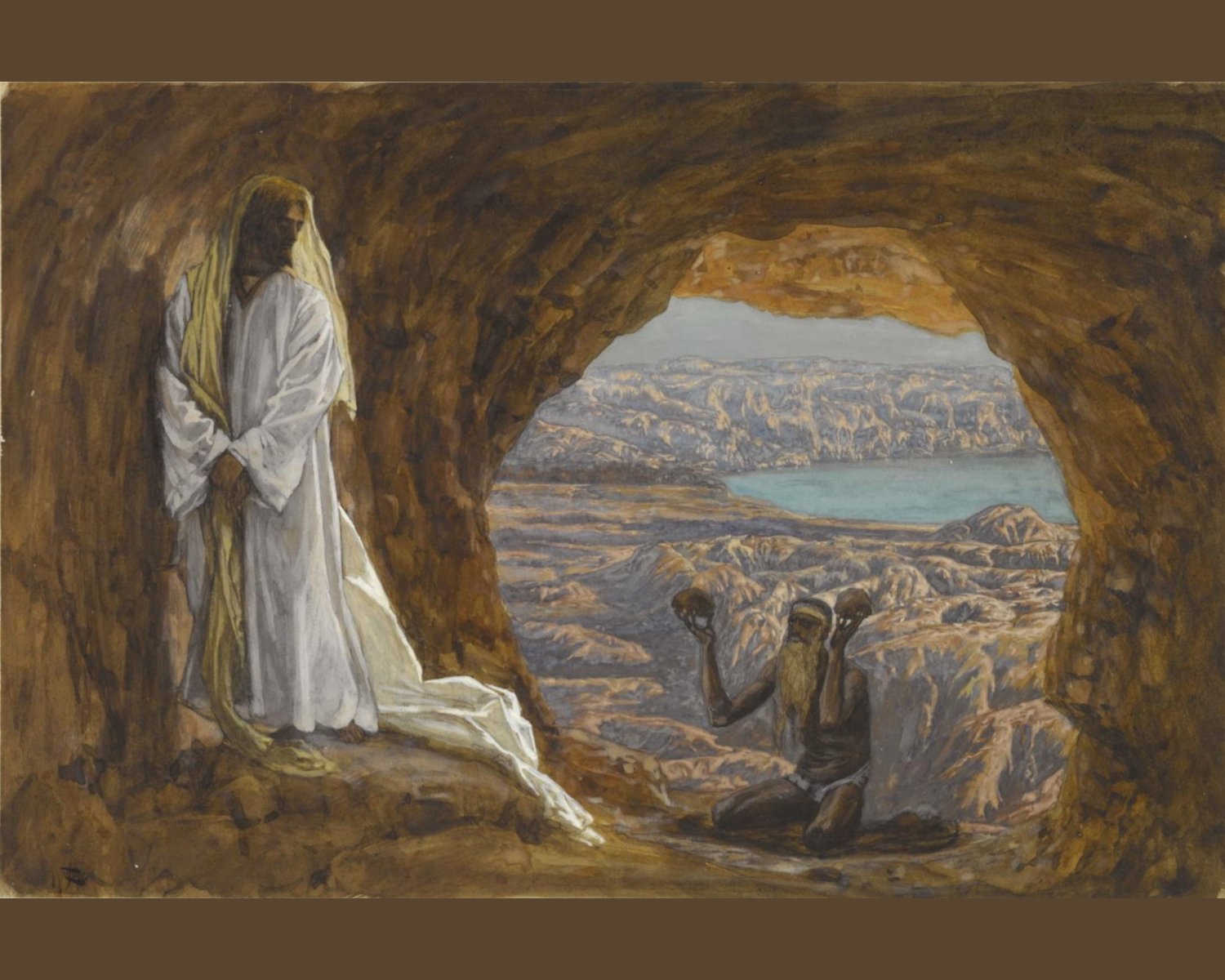
The Gospel according to St Luke tells the story of Jesus, revealed to be Son of God, led into the desert to be tested by the devil who does not give up easily.
Ash Wednesday, 2026 by Father Gordon MacRae
Many of our readers are aware that the Church follows a three-year cycle for Sunday Scripture Readings. As Ordinary Time now gives way to the Season of Lent, I explore the Gospel for the First Sunday of Lent. Being in the “A Cycle,” the Gospel from Saint Matthew (4:1-11) seemed very familiar. Like much of Scripture, I knew that I had read about this passage, but I also felt certain that I had written about it. It is the story of Jesus following the revelation that he is the Son of God revealed at his Baptism in the Jordan. In Matthew’s Gospel, Jesus is led into the desert by the Spirit to face Satan and a series of temptations for which, if he failed, his redemptive mission would end before it even began. All three of the Synoptic Evangelists, Matthew, Mark and Luke, tell the same story but from different perspectives and traditions. Saint Mark’s version appears in Year B in just three lines of Scriptural text (Mark 1:12-15). The Gospel According to Saint Luke is the most theologically nuanced of the three. So even though in our current cycle, the version from Saint Matthew is used on the First Sunday of Lent, it is very similar to that of Saint Luke. So I have chosen the latter to present in exegesis form for our post this week.
+ + +
In my estimation, one of the best movies about Catholic life in America taking a wrong turn has been deemed by some to be a bit rough around the edges. Robert DeNiro portrays Los Angeles Monsignor Desmond Spellacy, and Robert Duvall is cast as his brother, LAPD homicide detective Tom Spellacy in the 1981 film, True Confessions. The film is from a novel of the same name by John Gregory Dunne based on the famous Los Angeles “Black Dahlia” murder case of 1947.
DeNiro’s character, Monsignor Desmond Spellacy is a priest of some prominence in the Archdiocese of Los Angeles in the late 1940s at the epicenter of the power politics of a Church beginning to succumb to the world in which it thrives. Amid corruption while being groomed to become the next Archbishop, the Monsignor nonetheless clings to an honest spiritual life just starting its inevitable fraying at the edges as he is drawn ever deeper into a tangled web of deceit.
Robert Duvall portrays his older brother, Tom Spellacy, an honest and dedicated — if somewhat cynical — L.A. homicide detective whose investigation of the murder of a prostitute brings him ever closer to the perimeter of an archdiocese circling the wagons of self preservation. The Church in America would see a lot more of this in the generation to come. Actor Charles Durning portrays the thoroughly corrupt owner of a large construction firm bidding for church building projects. About to be awarded Catholic Layman of the Year by the Archbishop of Los Angeles, he is also a person of interest in the murder investigation that a lot of powerful people want quietly covered up.
Those wanting to influence and sideline Tom’s investigation come up with evidence — a photograph. It depicts the murdered woman in a social scene with a few prominent people, one of whom, standing next to her, is Monsignor Desmond Spellacy, heir apparent of the archdiocesan throne.
The photograph is entirely bening, but it becomes for Tom Spellacy, as it was intended to be, evidence that the Monsignor knew the murdered woman. Many readers would be reminded by this today of the frenzied media fiasco that has been playing out to much fanfare, recriminations, and disgust about the Jeffrey Epstein files and the many lives, some innocent and some not-so-much, who are entangled by a mere photograph in Epstein’s posthumous web of corruption and deceit. In the hands of politicians on the eve of battle in the midtern national elections, such photographs have been honed as weapons of war in our bitter partisan politics. The film ends with the case solved, but Monsignor Spellacy banished to a small parish in the California desert, his hopes for political advancement in the Church destroyed.
Nonetheless, in the hands of media and various other entities, the photograph remains evidence and a legal and political quagmire for Detective Tom Spellacy tasked with an open and public investigation of a murder scene leading to political corruption. Tom knows that any pursuit of the case that involves this photograph will inevitably destroy the career and good name of his innocent brother. Tom struggles about what to do, but in the end he does the right thing. He pursues the truth of the matter wherever it leads.
The case is eventually solved and of course Monsignor Spellacy had nothing to do with the matter at hand. Someone is convicted (You have to watch the film to find out who). But in the moral sensitivies of the time, which was very much like our time, the photo with the murdered prostitute and the Monsignor becomes more enticing for the press than the murder itself. The photo ends up on the Front Page of the LA Times, and Monsignor Spellacy ends up where our Gospel passage begins: in the desert where he is exiled to a tiny parish in obscurity.
Being exiled in the desert is highly symbolic in Sacred Scripture. It has ancient roots in the Book of Leviticus. This book is composed of liturgical laws for the Levitical priesthood reaching back to 1300 BC as Moses led his people through a forty-year period of exile in the Sinai desert. Some of the ritual accounts it contains are far more ancient.
In a recent Christmas post, “Silent Night and the Shepherds Who Quaked at the Sight,” I wrote that the troubles of our time are the manifestation of spiritual warfare that has been waged in the world since God’s first covenant bonds with us. Before this covenant relationship, we were doomed. Since the covenants of God there is hope for us. We remain oblivious to spiritual warfare to our own spiritual peril. As I have written many times, we now live in a vulnerable time in God’s covenant relationship with us. The Birth of the Messiah and his walking among us are equidistant in time between our existence now in the 21st Century AD and Abraham’s first encounter with God in the 21st Century BC.
Our Day of Atonement Begins
The Gospel according to St Luke (4:1-13) is also set in the desert as the Day of Atonement begins for all humankind. Revealed in Baptism as the Son of God …
“Filled with the Holy Spirit, Jesus returned from the Jordan and was led by the Spirit into the desert for forty days to be tempted by the devil.”
— Luke 4:1
The scene has roots in an ancient ritual for the Day of Atonement described in Leviticus 16:5-10. Aaron, the high priest …
“Shall take from the congregation of the people of Israel two male goats for a sin offering .... Then he shall take the two goats and set them before the Lord at the tent of meeting; and Aaron shall cast lots upon the two goats, one for the Lord and the other lot for Azazel. And Aaron shall present the goat upon which the lot fell for the Lord, and offer it as a sin offering, but the goat upon which the lot fell for Azazel shall be presented alive before the Lord to make atonement over it, that it may be sent away into the desert wilderness to Azazel …”
— Leviticus 16:5,7-10
This describes the ritual for purification known in Hebrew as Yom Kippur, or the Day of Atonement, from Leviticus Chapter 16. The ritual reaches far beyond Moses into the time of God’s covenant with Abraham some 2000 years before the Birth of the Messiah.
There are two goats mentioned in the ritual: One for sacrifice, to Yahweh, and the other — the one bearing the sins of Israel — is “for Azazel.” This name appears only in Leviticus 16 and nowhere else in Scripture except here in the Gospel of Luke and in some of the apocryphal writings found in the Dead Sea Scrolls. One of them is the Apocryphal Book of Enoch, the name of a figure in Genesis who “walked with God” and “was taken up from the Earth.” As such, Enoch is presented in the genealogy of Jesus in Luke (3:37), and thus was spared the deluge of Noah and the destruction intended for all mankind.
The name Azazel is believed by most scholars to be the name of a fallen angel and follower of Satan. Azazel haunts the desert wilderness. Some scholars believe Azazel to be the being referred to as “the night hag” in Isaiah 34:14.
The Latin Vulgate translation of the Bible called the second goat “caper emissarius,” (“the goat sent out”). An English translation rendered it “escape goat” from which the term “scapegoat” has been derived. A scapegoat is one who is held to bear the wrongs of others, or of all. The symbolism in the Gospel of Jesus being led by the Spirit into the desert to face the devil is striking because Jesus is to become, by God’s own design, the scapegoat for the sins of all humanity.
In the Gospel for the First Sunday of Lent, Jesus is described as “filled with the Holy Spirit.” This term appears in only three other places in Scripture, all three also written by Saint Luke. In the Book of Acts of the Apostles (6:5) Stephen, “filled with the Holy Spirit” was the first to be chosen to care for widows and orphans in the daily distribution of food. Later in Acts (7:55) Stephen, “filled with the Holy Spirit gazed into heaven and saw the glory of God” as he became the first Martyr of the Church.
The witnesses who approved of the stoning of Stephen “laid their cloaks at the feet of a young man named Saul” (Acts 7:58) whose radical conversion to become Saint Paul would build the global Church.
Also in Acts (11:24) Barnabas is filled with the Holy Spirit as he founded the first Church beyond Jerusalem for the Gentiles of Antioch. The sense of the term “filled with the Holy Spirit” in Saint Luke’s passages alludes to the hand of God in our living history.
In our first Sunday Gospel for Lent, Jesus, filled with the Spirit, “having returned from the Jordan,” is led by the Spirit for forty days in the desert wilderness. The Gospel links this account to his Baptism at the Jordan at which he is revealed as “Son of God.” This revelation becomes, in the desert scene, a diabolical taunt, and knowing that Jesus has fasted becomes the devil’s first temptation: “If you are the Son of God, turn this stone into bread.” Jesus thwarts the temptation and the taunt with a quote from the Hebrew Scriptures (Deuteronomy 8:3), “Man does not live by bread alone but by every word that proceeds from the mouth of God.”
The symbolism is wonderful here. Like the Father in the Parable of the Prodigal Son — also from Luke (15:11-32) — God had two sons. In the Book of Exodus (4:21-22) Israel is called God’s “first-born son”:
“The Lord said to Moses, ‘When you go back to Egypt, see that you do before Pharaoh all the miracles which I have put in your power, but I will harden his heart so that he will not let the people go. And you shall say to Pharaoh, ‘Thus says the Lord, Israel is my first-born son, and I say to you, let my son go that he may serve me. If you refuse to let my son go, I will slay your first-born son’.”
It was the fulfillment of this command of God that finally broke the yoke of slavery and caused Pharaoh to release Israel from bondage. But, as the Parable of the Prodigal Son implies of the Prodigal Son’s older brother, Israel was not faithful to the Word of God, and spent forty years wandering in the desert as a result of its infidelity.
In the Gospel of Luke, the Second Person of the Most Holy Trinity assumed the humanity of the first son, and was led by the Spirit into the desert to save us in the Second Exodus, our release, through the Death and Resurrection of the Son of God, from the eternal bondage of sin and death.

Clerical Scandal and the Scandal of Clericalism
The second temptation is the lure of political power. In a single instant, the devil showed Jesus all the kingdoms of the world and said, “I shall give you all this power and glory for it has been handed over to me… all this will be yours if you worship me.” This has been the downfall of many, including many in our Church. Jesus again quotes from Scripture, “It is written, you shall worship the Lord your God and serve him alone” (Deuteronomy 6:13). This Gospel revisits the lure of political power immediately after the Institution of the Eucharist:
“A dispute arose among them, which of them was to be regarded as the greatest. And he said to them, ‘The kings of the Gentiles exercise lordship over them, and those in authority over them are called benefactors. But not so with you. Rather let the greatest among you become as the youngest, and the leader as one who serves… I am among you as one who serves.”
— Luke 22:24-26
The Greek in which this Gospel was written used for the word “leader” the term “hēgoumenos.” Its implication refers especially to a religious leader. The Letter to the Hebrews (13:7) uses the same Greek term for “leaders,” and it is not their Earthly power which is to be emulated, but their faith to the extent to which they reflect Christ:
“Remember your leaders, those who spoke to you the word of God, consider the outcome of their life, and imitate their faith. Jesus Christ is the same yesterday and today and forever.”
— Hebrews 13:7-8
Though it doesn’t generate the media’s obsession with sexual scandals, hubris and self-centered aggrandizement have been a far greater problem in our Church, and are the underlying catalyst for almost all other scandals, sexual, financial, and reputational. This culture has led Church leaders into the temptation of Earthly Powers, and too many have been eager participants. Some refer to this as “clericalism,” and in my opinion the best commentary on it was a brief article by the late Father Richard John Neuhaus in First Things entitled, “Clerical Scandal and the Scandal of Clericalism.”
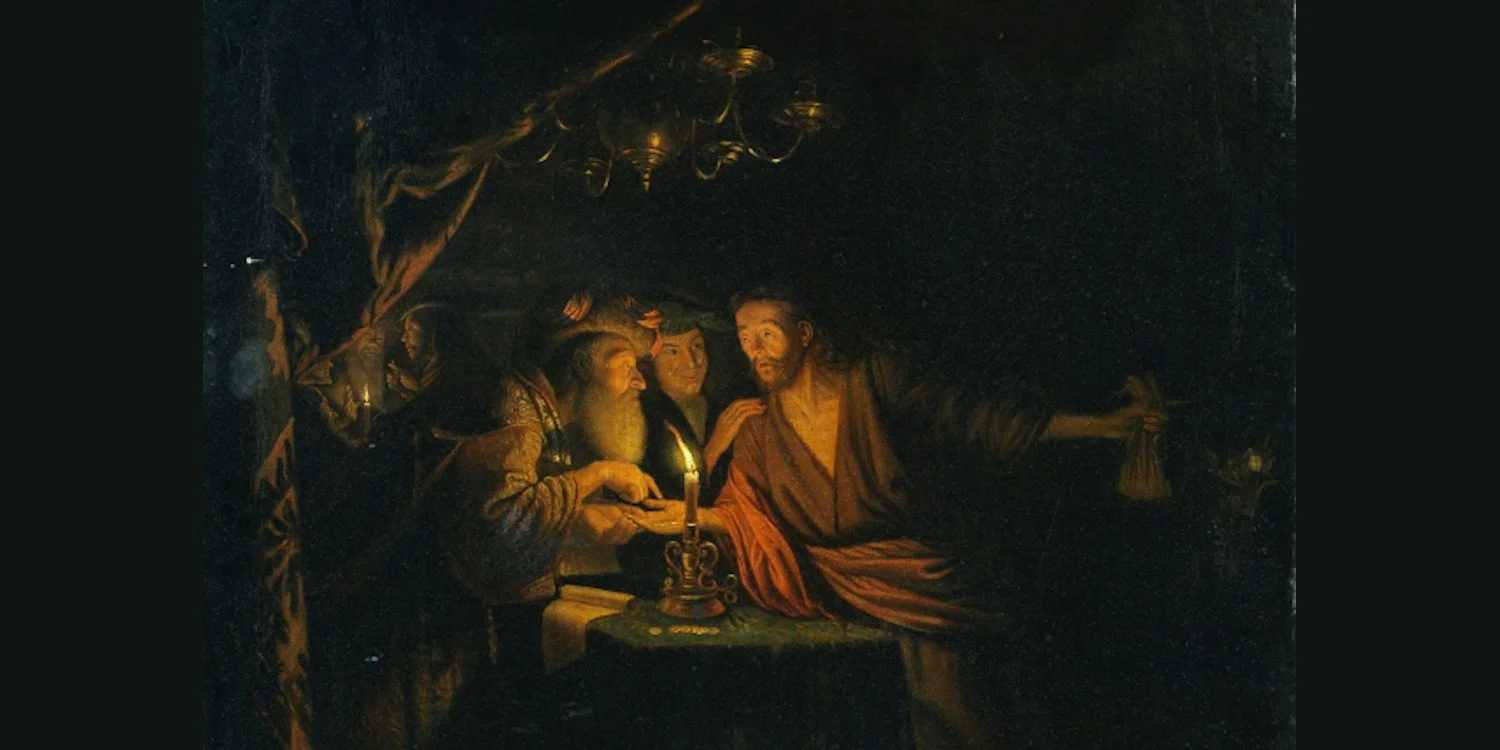
The Payment of Judas Iscariot
Catholicism in America thrived when it had to earn its dignity. Once it became politically accepted, it went on in this culture to become comfortable, and its leaders (“hēgoumenos”) perhaps a bit too comfortable. Religious authority and the sheer masses of believers spelled political power. The pedestals upon which we stood grew in height with every clerical advance, and our bishops stood upon the highest pedestals of all with palatial trappings more akin to the courts of Herod and Caesar than the Cross of Christ the King, the same yesterday, today, and forever.
It is no mystery why, as the height of our pedestals grew, so did our scandals. This is perhaps why Jesus offered to us the way to pray “Lead us not into temptation, but deliver us from evil.” It is because he alone could be led by the Spirit into the desert of temptation and emerge without dragging along behind Him the evil He encountered there.
As the last temptation of Christ unfolded in the Gospel for the First Sunday of Lent, it is now the devil, in a final effort, who dares to quote and distort the Word of God. He led Jesus to Jerusalem, and to the parapet, the highest point of the highest place, the Temple of Sacrifice. And now comes his final taunt:
“If you are the Son of God, throw yourself down from here, for it is written, ‘He will give his angels charge of you, to guard you,’ and ‘On their hands they will bear you up, lest you strike your foot against a stone’.”
— Luke 4:9-11, quoting Psalm 91
This devil of the desert takes up the argument of Jesus, the Word of God, quoting Psalm 91 (11-12). The taunt to test God and “go your own way” is far deeper than the mere words convey. In Jerusalem, the devil will take hold of Judas Iscariot (Luke 22:3) leading to the trial before Pilate and the Way of the Cross. In Jerusalem, the powers of darkness, first encountered here in the desert, are mightily at work: “This is your hour, and the power of darkness.” (Luke 22:53)
The Church in the Western world has entered a time of persecution but thus far the institutional response — having traded the Gospel for “zero tolerance” in a quest for scapegoats to cast out into the desert to Azazel — does not bode well for the faith of a Church built upon the blood of the martyrs.
Perhaps, as the Spirit leads us into this desert, it is our vocation, and not that of our leaders, that is essential. Perhaps it is not clerical reform that is needed so much as a revolution — a revolution of fidelity that can only be lived and not just talked about. We will not find the Holy Spirit in a revolution that manifests itself in blessing sin or in any politically correct acquiescence to same-sex unions that some now call the Sacrament of Holy Matrimony, and other moral distortions of our time. Those who abandon their faith in a time in the desert were leaving anyway, just waiting for the right excuse. To use the behavior of leaders to diminish and then abandon the Sacrament of Salvation is to cave to the true goal of Azazel. He could not lure Christ from us, but he can lure us from Christ and he is giving it a go.
The devil finally gives up in the desert scene of the Last Temptation of Christ in Luke Chapter 4. But the devil is not quite done. Luke’s Gospel tells that he will return “at a more opportune time.” Satan finds that time not in an effort to test Jesus, but rather to test his followers. He targets Judas Iscariot in the last place we would ever expect to find the devil: “Satan at The Last Supper: Hours of Darkness and Light.”
+ + +
Note from Father Gordon MacRae: Thank you for reading and sharing this Ash Wednesday post. You may also like these other posts from Beyond These Stone Walls as we proceed through Lent:
Pope Francis Had a Challenge for the Prodigal Son’s Older Brother
A U.S. Marine Who Showed Me What to Give Up for Lent
Satan at The Last Supper: Hours of Darkness and Light
Behold the Lamb of God Upon the Altar of Mount Moriah
We presently have 39 titles in our collection of Scriptural posts, The Bible Speaks.

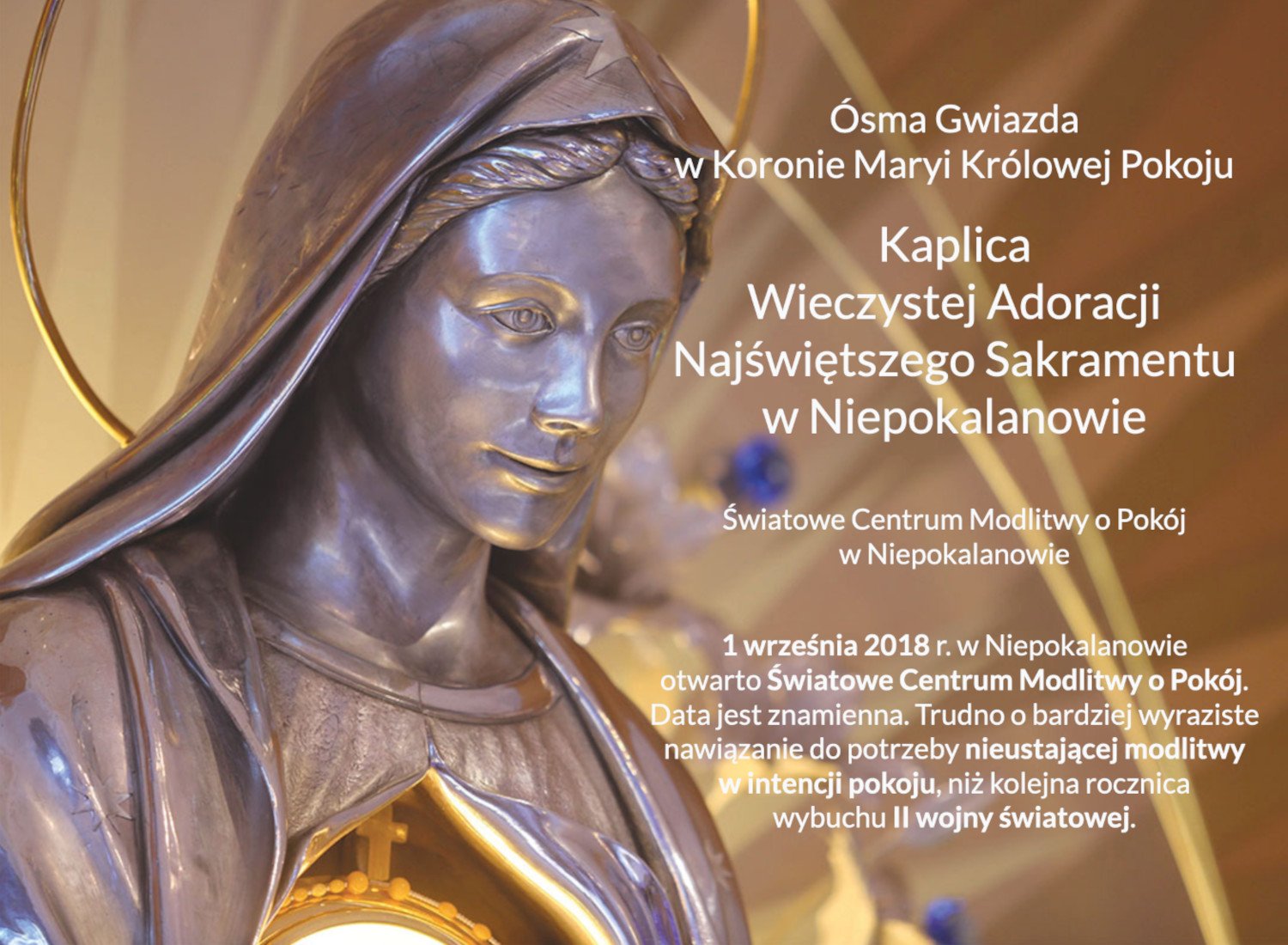

The Eucharistic Adoration Chapel established by Saint Maximilian Kolbe was inaugurated at the outbreak of World War II. It was restored as a Chapel of Adoration in September, 2018, the commemoration of the date that the war began. It is now part of the World Center of Prayer for Peace. The live internet feed of the Adoration Chapel at Niepokalanow — sponsored by EWTN — was established just a few weeks before we discovered it and began to include in at Beyond These Stone Walls. Click “Watch on YouTube” in the lower left corner to see how many people around the world are present there with you. The number appears below the symbol for EWTN.
Click or tap here to proceed to the Adoration Chapel.
The following is a translation from the Polish in the image above: “Eighth Star in the Crown of Mary Queen of Peace” “Chapel of Perpetual Adoration of the Blessed Sacrament at Niepokalanow. World Center of Prayer for Peace.” “On September 1, 2018, the World Center of Prayer for Peace in Niepokalanow was opened. It would be difficult to find a more expressive reference to the need for constant prayer for peace than the anniversary of the outbreak of World War II.”
For the Catholic theology behind this image, visit my post, “The Ark of the Covenant and the Mother of God.”