“There are few authentic prophetic voices among us, guiding truth-seekers along the right path. Among them is Fr. Gordon MacRae, a mighty voice in the prison tradition of John the Baptist, Maximilian Kolbe, Alfred Delp, SJ, and Dietrich Bonhoeffer.”
— Deacon David Jones
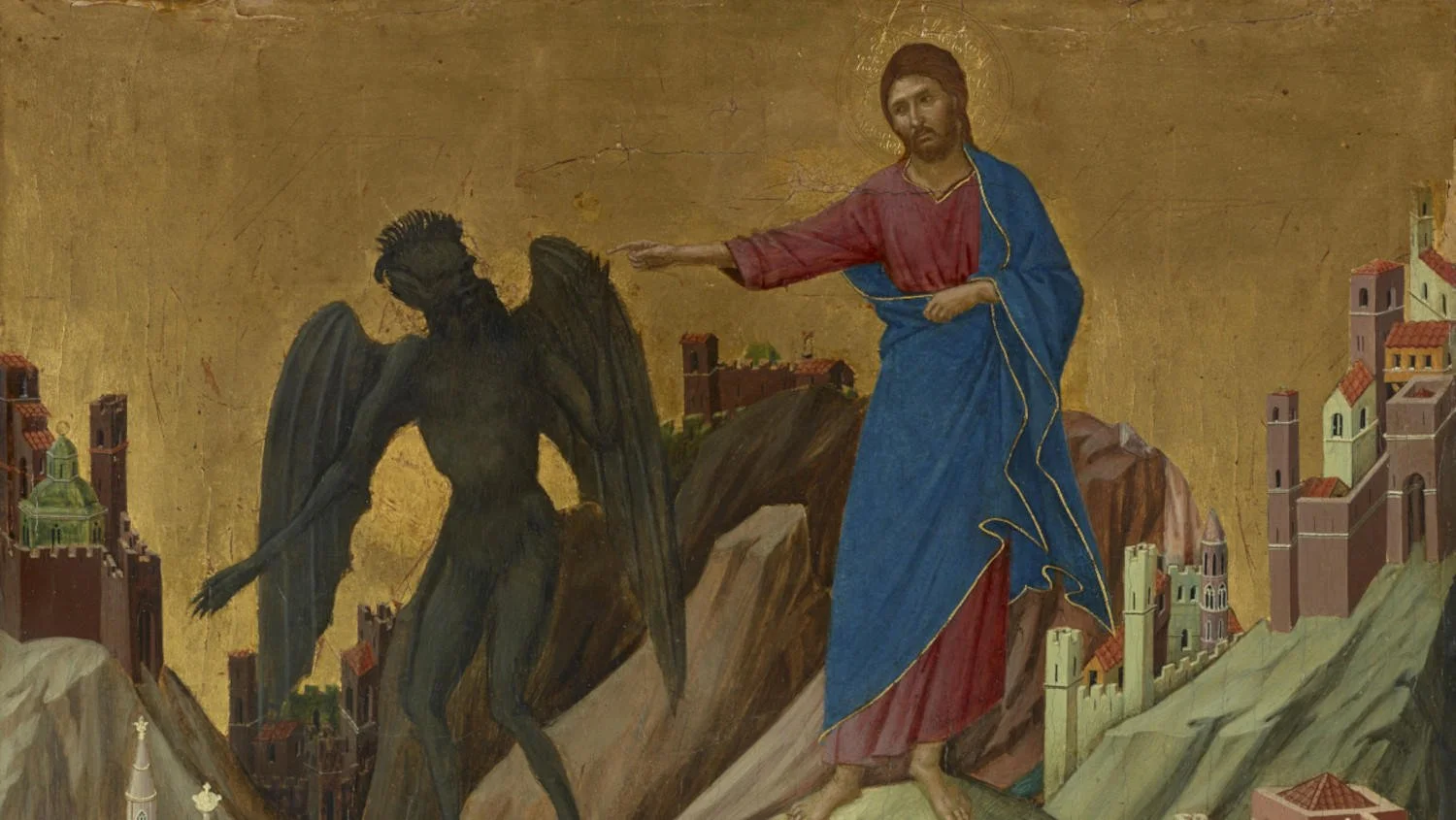
In the Desert Wilderness of Prison, a Priest Meets the Devil
After forty-four years of priesthood, thirty-two of them in the darkness of unjust imprisonment, my faith has been sorely tested, but I remain a priest in full.
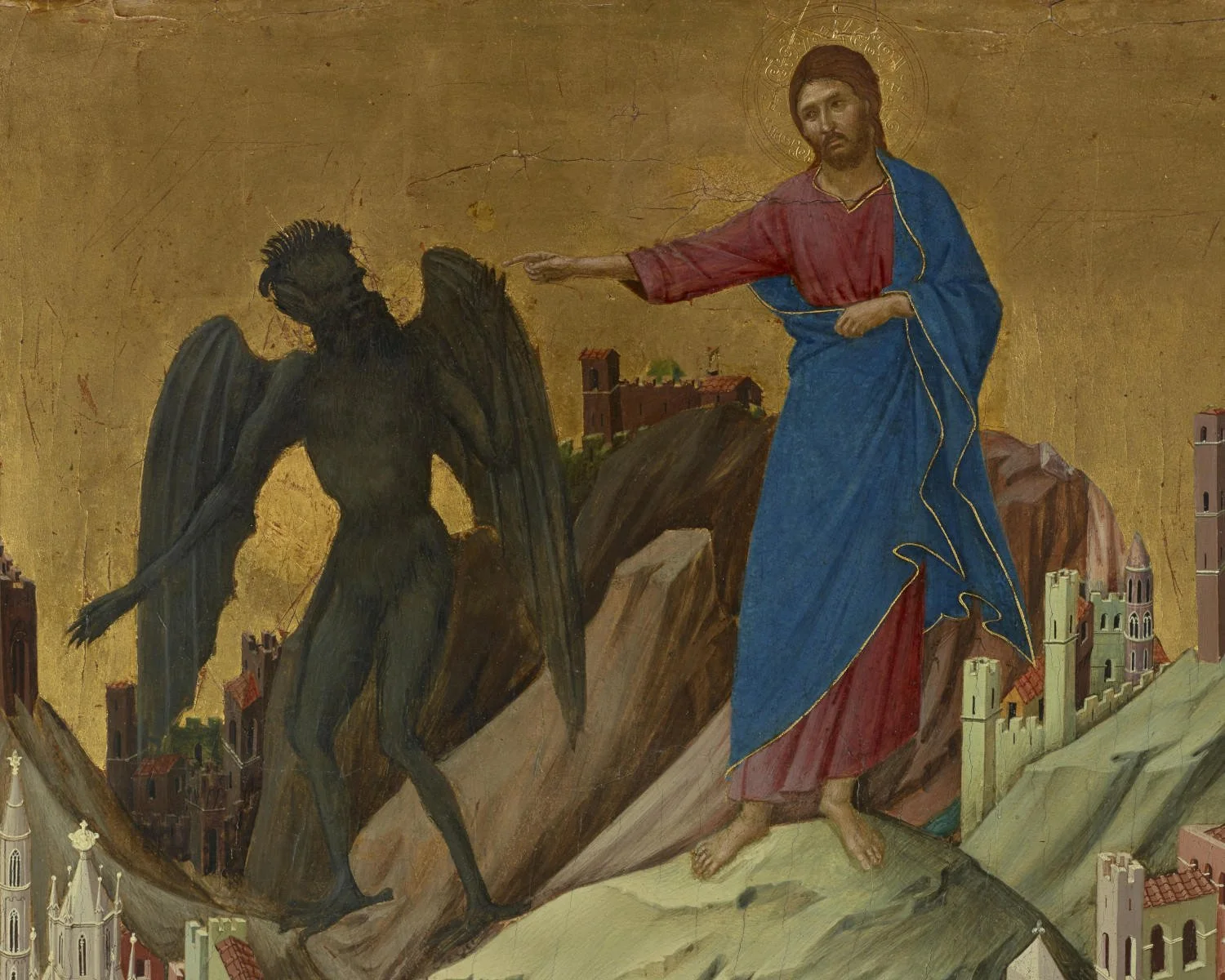
After forty-four years of priesthood, thirty-two of them in the darkness of unjust imprisonment, my faith has been sorely tested but I remain a priest in full.
June 10, 2026 by Father Gordon MacRae
Note from Father MacRae: My friend, Pornchai Moontri and I are indebted to Rebecca Virelles for her fine reflection on my life as a priest and prisoner published here last week. It caused me to reconsider this post about a demonic encounter first written in 2023. So much of the aftermath of that story has evolved, and new information has caused me to want to delve into it again. As Rebecca has described in last week’s post, Pornchai Maximilian and I have been on a road less traveled, and now we are far along that road. Your prayers, support and openness to the truth we tell have been the greatest Gospel witness for us.
+ + +
In 1945, at the end of World War II and eight years before I was born, the film, Going My Way swept the Academy Awards for Best Picture, Best Director, Best Screenplay, and Best Musical Score. The film about a Catholic priest and his efforts to save a dying urban parish was a huge box-office hit in 1945. Bing Crosby won the Best Actor Oscar for his role as Father Chuck O’Malley, a young priest with a golden voice sent to revitalize a quickly fading parish. Barry Fitzgerald won the Oscar for Best Supporting Actor in the role of the elderly pastor, Father Fitzgibbon. It was a different Church, a different time, and a very different world.
Bing Crosby’s character, Father Chuck O’Malley, saved the day and the parish when he organized a neighborhood gang of street kids into a “bit rough around the edges” choir. Father O’Malley then composed a hit song and taught them to sing it. “Swinging on a Star” topped the charts and won the Oscar for Best Song. The young men saved the church while Father O’Malley saved them. Going My Way also swept the Golden Globe and New York Film Critic Awards.
Now jump ahead 60 years. In 2005 another film about Catholic priests won the Academy Award for Best Picture and won The Boston Globe an ill-conceived Pulitzer for “Public Service.” That scornful film was Spotlight, a one-sided, jaded, cynical effort to smear the Catholic Church and priesthood with a broad brush as “slayers of the soul.” The critics and media were delighted, but one brave journalist, JoAnn Wypijewski, performed a much-needed autopsy on it. Though I never figured into the film, I had a strong presence in its autopsy in “Oscar Hangover Special: Why “Spotlight” Is a Terrible Film.”
The 60-year period in between Going My Way and Spotlight saw perhaps the greatest cultural shift the Western World had ever known. Our news media turned left, and the left became its master. Then the Second Vatican Council radically altered the world’s view of the Church. Then Roe v Wade happened and the not-yet-woke Church came down on the side of life. All the attacks hence were really about Roe v Wade. Then the “woke” were born.
On June 5, 1982, as this rapid descent in the world’s view of the Church and priesthood was well into its decline, I was the sole candidate for priesthood ordination in the Diocese of Manchester, New Hampshire. How I got to that point is a longer story that I have never been able to fully comprehend. In hindsight, it has elements of the demonic, and I will get back to that.
There is for now a “rest of the story” fully known only to one other person, and that person has since passed from this life. In 1977 and 1978, I spent long hours with this story in the company of Father Benedict Groeschel. Before he became a founder of the Friars of the Renewal (CFR), we were members of the same Capuchin Franciscan Province based in New York. Father Groeschel was aware of all that had happened, and he listened intently to its impact on me. In 1978, he and I together discerned a different path that I had to take. I will get back to that too, but first back up a few years.
Priesthood in the Coming Cancel Culture
At the age of twenty-one, four years after my high school graduation, I entered the novitiate of the Capuchin Order in 1974. I felt immediately that I was on the right path in life. I did not have much of a family life growing up, and the Capuchin emphasis on life in community drew me in. I also strongly believed that I had a vocation to religious life. One of my friends in the Order grew up in an orphanage, and, like him, I treasured the accountability and support of a religious community that many others took for granted.
I was also a very good student. I had carried a double major in psychology and philosophy on a scholarship at Saint Anselm College in New Hampshire. I thought I had a perfect balance of intellectual growth, spiritual life, and physical work. When I was not studying, I chopped firewood for long hours each day. A lot of stress was vented, and some wounds long neglected began to heal.
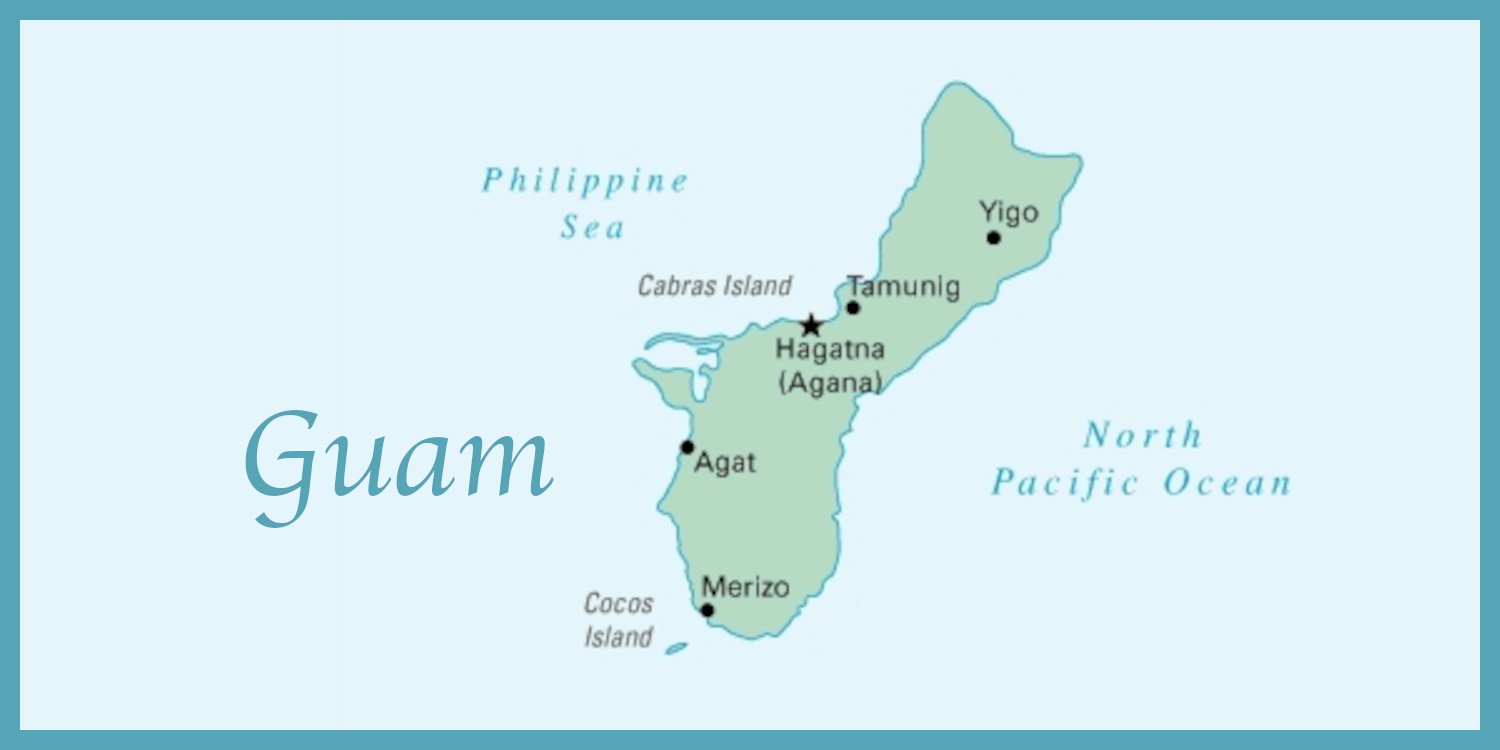
I loved my Capuchin community and I developed many close friendships among its members. Two of those friendships were with classmates from the Western Pacific Island of Guam. We were the same age and often studied together. I learned a great deal about the home and culture they left behind on the far side of the world. At that time, Guam was a mission territory for the Order and several members of our Capuchin province were assigned there. I began to discern that Guam might be where my future lay, so I began to study its culture and native language, Chamorro.
Then tragedy struck. It blindsighted me and forever altered my path. Being far from home for long periods of time had an effect on my friends. One of them began to exhibit signs of extreme stress manifested in paranoia. One night he knocked on my friary door awakening me at 3:00 AM. He was very upset and shaken, and he asked me to come to his room. I went with him and found there a kitchen knife impaled in his mattress with a typed note threatening his life.
My friend was very shaken by this, and I remained with him until dawn and then took him and the evidence to the room of our religious superior. My friend was questioned at length while I remained outside the room. Similar incidents occurred on two more occasions over the next few weeks. I told the local superior of my growing concern that my friend was under extreme stress, and I believed that he had been doing this to himself and needed immediate help.
On the next day, I was again summoned to the office of the superior. I was summoned alone. Accompanied by two other senior members of the Order, he accused me of plotting to murder my friend. I could not fathom what was behind this, but I insisted that my friend was under extreme stress and had been doing this to himself. I insisted that he needed immediate help. Then the superior revealed that he had in his hands the ribbon from my typewriter where the threatening notes had clearly been typed — but not by me.
Under obedience, for the next two weeks I was confined to my quarters and forbidden from speaking with anyone else. I was going through final exams for the semester in that same week. I excelled in them, but to this day I do not know how. This all happened in the spring of 1977.
At the end of those two weeks, the local superior summoned me again. One priest on the formation staff had been skeptical of the story and its outcome, so he spent a few nights in the friary library from where he could observe my friend’s room from a distance. On one of those nights he saw him come out of his room, return with a knife, and then plunge it with another note into his own mattress. My friend was then taken away.
The superior who later summoned me again told me only that his investigation was complete, and that he concluded that I had nothing to do with these events except that I was a friend of the other Capuchin. “You should just forget about all this and keep doing what you’ve been doing,” he said. And it was over.

Still in the Eye of the Storm
But it wasn’t really over. Because I was barred from discussing these incidents, no one else in the Province was told the truth of this story or its outcome. All anyone knew was that my friend disappeared in the night, and I had been a suspect. I was also very concerned for my friend. I had not been able to learn any of what had happened to him, or why it happened, or where he went. To protect him from any further exposure, I told only one person, about this story and what I knew to date. That person was Father Benedict Groeschel, a psychologist and respected member of the Province. Among all the feelings of betrayal, injustice, and anger at the rush to judgment, I was first and foremost heartbroken.
When I learned that my friend had typed these notes on my typewriter while I was away and then carried out these assaults upon himself just as I had feared, I was furious — not with him but with those in authority in the Order who would not listen because their minds were already made up. I never saw or heard from my friend again, and I never learned what was behind his pleading cry for help made through me. I also never learned what became of him.
I was 24 years old then. I am nearly 74 now, and I still carry this after all these years. I also had no idea then that such devastating false witness would be repeated in my life 15 years later as a diocesan priest.
In 1978, one year after the events described above, the Province gave a strong recommendation, under the direction of Father Groeschel, in support of my decision to transfer to studies toward diocesan priesthood. In the ensuing years, I completed a Master of Divinity degree and Pontifical degree in Sacred Theology at Saint Mary’s Seminary and University in Baltimore. As written above, I was ordained for the Diocese of Manchester on June 5, 1982. There was one other candidate for ordination that year, but he dropped out just weeks before being ordained.
The story about my friend from Guam stayed buried for the next 42 years. Then, in 2019, a previously unknown factor in the story was revealed to me. A Capuchin priest from my former Province came to this prison for Mass and asked to speak with me after. He told me that he remembered this incident and hoped that I did not. I told him that my life was radically altered as a result of it. He said that he felt partially responsible. He had been pursuing a sabbatical study in Sacred Scripture at Harvard Divinity School in 1977, the same year as the events above. My uncle, a Jesuit priest and renowned Scripture scholar was a faculty member at Harvard at that time, and they had a chance meeting.
I mentioned earlier that there were hints of the demonic in this story. It was in the form of events that were set up like dominoes intended to fall in just the right way and at just the right time to steer this story.
My uncle approached the Capuchin priest at Harvard and asked him if he and I were in the same province. The Capuchin said that we were, and my uncle inquired about how I was. The events written above had all taken place in just the two previous weeks in 1977, but my uncle knew nothing of what had transpired in those weeks. The Capuchin told my uncle about these events, but this was before the discovery that I was not the cause of them. Upon hearing this partial story, my uncle shared with the Capuchin that I had a difficult life growing up in a home and family destroyed by alcoholism. My uncle expressed to the Capuchin that he was glad to know that I had the support of a religious community.
Forty-two years later, the Capuchin priest told me that he shared my uncle remarks with the leaders of my Province in 1977. It was what my uncle innocently divulged that caused the Capuchin superior and Provincial staff to jump to a conclusion that I must have been the deranged person responsible for the threatened acts of violence against my friend from Guam.
Gauging my reaction upon learning of this 42 years later told me how much the wounds left by these incidents still festered. Everyone in this account — the Capuchin priest, my Jesuit uncle, even my accusing religious superiors — all believed they had acted in what they thought was my best interest balanced with that of my friend. The betrayal did not belong to any one person, but I was the only one in this scene who knew of its insanity and acted to save my friend. Forty-two years later, my feelings of anger and betrayal smoldered anew.
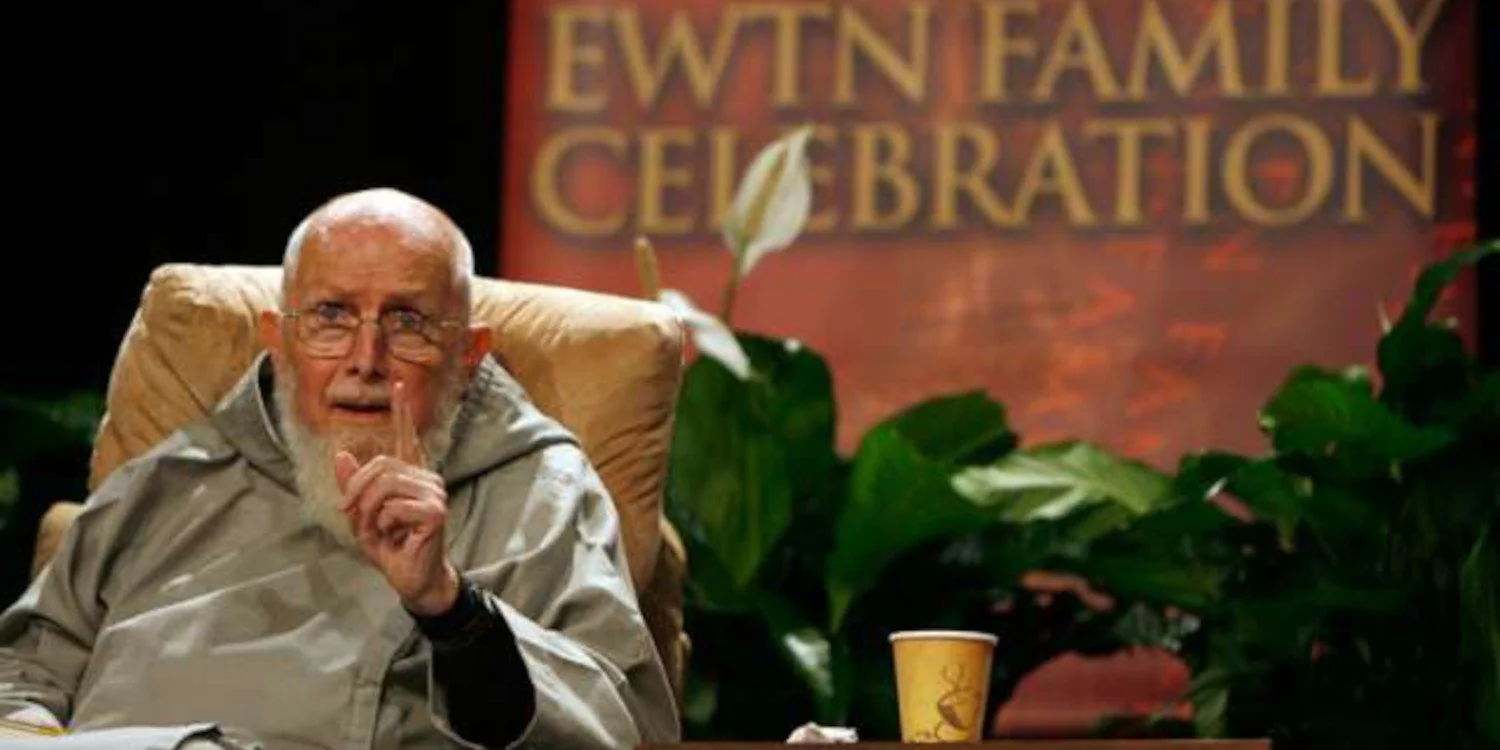
Haunting Echoes from the Past
In 1994, as you know, I was falsely accused again and faced trial with no evidence or corroboration beyond the jaded suspicions of a police officer now known to have been corrupt. Journalist Ryan A. MacDonald wrote of this account in “Police Misconduct: A Crusader Cop Destroys a Catholic Priest.” The demonic dominoes continued to fall.
After being so accused again, echoes of how helpless and oppressed I was during the first such encounter decades earlier were still with me. I became, perhaps understandably, despondent, and again I could reach out to no one. At the time, it was more than I could bear, and I fell. You can read about this in a post that has been in plain sight since I wrote it in 2017. It is, “How Father Benedict Groeschel Entered My Darkest Night.” I could have added the words, “… for the Second Time.”
In September, 2022, I wrote an article in these pages that shocked readers around the world. It might have shocked them a lot more had they known of the crucible of memories I had to face and set aside in order to write it when no one else could. It is a centerpiece of my priesthood. Had I not gone through everything described in this post, I would not have been wounded enough, wise enough, or strong enough to become for another the saving grace that Father Groeschel had become for me.
It was a story long overdue, but justice required it. I meticulously researched it and then wrote it. It is about events in the life of my friend, Pornchai Moontri, and it has eerie echoes of the past. The article is “Getting Away with Murder on the Island of Guam.”
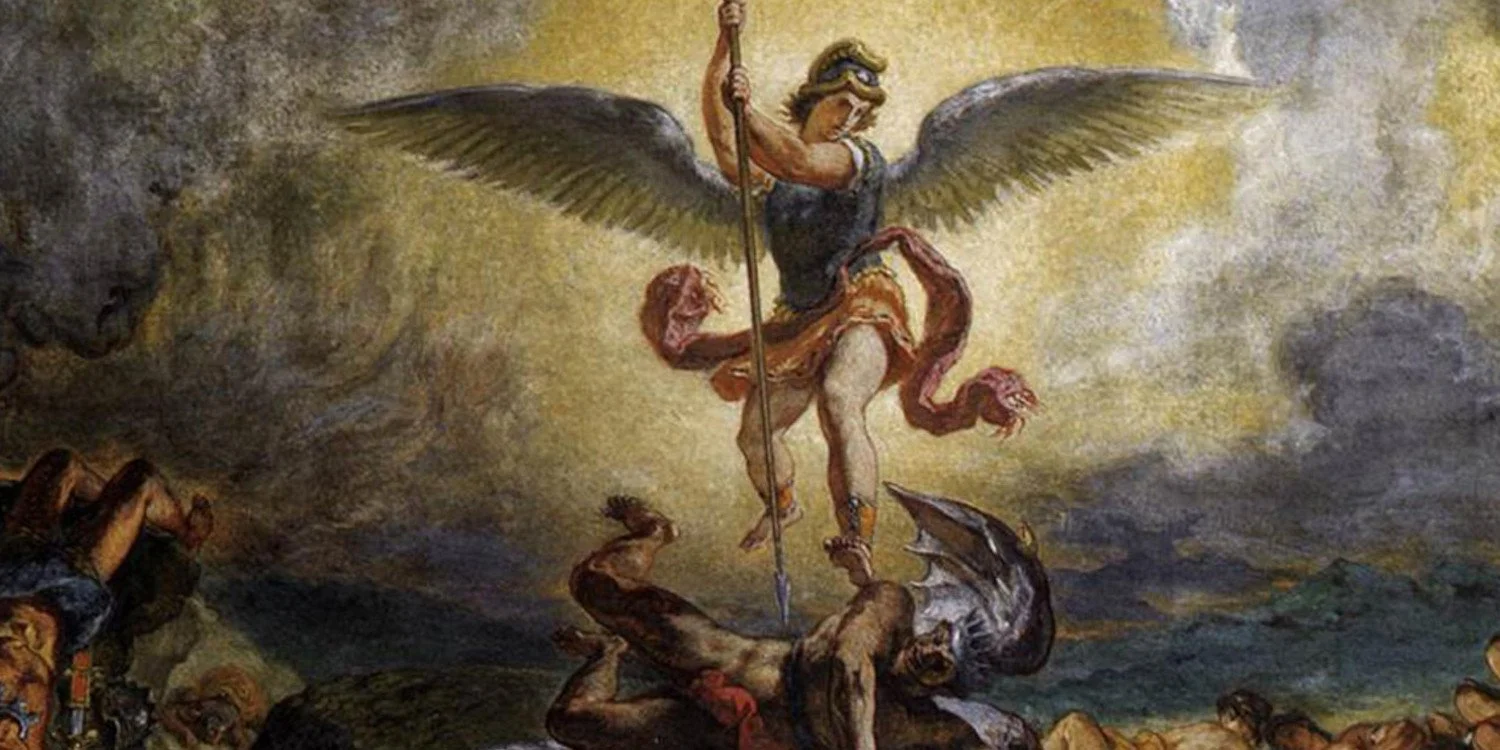
I mentioned earlier that this story has elements of the demonic. I wrote of the devil’s ominous stage presence here, a presence that tips over the dominoes to great effect at just the right time and in just the right way. The post I wrote about this is “Saint Michael the Archangel Contends with Satan Still.” We will link to it again, and to other posts described here, at the end of this post. For now, Pornchai Moontri and I have both followed the advice of Saint Peter:
“Cast all your cares on the Lord for he cares for you. Stay sober and alert for your opponent the devil is prowling like a roaring lion seeking someone to devour. Resist him, steadfast in your faith, knowing that the same experience of suffering is required of your brethren throughout the world.”
— 1 Peter 5:7-9
On June 5, 2026, I marked 44 years of priesthood out here in the Oort Cloud, that distant region of space where, among our Solar System’s detritus, I encounter others cast out among the unwanted debris. Most of those I encounter here have suffered far greater wounds than my own.
Bing Crosby notwithstanding, priesthood has never been going my way. But I have done what is recommended in another post I wrote, “The Holy Spirit and the Book of Ruth at Pentecost.” I have mourned what was lost. I have let it ascend. And I surrender to the life, and priesthood, that I am called to live now. As I mark 44 years of priesthood in pursuit of the True Presence, in spite of all, the Lord has done great things for me, and perhaps even a few great things through me.
Note from Father Gordon MacRae: Thank you for reading and sharing this painful post, and these related posts:
Saint Michael the Archangel Contends with Satan Still
How Father Benedict Groeschel Entered My Darkest Night
Police Misconduct: A Crusader Cop Destroys a Catholic Priest
And for those Blessed among us who thirst for justice …

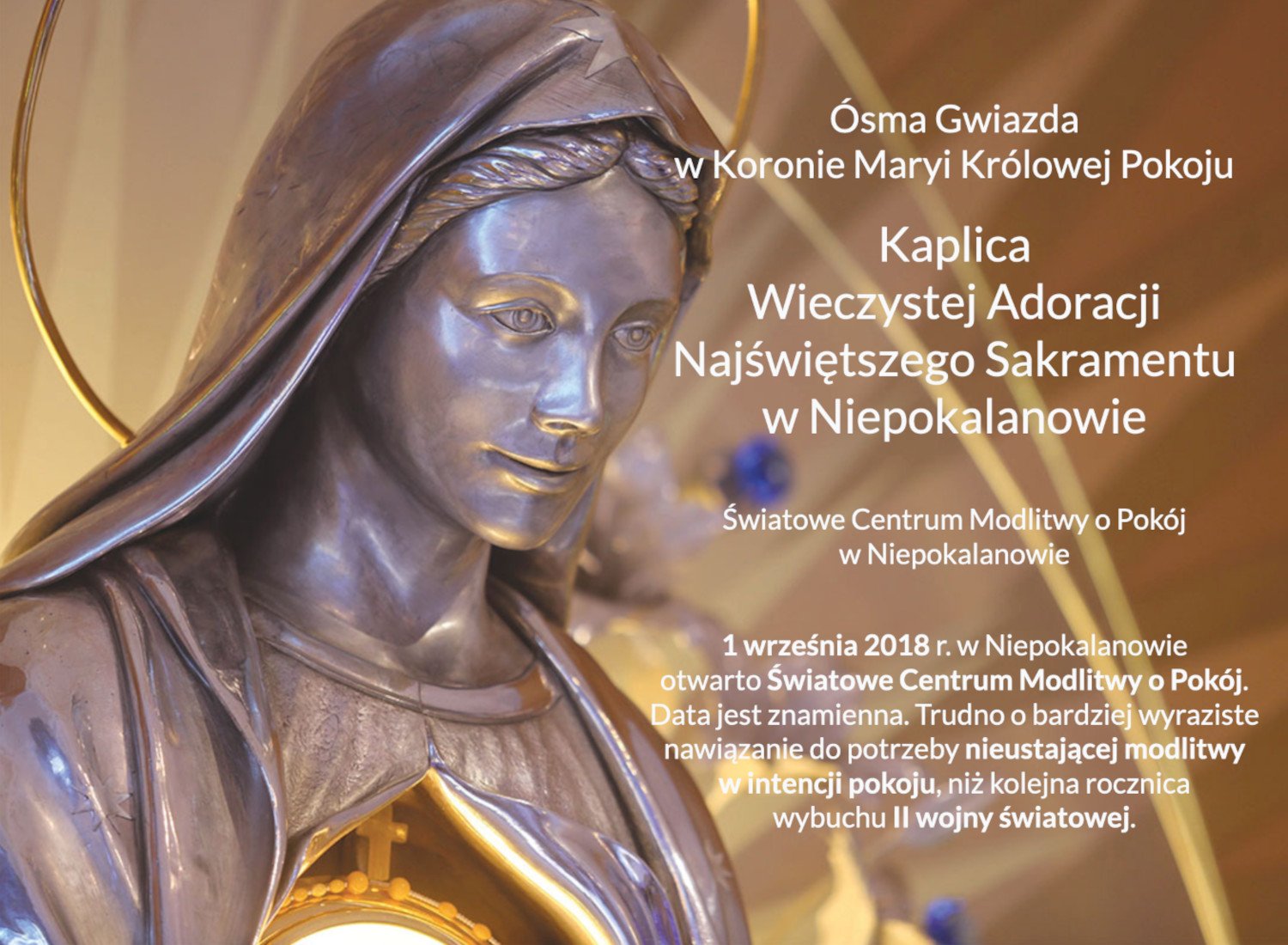

The Eucharistic Adoration Chapel established by Saint Maximilian Kolbe was inaugurated at the outbreak of World War II. It was restored as a Chapel of Adoration in September, 2018, the commemoration of the date that the war began. It is now part of the World Center of Prayer for Peace. The live internet feed of the Adoration Chapel at Niepokalanow — sponsored by EWTN — was established just a few weeks before we discovered it and began to include in at Beyond These Stone Walls. Click “Watch on YouTube” in the lower left corner to see how many people around the world are present there with you. The number appears below the symbol for EWTN.
Click or tap here to proceed to the Adoration Chapel.
The following is a translation from the Polish in the image above: “Eighth Star in the Crown of Mary Queen of Peace” “Chapel of Perpetual Adoration of the Blessed Sacrament at Niepokalanow. World Center of Prayer for Peace.” “On September 1, 2018, the World Center of Prayer for Peace in Niepokalanow was opened. It would be difficult to find a more expressive reference to the need for constant prayer for peace than the anniversary of the outbreak of World War II.”
For the Catholic theology behind this image, visit my post, “The Ark of the Covenant and the Mother of God.”

A Vision on Mount Tabor: The Transfiguration of Christ
Jesus took Peter, James, and John to a mountaintop where he was transfigured before their eyes, an event that echoes through the ages, even through prison walls.

Jesus took Peter, James, and John to a mountaintop where he was transfigured before their eyes, an event that echoes through the ages, even through prison walls.
March 12, 2025 by Fr Gordon MacRae
Some years ago, when this blog was in its earlier days, Canadian writer Michael Brandon wrote a post for his Freedom to Truth blog entitled “Transfiguration Behind These Stone Walls.” It is an account of how Pornchai Max Moontri and I were living in 2014, the year Michael Brandon wrote it. It was a few years after Pornchai was received into the Church on Divine Mercy Sunday in 2010. We were living in a crucible of incessant confinement and utter powerlessness over the course of the days of our lives. In hindsight, it was also a time of much grace, though none of it felt like grace then.
To continue this post, I have to revisit a story that longtime readers may recall. It is the story of Anthony Begin. Anthony was a prisoner in his mid forties. He was an angry individual who treated most people with hostility and contempt. He ridiculed my faith and priesthood and one day I bodily threw him out of our cell. It was not my finest priestly moment in life. A few years later, I returned from work in the prison library to find Pornchai in our cell as usual waiting for me. As I entered, he closed the cell door so no one else could hear. He looked at me somberly and said, “You have to help Anthony.” I responded that Anthony and I have had a bit of a falling out. Pornchai shook his head impatiently and said, “None of that matters. You HAVE to help him.”
Pornchai went on to explain that Anthony had just learned of a diagnosis of terminal brain cancer. It began in his lungs, then spread to his spinal cord, and by the time it was discovered it had spread to his brain. Pornchai said that “He has only months to live but he doesn’t know how to die so you have to show him.”
I never imagined myself an expert in either living or dying. But that night I went to Anthony, sat down with him, and told him that I am sorry for our past encounters. He began to express a lot of sorrow about all of that, but I stopped him. “None of that matters now,” I said. “We have lots to do.” So every day after that in the months ahead, Anthony and I spoke at length. We often included Pornchai for I found the depth of his compassion for Anthony to be salvific for them both, and perhaps for me as well.
From that point on, Anthony’s illness spiraled quickly. Within weeks he became no longer able to take care of himself. We brought Anthony into the Church and he was baptized and confirmed, and received the Eucharist for the first time in his life. The transformation of his character and demeanor was astonishing.
In a short time to follow, Anthony was told that he must relocate to the prison medical unit, but he knew that he would never see us again. He begged the medical staff for a little more time. They feared that it was time he did not have. So he ended up being moved in this overcrowded prison to an overflow bunk in the dayroom just outside our cell. Pornchai and I took turns sitting with him and when he could no longer eat we took turns feeding him. I secured a wheelchair for bathroom trips. None of this was ideal, but it was ideal for Anthony. His faith journey was on a fast track, and for him nothing else mattered. His belief in Redemption was a powerful witness for both Pornchai and me. Days later, I returned from work to find that bunk empty. Anthony was gone.
When such a thing happens, the lack of basic information is chilling, and the most distressing part of being in prison. The niceties of social concern and overlapping lives mean little here, and any inquiry is treated with suspicion. But over the next few hours I was able to learn that Anthony had a medical appointment that morning, and never came back. By 10:00 AM word came down to pack his belongings. By 11:00 AM, all trace of him was gone.
I knew that Anthony was struggling. A week earlier, he was taken out of the prison for a new brain scan. Anthony had been given three months out among his friends — three months neither he nor his oncologist ever expected.
When I write, “out among his friends,” I mean here, living with us in a place still difficult by its very nature, but far preferable to the prison of suffering and fear of death he had endured for six months. Among the swarms of prisoners here, there were only three whom Anthony called his friends, and you know two of them.
During this three-month reprieve, Anthony got to experience a transfiguration of sorts, both in himself and in his small circle of friends. It was not quite the experience of Peter, James, and John that you will hear in the Gospel According to Saint Luke in the Second Sunday of Lent, but it changed Anthony. I’ll describe how in a moment.

The Transfiguration of Christ
“Jesus took Peter, John, and James and went up the mountain to pray. While he was praying his face changed in appearance and his clothing became dazzling white. And behold, two men were conversing with him, Moses and Elijah, who appeared in glory and spoke of his exodus that he was going to accomplish in Jerusalem. Peter and his companions had been overcome by sleep, but becoming fully awake, they saw his glory and the two men standing with him. As they were about to part from him, Peter said to Jesus, “Master, it is good that we are here; let us make three tents, one for you, one for Moses, and one for Elijah.” But he did not know what he was saying. While he was still speaking, a cloud came and cast a shadow over them, and they became frightened when they entered the cloud. Then from the cloud came a voice that said, “This is my chosen Son; listen to him.” After the voice had spoken, Jesus was found alone. They fell silent and did not at that time tell anyone what they had seen.”
— Luke 9:28-36
Peter’s idea to erect tents for Jesus, Moses, and Elijah seems an almost comical response from someone just given a vision of the Kingdom of God and its most renowned denizens from the Hebrew Scriptures. As the passage points out, Peter hardly knew what to say because he was so overwhelmed. But the idea wasn’t entirely out of place.
It was the seventh and last day of Sukkoth, the “Feast of Booths” described in the Books of Deuteronomy (16:13-15) and Leviticus (23:45). Known in Hebrew as Hag ha-Asif, translated as “The Festival of Gathering,” it lasted for seven days during which Jewish observers erected tents or booths from the boughs or branches of palm trees. The booths were a memorial of their ancestors’ deliverance from bondage in Egypt:
“You shall dwell in booths for seven days, all that are native in Israel shall dwell in booths that your generations may know that I made the people of Israel dwell in booths when I brought them out of the land of Egypt. I am the Lord your God.”
— Leviticus 23: 42-43
The presence of Moses and Elijah with Jesus on Mount Tabor represents the Law and the Prophets, the two pillars of divine revelation in Hebrew Scripture. They represent the heart of God’s covenant with Israel. There were some previous hints of the Transfiguration. In Exodus (34:29), Moses did not know that upon his descent from Mount Sinai with the Tablets of the Law, “the skin of his face shone because he had been talking with God.” The significance of this has been widely misunderstood. Some Scripture scholars in the modern era mistakenly saw the Transfiguration story as constructed to be reminiscent of the appearance of Moses on Mount Sinai. After his encounter with God his face appeared to shine with light. The truth is just the opposite. It is evidence of the Divine inspiration of Scripture that the appearance of Moses at Mount Sinai was a “presage,” a vision forward to one day remind readers of Jesus in his Transfiguration. There are many episodes in which the Old Testament mysteriously looks forward thousands of years into the New.
Upon the death of Moses, according to Deuteronomy (34: 5-6), God Himself secretly buried his body in an unknown place in the land of Moab. However, the New Testament Letter of Saint Jude (Jude 9) refers to an ancient Jewish legend from the apocryphal text, The Assumption of Moses. Saint Jude described a story that he presumes his listeners already know: that Satan attempted to take the body of Moses, but the Archangel Michael “contended with the devil” and brought the physical body of Moses into Heaven.
The same became true of Elijah. In the Second Book of Kings (2:11) the prophets Elijah and Elisha became separated by “a chariot of fire and horses of fire” and “Elijah went up in a whirlwind into Heaven, then Elisha saw him no more.” In the above Gospel account of the Transfiguration, Peter, James, and John — as well as the early Jewish Christian Church — would have readily perceived that Moses and Elijah came from Heaven to witness the Transfiguration of Jesus.
They would also have known well the Prophet Malachi (4:5) who declared that “Elijah’s return will precede the Day of the Lord.” Hence, as the three versions of the Transfiguration account in the Synoptic Gospels point out, they were terrified.

A Metamorphosis of Faith
As the above passage in the Gospel of Luke points out, the event of the Transfiguration came days after Jesus told the Apostles that he would have to take up his Cross: “and I tell truly, there are some standing here who will not taste death before they see the Kingdom of God.” (Luke 9:27) Something very important happened days earlier between Jesus and his disciples that literally rocked their world and shook their faith. As the pilgrimage Feast of Sukkoth began, they saw Jesus cure a blind man at Bethsaida. Then Jesus asked them at Caesarea Philippi, “Who do the people say that I am?” They answered, “John the Baptist” [already slain at Herod’s command], while “others say Elijah, and others one of the Prophets.”
“But who do you say that I am?” Jesus asked. Peter, answered with something — like the offer to build some booths days later — that came spontaneously from his heart and soul: “You are the Christ!”
What exactly did that mean? Those who awaited a Messiah in Israel envisioned a political force who would transform the known world and set it aright. But Jesus said something astonishing: “The Son of Man must suffer many things,” be rejected, be killed, and after three days rise from the dead.
And then the final bombshell: “Truly I say to you, there are some standing here who will not taste death until they see the Kingdom of God come with power.” Hence, once again, Peter, James, and John, dazzled upon Mount Tabor days later, were terrified when Moses and Elijah appeared.
And what of the Transfiguration itself? The Greek word the Gospel used to describe it is metamorphothe. The very form and substance of Jesus were transformed. Recall the great hymn of Christ recounted by Saint Paul to the Philippians (2:5-6):
“Though he was in the form of God, Jesus did not deem equality with God something to be grasped, but rather emptied himself, taking the form of a servant, being born in the likeness of men.”
For days, Peter, James, and John must have lived with shattered hopes, discouraged over the revelation about what it means to follow Jesus. Ascending that mountain to see Him transfigured in glory was a gift of Divine Mercy that also transformed the cross — forever. The cross was a symbol of terror in the Roman Empire. For us now it is a symbol of life and salvation.
These same three disciples had been present when Jesus restored life to the daughter of Jairus, and they would later be present with Jesus in the Garden of Gethsemane to see him humiliated as the Passion of the Christ commenced. They were also the only disciples to have been given new names by Jesus. Simon became Peter, “the Rock” and he called James and John “Boanerges,” the “Sons of Thunder.” Their new names denoted that they were forever changed by these experiences, a metamorphosis of identity and faith.

Transfiguration Behind These Stone Walls
On August 6, 2014, the Feast of the Transfiguration, the well-known Canadian Catholic blog, Freedom Through Truth, featured a post by Michael Brandon titled, “Transfiguration Behind These Stone Walls.” Michael Brandon wrote some very nice things, not so much about me, but about what I write. I was first bewildered by it. Then I was very moved. Then I finally accepted his premise that he and other readers have a vantage point I do not have. Michael Brandon wrote:
“In the years that I have followed Beyond These Stone Walls, I have seen the transfiguration of Father Gordon MacRae and Pornchai Moontri.”
I do not see the former at all, but I have been an eyewitness to the latter, and I am persuaded by the evidence. As I have written about that other transfiguration, the same one referred to by Michael Brandon above, a transformation of discouragement that was not at all unlike that faced by Peter, James, and John to whom the cost of discipleship was revealed. Here is what I wrote about the transformation of Pornchai Moontri:
“As my spirit slowly descended, I came to see that I could not afford to let it fall any further. I was losing my grip, not on my own cross, but on someone else’s. Just imagine Simon of Cyrene letting that happen.”
I have seen first hand how the cross of one person becomes a source of grace for another, and then ultimately for both. In the three-month respite Anthony Begin was given from being consumed by cancer, Pornchai Moontri took care of him, unbidden, every single day.
Just weeks after being told he had only months to live, cancer released its grip on Anthony for a time, and he was able to leave the prison hospital where he spent three months dying. It was a priceless gift for Anthony who came in these three months to know the meaning of Divine Mercy. Anthony turned fifty in the three months he spent with us, an age he never thought he would see.
Then Anthony lost the use of one arm due to a tumor on his spinal cord. Every day, morning and night, Pornchai tied his shoes and helped him with his coat before we took him to the medical center for pain medications. Every night, Pornchai heated water to prepare hot packs for Anthony, and prepared food when it was too cold for him to venture out for meals.
Prisons everywhere provide the barest sustenance and then sell food to prisoners for a profit. Anthony could no longer earn even the $1.00 a day available to those who can keep a prison job, but he never once in those last three months went hungry.
Pornchai brought Anthony to Mass, prayed with him, calmed his anxiety. As longtime readers know, Pornchai had some hard won expertise in bearing the cross of spiritual pain and anxiety. Over those last three months, Pornchai helped Anthony carry his cross with grace and dignity. He was Simon of Cyrene carrying that cross with him. The three of us talked a lot about life and death, and Anthony was not the same man he had been months earlier when he insulted and demeaned me. And I was not the same man as when I threw him out of my cell.
But Michael Brandon was right. The real transfiguration story here is Pornchai Moontri’s, and it instilled something wonderful in our friend in the winter of his life. It was hope, hope that even a dying man can live with. Anthony Begin saw the Transfiguration of Christ, and of life and death, and he was no longer afraid.
“In our struggle to be holy, grace is certainly required. But we must also do the footwork — we must will to be better than we really are … The degree of perfection is measured by the amount of adversity we overcome in order to be holy.”
— St. Maximilian Kolbe
Epilogue
I told this story once before, but never in reference to the Transfiguration of Christ, who transformed not only himself and our experience of him, but he also transformed death.
I work as the legal clerk for the prison law library now, but back then I only trafficked in books, and, inspired by Pornchai Max, we now also trafficked in hope. When a prisoner left this prison then, even if his departure was in death, the prison library computer would display a signal if the prisoner had a book checked out and failed to return it before departing. Seven days after Anthony left this life, I received the following message on my library computer:
Anthony Begin — gone/released — Heaven Is for Real
+ + +
Note to Readers from Father Gordon MacRae:
Thank you for reading and sharing this post about the Gospel account of the Transfiguration of Christ.
We will be adding it to a new feature at this blog, a list of the Scriptural accounts of Salvation History, which I hope you will visit and share with others: From Ashes to Easter.
The National Center for Reason and Justice has long sponsored my case for appeals and maintained an informational page highlighting new and important developments. A few months ago the NCRJ site was hacked and utterly destroyed. There was no way to bring it back. Because I was the last of its wrongly imprisoned clients, the NCRJ decided to permanently retire their effort and that site. It was a grave loss for me, and all hope seemed to retired with it. But then I learned that a friend had quietly downloaded the entire section about me from the NCRJ site. He has now restored it completely and as of March 12, 2025 it is available again here at Beyond These Stone Walls. See FrMacRae@NCRJ.
Lastly, this other recent new feature may seem rather strange. Some of my advocates have been having a dialogue about my trial and the nature of the case against me that has kept me wrongly in prison for 30 years and counting. The dialogue has not just been among themselves but also with the advanced Artificial Intelligence platform launched by Elon Musk called xAI Grok. This is an ongoing endeavor that will have several chapters. The site, Les Femmes, The Truth, reviewed its first chapter and called it “absolutely fascinating.” So beginning this week we are launching “The Grok Chronicle” and we invite you to follow along beginning with “Chapter 1: Corruption and the Trial of Father MacRae.”
Strangely, the Grok AI platform, seems to have developed a mind of its own on this matter. It has already developed a conclusion, and has resisted our efforts to move on to other topics. It seems to see the injustice loudly and clearly.
May the Lord Bless you and keep you in this Season of Lent.
The Eucharistic Adoration Chapel established by Saint Maximilian Kolbe was inaugurated at the outbreak of World War II. It was restored as a Chapel of Adoration in September, 2018, the commemoration of the date that the war began. It is now part of the World Center of Prayer for Peace. The live internet feed of the Adoration Chapel at Niepokalanow — sponsored by EWTN — was established just a few weeks before we discovered it and began to include in at Beyond These Stone Walls. Click “Watch on YouTube” in the lower left corner to see how many people around the world are present there with you. The number appears below the symbol for EWTN.
Click or tap here to proceed to the Adoration Chapel.
The following is a translation from the Polish in the image above: “Eighth Star in the Crown of Mary Queen of Peace” “Chapel of Perpetual Adoration of the Blessed Sacrament at Niepokalanow. World Center of Prayer for Peace.” “On September 1, 2018, the World Center of Prayer for Peace in Niepokalanow was opened. It would be difficult to find a more expressive reference to the need for constant prayer for peace than the anniversary of the outbreak of World War II.”
For the Catholic theology behind this image, visit my post, “The Ark of the Covenant and the Mother of God.”

In a Mirror Dimly: Divine Mercy in Our Darker Days
Your friends behind and Beyond These Stone Walls have endured many trials. Divine Mercy has been for them like a lighthouse guiding them through their darkest days.

Your friends behind and Beyond These Stone Walls have endured many trials. Divine Mercy has been for them like a lighthouse guiding them through their darkest days.
April 3, 2024 by Fr Gordon MacRae
Editor’s Note: In 2018, Mrs. Claire Dion visited Pornchai Moontri in prison and wrote a special post about the experience which we will link to at the end of this one. In the years leading up to that visit, the grace of Divine Mercy became for them both like a shining star illuminating a journey upon a turbulent sea. Divine Mercy is now their guiding light.
+ + +
I had clear plans for the day I began writing this post, one of many at this blog about Divine Mercy. But, as often happens here, my best laid plans fall easily apart. The prison Library where I have been the Legal Clerk for the last dozen years has been open only one day per week for several months due to staff shortages. During down times in the Law Library, I am able to use a typewriter that is in better condition than my own. So this day was to be a work day, and I had lots to catch up on, including writing this post.
I kept myself awake during the night before, mapping out in my mind all that I had to accomplish when morning came and how I would approach this post. Divine Mercy is, after all, central to my life and to the lives of many who visit this blog. But such plans are often disrupted here because control over the course of my day in prison is but an illusion.
Awake in my cell at 6:00 AM, I had just finished stirring a cup of instant coffee. Before I could even take a sip, I heard my name echoing off these stone walls as it was blasted on the prison P.A. system. It is always a jarring experience, especially upon awakening. I was being summoned to report immediately to a holding tank to await transport to God knows where. I knew that I might sit for hours for whatever ordeal awaited me. My first dismayed thought was that I could not bring my coffee.
It turned out that my summons was for transportation to a local hospital for an “urgent care” eye exam with an ophthalmologist. For strict security reasons I was not to know the date, time, or destination. Months ago, I developed a massive migraine headache and double vision. The double vision was alarming because I must climb and descend hundreds of stairs here each day. Descending long flights of stairs was tricky because I could not tell which were real and which would send me plummeting down a steel and concrete chasm.
So I submitted a request for a vision exam. My double vision lasted about six weeks, then in mid-February it disappeared as suddenly as it came. I then forgot that I had requested the consult. So two months later I made my way through the morning cold in the dark to a holding area where a guard pointed to an empty cell where I would sit in silence upon a cold concrete slab to await what is called here “a med run.”
Over the course of 30 years here, I have had five such medical “field trips.” That is an average of one every six years so there has been no accumulated familiarity with the experience. The guards follow strict protocols, as they must, requiring that I be chained in leg irons with hands cuffed and bound tightly at my waist. It is not a good look for a Catholic priest, but one which has likely become more prevalent in recent decades in America. During each of my “med runs” over 30 years, my nose began to itch intensely the moment my hands were tightly bound at my waist.
The ride to one of this State’s largest hospitals, Catholic Medical Center in Manchester, was rather nice, even while chained up in the back of a prison van. The two armed guards were silent but professional. My chains clinked loudly as they led me through the crowded hospital lobby. The large room fell silent. Amid whispers and furtive glances, I was just trying hard not to look like Jack the Ripper.
I was led to a bank of elevators where I was gently but firmly turned around to face an opposite wall lest I frighten any citizens emerging from one. As I stared at the wall, I made a slight gasp that caught the attention of one of the guards. Staring back at me on that wall opposite the elevators was a large framed portrait of my Bishop who I last saw too long ago to recall. I smiled at this moment of irony. He did not smile back.

A Consecration of Souls
The best part of this day was gone by the time I returned from my field trip to my prison cell. I was hungry, thirsty, and needed to deprogram from the humiliation of being paraded in chains before Pilate and the High Priests. My first thought was that I must telephone two people who had been expecting a call from me earlier that day. One of them was Dilia, our excellent volunteer editor in New York. The other was Claire Dion, and I felt compelled to call her first. Let me tell you about Claire.
As I finally made my way up 52 stairs to my cell that day, I reached for my tablet — which can place inexpensive internet-based phone calls. I immediately felt small and selfish. My focus the entire day up to this point was my discomfort and humiliation. Then my thoughts finally turned to Claire and all that she was enduring, a matter of life and death.
I mentioned in a post some years back that I grew up in Lynn, Massachusetts, a rather rugged industrial city on the North Shore of Boston. There is a notorious poem about the City but I never knew its origin: “Lynn, Lynn, the City of Sin. You never go out the way you come in.” After writing all those years ago about growing up there, I received a letter from Claire in West Central Maine who also hails from Lynn. She stumbled upon this blog and read a lot, then felt compelled to write to me.
I dearly, DEARLY wish that I could answer every letter I receive from readers moved by something they read here. I cannot write for long by hand due to carpal tunnel surgery on both my hands many years ago. And I do not have enough typewriter time to type a lot of letters — but please don’t get me wrong. Letters are the life in the Spirit for every prisoner. Claire’s letter told me of her career as a registered nurse in obstetrics at Lynn Hospital back in the 1970s and 1980s. It turned out that she taught prenatal care to my sister and assisted in the delivery of my oldest niece, Melanie, who is herself now a mother of four.
There were so many points at which my life intersected with Claire’s that I had a sense I had always known her. In that first letter, she asked me to allow her to help us. My initial thought was to ask her to help Pornchai Moontri whose case arose in Maine. The year was late 2012. I had given up on my own future, and my quest to find and build one for Pornchai had collapsed against these walls.
Just one month prior to my receipt of that letter from Claire, Pornchai and I had professed Marian Consecration, after completing a program written by Father Michael Gaitley called 33 Days to Morning Glory. It was the point at which our lives and futures began to change.
Claire later told me that after reading about our Consecration, she felt compelled to follow, and also found it over time to be a life-changing event. She wanted to visit me, but this prison allows outsiders to visit only one prisoner so I asked her to visit Pornchai. He needed some contacts in Maine. The photo atop this post depicts that visit which resulted in her guest post, “My Visit with Pornchai Maximilian Moontri.”

The Divine Mercy Phone Calls
From that point onward, Claire became a dauntless advocate for us both and was deeply devoted to our cause for justice. In 2020, Pornchai was held for five months in ICE detention at an overcrowded, for-profit facility in Louisiana. It was the height of the global Covid pandemic, and we were completely cut off from contact with each other. But Claire could receive calls from either of us. I guess raising five daughters made her critically aware of the urgent necessity of telephones and the importance of perceiving in advance every attempt to circumvent the rules.
Claire devised an ingenious plan using two cell phones placed facing each other with their speakers in opposite positions. On a daily basis during the pandemic of 2020, I could talk with Pornchai in ICE detention in Louisiana and he could talk with me in Concord, New Hampshire. These brief daily phone calls were like a life preserver for Pornchai and became crucial for us both. Through them, I was able to convey information to Pornchai that gave him daily hope in a long, seemingly hopeless situation.
Each step of the way, Claire conveyed to me the growing depth of her devotion to Divine Mercy and the characters who propagated it, characters who became our Patron Saints and upon whom we were modeling our lives. Saints John Paul II, Maximilian Kolbe, Padre Pio, Faustina Kowalska, Therese of Lisieux, all became household names for us. They were, and are, our spiritual guides, and became Claire’s as well by sheer osmosis.
Each year at Christmas before the global Covid pandemic began, we were permitted to each invite two guests to attend a Christmas gathering in the prison gymnasium. We could invite either family or friends. It was the one time of the year in which we could meet each other’s families or friends. Pornchai Moontri and I had the same list so between us we could invite four persons besides ourselves.
The pandemic ended this wonderful event after 2019. However, for the previous two years at Christmas our guests were Claire Dion from Maine, Viktor Weyand, an emissary from Divine Mercy Thailand who, along with his late wife Alice became wonderful friends to me and Pornchai. My friend Michael Fazzino from New York, and Samantha McLaughlin from Maine were also a part of these Christmas visits. They all became like family to me and Pornchai. Having them meet each other strengthened the bond of connection between them that helped us so much. Claire was at the heart of that bond, and it was based upon a passage of the Gospel called “The Judgment of the Nations.” I wrote of it while Pornchai was in ICE Detention in 2020 in a post entitled, “A Not-So-Subtle Wake-Up Call from Christ the King.”
Father Michael Gaitley also wrote of it in a book titled You Did It to Me (Marian Press 2014). We were surprised to find a photo of Pornchai and me at the top of page 86. Both my post above and Father Gaitley’s book were based on the Gospel of Matthew (25:31-46). It includes the famous question posed in a parable by Jesus: “Lord, when did we see you in prison and visit you? And the King answered, ‘Truly I say to you, as you did it to one of the least of my brethren, you did it to me’” (Matthew 25:39-40)
That passage unveils the very heart of Divine Mercy, and as Father Gaitley wrote so eloquently, it is part of a road map to the Kingdom of Heaven. It was Claire who pointed out to me that she was not alone on that road. She told me, “Every reader who comes from beyond these stone walls to visit your blog is given that same road map.”

The God of the Living
In Winter, 2023 Claire suffered a horrific auto accident. While returning home from Mass on a dark and rainy night a truck hit her destroying her vehicle and causing massive painful tissue damage to her body, but no permanent injury. I have been walking with her daily ever since. Miraculously, no life-threatening injuries were discovered in CT or MRI scans. However, the scans also revealed what appeared to possibly be tumors on her lung and spinal cord.
At first, the scans and everyone who read them, interpreted the tumors to be tissue damage related to the accident that should heal over time. They did not. In the months to follow, Claire learned that she has Stage Four Metastatic Lung Cancer which had spread to her spinal cord. The disruptions in her life came quickly after that diagnosis. I feared that she may not be with us for much longer. This has been devastating for all of us who have known and loved Claire. I was fortunate to have had a brief prison visit with her just before all this was set in motion.
Claire told me that on the night of the accident, she had an overwhelming sense of peace and surrender as she lay in a semi-conscious state awaiting first responders to extricate her from her crushed car. Once the cancer was discovered months later, she began radiation treatments and specialized chemotherapy in the hopes of shrinking and slowing the tumors. She is clear, however, that there is no cure. Claire dearly hoped to return to her home and enjoy her remaining days in the company of her family and all that was familiar.
As I write this, Claire has just learned that this will not be possible. Jesus told us (in Matthew 25:13) to always be ready for we know not the day or the hour when the Son of Man will come. I hope and pray that Claire will be with us for a while longer, but I asked her not to call this the last chapter of her life, for there is another and it is glorious. Just a week ago, Christ conquered death for all who believe and follow Him.
In all this time, Claire has been concerned for me and Pornchai, fearing that we may be left stranded. I made her laugh in my most recent call to her. I said, “Claire, I am not comfortable with the idea of you being in Heaven before me. God knows what you will tell them about me!” I will treasure the laughter this inspired for all the rest of my days.
This courageous and faith-filled woman told me in that phone call that she looks forward to my Divine Mercy post this year because Divine Mercy is her favorite Catholic Feast Day. I did not tell her that she IS my Divine Mercy post this year. Now, I suspect, she knows.
“Now we see dimly as in a mirror, but then we shall see face to face. Now I know only in part, but then I shall understand fully even as I am fully understood.”
— St Paul, 1 Corinthians 13:12
+ + +
Note from Father Gordon MacRae:
Thank you for reading and sharing this post. Please pray for Claire Dion in this time of great trial. I hope you will find solace in sharing her faith and in these related posts:
My Visit with Pornchai Maximilian Moontri by Claire Dion
A Not-So-Subtle Wake-Up Call from Christ the King
Divine Mercy in a Time of Spiritual Warfare
The God of the Living and the Life of the Dead

The Eucharistic Adoration Chapel established by Saint Maximilian Kolbe was inaugurated at the outbreak of World War II. It was restored as a Chapel of Adoration in September, 2018, the commemoration of the date that the war began. It is now part of the World Center of Prayer for Peace. The live internet feed of the Adoration Chapel at Niepokalanow — sponsored by EWTN — was established just a few weeks before we discovered it and began to include in at Beyond These Stone Walls. Click “Watch on YouTube” in the lower left corner to see how many people around the world are present there with you. The number appears below the symbol for EWTN.
Click or tap here to proceed to the Adoration Chapel.
The following is a translation from the Polish in the image above: “Eighth Star in the Crown of Mary Queen of Peace” “Chapel of Perpetual Adoration of the Blessed Sacrament at Niepokalanow. World Center of Prayer for Peace.” “On September 1, 2018, the World Center of Prayer for Peace in Niepokalanow was opened. It would be difficult to find a more expressive reference to the need for constant prayer for peace than the anniversary of the outbreak of World War II.”
For the Catholic theology behind this image, visit my post, “The Ark of the Covenant and the Mother of God.”

Angelic Justice: Saint Michael the Archangel and the Scales of Hesed
Saint Michael the Archangel is often depicted wielding a sword and a set of scales to vanquish Satan. His scales have an ancient and surprising meaning.

Saint Michael the Archangel is often depicted wielding a sword and a set of scales to vanquish Satan. His scales have an ancient and surprising meaning.
I worked for days on a post about Saint Michael the Archangel. I finally finished it this morning, exactly one week before the Feast of the Archangels, then rushed off to work in the prison library. When I returned four hours later to print the post and get it into the mail to Charlene, my friend Joseph stopped by. You might remember Joseph from a few of my posts, notably “Disperse the Gloomy Clouds of Night” in Advent and “Forty Days and Forty Nights” in Lent.
Well, you can predict where this is going. As soon as I returned to my cell, Joseph came in to talk with me. Just as I turned on my typewriter, Joseph reached over and touched it. He wasn’t aware of the problem with static charges from walking across these concrete floors. Joseph’s unintentional spark wiped out four days of work and eight pages of text.
It’s not the first time this has happened. I wrote about it in “Descent into Lent” last year, only then I responded with an explosion of expletives. Not so this time. As much as I wanted to swear, thump my chest, and make Joseph feel just awful, I couldn’t. Not after all my research on the meaning of the scales of Saint Michael the Archangel. They very much impact the way I look at Joseph in this moment. Of course, for the 30 seconds or so after it happened, it’s just as well that he wasn’t standing within reach!
This world of concrete and steel in which we prisoners live is very plain, but far from simple. It’s a world almost entirely devoid of what Saint Michael the Archangel brings to the equation between God and us. It’s also a world devoid of evidence of self-expression. Prisoners eat the same food, wear the same uniforms, and live in cells that all look alike.
Off the Wall, And On
In these cells, the concrete walls and ceilings are white — or were at one time — the concrete floors are gray, and the concrete counter running halfway along one wall is dark green. On a section of wall for each prisoner is a two-by-four foot green rectangle for posting family photos, a calendar and religious items. The wall contains the sole evidence of self-expression in prison, and you can learn a lot about a person from what’s posted there.
My friend, Pornchai, whose section of wall is next to mine, had just a blank wall two years ago. Today, not a square inch of green shows through his artifacts of hope. There are photos of Joe and Karen Corvino, the foster parents whose patience impacted his life, and Charlene Duline and Pierre Matthews, his new Godparents. There’s also an old photo of the home in Thailand from which he was taken at age 11, photos of some of the ships described in “Come, Sail Away!” now at anchor in new homes. There’s also a rhinoceros — no clue why — and Garfield the Cat. In between are beautiful icons of the Blessed Mother, Saint Maximilian Kolbe, Saint Pio, and one of Saint Michael the Archangel that somehow migrated from my wall over to Pornchai’s.
My own wall evolved over time. The only family photos I had are long lost, and I haven’t seen my family in many years. It happens to just about every prisoner after ten years or so. In my first twelve years in prison I was moved sixteen times, and each time I had to quickly take my family photos off the wall. Like many prisoners here for a long, long time, there came a day when I took my memories down to move, then just didn’t put them back up again. A year ago, I had nothing on the wall, then a strange transformation of that small space began to take shape.
When These Stone Walls — the blog, not the concrete ones — began last year, some readers started sending me beautiful icons and holy cards. The prison allows them in mail as long as they’re not laminated in plastic. Some made their way onto my wall, and slowly over the last year it filled with color and meaning again.
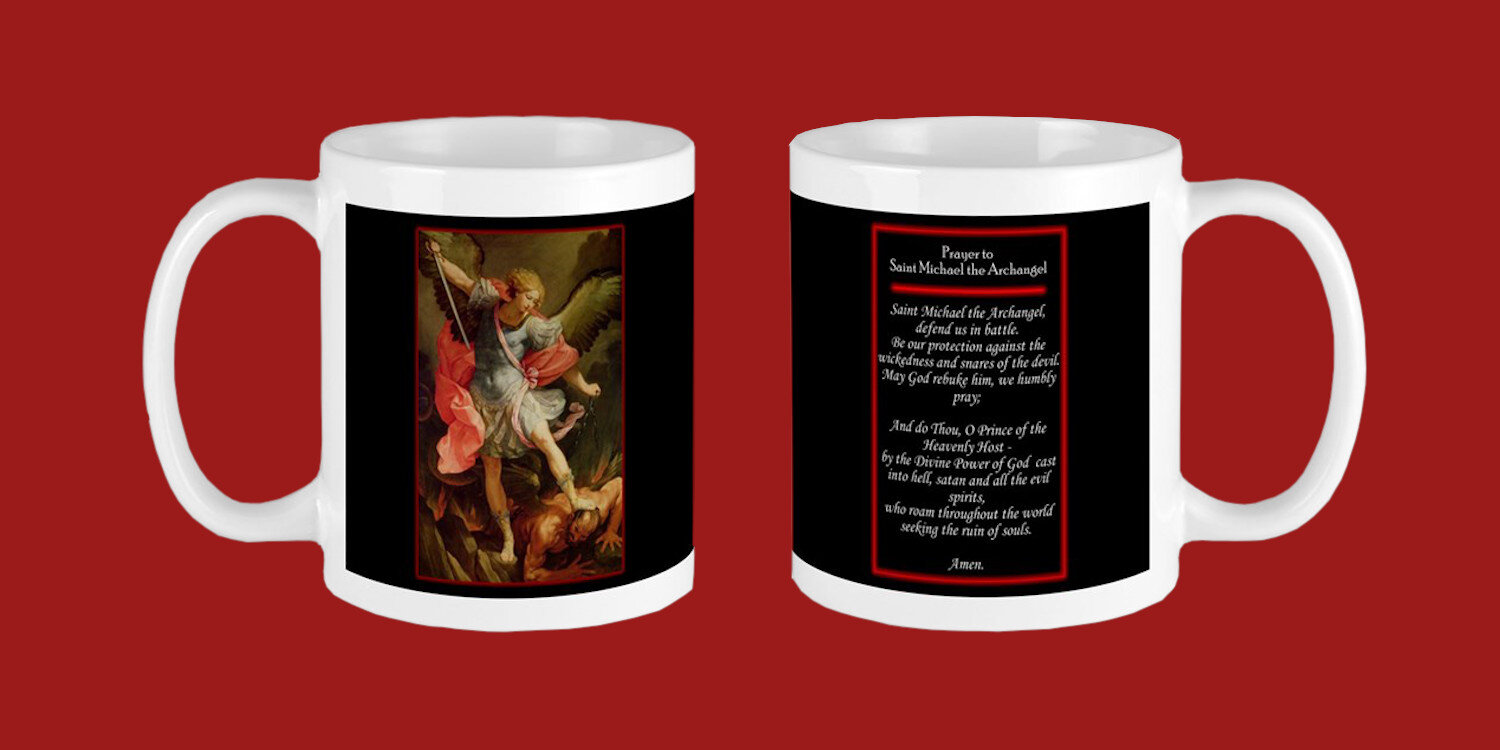
It’s a mystery why, but the most frequent image sent to me by TSW readers is that of Saint Michael the Archangel. There are five distinct icons of him on the wall, plus the one that seems to prefer Pornchai’s side. These stone walls — the concrete ones, not the blog — are filled with companions now.
There’s another icon of Saint Michael on my coffee cup — the only other place prisoners always leave their mark — and yet another inside and above the cell door. That one was placed there by my friend, Alberto Ramos, who went to prison at age 14 and turned 30 last week. It appeared a few months ago. Alberto’s religious roots are in Caribbean Santeria. He said Saint Michael above the door protects this cell from evil. He said this world and this prison greatly need Saint Michael.
Who Is Like God?
The references to the Archangel Michael are few and cryptic in the canon of Hebrew and Christian Scripture. In the apocalyptic visions of the Book of Daniel, he is Michael, your Prince, “who stands beside the sons of your people.” In Daniel 12:1 he is the guardian and protector angel of Israel and its people, and the “Great Prince” in Heaven who came to the aid of the Archangel Gabriel in his contest with the Angel of Persia (Daniel 10:13, 21).
His name in Hebrew — Mikha’el — means “Who is like God?” It’s posed as a question that answers itself. No one, of course, is like God. A subsidiary meaning is, “Who bears the image of God,” and in this Michael is the archetype in Heaven of what man himself was created to be: the image and likeness of God. Some other depictions of the Archangel Michael show him with a shield bearing the image of Christ. In this sense, Michael is a personification, as we’ll see below, of the principal attribute of God throughout Scripture.
Outside of Daniel’s apocalyptic vision, the Archangel Michael appears only two more times in the canon of Sacred Scripture. In Revelation 12:7-9 he leads the army of God in a great and final battle against the army of Satan. A very curious mention in the Epistle of Saint Jude (Jude 1:9) describes Saint Michael’s dispute with Satan over the body of Moses.
This is a direct reference to an account in the Apocrypha, and demonstrates the importance and familiarity of some of the apocryphal writings in the Israelite and early Christian communities. Saint Jude writes of the account as though it is quite familiar to his readers. In the Assumption of Moses in the apocryphal Book of Enoch, Michael prevails over Satan, wins the body of Moses, and accompanies him into Heaven.
It is because of this account that Moses and Elijah appear with Jesus in the account of the Transfiguration in Matthew 11. Moses and Elijah are the two figures in the Hebrew Scriptures to hear the voice of God on Mount Sinai, and to be assumed bodily into Heaven — escorted by Saint Michael the Archangel according to the Aggadah, the collection of milennia of rabbinic lore and custom.

Saint Michael as the Divine Measure of Souls
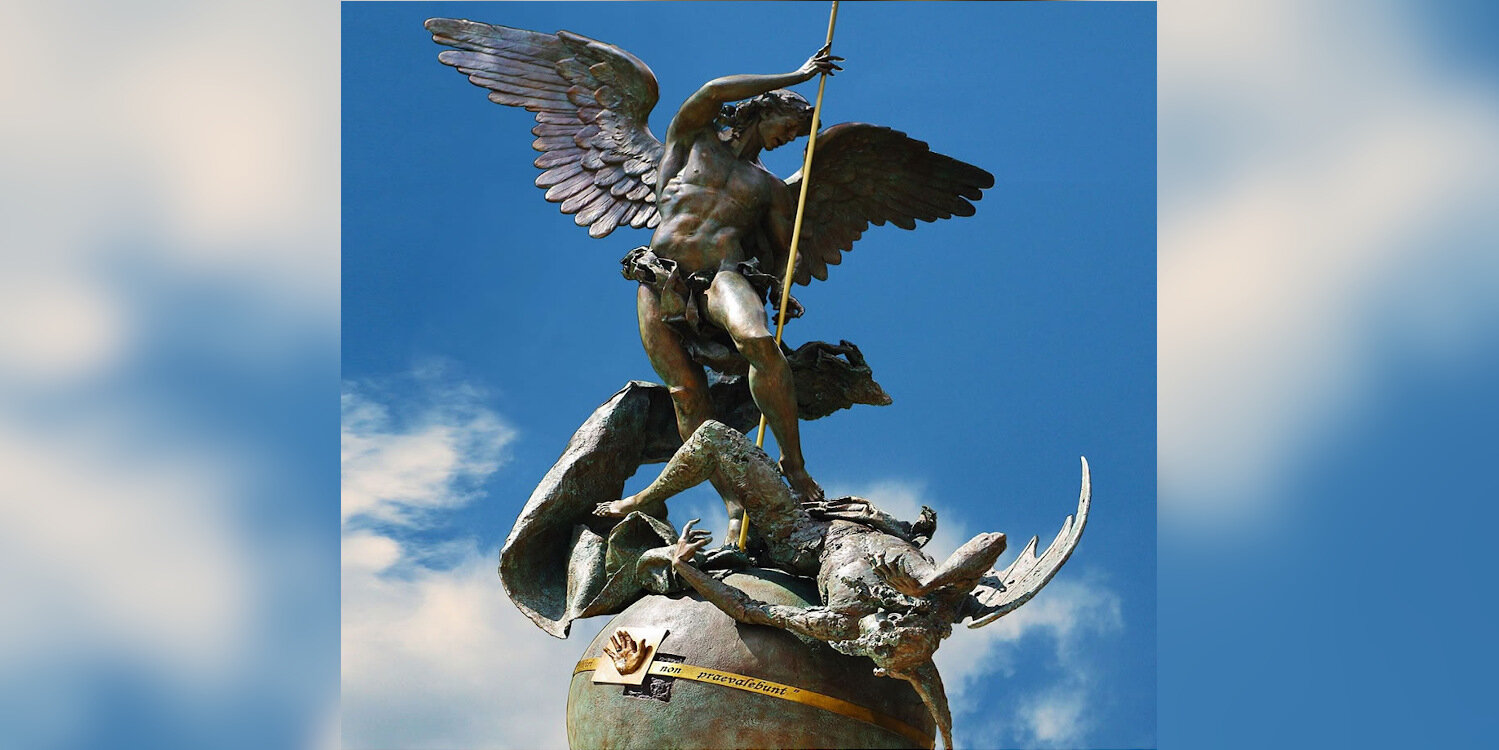
In each of the seven images of Saint Michael the Archangel sent to me by TSW readers, he is depicted brandishing a sword in triumph over Satan subdued at his feet. In five of the icons, he also holds a set of scales above the head of Satan. A lot of people confuse the scales with those of “Lady Justice” the famous American icon. Those scales symbolize the equal application of law and justice in America. It’s a high ideal, but one that too often isn’t met in the American justice system. I cited some examples in “The Eighth Commandment.”
The scales of Saint Michael also depict justice, but of another sort. Presumably that’s why so many readers sent me his image, and I much appreciate it. However, some research uncovered a far deeper symbolic meaning for the Archangel’s scales. The primary purpose of the scales is not to measure justice, but to weigh souls. And there’s a specific factor that registers on Saint Michael’s scales. They depict his role as the measure of mercy, the highest attribute of God for which Saint Michael is the personification. The capacity for mercy is what it most means to be in the image and likeness of God. The primary role of Saint Michael the Archangel is to be the advocate of justice and mercy in perfect balance — for justice without mercy is little more than vengeance.
That’s why God limits vengeance as summary justice. In Genesis chapter 4, Lamech, a descendant of Cain, vows that “if Cain is avenged seven-fold then Lamech is avenged seventy-seven fold.” Jesus later corrects this misconception of justice by instructing Peter to forgive “seventy times seven times.”
Our English word, “Mercy” doesn’t actually capture the full meaning of what is intended in the Hebrew Scriptures as the other side of the justice equation. The word in Hebrew is ”hesed,” and it has multiple tiers of meaning. It was translated into New Testament Greek as “eleos,” and then translated into Latin as “misericordia” from which we derive the English word, “mercy.” Saint Michael’s scales measure ”hesed,” which in its most basic sense means to act with altruism for the good of another without anything of obvious value in return. It’s the exercise of mercy for its own sake, a mercy that is the highest value of Judeo-Christian faith.
Sacred Scripture is filled with examples of hesed as the chief attribute of God and what it means to be in His image. That ”the mercy of God endures forever” is the central and repeated message of the Judeo-Christian Scriptures. The references are too many to name, but as I was writing this post, I spontaneously thought of a few lines from Psalm 85:
“Mercy and faithfulness shall meet. Justice and peace shall kiss. Truth shall spring up from the Earth, and justice shall look down from Heaven.”
The domino effect of hesed-mercy is demonstrated in Psalm 85. Faithfulness and truth will arise out of it, and together all three will comprise justice. In researching this, I found a single, ancient rabbinic reference attributing authorship of Psalm 85 to the only non-human instrument of any Psalm or verse of Scripture: Saint Michael the Archangel, himself. According to that legend, Psalm 85 was given by the Archangel along with the Torah to Moses on Mount Sinai.
Saint Thomas Aquinas described Saint Michael as “the breath of the Redeemer’s spirit who will, at the end of the world, combat and destroy the Anti-Christ as he did Lucifer in the beginning.” This is why St. Michael is sometimes depicted bearing a shield with the image of Christ. It is the image of Christ in His passion, imprinted upon the veil of St. Veronica. Veronica is a name that appears nowhere in Scripture, but is simply a name assigned by tradition to the unnamed woman with the veil. The name Veronica comes from the Latin “vera icon” meaning “true image.”
Saint Thomas Aquinas and many Doctors of the Church regarded Saint Michael as the angel of Exodus who, as a pillar of cloud and fire, led Israel out of slavery. Christian tradition gives to Saint Michael four offices: To fight against Satan, to measure and rescue the souls of the just at the hour of death, to attend the dying and accompany the just to judgment, and to be the Champion and Protector of the Church.
His Feast Day, assigned since 1970 to the three Archangels of Scripture, was originally assigned to Saint Michael alone since the sixth century dedication of a church in Rome in his honor. This Feast Day is observed annually in the Catholic Calendar on September 29. The Feast was originally called Michaelmas meaning, “The Mass of St. Michael.” The great prayer to Saint Michael, however, is relatively new. It was penned on October 13, 1884, by Pope Leo XIII after a terrifying vision of Saint Michael’s battle with Satan:
St. Michael the Archangel, defend us in battle. Be our protection against the wickedness and snares of the devil. May God rebuke him, we humbly pray, and do thou, 0 Prince of the heavenly Host, by the power of God, cast into Hell Satan and all the evil spirits who prowl about the world seeking the ruin of souls. Amen.
It’s an important prayer for the Church, especially now. I know the enemies of the Church lurk here, too. There are some who come here not for understanding, or the truth, but for ammunition. For them the very concept of mercy, forgiveness, and inner healing is anathema to their true cause. I once scoffed at the notion that evil surrounds us, but I have seen it. I think every person falsely accused has seen it.
+ + +
Note from Father Gordon MacRae: Since the election of Pope Leo XIV at the Conclave of 2025, renewed interest has been directed to Pope Leo XIII, at least in part for his vision of Saint Michael and the prayer above, which is a small part of the intercession written by Pope Leo XIII. You may also be interested in these related posts from Beyond These Stone Walls:
Saint Michael the Archangel Contends with Satan Still
St. Michael the Archangel and the Scales of Our Salvation
Saint Gabriel the Archangel: When the Dawn from On High Broke Upon Us
