“There are few authentic prophetic voices among us, guiding truth-seekers along the right path. Among them is Fr. Gordon MacRae, a mighty voice in the prison tradition of John the Baptist, Maximilian Kolbe, Alfred Delp, SJ, and Dietrich Bonhoeffer.”
— Deacon David Jones
A Modern Orthodox Jew on Preserving Hebrew and the Latin Mass
A conversation between Father Gordon MacRae and his friend, a Modern Orthodox Jewish scholar, has something to add to the debate about preserving Latin in the Mass.
A conversation between Father Gordon MacRae and Seth Bader, a Modern Orthodox Jewish scholar, has something to add to the debate about preserving Latin in the Mass.
July 22, 2026 by Seth Bader, J.D. with an Introduction by Father Gordon MacRae
Introduction
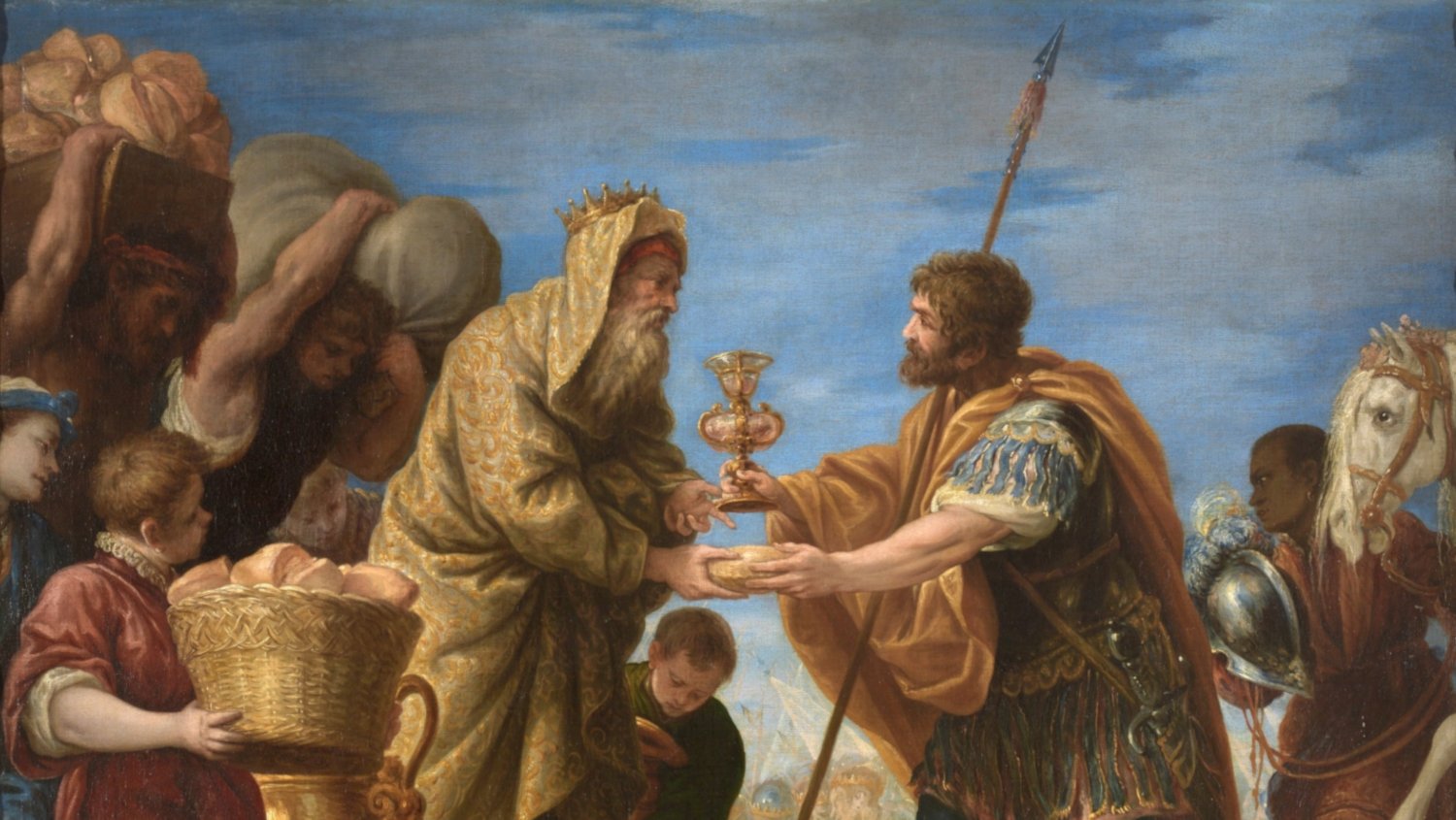
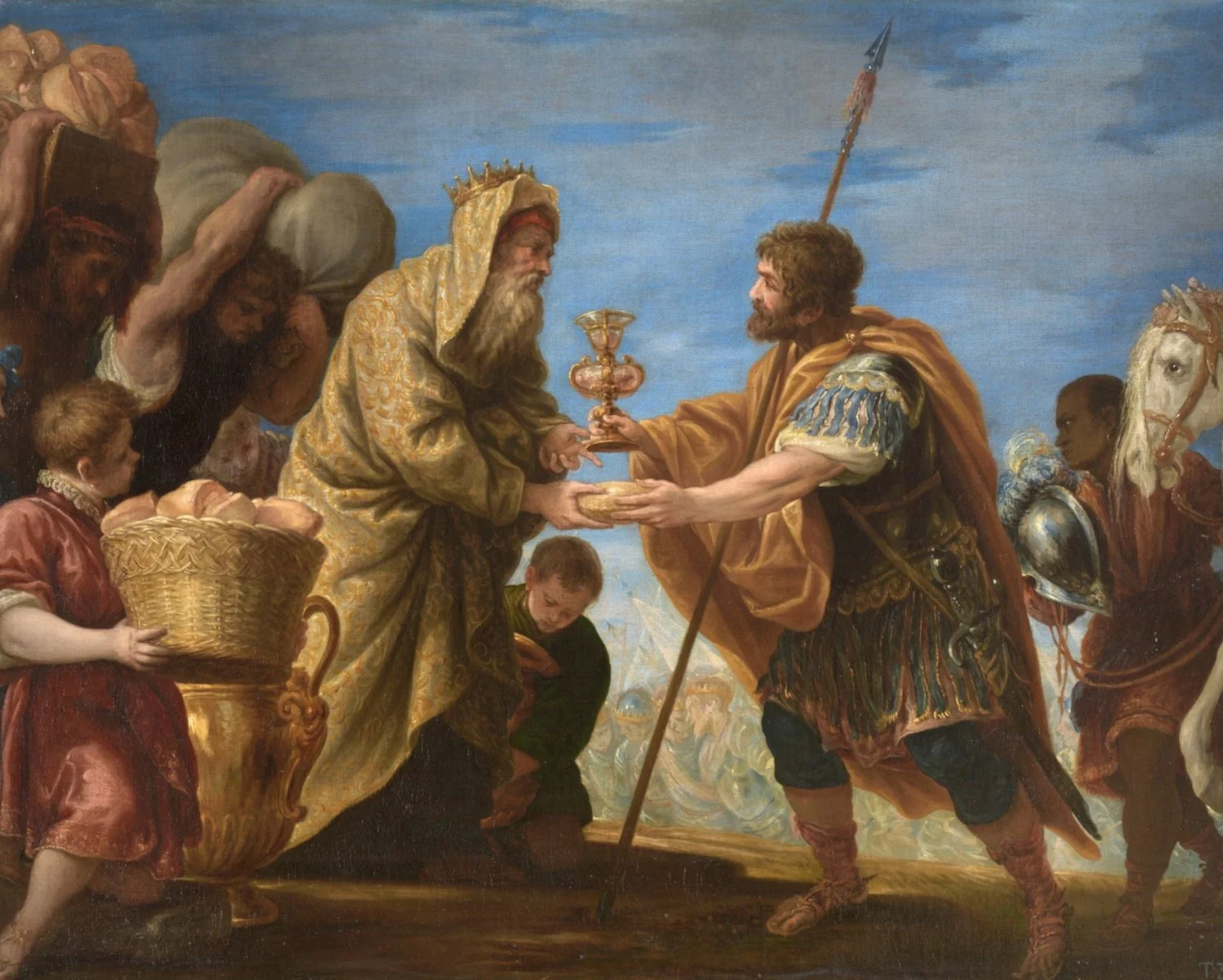
In the image above this post, Melchizedek, the Priest-King of Genesis 14, blesses Abraham with a sacrificial offering of bread and wine (The Meeting of Abraham and Melchizedek painted by Juan Antonio de Frias y Escalante in 1668, housed at the Museo del Prado in Madrid, Spain).
The affairs of Rome have not been the only source of heat throughout the world in recent weeks. The winds of war have reached hurricane force, and the rule of law and authority in both Church and State clashes against public sentiment. And the weather has not cooperated at all. It is about 105 degrees inside this place on the day I write. None of this has been comfortable.
Back in 2021, I wrote a post entitled, “A House Divided: Cancel Culture and the Latin Mass.” This appears to be at or near the center of the SSPX revolt in the Church. You may have seen news recently that Pope Leo XIV is reported to have excommunicated the Society of Saint Pius X, a conservative sect of Catholicism. Adherents to the sect have also reportedly been excommunicated.
Most importantly, I have just been corrected in my perception of this by a well-known and prominent canon lawyer who read my post with some alarm. The situation is not at all what is commonly understood. Pope Leo did not excommunicate the SSPX. Please read carefully these words from my canon lawyer friend:
“Six men, the four new bishops and the two conservators, were excommunicated by the law itself, and the penalty was later “declared” by the Prefect of the Dicastery of the Doctrine of the Faith (DDF). A note issued by the DDF stated that the clergy of the SSPX were excommunicated because their adherence to the Society was an act of schism for which there is a latae sententiae excommunication. That excommunication has NOT been declared, which means it is a matter of conscience for those affected. It has not entered the external forum and may be lifted through a confessor or directly through the Apostolic Penitentiary. The declared excommunication of the bishops is now public fact and is in the external forum. As for the laity, they are excommunicated only if they adhere to the schismatic mentality. It, too, is only in the internal forum. Mere attendance at the SSPX’s valid, but illicit, masses does not excommunicate them.”
The trigger for this action was that SSPX had elevated four bishops ordained without the approval of the Pope and outside the Laws of the Church.
I wrote a post a while back during the papacy of Pope Francis entitled, “Will Pope Francis Stand Against Catholic Schism?” Many of us are now left to wonder whether the nuclear option, excommunication, was the only step left. It raises many questions on both sides of the Liberal-Traditional divide in the Church. Now, here we are.
The title of a related post, “My Father’s House Has Many Rooms,” comes from the Gospel of John, Chapter 14, verse 2. It is seen by scholars as a reference to the Jerusalem Temple, hinting of its heavenly sanctuary, the dwelling place of angels and saints who worship in eternal liturgy. The Letter to the Hebrews describes it:
“You have come to Mount Zion, to the City of the Living God in the heavenly Jerusalem, to choirs of angels in festal gathering and the assembly of the firstborn enrolled in heaven, to a judge who is God of all, and to the spirits of the just made perfect, and to Jesus, mediator of a new covenant, and to the sprinkled blood that speaks more graciously than the blood of Abel.”
— Hebrews 12:22-24
After I wrote that post, I asked a friend here to read it. He is an attorney, a prisoner, and a scholarly Modern Orthodox Jew. He responded by telling me that the Catholic controversy over Latin Mass is very similar to a controversy over the use of Hebrew in liturgy and prayers. I asked if he would develop a comment about that, and it turned into this post. What follows is from Seth Bader, J.D.
+ + +
In September of 2025, I happened to read an opinion piece in The Wall Street Journal about the late Pope Francis and his effort to stamp out the Traditional Latin Mass, and the sadness and bitterness thereby engendered amongst Roman Catholics of conservative inclinations. That opinion piece got me to thinking about the over-a-century-old, and now largely forgotten, disputes within the Jewish community about the liturgical and conversational use of Hebrew.
By way of introduction, I am a lawyer and an amateur historian now in my middle sixties and incarcerated. I was raised as a Modern Orthodox Jew; my observance thereof as an adult leaves something to be desired. But I am working on it.
To start with, brief descriptions of Latin and Hebrew are in order. They are both ancient languages. Latin ceased to be a national language in the centuries after the fall of the Western Roman Empire in the late 400’s AD. Its offsprings, French, Italian, Spanish, Portuguese and Romanian, are all national languages to this day. The Latin alphabet is used in all western European languages. Latin is known today to scholars and to Roman Catholic priests, but I was shocked to learn that in seminaries it is barely taught at all today, but there are signs that this is changing. A recent resurgence of interest in the Traditional Latin Mass has had the effect of reviving interest in liturgical Latin among faithful Catholics and Tradition-minded priests.
Hebrew is a descendant of an extinct language, Phoenician, and is related to two other extinct languages, Aramaic and Syriac. It has some resemblance to Arabic. Its alphabet is unique. Hebrew ceased to be a national language after Israel lost its independence and became part of the Roman Empire. Hebrew remained in use among observant Jews for prayer and for reading the Scriptures.
In the middle to late 1800s, first in Europe and then in the United States, a movement known as the “Haskalah,” or Jewish Enlightenment, arose. That movement consisted of efforts by Jews to better fit into the surrounding non-Jewish communities while retaining core Jewish beliefs and customs. Such efforts included abandoning distinctively Jewish clothing, attending college, and conducting synagogue services in a modern language such as English, rather than Hebrew, among other things.
Three Jews who were products of the Haskalah changed the world, for better or for worse. They were Karl Marx, Sigmund Freud, and Albert Einstein. The Modern Orthodox, Conservative, and Reformed branches of Judaism all have their roots in the Haskalah. (Incidentally, Hasidic, or Ultra-Orthodox Judaism, originated in Eastern Europe only about a century and a half before the Haskalah.)
The use of modern languages rather than Hebrew in Reform synagogues scandalized Modern Orthodox and Ultra Orthodox Jews to some extent, but never came close to causing a schism — to borrow a nonJewish expression — and is now generally tolerated on both sides of the linguistic divide. In part, that is because Judaism has no central authority comparable to the Papacy. And in part, that is because rabbinic teaching has long held that, while Hebrew is preferred for prayer and study of the Scriptures, any language may be used for those purposes by a Jew who knows no Hebrew (and many Reform Jews do not know Hebrew.) That said, it is utterly unthinkable that any authority in Judaism would bar the use of Hebrew in liturgy, prayer or study.
A second Hebrew-versus-modern language dispute arose in the early 20th century and has never quite died out. But has also never posed much of a threat to Jewish unity. That dispute arose from the Zionist movement, which sought — with eventual success — to reestablish a sovereign Jewish nation in the historical territory of the Land of Israel. The early Zionists, more than a century ago, sought to create a modern form of Hebrew, suitable for daily conversational use outside of synagogues. The Zionists succeeded in doing so, and millions of Israeli citizens now speak modern Hebrew as their primary language.
I rather like Father MacRae’s treatise, “My Father’s House Has Many Rooms” and his explanation therein of the “Sensus Fidelium,” the sense of the faithful in practice and belief over many generations of the past. They constitute the vast majority, not in place of papal authority but in support of it. Such inclusion of the generations of the past is very similar to the beliefs and practice of Orthodox Judaism.
+ + +
Seth Bader earned undergraduate degrees in physics and history at the City University of New York, and his Juris Doctor degree from Hofstra University School of Law.
+ + +
Note from Father Gordon MacRae: I thank Seth Bader for this learned contribution to our discussion about the role of Latin in the Mass. There is much more to learn about the links between modern and ancient times in Salvation History. You may like these related posts:
A House Divided: Cancel Culture and the Latin Mass
My Father’s House Has Many Rooms. Is There a Room for Latin Mass?
Iran, by Another Name, Was Once the Savior of Israel
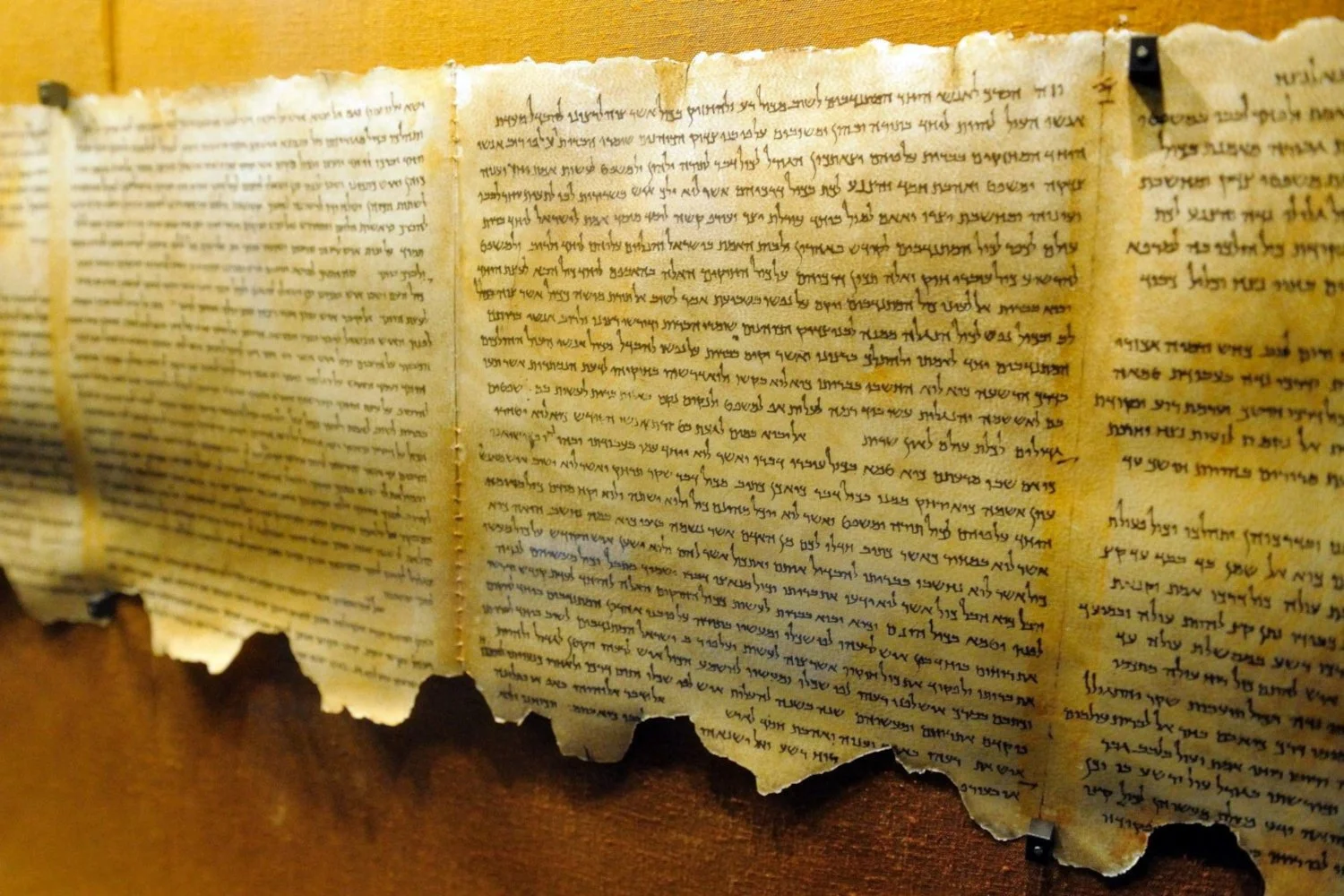
Qumran: The Dead Sea Scrolls and the Coming Apocalypse
This post will be added to our feature presentation of “The Bible Speaks.”

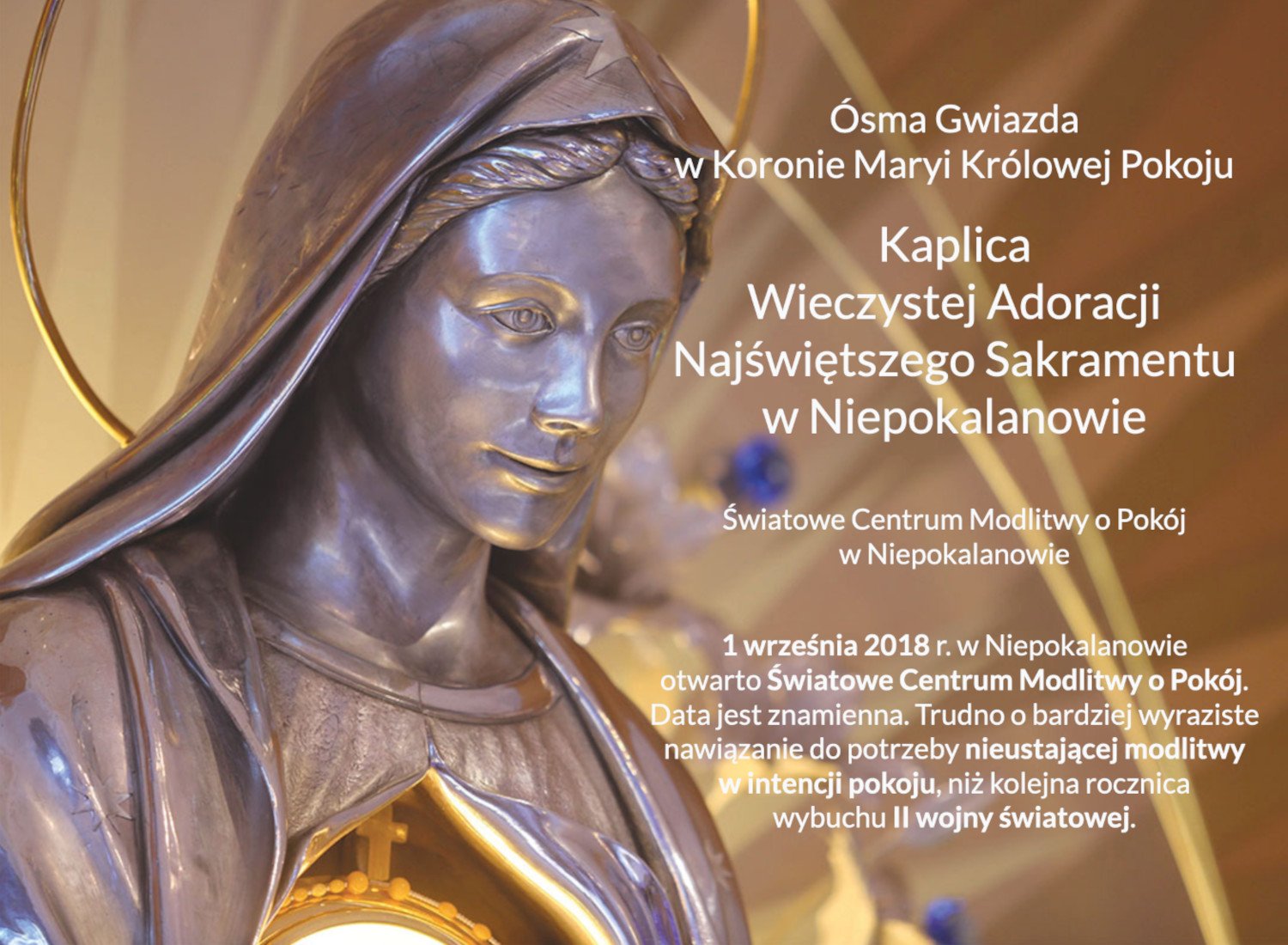

The Eucharistic Adoration Chapel established by Saint Maximilian Kolbe was inaugurated at the outbreak of World War II. It was restored as a Chapel of Adoration in September, 2018, the commemoration of the date that the war began. It is now part of the World Center of Prayer for Peace. The live internet feed of the Adoration Chapel at Niepokalanow — sponsored by EWTN — was established just a few weeks before we discovered it and began to include in at Beyond These Stone Walls. Click “Watch on YouTube” in the lower left corner to see how many people around the world are present there with you. The number appears below the symbol for EWTN.
Click or tap here to proceed to the Adoration Chapel.
The following is a translation from the Polish in the image above: “Eighth Star in the Crown of Mary Queen of Peace” “Chapel of Perpetual Adoration of the Blessed Sacrament at Niepokalanow. World Center of Prayer for Peace.” “On September 1, 2018, the World Center of Prayer for Peace in Niepokalanow was opened. It would be difficult to find a more expressive reference to the need for constant prayer for peace than the anniversary of the outbreak of World War II.”
For the Catholic theology behind this image, visit my post, “The Ark of the Covenant and the Mother of God.”