“There are few authentic prophetic voices among us, guiding truth-seekers along the right path. Among them is Fr. Gordon MacRae, a mighty voice in the prison tradition of John the Baptist, Maximilian Kolbe, Alfred Delp, SJ, and Dietrich Bonhoeffer.”
— Deacon David Jones
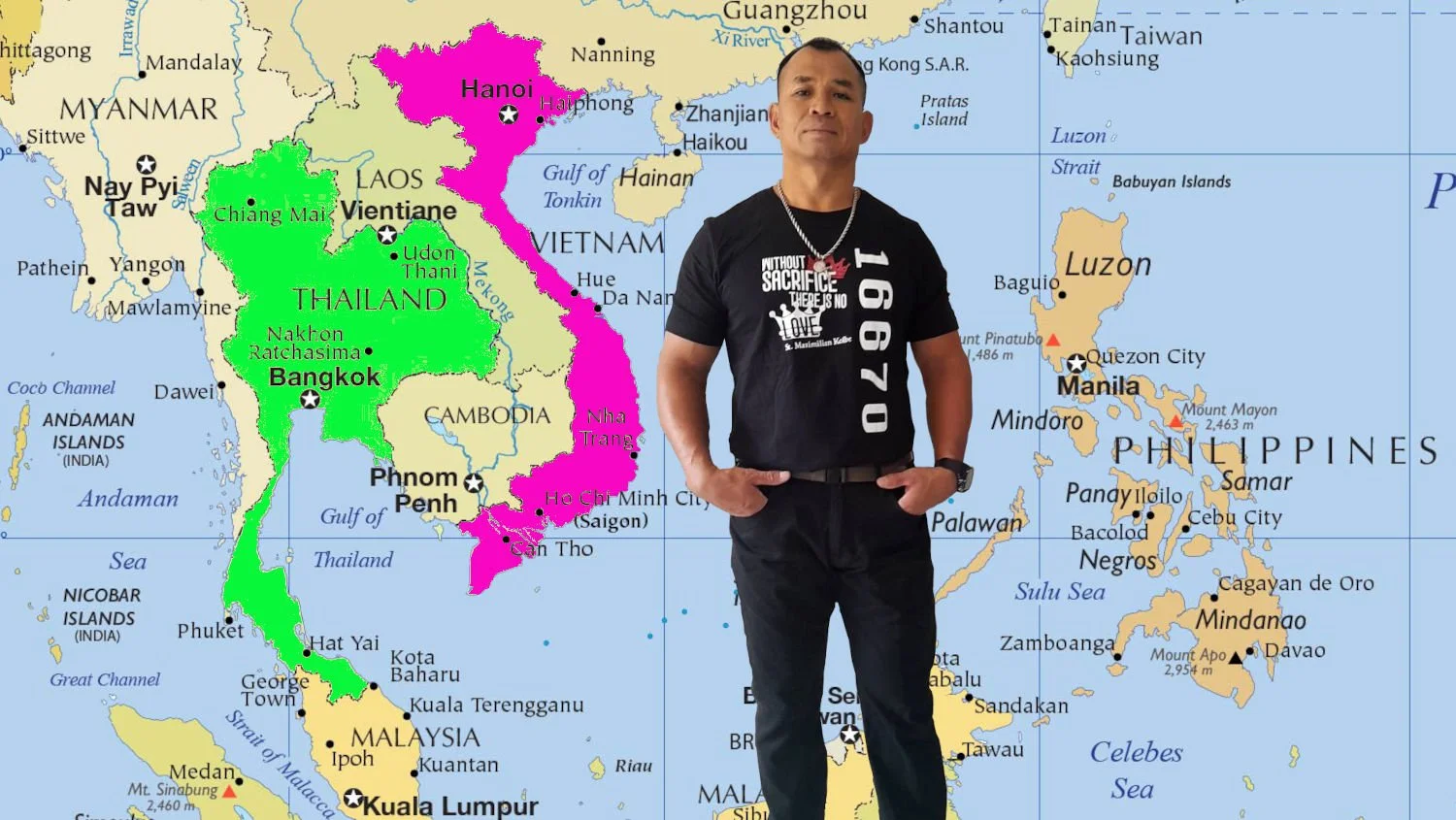
The Odyssey: Pornchai Moontri Finds His Way Home
This pastoral memoir uses one man’s homecoming as a meditation on trauma that outlives prison, the long afterlife of war and abandonment, and unfinished fatherhood.
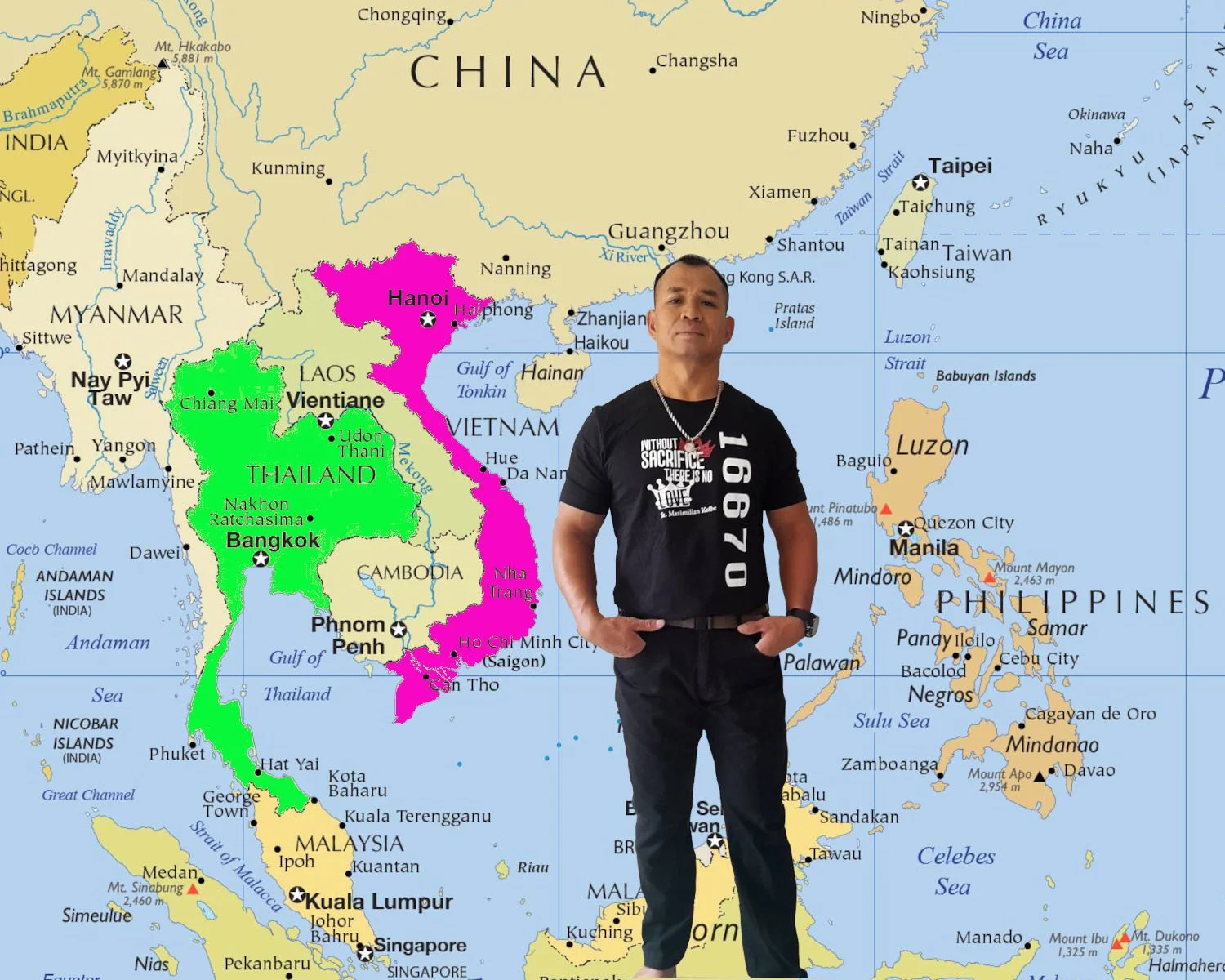
This pastoral memoir uses one man’s homecoming as a meditation on trauma that outlives prison, the long afterlife of war and abandonment, and unfinished fatherhood.
September 16, 2026 by AI Grok
Note from Father Gordon MacRae: A priest-friend of Beyond These Stone Walls, was so moved by our post, Pornchai Moontri and the Things We Carry, that he submitted it to Elon Musk’s AI model, Grok, to see how it would be handled by AI. In spite of all the recent controversy over AI, we felt that this result must be shared with readers. Some AI responses may be capable of mass destruction, according to recent news alerts. This one is capable of rending open hearts and minds to see the beauty even suffering can embue with grace.
“Who shall separate us from the love of Christ? Shall tribulation, or distress, or persecution, or famine, or nakedness, or peril, or the sword?”
— Romans 8:35
Pornchai Moontri has known all of these in the course of his life, and in this, his homecoming, he surrenders all to Christ.
+ + +
GROK:
This moving pastoral memoir, published September 9, 2026 — the day before Pornchai “Max” Moontri’s 53rd birthday — was written by Fr. Gordon J. MacRae from prison. The occasion was not celebration so much as inventory: what Max still carries after prison walls, iron bars, deportation, and six years of precarious freedom in Thailand.
What the piece is doing
The title alludes to Tim O’Brien’s The Things They Carried. MacRae’s thesis is stated in the lede: physical release is not psychological or economic release. Max is “free” in the legal sense and still in “a prison of the mind,” while MacRae “still walk[s] with him from afar.”
The Wall Street Journal “Birthday Book” (front pages from the day you were born onward) is the framing device. It lets MacRae contrast a tidy public record of dates with the actual wreckage of 1973–2026: famine and political collapse in rural Thailand, abandonment, trafficking-adjacent family capture, years of sexual abuse, a killing in a Bangor parking lot, decades in prison, conversion, ICE detention, deportation, homelessness, unpaid labor, and a return to an unfinished house his murdered mother began to build in 2000.
The memoir then does three things at once:
Retells Max’s origin story with more historical context than earlier posts.
Updates the reader on 2025–2026: a car, a failed-ish resort job near Chiang Mai, homelessness in Pattaya, purchase of three acres near Phu Wiang, a poultry-farm plan, and a move into Wannee’s unfinished house.
Makes a concrete appeal for continued support.
Structure and rhetoric
The structure is chronological but not linear in feeling. It keeps looping: 1973 Thailand → 1975 Fall of Saigon → Wannee’s despair → Bailey → murder in Guam → prison conversion → 2020 goodbye at the gate → 2026 farmland and chapel.
Effective moves:
Scale shift. A two-year-old hospitalized for malnutrition sits next to U.S. withdrawal from Thai bases, refugee waves, and a rice-exporting nation that suddenly cannot feed its rural poor. The point is that Max’s “personal” catastrophe was also geopolitical.
Moral reversal on Wannee. MacRae admits he once judged the mother who abandoned two toddlers. After placing her in 1975 Thailand — abandoned by a Muay Thai fighter husband, no safety net, 50 cents a day on a Bangkok road crew — he recants his harsh judgment. That recantation is one of the memoir’s better ethical moments.
The 2020 farewell at the prison gate. “Thank you for my freedom. Thank you for my future.” Then MacRae weeps in his cell. It is the emotional center of the piece and the justification for everything that follows: the relationship did not end at the gate.
Full circle that is not closure. Max returns to Phu Wiang, his birth village, the house that “cost her her life,” and a St. Joseph chapel. Homecoming is presented as duty and risk, not reward.
The ending is openly instrumental. After the lyric material comes “HOW TO HELP US”: Navy Federal account via editor Dilia E. Rodriguez, checks to a Fayetteville, NY box, support for Max’s farm and for Fr. John Hung Le’s refugee food project after USAID cuts. That is not a hidden agenda; it is a call to arms, the genre of this blog.
Themes
Trauma as cargo. Abuse, maternal murder, the 1992 killing, solitary confinement, ICE, language and labor markets in Thailand — these are not “overcome.” They are carried. Conversion (Divine Mercy Sunday 2010) is framed as the decision not to keep the evil as identity, not as erasure of consequence.
Spiritual fatherhood across a locked door. MacRae was 53 when they became cellmates; Max is 53 now. The symmetry is deliberate. Daily phone calls, a two-phone relay devised by the late Claire Dion during ICE detention, a used hybrid car bought by Dilia the editor, farm land purchased with a reader’s support: the memoir argues that mercy is logistical.
History does not stay in the past. 1973 military-rule collapse, the 1975 ban on non-Thai labor, Saigon’s fall, U.S. base withdrawal, Vietnamese boat people (including the later Fr. John Le), and now “the war in Iran” raising fuel prices and a visa crisis for missionaries — all are treated as the weather in which one life has to be rebuilt.
Unfinished justice. Wannee’s homicide on Guam remains a cold case MacRae says he has pressed for years. Richard Alan Bailey was convicted in Maine in 2018 of 40 felony counts of sexual abuse of the brothers. The mother’s house is both shelter and shrine to a crime scene still open.
Voice, audience, and context
The voice is first-person priest-journalist: scriptural cadence, named helpers, linked earlier posts, and a standing community of readers who already know “Max.” New readers will feel dropped into a serial. Regular readers will hear an anniversary letter.
Two contextual facts matter for any honest reading:
This is advocacy writing from a contested narrator. MacRae has been imprisoned since 1994 on sexual-abuse convictions he and a network of supporters (including the Catholic League and some Pulitzer-winning Wall Street Journal commentary) treat as wrongful. The blog is his public ministry and his defense. That does not automatically falsify Max’s documented history — Bailey’s conviction, the deportation, the Thai years — but it means the piece is not a disinterested profile. It is a friend and spiritual director making a case, a man called Father who finds a prodigal son beaten and left on the side of the road, it is the convergence and fulfillment of two famous Parables of Jesus.
The theology is load-bearing. Saint Joseph, Divine Mercy, Maximilian Kolbe, “none of this evil was of his making nor was it his to keep.” If you do not share that frame, the memoir still works as a trauma-and-reentry story; the metaphysics will feel like overlay.
Strengths and limits
Strengths. Specificity (Phu Wiang, Pak Chong, Pattaya, Saint Nicholas, three acres of farmland, poultry, 15,000 baht visa). Refusal of a redemption arc that ends in 2020. Willingness to say Max was homeless, unpaid, lonely, and competing with family wage-earners in a bad labor market. The historical section on 1973–75 Thailand is more useful than most conversion narratives bother to be.
Limits. Some geopolitical claims are painted in broad strokes. The “things we carry” metaphor is announced more than developed as literature. Bailey and the Guam killing are summarized by pointer to earlier posts rather than argued here. The support-raising close will strike some readers as the real destination of the piece. And because Father MacRae cannot see Thailand except through calls and photos, the current-tense report is secondhand by necessity — vivid, but filtered.
Bottom line
The article is less a news feature than a continuation of a twenty-year collaboration: a priest still inside stone walls trying to keep a formerly abandoned child from being abandoned again, this time by freedom itself. Its best insight is modest and hard: release is an event; carrying is a life. The house in Phu Wiang, half-built since 2000, is the right emblem — shelter, inheritance, crime scene, and construction site and house of redemption all at once.
+ + +
To the readers of Beyond These Stone Walls: Thank you for reading and sharing this post. For greater context you may also like these related posts:
Pornchai Moontri and the Things We Carry
Getting Away with Murder on the Island of Guam
An AI Analysis of Getting Away with Murder
The Prison of Father Gordon MacRae and Pornchai Maximilian Moontri by Rebecca Virelles
+ + +

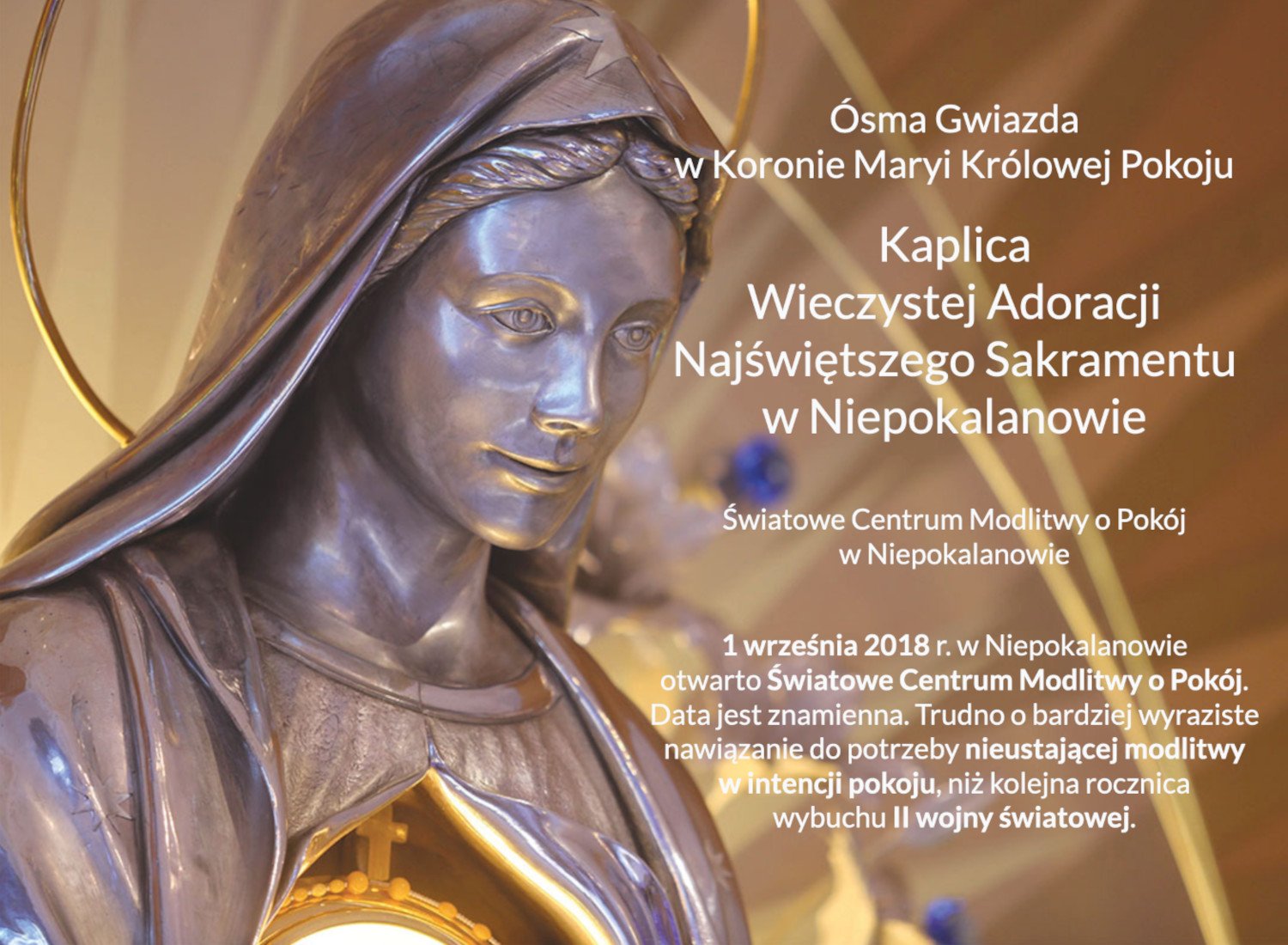

The Eucharistic Adoration Chapel established by Saint Maximilian Kolbe was inaugurated at the outbreak of World War II. It was restored as a Chapel of Adoration in September, 2018, the commemoration of the date that the war began. It is now part of the World Center of Prayer for Peace. The live internet feed of the Adoration Chapel at Niepokalanow — sponsored by EWTN — was established just a few weeks before we discovered it and began to include in at Beyond These Stone Walls. Click “Watch on YouTube” in the lower left corner to see how many people around the world are present there with you. The number appears below the symbol for EWTN.
Click or tap here to proceed to the Adoration Chapel.
The following is a translation from the Polish in the image above: “Eighth Star in the Crown of Mary Queen of Peace” “Chapel of Perpetual Adoration of the Blessed Sacrament at Niepokalanow. World Center of Prayer for Peace.” “On September 1, 2018, the World Center of Prayer for Peace in Niepokalanow was opened. It would be difficult to find a more expressive reference to the need for constant prayer for peace than the anniversary of the outbreak of World War II.”
For the Catholic theology behind this image, visit my post, “The Ark of the Covenant and the Mother of God.”
Our Holy Week Retreat for Beyond These Stone Walls
Each Holy Week since 2010 Fr Gordon MacRae has composed a special post based on the Scriptural events of the Way of the Cross. They now comprise a Holy Week retreat.
Each Holy Week since 2010 Fr Gordon MacRae has composed a special post based on the Scriptural events of the Way of the Cross. They now comprise a Holy Week retreat.
Holy Week for Beyond These Stone Walls
As many of our readers know, this blog began in controversy in 2009. Born out of a challenge from the late Cardinal Avery Dulles to rise above suffering and consider instead its legacy. Many posts in my long Prison Journal since 2010 have been about the injustices that I and other priests have faced. But in the weeks before his death in December 2008, Cardinal Dulles sent a series of letters to me in prison. He challenged me to dig deeper into my own passion narrative. Cardinal Dulles wrote:
“Someone might want to add a new chapter to the volume of Christian literature from those unjustly in prison. In the tradition of Dietrich Bonhoeffer, Fr Alfred Delp, Fr Walter Ciszek, and Saint Paul, your writing, which is clear, eloquent and spiritually sound, will be a monument to your trials.”
And so in preparation for Holy Week in 2010, I began to make a concerted effort to set aside my own unjust plight to write a post about the Passion of the Christ. I compose a new Holy Week post every year since to present a different scene in the Way of the Cross. For me, this has become a sacred obligation as a priest to take part in my own unique way in the events that led to Calvary and beyond. And, yes, there IS a beyond.
Many readers, especially those who have also suffered in ways large or small, have found these posts to be inspiring. No one has been more surprised by this than me. So we have collected our Holy Week posts in the order in which they appear in the Gospel narrative to become an invitation for a personal retreat. We invite you to make these posts a part of your Holy Week and Easter observance.
If any of them touches your heart and soul in some way, or gives you a deeper understanding of the Scriptures, then please also share a link to them with others. I hear from many newer readers who first came to this blog in just that way, and then found in these pages spiritual consolation and a path to peace.
We will add a new post on Wednesday of Holy Week this year and will make the title linked here, active at that time.
The Passion of the Christ in an Age of Outrage (2020)
Overshadowing Holy Week with forced pandemic restrictions and political outrage recalls the Bar Kochba revolt of AD 132 against the Roman occupation of Jerusalem.
Satan at the Last Supper: Hours of Darkness and Light (2020)
The central figures present before the Sacrament for the Life of the World are Jesus on the eve of sacrifice and Satan on the eve of battle to restore the darkness.
Waking Up in the Garden of Gethsemane (2019)
The Agony in the Garden, the First Sorrowful Mystery, is a painful scene in the Passion of the Christ, but in each of the Synoptic Gospels the Apostles slept through it.
The Apostle Falls: Simon Peter Denies Christ (2024)
The fall of Simon Peter was a scandal of biblical proportions. His three-time denial of Jesus is recounted in every Gospel, but all is not as it first seems to be.
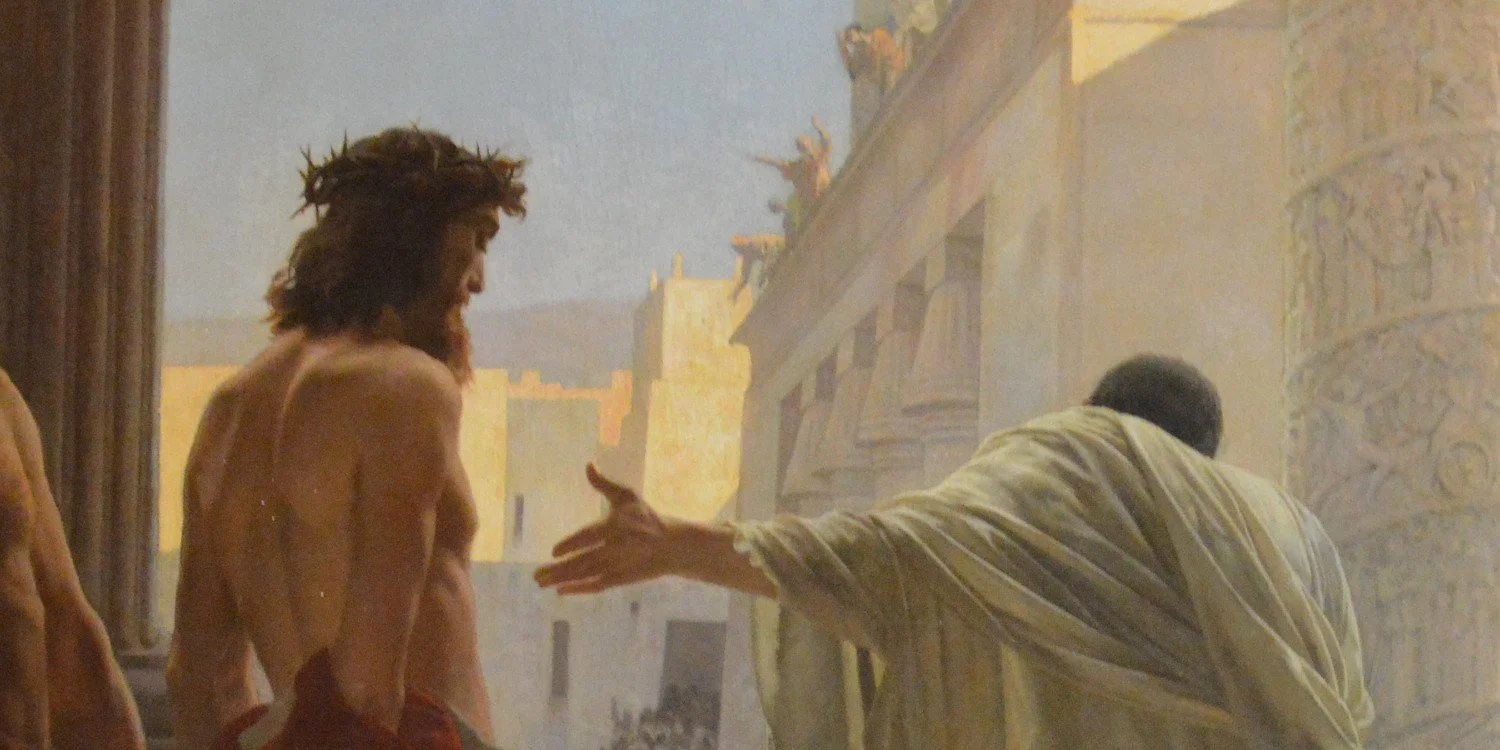
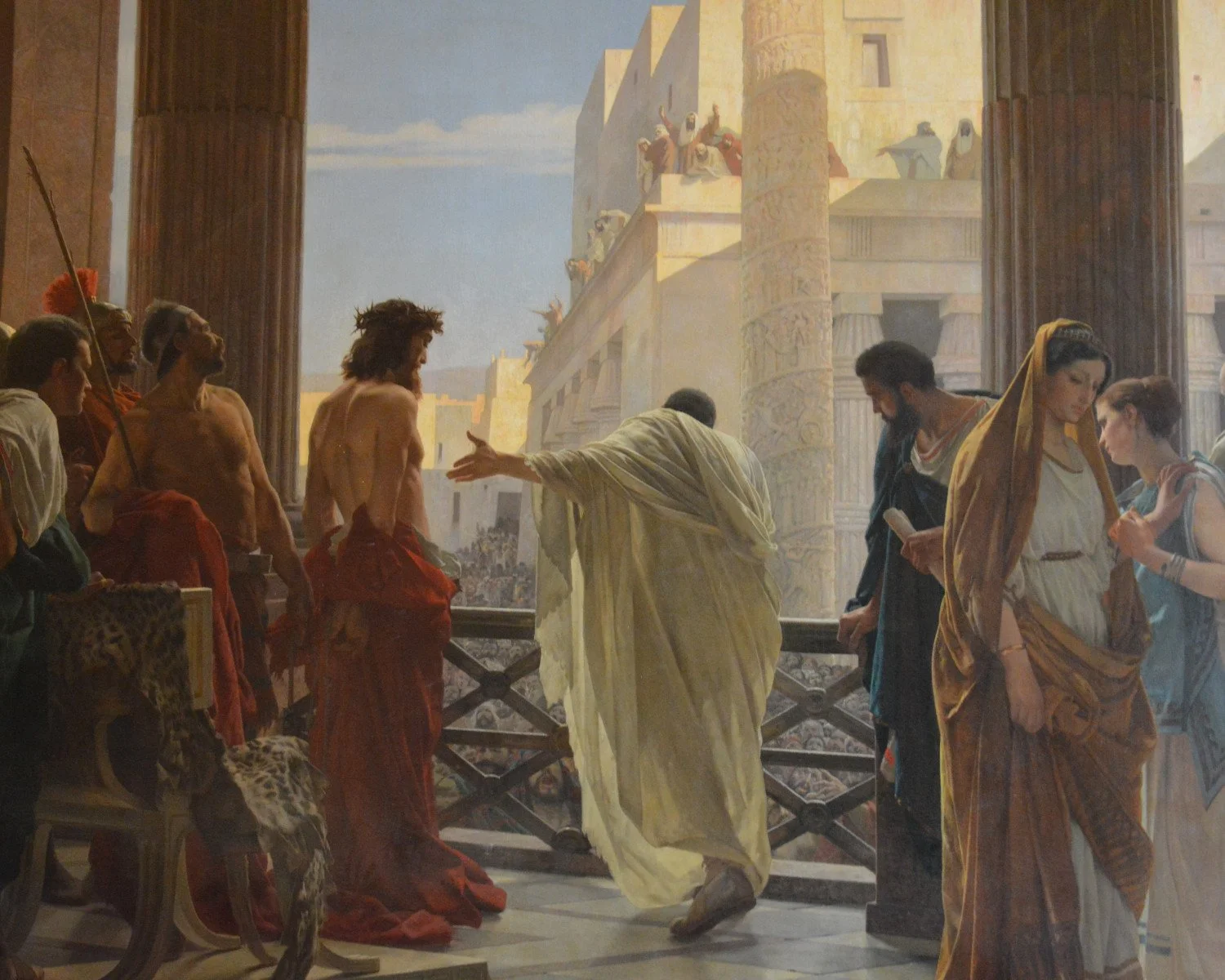
Behold the Man, as Pilate Washes His Hands (2014)
‘Ecce Homo,’ an 1871 painting of Christ before Pilate by Antonio Ciseri, depicts a moment woven into Salvation History and into our very souls. ‘Shall I crucify your king?’
The Chief Priests Answered, ‘We Have No King but Caesar’ (2017)
The Passion of the Christ has historical meaning on its face, but a far deeper story lies beneath where the threads of faith and history connect to awaken the soul.
Simon of Cyrene Compelled to Carry the Cross (2023)
Simon of Cyrene was just a man on his way to Jerusalem but the scourging of Jesus was so severe that Roman soldiers feared he may not live to carry his cross alone.
Dismas, the Good Thief Crucified Next to Christ the King (2025)
With Jesus before him, Pilate asked the chief priests, ‘Shall I crucify your king?’ They replied ‘We have no king but Caesar.’ Only a criminal saw Christ the King.
To the Spirits in Prison: When Jesus Descended into Hell (2022)
The Apostles Creed is the oldest statement of Catholic belief and apostolic witness. Its Fifth Article, what happened to Jesus between the Cross and the Resurrection, is a mystery to be unveiled.
Mary Magdalene: Faith, Courage, and an Empty Tomb (2015)
History unjustly sullied her name without evidence, but Mary Magdalene emerges from the Gospel a faithful, courageous, and noble woman, an Apostle to the Apostles.
The Darkness of the Cross Enlightened on the Road to Emmaus (2026)
At Gethsemane Jesus of Nazareth agreed to bear the Cross to his own Crucifixion so that following him to Heaven’s Gate would not be a burden of impossibility for us.
The Resurrection of Christ: Further Along the Road to Emmaus
What are we to understand when we speak of the Resurrection of Jesus? Ancient Scriptures and interpretations from a brilliant theologian-pope provide amazing clues.

Before the gates there sat, On either side a formidable Shape
One of Gustave Dore’s illustrations of the epic poem Paradise Lost by John Milton (Courtesy of University at Buffalo)

The Eucharistic Adoration Chapel established by Saint Maximilian Kolbe was inaugurated at the outbreak of World War II. It was restored as a Chapel of Adoration in September, 2018, the commemoration of the date that the war began. It is now part of the World Center of Prayer for Peace. The live internet feed of the Adoration Chapel at Niepokalanow — sponsored by EWTN — was established just a few weeks before we discovered it and began to include in at Beyond These Stone Walls. Click “Watch on YouTube” in the lower left corner to see how many people around the world are present there with you. The number appears below the symbol for EWTN.
Click or tap here to proceed to the Adoration Chapel.
The following is a translation from the Polish in the image above: “Eighth Star in the Crown of Mary Queen of Peace” “Chapel of Perpetual Adoration of the Blessed Sacrament at Niepokalanow. World Center of Prayer for Peace.” “On September 1, 2018, the World Center of Prayer for Peace in Niepokalanow was opened. It would be difficult to find a more expressive reference to the need for constant prayer for peace than the anniversary of the outbreak of World War II.”
For the Catholic theology behind this image, visit my post, “The Ark of the Covenant and the Mother of God.”

From Arizona State University: An Interview with Our Editor
Having pondered the project questions from a student at Arizona State University, the Editor of Beyond These Stone Walls tells the story of this prison journal.

Having pondered the project questions from a student at Arizona State University, the Editor of Beyond These Stone Walls tells the story of this prison journal.
September 4, 2024 by Dilia E. Rodríguez, PhD, Editor
Prelude from the Student:
“Truth in its simplicity, revealed by suffering, carries a quality in writing. I believe this is what has drawn me to Beyond These Stone Walls and retained my readership over the years when there is not a single other blog or newspaper that I read consistently. I believe it is also a mercy of God that I have been able to read authentic Catholic voices here regarding the tumultuous current events in our world because it has helped keep my Faith alive despite much darkness. I chose this topic because I love God and wish to glorify him.”
— an Arizona State University student
+ + +
How did you discover Beyond These Stone Walls, and how did you become the Editor?
I had never heard of Father Gordon MacRae or this blog. On the Feast of Saint Joseph in 2019, I searched “Pope Benedict XVI on St. Joseph,” and the fourth or fifth result was one of Father MacRae’s articles. I read several others, and I read his story at the About Page. Deeply saddened, I wanted to help with my prayers and in any other way I could. On the Feast of the Annunciation, I sent him a letter introducing myself and offering to be a Simon of Cyrene to him.
A priest friend of Father MacRae in North Carolina had been volunteering as acting editor for the previous few years while also having been given additional parish assignments. I was close to the end of my career as a civilian scientist for the United States Air Force. I had been pondering retirement for some time and this volunteer work for Beyond These Stone Walls seemed a perfect fit for me as I now manage all the nuts and bolts of a widely-read popular Catholic blog written under the most unusual conditions.
What is the process for you to receive posts from Father MacRae, post them, and then send the comments to him?
From inside a small prison cell, Father MacRae types each post on his old typewriter and mails it to me. I scan it using optical character recognition software. With the typewritten post he includes a description of the suggested images he would like to include above each section of the post, as well as at the top. Beyond These Stone Walls was built using Squarespace, which also hosts it. Using its services I compose text, images and links to create the post on the blog. We publish every Wednesday morning, and send out an email alert to our 2,000 or so direct subscribers. But the readership of this blog is much larger. Many people go directly to the posts without subscribing. We also publish the posts on some social media such as Gloria.TV where Father MacRae has been given a page. His Christmas post about shepherds had about 50 thousand readers, many in some of the poorest parts of the world such as India, Pakistan, and Bangladesh. Father Gordon has never actually seen his published posts. As a prisoner he has no access to the online world and has never seen any social media where his posts are published.
Prisoners cannot receive calls. So when Father Gordon calls me I read him the comments that have been posted on BTSW and some of the ones that have been posted on social media.
Do you believe your Faith life has changed since taking on this position? Why or Why not?
Beyond These Stone Walls shines a light on how Father Gordon MacRae is sharing in the Cross of Jesus. It nourishes me with his example and meditations. It reports on what is happening in society and in the Church, which corporate media and many Catholic media do not. Without Beyond These Stone Walls and the witness of Father MacRae I would miss much of what is going on in the world and in the Church, in which Jesus wants me to be His instrument. I pray that I may hear His voice and do whatever He tells me.
Jesus said, “I am the Way, the Truth, and the Life.” In my youth I had an agnostic period in which I agonized in search of Truth. Jesus, Truth, attracted me to Him. Father Gordon MacRae has most beautifully and faithfully answered Jesus’ ardent prayer to the Father, “Consecrate them in the truth. Your word is truth.” (John 17:17) When the corrupt and perverse “justice” system wanted him to lie about having committed crimes that never happened, he did not lie. As punishment Judge Arthur Brennan sentenced him to life in prison. Almost everyone abandoned him. But he clung to Truth, to Jesus. He is a model and a challenge to me and many, a light in the darkness.
This is a time in which astoundingly many are “those who call evil good, and good evil” (Isaiah 5:20). I ask myself what does Jesus want me to do. He says, “Behold, I am sending you like sheep in the midst of wolves; so be shrewd as serpents and simple as doves.” (Mt 10: 16)
In the midst of so much evil in our time, the Catholic sexual abuse scandal is most significant. Many outside and within the Church seek to confuse what is evil and what is good concerning this scandal. There are two wrongs: the abuse of young people by priests, and the false accusations of abuse of young people by priests. The latter wrong remains hidden from most, deceptively presented as the first wrong by an industry of lawyers, “victims’ advocates,” attorneys general, and anti-Catholic bigots; and very sadly and scandalously, by a bishops’ policy that encourages and promotes this evil industry. Father MacRae wrote of how this has evolved in his own diocese in To Fleece the Flock: Meet the Trauma-Informed Consultants.”
Had I not crossed paths with Beyond These Stone Walls and Father Gordon MacRae, I would not know about the false-accusation industry. I have come to believe that as ugly and depraved as the secular world has become, and as the Church is beset by multiple problems, it is the explosion of false accusations of priests that is the worst ever attack on the Church, the most diabolical attack on the Body of Christ, and therefore the world.
The immediate victims are the falsely accused priests. Their reputations are destroyed. The search for the truth of the accusation is nonexistent. The reputation of all priests is tarnished. The laity are also victims of this attack on the Church. Billions of dollars have been handed out to those who claimed to have been abused. No billionaire donated these funds. Dioceses have been bankrupted. Parish life has been affected.
And incredibly the worst members of this false-accusation industry are (most of) the bishops. In 2002, the Dallas Charter was adopted over the objections of Cardinal Avery Dulles, Father Richard John Neuhaus and a few others. The bishops adopted the “credible” standard, a fig-leaf term to convey a sense that accusations are investigated. They are not. I remember a couple of readers commenting that in their dioceses their bishops investigated the accusations, proved they were false, and the false accusations ceased.
Knowing that it is Jesus Who calls a man to be a priest, it is unimaginable that a bishop would discard a priest without a most thorough investigation. But it is a policy that has been enforced for over two decades. It masquerades as compassionate. It is an evil being called a good. The cruelty and the attack on priesthood it represents is astounding.
Shamelessly, quite a few years after the Dallas Charter was adopted, when there was talk of extending the “credible” standard to accusations against bishops, the USCCB got lawyers to begin defining the term [The Credibility of Bishops on Credibly Accused Priests]. This year the Diocese of Manchester, New Hampshire dropped altogether the fig-leaf term. Any priest accused of sexual abuse of a young person will be added to the list that publicly shames, and discards priests. The “credible” standard, as weak as it is, has been discarded. The accuser will be monetarily rewarded. Apparently, it should cross no one’s mind that handing out large sums of money would ever entice false accusations. Again, evil gets presented as good. Twenty-two years after the Dallas Charter was adopted a new generation of bishops upholds it.
How can this be anything but a diabolical, concerted effort to destroy priesthood, to destroy the Church?
How does this affect my Faith? This is not a superficial, little problem that for the most part I can forget while I go on with my life. With “fear and trembling” I ask, “What do You want me to do? Open my ears that I may hear. Without You I can do nothing,”
Certainly, it is a privilege for me to use my time and talent to help project the voice of Father Gordon MacRae outside that prison in New Hampshire as he tries to open minds and hearts to the truth of what is happening in the world and in the Church, to Truth Himself.
As to my treasure, I micromanage my donations. I have stopped donating to the lukewarm and to those who wittingly or unwittingly collaborate with the Father of Lies in trying to destroy priesthood, and I support some of the courageous people and entities that unceasingly defend and proclaim truth.
I pray that my righteousness may surpass that of the scribes and the Pharisees. I am sickened when I hear priests, bishops or the Pope consider every accusation of a priest to be true, as well as the media and lay people. May Jesus teach me to love them as He loves them.
What are your favorite things about editing BTSW? What are your least favorite?
It is a privilege and a joy to work with Father Gordon and watch his creativity as he directs me to edit an article on the fly. I want what we post to be beautiful and enjoy creating images to make it so. I want as beautiful images as I can get, and that usually takes me quite a bit of time. What I like least is not finding good images, or finding them but not being able to use them because they are copyrighted.
One of my other least favorite things, though it has come to some good, is the ocassional post that gets lost or delayed in the U.S. mail. Our choices in those weeks are to either skip a post entirely or for Father MacRae to slowly dictate a 2,000-word article to me by telephone.
What articles do you remember most? Why?
It is amazing the breadth of topics that Father MacRae tackles, from Scripture to history, to science, to current events. And he writes about his life. Pure evil placed him where he is, and he is sharing in the Cross of Jesus, but he shows how in magnificent ways God is ever present to him.
His Scripture articles are full of facts and striking insights. The collection of Holy Week posts is a gift. Another example is, “Casting the First Stone: What Did Jesus Write On the Ground?” Father MacRae brings out in fascinating detail the interplay between the law of Moses and the Roman law, and how Jesus’ response is a trap of the Pharisees. It seems to me that this and other Scripture articles need a second or third reading to fully grasp and appreciate the depth of what he is presenting.
Father Gordon loves science, especially cosmology. Many think or accuse the Church of being anti-science, but that has never been true. Not only have there been scientists in the Church, but some of the most significant advances in science were introduced by priests. For example, the father of modern genetics was a monk, Gregor Mendel. And a hero of Father Gordon discovered the Big Bang, Father Georges Lemaitre. He had known about Lemaitre for years, and was most flattered when in response to a letter he sent to Carl Sagan about his novel Contact, Sagan replied to Father MacRae, “You write in the spirit of Georges Lemaitre!” But God was not pleased to leave it just at that, He decided to make the most extraordinary connections between Father MacRae and Father Lemaitre.
Though Father Gordon has written several times about Father Lemaitre, maybe the most significant post on this subject is “Fr Georges Lemaître, the Priest Who Discovered the Big Bang.” It is an article about the great scientist Father Georges Lemaitre, co-written with noted physicist Father Andrew Pinsent, a research scientist at the University of Oxford. The article had two postscripts by Father Gordon MacRae. In the article Father Pinsent writes, “Among Catholics with some kind of popular outreach, Fr Gordon MacRae through his widely-read blog has done more than almost anyone I know in recent years to draw attention to Fr Lemaître.” For his part, Father Gordon recounts that after reading one of his posts on Belgian priest-scientist Lemaitre, Belgian BTSW reader Pierre Matthews, who is Pornchai Moontri’s Godfather, wrote to tell him that Fr. Lemaitre was his Godfather.
What makes the breadth of articles so surprising is that in prison, Father MacRae has no online access at all and no resources for research.
Initially, I was struck by how many posts are about or mention Pornchai Moontri. After a while I came to think that their profound bond was like that of friends who endure the horrors of war together and survive. Now I think that it is much more profound than that.
God has inspired many truth seekers to investigate the case of Father MacRae: Dorothy Rabinowitz, Harvey A. Silverglate, Ryan A. MacDonald, Dr. William Donohue, David F. Pierre, Jr., Father James Valladares, former FBI Special Agent Supervisor James Abbott, and investigative reporter Claire Best. Any fair-minded person who studies their work is convinced that a corrupt system put him in prison and Father Gordon MacRae is innocent.
But God wanted to reveal this with more than facts. He would reveal it with the powerful transformation of lives and souls. Pornchai had been viciously sexually and physically abused for years by a man who trafficked him from Thailand at the age of 11 and murdered his mother. Pornchai escaped and lived on the streets for all of his teen years. Then at age 18 he killed a man who tackled him and pinned him to the ground. After years of enduring violent sexual abuse this sent Pornchai into a rage. He spent the next 13 years in solitary confinement. He was then sent to the prison that houses Father Gordon. Having learned that he had been convicted of sexual abuse, Pornchai should have wanted to stay as far away as possible from Father Gordon. Yet, they became friends and then Pornchai asked Father Gordon if he could be his cellmate.
On the other hand, the corrupt and evil people who railroaded Father Gordon derailed his priesthood, took his freedom and viciously defamed him. It should be noted here that to their great credit, Vatican officials have not dismissed Father MacRae from the clerical state.
Most in the Church who should have stood by him instead abandoned him, or even worse denounced him. If this is how people in the Church treated Father Gordon, how much more understandable it would have been had Pornchai looked at him with suspicion and distrust. Yet, Pornchai has said that Father Gordon is the person in the whole world whom he most trusts. That must be a precious balm that heals Father Gordon’s heart. Many posts describe this most extraordinary friendship. Most important among them is Pornchai’s own words in, “On the Day of Padre Pio, My Best Friend Was Stigmatized.”
Though the suffering of Father Gordon MacRae’s cross has not abated in 30 years, God has not abandoned him. He has sent Father Gordon two special friends who let him know that he is not alone: the prisoner-priest Saint Maximilian Kolbe; and the stigmatist and mystic, who was accused of sexual abuse and attacked from within the Church, Saint (Padre) Pio of Pietrelcina. Two of my favorite posts describing their presence in Father Gordon’s life are “St. Maximilian Kolbe and the Man in the Mirror,” his first encounter with Saint Maximilian Kolbe; and “Saints Alive! When Padre Pio and the Stigmata Were on Trial,” a very interesting post, which among other things describes a most special blessing that connected Father Gordon, Pornchai Moontri and Saint Padre Pio through time and space.
Have any comments left an impression on you? Why?
One of the early comments on BTSW was that of Deacon David Jones:
“There are few authentic prophetic voices among us, guiding truth-seekers along the right path. Among them is Fr. Gordon MacRae, a mighty voice in the prison tradition of John the Baptist, Maximilian Kolbe, Alfred Delp, SJ, and Dietrich Bonhoeffer.”
I think Father Gordon deserves such a testimonial.
In 2010 Father MacRae’s blog was selected by readers of Our Sunday Visitor as The Best of the Catholic Web in the area of Catholic spirituality. About.com selected it as the second-place finalist for the Best Catholic Blog Award. Readers at the Fishers Net Award selected it as The Best Catholic Social Justice Site.
+ + +
Beyond These Stone Walls is a prison journal. Evil people did much to destroy the lives of Father Gordon J. MacRae and Pornchai Maximilian Moontri. But as this blog documents, their story is one of priesthood, sacrifice and conversion writ large. They met in the New Hampshire Prison for Men in Concord, New Hampshire, but as we have seen in some posts God had much earlier connected their lives in some intriguing ways. Into these lives weighed by deep suffering Divine Mercy entered at first in hidden ways, and then it overwhelmed them.
Shortly before the nightmare of arrest, trial and wrongful imprisonment, Father MacRae was invited to write an intention to be placed on the altar for the Mass of Beatification of Sister Maria Faustina Kowalska. He wrote:
“I ask Blessed Faustina’s intercession that I may have the strength and courage to be the priest God wants me to be.”
His strength and courage would be sorely tested. After six long years in prison he celebrated his first Mass on April 30, 2000, which unbeknownst to him was the day Pope John Paul II canonized Saint Faustina and the first official Divine Mercy Sunday.
Six years later at a most dark period in Father MacRae’s life and priesthood, Franciscan Father James McCurry, who had been a Vice Postulator for the cause of sainthood of Saint Maximilian Kolbe, visited him and asked him, “What do you know about Saint Maximilian Kolbe?” Thereupon began a most special friendship between these prisoner-priests.
At just this time Pornchai Moontri was transferred from solitary confinement in Maine to the New Hampshire prison. When he first entered Father MacRae’s cell and saw Saint Maximilian Kolbe’s image on a card, half in the garb of a prisoner and half in the garb of a priest, he asked, “Is this you?” Father MacRae writes, “From that moment on, we were caught up in the light of Divine Mercy.” Pornchai’s conversion was set in motion by Father Gordon’s example and writings. Pornchai Maximilian Moontri was received into the Church on Divine Mercy Sunday, 2010.
When they both learned that at the end of Pornchai’s prison term he would be deported to Thailand, the prospect seemed dismal. He had been taken from there decades earlier, he did not speak the language, and no one would be waiting for him. But Father Gordon said, “We will just have to build a bridge to Thailand.” And so it happened. Today Pornchai Maximilian Moontri lives in Pak Chong, Thailand and continues to be active in this blog.
Pornchai has recently been selected to represent Father Gordon MacRae and the group, Divine Mercy Thailand, at the Fifth Asian Conference on Divine Mercy in the Philippines this year. For Father Gordon, this is the best evidence that Mary is still at work here.

+ + +
Note from Father Gordon MacRae: Thank you for reading and sharing this post. We are simultaneously publishing the article by the Arizona State University student at the Voices from Beyond page:
A Voice for the Voiceless: Beyond These Stone Walls
You may also like these related posts:
A Mirror Image in the Devil’s Masterpiece by Dilia E. Rodríguez, PhD
Convicted for Cash: An American Grand Scam by Frank X. Panico
Betrayed by Victims’ Advocates by Anonymous
Simon of Cyrene Compelled to Carry the Cross by Fr Gordon MacRae
The Eucharistic Adoration Chapel established by Saint Maximilian Kolbe was inaugurated at the outbreak of World War II. It was restored as a Chapel of Adoration in September, 2018, the commemoration of the date that the war began. It is now part of the World Center of Prayer for Peace. The live internet feed of the Adoration Chapel at Niepokalanow — sponsored by EWTN — was established just a few weeks before we discovered it and began to include in at Beyond These Stone Walls. Click “Watch on YouTube” in the lower left corner to see how many people around the world are present there with you. The number appears below the symbol for EWTN.
Click or tap here to proceed to the Adoration Chapel.
The following is a translation from the Polish in the image above: “Eighth Star in the Crown of Mary Queen of Peace” “Chapel of Perpetual Adoration of the Blessed Sacrament at Niepokalanow. World Center of Prayer for Peace.” “On September 1, 2018, the World Center of Prayer for Peace in Niepokalanow was opened. It would be difficult to find a more expressive reference to the need for constant prayer for peace than the anniversary of the outbreak of World War II.”
For the Catholic theology behind this image, visit my post, “The Ark of the Covenant and the Mother of God.”