“There are few authentic prophetic voices among us, guiding truth-seekers along the right path. Among them is Fr. Gordon MacRae, a mighty voice in the prison tradition of John the Baptist, Maximilian Kolbe, Alfred Delp, SJ, and Dietrich Bonhoeffer.”
— Deacon David Jones

Mother’s Day Promises to Keep, and Miles to Go Before I Sleep
Honoring Mom on Mother's Day brought me to Robert Frost's most famous poem and its deepest meaning about life, loss, and hope.

Honoring Mom on Mother’s Day brought me to Robert Frost’s most famous poem and its deepest meaning about life, loss, and hope.
You may remember a post I wrote a few years ago entitled “A Corner of the Veil.” It was about my mother, Sophie Kavanagh MacRae, who died on November 5, 2006 during my 12th year in prison. That hasn’t stopped her from visiting, however. I had a strange dream about her a few nights ago, and I keep going back to it trying to find some meaning that at first eluded me.
The United Kingdom celebrates Mothering Sunday on the Fourth Sunday of Lent, but in North America, Mother’s Day is on the second Sunday of May. I wonder if that was what prompted my vivid dream. It was in three dimensions, sort of like looking through one of those stereoscopic View Masters we had long ago. Pop in a disk of images and there they were in three dimensions and living color. My dream was like that, even the color — which is strange because I am colorblind since birth. My rods and cones are just not up to snuff, and though I do see some color, my view of the world is, I am told, not far afield from basic black and white and many shades of gray. Priesthood saved me from a lifetime of wondering why people grimace at my unmatched clothes.
Back to my dream. I was standing on Empire Street in Lynn, Massachusetts, in front of the urban home where I grew up. My mother was standing with me, but in the dream, as in today’s reality, we could not go inside that house because neither of us lived there any longer. My dream contained overlapping realities. It was clear to me that my mother had died, but there she was. And it was clear to me that I am in prison, but there I was with her on that street in front of the home I left forty years ago.
The scene was the stuff of dreams, and it strikes me now that this dream was a reminder of something essential, some truth I could easily let slip away, but must not. I once wrote of that house and that street in an early TSW post called “February Tales.” I wrote of the books that captivated me in childhood, books that I read for hours on end perched high in the treetops along our city street. To this day I can hear my mother calling out a window in her Newfoundland brogue, “IF YOU FALL OUT OF THAT BLOODY TREE AND BREAK YER LEG, DOEN’T COME ARUNNIN’ TO ME!”
As my mother and I crossed the street away from that house in my dream, we spoke, but nothing of that conversation survived in my consciousness except one sentence, and it was perplexing. I said, as I kissed her good-bye, “I have promises to keep.” With a pack over my shoulder in my dream, I turned away to walk toward the end of our city street. In my youth, there was a bus stop there where I could board a bus that would take me the ten miles to Logan Airport or on to Boston’s North Station. From there, I could go anywhere. As I walked down the street in the last scene of my dream, I looked back to see my mother waving. I was leaving. I was always leaving.
You may recognize my final words to my mother in the dream. They are a line from a famous, multi-layered and haunting poem by the great Robert Frost entitled “Stopping by Woods on a Snowy Evening.” Here it is:
Whose woods these are I think I know.
His house is in the village, though;
He will not see me stopping here
To watch his woods fill up with snow.
My little horse must think it queer
To stop without a farmhouse near
Between the woods and frozen lake
The darkest evening of the year.
He gives his harness bells a shake
To ask if there is some mistake.
The only other sound’s the sweep
Of easy wind and downy flake.
The woods are lovely, dark, and deep,
But I have promises to keep,
And miles to go before I sleep,
And miles to go before I sleep.

A Life and Death Conversation
I say this poem is multi-layered because all by itself, with no search at all for deeper meaning, it tells a nicely unadorned tale on its surface. However, I believe Robert Frost packed this little verse with profound meaning about life and death. For me, the owner of the woods who lives in the village is God, the Author of Life, our Redeemer from death, and One who calls us to a task that gives meaning to our lives — even when we have no idea what that meaning is just yet. Even when we do not even know the task to which we are called.
There is something haunting and alluring about stopping by woods on a snowy evening. If you have ever stood in the woods at night while it snows, then you know the awesome, mesmerizing silence of that experience. All sound is absorbed, and the powerful sense of aloneness can produce inner peace. But it can also trigger a sense of foreboding, of being cut off from the sounds and sights of humanity, cut off from life in the village. Today’s fear of death is, in its essence, a fear of utter silence, of the world of no more.
Even the poem’s “little horse” is a symbol of the simplicity of our animal nature. The horse ponders not the meaning of the woods, and “gives his harness bells a shake” to bring his rider back to his senses. “We’ve no reason to stop here.” The horse knows nothing of his rider’s yearning for surrender, for a time of removal from the civilization and social responsibility in which the Owner of those woods is engaged in the village ahead.
It’s okay to stop by the woods on a snowy evening. We just can’t stay there. Not yet. Robert Frost’s woods represent death. “The woods are lovely, dark, and deep,” and they stand in the poem as an invitation to final surrender and rest. “Sleep” in the poem is a metaphor for death, just as it is for Jesus as he awakens Lazarus from the sleep of death:
“‘Our friend Lazarus has fallen asleep, but I go to awake him out of sleep.’ The disciples said to him, ‘Lord, if he has fallen asleep, he will recover.’ Now Jesus had spoken of his death, but they thought that he meant taking rest in sleep. Then Jesus told them plainly, ‘Lazarus is dead; and for your sake I am glad that I was not there, so that you may believe. But let us go to him.’ Thomas, called the Twin, said to his fellow disciples, ‘Let us also go, that we too may die with him.’”
— John 11: 11-16
If you have read this far, and my analysis of Robert Frost’s poem hasn’t put you to sleep, then like me you might wonder what exactly I meant when I whispered to my mother that “I have promises to keep.” The dream didn’t spell it out for me, so I had to search for its deeper meaning.
In our poem, the rider seems to be on a journey, though Frost gives us no indication of its purpose or destination. At the end of his journey, the rider has “promises to keep” but the woods, “lovely, dark, and deep” are an enticing release from both the journey and his burdens. But the responsibility of his promises pulls harder than the woods, and his release — his inevitable death — is postponed. The rider moves on toward his destiny and the fulfillment of his promises — both those he has made and those made to him. He moves on, as I did in the dream of my mother, with “miles to go before I sleep.”

The Promise
My mother died a terrible death, having suffered for three years from hydrocephalus, the build-up of cerebrospinal fluid in the brain. It was misdiagnosed in her early seventies, and by the time it was properly diagnosed, it could not be treated. She visited me in prison with a cane, and then a walker, and then a wheelchair, and then, for the last year of her life, not at all. Though only sixty miles away from my prison, she could not even speak with me by telephone for the last six months of her life. She became paralyzed, and entered a prison of her own.
In our last visit in the New Hampshire State Prison visiting room a year before my mother died, I told her I was sorry for what had become of my life and my priesthood. Most mothers of priests — especially Irish mothers — take a certain pride in the priesthood of their sons. My mother left this world with her own priest-son in prison. I worried about the wounds to her pride my false imprisonment wrought.
But all was not lost. There was grace even in that. Sometime near Mother’s Day I hope you might read anew — or for the first time — “A Corner of the Veil.” It describes a promise I made to my mother that I would never take the easy way out of the crisis to which priesthood brought me. I intend to keep that promise, and in a dream last week, my mother showed up to help strengthen its resolve. But more than that, “A Corner of the Veil” is about the continuity of relationship between the living and the dead. That post described a very subtle but deeply meaningful connection with my mother beyond this life, and I might have missed it if I let the growing spiritual cynicism of this world take root in prison and take my faith as it grew and festered.
What I described in that post is a true tale, and a powerful one, and I haven’t yet recovered from the nudge — a smack upside the head, really — from my mother. It was her wake-up call to me to stop by the woods on a snowy evening just long enough to peer through a corner of the veil between this life and the next, and to renew my engagement with both the mysteries and promises of my faith despite where I must, for this moment, live it.
I have heard from so many readers Beyond These Stone Walls asking me for prayers for their mothers, living and dead, some beloved and some estranged, some deeply missed and some slowly leaving this world. On Mother’s Day I promise, the Owner willing, to offer Mass for all the readers of Beyond These Stone Walls who are mothers, and for all of your mothers. Those who have passed from this life are, I think, also reading, and they can hold me to it. Perhaps they’ll gather. Perhaps they’ll even plot. Were that the case, my mother would surely be in Heaven!
We, the living, have promises to keep, and miles to go before we sleep. First among those promises is to engage in a vibrant life of faith that opens itself to the continuity of life between this world and the next, something our culture of death denies. Fostering that faith, and making fertile its ground, is a great responsibility, and the source of all freedom. That’s the absolute truth! Just ask Mom!
“And he said to them, ‘How is it that you sought me? Did you not know that I must be in my Father’s house?’ And they did not understand the saying which he spoke to them. And he went down with them and came to Nazareth, and was obedient to them; and his mother kept all these things within her heart.”
— Luke 2: 49-51


New In The Wall Street Journal: The Father Gordon MacRae Case

Editors Note: In a major development in the case of wrongly imprisoned priest, Father Gordon MacRae, the nation’s largest newspaper has once again taken up this story. Dorothy Rabinowitz, a Pulitzer Prize winning journalist on The Wall Street Journal Editorial Board, published a riveting article on the Father MacRae case on May 11/12, 2013 entitled, “The Trials of Father MacRae.” Dorothy Rabinowitz analyzed Father MacRae’s 1994 trial as well as the issues and newer evidence in the current appeal effort now underway. Her article also presents due process concerns for both the Church and the justice system. Her interview video is a must watch! This is an important story, not only for Father Gordon MacRae and the readers of These Stone Walls, but for all falsely accused priests. We invite These Stone Walls readers to
Leave a Comment at WSJ (if you subscribe)
Use the Social Media Buttons below and share a link to this article, video, and to this announcement with others who are concerned for justice in both the Church and the justice system.
Thank you for your prayers and support for Father MacRae!
The TSW Editors

The Story Buried Under the Fr. Gordon MacRae Case
A troubling back story in the trial and lawsuits against Father Gordon MacRae has been in open view for two decades, but overlooked by both Church and State.

A troubling back story in the trial and lawsuits against Father Gordon MacRae has been in open view for two decades, but suppressed by both Church and State.
Editor’s Note: The following is a guest post by Ryan A. MacDonald who writes at A Ram in the Thicket and is a contributing writer for Beyond These Stone Walls.
+ + +
In an article I wrote last September entitled “Judge Arthur Brennan sentenced Father Gordon MacRae to Die in Prison,” I aimed a spotlight at the glaring injustice of the 1994 prosecution of Father Gordon MacRae. Also in these pages, Fr. George David Byers wrote “A Code of Silence in the U.S. Catholic Church: Affidavits.” It aimed another spotlight at a Church hierarchy morally paralyzed by litigation. A full and transparent view of justice now requires unveiling a related story in the background of the troubling case against Father Gordon MacRae. It’s a story, as the Rev. Richard John Neuhaus once described in the pages of First Things magazine (June/July 2009), “of a Church and a justice system that seem indifferent to justice.”
This account begins in tragedy. Shortly after noon on Friday, May 11, 1979, Peter Linsley, 35, and Jane Linsley, 28, both of Concord, New Hampshire, walked unannounced through the open door of the rectory at Saint Rose of Lima Catholic Church in Littleton, NH, a town of (then) about 5,400 in the north of that state. A year earlier, in May, 1978, Peter Linsley was discharged from the state psychiatric hospital on the grounds of the New Hampshire State Prison in Concord. He had been declared no longer a danger to himself or others. He previously entered a plea of innocent by reason of insanity to a charge of aggravated assault on a police officer in July, 1977.
As the Linsleys barged into the Littleton church rectory in May, 1979, two parishioners, Mrs. Patricia Lyons and her son, Michael, had been working inside. The home invaders brandished a pair of .357-caliber Magnum revolvers and declared themselves to be “King and Queen of the Church” sent there by God to “cleanse the temple.” They demanded to see the parish priest.
The priest assigned at Saint Rose of Lima Parish at the time was the Rev. Stephen Scruton. As the drama unfolded in his parish rectory that day, Fr. Scruton was aboard a plane somewhere over the Atlantic headed for a vacation in Ireland. With her son held at gunpoint, Mrs. Lyons telephoned Rev. Joseph Sands in the nearby town of Lancaster, about 15 miles away. At gunpoint, she asked the priest to come immediately. A half hour later, Father Sands became the Linsleys’ third hostage.
After the arrival of Father Sands, the couple ordered Mrs. Lyons to retrieve a dog left in their car, but once outside she ran for help. Meanwhile, the priest convinced her son, Mike, to escape by jumping from a second floor window, reportedly telling him, “If you want to get out alive, get out quickly.” Father Joe Sands thus made himself the sole hostage.

Mrs. Lyons went right to the police. Within a half hour, a State Police SWAT team surrounded the parish house, and established a telephone link with the Linsleys. The tape-recorded negotiations went on for the next five hours, ending at 5:22 PM when four shots were fired inside the rectory. Peter Linsley murdered Father Joe Sands, then shot and killed Jane Linsley, and then, finally, turned his gun on himself.
At the time in 1979, sitting New Hampshire Governor, the late Honorable Hugh Gallen was a native of Littleton and a friend of Father Stephen Scruton whose vacation was cut short as he was quickly returned to a parish mired in tragedy. According to a priest who had once lived in that rectory with Father Scruton, Governor Gallen took command of the scene and ordered the five hours of taped negotiations between the Linsleys and police negotiators to be sealed. The tapes never became public.
That priest, the late Rev. Maurice Rochefort, was a friend of both Father Joe Sands and Father Gordon MacRae, who , in 1979, was still three years away from priesthood ordination. Father Rochefort reportedly once told MacRae that the Littleton rectory and its parish priest were not random targets. He said that the gunman sought revenge against Father Stephen Scruton specifically for some unknown previous encounter at the church. That has long been rumored among priests of the Diocese of Manchester who knew Scruton, but none would respond to inquiries about Father Scruton or this incident.
A few years ago, Father MacRae wrote a haunting and deeply sad article entitled “Dark Night of a Priestly Soul.” It was about a priest he knew in his Diocese who in 2002 tragically took his own life after an accusation surfaced against him from 1972. That accusation was also alleged to have occurred at St. Rose of Lima Parish in Littleton. The accuser in that case also accused another priest, Fr. Stephen Scruton.
During the five years before the tragedy that took the life of Father Joe Sands, Gordon MacRae had been a seminary student with the New York Province of the Capuchin Order. After completing the one-year Capuchin novitiate in 1974, MacRae was assigned to Saint Anthony Friary in Hudson, NH from where he attended nearby Saint Anselm College. He graduated with degrees in philosophy and psychology, with honors, in 1978. During the summer of 1978, the young seminarian sought the counsel of fellow Capuchin and mentor, Father Benedict Groeschel, as he discerned leaving the Capuchins to pursue graduate studies in theology toward diocesan priesthood.
It was an amiable transition. For the next four years (1978 to 1982) seminarian Gordon MacRae studied at St. Mary Seminary & University in Baltimore, Maryland where he earned simultaneous graduate degrees in divinity and pastoral counseling, and a Pontifical degree in theology. For the next four summers MacRae worked in a three-year internship as a counselor with the Baltimore County Police Crisis Intervention Unit.
A year after the tragic murder of Father Sands, in June of 1980, Father Stephen Scruton was transferred from Littleton to Saint John Parish in Hudson, NH on the state’s southern border. Because seminarian Gordon MacRae had lived in that community as a Capuchin, he requested to be ordained at Saint John Church on June 5, 1982. He was the only candidate for priesthood ordination for the Diocese of Manchester that year. It was there, in late May and early June of 1982 that he first met Father Stephen Scruton.
During his first year of priesthood, Father MacRae was assigned to a deeply troubled parish where four nuns teaching in the parish school had an open and bitterly fought lawsuit against MacRae’s bishop and diocese. It was a situation that Father MacRae inherited, but had no connection to. His first assignment was in a parish deeply divided by this lawsuit and its state-wide publicity.
For an occasional day off, he would drive to Hudson where he had developed many friendships during his years as a Capuchin. On a few occasions, he also visited the three priests at Saint John Parish in Hudson where he was ordained.
During one of those visits in 1983, a Hudson parish secretary pulled Father MacRae aside and told him of a troubling incident in the rectory. She said that she suspected that Father Scruton’s assistant, Father Mark Fleming, had been sexually abusing an 11-year-old boy in this rectory. She told Father MacRae that she saw nothing specific, but that her instinct on this was very strong. She said she tried to discuss this with Father Scruton, the pastor, but he brushed it aside and told her not to mention it to anyone else. Father MacRae reportedly told her that if she saw anything at all that caused her to make such a conclusion, she was obligated to report it to police. Other than that conversation, Father MacRae had no connection whatsoever to that case.
Soon after in 1983, Father Stephen Scruton reported to officials in the Diocese of Manchester that he walked in on and witnessed his associate, Father Mark Fleming, in a sexual incident with a minor boy from the parish. A report was made by the Diocese to state officials as required by New Hampshire law, and the state launched an investigation.
Nothing of this became public until two decades later when the Diocese of Manchester released its priests’ personnel files in an unprecedented agreement with the State Attorney General’s Office. It was revealed only twenty years after the 1983 investigation by the state, that Father Mark Fleming had abused three boys, all brothers. No criminal charges were filed, but Fleming was removed from ministry and placed at a psychiatric treatment center in St. Louis. In a 2003 article, the Nashua (NH) Telegraph reported on this story (Albert McKeon, “Priest Turned in another, then was also caught,” March 6, 2003).
In 1984, a year after the Hudson case involving Fathers Scruton and Fleming, Father Stephen Scruton was arrested for lewd conduct and indecent exposure at a highway rest area near Londonderry, NH. According to news accounts, those charges were dropped when he agreed to a plea deal for a misdemeanor charge of criminal trespass. Scruton was placed on leave of absence for six months, then assigned to a small parish in Bennington, NH to replace a priest on sick leave. Upon that priest’s return, he complained to Diocesan officials that Father Scruton embezzled parish funds. The priest threatened civil litigation, and Scruton was placed on leave again. During this period he was arrested a second time for lewd conduct and indecent exposure at a highway rest area in Massachusetts. Those charges were never fully processed.
In June of 1985, Father Stephen Scruton was assigned as pastor of Saint Bernard Parish in Keene, NH where Father Gordon MacRae had already served as associate pastor for the preceding two years. I have updated this story in an article at this site entitled, “Truth in Justice: Was the Wrong Catholic Priest Sent to Prison?” This document is well worth the time to understand the nightmarish conditions faced by MacRae in these years of priesthood.
Father Stephen Scruton was arrested once again for lewd conduct and indecent exposure at a highway rest area near Keene. His arrest occurred on the afternoon of Easter Sunday in 1987. In police reports, Father Scruton cited the stresses of Holy Week as the cause for his behavior. He pled guilty to the charge in Keene District Court.
To Father MacRae’s shock, Scruton was not immediately removed from the parish by Diocese of Manchester officials. In fact, MacRae heard nothing from anyone connected to his Diocese throughout Scruton’s arrest and the subsequent news accounts. Father Scruton granted an interview with a Keene Sentinel reporter to tell of how his arrest was an “opportunity” to educate the public about sexual addiction. It was then that Father MacRae picked up the phone and called Church officials to demand Scruton’s removal from the parish. Scruton was sent to a treatment facility in Golden Valley, MN, but not before a local bank official called Father MacRae to report Scruton’s embezzlement of $20,000 in parish funds.
Six years later, in 1994, Father Gordon MacRae faced criminal charges and simultaneous civil lawsuits brought by three brothers, Thomas, Jonathan, and David Grover alleging abuses from sometime between 1978 and 1983. Dorothy Rabinowitz wrote masterfully of the details of MacRae’s trial and the charges brought by these brothers and other related claims in “The Wall Street Journal on the Case of Fr. Gordon MacRae.”
Jonathan and David Grover, the first of the Grover brothers to make accusations, claimed to have been repeatedly assaulted in Saint Bernard Rectory in Keene, and in other places, by both Father Gordon MacRae and Father Stephen Scruton acting both separately and simultaneously. Both brothers had claimed that these assaults first occurred when they were twelve years old.
An immediate and never explained problem was that Father MacRae was never inside the Keene rectory until June of 1983 when Jonathan Grover was 14 years old and David Grover was just two weeks shy of turning 18. Father Scruton was never inside that rectory until June of 1985 when these brothers were ages 16 and 20 respectively. However, Father Scruton refused to answer any questions put by Father MacRae’s defense before trial, and fled the state when an attempt was made to subpoena him.
As these facts emerged pre-trial, the investigating police detective James F. McLaughlin did nothing. He recorded no interviews, left no evidence to determine who said what to whom and when. At one point, he gave the Grover brothers a copy of Father MacRae’s resume so they could get their dates straight. Then he simply eliminated Father Stephen Scruton from all future reports in the case as though his name had never come up.

The progression of this story from this point on is utterly shocking. It was documented by me in “Truth in Justice,” linked above.
After the onslaught of mediated settlements, many deceased priests of the Diocese of Manchester were accused, and could do nothing, of course, to defend themselves or their names. Nearly 30 years after his tragic murder in the Littleton rectory, Father Joseph Sands was posthumously accused.
In 2008 former FBI Special Agent, investigator James Abbott began a three-year investigation of this story. He located former priest Stephen Scruton living in Massachusetts. Agent Abbott placed a telephone call to the number at that address. When he asked for Stephen Scruton, a male voice was heard in the background: “Steve, this is your chance to help Gordon.” When Scruton took the phone he was highly agitated and nervous. He agreed to be interviewed by the former FBI agent, and they set a date for the interview one week later. When investigator Abbott showed up for the interview, Scruton refused to open the door, saying only that he has consulted with someone in the diocese and now declines to answer any questions. Two weeks later, Stephen Scruton suffered a catastrophic fall on the stairs of a Boston lawyer’s office. He never regained consciousness, and died just days later. He took the truth with him.
Former FBI agent James Abbott concluded his report on this investigation: “In my three-year investigation of this matter I found no evidence that Gordon J. MacRae committed these crimes, or any crimes.”
+ + +
Editor’s Note: The above was sadly not the only tragedy to occur with connections to Littleton, New Hampshire. Please read The Dark Night of a Priestly Soul.

Les Miserables: The Bishop and the Redemption of Jean Valjean
Victor Hugo’s 1862 novel, Les Miserables, set in the French Revolution, was really about a revolution in the human heart and a contagious outbreak of virtue.

Victor Hugo’s 1862 novel, Les Miserables, set after the French Revolution, was really about a revolution in the human heart and a contagious outbreak of virtue.
Many readers know that I work in a prison law library. I wrote about it once in “Origen by Dan Brown, Like the Da Vinci Code, Is Bunk.” In 2012, the prison library broke all previous records. 25,861 books were checked out to prisoners during the course of the year. A part of my job is to maintain such statistics for a monthly report. In a typical month in this prison, over 1,000 prisoners visit the library.
I take a little ribbing just for having such a job. Every time the Stephen King story, The Shawshank Redemption replays on television, prisoners start calling me “Brooks,” the old codger of a prison librarian deftly played by the great James Whitmore. I even have Brooks’ job. When prisoners succumb to their worst behaviors, and end up spending months locked away in “the hole,” it’s my job to receive and fill their weekly requests for two books.
Locked alone in punitive segregation cells for 23 hours a day with no human contact — the 24th hour usually spent pacing alone in an outside cage — the two allowed weekly books become crucially important. On a typical Friday afternoon in prison, I pull, check out, wrap, and bag nearly 100 books requested by prisoners locked in solitary confinement, and print check-out cards for them to sign. I pack the books in two heavy plastic bags to haul them off to the Special Housing Unit (SHU).
It’s quite a workout as the book bags typically weigh 50 to 60 pounds each. Once I get the bags hoisted over my shoulders, I have to carry them down three flights of stairs, across the walled prison yard, up a long ramp, then into the Special Housing Unit for distribution to the intended recipients. The prison library tends to hire older inmates — who are often (but not always) a little more mature and a little less disruptive — for a few library clerk positions that pay up to $2.00 per day. One day the prison yard sergeant saw me hauling the two heavy bags and asked, “Why don’t they get one of the kids to carry those?” I replied, “Have you seen the library staff lately? I AM one of the kids! ”
Prisoners who have spent time in the hole are usually very grateful for the books they’ve read. “Oh man, you saved me!” is a comment I hear a lot from men who have had the experience of being isolated from others for months on end. When prisoners in the hole request books, they fill out a form listing two primary choices and several alternates. I try my very best to find and send them what they ask for whenever possible, but I admit that I also sometimes err on the side of appealing to their better nature. There always is one. So when they ask for books about “heinous true crimes,” I tend to look for something a bit more redemptive.
One week, one of the requests I received was from Tom, a younger prisoner who later became one of my friends and is now free. Tom’s written book request had an air of despair. “I’m going insane! Please just send me the longest book you can find,” he wrote. So I sent the library’s only copy of Les Miserables, the 1862 masterpiece by Victor Hugo.
It got Tom through a few desperate weeks in solitary confinement. Two years later, as Tom was getting ready to leave prison, I asked him to name the most influential book among the hundreds that he read while in prison. “That’s easy,” said Tom. “The most influential book I’ve ever read is the one you sent me in the hole — Les Miserables. It changed me in ways I can’t begin to understand.”
For a long time now, “Les Mis” has been on my list of books that I very much want to read. I’ve held off because the prison library’s only copy is an abridged version, though still well over 1,000 pages long in a worn and tattered paperback. I haven’t wanted to tie it up while men in SHU often wait for it. Though I haven’t yet read the huge novel, I know the story very well, however, and have written about it twice at Beyond These Stone Walls, the latest being in my post, “Empty Chairs at Empty Tables.”
Several times over the last two years, PBS has replayed the London 25th Anniversary production of Les Miserables with Alfie Boe in the role of Jean Valjean. If you’re not a fan of musical theatre, well, neither am I. However, this production of “Les Mis” made my spirits soar, and that doesn’t happen very often these days. If you haven’t seen the 25th Anniversary production of Les Miserables on PBS, you must.
The most recent resurgence of interest in Les Miserables has been in the film production with Hugh Jackman in the role of Jean Valjean. It was nominated for eight Academy Awards, including best picture. It will be some time before I can see it, but from every review I’ve read, the film also soars. If you see the film, you might hear some mysterious applause during a brief scene involving Bishop Bienvenue Myrial. In the film, the brief role is played by Colm Wilkinson who fans of “Les Mis” will recognize as having played Jean Valjean in the original stage production in London, and then on Broadway, 25 years ago.
Why is the relatively small role of Bishop Bienvenue so significant? The answer can be found in a wonderful article in The Wall Street Journal by Doris Donnelly (“The Cleric Behind ‘Les Mis’ ” January 4, 2013). Fans of both the stage and screen productions of “Les Mis” may not know of the controversy behind Victor Hugo’s choice of a Catholic bishop as a pivotal figure in Jean Valjean’s redemption. It’s a great story unto itself.
In Victor Hugo’s 1862 novel, Jean Valjean spent 19 years in prison for the crime of stealing a loaf of bread to save his sister’s son from starvation. By the time Jean Valjean was released, all that he had and knew in life beyond prison was gone — just as it would be for me; just as it will be for our friend, Pornchai, and for any prisoner confined behind bars for so many years. I am approaching 19 years in prison, and Pornchai passed that mark two years ago.
Desperate and alone with no place to go, Jean Valjean, formerly prisoner number 24601, knocked on Bishop Bienvenue’s door. It’s a scene like one of my own that I recalled in a painful dream that I wrote of just last week in “What Dreams May Come.”
In Les Miserables, the convict Jean Valjean spent a night at the Bishop’s house from which, in his fear and desperation, he stole some silver place settings and fled. Apprehended by police, Jean Valjean was returned to the Bishop’s house to answer for his new crime.
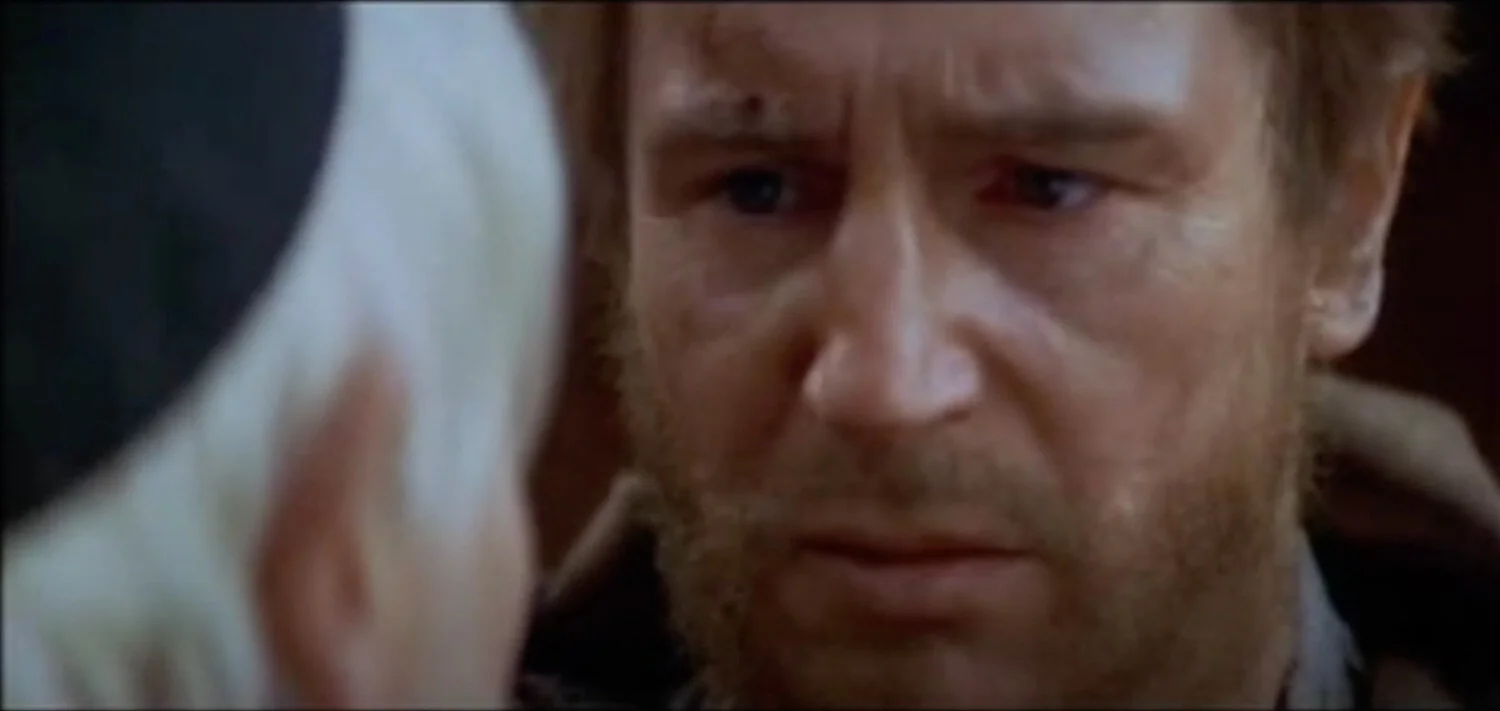
However, Bishop Bienvenue sensed that this crime was paltry next to the real crime – the 19 years stolen from Jean Valjean’s life — and a few silver settings did not even begin to atone for that. So, to the dismay of police and the astonishment of Jean Valjean, the Bishop declared the silver to be a gift freely given, and then threw in two silver candlesticks that the Bishop claimed Jean Valjean had left behind in error.
It was an act of altruism and kindness that in the ensuing years set in motion Jean Valjean’s transformation into a man of heroic virtue who in turn would transform others. Down the road, as Victor Hugo’s novel, film and stage production reveal, many lives were fundamentally influenced and changed by what Bishop Bienvenue had set in motion.
In her Wall Street Journal article, Doris Donnelly, professor of theology and director of the Cardinal Suenens Center at Cleveland’s John Carroll University, revealed how extraordinary it was for Victor Hugo to have envisioned such a character as Bishop Bienvenue. In 1862 when Les Miserables was written, Catholic France was beset by a popular and potent form of anticlericalism. The French of the Enlightenment — that fueled the French Revolution — were especially offended by Victor Hugo’s inclusion of a Catholic bishop as the catalyst for redemption. Even Victor Hugo’s son, Charles, pleaded with him to omit the Bishop Bienvenue character, or replace him with someone whose virtue would be more acceptable to the post-Enlightenment French — such as a lawyer, perhaps. I just love irony in literature, but sometimes it’s more than I can bear.
Though the Bishop’s role in the film and stage versions of “Les Mis” is potent, but brief, Victor Hugo spent the first 100 pages of his novel detailing Bishop Bienvenue’s exemplary life of humility and heroic virtue. He wasn’t the bishop France typically had in the peoples’ view of the 19th Century French Catholic Church, but he was the bishop Victor Hugo wanted France to have. As described by Professor Doris Donnelly, in Bishop Bienvenue,
“They had a Bishop whose center of gravity was a compassionate God attuned to the sound of suffering, never repelled by deformities of body and soul, who occupied himself by dispensing balm and dressing wounds wherever he found them . . . Bishop Bienvenue conferred dignity with abandon on those whose dignity was robbed by others.”
In the end, Hugo’s Bishop Bienvenue (in English, “Bishop Welcome”) removed Jean Valjean’s chains of “hatred, mistrust and anger,” and ransomed his soul from evil to reclaim him for God. This enabled Jean Valjean, as Doris Donnelly so aptly put it, “to emerge as one of the noblest characters in literature.”
Most of you will be able to see this fine film long before I will. I will likely have to wait for it to be released on DVD, and then wait for some kind soul to donate the DVD to this prison. (Contact me first, please, if you are so inclined to do that, lest we receive multiple copies). If you have seen the film version of Les Miserables, or plan to in the near future, perhaps you could comment here with your impressions of the film. It’s a glorious story, and I look forward to hearing all about it.
Meanwhile, I have seen some other noble characters set in motion some contagious virtue of their own. I have a new neighbor in this prison. John is 70 years old and has been in prison for most of his adult life. John suffers from acute Parkinson’s disease and advanced stomach cancer, and is clearly facing the winter of life. He was moved on the day after Christmas to a bunk just outside my cell door. Almost immediately after he was moved here, he also caught a flu virus that swept through here like a wildfire. He’s a little better as I write this, but has had a couple of very rough weeks.
Remember Ralph Carey, the young man I wrote about in “The Elections Are Over but There’s One More Speech to Hear“? Ralph is in the upper bunk just above John. I told Ralph that it falls to us to look out for this man God has put in our field of vision. Since then, I have never seen a finer example of heroic virtue. Ralph stepped up admirably to care for an old man society has left behind. In the act of sacrificing and caring on a daily basis, Ralph has seen some of his own chains of hatred, mistrust and anger fall away, and he is learning what it means to be free. I am very proud of Ralph who now sees virtue as its own reward, and it really is contagious — even more contagious than the flu. Though on a far smaller scale, this is the story of Les Miserables playing out right before my eyes.


Hitler’s Pope, Nazi Crimes, and The New York Times
New evidence unmasks a myth that Pope Pius XII was “Hitler’s Pope:’ and a shocking failure of The New York Times to tell the world of the Holocaust.

New evidence unmasks a myth that Pope Pius XII was “Hitler’s Pope:” and a shocking failure of The New York Times to tell the world of the Holocaust.
These Stone Walls might seem a strange place to be reading this story, but in a way it might make sense. Too many Catholic writers today seem to fear The New York Times and the rest of the mainstream news media. It’s a subtle fear that I laid out in “The Catholic Press Needs to Get Over Its Father Maciel Syndrome.” There are courageous exceptions, of course, and notable among them are Bill Donohue of The Catholic League and David F. Pierre of The Media Report. Both have repeatedly and forcefully called The New York Times to task for its distortions of news pertaining to the Catholic Church. Nowhere have these distortions been more evident than in the Catholic sex abuse scandal, a drama I have lived every day for the last 18 years. It’s also a drama that leads the late 20th Century litany of anti-Catholic agendas in the news. I gave several examples in a post entitled “Catholic Scandal and the News Media.”
Running a close second in that litany is the story of Pope Pius XII during the Holocaust. You have all read or heard the claims that Pope Pius XII was silent, at best, during the Holocaust, and at worst secured an accommodation with the Third Reich that saved the Catholic Church at the expense of the Jews. It’s not at all true, but the truth has had an uphill climb against the pervasive story, told again and again, that Pope Pius XII failed to confront Hitler during his systematic genocide of over six million European Jews and millions of others. You’ve heard the story of this supposed silence in a slanderous media sound bite that Pope Pius XII was “Hitler’s Pope.” Next to the “pedophile priest” propaganda, it is probably the most often used and abused modern anti-Catholic slur. But simply put, it is a lie.
Newly emerging evidence reveals that the entire story was the result of an organized propaganda effort sponsored by the Soviet KGB to discredit Pope Pius XII and the Catholic Church. It’s a shocking story, the stuff of Tom Clancy novels and wild conspiracy theories, but it’s also true, and I’ll unravel that truth in a few moments. It is truly bizarre, but not nearly as bizarre as another anti-Catholic Nazi plot I described in “Catholic Scandal and the Third Reich: The Rise and Fall of a Moral Panic.” It’s a very good background to this post.

When The Grey Lady Turned Yellow
Though falling at the end of my title, my story begins in the pages of The New York Times, and a context for the “Hitler’s Pope” story. I have long wondered what the Times and the rest of the American mainstream news media did to confront Hitler and the Holocaust. The American press was at its peak of global influence during World War II. Many U.S. newspapers, and most notably The New York Times, had foreign correspondents and news bureaus at their command. The Pope did not command a global news outlet with anything close to the power and impact of The New York Times.
So what exactly was the Times’ role in uncovering and reporting on the Third Reich’s extermination of twelve million people including over six million Jews? I found the answer in a 1999 book by Susan E. Tifft & Alex S. Jones entitled, “The Trust: The Private and Powerful Family Behind The New York Times (Little, Brown). Susan E. Tifft is a former associate editor of Time Magazine. Her co-author (and husband), Alex S. Jones, was a Pulitzer Prize-winning media reporter for The New York Times from 1983 to 1992. At the time they published The Trust, they shared a chair in communications and journalism at Duke University.
The story of The New York Times’ reporting on news of the Holocaust begins with ad revenue. According to Tifft and Jones, the Times slashed its space devoted to news far more severely than its space devoted to advertising during World War II:
“In 1939, 60 percent of the paper had been taken up by news; in 1944 the figure had fallen to below 50 percent. That, coupled with an advertising rate hike . . . sent the Times ad revenue soaring to its highest level since 1931.”
During that period, the Times’ ad revenue had increased from $13 million to $15 million while what it spent on gathering and reporting news decreased from $3.9 million to $3.7 million. Still, at the height of World War II, The New York Times had 55 overseas correspondents, more than any other American newspaper. Owner, Arthur Sulzberger determined that these foreign ambassadors of the Times “should be ‘well-educated attractive Protestants,’ not Jews” (p. 209). This had implications for how and where in the Times the dismal news of Nazi activities throughout Europe was presented, especially in regard to Hitler’s persecutions of the Jews:
“Like his late father-in-law, [Arthur Sulzberger] did not want the Times to be viewed as a ‘Jewish paper.’ But in his single-minded effort to achieve that end, he missed an opportunity to use the considerable power of the paper to focus a spotlight on one of the greatest crimes the world has ever known. (p. 215)
“These personal and professional strains converged with increasing power during the Holocaust . . . [C]rucial news stories were frequently buried inside the paper rather than highlighted on page one. A July 2, 1944 dispatch citing ‘authoritative information’ that 400,000 Hungarian Jews had already been deported to their deaths and an additional 350,000 were to be killed in the next three weeks received only four column inches on page twelve, while that same day a story about Fourth of July holiday crowds ran on the front page.”
The criticisms of Pope Pius XII and his supposed inaction have been widely exposed in the American news media among newspapers that had scores of correspondents reporting from Europe during World War II. And yet, most of their editors at home simply did not believe the accounts of atrocities coming out of Europe. News of Hitler’s Final Solution was downplayed in the American news media, and the reason for it was utterly scandalous. Susan Tifft and Alex Jones explained why:
“The Times was hardly alone in downplaying news of the Final Solution. In the late 1930s and early 1940s, other major dailies, including the New York Herald Tribune, The Chicago Tribune, The Washington Post, and the Los Angeles Times, like the public at large, disbelieved reports of Jewish genocide in Europe or suspected they were exaggerated in order to attract relief funds.”
During World War II, The New York Times was considered a media flagship. It enjoyed unprecedented power on the global news stage as the preeminent American newspaper. The Times’ superior foreign reporting capabilities gave it the power to set the agenda for other newspapers, many of which took their cue from the Times’ front page. In a post entitled “Saints and Sacrifices: Maximilian Kolbe and Edith Stein at Auschwitz,” I described what happened in Europe when the bishops of Holland, under the authority of Pope Pius XII, publicly challenged the Third Reich’s deportation of Jews to the death camps. This information was right at the fingertips of The New York Times and its teams reporting from Europe. The Times was in a unique position to inform the world of the horrors of the Holocaust, but it held back. Susan Tifft and Alex Jones concluded:
“Had the Times highlighted Nazi atrocities against Jews, or simply not buried certain stories, the nation might have awakened to the horror far sooner than it did.”
In the Spring of 1945, just before Germany’s surrender, General Dwight Eisenhower assembled an l8-member press delegation to inspect Dachau and Buchenwald. It included the owners of The New York Times with this result reported by Tifft and Jones:
“Despite the powerful effect of such experiences by the owners of The New York Times. readers detected no change in the coverage of Nazi barbarism. The front-page story on the liberation of Dachau never mentioned the word. ‘Jew.’ A week later, Cy Sulzberger’s story about Russian estimates of the death toll at Auschwitz appeared on page twelve, with no indication that most of the victims were Jews.”
The Pope and the KGB
In “The Beatification of Pope John Paul II: When the Wall Fell,” I wrote of a fictional story about the late great Pope from a terrific novel by Tom Clancy entitled Red Rabbit (G.P. Putnam, 2002). In typical Tom Clancy fashion, he told a riveting but wild tale of how the Soviet Union saw Pope John Paul II as an ominous threat to its leadership and legitimacy in the early 1980s. In Clancy’s tale, the Soviet Politburo gave a secret nod to a KGB plot to eliminate the Pope.
In the convoluted story — which defied rational belief — the KGB feared that the administration of President Ronald Reagan would not look kindly on their assassination of a Pope, so some plausible denial was needed. The KGB engaged the Bulgarian secret police to hire a Turkish mercenary to assassinate the Pope right before the world’s eyes in Saint Peter’s Square. The techno-thriller that emerged from this frame of a plot was Tom Clancy at his very best. Reviewers liked the book, but some dismissed its plot as revisionist history and Catholic paranoia.
It turned out that the story wasn’t fiction at all. In 2010, files released by the East German secret service confirmed that the KGB ordered the attack on the Pope and carried out the plot just as Tom Clancy described it. Though much of the mainstream media downplayed the story, the KGB recruited the Bulgarian secret police who in turn hired a Turkish mercenary, Mehmet Ali Agca, to shoot Pope John Paul, hitting him four times at point blank range. This Pope, however, was made of some tough material, and he survived, thwarting the KGB plan.
It turns out that this wasn’t the first time the KGB targeted a Pope for assassination, though in the first instance it was character assassination. All is not what it seems to be in the scandalous charge that Pope Pius XII was silent about the wartime atrocities of Adolf Hitler, The Third Reich, and the Holocaust. Edward Pentin, Rome Correspondent for the National Catholic Register had a fascinating two-part series in September revealing new evidence about how the myth of “Hitler’s Pope” actually began with Joseph Stalin. Part 1 and Part 2
In Part 1 of the series, “Ex-KGB Chief: Pius XII Was Framed” (NC Register, Aug. 26 – Sept. 8, 2012), Edward Pentin reported that Rolf Hochhuth’s famous 1963 play, “The Deputy” was used by Soviet intelligence as part of a wider plot to frame the Pope. In 1968, the play was described as the “slander of the century” by famed British reporter, David Frost.
Part 1 of Pentin’s story begins with Ion Mihai Pacepa, former head of the Romanian intelligence service who described in detail how the Soviets framed Pope Pius XII as an anti-Semitic Nazi sympathizer in a propaganda campaign known as “Operation Seat 12.” The story is revealed in an upcoming book with famed Holocaust author, Ronald Rychlak entitled Disinformation. In his introduction to the book, former CIA director, James Woolsey wrote that the book, “will change forever the way you look at intelligence, foreign affairs, the press and much else.”
If Edward Pentin’s articles are accurate, it will also change forever the way you look at the mythical and scandalous accounts of Pope Pius XII during World War II. According to Part 2 of Edward Pentin’s series, entitled “Pope Pius and the Myth of ‘Hitler’s Pope”’:
“The Kremlin’s attempt to frame Pius XII as Hitler’s Pope was rejected by that contemporary generation that bad lived through the real history and knew who Pope Pius XII really was. The Kremlin tried again in the 1960s, with the next generation.”
The irony of the KGB propaganda war waged to assassinate the character of Pope Pius XII is this: If all contemporary agendas were put aside, and the verdict of Jews in the generation during and after the War ruled the day, then the true picture of Pope Pius XII emerges from the rubble of war. It is the picture of a courageous hero whose stand against Hitler directly saved the lives of 860,000 Jews, more than any other figure — religious or otherwise — in World War II Europe. Not least among many tributes to Pope Pius and his wartime advocacy for the Jews of Europe was this one by Rabbi Israel Zolli, Rome’s Chief Rabbi during World War II:
“There is no place of sorrow where the spirit of love of Pius XII has not reached . . . There are no barriers, no distinctions. All sufferers are children of God in the eyes of the Church . . . No hero in history has commanded such an army; none is more heroic than that conducted by Pius XII in the name of Christian charity.”

Now The Grey Lady Fades
It is no longer a mystery to me why The New York Times and other news media spread far and wide the myth of “Hitler’s Pope.” They eagerly embraced without question a Kremlin propaganda campaign to frame Pius XII as a scapegoat for silence in the face of the Holocaust. The Times had an opportunity during Hitler’s reign that the Pope never had — an opportunity to expose a horrible truth to the world. According to Susan E. Tifft and Alex S. Jones, other agendas — self-serving political agendas — controlled the news and buried that truth. If the Kremlin had its “Operation Seat 12” to defame the Pope, “Operation Page 12” seemed to be a parallel plan at The New York Times. It’s a moral legacy that cannot ever be erased as long as the Times and other news media scapegoat someone else for that silence.
Media slurs against priests and popes have helped to derail a Catholic moral voice in this increasingly secularized public square, but it’s time to stand against the lies. If you like this post, then send it to others. E-mail it, post it to your social networks, ping it, tweet it, and help further this truth — because it IS the truth.
And if you are feeling simply defeated from the electoral voice of America, that’s a luxury we may not have. Western Culture stands at a precipice, and will continue its descent until its imminent fall becomes clearer to all — perhaps in four more years or so. There remains future hope, so declaring defeat is not an option. Truth must always be cultivated in the face of lies, and no election results can stifle it. The truth belongs front and center, and has no “Operation Page 12.”


Why You Must Never Give Up Hope for Another Human Being
Overcoming many obstacles, Pornchai Moontri, Alberto Ramos, and seven other prisoners receive their high school diplomas in a model prison education program.
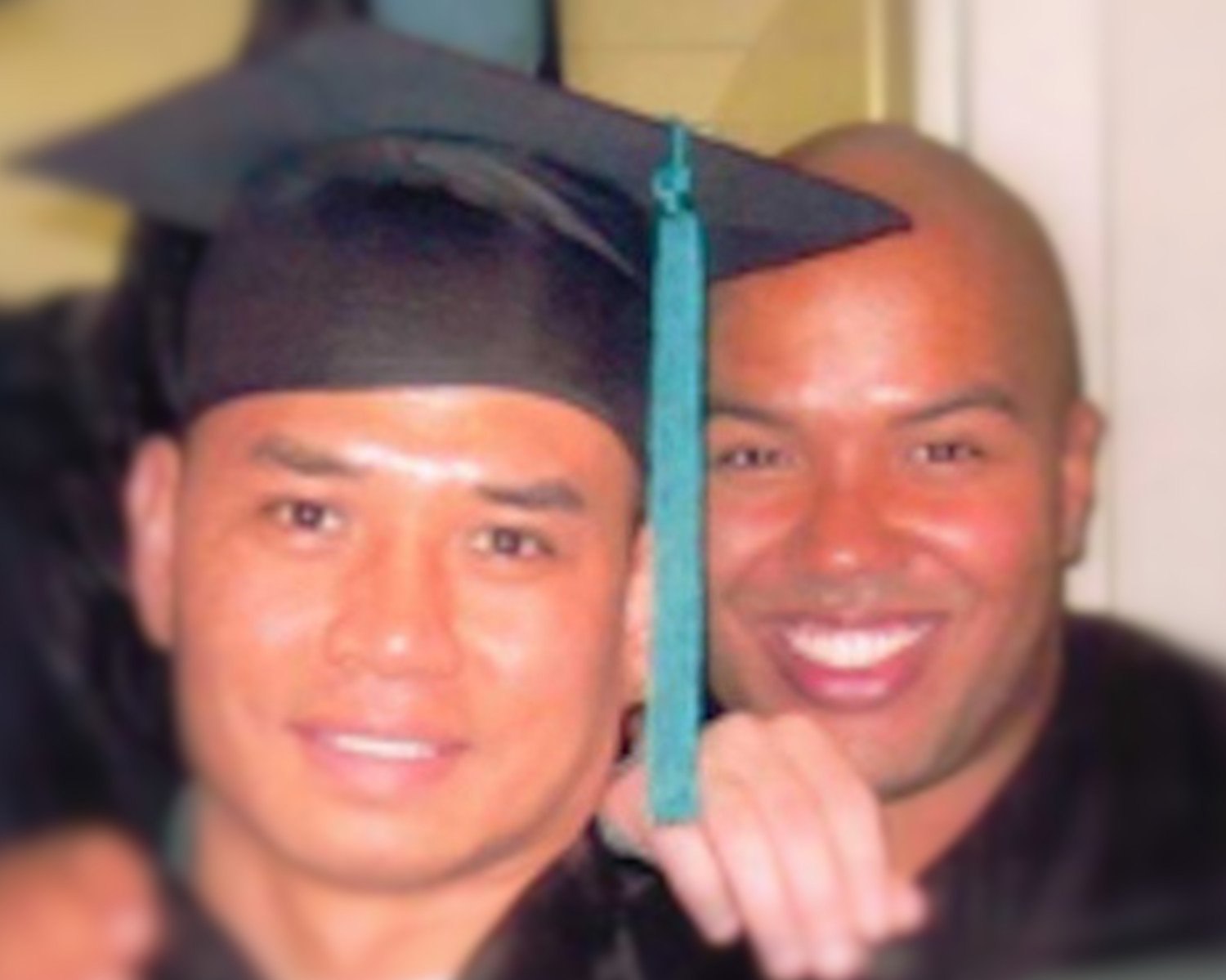
Overcoming many obstacles, Pornchai Moontri, Alberto Ramos, and seven other prisoners receive their high school diplomas in a model prison education program.
“The beginning of Wisdom is the most sincere desire to learn.”
— Wisdom of Solomon 6:17
In a recent post on These Stone Walls, I described some of what has gone terribly wrong with America’s enormous, ever-growing, and grossly expensive prison system. “In the Absence of Fathers: A Story of Elephants and Men” made a crystal clear connection between the diminishment of fatherhood and the growth of prisons in Western Culture. It is especially evident in America which has more young men in prison than all 28 nations of the European Union combined.
In America, a dark cloud is rising in a dismal and growing trend to embrace the privatization of prisons for profit. Charles Dickens and George Orwell working together could not have conceived a more devious plan to keep young men in the dark wood of error away from any hope for a future, and then profit from that. The darkest tenet of prisons for profit is that they require their host states to guarantee that their prisons will remain at least 90% full.
In the midst of that debate, however, something is happening in the New Hampshire State Prison that has proven itself to be a lifeline for a growing number of young men determined to survive their own failures and emerge from the dark wood of error. Within these stone walls, this prison operates a special school district known as Granite State High School. The program grants both a GED high school equivalency and a far more arduous path for prisoner-students determined to prove themselves equal to the challenge: a fully accredited high school diploma earned course by course, credit by credit, over the course of several years.
In the world in which most of you live, a high school diploma is a necessary stepping stone. In this world, it is a milestone, and perhaps the most visible evidence of rehabilitation. To earn a high school diploma in prison, a prisoner must first expand his own boundaries, stake them out, reclaim his life and his mind from the many dark forces of prison life, and stand firmly on his own two feet in resisting a gang-culture vying every day for control over young minds in prison.
Against all this, a student in prison must go to school every day, complete homework every day, pass exams, write papers, and be a full-time student while living in the chaos of prison life. He must do this semester after semester, motivated by little more than the desire to learn and the hope that there is a world beyond prison in which education is a tool for building a better life. It is a goal that for many prisoners exists only on faith. There is no more effective measurement of the emergence of a man from the dark wood of error than the sheer drive required to overcome all these obstacles to earn a high school diploma in a prison environment.
Two people you know of — one of whom you will get to know better today — have done just that. Pornchai Moontri and his friend (and mine), Alberto Ramos, have completed high school in prison and will graduate this month. Pornchai needs no introduction to readers of These Stone Walls. His own story about the special challenges he faced was told in a riveting post, “Pornchai Moontri: Bangkok to Bangor, Survivor of the Night.”
A Man in Full
You have met Alberto Ramos as well. I mentioned him briefly in “Angelic Justice: Saint Michael the Archangel and the Scales of Hesed.” Alberto and I went to prison within a year of each other. The shocking part of this story is that Alberto went to prison at the age of 14. Alberto shot and killed a 19-year-old man in a drug and gang-related confrontation that spiraled out of control in a dark city alley in 1995. At the time, Alberto had already lived “on the streets” for two years since being thrown out of his single-parent home at age 12. At 14, Alberto was the youngest person in New Hampshire to be convicted of murder with an adult prison sentence — 30 years to life.
Because he was only 14, Alberto spent his first four years in solitary confinement. When he turned 18 in 1998, he was transferred to the New Hampshire State Prison. It was there, one year later, that Alberto and I first met. He was 19 years old, and had already been in prison for five years. No one can tell the story of Alberto’s life up to that point better than Alberto himself. He did just that in an essay he gave me two years ago, and which I have kept for all this time. I have his permission to publish it here with the same title he gave it:

Where Did My Inner Child Go?
By Alberto Luis Ramos
My story is one like the rest, but I will let you decide that for yourself. Both my parents were born and raised on the beautiful Caribbean island of Puerto Rico. As for myself, I am a first generation mainland American born in Philadelphia, PA, the birthplace of our nation. At the end of the day, I can honestly say I do not have a place I call home. We moved so many times that I even hate being asked, ‘So, where are you from?’ I would rather not be asked. I’m not from anywhere.
I only met my father once as a very young boy, and I have only a vague memory of him. He had other children with other mothers and I do not know my place in his family. It must have been last place. Today, I do not even know if he is still living.
I know what my mother looks like, but I do not know my mother at all. Some people think I became a man when my mother kicked me out of her home when I was 12. ‘It’s him or me,’ was the ultimatum her boyfriend gave her, and she needed him more than me. I was always running away from home anyway. This part of my life is nothing next to all the shit I’ve seen and heard.
Today I know that this is not when I became a man. Today I understand that the experience of being a boy alone on the street made me feel more like a child than ever, and today I know that all my anger and hostility just masked the fact that I was deeply hurt. My friend, Pornchai Moontri taught me this. Stripping away all the anger to get at the hurt was an ordeal, but we are friends because we traveled down the same road at the same time to face our hurt. I owe a lot to Pornchai.
I heard of a book once, Everything I Ever Needed to Know I Learned in Kindergarten. Well, everything I ever needed to know — or thought I needed to know — I learned on the streets. In a short time those streets took ownership of my life and took the place of my family and my home. By the age of 14 I wasn’t just in the gang culture of the streets. I was instructing my peers in the finer points of mere survival because I thought mere survival was all we can expect in this life. In my life on the streets, I settled for mere survival. I learned how to fight because I knew from instinct that kids on the street who know how to fight usually don’t have to fight. Violence was a daily reality in my life and world, and I could not escape from it. I could not be a child. I just didn’t know how.
Then one night I was in an alley. It was June 28, 1995. I had gone two days without sleep while getting high. I was 14 years old and had a confrontation with a 19-year old in this dark alley. Three shots fired and an order of carelessness, and two lives were destroyed. My act took his life, and hurt many other people.
I was 14 then. I am 32 now. The ensuing 18 years have been in adult prison, but that surely isn’t what defines being a man. I guess I cannot define when I became a man without naming the time I was a child. But that eludes me. I was never a child.

The Beginning of Wisdom
I remember vividly the day Alberto and I met. He was 19 years old and five years in prison when he asked to audit a class — Introduction to Psychology — that was available to prisoners in a short-lived prison college program through a local community college back in 1999 – 2001. Halfway through the semester, the instructor had to drop the course. Because I had a degree in that field, I was asked by the prison programs director to take the class for the remainder of the semester. I was a prisoner teaching other prisoners, and it was foreign territory to me. I walked into a class full of prisoners to talk about behavior modification with less than 60 minutes notice to prepare. I hadn’t even seen the textbook.
Sitting in the front row, middle seat of that cramped classroom sat Alberto Ramos who rather liked the previous instructor and rather resented the sudden change. He wore his prison uniform, but like many young men facing years in prison both behind and before them, he also wore rage, and suspicion, and skepticism, and loss, and defiance. He wore the streets that sent him here. But behind all that — to borrow a worn-out phrase — he wore the audacity of hope.
Seventy percent of the young men coming into prison do not have a high school diploma. It is a failure of societal proportions in an age of no child left behind. The difference an education can make in the life of a prisoner is massive. Study after study has shown that earning a high school diploma in prison cuts recidivism rates by up to 50%.
Having arrived at the beginning of wisdom, it is that which carried Alberto from the dark wood of error to the point of becoming a man. If he cannot define that moment, I can offer only this. Alberto Ramos became a man when he embraced a future beyond his past; when he gave up the stagnation of the present to look down that road less traveled; when he set out in that direction knowing not where it leads, but went there anyway.
This is why we must never give up hope for another human being. There are miracles before us, and now we have met two of them. Alberto Ramos and Pornchai Moontri are not just men, they are men who conquered the lowest depths, and climbed the highest peaks. Despite all, they are men in full.
And they are educated men with much to offer the world which must one day release them from all the prisons they have known to live in their true home: a place called freedom.


“I Am a Mystery to Myself.” The Last Days of Padre Pio
For half the 20th Century, Saint Padre Pio suffered the wounds of Christ. All of them, including the cynicism of doubt and the tyranny of false witness.
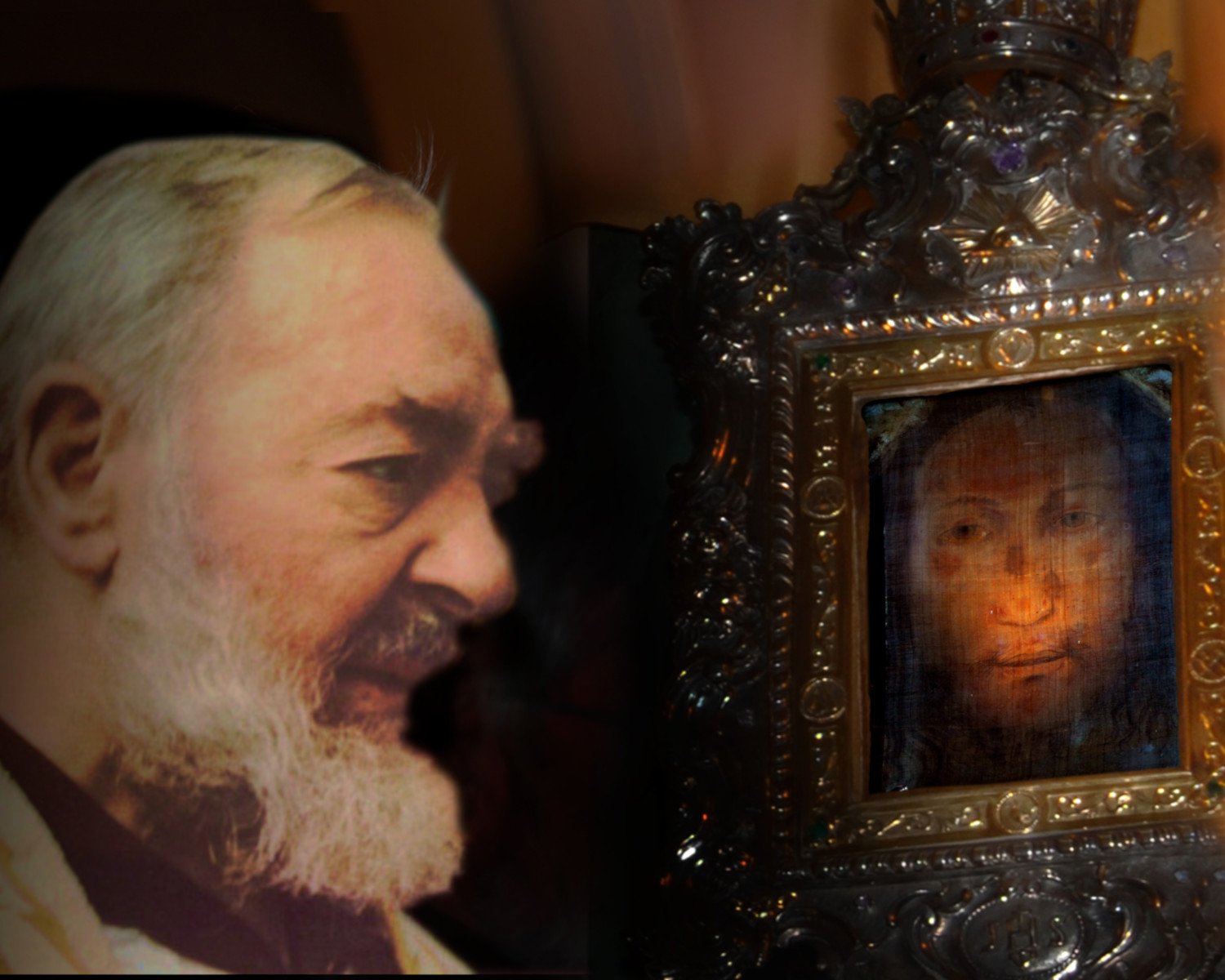
For half the 20th Century, Saint Padre Pio suffered the wounds of Christ. All of them, including the cynicism of doubt and the tyranny of false witness.
In the August-September 2012 issue of Inside the Vatican magazine, Australian journalist Paul MacLeod has a fascinating article reviewing two books by Paul Badde, The Face of God (Ignatius Press 2010) and The True Icon (Ignatius Press 2012). The two books “read like detective stories,” MacLeod wrote, as they examine in great depth two of the Church’s most revered treasures, the Shroud of Turin and the “Volto Santo,” the image of the Holy Face hidden for 400 years and believed to be the second burial cloth of Jesus, the sudarium.
The origin of the veil can be one of two sources, or a combination of both. Though the story never appears in Sacred Scripture, there is an ancient legend that a woman offered her head-cloth to wipe the face of Jesus on the way to Golgotha. When he gave it back to her, as the story has it, an impression of his face remained on the veil. What is now the Sixth Station of the Cross was legendary in Rome since the 8th Century. The name tradition has given to that woman is Veronica, a name that appears nowhere in the Gospel narrative of the Passion of Christ. The name comes from “Vera Icon,” Latin for “True Image,” a great treasure of the Church now preserved at the Shrine of the Holy Face at Manoppello in the Abruzzi region of Italy.
The veil is believed to be one of two burial cloths of Jesus, though it’s possible that both accounts are behind this treasure. On the morning of the resurrection, the Gospel of John (20:7) reports, the smaller burial cloth of Jesus — the veil covering his face — was rolled up in a place by itself as witnessed by Saint Peter and Saint John. In Jewish custom in the time of Jesus, such a veil covered the faces of dignitaries, such as the high priest, in death before being entombed. It is this veil that many now believe is enshrined at Manoppello. In contrast to that other, larger burial cloth — believed by many to be the Shroud of Turin — the image on the veil is not that of a dead man, however, but of a man very much alive, his eyes wide open. It is Jesus the Christ, having conquered death. In Inside the Vatican, Paul MacLeod described the Veil of Manoppello as:
“. . . a delicate, transparent piece of expensive material, measuring just 28 cm by 17 cm, in which the face of Jesus seems to float in light, even to store light.”
Paul MacLeod reported in the article that Capuchin priest, Father Domenico de Cese, formerly custodian of the shrine, was killed in an accident while visiting the Shroud of Turin in 1978. A decade earlier, however, Father Domenico wrote of a rather strange occurrence. On the morning of September 22, 1968, Father Domenico opened the doors of the shrine, and was startled to find Padre Pio kneeling in prayer before the image of the Holy Face. Padre Pio was at the same time 200 kilometers away at San Giovanni Rotondo, gravely ill, and near death.

“With My Body or Without It”
It was his last known occurrence of bilocation, a phenomenon that, like his visible wounds, became a source of skepticism about Padre Pio both in and outside of the Church. At 2:30 AM on the next morning — September 23, 1968 — Padre Pio died.
The two stories placed together — Padre Pio’s death and his prayer before the Veil of Manoppello — make perfect sense to me. In the hours before his death, Padre Pio contemplated the burial cloth of Christ. After fifty years of bearing the visible wounds of Christ, Padre Pio’s own soul sought out this visible link to Jesus beyond death; not Jesus crucified — a reality Padre Pio himself had lived for fifty years — but the image of the face of the risen Christ.
Padre Pio seemed most hesitant to discuss either his wounds or the reported incidents of bilocation. He seemed hesitant because in life he did not understand them at all. In fact, a Vatican investigator learned that all the events of bilocation were reported by others, and never by Padre Pio himself. It wasn’t until he was directly asked by the investigator that he described bilocation:
“I don’t know how it is or the nature of this phenomenon — and I certainly don’t give it much thought — but it did happen to me to be in the presence of this or that person, to be in this or that place; but I do not know whether I was there with my body or without it . . . Usually it has happened while I was praying . . . This is the first time I talk about this.”
— Padre Pio Under Investigation, Ignatius Press, 2008, p. 208
Those September days preceding Padre Pio’s death in 1968 must have been the strangest of his life. The visible wounds became so central to his sense of self for a half century that I imagine he had difficulty even remembering a time when the wounds were not present. Even a great burden carried for years upon years — I have learned the hard way — can become a part of who and what we are. We cannot imagine Padre Pio without these wounds. We would have never even heard of Padre Pio without these wounds. So in that sense, the wounds were not for him. They were for us.
But in the days before Padre Pio died, the wounds on his hands and feet and in his side began to close. He received those wounds on the morning of September 20, 1918. Fifty years later, on September 20, 1968, after a few days of the wounds slowly diminishing, all traces of them were gone. The wounds were then only within Padre Pio. Visible or not, they were a part of his very self.
In a previous post about Padre Pio I wrote of the day those wounds were given to him. I told the story of how this saint among us struggled with what had happened to him, and the lifelong trials that were set in motion by those visible wounds. It is a moving account of the Stigmata in Padre Pio’s own words in a letter to his Capuchin spiritual advisor, Padre Benedeto, a month after receiving the wounds.
“On the morning of the 20th of last month, in the choir, after I had celebrated Mass . . . I saw before me a mysterious person similar to the one I had seen on the evening of 5 August. The only difference was that his hands and feet and side were dripping blood. The sight terrified me and what I felt at that moment is indescribable. I thought I should die and really should have died if the Lord had not intervened and strengthened my heart which was about to burst out of my chest.
“The vision disappeared and I became aware that my hands and feet and side were dripping blood. Imagine the agony I experienced and continue to experience almost every day. The heart wound bleeds continually, especially from Thursday evening until Saturday.
“Dear Father, I am dying of pain because of the wounds and the resulting embarrassment I feel in my soul. I am afraid I shall bleed to death if the Lord does not hear my heartfelt supplication to relieve me of this condition.
“Will Jesus, who is so good, grant me this grace? Will he at least free me from the embarrassment caused by these outward signs? I will raise my voice and will not stop imploring him until in his mercy he takes away . . . these outward signs which cause me such embarrassment and unbearable humiliation.”
— Letters 1, No. 511
But it was the stories of bilocation that caused so much skeptical doubt. In May of 1921, the Vatican commenced its first of several investigations into Padre Pio’s life. The investigator, Monsignor Raffaelo Carlo Rossi, tried to refuse the assignment because he admittedly went into it with a “prejudice against Padre Pio.” After months of interrogations, depositions, interviews with other friars, and testimony by many laypeople, Bishop Rossi’s file was ordered sealed, and it remained sealed as a secret Vatican file for decades. The investigator concluded his file: “The future will reveal what today cannot be read in the life of Padre Pio of Pietrelcina.”
That investigator, we now know, left San Giovanni Rotondo with no doubt whatsoever about the true nature of Padre Pio, but it wasn’t enough to curtail years of further suspicion and persecution from within the Church. The story of Padre Pio’s treatment is best summed up by Father Paolo Rossi, former Postulator General of the Capuchin Order, and it seems a bit familiar:
“People would better understand the virtue of the man if they knew the degree of hostility he experienced from the Church… The Order itself was told to act in a certain way toward Padre Pio. So the hostility went all the way up to the Holy Office and the Vatican Secretariat of State. Faulty information was being given to Church authorities, and they acted on that information.”
— Making Saints, Simon and Schuster, 1990 p. 188

A Face on My Wall
If you look at the end of the “About” page at Beyond These Stone Walls, you may notice that this blog is published under the patronage of Saint Maximilian Kolbe and Saint Padre Pio, champions of truth, justice, and fidelity to the Risen Lord. The impact of Saint Maximilian on these prison walls is easy to see. How Saint Padre Pio insinuated himself here is a bit more mysterious.
It started with an awareness that we share an important date. The day I was convicted and taken to prison was September 23, Saint Padre Pio’s feast day and the last day of his earthly life. Only 26 years passed between those two events. Padre Pio just showed up here again, but that story needs a little background.
Despite its small size, the typical prison cell can seem a barren place. Like every prison this one has rows upon rows of cells, tiers upon tiers of them, all perfectly uniform, none with any evidence of human individualism. The whole point of prison is that its inhabitants are forced to view themselves as humans in degraded form, living a day to day existence that is entirely uniform, and devoid of any sense of the self.
The inside of these 6-by-10-foot walled and barred cells is composed of nothing but concrete. The four walls, the floor and the ceiling are bare concrete. The bunks upon which we sleep are concrete (and they hurt if I sleep too long), and so is the small counter upon which this prisoner is writing at this moment. Prison cells are distinguishable from other prison cells solely by the number above each solid steel door.
There is one small exception to the absence of human evidence, and I’ve written of it before. In “Angelic Justice: Saint Michael the Archangel and the Scales of Hesed,” I described the sole evidence of individualism in a prison cell. There are two rectangles, exactly 24 inches by 36 inches, painted on one wall with 12 inches of space in between them. Within these dark green rectangles, the two prisoners living in each cell may post a calendar, photos of their families and friends, and religious items. Nothing else.
You can learn a lot about a man from what is posted within this rectangle on his cell wall. In my first years in prison, commencing 28 years ago, I had lots of photos of family and friends, evidence of the life I once knew beyond these stone walls. Like every prisoner over time, that evidence slowly diminished. In my first five years in prison, I was moved 17 times, often with just minutes notice. Each time, I would take down all my evidence of a life, and then put it back on the wall in another cell on another tier in another building with other people. Each time, something of myself would be lost forever. Then the day came that I was moved, and nothing went back up onto the wall. The wall remained an empty space for many years.
This was true of my friend, Pornchai Moontri, as well. After 21 years in prison, beginning when he was barely 18 years old, Pornchai only vaguely recalls a life beyond and the people in it, but he no longer possesses any evidence of it. His uprootings were much more severe than mine. As you know from reading “Pornchai’s Story” he was ripped from a culture, a country, and a continent. Much was taken from him, and then, finally, so was his freedom. You know of that story which I wrote of in “Pornchai Moontri and the Long Road to Freedom.”
When we were moved to the same cell many years ago, Pornchai and I both stared each day at two green rectangles with nothing in them. Then Beyond These Stone Walls began a year later, and ever so slowly our wall became filled with images sent to us from readers. (Alas, such images are no longer allowed in mail, but the ones already on our wall can stay). Every square inch of Pornchai’s rectangle, even after he has left prison, is still filled with evidence of his very much alive Catholic faith.
But one day, I noticed that a very nice photograph of Saint Padre Pio that was in my rectangle on the wall somehow migrated over to Pornchai’s wall. On the day I noticed that my treasured image of Padre Pio “defected,” I also mentioned that I didn’t have another one and wished that someone would send me one. An hour after voicing that, the mail arrived. I opened an envelope from my friend, John Warwick, a reader in Pittsburgh.
I opened John’s envelope to find a beautiful card enrolling me and my intentions in a novena to Saint Padre Pio, and the image on the card was the very same one that took up residence over on Pornchai’s wall. It is my first experience of this great Patron Saint’s bilocation, and I treasure it. Thank you, John!
“Stay with me, Lord, for it is getting late: the day is ending, life is passing; death, judgment, eternity are coming soon … I have great need of you on this journey. It is getting late and death is approaching. Darkness, temptations, crosses and troubles beset me in this night of exile.”
— Saint Padre Pio’s Communion Prayer
+ + +


Father Benedict Groeschel at EWTN: Time for a Moment of Truth
In the media crucible reserved for high profile priests, Father Benedict Groeschel was next in line to be smeared. There’s more to this story, and here it is.

In the media crucible reserved for high profile priests, Father Benedict Groeschel was next in line to be smeared. There’s more to this story, and here it is.
I have known Father Benedict Groeschel since 1975. I began religious life as a Capuchin in the New York Province when Father Groeschel served on the Provincial and formation staffs. He was a mentor and a friend when I was a young man of 22 trying to discern competing calls to the priesthood and religious life. Having completed a novitiate year, I was a young friar bound by simple profession, but left the Capuchins after four years to commence theological studies in preparation for diocesan priesthood in 1978. Over the ensuing years and decades, Father Benedict Groeschel and I remained in occasional contact.
Later, Father Groeschel and seven others broke ranks from the Capuchin order to found the Franciscan Friars of the Renewal, a movement that reflected his deeply felt longing to live a life that was outwardly faithful to the spirit of poverty and charism of Saint Francis of Assisi. In the decades to follow, Father Groeschel has gifted the Church with a valiant priestly life marked by sacrifice, fidelity and true Gospel witness. His legacy to the Church as a priest, a friar, an author and lecturer, a psychologist and revered spiritual adviser, is a monument to all that is good and holy in our Church.
Now he has resigned under a cloud from his participation as a host at EWTN. Perhaps it is simply time that he did. Perhaps, at nearly age 80 and having survived a crippling and devastating accident several years ago, age and infirmity have caught up with this good priest. We should not refute his decision to step down, but we who are loyal to any semblance of truth and witness to the Gospel must not allow to stand the cloud of doubt under which he now removes himself from EWTN’s important television ministry. To paraphrase Sheriff Buford Pusser in my post, “Walking Tall: The Justice Behind the Eighth Commandment,” if we let America’s self-serving, self-righteous, and spiritually bankrupt news media have the last word on Father Benedict Groeschel, “then we give ’em the eternal right to do the same damn thing to anyone of us!”
I don’t need to reframe and speculate upon the single, out-of-context phrase of Father Groeschel’s that has so roiled the news media and its pundits against him. In my view, his inability to predict the uproar his comment brought about may be evidence enough that his judgment has been compromised by age and infirmity. This entire story should have ended with little more said than that.
There is an irony to all this, however. The truth is that Father Groeschel has long been known among treatment professionals to take a hard line in regard to credible accusations against Catholic priests. He has long been known to advocate for the removal from all public ministry when priests are credibly accused. He has not advocated for forced laicization, a process that simply discards an accused priest, but he has for decades taken a position that no priest known by the Church to have been an abuser can EVER minister in a parish again. The truth is that if Father Benedict Groeschel had been heeded more closely over the decades of the 1980s and 1990s, the scandal of 2002 might have looked very different.
Father Groeschel strongly advocated for strict supervision and strictly enforced internal administrative assignments in all cases in which abuse by a priest was determined to be true. His public and private positions have always been the same, and were the polar opposite of what some in the news media now attribute to him.
A few years after the tidal wave of scandal swept over the Church and priesthood, Father Groeschel wrote to me in prison. It was shortly after I wrote an article for Catalyst entitled “Sex Abuse and Signs of Fraud” (November, 2005). It was the same article for which Avery Cardinal Dulles asked me to consider writing more frequently as documented in our “About” page. This is a paragraph from Father Groeschel’s 2005 letter:
“For the good of the Church and the priesthood, Father Gordon, I join the voices of others who urge you to stand always by the truth and to proclaim it boldly. Truth is always what will be in the best interest of the Church and priesthood. At the same time, I also want to caution you that not every case involving a priest is like the case against you. Some priests have used their office to commit grave offenses. Some have harmed vulnerable people and have harmed the priesthood and the Church. At the same time, like you, I also stand by efforts to assure a full hearing and due process for all priests who have been accused. False accusations must be immensely painful. I pray for you as you continue to pursue your innocence and expose the whole truth. The Church must face with courage both realities: the falsely accused and the plight of truthful victims of sexual abuse.”
Later in his life, Father Groeschel had the personal courage and integrity to voice concern for a growing proliferation of false claims against many priests, and he stood by them in their hope for justice. He stood by me. He stood by what I had written, and he encouraged me to write. Never for a single moment did he compromise his deeply felt concern for justice for victims of abuse.
The sun must not go down on Father Benedict Groeschel’s good name and stellar priestly life under a cloud inflated by a news media lying in wait for any high profile priest it can smear. Not this time! Not this priest! I call upon EWTN and all Catholics of faith and conscience to set aside this latest 15 minutes of scandal and honor Father Benedict Groeschel for the courageous life of faithful priestly witness with which he has served the Church selflessly for over a half century. The sun must not go down on this media slur against Father Benedict Groeschel.
POSTSCRIPT:
To its great credit, and no doubt by public acclaim, EWTN restored Father Benedict Groeschel’s Sunday night meditations to its broadcast schedule.
+ + +
Note from Fr Gordon MacRae: Thank you for reading and sharing this post in support of Father Groeschel and Truth. You may also like these related posts:
When Priests Are Falsely Accused: The Mirror of Justice Cracked
David Clohessy Resigns SNAP in Alleged Kickback Scheme


In the Absence of Fathers: A Story of Elephants and Men
Are committed fathers an endangered species in our culture? Fr. Gordon MacRae draws a troubling corollary between absent fathers and burgeoning prisons.

Are committed fathers an endangered species in our culture? Fr. Gordon MacRae draws a troubling corollary between absent fathers and burgeoning prisons.
Wade Horn, Ph.D., President of the National Fatherhood Initiative, had an intriguing article entitled “Of Elephants and Men” in a recent issue of Fatherhood Today magazine. I found Dr. Horn’s story about young elephants to be simply fascinating, and you will too. It was sent to me by a reader who wanted to know if there is any connection between the absence of fathers and the shocking growth of the American prison population.
Some years ago, officials at the Kruger National Park and game reserve in South Africa were faced with a growing elephant problem. The population of African elephants, once endangered, had grown larger than the park could sustain. So measures had to be taken to thin the ranks. A plan was devised to relocate some of the elephants to other African game reserves. Being enormous creatures, elephants are not easily transported. So a special harness was created to air-lift the elephants and fly them out of the park using helicopters.
The helicopters were up to the task, but, as it turned out, the harness wasn’t. It could handle the juvenile and adult female elephants, but not the huge African bull elephants. A quick solution had to be found, so a decision was made to leave the much larger bulls at Kruger and relocate only some of the female elephants and juvenile males.
The problem was solved. The herd was thinned out, and all was well at Kruger National Park. Sometime later, however, a strange problem surfaced at South Africa’s other game reserve, Pilanesburg National Park, the younger elephants’ new home.
Rangers at Pilanesburg began finding the dead bodies of endangered white rhinoceros. At first, poachers were suspected, but the huge rhinos had not died of gunshot wounds, and their precious horns were left intact. The rhinos appeared to be killed violently, with deep puncture wounds. Not much in the wild can kill a rhino, so rangers set up hidden cameras throughout the park.
The result was shocking. The culprits turned out to be marauding bands of aggressive juvenile male elephants, the very elephants relocated from Kruger National Park a few years earlier. The young males were caught on camera chasing down the rhinos, knocking them over, and stomping and goring them to death with their tusks. The juvenile elephants were terrorizing other animals in the park as well. Such behavior was very rare among elephants. Something had gone terribly wrong.
Some of the park rangers settled on a theory. What had been missing from the relocated herd was the presence of the large dominant bulls that remained at Kruger. In natural circumstances, the adult bulls provide modeling behaviors for younger elephants, keeping them in line.
Juvenile male elephants, Dr. Horn pointed out, experience “musth,” a state of frenzy triggered by mating season and increases in testosterone. Normally, dominant bulls manage and contain the testosterone-induced frenzy in the younger males. Left without elephant modeling, the rangers theorized, the younger elephants were missing the civilizing influence of their elders as nature and pachyderm protocol intended.
To test the theory, the rangers constructed a bigger and stronger harness, then flew in some of the older bulls left behind at Kruger. Within weeks, the bizarre and violent behavior of the juvenile elephants stopped completely. The older bulls let them know that their behaviors were not elephant-like at all. In a short time, the younger elephants were following the older and more dominant bulls around while learning how to be elephants.

Marauding in Central Park
In his terrific article, “Of Elephants and Men,” Dr. Wade Horn went on to write of a story very similar to that of the elephants, though it happened not in Africa, but in New York’s Central Park. The story involved young men, not young elephants, but the details were eerily close. Groups of young men were caught on camera sexually harassing and robbing women and victimizing others in the park. Their herd mentality created a sort of frenzy that was both brazen and contagious. In broad daylight, they seemed to compete with each other, even laughing and mugging for the cameras as they assaulted and robbed passersby. It was not, in any sense of the term, the behavior of civilized men.
Appalled by these assaults, citizens demanded a stronger and more aggressive police presence. Dr. Horn asked a more probing question. “Where have all the fathers gone?” Simply increasing the presence of police everywhere a crime is possible might assuage some political pressure, but it does little to identify and solve the real social problem behind the brazen Central Park assaults. It was the very same problem that victimized rhinos in that park in Africa. The majority of the young men hanging around committing those crimes in Central Park grew up in homes without fathers present.
That is not an excuse. It is a social problem that has a direct correlation with their criminal behavior. They were not acting like men because their only experience of modeling the behaviors of men had been taught by their peers and not by their fathers. Those who did have fathers had absent fathers, clearly preoccupied with something other than being role models for their sons. Wherever those fathers were, they were not in Central Park.
Dr. Horn pointed out that simply replacing fathers with more police isn’t a solution. No matter how many police are hired and trained, they will quickly be outnumbered if they assume the task of both investigating crime and preventing crime. They will quickly be outnumbered because presently in our culture, two out of every five young men are raised in fatherless homes, and that disparity is growing faster as traditional family systems break down throughout the Western world.
Real men protect the vulnerable. They do not assault them. Growing up having learned that most basic tenet of manhood is the job of fathers, not the police. Dr. Horn cited a quote from a young Daniel Patrick Moynihan written some forty years ago:
“From the wild Irish slums of the 19th Century Eastern Seaboard to the riot-torn suburbs of Los Angeles, there is one unmistakable lesson in American history: A community that allows a large number of young men to grow up in broken homes, dominated by women, never acquiring any stable relationship to male authority, never acquiring any rational expectations for the future — that community asks for and gets chaos.”

When Prisons Replace Parents
It’s easy in the politically correct standards of today to dismiss such a quote as chauvinistic. But while we’re arguing that point, our society’s young men are being tossed away by the thousands into prison systems that swallow them up. Once in prison, this system is very hard to leave behind. The New Hampshire prison system just released a dismal report two weeks ago. Of 1,095 prisoners released in 2007, over 500 were back in prison by 2010. Clearly, the loss of freedom does not compensate for the loss of fathers in managing the behavior of young men.
There is very little that happens in the punishment model of prison life that teaches a better way to a young man who has broken the law. The proof of that is all around us, but — especially in an election year — getting anyone to take a good hard look inside a prison seems impossible. We live in a disposable culture, and when our youth are a problem, we simply do what we do best. We dispose of them, sometimes forever. Anyone who believes that punishment, and nothing but punishment, is an effective deterrent of criminal behavior in the young is left to explain why our grotesquely expensive prisons have a 50 percent recidivism rate.
As I have written before, the United States has less than five percent of the world’s population, but twenty-five percent of the world’s prisoners. The U.S. has more young men in prison today than all of the leading 35 European countries combined. The ratio of prisoners to citizens in the U.S. is four times what it is in Israel, six times what it is in Canada and China, and thirteen times what it is in Japan. The only governments with higher per capita rates of prisoners are in Third World countries, and even they are only slightly higher.
For a nation struggling with its racial inequities, the prison system is a racial disaster. Currently, young men of African-American and Latino descent comprise 30 percent of our population, but 60 percent of our prison population. But prison isn’t itself an issue that falls conveniently along racial divides.
New Hampshire, where I have spent the last twenty-six years in prison, is one of the whitest states in the United States, and yet it is first in the nation not only in its Presidential Primary election, but in prison growth relative to population growth. Between 1980 and 2005, New Hampshire’s state population grew by 34 percent. In that same period, its prison population grew by a staggering 600 percent with no commensurate increase in crime rate.
In an election year, politicizing prisons is just counter-productive and nothing will ever really change. Albert R. Hunt of Bloomberg News had a recent op-ed piece in The New York Times (“A Country of Inmates,” November 20, 2011) in which he decried the election year politics of prisons.
“This issue [of prison growth] almost never comes up with Republican presidential candidates; one of the few exceptions was a debate in September when audiences cheered the notion of executions in Texas.”
This may be so, but it’s the very sort of political blaming that undermines real serious and objective study of our national prison problem. I am not a Republican or a Democrat, but in fairness I should point out that the recent Democratic governor of New Hampshire had but one plan for this State’s overcrowded and ever growing prison system: build a bigger prison somewhere. And as far as executions are concerned, the overwhelmingly Republican state Legislature in New Hampshire voted overwhelmingly to overturn the state’s death penalty ten years ago. Governor Jeanne Shaheen (now U.S. Senator Jeanne Shaheen), a Democrat, vetoed the repeal saying that this State “needs a death penalty.” (In 2020, the death penalty was finally rescinded in New Hampshire.)
More dismal still, New Hampshire is also first in the nation in deaths of young men between the ages of 16 and 34. This is largely attributed to opiates addiction and all the hopelessness it entails. Young men growing up in fatherless homes are exponentially more likely than any others to fall prey to addiction.
Eighty percent of the young men I have met in prison grew up in homes without fathers. The problem seems clear. When prisons and police replace fathers, chaos reigns, and promising young lives are sacrificed.
Before we close the door on Father’s Day this year, let’s revisit whether we’re prepared for the chaos of a fatherless America. “Fathers” and “Fatherhood” are concepts with 1,932 direct references in the Old and New Testaments. Without a doubt, fatherhood has long been on the mind of God.
+ + +
Don’t miss these related posts from Beyond These Stone Walls:

Please share this post!

Upon a Midnight Not So Clear, Some Wise Men from the East Appear
There is a back story to the Magi of Saint Matthew's account of the Birth of Christ, and it is the Gospel for the Epiphany of the Lord.

There’s a back story to the Magi of Saint Matthew’s account of the Birth of Christ, and it is the Gospel for the Epiphany of the Lord.
At Christmas by Fr Gordon MacRae
In early December each year, prisoners here can purchase a 20-lb food package from a vendor. They drop hints to their families, and those without families scrape and save their meager prison pay all year. No one here wants to pass up a chance to purchase food they otherwise won’t see again until next year. Most are practical about it. They skip the candy and cookies to buy more sustaining items like real coffee, and meal alternatives they can save for the worst days in the prison chow hall.
The packages arrived last week, and for days prisoners have been bringing me samples of their culinary creations. They come to my cell door with an endless parade of sandwiches, wraps, and pizzas. I learned long ago that refusing the food leaves a lot of hurt feelings. They not only insist that I eat it, but they insist on staying until I declare that their culinary skill surpasses all others. It’s beginning to look a lot like Christmas when I have to struggle into my pants in the morning.
There’s a point to these visits. Prisoners tell me about their own back stories, and the prospect of another Christmas in prison. They want to hear that they are not without hope. Most of all, they want to know that Christmas means more than the empty, shallow “holiday season” it has become on TV.
But this morning, my Japanese friend, Koji, stopped by with some coffee he brewed using an old sock. (Trust me, you don’t want the gory details!). Koji handed me a cup — it’s pretty good, actually — and asked, “What can you tell me about the Magi?” That was odd because I’ve been thinking of writing about the Magi for Christmas. I told Koji I’ll let him read this post when finished. Maybe he’ll bring me more coffee made with that old sock of his. Lord, give me the strength to bear my blessings! Anyway, there’s no better place to begin the Magi story than St. Matthew’s own words:
“Now when Jesus was born in Bethlehem of Judea in the days of Herod the king, behold, wise men from the East came to Jerusalem, saying, ‘Where is he who has been born king of the Jews? For we have seen his star in the East, and have come to worship him.’ When Herod the king heard this, he was troubled, and all Jerusalem with him; and assembling all the chief priests and scribes of the people, he inquired of them where the Christ was to be born. They told him, ‘In Bethlehem of Judea; for so it is written by the prophet:
‘And you, 0 Bethlehem, in the land of Judah, are by no means least among the rulers of Judah; for from you shall come a ruler who will govern my people, Israel.’
Then Herod summoned the wise men secretly and ascertained from them what time the star had appeared; and he sent them to Bethlehem, saying, ‘Go and search diligently for the child, and when you have found him bring me word, that I too may come and worship him.’ When they had heard the king, they went their way; and lo, the star which they had seen in the East went before them, till it came to rest over the place where the child was. When they saw the star, they rejoiced exceedingly with great joy; and going into the house they saw the child with Mary his mother, and they fell down and worshipped him. Then, opening their treasures, they offered him gifts, gold, frankincense and myrrh. And being warned in a dream not to return to Herod, they departed to their own country by another way.”

Myth, Midrash, or Both?
This story, as Saint Matthew relates it, is a myth. But don’t get me wrong. That does not mean the story isn’t true. In fact, I firmly believe that it is true. The word, “myth,” coming from the Greek “mythos,” simply means “story,” and makes no judgement on whether a story is historical. Myth is not synonymous with falsehood despite how its more modern meaning has been twisted into such a conclusion. In theology and Biblical studies, myth simply denotes a story imbued with rich theological and symbolic meaning, but that does not mean it’s devoid of historical truth.
Biblical myth is distinguished from legends and “folklore” by the way it offers explanations about the facts of a story. In myth, the explanations stand whether the facts stand or not, and the value of the story does not depend on its historical accuracy. Perhaps the best example is the Creation story of Genesis, Chapter 1. In my post, “A Day Without Yesterday,” the great Belgian physicist, Father Georges Lemaitre, turned modern cosmology on its head with his theory of the Big Bang. For Pope Pius XI, this proof of a universe that begins and ends in history affirmed the elemental truth of Biblical Creation.
When I say that the story of the Magi is true, however, I mean truth in both senses. The understanding the story conveys is the truth. The historical facts of the story are also the truth, and we have no reason to doubt them.
The account of the Magi is also a “midrash.” Midrash is a Hebrew term meaning “interpretation.” It’s a characteristic of many of the reflections in the Aggadah — which in Hebrew means “narrative.” The Aggadah is a collection of Rabbinic reflection and teaching gathered over a thousand years. Midrash is a type of literature from the Aggadah that interprets Biblical texts by linking them together and discerning their hidden meanings.
Like myth, midrash is not a declaration that a Biblical passage is not historical or true just because it contains elements of other Biblical texts. In Saint Matthew’s Gospel, the Magi story points to many elements in Old Testament Scriptures. Jewish Christians hearing Saint Matthew’s account of the Magi, for example, would connect the Star in the East witnessed by the Magi with the star Balaam (a sort of Magus figure) envisioned arising out of Jacob in a dream-like account described in the Book of Numbers 24:17. Herod’s affront with the idea of a Hebrew King in the Magi account echoes Balaam’s vision as well. Herod is of the Edomite clan. In Balaam’s vision, the star arising out of Jacob is a portent that “Edom shall be dispossessed.” (Numbers 24:18).
The account of wicked King Herod feeling threatened by the life of the infant Jesus recalls clearly the Exodus account of a wicked Pharaoh who, having enslaved the Jews, seeks the life of the infant Moses. And in the Infancy Narrative of Saint Luke’s Gospel, the story of Zechariah and Elizabeth conceiving a child in their old age is clearly an echo of the Genesis story of Abraham, Sarah, and Isaac.
In “Saint Gabriel the Archangel: When the Dawn from On High Broke Upon Us,” I wrote of how St. Luke drew many midrashic links with the Hebrew Scriptures in his account of the Angelic visit to Mary at the Annunciation. The account of Mary visiting Elizabeth in the hill country of Judea recalls David visiting the very same place to retrieve the Ark of the Covenant as told in 2 Samuel, Chapter 6. Even the story of the future John the Baptist leaping in his mother’s womb in the presence of Mary is midrashic. In 2 Samuel, David leaps for joy in the presence of the Ark of the Covenant. I find these echoes of the Old Testament to be fascinating, but they don’t leave the story’s historical truth in question, including the Magi story.
I have a modern analogy in my own family. I wrote about my father’s conversion in “What Do John Wayne and Pornchai Moontri Have in Common?” My father’s parents had four children. He grew up with two brothers and a sister. One of his brothers became a priest. A generation later, my father and mother had four children. I also grew up with two brothers and a sister. Both I and my father’s brother who became a priest were the second son in our families. Many of the stories of my own childhood have eerie echoes in my father’s childhood. This is what is meant by midrash.

The Epiphany is depicted in a mural titled “Adoration of the Magi” in the Basilica of the Immaculate Conception at Conception Abbey in Conception, MO. Painted by Benedictine monks in the late 1800s.
The Gifts of the Magi
There are elements within our popular understanding of the story of the Magi, however, that history has added over the centuries. For example, nothing in Saint Matthew’s account indicates that the Magi were three in number. The sole hint is in the number of their gifts: gold, frankincense, and myrrh. And despite the popular Christmas carol, “We Three Kings,” there is nothing in Saint Matthew’s account to indicate that they were kings. This account became linked to a passage in Isaiah:
“And nations shall come to your light, and kings to the brightness of your rising . . . they shall bring gold and frankincense, and shall proclaim the praise of the Lord.”
And linked as well was a passage about kings bringing tribute in Psalm 72:
“May the kings of Tarshish and of the isles render him tribute; may the kings of Sheba and Seba bring gifts”
Much theological symbolism for the gifts themselves was reflected upon later. Saint Ireneaus held that the Gifts of the Magi signify Christ Incarnate. Gold, a symbol of royalty, signifies Christ the King. Frankincense, used throughout ancient Israel in the worship of God, signifies divinity, and myrrh, an anointing oil for burial, signifies the Passion and death of the Messiah.
Saint Gregory the Great added to this interpretation with the Gifts of the Magi symbolizing our duty toward Christ in our daily lives. Gold signifies Christ’s wisdom and our deference. Frankincense signifies our prayer and adoration of Christ, and myrrh signifies our daily sacrifices as a share in the suffering of Christ. The names of the Magi — Gaspar, Melchior, and Balthazar — came out of a sixth century legend.
East of Eden
It’s widely held in Catholic scholarship that the Magi represent the first Gentiles to come to worship the Christ. There is one strain of scholarship that makes reference to the fact that they were astrologers who represented the world of magic. Most scholars see the Magi as followers of Zoroaster, an Indo-Iranian prophet who lived 12 centuries before Christ. Throughout the eastern world, followers of Zoroaster dominated religious thought for centuries. And yet there they are, kneeling in the presence of Christ. The symbolism is that as Christ reigns supreme, all other magic goes out of the world and loses its power and authority. It’s a beautiful and powerful image of the universal Kingship of Christ for all time, and the vast change his birth brought to the history of humankind.
I have an additional theory of my own about the hidden meaning of the account of the Magi, but I have been unable to find any reference to it in the work of any Biblical scholar, Catholic or otherwise. So I’m on my own in this wilderness of midrashic symbols. It’s true that the Magi represent all the world beyond Judaism coming into a covenant relationship with God through Christ. But great pains are taken by Saint Matthew to remind us repeatedly that the Magi are coming out of the East — and he capitalized “East.” It seems to me to be intended to designate more than just a compass point. The fact that they came from the East, and saw his star in the East, is repeated by Saint Matthew three times in this brief account.
In one of my posts on These Stone Walls — “In the Land of Nod, East of Eden” — I wrote of how both Adam and Eve were banished East of Eden after the Fall of Man (Genesis 3:24). It was both a punishment and a deterrent. God then placed a Cherubim with a flaming sword to the East of Eden to bar Man’s return.
A generation later, after the murder of his brother, Abel, Cain was also banished. Cain “went away from the presence of the Lord and dwelt in the Land of Nod, East of Eden (Genesis 4:14). The “Land of Nod” has no other reference in all of Scripture, and is widely interpreted to have its origin in the Hebrew term, “nad,” which means “to wander.” Cain himself described his fate in just this way:
“From thy face I shall be hidden; I shall be a fugitive and a wanderer on the earth.”
I count 21 references to an ill wind from the East throughout Sacred Scripture, but not one such reference after the Birth of Christ. An example is this one from the Prophet Isaiah:
“Measure by measure, by exile thou didst contend with them; he removed them with his fierce blast in the day of the east wind.”
For me, the Magi represent also those who have fallen, who have become alienated from God and banished East of Eden. They saw his star there, and followed its light. I am in a place filled with men who lived their entire lives East of Eden, and for them the Magi are a sign of Good News — the very best news. Freedom can be found in only one place: and the way there is the Star of Bethlehem.

Amid the Encircling Gloom
My cell window faces West so my gaze is always out of the East. On this cold and gray December day, the sun is just now setting behind the high prison wall, and glistening upon the spirals of razor wire like tinsel. Its final glimmer of light is just now fading from view. I am reminded of my favorite prayer, a gift from another wise man, Blessed John Henry Newman, and it has become a tradition of sorts as the Sun sets on These Stone Walls at Christmas. I can hear the Magi praying this as they follow that Star out of the East. On my 18th Christmas in prison, this is my prayer for you as well:
“Lead, kindly Light, amid the encircling gloom,
Lead Thou me on.
The night is dark, and I am far from home;
Lead Thou me on
Keep Thou my feet; I do not ask to see
The distant scene; One step enough for me.
I was not ever thus,
Nor prayed that Thou shouldst lead me on;
I loved to choose and see my path,
But now lead Thou me on.
I loved the garish day, and, spite of fears,
Pride ruled my will; remember not past years.
So long Thy power hath blessed me,
Sure it still will lead me on
O’er moor and fen, o’er crag and torrent
Till the night is gone,
And with the morn those Angel faces smile,
Which I have loved long since, and lost awhile.”
The readers of These Stone Walls have cast a light into the darkness and isolation of prison this year. It’s a light that illuminates the path from East of Eden, and it is magnified ever so brightly, in my life and in yours, by the Birth of Christ. The darkness can never, ever, ever overcome it.