“There are few authentic prophetic voices among us, guiding truth-seekers along the right path. Among them is Fr. Gordon MacRae, a mighty voice in the prison tradition of John the Baptist, Maximilian Kolbe, Alfred Delp, SJ, and Dietrich Bonhoeffer.”
— Deacon David Jones

Forty Years of Priesthood in the Mighty Wind of Pentecost
On the Solemnity of Pentecost Father Gordon MacRae marks forty years of priesthood. Had a map of his life been before him on June 5, 1982, what would he have done?

On the Solemnity of Pentecost Father Gordon MacRae marked forty years of priesthood. Had a map of his life been before him on June 5, 1982, what would he have done?
June 1, 2022 by Fr. Gordon MacRae
+ + +
“When you were young, you fastened your belt and walked where you would; but when you are old you will stretch out your hands and someone else will fasten them and take you where you do not wish to go.”
The Resurrected Christ to Peter (John 21:18)
+ + +
The few lines just below the top image on many blog posts are sometimes called a “meta-description.” Its purpose is to provide search engines like Google a summary of a post’s content in 164 characters or less (including spaces). Our meta-descriptions are not very useful in that regard because they are written with actual readers in mind and not search engines.
Our Editor’s meta-description atop this post ends with a question: What would I have done forty years ago on June 5, 1982 if I had before me then a vision of my future life as a priest? When I was unjustly sent to prison in 1994, I was asked that question often. I never had an easy answer.
After I began writing from prison at the invitation of Cardinal Avery Dulles fourteen years later in 2008, most people had stopped asking me that question. I think most just assumed that my life as a priest was over, or that whatever was left would just collapse and vanish under the weight of prison. Some thought the Vatican would throw me overboard without evidence simply because I am in prison. After 40 years as a priest, and 28 of them as a prisoner, none of those things has happened. I am now asked a different question: What sustains an identity of priesthood in such a place?
Also atop this post is a haunting quote from the Gospel of John (21:18). It’s from an appearance of the Risen Christ to Simon Peter and the disciples at the Sea of Tiberius. Jesus sought restitution from Peter whose courage gave way to a lie days earlier at Calvary. Peter had an opportunity to live up to his own words declared on the day before the Crucifixion, “Lord, I am ready to go with you to prison and to death.” (Luke 22:23). At Calvary, as the accusing mob pressed in, Peter’s courage failed. To appease the mob, he three times denied knowing Jesus.
I wrote in a post just weeks ago, “Shaming Benedict XVI, Catholic Schism, Cardinal Zen Arrested,” that we saw faith falter when only 92 of the world’s Catholic bishops signed a letter confronting a threat of Catholic schism in Germany while most others remained silent. We saw this again as prelates in the largest Christian denomination on Earth remained strangely silent after the Chinese Communist government’s unjust arrest of Hong Kong’s 90-year-old Joseph Cardinal Zen.
And we saw it yet again when only 15 U.S. bishops spoke out in support of San Francisco Archbishop Salvatore Cordileone who courageously barred U.S. House Speaker Nancy Pelosi from Communion until she repents for decades of abject promotion of abortion. He acted as he must in pastoral care for her soul.
But I have no legitimate judgment of Peter at Calvary. It is not easy to stand up to a mob. In the verse that immediately follows the one I quote from Saint John atop this post, the Lord told Peter what would happen when he finds his faith and it informs his strength. He did find it, and Tradition tells us that he was crucified for it in A.D. 67. The flaws of bishops, which only the spiritually blind deny sharing with them in abundance, need not preclude the courage that Christ summons forth.

An Anniversary of Priesthood
A good friend, Fr. Stuart MacDonald, just celebrated his 25th anniversary of priesthood ordination. This is usually a joyful event for a priest, for his family, and for his parish. Father Stuart sent me a wonderful photograph of the Mass of Thanksgiving at his diocesan cathedral. The recently renovated church is beautiful, and the hundreds of Father Stuart’s family, friends and parishioners could not have been prouder, or happier.
Behind the main altar in the photo above is a glorious stained glass window depicting the Crucifixion of Jesus. It is difficult to look at that sanctuary and see anything else. And yet Father Stuart stands out incensing the altar for the Liturgy of the Eucharist, his appearance one of faithful witness inspired by the salvific scene of divine restitution enacted in glory just behind him.
I pondered the scene for a long time, taking in the beauty of the restored sanctuary’s art and architecture. It is all focused on that one place where priestly hands would soon raise in sacrifice the very Lamb of God Who takes away the sins of the world — even the sins of a three times denial of Him by Peter who would then become the First Bishop of Rome.
I tend not to look at such scenes and think about myself. I was so proud of Father Stuart because he, too, has endured the suffering of the Cross in his years as a priest. Like so many, he suffered bouts of depression and anxiety during the long bludgeoning of the priesthood over the last twenty-five years. It has come from all sides, even lately from some of our bishops. Father Stuart is fortunate to have one who supports him. In an age of cancelled priests, it is not always so.
It was some time before I contrasted the photograph sent by Father Stuart with the scene in my prison cell late at night on June 5, 2022, the Solemnity of Pentecost, as I offer my own Mass of Thanksgiving for 40 years of priesthood. Able to obtain elements for Mass only once per week, I join in that sacrificial offering in a 60-square-foot prison cell in the dark. The chair upon which I offer Mass is a 5-gallon plastic trash bucket emptied and turned upside down for the occasion.
There is something vaguely prophetic in that. Like the bucket, I, too, have to be emptied before Mass of all the harmful refuse of prison. At 11:00 PM, after the last prisoner count of the day, after the last of the chaos and noise that fills this place subsides, I remove my hard-earned Mass kit from a hidden shelf in a corner. The plastic storage box relinquishes a small stole, a corporal and purificator, a sturdy plastic coffee cup. It is all I have for this purpose, but never used for any other.
Lastly comes a host and a quarter-ounce vial of sacramental wine. From a shelf at the foot of my concrete bunk comes a Sacramentary and a small battery powered book light. A concrete slab protrudes from the cinder block wall at the base of the sole, heavily barred cell window. The otherwise torturous prison lights beyond provide just enough light for Mass.
The Mass is always Ad Orientam, facing East, because that is the direction toward which my window faces. I am grateful for this despite it being of no design of my own. My little booklight illuminates the Roman Canon, the Eucharistic Prayer which affords an opportunity to name the living and the dead who accompany me in this Mass. You are always remembered there.
There is no one else physically in attendance except my non-Catholic roommate who begins snoring up a storm in his upper bunk about an hour before my Mass begins. It is not exactly the hymn of a Heavenly choir, but, like most of the harsh sounds of prison, I have learned to tune it out.
So there, sitting on my bucket — ummm, I mean the big upside-down plastic one — Heaven reaches into a place where God often seems absent, but it only seems that way. When I elevate the host for the Sacrifice of the Lamb of God, it is in equal measure just as glorious as the Cathedral altar scene where Father Stuart made that same offering. After 40 years, this may seem to some to be all that remains of the visible manifestation of my priesthood. It is a miracle in its own right, one that I described on an earlier anniversary of ordination in “Priesthood in the Real Presence, and the Present Absence.”

In the Mighty Wind of Pentecost
But there is another manifestation of priesthood less visible than my weekly offer of Mass, but just as mysterious and powerful. It has to do with the day on which my 40th anniversary of priesthood falls. It has to do with Pentecost, a Greek term meaning “fiftieth.” In Jewish tradition, it is called “Shavuot,” the Feast of Weeks. It falls on the sixth day of the Hebrew month, Savon, the concluding day of the Omer, the 49 days (seven weeks) from the Passover commanded in Leviticus (23:15-16).
In the Book of Exodus (23:16), it became the Harvest Feast. In Rabbinic legend, it was also the day Yahweh gave the Law — the Torah — to Moses on Mount Sinai in Exodus 19. It is the second of three annual feasts requiring a pilgrimage to Jerusalem. It was the reason that Mary, the Mother of Jesus, Peter, and the disciples were in Jerusalem with so many others. A seminary professor once told me that “salvation comes from the Jews. They are our spiritual ancestors, and we must honor them.” I do.
It is because they were Jews that they were in Jerusalem on the Day of Pentecost. In the Christian tradition, it is celebrated on the Seventh Sunday of Easter and closes the Easter season. Technically, it is the day after 49 days (or seven weeks) following the final Passover meal of Jesus and the Apostles, the point through which the Jewish and Christian traditions are intimately connected. It was also the day that Jesus was betrayed, the point at which Salvation History begins its fulfillment. For a deeper understanding of this, see my post, “Satan at the Last Supper, Hours of Darkness and Light.”
In the Book of Acts of the Apostles (Ch. 2), the disciples of Jesus are gathered in Jerusalem in one house: then suddenly ...
“A sound came from heaven like the rush of a mighty wind, and it filled all the house where they were sitting. And there appeared to them tongues as of fire, coming to rest upon each one of them. And they were filled with the Holy Spirit.”
— Acts 2: 1-4”
The scene recalls the fiery descent of the Spirit of God at Mount Sinai during the Exodus from Egypt (Exodus 19:16-19).
As that driving wind filled the room where the Apostles were gathered, “men of every race and tongue, of every people and nation” emptied into the street at the strange and powerful sound. Filled with the Holy Spirit, the Apostles began to address the bewildered crowd, each person hearing them speak in his own native tongue. In the Book of Acts, the Holy Spirit filled not only the Apostles, but some of the crowd as well, “and there were added that day about three thousand souls” (Acts 2:41).
That day in Catholic understanding is the birth of the Church, and by the time it was only an hour old, its first scandal broke out. Those in the crowd who did not inherit the wind immediately accused the Apostles of being drunk at 9:00 AM on a major holy day that required a fast. Their pharisaical claim caused Peter, now the leader of the Twelve, into the first papal defense of the Church:
“Men of Judea and all who dwell in Jerusalem, let this be known to you and give ear to my words. These men are not drunk as you suppose. It is only the third hour of the day.”
Acts 2:14-15
Inspired by the Spirit, Peter went on to preach the Church’s first homily, relying on the Prophet Joel (2:28-32) to explain that God has poured out His Spirit because the Messianic Age had begun. The meaning of the Passion of the Christ was unveiled.
It is interesting that the word for both wind and breath in Hebrew is “ruah,” and the term in Hebrew for the Holy Spirit is “ruah ha-Qodesh.” It simultaneously means the Spirit of God, the Wind of God, and the Breath of God. The same term is used in the story of Creation (Genesis 1:1-2):
“In the beginning, God created the heavens and the earth. The earth was without form and void and darkness was upon the face of the deep; and the Spirit of God, ‘ruah ha-Qodesh,’ was moving over the waters.”
— Genesis 1:1-2
And the term was used again in Genesis 2:7 as God breathed the Spirit into the nostrils of Adam, and yet again in a Resurrection appearance of Jesus to the Apostles, “He breathed on them and said, ‘Receive the Holy Spirit.’” (John 20:22)
The Wind of God did just as Jesus predicted it would do to Peter in the Gospel quote that began this post. It bound my hands and took me to a place where I did not wish to go. What am I to make of this? What should I have done while laying face down on the floor before an altar as the Litany of Saints offered me up in priestly sacrifice forty years ago? What would I have done then had a vision of my future life as a priest been before me?
When I look back on forty years of priesthood, most of them in exile, imprisoned souls were reached through no merit of my own. In spite of myself, the Wind of God took me up in its vortex, and I am simply blown away by it.
+ + +
Editor’s Note: Please share this post and please also visit our updated Special Events page. You may also like these related posts.
The Parable of a Priest and the Parable of a Prisoner
Priesthood in the Real Presence, and the Present Absence
Priesthood, the Signs of the Times and the Sins of the Times


Miranda Devine, Cardinal Pell, and the Laptop from Hell
Covering unrelated stories of the trial of Cardinal George Pell and the notorious Hunter Biden laptop, Miranda Devine deserves a Pulitzer for journalistic integrity.

Covering unrelated stories of the trial of the late Cardinal George Pell and the notorious Hunter Biden laptop, Miranda Devine deserves a Pulitzer for journalistic integrity.
May 25, 2022 by Fr. Gordon MacRae
I never imagined that I would be writing a post with Cardinal George Pell and Hunter Biden’s notorious “Laptop from Hell ” sharing the same title. The connections are circumstantial, but once I stumbled upon them, I knew I had my title for this post.
In both stories, the mainstream news media brought little light, but lots of heat, while exposing little truth beyond its own vile bias. In the case of Cardinal Pell’s unjust imprisonment, much of the news media in both Australia and America embraced a wildly imaginative narrative filled with holes to presume his guilt with no evidence. Being sent to prison is by no means an indication of guilt. In the case of Hunter Biden, both mainstream media and social media teamed up to cover up the explosive story before the 2020 presidential election. It was a true account that citizens of a free and open society had a right to know.
In both stories, one journalist distinguished herself as a champion of journalistic courage and integrity for pursuing and publishing the truth despite immense pressure to adhere to the media’s availability bias. That journalist is Miranda Devine who covered the Pell case in Australia while single-handedly exposing the Hunter Biden laptop story for the New York Post.
Back in October, 2021, Ryan MacDonald wrote a post in these pages entitled, “Fr. Gordon MacRae in the Prison Journal of George Cardinal Pell.” Ryan included in that post several pages from Cardinal Pell’s book, Prison Journal Volume 2 which was widely read across the globe.
The paragraphs that Ryan reprinted from the book were about me. I read them repeatedly, not because I like to see my name in print, but because I had a subconscious nagging sense that I was missing something. Then, just weeks ago, it struck me. In one paragraph, my name appears along with that of Miranda Devine. Why would that be important? It wasn’t at first, but in subsequent readings it leapt out at me. Here’s the story:

From the Cardinal Pell Journal
On May 15, 2019, three years to the day before typing this post, I published a carefully researched article entitled, “Was Cardinal George Pell Convicted on Copycat Testimony?” Sheryl Collmer, a reader of this blog from Texas who writes for American Thinker and Catholic World Report, mailed a copy of my article to Cardinal Pell, then still in an Australian prison having lost his first appeal. From half a world away, Cardinal Pell pondered my article and then wrote about it on August 2, 2019 in the journal he kept in his cell. Here are excerpts:
“By a coincidence, today I received from Sheryl [Collmer], a regular correspondent from Texas, a copy of the 15 May 2019 post on the blog These Stone Walls written by Fr Gordon MacRae. The article was entitled, “Was Cardinal George Pell Convicted on Copycat Testimony?” Fr MacRae was convicted on 23 September 1994 and sentenced to sixty-seven years in a New Hampshire prison for crimes allegedly committed around 15 to 20 years previously. The allegations had no supporting evidence and no corroboration.”
Cardinal Pell went on in his journal to analyze my article and why I believed his trial was scripted from another unrelated case in the United States. A sensational and distorted account of that case appeared in both the U.S. and Australia in Rolling Stone magazine by a now disgraced former journalist, Sabrina Rubin Erdely. In several paragraphs, Cardinal Pell described my 2019 article:
“Fr MacRae recounts extraordinary similarities between the accusations I faced and accusations of Billy Doe in Philadelphia which were published in Australia in 2011 in the magazine Rolling Stone, pointing out that there are far too many similarities in the stories for them to be explained by coincidence. The author of the 2011 Rolling Stone article was Sabrina Rubin Erdely, no longer a journalist, disgraced and discredited.
“In 2014 she had written, and provoked a storm which reached Obama’s White House, about ‘Jackie’ at the University of Virginia who claimed she was gang-raped at a fraternity party in 2012 by seven men. As Fr MacRae points out, ‘The story was accepted as gospel truth once it appeared in print.’ Jackie’s account turned out to be a massive lie. A civil trial followed; the seven students were awarded $7.5 million in damages by the jury and Rolling Stone was found guilty of negligence and defamation.
“No one realized in 2015, when the allegations against me were first made to police, that the model for copycat allegations, or the innocent basis for the remarkable similarities, was also a fantasy or a fiction.”
Cardinal George Pell, Prison Journal Volume 2 : pp 57-60
Cardinal Pell did not know it at the time, but I had already posted articles on the story of Sabrina Rubin Erdely’s dubious article about accusations against Philadelphia priests by the anonymous “Billy Doe” in 2011, and her equally dubious account of gang rape at the University of Virginia. The most recent of my articles was, “The Path of Sabrina Rubin Erdely’s Rolling Stone.”

Now Comes Miranda Devine
After reading Cardinal Pell’s book, I set it aside happy to have been of some hope and encouragement during his unjust time of imprisonment. Cardinal Pell concluded in his journal:
“I am grateful to Fr MacRae for taking up my cause, as I am to many others. These include in North America George Weigel and Fr Raymond de Souza and here in Australia Andrew Bolt, Miranda Devine, Gerard Henderson, Fr Frank Brennan, and others behind the scenes.”
Prison Journal Volume 2, p. 60
Many months after reading Cardinal Pell’s journal, I took up another book ordered for me by a friend. It was Laptop from Hell (Post Hill Press 2021), a now notorious account by New York Post columnist Miranda Devine. My friend told me that the first printing sold out within weeks at both Amazon and Barnes and Noble so it was placed on backorder for me. It arrived in early March, 2022 and I began to read its shocking pages.
I immediately recognized its author, Miranda Devine, as the now famous New York Post columnist who nearly upended the U.S. presidential election in 2020. But I also knew that I had seen her name somewhere else. It turned out that it was in that passage from Cardinal Pell above. I was surprised to see both my name and that of Miranda Devine in the same paragraph.
I had not known until then that Ms. Devine wrote boldly in defense of Cardinal Pell against a tidal wave of progressive criticism in both Australia and the United States. Among her several articles on the Pell case was her last one, “Finally, Justice for George Cardinal Pell” published in the New York Post on April 7, 2020. Three weeks later I published, “From Down Under, the Exoneration of George Cardinal Pell.”
There were several articles in the left-leaning Australian news media deeply critical of Ms. Miranda Devine for her defense of Cardinal Pell. She thus became, in my view, a champion of journalistic integrity. Such champions are few and far between now, but they keep alive the notion that fair, just, and courageous journalism is all that stands between us and the demise of democracy.
In the Bill of Rights, Freedom of the Press has long been regarded as fundamental to individual rights. Without a free media, a free society and democratic self-government would not be possible. Nonetheless, in October 2020, The New York Times, the Washington Post, CNN, MSNBC, and almost all network news media and social media banded together with an unprecedented decision to keep the American people from learning the story about Hunter Biden’s laptop before the presidential election.
I was in shock by this at the time. It was the sort of thing that happens during elections in any number of banana republics, but here it was, in a full court press, shamefully happening in the United States. As a result, the New York Post’ s Facebook and Twitter accounts were blocked and any mention of the laptop or its contents by thousands of users (including me) was censored.
Laptop from Hell got its title from a Twitter message of then President Donald Trump who read of some of its contents in the New York Post, the sole U.S. media outlet with the integrity to publish the story. Then President Trump’s Twitter account was also suspended.
I followed this story closely in October, 2020 as it was shamelessly suppressed and censored by most U.S. news and social media. The more it was suppressed, the more alarmed I became. As a 19-year-old in 1972, I was riveted to the Watergate story and the heroism of the Washington Post coverage by Bob Woodward and Carl Bernstein. The story led to the resignation of President Richard Nixon in 1974 and criminal charges for some senior White House staff. The Washington Post won a Pulitzer for it while the names “Woodward and Bernstein” became synonymous with journalistic courage and integrity.

Hunter Biden’s Laptop
Now, a half century later, the same Washington Post was actively suppressing a story of government corruption of equal importance solely for political bias. The pre-election weeks of October 2020 should have caused an uproar over the revelations by Miranda Devine in the New York Post about the explosive contents of a laptop abandoned in a repair shop by the Democratic presidential nominee’s son and never retrieved. The White House and Democratic Party went into circle-the-wagons mode, and most of the news media, setting aside their primary role to be a nonpartisan check and balance on government, joined them there.
Hunter Biden’s laptop was not the only thing abandoned. Its potential impact before a hotly contested election resulted in the abandonment of the First Amendment and Freedom of the Press as well. Polls about trust and confidence in the news media were off the charts after Watergate, but reached an all-time low even before “Huntergate” when they bottomed out completely. In the most recent Pew Research Center survey of news journalists, in which I was invited to take part, American trust and confidence in the news media is under six percent.
The story told by Miranda Devine in Laptop from Hell is both utterly painful and painfully necessary. A web of lies, cover-ups and corruption drove Richard Nixon from the White House in his second term in 1974, but by covering up the Hunter Biden story in 2020, the news media interfered in a presidential election and now leaves a stunned nation with a scandal of equal measure after just one year of the Biden administration. It was not patriotism that did this. It was the opposite of patriotism. It was partisanship.
The laptop consists of thousands of emails, video clips, and other material produced by Hunter Biden, son of then Vice President Joe Biden, the 2020 Democratic Nominee. The contents reveal a shocking influence-peddling scheme by Hunter Biden who received millions of dollars for arranging influence from his then Vice President father with foreign entities in Ukraine, Russia, and China.
Speaker Nancy Pelosi, Legislative Judiciary Committee Member Adam Schiff, and seemingly every member on the Democratic sides of the House and Senate who were asked, including fifty former intelligence officers sworn to uphold the Constitution, all agreed to knowingly propagate a massive lie: that the laptop story “had all the earmarks of Russian disinformation.”
That well-rehearsed lie was repeated to the American people by the Democratic nominee as he stared into the camera during the second Presidential Debate. It should be alarming that it was President Trump, and not the news media moderator, who brought it up in the first place.
I waded into this story a bit when I posted “A Soap Opera at CNN Amid the Winds of War” some months ago. It was posted just as Vladimir Putin’s murderous invasion of Ukraine was in its early stages. I wrote in that post that if the slowly published contents of Hunter Biden’s laptop are true, the President is compromised in foreign policy regarding Russia, Ukraine and China. I was certainly not the first or the last to raise this concern. The best coverage came from the least impaired news media, The Epoch Times, and a March 23, 2022 op-ed by Jeff Carlson and Hans Mahncke, “The Foreign Policy Ramifications of Hunter’s Emails.”
We only know about this story at all today thanks to the dogged pursuit of it by Miranda Devine and the New York Post. And in U.S. news coverage of the wrongly convicted and imprisoned George Cardinal Pell, Miranda Devine and the New York Post were singular in their expression of journalistic skepticism about the flawed case against him. Mercifully, all seven members of Australia’s High Court agreed. If there is a Pulitzer for journalistic courage and integrity, it should have Miranda Devine’s name on it.
+ + +
Note from the Editor: Please share this post. Father Gordon MacRae will mark forty years of priesthood on June 5, 2022, the Solemnity of Pentecost. Please join us here next week on June 1st for a special post as he reflects on those years in the most extraordinary circumstances. You may also like these related posts:
The Path of Sabrina Rubin Erdely’s Rolling Stone
From Down Under, the Exoneration of George Cardinal Pell
Fr Gordon MacRae in the Prison Journal of George Cardinal Pell


Shaming Benedict XVI, Catholic Schism, Cardinal Zen Arrested
Benedict XVI and a Threat of Catholic Schism - 92 Bold Bishops - Communist China Arrests Cardinal Zen
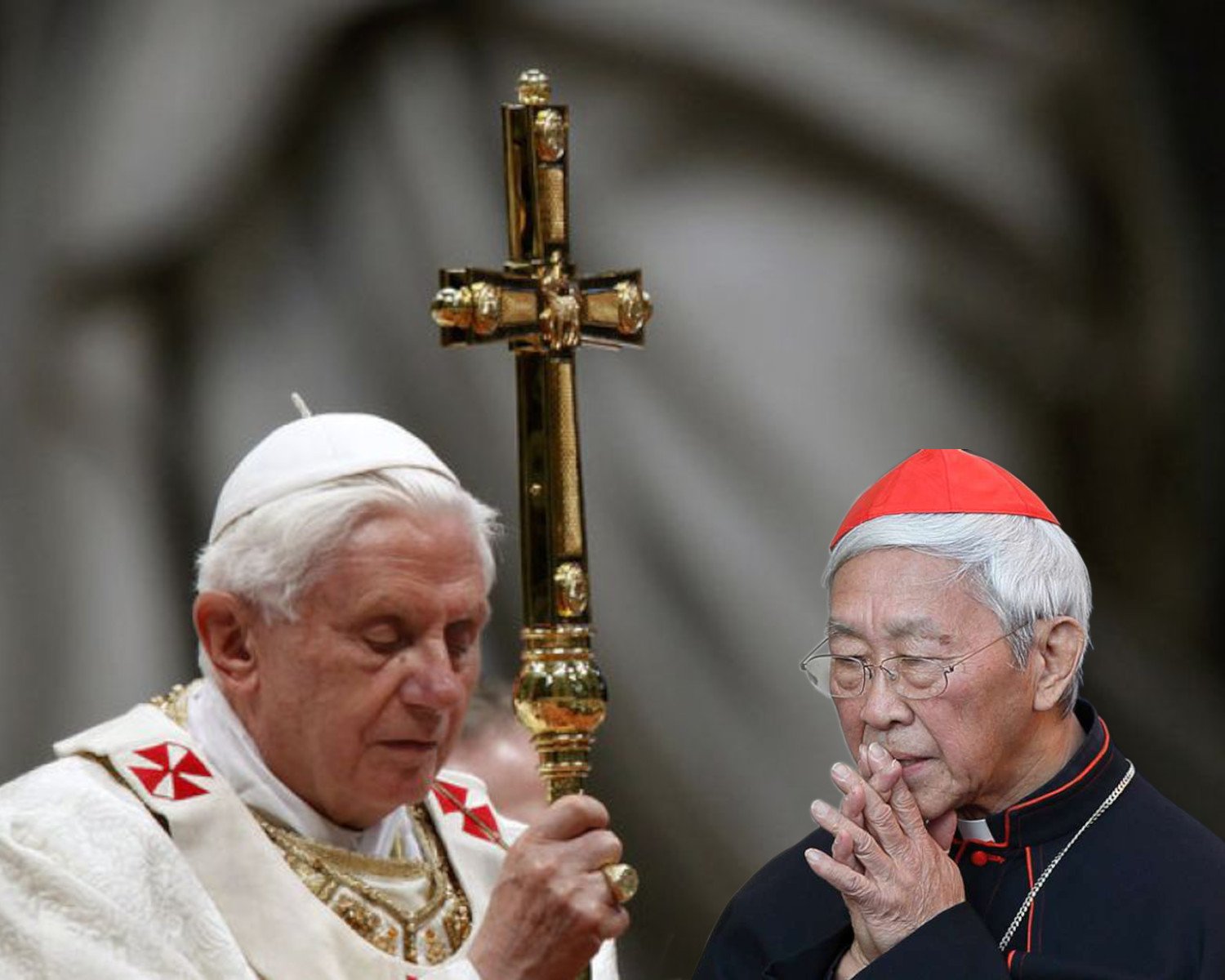
Benedict XVI and a Threat of Catholic Schism — 92 Bold Bishops — Communist China Arrests Cardinal Zen
May 18, 2022
Note from Father Gordon MacRae: This is an unusual post. I set out to revisit a few topics of the last several months that have had new and important developments. I ended up writing three short posts which I invite you to read either all at once or over the next few days. There is a lot going on, not least of which is some breaking news. Our friend, Catholic League President Bill Donohue has just received a Doctorate of Laws Honoris Causa and offered the Commencement Address at Florida’s Ave Maria University School of Law on May 14. This underscores the importance of Religious Liberty which is Dr. Donohue’s field of expertise. If you are not yet a member of the Catholic League, remember that it is on the front lines protecting our Religious Freedom.

Pope Benedict XVI and That German Inquisition
In early March, 2022, I posted “Benedict XVI Faces the Cruelty of a German Inquisition.” Armed with partisan agendas and an ideological bias, a commission of the Archdiocese of Munich and Freising where Cardinal Joseph Ratzinger served as Archbishop in 1980 has accused him of deceit and a sexual abuse cover-up.
This was solely because the elderly Pope Emeritus could not readily recall a 1980 meeting in which an accused priest was reportedly discussed. The progressive and partisan news media capitalized on this to embarrass the elderly Benedict whose painful response spoke volumes about his effort to satisfy the pernicious detractors. Here is an excerpt of his response:
“In addition to responding to the questions posed ... this also demanded reading and analyzing almost 8,000 pages of documents ... and almost 2,000 pages of expert opinion. Amid the massive work, an oversight occurred regarding my participation in the chancery meeting of 15 January 1980. This error was not intentionally willed. To me it has proved deeply hurtful that this oversight was used to cast doubt on my truthfulness and even to label me a liar.”
Statement of Pope Emeritus Benedict, 8 February 2022
Even if the allegations had substance (they do not), this decades-old expedition and revisionist history had the tone and substance of a witch hunt demanding answers out of context for the apparent purpose of isolating and demeaning Pope Benedict.
So why did this inquisition stop there? If it dug back just another forty years it would have faced a reckoning with the Germany of 1942 when vast-atrocities visited upon the Children of Yahweh were amply documented and are globally known. With what moral authority does Germany now point a finger of blame at Benedict for being unable to recall a decades-old meeting?
It turns out, however, that the claims were not true. In a follow-up statement, Archbishop Georg Gänswein, longtime personal secretary to Pope Benedict, addressed the political, moral and spiritual depravity of those pointing these fingers of blame. Here is an excerpt of Archbishop Gänswein’s Statement:
“Benedict denied personally mishandling abuse cases ... in a letter compiled by-four lawyers acting on Benedict’s behalf. The three canonists and one attorney said that all four charges made against him were false. Benedict’s enemies nevertheless used the error to launch attacks on the Pope Emeritus with theologians and others accusing him of lying and perjury.”
Pope Benedict added to his response that, “I have come to increasingly appreciate the repugnance and fear that Christ felt on the Mount of Olives when he saw all the dreadful things that he would have to endure inwardly.”
+ + +

Bishop Joseph E. Strickland of the Diocese of Tyler, Texas
A Push-Back from 92 Bold Bishops
In this shameful debacle, Benedict was the only one talking about Christ. None of these accusers ever even mention God, or Jesus, or fidelity to the Church as they prop up their own progressive agenda.
It did not take long for the true agenda to be unmasked. In the same week as this condemnation of Benedict, a meeting of Germany’s “Synodal Path” declared its support for same-sex unions, sweeping revisions in Church teaching on homosexuality and priestly celibacy, the ordination of women, lay involvement in the selection of bishops, and other signs of a post-Catholic “woke” agenda.
After I first wrote about this story in March, 2022, several Catholic clergy from Germany shared my post with other German clergy and on social media. I had already been banned from Facebook for another post about events in Germany entitled, “Catholic Scandal and the Third Reich: Rise and Fall of a Moral Panic.”
Some of the German clergy bravely disseminated that post as well. On April 11, 2022, a group of 92 bold bishops from the United States, Canada, and around the world signed “A Fraternal Open Letter to Our Brother Bishops in Germany.” I recommend reading the letter. Here is an important excerpt:
“Events in Germany compel us to express our growing concern about the nature of the entire German Synodal Path process and the content of its various documents ... The urgency of our joint remarks is rooted in Romans 12 and especially St. Paul’s caution: ‘Do not be conformed to this world.’ And their seriousness flows from the confusion that the Synodal Path has already caused and continues to cause, and the potential for schism in the life of the Church that will inevitably result.”
The letter briefly lays out seven areas of specific concern. In his weekly podcast carried by LifeSiteNews, Tyler, Texas Bishop Joseph Strickland explained why he was one of the bishops to sign that letter:
“It should be every bishop, in my opinion, and it’s because we are being bishops. Bishops are to guard the deposit of faith. It’s a promise we made. And frankly, the Synodal Path of Germany is doing the opposite. It is eroding the deposit of faith, saying, ‘It’s all up for grabs.’”
It is encouraging that 92 brave and faithful bishops signed that open letter. Some of our readers have penned letters to their own bishops asking for a reason why they did not sign the letter. To date, none have reported receiving any reply.
From my perspective, the bishops of Germany — and too many in the United States and other nations — are failing to read and interpret the writing on the wall. The agenda of the bishops of Germany is barely distinguishable from the one being imposed on our culture by “woke” politicians. I wrote of that agenda in “The Woke Have Commenced our Totalitarian Re-Education.”
I would say that it’s all very scary except that voters across the land, in the United States at least, are amassing to trounce that trend and vote its political proponents out of office. One of the demands of the German bishops is more lay involvement in the selection of bishops. If recent polls are any predictor, the bishops of Germany should be careful what they ask for.
+ + +

The Chinese Communist Imprisonment of Joseph Cardinal Zen
Having suppressed pro-democracy movements in Hong Kong, the Chinese Communist Party arrested 90-year-old Cardinal Joseph Zen for loyalty to his faith even when Rome did not reciprocate.
As an unjustly imprisoned Catholic priest, I simply could not let this story go. Cardinal Joseph Zen, the 90-year-old Archbishop Emeritus of Hong Kong, has been arrested on a charge of conspiracy to engage with foreign powers. To date, Pope Francis has said nothing in support of him other than a vague statement of “concern” and “monitoring the situation.” The rest of the Roman Curia is also keeping its distance. Cardinal Zen was released on bail pending a one-sided trial on the charges. Based solely on the fact that he is a faithful Catholic priest and prelate, he is widely expected to be easily convicted and imprisoned for life. He is facing martyrdom.
In early 2020 I published at my blog, Beyond These Stone Walls, “Catholics, Communist China, and Hope for Hong Kong,” by my friend, James W. Harris. James is a former resident of China where he taught English at the Hua Mao Foreign Language School. His post is a well written eye-opener from someone with firsthand experience of life as a Catholic under a repressive Communist regime.
In 2018, as that post describes, the Vatican signed a concordat with the Chinese Communist Government. The terms of the agreement are still not made public, but the most well known concession hands over the selection of Catholic bishops to the Communist regime instead of the Holy See. Bishops are thus chosen from the state sanctioned church under the authority of Beijing instead of the underground Church that remains loyal to Rome even when Rome has not remained loyal to it.
After the James Harris post was published, much of what it predicted would happen did happen. Once the Vatican concessions were in place, the Communist government of the People’s Republic of China launched a wave of suppression including disappearances of priests, destruction of churches, and forced removal of crosses and other Catholic symbols.
In follow-up comments on social media regarding that post, I wrote (with the help of third parties, of course) about Beijing’s newest demand. Beginning in March 2020, Catholics in China must profess that ultimate authority rests not with God or the Church, but with the Chinese Communist Party.
The Vatican-China deal stands in stark contrast to the papacy of Saint John Paul II who boldly confronted communism in Western Europe. He is widely believed today to have been an essential force in the collapse of the Soviet Union. Sticking my own neck out perhaps a bit too far, I can only conclude that the concordat signed by Pope Francis is reminiscent of the Chief Priest's response to Pilate (John 19:15), “We have no king but Xi Jinping.”
In the February 18, 2020 edition of The Wall Street Journal, one of my favorite columnists, William McGurn, wrote “The Vatican’s Unholy China Deal.” You may not be able to view it without a subscription so I will mention its major points. It begins with a pointed statement of Cardinal Joseph Zen of Hong Kong from his September 2019 appeal to the world’s 223 cardinals:
“The Catholic Church in China is being murdered while the Vatican stands idly by.”
In 2020 Cardinal Zen was invited to Washington, DC where he was presented with the Chinese Democracy Champion Prize. It was much deserved. Bill McGurn had an opportunity to interview him and asked about his “murder” remark. Cardinal Zen’s reply was that of a courageous man, a prelate worthy of the Church’s history of pushing back against oppression and violations of human rights:
“You can never compromise with a totalitarian regime because they want everything. Would you have encouraged St. Joseph to have negotiated with Herod?”
WSJ columnist Bill McGurn points out that the Vatican-China agreement was exclusively the work of European bureaucrats to the almost complete exclusion of Chinese Catholics — including Cardinal Zen. He likened it to the 1933 concordat that Germany struck with the Vatican when Hitler came to power. Both Cardinal Zen and Bill McGurn omit any mention that the groundwork for this deal was laid for the Vatican by then Cardinal Theodore McCarrick sent by Pope Francis as an emissary to China.
In 1933, Church authorities questioned the Third Reich’s post-concordat abuses. In response, the Nazi Party launched a deadly campaign of persecution. I wrote of this in “Saints and Sacrifices: Maximilian Kolbe and Edith Stein at Auschwitz.” Under Xi Jinping in China, increased persecution also followed the current agreement. The Vatican may be trying to protect lives by being silent, but the True Church of China will not be silent — as evident in the courage of Cardinal Zen. For him, the price extracted from all this has been high: “the pope’s silence.” But Bill McGurn is more pointed:
“Yet the leader of the world’s largest religious denomination — a pope who rails against everything from air conditioning to Donald Trump — utters not a peep of protest against what is arguably the world’s largest persecutor of religion.”
I have a close friend in Shanghai, China, a city of 25 million that has recently been subjected to a severe and extended lockdown. My friend was well on his way to a Catholic conversion. After several years of ongoing contact in our friendship, my calls to him are now diverted to some unknown third party. My letters never arrive. My publications are blocked. My friend had never even heard of the 1989 slaughter of pro-Democracy protesters at Tiananmen Square, nor had he ever seen the famous photo of the protester known only as “Tank Man.”
The much feared pro-democracy protests that spread from Hong Kong to mainland China have now completely stopped. The once international city of Hong Kong has been brought to heel. The Catholic Church has been subjugated to the will of the Chinese Communist Party. The arrest and persecution of his Eminence Joseph Cardinal Zen is but the latest trophy for Communism resurgence in the world.
Let us pray for Cardinal Zen. Saint Pope John Paul II, please pray for the rest of us.
+ + +
ADDENDUM MAY 19, 2022:
NEWS ALERT ON CARDINAL ZEN FROM LIFESITENEWS
+ + +
Another note from Fr. Gordon MacRae: Thank you for reading and sharing this collection of short takes from Beyond These Stone Walls. Remember that our Special Events page remains active until the Solemnity of Pentecost. You may also like these related posts:

After Roe v. Wade, Hope for Life and a Nation’s Soul
A prematurely leaked U.S. Supreme Court draft may send a polarized nation to the brink of civil war, but Roe v. Wade is not the first precedent to be overturned.

A prematurely leaked U.S. Supreme Court draft may send a polarized nation to the brink of civil war, but Roe v. Wade is not the first precedent to be overturned.
May 11, 2022 by Fr. Gordon J. MacRae
KA-BOOM! For many months, the U.S. Supreme Court has been examining a case from the State of Mississippi. It is one of the most widely anticipated abortion rights cases in decades, and it could result in the termination of a federal constitutional right to abortion established in the 1973 decision in Roe v. Wade.
In early May, a draft opinion authored by Justice Samuel Alito was leaked to and published by Politico. It is the first time in history that a draft of a pending Supreme Court decision was leaked to the media before it made its way through the Court’s decision-making process. The leaked draft leaves a distinct impression that the Court is (or was) about to overturn Roe V. Wade. The leak was an earthquake for government, the Supreme Court, and advocacy groups on both sides of the abortion issue.
Chief Justice John Roberts immediately requested an investigation of the unprecedented leak. I hope that by the time this is posted, the perpetrator(s) and process through which it was leaked are exposed. Explosions of furor over this in Washington are not exaggerated. The integrity of justice, the Supreme Court, the Separation of Powers, and government itself are at stake.
And there was another, simultaneous explosion, a nuclear one with a mushroom cloud spreading across this divided nation. The leaked news that Roe v. Wade may now be overturned has created a tidal wave of protest outside the Supreme Court and in cities across the land. On the left, the partisan protests are taking an unfortunate tone of vile hostility toward the pro-life movement, toward politicians who have been in sympathy with it, and toward Catholics who have traditionally been a driving force behind the Right to Life.
We should be proud of our defense of life while also avoiding any rhetoric of “we won and you lost!” The only potential winners here are the unborn who may have a chance to live if this leaked document becomes our reality. That is still likely months away.
President Joe Biden, who ran for office on a pledge to unite this polarized nation, has stoked the raging fires by denouncing the Court and calling for abortion rights to now be encoded in federal law. He knows full well that this is highly unlikely in the current divided House and Senate so his rhetoric can only be interpreted as an effort to ratchet up dissent and chaos.
In 2006, as Senator Joe Biden he backed an amendment to overturn Roe. Two years later, he became Vice President in the Obama White House. I can only interpret his radical flip, and his current hostility to the Right to Life, as evidence of a widely held belief that someone else has been doing his thinking for him on this and other crucial issues facing Americans. This is not a good time for the United States to have a puppet presidency.
The leaked document does not represent a final position of the Court, but it appears to have been written for the majority opinion. Whether leaking it was an attempt at sabotage remains to be seen. But the text of Justice Alito’s majority decision draft gives much hope to the pro-life cause.

A Misguided Emphasis on Precedent
The leaked draft affirms that the Constitution makes no reference to abortion and that no such right is implicit in any of its provisions. The draft states that there is no history or tradition that protects abortion as a right with a Constitutional guarantee of due process. This mirrors the position of the late Justice Antonin Scalia who held that the only such right found in the Constitution is the one that the (7-2) majority Court in Roe invented and inserted there in 1973. The draft concludes that “Roe was egregiously wrong from the start, its reasoning exceptionally weak, and with damaging consequences.”
In defending Roe, a lot of ink and rhetoric have been spilled over a legal principle known as “Stare Decisis,” a Latin term literally meaning “to stand by things decided.” The legal principle compels a court to stand by precedents for matters in which the same legal points arise in litigation. You likely heard the term, “respect for precedent” a lot in the Senate hearings vetting recent nominees to the U.S. Supreme Court.
Without exception, the precedent case referred to in these hearings was the 1973 decision in Roe v. Wade. The ruling barred states from adopting restrictions on abortion before the third trimester which was the point at which the Court determined in 1973 to be the time of viability of life outside the womb. The scientific evidence no longer supports that determination.
The principle of “Stare Decisis” does not mean that a precedent is set in stone with no avenue for reconsideration just because it is a precedent. There have been ten cases in U.S. Supreme Court history that have widely become known as “Landmark Precedents.” One of them is Roe v. Wade which had the effect of bitterly dividing the nation into two warring camps thus giving birth to the Pro-life Movement. Each year since 1975, two years after Roe, hundreds of thousands of U.S. citizens descend upon Washington for the National March for Life.
Another precedent also bitterly divided the nation setting in motion the events which led to the Civil War. That case was Scott v. Sanford, an 1857 landmark decision and the one that has been most compared by judicial scholars to the flawed judgment in Roe v. Wade.
In 1846, Dred Scott, a slave living in St. Louis, Missouri, sued contending that he, his wife, Harriet, and their two daughters were legally entitled to their freedom because their “owner” brought them to Missouri which was a free state. After being tried in Missouri state courts and in federal circuit court, the case went before the U.S. Supreme Court in 1856. In 1857, the Court issued its 7-2 split decision rejecting Dred Scott’s claims.
Writing for the Supreme Court majority, Chief Justice Roger Taney, like Joe Biden a self-identified Rosary-carrying Catholic, ruled that “blacks, even when free, could never be citizens of the United States” with rights to sue in federal courts. In his written decision — one that no person of just mind and well informed conscience could hold today — Justice Taney concluded that “blacks are so far inferior that they had no rights which the white man was bound to respect.”
The Taney decision for the Court majority — which, like Roe v. Wade, was also split 7-2 — also determined that the portion of the Missouri Compromise of 1820 that banned slavery in territories north and west of the state of Missouri was unconstitutional. The outcome of Dred Scott v. Sanford led directly to the Civil War.
To claim today that “precedent” alone should be the determining factor in such a case is tantamount to stoking the embers of that war. On January 1, 1863, President Abraham Lincoln’s Emancipation Proclamation ended slavery and paved the way for the Fourteenth Amendment which recognized the rights to life and liberty for all Americans. Those who would cling to “Stare Decisis” as an impenetrable judicial boundary are left today in a misinformed judicial quandary.
As the final fate of Roe v. Wade looms, I urge readers to arm themselves with some truths beyond the hysteria of protests covered 24/7 by cable news. I would like to ask you to read at least one or more of the posts linked at the end of this one, to share them, and to pray ardently for the cause of life and the integrity of this nation.
Be prepared to duck because a political storm is rising. There is on its horizon a distinct impression that the integrity of America and the cause of life are not at all beyond hope.
+ + +
Please also read and share:
Joe Biden, Cardinal McCarrick and the Betrayal of Life
Biden and the Bishops: Communion and the Care of a Soul
The Last Full Measure of Devotion: Civil Rights and the Right to Life


No Child Left Behind — Except in Afghanistan
A missing child is the existential nightmare of parenthood. This account from Afghanistan to America is a staggering story of a parent's relentless audacity of hope.

A missing child is the existential nightmare of parenthood. This account from Afghanistan to America is a staggering story of a parent’s relentless audacity of hope.
May 4, 2022 by Fr. Gordon MacRae
In October, 2021, I wrote a post entitled “Left in Afghanistan: Taliban, al Qaeda, ISIS-K, Credibility.” It was critical of the poorly planned and chaotic American withdrawal from Afghanistan that diminished the U.S. President and America’s reputation in foreign policy. My post highlighted, among other truths, the $80 billion in U.S. military weapons left behind to be exploited by the Taliban. But that was not all that was left behind.
The Wall Street Journal recently published a heart wrenching story by Jessica Donati entitled “A Dad Hunts for His Lost Boy in Kabul,” (April 16, 2022). It’s a well written account of a little known incident that took place during the catastrophic U.S. withdrawal from Afghanistan in August, 2021. An Afghan man, identified only as “Mohammad” to protect his family, was among a vast crowd trying to leave the Kabul airport that day. Just two days before, an ISIS-K bomb exploded at the airport killing 170 Afghans and 13 U.S. soldiers. Both the Marines and the Taliban waiting for them to leave were on high alert. On the day the bomb exploded, Mohammad’s wife gave birth by emergency cesarean section. She was in no condition to travel, but travel they must. Days earlier, Taliban fighters showed up at Mohammad’s house looking for an American. Then the U.S. State Department advised all Americans to leave Kabul. Mohammed, who was trained in psychology and addictions treatment, had served as an advisor to the U.S. Marines in Afghanistan. He also held dual American citizenship.
He also knew that his family would be in danger if they remained so they were among a mob desperately trying to board a last chance American transport plane. At the Kabul airport, they were cleared by soldiers to pass through a gate to board the plane. Mohammad carried a few hastily packed necessities and the newborn baby while escorting his ailing wife, Bibi, who took the hand of their eight year-old son, James.
The Taliban were watching close by. Pressed by a crushing and panicked mob, the family was pushed through the gate to board the plane. In the chaos, their son became separated from Bibi and forced back into the crowd. Once the parents realized he was missing, they could see no sign of him in the mob on the other side of the fence. Mohammad tried to go back, but soldiers barred him saying that he would not be able to return.
With his wife on the verge of collapse and still holding his newborn infant, Mohammed was faced with a crushing spontaneous choice. Does he abandon his wife and newborn to save his son? He had to get his wife and infant aboard that plane first. There were no seats on the crowded transport and most people were standing, but someone on the packed floor of the plane gave up a space for Bibi who then collapsed.
Placing the infant with her on the floor, Mohammad again tried to go search for James. Outside the plane, panicked mobs were barring his exit as they tried to force their way aboard. We all saw footage of fleeing Afghans trying to cling to the outside of that plane. As it prepared for takeoff, Mohammad could only pray in despair for the safety of his son.
Few of us reading this can fully comprehend the existential state of anxiety such an event would produce in any parent.

Afghans crammed onto an Air Force transport plane to escape Kabul.
A Parallax View
Mohammad tried to phone James from inside the plane on the tarmac, but because of the bombing two days before, soldiers were on high alert. They threatened to smash his phone if he tried to use it again. None of the fleeing passengers even knew where the plane would later land. Then the WSJ account switched to a parallax view, a view of the same event from another perspective: that of eight year-old James.
Being small, the crush of the crowd forced James from his mother’s hand while pushing him ever more deeply into the frantic mob. When he realized he had lost his family, he sat on a curb and cried under the weight of his own despair. He was holding only a small plastic bag with his passport and a cell phone. As he heard the plane’s engines, he became one of an unknown number of children separated from parents and left behind stranded and alone in Afghanistan.
The WSJ article points out that the State Department was overwhelmed by the flood of refugees seeking admission to the United States. In addition to those from Afghanistan, the ongoing refugee crisis was also impacted by daily chaos at the U.S. Southern Border. President Biden has since pledged to also accept 100,000 refugees fleeing Ukraine, a story I wrote of in “Beyond Ukraine: The Battleground Against Tyranny Is Us.”
Back to eight year-old James: Another Afghan man at the scene with his nephew was unable to get his own family onto that plane. He saw James on the ground crying and knew he had become separated. He also knew that the Taliban would only exploit him. So he, too, was forced into a spontaneous decision. He took James with him and his nephew in search of safety.
The courageous stranger (unnamed for his own safety) later told The Wall Street Journal, “I found a little boy crying in a corner. I couldn’t just leave him there.” He brought James to his home in Kabul while his nephew tried to call a number programmed on James’ phone. Aboard the plane in flight, Mohammad’s phone was receiving no signal.
Only in flight did the passengers learn that they were bound for a U.S. air base in Bahrain on the western side of the Persian Gulf. Upon landing, Mohammad charged his phone, but he and others learned that their SIM cards would not work outside of Afghanistan. The base was crowded with thousands of Afghan refugees. Mohammad tried in vain to get someone to try to contact his son. Soldiers wrote his name and description down. Three days later, Mohammad and his wife and baby were placed aboard another plane bound for a military base in Wisconsin.
In Wisconsin, Mohammad heard accounts out of Kabul that some of the Taliban were searching for lost children with American ties so they could hold them under torture for ransom. He feared revealing to contacts in Kabul that his son was alone and stranded there. He finally reached Bibi’s sister in Northern Afghanistan but no one knew the whereabouts of her brother, Sayed, the one person who Mohammad knew would go to any lengths to find James.
Mohammad tried in vain to arrange his own return to Kabul to find his son, but ran into the same roadblock as in Kabul. If he went back there he would not be allowed to return. Finally, on his second day in Wisconsin, he was able to get a Wi-Fi signal and learned that his son had been rescued by a stranger in Kabul. A full week had passed when, to his great relief, there were multiple messages on Mohammad’s newly accessed phone from James and the stranger who rescued him.
He called right away and tearfully heard his son’s voice. There are 1,500 Afghan children who arrived in the U.S. on refugee flights without their parents. To date, only about 60 have been reunited with family members. Most remain in U.S. Government custody. But the problem with James was the opposite. There seemed to be no protocol for bringing a minor child from Taliban-controlled Afghanistan to reunite him with parents in the United States.

Task Force Argo helped some flee Afghanistan. Here they are about to leave Mazar-e-Sharif. Photo courtesy of Task Force Argo.
Task Force Argo
Mohammed learned from another evacuee at the Wisconsin base that a volunteer group of American veterans and former government employees known as Task Force Argo was working to charter evacuation flights out of the city of Mazar-e-Sharif in Afghanistan.
Meanwhile, Mohammad kept trying to reach his brother-in-law, Sayed, who had been studying in Kabul. When the city fell, Sayed relocated to a remote region with no phone reception. He worried about his family in Kabul so a friend climbed with Sayed to a remote mountaintop to try to get a signal. When he connected, he saw multiple urgent messages from his sister, Bibi. By chance, his phone rang just then. It was Bibi.
When Sayed learned what happened, he vowed to return to Kabul to search for James. While there, he messaged Mohammad for the name and location of the stranger who rescued him. Sayed then learned of the hope that Task Force Argo might help. In Kabul, he and his traumatized nephew had a tearful reunion. Then they boarded a bus bound for Mazar-e-Sharif. Jesse Jensen, a co-founder of Task Force Argo, told The Wall Street Journal:
“America needs to step back up to the plate and demonstrate that we don’t abandon allies or children of American citizens. If the U.S. government won’t do this, we will.”
The day after Sayed retrieved his nephew, the stranger who had rescued him in Kabul was visited by Taliban fighters looking for the son of an American. They searched the house, but found nothing. The man then took his own family and hastily left Kabul.
Task Force Argo arranged to get Sayed and James aboard a flight from Mazar-e-Sharif to United Arab Emirates where they were relocated to a secure compound of 9,000 Afghan refugees called “Emirates Humanitarian City.” The U.S. Embassy there has an office for interviews, but progress in vetting the stranded — many of whom were allies who assisted the American effort in Afghanistan — is very slow.
The story, for now, ends with Sayed and James safe but now stranded in the United Arab Emirates. It was not the fault of eight year-old James or his parents that the process for evacuating them from Kabul was so poorly planned and chaotic. Eight months after that day, the U.S. State Department could easily fix this, but hasn’t. I hope the attention to this by The Wall Street Journal, coupled with the heroic efforts of Sayed and Task Force Argo, might bring a happy ending to this horrific but still hopeful account.
Under current White House policy, the only other option might be for Sayed to somehow get James into Mexico and the Southern Border where they could simply wade across the Rio Grande into the United States with little in the way of obstacles.
Please pray for James and his family.
+ + +
Note from Fr. Gordon MacRae: Thank you for reading and sharing this story on social media. You may also like these related posts from Beyond These Stone Walls:
Left in Afghanistan: Taliban, al Qaeda, ISIS-K, Credibility
Beyond Ukraine: The Battleground Against Tyranny Is Us

James reunited with his uncle Sayed. Photo courtesy of The Wall Street Journal.

To Vanquish Evil, and Disney in La La Land
Writing on current events behind and beyond these stone walls Fr. Gordon MacRae presents ‘Archangel Michael Atop My Prison Door’ and ‘From Disneyland to La La Land.’

Writing on current events behind and beyond these stone walls Fr. Gordon MacRae presents ‘Archangel Michael Atop My Prison Door’ and ‘From Disneyland to La La Land.’
April 27, 2022 by Fr. Gordon MacRae
Pigeon poop! I apologize in advance for such an inauspicious beginning to an otherwise respectable post, but that is in fact how this story began. In the weeks before Holy Week this year, a nasty norovirus raged through this prison with a vengeance. Some prisoners have a bad habit of feeding pigeons who amass inside these walls for a daily feast. Some of the pigeons are so obese from a steady diet of stale bread that it’s a marvel they can still get off the ground. Finally, prison officials banned the practice of feeding them after the pigeons became possible suspects in a recent outbreak of norovirus.
I was just beginning to feel some gratitude that it passed me by, but alas, I was among the last to get it. My own version of it was like the “Big Barrage” at the end of a Disney World fireworks display where the biggest explosions are saved for the end. I will spare you the more gory details, but on the night of April 1st into April 2nd, I spent twelve hours memorizing the patent number on one of our housing unit toilets.
That twelve hours from hell was followed by a few days of overtaxed abdominal muscles and grumbling queasiness, but it’s all behind me now. I always wash my hands many times each day here, and I avoid as much contact with others as I can, but because I am the law clerk in the prison legal library, everyone wants to shake my hand upon arrival. Rather than refuse the gestures, I thought it better to just wash my hands more often.
Anyway, my bout with norovirus is over now so I’ll get to the point. After the early April experience, I found myself with a sudden disdain for pigeons and their calling cards. I cannot see this blog, but in some printed images that were sent to me, I noted an abundance of pigeon remnants beneath the statue of St. Michael the Archangel on our Home Page. It never bothered me until my abdominal apocalypse, but now the pigeon poop was all I could see.

The majestic marble statue, located somewhere in France, was mostly spared by some obviously devout French pigeons, but poor Satan beneath was subjected to relentless pigeon bombardment. It’s not that I have sympathy for Satan. I just wanted all evidence of pigeon fecetiousness gone from my blog. Yes, I know “fecetiousness” is not a word, but it should be.
So as Holy Week loomed, I asked our editor if we could possibly replace the image of St. Michael on our Home Page with one less ... um, decorative. My only condition was that I wanted St. Michael to stay. He is, after all, the Patron Saint of Justice and I wasn’t about to let him fly off with the pigeons.
The only problem was in selecting a replacement from among the thousands of statues, sculptures, paintings, sketches, and stained glass depictions of Archangel Michael. I could be no help in choosing one because I cannot see any of what our editor sees while preparing this blog for publication. Seeking an inspiring one, she settled on an 1850s painting by French artist, Eugene Delacroix entitled, “Saint Michael Overcoming Satan.” It hangs in the Church of St. Sulpice in Paris. So sight unseen I asked for that one because I attended a Sulpician seminary, St. Mary’s Seminary and University in Baltimore, the oldest Pontifical Institute in the United States.
Our new Home Page was up on Palm Sunday, but it was the middle of Holy Week before I could see a copy of it. I was astonished because that very same image — one of thousands of Saint Michael images from which our editor could have chosen — has been above the door on the inside of my prison cell for twelve years. It was put there by Alberto Ramos, a young man I wrote about in “Why You Must Never Give Up Hope for Another Human Being.”
In a phone call to Thailand this week, I told Pornchai Moontri this story. He recalled being bombarded by a pigeon in the prison yard while sitting next to me watching a basketball game two summers ago. He assumes now that the pigeon was actually aiming for me. More importantly, Pornchai was astonished by the St. Michael story. He was present in our cell in 2010 when our friend, Alberto silently climbed up onto the sink to tape that same image of St. Michael on the lintel above our door.
“Never take this down,” Alberto said. Having been in prison since age 14, he knew only too well the underworld currents of evil that drift through here by osmosis. He wanted the Patron Saint of Hope and Justice to be the last thing we see before venturing out our door into the prison world beyond.
When Pornchai and I were moved to another place seven years later in 2017, I climbed up to carefully remove Alberto’s St. Michael image for placement above our new cell door where it remains to this day. It is now also the same image that welcomes visitors to Beyond These Stone Walls. The full story of Saint Michael and why Alberto put him above my prison door is told in one of our most popular posts, “Angelic Justice: St. Michael the Archangel and the Scales of Hesed.”
+ + +

From Disneyland to La La Land
You may have noticed that I mentioned Disney World in our first entry for this double post. Disney World has been in the news lately, but not for anything that contributes anything to the common good. Following some currents of parental anxiety over “woke” trends in education, Florida Governor Ron DeSantis signed into law a bill restricting public schools from teaching about sexual orientation and gender identity from kindergarten to the third grade. In a bizarre twist for a corporation counting on Florida for its success, Disney World protests that decision.
Supporters of the bill say it was aimed at asserting more parental control over content in the classroom, a trend that swept the nation after a Democratic former Governor of Virginia declared last year that parents should have no say in what is taught in schools. That is why he is still a “former” Governor of Virginia. The loudest reaction came at the polls. Some of the most liberal school board members in some of the most liberal Democratic-led cities are now also voted out of office.
Lest you think this Florida bill squashes legitimate debate about public policy, it does nothing of the kind. It simply limits classroom instruction about sexual orientation and gender identity from kindergarten through grade three, a development that should need no defense. The law also requires that information in subsequent grades must be age appropriate. The bill allows parents to sue school districts that do not comply. Governor DeSantis defended the new law amid an onslaught of “woke” protests:
“You’ve seen a lot of sloganeering and fake narratives by leftist politicians, by activists, and by corporate media. We will continue to recognize that in the state of Florida, parents have a fundamental role in the education, healthcare and wellbeing of their children.”
Tolerance, respect for human rights, and justice for all people are desirable goals for every society, but there is a gaping chasm between such a noble effort and woke demands for education to teach and promote LGBT and gender identity issues as an evolution in human development that contributes to the common good. The “common good” is the most abused and debatable part of this discussion. I once wrote a post on the special handling of this subject that was an eye-opener for many. It was entitled “Cardinal Theodore McCarrick and the Homosexual Matrix.”

Disney’s Falling Stars
Disney executives are likely aware that the history of their own company was not always on board with the current woke trend. Just a few months ago, there was an obscure story buried in the news media about Tommy Kirk. If his name rings no bells, his most memorable acting role probably will. The entire nation shed tears in the 1960s while watching him as a teen movie icon compelled to euthanize his beloved dog in the blockbuster Disney film, Old Yeller. I was ten years old then, and overcome with grief.
Tommy Kirk went on in adolescence and young adulthood to make a few more big box office Disney films such as The Shaggy Dog, Swiss Family Robinson, and The Absent Minded Professsor, but none were quite as memorable as Old Yeller. Walt Disney introduced him to a film director then as “My Moneymaker.”
Then, at age 21, Tommy Kirk was seen holding hands with another young man near a Disneyland pool. Walt Disney ordered Kirk to be escorted from Disney property and fired. Kirk was blackballed and ruined as an actor. He went on in young adulthood to struggle with addiction. He died in 2021 having gotten his life together running a small business in obscurity.
I wonder what Tommy Kirk might think today about the Disney drift to the polar opposite extreme of LGBT concerns. One need not travel back more than a few decades to find a parade of young actors used, used up, and discarded by Corporate Disney. Remember Bobby Driscoll? He found stardom as Jim Hawkins in the 1959 blockbuster Disney production of Treasure Island. Bobby Driscoll died from drug addiction in his early thirties after spending much of his youth anonymously discarded on skid row.
In its public opposition to a common sense law, Corporate Disney has descended into La La Land and is out of touch with the currents of parental rights and discourse. Disney’s dive into the culture war should raise alarms for stockholders whose concerns for Disney’s bottom line might dwarf its woke agenda.
It should also raise alarms for parents whose children are lured from parental influence by a woke agenda mixed with heavy doses of glitter and fun.
Disney Chief Executive Bob Chapek initiated a public dispute with Governor DeSantis over Florida’s common sense measure. Mr. Chapek and Disney World are on the wrong side of public policy and parental rights in this. The Walt Disney franchise can only be harmed by this oblivious descent into the woke politics of our time and their insistence on suppressing parental rights. I predicted such a development in another post, The “Woke” Have Commenced Our Totalitarian Re-Education.
Since then, the Florida Senate and House of Representatives both voted to rescind a decades-old agreement allowing self-government for Disney World and tens of millions of dollars in tax breaks.
“What father among you would hand his son a stone if he asks for a fish?” (Matthew 7:10). What parent among you would take a cue from Disney on the education of your child?
+ + +
Note from Father Gordon MacRae: Please visit our “Special Events” Page for our announcement about Easter Season posts leading up to Pentecost, and for information on our aiding our refugee project in Thailand.
You may also like the related titles linked in this week’s post:
Why You Must Never Give Up Hope for Another Human Being
Angelic Justice: St. Michael the Archangel and the Scales of Hesed


Divine Mercy in a Time of Spiritual Warfare
In the 1970s, Fr. Seraphim Michalenko smuggled the Diary of St. Faustina out of Communist-occupied Poland. Forty years later he smuggled Divine Mercy into a prison.

In the 1970s, Fr. Seraphim Michalenko smuggled the Diary of St. Faustina out of Communist-occupied Poland. Forty years later he smuggled Divine Mercy into a prison.
April 20, 2022 by Fr. Gordon MacRae
In a 2022 post, “The Annunciation and the Consecration of Russia and Ukraine,” I wrote about an old and dear friend, Fr. Tony Nuccio, a priest who became my surrogate father at a time when I most needed one. I was 16 then, and lost. When I was 18, two years after I commenced the practice of my renewed faith, Father Tony brought the Cursillo movement to our parish. I was invited, but I did not want to go. When I finally caved in, I did as he asked: “Participate. Don’t anticipate.” But it wasn’t easy. I was 18, and I already knew everything!
A year later, at 19, I was asked by Father Tony to be a team member for a subsequent Cursillo weekend, and to present a talk — called a “Rollo” (pronounced “Roy-o”) in the Spanish language of Cursillo. Father Tony knew exactly what he was doing. The Rollo he assigned me to present was entitled “Obstacles to Grace.” I was, of course, terrified, believing that I had no frame of reference for such a topic. Father Tony laughed and said, “Trust me on this. You’re an expert in the field.”
He was right about that. Trust itself — or actually its almost total absence — was always the source of my expertise. Trusting others, trusting life, trusting faith, trusting God were the great challenges of my youth. There I was fifty years ago in 1972, a 19-year-old kid already battered by life instructing a group of adult Catholic men about obstacles to grace and how to overcome them. My own words were meager, but in preparing the Rollo, I stumbled upon a passage from Saint John Henry Newman.
I cannot recall how or where I found it, but the passage struck me as one of life's Essential Truths then and still does today. For my entire life since, I have been both challenged and guided by this passage. I committed it to memory a half century ago and it is still there:
“God has created me to do Him some definite service. He has committed some work to me which he has not committed to another. I have my mission. I may never know it in this life, but I shall be told it in the next. I am a link in a chain, a bond of connection between persons. He has not created me for naught. I shall do good;
I shall do His work. I shall be an angel of peace, a preacher of truth in my own place, while not intending it, if I do but keep His commandments. Therefore, I will trust Him, whatever, wherever I am. I can never be thrown away. If I am in sickness, my sickness may serve Him; in perplexity, my perplexity may serve Him. If I am in sorrow, my sorrow may serve Him. He does nothing in vain. He knows what He is about. He may take away my friends. He may throw me among strangers. He may make me feel desolate, make my spirits sink, hide my future from me. Still, He knows what He is about.”
— Saint John Henry Newman

Behold Your Son! Behold Your Mother!
Over the course of the last dozen years of writing from prison, several readers have sent me that same passage. They say that it reminds them of what happened in my life, and in Pornchai Moontri’s life as well. I believe, and many believe, that I have found the work that God has committed to me alone, a work He has committed to no one else. All the rest of the passage is simply about trust. This passage goes to the heart of Divine Mercy, and at age 19 I surrendered to it without ever even hearing the term. My natural inclination was to resist, but resistance was futile!
I know today that just about the time I was discovering the above passage from Saint John Henry Newman in 1972, Marian Father Seraphim Michalenko was in Communist-occupied Poland. While there he devoted his life to the cause of Divine Mercy and bravely smuggled the Diary of Saint Faustina — the Manifesto of Divine Mercy — to bring it to the free world. Divine Mercy would one day become for me the framework of my existence as a man, as a priest, as a prisoner.
Father Seraphim was appointed by the Vatican to be Vice-Postulator for the cause of canonization of Saint Faustina. Internationally known as an expert on her life and famous Diary, he became the catalyst for publishing it and documenting the miracles that became the basis for Faustina’s beatification and canonization. Pope Benedict XVI called Divine Mercy “the nucleus of the Gospel.”
Four years before his death in 2021, Father Seraphim was brought to this prison for a Mass. After Mass in the prison chapel, Pornchai Moontri and I were both asked to remain because Father Seraphim wanted to speak with us. I had no idea what to expect. We both knew about him but had no idea how he knew about us. Pornchai was anxious. “I don’t know what to say,” he whispered. When Father Seraphim approached, he asked to speak with Pornchai first. Fifteen minutes later, a smiling Pornchai told me that I am next.
As Father Seraphim and I spoke, he asked about our connection with St. Maximilian Kolbe, how he entered our lives, and how we came to Divine Mercy. So I told him of my lifelong regard for the passage above from St. John Henry Newman and of how it has guided me. I remember saying that I am not certain of the “definite service” God has committed to me that He has committed to no one else. Father Seraphim leaned a little closer to me and said with quiet certainty “He is standing right over there.”
I want to emphasize this lest anyone think that it was me at the center of God’s attention in this story. It was never me. For some reason, the entire Divine Mercy apostolate in North America took up an interest in the life of Pornchai Moontri and committed him to the care of the Immaculate Heart of Mary. It is easy to scoff a bit at such a thought, but I first discovered it to be true when Marian Helper magazine published “Mary Is at Work Here” in 2014. The article, by Marian Helper editor Felix Carroll, included this startling passage that I have written about before:
“The Marians believe that Mary chose this particular group to be the first [invited to Marian Consecration]. That reason eventually was revealed. It turns out that one of the participating inmates was Pornchai Moontri who was featured in last year’s Marian Press title, Loved, Lost, Found: 17 Divine Mercy Conversions... As [the book] reveals, Pornchai experienced a dramatic conversion several years ago in no small part due to a friendship formed with fellow inmate — and now cellmate — Fr. Gordon MacRae who chronicles their lives in his celebrated website. [Beyond] These Stone Walls has gained widespread public support for their cause, including from the late Cardinal Avery Dulles. Father Gordon joined Pornchai in the Consecration and called it ‘a great spiritual gift’ that opened a door to the rebirth of trust during a dark time for both men. Great suffering requires great trust.”
— Marian Helper, Spring 2014
Our Marian Consecration was the culmination of a 33 Days to Morning Glory retreat based on the book of the same title by Father Michael Gaitley, MIC. “Behold Your Son! Behold Your Mother!” That is the title that the Marians of the Immaculate Conception gave to an article of mine about how Divine Mercy entered our lives behind these prison walls. It began as a pair of December 2013 posts that were later combined into a single narrative by Marian Helper editor Felix Carroll for posting at the site of the National Shrine of the Divine Mercy. Felix said that this article “lit up our website as never before.”

As Spiritual Battle Rages
What happens to Divine Mercy when life begins to descend — as it does for many right now — into the discouragement and trials of spiritual battle when evil has the appearance of coming out on top? The rest of this story takes up the latter part of the passage quoted above by St. John Henry Newman: “He may take away my friends. He may throw me among strangers. He may make me feel desolate, make my spirits sink, hide my future from me. Still, He knows what He is about."
Sadness is not always a negative state of mind only to be avoided. Sometimes, we should just allow ourselves to become immersed in it. Imagine the tragedy of going through life without ever loving another human being whom you will one day miss with great sadness. Imagine never caring about someone else enough that absence leaves you in pain.
I had been in prison for 26 years on September 23, 2020. That month was among the saddest of my life, and yet the sadness was necessary and in the end, even welcomed. For the previous 15 years, every sign told me that I am powerless to do anything about my own unjust imprisonment, so I worked hard to become a catalyst of liberty for another. I wrote of that September day of desolate losses in a special tribute to a Patron Saint in “Padre Pio: Witness for the Defense of Wounded Souls.”
America was caught up in a torrent of grief and chaos then. The global pandemic made its way out of China and wreaked havoc in places like the one where I live. In an over-crowded prison, social distancing was impossible. The only step that could be taken to ward off a disaster was to shut everything down and lock everyone up. There is no protection from a pandemic in a place where 24 grown men share two toilets and two sinks. And when 12 of them are sick, there is nowhere to hide.
Meanwhile, at the height of the pandemic across the land, mobs of protesters became unhinged as the death of George Floyd at the hands of police played out ad infinitum on the news. Cities were ablaze with violence while the news media told us these were just peaceful protests. News media and government officials (and even some bishops) claimed that our churches posed a high risk for contagion while mobs of looting protesters, an even greater mobs amassed at the southern border, posed no risk at all.
The pandemic and all the social chaos could not have come at a worse time for me in those awful months leading up to “The ICE Deportation of Pornchai Moontri.” I made that a link for those newer readers who may not already know of this story. Because of the pandemic, what should have been for Pornchai a few weeks in ICE detention awaiting deportation to his native Thailand — which is always a grueling experience — turned into five months. I am not sure who was suffering more from the ordeal, Pornchai or me.
I knew from experience that without help he could be easily lost in the ICE system so I worked from inside a 60-square foot prison cell in New Hampshire to coordinate a small team of advocates in the U.S., Thailand, and Australia to help guide Pornchai from a distance through the ICE minefield.
But the grief and losses I encountered were still not complete. Spiritual warfare chose that moment — from September to November of 2020 — to try to silence my voice. Father George David Byers, who had been helping me to post what I write, began to notice that at the very time my life was preoccupied with Pornchai’s departure, some of the content on These Stone Walls began to disappear. By the end of October 2020, a decision had to be made to take These Stone Walls down. Eleven years of writing and nearly 600 posts were simply gone. And so was my friend, into a cauldron of misery. We were both stranded and alone in our grief. But not for long.

Allies in Spiritual Battle
Living in a hellish environment with 70 men to a room in round-the-clock torment in a for-profit ICE facility in Louisiana, Pornchai was able to get out only one ten-minute phone call each day. But he and I could not call each other. It was clear to me that he could not cope with this alone for five months, so one of our friends and helpers, the late Claire Dion in Maine, devised a way to help us both.
Though we could not call each other, Claire suggested that at a pre-set time each day, Pornchai and I could both call her on two different cell numbers, then she would put the phones together. It was not ideal, but it worked and it saved the day every day for five months. There were times when Pornchai met the limit of his endurance, but that simple reassuring 10-minute daily call renewed his trust in Divine Mercy, and mine.
That’s our friend, Claire, and her ingenious phone rescue pictured above. But my spiritual battles of the fall were just getting started. Soon after Pornchai left, I became miserably ill with Covid. There was no treatment so I just toughed it out for three weeks in October along with all the others in my living area. Our housing unit was quarantined, but that only meant temperature checks twice a day while locked in with our misery.
Then I received a handwritten letter from a stranger in New York who had stumbled upon this blog. Four years earlier, Father Seraphim told me that my mission is to be like that of St. Joseph in Pornchai’s life. In the very week These Stone Walls came down, the stranger’s letter told me that she found a post of mine about St. Joseph and was very moved by it. With a Ph.D. in computer science, she was well placed to understand what took place in the cyberspace at work against us. To my awesome surprise, I learned that she had quietly uploaded to her own server all 600 past posts and all the other content of this site just before it was all taken down. I thought everything was lost only to find out nothing was lost.
The new publisher volunteered to reconstruct the site on a new platform with a new name — Beyond These Stone Walls. This was happening in the final months of 2020 while we simultaneously struggled to overcome the obstacles of a global pandemic and ICE indifference to return Pornchai home. [He has been in Thailand for a year now, and I wrote of that year in “Pornchai Moontri: A Night in Bangkok, A Year in Freedom.”]
We still speak daily. I deeply appreciate the support of friends and readers that makes that possible — that made all of this possible. Despite hardship and pain, the great adventure of Divine Mercy has won this day, and has won these lives.
God knows what He is about.
+ + +
Note from Fr. Gordon MacRae: That “definite service” that God has committed to me did not end with Pornchai’s departure last year. Please consider helping me to help him and Father John Le, SVD in their ongoing missions of Divine Mercy. See Part Two of our Special Events Page to find out how.
To join Pornchai Moontri and me in the Association of Marian Helpers, call the Marian Helpers Center at the National Shrine of the Divine Mercy at 1-800-462-7426.
Just a day before I wrote this post, Pornchai was invited to tour the Fr. Ray Foundation School in Pattaya, Thailand. At three sites in Thailand, The Father Ray Foundation provides a home and education for 850 underpriviledged and special needs Thai children. Our friends Father John Le, Pornchai’s Thai tutor, Chalathip, and Divine Mercy Thailand founder, Yela Smit, went with him. They sent photos!


To the Spirits in Prison: When Jesus Descended into Hell
The Apostles Creed is the oldest statement of Catholic belief and apostolic witness. Its Fifth Article, that Jesus descended into hell, is a mystery to be unveiled.
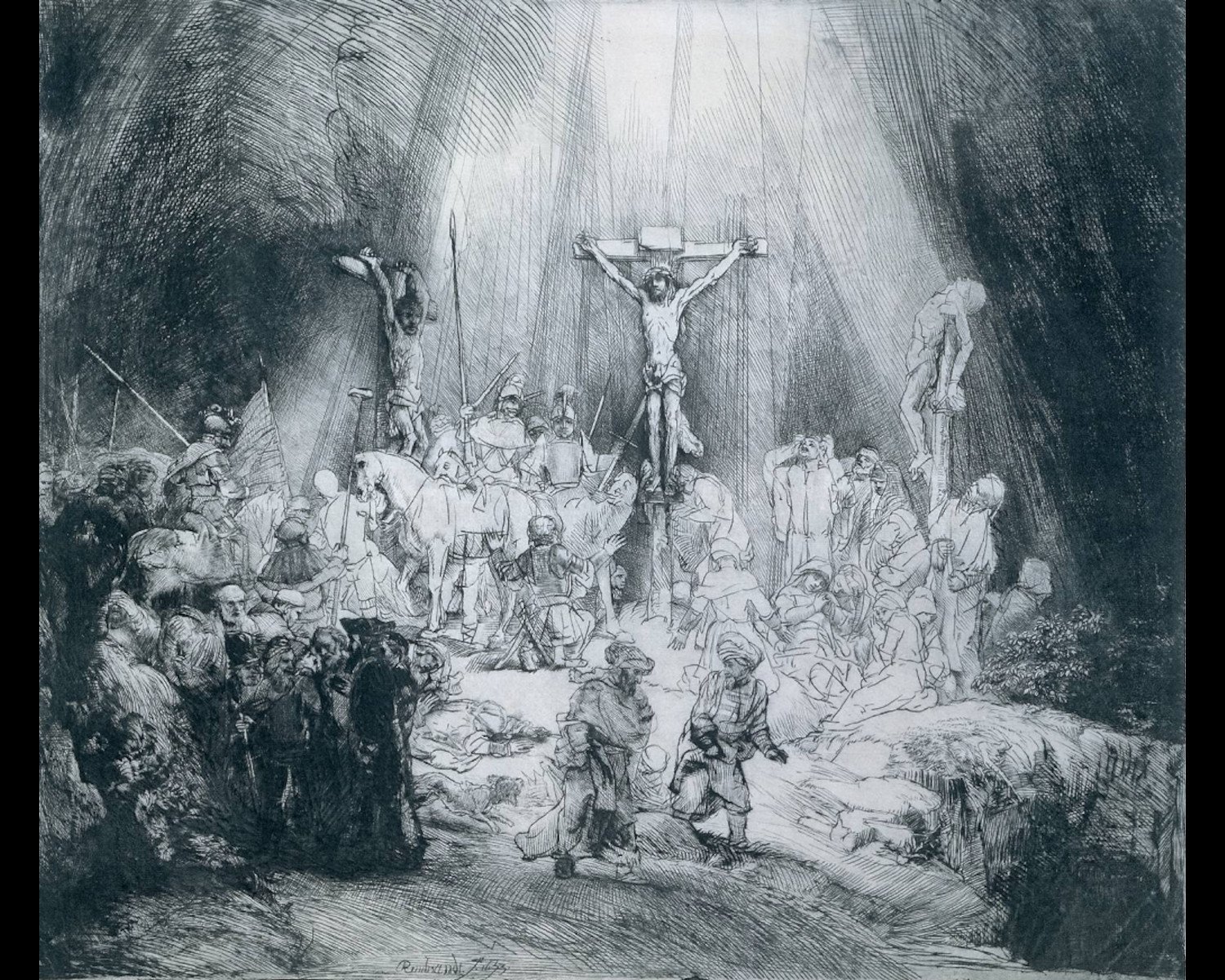
The Apostles Creed is the oldest statement of Catholic belief and apostolic witness. Its Fifth Article, what happened to Jesus between the Cross and the Resurrection, is a mystery to be unveiled.
“This is the night when Christ broke the prison bars of death and rose victorious from the underworld.”
— The Easter Vigil Exultet
April 13, 2022 by Fr. Gordon J. MacRae
This is my 13th Holy Week post from prison. In each of them, I have tried to move away from my usual format, which is sort of a prison journal, to make our Holy Week post a more serious theological endeavor. That has been a challenge where I live because my resources for research are few. Despite that obstacle, we have over these years presented a series of posts about the events of Holy Week that have become popular with readers.
Some of these posts stand out more than others. They tend to follow the Way of the Cross so we have selected seven (besides this one) that could become daily readings for a personal Holy Week retreat. We have now gathered them in one place “Our Holy Week Retreat for Beyond These Stone Walls” .
A few weeks ago in my post, “The Annunciation and the Consecration of Russia and Ukraine,” I wrote of my path of reversion to Catholic faith at age 16 in 1969. At a time when most of my peers were drifting away from faith in protests of one sort or another, I was drifting toward it. It was 1969, after all, and it was the age of protest and dissent. It was a strange time to commence taking Catholic faith seriously. It was the year after Pope Paul VI published “Humanae Vitae,” a year in which much of the world resisted authority and fidelity. It was a year of exodus for many priests and religious, a year in which secular and Catholic Culture began a misguided quest for relevance in a fracturing world.
It was also the year that I first paused while reciting the Apostles’ Creed to ponder its Fifth Article, a perplexing statement that Jesus, upon His death on the Cross, descended into hell. The Apostles’ Creed is a summary statement of the core beliefs of our faith’s first witnesses about the person and mission of Jesus. Did they really believe that upon His death He went to hell? For a 16-year-old struggling with faith, it was a startling question.
The answer to it has been a long and winding road into the meaning of the Cross, death, covenant, hell, and Heaven, the most fundamental questions for people of any faith. I have written a post that perhaps should precede this one for those who want a serious inquiry into the meaning of life and death in Sacred Scripture: “The God of the Living and the Life of the Dead.”
There are two creeds — summaries of belief — that have a special place in the life of the Church. The Apostles’ Creed identifies with the centrality of the Church of Rome and the See of Peter from Apostolic times to the present. It is the Church’s core statement of belief. The second, the Nicene Creed used in the Mass, is formulated from the first two Councils in the life of the Church, the Councils of Nicea (325 AD) and Constantinople (381 AD).
The Nicene Creed does not reflect a statement that Jesus descended into hell, but the Councils did not negate or refute it. This statement from the Apostolic era of the Church remains a dogma of faith. But what does it mean? What happened between the Cross and the Resurrection of Jesus?

Hell on Earth — Or under It?
The phrase, “descended into hell” rests entirely on the language of the Old Testament. The place we commonly understand as hell was not a destination for souls in the Hebrew Scriptures.
The place for the souls of the dead was Sheol (pronounced SHAYole), a Hebrew term of uncertain Hebrew origin. It was simply the abode of the dead and it implied no sense of moral standing, neither salvation nor condemnation, and no distinction between the righteous and the wicked. Depending on the life that was lived, souls could go to Sheol bearing peace or bearing sorrow, but Sheol itself imparted neither. Life in relation to God was this life alone.
In the Old Testament, “to die” meant to descend to Sheol. It was our final destination. To rise from the dead, therefore, meant to rise from Sheol. The concept of Sheol being the “underworld” is a simple employment of the cosmology of ancient Judaism which understood the abode of God and the heavens as being above the Earth, and Sheol, the place of the dead, as below it. This is the source of our common understanding of Heaven and hell, but it omits a vast theological comprehension of the death, resurrection and ascension of Jesus and the human need to understand our own death in terms of faith.
If, up to the time of Jesus, “to die” meant to descend into Sheol, then Jesus introduced an entirely new approach to understanding death in His statement from the Cross to the penitent criminal: “Today you will be with me in Paradise” (Luke 23: 43). This is an account that I once told entitled, “Dismas, Crucified to the Right: Paradise Lost and Found.”
On the Cross, where the penitent thief comes to faith while being crucified along with Jesus, God dissolves the bonds of death because death can have no power over Jesus. It is highly relevant for us that the conditions in which the penitent Dismas entered Paradise were to bear his cross and to come to faith.
It was at the moment Jesus declared, in His final word from the Cross, “It is finished,” that Heaven, the abode of God, opened for human souls for the first time in human history. The Gospels do not treat this moment lightly:
(Luke 23:44-46): “It was now about the sixth hour [3:00 PM], and there was darkness over the whole land until the ninth hour while the sun’s light failed; and the curtain of the Temple was torn in two. Then Jesus, crying with a loud voice, said, ‘Father, into your hands I commend my spirit.’ Saying this he breathed his last.”
(Matthew 27:51-54): “And behold, the curtain of the Temple was torn in two from top to bottom, and the Earth shook, and the rocks were split. The tombs also were opened, and many bodies of the saints who had fallen asleep were raised ... When the centurion, and those who were with him keeping watch over Jesus, saw the earthquake, and what took place, they were filled with awe, and said, ‘Clearly, this was the Son of God.’”
The veil of the Temple being torn in two appears also in Mark’s Gospel (15:38) and is highly significant. Two veils hung in the Jerusalem Temple. One was visible, separating the outer courts from the sanctuary. The other was visible only to the priests as it hung inside the sanctuary before its most sacred chamber in which the Holy of Holies dwelled (see Exodus 26:31-34). At the death of Jesus, the curtain of the Temple being torn from top to bottom is symbolic of salvation itself. Upon the death of Jesus, the barrier between the Face of God and His people was removed.
According to the works of the ancient Jewish historian, Josephus, the curtain barrier before the inner sanctuary that was torn in two was heavily embroidered with images of the Creation and the Cosmos. Its destruction symbolized the opening of Heaven, God’s dwelling place and the Angelic Realm, to human souls.
The Descent of Jesus to the Spirits in Prison
A very different tradition — and a highly perplexing one for Scripture scholars — exists in just a few verses in the New Testament First Letter of Peter (3:18-20):
“For Christ also died for sins once and for all, the righteous for the unrighteous, that he might bring us to God, being put to death in the flesh but made alive in the spirit, in which he went and declared to the spirits in prison who formerly did not obey when God's patience waited in the days of Noah.”
Interpreting this passage has been a challenge for scholars for centuries beginning with the Fathers of the Church and their predecessors known as the Apostolic Fathers. That is the term applied to certain disciples and successors of the Twelve Apostles. They were Greek-language writers who were among the martyrs and major figures of the 1st and 2nd centuries in the Christian church.
Although their writings were not considered canonical for inclusion in the New Testament, they are ranked as a continuation of the writings of the Apostles themselves and are a valuable source of early Church history. Among them was Clement of Alexandria. He understood the above verses from the First Letter of Peter as evidence that, during the silence of Holy Saturday, Christ descended to the dead to make a final offer of salvation to the deceased sinners of Noah’s day who rejected Noah and his covenant.
A few centuries later, St. Augustine proposed a different and far more complex interpretation. He suggested that Christ, through an exercise of pre-existent divinity, preached to the ancient world through the person of Noah urging disbelievers to repentance before the floodwaters of judgment (according to commentary in the 2010 Ignatius Study Bible New Testament adapted from the Revised Standard Version).
In the 17th Century, St. Robert Bellarmine reconnected this passage with Holy Saturday. He proposed that Christ descended to the souls in prison since the time of Noah to announce his salvation to those who had privately repented before the onset of the flood. A possibly related verse is also found in 1 Peter 4:6:
“For this is why the Gospel was preached even to the dead, that though judged in the flesh like men, they might live in the spirit like God.”
However, 20th Century discoveries in Biblical archeology have found yet another interpretation that likely circulated among the earliest Christian communities but was lost after the first few centuries, A.D. These discoveries might possibly link the appearance of Jesus to the spirits in prison not as an event during his descent to Sheol but rather connected to his Ascent as he passed through one of the lower heavens. An element of interest preceding the passage from First Peter above concerns an interpretation of the term “sons of God” from Genesis (6:2). According to some ancient Jewish texts, these were the “Watchers,” rebel angels who corrupted mankind before the flood, and therefore were in part the cause of it. Being spirits, they could not be destroyed by the waters of the flood so the Lord cast them into the prisons of the lower heavens.
These references occur in the Books of Enoch and Jubilees, Jewish apocryphal works that had a strong influence on the Essene community in the Intertestamental period from the First Century B.C. through the First Century A.D. One of these traditions, from the apocryphal First Book of Enoch, describes these spirits imprisoned not in Sheol, but in one of the lower heavens. There is evidence that these traditions were well known to the Essenes and thus had some influence in the Early Church. Thanks to the mid-20th Century discovery of the Dead Sea Scrolls and related material in and around the area of Qumran in the 1940s, scholars have been able to reconnect with ancient Jewish traditions and lore known to First Century Christians but lost to antiquity for much of the later life of the Church. These remarkable discoveries added context to our understanding of New Testament Scriptures. This was the subject of my post, “Qumran: The Dead Sea Scrolls and the Coming Apocalypse.”
In this sense, the spirits in prison to whom Christ is revealed on Holy Saturday between the Cross and Resurrection may not have been human souls at all, but fallen angels whose fall was closely connected to original sin and the flood of Noah’s time.
Whatever the solution to the mystery of Christ’s Holy Saturday mission, the total disabling of the enemy coincides with His triumphant entry into the innermost chambers of Satan’s power. “For to this end, Christ died and lived again, that He might be Lord of both the living and the dead.” (Romans 14:9)
On the Third Day He arose again from the dead — from Sheol — and resumed His Earthly body proclaimed in Revelation (1:2): “The Firstborn of the dead.” Death could have no power over Him. The Resurrection and Easter morning followed, then the first eyewitness: Mary Magdalene: Faith, Courage, and an Empty Tomb.
+ + +
Note from Fr. Gordon MacRae: As described early in this post, some of our Holy Week posts have been gathered into a personal Holy Week Retreat available from now until the Solemnity of Pentecost. Please see our Special Events page.
You may also like these related posts on Sacred Scripture:
The God of the Living and the Life of the Dead
Qumran: The Dead Sea Scrolls and the Coming Apocalypse


Resistance: A Birthday in the Shadow of Dietrich Bonhoeffer
On April 9, 1945 Dietrich Bonhoeffer was martyred for his resistance to tyranny. On April 9, 1953 another life began and resistance to tyranny has been its measure.

On April 9, 1945 Dietrich Bonhoeffer was martyred for his resistance to tyranny. On April 9, 1953 another life began and resistance to tyranny has been its measure.
“When Christ calls a man, He bids him come and die.”
— Dietrich Bonhoeffer
April 6, 2022 by Fr. Gordon J. MacRae
This story has to begin with a recent event. On its face, it may not at first seem connected to Dietrich Bonhoeffer, the famed Lutheran pastor and theologian who was executed on the personal order of Adolf Hitler in 1945. The connection is subtle but real so bear with me. This, too, is about tyranny.
Many readers have reacted to a LinkedIn article I wrote in early March, 2022, entitled, “Banned by Facebook for a True Story of Anti-Catholic Oppression.” The anti-Catholic oppression I wrote about was a well-documented true account that took place in Hitler’s Germany in 1937. I entitled it, “Catholic Scandal and the Third Reich: The Rise and Fall of a Moral Panic.”
But that was not the only anti-Catholic oppression. I shared that story with the 4,500 Facebook followers of Beyond These Stone Walls and in fourteen Catholic groups there such as the Knights of Columbus and The Catholic Writers Guild, both in which I have active membership.
Just as the post began to be widely shared by others in those groups, it was suddenly removed by Facebook with a statement that it, and the 14 copies I shared among Catholic groups, “violates Facebook Community Standards.” Minutes later, we received another message informing us that our account is now suspended and will be offline until a review takes place.
With the help of an editor, I immediately reviewed all of Facebook’s “Community Standards” and could not locate a single one that I had in any way violated. We then completed an extensive appeal using Facebook’s own format. Catholic League President Bill Donohue weighed in on this with a statement, sent to tens of thousands of Catholic League members, that this suspension was without cause and should be reversed. One week later, on March 14, we received this message from Facebook:
“Gordon J MacRae’s post is back on Facebook. We’re sorry we got this wrong. We reviewed your post again and it does follow our Community Standards. We appreciate you taking the time to request a review. Your feedback helps us do better.”
However, Facebook did not lift any of the restrictions imposed because of its staff’s alarming misreading of the post. We filed yet another appeal, but to date Facebook has remained unresponsive. I was thus barred from posting anything for the last month on my account and from sharing to any of the Catholic and Pro-Life groups to which we have contributed content over the last several years.
Mark Zuckerberg has testified before Congress that Facebook does not suppress conservative viewpoints. It has not suppressed the accounts of the Taliban, but it did suppress mine. Facebook recently suspended its “Community Standards” so that the people of Ukraine may express their honest thoughts about Vladimir Putin. In what world should Ukraine need Facebook’s permission to do that?
Facebook has stated that some of the restrictions on my account would remain in place until June 5, 2022. Ironically, June 5, 2022 is also the 40th anniversary of my priesthood ordination.

In the Shadow of Dietrich Bonhoeffer
I will be 69 years old on April 9, 2022. I am not certain at what point in my life I learned that I was born on the same date on which Dietrich Bonhoeffer died. I was young, likely in middle school when I learned about the great Lutheran pastor-theologian and the fact that I came into this world eight years to the day after he left it. I have long known that Bonhoeffer was hanged on April 9, 1945 on the personal order of Adolf Hitler just as Allied Forces descended upon Berlin. This order was one of Hitler’s last acts before taking his own life.
Many years later, I was sent to prison on trumped up charges. It was the same sort of charges that Hitler tried to falsely pin on 300 Catholic priests in Germany in 1937. It was the story I told in “Catholic Scandal and the Third Reich,” the post that got me banned from Facebook. Ironically, it began with a quote that Facebook hated, but that we should never forget:
“The great mass of people will more easily fall victim to a big lie than to a small one.”
— Adolf Hitler, Mein Kampf, (trans. “My Struggle”) 1937.
In prison, I developed a friendship, through correspondence, with Fr. Richard John Neuhaus, publisher and editor of First Things magazine to which I had long subscribed. Father Richard had been a celebrated Lutheran Pastor and theologian when he “crossed the Tiber” and was ordained a Catholic priest on September 7, 1991. His life was richly informed and influenced by two great men: Saint Pope John Paul II — who had become a friend to Father Neuhaus in this life — and Dietrich Bonhoeffer.
In his famous monthly First Things column, “The Public Square” in 2008 in the June/July issue, Father Neuhaus wrote “Lives Lived Greatly.” It was, among other things, a tribute to some of the most influential persons in his life:
“This April was a time of remembering and gratitude. April 2 [2008] was the third anniversary of the death, on the Eve of Divine Mercy Sunday, of John Paul the Great. On April 4, forty years ago, Martin Luther King, Jr. was assassinated. ... And on April 9, 1945, just days before the end of the war, Dietrich Bonboeffer was hanged on the direct orders of Adolf Hitler. Bonhoeffer’s writings and witness were a formative influence in my life, as in the lives of innumerable others .... Those were extraordinary April days. They were days of sorrow and gratitude. I count it a gift beyond measure to have known two of them as friends. The life of each awakens us to the possibilities of life lived greatly.”
What made that tribute so extraordinary for me was that one of those men, Dietrich Bonhoeffer, died as a prisoner. In an earlier April — April of 1943 — Bonhoeffer was arrested by the German Gestapo after informants tipped them off to a plan in which Bonhoeffer was involved to save the lives of Jews by smuggling them out of Germany to Switzerland. He was taken to the infamous Tegel prison where he wrote much of his classic prison journal entitled Letters and Papers from Prison (1953).
On July 24, 1944, the famous “Valkyrie” plot to assassinate Hitler went into action. That account later became a riveting film of the same name. The Valkyrie plot was the last of several such attempts on Hitler’s life, but the first in which the planted bomb actually exploded. Hitler lived, but a vast conspiracy to end his tyranny by ending his life was exposed. He ordered the arrest and torture of thousands, and one of those exposed by informants as a leader in another plot against his tyranny was the imprisoned pastor-theologian Dietrich Bonhoeffer.

The Last Station on the Road to Freedom
In February of 1945, Allied planes relentlessly began an aerial bombardment of Berlin in an effort to stop Hitler’s forces from overwhelming Europe. Dietrich Bonhoeffer was transferred from Tegel prison to the Buchenwald concentration camp where he remained for two months, and then to Flossenburg prison. As the Allied forces were advancing on Berlin to end Hitler’s tyranny, the unmoored fascist dictator issued an order for Dietrich Bonhoeffer’s immediate death by hanging. It was the morning of April 9, 1945, the Monday after Holy Week and Easter.
Bonhoeffer’s remains, like those of St. Maximilian Kolbe four years earlier, went up in smoke, his ashes mingled with those of the many Jews he once tried to save. But his writing — most of it from prison — survived him and survived death. When his writings were published they had a profound effect on the faith of the world. In the words of Eric Metaxas whose biography, Bonhoeffer, met wide acclaim,
“Bonhoeffer called death ‘the last station on the road to freedom.’ Bonhoeffer worshipped a God who had emphatically conquered death in Jesus Christ through the Crucifixion and Resurrection.” In Bonhoeffer’s own words ...
“How do we know that dying is so dreadful? Who knows whether in our human fear and anguish, we are only shivering and shuddering at the most glorious, heavenly blessed event in the world? Death is hell and night and cold if not transformed by our faith. But that is just what is so marvelous, that we can transform death.”
Though a Lutheran pastor and brilliant theologian, Dietrich Bonhoeffer had a most profound regard and respect for the Catholic faith. In a February 23, 1944 letter to his friend, Eberhard Bethge written from Tegel prison, Bonhoeffer wrote:
“If you have the chance of going to Rome during Holy Week, I advise you to attend the afternoon Maundy Thursday service at St. Peter’s Basilica. The twelve candles are lit on the altar and put out as a symbol of the disciples’ flight, till in the vast space there is only one candle left burning in the middle — for Christ. After that comes the cleansing of the altar in preparation for Good Friday and Holy Saturday.”
“Lives Lived Greatly” was the last substantive piece of writing by Father Richard John Neuhaus before he succumbed to cancer in January, 2009. Besides Dietrich Bonhoefer and Saint Pope John Paul II, the life and witness of fellow Catholic convert, Cardinal Avery Dulles, a Jesuit and theologian at Fordham University, had a major influence on his life and mine. Cardinal Dulles preceded Father Neuhaus in death by just three weeks. A few months before his death, Cardinal Dulles wrote to me with a request that I “Take up a new chapter in the volume of Christian literature from those unjustly in prison.” He cited Dietrich Bonhoeffer as one whose life my own suffering in prison might emulate. I was shocked and filled with doubt.
In an earlier 2008 issue of First Things, Father Neuhaus wrote about me in an op-ed entitled, “A Kafkaesque Tale.” His urging, and that of Cardinal Dulles, became the catalyst for my own letters from prison in the form of this blog which began six months after their deaths. A decade later, in a review of Beyond These Stone Walls, another writer wrote a brief review that our editor published atop our Posts Page. I was shocked again, and again filled with doubt.
Whatever resistance I have to the tyranny of false witness, unjust imprisonment, and even being one of Facebook’s cancelled priests, is lived in the shadow of Dietrich Bonhoeffer. But if I ever stepped into his shoes, it could only be to shine them. I could never be worthy to walk — or write — in such company.
+ + +
Notes from Father Gordon MacRae:
#Meta: A lot of Catholics, both the devout and the struggling, are among the two billion users of Facebook, but they cannot read this post unless you share it in my stead. Thank you.
#Consecration: After my post, “The Annunciation and the Consecration of Russia and Ukraine,” we posted the beautifully composed Act of Consecration Prayer at our Library Category page, “Behold Your Mother.”
#HolyWeek: In preparation for Holy Week, please walk the Way of the Cross with us through these special posts, From Ashes to Easter.

Prison Journal: Jesus and Those People with Stones
For readers beyond these stone walls, stories from prison can be depressing. With an open heart some can also be inspiring, and inspiration is a necessity of hope.

For readers beyond these stone walls, stories from prison can be depressing. With an open heart some can also be inspiring, and inspiration is a necessity of hope.
March 30, 2022 by Father Gordon MacRae
Readers may recall the great prison film, The Shawshank Redemption starring Tim Robbins as wrongly convicted prisoner, Andy Dufresne, and his friend, Red, a role for which actor Morgan Freeman received an Academy Award nomination. The film was released in theatres on the same day I was sent to prison in 1994 so it was some time before I got to see it.
Readers of this site found many parallels between those two characters and the conditions of my imprisonment with my friend, Pornchai Moontri. For the film's anniversary of release, I wrote a review of it for Linkedin Pulse entitled, “The Shawshank Redemption and its Real World Revision.”
My review draws a parallel between the fictional prison that sprang from the mind of Stephen King and the prison in which I am writing this. One of the elements in my movie review was a surprising revelation. At the time Stephen King was writing The Shawshank Redemption, 12-year-old Pornchai Moontri, newly arrived from Thailand to America, had a job delivering the Bangor Daily News to his home.
One aspect of my review was about our respective first seven years in prison. I spent those years confined in a place that housed eight men per cell. I described the experience: “Imagine walking alone in an unknown city. Approach the first seven strangers you meet and invite them to come home with you. Now lock yourself in your bathroom with them and face the fact that this is what your life will be like for the unforeseen future.”
Pornchai spent those same seven years in prison in the neighboring state of Maine commencing at age 18. Those years for him were the polar opposite of what they were for me. He spent them in the cruel torment of solitary confinement. Years later, Pornchai was transferred to New Hampshire and I had been relocated to a saner, safer place with but two men per cell. We landed in the same place, but came to it with polar opposite prison anxieties: Pornchai had to recover from years of forced solitude while I was recovering from years of never, ever, ever being alone.
We survived together with a camaraderie that mirrored the one between Andy and Red that sprang from the mind of Stephen King. So you might understand why, in all the years of my unjust imprisonment, the year 2016 was personally one of the most difficult. After 11 years together in a cell in that saner place, Pornchai and I were caught up in a mass move against our will that sent us back to the dungeon-like place with eight men to a cell. We were told that it would be for only a few weeks. One year later, we were still there.
However, others suffered in that environment far more than we did. It was two years after we had engaged in the spiritual surrender of consecration “To Christ the King Through the Immaculate Heart of Mary.” We had inner tools for coping with loss and discomfort while others here had far less. Pornchai and I were well aware that many of the men with whom we had been living in that other, kinder place were also relocated. I was impressed to witness, in our first night there, Pornchai going from one eight-man cell to another to make sure our friends were safe and that the strangers now among them were civil. Pornchai had a knack for inspiring civility.

The Cast of This Prison Journal
After just three days there, one of the strangers assigned to our crowded cell with us decided he would ask to move because, as he put it to one of his friends, “Living with MacRae and Moontri was like living with my parents.” This was solely because I told him that he is not going to sell drugs out our cell window. His move came at just the right time. We were able to request that our friend, Chen, move to the now empty bunk in our cell. Speaking very little English, Chen had been thrown in with strangers. On the day I went to his cell to tell him to pack and come with us, it was as though he had been liberated from some other Stephen King horror story.
I live with an odd and often polarized mix of people. Among prisoners, about half become entirely engrossed in the affairs of this world, consuming news — especially bad news — with insatiable interest. The other half seem to live in various degrees of ignorant bliss about all that is going on in the world. They never watch news, read a newspaper, or discuss current events. They play Dungeons and Dragons, poker, and video games. While I was hunched over my typewriter typing “Beyond Ukraine” a few weeks ago, my current roommate had no idea anything at all was going on there.
Just as in the world, there are many evil things that happen in prison. People here cope with them by either blindly accepting evil as a part of the cost of living or they just never even acknowledge evil’s existence at all. These are not good options, nor are they good coping mechanisms. Acknowledging evil while also resisting it with all our might is the first line of defense in spiritual warfare. Many of the men in prison with me never actually embraced evil. They just didn’t see it coming.
Many readers have told me that they shed some tears while reading “Pornchai Moontri: A Night in Bangkok, a Year in Freedom.” Pornchai has often told me of how his appearances in these pages have changed his life. This was summed up in one sentence in his magnificent post: “I began to realize that nearly everyone I meet in Thailand in the coming days will already know about me.”
All the fears that Pornchai had built up for years over his deportation to Thailand 36 years after being taken from there just evaporated because of his presence in Beyond These Stone Walls. I once told him that he must now live like an open book. Exposing the truth of his life to the world could be freeing or binding. The truth of his life in this prison could be a horror story, a bad war movie, or an inspirational drama that people the world over could tune into each week, and what they will see would be entirely up to him. I do not have to tell you that his life became an inspiration for many, including many he left behind here. The evil that was once inflicted on him was gone, and only its traumatic echoes remain.
A few years ago, I began to write about some of the other people who populate this world. Some of their stories became very important, and not least to their subjects. Prisoners who had little hope suddenly responded to the notion that others will read about them, and what they read will be up to them. Some of these stories are beyond inspiring. They are the firsthand accounts of the existence of evil that once permeated their lives, and of actual grace when they chose to confront and resist that evil and turn from it. Their stories are the hard evidence of something Saint Paul wrote:
“Where sin increased, grace abounded all the more.”
— Romans 6:1.

Getting Stoned in Prison
My subtitle above does not mean what you might think it means. There is indeed an illicit drug problem in just about every prison, including this one. As long as there is money to be had, risks will be taken and human life will be placed in jeopardy. I recently read that the small state of New Hampshire has the nation’s highest rate of overdose deaths among people ages 15 to 50. This is driven largely by the influx of illegal drugs, especially lethal fentanyl.
But in the headline above, I mean something entirely different. The Gospel for Sunday Mass on April 3rd, the Sunday before Holy Week this year, is the story of the woman caught in adultery and her encounter with Jesus before a crowd standing in judgment and about to stone her (John 8:1-11). You already know that some prisoners are not guilty of the crimes attributed to them, but most are, and most of those have stood where that woman stood before Jesus. When prisoners serve their prison sentence, the judgment of the courts comes to an end, but the judgment of the rest of humanity can go on and on mercilessly.
It should not be this way. Our nation’s expensive, bloated, one-size-fits-all prison system leaves too many men and women beyond the margins of social acceptance. The first two readings this Sunday lend themselves to the mercy of deliverance from the past, not only for ourselves, but for others too.
“Thus says the Lord, who opens a way in the sea and a path through the muddy waters ... Remember not the events of the past; the things of long ago consider not. See, I am doing something new! Do you not perceive it? In the desert I make a way; in the wasteland rivers.”
— Isaiah 43:16-21
“Just one thing: Forgetting what lies behind, but straining forward to what lies ahead, I continue my pursuit toward the goal, the prize of God’s upward calling in Jesus Christ.”
— Philippians 3:14
When this blog had to transition from its older format to Beyond These Stone Walls in November 2020, we learned that most of our older posts still exist, but must be restored and reformatted. In our “Beyond These Stone Walls Public Library” is a Category entitled, “Prison Journal.” In coming weeks, we will restore and add there some of the posts I have written about the inspiring stories of other prisoners.
But before that happens, I want to add my voice to that of Jesus. Please read our stories armed with mercy and not with stones. That is the Gospel for this week’s Sunday Mass, and it is filled with surprises. We are restoring it so that you may enter Holy Week with hearts open. Please read and share:
“Casting the First Stone: What Jesus Wrote on the Ground”
+ + +
Two important invitations from Father Gordon MacRae:
Please join us Beyond These Stone Walls for a Holy Week retreat. The details are at our Special Events page.
Also, thank you for participating with us in the Consecration of Ukraine and Russia on March 25, the Solemnity of the Annunciation. We have given the beautifully written Act of Consecration a permanent home in our Library Category, “Behold Your Mother.”
+ + +
You may also like these relevant posts:
The Measure By Which You Measure: Prisoners of a Captive Past
Why You Must Never Give Up Hope for Another Human Being
