“There are few authentic prophetic voices among us, guiding truth-seekers along the right path. Among them is Fr. Gordon MacRae, a mighty voice in the prison tradition of John the Baptist, Maximilian Kolbe, Alfred Delp, SJ, and Dietrich Bonhoeffer.”
— Deacon David Jones

For Fr. John Tabor, the Path to Priesthood Was War
Jaffrey, New Hampshire native Father John Tabor was called by God from the U.S. Navy at the Fall of Saigon to a half century of priesthood in Vietnam and Thailand.

Jaffrey, New Hampshire native Father John Tabor was called by God from the U.S. Navy at the Fall of Saigon to a half century of priesthood in Vietnam and Thailand.
November 30, 2022 by Fr. Gordon MacRae
Some time ago, I introduced a post by citing a famous 1990s play and movie by John Guare entitled, Six Degrees of Separation. In the film version, actor Will Smith played the central character, a young man who insinuated himself into the lives of a wealthy Manhattan couple by pretending to be the son of American actor, Sidney Poitier. The hoodwinked couple were so enthralled by what they thought was a fortuitous connection to a Hollywood star that they invited their wealthy friends to witness the new relationship. It was a con man’s dream.
The play and film introduced a theory that many came to believe was a valid sociological principle. It was the notion that the paths of all human beings are somehow connected by no more than six degrees of separation from each other. As the world grew smaller in the Internet age, the idea took on an aura of universal truth. It might even be true, for all I know, but it started off not as science, but as faith.
I have written of two examples. The path of my friend, Pornchai Moontri, my roommate of 16 years here, is separated from that of Saint Padre Pio by just two degrees. Pornchai’s Godfather, the late Pierre Matthews from Belgium, met and was blessed by Padre Pio at age 16. I wrote of their strange encounter in “With Padre Pio When the Worst that Could Happen Happens.”
Perhaps more profound and surprising, just after I wrote a popular science post about the origins of the Cosmos some years ago I learned that Pornchai is also separated by only two degrees from the famous mathematician-physicist, Fr. Georges Lemaitre, who discovered the Big Bang origin of the Universe. Father Lemaitre was a close friend of Pornchai’s Godfather’s parents who sent us several photos of them together. I wrote of the astronomical odds against such a development in “Fr. Georges Lemaitre: The Priest who Discovered the Big Bang.”
According to the theory, these two accounts left me also with only two degrees of separation from both Padre Pio and Father Lemaitre, two famous figures about whom I had been writing. It was mind-boggling, but it was never a legitimate scientific theory at all. For most people, threads of connection between people are mere coincidence. For others, they are the subtle threads of what I have called the Great Tapestry of God.
I subscribe to the latter view, but we should not try to reduce these threads to the limits of science. They are instead, for many, evidence of actual grace — perhaps more connected to a Scriptural mystery: “Faith is the substance of things hoped for, the evidence of things unseen” (Hebrews 11:1). People of true faith find meaning in these connections that science overlooks.

Priesthood in a Time of War
One of these unusual threads of connection just manifested itself in my life. The November/December 2022 issue of Parable magazine, a news publication from my diocese, had as its cover story a tribute to Father John Tabor entitled, “Soldier to Servant.” My path has crossed with that of Father Tabor several times in life, but we have never actually met.
Several years older than me, John Tabor graduated from Conant High School in Jaffrey, New Hampshire in 1964. I graduated at age 16 from a Boston area high school in 1970. His path took him to the U.S. Navy and to war in Vietnam. Mine did not. I was too young at graduation to go to war, and by the time I could, the war was over.
Father Tabor’s priestly vocation was shaped by a war in which he survived several near death encounters. One of them involved a military jeep he was driving in a war zone in Da Nang. It broke down right in front of a small Catholic church where he sought the help of a local priest to repair it. A short distance down the same road on the same day, a land mine exploded that would have killed him, but John missed it because he and the priest were slow making the needed repair. It was then that John gave serious thought to something that passed only fleetingly through his mind back in high school.
In the late 18th Century, France colonized Vietnam and remained in power as an occupying force until 1954. The long French occupation of Vietnam had the unintended effect of introducing Catholicism to the Vietnamese. As a result, many Vietnamese today practice Catholic faith with great reverence. A quarter century after the French departed from Vietnam, Father John Tabor was deeply moved by the depth of Catholic faith among the people of this war-torn country.
When the war was over, and his tour of duty in the Navy ended, John Tabor wrote to his family in New Hampshire to tell them of his decision to remain in Vietnam to study for the priesthood. He immersed himself in the Vietnamese language and became fluent. Father Tabor was ordained for the Diocese of Da Nang in 1974.
In that same year half a world away, my own path to priesthood had just begun. Five years later in 1979, during theological studies at St. Mary’s Seminary and University in Baltimore, my closest friend was Tran, a Vietnamese seminarian who had been a student during the war in the seminary in Da Nang. I tutored Tran in English so he could complete his studies. Like Father Tabor, Tran, had been forced to flee Vietnam after the Fall of Saigon under the post-war oppression of the communist North Vietnamese in 1975. He brought years of war trauma with him.
Tran had been one of hundreds of thousands forced to flee Vietnam among the famous “Boat People” whose struggle for freedom and survival captured the world’s attention. During seminary studies in Baltimore, Tran often spoke to me about Father John Tabor the American priest who taught English to Vietnamese seminarians at the seminary in Da Nang where Father Tabor first ministered.
Also among the Boat People fleeing communist Vietnam was a young high school student named John Hung Le. He is known to our readers today as a heroic priest in the Missionary Society of the Divine Word and the founder of the Vietnamese Refugee Project of Thailand. He is also the priest who helped to sponsor Pornchai Moontri upon his arrival in Thailand in 2021 and continues to support his repatriation today.
The Fall of Saigon, the surrender of the South Vietnamese to Northern Communist Vietnam took place on April 30, 1975. The Viet Cong tanks and troops soon began pouring into downtown Saigon — now called Ho Chi Minh City — and spread toward Da Nang. I vividly recall news footage of waves of U.S. Marine and Air Force helicopters. They flew 6,400 military and civilian evacuees from Saigon to a 40-vessel armada waiting 15 miles off the coast of South Vietnam.
American helicopters swept into Saigon just after dawn to retrieve 30 marines from the U.S. Embassy rooftop completing the final evacuation of about 900 Americans and more than 5,000 Vietnamese. Four American marines died during the final hours of the U.S. presence in Vietnam. Two were killed in a heavy morning bombardment of Tan Son Nhut Air Base when a rocket hit the compound of the U.S. defense attache’s office where they were on guard. The other two died during the evacuation when their helicopter plunged into the South China Sea.
Several Americans, including some brave newsmen, decided to stay. Hundreds of desperate Vietnamese civilians swarmed into the U.S. embassy compound in Saigon and onto the roof after the marines had left. The roof of a nearby building also served as an emergency helipad where several hundred South Vietnamese civilians waited in hopes that there would be more helicopters to rescue them away from the coming communist oppression. They waited in vain.

Udon Thani, Thailand
Also left behind, by his own choice, was Father John Tabor who had been ordained for the Diocese of Da Nang just ten months earlier in 1974. Though now fluent in spoken and written Vietnamese, he nonetheless knew that as an American he must leave Vietnam quickly. It would not be by sea. He made his way across a border into Laos, then north to the Capital, Vientiane. From there he crossed the border into Thailand where he was canonically received into the northern Thai Diocese of Udon Thani in 1975.
For historical context for our readers, at the time Father Tabor arrived in Udon Thani, just a short distance to the south in Non Bhua Lamphu, Thailand, two-year-old Pornchai Moontri had become an orphan. That complex story was told to wide acclaim in “Bangkok to Bangor, Survivor of the Night.”
Diplomatic relations between the U.S. and the Communist government of Vietnam were not restored until 1995. Father Tabor ministered in Udon Thani, Thailand for the next 47 years. After seeing him last month on the cover of Parable in my diocese, I had a friend help me send an email message to Father John Hung Le in Thailand. I told him what I had read of the story of Father Tabor and of how he had come to New Hampshire to visit his twin brother after an absence of fifty years. I asked Father John if his path had ever crossed with that of Father Tabor who was originally from New Hampshire.
The message that came back the next day contained attachments which our editor then sent to the GTL tablet in my cell. The first was a photo of Pornchai who had been helping Father John to distribute food to Vietnamese refugee families that day. The second was the photo above of Fathers John Le and John Tabor. “We had lunch together today,” said Father John. By coincidence they met in Bangkok that very morning when Father Tabor had a required checkup upon his return to Thailand from New Hampshire.
It turned out that they are old friends whose respective paths had taken them from the terrors of war into the priesthood of Jesus Christ on the frontier of Catholic missionary service in Southeast Asia. Father John Le’s community, the Society of the Divine Word, has long had a base in Udon Thani, the most northern region of Thailand along the border with Laos very near Pornchai’s childhood home. These are heroic priests whose selfless lives have been on the front lines of service to the Lord among the poorest of the poor for decades. I am humbled to know them.
In his recent message, Father John Le told me that he and my friend, Pornchai had met that evening with Father John’s Provincial Superior on his annual visitation from the Society of the Divine Word. The connectedness of our interwoven paths is staggering. I can only make sense of it through a single line in a prayer. It is the prayer of St. John Henry Newman that I wrote about some months ago in “Divine Mercy in a Time of Spiritual Warfare.” The prayer is entitled, “Some Definite Service”:
“God has created me to do Him some definite service. He has committed some work to me which he has not committed to another. I have my mission. I may never know it in this life, but I shall be told it in the next. I am a link in a chain, a bond of connection between persons.”
+ + +

Father John Tabor’s route from Da Nang, Vietnam through Laos to Udon Thani, Thailand
Note from Father Gordon MacRae:
Please keep Father John Tabor, Father John Hung Le, SVD, and Pornchai Moontri in your prayers. Over several months, readers have generously sent me gifts to be applied to Father John’s Refugee Project and the support of Pornchai’s repatriation to Thailand after 36 years. I have saved your recent gifts in support of Father John’s ministry until they amounted to $1,000 U.S.D. We just sent this amount to Father John who expressed his deeply felt gratitude (as do I!). That amount is equal to 30,000 Thai Baht which greatly assists him in bulk food and medical supply purchases for the Vietnamese refugee children and families of Thailand. During this time of global inflation, your sacrifices have made a difference. Thank you.
To assist in this project, please scroll through our SPECIAL EVENTS page for information.
Thank you for reading and sharing this post. You may also like the related links cited in this post:
Washington and the Vatican Strengthen Ties with Vietnam — National Catholic Register, October 8, 2023

Dragged Into Thanksgiving Kicking and Screaming
Even when inflation deepens our need, even when politics rage around us, even when unjustly in prison at Thanksgiving for 29 years, there is cause for gratitude.

Even when inflation deepens our need, even when politics rage around us, even when unjustly in prison at Thanksgiving for 30 years, there is cause for gratitude.
Thanksgiving by Fr. Gordon MacRae
One year ago, I wrote a post entitled, “A Struggling Parish Builds an Advent Bridge to Thailand.” It was about a selfless decision of Father Tim Moyle and the people of St. Anne Parish in rural Mattawa, Ontario. They set aside their own parish needs during Advent 2021 to raise funds to assist Father John Hung Le, a friend and Society of the Divine Word Missionary and the sole provider for the Vietnamese Refugees of Thailand. He serves some of the poorest of the world’s poor.
Father Tim and his parish got the idea for the project from reading Beyond These Stone Walls. The Advent project was a wonderful success, not only for the refugees, but also for the parish and for us, and in more ways than we yet even know.
Several months later, I wrote about the end result of this great endeavor in a post entitled, “February Tales and a Corporal Work of Mercy in Thailand.” Each event in this story carved out a path to other events which, on their surface, seemed not to be connected at all, but underneath we found profound meaning. In that post, I recalled a book that I read over a half century ago. It set in motion many paths which still make connections today. The book was The Once and Future King. Here is an excerpt from what I wrote of it in 2021:
I was sixteen years old for most of my senior year in high school growing up on the North Shore of Boston in 1969. I was a full year younger than most of my class. There are many events that stand out about that year, but one that I remember most was an adventure in British literature that I found in The Once and Future King, the classic novel of the Arthurian legend by T.H. White first published in 1939.
In my inner city public high school, The Once and Future King was required senior year reading. Most of my older peers groaned at its 640 pages, but I devoured it. The famed novel is the story of King Arthur, the Sword in the Stone, the Knights of the Round Table, and the quest for the Holy Grail — all based on the medieval Morte d’Arthur by Sir Thomas Mallory in the 16th Century. By the time I was half way through it at 16, I had completely forgotten that I was forced to read it and obliged to resent it.
I found a worn and tattered copy some 50 years later in a prison law library where I am the legal clerk. I took it back to my cell for a weekend to see if it held up against the test of time. It did so admirably, and I devoured it for the second time in my life. I was astonished by how well I remembered the plot and every character. I was reunited with my favorites, the Scottish knights and brothers Sirs Gawain, Agravaine, Gareth and Gaheris. A few days after I began to read it anew, I came upon one of the popular Marvel X-Men movies and noted with surprise that the character, Magneto, was reading The Once and Future King in his prison cell.

The backdrop of my first reading of the book at age 16 in 1969 was the chaos of my teenage life in a troubled inner city high school. Protests and riots against the Vietnam war were daily fare. I was just then beginning to take seriously the Catholic heritage to which I previously gave only Christmas and Easter acknowledgment, and I was tasked with restoring my newly recovered faith in the heat of division following the Second Vatican Council.
The Once and Future King was set in a time when the Church and the agrarian society of our roots lived in rhythmic harmony. The Church’s liturgical year is itself a character always in the background of the story. Too many of its signs and wonders have since been sadly set aside. I don’t think we are better off for that experiment and I remember wondering at age 16 whether we might one day regret it. That day is today.
It was on the Feast of Candlemas that Arthur drew the sword from the stone to become King Arthur. We don’t call it Candlemas any longer, but the day has a fascinating history. The Mass of Blessing of Candles takes place on the 2nd of February. Today we call it the Presentation of the Lord recalling the Purification of Mary forty days after Christmas as she brought the newborn Christ to Simeon in the Gospel (Luke 2: 22-35). It was the fulfillment of a ritual law set down in the Book of Leviticus (12:1-8). The purification was strictly a faithful fulfillment of the law and had no connection to moral failures or guilt.
“And his father and mother marveled at what was said about him; and Simeon blessed them and said to Mary his mother, ‘Behold, this child is set for the falling and rising of many in Israel, and for a sign that is spoken against (and a sword will pierce through your own soul also), that thoughts out of many hearts may be revealed.’”
— Luke 2:33-35
+ + +

A Tale of Thanksgiving
“Sometimes, life seems to be unfair.” That was what Merlyn said to Young Arthur in The Once and Future King. This quote was the introduction to a story within the story that I read long ago. For over half a century, the details of the story were always with me, engraved verbatim in my memory, but for the life of me, I could not recall exactly where and when I first read it. I stumbled upon it a half century later when I was writing the post described above. It was in The Once and Future King. It’s a story about Divine Providence, and it’s a perfect allegory for Thanksgiving.
The brief story within the story impacted me deeply at age 16, perhaps mostly because I thought then that sometimes life really is unfair. That fact has been reaffirmed for me countless times since. Here is the story just as Merlyn told it to young Arthur who, prior to extracting the Sword in the Stone, was known simply and humbly as “the Wart”:
“Sometimes,” Merlyn said, “life does seem to be unfair. Do you know the story of Elijah and the Rabbi Jachanan?” “No,” said the Wart.” He sat down resignedly upon the most comfortable part of the floor, perceiving that he was in for something like the parable of the looking glass.
“This Rabbi,” said Merlyn, “went on a journey with the Prophet Elijah. They walked all day and at nightfall they came to the humble cottage of a poor man whose only treasure was a cow. The poor man ran out of his cottage, and his wife ran too, to welcome the strangers for the night and to offer them the simple hospitality which they were able to give in straightened circumstances.
“Elijah and the Rabbi were entertained with plenty of cow’s milk, sustained by homemade bread and butter, and they were put to sleep in the best bed while their kindly hosts lay down before the kitchen fire. But in the morning, the poor man’s cow was dead.
“As they walked later, the Rabbi was unable to keep silent any longer. He begged the Prophet Elijah to explain the meaning of his dealings with human beings.
“In regard to the poor man who received us so hospitably,” said the Prophet, “it was decreed that his wife was to die that night but in reward for his goodness, God took his cow instead. I repaired the wall of the rich miser because a chest of gold was concealed at the place where it was crumbling. If the miser had repaired the wall himself, he would have discovered the treasure. So say not therefore to the Lord, ‘What doest Thou?’ but instead say in your heart, ‘Must not the Lord of all the Earth do right?’”
— T.H. White, The Once and Future King, pp 88-89
+ + +
Sometimes things are just not as they seem. Profound meaning and purpose can be found even in the greatest disappointments and suffering. God gives us the grace to bear these for a Divine End known only to Him, but sometimes also revealed in time to us. Divine Providence is exemplified with power and grace in a post that has become our Thanksgiving classic, and I hope it gives you perspective in whatever you suffer in life. I will post it here tomorrow.
+ + +
Note from Fr. Gordon MacRae:
Please visit our SPECIAL EVENTS Page for news on how to help us. Thank you for reading and sharing this post. I have recently received several letters from newer readers who thank me for adding links to related posts at the end of newer ones. The BTSW Public Library is open 24 hours a day, seven days a week for perusal of dozens of older posts.
I especially recommend the following categories:


Justice in the Tribunals of a Banana Republic
A writer from a self-described Third World country has some challenges for justice in both Church and State and the road ahead for a falsely accused priest in prison.
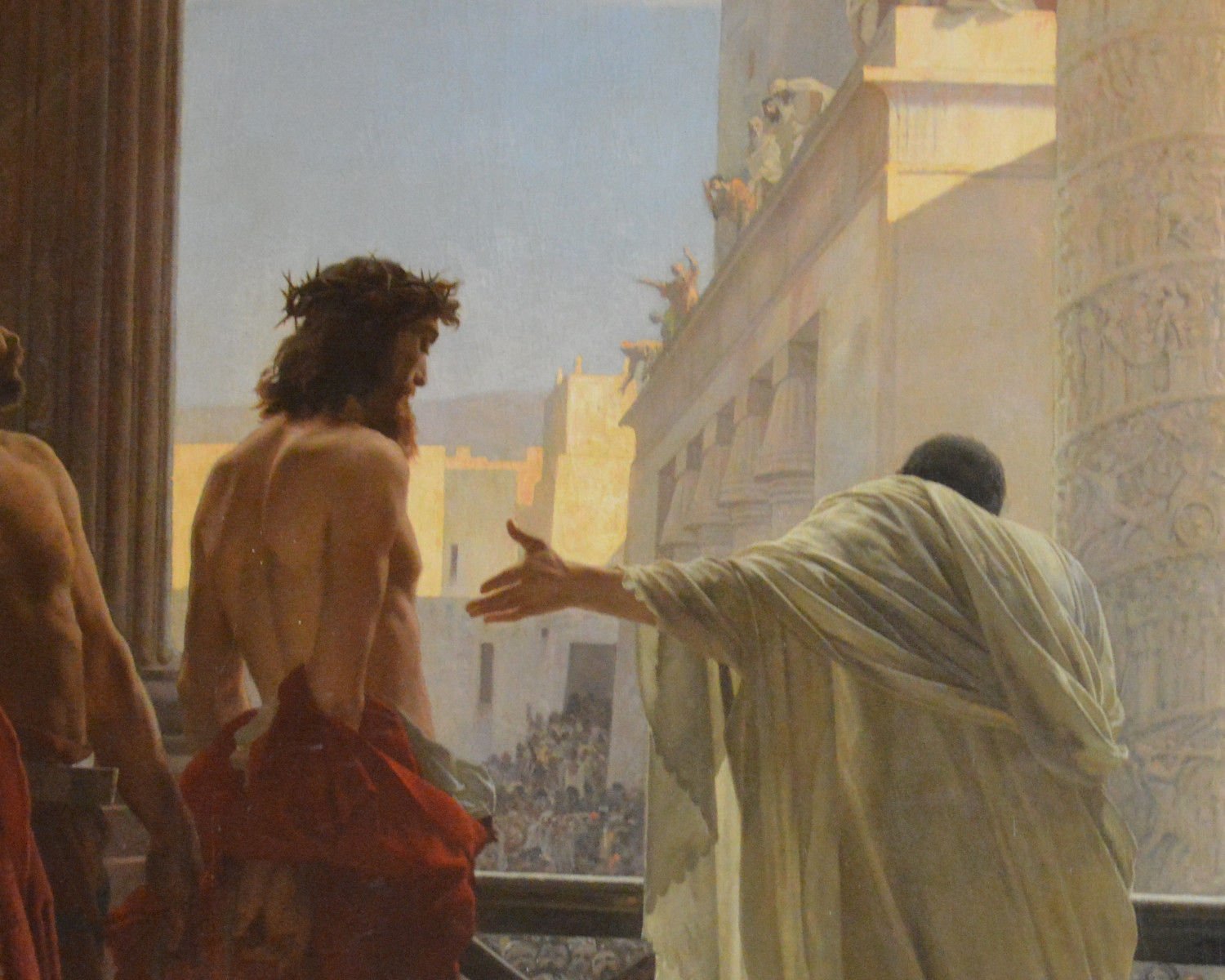
A writer from a self-described Third World country has some challenges for justice in both Church and State and the road ahead for a falsely accused priest in prison.
“The justice of New Hampshire found the priest guilty through a process no less infamous than those seen in the tribunals of any banana republic.”
— Carlos Caso-Rosendi in “Behold the Man!”
By Fr. Gordon J. MacRae — November 16, 2022
Carlos Caso-Rosendi, an accomplished author and translator in Buenos Aires, Argentina, published the fine article linked above in Spanish, Portuguese, and English. It is a superb commentary on the state of justice behind the years I have spent in prison. It challenges both Church and State to live up to the reasons for their existence. Here is a compelling excerpt:
“Many of us in the so-called ‘Third World’ look up to the United States of America as a model for what the administration of justice should be. While it is true that the United States has managed better than other countries to balance the interplay of state powers, we also must admit that those virtues have been shadowed by grievous errors such as justification of slavery, segregation, and lately of murder by abortion.
“Today I present the case of an innocent man, Fr. Gordon MacRae, who has spent the last twenty[-nine] years in prison unjustly condemned in circumstances that would cause any Stalinist magistrate of the former Soviet Union to blush. Someone with a well-known criminal record accused Fr. MacRae, an American citizen with full rights. The justice of New Hampshire found the priest guilty through a process no less infamous than those seen in the tribunals of any banana republic.”
— “Behold the Man!”
Mr. Carlos Caso-Rosendi’s use of the term, “Third World” has an interesting origin. In politics and sociology, it’s the accepted designation for an economically depressed or developing nation. The term arose during the Cold War when two opposing blocs — one led by the United States and the other by the Soviet Union — dominated world power. The Third World consisted of nations with less developed economies affiliated with neither bloc.
The term, Third World originated with Marxist psychiatrist and political theorist, Frantz Fanon, but it was perceived as negative and not always accepted by the nations on which the designation was imposed. Even after the collapse of the Soviet Union as a political bloc in the early 1990s, “Third World” remains in use to refer to economically developing nations in Latin America, Africa, and Asia.
From the pillars of power in the United States, the justice systems of Third World countries are often chastised for being woefully unjust, but not a lot of self-reflection went into that perception. Even setting aside how I came to be where I have been for over 29 years, there is a Third World country existing just beneath my feet. It is the U.S. prison system.
I really don’t have another way to describe it. When it rains, the power goes out. When it snows, the power goes out, when it’s windy, the power goes out. The prisoner telephone system would not be the envy of any Third World country. Prisoners exist in an Internet vacuum, trapped behind an iron and concrete curtain of world ignorance. Citizens in the prison labor force earn the equivalent of about $2.00 per day. The people amassed at the U.S. Southern border are fleeing the political oppression and poverty of Third World nations, but none of them come here for our justice system.
I thank Carlos Caso-Rosendi for writing with candor and truth what he sees from beyond the borders of the United States. He is not alone in his assessment. The great theologian, Fr. Richard John Neuhaus, also had a candid description of how I got here. In “A Kafkaesque Tale” he described it as the story of “a Church and a justice system that seem indifferent to justice.”

Voices Heard Round the World
I owe a debt of thanks to Pornchai Moontri for the moving post he sent us from Thailand. In 29 years in prison, I have barely ever shed a tear. I am stubborn. I just wouldn’t give the dark powers that sent me here the satisfaction of my grief. But when reading “Elephants and Men and Tragedy in Thailand” during a phone call with our editor, I had to pause three times to hold back tears so I could proceed. Pornchai’s post was sad, hopeful, deeply moving, and brilliant. Please pray for the people of Uthai Sawan, Thailand. I can only imagine their sorrow. And please pray for all the rest of us that in our divisions we may be given the grace of perspective from stories like the one Pornchai told us.
And I extend my gratitude to Attorney Harvey Silverglate whose Wall Street Journal op-ed, “Justice Delayed for Father MacRae” is also seen around the world. He was joined in October by David F. Pierre, Jr of The Media Report. They published a series of riveting articles in the past month at Beyond These Stone Walls and elsewhere while I just sat back and let them do all the work. I cannot thank them enough. Catholic League President, Dr. Bill Donohue also stood with me in October to publish a press release about these developments. The timing of these guest writers stepping forward was providential.
Now I need to be candid with you. I began the year 2022 with a new ray of hope, but as this year wound down I saw some looming clouds of possible defeat on the horizon. A revelation in Harvey Silverglate’s recent Wall Street Journal op-ed, “Justice Delayed for Father MacRae” revealed that a court hearing was held in secret in New Hampshire and a judge agreed in secret to allow Detective James McLaughlin to be removed from the public list of officers found to have engaged in misconduct. Secret proceedings are just not a good look for a justice system fending off suspicions of corruption. It is in fact the look of what Carlos Caso-Rosendi describes as “the justice of a Banana Republic.”
That designation refers to a small country economically dependent on a single crop or a single product, often governed by a cabal of like-minded conspirators operating for their own benefit. The misconduct for which former Detective James McLaughlin stands accused has been central in the case against me. As a result, a lot of attention is being paid to Mr.Silverglate’s WSJ op-ed. Among the many affronts to justice covered in that article, Mr. Silverglate wrote:
“In a May 1994 lawsuit, Father MacRae alleged that Detective McLaughlin accused the priest of having taken pornographic photographs of one of the alleged victims. No such photos were ever found.”
There is more to it. Not only were such photos never found, but they were also never looked for. There was no effort whatsoever on the part of the detective to confirm or refute this allegation which came only from McLaughlin himself. There was a reason for that. He already knew it was a lie, and it was his own lie. It floated out there among several news articles about me until 2005. It was even cited by Judge Arthur Brennan as his justification for imposing 67 years in prison. Eleven years after my trial, McLaughlin finally admitted to Dorothy Rabinowitz at The Wall Street Journal that “there was never any evidence of pornography.”
Even that did not stop Damien Fisher, a biased New Hampshire reporter with an agenda, from repeating the claim just months ago as though demonstrably true. Ryan MacDonald wrote a truthful rebuttal in, “A Reporter’s Bias Taints the Defense of Fr Gordon MacRae.” When police can invent evidence that never existed, when the news media can further propagate it long after it has been credibly debunked, what chance does a falsely accused man have in a New Hampshire court?
This is the sort of thing that had me feeling so defeated and had Carlos Caso-Rosendi comparing justice here to that of a banana republic. The justice system has become an ominous and oppressive trap for anyone wrongly convicted. When that trap covers up for the good ole’ boy secrecy behind which justice is being carried out here, how does one proceed?

Justice Unmoored from Truth
In light of all that has transpired and all that has been written, I have hard decisions to make. One of them is about hiring a New Hampshire attorney to challenge my convictions based on newly discovered evidence that the investigating police detective had a secret record of misconduct. The claims about him are taking shape and growing in number. One claim reported in local news media is that former Detective McLaughlin has erased tape recordings of statements from witnesses that do not support his bias. This is exactly what I have accused him of for the last 29 years .
I have recently been advised by a New Hampshire lawyer with expertise in this area. Her analysis was candid and I much appreciate it. The bottom line is that justice here will be yet another steep uphill and unpredictable climb. Detective McLaughlin has boasted of over 1,000 sexual assault arrests with a nearly 100 percent conviction rate due to his penchant for arranging lenient plea deals to boost his public persona. He has boasted of removing over 1,000 sexual offenders from the streets but the “removal” is only for a year or so. Guilty defendants gladly took his plea deals, but innocent defendants can only be conned or coerced into them.
Because of the extreme “success” of his actions and methods, Detective James McLaughlin has been widely hailed in some circles as a hero-cop. From the point of view of the justice department and judicial system, however, the growing evidence of his misconduct is a threat to the system itself. As a result — and it is a fact of the legal advice I have received — the entire system will be hell-bent on protecting the corrupt cop while sacrificing me. “They will flood you with motions and delays to bankrupt you,” I was told by a New Hampshire attorney, and that has indeed been my experience.
As a prisoner of 29 years (and counting) with no income beyond the $2.00 per day I earn in a Third World prison job, I do not have the resources for another legal challenge — and especially for another protracted and uncertain one. In 2012 when I raised funds for an appeal, New Hampshire judges simply declined to hear any new evidence or witnesses in the end. A past U.S. Supreme Court ruling left this to their discretion, but they did not seem to have any. The affidavit of the new investigator and the statements of the witnesses he uncovered are linked at the end of this post. You be the judge.
And then there is priesthood. I am likely the only imprisoned priest in the world who has not been simply discarded from the clerical state just for being deemed with the new designation of convenience for bishops, “unsuitable for ministry.” There is now in the U.S. a “Coalition for Canceled Priests” trying to assist priests who are thrown aside for far less cause than a prison sentence. I am innocent of the claims against me, but should I now be forced to trade priesthood for freedom? I cannot. Carlos Caso-Rosendi ended “Behold the Man!” with a burning question:
“Barabbas is gone,
Judas has received his thirty silver coins:
Behold the man, Gordon MacRae!
Bishops of the Church:
What do we do with him?”
+ + +
Editor’s Note: Read the affidavit of former FBI Special Agent Supervisor James Abbott and the statements of six witnesses from whom New Hampshire judges declined to hear.


The Lying, Scheming Altar Boy on the Cover of Newsweek
A 2016 Newsweek cover story by Ralph Cipriano exposed how a Catholic sex abuse fraud made Fr Charles Engelhardt a martyr and con man Daniel Gallagher a millionaire.
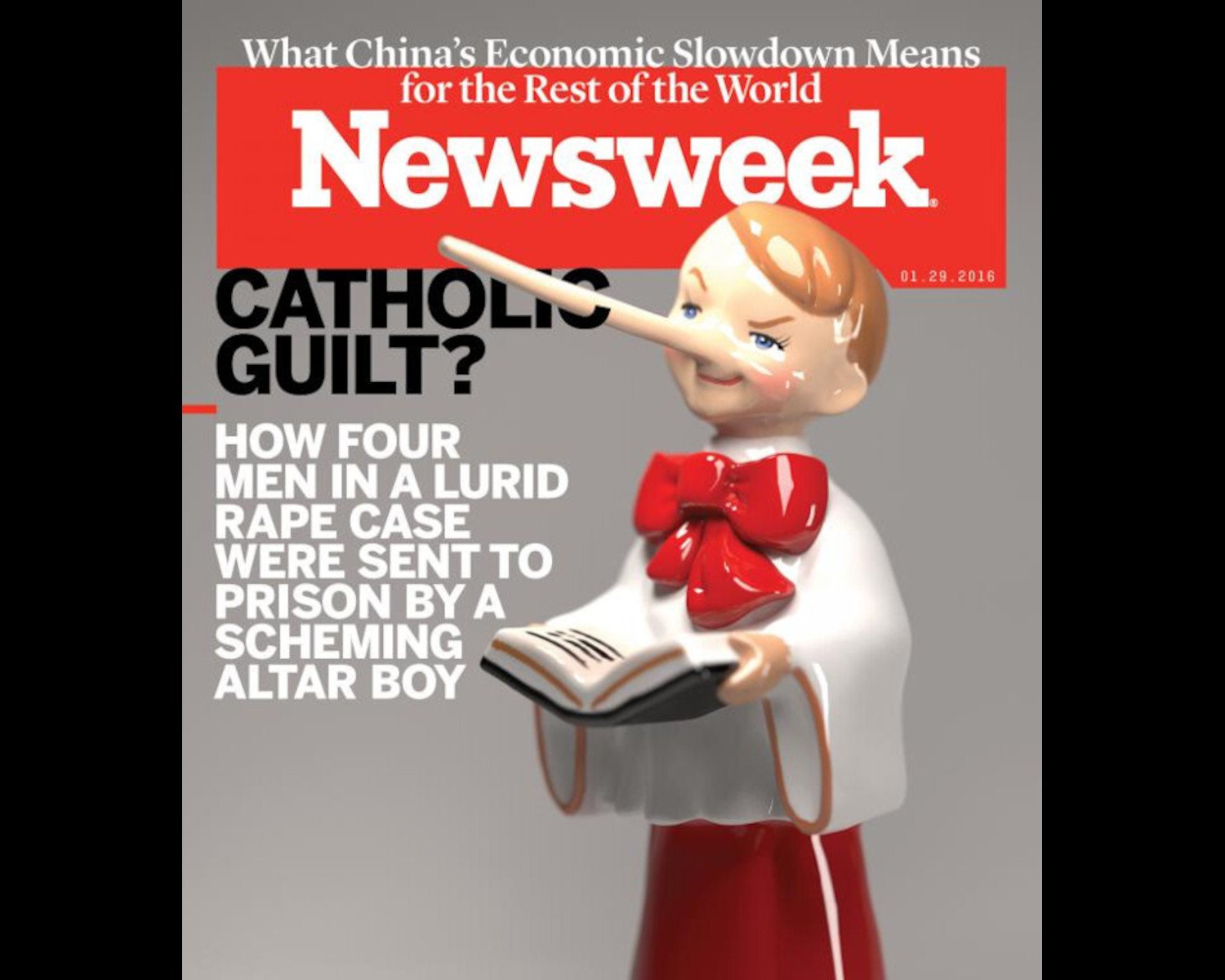
A 2016 Newsweek cover story by Ralph Cipriano exposed how a Catholic sex abuse fraud made Fr Charles Engelhardt a martyr, and con man Daniel Gallagher a millionaire.
November 14, 2022 by Fr. Gordon MacRae
Note from Fr. Gordon MacRae: It is very rare that we have two posts in a week. I first wrote this story in 2016. Fr. Charles Engelhardt died chained to a Pennsylvania prison medical unit gurney on November 15, 2014. I wanted to honor him with the truth, but in the years since this post was first written, so much more of this truth has come to light. In the time since his death, his Philadelphia prosecutor, Seth Williams, was the subject of a 23-count federal indictment for fraud, bribery and other charges. He took a plea deal and went to federal prison. Fr. Charles Engelhardt refused a plea deal and died in prison.
+ + +
This post has a most urgent preface, one that arrived in the mail just as I sat down to type. It was a single page sent to me by BTSW reader Helen, a frequent commenter from Pennsylvania who wrote across the top of the page, “Father Gordon, your face could be on this print.” No, Helen, it could not! The face on that printed page is someone I once met at a pivotal time in my life as a priest, but the sender could not have known that. Helen simply stumbled upon a quote she thought I ought to see, and she was right. The face and the quote on that page belong to the late Father John Hardon, SJ (1914–2000), an American Jesuit priest whose cause for beatification has begun with a recognition in Rome that he is held to be a Servant of God.
Father Hardon and I met in 1989 by “coincidence,” if you still believe in such things. I don’t, but how and why we met is another post for another day. Suffice it for now to say that it was an encounter I could not forget, and when I saw his face on that printed page, and read the words attributed to him, it seemed as though he once again stood next to me with a firm grip upon my shoulder. The quote expresses perfectly why I must write this post, why you must read it, and why together we must share it boldly, and as far and wide as we can make it travel. I took Father Hardon’s words to be a directive, and so should you. Here is the quote:
“Our duty as Catholics is to know the truth; to live the truth; to defend the truth; to share the truth with others; and to suffer for the truth.”
— Father John Hardon
I have long hoped, during the years of media coverage of Catholic scandal, that someone else in the news media might join the ranks of Dorothy Rabinowitz among journalists with a spinal column. It seems I had overlooked Ralph Cipriano. For some time now, he has been covering events in Philadelphia for BigTrial.net, his outstanding Philadelphia Trial Blog. Some time ago, Mr. Cipriano published a major media event in a Newsweek cover story entitled “Catholic Guilt? The Lying, Scheming Altar Boy Behind a Lurid Rape Case” (Jan. 20, 2016).
This is a dark story, and a painful one, and for any number of reasons you might be tempted to click it away at this point, please don’t, for it became a matter not only of justice, but of life and death. Ralph Cipriano’s Newsweek article arrived in my mail on the same day as the above quote from Servant of God, Father John Hardon, and I knew instantly that I had to write about this.
Reading through the Newsweek piece was a vivid experience of déjà vu because I have written of some aspects of this story in a post entitled, “The Path of Sabrina Rubin Erdely’s Rolling Stone.” It was an account of how a good, kind and much loved Pennsylvania priest, Father Charles Engelhardt, was martyred in prison as a result of greed, false witness and prosecutor misconduct. It is this same story that Ralph Cipriano covered in Newsweek, and both are to be commended for some courageous against-the-tide reporting. The Church and priesthood are indebted to Newsweek for presenting this story so boldly in a leading secular media venue while so much of the Catholic press crossed to the other side on the road to Jericho.
Father Charles Engelhardt died in a prison medical unit on November 15, 2014, and the full telling of this story is all that will bring meaning and purpose to his death.
So be brave, please, and read this post to the end, then share it every way you can. Do this, please, to honor the Servant of God who just told us that our duty as Catholics is to know, defend, and share the truth. Do this, please, to honor Father Charles Engelhardt who suffered for the truth and for his priesthood, a suffering that cost him his life.

Rolling Stone’s Sabrina Rubin Erdely
A Rolling Stone Gathers No Facts, Just Dirt
I’d like to think that I have approached this story as Ralph Cipriano did, with cool journalistic detachment, but I now admit that’s very hard to do when the story has a Kafkaesque ring that is all too familiar to me. I was admittedly angry and not at all detached when I wrote the heading for this section, “A Rolling Stone Gathers No Facts, Just Dirt,” a fact conveyed in my Search Engine summary for the post linked in the section above:
“A federal jury found Rolling Stone liable for defamation, and Sabrina Rubin Erdely for actual malice, but their earlier malice cost the life of an innocent priest.”
Today, I find myself no less angry revisiting it. It told the tale of how Sabrina Rubin Erdely’s infamous November 19, 2014 Rolling Stone article, “A Rape on Campus” came unraveled as her account of serial rape at the University of Virginia was debunked and widely exposed as grossly inaccurate and misinformed. Ms. Erdely fell for the story of “Jackie,” took it at face value, and ran with it — doing much damage not only to UVA and its students, but to the field of journalism itself.
Since I first wrote of this, the University of Virginia and its Phi Kappa Psi fraternity have filed multi-million dollar libel and slander lawsuits naming Sabrina Rubin Erdely and Rolling Stone magazine as defendants. Both have since suffered serious losses in journalistic credibility. Rolling Stone magazine has since retracted Ms. Erdely’s account of a lurid frat house serial rape case at UVA. Her Rolling Stone article, “A Rape on Campus,” is today widely seen as grossly irresponsible and agenda-driven slander masked as journalism.
However, Mr. Cipriano’s bold Newsweek cover story is the first hint of media clamor to revisit Ms. Erdely’s other Rolling Stone fraud, “The Catholic Church’s Secret Sex Crime Files” in which she introduced “Billy Doe,” a purported victim of violent and horrific sexual abuse by several Pennsylvania Catholic priests. Billy Doe, granted anonymity by Rolling Stone and everyone else in the news media, was described by Ms. Erdely as “a sweet, gentle kid with boyish good looks” who had been callously “passed around” from predator to predator in the Philadelphia Archdiocese. The story eventually resulted in $5 million in settlements for Billy Doe while landing three innocent Catholic priests in prison.
One of those priests was Father Charles Engelhardt whose decision to stand by the truth against Billy Doe’s $5 million fraud cost this good priest his life. As journalist Ralph Cipriano reveals in Newsweek, Father Engelhardt refused pre-trial plea deals including one deal on the eve of trial that would have resulted in no time in prison and a sentence of simple “community service.” Father Engelhardt chose the truth, and he chose to suffer for the truth. He instead was sentenced to a term of six to twelve years in prison “because he would not perjure himself by pleading guilty ‘to make a deal,’ to admit to a crime he did not commit.” In “Handcuffs and a Hospital Bed,” a November 17, 2014 posting at his “Big Trial” blog, Cipriano wrote:
“For Father Charles Engelhardt, the ordeal is finally over. The 67-year-old priest died at 8:30 PM Saturday night [November 15, 2014] an inmate at the State Correctional Institution in Coal Township [PA] where he served nearly two years of a 6-to-12 year sentence.”

Daniel Gallagher after his $5 million fraud took the life of Father Charles Engelhardt.
Daniel in the Liars’ Den
The man dubbed “Billy Doe” by Sabrina Rubin Erdely and Rolling Stone magazine — while shielding his true identity and character from view in all this — is Daniel Gallagher. Today he is a free man living in Florida where he settled into a lifestyle bankrolled by $5 million in settlements from the Archdiocese of Philadelphia and, in part, its insurers. Gallagher lives free from scrutiny and the long arm of the law because the DA, judge, and news media in Philadelphia all got behind this case, but remain unable to surrender enough of their hubris to stop covering for him, to admit to their pursuit of “trophy justice,” and to allow the facts to invade their field of vision. Sometimes the meting out of justice comes down, not to facts, but to mere ego.
In his riveting Newsweek article, and in “Newsweek’s Cover Boy Makes a Media Splash” on his BigTrial.net blog (Jan. 28, 2016) Ralph Cipriano pursued the truth about who and what Daniel Gallagher is. From his claims of serial victimhood to his ever changing accounts of abuse, to his vague and amorphous facts and stories, to his most recent (and most troubling) psychiatric profile, Daniel Gallagher is exposed as
“chronically maladjusted, immature, self-indulgent, manipulating others to his own ends, refusing to accept responsibility for his own problems, exaggerating, grandiose, hedonistic, impulsive, manipulative and self-serving, paranoid, delusional…”
And the list doesn’t stop there. Gallagher pulled off a con man’s dream when he got a DA and judge to agree that his 23 failed stints in drug treatment were all someone else’s fault. In a Linkedin article, “A Weapon of Mass Destruction,” I quoted a prison inmate who reacted to the flood of decades-old claims against priests with a dose of brutal self-honesty about his own proclivities and enablers:
“So let me get this straight. If I say that some priest touched me funny all those years ago, I’ll be seen as a victim, I’ll be paid for it, and my life will be his fault instead of mine? Do you have any idea how tempting this is?”
— A prison inmate
Daniel Gallagher’s claim of having passed polygraph tests also now appears to be no more truthful than his claim of being passed from priest to priest. No one but his contingency lawyer claims to have seen polygraph results, and efforts to obtain them have been met with silence. Meanwhile, Father Charles Engelhardt DID take polygraph tests, and passed them conclusively, as did other priests in Daniel Gallagher/Billy Doe’s sights. (And for what it is worth, so did I).
Readers of Beyond These Stone Walls should find a loud and clear ring of the familiar in all this. Everything now said of Daniel Gallagher in these reports has been said of Thomas Grover, my accuser trial. And it has all been said of Shamont Lyle Sapp, a con man who landed settlements from accusing four priests in four different states until he was exposed by a U.S. attorney and a journalist with integrity. I take no credit, but he was also exposed by me in my Linkedin article cited above.
This particular rolling stone about Daniel Gallagher and Father Charles Engelhardt, was sent downhill by Sabrina Rubin Erdely who has since been found liable for “actual malice” and “disregard for truth” by a judge in the University of Virginia story. The rolling stone about Father Engelhardt had a long path. It rolled all the way Down Under to Australia where elements of the story were duplicated and reused by prosecutors and the media in Australia to condemn an even greater trophy, Cardinal George Pell. I wrote of the glaring similarities in the two cases in “Was Cardinal George Pell Convicted on Copycat Testimony?” It turned out that indeed he was, and Australia’s highest court exonerated him after 400 days in prison.
Thanks to Ralph Cipriano and Newsweek magazine, some honest media has taken notice of the Daniel Gallagher scam, but not in time to save the life of Father Charles Engelhardt. Still, these revelations of truth bring immense comfort to those still charged with clearing this good priest’s good name. But there’s more than that at stake here. You have been duped. Our Church has been duped, and cast aside in the public square in the process. The truth is a value in its own right, and we owe it to ourselves to learn it and share it.
I can only thank Ralph Cipriano and Newsweek for taking this on, and for telling a truth most in the news media have shunned. Take a little time, please, and read the Newsweek article and Mr. Cipriano’s BigTrial.net blog, and share a link to this post with others. I know one Servant of God who will smile upon you for it.

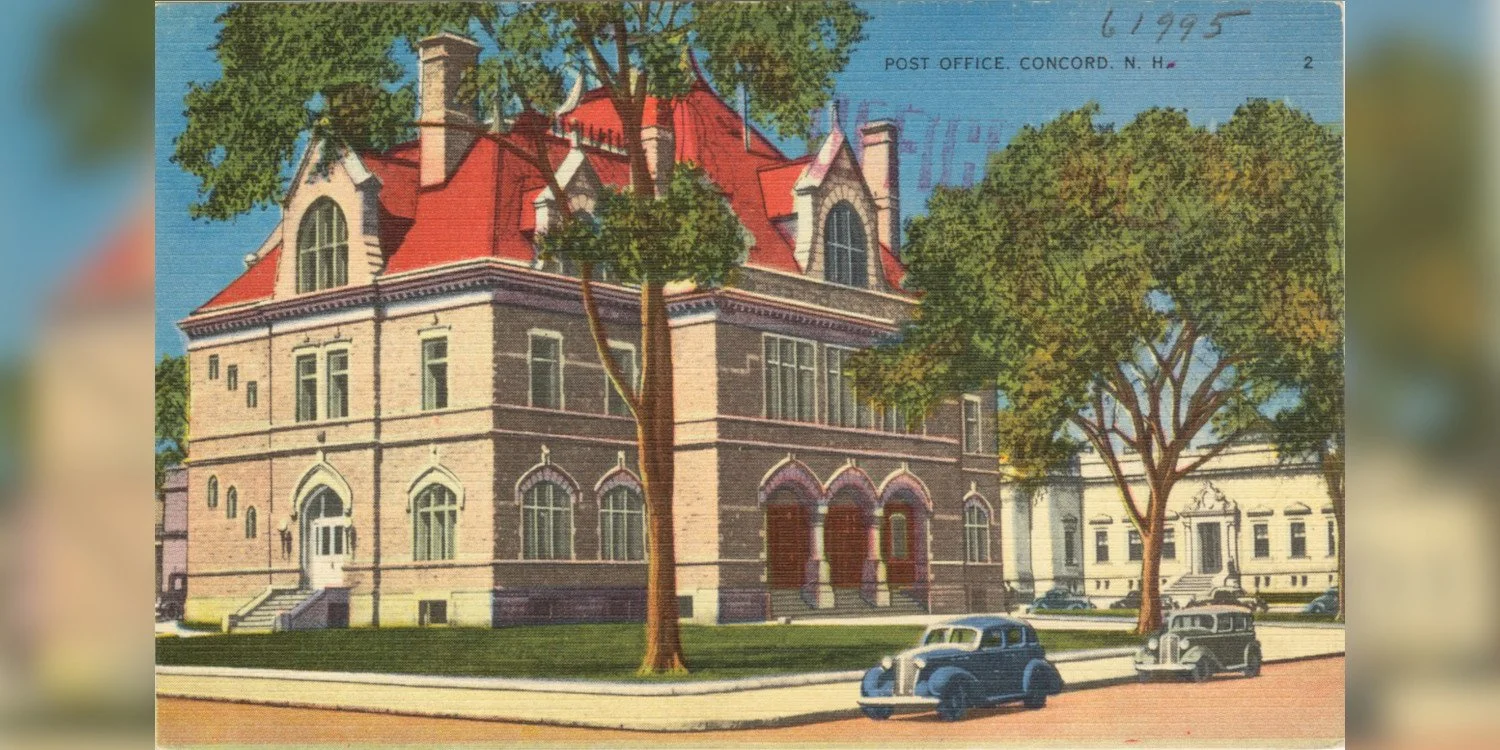
Life Still Goes on Behind and Beyond These Stone Walls
Two years and 102 posts after the resurrection of this blog as Beyond These Stone Walls,the challenges of prison writing continue to be overcome week after week.
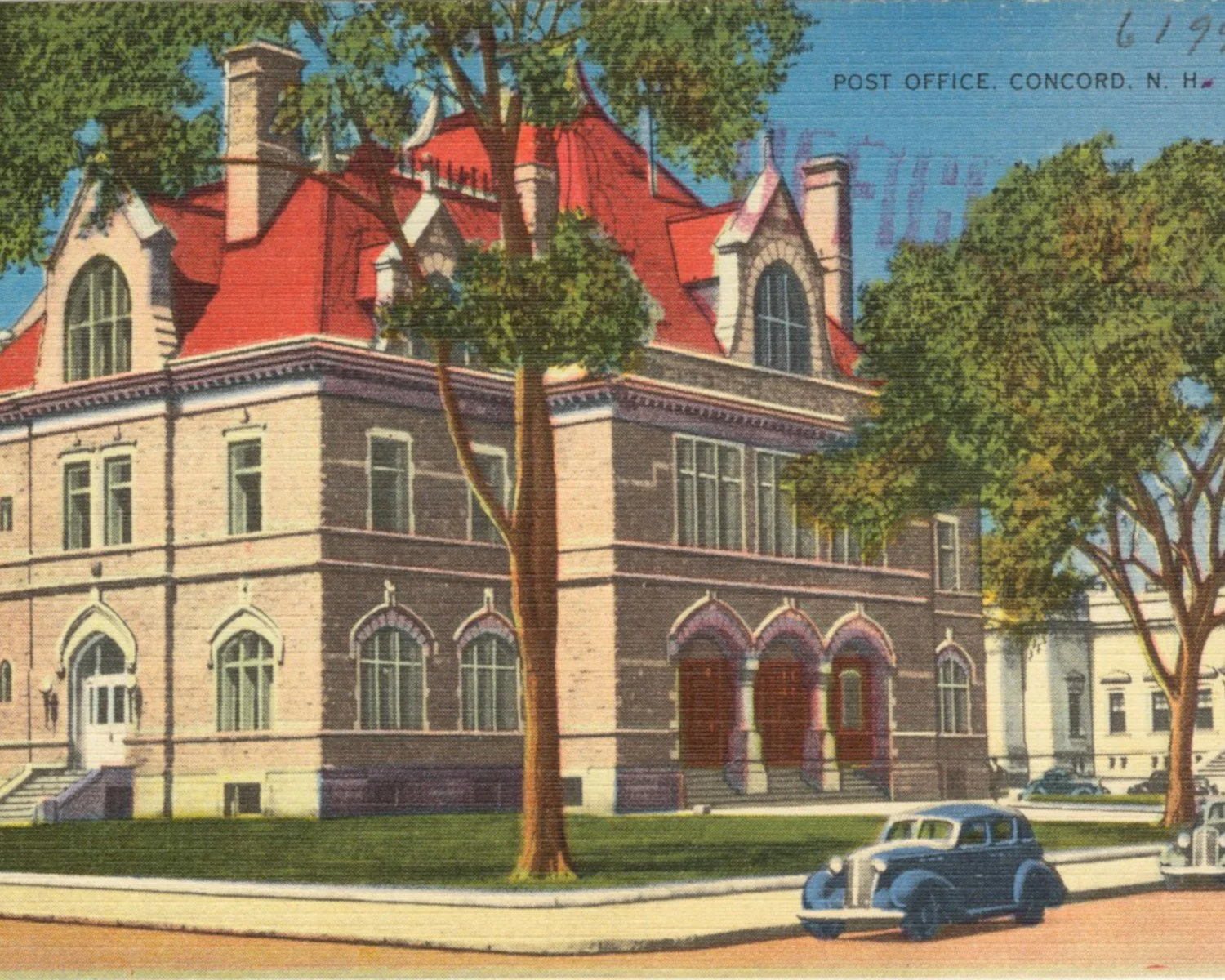
Historic Concord, New Hampshire Post Office
Two years and 102 posts after the resurrection of this blog as Beyond These Stone Walls, the challenges of prison writing continue to be overcome week after week.
November 9, 2022 by Fr. Gordon J. MacRae
The United States had a most crucial national election this week. What I am writing now will be posted just one day later so I cannot imagine anyone paying any attention at all to me. But I’m used to it — at least, I thought I was.
I owe many of you an apology. You might recall that two years ago this week, These Stone Walls, the older version of this blog, had to be taken down. I wrote about the circumstances behind its collapse in our first publication under its new name on November 11, 2020. That post was “Life Goes on, Behind and Beyond These Stone Walls.”
Two years and 102 posts later, we discovered something about the newer blog that we had previously overlooked. It came with its own email address for subscribers to contact us. Being locked away from ever being able to interface with technology, I had no idea. Just two weeks ago, our editor stumbled upon this internal email system along with hundreds of your unread and unanswered comments and messages dating back two years. For all this time, I thought you were all just ignoring me. The internal address is FatherG@BeyondTheseStonewalls.com.
And many of you must have thought the reverse. For two full years, subscribers had been clicking the “Reply” button on our weekly subscriber message to send me messages, comments, and reflections on my posts, but without any reply or even an acknowledgment from me.
Our editor’s discovery of the cache of hundreds of your emailed messages required two long marathon sessions by telephone over two days to hear them read to me and respond — up to two years late — to as many as I could. Our volunteer editor risked carpal tunnel syndrome typing all my dictated replies. Some messages were just too old for any reply to make any sense. Anyway, we apologize for the oversight.

A Voice in the Wilderness
It is humbling. Before becoming a guest of the State in 1994, I was known for being somewhat of a computer geek. I coached many other priests back then who were struggling to embrace the computer age. Now my prison barriers place me in Techno-caveman status relegating me to the technological Stone Age. Sometimes our editor is surprised when, sight unseen, I walk her through posting something at Linkedln, for example, without ever having even seen it. I read a lot about technology, but that is not quite the same as hands-on experience.
When I began writing from prison at the urging of Cardinal Avery Dulles and others, I had no idea what a blog was. They did not exist when I dropped off the face of the Earth in 1994. According to the latest estimates of Google, there are over 600 million registered blogs worldwide publishing 2.5 billion blog posts a year. So mine is literally a tiny voice in the wilderness.
It is difficult to say how many blogs identify themselves as “Catholic” blogs. For a time, a site called “Top Catholic Blogs” featured posts from me almost weekly, but it seems to have become inactive. Another site, The Big Pulpit, moderated by Tito Edwards for the National Catholic Register, featured an occasional post from me, but had not done so since our change of name two years ago. Then on the day before this is posted, The Big Pulpit proved me wrong by posting, “Catholic Priests Falsely Accused.” So in terms of promoting a message, it seems entirely up to me — and you, if you are willing.

When You Write to Me
While the nation is celebrating or regretting the outcome of this election and analyzing all of its implications, I want to address a few housekeeping items about Beyond These Stone Walls. I wish I could say that I have been more responsive to your snail mail than I was to your neglected email messages.
Mail to me in prison now goes through a process that will seem like an insult to all of your good intentions. There were all sorts of rules in place requiring that mail be either typed or hand written in plain black or blue ink. Now that has all been scrapped. Effective a few months ago, prisoners here no longer receive any original mail at all.
Letters and any enclosures are now photocopied in black and white, and I receive only the copy. The original is held for ten days and then shredded. There have been lots of problems with this, the most frequent being double-sided originals that are copied on only one side. When that happens, I have ten days to request re-copying of the original before it is shredded.
Despite all the obstacles, I still get a lot of mail. Please do not misunderstand me. Mail is the lifeblood of the psyche for any prisoner. There are many here who do not even bother to show up for mail call. My biggest heartache, however, is being unable to answer most of your letters in a timely manner. Sometimes mail piles up for so long that any reply just feels insulting. I am so very sorry that many of your letters and gifts have gone without response. It would help if you include an email address in your letters. It would be easier for me to send a reply in that way.
Part of this problem is that I have to handwrite each and every letter I send. I can purchase only six typewriter ribbons per year and therefore must reserve them for publishing posts. In addition to Beyond These Stone Walls, I am also occasionally asked to write for other venues. The latest is an article published at a U.K. site, False Allegations Watch. I hope you will look at it because it lets site administrators know that an article is important. My article there is “Did Police Misconduct Turn a False Allegation into a Wrongful Conviction?”
Facebook refused to allow that link to be posted. Ironically, the leftist media was eager to report about police misconduct until doing so helped the cause of a wrongly imprisoned Catholic priest. This latest experience with Facebook drove home for me the importance of what Elon Musk now plans to do with Twitter: No more cancelling conservative views; no more cancelling pro-life voices; no more cancelling Catholic fidelity. By the way, we have a Twitter account. Just go to Twitter.com and search BeyondTheseStoneWalls to follow us.

A Corporal Work of Divine Mercy
Sending an occasional monetary gift to me has been most helpful, but also somewhat of a heartache. Gifts cannot be sent to me directly, but my brother-in-law, a lifelong friend who somehow married my sister when I wasn’t looking 42 years ago, maintains a power-of-attorney account for my needs. Please see our “Contact and Support” page to help if you wish and are able. Modest gifts to that account help a good deal with annual expenses for this blog and with food and clothing costs.
I have an expense coming due just after Christmas that I hope to find some help with. It’s my $650 annual subscription to The Wall Street Journal which helps me immensely to stay in touch with the world and write about it. It is my one and only extravagance and the subscription fee is a bargain compared to other newspapers. I was shocked to learn from a reader that annual subscriptions to The New York Times and The Boston Globe are both over $1,200. In my opinion, the WSJ is a far superior newspaper (and not just because it has published about me!).
Some people have helped by using PayPal. We have an account, but PayPal has become problematic for many. On October 8 this year, PayPal sent an update to its Terms of Use Policy that alarmed many users, causing some to terminate their accounts. PayPal reserved the right to confiscate up to $2,500 from users’ accounts if PayPal determines that a user posted “misinformation” on the Internet. Paypal also blocked accounts in the UK such as Free Speech Union and the Daily Sceptic.
After global protests, many closed accounts, and a big selloff of PayPal stock, the company thought better of it and issued a retraction while restoring the closed accounts. There are many, however, who simply don’t trust PayPal going forward now. We receive few gifts through PayPal, but the annual total is almost enough to keep this blog afloat. If donors use that means, please always send me a message that you have done so using our PayPal donor email, FrGordonMacRae@gmail.com. This will better enable me to send you a message of acknowledgment and thanks.
Please also pay some attention to our Special Events page for information on how to help me with two causes that are most important to me: the support and rehabilitation of Pornchai Moontri, and the Vietnamese Refugee Project of Father John Hung Le, SVD. American funds go a long way in Thailand, and thanks to your help I have been able to help sustain them both. This means more to me than any endeavor on my own behalf .
The elections are over. May sanity, fairness and justice now reign. May Twitter be actually free from partisan censorship. May the woke finally go back to sleep. May God resume His hallowed place in our discourse. And may the Lord be with you.
+ + +
Note from Fr. Gordon MacRae: We assimilate much more of the message of the Gospel when its intended meaning is more fully understood. The Gospel from St. Luke at Mass this coming Sunday (Luke 21:5-19) is a prediction of terrible persecutions for which Jesus tells all of us to prepare. I previously wrote of this alarming Gospel text in the posts:


Pornchai Moontri: Elephants and Men and Tragedy in Thailand
When Fr Gordon MacRae wrote about a tragedy in Uvalde, Texas, he interviewed me for that post. I never imagined we would one day face the same tragedy in Thailand.

Photo by Megan Coughlin (CC BY-ND 2.0)
When Fr Gordon MacRae wrote about a tragedy in Uvalde, Texas, he interviewed me for that post. I never imagined we would one day face the same tragedy in Thailand.
October 26, 2022 by Pornchai Maximilian Moontri
Sawasdee Kup, my friends. I greet you from the central Thailand city of Pak Chong. If you are wondering where Father G has been, nothing has changed. He is still right in the prison cell where we both lived for many years. As you know, there is a lot going on in his life at the moment. He has hard decisions to pray about and a lot of writing to do. I expect he will resume writing to you here next week.
I am most fortunate to be able to speak with Father Gordon daily. He calls me from his cell (it used to be our cell) at 0800 each morning which for me is 7:00 PM. I have been following very closely the posts by Ryan MacDonald, Harvey Silverglate, David F. Pierre, Jr., and Catholic League President Dr. Bill Donohue in the last few weeks. I laughed when I read Ryan’s comment about a local reporter refusing to see any of Ryan’s news about Father G saying, “My mind is made up.” I know Father Gordon better and longer than anyone. My mind is made up too.
In our daily call, Father G has told me about all that has been happening, but he has just never been at the center of his own focus on life. In recent weeks he has spoken with me every day about a tragedy that happened to some of the people of my home Province of Nong Bua Lamphu in Thailand. Like many people here, I have been shaken by this, but Father Gordon brings it up with a broken heart every time we speak now. He told me that the whole world was in mourning.
If you missed that news, it is an awful account. The small Thai village of Uthai Sawan in the north east of Thailand is near Phu Viang, the village where I was born. It is a part of Nong Bua Lamphu Province where Father John Le and his Order, the Society of the Divine Word, have their Thailand headquarters and a treatment center for Thai children with HIV. We are all deeply sad over what happened in Nong Bua Lamphu on October 6.
People in Thailand do not generally own guns. It is extremely rare that there is a murder here that involves a gun. The only people with guns are police officers. On October 6, 2022, a recently fired police officer named Panya Kamrab brought a 9mm handgun and a knife into a preschool daycare center in Uthai Sawan where he murdered 24 children ages two to five. Then he killed several adults and his own wife and child before turning his gun on himself. On that day, 36 people died at his hands.
Mr. Kamrab was 34 years old and a former police officer in that same community. He had lost his position due to his possession and use of methamphetamine drugs, but in the autopsy after his rampage there were no drugs found within him. The mayor of Uthai Sawan said that methamphetamine abuse is rampant. “The drugs are cheap and everywhere in society,” he said.
Uthai Sawan is a small rural farming community in the far Northeast of Thailand near and very similar to the place where I lived as a small child. Like my ancestral family, the people there are mostly farmers raising rice and sugar cane for market. The innocence of that community is now torn, and recovery will take a very long time.

It Takes a Village
In Thailand, the Monarch, King Maha Vajiralongkorn, is the Head of State while Prime Minister Prayuth Chan-ocha is the head of government. The Prime Minister, Deputy Prime Minister, and other senior members of the government all traveled to Uthai Sawan where the tragedy took place and promised compensation for the mourning families. The King told the families that their deceased children will receive Royal patronage and the King would pay for their funeral expenses. The Thai government has responded as well as possible, but there is no Ministry to Mend Broken Hearts.
In many rural Thai families, it is common for children to be raised by grandparents and extended family while parents travel in search of better paying jobs to support them. That is what happened in my family as well. But the world is different now. There are other influences. The people of Uthai Sawan blame drugs as the cause of this madness. They say that cheap narcotics have overwhelmed many adolescents and young adults holding more of an influence over them than their families can.
Drug abuse is a scourge on the world. Though no drugs were found in Panya Kamrab after the killings, he was known to struggle with methamphetamine. He had been scheduled to appear in a local court on drug charges set for three days after his rampage.
This tragedy is almost a mirror image of the senseless killings in Uvalde, Texas that Father Gordon wrote about in June this year in “Tragedy at Uvalde: When God and Men were Missing.” When he asked me back then what might have driven 18-year-old Salvatore Ramos to his rampage in Uvalde, I told Father G:
“I did not care about anyone either; and then someone cared about me. If I did not find God, and you, and acceptance, and Divine Mercy, I might have stayed on a road to destruction. It was all I knew or expected. Hatred left me when something came along to replace it. Do you remember your Elephants post? It makes total sense. The one thing missing from my life and the lives of those two kids in America was a father. Without one, a decent one, a kid is at the mercy of dark forces and his mind just breaks.”
The “Elephants post” I mentioned was one Father G wrote for Fathers Day in 2012. It opened my eyes and the eyes of many others and it began a serious conversation about the crisis of manhood and fatherhood in our time. That now famous post was “In the Absence of Fathers: A Story of Elephants and Men.”
Father G says it has been showing up a lot since the tragedy at Uvalde. It is not a surprise to me that some people in the U.S. are just now discovering that wonderful story. I was there when Father G wrote it in our cell on his typewriter for three hours on a Saturday afternoon. I was amazed at what came out of his mind on paper. He used to often give me his finished post to read, and I admit that sometimes I had to force my eyes to stay open, but not for that post. I thought it was fascinating.

Of Elephants and Men
I think we can learn some things about manhood from elephants. In Thailand, they are considered sacred. Their family units never succumb to outside pressures because elephant parents - and especially fathers — do not walk away from their instinct to protect, guide and teach their young. Elephants have long been revered and honored, and in Thailand and other Southeast Asian countries, they play a significant role in traditional religion.
I was taken away from Thailand as a Buddhist child and 36 years later I returned as a committed Catholic. I think you already know that a lot of suffering and loss were surrendered to Divine Mercy in that conversion. In Thailand, the small minority of Catholics and the large majority of Buddhists live and work side by side in harmony and mutual respect. Both have impacted our culture. All my ancestors were Buddhist as are 97 percent of the people of Thailand. In Buddhist traditional stories, the white elephants of Thailand were heralded as manifestations of God.
What does this have to do with the tragedies at Uvalde, Texas and Uthai Sawan, Thailand? Father G told me this wonderful true story in our phone call today:
“South African conservationist Lawrence Anthony was known as ‘The Elephant Whisperer.’ He spent his life working to save endangered species and became known for his ability to communicate with and rescue traumatized and injured elephants. He managed the 5,000 acre Thula Thula Reserve in Kwazulu Natal, South Africa.
“On March 2, 2012, [just three months before Father G wrote his post on Elephants and Men] Lawrence Anthony had a fatal heart attack. Then something extraordinary happened. The two elephant herds in Thula Thula walked from different directions for 12 hours to the house where Mr. Anthony died. They stood vigil at the compound for two days, apparently in ritual mourning. Then they disappeared again into the wild.
“No one can explain how the elephants knew of Mr. Anthony’s death. Then, for each of the two consecutive years following his death, elephants returned on that same date and time to mourn him.”
This is what has happened in recent weeks in Uthai Sawan in far Northeast Thailand. From the King of Thailand down to the youngest, smallest citizen, the Thai community has come to mourn from near and far the tragic loss of its beloved children.
In the years I lived in America, I thought that we gave up our dead too quickly, and returned too quickly to the day to day drama of our own lives. The Buddhists of Thailand believe that the souls of their dead linger for a time in the place where they lived. The time of mourning is a faith experience that is shared with them. As a Catholic, I too have been touched by death and those I loved in this life have lingered in my heart for the passing of many moons.
Father G taught me that no one can pass through life alone. The human village is essential, and faith is essential to the human village. No one should be lost. No child should be left behind. No one should go it alone now in this world of madness and distraction. We must all hear and heed the Word of God to Cain in the Book of Genesis: “Listen to the sound of your brother’s blood crying out to me from the Earth.” (Genesis 4:10)
Please pray for the parents of Uthai Sawan and for Thailand.
+ + +
Note from Pornchai Moontri: Thank you for reading and sharing this post, for supporting my best friend, Father G, and for making me part of our family of believers. You may also like these related posts:
In the Absence of Fathers: A Story of Elephants and Men
No Child Left Behind — Except in Afghanistan
The God of the Living and the Life of the Dead
+ + +
Note from Fr. Gordon MacRae: I thank Pornchai Moontri for stepping in for me with this moving post. While Pornchai was writing this, I was invited to write an article for the project, False Allegations Watch. My article, which was just published is “Did police misconduct turn a false allegation into a wrongful conviction? — Fr Gordon J. MacRae.” Visiting and sharing this article with others lets the project Editor know that this is an important story.
Please also visit our SPECIAL EVENTS PAGE to consider a new Corporal Work of Mercy from Beyond These Stone Walls for a cause that is dear to my heart. I will be back here next week!
“Stay sober and alert for your opponent the devil is prowling like a roaring lion looking for someone to devour. Resist him steadfast in your faith for you know that your brethren throughout the world are undergoing the same trials.”
— 1 Peter 5:8-9
+ + +

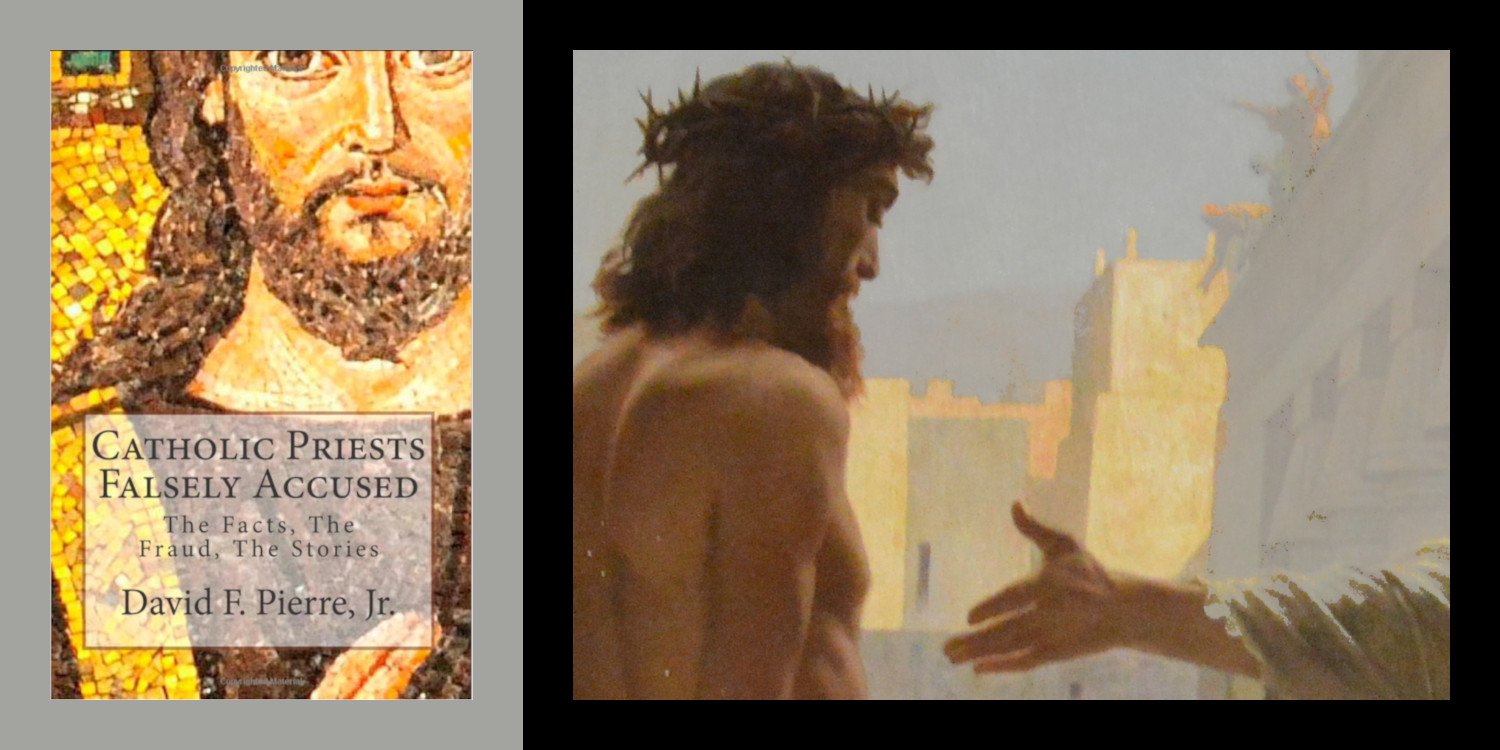
The Media Report: Catholic Priests Falsely Accused
David F. Pierre, Jr. is a widely acclaimed author on the Catholic abuse story. One of the cases presented in his book, entitled above, is that of Fr. Gordon MacRae.

David F. Pierre, Jr. is a widely acclaimed author on the Catholic abuse story. One of the cases presented in his book, entitled above, is that of Fr. Gordon MacRae.
October 19, 2022 by David F. Pierre, Jr.
A Message from David F. Pierre, Jr.:
“When I published my book Catholic Priests Falsely Accused over a decade ago, I never thought that the contents would still reverberate today and that the chapter on the case of Fr. MacRae would especially impact its readers. Since the book was released, there have been numerous additional revelations further vindicating Fr. MacRae — as Beyond These Stone Walls has compiled — and I consider the chapter just one piece of many chronicling the many important aspects of the case.”
The case of Father Gordon J. MacRae — from the Diocese of Manchester (New Hampshire) — falls into a category all its own. No single case in the Catholic Church abuse narrative has been more feverishly debated. The case has bitterly polarized observers for several years. There are those who maintain the priest’s guilt and those who forcefully assert his innocence.
Since 1994, Fr. MacRae has been incarcerated in the New Hampshire State Prison for Men. On September 23, 1994, a jury convicted the priest of repeatedly molesting a teenage boy during counseling sessions and elsewhere. A judge later sentenced the cleric to 67 years in prison.
Fr. Gordon vehemently asserts his innocence and claims that he is falsely accused. With the help of outside supporters, an old typewriter, and the use of traditional postal mail, Fr. MacRae authors BeyondTheseStoneWalls.com from his small prison cell. Fr. MacRae utilizes the blog not just as a forum to assert his innocence. He also posts thoughtful spiritual and theological commentary. BeyondTheseStoneWalls.com is truly a compelling venue on the Internet.
What are the facts in this controversial case? Those who believe Fr. Gordon’s guilt is demonstrable gesture to reams of court documents and articles available at an anti-Church watchdog site. However, as with so many other cases, there is an alarming opposite side to Fr. MacRae’s narrative that has not been widely told.
The criminal conviction of Fr. Gordon in 1994, which would catapult him to his sentence of 67 years in prison, rested on the uncorroborated testimony of one individual. The man’s name is Thomas Grover [who at this writing is 55 years of age]. Amazingly, two of Thomas’ brothers and two other men — known to the Grover boys — also accused Fr. Gordon of molesting them. Yet only the claims of Thomas Grover would be the subject of an actual criminal trial.
It is certainly a matter of debate whether the justice system yielded a fair trial for Fr. Gordon. Although the accuser Grover had a lengthy juvenile and adult criminal history of “theft, assault, forgery and drug offenses,” the presiding judge, the Hon. Arthur D. Brennan, did not allow the priest’s defense to present this as evidence. Had the judge allowed this important information, the jury may have examined Grover’s claims a bit more critically.
Indeed, Thomas Grover’s accusations were quite untenable. According to the court testimony of Grover, Fr. Gordon repeatedly sexually assaulted him about a decade earlier during four different counseling sessions in 1983, when he was fifteen years old. Asked at trial why he would repeatedly return week after week to counseling sessions at which he had been previously attacked, Grover testified that he had “repressed” the memory of the experience after each assault. He claimed that he had an “out-of-body experience” which resulted in him completely forgetting the fact that he had been victimized during the previous visit.
In addition, according to trial testimony, when Grover attended a drug treatment center in 1987, he told a counselor that his father had abused him. Grover did not cite the priest as an abuser. In fact, the accuser identified the priest by name to his counselor in only one instance. Grover wrote Fr. MacRae’s name on his discharge contract indicating that the priest would be his sponsor in sobriety. She reported that Grover went on in therapy to accuse so many people of sexually abusing him that the staff thought “he was going for some kind of sexual abuse victim world record.” But he never accused Fr. MacRae.
In a previous deposition under oath, Grover made more bizarre claims about Fr. Gordon, one of which was that the priest had chased him with a car. “And he had a gun,” the accuser added, “and he was threatening me and telling me over and over that he would hurt me, kill me, if I tried to tell anybody, that no one would believe me. He chased me through the cemetery and tried to corner me.” However, at Fr. MacRae’s trial, the prosecution did not call a single witness to corroborate the public spectacle of a priest with a gun in a car chasing a boy through a cemetery.
As the trial progressed, even the prosecution could see that Thomas Grover had serious credibility problems. In the middle of the trial, after Grover’s flimsy appearance, the prosecution offered Fr. Gordon a plea bargain in which the priest would agree to serve only a maximum of two years in jail in exchange for an admission of guilt. It was not the first time the prosecution extended such a generous deal. On two other occasions before the court case — six months before trial and again a week before trial — the state offered plea deals to Fr. Gordon, both of which would ask that he serve no longer than three years in prison. The prosecution would have loved to have seen the priest take the offers.
But Fr. Gordon was adamant. He would not plead guilty to charges that he maintained were false. “I am not going to say I am guilty of crimes I never committed so that the Grovers and other extortionists can walk away with hundreds of thousands of dollars for their lies,” the priest asserted.
The trial progressed, and although Thomas Grover’s testimony may have seemed hard to believe on the surface, the accuser was effectively theatrical during his appearance. He railed against the priest for “forcing” him to withstand the agony of a trial. In addition, during Grover’s testimony, the accuser’s therapist — retained by the man’s contingency lawyer — reportedly coached her former patient while sitting in open view inside the courtroom. Apparently directed by the therapist, Grover became emotional at strategic moments during his testimony. Courtroom witnesses have reported that when Grover was confronted with difficult questions, the therapist would gesture to her patient that he should cry. Grover would then become emotional and dramatic, often leading the judge to call a recess.
Meanwhile, Judge Brennan purposefully ordered the jury to “disregard inconsistencies in Mr. Grover’s testimony.” To the shock of Fr. Gordon, the jury returned with a guilty verdict in less than 90 minutes.
At Fr. Gordon’s sentencing, the prosecution efficiently utilized accusations of abuse charges by other men. Stomach-turning stories of child pornography also impacted the jury. An angry Judge Brennan railed against the convicted priest. He berated the cleric for his “lack of remorse” over his crimes. (Lost on the judge was the fact that the priest forcefully maintained his innocence and had rejected three different plea offers.) Building upon his rage, the judge added, “The evidence of your possession of child pornography is clear and convincing.”
There was one problem, however. “There was never any evidence of child pornography,” the lead detective on the case later admitted to The Wall Street Journal.
Under New Hampshire prison guidelines, Fr. Gordon will never be eligible for parole unless he admits guilt. As with the case of Msgr. McCarthy (Chapter 6), Father Gordon’s narrative highlights the zeal with which some detectives will seek a prosecution, despite the claims presented to them.
The criminal case against Fr. Gordon actually began when one of Thomas Grover’s brothers, Jonathan, approached Keene, New Hampshire, Detective James McLaughlin with the claim that Fr. Gordon had abused him years earlier. However, Jonathan did not just accuse Fr. Gordon of abuse; he accused a second priest as well — Fr. Stephen Scruton. However, as Detective McLaughlin further examined Jonathan’s claims, he realized that Fr. Scruton did not even serve at the parish of the alleged abuse until years after Jonathan claimed that the acts took place.
With this startling discovery of fact, many detectives would have concluded that Jonathan was not being truthful. There would even be more reason to doubt Jonathan when two of his brothers came forward to claim similar abuse by the two priests. But rather than dropping the investigation altogether and issuing charges against Jonathan for filing a false report, McLaughlin continued his crusade by simply scrubbing the existence of Fr. Scruton from future investigations altogether. [It was at this point in police reports that Detective McLaughlin gave the Grover brothers a copy of Fr. MacRae’s resume “to help them with their dates.”]
In the course of trying to nab Fr. MacRae, McLaughlin initiated a couple of attempted “stings” to get the priest to admit to the alleged abuse. One was a letter claiming to be from Jonathan Grover that “recalled” several sexual escapades and declared that the “sex between us was very special.” Fr. Gordon replied to the letter by saying that the letter writer must be an imposter, because no such acts ever took place. McLaughlin also attempted a number of secretly recorded phone calls to try to bust the priest, but none of them yielded anything incriminating. The calls were an utter failure, by all investigative measures.
Fr. Gordon would have been out of prison long ago if he had accepted the plea deals and admitted guilt. Instead, in staunchly maintaining his innocence, he will likely live in a prison cell for the remainder of his life.
In recent years, even more evidence has surfaced to support the claim that Fr. Gordon was falsely accused. One of the priest’s accusers (not Thomas Grover) has reportedly recanted his claims. In early 2011, a document surfaced in which the accuser plainly acknowledges that fraud was committed against Fr. Gordon and the Catholic Church. According to a New York investigative writer, the document says:
“I was aware at the time of the trial, knowing full well that it was bogus and having heard of the lawsuits and money involved, and also the reputations of those making accusations … whom I went to school with. It seemed as though it would be easy money if I would also accuse Fr. Gordon of some wrongdoing. … I believed easy money would come from lawsuits against MacRae. I was at the time using drugs and could have been influenced to say anything they wanted for money.” [Signed statement of Steven Wollschlager]
So despite the tempting opportunity of a high-stakes payout, the man refused to go along with what he saw was a gross money-grubbing scam.
In 2005 and 2013, Pulitzer Prize-winning writer Dorothy Rabinowitz profiled the case of Fr. Gordon for a trio of eye-opening articles for The Wall Street Journal. After months of studying court documents and combing through testimonies, Rabinowitz concluded that Fr. MacRae was clearly a victim of fraud and was wrongly convicted.
Sadly, under intense public pressure from events of the past decade, Church officials have essentially abandoned Fr. Gordon. Despite the fact that evidence possibly indicating innocence continues to surface, Church officials have kept their distance from the incarcerated cleric. While Church officials have publicly supported the prosecution of Fr. Gordon, there are reports that privately they admit that the cleric may have been falsely accused. For example, in 2011, two signed statements surfaced which claim that Bishop John McCormack, the longtime head of the Diocese of Manchester, has privately stated that he believes Fr. Gordon is innocent.
One such statement comes from a man who once worked at a television station that was to profile Fr. Gordon’s case. It quotes Bishop McCormack as saying to the man, “Understand, none of this is to leave this office. I believe Father MacRae is not guilty and his accusers likely lied. There’s nothing I can do to change the verdict,” Bishop McCormack said, according to the statement. [See Fr. George David Byers, “Omertà in a Catholic Chancery: Affidavits Expanded”]
The man submitted his statement about Bishop McCormack’s remarks because he believed there was a glaring injustice in the inconsistency between the Bishop’s public actions and his private statements.
Should the case against Father Gordon MacRae be reviewed? Considering the totality of the evidence, especially that which has surfaced in recent years, the answer is, “Yes.” Justice demands it.
In addition, recent developments and emerging information will likely result in appeals of Fr. MacRae’s case. Stay tuned.
David F. Pierre, Jr. is the country’s leading observer of the media’s coverage of the Catholic Church abuse narrative and is the author of four books. His most recent is The Greatest Fraud Never Told: False Accusations, Phony Grand Jury Reports, and the Assault on the Catholic Church. David has been heard on National Public Radio (NPR) and cited in the New York Times, the Chicago Tribune, USA Today, and many other media outlets. He is the creator and author of TheMediaReport.com, an educational cooperative to chronicle and monitor the mainstream media’s coverage of the Catholic Church sex abuse narrative. He lives with his wife and family in Massachusetts.

Bogus Charges Against Priests Abound
Editor’s Note: In a 2012 article for Catalyst, the Journal of the Catholic League for Religious and Civil Rights, Rev. Michael P. Orsi, research fellow in Law and Religion at Ave Maria School of Law, wrote an extended review of David F. Pierre’s book cited above. His review is titled “Bogus Charges Against Priests Abound.”
The following is an excerpt from that review:
Catholic Priests Falsely Accused: The Facts, The Fraud, The Stories by David F. Pierre, Jr., Mattapoisett, Massachusetts: www.TheMediaReport.com
“David Pierre is one of the country’s leading observers of the Catholic Church abuse narrative. In Catholic Priests Falsely Accused: The Facts, the Fraud, the Stories, he presents case studies backed by hard data which clearly demonstrates some of the injustices foisted on Catholic priests and the Church. ...
“A sure way to ameliorate the injustices perpetrated against priests and to rehabilitate the reputation of the Church would be to re-examine the cases of those priests found guilty due to false or dubious abuse claims filed against them. The widely reported case of Fr. Gordon MacRae, of the Diocese of Manchester, New Hampshire, would be a good place to start. Pierre outlines it in his book. It is quite obvious that Fr. MacRae did not receive a fair trial according to the facts cited in a piece published in The Wall Street Journal.
“MacRae’s accuser, a fifteen year old boy, had a lengthy juvenile record and presented doubtful evidence in trial testimony. The judge even went so far as to order the jury to ‘disregard inconsistencies in Mr. Grover’s (his accuser) testimony.’ Father MacRae, protesting his innocence, refused a plea bargain deal of two years in prison. Now he is serving a 67 year sentence. His own, now retired, bishop believes him to be innocent. What a moral boost this would be for the nation’s priests and for the Catholic laity ... to have this case reopened!”
+ + +
BREAKING NEWS: Just as this post went to print, David F. Pierre, Jr. and The Media Report published “Twice Is a Charm? Wall St. Journal Again Profiles Stunning Case of Wrongfully Convicted Priest Fr. Gordon MacRae.”
To learn more about the rampant fraud, dishonest grand jury investigations, and career-building prosecutorial misconduct behind the Catholic Church abuse story, please consult these additional books by David F. Pierre, Jr. and The Media Report. Father Gordon MacRae also urges readers to subscribe to The Media Report.
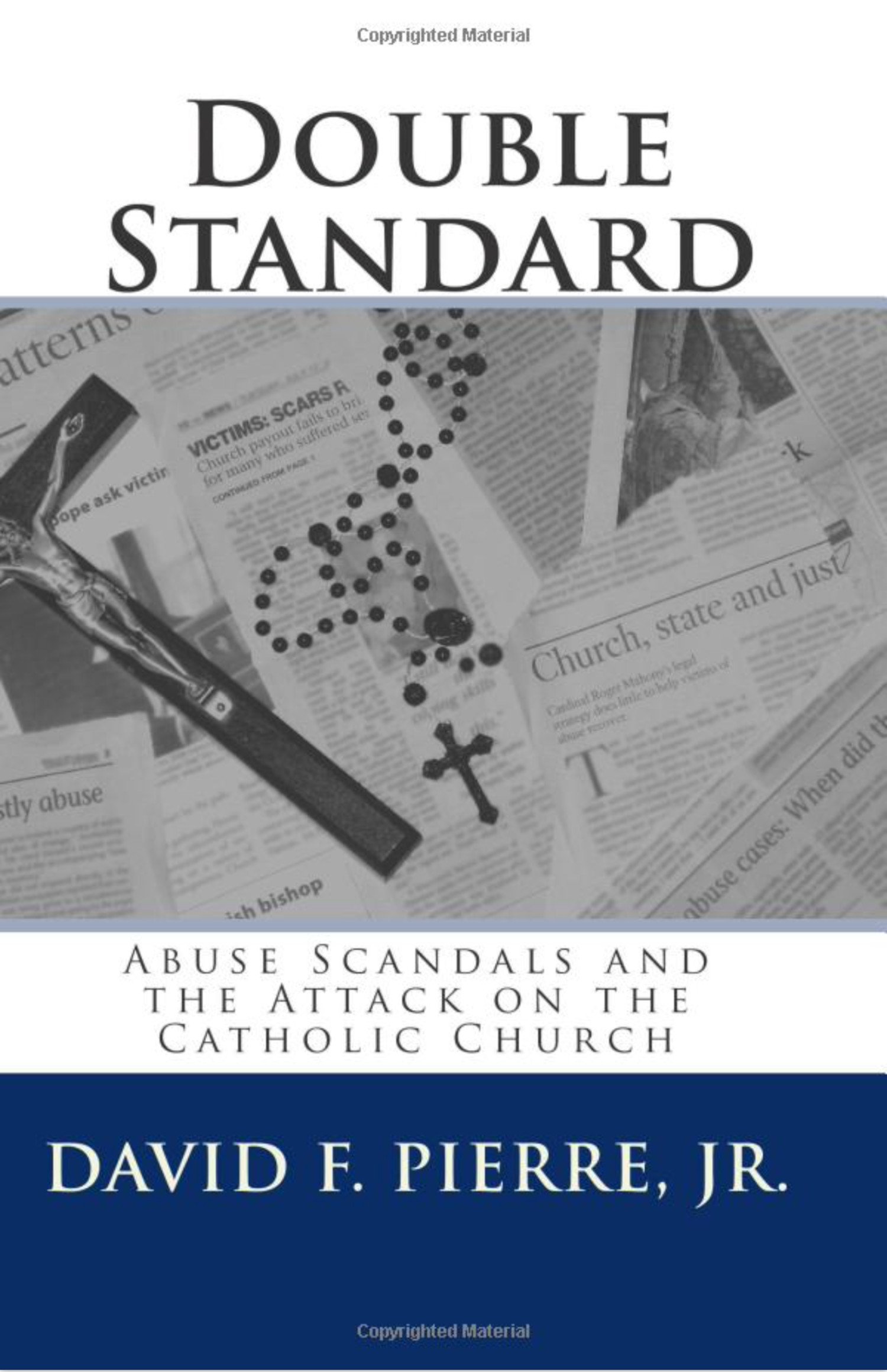


Weaponized Psychology: The Psych Evals of Father MacRae
Writer Damien Fisher cited psychological reports to bolster the condemnation of a priest in the court of public opinion, but some omitted facts expose a cover-up.

Writer Damien Fisher cited psychological reports to bolster the condemnation of a priest in the court of public opinion, but some omitted facts expose a cover-up.
October 12, 2022 by Ryan A. MacDonald
Editor’s Note: The following is Part Two of a series of posts by multiple writers presenting facts in the case of a wrongly imprisoned priest that some in the media have ignored or distorted. Part One, posted here one week ago, was: “A Reporter’s Bias Taints the Defense of Fr Gordon MacRae.”
+ + +
Part One in this series, linked above, explores a tendency of some in modern day news media to simply mimic material gleaned from prosecutorial officials. In news coverage, this practice has increasingly come to replace the hard work of investigative journalism and the natural skepticism every journalist should have.
One of the factors that irked me and other writers in Damien Fisher’s recent coverage of the MacRae story was his blind acceptance of an old and inadequate psychological evaluation of the accused priest that was debunked a decade ago. In 2012, a Catholic magazine published a letter to the editor from a reader of Father MacRae’s blog who defended him. In response, a member of SNAP, the activist Survivors Network of those Abused by Priests, wrote a rebuttal which was also published citing psychological evaluations of MacRae as evidence of his presumed guilt.
I wrote a more up-to-date and factual response, but it was a testament to the one-sided jaundice of even Catholic media on this topic that the lurid claims against the priest were published while my factual response was not. Given that Damien Fisher’s recent article cited here a week ago referenced the same biased and one-sided reports, I now present anew what I first uncovered in 2012.
Like all accused Catholic priests, Fr. Gordon MacRae was required by Church officials to undergo a psychological evaluation. It was one of the many travesties of justice in this case that elements of two of those reports inexplicably ended up in public view while a far more extensive and professional report did not.
Mr. Fisher gleaned his information from a 2003 Grand Jury Report on the Diocese of Manchester that referenced an inadequate and one-sided evaluation from an M.A. level clinician with a state contract to evaluate those accused of sexual offenses. The Grand Jury Report omitted a much broader and more professional assessment from a team of licensed psychologists and psychiatric experts that negates the validity of the evaluation cited in the Grand Jury Report and repeated by Damien Fisher.
It is indeed correct that MacRae was labeled a “fixated sexual offender” in a 1989 report by a masters-level clinician at the Strafford Guidance Center, a New Hampshire outpatient center with a state contract to evaluate those accused of sexual offenses. This evaluation was the result of a misdemeanor solicitation charge that was debunked extensively in my article, “A Reporter’s Bias Taints the Defense of Fr Gordon MacRae.”
A second evaluation was conducted over a four-day period at the now-closed House of Affirmation, a treatment center for clergy in Whitinsville, Massachusetts. It was entirely prosecutorial in nature, and in many ways it violated the priest’s basic civil rights. It weaponized the psychological process, reporting, for example, a finding that “Father MacRae exhibits extremely high abstract intellectual ability.” That result, from a single evaluation tool called the Wechsler Adult Intelligence Scale, was later used to unjustly label the accused priest as a potential sociopathic manipulator. The report and its conclusions were criminally unprofessional.

EEG recorded during scanning session.
A Forensic Search for Truth
Another, far more extensive evaluation was conducted by a team of three doctoral-level forensic clinical psychologists and two staff psychiatrists with decades of experience in the assessment of offenders. This in-depth assessment was conducted over a period of months at an inpatient facility, the Villa Louis Martin Center in New Mexico. What follows are excerpts of that report introduced by licensed clinical psychologist, Dr. Peter Lechner, Ph.D.:
“Of the reports mentioned earlier, one from House of Affirmation where Fr. MacRae spent four days and the other from the Strafford Guidance Clinic where he was evaluated, according to their report, for a two-hour period, they arrived at far-reaching, all embracing and definitive conclusions in regard to Fr. MacRae. The staff at VLM believes that such time periods would be inadequate to properly understand complex problems.
“The conclusions we arrived at came after many months.... It became clear that [Fr. MacRae] did not fit the description of the Strafford Guidance Clinic. He had a depth of conscientiousness and sensitivity to others, and a very high degree of ethical concern that did not fit with what their report said of him. Fr. MacRae does NOT fit the description of a fixated sexual offender. The reports are inaccurate.”
— 1990 Evaluation Report of the staff at Villa Louis Martin
Dr. Lechner went on to describe that the Strafford Guidance Center evaluation was conducted by an unlicensed masters-level clinician. It consisted of a single psychological test, the Minnesota Multiphasic Personality Inventory (MMPI) which was dismissed by the evaluator as “unrevealing and within normal range.” The sweeping negative conclusions of the rest of the report, according to the file, were arrived at based on three 45-minute interviews over the course of six weeks.
The clinician began his assessment with clear bias. The mere fact that MacRae is a Catholic priest with a commitment to practice celibacy, like all priests, was itself treated as sexually aberrant by the evaluator. His process and conclusions were dismissed as invalid and unjust by staff at the Villa Louis Martin Center. They concluded that “Two hours of interviews by a masters-level clinician is simply not professionally adequate to brand a man in the court of public opinion for the remainder of his life.” The director of the VLM Center added another comment to his report:
“In my report to the NH Department of Probation, I mentioned the accusations that had been made in the above reports by way of background information regarding what had been said about [Fr. MacRae]. I indicated that he did not present as someone obsessed by sexual fantasies or driven to act out. I then went on to write about our assessment and the medical issues [MacRae] faced. I was later dismayed to find out that my reports were misquoted, and positive statements that were essential to the reports were left out. This I feel was a serious injustice.”
The far more comprehensive VLM report by Dr. Lechner and his staff directly refuted the impressions of the Stafford Guidance Center assessment arrived at after three 45-minute interviews. However, the prosecutorial files released by the Diocese of Manchester after its bishop signed over the rights of the priests involved, and published online by the Attorney General in 2003 omitted the more professional report opting to publish only the impressions of the negatively biased one.
In the far more extensive report, the director of the VLM facility explained that MacRae remained at the Center for one year in 1989, an unusual length of time for inpatient treatment, but it was not because he was diagnosed as a sexual offender. That was discounted earlier. MacRae remained at the center for a year because a neurological evaluation that included an EEG and MRI revealed a diagnosis of epilepsy.
It has been professionally suggested that a diagnosis of untreated epilepsy and complex partial seizure disorder that was difficult to manage raised further questions about the legitimacy of the priest’s 1988 misdemeanor plea entered into without legal counsel after hours of intense badgering by a police detective with an agenda other than truth. This was disclosed in my article one week ago.
The VLM report of the evaluation of Fr. MacRae indicated that MacRae succumbed to coercion under duress in 1988 while talked into waiving his Constitutional right to legal counsel because Detective McLaughlin conned him into believing that he would be sparing the Church from adverse publicity if he took the plea. If MacRae is to be faulted for anything in this picture, the report concluded, “it is for placing his own well-being second.”
That 1988 misdemeanor charge was brought forward and propagated by the same detective who would five years later charge MacRae with more serious, but just as dubious offenses that now date back forty years. This is the same detective who now appears on a previously secret list accused of falsifying records, and has now also been accused of lying, erasing tapes, and tampering with evidence.
Four years after writing the Strafford Guidance Center report on MacRae, its author applied for employment at the Villa Louis Martin Center citing its thorough assessment of the priest as the reason for his desire to work there.
When Detective James McLaughlin’s new allegations emerged with new demands for settlement money in 1993, Fr. MacRae voluntarily submitted to two polygraph examinations with an expert. He passed both conclusively. No one who accused MacRae would agree to take a polygraph.

The Most Expert Evaluation
Perhaps the most important assessment, however, is one uncovered by Fr. George David Byers revealed in his article “Omertà in a Catholic Chancery: Affidavits Expanded.” Over 28 years in the New Hampshire State Prison, Fr. MacRae has never been even suspected of any form of predation. The prison system’s own evaluation labeled him at the lowest level of risk for any form of aberrant sexual interest or behavior. For 15 of those years MacRae was housed in a 60-square-foot cell with Pornchai Moontri, an adult survivor of sexual abuse. There is perhaps no better expert on the character of Fr. MacRae.
In Fr. Byers’ article linked above, he conveys a true story revealed to him by Pornchai:
“Pornchai has helped me to understand a truth that is nearly universal among those who have in fact been victims of sexual assault. The only thing that is as obnoxious to them as having been raped is to see their own sufferings capitalized upon by false accusers for money, and by clericalists who make themselves into heroes by paying out settlements with no evidence or due process of law. Priests are too often considered guilty just for being accused.
“Prison, by nature, is often a violent place. As a child of 12 brought to the State of Maine from a foreign country, Pornchai became a victim of violent sexual abuse. When Pornchai went to prison at age 18, he dealt with prison violence in the only way he could. He vowed that he would never again be someone’s victim. So he understandably met violence with violence of his own. It landed him in repeated long years in solitary confinement.
“After 14 years, Pornchai was transferred to the New Hampshire prison. He ended up in a cell with a man accused and convicted of the very thing that destroyed his life. It did not take him long — with his innate alertness to victimization — to discover that Father G had been falsely accused. Pornchai once told me this story that I held off writing until he was out of the prison system:
‘One day, I got a notice from the prison mental health department that a new 2O-week program was beginning called ‘Interpersonal Violence.’ My friend Father G thought it might be an opportunity for me so I said I would go if he goes with me. So we both signed up for it. Prison is filled with needy young men who have really broken lives. Some of them look for safe, comfortable older prisoners who might buy them things and take care of them. The result is a sort of mutual exploitation and prisons are filled with this. One young kid, about 19, who was attending the program quickly tried to latch on to Father G without knowing anything about him. I was going to speak with the kid, but decided to wait.
‘Over the next few sessions as I sat next to Father G, I was aware of how this kid was skillfully trying to gain his interest and maneuver his way into his life, but Father G was oblivious to it. Later that night I told him what I observed, but he had no idea what I was talking about. At the next session, Father G and I simply agreed to switch seats. In all his years in prison, Father G has been surrounded by people like this, many of them young drug addicts who would sell their soul for a few bucks for drugs. In all those years, Father G was never observed or even suspected of having any interest in them at all except to show those receptive to it a way out of their prison within a prison.’ ”
+ + +
IMPORTANT EDITOR’S NOTE:
During the 15 years that Fr. MacRae and Pornchai Moontri lived in the same prison cell, MacRae investigated Pornchai’s life and wrote about it in an explosive account that brought his abuser to justice. Richard Alan Bailey was convicted in 2018 on 40 felony counts of child sexual abuse. This most important story is told in
“Getting Away With Murder on the Island of Guam.”
+ + +
BREAKING NEWS — NEW IN THE WALL STREET JOURNAL:
Nationally prominent criminal-defense and civil-rights Attorney Harvey Silverglate has just published an op-ed on developments in the Fr. MacRae case in the WSJ. This is the fourth major article in the WSJ on this story. We have reprinted the op-ed so it may be viewed by our readers:

A Reporter’s Bias Taints the Defense of Fr Gordon MacRae
Ignoring exculpatory evidence and more honest media coverage, a writer’s selective reporting undermines the defense of a priest wrongly imprisoned for 28 years.
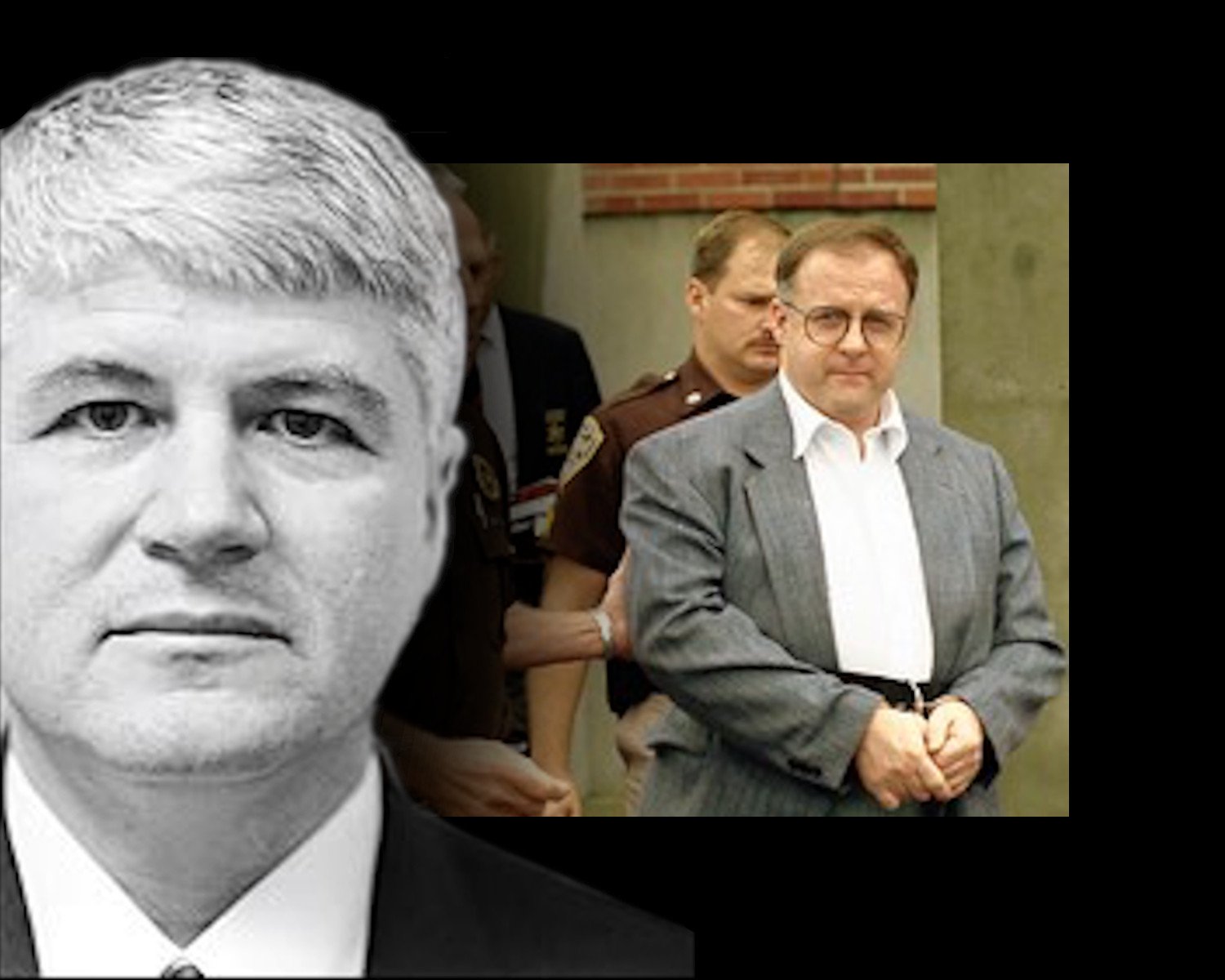
Ignoring exculpatory evidence and more honest media coverage, a writer’s selective reporting undermines the defense of a priest wrongly imprisoned for 28 years.
October 5, 2022 by Ryan A. MacDonald
Editor’s Note: The image above depicts Keene, NH Detective James McLaughlin whose investigation of an early 1980s sexual assault case resulted in the wrongful imprisonment of Fr. Gordon MacRae. The following is a guest article by contributing writer, Ryan A. MacDonald. His most recent post in these pages was “Police Misconduct: A Crusader Cop Destroys a Catholic Priest.”
+ + +
Writing for InDepthNH, a New Hampshire online news venue, reporter Damien Fisher presented a negligent and entirely biased overview of the case against Fr. Gordon MacRae. On the one hand, it represented well that Keene, NH Detective James McLaughlin, who orchestrated the case against MacRae, is now exposed for falsifying records, tampering with evidence, and other misconduct which contributed to wrongful convictions.
On the other hand, a recent article by Damien Fisher obfuscates any future defense of MacRae with content that has already been debunked by more balanced investigations in The Wall Street Journal and elsewhere. (See our page on The Wall Street Journal.) Fisher’s article includes only the one-sided claims of a 2003 Grand Jury Report that a New Hampshire judge has already determined to have been published without merit or justice. Here is what Judge Richard McNamara wrote regarding the content of that report:
“[The 2003 Grand Jury Report on the Diocese of Manchester] fulfilled none of the traditional purposes of the common law grand jury. Rather than investigation of crime, the report is a post hoc summary of information the grand jury considered but did not indict on. A grand jury report that does not result in an indictment but references supposed misconduct results in a quasi-official accusation of wrongdoing drawn from secret ex parte proceedings in which there is no opportunity available or presented for a formal defense. ... Such a grand jury report is not far removed from, and no less repugnant to traditions of fair play than lynch law.”
— NH Judge Richard McNamara, August 12, 2019, In re: Grand Jury, No. 217-2017-CV-00382
Much of the content of the 2003 Grand Jury Report was generated in one-sided claims for settlement money and handed over to the State by Diocese of Manchester official Reverend Edward J. Arsenault. While settling without due process some 250 abuse claims against priests of the New Hampshire Diocese dating back 30 to 50 years, Arsenault was later charged and convicted of financial crimes in the amount of nearly $300,000 used to secretly support a relationship with a young gay musician. Now dismissed from the priesthood, he has a new name, Edward J. Bolognini. For some reason, he has been given a pass in Damien Fisher’s account.
The U.S. Department of Justice has recently disclosed an ongoing investigation into over $45 billion in fraudulent claims to reap benefits related to the Covid 19 pandemic. After the massive Gulf oil spill several years ago Exxon Oil Company had to establish a fraud task force to separate valid claims of damages from the billions of dollars in fraudulent ones. What makes anyone think that the Catholic abuse story has been spared such fraud?
This all requires a response. Today and over the next few weeks in these pages, David F. Pierre, Jr. of The Media Report.com, Catholic League President Bill Donohue and I will continue this rebuttal of that one-sided material. I hope readers of this blog will share this information widely to give this truthful side of the MacRae story the attention it deserves. Anything less is to contribute to what Dr. Bill Donohue called “a travesty of justice.”

Conflicts of Interest
In reporting on the MacRae case, however, Damien Fisher also has a conflict of interest. His wife is a columnist for Parable magazine, the official publication of the Diocese of Manchester, Father MacRae’s estranged diocese.
The Parable Managing Editor is Kathryn Marchocki, formerly a reporter for the statewide newspaper, New Hampshire Union Leader. In that capacity, Ms. Marchocki covered the 1994 MacRae trial and the 2003 Grand Jury Report on the Diocese of Manchester.
In early 2003, just before the New Hampshire Grand Jury Report was released to the public, Kathryn Marchocki met with Fr. MacRae at the New Hampshire State Prison. He presented her with a large amount of documentation that challenged the hyped contents and accusations in that one-sided report. Ms. Marchocki reportedly told the priest that his information is compelling, “but New Hampshire news media and my paper in particular are so anti-Catholic my editor will never let me write about this.”
Nonetheless, she asked MacRae — then in his ninth year in prison — to send her everything he had. He did, but never heard from Ms. Marchocki again. Now she is the editor of the Diocese of Manchester news magazine in which Damien Fisher’s wife is a columnist appearing in the monthly publication just opposite the musings of Father MacRae’s bishop, Most Reverend Peter A. Libasci, who himself now stands accused in a sexual abuse civil lawsuit in the State of New York. (See “Bishop Peter A. Libasci Was Set Up by Governor Andrew Cuomo.”)
Readers are likely aware of developments in the matter of former Keene, NH Detective James McLaughlin and his brief appearance on the Attorney General’s “Laurie List,” also called the Exculpatory Evidence Schedule. When the first rumblings about rampant dishonesty on the part of Detective McLaughlin began to appear in 2021, I personally reached out to Damien Fisher with a concern that the Father MacRae case had not been properly investigated and did not receive a fair trial.
Mr. Fisher shot back immediately with a verbal attack. He declared MacRae to be guilty based solely on untried rumor, innuendo, and uncorroborated claims for monetary settlement, such as those brought without trial in the discredited 2003 Grand Jury Report. He offered nothing that could be interpreted as evidence. I offered to send Mr. Fisher some compelling documentation that challenged his narrative, but I received this final message in reply: “Stop! I do not want to see anything you send. My mind is made up!” So much for journalistic integrity and objectivity.

Father MacRae in 1983, the time of the alleged charges (Courtesy of The Wall Street Journal)
A Pornographic Priest?
Much of Mr. Fisher’s current media coverage of MacRae centers on a claim that the priest produced pornographic photographs and videos of his accusers. The truth about this is in plain sight right at Mr. Fisher’s fingertips, but he omitted it. The accusation of creating pornography was first lodged by Detective McLaughlin himself in 1988. He had no evidence for it beyond a claim that he choreographed and promoted for a civil lawsuit involving an individual named Jon Plankey described in McLaughlin’s report as his “employee in a family-owned business.”
The first accusation elicited by McLaughlin was that MacRae had attempted to verbally solicit the teen. It was only after some evolution that a more substantial — and more lucrative — claim emerged that MacRae took photographs of the youth. McLaughlin actually wrote in his report that these claims will be the basis for a civil lawsuit against the Catholic Church. The lawsuit was settled without question by MacRae’s diocese over his strenuous objections.
The pornography accusation later weighed heavily in Father MacRae’s 1994 trial and sentencing in an unrelated case, that brought by accuser Thomas Grover. When sentencing the priest to life in prison, Judge Arthur Brennan cited MacRae’s “aggressive denials of wrongdoing [and] the evidence of child pornography is clear and compelling.”
But none of it ever happened. In 2005, Dorothy Rabinowitz at The Wall Street Journal investigated this entire case for her extensive report, “A Priest’s Story,” which served as a factual refutation of much of the content appearing in the 2003 Grand Jury Report. The accuser in the pornography matter, then in his 20s, declined to answer any questions, but Ms. Rabinowitz questioned Detective McLaughlin about the “clear and compelling” evidence of child pornography. The detective was cornered, and admitted,
“There was never any evidence of pornography.”
— Detective James McLaughlin
This information was available to Damien Fisher, but if he found it he could not continue the pornography victimization narrative, so he apparently never bothered to look.
There is a lot more to that story. In 1988, McLaughlin interviewed MacRae about Plankey’s claims for four hours on tape. McLaughlin, as was his practice, wrote reports claiming several admissions by MacRae that the priest says today were never made. MacRae insists that those claims could not possibly be on the tape. Later, when MacRae faced trial in 1994, the judge ordered all tape recordings turned over to his defense. Neither MacRae nor his lawyer ever received a single one. McLaughlin claimed, under oath in sworn Interrogatories, that the tapes in question were accidentally taped over for another case and the transcripts he cited were never made due to “clerical error.”
Eleven years later in 2005, McLaughlin apparently forgot his earlier perjury and sent that tape to The Wall Street Journal : Dorothy Rabinowitz wrote of how McLaughlin badgered MacRae again and again to plea to a misdemeanor of attempting to endanger a minor, but without legal representation. Here is her 2005 report about the tape:
“Fr. MacRae, summoned to meet with Detective McLaughlin, was informed that there was much more evidence against him, that the police had an affidavit for an arrest, and that it would be in everybody’s best interest for him to sign a confession. On the police tape, an otherwise bewildered-sounding Fr. MacRae is consistently clear about one thing — that he in no way solicited the Plankey boy for sex or anything else. ‘I don’t understand,’ he says more than once, his tone that of a man who feels that there must, indeed, be something for him to understand about these charges that eludes him.
“He listens as the police assure him that he can save all the bad publicity. ‘Our concern is, let’s get it taken care of, let’s not blow it out of proportion... . You know what the media does,’ they warned. He could avoid all the stories, protect the Church, let it all go away quietly.”
— The Wall Street Journal, “A Priest’s Story”
From here on the recording was shut off. MacRae says the badgering went on for another three hours. The priest had never before been in such a situation. When he asked if he should consult a lawyer, the detective reportedly said, and today denies saying it, doing so “will only muddy the waters.” In the end, MacRae signed the paper without legal counsel just to end this. In concluding the matter, McLaughlin wrote a press release: “Though no sexual acts were committed by MacRae,” it noted, “there are often varied levels of victimization.” Indeed there are!
In his police report on this matter, Detective McLaughlin wrote that Plankey worked for him in a family-owned business. Plankey’s mother was also an employee of the Keene Police Department. Before MacRae even knew about the claims, The Wall Street Journal reported, MacRae’s diocese received a call from Mrs. Plankey informing officials there that MacRae was being investigated on solicitation charges and a quick out-of-court settlement would “avoid a lawsuit and lawyers.”
Ah, but there’s more! This was not Detective McLaughlin’s first use of Jon Plankey to bring down a target. Plankey made an identical set of claims against Timothy Smith, a Keene Congregational church choir director with whom he struck up a relationship. That case was prosecuted by McLaughlin and ended in a similar misdemeanor plea deal. And Plankey accused a local Job Corp supervisor of soliciting him. That was another misdemeanor case pursued by McLaughlin. Then he accused a man who picked him up hitchhiking of soliciting him.
It was only after the above interview that the claim of producing photographs was made. The priest was never charged with this because that would require producing some evidence. Instead, McLaughlin capitalized on it for a civil settlement for Plankey despite later revealing to The Wall Street Journal that the story was contrived and there was never any evidence of pornography. The story nonetheless had a long shelf life. It was used by Judge Arthur Brennan to enhance MacRae’s sentence after trial in 1994.
And it was used by David Clohessy at SNAP, the Survivors Network of those Abused by Priests, to bolster a Crimes Against Humanity charge against Pope Benedict XVI in the International Criminal Court at The Hague. This aspect of McLaughlin’s handiwork was explored by journalist, Joann Wypijewski in “Spotlight Oscar Hangover: Why ‘Spotlight’ Is a Terrible Film.”
The Plankey case was among the files investigated by former FBI Special Agent Supervisor Jim Abbott, a specialist in counter-terrorism. Like most claimants, Jon Plankey took his money from the Diocese and disappeared. When Agent Abbott found him, Plankey refused to answer any questions without a lawyer. I had been writing about this matter and received an email message from Jon Plankey’s brother. Agent Abbott went to interview him and was told that the claims were a scam for settlement money. The brother said there is more to tell, but he, too, wanted money.

The Plea Deal Injustice
Damien Fisher relentlessly referenced Father MacRae’s post-trial acquiescence to a plea deal coerced by circumstances, presenting it as his sole evidence to bolster his implications that MacRae must be guilty. I do not want to belabor this point for I have written about it extensively already. When MacRae was convicted at trial — after Judge Arthur Brennan instructed the jury to “disregard inconsistencies in [accuser] Thomas Grover’s testimony” — he still faced additional “pile-on” charges from Grover’s brothers and two others who had climbed aboard for the inevitable monetary settlements.
When one of the newer accusers learned that MacRae was not likely to take any deal, he left the country to avoid testifying in a trial and he never filed his civil claim. Another accuser groomed by McLaughlin, Keene native Steven Wollschlager, received a summons to appear before a grand jury to indict the priest on a new charge.
Steven later went on to describe that he was solicited by McLaughlin to join other accusers in fabricating claims against MacRae. The enticement was a $50 bill and an assurance that a lot more money could be obtained in a civil lawsuit against the Church. When Steven balked, McLaughlin allegedly pointed out the girlfriend and child Steven had and said that life could be so much easier for them with a lot of money. Steven pondered this, and then agreed. He later described these meetings with McLaughlin:
“It was all about the lawsuits and the money. I was led to believe that all I had to do was make up a story about MacRae like others had done and I could obtain a lot of money. I was using drugs at the time and could have been influenced into saying anything they wanted for money.”
On the way to the court, Steven explained, he found his moral center and could not go through with it. He said that he knew MacRae as a teen and that the priest only tried to help him. He was told by an unnamed court official, “We won’t be needing anything further from you.”
When the trial was over, MacRae was penniless, abandoned by his Bishop and Diocese. He was placed in jail in custody until sentencing and had nowhere to turn. His lawyer resigned, exasperated at the three-ring circus in the trial and the lack of being allowed to put on an adequate defense. McLaughlin and prosecutors then offered MacRae another deal: a concurrent one-year sentence ending all remaining charges to be served simultanously with the sentence yet to be handed down in the Thomas Grover case.
MacRae’s trial lawyer, who left the trial before it was over, told MacRae in a telephone call from jail that he had no choice but to accept the deal. His bishop and Diocese, anxious to provide settlements and be rid of this, had issued a pre-trial press release declaring that the entire Catholic Church was victimized by MacRae. Everyone around him told him he had no choice. He went to the Court men’s room and vomited after entering his negotiated lie. I wrote extensively of this in “The Post-Trial Extortion of Fr. Gordon MacRae.”
All of this — my articles, the extensive coverage by The Wall Street Journal, the investigation by FBI Special Agent Jim Abbott, the polygraph examinations that Fr. MacRae passed conclusively, the findings of the National Center for Reason and Justice now sponsoring MacRae’s defense — has been in plain sight, readily available to Damien Fisher. He opted instead to spread another narrative, and God alone knows why.
There is more still, and it is coming. Perhaps the most egregious “evidence” cited by Damien Fisher came from supposed psychological evaluations of the accused priest. This will be the topic of a follow-up post next week in these pages.
+ + +
“In my three-year investigation of this matter, I have found no evidence that Gordon MacRae committed these crimes, or any crimes.”
— Sworn Affidavit of former FBI Special Agent James Abbott
+ + +
Editor’s Note: Ryan A. MacDonald has written extensively on the sexual abuse crisis in the American Catholic Church. You may also be interested in these related posts.
Grand Jury, St Paul’s School and the Diocese of Manchester
The Trial of Father MacRae: A Conspiracy of Fraud
The Post-Trial Extortion of Father Gordon MacRae
Be Wary of Crusaders! The Devil Sigmund Freud Knew Only Too Well

Getting Away with Murder on the Island of Guam
The U.S. Territorial Island of Guam has 103 unsolved cold case homicides. The victim in Case No. 70 was the mother of Pornchai Moontri and it needs a new set of eyes.

The U.S. Territorial Island of Guam has 103 unsolved cold case homicides. The victim in Case No. 70 was the mother of Pornchai Moontri and it needs a new set of eyes.
September 14, 2022 by Fr. Gordon MacRae
Important Note from Father MacRae: It has not escaped my notice that this is being posted on the Feast of the Exultation of the Cross. That is most fitting. This is an unusual post for us, but a necessary one. It tells a story that has deeply impacted our lives and it has been a long time in the making. Please note that portions of this account may be disturbing. I have done all I can to minimize such content without minimizing the story itself. This post is longer than most, but it is a mesmerizing account with no part that I could justly omit. If you have never shared a post of mine on social media or with others, please share this one.
+ + +
The Island of Guam, which at 212 square miles is the largest of the Mariana Islands in the Western Pacific, is today home to about 170,000 people. About 80% are indigenous Chamorro or of Filipino or other Pacific Islands descent. Guam also hosts one of the most strategic U.S. military bases in the Pacific, Andersen Air Force Base. In 1950, United States citizenship was conferred upon all permanent residents of this unincorporated U.S. territorial island.
As in the rest of the U.S., the citizens of Guam elect their Executive and Legislative branches of government. Guam has a federal judiciary appointed by the U.S. president, and superior court judges and an Attorney General appointed by the governor. Guam also has a phenomenon plaguing its law enforcement system. Writing for the Guam Daily Post (November 7, 2021) reporter Nick Delgado penned an article about the extraordinary number of Guam’s unsolved ‘cold case’ homicides.
One of these unsolved cases, number 70 on a list of 103, is that of Wannee Laporn Bailey, the mother of Pornchai Moontri. She was murdered in Guam at age 47 on April 18, 2000. I first wrote of this in “Human Trafficking: Thailand to America and a Cold Case in Guam,” an article that lays out the back story of Pornchai’s life before being sent to prison at age 18.
Earlier articles that I wrote about Pornchai’s life garnered some attention from around the world, including from some who had formed erroneous conclusions about him and his offense. What I wrote gave context to a nagging gap in his 1993 trial. That gap was the six years between his arrival in the United States at age 12 and the offense that sent him to prison at age 18.
After reading my articles, Clare Farr, a Trademarks attorney with an Intellectual Property law firm in Western Australia, alerted police and the District Attorney in Maine that something essential was amiss in Pornchai’s trial: an account of six years of trauma prior to his crime. A detective and an Assistant District Attorney then went to interview Pornchai 26 years into his prison sentence.
Then they interviewed Pornchai’s brother, Priwan, two years older. These interviews, now heavily corroborated, resulted in a 2017 warrant for the arrest of Richard Alan Bailey at his Westlake, Oregon home. He was indicted on 40 felony counts of gross sexual assault, charges in which Pornchai and his brother, Priwan, were victims as young immigrant children transported from rural Thailand to the city of Bangor, Maine in 1985. A long held and highly destructive secret thus ascended into the light.

Richard Bailey Brought to Justice — Sort Of
On September 12, 2018, Richard Alan Bailey entered a plea of “no contest” but was found guilty in a Maine Court on all 40 felony sexual assault charges. A testament to the nature of these proceedings was that of Pornchai himself whose testimony was read into the court record by Assistant District Attorney Alice Clifford:
“Your Honor, Richard [Bailey’s] actions have had a catastrophic impact on me, and I believe it is important for the Court to understand this in the context of my life history. I am an inmate of New Hampshire Prison for Men. I am in prison because when I was only 18, I killed a man and I have been in custody ever since. In 1993, I was sentenced to a term of 45 years in prison. I am now 46 years of age and have spent 60 percent of my life in prison.
“What Richard [Bailey] did to me began when I was only 12-years-old. The few years that I have spent in his “care” — and “care” is in quotations — were the worst years of my life. Worse even than the last 26 years in prison.
“I accept responsibility for the crime I committed. However, the responsibility for turning me into an angry, alienated and despairing young man who killed a man belongs to Richard Bailey. And he has never faced up to what he did to me. Nor has he faced up to what he did to my brother and our mother, Wannee.
“I was born in Thailand, and at the age of two I was abandoned by my parents and then raised by my grandmother living on a small farm in the north of Thailand. When I was 11, my mother came to retrieve me and my brother and told us that she had married an American, that she would take us to live with him in the United States, that we would have a great life, and want for nothing.
“We came to America in December of 1985 when I was 12. Within two weeks, Richard Bailey began to sexually assault me. The first time was when I was lying on the floor covered with a blanket while I was watching television. Richard placed himself under the blanket and began to fondle me. I was terrified.
“On another occasion … he got in the shower with me and began to explain male physiology while fondling me. At other times he would make me watch pornographic material. It wasn’t long before things graduated to sodomy. He would do such things when my mother was not in the vicinity. He would take me for drives or go camping and he would sodomize me. I hated it. I hated him. I could not speak English, but Richard was clear that if I told about the sexual assaults there would be dire repercussions.
“At home, Richard was a tyrant and a drunken bully who was physically abusive to me, my mother and my brother. We lived a life of fear, intimidation, and violence. No one was allowed to speak Thai in the house and we were not permitted to have friends come over … He completely controlled our lives …
“I first ran away from him to escape the abuse at age 12, only to be returned to him by the police. I spoke very little English and wasn’t able to tell the police that Richard had been sexually assaulting me. I could not tell my mother at that time because Richard threatened what would happen to her if I told.
“Richard Bailey sexually assaulted me more times than he is charged with … I ran away again and again, living in juvenile detention centers, the homes of friends, or finding a place of shelter wherever I could. Sometimes my mother would bring me food when I was living under a bridge in Bangor. When I had no food, I would steal. When I was caught I was sent to juvenile detention where I told counselors about the abuse and they reported it.”
— End of Transcript Excerpts

Maine Youth Center
Justice Delayed — Repeatedly
Because Pornchai was a prisoner when Richard Bailey was finally brought before the Court, the D.A feared putting Pornchai on the witness stand in a trial. So Bailey was offered a plea deal, and like most guilty defendants, he accepted it. For 40 felony counts of child sexual abuse, Bailey would serve no time in prison and 18 years on probation. After registering on the State of Maine Sex Offender Registry, he quietly returned to his lakeside Oregon home. He is clearly not “Father” Richard Bailey.
Over the six years when Pornchai was 12 to 18 years of age leading up to his own offense, Maine officials received reports about the sexual abuse of Pornchai. These interventions were inexplicably ineffective. Official reports from the Maine Youth Center and Department of Human Services should have resulted in a protection order for Pornchai, an investigation of Richard Bailey, and criminal charges, but none of that happened. Here are excerpts:
November 8, 1989: “Pornchai alleges that his stepfather, Rick Bailey, perpetrated sexual and physical abuse upon him. [He] is concerned that Mr. Bailey will take out revenge on his mother.”
November 10, 1989: “Pornchai has trouble explaining himself in English, so it was hard to get more details from him. Also, he is protective of his mother.”
December 14, 1989: “[The sexual abuse] totally destroyed boy’s faith in family — mother made aware — did nothing. Boy began to habitually run away. Boy terrified some type of revenge will be taken out on mother.”
December 21, 1989: “Pornchai has opened up to me information about sexual abuse by his stepfather. This was a significant breakthrough with Pornchai since he has been holding this in … At this point we have notified the Dept. of Human Services.”
February 15, 1990: “In terms of the allegations of sexual abuse, Pornchai has to go to Bangor. He will have to make a tape or prepare some kind of testimony and he is having a very difficult time even thinking about the events that occurred.”
April 26, 1990: “Pornchai has been going through some major crises in his life … He went to court in Bangor and was made a ward of the State. His allegations of sexual abuse do not seem to have progressed … His mother was in to visit him and told him that she did not want him to go through with this issue any further. He fears that he will be harming his mother if he proceeds with this.”
From an undated Interagency Protocol Report: “Boy states that stepfather started touching him, talking “dirty,” showing porno movies and progressively became more abusive. Made Pornchai perform oral sex on him. He would pull his hair and slap him if he refused. He would set up situations where he would have Pornchai alone. Stated if he told anyone his mother would suffer.”
The record contains dozens of similar reports of violent sexual abuse, some much more graphic and disturbing. Sheriff’s deputies once found Pornchai escaping Bailey’s house by running along railroad tracks out of Bangor, but they did not understand his protests as — with shades of the infamous Jeffrey Dahmer story — they forcibly returned him to Richard Bailey. They wrote a report of their suspicions, however, but nothing happened.
Pornchai’s mother found blood on his bedding and underwear, but Bailey kept her in a silent state of poverty, desperation and helplessness according to statements from neighbors and others. One neighbor confronted Bailey after seeing 12-year-old Pornchai beaten and bloody. Bailey beat Pornchai again while forbidding him from interacting with others. A school nurse documented suspicions that Pornchai was sexually and physically abused, but she was advised to keep silent and not get involved.

Penobscot County Jail
Pornchai’s Offense
From there on Pornchai spent most of his childhood living on the streets of Bangor, a broken child. Harassed by a Bangor gang, he carried a knife for protection. At the 2018 plea deal hearing for Richard Bailey, the D.A. read again from Pornchai’s Statement:
“A few months after I turned 18, I was involved in an incident at the local supermarket and I killed a man when I was highly intoxicated. I was tackled by Michael Scott McDowell, a man having a much larger frame than myself, and in a kneejerk reaction I took my knife and stabbed him and he later died. It was unintentional. At the moment I stabbed at him my mind was Richard Bailey on top of me and I never wanted to be in that situation again.”
It was not up to Pornchai Moontri to investigate and prosecute Bailey. That was the job of the State of Maine and the State failed him miserably. Pornchai was a traumatized child who neither spoke nor understood English when Bailey’s assaults commenced. After all the above interviews with DHS and Maine Youth Center staff, sheriff’s deputies interviewed Richard Bailey — and him alone. In his response, he gave them a well-rehearsed story about having lovingly opened his home to Pornchai, who doubled-down on his youthful shunning of a kind stepfather’s discipline by making false claims against him.
The sheriff’s deputies who interviewed Bailey in 1990 never questioned Pornchai, his brother, their mother, or any of the Maine Youth Center staff who made the above reports. This was not a case with dubious claims of repressed or recovered memory. No one can rightly claim today that sexual abuse just wasn’t on the radar in 1990. At the same time the above reports were made, a high-profile panic about sexual abuse by Catholic priests was brewing right next door to Maine in New Hampshire.
At Pornchai’s own trial in 1993, Bailey feared for what Pornchai might divulge to police and the Court so he took matters into his own hands. He wrote a letter to presiding Judge Margaret Kravchuk. He presented himself as a caring stepfather whose discipline was rejected by this wild child who turned on him. He blamed influence from Pornchai’s drug-infested and delinquent friends in order to deflect blame in case Pornchai pointed a finger at Bailey. These friends today describe that letter as “a pack of lies.”
Meanwhile, while held in Maine’s Penobscot County Jail waiting trial at age 18, Pornchai’s mother, Wannee, came to him, sent by Richard Bailey to deliver a message about what would happen to her if Pornchai told anyone about Bailey’s abuse of him. So he remained silent, refusing to participate in his own defense. Bailey’s egregious witness tampering took place right under the noses of Maine officials. Pornchai’s fear for the safety of his mother was well founded. The evidence for that loomed just over a distant horizon.
Getting Away with Murder
Wannee’s life had been a hard one even before meeting Bailey in Bangkok in the later 1970s. She was but 19 years old when she was abandoned in the rural north of Thailand by her first husband while raising two-year-old Priwan and still carrying the unborn Pornchai. In 1975, out of the desperation of poverty, she left them when they were two and four years of age hoping that her extended family would care for them.
Wannee traveled nine hours to Bangkok in search of work. Her first job was in construction. This small and frail young woman carried two large cement buckets on a pole as an indentured servant earning her meals and fifty cents a day. She later worked as a cook.
Richard Bailey had been a civilian helicopter pilot in Vietnam, but frequented the Bangkok area when the war ended. In the later 1970s, he and Wannee met. They married in Bangkok on February 14, 1980, then relocated to Bailey’s hometown of Bangor, Maine. There, with Wannee now in a foreign land where she spoke no English, he controlled her every move and would not allow her to pursue citizenship. He obtained work for her as a hotel chambermaid, but tightly controlled her income. Bailey knew that she left two young sons in Thailand, but he had no interest in them until they were 11 and 13 years old. Then, in 1985, he sent Wannee to retrieve them.
Two years after Pornchai was sentenced to prison, Richard Bailey sold his home in Maine and relocated with Wannee to the Western Pacific Island of Guam. Bailey secured work with the Federal Aviation Administration as an air traffic controller. They purchased a home in Talofofo, a small seaside town in the south of Guam. His life there was privileged, secure, and far from the wreckage he left behind in Maine.
The next few years passed by in relative comfort for Bailey living a new life in Guam, but Wannee grew increasingly troubled by all that had transpired. Finally, in late 1999, she became resolved to leave Bailey and filed for divorce in a Guam court. On February 14, 2000, a divorce decree was finalized with a judgment against Bailey which included the following provisions:
That Bailey pay Wannee monthly alimony payments of $1,000;
That the jointly owned home in Talofofo be sold and the proceeds be divided equally,
That upon Bailey reaching the age of 59½, he pay to Wannee $8,000 as her share of his IRA; and
That Bailey pay Wannee $25,000 from a money market account in May 2000.
Wannee had built up the courage to leave and return to Thailand, but both her sons were in their 20s living in Maine. Pornchai was in his eighth year in prison where he was stranded with no family help or support at all. While in Thailand, Wannee used what little funds she had to secure a small parcel of land and began to have a house built for her and her sons whom she hoped to redeem from the past. However, back in Guam Richard Bailey simply ignored court orders for payments to Wannee. So she planned a fateful return to Guam to seek justice.
On her way back to Guam, Wannee visited Pornchai in prison in Maine. She apologized for not believing him as a child, and for the years of torment he suffered. She told him that she had divorced Bailey and was going to expose all that he had done to her, Pornchai, and Priwan. But first, she said, she was returning to Guam to seek enforcement of the divorce decree. She had no idea she was going to her death.
Weeks later, while alone in a Maine prison, Pornchai received word from Richard Bailey’s sister in Maine that Wannee had died in Guam. Pornchai was left with an impression that his mother had accidentally fallen from a high cliff, but his instincts knew better. He asked Bailey’s sister, “Did Richard kill my mother” There was a moment’s pause before she answered, “I don’t know.”
After all the wreckage of the past, this news was devastating for Pornchai. He gave up on his life and ended up serving the next several years in the maddening cruelty of Maine State Prison’s “SuperMax” solitary confinement unit. (PBS Frontline produced a video documentary on Maine’s solitary confinement.) Pornchai had surpassed nearly all other prisoners in the amount of time spent there. Then, in 2005, he was transferred to the neighboring New Hampshire State Prison where he spent the next 15 years with me.
Over these years, as the story of Pornchai’s life unfolded, I wrote several additional articles. Solicitor Clare Farr, Pornchai’s legal advocate in Western Australia, joined me in an effort to investigate. Among the many inroads we made was one to officials in Guam who released Wannee’s April 2000 autopsy report. It revealed that her cause of death was ruled a homicide.
Wannee had been beaten to death according to the autopsy report. Her broken ribs caused devastating injuries to inner organs and a broken wrist revealed defensive wounds. Wannee was 47 years old at the time she died. Back in Concord, NH, Pornchai sat in our cell and wept openly upon learning the truth about the death of his mother. It was what Richard Bailey always said would happen, and what Pornchai always feared the most.

Courtesy of Dontana Keraskes / The Guam Daily Post
Cold Case Homicide
According to Guam police statements, Richard Bailey had reported that Wannee was on the Island visiting with him, but went missing. Two days later, Bailey reported finding Wannee’s body himself. Because this technically remains an open cold case homicide, though now dormant for 22 years, Guam police have seemed reluctant to provide further information.
However, an interview with Wannee’s niece conducted by Clare Farr in 2016, revealed that Wannee telephoned her from Guam on the day she died. She said Wannee was frantic, saying that Richard had threatened her. Richard could be heard shouting in the background. Wannee told her niece in Thai, “If I am found dead, Richard did it and I want you to demand an investigation.”
Bailey never did pay Wannee the money she was owed in alimony, or the money due to her from his IRA and the money market account and the sale of their jointly owned Guam property. And on her death, he should have paid the money due to the executor of Wannee’s estate. However, Bailey never told the executor that there were court orders in place and that he owed money to Wannee, so the money never went into Wannee’s estate for distribution to Pornchai and Priwan, who had been Bailey’s victims of abuse. This money would have been of crucial importance to Pornchai tasked with starting life over after he emerged from prison. He returned to Thailand penniless with nothing but the clothes he was wearing.
None of the above — not the background about Richard’s crimes against Pornchai and Priwan that he desperately wanted covered up, nor the telephone call from Wannee to her niece — was known to Guam police at the time they first investigated the homicide of Wannee in 2000. We believe that there is now sufficient cause to reopen this case and identify a suspect.
In a December 19, 2021 Guam Daily News article by Nick Delgado, “GPD Enhancing Efforts to Solve 103 Cold Cases,” Guam police Chief Stephen Ignacio described new efforts to investigate and close these unsolved cases. He also revealed that he led the Guam Cold Case Task Force in the early 2000s, the time of Wannee’s death. The Guam police have posted a short video describing these cases. A box containing the case of the homicide of Wannee Laporn Bailey is visibly at the top — and it is in the top graphic on this post along with a photo of Wannee and Pornchai.
Wannee’s cremated remains were returned to Thailand after her death in 2000. Upon his own return to Thailand in 2021, Pornchai prayed at her tomb for the first time and slept in the half-built home she had hoped to complete for him. Pornchai is overwhelmed with the wreckage not only of his own life, but with the lives of Wannee and Priwan as well. Rebuilding is a daunting task, but Pornchai Moontri is today a man of unconquerable faith and an inspiration to many.
Richard Alan Bailey still resides at his lakeside Oregon home. After Wannee’s death in 2000, he traveled to Thailand and returned with a new Thai wife 31 years younger than himself.
+ + +
Guam Court orders for restitution to Wannee and her estate for which Wannee died while Bailey ignored the Court orders.
Please share this important story and visit these related posts:
Former Maine Man to Serve no Prison Time for Sex Abuse in the 1980s (Bangor Daily News 09/12/2018)
Human Trafficking: Thailand to America and a Cold Case in Guam
For Pornchai Moontri, a Miracle Unfolds in Thailand
Pornchai Moontri: A Night in Bangkok, a Year in Freedom
