
Voices from Beyond
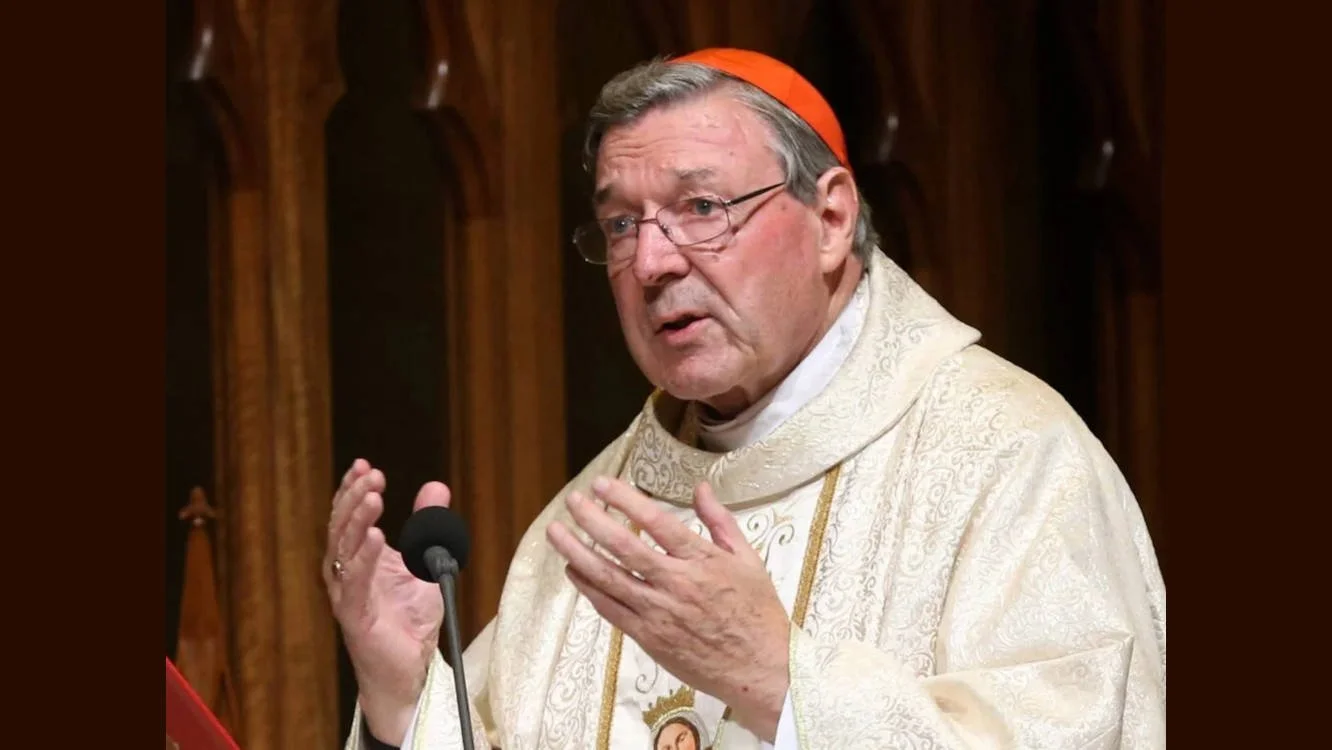
The Last Homily of Cardinal George Pell
Without knowing, of course, that he was just three days away from death Cardinal George Pell preached his last homily at San Giovanni Rotondo.
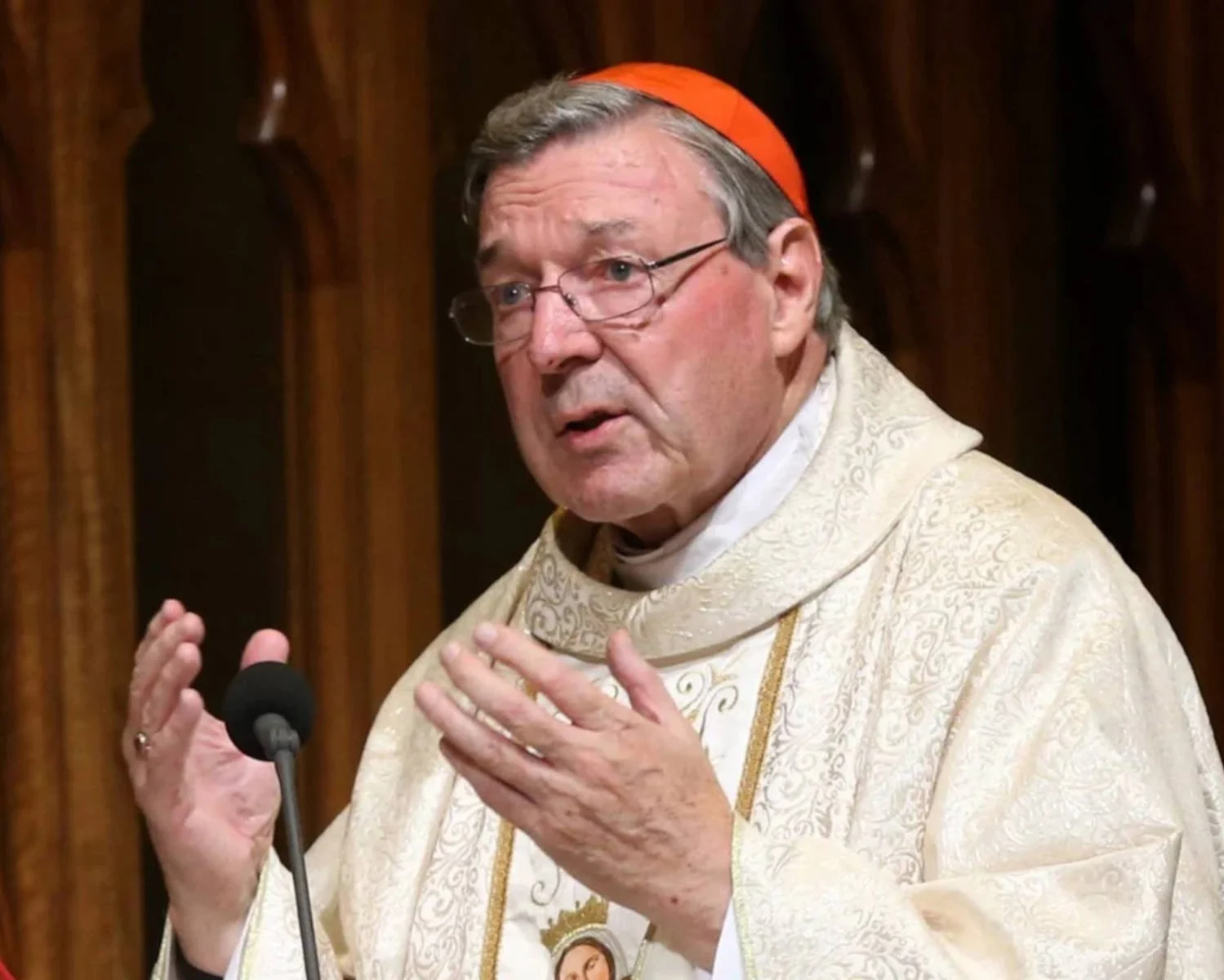
Without knowing, of course, that he was just three days away from death Cardinal George Pell preached his last homily at San Giovanni Rotondo.
January 7, 2023 by George Cardinal Pell | Published by Napa Institute
Homily of Cardinal George Pell to the Caritas in Veritate — Magnificat Dominium Community at San Giovanni Rotondo, January 7, 2023
“We believers know well the blessings we have received in Jesus Christ: we know that “The people who lived in darkness have seen a great light, and those who lived in regions of the shadow of death, there a light has arisen” (Isaiah 9.1).
We know Jesus’ call, through the Baptist, to conversion: “Repent, because the kingdom of God is near” (Mt 4:17), but we older Catholics, or rather, adults, are also blessed because we have lived, in almost forty years, in the time of John Paul II and Pope Benedict XVI.
These years have been pivotal for all of history: the papacy of John Paul II, one of the greatest popes in the history of the Church, not only for his role in the collapse of communism, but also for the entire Western world because, after Vatican Council II, the churches in Holland and Belgium collapsed radically, with the danger that this collapse could be even more extensive.
I believe that John Paul somehow stabilized the Church in the Western world; for all these reasons, in these days, we are not celebrating the end of an era but we are celebrating the contribution of these two great popes. We believe that this tradition must continue in the Church of tomorrow: not that this is the only condition — it must not be a monopoly — in fact, there are many other good conditions, but this one has given a special contribution to the whole Church and, above all, to young people. In fact, many young people followed Pope John Paul II and Pope Benedict XVI.
What are the elements of this heritage of Wojtyla and Ratzinger?
1) They were true Christians: they understood that the secret of life and death is present in the life and teaching of Jesus Christ. They were missionaries of the truth: we don’t build the truth, we don’t have the ability to change the truth; we can only acknowledge the truth, and sometimes the truth isn’t all that pretty.
Sometimes the truth is disconcerting, difficult.
These two popes did not affirm that the teaching of Jesus was conditioned by the time, by the Roman Empire, by the pagans; they did not claim that the essential and central teaching should be updated, radically changed; they didn’t say: “We don’t know what Jesus said because there were no tape recorders”; they accepted the teaching of Jesus as it has come down to us. As for them, and also for us, Jesus remains the way, the truth and the life.
2) They were optimistic: they believed that Christian communities and the teaching of Jesus are a great help to live well; Jesus didn’t come among us to make us suffer and they believed only in the Christian virtue of hope.
The English writer Gilbert K. Chesterton writes: “The virtue of hope is only possible when there is no human hope.” These two popes did not believe this; because the world is better, instead, when we follow the teaching of Jesus.
Families stay together, they are happier, communities are better behaved, they follow the law; and in a Christian world, families are stable, young people are less fragile, they are spiritually and psychologically stronger.
As Christians we have something good to offer the world: the cross is not too heavy.
We, who are Christians, know that we must love one another, we must follow the precepts that Jesus gave.
“Whoever keeps His commandments remains in God and God in Him.” (1Jn 3:23)
There was an atheist English philosopher who said that the Ten Commandments are like a final exam — you just need to be able to live well 6 out of the 10; but no, we must try to follow them all!
We know that our life is a struggle against selfishness. These two popes lived during the years of World War II — Wojtyla lived under communism — and they understood the importance of fighting against our selfishness; they knew how to distinguish between the spirit of truth and the spirit of error.
3) They understood the importance of the sacraments and, especially, of the Eucharist.
The Eucharist is not only a horizontal celebration but it is an act of prayer, of adoration, like this morning, when we began with prayer by placing God at the center. It must be like this, because God is transcendent, out of all our experience, out of our world; the vertical dimension of religion is essential.
4) They understood the role of Peter’s successor in the life of the Catholic Church.
We Catholics must remember that the universal unity of the Church is not something that can be taken for granted or is facile. It is a very precious gift that we must be careful to keep so as not to damage it.
You charismatic communities must understand the need to maintain unity.
We find the teaching for every man written in the 16th Chapter of Matthew and in John 2: Peter is the “man of rock,” foundation of the Church; his task is to protect and defend the apostolic doctrine.
These two popes understood well that we are not the teachers of the apostolic doctrine, we are the defenders: we serve and respect this precious rule of faith.
All Catholics, of any age, throughout the world, also have the right to receive the same teaching that Jesus and the apostles gave in the early years of Christianity: this is Catholic doctrine.
Both popes were men of courage, but at the same time, prudent: there is a time to speak and a time to keep silent, but courage is always essential.
One might think that, in the future, there may be popes from Asia or Africa; today we have a pope from South America, praiseworthy and good (Note: the original Italian is “bravo e buono.”)
These two popes were, instead, Europeans, examples of men with profound knowledge of the high culture of the Western world; they knew the theology and philosophy of the Church well and had a great ability to dialogue with the best atheists in today’s world: this is important and useful.
Both understood the importance for all of us in the Church to help the suffering, the sick, the tormented, possessed, epileptic, paralyzed, physically and spiritually lame — this is the task of the church: Caritas in Veritate.
We thank God for these two popes and pray that their legacy may continue into the future.”
+ + +
In a bombshell post at Beyond These Stone Walls, Father Gordon MacRae memorializes the late Cardinal George Pell on the third anniversary of his untimely death. Don’t miss,
“Cardinal Pell … Well, Well, Well …”

Excerpt: From the Prison Journal of George Cardinal Pell
(Prison Journal Volume 2, pp. 57-60, Ignatius Press 2021)

(Prison Journal Volume 2, pp. 57-60, Ignatius Press 2021)
Entry of Friday, 2 August 2019:
“By a coincidence, today I received from Sheryl [Collmer], a regular correspondent from Texas, a copy of the 15 May 2019 post on the blog Beyond These Stone Walls written by Fr Gordon MacRae. The article was entitled, “Was Cardinal George Pell Convicted on Copycat Testimony?” Fr Mac Rae was convicted on 23 September 1994 of paedophilia and sentenced to sixty-seven years in a New Hampshire prison for crimes allegedly committed around fifteen to twenty years previously. The allegations had no supporting evidence and no corroboration.
“It is one thing to be jailed for five months. It would be quite another step up, which I would not relish, to spend another three years if my appeal were unsuccessful. But we enter another world with a life sentence. Australia is not New Hampshire, and I don’t believe all the Australian media would blackball the discussion of a case such as MacRae’s.
“The late Cardinal Avery Dulles, SJ, whom I admired personally and as a theologian, encouraged Fr MacRae to continue writing from jail, stating, ‘Someday your story and that of your fellow sufferers will come to light and be instrumental in a reform.’ Fr Mac Rae recounts extraordinary similarities between the accusations I faced and the accusations of Billy Doe in Philadelphia, which were published in Australia in 2011 in the magazine, Rolling Stone.
“Earlier this year, Keith Windschuttle, editor of the quality journal, Quadrant, publicized the seven points of similarity, pointing out that ‘there are far too many similarities in the stories for them to be explained by coincidence.’ [See Keith Windshuttle, ‘The Borrowed Testimony that Convicted George Pell.’ Quadrant, 8 April 2019].
“The author of the 2011 Rolling Stone article was Sabrina Rubin Erdely, no longer a journalist, disgraced and discredited. In 2014 she had written, and provoked a storm which reached Obama’s White House, about ‘Jackie’ at the University of Virginia, who claimed she was gang-raped at a fraternity party in 2012 by seven men. As MacRae points out, ‘The story was accepted as gospel truth once it appeared in print.’ [Note: Rolling Stone later retracted the article in April, 2015]. Jackie’s account turned out to be a massive lie. A civil trial for defamation followed; the seven students were awarded $7.5 million in damages by the jury; and Rolling Stone was found guilty of negligence and defamation.
“The allegations behind the 2011 Rolling Stone article, published in Australia, have also been demolished as false by, among others, Ralph Cipriano’s ‘The Legacy of Billy Doe’ published in the Catalyst of the Catholic League in January-February 2019.
“No one realised in 2015, when the allegations against me were first made to police, that the model for copycat allegations, or the innocent basis for the remarkable similarities, was also a fantasy or a fiction.
“I am grateful to Fr MacRae for taking up my cause, as I am to many others. These include in North America George Weigel and Fr Raymond de Souza and here in Australia Andrew Bolt, Miranda Devine, Gerard Henderson, Fr Frank Brennan, and others behind the scenes.
“I will conclude, not with a prayer, but with Fr MacRae’s opening quotation from Baron de Montesquieu (1742) [from the BTSW ‘About’ page],
‘There is no crueler tyranny than that which is perpetrated under the shield of law and in the name of justice.’ ”
— Prison Journal Volume 2, pp. 57-60
+ + +

At the Catholic Media Association, Bias and a Double Standard
Dietrich Bonhoeffer, Fr Walter Ciszek, Thomas More, Cardinal George Pell all inspired us from prison but the Catholic Media Association silences Fr Gordon MacRae.

Dietrich Bonhoeffer, Fr Walter Ciszek, Thomas More, Cardinal George Pell all inspired us from prison but the Catholic Media Association shuns Fr Gordon MacRae.
by Ryan A. MacDonald | A Ram In The Thicket
15 November 2021
The Chicago-based Catholic Media Association (CMA) publishes in its preamble that it exists “to spread and to support the Kingdom of God” with “principles derived from the Catholic faith.” Many Catholics might be hard-pressed to comprehend how that is accomplished by the creation of a new class of lepers in the Church, Catholic priests judged guilty for being accused.
The Catholic Media Association invites those engaged in writing and publishing regarding the Catholic faith — including Catholic bloggers — to apply for membership. In a review of Fr Gordon MacRae’s blog, Beyond These Stone Walls, Catholic Culture gave its highest marks for fidelity to the faith and for fairness and content. Our Sunday Visitor cited it as its Readers’ Choice for the Best of the Catholic Web.
About.com awarded it second place in its “Best Catholic Blog” category. The National Catholic Register has cited it in various online and print articles. Catalyst, the Journal of the Catholic League for Religious and Civil Rights, has cited it on numerous occasions and has published two centerpiece articles by Fr MacRae who is also a member of the Catholic Writers Guild. But none of this was sufficient to overcome the prison “leper” class into which Father MacRae was relegated by the Catholic Media Association with this terse dismissal from CMA Executive Director Timothy M. Walter:
“Mr. MacRae: I appreciate your interest in the Catholic Media Association but I’m sorry to inform you that the Membership Committee has denied your request for membership at this time.”
Beyond These Stone Walls, the blog of a falsely accused and unjustly imprisoned Catholic priest, is in its twelfth year of publication. It has inspired people on six continents, and is widely considered to be one of the most visited and influential blogs by a Catholic priest. Though he is in prison, Father MacRae remains a priest. He has not been removed from the clerical state by the Vatican because the integrity of his trial and conviction has been widely called into question.
In a series of major articles, The Wall Street Journal concluded in 2013, “Those aware of the facts of this case find it hard to believe that any court today would overlook the perversion of justice it represents.” The late Cardinal Avery Dulles urged Father MacRae to “write a new chapter in the volume of Christian literature from those wrongly in prison.” Cardinal Dulles included Father MacRae among such honored names as Dietrich Bonhoeffer, Fr Walter Ciszek, St Thomas More, and by extension, Cardinal George Pell. Ironically, Cardinal Pell devoted several pages of his celebrated Prison Journal Volume Two to the prison writing of Fr Gordon MacRae.
There are other striking ironies in all this. Shortly before the CMA tersely rejected a membership application from the blog of Father MacRae, the organization awarded his Bishop, Most Reverend Peter A. Libasci of the Diocese of Manchester, with a citation for “Best Column by a Bishop in a Diocesan Magazine.” It was for an essay by Bishop Libasci about his participation at a Black Lives Matter rally.
Before the award was announced, publicity ensued regarding a lawsuit filed against Bishop Libasci alleging sexual abuse of a minor while he was a priest in the Diocese of Rockville Center, New York in 1983. It was the same year as the allegations against Father MacRae. Though he was not a bishop at the time of the allegations, Bishop Libasci is nonetheless subjected to a different standard than the “credible” standard now applied to accused priests. Despite the pending civil case, Bishop Libasci remains in office and in good standing. It seems that the Catholic Media Association, like the Vatican, has a different standard when the accused priest later becomes a bishop despite the fact that Bishop Libasci was “Father” Libasci at the time of these claims.
I have studied in detail the lawsuit against Bishop Libasci and all the media accounts that have sprung from it. I should add here that I do not believe any of the claims against him for the same reasons that I do not believe any of the claims against Father MacRae. None of them are rationally credible, and all of them are brought for monetary gain.
But it was Father MacRae’s own writing that most swayed me on this matter. He laid out a solid defense of his bishop, and of the canonical right to a presumption of innocence, in his widely read and highly cited article, “Bishop Peter A. Libasci Was Set Up by Governor Andrew Cuomo.”
The Catholic Media Association should, in fairness, rethink this. Father MacRae is not looking for awards. He wants only justice and consistency. He has a right to be spared the bias and blatant double standards that have been employed here. He has a right to his good name.
Note: Please share this post and visit these related posts:
The Trials of Father MacRae by Dorothy Rabinowitz, The Wall Street Journal
Fr Gordon MacRae Case Facts: The Media Report by David F. Pierre, Jr.
Travesty of Justice: The Ordeal of Fr. MacRae — by William Donohue, Ph.D.
