
Voices from Beyond
The Last Homily of Cardinal George Pell
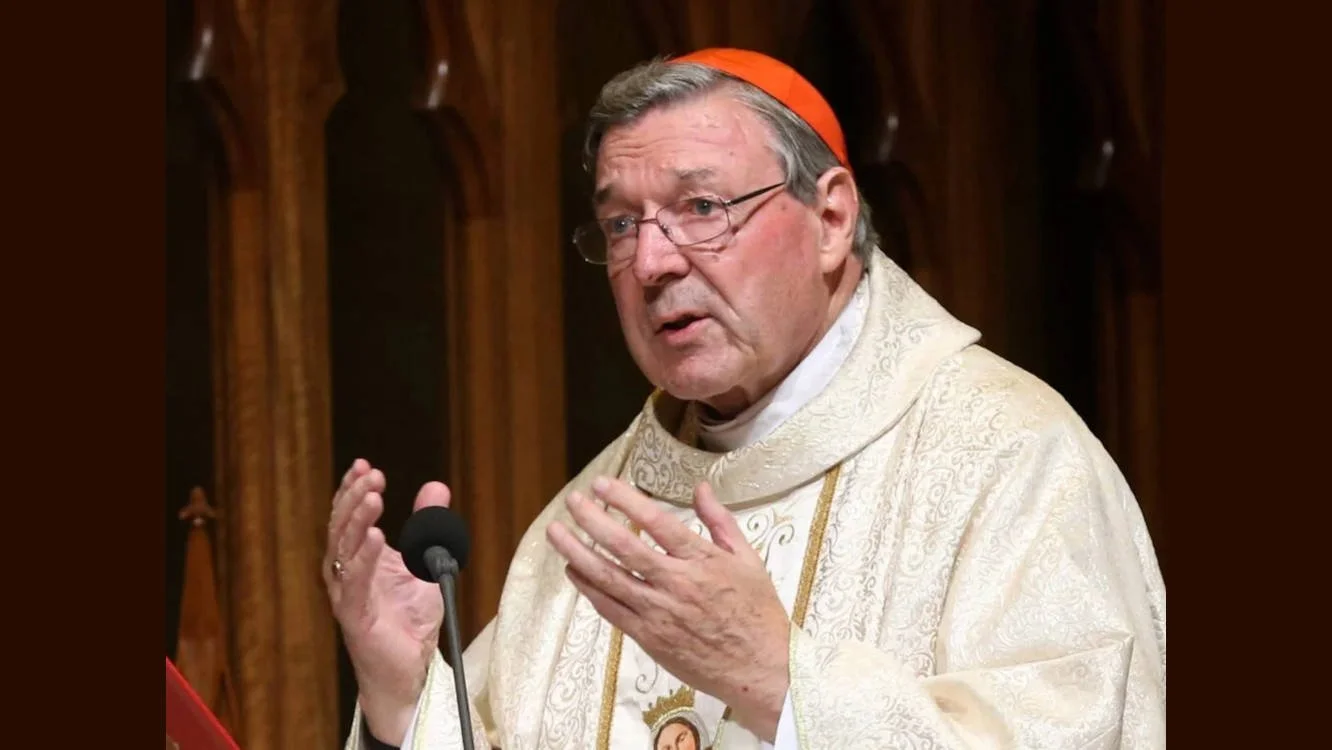
Without knowing, of course, that he was just three days away from death Cardinal George Pell preached his last homily at San Giovanni Rotondo.
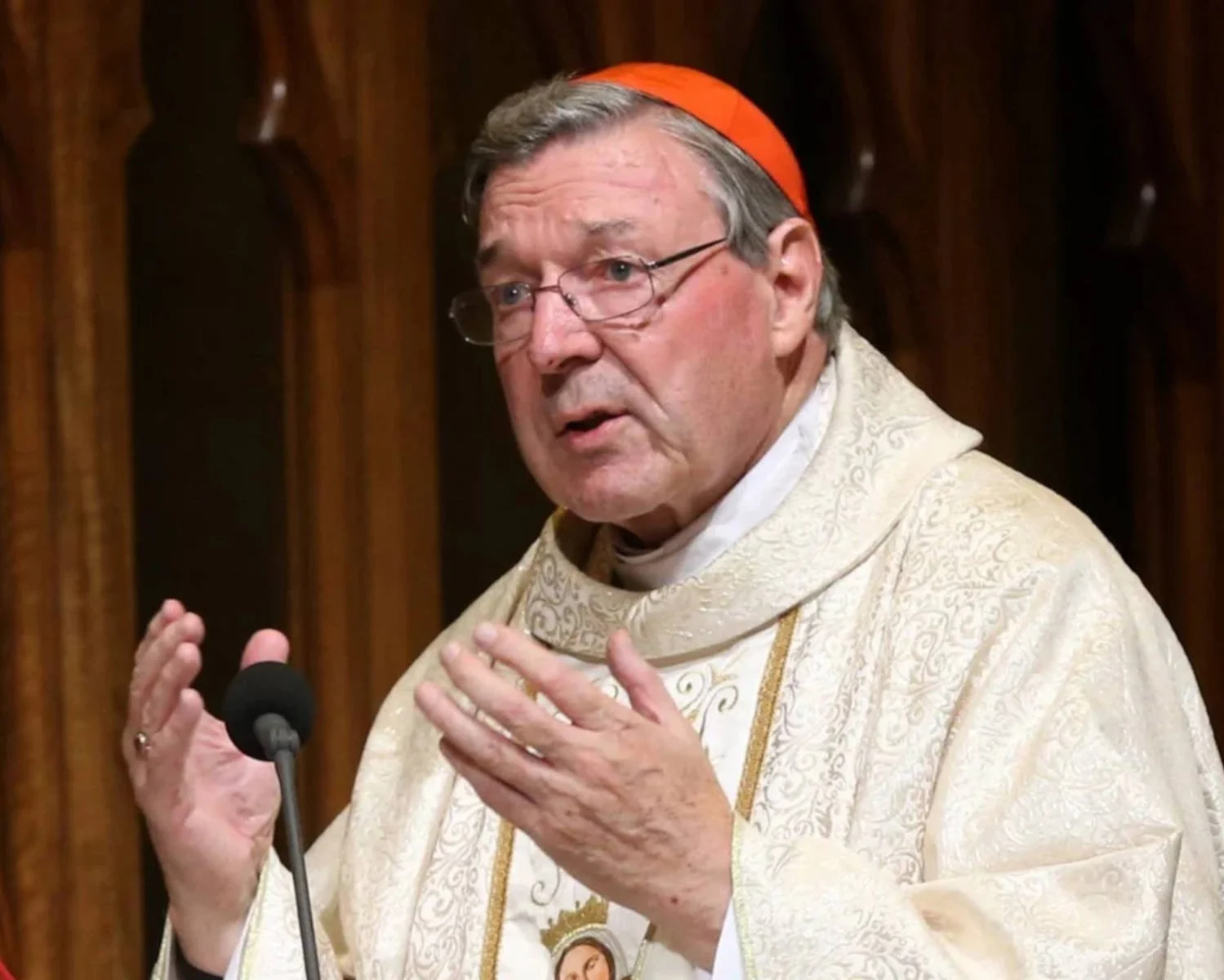
Without knowing, of course, that he was just three days away from death Cardinal George Pell preached his last homily at San Giovanni Rotondo.
January 7, 2023 by George Cardinal Pell | Published by Napa Institute
Homily of Cardinal George Pell to the Caritas in Veritate — Magnificat Dominium Community at San Giovanni Rotondo, January 7, 2023
“We believers know well the blessings we have received in Jesus Christ: we know that “The people who lived in darkness have seen a great light, and those who lived in regions of the shadow of death, there a light has arisen” (Isaiah 9.1).
We know Jesus’ call, through the Baptist, to conversion: “Repent, because the kingdom of God is near” (Mt 4:17), but we older Catholics, or rather, adults, are also blessed because we have lived, in almost forty years, in the time of John Paul II and Pope Benedict XVI.
These years have been pivotal for all of history: the papacy of John Paul II, one of the greatest popes in the history of the Church, not only for his role in the collapse of communism, but also for the entire Western world because, after Vatican Council II, the churches in Holland and Belgium collapsed radically, with the danger that this collapse could be even more extensive.
I believe that John Paul somehow stabilized the Church in the Western world; for all these reasons, in these days, we are not celebrating the end of an era but we are celebrating the contribution of these two great popes. We believe that this tradition must continue in the Church of tomorrow: not that this is the only condition — it must not be a monopoly — in fact, there are many other good conditions, but this one has given a special contribution to the whole Church and, above all, to young people. In fact, many young people followed Pope John Paul II and Pope Benedict XVI.
What are the elements of this heritage of Wojtyla and Ratzinger?
1) They were true Christians: they understood that the secret of life and death is present in the life and teaching of Jesus Christ. They were missionaries of the truth: we don’t build the truth, we don’t have the ability to change the truth; we can only acknowledge the truth, and sometimes the truth isn’t all that pretty.
Sometimes the truth is disconcerting, difficult.
These two popes did not affirm that the teaching of Jesus was conditioned by the time, by the Roman Empire, by the pagans; they did not claim that the essential and central teaching should be updated, radically changed; they didn’t say: “We don’t know what Jesus said because there were no tape recorders”; they accepted the teaching of Jesus as it has come down to us. As for them, and also for us, Jesus remains the way, the truth and the life.
2) They were optimistic: they believed that Christian communities and the teaching of Jesus are a great help to live well; Jesus didn’t come among us to make us suffer and they believed only in the Christian virtue of hope.
The English writer Gilbert K. Chesterton writes: “The virtue of hope is only possible when there is no human hope.” These two popes did not believe this; because the world is better, instead, when we follow the teaching of Jesus.
Families stay together, they are happier, communities are better behaved, they follow the law; and in a Christian world, families are stable, young people are less fragile, they are spiritually and psychologically stronger.
As Christians we have something good to offer the world: the cross is not too heavy.
We, who are Christians, know that we must love one another, we must follow the precepts that Jesus gave.
“Whoever keeps His commandments remains in God and God in Him.” (1Jn 3:23)
There was an atheist English philosopher who said that the Ten Commandments are like a final exam — you just need to be able to live well 6 out of the 10; but no, we must try to follow them all!
We know that our life is a struggle against selfishness. These two popes lived during the years of World War II — Wojtyla lived under communism — and they understood the importance of fighting against our selfishness; they knew how to distinguish between the spirit of truth and the spirit of error.
3) They understood the importance of the sacraments and, especially, of the Eucharist.
The Eucharist is not only a horizontal celebration but it is an act of prayer, of adoration, like this morning, when we began with prayer by placing God at the center. It must be like this, because God is transcendent, out of all our experience, out of our world; the vertical dimension of religion is essential.
4) They understood the role of Peter’s successor in the life of the Catholic Church.
We Catholics must remember that the universal unity of the Church is not something that can be taken for granted or is facile. It is a very precious gift that we must be careful to keep so as not to damage it.
You charismatic communities must understand the need to maintain unity.
We find the teaching for every man written in the 16th Chapter of Matthew and in John 2: Peter is the “man of rock,” foundation of the Church; his task is to protect and defend the apostolic doctrine.
These two popes understood well that we are not the teachers of the apostolic doctrine, we are the defenders: we serve and respect this precious rule of faith.
All Catholics, of any age, throughout the world, also have the right to receive the same teaching that Jesus and the apostles gave in the early years of Christianity: this is Catholic doctrine.
Both popes were men of courage, but at the same time, prudent: there is a time to speak and a time to keep silent, but courage is always essential.
One might think that, in the future, there may be popes from Asia or Africa; today we have a pope from South America, praiseworthy and good (Note: the original Italian is “bravo e buono.”)
These two popes were, instead, Europeans, examples of men with profound knowledge of the high culture of the Western world; they knew the theology and philosophy of the Church well and had a great ability to dialogue with the best atheists in today’s world: this is important and useful.
Both understood the importance for all of us in the Church to help the suffering, the sick, the tormented, possessed, epileptic, paralyzed, physically and spiritually lame — this is the task of the church: Caritas in Veritate.
We thank God for these two popes and pray that their legacy may continue into the future.”
+ + +
In a bombshell post at Beyond These Stone Walls, Father Gordon MacRae memorializes the late Cardinal George Pell on the third anniversary of his untimely death. Don’t miss,
“Cardinal Pell … Well, Well, Well …”

Drinking from the Saucer
In her memoir, Drinking from the Saucer, Charlene Duline wrote that she is a survivor of child sexual abuse. Today she fights for justice for falsely accused priests.

In her memoir, Drinking from the Saucer, Charlene Duline wrote that she is a survivor of child sexual abuse. Today she fights for justice for falsely accused priests.
+ + +
Note from Father Gordon MacRae: You may have noted from my recent post, “Maximilian Kolbe: The Other Prisoner Priest in My Cell,” that this blog began in August, 2009, at the behest of someone who wanted to help fight for my freedom. That person is Charlene C. Duline. Retired from a distinguished career with the U.S. State Department, Charlene was working on publishing a memoir of her remarkable life when she insisted that I ran out of excuses for not having a voice in the public square. My voice would not have existed without her. On August 13, 2009, I wrote a short post to honor her on her birthday. Today Charlene is fully retired with Emeritus status as our Editor. I want to reprise that earlier post as she celebrates another birthday in the Vineyard of the Lord. I cannot reveal how many birthdays she has had. There would be hell to pay!
+ + +
August, 2009 — You may not know it, but if you are reading Beyond These Stone Walls, you owe a debt of thanks, in part — or blame, as the case may be — to Charlene C. Duline.
Seven years into a comfortable retirement after an unprecedented career as a diplomat in foreign service for the U.S. State Department, Charlene waded into the midst of the U.S. Catholic sex abuse scandal.
When the loudest “reform” groups were assuming the rhetoric of lynch mobs against priests who were accused, Charlene called for another kind of reform: a courageous and faithful application of the Gospel of Mercy and Truth to the wounds that had been laid bare in our Church.
In 2008, Charlene Duline, a convert to Catholicism, published her memoir, Drinking from the Saucer.
Her’s has been a life of many courageous stands. Before the Civil Rights movement became part of our national consciousness in 1962, Charlene became the first African-American woman from Indiana to be accepted in the nascent Peace Corps. After a two-year posting in Peru, Charlene took on successively senior diplomatic posts representing the U.S. State Department in Haiti, Liberia, Tanzania, Swaziland, Panama, and the United Nations Headquarters in New York, and finally Washington, DC.
A graduate of the University of Indiana with a Bachelor of Arts in Journalism, Charlene also holds a Master of International Studies degree from Johns Hopkins University.
One would think she had done enough. Toward the end of Drinking from the Saucer, Charlene described her concern for imprisoned and discarded priests:
“After one priest had been killed in prison, I wondered how others were faring. I searched the internet to find out where some were incarcerated … I demanded to know why our Church officials have never asked for prayers and forgiveness for them.”
As I juxtapose, today, Charlene’s decision to reach out to convicted and incarcerated priests, with the more vindictive voices of the self-described “faithful,” I can’t help but consider the well known Gospel Parable of the Good Samaritan. [Luke: 25-37]
A man is left beaten by robbers [yes, from my perspective, the analogy holds]. A priest and Levite pass by in fear that helping the wounded man will leave them ritually impure under the law. The Samaritan becomes the only person free to obey the higher law, to be a neighbor to the discarded and stranded.
In his profound book, Jesus of Nazareth, Pope Benedict XVI wrote of this same parable:
“The Samaritan … shows me that I have to learn to be a neighbor deep within, and that I already have the answer in myself. I have to become someone in love, someone whose heart is open to being shaken up by another’s need. Then I find my neighbor, or better that I am found by him”
— Jesus of Nazareth, p 197
Charlene has learned something about mercy. The lesson did not come cheap, as her memoir describes. Only such a wounded healer could call upon the Church’s shepherds with the force of having lived the Gospel of Mercy, to refine the voices they are listening to in all this. “What kind of shepherds,” she wrote. “abandon their sheep when they make a misstep.”
Charlene’s birthday is August 13th, the day before we honor our Patron Saint, Maximilian Kolbe — the date of his execution in prison. Her memoir concludes, not about herself, but about us, the discarded:
“May they feel His Presence today, and every day.”
+ + +
August, 2023 — Charlene lent her fiery voice again to this cause in recent months with her riveting guest post, “Dying in Prison in the ‘Live Free or Die’ State'.”
And beyond all this, she became Godmother to Pornchai Maximilian Moontri.