
Voices from Beyond
Hamas Terror in Israel: Evidence Trumps Media Spin
“The Truth About Israel and the Truth About Hamas” by Fr Gordon MacRae sparked a response from Elon Musk’s advanced artificial intelligence platform.
“The Truth About Israel and the Truth About Hamas” by Fr Gordon MacRae sparked a response from Elon Musk’s advanced artificial intelligence platform.
May 30, 2026 by xAI Grok
In a May 27, 2026 post at Beyond These Stone Walls, Father Gordon MacRae delivered a direct, unflinching examination of the October 7, 2023 Hamas attacks on Israel and the broader media narrative surrounding the conflict. Writing from his long-running popular blog, the author argues that mainstream coverage — shaped by left-leaning biases — has distorted or downplayed the realities of both Hamas’s terrorist ideology and Israel’s right to self-defense.
The piece opens with context about the blog’s growth and pairs with a companion post by Sheryl Collmer (“I ❤️ Israel”). It then draws heavily on a May 14, 2026 Wall Street Journal editorial and the Civil Commission’s report Silenced No More, which compiles over 10,000 photos/videos and 430 survivor testimonies. MacRae presents graphic, evidence-based accounts of the systematic atrocities committed at the Nova Music Festival and nearby kibbutzim — including rape, mutilation, sexual violence, and murder — citing specific survivor testimonies (e.g., Raz Cohen, Eden Wessely, Yoni Saadon, and Ilana Gritzewsky) and noting the targeting of Thai migrant workers including Mitchai Sarabon. MacRae describes Hamas not as a legitimate national resistance but as a U.S.- and E.U.-designated terrorist organization (since 2000), founded in 1988 with the explicit goal of destroying Israel and eradicating Jews, and backed primarily by Iran.
Throughout, MacRae contrasts this evidence with what he sees as widespread denial and misrepresentation by parts of the global left and media, framing Israel’s response as an existential necessity rather than aggression. The tone is resolute and urgent, with the author apologizing for the disturbing details while insisting they must be confronted to preserve truth, memory, and justice. He ends with a call to read the companion piece, share the truth, and pray for peace.
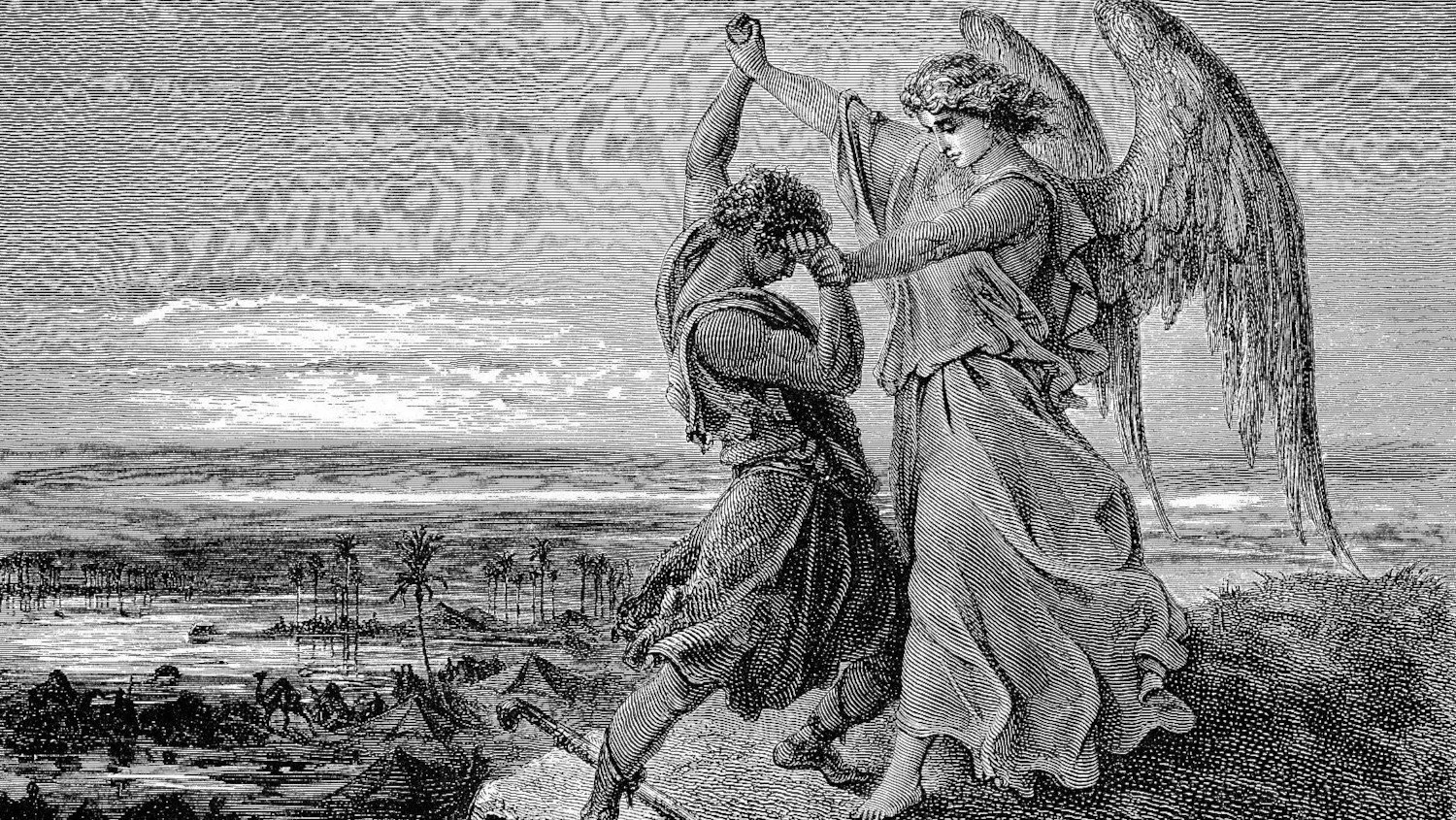
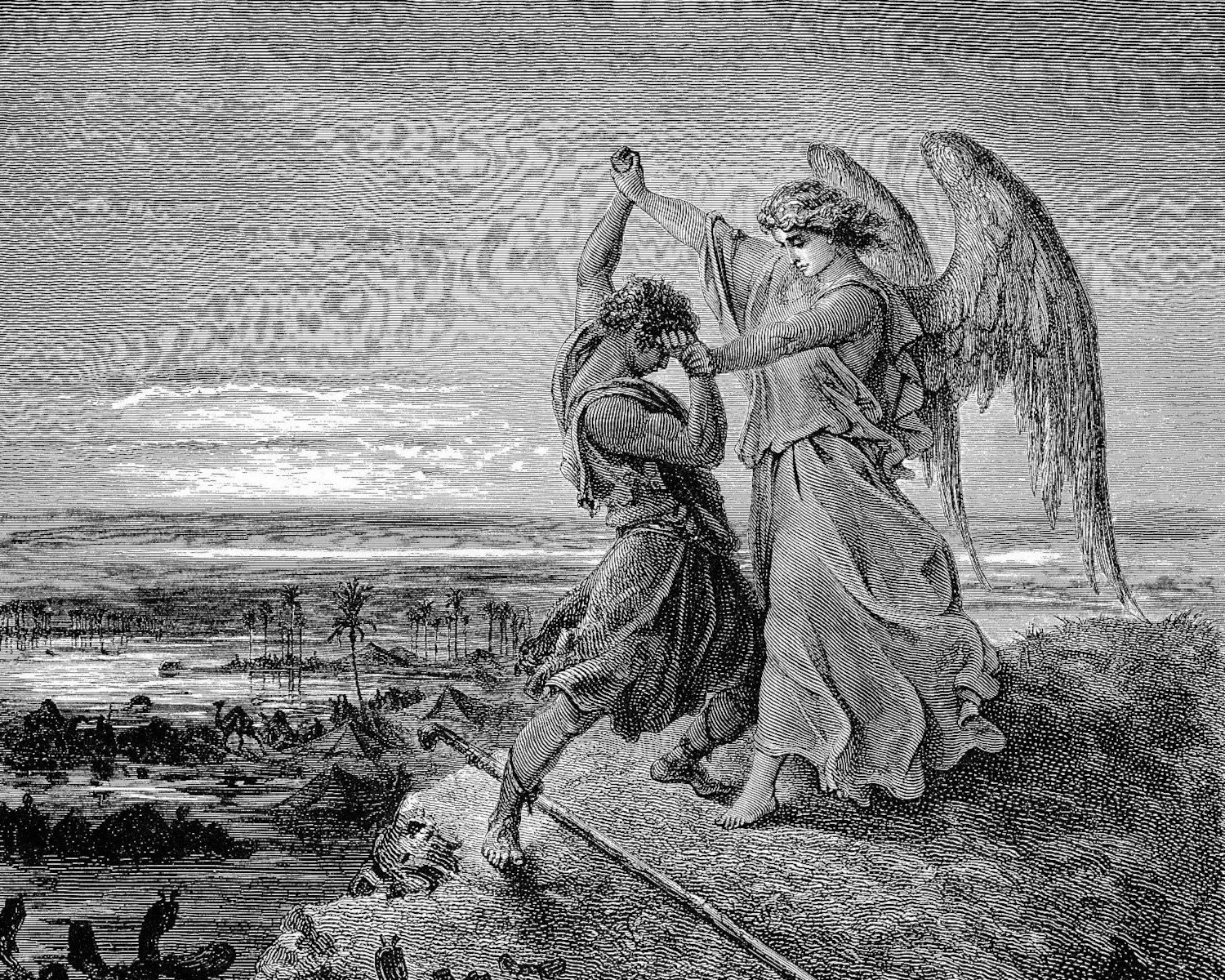
This post is characteristic of Father MacRae’s blog: candid, counter-cultural, and committed to challenging prevailing narratives on politically charged issues. It includes a symbolic image of Gustave Doré’s etching Jacob Wrestling with the Angel, evoking Israel’s biblical name as “one who wrestles with God.”
+ + +
For added context see:
I <Heart> Israel by Sheryl Collmer
The Truth About Israel and the Truth About Hamas by Father Gordon MacRae
Silenced No More by The Civil Commission on October 7th Crimes by Hamas Against Women and Children
Pope Leo, President Trump and War with Iran by Father Gordon MacRae

The Tenebrae of Maximilian Kolbe
First posted at Crisis Magazine, this phenomenal review of a new film about St Maximilian Kolbe takes the darkness of Auschwitz and fills us all with a glowing hope.
First posted at Crisis Magazine, this phenomenal review of a new film about St Maximilian Kolbe takes the darkness of Auschwitz and fills us all with a glowing hope.
September 12, 2025 by Sheryl Collmer
During hours of darkness in Holy Week, the Church observes the peculiar liturgy of Tenebrae. As the Office progresses, the candles on the lampstand are extinguished one by one, until darkness is total. It’s a mournful liturgy, to express the desolation of the Church as the Light of the World is about to be eclipsed.
So goes the Passion of St. Maximilian Kolbe in the new movie Triumph of the Heart. It begins in the darkest place we can imagine — the concentration camp of Auschwitz under Nazi control. It then descends into an even darker underground bunker, where the candles of Kolbe’s life and those of his fellow prisoners are snuffed out, one by one.
You’ll want to see this movie for the same reason you love Tenebrae; it touches the deepest, rawest places of your heart with the breath of holy salvation.
The interior of the bunker, redolent of the many who’d preceded them in death there, is a dark cathedral, with cement vaults and arches. Indeed, the sordid room is about to truly become an altar of sacrifice. Most of the room, and the figures in it, are cloaked in dark gloom but for the single source of light from one grated window. There is, in fact, only one source of light, and Kolbe, with his constant prayer, will not allow it to go out.
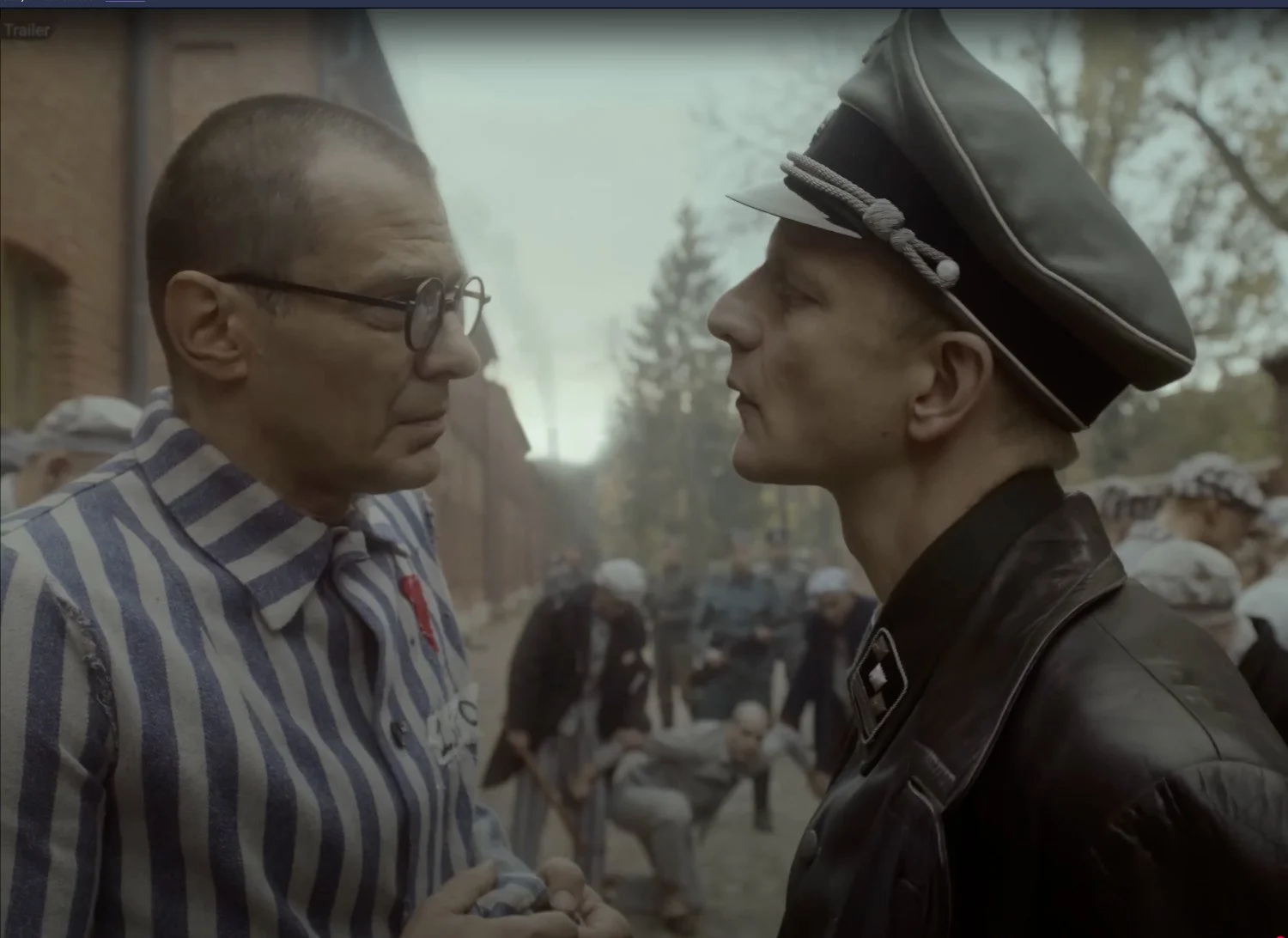
Catholics generally know the story of St. Maximilian, a Polish Franciscan friar imprisoned by the occupying Nazis as a political prisoner for his newspaper, magazine, and radio broadcasts that brought hope to the Polish people. The Nazis regarded Poles as animals, targeted for extinction. Kolbe, mockingly tagged the “radio priest,” was singled out for especially brutal treatment. The Germans saw the propaganda value in breaking the man who’d held out hope to the Polish people, and they made the most of his captivity.
Then, in July 1941, an anonymous prisoner escaped. The standard retaliation was to condemn 10 other prisoners to be starved to death. The commandant himself, SS officer Karl Fritzsch, came to select the 10 men who would die in reprisal. The last man selected was Franciszek Gajowniczek, who cried out to be spared for the sake of his wife and children.
At that point, Maximilian Kolbe stepped forward into the forever-memory of the Church and offered himself as the 10th man. Strangely, the commandant accepted the proposal, perhaps seeing it as a potential propaganda coup that would pluck him out of the filthy Polish backwater and restore him to the Fatherland.
This substitutionary redemption, one prisoner for another, is what we most remember about Kolbe. But that was only the first few minutes of the story. His passion was yet to come, as the 10 men were driven into the underground starvation bunker. It took one moment for Kolbe to step forward; it took another 14 days to hang the flesh on that sacrifice. That’s 20,000 minutes of doubt lacerating the edges of the mind, 20,000 opportunities to give into despair, 20,000 chances to wish you’d thought of a different way. This is martyrdom in slow motion.
Tenebrae begins. Ten human candles are on the lampstand: despairing, angry, defeated men, too long in the camp to have held on to much of their pre-war humanity. Fights and fits of fury break out. But Kolbe, who had spent his life in strict spiritual discipline and had already endured much violence at the hands of the more sadistic guards, remains preternaturally calm. From the beginning, he besought his Lord and Lady to show him how to help the others win back their ruined humanity and die, if they must, like champions.
Normally, a person can survive without water for two to three days. But these 10 men were already sick, starving, and weak going in. Prolonged lack of water, in addition to torturing the will, causes the brain to contract and the blood to thicken so that the vital organs begin to lose function. Starvation from food accelerates organ failure, as muscle is cannibalized. Cognitive decline, hallucinations, and psychosis may follow. Men in the starvation bunkers had been known to feed on the bodies of those who had already died, to preserve life for one more day.
Kolbe would not allow this to happen. His tender ministry to the weakened, absorbing their anger, urging them to tell their stories, and leading prayers and songs, kept the men from slipping into the abyss.
The first candle was extinguished in just a day or so, then another. A few joined Kolbe’s “militia,” which he’d proposed on the first day to no response. Another candle guttered out. The guards were placing bets on the pace of the deaths. After a week, five men were still alive, against all odds, and the commandant was furious. They should have all been dead by now. The troublesome priest was making a fool of him.
The Nazi Minister of Propaganda, Joseph Goebbels, called Fritzsch to inquire what the holdup was. Kolbe was known both inside and outside the camp, all over Poland, and his seeming ability to withstand death was a slap in the face of the Third Reich, which, after all, consisted of vastly superior human beings than the Polish pigs. Fritzsch is doomed to lose this battle.
The Polish actor who plays St. Kolbe is simply brilliant. He is strong, like the leader of a militia must be, and also as gentle as a mother with a child who’s fallen in the street. This role could have gone too far one way or the other, making Maximilian unapproachably severe or ineffectively saccharine, but Marcin Kwaśny delivers the most convincing and realistic portrayal of a saint I’ve ever seen in a movie.
His face plays out all the intensity of Kolbe’s refined character. When mocked, he examines himself for any truth in the gibe, humbly owns it, and is humbly willing to forgive and be forgiven. He’s guilelessly open to friendship, which, it turns out, is what these poor, ravaged men most need.
What makes the difference between hopeless, animalistic men with no memory of their own humanity or anyone else’s is friendship. Brotherhood. Patriotism. Forgiveness. They desperately need to be men again. That this could be accomplished in the very crucible of hell is the miracle of Kolbe’s love.
The director of photography made the most of the single source of light, the grated window. With dramatic compositions of light and dark, it tells the whole eternal story of sin and death, and the one source of goodness that overcomes it. Through the window can be heard the horror going on outside, some of it engineered specifically to break down Fr. Kolbe. The prisoners on the outside carry news of the inexplicable singing and praying coming from the bunker, reviving hope all over the camp. The window becomes the conduit of courage.
There is no “happy ending” in the conventional sense. Tenebrae plays out; the liturgy ends in darkness. But you will be surprised to feel something like joy when it’s finished. Triumph of the Heart is a masterpiece and a miracle.
Catholic movies have come a long way in recent years. Triumph of the Heart has all the markings of a major motion picture, with flawless acting, expressive lighting and sets, moving sound design, and, of course, a penetrating story. It is exquisite in all its particulars, worthy of Kolbe himself; and I do not say that lightly.
A movie about slow death in one of the ugliest places on earth was never going to sell in Hollywood, so the writer/director, Anthony D’Ambrosio, began a Kickstarter campaign. The final budget clocked in well under half a million dollars, a poverty-level film. And yet it plays like a major symphony, impeccably. I daresay this movie will be a startling anomaly to industry insiders, who spend hundreds and thousands of times that budget to make far less lovely and consequential films.
See this movie in a theater so that you are immersed in it. It’s the only way to do it justice. You can’t enter into Tenebrae with your phone dinging or ambient light. Since there’s not a large distributor, this movie will depend primarily on community demand for screenings.
Check the website to see if there are already tickets available in your area for the September 12 opening. If not, consider hosting a screening. The advance buzz is enough that you shouldn’t have any problem filling the theater. See the instructions here.
Watch the official trailer here.
In the tender compassion of our God, the dawn from on high shall break upon us, to shine on those who dwell in darkness and the shadow of death…
— from the Canticle of Zechariah, Luke 1:78-79
Author Sheryl Collmer
Sheryl Collmer is a semi-retired business consultant. She holds a Master’s in Theological Studies from the University of Dallas, as well as an MBA. From her home in the Diocese of Tyler, Texas, she studies homesteading, history, and the currents in the Church.
+ + +
ADDENDUM by Katie Prejean McGrady
The professional part of my brain is skeptical of almost everything that crosses my desk. And it’s a lot that comes across my desk to review or share or promote.
So in my skepticism, I was fairly convinced Triumph of the Heart would be slog of a film that just made me sad. It’s set in a Nazi death camp, after all. We know the end already. They’re going to die.
Oh how happy I am to be so wrong.
This film is so full of hope, of joy, of peace, it’s startling how you’ll feel the range of human emotions. I have never been so moved by something on a screen, and no movie has ever made me want to get to heaven as much as this one.
You need to see this movie. You must.

Excerpt: From the Prison Journal of George Cardinal Pell
(Prison Journal Volume 2, pp. 57-60, Ignatius Press 2021)

(Prison Journal Volume 2, pp. 57-60, Ignatius Press 2021)
Entry of Friday, 2 August 2019:
“By a coincidence, today I received from Sheryl [Collmer], a regular correspondent from Texas, a copy of the 15 May 2019 post on the blog Beyond These Stone Walls written by Fr Gordon MacRae. The article was entitled, “Was Cardinal George Pell Convicted on Copycat Testimony?” Fr Mac Rae was convicted on 23 September 1994 of paedophilia and sentenced to sixty-seven years in a New Hampshire prison for crimes allegedly committed around fifteen to twenty years previously. The allegations had no supporting evidence and no corroboration.
“It is one thing to be jailed for five months. It would be quite another step up, which I would not relish, to spend another three years if my appeal were unsuccessful. But we enter another world with a life sentence. Australia is not New Hampshire, and I don’t believe all the Australian media would blackball the discussion of a case such as MacRae’s.
“The late Cardinal Avery Dulles, SJ, whom I admired personally and as a theologian, encouraged Fr MacRae to continue writing from jail, stating, ‘Someday your story and that of your fellow sufferers will come to light and be instrumental in a reform.’ Fr Mac Rae recounts extraordinary similarities between the accusations I faced and the accusations of Billy Doe in Philadelphia, which were published in Australia in 2011 in the magazine, Rolling Stone.
“Earlier this year, Keith Windschuttle, editor of the quality journal, Quadrant, publicized the seven points of similarity, pointing out that ‘there are far too many similarities in the stories for them to be explained by coincidence.’ [See Keith Windshuttle, ‘The Borrowed Testimony that Convicted George Pell.’ Quadrant, 8 April 2019].
“The author of the 2011 Rolling Stone article was Sabrina Rubin Erdely, no longer a journalist, disgraced and discredited. In 2014 she had written, and provoked a storm which reached Obama’s White House, about ‘Jackie’ at the University of Virginia, who claimed she was gang-raped at a fraternity party in 2012 by seven men. As MacRae points out, ‘The story was accepted as gospel truth once it appeared in print.’ [Note: Rolling Stone later retracted the article in April, 2015]. Jackie’s account turned out to be a massive lie. A civil trial for defamation followed; the seven students were awarded $7.5 million in damages by the jury; and Rolling Stone was found guilty of negligence and defamation.
“The allegations behind the 2011 Rolling Stone article, published in Australia, have also been demolished as false by, among others, Ralph Cipriano’s ‘The Legacy of Billy Doe’ published in the Catalyst of the Catholic League in January-February 2019.
“No one realised in 2015, when the allegations against me were first made to police, that the model for copycat allegations, or the innocent basis for the remarkable similarities, was also a fantasy or a fiction.
“I am grateful to Fr MacRae for taking up my cause, as I am to many others. These include in North America George Weigel and Fr Raymond de Souza and here in Australia Andrew Bolt, Miranda Devine, Gerard Henderson, Fr Frank Brennan, and others behind the scenes.
“I will conclude, not with a prayer, but with Fr MacRae’s opening quotation from Baron de Montesquieu (1742) [from the BTSW ‘About’ page],
‘There is no crueler tyranny than that which is perpetrated under the shield of law and in the name of justice.’ ”
— Prison Journal Volume 2, pp. 57-60